

Digital Transformation in Institutional Communication: A Systematic Review of Transparency, Trust, and Organizational Culture



Abstract
1. Introduction
- To analyze the impact of digital and algorithmic transformation on institutional communication in the Arab context compared to the international contexts.
- To examine the relationship between digital transparency and communication visibility and assess their role in strengthening institutional trust.
- To compare Arab and international experiences in managing digital institutional communication.
- To propose a conceptual framework for building transparent and interactive communication practices that reinforce institutional trust and accountability, specifically in the Arab context.
- –
- Technological progress is the primary driver of historical and cultural change, often suggesting that human agency has little control over the direction of innovation (Technological Determinism Theory).
- –
- Key dimensions of communication visibility include information visibility and transparency, leadership and management visibility, and media presence (Communication Visibility Theory).
- –
- The digital ecosystem—comprising networks, algorithmic curation, real-time communication, and user-generated content—has accelerated and shaped traditional diffusion processes, and the rate of adoption has increased exponentially because some digital innovations can be adopted globally in a few months rather than years (Diffusion of Innovations Theory).
- –
- In digital communication environments, audiences seek not only information but also visibility, participation, identity expression, and social validation (Uses and Gratifications Theory).
2. Methodology
- Identification: Relevant studies were identified through comprehensive searches of major academic databases (e.g., Scopus, Web of Science, Google Scholar). Keyword combinations included “digital transformation”, “Institutional Communication”, “Organizational culture”, “Transparency”, “Trust”, “Organizational visibility”, and “Digital governance”.
- Screening: Duplicate records were removed, and titles and abstracts were screened for relevance to the research topic.
- Eligibility: Full-text articles were assessed against predefined inclusion and exclusion criteria to determine their suitability for the analysis.
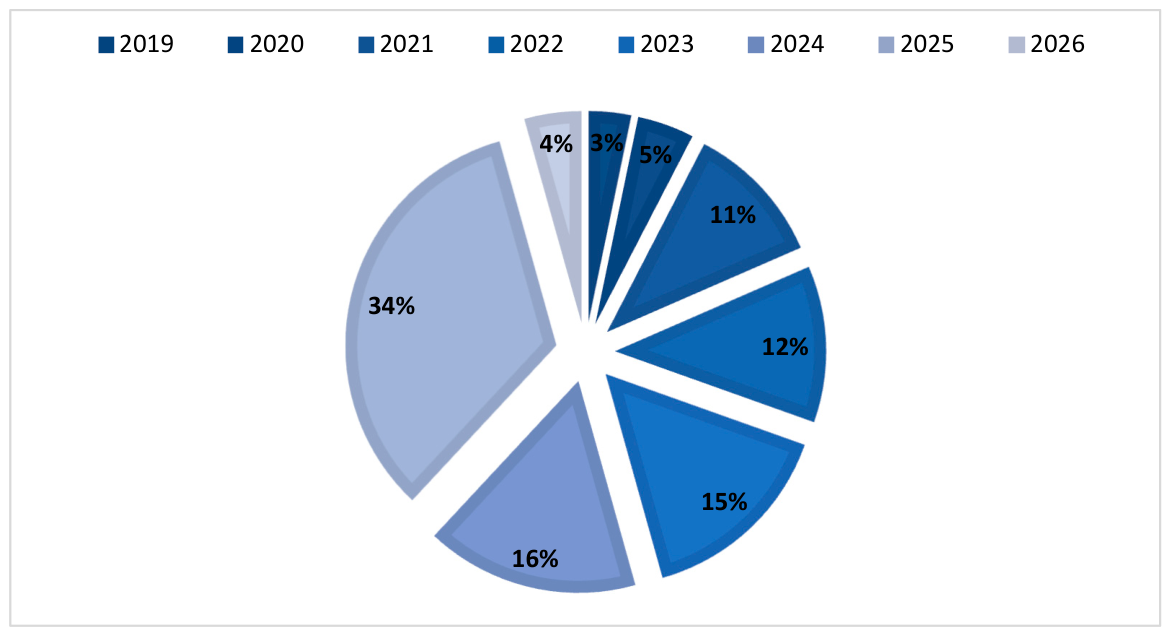
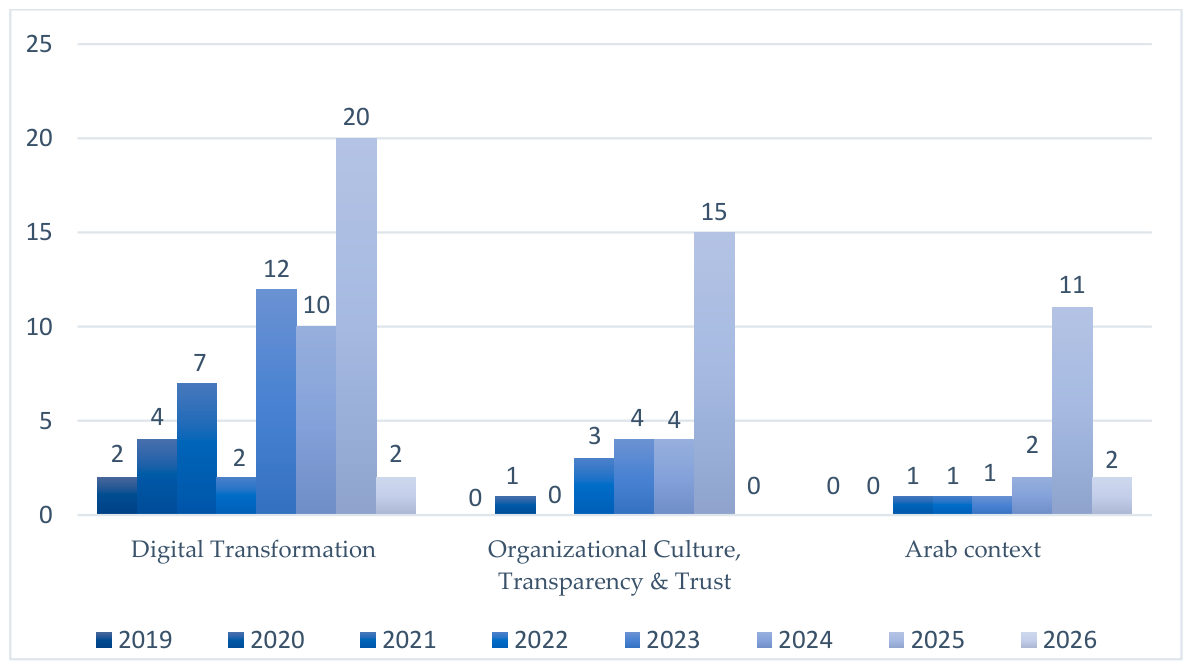
- Inclusion: The final sample included studies that met all eligibility criteria. The study population comprised Arabic and international scholarly publications that addressed digital transformation in institutional communication in the specified timeframe (2019–2026).
- Content Analysis: To evaluate the content of each study and categorize studies by major topic.
- Thematic Analysis: To identify repetitive patterns and themes in the literature.
- Comparative Analysis: Performed on the peer-reviewed, Arabic and international literature published between 2019 and 2026 to assess differences and similarities in the concepts of transparency.
- Temporal Boundaries: This study covers the period from 2019 to 2026, a phase that witnessed a rapid acceleration in the applications of artificial intelligence and digital transformation within institutions globally and in the Arab region.
- Spatial Boundaries: This study focuses on the Arab context due to the relative scarcity of Arab-context research examining this topic, with comparisons to international experiences to identify convergences and divergences in the implementation of digital governance. For comparative purposes, the reviewed literature was categorized into two broad contextual groups: Arab- and international-based studies. The Arab-context literature refers to research conducted in Arab countries or addressing Arab media and institutional communication environments. International-context studies refer to research conducted in non-Arab contexts, including North America, Europe, Asia, and other geographical regions represented in the reviewed literature. The comparison does not classify countries as developed or developing; rather, it focuses on differences and similarities in digital transformation, transparency practices, organizational culture, and institutional trust across Arab and non-Arab institutional environments.
- Thematic Boundaries: This study was confined to analyzing the impact of digital and algorithmic transformations on institutional communication and public relations, without engaging with the purely technical or economic dimensions of digital transformation.
- Validity and Reliability:
- Internal Validity:
- External Validity:
3. Results
3.1. Digital Transformation: Structural Transformation in the Logic of Institutional Communication
- Digital transformation has reshaped institutional communication from a traditional hierarchical model based on control and closure into an interactive, networked system grounded in data and digital platforms. Communication has thus become more horizontal, visible, and closely linked to transparency and trust. This transformation is not limited to the adoption of technological tools; it extends to the reconfiguration of communication processes, decision-making patterns, and organizational relationships within the institution (Fatchurrohman et al., 2025; Carvalho et al., 2025; Koska et al., 2025; Baojing et al., 2025; Deep, 2023; Fernández et al., 2023; Kumari, 2023; Hanelt et al., 2021; Vial, 2019).
- Digital platforms have enhanced organizational visibility and expanded transparency within institutions. This has, in turn, improved internal coordination, knowledge exchange, and levels of institutional engagement. This transformation is also associated with a shift in communicative authority from centralized structures to distributed interactive networks, within digital transformation models that integrate technology, organizational processes, and institutional strategy (Fatchurrohman et al., 2025; Koska et al., 2025; Baojing et al., 2025; Plekhanov et al., 2023; Verhoef et al., 2021; Castro Benavides et al., 2020; Trushkina et al., 2020).
- Accordingly, institutional communication is no longer a linear process flowing from management to the public but rather a multi-level, networked system in which platforms, algorithms, employees, and audiences interact within a continuous communicative ecosystem. Evidence further indicates that this transformation is inseparable from organizational culture, as institutional values and leadership styles are key determinants in shaping the adoption of digital communication. This reflects the interdependence of technological, organizational, and cultural dimensions in shaping contemporary institutional communication.
- This transformation involves a structural shift in the logic of power and knowledge within institutions, where communicative authority is no longer exercised through traditional administrative hierarchies, but through mechanisms of organizational transparency and visibility that enable stakeholders to access processes, decisions, and interactions in real time (Pitafi et al., 2023; Deep, 2023; Mahraz et al., 2019).
- Institutional communication has also become a governance instrument that regulates the relationships among the institution, employees, and the public based on transparency, accountability, and trust (Verčič & Verčič, 2025; Fatchurrohman et al., 2025; Papagiannidis et al., 2025; Deep, 2023).
3.2. Digital Transparency and Flexible Institutional Governance
- Digital transparency is not power-neutral; rather, it reconfigures power relations in complex ways. Albu and Christensen (2024) provide one of the most in-depth analyses of this dimension, demonstrating that digital technologies have transformed the conditions of the traditional Benthamite panopticon—where the “few” observe the “many”—into what Thomas Mathiesen terms the “synopticon,” which enables the “many” to observe the “few.” However, this apparent inversion does not eliminate power asymmetries, as actors who control digital infrastructures retain a privileged position. The findings of van Zoonen et al. (2025) substantiate this argument empirically, demonstrating that organizations possess an asymmetrical advantage in the digital space, enabling them to attain enhanced visibility into employees’ activities through a new model of organizational control grounded in visibility.
- Transparency has evolved into a governance structure that regulates institutional communication both internally and externally. Leonardi’s (2014) study shows that visibility in digital work environments enhances trust and organizational learning by making shared knowledge accessible to employees. Pitafi et al.’s (2023) study further indicates that such institutional visibility fosters innovation and improves knowledge exchange when managed with a balanced approach between openness and privacy. Conversely, van Zoonen et al.’s (2025) study cautions that the absence of clear “visibility governance” policies may transform transparency into excessive digital surveillance, thereby undermining a culture of trust within organizations. At the level of external communication, Albu and Christensen (2024) demonstrate that institutional transparency transforms trust from an intangible value into a form of long-term symbolic capital, as it enables audiences to assess organizational credibility based on observable practices. Verčič and Verčič (2025) further confirm that transparency is no longer merely an ethical obligation, but a strategic instrument for managing relationships and structuring accountability between institutions and their public.
- Digital transparency and organizational visibility constitute two foundational pillars in the construction of institutional trust within digital environments. Transparency extends beyond information disclosure to encompass process clarity, consistency of practices, and the traceability of decision-making processes within organizations, which strengthens accountability and institutional openness (Albu & Christensen, 2024). Evidence further indicates that organizational visibility enhances collaboration and knowledge exchange by making communicative interactions and practices accessible to employees through digital platforms, thereby supporting collective learning and institutional innovation (Leonardi, 2014; Pitafi et al., 2023). Transparency and visibility are not discrete endpoints; rather, they intersect with all other dimensions of digital transformation: technology restructures communicative infrastructures ), algorithms reorganize power and visibility (Saurwein & Spencer-Smith, 2021; Kellogg et al., 2020), leadership culture determines the pace of institutional adoption (Rogers, 2003; Postma, 2024; Holman & Perreault, 2022), audiences exercise participatory agency in meaning-making; (Pew Research Center, 2024; Deloitte, 2025), and influencers, alongside algorithms, comprise a dual-influence system (Abidin, 2021;Lazarsfeld & Katz, 1955; Alsalloum & Gainous, 2025). Platform governance also shapes content creators’ experiences of algorithmic visibility and invisibility, as platforms increasingly regulate the reach of user-generated content through algorithmic and regulatory forms of visibility moderation (Duffy & Meisner, 2023; Zeng & Kaye, 2022). These levels ultimately converge in the architecture of institutional trust, which is continuously reconstituted through transparency and organizational visibility as the most critical components in managing communication within contemporary digital media environments.
- Organizational visibility in digital environments may be associated with increased levels of organizational monitoring, as transparency is sometimes transformed into a mechanism of control and surveillance rather than a tool for building trust. This necessitates a delicate balance of transparency and privacy (van Zoonen et al., 2025). Transparency has become a governance mechanism for external communication between institutions and their public (Verčič & Verčič, 2025; Albu & Christensen, 2024). In open-government environments, however, the usefulness of digital transparency depends not only on the disclosure of information but also on the functionality and efficiency of the digital portals and applications through which that information is provided (Matheus et al., 2023). Digital governance defines accountability, roles, and decision-making authority for an organization’s digital presence, including websites, mobile sites, social channels, and other Internet- and Web-enabled platforms (Grigalashvili, 2023). In public-sector contexts, the governance of algorithmic decision-making also requires clear institutional procedures and effective communication regarding how automated decisions are designed, implemented, and explained to relevant stakeholders (Jonk & Iren, 2021).Allowing audiences to evaluate organizational credibility using observable practices. The findings further demonstrate that transparency in digital environments does not merely function as a tool for enhancing trust but may also evolve into a complex governance instrument with inherently paradoxical dimensions. It may strengthen accountability on the one hand, while generating organizational pressures and symbolic compliance practices on the other (Van den Bulck, 2025). The results also indicate that transparency and visibility do not operate in isolation; rather, they are interconnected with multiple dimensions of digital transformation in institutional communication, including the regulation of information flows, the distribution of visibility, and patterns of internal and external interaction. In this context, transparency and organizational visibility form the central architecture through which institutional trust is reconfigured in the digital environment.
3.3. Audience Participation: Audience as an Active Partner in Constructing Meaning and Trust
3.4. Organizational Culture: Variations in Institutional Adoption Linked to Culture and Leadership
- Institutions characterized by participatory cultures and openness to learning and experimentation demonstrate greater capacity for absorbing innovation than those with closed bureaucratic structures (Adam & Siladjaja, 2025; Cao et al., 2025; Baojing et al., 2025; Bozkus, 2023; Holman & Perreault, 2022; Kocak & Pawlowski, 2022). Leadership communication in digital environments increasingly relies on transparency and interactive responsiveness, as open communication between leadership and employees contributes to building trust and reducing resistance to change (Nweke, 2025; Alsharairi et al., 2025; El Din, 2025; Baojing et al., 2025).
- Leadership plays a pivotal role in steering digital transformation by fostering innovation, empowering employees, and aligning organizational strategies with digital objectives. Evidence indicates that digital leadership is a decisive factor in successful transformation, as change-oriented leaders reframe transformation from a technical initiative into a shared institutional vision (Alasqah & Noureldin, 2025; Karawya, 2024; Postma, 2024; Holman & Perreault, 2022). The findings further suggest that organizational transparency accelerates the adoption of digital transformation by mitigating resistance and strengthening internal trust between employees and management. Higher levels of disclosure and process clarity are associated with increased institutional readiness for adoption and participation (Verčič & Verčič, 2025; Fatchurrohman et al., 2025; Nweke, 2025; Baojing et al., 2025).
- The study of Verčič and Verčič (2025) introduces what may be termed the “cultural paradox of digital transformation.” Based on a digital diary methodology applied to a sample of 104 employees in a Slovenian telecommunications company, the study found that the frequency of face-to-face interaction at the individual level was the only variable that predicted communication satisfaction effectively (β = 0.426, p = 0.034), whereas the frequency of digital communication across various channels showed no statistically significant effect. This finding holds deeper cultural significance when interpreted in light of Media Richness Theory (Daft & Lengel, 1986), suggesting that a healthy organizational culture requires a degree of relational richness that digital tools alone cannot fully replicate, regardless of their efficiency. Notably, positive attitudes toward digital technologies did not moderate the relationship between digital communication frequency and communication satisfaction, indicating that cultural acceptance of technology does not necessarily imply its capacity to fulfill deeper relational needs among employees.
- This finding aligns with that in (Albu & Christensen, 2024), which argues that “complete transparency is unattainable.” Organizations that adopt absolute digital transparency policies—such as Buffer, which made all internal emails visible to employees—often encounter adaptive counter-strategies by employees seeking to preserve a degree of cultural privacy. This dynamic may ultimately erode trust and collaboration rather than strengthen them.
- Empowering teams through sustained investment in critical digital competencies, ensuring that content creators function not merely as executors but as active custodians of professional ethics.
- Establishing binding, codified ethical standards governing the use of generative AI in content generation, alongside explicit disclosure of any content generated or modified through AI technologies to safeguard informational integrity.
- Reconfiguring the role of the audience from passive recipient to governance partner, through digital platforms that enable interactive credibility assessment and incorporate public feedback systematically into decision-making processes (see Table 3).
4. Conclusions
- (1)
- Digital transformation as a comprehensive structural shift: It is not limited to updating tools but reconstructs institutional communication from a closed hierarchical model into an interactive network based on openness and participation.
- (2)
- Organizational culture and digital leadership as decisive factors: The success of digital transformation depends more on transformational leadership and a culture of trust and openness than on technical infrastructure.
- (3)
- The audience as a partner in producing institutional discourse: Audiences have become integral to the communication process through interaction and UGC, requiring participatory communication strategies that enhance trust and credibility.
- (4)
- Media influence as dual (human–algorithmic): Influencers and algorithms operate as interdependent agents of influence, requiring institutions to manage public relations through integrated analysis of platforms and content.
- (5)
- Transparency and organizational visibility as the foundation of trust: Digital transparency and organizational visibility constitute the governance structure of modern public relations, underpinning trust, accountability, and positive engagement.
- (6)
- The Arab context moving toward emerging digital governance models: Arab media institutions are gradually transitioning toward more transparent and interactive models, yet still require clearer digital governance frameworks that account for cultural and organizational specifics.
- (1)
- Establish transparent algorithmic governance frameworks within Arab institutions, clearly defining decision-making mechanisms, recommendation criteria, and algorithmic monitoring systems to ensure informational fairness and digital accountability.
- (2)
- Promote transformational digital leadership that integrates technical vision with cultural awareness, through specialized training programs for communication and public relations managers on digital transformation and its ethics.
- (3)
- Develop “visibility governance” policies to balance openness and privacy within collaborative work environments (such as Slack and Microsoft Teams), enhancing trust while mitigating excessive surveillance.
- (4)
- Redesign institutional communication strategies to prioritize participation and dialog rather than one-way broadcasting, while employing algorithmic analytics to understand interaction dynamics and audience meaning-making.
- (5)
- Conduct quantitative and qualitative field studies in the future to measure the impact of digital transparency on institutional trust in Arab media institutions and compare findings with international experiences.
- (6)
- Establish digital governance units within institutions to oversee AI ethics and assess the impact of algorithms on communication and professional policies.
- (7)
- Integrate “algorithmic–interactive” concepts into academic curricula in institutional communication faculties across the Arab world, to prepare a generation of practitioners with critical awareness of the role and impact of algorithms in shaping institutional communication.
5. Study Limitations
6. Future Research Directions
Author Contributions
Funding
Institutional Review Board Statement
Informed Consent Statement
Data Availability Statement
Conflicts of Interest
References
- Abidin, C. (2021). Mapping internet celebrity on TikTok: Exploring attention economies and visibility labours. Cultural Science Journal, 12(1), 77–103. [Google Scholar] [CrossRef]
- Accenture. (2023). What is digital transformation? Available online: https://www.accenture.com/us-en/insights/digital-transformation-index (accessed on 22 June 2026).
- Adam, A., & Siladjaja, M. (2025). Organizational culture transformation and its impact on performance in the digital era. Dinasti International Journal of Management Science, 6(5), 1269–1275. [Google Scholar] [CrossRef]
- Akman, A. Z., Erdirencelebi, M., & Çini, M. A. (2024). The interaction between digital transformation and organizational culture in Society 5.0 structuring in Turkey. International Journal of Organizational Leadership, 13(3), 486–506. [Google Scholar] [CrossRef]
- Alasqah, W. A., & Noureldin, A. A. (2025). The role of digital leadership in fostering innovation: A study on digital organizational culture as a mediator in Saudi higher education. Journal of Financial and Commercial Research, 26(3), 69–96. [Google Scholar] [CrossRef]
- Albu, O. B., & Christensen, L. T. (2024). Shadows in the spotlight: Navigating organizational transparency in digital contexts. Schmalenbach Journal of Business Research, 76(4), 641–659. [Google Scholar] [CrossRef]
- Alenezi, M. (2021). Deep dive into digital transformation in higher education institutions. Education Sciences, 11(12), 770. [Google Scholar] [CrossRef]
- Al Lawati, M. (2025). Conflict and social media integration in local news gathering: A study of journalist perceptions in Oman. Arab Media & Society, (38), 107–132. [Google Scholar] [CrossRef]
- Allcott, H., & Gentzkow, M. (2017). Social media and fake news in the 2016 election. Journal of Economic Perspectives, 31(2), 211–236. [Google Scholar] [CrossRef]
- Al-Mshashaqbeh, A. (2025). Modeling Jordanian audience engagement and news credibility in the digital media era: A PLS-SEM approach. Frontiers in Communication, 10, 1675693. [Google Scholar] [CrossRef]
- Alsalloum, A. A., & Gainous, J. (2025). Female social media influencers in the Arab Gulf: Shaping marketing and advertising on Instagram. Frontiers in Communication, 10, 1518386. [Google Scholar] [CrossRef]
- Alsharairi, A., Alazzah, M., Safori, A., & Aladwan, M. N. S. (2025). Leadership communication, employee engagement, and online communication behaviors during crises: Evidence from Jordanian universities. Frontiers in Communication, 10, 1713290. [Google Scholar] [CrossRef]
- Ashwini, J., & Joshi, P. P. D. (2025). Digital transformation and its effect on organizational culture. IOSR Journal of Business and Management, 27(5), 51–56. [Google Scholar] [CrossRef]
- Balqadi, A. (2024). Mutatabat al-tahawwul al-raqmi wa dawruha fi tahsin mustawaa jawdat al-khadamat al-muqaddamah fi qita’ al-ittisalat—Dirasat halah mu’assasat ittisalat al-Jazair bi-wilayat Setif [Requirements of digital transformation and its role in improving the quality of services provided in the telecommunications sector—A case study of Algeria Telecom in Setif Province]. Majallat al-Tamwil wa al-Istithmar wa al-Tanmiyah al-Mustadamah, 9(1), 696. [Google Scholar]
- Baojing, Z., Alias, N., & Yaacob, M. H. (2025). The relationship between organizational culture and digital transformation in SMEs: A systematic review. Multidisciplinary Reviews, 8, e2025162. [Google Scholar] [CrossRef]
- Ben Moussa, M., Khalil, E., & Zaid, B. (2024). Algorithmic experiences of Netflix’s users in the Arab world: Implications for agency and social practice. Convergence: The International Journal of Research into New Media Technologies, 30(6), 2090–2108. [Google Scholar] [CrossRef]
- Bozkus, K. (2023). Organizational culture change and technology: Navigating the digital transformation. In Organizational culture: Cultural change and technology. IntechOpen. [Google Scholar] [CrossRef]
- Brignardello-Petersen, R., Santesso, N., & Guyatt, G. H. (2024). Systematic reviews of the literature: An introduction to current methods. American Journal of Epidemiology, 194, 536–542. [Google Scholar] [CrossRef] [PubMed]
- Cao, G., Duan, Y., & Edwards, J. S. (2025). Organizational culture, digital transformation, and product innovation. Information & Management, 62, 104135. [Google Scholar] [CrossRef]
- Carvalho, A. A., Karthikeyan, K., Sudhahar, J. C., & Jesiah, S. (2025). Digital transformation and organizational culture: A study of how culture impacts digital adoption. Indian Journal of Information Sources and Services, 15(1), 26–32. [Google Scholar] [CrossRef]
- Castro Benavides, L. M., Tamayo Arias, J. A., Arango Serna, M. D., Branch Bedoya, J. W., & Burgos, D. (2020). Digital transformation in Higher Education Institutions: A systematic literature review. Sensors, 20(11), 3291. [Google Scholar] [CrossRef] [PubMed]
- Chadi, K., Ladjel, A., & Abdallah, Z. (2025). Institutional communication strategies in administrative organization from the perspective of digital transformation. Lex Localis—Journal of Local Self-Government, 23(10), 1360–1364. [Google Scholar] [CrossRef]
- Chua, S., & Westlund, O. (2019). Audience-centric engagement, collaboration culture and platform counterbalancing: A longitudinal study of ongoing sensemaking of emerging technologies. Media and Communication, 7(1), 153–165. [Google Scholar] [CrossRef]
- Churkin, D. A., Abramov, V. I., & Satmurzaev, A. A. (2024). The importance of digital transformation in the development of corporate communications. Economic Consultant, 1, 4–19. [Google Scholar] [CrossRef]
- Cinelli, M., Morales, G. D. F., Galeazzi, A., Quattrociocchi, W., & Starnini, M. (2021). The echo chamber effect on social media. Proceedings of the National Academy of Sciences, 118(9), e2023301118. [Google Scholar] [CrossRef] [PubMed]
- Cropanzano, R., Anthony, E. L., Daniels, S. R., & Hall, A. V. (2017). Social exchange theory: A critical review with theoretical remedies. Academy of Management Annals, 11(1), 479–516. [Google Scholar] [CrossRef]
- Daft, R. L., & Lengel, R. H. (1986). Organizational information requirements, media richness and structural design. Management Science, 32(5), 554–571. [Google Scholar] [CrossRef]
- DataReportal. (2025). Digital 2025: Global overview report. We Are Social & Meltwater. Available online: https://datareportal.com/reports/digital-2025-global-overview-report (accessed on 22 June 2026).
- Deep, G. (2023). Digital transformation’s impact on organizational culture. International Journal of Science and Research Archive, 10(2), 396–401. [Google Scholar] [CrossRef]
- Deloitte. (2025). Digital media trends: 19th edition. Deloitte Insights. Available online: https://www.deloitte.com/us/en/insights/industry/technology/digital-media-trends-consumption-habits-survey/2025 (accessed on 2 February 2026).
- Demir, A. (2023). Algorithmic governance and public communication in smart cities: A systematic review and critical framework for AI-mediated civic life. Review of Communication Research, 11, 1–30. [Google Scholar] [CrossRef]
- Donovan, K. P., & Martin, A. (2022). Digital trust and state surveillance in the global South: Challenges and responses. Oxford Internet Institute. [Google Scholar]
- Doshi, A. R., & Schmidt, W. (2024). Soft governance across digital platforms using transparency. Strategy Science, 9(2), 185–204. [Google Scholar] [CrossRef]
- Duffy, B. E., & Meisner, C. (2023). Platform governance at the margins: Social media creators’ experiences with algorithmic (in)visibility. Media, Culture & Society, 45(2), 285–304. [Google Scholar] [CrossRef]
- Echaranini, J. K. (2025). Social media, audience participation, and the transformation of contemporary mass communication. Innovative Journal of Art and Social Sciences, 7(7), 76–86. [Google Scholar]
- Elbolok, R. M., Alshafie, W. F., Eldalash, S. A., Mohamed, H. M., & Sabaa, S. M. (2025). The role of digital transformation in enhancing sustainable innovation: The mediating effect of digital organizational culture in higher education institutions. Journal of Management World, 2025(4), 104–116. [Google Scholar] [CrossRef]
- El Din, P. S. (2025). The role of digital organizational culture in organizational development amid the adoption of digital transformation in Egypt. Arab Journal of Administration, 45(4), 411–430. [Google Scholar] [CrossRef]
- Farias-Gaytan, S., Aguaded, I., & Ramirez-Montoya, M.-S. (2023). Digital transformation and digital literacy in the context of complexity within higher education institutions: A systematic literature review. Humanities and Social Sciences Communications, 10(1), 386. [Google Scholar] [CrossRef]
- Fatchurrohman, M., Supriadi, I., Alfiyatussholichah, A., & Wardhani, P. S. (2025). Digital transformation and innovation in the digitalization era to improve organizational culture. Journal of Artificial Intelligence and Digital Business (RIGGS), 4(2), 7327–7332. [Google Scholar] [CrossRef]
- Fernández, A., Gómez, B., Binjaku, K., & Kajo Meçe, E. (2023). Digital transformation initiatives in higher education institutions: A multivocal literature review. Education and Information Technologies, 28, 12351–12382. [Google Scholar] [CrossRef] [PubMed]
- Grigalashvili, V. (2023). Digital government and digital governance: Grand concept. International Journal of Scientific and Management Research, 6(1), 1–25. [Google Scholar] [CrossRef]
- Gritsenko, D., & Wood, M. (2022). Algorithmic governance: A modes of governance approach. Regulation & Governance, 16, 45–62. [Google Scholar] [CrossRef]
- Hanelt, A., Bohnsack, R., Marz, D., & Antunes Marante, C. (2021). A systematic review of the literature on digital transformation: Insights and implications for strategy and organizational change. Journal of Management Studies, 58(5), 1159–1197. [Google Scholar] [CrossRef]
- Hardin, R. (2004). Trust and trustworthiness. Russel Sage Foundation. [Google Scholar]
- Hasan, E. F., Alzuod, M. A., Al Jasimee, K. H., Alshdaifat, S. M., Hijazin, A. F., & Khrais, L. T. (2025). The role of organizational culture in digital transformation and modern accounting practices among Jordanian SMEs. Journal of Risk and Financial Management, 18(3), 147. [Google Scholar] [CrossRef]
- Holman, L., & Perreault, G. P. (2022). Diffusion of innovations in digital journalism: Technology, roles, and gender in modern newsrooms. Journalism, 24(5), 938–957. [Google Scholar] [CrossRef]
- Holst, C. (2021). Co-creation im Kultursektor. In L. Pöllmann, M. Risch-Kerst, G. Röckrath, & O. Scheytt (Eds.), Handbuch kulturmanagement (pp. 25–39). Springer. [Google Scholar]
- Iosifidis, P. (2025). Digital platforms and news publishers: Uneasy relationship. Frontiers in Communication, 10, 1556826. [Google Scholar] [CrossRef]
- Istrate, G.-A., Budu, R. A., & Popa, C. A. (2022). Institutional communication in the digital age. Journal of Financial Studies, 7(13), 104–119. [Google Scholar] [CrossRef]
- Ji, X., & Li, W. (2022). Digital transformation: A review and research framework. Frontiers in Business, Economics and Management, 5(3), 1–6. [Google Scholar] [CrossRef]
- Jonk, E., & Iren, D. (2021). Governance and communication of algorithmic decision making: A case study on public sector. In 2021 IEEE 23rd Conference on Business Informatics (CBI). IEEE. [Google Scholar]
- Karawya, H. (2024). Impact of digital transformation on organizational culture within Saudi enterprises: The mediating roles of leadership styles. Research Square. [Google Scholar] [CrossRef] [PubMed]
- Kellogg, K. C., Valentine, M. A., & Christin, A. (2020). Algorithms at work: The new contested terrain of control. Academy of Management Annals, 14(1), 366–410. [Google Scholar] [CrossRef]
- Kitchenham, B. (2004). Procedures for performing systematic reviews. Keele University. [Google Scholar]
- Kocak, S., & Pawlowski, J. (2022). Characteristics in digital organizational culture: A literature review. In Proceedings of the 14th international joint conference on knowledge discovery, knowledge engineering and knowledge management: KMIS (pp. 31–42). SCITEPRESS. [Google Scholar] [CrossRef]
- Koska, M. M., Aktürk, C., & Cerasi, C. C. (2025). Digital transformation and organizational change: A literature-based framework. Darnios Aplinkos Vystymas, 1(22), 95–111. [Google Scholar] [CrossRef]
- Kumari, A. (2023). Organisational changes in the age of digital transformation. In Digital transformation and organizational change (pp. 119–133). IGI Global. [Google Scholar] [CrossRef]
- Latifah, R., Budiyanto, C. W., & Saputro, H. (2022). Digital transformation readiness in education: A review. International Journal of Information and Education Technology, 12(8), 795–815. [Google Scholar] [CrossRef]
- Lazarsfeld, P. F., & Katz, E. (1955). Personal influence: The part played by people in the flow of mass communications. Free Press. [Google Scholar]
- Leonardi, P. M. (2014). Social media, knowledge sharing, and innovation: Toward a theory of communication visibility. Information Systems Research, 25(4), 796–816. [Google Scholar] [CrossRef]
- Lukito, D., Suharnomo, Perdhana, M. S., & Jayanti, S. T. (2025). Digital organizational culture: Concept and scale development. Journal The Winners, 26(1), 73–84. [Google Scholar] [CrossRef]
- Mabotha, P. A. P., & Ngcamu, B. S. (2026). Digital transformation in the higher education sector: A systematic literature review. Administrative Sciences, 16(1), 1. [Google Scholar] [CrossRef]
- Mahraz, M. I., Benabbou, L., & Berrado, A. (2019, October 23–25). A systematic literature review of digital transformation. International Conference on Industrial Engineering and Operations Management (pp. 23–25), Toronto, ON, Canada. [Google Scholar]
- Marr, B. (2023). The impact of digital transformation on business models: Opportunities and challenges. Forbes. Available online: https://www.forbes.com/sites/bernardmarr/2023/10/12/the-impact-of-digital-transformation-on-business-models-opportunities-and-challenges/?%20sh=28c57a7144f8 (accessed on 22 June 2026).
- Matheus, R., Faber, R., Ismagilova, E., & Janssen, M. (2023). Digital transparency and the usefulness for open government. International Journal of Information Management, 73, 102690. [Google Scholar] [CrossRef]
- Mayring, P. (2014). Qualitative content analysis: Theoretical foundation, basic procedures and software solution. Klagenfurt. [Google Scholar]
- Mountasser, T., & Abdellatif, M. (2023). Digital transformation in public administration: A systematic literature review. International Journal of Professional Business Review, 8(10), e02372. [Google Scholar] [CrossRef]
- Ndaba, N. E., & Naidoo, G. M. (2024). Digital transformation challenges in higher education institutions post COVID-19. Corporate Governance and Organizational Behavior Review, 8(3), 54–63. [Google Scholar] [CrossRef]
- Nirmani, I. A. P. (2025). Barriers to digital participation in developing countries: Identifying technological, social, and cultural obstacles to community involvement. GSC Advanced Research and Reviews, 23(2), 61–71. [Google Scholar] [CrossRef]
- Nweke, P. O. (2025). The role of digital administrative system in transforming organizational culture in higher institution. International Journal of Studies in Education, 21(1), 184–197. [Google Scholar]
- OECD. (2017). OECD guidelines on measuring trust. OECD Publishing. [Google Scholar] [CrossRef]
- Orzeaţă, M. (2024). The digital transformation of communication: Challenges and opportunities in the age of technology. International Journal of Communication Research, 14(4), 280–290. [Google Scholar]
- Ouldhali, M. (2025). Institutional communication in the digital age: Innovative strategies for deepening public engagement through the synergy of knowledge management and innovation. Journal of Human and Social Sciences, 9(6), 21–36. [Google Scholar]
- Papagiannidis, E., Mikalef, P., & Conboy, K. (2025). Responsible artificial intelligence governance: A review and research framework. Journal of Strategic Information Systems, 34, 101885. [Google Scholar] [CrossRef]
- Peeters, R., & Schuilenburg, M. (2023). Algorithmic governance: Technology, knowledge and power. In The SAGE handbook of digital society (pp. 439–457). Sage. [Google Scholar] [CrossRef]
- Pew Research Center. (2024). Social media and news fact sheet. Available online: https://www.pewresearch.org/journalism/fact-sheet/social-media-and-news-fact-sheet/ (accessed on 2 February 2026).
- Pitafi, A. H., Rasheed, M. I., Islam, N., & Dhir, A. (2023). Investigating visibility affordance, knowledge transfers and employee agility performance: A study of enterprise social media. Technovation, 128, 102874. [Google Scholar] [CrossRef]
- Plekhanov, D., Franke, H., & Netland, T. H. (2023). Digital transformation: A review and research agenda. European Management Journal, 41(6), 821–844. [Google Scholar] [CrossRef]
- Postma, L. (2024). Data journalism, digital verification and AI: The case for newsroom convergence. VIEW Journal of European Television History and Culture, 13(25), 9–19. [Google Scholar] [CrossRef]
- Pöllmann, L. (2021). Digital audience as an element of a digital strategy of cultural institutions. In D. Schütz (Ed.), Kulturmanagement network magazin, digitale besucher*innen—Kulturmanagement magazine (Issue 160, pp. 8–14). Available online: https://www.goethe.de/resources/files/pdf292/lorenz-poellmann_digital-audience-as-an-element-of-a-digital-strategy-of-cultural-institutions.pdf (accessed on 22 June 2026).
- Praveen Raja, K. (2025). Digital transformation and organizational culture change. International Journal of Innovative Research in Technology, 12(1), 5611–5616. [Google Scholar]
- Pūraitė, A., Zuzevičiūtė, V., Bereikienė, D., Skrypko, T., & Shmorgun, L. (2020). Algorithmic governance in public sector: Is digitization a key to effective management. Independent Journal of Management & Production, 11(9), 2149–2170. [Google Scholar] [CrossRef]
- Robbins, B. G. (2016). What is trust? A multidisciplinary review, critique, and synthesis. Sociology Compass, 10(10), 972–986. [Google Scholar] [CrossRef]
- Rogers, E. M. (2003). Diffusion of innovations (5th ed.). Free Press. [Google Scholar]
- Saeed, M., & Taher, R. (2026). The effectiveness of digital transformation in improving institutional performance in higher education institutions. ARADO Business Journal, 1(2), 91–110. [Google Scholar] [CrossRef]
- Saurwein, F., & Spencer-Smith, C. (2021). Automated trouble: The role of algorithmic selection in harms on social media platforms. Media and Communication, 9(4), 222–233. [Google Scholar] [CrossRef]
- Serpa, S., Sá, M. J., & Ferreira, C. M. (2022). Digital organizational culture: Contributions to a definition and future challenges. Academic Journal of Interdisciplinary Studies, 11(4), 22–33. [Google Scholar] [CrossRef]
- Spyridon, K. (2023). Digital transformation of organizations and their organizational cultures: A case study in a national defense industry. Saudi Journal of Economics and Finance, 7(10), 442–458. [Google Scholar] [CrossRef]
- Surjawan, D. J., Langi, A. Z. R., & Imbar, R. V. (2025). Digital transformation for institution operations in higher education: A literature review. IEEE Access, 13, 61457–61468. [Google Scholar] [CrossRef]
- Tawfic, D. (2025). Tweeting solidarity across borders: A social network analysis of pro-Palestinian activism. Arab Media & Society, (38), 133–160. [Google Scholar] [CrossRef]
- Ter Hoeven, C. L., Stohl, C., Leonardi, P., & Stohl, M. (2021). Assessing organizational information visibility: Development and validation of the Information Visibility Scale. Communication Research, 48(6), 895–927. [Google Scholar] [CrossRef]
- Tranfield, D., Denyer, D., & Smart, P. (2003). Towards a methodology for developing evidence-informed management knowledge by means of systematic review. British Journal of Management, 14(3), 207–222. [Google Scholar] [CrossRef]
- Trushkina, N., Abazov, R., Rynkevych, N., & Bakhautdinova, G. (2020). Digital transformation of organizational culture under conditions of the information economy. Virtual Economics, 3(1), 7–38. [Google Scholar] [CrossRef] [PubMed]
- Van den Bulck, H. (2025). Rethinking transparency in public service media: A multidimensional framework for better governance. Frontiers in Communication, 10, 1569363. [Google Scholar] [CrossRef]
- van Zoonen, W., Sivunen, A. E., & Treem, J. W. (2025). Connectivity and surveillance: The role of communication visibility in the era of digitalization and remote work. Management Communication Quarterly, 40(2), 250–279. [Google Scholar] [CrossRef]
- Verčič, A. T., & Verčič, D. (2025). The internal communication paradox: Balancing digital convenience with face-to-face satisfaction. Public Relations Review, 51(3), 102587. [Google Scholar] [CrossRef]
- Verhoef, P. C., Broekhuizen, T., Bart, Y., Bhattacharya, A., Dong, J. Q., Fabian, N., & Haenlein, M. (2021). Digital transformation: A multidisciplinary reflection. Journal of Business Research, 122, 889–901. [Google Scholar] [CrossRef]
- Vial, G. (2019). Understanding digital transformation: A review and a research agenda. Journal of Strategic Information Systems, 28(2), 118–144. [Google Scholar] [CrossRef]
- Wang, C., Alam, S., Kularatne, I., & Dai, B. (2023). The impact of digital transformation on organisational structure. Rere Āwhio—Journal of Applied Research & Practice, 3, 35–43. [Google Scholar] [CrossRef]
- Yıldırım, K. E., Gemici, E., & Başkan, T. Y. (2025). The relationship between digital transformation and organisational agility in public institutions: The case of a university. International Review of Management and Marketing, 15(5), 7–17. [Google Scholar] [CrossRef]
- Zaid, B., Ibahrine, M., & Fedtke, J. (2022). The impact of the platformization of Arab news websites on quality journalism. Global Media and Communication, 18(2), 243–260. [Google Scholar] [CrossRef]
- Zeng, J., & Kaye, D. B. V. (2022). From content moderation to visibility moderation: A case study of platform governance on TikTok. Policy & Internet, 14(1), 79–95. [Google Scholar] [CrossRef]



| Phase | Procedures |
|---|---|
| Planning |
|
| Identification |
|
| Screening |
|
| Eligibility |
|
| Inclusion | Full-text studies reviewed = 92 The final sample included studies that met all eligibility criteria. The study population comprised Arabic and international scholarly publications that addressed digital transformation in institutional communication in the specified timeframe (2019–2026), based on the following inclusion criteria: Inclusion criteria:
|
| Evaluation |
|
| Dimension | Finding | Communication Impact |
|---|---|---|
| Audience role | Audiences act as active partners in meaning-making | Emergence of interactive trust instead of one-way communication |
| Media influence | Dual influence (human–algorithmic) | Redefinition of media influence in platform-based environments |
| Factor | Finding | Analytical Interpretation |
|---|---|---|
| Organizational culture | A decisive factor in digital transformation success | Openness and trust accelerate digital adoption |
| Digital leadership | Transformational leadership outweighs technical infrastructure | Leadership vision shapes how technology is deployed |
| Institutional variation | Uneven levels of digital maturity across organizations | The gap is primarily cultural and managerial rather than technical |
Disclaimer/Publisher’s Note: The statements, opinions and data contained in all publications are solely those of the individual author(s) and contributor(s) and not of MDPI and/or the editor(s). MDPI and/or the editor(s) disclaim responsibility for any injury to people or property resulting from any ideas, methods, instructions or products referred to in the content. |
© 2026 by the authors. Licensee MDPI, Basel, Switzerland. This article is an open access article distributed under the terms and conditions of the Creative Commons Attribution (CC BY) license.
Share and Cite
Aissani, R.; Shabaneh, H.M.; Kanaan, H.B.; Elshenawy, I.I. Digital Transformation in Institutional Communication: A Systematic Review of Transparency, Trust, and Organizational Culture. Journal. Media 2026, 7, 162. https://doi.org/10.3390/journalmedia7030162
Aissani R, Shabaneh HM, Kanaan HB, Elshenawy II. Digital Transformation in Institutional Communication: A Systematic Review of Transparency, Trust, and Organizational Culture. Journalism and Media. 2026; 7(3):162. https://doi.org/10.3390/journalmedia7030162
Chicago/Turabian StyleAissani, Rahima, Haneen Mohammad Shabaneh, Haneen Bahij Kanaan, and Ibrahim Ibrahim Elshenawy. 2026. "Digital Transformation in Institutional Communication: A Systematic Review of Transparency, Trust, and Organizational Culture" Journalism and Media 7, no. 3: 162. https://doi.org/10.3390/journalmedia7030162
APA StyleAissani, R., Shabaneh, H. M., Kanaan, H. B., & Elshenawy, I. I. (2026). Digital Transformation in Institutional Communication: A Systematic Review of Transparency, Trust, and Organizational Culture. Journalism and Media, 7(3), 162. https://doi.org/10.3390/journalmedia7030162