

Communication and Its Impact on Patient Experience as a Cornerstone of the Digitalisation of Healthcare Business Processes: A Scoping Review


Abstract
1. Introduction
2. Theoretical Framework
2.1. Digitalisation and Business Processes in the Healthcare Field
2.2. Digitalisation and Health
2.3. Communication and Patient Experience
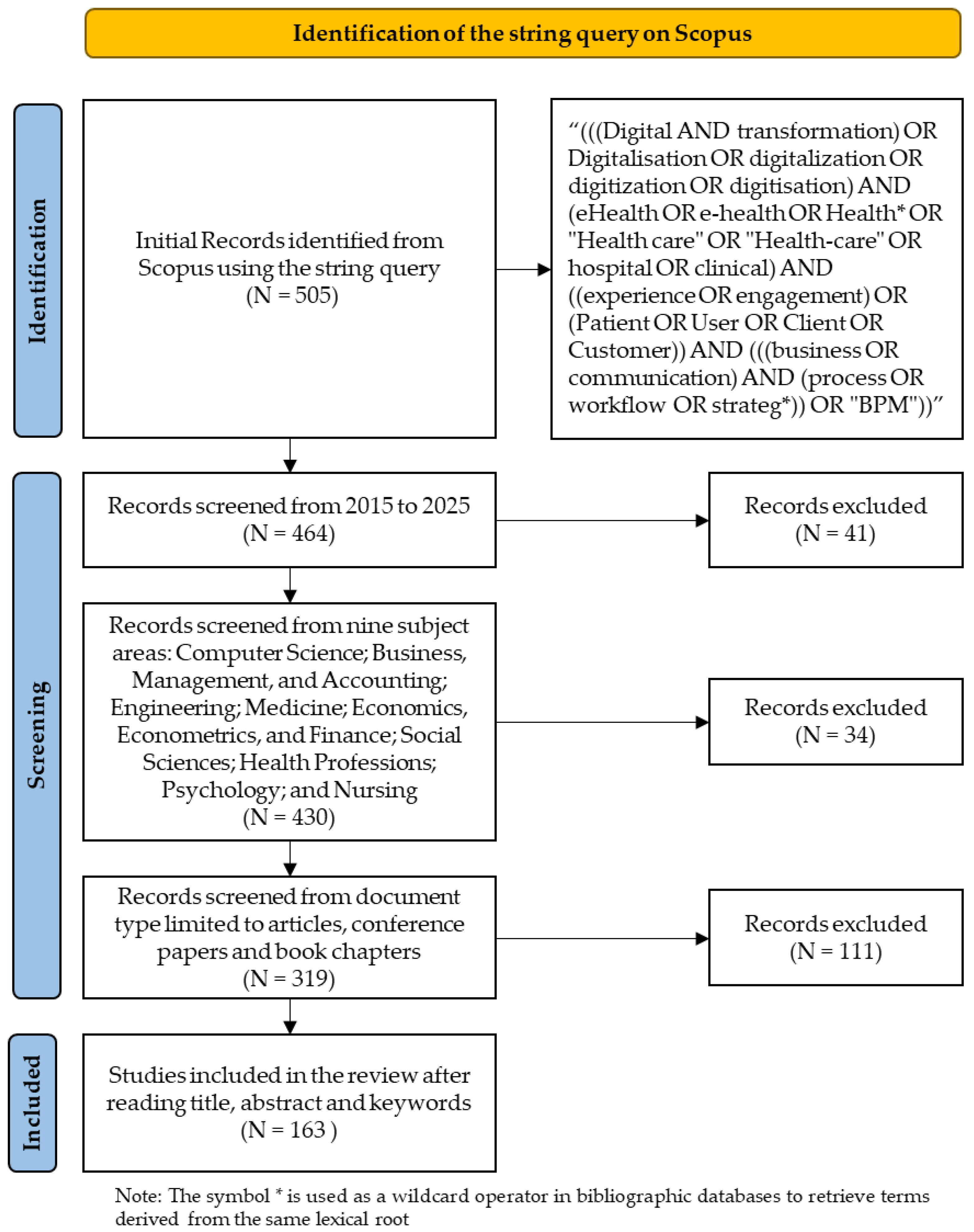
3. Materials and Methods
- Studies on DT in other healthcare domains, such as the pharmaceutical industry, psychology, nursing, and related fields.
- Research on technological aspects when connected to communicative processes or to the user–patient experience, as well as the impact of AI or blockchain systems.
- References related to Human Resources (HR) were also considered, since public relations departments often manage internal communication within organisations.
4. Results
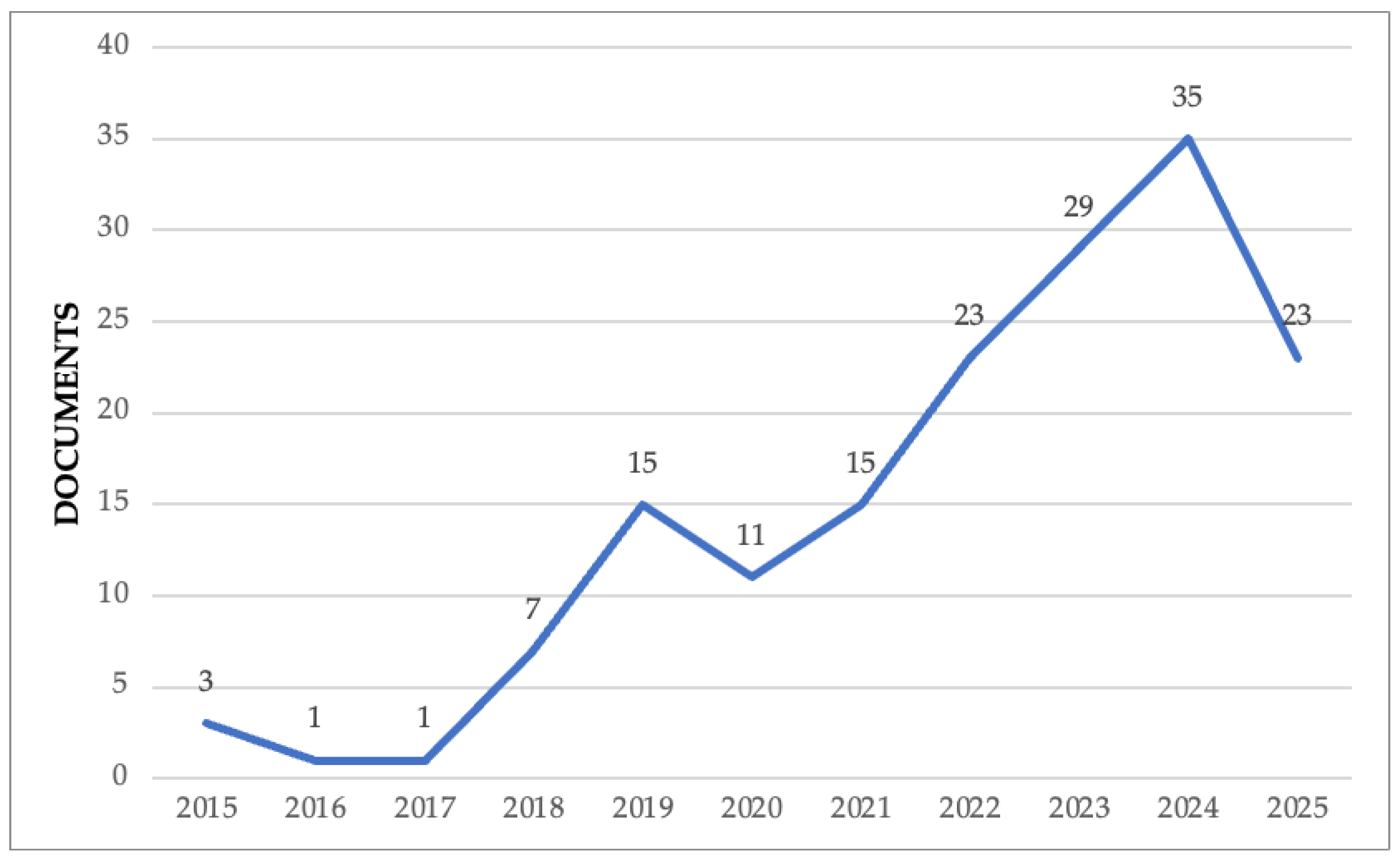
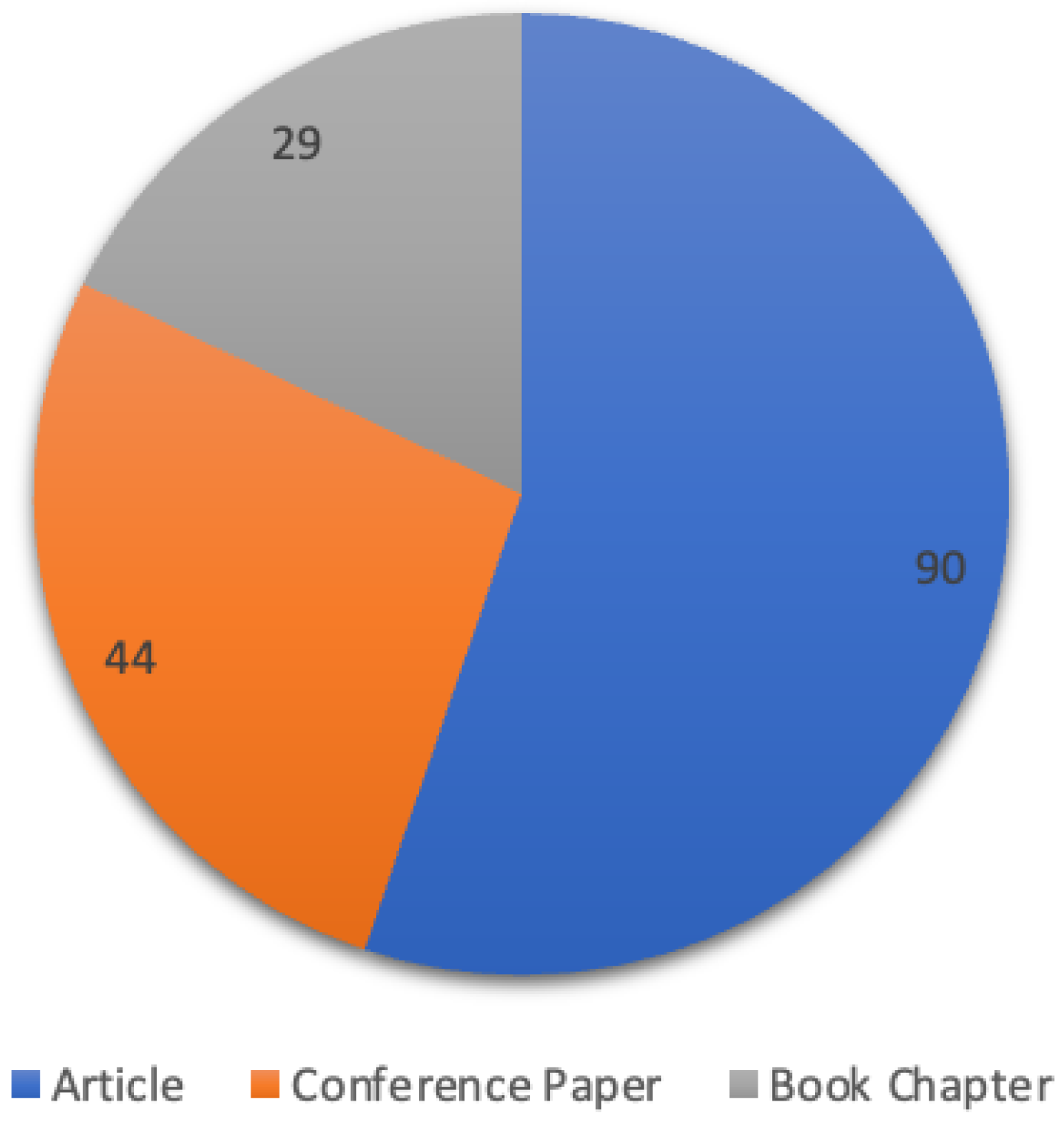
4.1. Scoping Review
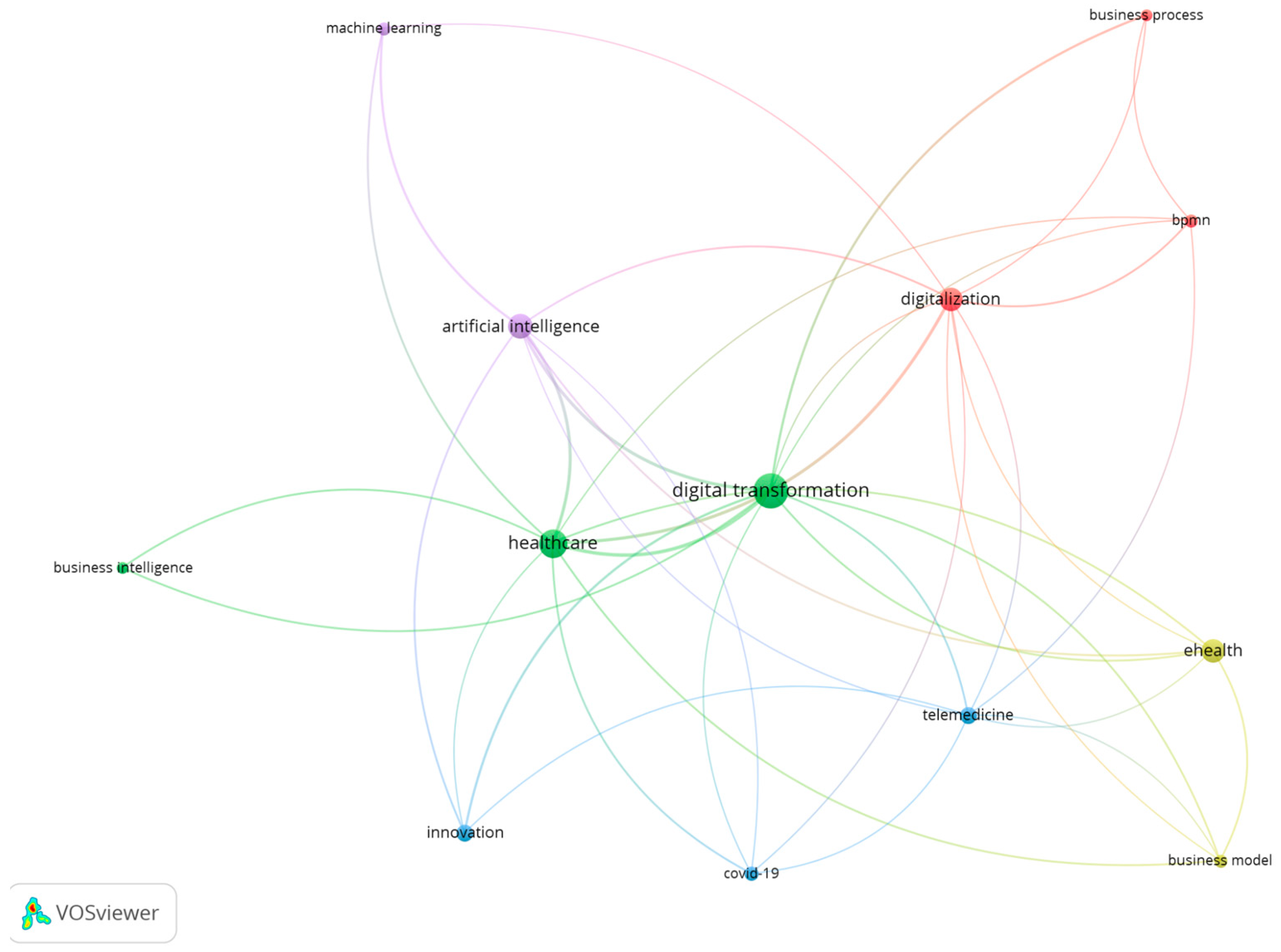
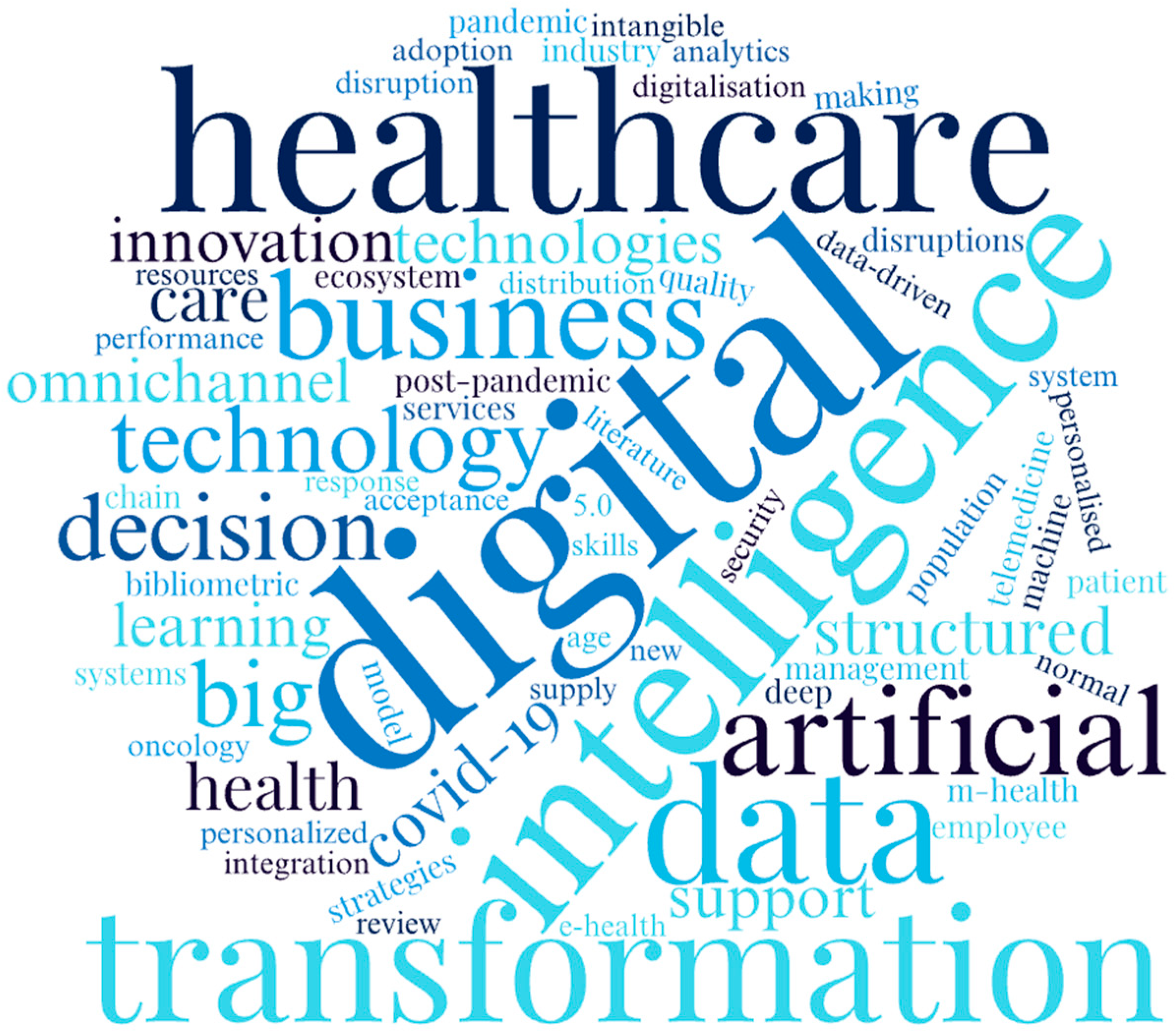
4.2. Co-Occurrence Analysis of Keywords
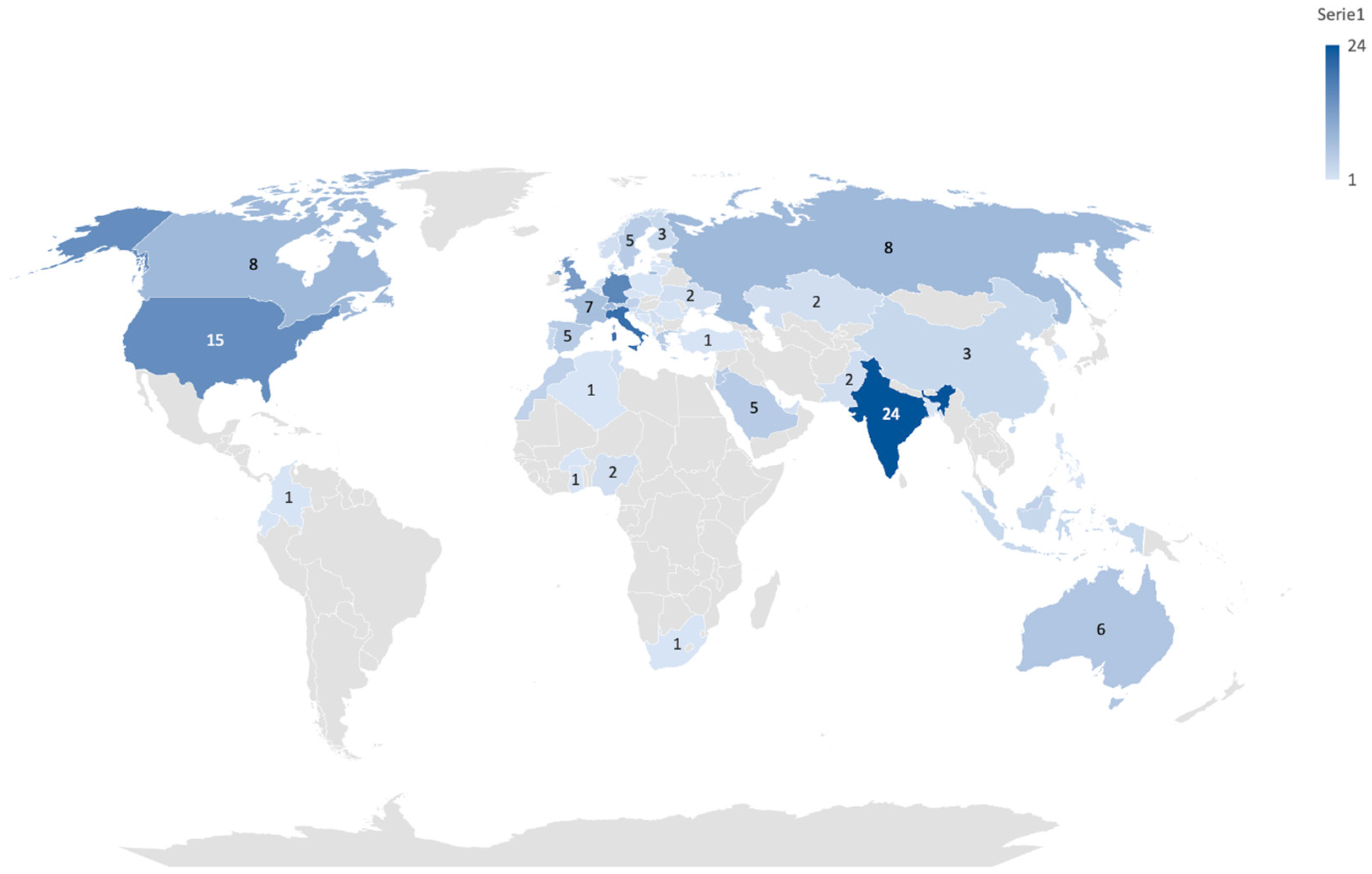
4.3. Analysis by Countries and Organisations
4.4. Analysis of the Most Cited Articles
- Digital Transformation in Healthcare: Technology Acceptance and Its Applications.
- 2.
- AI-Powered Innovation in Digital Transformation: Key Pillars and Industry Impact.
- 3.
- Healthcare System: Moving Forward with Artificial Intelligence.
- 4.
- The Challenges of Digital Transformation in Healthcare: An Interdisciplinary Literature Review, Framework, and Future Research Agenda.
- 5.
- Business Intelligence in the Healthcare Industry: The Utilisation of a Data-Driven Approach to Support Clinical Decision-Making.
- 6.
- Improving the Efficiency and Ease of Healthcare Analysis Through the Use of Data Visualisation Dashboards.
- 7.
- A Case Study for a Big Data and Machine Learning Platform to Improve Medical Decision Support in Population Health Management.
- 8.
- Interlinking Organisational Resources, AI Adoption, and Omnichannel Integration Quality in Ghana’s Healthcare Supply Chain.
- 9.
- Digital Transformation and the New Normal in China: How Can Enterprises Use Digital Technologies to Respond to COVID-19?
- 10.
- Australia in 2030: What Is Our Path to Health for All?
5. Discussion
5.1. Implications for Policy and Practice
5.2. Limited Scope and Future Research Avenues
6. Conclusions
- Communication as a strategic pillar, not a side thought. To prevent the organization from becoming a series of disconnected silos and to strengthen its engagement with its public, communication must overcome its current conceptual fragmentation. This requires understanding communication and stakeholder relations as structural components of process design, focusing on the experience of both internal users (employees/shareholders) and, above all, external users (clients/patients/providers). It needs to become the backbone that provides ethical and operational consistency to the digital shift. This is precisely what builds legitimacy with patients and reinforces corporate reputation.
- Corporate governance focused on health equity. Digital literacy should not be seen as a mere technical choice or an individual’s responsibility; it is a fundamental political duty that would guarantee not only organisational efficiency but also its long-term survival in an increasingly digitalised environment. This requires constant attention from all stakeholders to prevent economic, cultural, social or geographical implementation gaps from translating into new forms of social exclusion.
- Leadership of healthcare professionals in the fight against misinformation. The scientific authority of healthcare providers is the ultimate defense against the infodemic of the digital age. By acting as trusted guides, professionals can turn cold technological mediation into a genuine, human dialogue. This not only improves the quality of care and the patient experience but also creates tangible value for public health at large.
Author Contributions
Funding
Institutional Review Board Statement
Informed Consent Statement
Data Availability Statement
Conflicts of Interest
References
- Abadie, A., Roux, M., Chowdhury, S., & Dey, P. (2023). Interlinking organisational resources, AI adoption and omnichannel integration quality in Ghana’s healthcare supply chain. Journal of Business Research, 162, 113866. [Google Scholar] [CrossRef] [Scilit]
- Akman Dömbekci, H. A., Güzel, Ş., Sağlam, Ş., & Ege, K. (2025). The role of digital health technologies in the healthcare marketing process. Journal of Mehmet Akif Ersoy University Economics and Administrative Sciences Faculty, 12(2), 705–723. [Google Scholar] [CrossRef] [Scilit]
- Aldoseri, A., Al-Khalifa, K. N., & Hamouda, A. M. (2024). AI-powered innovation in digital transformation: Key pillars and industry impact. Sustainability, 16(5), 1790. [Google Scholar] [CrossRef] [Scilit]
- Arjona Martín, J. B. (2022). La experiencia de usuario (UX) como marco conceptual para la evaluación y el diseño de sistemas de comunicación e interacción en el ámbito de la salud. Revista Española de Comunicación en Salud, 13(2), 125–127. [Google Scholar] [CrossRef] [Scilit]
- Arnold, M., Goldschmitt, M., & Rigotti, T. (2023). Dealing with information overload: A comprehensive review. Frontiers in Psychology, 14, 1122200. [Google Scholar] [CrossRef] [Scilit] [PubMed]
- Backholer, K., Baum, F., Finlay, S. M., Friel, S., Giles-Corti, B., Jones, A., Patrick, R., Shill, J., Townsend, B., Armstrong, F., Baker, P., Bowen, K., Browne, J., Büsst, C., Butt, A., Canuto, K., Canuto, K., Capon, A., Corben, K., … Demaio, S. (2021). Australia in 2030: What is our path to health for all? The Medical Journal of Australia, 214, S5–S40. [Google Scholar] [CrossRef] [Scilit]
- Basile, L. J., Carbonara, N., Pellegrino, R., & Panniello, U. (2023). Business intelligence in the healthcare industry: The utilization of a data-driven approach to support clinical decision making. Technovation, 120, 102482. [Google Scholar] [CrossRef] [Scilit]
- Bonnet, D., & Westerman, G. (2021). The new elements of digital transformation. MIT Sloan Management Review, 62(2), 82–89. Available online: https://sloanreview.mit.edu/article/the-new-elements-of-digital-transformation/ (accessed on 2 September 2025).
- Brown, N., & Brown, I. (2019). From digital business strategy to digital transformation-How? A systematic literature review. In Proceedings of the South African Institute of Computer Scientists and Information Technologists (pp. 1–8). ACM. [Google Scholar] [CrossRef] [Scilit]
- Castells, M. (2002). La dimensión cultural de Internet. Editorial UOC. Available online: https://tinyurl.com/5ct7zfh6 (accessed on 25 September 2025).
- Chen, C. (2017). Science mapping: A systematic review of the literature. Journal of Data and Information Science, 2(2), 1–40. [Google Scholar] [CrossRef] [Scilit]
- Costa-Sánchez, C., & López-García, X. (2020). Comunicación y crisis del coronavirus en España. Primeras lecciones. El Profesional de la Información, 29(3), e290304. [Google Scholar] [CrossRef] [Scilit]
- Cuenca, J., & Verazzi, L. (2020). Comunicación interna total: Estrategia, prácticas y casos. Editorial UOC. Available online: https://elibro.net/es/ereader/ualicante/126406 (accessed on 16 September 2025).
- Cuenca-Fontbona, J., Compte-Pujol, M., & Zeler, I. (2022). La estrategia aplicada a las relaciones públicas en el medio digital: El caso español. Revista Latina de Comunicación Social, 80, 163–182. [Google Scholar] [CrossRef] [Scilit]
- Czerska, I. (2023). Digital transformation in health care and its marketing dimension. Marketing of Scientific and Research Organizations, 49(3), 27–46. [Google Scholar] [CrossRef] [Scilit]
- Dal Mas, F., Massaro, M., Rippa, P., & Secundo, G. (2023). The challenges of digital transformation in healthcare: An interdisciplinary literature review, framework, and future research agenda. Technovation, 123, 102716. [Google Scholar] [CrossRef] [Scilit]
- De Lucia Castillo, F., & Saibel Santos, C. A. (2016, September 23). Nubes de palabras animadas para la visualización de información textual de Publicaciones Académicas. VIII Congreso Internacional de Computación y Telecomunicaciones (COMTEL 2016), Lima, Perú. Available online: https://tinyurl.com/5n7e6vzj (accessed on 16 October 2025).
- De Ramón Fernández, A., Ruiz Fernández, D., & Sabuco Garcia, Y. (2020). Business process management for optimizing clinical processes: A systematic literature review. Health Informatics Journal, 26(2), 1305–1320. [Google Scholar] [CrossRef] [Scilit]
- Dicuonzo, G., Donofrio, F., Fusco, A., & Shini, M. (2023). Healthcare system: Moving forward with artificial intelligence. Technovation, 120, 102510. [Google Scholar] [CrossRef] [Scilit]
- Dimitrov, D. V. (2016). Medical internet of things and big data in healthcare. Healthcare Informatics Research, 22(3), 156–163. [Google Scholar] [CrossRef] [Scilit]
- Dunn, P., & Hazzard, E. (2019). Technology approaches to digital health literacy. International Journal of Cardiology, 293, 294–296. [Google Scholar] [CrossRef] [Scilit]
- Elia, G., Solazzo, G., Lerro, A., Pigni, F., & Tucci, C. L. (2024). The digital transformation canvas: A conceptual framework for leading the digital transformation process. Business Horizons, 67(4), 381–398. [Google Scholar] [CrossRef] [Scilit]
- Gong, C., & Ribiere, V. (2021). Developing a unified definition of digital transformation. Technovation, 102, 102217. [Google Scholar] [CrossRef] [Scilit]
- Herrera Aguilar, M. (2010). La comunicación como objeto de estudio: Entre las relaciones humanas y los medios. CIENCIA ergo-sum, Revista Científica Multidisciplinaria de Prospectiva, 17(2), 197–204. Available online: https://www.redalyc.org/pdf/104/10413200011.pdf (accessed on 4 October 2025).
- Hundal, G. S., Rhodes, D., & Laux, C. (2025). Digital transformation of healthcare enterprises in the era of disruptions—A structured literature review. Sustainability, 17(13), 5690. [Google Scholar] [CrossRef] [Scilit]
- Ibáñez-Hernández, A., & Carretón-Ballester, C. (2025). La visibilidad de la epilepsia en Instagram: El rol de los ‘influencers’ como creadores de contenido en salud. Index. comunicación: Revista científica en el ámbito de la Comunicación Aplicada, 15(2), 83–108. [Google Scholar] [CrossRef] [Scilit]
- Ibáñez-Hernández, A., Papí-Gálvez, N., & Carretón-Ballester, C. (2023). Pharmaceutical communication in Spain around the COVID-19 crisis: A scoping review. Systems, 11(6), 309. [Google Scholar] [CrossRef] [Scilit]
- Kamble, S. S., Gunasekaran, A., Goswami, M., & Manda, J. (2019). A systematic perspective on the applications of big data analytics in healthcare management. International Journal of Healthcare Management, 12(3), 226–240. [Google Scholar] [CrossRef] [Scilit]
- Karam-Cárdenas, T. (2007). Epistemología y comunicación. Notas para un debate. Andamios, 4(7), 97–124. Available online: https://dialnet.unirioja.es/servlet/articulo?codigo=2561501 (accessed on 16 October 2025).
- Konopik, J., & Blunck, D. (2023). Development of an evidence-based conceptual model of the health care sector under digital transformation: Integrative review. Journal of Medical Internet Research, 25, e41512. [Google Scholar] [CrossRef] [Scilit] [PubMed]
- Kotzias, K., Bukhsh, F. A., Arachchige, J. J., Daneva, M., & Abhishta, A. (2023). Industry 4.0 and healthcare: Context, applications, benefits and challenges. IET Software, 17(3), 195–248. [Google Scholar] [CrossRef] [Scilit]
- Kraus, S., Schiavone, F., Pluzhnikova, A., & Invernizzi, A. C. (2021). Digital transformation in healthcare: Analyzing the current state-of-research. Journal of Business Research, 123, 557–567. [Google Scholar] [CrossRef] [Scilit]
- Krüger, J., Lausberger, C., Von Nostitz-Wallwitz, I., Saake, G., & Leich, T. (2020). Search. Review. Repeat? An empirical study of threats to replicating SLR searches. Empirical Software Engineering, 25(1), 627–677. [Google Scholar] [CrossRef] [Scilit]
- Lee, C.-H., Wang, D., Desouza, K. C., & Evans, R. (2021). Digital transformation and the new normal in China: How can enterprises use digital technologies to respond to COVID-19? Sustainability, 13(18), 10195. [Google Scholar] [CrossRef] [Scilit]
- Leivaditis, V., & Sepetis, A. (2025). Digital transformation as a catalyst for sustainable health care systems: A narrative review of current evidence. International Journal of Innovation Management, 29(05n06), 2540009. [Google Scholar] [CrossRef] [Scilit]
- Li, S. (2021). How does COVID-19 speed the digital transformation of business processes and customer experiences? Review of Business, 41(1), 1–14. Available online: https://tinyurl.com/48tnxhpc (accessed on 15 October 2025).
- Lobonț, O. R., Țăran, A. M., Vătavu, S., & Para, I. (2023). Scientific radiography of healthcare system process efficiency digitalisation. Zagreb International Review of Economics & Business, 26(2), 113–135. [Google Scholar] [CrossRef] [Scilit]
- López-Martínez, F., Núñez-Valdez, E. R., García-Díaz, V., & Bursac, Z. (2020). A case study for a big data and machine learning platform to improve medical decision support in population health management. Algorithms, 13(4), 102. [Google Scholar] [CrossRef] [Scilit]
- Medina-Aguerrebere, P., & González-Pacanowski, A. (2012). La comunicación médica interactiva: El desafío de internet. Editorial Fragua. [Google Scholar]
- Medina-Moreira, J., Lagos-Ortiz, K., & Sinche-Guzmán, A. (2022). Digital transformation of health care services: Médikal case study. In R. Valencia-García, M. Bucaram-Leverone, J. Del Cioppo-Morstadt, N. Vera-Lucio, & E. Jácome-Murillo (Eds.), Technologies and Innovation (CITI 2022. Communications in Computer and Information Science, vol. 1658). Springer. [Google Scholar] [CrossRef] [Scilit]
- Moreno Vida, M. N. (2024). Impacto de la medicina 4.0 en el sistema de salud. Revista de Derecho de la Seguridad Social, Laborum. Extraordinario, 6, 345–375. Available online: https://hdl.handle.net/10481/98290 (accessed on 29 January 2026).
- Mosquera, M. (2003). Comunicación en salud: Conceptos, teorías y experiencias. Comminit, La Iniciativa de la Comunicación, 21(6), 84–107. Available online: https://tinyurl.com/3s4upxju (accessed on 1 October 2025).
- Ostern, N., Perscheid, G., Reelitz, C., & Moormann, J. (2021). Keeping pace with the healthcare transformation: A literature review and research agenda for a new decade of health information systems research. Electronic Markets, 31(4), 901–921. [Google Scholar] [CrossRef] [Scilit]
- Page, M. J., McKenzie, J. E., Bossuyt, P. M., Boutron, I., Hoffmann, T. C., Mulrow, C. D., Larissa Shamseer, L., Tetzlaff, J. M., Akl, E. A., Brennan, S. E., Chou, R., Glanville, J., Grimshaw, J. M., Hróbjartsson, A., Lalu, M. M., Li, T., Loder, E. W., Mayo-Wilson, E., McDonald, S., … Moher, D. (2021). The PRISMA 2020 statement: An updated guideline for reporting systematic reviews. BMJ, 372, n71. [Google Scholar] [CrossRef] [Scilit]
- Petretto, D. R., Carrogu, G. P., Gaviano, L., Berti, R., Pinna, M., Petretto, A. D., & Pili, R. (2024). Telemedicine, e-health, and digital health equity: A scoping review. Clinical Practice and Epidemiology in Mental Health: CP & EMH, 20, e17450179279732. [Google Scholar] [CrossRef] [Scilit]
- Rubio Martín, S., & Rubio Martín, S. (2021). eHealth y el impacto de la cuarta revolución industrial en salud, el valor del cuidado. Enfermería en cardiología: Revista científica e informativa de la Asociación Española de Enfermería en Cardiología, 82, 5–9. Available online: https://enfermeriaencardiologia.com/wp-content/uploads/Enferm-Cardiol.-2021-28825-9_1.pdf (accessed on 16 September 2025).
- Schotten, M., Meester, W. J., Steiginga, S., & Ross, C. A. (2017). A brief history of Scopus: The world’s largest abstract and citation database of scientific literature. In Research analytics (pp. 31–58). Auerbach Publications. [Google Scholar] [CrossRef] [Scilit]
- Schramm, W. (1982). La ciencia de la comunicación humana. Grijalbo. [Google Scholar]
- Schumacher, A., Erol, S., & Sihn, W. (2016). A maturity model for assessing Industry 4.0 readiness and maturity of manufacturing enterprises. Procedia CIRP, 52, 161–166. [Google Scholar] [CrossRef] [Scilit]
- Skinner, H. A., Maley, O., & Norman, C. D. (2006). Developing internet-based eHealth promotion programs: The Spiral Technology Action Research (STAR) model. Health Promotion Practice, 7(4), 406–417. [Google Scholar] [CrossRef] [Scilit]
- Stadler, J. G., Donlon, K., Siewert, J. D., Franken, T., & Lewis, N. E. (2016). Improving the efficiency and ease of healthcare analysis through use of data visualization dashboards. Big Data, 4(2), 129–135. [Google Scholar] [CrossRef] [Scilit]
- Stoumpos, A. I., Kitsios, F., & Talias, M. A. (2023). Digital transformation in healthcare: Technology acceptance and its applications. International Journal of Environmental Research and Public Health, 20(4), 3407. [Google Scholar] [CrossRef] [Scilit]
- Torres Valdés, R. M., Quiles Soler, M. D. C., Ibáñez Hernández, A., & Arribas Mato, C. (2025). Relaciones Públicas responsables en el ámbito de la salud mental: Alfabetización de RRPP en el caso de esketamina como cura milagro contra la depresión. Revista Internacional De Relaciones Públicas, 15(29), 47–68. [Google Scholar] [CrossRef] [Scilit]
- Torres Valdés, R. M., & Santa Soriano, A. (2014). Necesidad de adaptar los procesos de comunicación en salud a la Sociedad Red. Nuevas formas relacionales entre profesional sanitario y paciente. Historia y Comunicación Social, 18, 651–661. [Google Scholar] [CrossRef] [Scilit]
- Tricco, A. C., Lillie, E., Zarin, W., O’Brien, K. K., Colquhoun, H., Levac, D., Moher, D., Peters, M. D. J., Horsley, T., Weeks, L., Hempel, S., Akl, E. A., Chang, C., McGowan, J., Stewart, L., Hartling, L., Aldcroft, A., Wilson, M. G., Garritty, C., … Straus, S. E. (2018). PRISMA extension for scoping reviews (PRISMA-ScR): Checklist and explanation. Annals of Internal Medicine, 169(7), 467–473. [Google Scholar] [CrossRef] [Scilit]
- United Nations. (n.d.). Sustainable development goals. Available online: https://www.un.org/sustainabledevelopment/es/health/ (accessed on 1 September 2025).
- Van Eck, N. J., & Waltman, L. (2010). Software survey: VOSviewer, a computer program for bibliometric mapping. Scientometrics, 84, 523–538. [Google Scholar] [CrossRef] [Scilit] [PubMed]
- Van Poucke, A., & Baran-Chong, R. (2021). 2021 Healthcare CEO future pulse. 10 actionable perspectives for healthcare leaders. KPMG International. Available online: https://tinyurl.com/4f6bdut7 (accessed on 6 September 2025).
- Viitanen, J., Valkonen, P., Savolainen, K., Karisalmi, N., Hölsä, S., & Kujala, S. (2022). Patient experience from an eHealth perspective: A scoping review of approaches and recent trends. Yearbook of Medical Informatics, 31(01), 136–145. [Google Scholar] [CrossRef] [Scilit]
- Westerman, G., Bonnet, D., & McAfee, A. (2014). The nine elements of digital transformation. MIT Sloan Management Review, 55(3), 1–6. Available online: https://sloanreview.mit.edu/article/the-nine-elements-of-digital-transformation/ (accessed on 2 September 2025).
- Westerman, G., Calméjane, C., Bonnet, D., Ferraris, P., & McAfee, A. (2011). Digital transformation: A road-map for billion-dollar organizations. MIT Center for Digital Business and Capgemini Consulting. Available online: https://tinyurl.com/3zss7pfx (accessed on 2 September 2025).
- World Health Organization (WHO). (2021). Global strategy on digital health 2020–2025. Available online: https://tinyurl.com/38x5tnj3 (accessed on 1 September 2025).
- Yang, K., Hu, Y., & Qi, H. (2022). Digital health literacy: Bibliometric analysis. Journal of Medical Internet Research, 24(7), e35816. [Google Scholar] [CrossRef] [Scilit] [PubMed]
- Zheng, H., Chen, X., Jiang, S., & Sun, L. (2023). How does health information seeking from different online sources trigger cyberchondria? The roles of online information overload and information trust. Information Processing & Management, 60(4), 103364. [Google Scholar] [CrossRef] [Scilit]



| Concept | Operational Definition | Communication-Related Indicators and Formats | Coding-Related Terms |
|---|---|---|---|
| Communication in digitalised healthcare processes | Organisational and relational practices through which healthcare institutions, professionals, and patients/users exchange information and construct meaning via digital channels embedded in healthcare processes | Communication channel and format (textual, audiovisual, interactive); directionality; degree of personalisation; accessibility and clarity of information; omnichannel strategies; coherence of institutional discourse; use of corporate | health communication, digital communication, strategic communication, patient–provider communication, omnichannel communication, digital marketing |
| Patient/user experience (PX/UX) | Patients’ and users’ perceptions of their interaction with digital healthcare services throughout the care process, including informational, relational, and experiential dimensions | Usability; satisfaction; trust; perceived quality of communicative interaction; user engagement; adherence; experience across patient portals, teleconsultations, and digital communication environments | patient experience (PX), user experience (UX), patient engagement, patient-centred care, patient satisfaction, trust, adherence |
| Citation Report | |
|---|---|
| Publications | 163 |
| Article citations | 2060 |
| Average citations per article | 18.1 |
| Clusters | Terms |
|---|---|
| 1 | bpmn, business process, digitalisation |
| 2 | business intelligence, digital transformation, healthcare |
| 3 | COVID-19, innovation, telemedicine |
| 4 | business model, e-health |
| 5 | artificial intelligence, machine learning |
| Author/Year | Records | Source Title | Citations |
|---|---|---|---|
| Stoumpos et al. (2023) | Digital Transformation in Healthcare: Technology Acceptance and Its Applications. DOI: 10.3390/ijerph20043407 | International Journal of Environmental Research and Public Health | 451 |
| Aldoseri et al. (2024) | AI-Powered Innovation in Digital Transformation: Key Pillars and Industry Impact. DOI: 10.3390/su16051790 | Sustainability (Switzerland) | 135 |
| Dicuonzo et al. (2023) | Healthcare system: Moving forward with artificial intelligence. DOI: 10.1016/j.technovation.2022.102510 | Technovation | 112 |
| Dal Mas et al. (2023) | The challenges of digital transformation in healthcare: An interdisciplinary literature review, framework, and future research agenda. DOI: 10.1016/j.technovation.2023.102716 | Technovation | 103 |
| Basile et al. (2023) | Business intelligence in the healthcare industry: The utilization of a data-driven approach to support clinical decision making. DOI: 10.1016/j.technovation.2022.102482 | Technovation | 100 |
| Stadler et al. (2016) | Improving the Efficiency and Ease of Healthcare Analysis Through Use of Data Visualization Dashboards. DOI: 10.1089/big.2015.0059 | Big Data | 86 |
| López-Martínez et al. (2020) | A Case Study for a Big Data and Machine Learning Platform to Improve Medical Decision Support in Population Health Management. DOI: 10.3390/a13040102 | Algorithms | 52 |
| Abadie et al. (2023) | Interlinking organisational resources, AI adoption and omnichannel integration quality in Ghana’s healthcare supply chain. DOI: 10.1016/j.jbusres.2023.113866 | Journal of Business Research | 48 |
| Lee et al. (2021) | Digital Transformation and the New Normal in China: How Can Enterprises Use Digital Technologies to Respond to COVID-19? DOI: 10.3390/su131810195 | Sustainability (Switzerland) | 46 |
| Backholer et al. (2021) | Australia in 2030: what is our path to health for all? DOI: 10.5694/mja2.51020 | Medical Journal of Australia | 45 |
Disclaimer/Publisher’s Note: The statements, opinions and data contained in all publications are solely those of the individual author(s) and contributor(s) and not of MDPI and/or the editor(s). MDPI and/or the editor(s) disclaim responsibility for any injury to people or property resulting from any ideas, methods, instructions or products referred to in the content. |
© 2026 by the authors. Licensee MDPI, Basel, Switzerland. This article is an open access article distributed under the terms and conditions of the Creative Commons Attribution (CC BY) license.
Share and Cite
Ibáñez-Hernández, A.; López-García, J.-J.; Quiles-Soler, C. Communication and Its Impact on Patient Experience as a Cornerstone of the Digitalisation of Healthcare Business Processes: A Scoping Review. Journal. Media 2026, 7, 24. https://doi.org/10.3390/journalmedia7010024
Ibáñez-Hernández A, López-García J-J, Quiles-Soler C. Communication and Its Impact on Patient Experience as a Cornerstone of the Digitalisation of Healthcare Business Processes: A Scoping Review. Journalism and Media. 2026; 7(1):24. https://doi.org/10.3390/journalmedia7010024
Chicago/Turabian StyleIbáñez-Hernández, Ana, Juan-José López-García, and Carmen Quiles-Soler. 2026. "Communication and Its Impact on Patient Experience as a Cornerstone of the Digitalisation of Healthcare Business Processes: A Scoping Review" Journalism and Media 7, no. 1: 24. https://doi.org/10.3390/journalmedia7010024
APA StyleIbáñez-Hernández, A., López-García, J.-J., & Quiles-Soler, C. (2026). Communication and Its Impact on Patient Experience as a Cornerstone of the Digitalisation of Healthcare Business Processes: A Scoping Review. Journalism and Media, 7(1), 24. https://doi.org/10.3390/journalmedia7010024