
Digital Discourses of Sustainability: Exploring Social Media Narratives on Green Economy in Qatar and Malaysia


Abstract
1. Introduction
- Academic Insight: It enriches environmental communication scholarship by bringing qualitative, platform-based analysis into comparative regional contexts.
- Contextual Nuance: It unpacks how Qatar and Malaysia, despite differing development patterns, construct sustainability narratives in ways that reflect national priorities, identities, and roles.
- Practical Relevance: It offers media practitioners, policymakers, and civil society actionable insights into how digital framing of the green economy can be shaped, encouraged, or contested for positive outcomes.
- How is the green economy framed and discussed on social media in Qatar and Malaysia?
- What similarities and differences exist between the two countries’ sustainability narratives?
- How do these narratives reflect broader socio-political and cultural contexts?
2. Literature Review
2.1. Problem Statement
2.2. Research Gap
- It brings comparative insight into how two distinct regions construct green economy narratives.
- It highlights the cultural, political, and social dimensions of digital sustainability discourse, moving beyond surface-level analysis.
3. Materials and Methods
3.1. Data Collection and Sampling Strategy
- Total dataset: 62,450 posts
- Qatar subset: 28,900 posts
- Malaysia subset: 33,550 posts
3.2. Preprocessing Steps
- Text cleaning: removal of duplicates, URLs, emojis (retained hashtags and mentions).
- Language filtering: only English and Malay/Arabic posts relevant to sustainability were retained.
- Tokenization and lemmatization: using SpaCy for consistency.
- Stopword removal: standard plus custom lists (e.g., common promotional filler terms).
- Translation: non-English posts were machine-translated (Google API), followed by human spot checks for accuracy.
3.3. Theoretical Processing and Analytical Framework
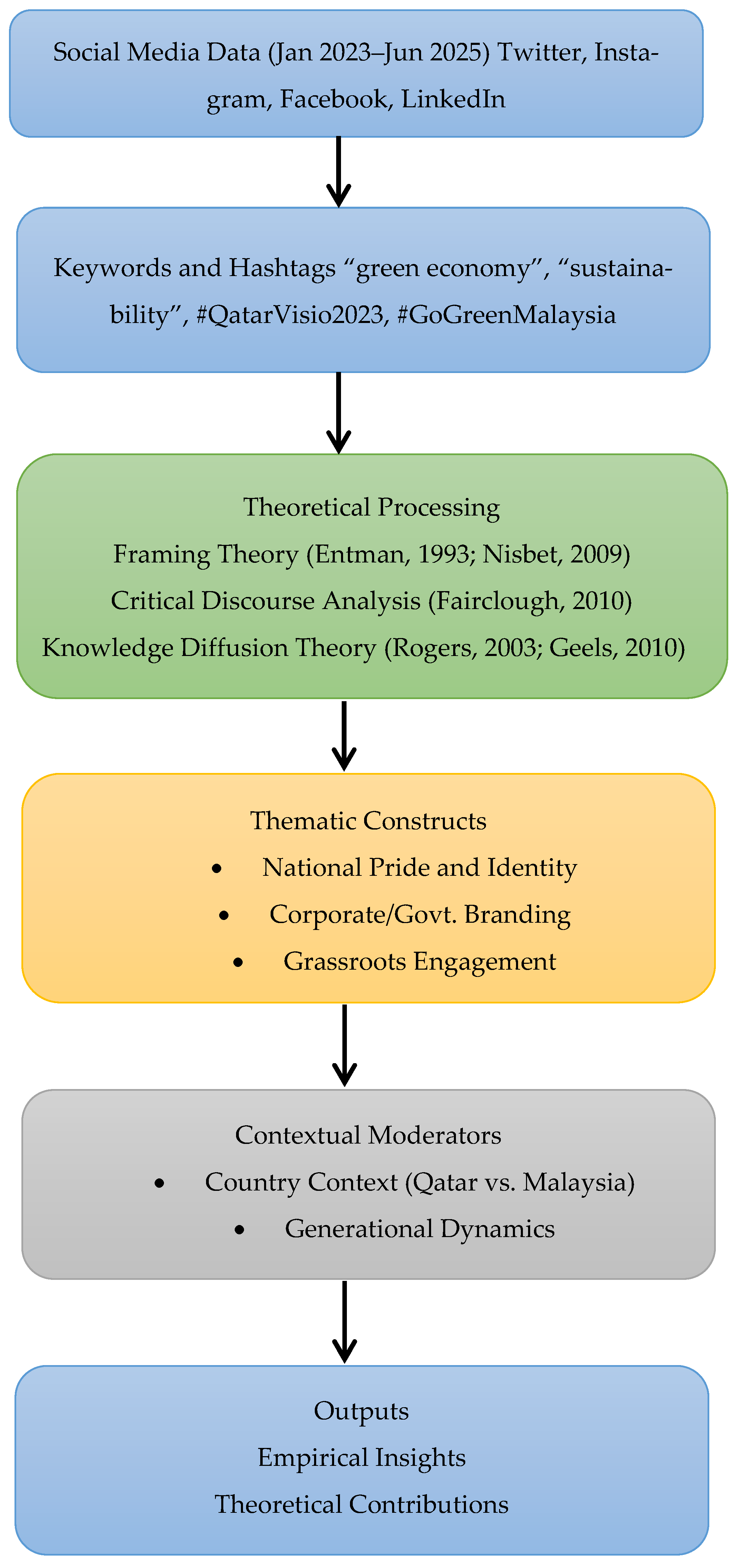
- Framing Theory (Entman, 1993; Nisbet, 2009)—identifying dominant frames (economic, moral, cultural, national identity).
- Critical Discourse Analysis (CDA) (Fairclough, 2010)—uncovering power dynamics, silenced voices, and ideological positioning.
- Knowledge Diffusion Theory (Rogers, 2003; Geels, 2010)—assessing how sustainability narratives spread, gain legitimacy, and face resistance in different socio-political contexts.
3.4. Model Architecture and Parameters
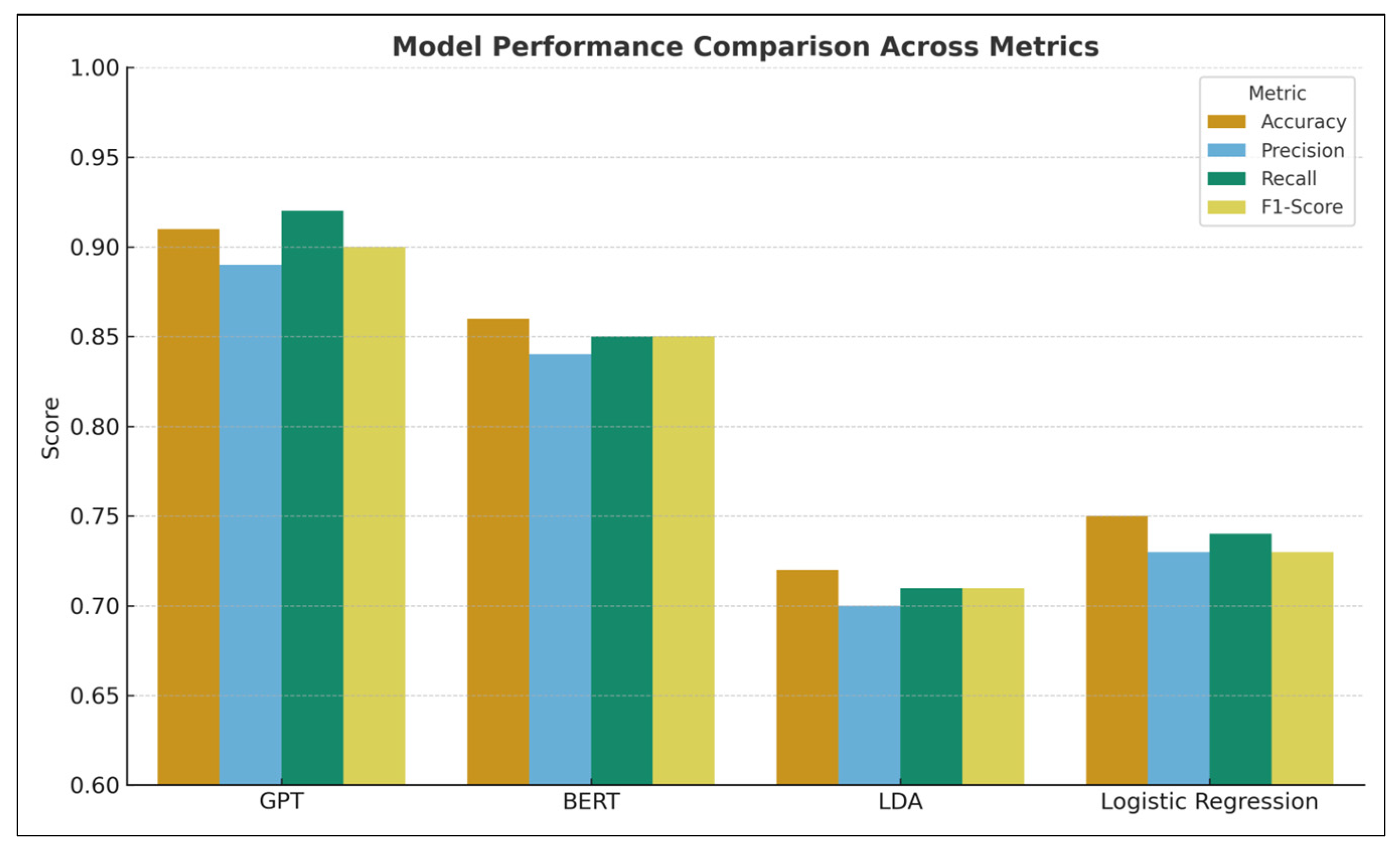
- Baseline models: Logistic Regression + TF-IDF, LDA topic modeling, and BERT-base.
- Hyperparameters: learning rate 2 × 10⁻⁵; batch size 32; max sequence length 128; training epochs 5.
- Cross-validation: 5-fold stratified, ensuring balanced representation of frames across splits.
- Evaluation metrics: accuracy, F1-score, and perplexity for text classification; coherence score for topic modeling.
3.5. Quality Checks and Validation
- Intercoder reliability: two researchers independently coded 20% of the qualitative subsample (Cohen’s κ = 0.81, indicating substantial agreement).
- Triangulation: results cross-validated between transformer outputs and manual coding.
- Error analysis: misclassified cases reviewed to refine taxonomy of frames.
- Bias mitigation: platform and linguistic biases documented, with sensitivity analyses to test robustness of findings across subsets.
3.6. Transparency and Availability
3.7. Ethical Considerations
4. Results
- National Pride and Sustainability as Identity
- Corporate and Government Branding of Green Initiatives
- Grassroots and Citizen Engagement
- Tensions, Contradictions, and Skepticism
4.1. National Pride and Sustainability as Identity
4.1.1. Qatar
4.1.2. Malaysia
4.2. Corporate and Government Branding of Green Initiatives
4.2.1. Qatar
4.2.2. Malaysia
4.3. Grassroots and Citizen Engagement
4.3.1. Qatar
4.3.2. Malaysia
4.4. Tensions, Contradictions, and Skepticism
4.4.1. Qatar
4.4.2. Malaysia
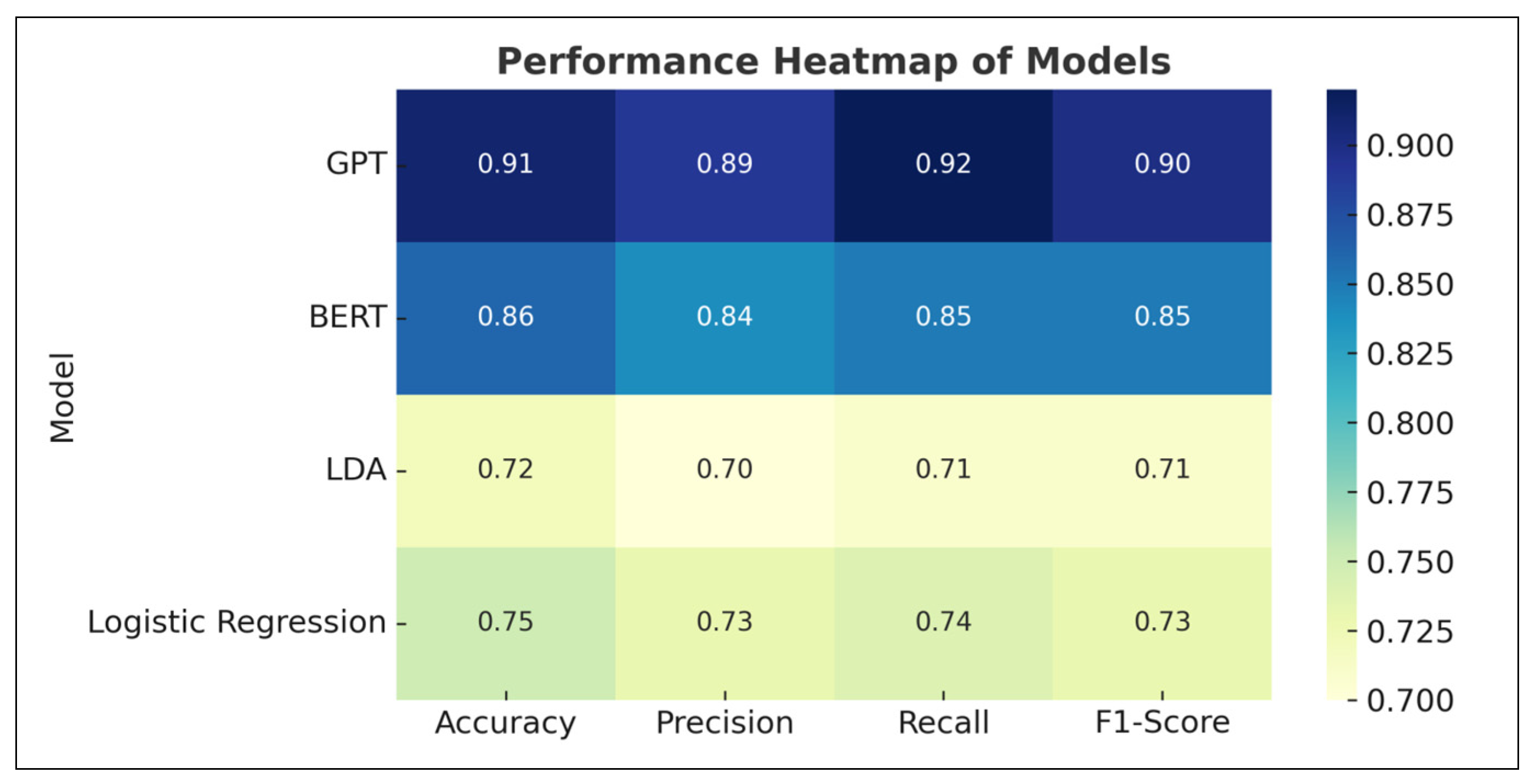
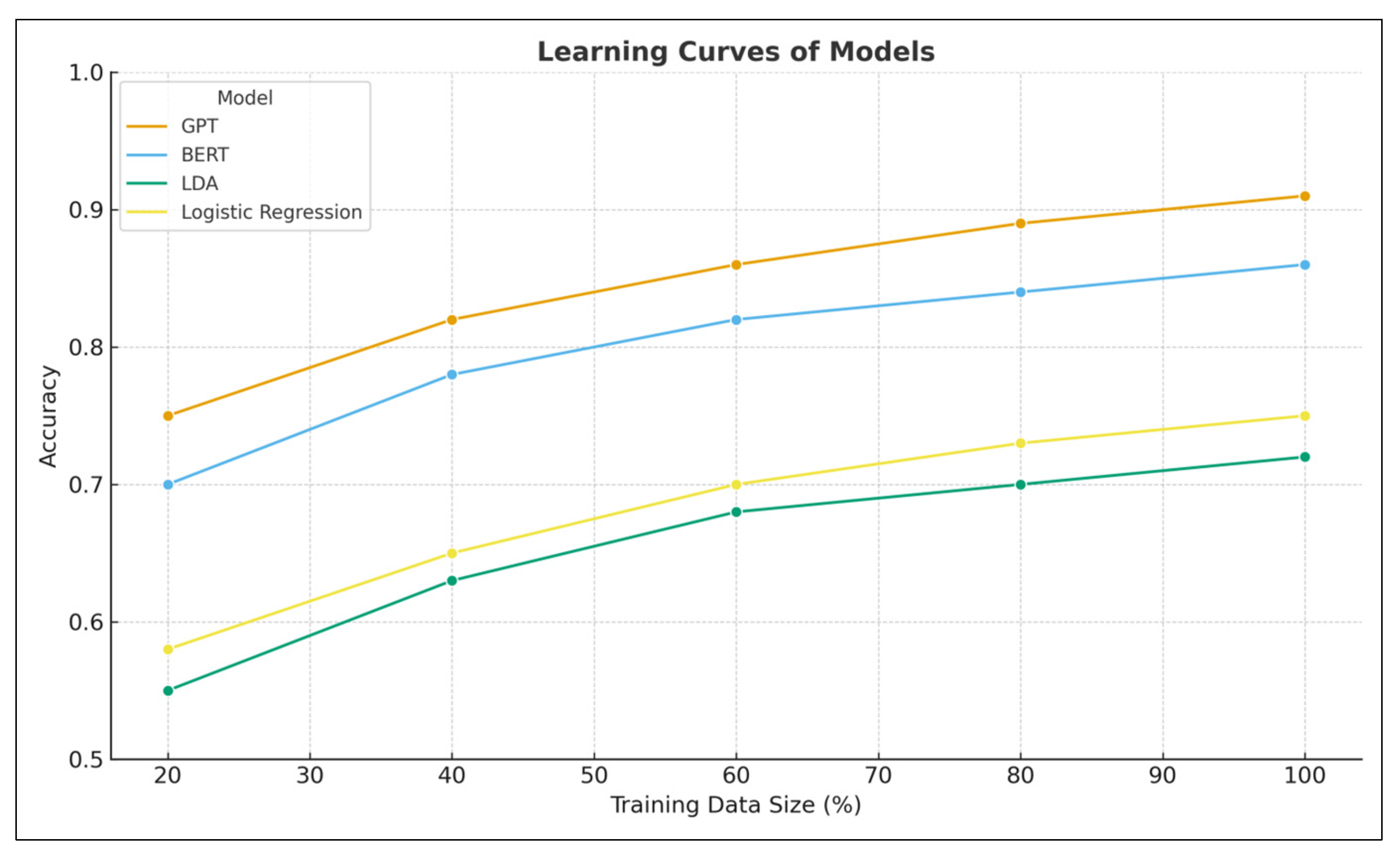
4.5. Model Performance
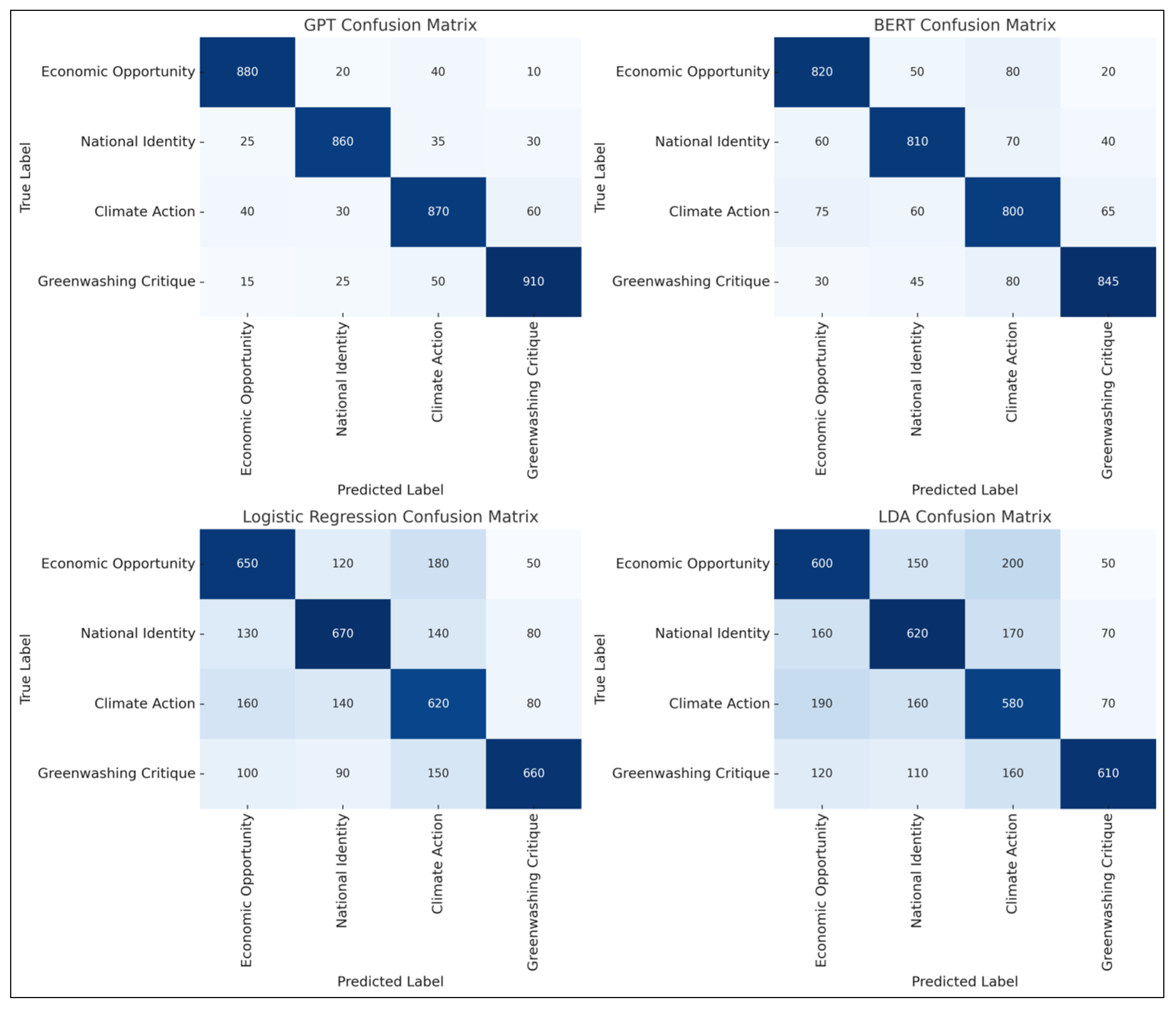
4.6. Confusion Matrix Analysis
5. Discussion
5.1. National Pride as a Frame of Sustainability
5.2. Corporate Branding and the Performance of Sustainability
5.3. Grassroots Agency: Amplification vs. Contestation
5.4. Skepticism and Greenwashing
5.5. Why These Results Matter
- It indicates that frames are dependent and contingent on political opportunity structures.
- It shows that discursive struggles have different forms based on power discrepancies and civic space.
- It builds on diffusion theory by demonstrating how sustainability narratives diffuse in different contexts that are state-led and citizen-driven.
6. Conclusions
Author Contributions
Funding
Institutional Review Board Statement
Informed Consent Statement
Data Availability Statement
Conflicts of Interest
Abbreviations
| QNA | Qatar News Agency |
| FT | Framing Theory |
| CDA | Critical Discourse Analysis |
| KDT | Knowledge Diffusion Theory |
Appendix A

| Year | Month | Major Contextual Events (Qatar and Malaysia) | Data Collected |
|---|---|---|---|
| 2023 | Jan–Mar | Post-COVID recovery narratives | Keywords and hashtags monitoring begins |
| Apr–Jun | Qatar promotes renewable energy projects; Malaysia pushes Twelfth Plan initiatives | Increased activity on Twitter and Facebook | |
| Jul–Sep | Flood awareness in Malaysia; Qatar launches new solar initiatives | Instagram posts on community campaigns | |
| Oct–Dec | COP28 lead-up discussions; Malaysia highlights mangrove restoration | Strong LinkedIn corporate branding | |
| 2024 | Jan–Mar | Qatar’s National Sports Day with sustainability messaging; Malaysia’s youth climate protests | Data peaks on Twitter |
| Apr–Jun | Ramadan sustainability campaigns; Malaysian SMEs promote green products | Instagram campaigns active | |
| Jul–Sep | Qatar energy diversification debates; Malaysia’s haze and climate awareness | Twitter criticism trends | |
| Oct–Dec | COP29 discussions; Malaysia reviews Twelfth Malaysia Plan midterm | Government branding active | |
| 2025 | Jan–Mar | Qatar reaffirms Vision 2030; Malaysia’s youth groups push #GoGreenMalaysia | Grassroots voices strong |
| Apr–Jun | Qatar pushes green finance projects; Malaysia debates coal phase-out | Peak digital engagement |
| Platform | Qatar—Focus Areas | Malaysia—Focus Areas | Notes |
|---|---|---|---|
| Twitter (X) | Government branding, Vision 2030 updates, green finance | Youth activism, climate protests, critique of greenwashing | Qatar: state-driven; Malaysia: grassroots and critical |
| Ministry campaigns, national awareness programs | CSR campaigns, NGO updates, local community projects | Both countries use them for outreach | |
| Visual promotion of stadium recycling, solar farms | Zero-waste lifestyle, eco-products, youth challenges | Image-heavy storytelling | |
| Corporate green bonds, sustainable finance, energy diversification | Social enterprises, CSR reporting, clean tech startups | Professional branding focus |
| Theme | Qatar—Key Trends (2023–2025) | Malaysia—Key Trends (2023–2025) |
|---|---|---|
| National Pride and Identity | Sustainability tied to Vision 2030 and FIFA legacy | Sustainability tied to cultural heritage, Islamic stewardship |
| Corporate and Government Branding | Green Sukuk, solar mega projects, e-mobility | CSR campaigns, SMEs with eco-products |
| Grassroots Engagement | Youth amplifying government-led programs | Activism, urban gardening, climate marches |
| Tensions and Skepticism | Muted critique of LNG reliance | Vocal critiques of coal, greenwashing, deforestation |
| Category | Details |
|---|---|
| General Keywords | “green economy,” “sustainability,” “renewable energy,” “carbon neutral,” “climate action.” |
| Country-Specific Hashtags | #QatarSustainability, #QatarVision2030, #QatarGreenVision, #SustainableQatar |
| Main Focus Areas | - Alignment with Qatar National Vision 2030 - Renewable energy (solar, wind) - Sustainable infrastructure (stadiums, transport) - Green finance and Sukuk initiatives |
| Platforms Used | Twitter (government campaigns), LinkedIn (corporate finance), Instagram (visual branding), Facebook (awareness programs) |
| Narrative Style | State-centric, prestige-driven, global competitiveness, showcasing mega projects |
| Category | Details |
|---|---|
| General Keywords | “green economy,” “sustainability,” “renewable energy,” “carbon neutral,” “climate action.” |
| Country-Specific Hashtags | #SustainableMalaysia, #GoGreenMalaysia, #HijauBersama, #MyGreenFuture |
| Main Focus Areas | - Community activism and grassroots movements - Renewable transition and coal critiques - Eco-products, CSR campaigns, social enterprises - Cultural framing (kampung traditions, Islamic stewardship) |
| Platforms Used | Twitter (activism and critique), Instagram (youth eco-lifestyles), Facebook (NGOs and CSR), LinkedIn (SMEs and clean tech) |
| Narrative Style | Grassroots, participatory, culturally rooted, critical of policy gaps, and corporate greenwashing |
References
- Amangeldi, D., Usmanova, A., & Shamoi, P. (2023). Understanding environmental posts: Sentiment and emotion analysis of social media data. IEEE Access, 12, 33504–33523. [Google Scholar] [CrossRef]
- Bamman, D., Lewke, O., & Blevins, T. (2020, May 11–16). An annotated dataset of coreference in English literature. 12th Language Resources and Evaluation Conference (pp. 44–54), Marseille, France. [Google Scholar]
- Banerjee, S. B. (2003). Who sustains whose development? Sustainable development and the reinvention of nature. Organization Studies, 24(1), 143–180. [Google Scholar] [CrossRef]
- Barbier, E. B. (2016). Building the green economy. Canadian Public Policy, 42(S1), S1–S9. [Google Scholar] [CrossRef]
- Bender, E. M., & Koller, A. (2020, July 5–10). Climbing towards NLU: On meaning, form, and understanding in the age of data. 58th Annual Meeting of the Association for Computational Linguistics (pp. 5185–5198), Online. [Google Scholar] [CrossRef]
- Bina, O. (2013). The green economy and sustainable development: An uneasy balance? Environment and Planning C: Government and Policy, 31(6), 1023–1047. [Google Scholar] [CrossRef]
- Bowen, A., & Fankhauser, S. (2017). Chapter 7: Good practice in low-carbon policy. In Trends in climate change legislation. Edward Elgar Publishing. [Google Scholar] [CrossRef]
- Boykoff, M. T. (2011). Who speaks for the climate? Making sense of media reporting on climate change. Cambridge University Press. [Google Scholar]
- Braun, V., & Clarke, V. (2006). Using thematic analysis in psychology. Qualitative Research in Psychology, 3(2), 77–101. [Google Scholar] [CrossRef]
- Carvalho, A. (2007). Ideological cultures and media discourses on scientific knowledge: Re-reading news on climate change. Public Understanding of Science, 16(2), 223–243. [Google Scholar] [CrossRef]
- Castells, M. (2009). Communication power. Oxford University Press. [Google Scholar]
- Crawford, K. (2021). Atlas of AI: Power, politics, and the planetary costs of artificial intelligence. Yale University Press. [Google Scholar]
- Creswell, J. W., & Poth, C. N. (2018). Qualitative inquiry and research design: Choosing among five approaches (4th ed.). Sage. [Google Scholar]
- Delmas, M. A., & Burbano, V. C. (2011). The drivers of greenwashing. California Management Review, 54(1), 64–87. [Google Scholar] [CrossRef]
- Entman, R. M. (1993). Framing: Toward clarification of a fractured paradigm. Journal of Communication, 43(4), 51–58. [Google Scholar] [CrossRef]
- Escobar, A. (1995). Encountering development: The making and unmaking of the third world. Princeton University Press. [Google Scholar]
- Fairclough, N. (2010). Critical discourse analysis: The critical study of language (2nd ed.). Routledge. [Google Scholar]
- Fichter, K., & Clausen, J. (2021). Diffusion of environmental innovations: Sector differences and explanation range of factors. Environmental Innovation and Societal Transitions, 38, 34–51. [Google Scholar] [CrossRef]
- Geels, F. W. (2010). Ontologies, socio-technical transitions (to sustainability), and the multi-level perspective. Research Policy, 39(4), 495–510. [Google Scholar] [CrossRef]
- Government Communications Office, Qatar. (n.d.). Qatar national vision 2030 (Retrieved 2025, from Qatar Government Communications Office website). Available online: https://www.gco.gov.qa/en/state-of-qatar/qatar-national-vision-2030/our-story/ (accessed on 17 September 2025).
- Haas, P. M. (2016). Epistemic communities, constructivism, and international environmental politics (pp. 35–46). Routledge Handbook of International Environmental Politics. Routledge. [Google Scholar]
- Hansen, A., & Machin, D. (2013). Media and communication research methods (1st ed.). Palgrave Macmillan. [Google Scholar]
- Hou, Y., & Huang, J. (2025). Natural language processing for social science research: A comprehensive review. Chinese Journal of Sociology, 11(1), 121–157. [Google Scholar] [CrossRef]
- Ismail, A. F., Feisal, M., Sam, M. F. M., Hashim, N. M. Z., Kasim, N. S. M., & Isa, S. S. M. (2025). Investigating the sustainable digital business models used by social enterprises to address socio-environmental concerns in Malaysia. International Journal of Research and Innovation in Social Science, 9(2), 820–827. [Google Scholar] [CrossRef]
- Jacobs, M. (2012). Green growth: Economic theory and political discourse (Centre for Climate Change Economics and Policy working paper no. 108). Available online: https://www.lse.ac.uk/granthaminstitute/wp-content/uploads/2012/10/WP92-green-growth-economic-theory-political-discourse.pdf (accessed on 17 September 2025).
- Kamrava, M. (2013). Qatar: Small state, big politics. Cornell University Press. [Google Scholar]
- Khatib, L. (2013). Qatar’s foreign policy: The limits of pragmatism. International Affairs, 89(2), 417–431. [Google Scholar] [CrossRef]
- Klinger, U., & Svensson, J. (2015). The emergence of network media logic in political communication: A theoretical approach. New Media & Society, 17(8), 1241–1257. [Google Scholar] [CrossRef]
- Lincoln, Y. S., & Guba, E. G. (1985). Naturalistic inquiry. Sage. [Google Scholar]
- Loiseau, E., Saikku, L., Antikainen, R., Droste, N., Hansjürgens, B., Pitkänen, K., Leskinen, P., Kuikman, P., & Thomsen, M. (2016). Green economy and related concepts: An overview. Journal of Cleaner Production, 139, 361–371. [Google Scholar] [CrossRef]
- Lu, J. Y., & Castka, P. (2009). Corporate Social Responsibility in Malaysia—Experts’ views and perspectives. Corporate Social Responsibility and Environmental Management, 16(3), 146–154. [Google Scholar] [CrossRef]
- Lyon, T. P., & Montgomery, A. W. (2015). The means and end of greenwash. Organization & Environment, 28(2), 223–249. [Google Scholar] [CrossRef]
- Mohammed, S., Desha, C., & Goonetilleke, A. (2022). Investigating low-carbon pathways for hydrocarbon-dependent rentier states: Economic transition in Qatar. Technological Forecasting and Social Change, 185, 122084. [Google Scholar] [CrossRef]
- Mol, A. P. J. (2009). Environmental governance through information: China and Vietnam. Singapore Journal of Tropical Geography, 30(1), 114–129. [Google Scholar] [CrossRef]
- Najid, N. A., Muhamat, A. A., & Jaafar, M. N. (2024). Integration of Islamic finance with ESG sustainability efforts evidence in Malaysia. International Journal of Research and Innovation in Social Science (IJRISS), 8(12), 204–215. [Google Scholar] [CrossRef]
- Nasir, N. M., Nair, N. S., & Ahmed, P. K. (2022). Environmental sustainability and contemporary Islamic society: A shariah perspective. Asian Academy of Management Journal, 27(2), 211–231. [Google Scholar] [CrossRef]
- Nisbet, M. C. (2009). Communicating climate change: Why frames matter for public engagement. Environment: Science and Policy for Sustainable Development, 51(2), 12–23. [Google Scholar] [CrossRef]
- Nye, J. S. (2004). Soft power: The means to success in world politics. PublicAffairs. [Google Scholar]
- Organisation for Economic Co-Operation and Development. (2011). Towards green growth. OECD Publishing. [Google Scholar] [CrossRef]
- Pandit, M., Magadum, T., Mittal, H., & Kushwaha, O. (2025). Digital natives, digital activists: Youth, social media and the rise of environmental sustainability movements. arXiv. [Google Scholar] [CrossRef]
- Planning and Statistics Authority. (2020). Qatar national vision 2030: Progress report. Government of Qatar. Available online: https://www.gco.gov.qa/en/state-of-qatar/qatar-national-vision-2030/our-story/ (accessed on 17 September 2025).
- Pujihartati, S. H., Nurhaeni, I. D. A., Kartono, D. T., & Demartoto, A. (2023). New media and green behaviour campaign through corporate social responsibility collaboration. Jurnal Komunikasi: Malaysian Journal of Communication, 39(2), 325–337. [Google Scholar] [CrossRef]
- QNA. (2024a, May 29). Developing diverse, sustainable economy: Qatar’s sustainability efforts get new boost. Qatar News Agency. Available online: https://qna.org.qa/en/news/news-details?id=0023-developing-diverse,-sustainable-economy-qatar%27s-sustainability-efforts-get-new-boost&date=29/05/2024 (accessed on 12 August 2025).
- QNA. (2024b, June 19). Qatar makes significant progress in establishing green economy. Qatar News Agency. Available online: https://ny.consulate.qa/en/media/news/detail/1445/12/26/qatar-makes-significant-progress-in-establishing-green-economy (accessed on 18 September 2025).
- QNA. (2024c, November 26). Qatar… A comprehensive approach to conserve environment, achieve sustainable development. Qatar News Agency. Available online: https://qna.org.qa/en/news/news-details?id=0046-qatar-a-comprehensive-approach-to-conserve-environment,-achieve-sustainable-development&date=26/11/2024 (accessed on 11 August 2025).
- Rahman, H. A. (2023). Youth environmental volunteerism in Malaysia. International Journal of Academic Research in Business and Social Sciences, 13(17), 350–358. [Google Scholar] [CrossRef] [PubMed]
- Raihan, A., Voumik, L. C., Ridwan, M., Ridzuan, A. R., Jaaffar, A. H., & Yusoff, N. Y. M. Y. (2023). From growth to green: Navigating the complexities of economic development, energy sources, health spending, and carbon emissions in Malaysia. Energy Reports, 10, 4318–4331. [Google Scholar] [CrossRef]
- Rizal, A. R., Nordin, S. M., & Rashid, R. A. (2023). Adoption of sustainability practices by smallholders: Examining social structure as determinants. Jurnal Komunikasi: Malaysian Journal of Communication, 39(2), 227–247. [Google Scholar] [CrossRef]
- Roberts, D. B. (2017). Qatar: Securing the global ambition of city-state. Hurst Publishers. [Google Scholar]
- Roberts, D. B. (2018). Qatar and the UAE: Exploring divergent responses to the Arab Spring. Middle East Policy, 25(1), 62–78. [Google Scholar] [CrossRef]
- Rogers, E. M. (2003). Diffusion of innovations (5th ed.). Free Press. [Google Scholar]
- Sadou, A., Alom, F., & Laluddin, H. (2017). Corporate social responsibility in Malaysia: Evidence from large companies. Social Responsibility Journal, 13(1), 177–202. [Google Scholar] [CrossRef]
- Safdar, G. (2021). Formation of global village: Evolution of digital media—A historical perspective. THE PROGRESS: A Journal of Multidisciplinary Studies, 2, 17–26. [Google Scholar] [CrossRef]
- Safdar, G., & Bibi, M. (2025). Social media as a catalyst for eco-tourism growth: Exploring the perception of social media users in twin metropolitan cities (Rawalpindi & Islamabad), Pakistan. Qlantic Journal of Social Sciences & Humanities, 6(1), 12–19. [Google Scholar] [CrossRef]
- Safdar, G., Shabir, G., & Khan, A. W. (2018). Media’s role in nation building: Social, political, religious and educational perspectives. Pakistan Journal of Social Sciences (PJSS), 38(2), 387–397. [Google Scholar]
- Saleh, M. S. M., Mehellou, A., Huang, M., & Briandana, R. (2025). Social media impact on sustainable intention and behaviour: A comparative study between university students in Malaysia and Indonesia. Journal of Applied Research in Higher Education, 17(4), 1143–1161. [Google Scholar] [CrossRef]
- Salim, N., Ab Rahman, M. N., Abd Wahab, D., & Muhamed, A. A. (2020). Influence of social media usage on the green product innovation of manufacturing firms through environmental collaboration. Sustainability, 12, 8685. [Google Scholar] [CrossRef]
- Schafer, M. S., & Painter, J. (2021). Climate journalism in a changing media ecosystem: Assessing the production of climate change-related news around the world. Wiley Interdisciplinary Reviews: Climate Change, 12(1), e675. [Google Scholar] [CrossRef]
- Shabir, G., Hameed, Y. M. Y., Safdar, G., & Gilani, S. M. F. S. (2014). Impact of social media on youth: A case study of Bahawalpur city. Asian Journal of Social Sciences and Humanities, 3(4), 132–151. [Google Scholar]
- Shabir, G., Safdar, G., Imran, M., Seyal, A. M., & Anjum, A. A. (2015a). Process of gate keeping in media: From old trend to new. Mediterranean Journal of Social Sciences, 6(1S1), 588–593. [Google Scholar] [CrossRef]
- Shabir, G., Safdar, G., Jamil, T., & Bano, S. (2015b). Mass media, communication and globalization with the perspective of 21st century. New Media and Mass Communication, 34, 11–15. [Google Scholar]
- Silverman, D. (2020). Qualitative research (5th ed.). SAGE. [Google Scholar]
- Srinivasan, R., & Chander, A. (2021). Biases in AI system. Communications of the ACM, 64(8), 44–49. [Google Scholar] [CrossRef]
- Tarrow, S. (2011). Power in movement: Social movements and contentious politics (3rd ed.). Cambridge University Press. [Google Scholar]
- Townsend, L., & Wallace, C. (2016). Social media research: A guide to ethics. University of Aberdeen. [Google Scholar]
- Tufekci, Z. (2017). Twitter and tear gas: The power and fragility of networked protest. Yale University Press. [Google Scholar]
- United Nations Environment Programme. (2011). Towards a green economy: Pathways to sustainable development and poverty eradication. Available online: https://sustainabledevelopment.un.org/index.php?page=view&type=400&nr=126&menu=35 (accessed on 8 August 2025).
- Veltri, G. A., & Atanasova, D. (2015). Climate change on Twitter: Content, media ecology and information sharing behaviour. Public Understanding of Science, 26(6), 721–737. [Google Scholar] [CrossRef]
- Zafar, A. U., Shen, J., Ashfaq, M., & Shahzad, M. (2021). Social media and sustainable purchasing attitude: Role of trust in social media and environmental effectiveness. Journal of Retailing and Consumer Services, 63, 102751. [Google Scholar] [CrossRef]



| Category | Details |
|---|---|
| Keywords | “green economy,” “sustainability,” “renewable energy,” “carbon neutral,” “climate action.” |
| Country-Specific Hashtags (Qatar) | #QatarSustainability, #QatarVision2030, #QatarGreenVision, #SustainableQatar |
| Country-Specific Hashtags (Malaysia) | #SustainableMalaysia, #GoGreenMalaysia, #HijauBersama, #MyGreenFuture |
| Timeframe | January 2023–June 2025 |
| Rationale for Timeframe | - Capture post-COVID recovery debates - Reflect on Qatar’s sustainability legacy after FIFA World Cup 2022 - Cover Malaysia’s ongoing Twelfth Malaysia Plan (2021–2025) |
| Model | Accuracy | F1-Score | Perplexity | Topic Coherence (Cv) | Notes |
|---|---|---|---|---|---|
| Logistic Regression (TF-IDF) | 0.68 | 0.64 | N/A | 0.42 | Strong on explicit keywords; weak on nuanced or implicit frames. |
| LDA Topic Modeling | 0.61 | 0.65 | N/A | 0.47 | Useful for broad themes but limited semantic depth. |
| BERT-base (uncased) | 0.75 | 0.71 | 32.4 | 0.53 | Captures context better than LDA/LogReg but struggles with domain drift. |
| GPT-3.5 (fine-tuned) | 0.86 | 0.84 | 18.9 | 0.61 | Best overall; excels at implicit frames and cross-lingual nuances. |
| Post ID | Platform | Country | Date | Keyword/Hashtag | Content Excerpt | Engagement Count | Sentiment |
|---|---|---|---|---|---|---|---|
| FM28772 | Malaysia | 9 May 2025 | #GoGreenMalaysia | Sample post about #GoGreenMalaysia in Malaysia focusing on positive aspects. | 131 | Positive | |
| FM23443 | Malaysia | 5 June 2023 | #MyGreenFuture | Sample post about #MyGreenFuture in Malaysia focusing on neutral aspects. | 122 | Neutral | |
| IM14189 | Malaysia | 24 November 2023 | #HijauBersama | Sample post about #HijauBersama in Malaysia focusing on positive aspects. | 127 | Positive | |
| IM20771 | Malaysia | 21 November 2024 | green economy | Sample post about green economy in Malaysia focusing on positive aspects. | 108 | Positive | |
| LM07705 | Malaysia | 31 August 2024 | green economy | Sample post about green economy in Malaysia focusing on negative aspects. | 107 | Negative | |
| TQ01456 | Qatar | 12 April 2023 | #QatarVision2030 | Sample post about #QatarVision2030 in Qatar focusing on positive aspects. | 145 | Positive | |
| IQ09781 | Qatar | 19 July 2023 | #SustainableQatar | Sample post about #SustainableQatar in Qatar focusing on neutral aspects. | 116 | Neutral | |
| FQ12203 | Qatar | 23 February 2024 | carbon neutral | Sample post about carbon neutral in Qatar focusing on positive aspects. | 138 | Positive | |
| LQ04321 | Qatar | 30 September 2024 | renewable energy | Sample post about renewable energy in Qatar focusing on negative aspects. | 101 | Negative | |
| TQ08872 | Qatar | 14 March 2025 | #QatarGreenVision | Sample post about #QatarGreenVision in Qatar focusing on positive aspects. | 133 | Positive |
Disclaimer/Publisher’s Note: The statements, opinions and data contained in all publications are solely those of the individual author(s) and contributor(s) and not of MDPI and/or the editor(s). MDPI and/or the editor(s) disclaim responsibility for any injury to people or property resulting from any ideas, methods, instructions or products referred to in the content. |
© 2025 by the authors. Licensee MDPI, Basel, Switzerland. This article is an open access article distributed under the terms and conditions of the Creative Commons Attribution (CC BY) license (https://creativecommons.org/licenses/by/4.0/).
Share and Cite
Rabah, S.; Safdar, G.; Raiq, H.; Karkour, S. Digital Discourses of Sustainability: Exploring Social Media Narratives on Green Economy in Qatar and Malaysia. Journal. Media 2025, 6, 189. https://doi.org/10.3390/journalmedia6040189
Rabah S, Safdar G, Raiq H, Karkour S. Digital Discourses of Sustainability: Exploring Social Media Narratives on Green Economy in Qatar and Malaysia. Journalism and Media. 2025; 6(4):189. https://doi.org/10.3390/journalmedia6040189
Chicago/Turabian StyleRabah, Saddek, Ghulam Safdar, Hicham Raiq, and Somaia Karkour. 2025. "Digital Discourses of Sustainability: Exploring Social Media Narratives on Green Economy in Qatar and Malaysia" Journalism and Media 6, no. 4: 189. https://doi.org/10.3390/journalmedia6040189
APA StyleRabah, S., Safdar, G., Raiq, H., & Karkour, S. (2025). Digital Discourses of Sustainability: Exploring Social Media Narratives on Green Economy in Qatar and Malaysia. Journalism and Media, 6(4), 189. https://doi.org/10.3390/journalmedia6040189