
Next Article in Journal
Analysis of Polarimetric Mini-SAR and Mini-RF Datasets for Surface Characterization and Crater Delineation on Moon
Previous Article in Journal
Characterization of Air-Quality Degradation Episodes of PM10 in the Metropolitan Area of São Paulo and Their Relationship with Meteorological Conditions
 
 
Environmental Sciences Proceedings concluded publication with Volume 29, Issue 1. It has been succeeded by Environmental and Earth Sciences Proceedings, which has a revised scope and a new editorial direction and is now published here. To preserve historical data integrity, the information on this webpage is retained but will no longer be updated.
Proceeding Paper

Analysis of the Particulate Matter Pollution in the Urban Areas of Croatia, EU †
1
Faculty of Geotechnical Engineering, University of Zagreb, HR-42000 Varaždin, Croatia
2
Department of Civil Engineering, University North, HR-42000 Varaždin, Croatia
*
Author to whom correspondence should be addressed.
Presented at the 3rd International Electronic Conference on Atmospheric Sciences, 16–30 November 2020; Available online: https://ecas2020.sciforum.net/.
Environ. Sci. Proc. 2021, 4(1), 9; https://doi.org/10.3390/ecas2020-08145

Published: 13 November 2020
(This article belongs to the Proceedings of The 3rd International Electronic Conference on Atmospheric Sciences)

Abstract

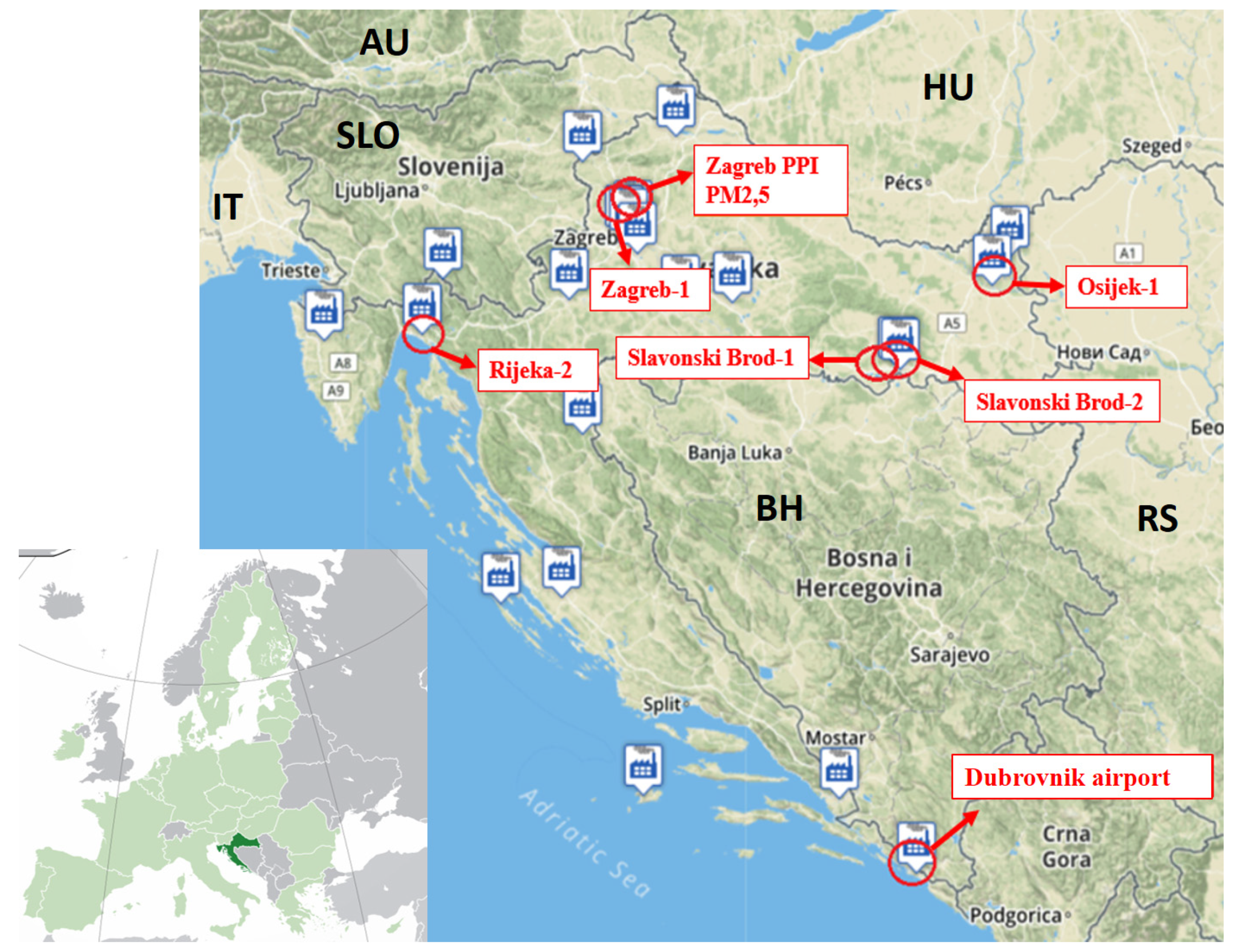
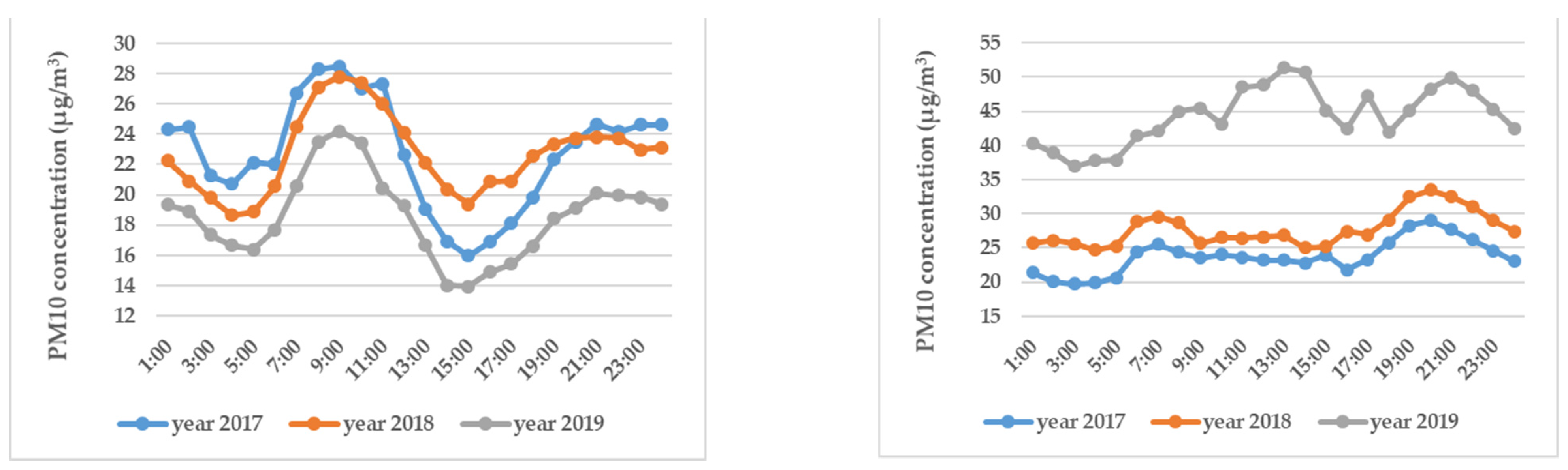
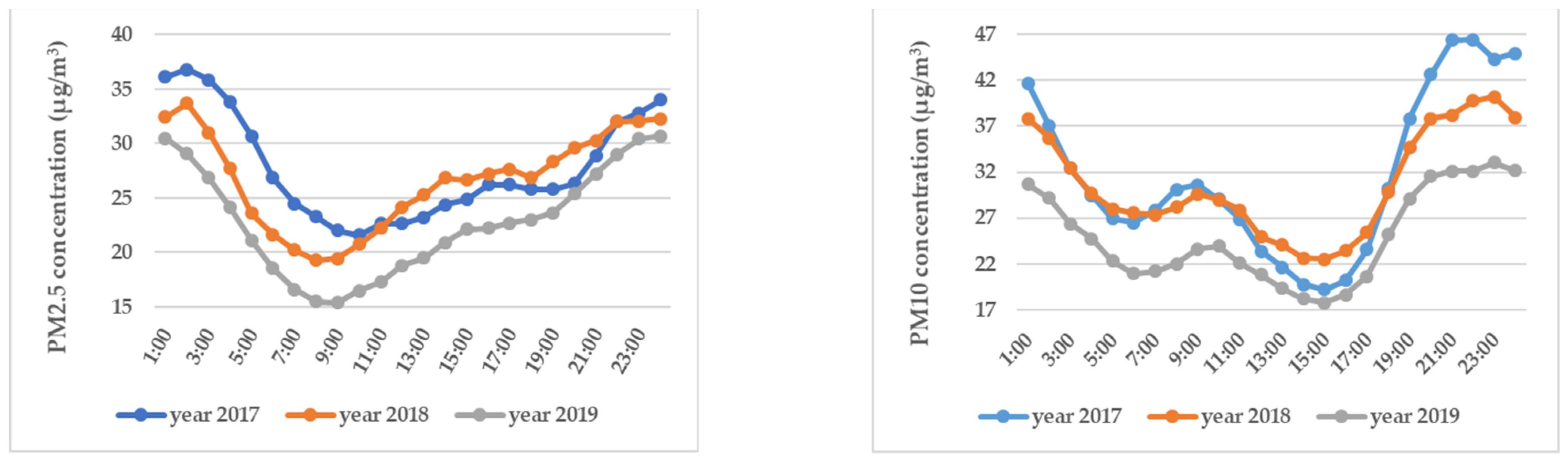
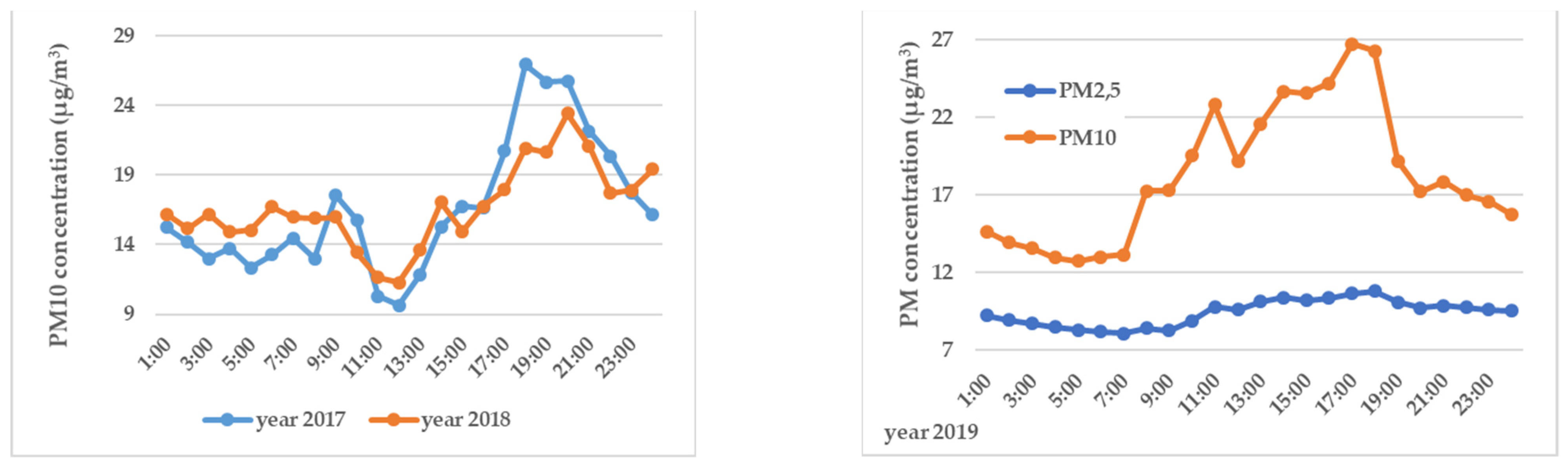
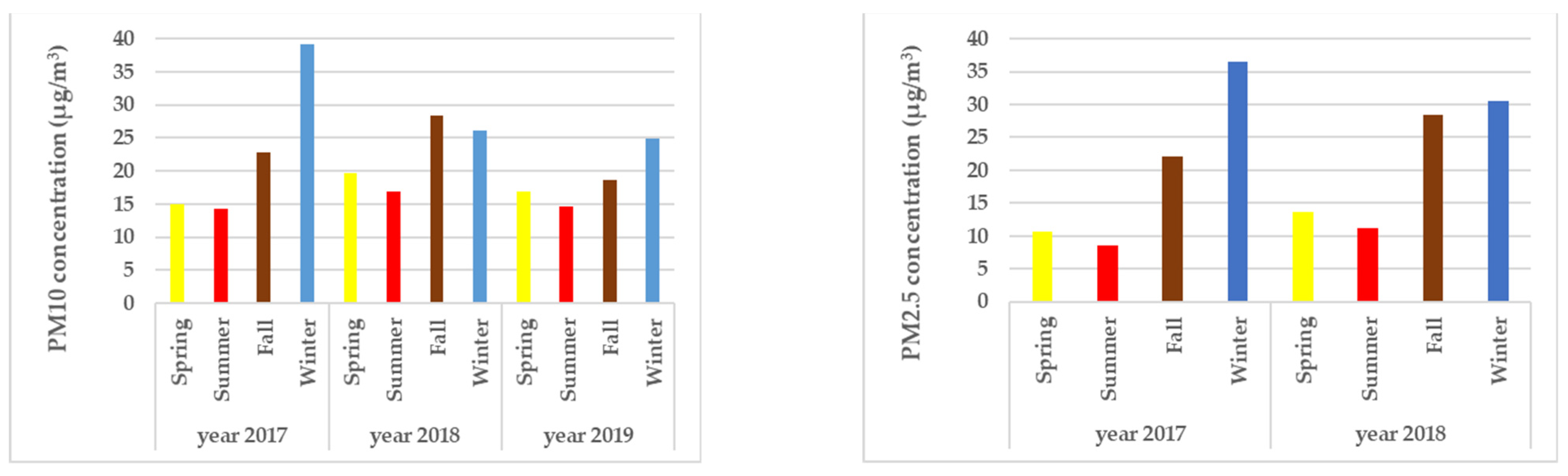
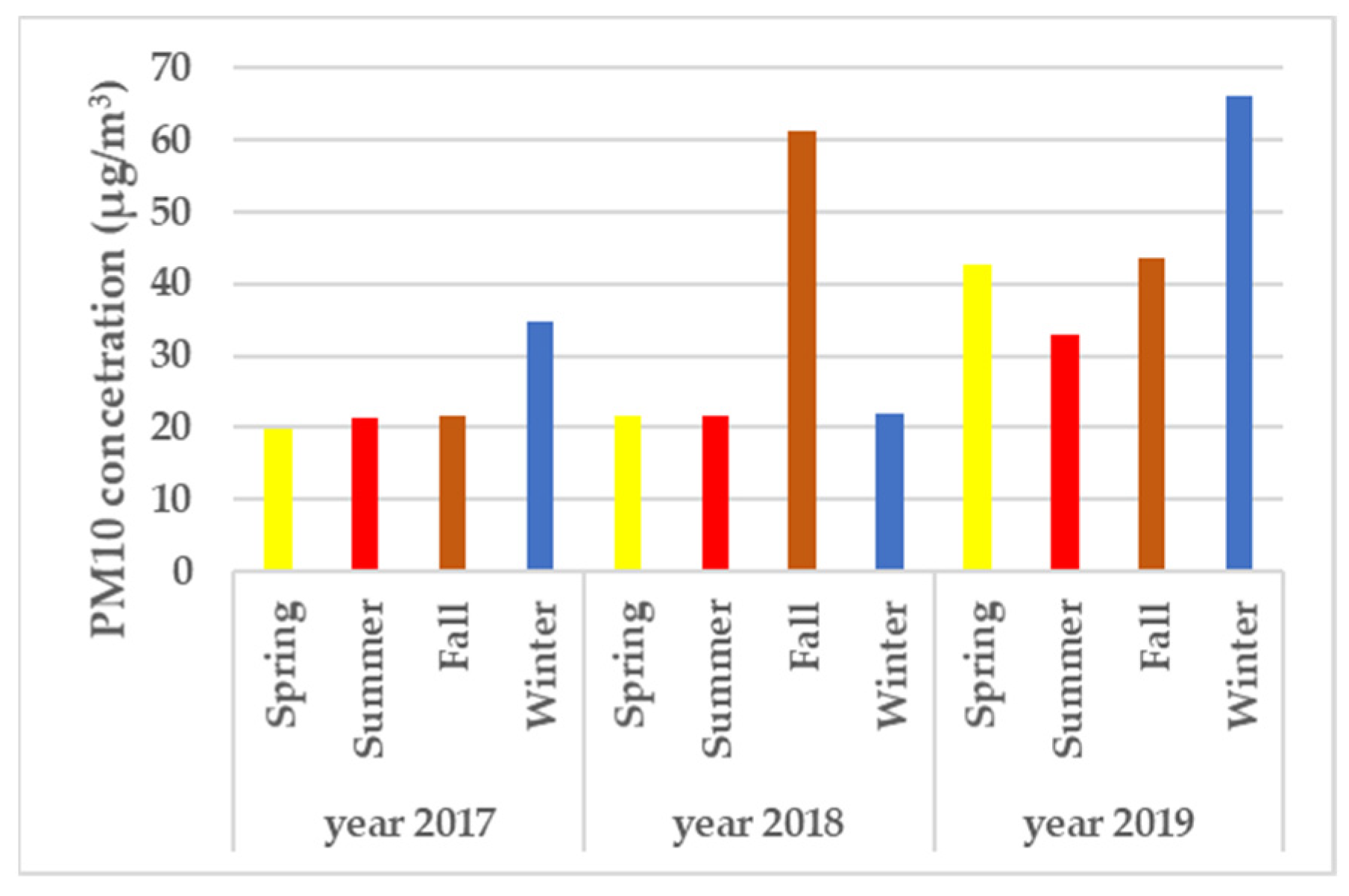
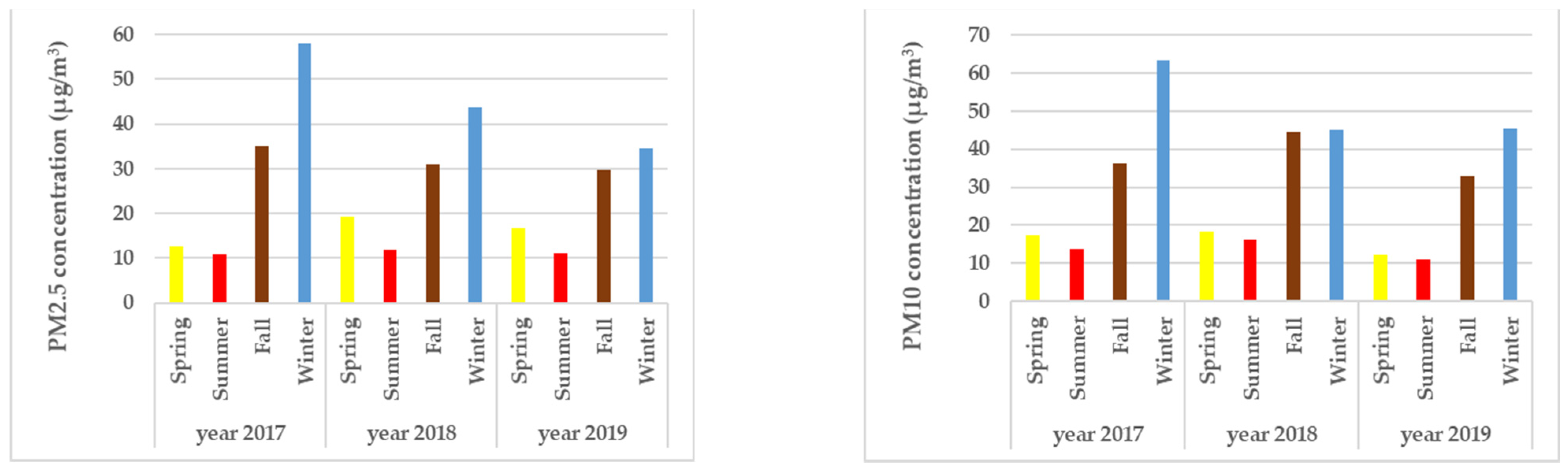
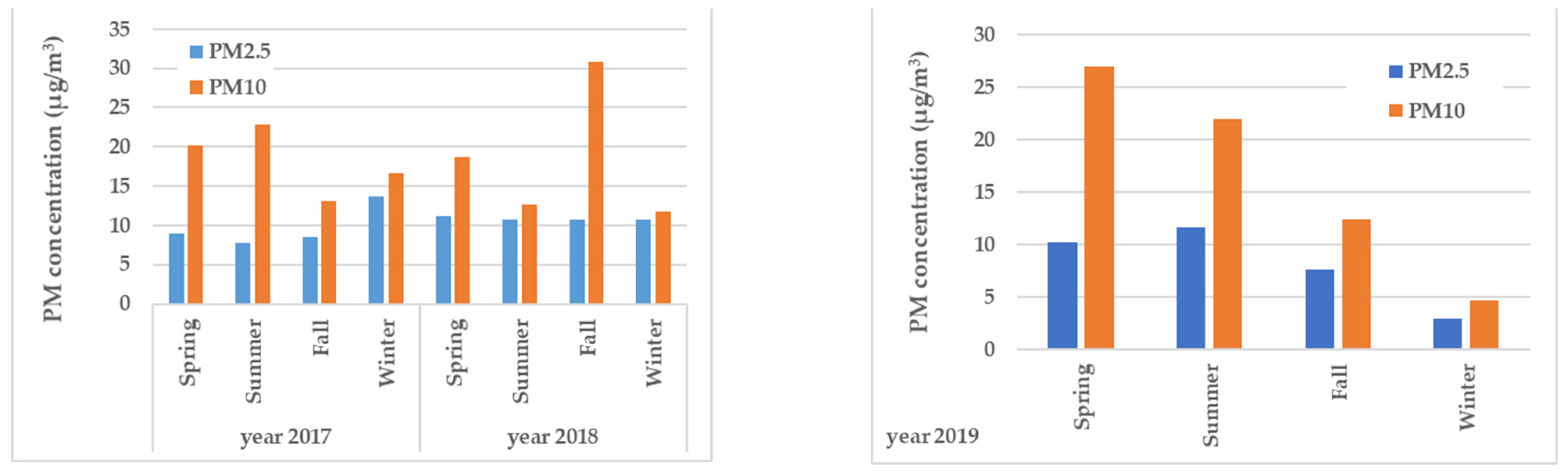
Particulate matter (PM) comprises a mixture of chemical compounds and water particles found in the air. The size of suspended particles is directly related to the negative impact on human health and the environment. In this paper, we present an analysis of the PM pollution in urban areas of Croatia. Data on PM10 and PM2.5 concentrations were measured with nine instruments at seven stationary measuring units located in three continental cities, namely Zagreb (the capital), Slavonski Brod, and Osijek, and two cities on the Adriatic coast, namely Rijeka and Dubrovnik. We analyzed an hourly course of PM2.5 and PM10 concentrations and average seasonal PM2.5 and PM10 concentrations from 2017 to 2019. At most measuring stations, maximum concentrations were recorded during autumn and winter, which can be explained by the intensive use of fossil fuels and traffic. Increases in PM concentrations during the summer months at measuring stations in Rijeka and Dubrovnik may be associated with the intensive arrival of tourists by air during the tourist season, and lower PM concentrations during the winter periods may be caused by a milder climate consequently resulting in lower consumption of fossil fuels and use of electric energy for heating.
Keywords: particulate matter; PM2.5; PM10; air pollution; urban area; Croatia particulate matter; PM2.5; PM10; air pollution; urban area; Croatia