
Next Article in Journal
Precision Nitrogen Management for Cotton Using (GreenSeeker) Handheld Crop Sensors
Previous Article in Journal
Experimental Study on the Effect of Convective Drying of Potato Slices with Sequentially Reducing Temperature
 
 
Environmental Sciences Proceedings concluded publication with Volume 29, Issue 1. It has been succeeded by Environmental and Earth Sciences Proceedings, which has a revised scope and a new editorial direction and is now published here. To preserve historical data integrity, the information on this webpage is retained but will no longer be updated.
Proceeding Paper

Impact of Integrated Nutrient Management on Yield of Different Varieties of Oat †
1
Department of Irrigation and Drainage, University of Agriculture Faisalabad, Faisalabad 38000, Pakistan
2
Department of Civil Engineering, Swedish College of Engineering and Technology, Rahim Yar Khan 64200, Pakistan
3
National Center for Industrial Biotechnology (NCIB), PMAS-Arid Agriculture University, Rawalpindi 46000, Pakistan
4
Department of Agricultural and Biological Engineering, University of California (UC Davis), Davis, CA 95616, USA
5
Soil Conservation Group, Agriculture Department (Field Wing), Government of the Punjab, Rawalpindi 46000, Pakistan
*
Author to whom correspondence should be addressed.
Presented at the 1st International Precision Agriculture Pakistan Conference 2022 (PAPC 2022)—Change the Culture of Agriculture, Rawalpindi, Pakistan, 22–24 September 2022.
Environ. Sci. Proc. 2022, 23(1), 14; https://doi.org/10.3390/environsciproc2022023014

Published: 19 December 2022

Abstract

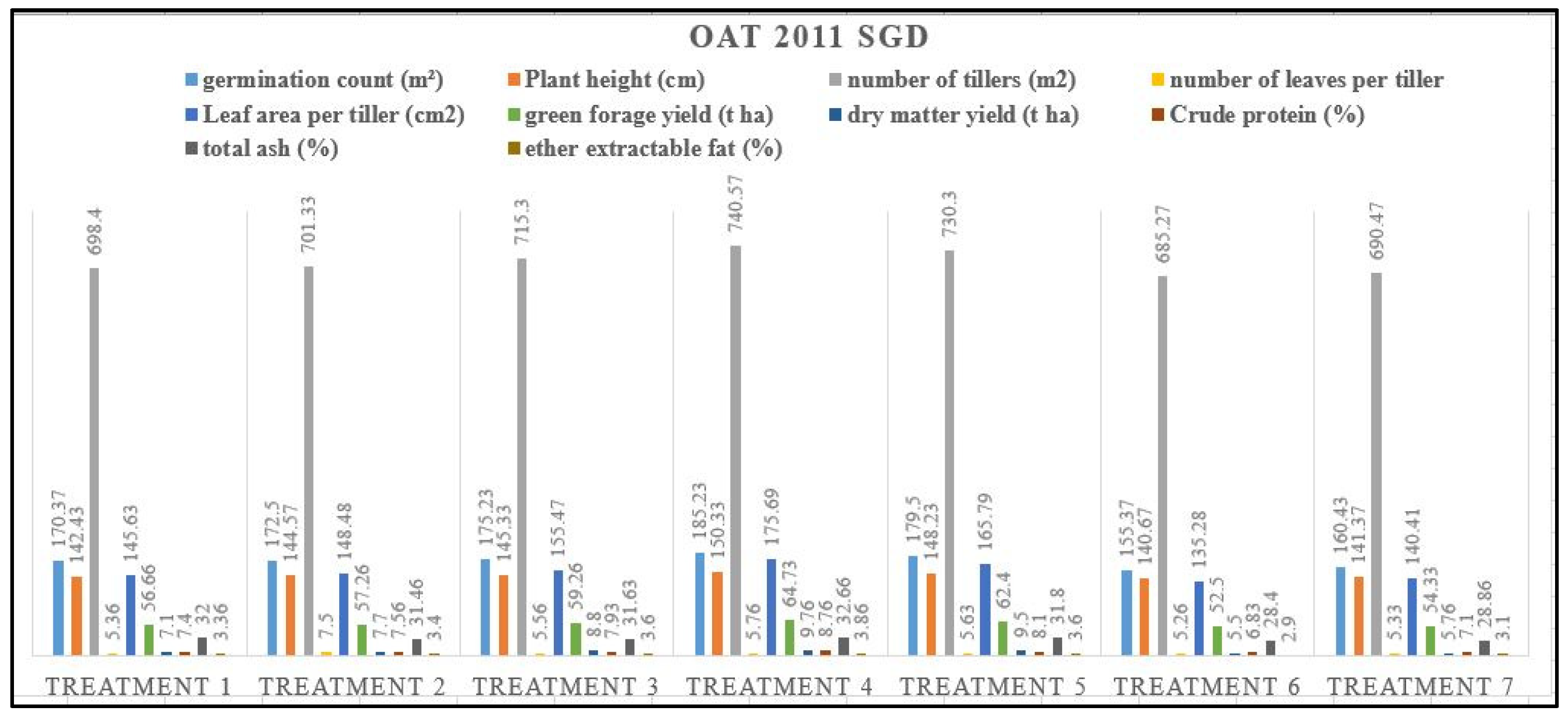
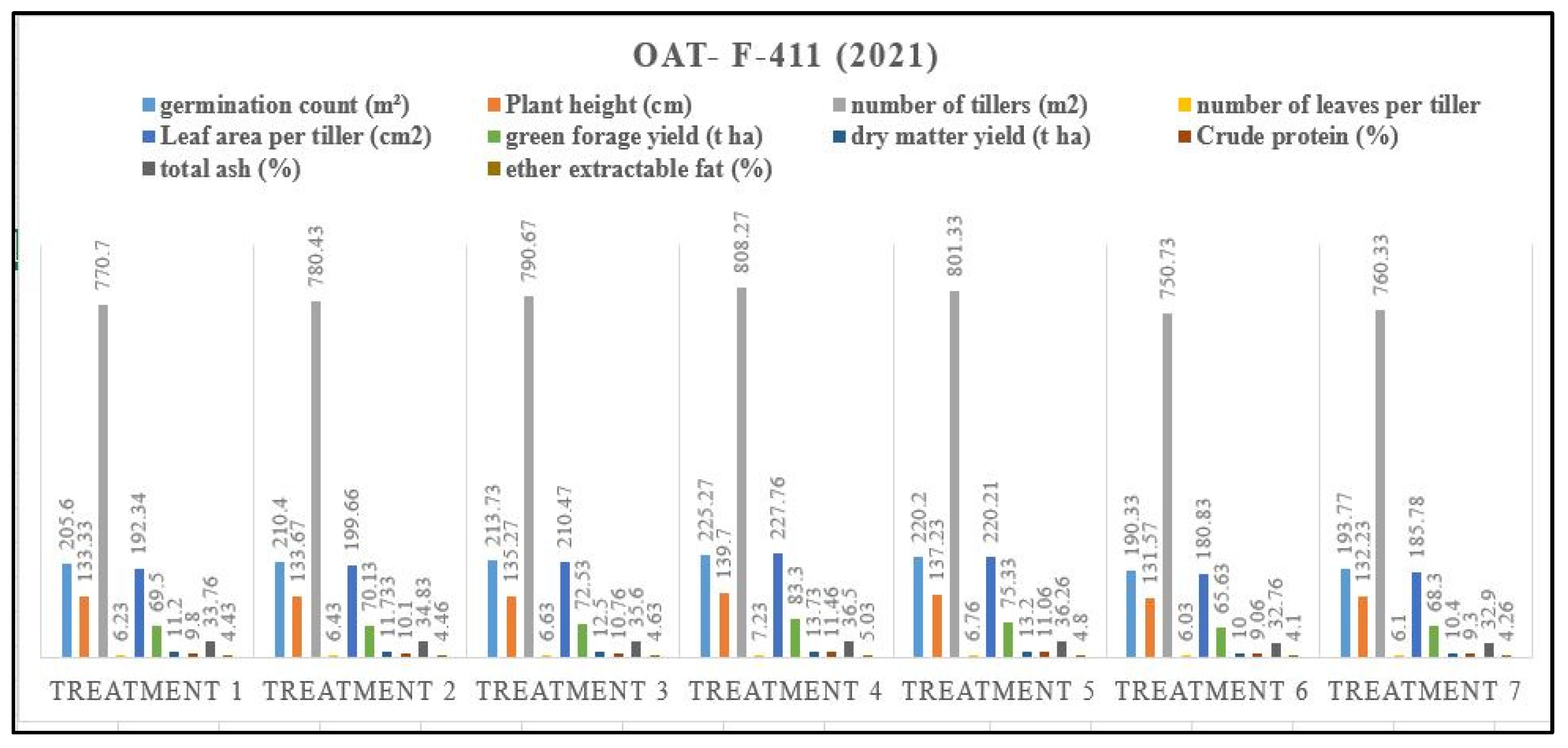
Oat is an essential Rabi crop commonly used as green fodder. The nutritional requirements of oats are higher than those of other Rabi fodder crops. Higher doses of inorganic fertilizers are required to meet this demand, which is not economical for fodder production. This study evaluates the best economical dose of integrated nutrient management for attaining higher yield and better nutritional quality of oat. The experiment was conducted on the Agronomy Research Farm, University of Agriculture, Faisalabad, Punjab, Pakistan. The seed varieties used in this experiment were Oat-2011 Sargodha and Oat-F-411 (2021) Faisalabad. The experimental treatments were organized in factorial Randomized Complete Block Design (RCBD) arrangements, with each treatment replicated three times. The results revealed that treatment (T4) 50% RDF + 5 t/ha. Farmyard Manure + seed inoculation azotobacter was found to be the most appropriate than all other treatments.
Keywords: fodder; nutritional quality; Oat fodder; nutritional quality; Oat