1. Introduction
Buildings account for a large share of global energy use and carbon dioxide (CO
2) emissions. Worldwide, they consume close to one-third of all final energy and contribute nearly 28% of total CO
2 emissions. In Canada, residential buildings represent about 17% of national energy use. In cold regions such as Labrador, more than 80% of household energy demand is associated with space heating and domestic hot water [
1,
2]. Long winters and low outdoor temperatures therefore make heating the dominant residential load. Many homes still rely on oil furnaces and electric baseboard heaters, which are relatively inefficient and contribute to greenhouse gas emissions. Improving energy efficiency in these environments requires solutions that combine renewable electricity generation with efficient heating technologies.
Geothermal heat pumps (GTHPs), also referred to as ground-source heat pumps, offer one of the most efficient technologies for cold regions. These systems use the relatively stable temperature of the ground to deliver heating and cooling with a higher coefficient of performance (COP) than conventional equipment. They can reduce energy use for heating and cooling by two-thirds or more compared with resistance heaters or fossil-fuel-based systems [
3]. Previous studies have demonstrated that ground-source heat pumps can significantly improve energy efficiency and reduce operational emissions in residential buildings, particularly in northern climates [
4,
5]. When combined with solar photovoltaic (PV) panels, a hybrid system can supply a significant portion of a home’s heating, cooling, and domestic hot-water demand while reducing electricity drawn from the grid.
Communities such as L’Anse-au-Loup in Labrador face additional energy challenges due to long transmission distances, harsh weather conditions, and limited energy resources. Electricity delivery costs are high, and many households depend on equipment that is expensive to operate. For example, electricity generation in northern Quebec has been reported to cost between 0.65 USD/kWh and 1.324 USD/kWh before subsidies, which places considerable financial pressure on both utilities and homeowners [
6,
7]. These conditions have increased interest in renewable and energy-efficient technologies capable of providing stable and affordable energy in remote cold-climate regions [
8].
A hybrid PV–GTHP system represents a practical approach for addressing these challenges. Under net-metering rules, homeowners can use solar energy directly and export surplus electricity to the grid. Hybrid renewable energy systems that combine photovoltaic generation with storage technologies have been widely investigated as a strategy for reducing grid dependence and improving energy resilience [
9,
10]. This study also considers the use of second-life lithium-ion batteries recovered from retired electric vehicles, which can store excess solar energy at a lower cost than new battery systems while extending the useful life of battery materials. Several studies have highlighted the economic and environmental potential of repurposed electric vehicle batteries for stationary energy storage applications [
11,
12].
Although grid-connected photovoltaic systems provide significant environmental and economic benefits, their integration into existing power networks introduces several technical challenges. These include voltage rise in distribution feeders, reverse power flow during periods of high solar generation, intermittent solar output, and power quality issues such as harmonics introduced by inverter-based generation. In addition, effective inverter control strategies and protection coordination are required to ensure grid stability and reliable system operation. Addressing these challenges is essential for the successful deployment of distributed photovoltaic systems in residential electricity networks [
13].
Grid-connected photovoltaic systems rely on power electronic converters to interface DC generation with the AC grid. Conventional inverter topologies reported in the literature include centralized inverters, string inverters, and module-level power electronics such as microinverters and DC optimizers, each offering different trade-offs in terms of efficiency, flexibility, and reliability. Recent research has also focused on advanced converter architectures, including multilevel and adaptive converters, to improve power quality and reduce harmonic distortion in grid-connected and microgrid applications. For example, a dual multilevel adaptive converter has been proposed in [
14], demonstrating improved voltage control and reduced switching losses in microgrid applications.
Residential energy systems that integrate on-site generation, battery storage, and controllable loads can be viewed as building-scale nanogrids. In the literature, a nanogrid generally represents the smallest unit of local electricity distribution, typically consisting of a single dwelling or small building in which loads and distributed energy resources are coordinated through a gateway that connects to the utility grid. This interface allows bidirectional power exchange with the grid and may also enable islanded operation during grid outages in certain configurations [
15].
Within this framework, rooftop photovoltaic systems provide local electricity generation, while battery storage supplies short-term buffering and load balancing. A supervisory energy-management strategy coordinates these resources by scheduling battery charging and discharging and managing grid interaction to reduce peak electricity imports and increase the utilization of locally generated energy [
16].
In cold regions, the integration of a ground-source heat pump further strengthens the nanogrid concept. Because ground temperatures remain relatively stable throughout the year, the heat pump can deliver highly efficient heating during winter. At the same time, its operation can be shifted within acceptable indoor comfort limits, allowing thermal demand to act as a flexible electrical load. In this context, a grid-connected PV–battery–ground-source heat pump configuration can be interpreted as a residential nanogrid that coordinates local generation, storage, and thermal demand while maintaining continuous interaction with the utility network [
17].
Although many studies have examined photovoltaic systems, geothermal heat pumps, and battery storage individually, fewer investigations have evaluated their coordinated operation within residential hybrid energy systems under cold-climate conditions. Previous research has often focused either on the electrical optimization of PV–battery systems or on the thermal performance of geothermal heat pumps, frequently treating these subsystems independently. As a result, the interaction between distributed electricity generation, energy storage, and thermally driven loads remains insufficiently explored for residential buildings located in northern climates [
18,
19].
Unlike many previous studies that analyze photovoltaic systems, geothermal heat pumps, or battery storage separately, this study evaluates their coordinated operation within a residential nanogrid framework using an integrated building–energy system modelling approach.
This study contributes to the literature in three ways. First, it develops an integrated modelling framework that links building thermal-load estimation using the Hourly Analysis Program (HAP) with hybrid energy system optimization using the Hybrid Optimization Model for Electric Renewables (HOMER Pro). This approach enables consistent representation of the interaction between photovoltaic generation, building heating demand, and battery storage. Second, the study evaluates the performance of a grid-connected residential PV–GTHP–battery nanogrid in a cold coastal climate where space heating dominates annual energy consumption. Third, the study provides a technical, economic, and environmental assessment of hybrid renewable energy systems for residential buildings in northern communities, offering insight into the potential for reducing grid dependence in regions characterized by long heating seasons and high electricity supply costs [
20].
Based on these considerations, this study evaluates the design and performance of a hybrid photovoltaic–ground-source heat pump (PV–GTHP) system with battery storage for a detached residential building in L’Anse-au-Loup, Labrador, Newfoundland and Labrador, Canada. Heating and cooling loads are estimated using the Hourly Analysis Program (HAP), and the resulting load profiles are incorporated into a techno-economic analysis using the Hybrid Optimization Model for Electric Renewables (HOMER Pro). The analysis examines the interaction between photovoltaic generation, geothermal heating demand, and battery storage within a residential nanogrid and evaluates the system’s potential to reduce grid electricity consumption and carbon emissions in cold-climate residential applications.
3. Methodology
The modelling framework integrates building energy demand, renewable generation, energy storage, and system control within a single simulation environment.
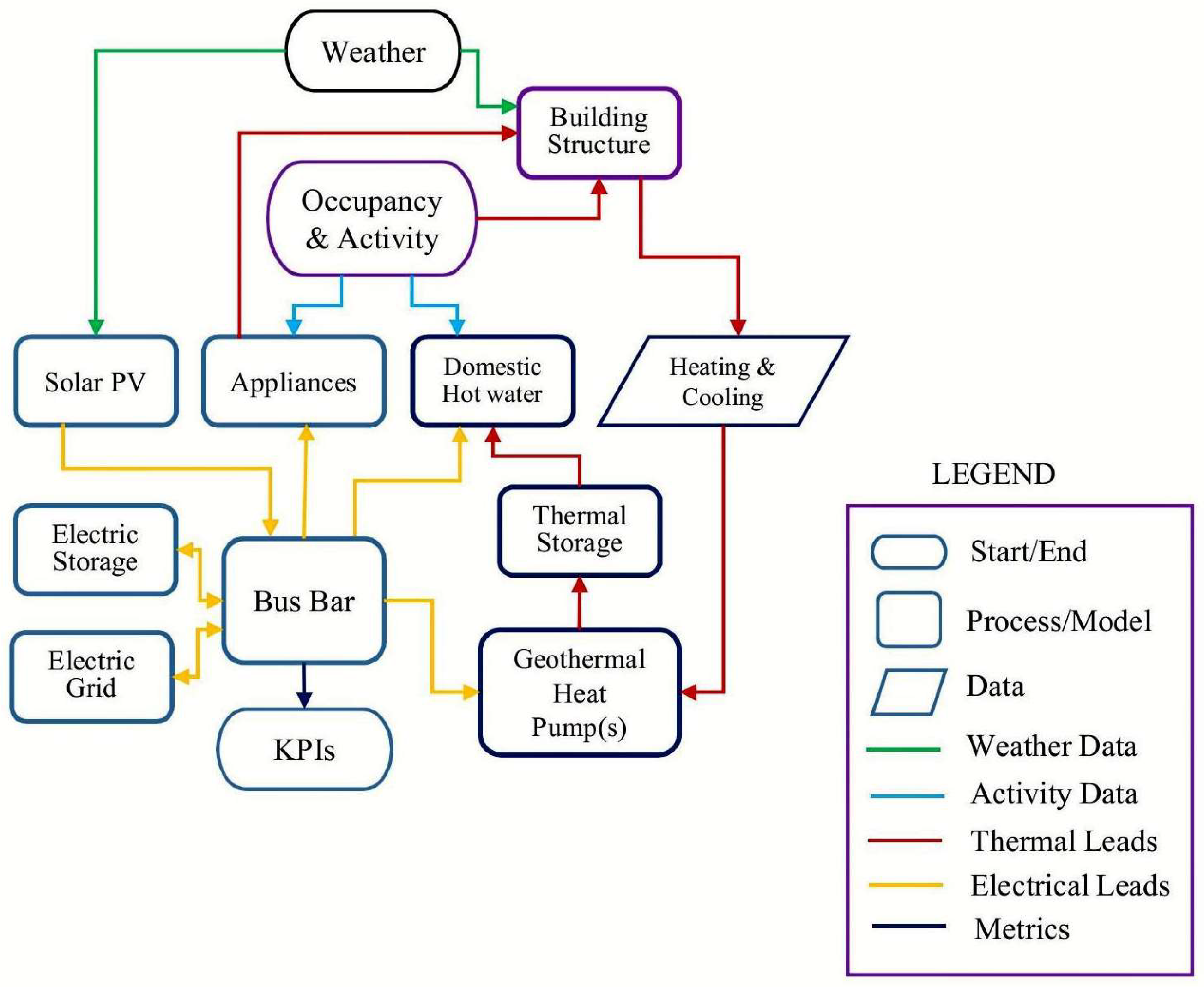
Figure 2 shows the overall structure of the proposed hybrid PV–battery–geothermal energy system. The figure illustrates the interaction between environmental inputs, building energy demand, renewable generation, energy storage, and system control.
The dwelling is represented through two connected domains: an electrical subsystem and a thermal subsystem. Both are influenced by local weather conditions and occupancy behaviour. The proposed configuration operates as a residential hybrid energy system that combines photovoltaic (PV) generation, battery storage, and the utility grid. A geothermal heat pump (GTHP) links the electrical and thermal domains. Weather data determine the PV output and the building heat balance. These factors define the hourly heating and cooling requirements. Occupancy patterns influence appliance operation, internal heat gains, domestic hot-water demand, and comfort settings. This approach allows realistic load variations to be represented throughout the year.
On the electrical side, power from the PV array, the battery storage system, and the utility grid meets at a common electrical bus. Electricity is supplied from this bus to the household loads, the geothermal heat pump, and the domestic water-heating system. On the thermal side, the heat pump provides space heating and domestic hot water. Optional thermal storage can reduce short-term fluctuations in demand. Because the heat pump converts electrical energy into useful heat, it forms the main connection between the electrical and thermal subsystems. Control rules coordinate the operation of the battery, the heat pump, and the grid connection. Solar energy is used first to meet the load. Battery discharge follows within inverter and state-of-charge limits. The grid supplies any remaining demand under net-metering conditions.
The simulation uses an hourly time step. At each step, weather and occupancy inputs are processed. PV generation is calculated, and the building’s electrical and thermal loads are determined. The control strategy then schedules the operation of the heat pump, battery storage, and grid interaction. Indoor temperature and domestic hot-water set points are maintained while equipment limits are respected. During the simulation, key performance indicators (KPIs) are recorded. These include renewable energy fraction, self-consumption, battery cycling behaviour, grid imports and exports, and emissions. Scenario analysis is carried out by varying PV capacity, battery size, operating assumptions, and tariff structures while keeping the system configuration unchanged.
3.1. Thermal Resistance Calculation
Accurate thermal-resistance values are required to model the building envelope and estimate heating and cooling loads. The analysis calculates the thermal resistance of the walls, roof, and floor using the HAP 6.1 (Carrier) software, which considers both material thickness and thermal conductivity. For assemblies that contain multiple layers, such as framed walls and insulated roof structures, the analysis determines the total resistance by summing the resistances of the individual layers. The resulting values are compared with the minimum requirements specified in Part 3 of the National Energy Code of Canada for Buildings (NECB) to confirm that the envelope design satisfies the applicable regulatory standards [
51,
52].
For each layer, thermal resistance is defined as:
and the total resistance of an assembly is:
where
is the thermal resistance of layer
(m
2·K/W),
is the total thermal resistance of the building assembly (m
2·K/W),
is the thickness of the material layer (m),
is the thermal conductivity of the material (W/m·K), and
is the number of layers in the assembly.
These calculations provide a realistic representation of heat transfer through the building envelope and ensure that the input parameters used in the load calculations remain consistent with Canadian building-energy standards [
52,
53]. The analysis does not represent thermal bridges as separate heat-transfer paths. Instead, it uses overall assembly thermal-resistance values derived from the envelope material layers and implemented in HAP for load estimation. This approach provides an appropriate level of accuracy for annual residential load prediction and system-level techno-economic evaluation. Detailed modelling of thermal bridges at structural junctions and envelope interfaces requires higher-resolution two- or three-dimensional heat-transfer analysis and therefore lies outside the scope of the present study.
3.2. Infiltration Estimation Using the Sherman–Grimsrud Model
Infiltration plays a significant role in determining the heating and cooling requirements of a dwelling, particularly in northern climates where leakage can contribute noticeably to heat loss. The Sherman–Grimsrud model, recommended by the ASHRAE Handbook—Fundamentals [
54], was used to estimate the infiltration rate because it provides a practical and reliable approach for residential buildings [
54]. The method uses the effective air-leakage area
, typically obtained through blower-door testing, along with the indoor–outdoor temperature difference, wind speed, building volume, and the degree of shielding provided by surrounding structures.
The model requires selecting the appropriate values for the stack coefficient
and wind coefficient
, which are influenced by the height of the building and the local shelter conditions.
Table 1,
Table 2 and
Table 3 summarize the values used for this study. These coefficients represent the relative contributions of temperature-driven air movement and wind-driven pressure differences across the building envelope.
For the case study dwelling in L’Anse-au-Loup, the building consists of a basement and a ground floor and was therefore treated as a two-storey structure for the infiltration analysis. Typical residential shielding conditions were assumed (shelter class 3). Accordingly, the stack coefficient
and wind coefficient
corresponding to a two-storey building and shelter class 3 were selected from
Table 1,
Table 2 and
Table 3.
With these coefficients determined, the infiltration airflow rate (Q) can be calculated using the Sherman and Grimsrud equation. The equation combines the effects of both stack-driven and wind-driven infiltration, providing a comprehensive estimate of the total infiltration rate:
where
is the airflow rate in m
3/s,
is the effective leakage area in cm
2,
is the indoor–outdoor temperature difference in kelvin, and
is the wind speed measured at the local weather station. The coefficients
and
represent the effects of stack and wind pressures, respectively.
This method was used to estimate the infiltration airflow rate for the dwelling in L’Anse-au-Loup. The resulting value was incorporated into the heating-load calculations to represent realistic air leakage conditions for a cold-climate residential building and to support the sizing of the geothermal heat-pump system.
3.3. Rooftop Geometry and Shading Constraint
This section evaluates the geometric feasibility of installing a fixed-tilt photovoltaic array on the available roof surface while avoiding inter-row shading during winter conditions.
The sizing process begins by verifying that the roof can accommodate a fixed-tilt, single-row PV array without winter self-shading. The panel tilt
, the module dimensions (
and
), and a conservative minimum winter solar altitude
define the required pitch for shading clearance [
6,
7].
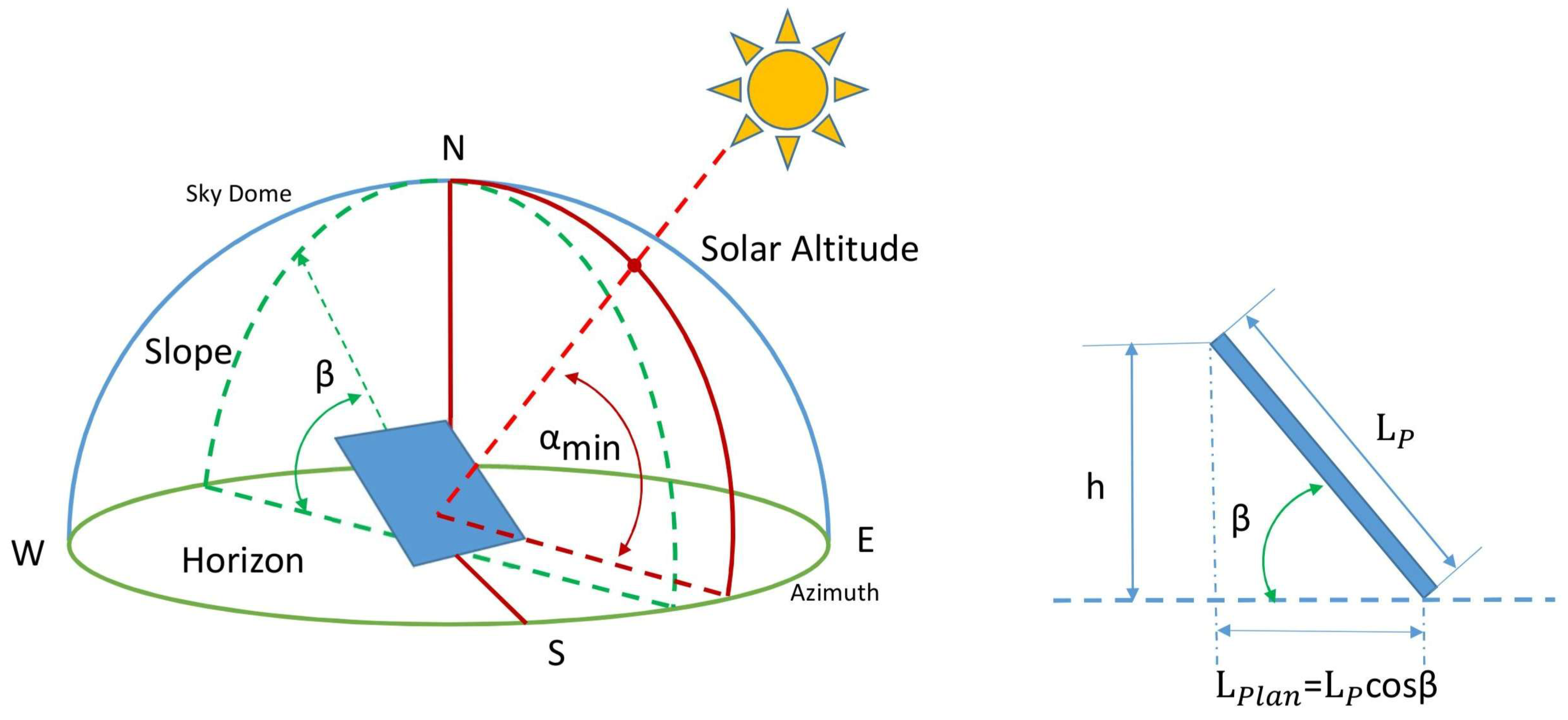
Figure 3 illustrates the solar geometry and the geometric parameters used in the rooftop PV shading analysis.
The height of a tilted module and its plan-view projection are given by:
The row pitch needed to avoid shading at low solar elevations is:
A single row is feasible when the available roof depth z satisfies z ≥ P.
Once the clear roof length
is established, the number of modules and the total PV area follow as:
where
is the inter-module spacing [
55].
3.4. PV Electrical Sizing
After confirming the geometric constraints, the electrical sizing converts the daily energy demand
into the required installed PV capacity. For a site with average daily plane-of-array solar input
, expressed in equivalent peak sun hours, and overall system efficiency
, the required PV capacity is calculated as:
where
is the required installed PV capacity (k
,
is the daily electrical energy demand (kWh/day),
is the average daily plane-of-array solar input expressed as equivalent peak sun hours (kWh/
/day), and
is the overall PV system efficiency.
The corresponding number of modules is:
where
is the STC rating of one module (W).
Energy–area consistency can be checked using:
where
is the module efficiency and,
is the module area. Equation (11) is a consistency check between energy sizing and roof footprint [
56,
57].
The expected annual PV energy yield is:
where
is the annual PV energy output (kWh yr
−1),
is the installed PV capacity (k
), and
is the annual specific yield (kWh k
−1 yr
−1).
The share of household demand supplied by PV is expressed as:
where
is the annual PV energy output (kWh yr
−1), and
is the total annual electrical demand of the residence (kWh yr
−1). This parameter quantifies the reduction in grid dependency achieved through solar energy generation.
3.5. PV Output Model
The hourly electrical output of a photovoltaic module can be approximated using a simplified performance relationship based on incident solar irradiance and module efficiency.
where
is the instantaneous power output of the PV module (W),
is the module efficiency,
is the solar irradiance incident on the module surface (
), and
is the surface area of the module
[
21]. In practice, additional system losses such as inverter losses, temperature effects, and wiring losses are considered through the overall system efficiency parameter used in the subsequent system sizing calculations.
The total array output is obtained by multiplying the single-module output by the number of installed modules:
where
is the number of photovoltaic modules installed in the array [
21]. The expression for the PV system’s necessary direct current (DC) energy
, relative to inverter conversion efficiency, is:
where the daily AC load is
, and
is the inverter efficiency [
22]. The panel area required to satisfy this demand is:
where
R is the daily average solar radiation at the site [
57]. From this area, the number of required modules is calculated as:
where the surface area of a single module is
. Modules are arranged in series and parallel according to:
where the design system voltage is
and
is the module voltage. The adequate PV capacity is then:
where
is the total installed PV capacity (k
),
is the rated power of a single PV module under standard test conditions (W), and
is the number of photovoltaic modules installed in the array [
21]. Finally, the PV system capacity is determined as:
where
is the panel generation factor used to account for site-specific derating effects [
47].
3.6. Battery Storage Sizing
To ensure a continuous supply during low-irradiance periods, the required battery ampere-hour capacity is determined from:
where
is the required battery capacity (Ah),
is the daily electrical energy demand (Wh/day),
is the number of autonomy days,
is the battery efficiency (or inverse of the loss factor),
is the maximum permissible depth of discharge, and
is the system DC bus voltage [
22].
The number of batteries required is calculated as:
where
is the total number of batteries and
is the ampere-hour rating of a single battery unit (Ah) [
55].
The series and parallel configuration of the battery bank is expressed as:
where
is the number of batteries connected in series,
is the number of parallel strings,
is the system voltage, and
is the nominal voltage of a single battery [
56]. The ceiling operator in Equation (26) ensures that the number of parallel strings is rounded up to the nearest integer so that the required storage capacity is fully satisfied. This configuration ensures that the battery bank meets both the system voltage and energy requirements.
The selected battery configuration provides the required energy storage to maintain system operation during periods of reduced solar generation.
3.7. Integration of Second-Life EV Batteries
To reduce cost and improve sustainability, reused lithium-ion modules from electric vehicles are incorporated using a derating factor based on the state of health (
). Only modules with
above 70% are considered. The standard storage equation is modified as:
where
represents the ratio of remaining usable capacity to the rated capacity. The configuration of the reused battery bank follows the same steps as for new batteries. This approach is consistent with the findings of Thakur et al. [
40] and Biskupski et al. [
41], who demonstrate the suitability of second-life batteries for stationary storage applications.
This modification accounts for capacity degradation in reused batteries and ensures that the effective storage capacity used in the system design reflects realistic operational conditions.
3.8. Operating Modes of the Grid-Connected PV–BESS
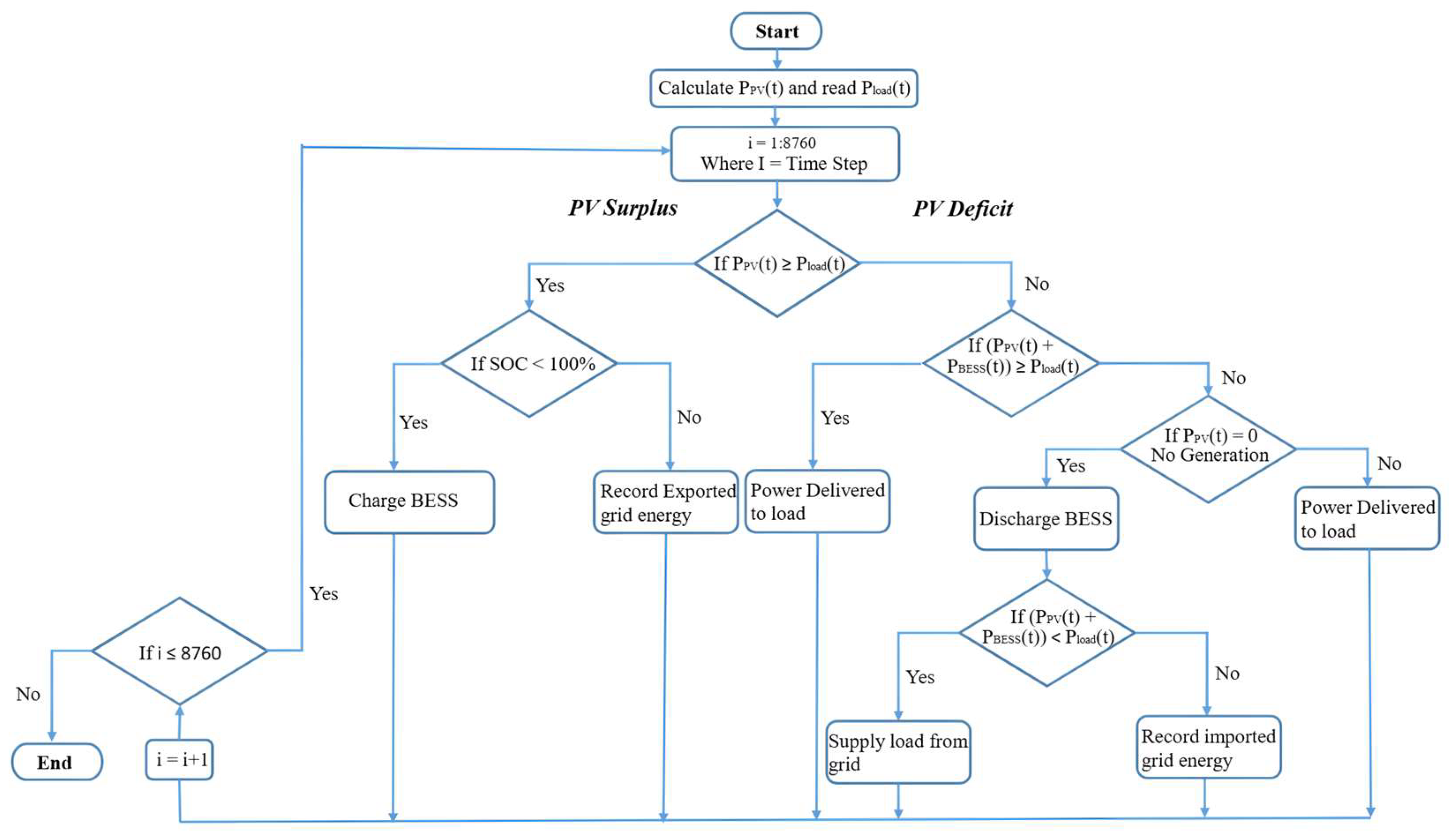
The power dispatch (PD) control strategy governs the real-time energy flow between the photovoltaic (PV) array, the battery energy storage system (BESS), and the utility grid. The control operates on an hourly time step (i = 1:8760) to simulate one full year of operation. At each time step, the available PV generation and the load demand are compared to determine the operating condition of the system.
When the instantaneous PV generation is greater than or equal to the load demand
, the load is fully supplied by the PV array. The excess PV power is used to charge the BESS until it reaches its maximum state of charge (SOC = 100%). Once the battery is fully charged, any remaining surplus energy is exported to the grid, and the exported energy is recorded for later performance and economic analysis [
57].
If the PV generation is lower than the load demand , but the combined PV and BESS power is sufficient to meet the load , the system supplies the load using both PV and stored energy from the BESS. In this mode, grid import is not required. The control prioritizes self-consumption, with grid exchange occurring only when PV and BESS cannot fully satisfy the demand.
When PV generation is unavailable , the BESS discharges to meet the load demand as long as its SOC remains above the minimum limit. This ensures uninterrupted power delivery during periods of low or no solar generation.
If both PV and BESS are unable to satisfy the total demand , the deficit is automatically supplied by the utility grid. In this mode, the system imports power to maintain a continuous energy supply to the load. The imported grid energy is recorded to quantify grid dependency and to evaluate the system’s net-metering or energy-exchange performance. This case ensures that the connected load experiences no interruption, even during extended low-irradiance or high-demand periods.
This strategy prioritizes renewable energy utilization, maintains the battery within safe operating limits, and minimizes energy import from the grid. The logical sequence of this operation is illustrated in
Figure 4, which presents the control flow of the grid-connected PV–BESS [
57].
3.9. Energy-Management and Dispatch Strategy (HEMS Implementation)
In this study, the energy management system is implemented as a rule-based Home Energy Management System (HEMS) using the dispatch framework available in HOMER Pro. The interaction between the photovoltaic system, the battery storage unit, and the utility grid is modelled through HOMER Pro’s built-in optimization and dispatch engine. The controller follows a hierarchical dispatch logic commonly used in residential HEMS, ensuring that locally produced solar energy is prioritized to meet the household load. Whenever the PV output exceeds the instantaneous demand, the surplus is first used to charge the battery energy storage system until the maximum state-of-charge limit is reached. Any remaining excess electricity is exported to the grid. During periods of reduced solar availability, the load is initially supplied through battery discharge until the minimum allowable state of charge is reached, after which the grid provides the remaining power required to meet the demand.
HOMER Pro evaluates this control sequence at each hourly time step using rule-based dispatch strategies, such as load-following or cycle-charging. These modes also allow the representation of time-of-use electricity tariffs, enabling the model to emulate typical smart-home energy scheduling behaviour. As a result, the simulated system captures the essential functions of a modern HEMS, including prioritized utilization of on-site renewable energy, protection of battery operating limits, and economically optimized power exchange with the utility grid. This representation provides a practical approximation of how a residential PV–BESS nanogrid operates under real household conditions, demonstrating its ability to maximize renewable self-consumption while maintaining a reliable electricity supply.
3.10. Economic Evaluation
The economic feasibility of the proposed hybrid PV–GTHP system is assessed using two widely adopted financial indicators: the simple payback period (PBP) and the net present value (NPV). These metrics provide insight into both short-term cost recovery and long-term economic performance.
The simple payback period (PBP) represents the time required for the cumulative energy cost savings to offset the initial investment. It provides a practical estimate of when the system begins to deliver financial benefits to the homeowner [
58]. The
PBP is calculated using Equation (28), where the net capital cost
(after accounting for grants, rebates, and tax credits) is divided by the net annual cash benefit
, representing the yearly reduction in electricity and heating costs.
where PBP is the simple payback period (years),
is the net initial investment cost (USD), and
is the net annual cash benefit (USD/year).
Although PBP provides a straightforward estimate of cost recovery, it does not account for the time value of money. To address this limitation, the net present value (NPV) is used as a complementary indicator. The NPV method discounts all future cash flows over the system lifetime, thereby accounting for the variation in monetary value over time. Cash inflows include annual savings in electricity and thermal energy, while cash outflows include the initial investment, operation and maintenance costs, and any component replacement costs [
59,
60].
Here,
is the net cash flow in year
(USD),
is the discount rate,
is the project lifetime, and
is the initial capital cost(USD). A positive NPV indicates that the hybrid system generates net economic value, whereas a negative NPV suggests that it does not meet the economic threshold for investment [
61].
By applying both PBP and NPV, the analysis captures the immediate payback characteristics as well as the long-term financial benefits, providing a comprehensive understanding of the system’s economic performance.
4. Case Study for a Typical Residential House in L’Anse-au-Loup
4.1. Building Description and Design Inputs
The building examined in this study is a single-story, three-bedroom residence located in L’Anse-au-Loup, Labrador. The house has an approximate floor area of 160 m
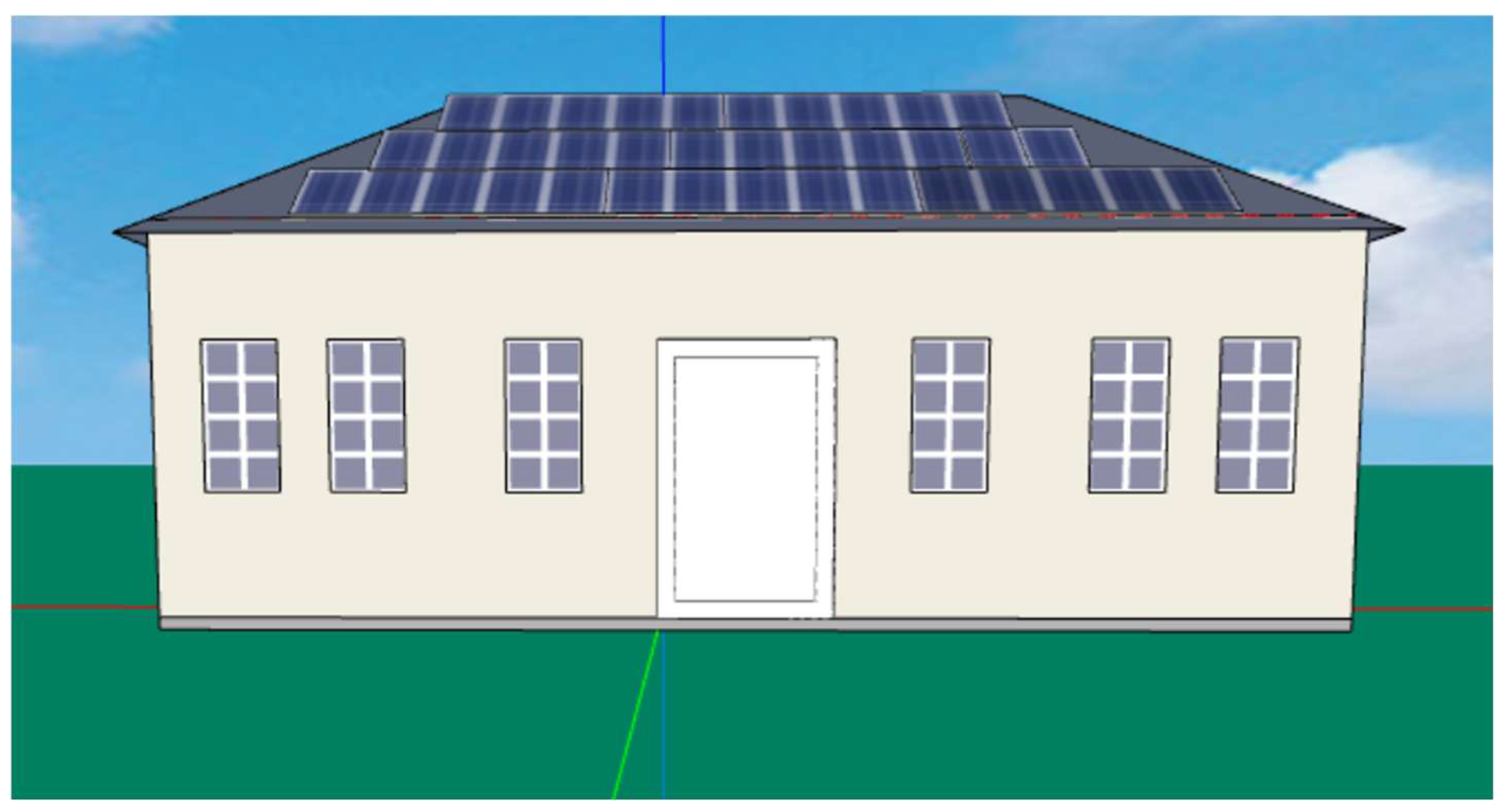
2 and follows a simple rectangular form with a gable roof. The front façade faces south, providing favourable solar access during most of the year and allowing the south-facing roof section to accommodate the photovoltaic array shown in
Figure 5. This house type reflects a common residential form in the community, where single-story wood-frame dwellings with similar layouts and roof geometries are widely used.
In line with typical construction practices in the region, the house includes a full basement that provides additional space for storage and mechanical equipment. The presence of a basement is characteristic of many homes in this area and contributes to the overall building typology considered in this study.
The building envelope incorporates insulation levels suited to cold northern climates, and the windows are treated as triple-glazed units to reduce heat loss during the long winter season. The south-facing façade includes several windows to support natural daylighting while maintaining acceptable thermal performance. For the energy-analysis process, the interior is represented in terms of functional zones, which is adequate for estimating the heating, cooling, and electrical loads associated with the hybrid system configuration.
This representation offers a realistic basis for evaluating the performance of the proposed solar photovoltaic and geothermal heat-pump system under the climatic conditions of coastal Labrador.
4.2. Outdoor Design Conditions for HAP Inputs
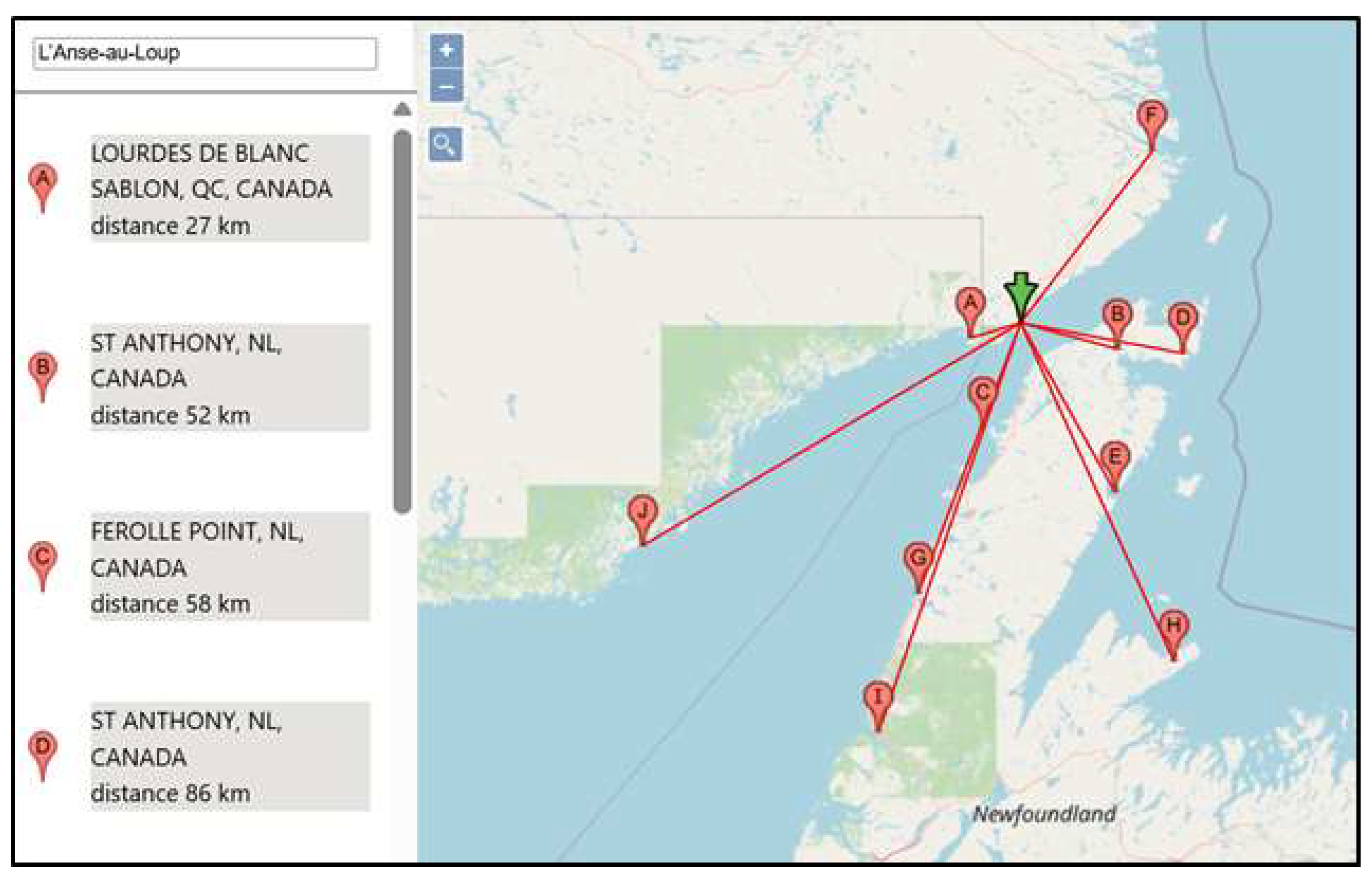
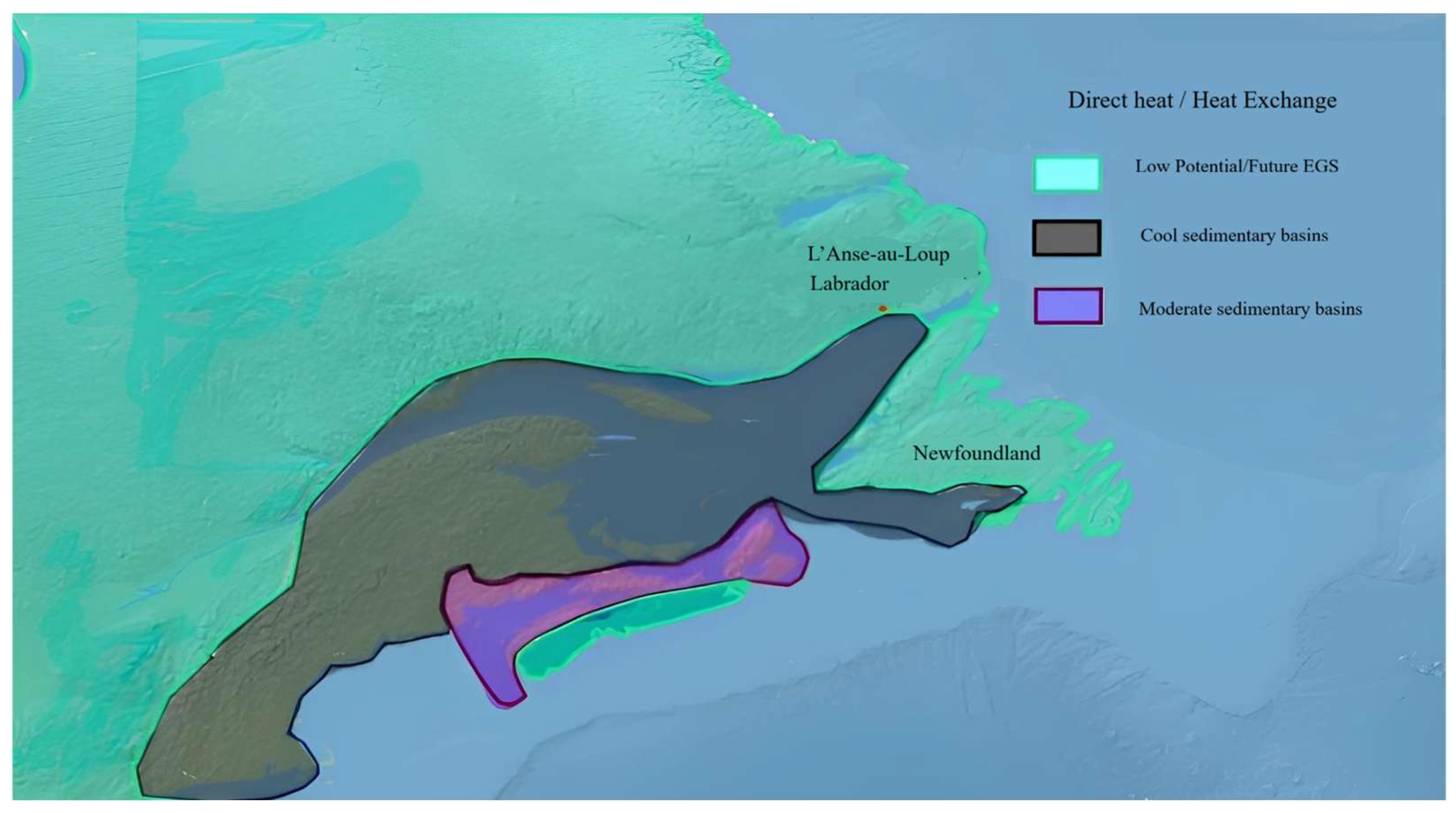
Figure 6 shows the location of L’Anse-au-Loup, Labrador, and its nearby reference weather stations, including Lourdes-de-Blanc-Sablon, St. Anthony, and Ferolle Point. The community has a subarctic coastal climate. Winters are long, cold, and windy. Summers are short, mild, and humid. These conditions make the site suitable for studying renewable energy systems in northern residential settings.
Outdoor design conditions are essential for estimating heating and cooling loads in HAP. They define the thermal environment around the building and guide the sizing of mechanical systems. The main variables include dry-bulb and wet-bulb temperatures, wind speed, infiltration, latitude, and solar exposure. These values represent the most severe expected weather events and allow the model to predict how the building performs throughout the year.
Climate data for L’Anse-au-Loup were taken from the ASHRAE weather database and verified with the National Building Code of Canada (NBCC) [
51]. The climatic and meteorological parameters used in the HAP simulation are summarized in
Table 4. This ensures that the simulations reflect actual conditions in the region and follow national design standards.
Heating loads are based on winter design temperatures. These represent the highest expected demand for indoor comfort. Cooling loads use peak summer temperatures to estimate the maximum heat that must be removed from the building. L’Anse-au-Loup (WMO Station 718080) is a heating-dominated location. In winter, design dry-bulb temperatures range from −24.5 °C (1% occurrence) to −22.3 °C (99% occurrence), with extreme lows down to −34.3 °C over a 50-year return period. Winter wind speeds of 3.8–6.7 m/s increase heat loss through the envelope. Summer temperatures are moderate, with design dry-bulb values near 19.2 °C and wet-bulb values up to 16.7 °C. Summer winds support natural ventilation and help reduce cooling demand. Annual mean wind speeds between 4.3 and 6.7 m/s influence heating, cooling, and ventilation performance and affect comfort throughout the year.
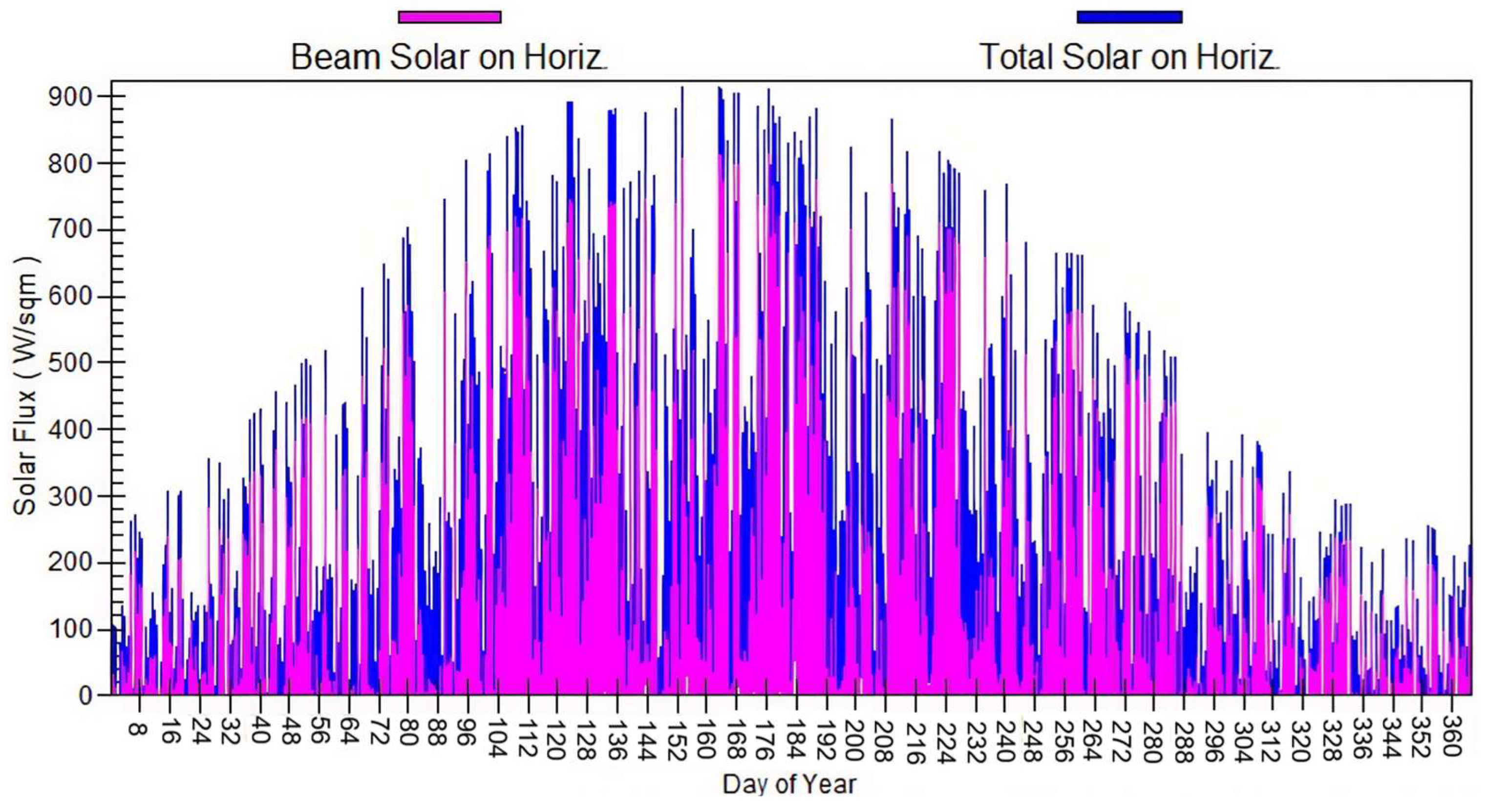
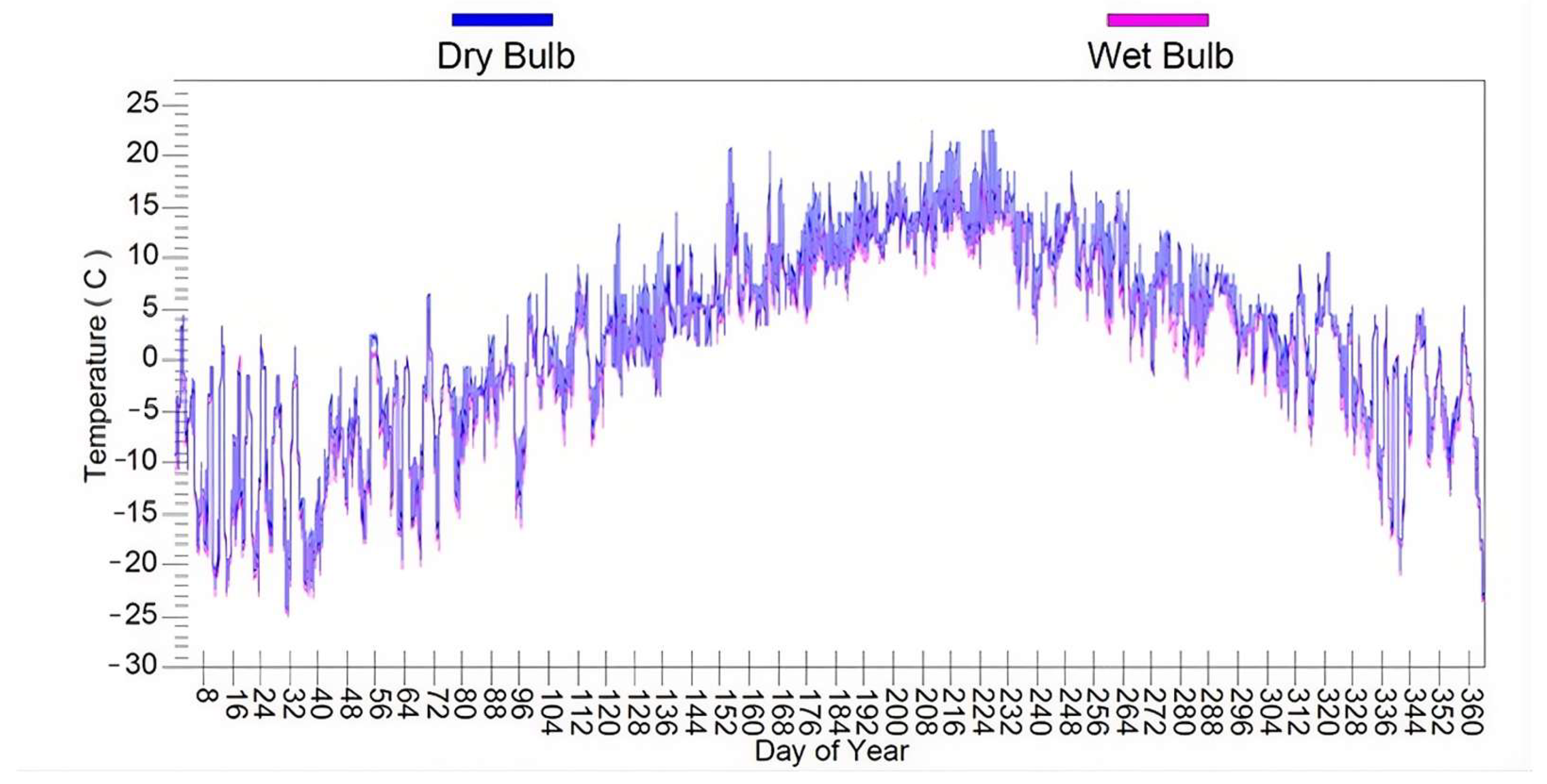
Figure 7 and
Figure 8 present the simulation results, including the hourly outdoor temperature profile and the annual solar radiation patterns that influence heat gains through the exterior envelope.
4.3. Infiltration Rate Results
The infiltration rates for a typical house in L’Anse-au-Loup, Labrador, were calculated using the Sherman and Grimsrud Model described in
Section 3.2. The method considers the temperature difference between indoors and outdoors, local wind conditions, and leakage areas around openings. The results show an infiltration rate of 18 L/s for the basement and a combined rate of 20 L/s for the first floor. Each bedroom contributes 2.5 L/s, while the living area accounts for 12.5 L/s. These values are important for assessing thermal comfort and predicting heating demand, which directly influences the sizing of the geothermal heat pumps and the required solar PV and battery capacity.
4.4. Thermal Load Evaluation and Heat Pump Selection
Space heating loads were modelled for a representative residential building in L’Anse-au-Loup using the Hourly Analysis Program (HAP, Carrier), following the National Energy Code of Canada. HAP is widely used across Canada for building energy assessments and captures climate conditions relevant to this region. The modelled house reflects a common local typology: a single-story detached home with a vented attic and a basement where the mechanical equipment is typically located.
Table 5 provides the main building envelope characteristics used in the analysis.
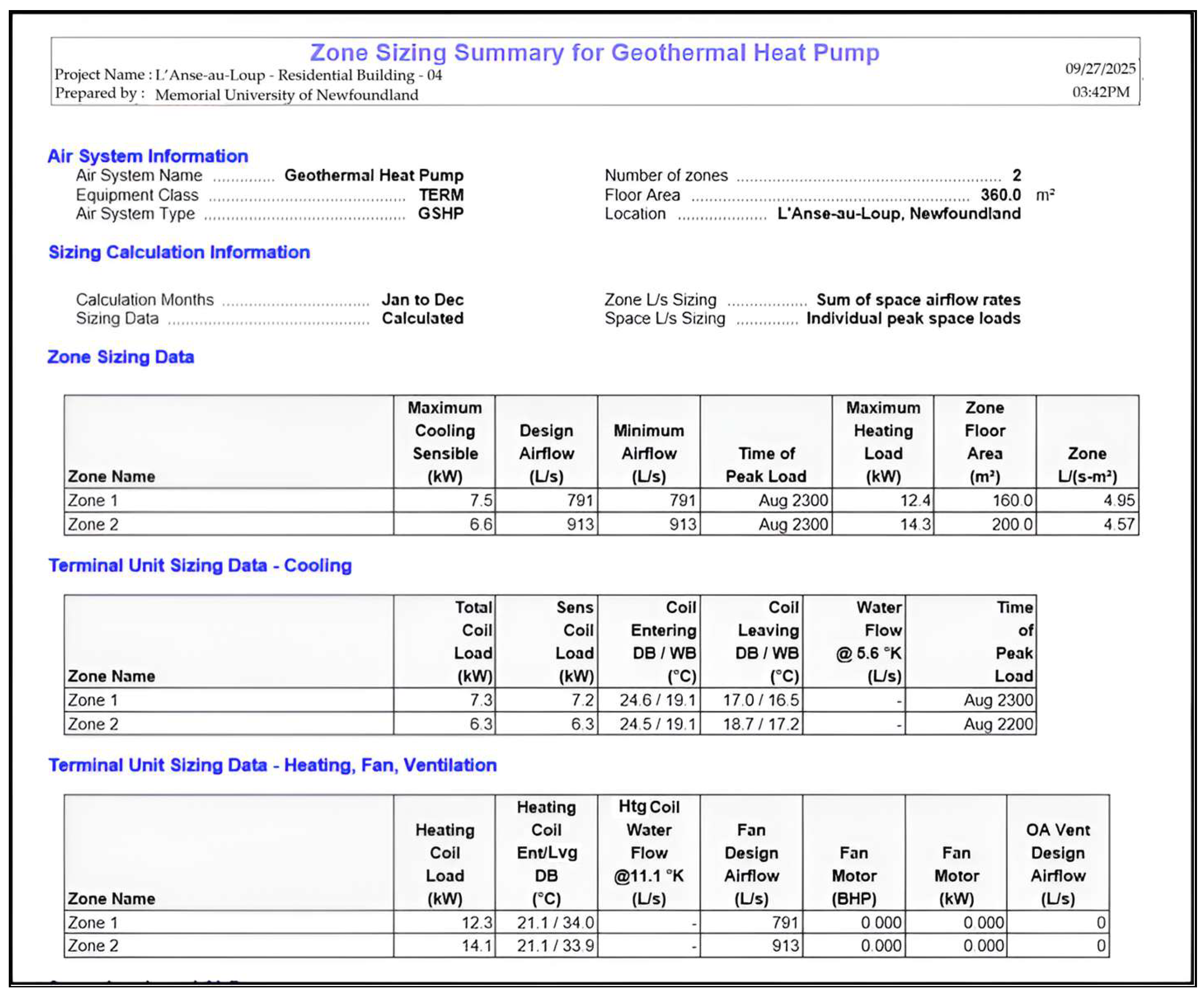
The ground floor has a calculated heating load of 12.3 kW, while the basement requires 14.1 kW. The zone sizing results obtained from Carrier HAP are shown in
Figure 9 and were used to determine the heating loads and select the geothermal heat pump units. Based on these results, two geothermal heat pump units, the Carrier PSC 060 and PSC 070, were selected. Their electrical input powers are 4.05 kW and 4.5 kW, respectively, and both operate at a COP of 3.17. This means that each unit provides 3.17 kW of useful heating for every 1 kW of electricity consumed. Because ground temperatures remain relatively stable throughout the year, geothermal heat pumps can provide reliable performance while reducing the overall electricity demand for space heating.
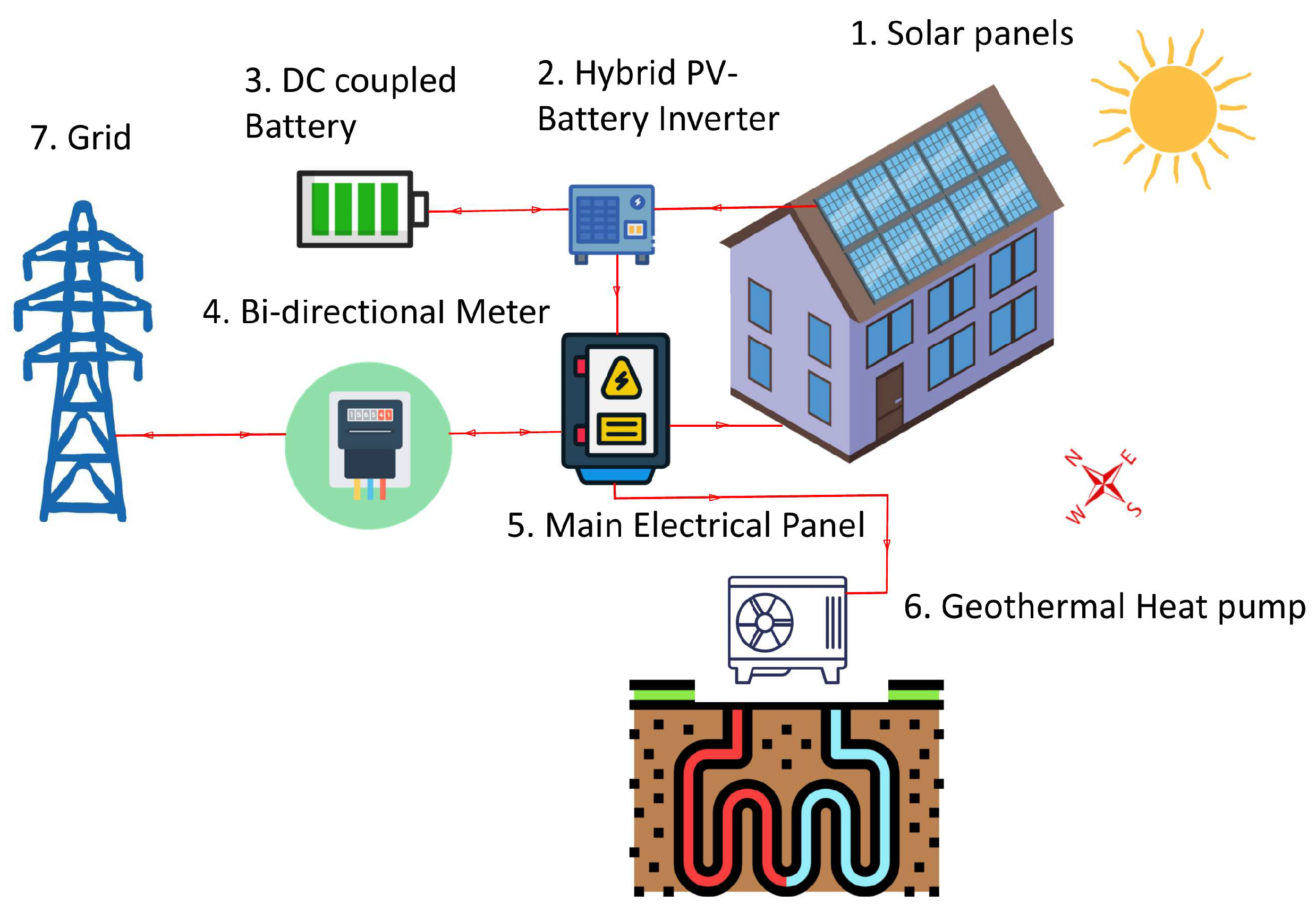
The overall configuration of the proposed PV–battery–geothermal heat pump system is shown in
Figure 10. The system consists of a rooftop PV array, hybrid inverter, battery storage system, bidirectional meter, main electrical panel, geothermal heat pump, and utility grid connection.
4.5. Energy and Cost Savings with a Hybrid Heat Pump Water Heater
According to the ASHRAE Applications Handbook [
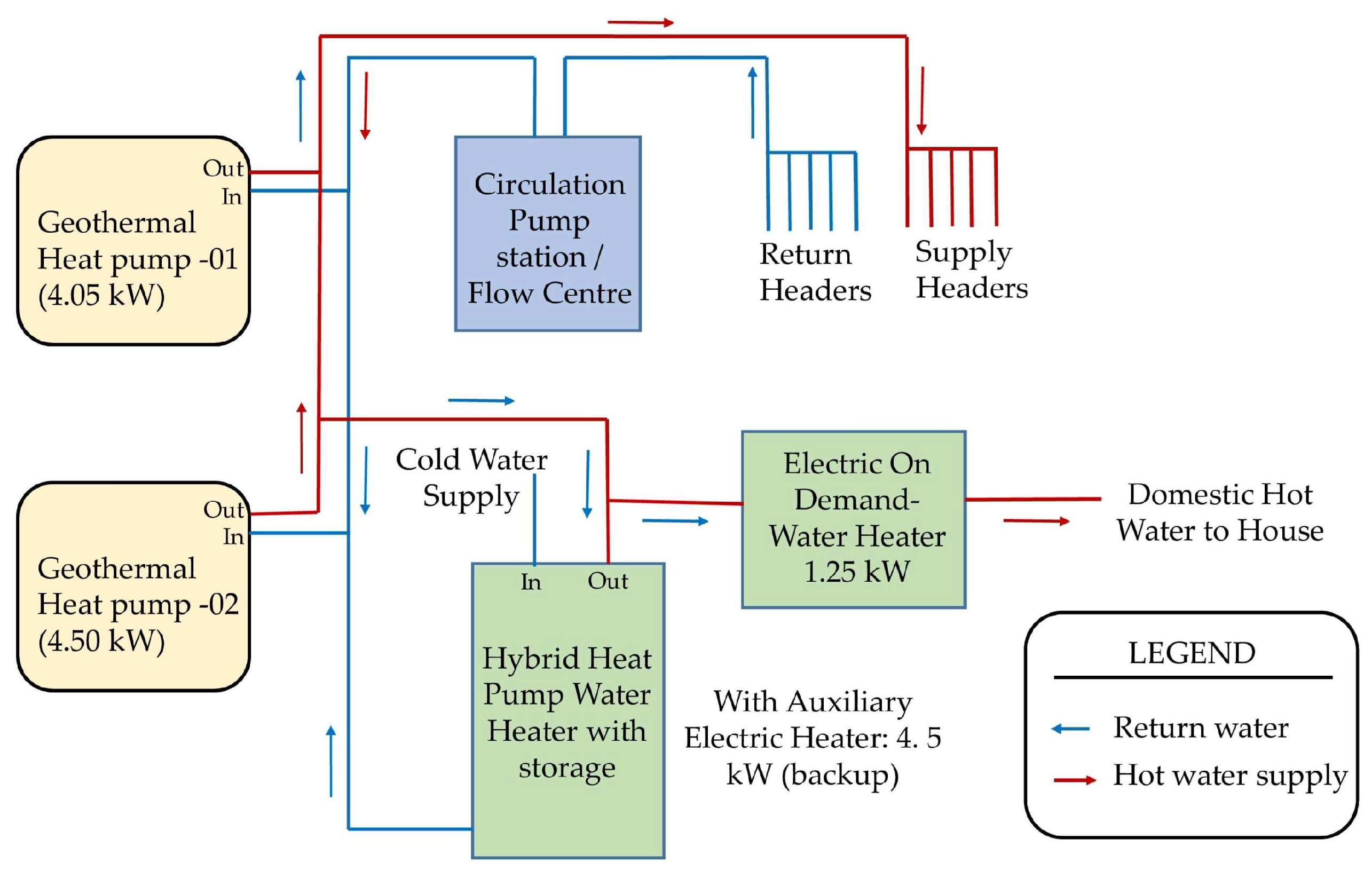
54] (Chapter 51—Service Water Heating), a typical three-bedroom residence requires an electric storage water heater with a capacity of approximately 150 L and an input power of 4.5 kW. To improve energy efficiency, a hybrid heat pump water heater (HPWH) was selected for this study. The selected unit, the Performance Platinum Hybrid Electric Heat Pump Water Heater, operates with a Uniform Energy Factor (UEF) between 3.75 and 4.07, allowing it to provide the required hot water with significantly lower electricity consumption than a conventional electric resistance heater. The configuration of the geothermal heat pump system and the domestic hot water system used in this study is shown in
Figure 11.
The unit includes a 4.5 kW electric backup element to maintain reliable operation during periods of high hot-water demand or when ambient temperatures are low. The auxiliary 4.5 kW electric heating element is intended only for backup operation during periods of high hot-water demand or extreme conditions; therefore, it was not included in the normal load schedule used for the energy simulations. Under typical operating conditions, the heat pump compressor consumes approximately 1.25 kW of electrical power.
In the HOMER Pro model, the hybrid heat pump water heater is represented through its compressor load as part of the overall electrical demand, while the auxiliary electric heating element is excluded from the simulation since it operates only under backup conditions.
In Newfoundland and Labrador, where residential electricity is primarily generated from hydroelectric sources, a conventional 4.5 kW electric water heater typically consumes about 13.5 kWh per day, corresponding to an annual electricity use of 4927.5 kWh. At the current residential electricity rate of $0.132 per kWh, this results in an annual operating cost of approximately $650.61.
By comparison, the hybrid heat pump water heater reduces daily electricity consumption to approximately 3.45 kWh, resulting in an annual energy use of about 1259.25 kWh and an operating cost of approximately $166.29. This represents an estimated annual saving of $484.32 compared with a conventional electric water heater.
Assuming an installation cost of $3500, the resulting simple payback period is approximately 7.2 years, indicating that the system can provide meaningful long-term energy and cost savings for residential users.
The reduction in electricity demand for water heating also decreases the required size of the solar photovoltaic (PV) system. With lower overall household energy consumption, a smaller PV array can meet a larger share of the daily energy demand, reducing the required system capacity and improving the economic performance of the proposed hybrid renewable energy system.
4.6. Residential Load Profile
The proposed hybrid solar PV–geothermal heat pump (GTHP) system was evaluated using the electrical load characteristics of a typical three-bedroom detached house in L’Anse-au-Loup, Labrador. The estimated connected electrical load of the residence is approximately 32.9 kW, as summarized in
Table 6. The load inventory includes lighting and receptacle circuits, small appliance branches, and major household equipment such as the refrigerator, microwave, dishwasher, laundry circuit, electric dryer, geothermal heat pump, domestic hot-water heater, and ventilation unit, together with several auxiliary loads.
Average operating durations were assigned to each appliance to estimate representative daily electricity consumption. These operating times represent equivalent full-load operating hours, particularly for cycling equipment such as refrigerators and geothermal heat pumps [
2,
52,
54,
55]. After applying appropriate diversity factors to account for non-coincident operation of household appliances, the effective diversified load of the residence is approximately 14.36 kW. Applying a coincidence factor of 0.5 results in a peak diversified load of about 7.5 kW.
Seasonal variations in electricity demand are mainly influenced by the long heating season typical of northern Labrador. During winter months, space heating and domestic hot-water production associated with the geothermal heat pump contribute significantly to the household electrical demand. In contrast, summer electricity consumption is dominated by lighting, appliance, and plug loads, resulting in lower overall demand.
Based on the appliance inventory and operating assumptions, the representative residential demand corresponds to an average daily electricity consumption of approximately 61.45 kWh/day, equivalent to an annual electricity demand of about 22–23 MWh. These values are consistent with reported consumption levels for all-electric residential buildings in northern Newfoundland and Labrador. The resulting hourly load profile was imported into HOMER Pro to evaluate the interaction between the photovoltaic array, the battery energy storage system (BESS), and the utility grid.
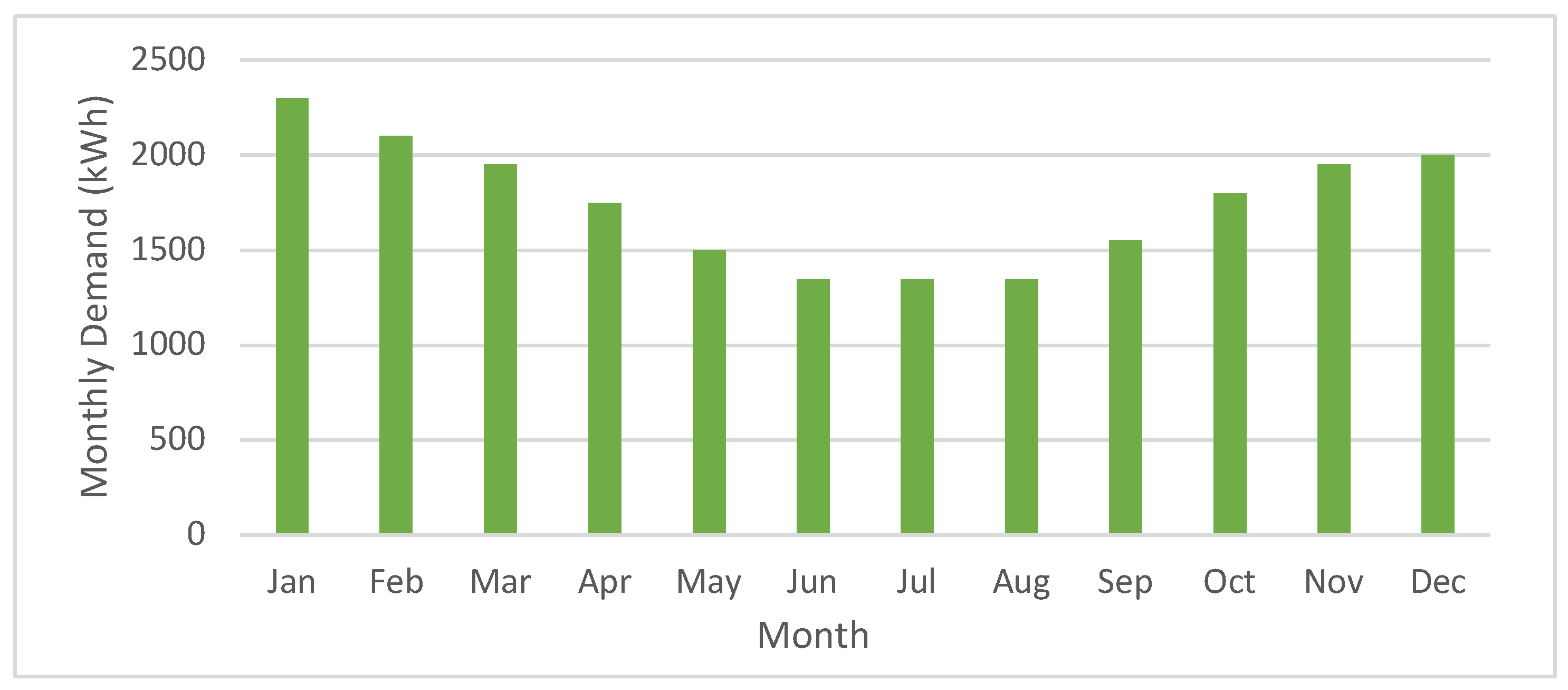
Figure 12 presents the monthly variation in household electricity demand. The highest consumption occurs between December and March, when heating and domestic hot-water demand are greatest. During this period, the average daily electricity consumption increases to approximately 70–75 kWh/day due to extended geothermal heat pump operation. The lowest demand occurs during July and August, averaging 45–50 kWh/day, when heating loads are minimal and electricity use is limited mainly to lighting, appliances, and ventilation. Transitional months show intermediate demand levels as the heating system cycles in response to outdoor temperature conditions.
The monthly demand profile derived from this seasonal variation was used to generate the hourly load dataset applied in the HOMER Pro simulations. Using a realistic load representation ensures that the proposed PV–GTHP hybrid system can meet household energy requirements while accurately reflecting seasonal changes in residential electricity demand.
4.7. Data Collection of Renewable Resources
Reliable environmental data are essential for accurate modelling and meaningful simulation outcomes. In this study, the main resource variables for L’Anse-au-Loup—solar irradiance, clearness index, ambient temperature, and wind speed—were obtained from the NASA Prediction of Worldwide Energy Resource (POWER) database [
62]. This source provides long-term monthly and hourly climate records that are compatible with HOMER Pro. The collected data serve as the foundation for estimating the renewable energy potential of the area and for evaluating the performance of the proposed solar PV, battery, and geothermal system.
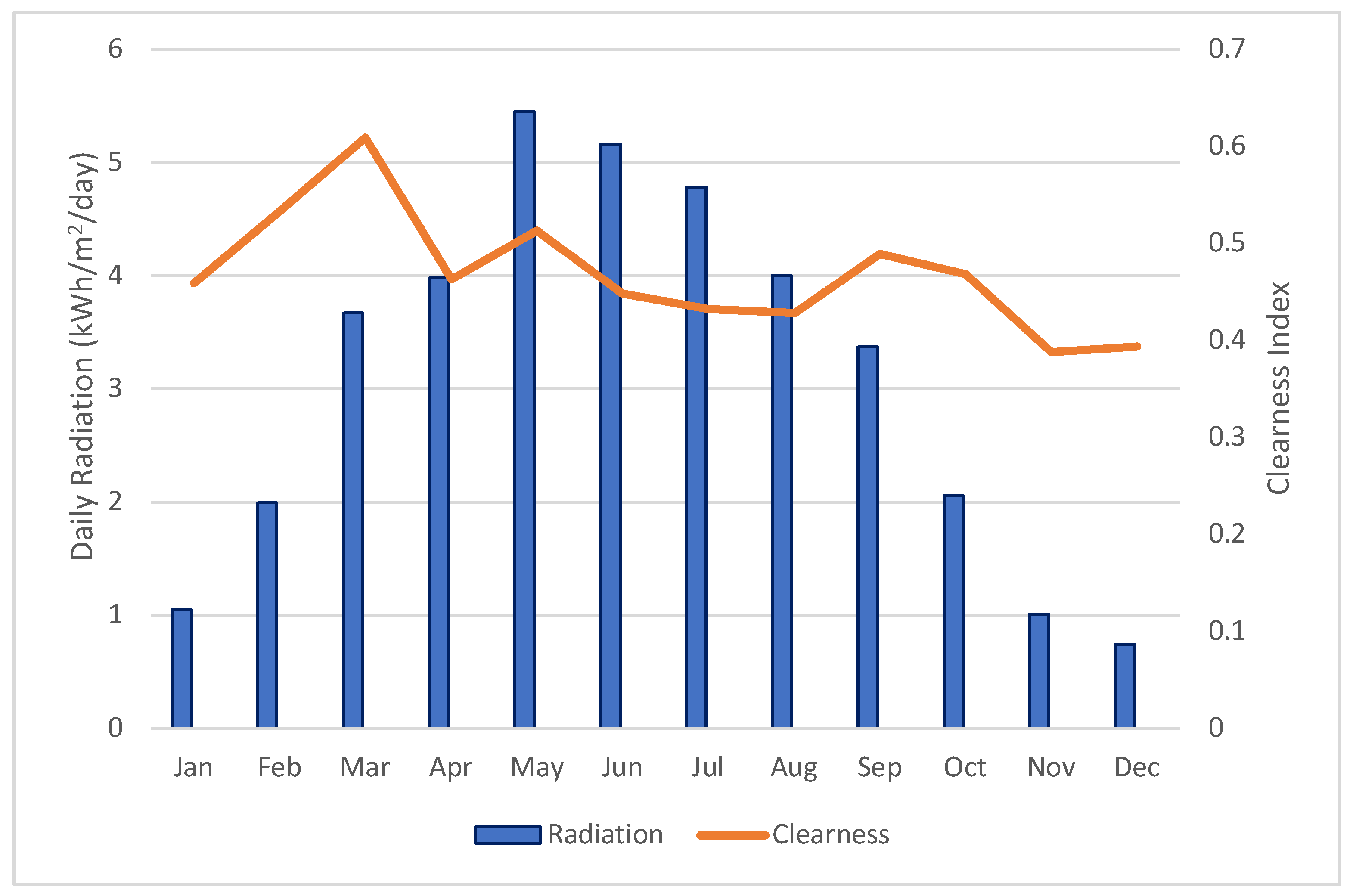
4.8. Solar Radiation and Clearness Index
Solar radiation strongly influences PV system output, as it determines the amount of usable sunlight reaching the modules. The monthly average global horizontal irradiance (GHI) (W/m
2) and clearness index for L’Anse-au-Loup were extracted from the NASA POWER database and are shown in
Figure 13. The annual average solar radiation is about 3.11 kWh/m
2/day, which represents a moderate resource typical of coastal Labrador’s subarctic conditions.
The clearness index indicates the fraction of incoming solar radiation that passes through the atmosphere after accounting for cloud cover and scattering. As illustrated in
Figure 12, the values vary notably throughout the year. Higher clearness levels occur from March to September due to longer daylight hours and generally clearer skies. Winter months show lower values because of increased cloudiness and reduced sunlight. This seasonal pattern emphasizes the need for adequate storage capacity and dependable grid support during periods of low irradiance.
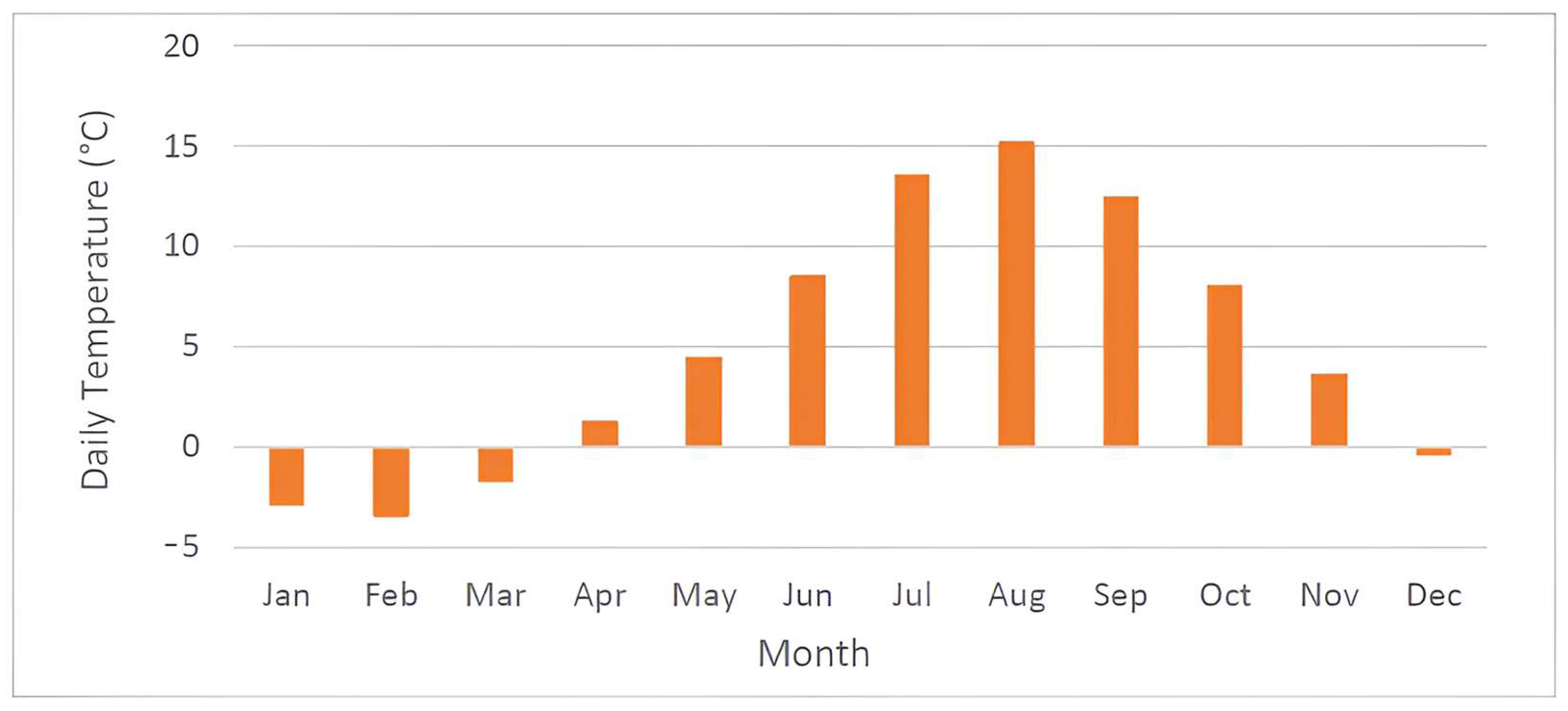
4.9. Ambient Temperature Profile
Ambient temperature influences both building heating and cooling requirements and the performance of PV and geothermal systems. The monthly average temperature data for L’Anse-au-Loup, presented in
Figure 14, were also obtained from the NASA POWER database. The region experiences long and cold winters, with average temperatures remaining below 0 °C from December to March. The warmest period occurs in July and August, when temperatures typically range between 15 and 18 °C.
These temperature variations have a direct impact on system behaviour. Low outdoor temperatures increase heating demand and slightly reduce PV efficiency, while warmer summer conditions lower heating loads and improve PV output. Including these site-specific temperature profiles in the model ensures that the hybrid system is assessed under realistic operating conditions.
4.10. Technical Specifications and Calculations
4.10.1. System Sizing
The all-electric three-bedroom house has an average daily electricity demand of , corresponding to an annual energy requirement of approximately 22,430 kWh/year.
The required grid-connected rooftop PV system capacity to meet this load is:
Hence, a 22.76 PV system is needed under average conditions.
4.10.2. Solar Module Selection and Quantity
Selected modules: TrinTallM+ 315 W monocrystalline panels.
Estimated number of panels:
4.10.3. Roof-Area Assessment:
The house has a total roof surface of approximately 257 m
2, with only the south-facing slope suitable for PV installation. Considering shading, roof penetrations, and spacing, about 60% of this area is usable:
Each panel occupies roughly 2 m
2, so the maximum number of panels that can be installed is:
The corresponding installed PV capacity is:
Thus, the roof can accommodate a 24–25 k PV array, which satisfies the household’s annual electricity demand while allowing a modest margin for seasonal variability and system losses.
4.10.4. PV Module Installation Angle and Mounting Arrangement
The photovoltaic (PV) installation angle was determined based on the site latitude and existing roof geometry. L’Anse-au-Loup, Labrador (51.52° N) is a high-latitude location with significant seasonal variation in solar altitude. HOMER Pro recommends an optimum fixed-tilt equal to the site latitude (≈51.5°) for south-facing arrays, which enhances annual energy capture and improves winter irradiance collection.
The residence has a south-facing gable roof with a 35° pitch. To achieve the 51.5° required tilt, PV modules are mounted on elevated aluminum or galvanized-steel racking systems that add approximately 16.5° to the roof inclination. Thus, the final installation angle is 51.5°. All modules are oriented toward true south (azimuth 0°). The mounting structure includes corrosion-resistant rails, wind-rated anchoring, and waterproof flashing to maintain roof integrity. Output sensitivity indicates that deviations of ±5° from the optimum tilt result in less than 2% annual energy difference, confirming that the chosen configuration is ideal for the site’s climatic conditions [
63].
4.10.5. Annual PV Energy Yield
The annual energy production of the proposed rooftop array was estimated using the installed capacity (24 k) and the site-specific annual solar yield (1260.85 kWh k−1 yr−1). The resulting output is approximately 30,260 kWh yr−1. This generation exceeds the building’s annual demand of 22,430 kWh, confirming that the 24 k system is sufficient to achieve net-zero performance while providing surplus capacity to accommodate seasonal variations, inverter and wiring losses, and long-term module degradation.
4.10.6. Grid Dependency Reduction
Based on the projected PV production and the annual building load, the proposed system can supply approximately 135% of the required electricity on a yearly basis. This surplus allows excess generation to be exported to the utility grid under net-metering conditions, resulting in significant reduction in grid purchases and achieving a net-positive annual energy balance for the household.
4.10.7. Battery Sizing Using Second-Life (Reused) Batteries
For grid-connected residential PV systems, standards such as IEEE 1562-2007 [
64] and IEC 62124:2004 [
65] highlight the importance of appropriate system sizing and reliability, without prescribing a fixed storage duration. In this study, a two-day autonomy period was initially considered to provide a reasonable balance between reliability and cost under the climatic conditions of L’Anse-au-Loup.
Based on the estimated daily energy demand and assuming a second-life battery state-of-health factor of 0.8, the required battery bank capacity was calculated to be approximately 15,415 Ah at 24 V. This corresponds to 78 refurbished 12 V, 200 Ah lithium-ion batteries arranged as two batteries in series and 39 parallel strings, resulting in a total usable storage capacity of approximately 370 kWh. This preliminary estimate reflects a conservative design approach intended to ensure sufficient energy availability during periods of low solar generation.
For the final system configuration, however, the battery capacity was determined through optimization in HOMER Pro, which considers grid interaction, net-metering, and overall system operation. The optimized results indicate that a much smaller battery capacity of 6.6 kWh is sufficient for the proposed system. This is mainly due to the grid-connected nature of the system, where the utility grid supports the load during periods of insufficient generation.
Under these conditions, the battery primarily serves as a short-term energy buffer, improving the utilization of PV generation and supporting load balancing, rather than providing extended backup storage.
While second-life lithium-ion batteries offer clear cost and sustainability advantages, their application introduces certain practical considerations. The remaining capacity of reused batteries can vary depending on their prior usage history, and long-term reliability is subject to degradation effects. In addition, safety aspects, particularly related to thermal behaviour, must be carefully managed. In this study, these uncertainties are addressed by adopting a conservative state-of-health assumption, and it is assumed that an appropriate battery management system (BMS) is implemented to ensure safe and reliable operation [
11,
40,
41].
4.11. System Design and Component Modelling
System design and component modelling for this study were carried out using HOMER Pro, an industry-standard software tool for analyzing and optimizing hybrid renewable energy systems. HOMER Pro enables detailed simulation of various generation and storage technologies that includes solar PV, wind turbines, hydro units, diesel generators, and batteries under real environmental and load conditions. Its ability to evaluate thousands of configurations, assess technical feasibility, and perform comprehensive economic and sensitivity analyses makes it highly suitable for identifying the most efficient and reliable energy system design for the selected site.
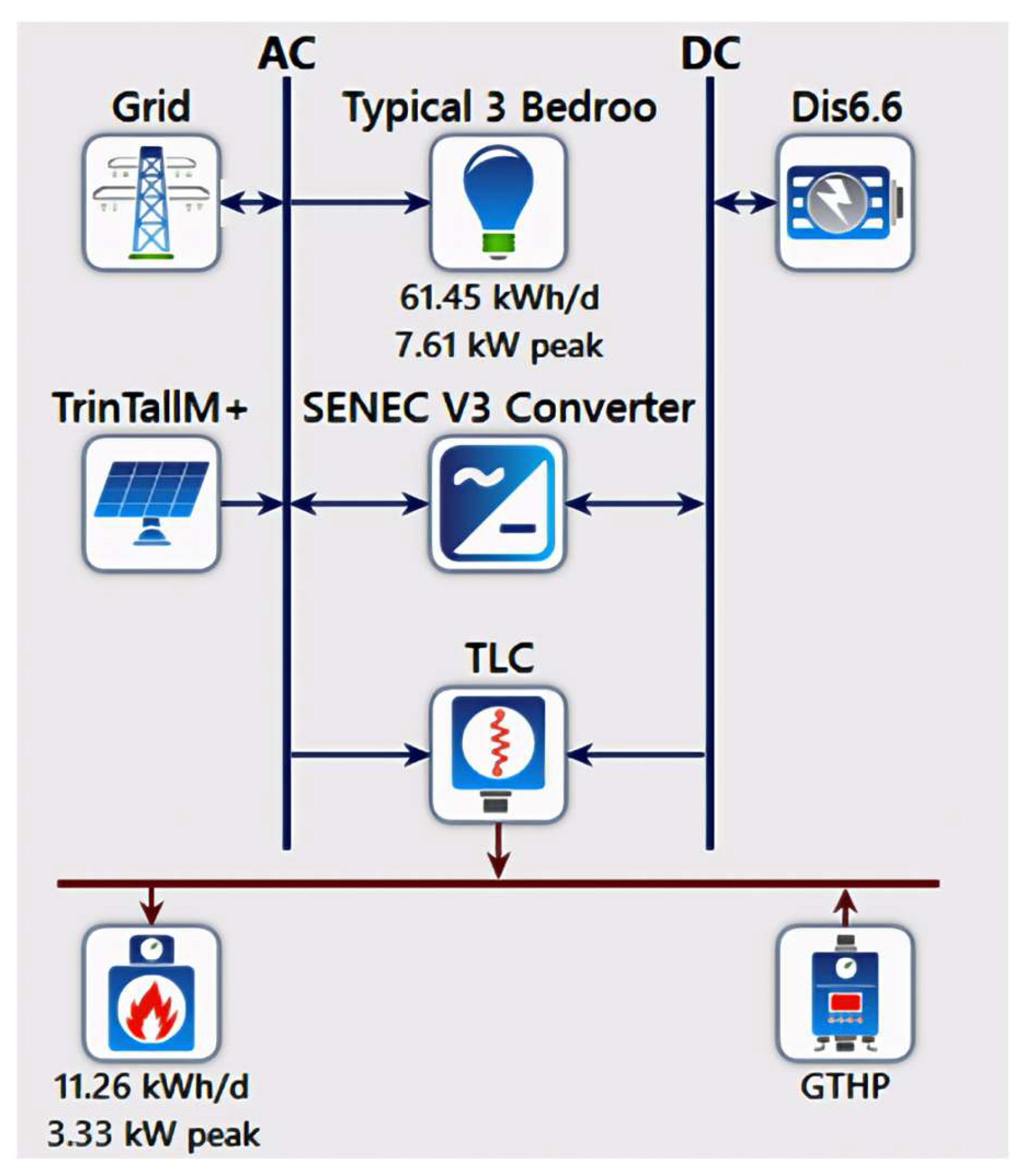
Figure 15 illustrates the AC/DC hybrid architecture developed in HOMER Pro to model the proposed grid-connected photovoltaic–geothermal energy system. The configuration integrates both electrical and thermal subsystems to meet the energy requirements of a typical three-bedroom residence in L’Anse-au-Loup, Labrador.
The AC bus includes the utility grid, household electrical demand, bidirectional converter, and the geothermal heat pump (GTHP), which supplies both space and domestic hot-water heating. The DC bus connects the Trina Tallmax M Plus PV array and the Discover AES lithium-ion battery storage system. Power exchange between the AC and DC sides is managed by the SENEC V3 converter, enabling bidirectional flow and ensuring stable operation under varying solar availability and load conditions.
During periods of high irradiance, the PV array supplies most of the electrical and thermal energy needs of the building, with surplus energy exported to the utility grid. When solar output decreases, either stored energy or grid electricity supplies the load. This net-metered hybrid configuration improves renewable-energy utilization, enhances system reliability, and supports year-round performance in cold-climate regions. Detailed modelling of each subsystem is presented below.
4.11.1. Photovoltaic (PV) Subsystem
The PV subsystem serves as the primary source of electricity for the residence. A Trina Tallmax M Plus 330 W monocrystalline module was selected due to its high efficiency and reliable performance in cold northern climates. The array is mounted at a 51.5° tilt—consistent with the HOMER-recommended optimum fixed-tilt value—facing true south to maximize annual energy capture. The PV system is connected to the DC bus through the SENEC V3 converter.
A derating factor of 0.88 was applied to account for potential losses such as soiling, wiring, mismatch, and temperature effects. Hourly meteorological data (solar irradiance and ambient temperature) from NASA POWER were imported into HOMER Pro to generate an accurate year-round PV production profile.
Economic assumptions for capital, replacement, and O&M costs are based on 2025 Canadian residential-scale benchmarks, which report typical rooftop system costs of US
$2.50–3.50 per watt [
66]. All PV subsystem parameters are summarized in
Table 5.
4.11.2. Battery Energy Storage System (BESS)
The BESS provides short-term energy buffering by storing excess PV generation and supplying electricity during low-solar periods. A second-life Discover AES 6.6 kWh (48 VDC) lithium-ion module was selected to reduce overall system cost and support circular-economy practices. Second-life batteries typically retain 70–80% of their original capacity and are well-suited for stationary applications with moderate cycling requirements [
67].
The BESS is interfaced with the DC bus through the bidirectional converter, enabling efficient charge–discharge operation. HOMER Pro parameters—including round-trip efficiency (95%), minimum state of charge (40%), lifetime (10 years), and economic assumptions—were validated against manufacturer data and relevant literature. As summarized in
Table 5, these settings realistically represent the performance of refurbished lithium-ion systems used in residential microgrids.
Although second-life batteries introduce additional uncertainty due to prior usage history, capacity variability and gradual ageing are implicitly considered through conservative capacity assumptions and a limited operational lifetime within the simulation. In practical deployments, repurposed lithium-ion modules are typically screened, tested, and certified to meet safety and performance requirements before being deployed in stationary energy storage systems.
The storage subsystem enhances system flexibility, stabilizes voltage during peak load events, reduces grid imports, and improves the renewable fraction of the hybrid configuration.
4.11.3. Utility Grid Interface
The utility grid provides supplemental electricity and enables export of excess PV generation through a net-metering arrangement. When PV production is insufficient, electricity is drawn from the grid; during periods of surplus, energy is exported. Import and export tariffs follow Newfoundland and Labrador Hydro’s residential rate structure [
68].
In HOMER Pro, the grid acts as the reference component for calculating key techno-economic metrics, including net present cost (NPC), levelized cost of energy (LCOE), and the system’s renewable fraction. This ensures accurate evaluation of cost–benefit outcomes under realistic operating conditions.
4.11.4. Geothermal Heat Pump (GTHP) Subsystem
The geothermal heat-pump subsystem provides sustainable space and domestic-water heating.
It employs a closed-loop horizontal ground heat exchanger coupled to a Carrier GT-G Series unit with an effective coefficient of performance (COP) of 3.5, typical for Atlantic Canada installations [
69].
In HOMER Pro, the GTHP was represented using the Boiler component with an equivalent efficiency of 350%, corresponding to the COP. Because the unit operates electrically, the fuel type was set as “natural gas” with zero fuel cost to avoid duplicate electricity accounting. The GTHP’s electrical demand is already included in the AC load, maintaining a balanced power model between the PV system, battery, and grid. Economic assumptions for capital, replacement, and O&M costs are provided in
Table 7.
4.11.5. Converter and System Integration
The residential hybrid energy system considered in this study employs the SENEC.Home V3 bidirectional hybrid inverter, which integrates photovoltaic power conversion, battery storage management, and grid interaction within a single unit. The converter performs maximum power point tracking (MPPT) to optimize solar energy extraction and converts the DC power generated by the PV array into AC power suitable for household use. It also enables bidirectional energy exchange with the battery energy storage system (BESS) while maintaining synchronization with the utility grid. Typical technical characteristics include a maximum PV input voltage of approximately 750 V DC, an MPPT operating range of 75–650 V, and a peak conversion efficiency of about 97% [
70].
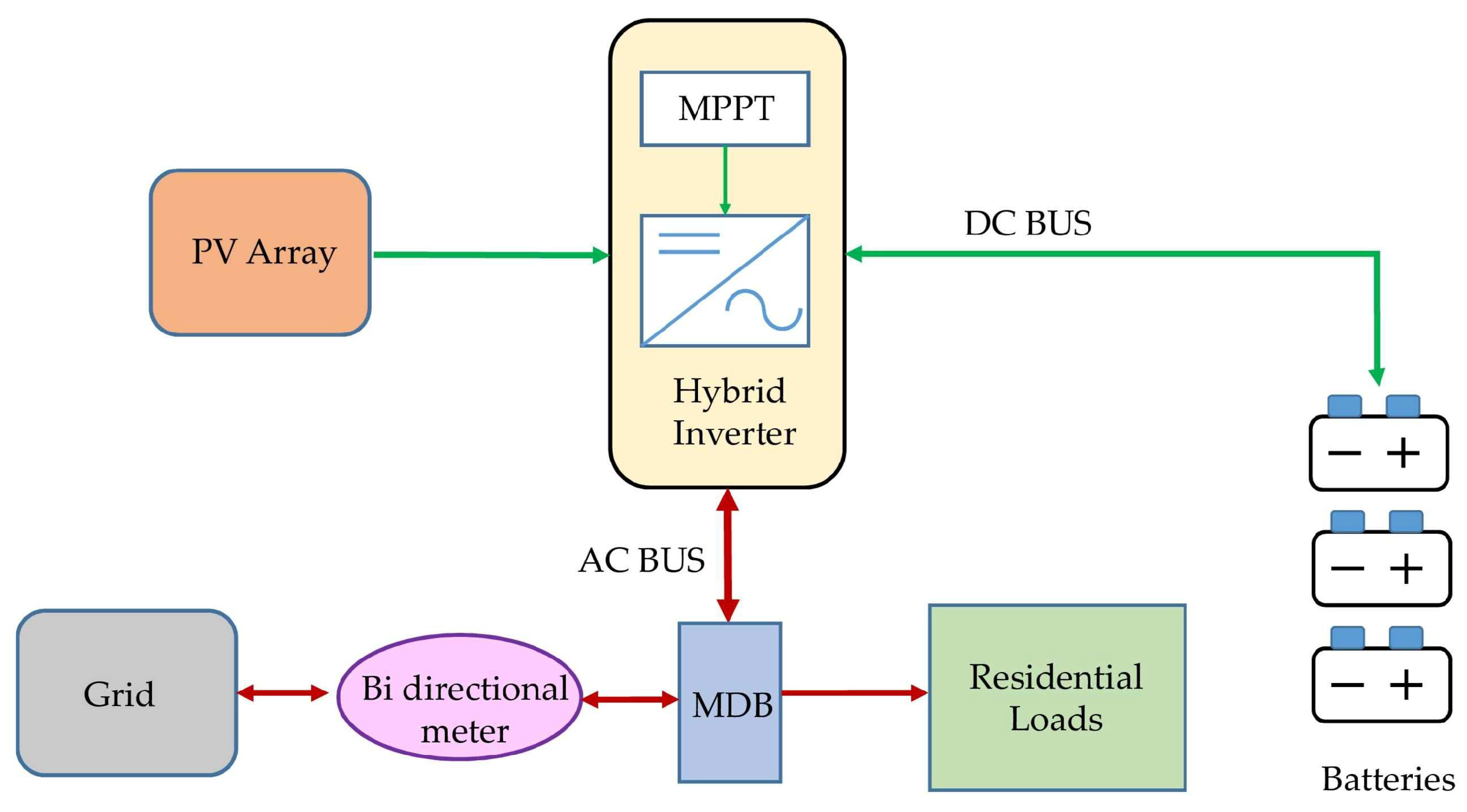
The overall architecture and electricity management structure of the hybrid PV–battery system are illustrated in
Figure 16. The hybrid inverter regulates power flow between the PV array, the BESS, the residential loads through the main distribution board (MDB), and the utility grid. During periods of high solar generation, the inverter prioritizes direct consumption of PV energy by the household loads. Surplus electricity is then directed to battery charging, and once the battery reaches its maximum state of charge, additional energy can be exported to the grid. During periods of low solar generation, the battery discharges to support the household demand, while electricity can be imported from the grid if necessary, ensuring reliable and uninterrupted power supply [
9].
4.11.6. Component Cost Assumptions
The economic evaluation of the PV–GTHP configuration requires cost assumptions for each major component used in the simulation model.
Table 7 summarizes the capital, replacement, and operation and maintenance (O&M) costs adopted for the photovoltaic array, lithium-ion battery storage, converter, geothermal heat pump (GTHP), and thermal load controller (TLC). These values represent typical market conditions for residential renewable energy systems and are consistent with recent cost estimates reported in the literature.
The component-based modelling approach offers a clear understanding of how each subsystem influences the proposed system’s performance and economics. Parameters reflect current Canadian market conditions and typical residential usage patterns. Using HOMER Pro enables comprehensive evaluation of NPC, LCOE, and renewable-energy contribution, facilitating system optimization for cold-climate homes. Integrating PV, second-life battery storage, and geothermal heating substantially reduces grid dependency and supports long-term sustainability for remote northern communities.
5. Results and Discussions
5.1. Overview of System Performance
The hybrid PV–battery–geothermal system was evaluated using the representative residential load of a typical three-bedroom house located in L’Anse-au-Loup, Labrador. The system consists of a 30 kWp rooftop photovoltaic (PV) array, a 6.6 kWh second-life lithium-ion battery module, and a horizontal-loop geothermal heat pump (GTHP) that provides space heating and domestic hot water. Power exchange between the household, the battery storage unit, and the utility grid is managed through a bidirectional SENEC V3 inverter–converter.
Based on preliminary manual calculations, the required PV capacity was estimated to be approximately 24 kWp (see
Section 4.10.1). However, the HOMER Pro optimization process identified an optimal system size of 30 kWp, which was adopted for the final system configuration and subsequent analysis.
The annual electricity production, consumption, and key system parameters used in the simulation are summarized in
Table 8.
Over the simulation year, the hybrid system supplies a total of 43,526 kWh of electrical energy. The PV array generates 30,243 kWh, covering most of the daytime electricity demand. The remaining 13,283 kWh is imported from the grid, primarily during winter months when heating demand is higher and solar availability is limited. The total AC load, including the electrical input of the geothermal heat pump, amounts to 22,429 kWh.
Any excess electricity produced by the PV system is exported to the grid under the provincial net-metering programme. No unmet electrical load or system shortages were observed during the simulation period. Under the climatic conditions of L’Anse-au-Loup and the assumed operating parameters, the PV–BESS–GTHP configuration reliably supplies the residential energy demand throughout the year.
5.2. Monthly Energy Production Trends
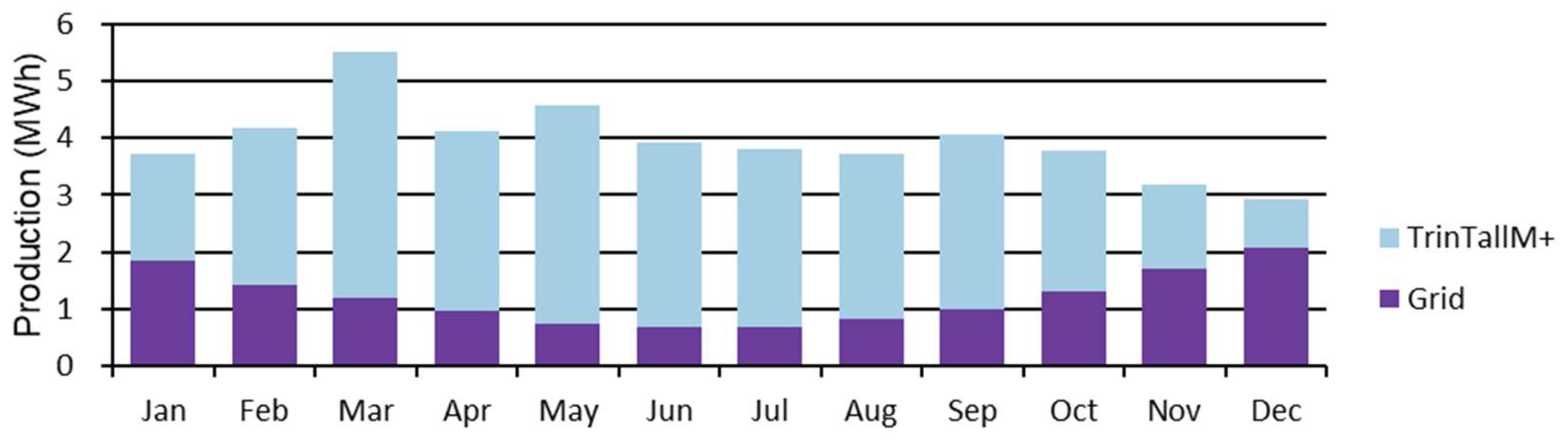
Figure 17 illustrates the seasonal pattern of PV production typical of high-latitude coastal regions. Output rises rapidly from late winter and peaks between March and May, reaching 4–5 MWh per month. Generation remains steady through the summer at 3.4–3.8 MWh as irradiance stays high but module temperatures increase. From November to January, PV output declines to 2–3 MWh per month due to short days, low sun angles, snow coverage, and frequent cloud presence.
This seasonal behaviour directly shapes grid-purchase trends. During spring, the PV array often supplies more than 80% of the home’s electrical demand, substantially supporting the GTHP and limiting grid dependence. In contrast, December and January show the highest grid purchases because solar output is minimal while heating demand peaks. The GTHP adds a nearly constant thermal requirement of 11.26 kWh day−1 (3.33 kW peak), and its electrical input is embedded within the main AC load. Since the heat pump continues operating even during low-solar periods, winter energy balance is dominated by grid electricity. Overall, monthly trends reflect the challenge of meeting heating-dominated loads in a region with a long winter and limited solar resource availability.
5.3. Energy Balance and Renewable Penetration
Table 9 summarizes the annual energy flows. The PV array generates 30,243 kWh, supporting most daytime loads and creating consistent spring–summer surpluses exported to the grid. Total annual grid inputs amount to 13,283 kWh, while exports reach 21,097 kWh. The AC load, including the GTHP’s electrical consumption, uses 22,429 kWh over the year. Based on these flows, the hybrid system achieves a renewable fraction of 63.5%, with some months achieving full renewable coverage during periods of strong solar availability.
This level of renewable penetration is significant for a northern coastal community where heating dominates total energy use and winter solar potential is limited. The system benefits particularly from early-spring irradiance, which arrives when module efficiency is high and daytime heating loads persist. However, roughly one-third of the annual electricity still originates from the grid. Three main factors explain this residual dependence:
Strong winter heating demand combined with low solar availability from November to January. Limited storage capacity; the 6.6 kWh battery offers only short-term balancing and cannot shift surplus summer energy into the heating season.
Stable GTHP electrical consumption, which continues even when PV production is minimal. These results demonstrate that the hybrid system already performs strongly for a subarctic site, but also indicate that winter performance is inherently constrained. Further improvements may include expanding storage, adopting demand-response strategies, or improving the building envelope to reduce heating loads during the critical winter period.
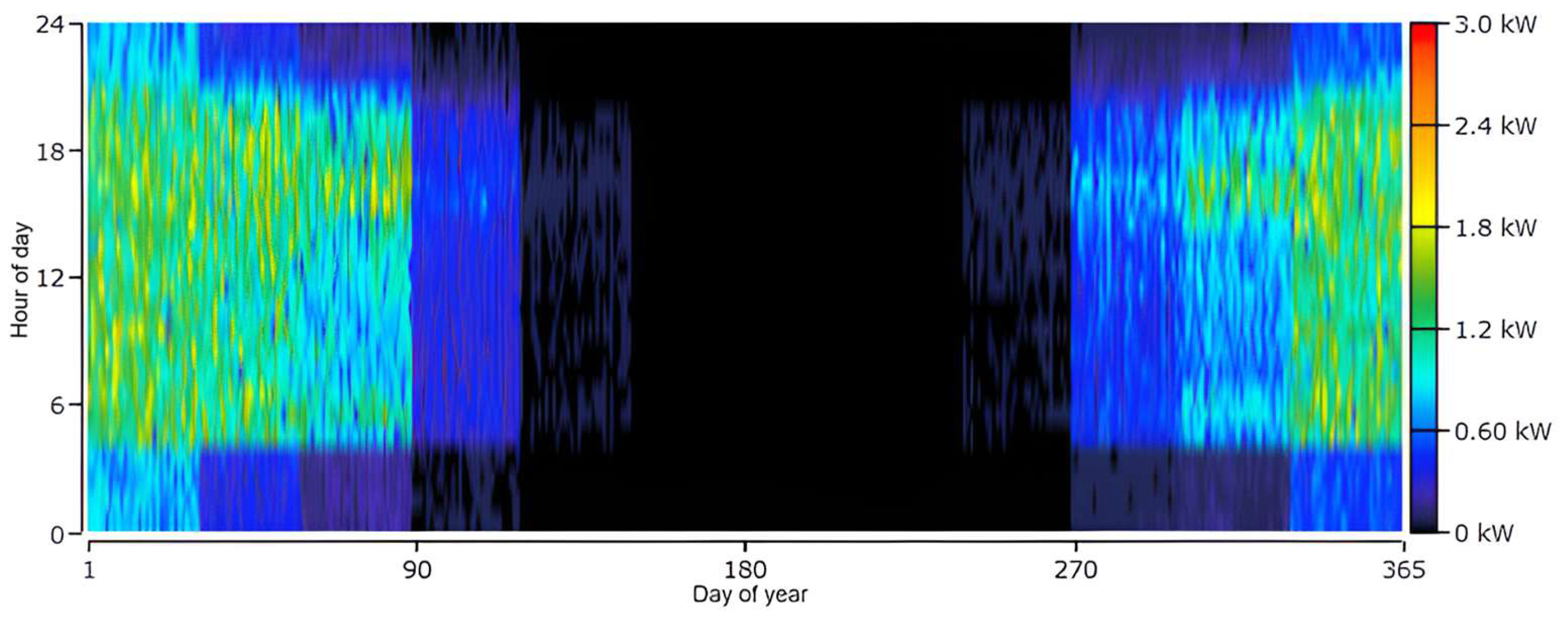
5.4. GTHP Seasonal Operating Behaviour
Figure 18 presents the seasonal operating profile of the geothermal heat pump (GTHP). Over the simulation year, the unit operates for 6552 h and delivers 4109 kWh of useful thermal energy. The GTHP is most active during the winter months, particularly from January to March and again in November and December, when outdoor temperatures are low and space-heating requirements peak. During these periods, the unit frequently operates for long, continuous intervals and approaches the upper end of its output range.
Operation declines sharply through late spring and remains minimal during the summer months, reflecting the reduced need for space heating and stable ground-loop conditions. Transitional months such as April, May, September, and October show intermittent operation, consistent with moderate and fluctuating heating demand.
The electrical input to the heat pump is already included in the main AC load, and its seasonal operating pattern closely mirrors the months with the highest grid imports. This confirms that winter heating remains the primary driver of electricity consumption in the hybrid system. Overall, the GTHP’s performance aligns well with the expected seasonal climate of L’Anse-au-Loup and reinforces the need for grid support during the coldest part of the year.
5.5. HOMER’s Exclusion of the Second-Life Battery
HOMER Pro did not select the second-life 6.6 kWh lithium-ion battery in the optimal configuration, even though storage was included in the design. This outcome is consistent with modelling behaviour in cold-climate hybrid systems.
The principal reason is the mismatch between storage capacity and energy demand. Winter electricity use in L’Anse-au-Loup frequently reaches 60–70 kWh per day, mainly due to heating. A 6.6 kWh battery offers roughly 10% of the energy required for a single high-demand winter day. Storage of this scale provides short-duration load shifting but cannot store enough surplus summer energy to impact winter grid purchases. Under these conditions, the battery’s operational impact is too small to justify its capital, replacement, and maintenance cost.
A second factor is the region’s low electricity price. When grid tariffs are modest, storing energy provides limited financial benefit, and the economic incentive to shift load decreases. Net metering further reduces the value of storage by offering a simple mechanism to export excess PV generation during high-irradiance periods without needing a battery to absorb it.
Seasonal constraints also limit the battery’s usefulness. Winter solar resource is very low, reducing opportunities to charge the battery. During summer, PV production is abundant, but exporting surplus to the grid already offsets household consumption economically, making storage less valuable. As a result, HOMER’s optimization consistently favours configurations without the battery.
5.6. Economic Analysis of the Grid-Only and Hybrid PV–BESS–GTHP Systems
The grid-only scenario was used as the economic baseline. In this configuration, all electrical and heating loads are supplied directly from the utility network, with no capital or replacement costs. The net present cost (NPC) for this option is 27,179 USD, driven entirely by grid purchases over the 25-year study horizon. While financially minimal at the outset, this approach locks the household into complete grid dependence and offers no protection against future price escalation.
The hybrid PV–BESS–GTHP system requires substantial initial investment. The total capital expenditure is 46,800 USD, dominated by the PV array, converter, and GTHP installation. The resulting NPC is 50,564 USD. Despite the higher upfront cost, long-term operating expenses are lower because a significant portion of electricity is produced on-site. The levelized cost of electricity (LCOE) is 0.1074 USD kWh−1—slightly below the current residential electricity tariff in Newfoundland and Labrador. The renewable fraction of 63.5% indicates that the household reduces grid exposure considerably, effectively stabilizing long-term energy expenditure.
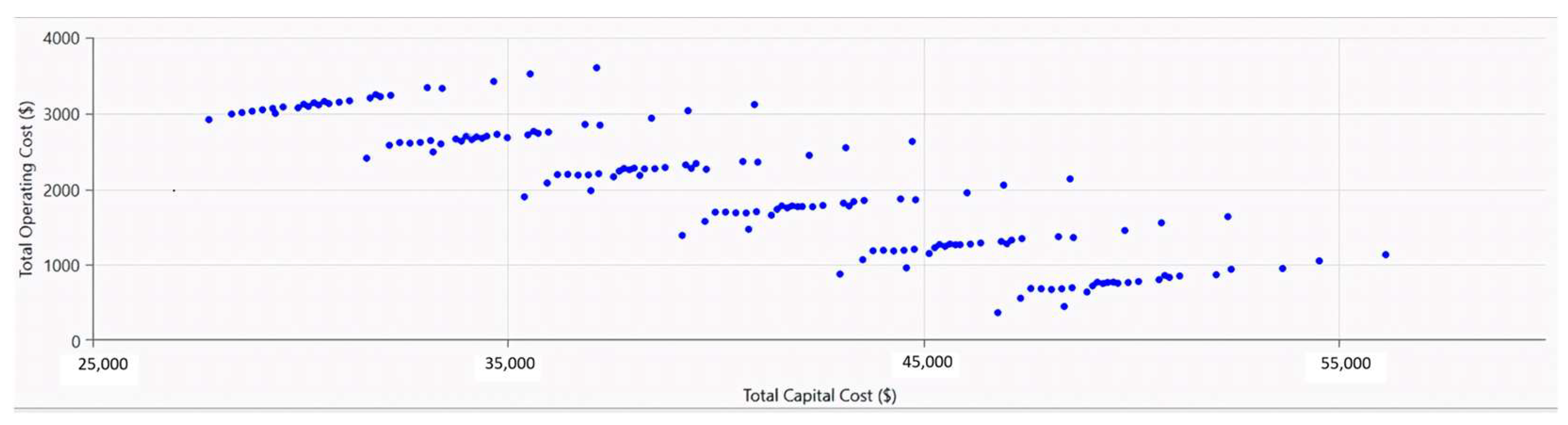
A broader economic comparison is shown in
Figure 19, which plots total capital cost against annual operating cost for all simulated system configurations. Low-CAPEX options cluster at the left and exhibit high operating costs due to continuous grid dependence. As capital investment increases, operating costs decrease sharply. The selected hybrid configuration lies within the region of 45,000–55,000 USD capital cost and below 1000 USD yr
−1 operating cost, suggesting a balanced combination of affordability, performance, and long-term resilience.
To better understand the seasonal imbalance observed in the annual energy flows, it is useful to examine how the geothermal heat pump operates throughout the year. The heating demand pattern strongly influences both the daily load profile and the degree of grid reliance during winter. The following subsection provides a focused assessment of the GTHP’s hourly and seasonal operating behaviour.
5.7. Investment Feasibility and Payback Period
The economic feasibility of the proposed hybrid PV–GTHP system was also examined by considering the required capital investment and the expected payback period. The initial investment mainly includes the cost of the photovoltaic array, battery storage system, geothermal heat pump, and associated power electronic equipment. Although the hybrid system requires a higher upfront investment than a conventional grid-supplied heating system, it significantly reduces long-term electricity purchases from the utility grid.
The simulation results obtained from HOMER Pro indicate that a substantial portion of the household electricity demand can be supplied by the photovoltaic system, while the geothermal heat pump provides efficient space heating and domestic hot-water production. As a result, annual electricity costs are reduced compared with a conventional grid-dependent configuration.
These reductions in electricity consumption gradually offset the initial capital investment over the system lifetime. The results therefore suggest that the proposed hybrid system can achieve a reasonable payback period under current electricity price conditions. In addition to direct financial benefits, the system also improves energy security and reduces exposure to future electricity price increases. Considering both economic and environmental benefits, the hybrid PV–GTHP configuration represents a practical solution for residential buildings located in cold-climate regions such as L’Anse-au-Loup.
5.8. Sensitivity Analysis of Economic Parameters
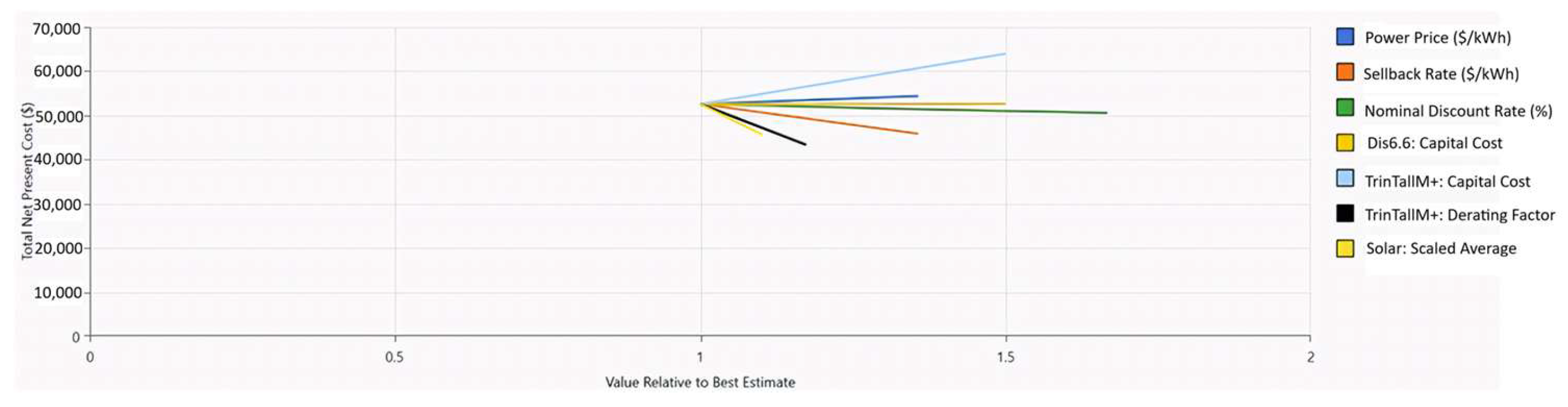
Figure 20 presents the sensitivity of the system’s total net present cost (NPC) to several key economic variables. The spider diagram shows that the model is most responsive to variations in the capital cost of the PV array and the retail electricity price. An increase in PV capital cost shifts the NPC upward, reflecting the strong influence of upfront investment on long-term system economics. Conversely, higher electricity prices tend to lower the NPC of the hybrid system relative to the grid-only alternative, as self-generation becomes more valuable under elevated tariff conditions.
Changes in the nominal discount rate and sellback rate have moderate effects. A higher discount rate reduces the present value of future savings, slightly increasing the NPC, while a reduced sellback rate weakens the economic benefit of exporting excess solar electricity. These impacts remain secondary compared with shifts in PV cost and utility tariffs. The model shows only a minor sensitivity to assumptions regarding battery cost multipliers and PV derating factors. This behaviour is consistent with earlier findings in the study, where the optimizer chose not to deploy the second-life battery in the final configuration. Since storage does not contribute materially to the economic balance, variations in its cost parameters have limited influence on the system’s NPC.
Overall, the sensitivity analysis confirms that system economics are driven primarily by (i) the cost trajectory of solar PV and (ii) future electricity pricing. These parameters dominate the hybrid system’s financial performance and should be central considerations in long-term planning and policy design.
5.9. Environmental Impact Assessment
Although the optimization in HOMER Pro is primarily based on minimizing the net present cost (NPC), the analysis also evaluates environmental indicators such as emissions reduction and renewable energy contribution. This allows the system performance to be assessed from both economic and environmental perspectives.
The hybrid system provides measurable reductions in annual emissions compared with full grid dependence. The net decrease in carbon dioxide is 4.7 tonnes per year, primarily from avoided grid-supplied electricity. Reductions of 21.4 kg of and 10.5 kg of are also achieved. No increases occur for carbon monoxide, hydrocarbons, or particulate matter, indicating no negative local air-quality impact. These improvements demonstrate that the PV–GTHP combination effectively lowers the carbon intensity of residential energy use in cold-climate regions, even without large-scale battery storage.
6. Conclusions
This study examined a grid-connected hybrid energy system that integrates rooftop photovoltaic generation, a second-life lithium-ion battery, and a ground-source heat pump for a typical residence in L’Anse-au-Loup, a cold coastal region with a long heating season and highly variable solar resource. The system operated reliably under all modelled scenarios and achieved a renewable fraction of 63.5% with no loss of load. The PV array supplied most daytime electrical demand and supported heat-pump operation during the warmer months, while net-metering allowed surplus electricity to offset winter consumption. The geothermal heat pump delivered efficient space and water heating, but its sustained operation in low-irradiance periods remained the main driver of grid imports.
The economic results show that, although the PV–GTHP configuration requires a higher upfront cost than a grid-only configuration, it offers strong long-term value. The calculated levelized cost of electricity of 0.1074 USD/kWh is competitive with current residential rates and reduces exposure to future price increases. Sensitivity analysis identified PV capital cost and electricity price as the most influential factors shaping system economics, while the second-life battery provided limited operational benefit under the modelled climate and tariff conditions.
The environmental assessment confirmed clear emission reductions, with the system lowering annual output by 4.7 tonnes—representing an estimated 40–50% decrease compared with a grid-only baseline—along with decreases in and . These reductions reflect the high share of on-site renewable generation and the strong heating efficiency provided by the geothermal heat pump. Although based on a single residential case, the modelling approach and findings are applicable to similar cold-climate regions with high heating loads and access to net-metering programmes.
The study also highlights the seasonal mismatch between winter heating demand and limited solar availability. Future enhancements may include phase-change thermal storage to shift renewable heat availability into evening hours, expanded electrical storage capacity, smart GTHP control strategies for shoulder seasons, and building-envelope improvements to reduce peak heating load. The results offer practical guidance for homeowners, system designers, and policymakers seeking resilient, low-carbon residential energy solutions in northern regions, and demonstrate that combining solar generation with high-efficiency heating technologies provides a viable path toward cleaner and more stable household energy systems.



 ,
,