
Article

μPMU-Based Temporal Decoupling of Parameter and Measurement Gross Error Processing in DSSE
1
Sandia National Laboratories, Albuquerque, NM 87123, USA
2
Department of Electrical & Computer Engineering, University of Florida, Gainesville, FL 32611, USA
3
School of Technology, Pontifical Catholic University of Rio Grande do Sul, Porto Alegre 90619-900, Brazil
4
National Renewable Energy Laboratory, Golden, CO 80401, USA
5
Department of Electrical & Computer Engineering, University of Sao Paulo, Sao Carlos 13566-590, Brazil
*
Author to whom correspondence should be addressed.
Electricity 2021, 2(4), 423-438; https://doi.org/10.3390/electricity2040025

Submission received: 29 July 2021 / Revised: 7 September 2021 / Accepted: 28 September 2021 / Published: 2 October 2021

Abstract

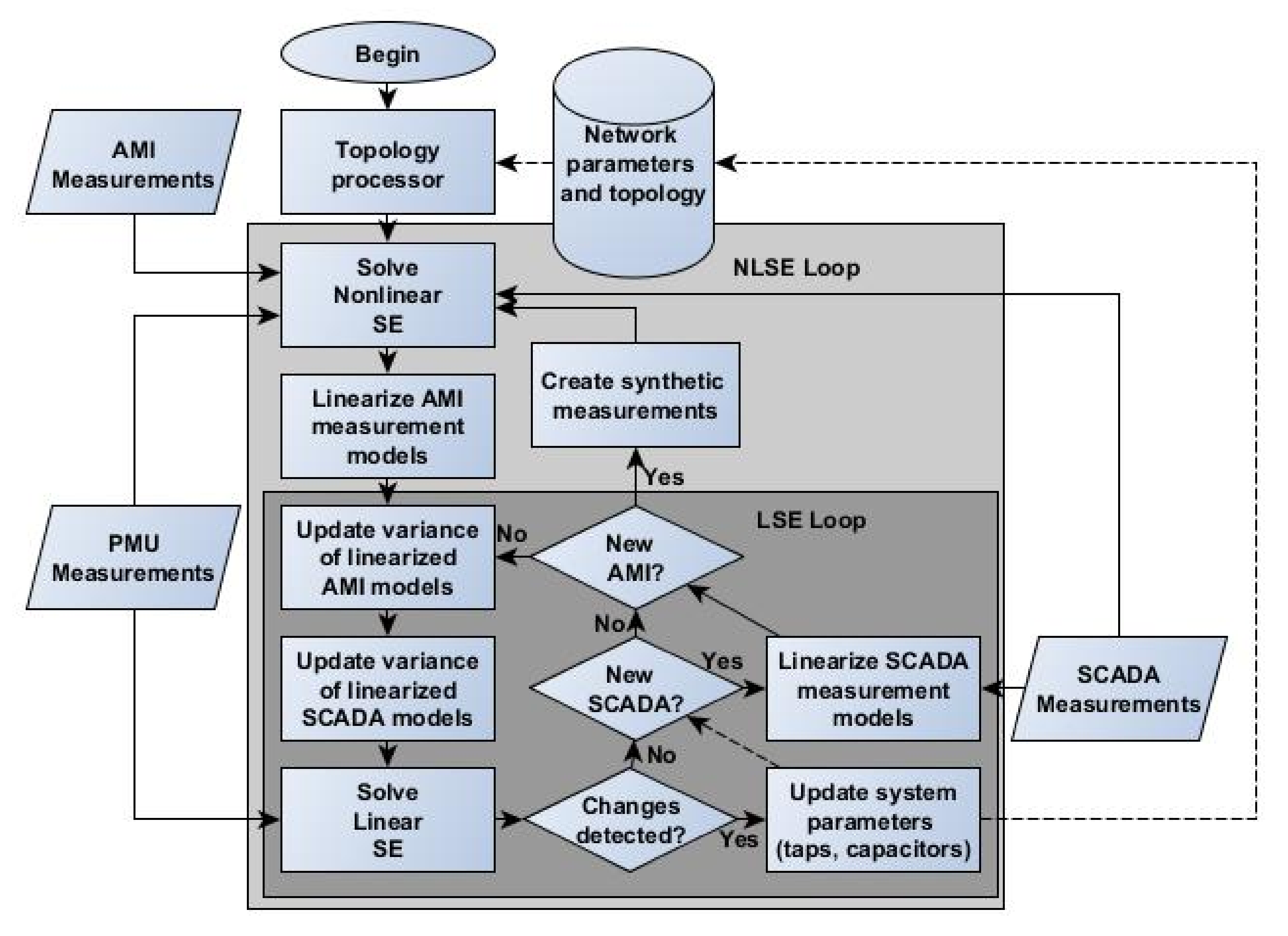
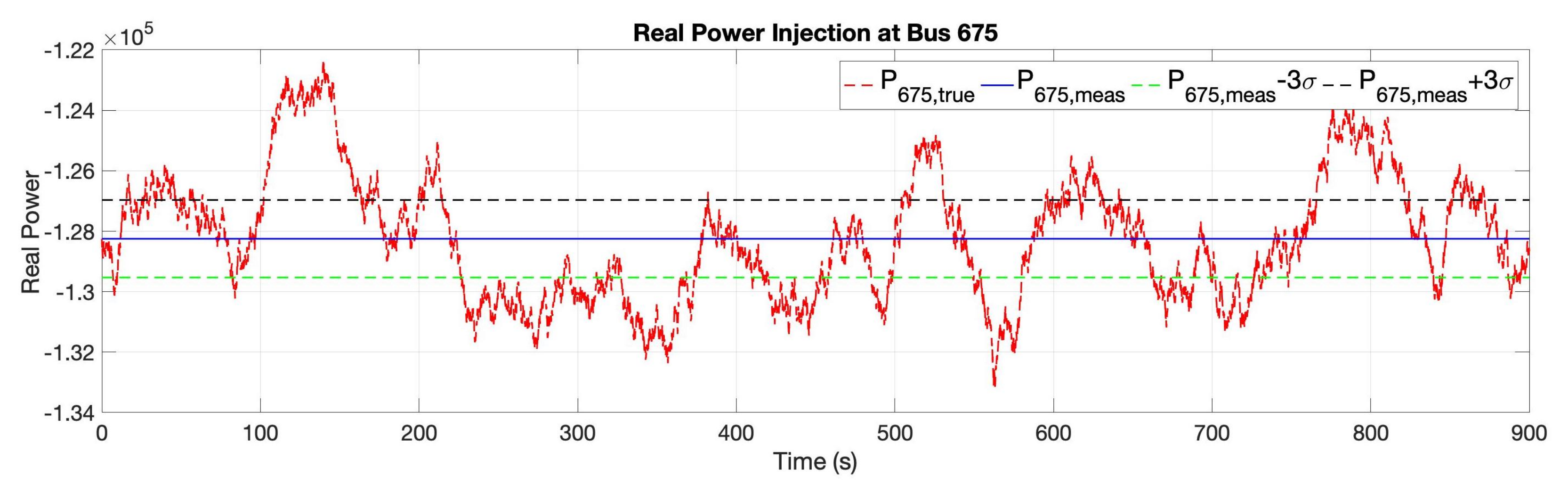
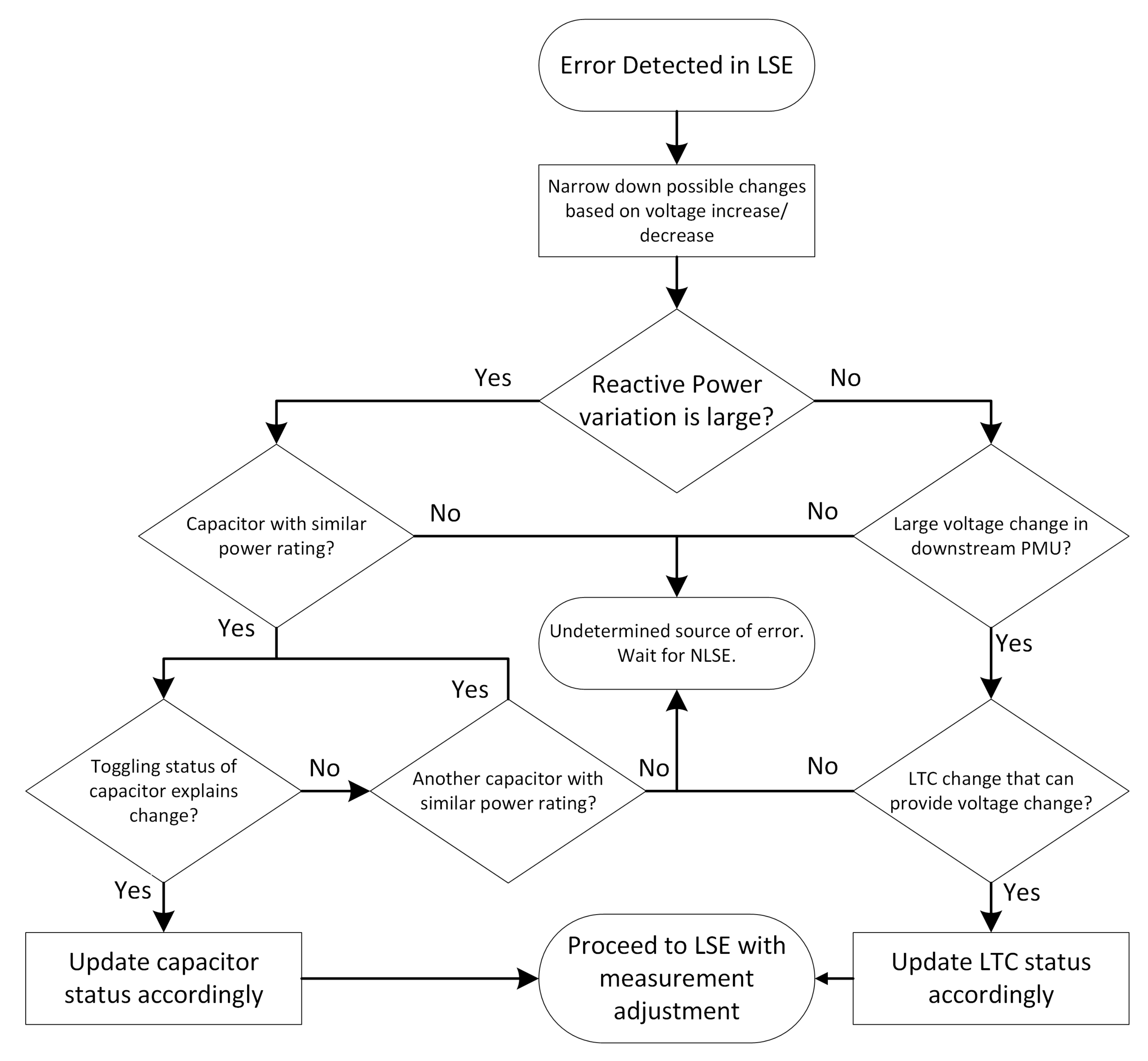
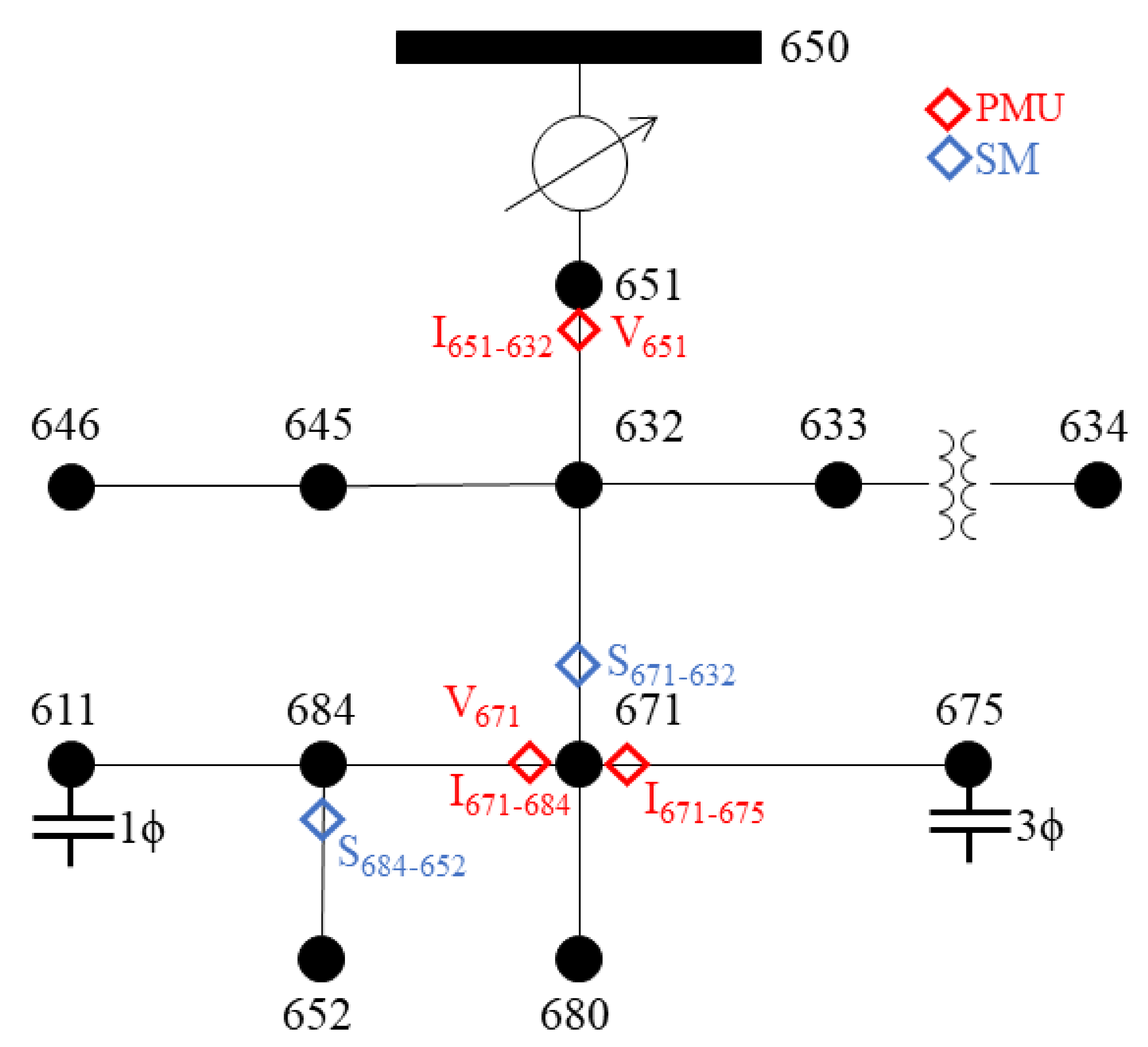
Simultaneous real-time monitoring of measurement and parameter gross errors poses a great challenge to distribution system state estimation due to usually low measurement redundancy. This paper presents a gross error analysis framework, employing μPMUs to decouple the error analysis of measurements and parameters. When a recent measurement scan from SCADA RTUs and smart meters is available, gross error analysis of measurements is performed as a post-processing step of non-linear DSSE (NLSE). In between scans of SCADA and AMI measurements, a linear state estimator (LSE) using μPMU measurements and linearized SCADA and AMI measurements is used to detect parameter data changes caused by the operation of Volt/Var controls. For every execution of the LSE, the variance of the unsynchronized measurements is updated according to the uncertainty introduced by load dynamics, which are modeled as an Ornstein–Uhlenbeck random process. The update of variance of unsynchronized measurements can avoid the wrong detection of errors and can model the trustworthiness of outdated or obsolete data. When new SCADA and AMI measurements arrive, the LSE provides added redundancy to the NLSE through synthetic measurements. The presented framework was tested on a 13-bus test system. Test results highlight that the LSE and NLSE processes successfully work together to analyze bad data for both measurements and parameters.
Keywords: distribution system state estimation; measurement gross error analysis; micro-phasor measurement units; parameter gross error analysis distribution system state estimation; measurement gross error analysis; micro-phasor measurement units; parameter gross error analysis