
Proceeding Paper

Lithography-Based Ceramic Manufacturing of Diamond Lattice Structure for Bone Regeneration Scaffolds †

by
Morakane Gloria Moletsane
1,*,
Willie Bouwer du Preez
2,
Deon de Beer
3 and
Shathani Nkhwa
4
1
Department of Mechanical and Mechatronics Engineering, Faculty of Engineering, Built Environment & Information Technology, Central University of Technology, Bloemfontein 9301, South Africa
2
Centre for Rapid Prototyping and Manufacturing, Faculty of Engineering, Built Environment & Information Technology, Central University of Technology, Bloemfontein 9301, South Africa
3
National Research Foundation South African Research Chairs Initiative Chair in Medical Product Development Through Additive Manufacturing, Faculty of Engineering, Built Environment & Information Technology, Central University of Technology, Bloemfontein 9301, South Africa
4
Department of Biomedical Sciences, Faculty of Medicine, University of Botswana, Gaborone Private Bag 0022, Botswana
*
Author to whom correspondence should be addressed.
Presented at the 4th International Conference on Applied Research and Engineering, Pretoria, South Africa, 21–23 November 2025.
Mater. Proc. 2026, 31(1), 4; https://doi.org/10.3390/materproc2026031004
Published: 14 April 2026
(This article belongs to the Proceedings of The 4th International Conference on Applied Research and Engineering)

Abstract

This study investigates the mechanical and biological properties of diamond lattice structure produced through lithography-based ceramic manufacturing, an additive manufacturing technique. HA480 specimens, cubes of 5 × 5 × 5 mm, were manufactured with appropriate pore sizes and porosity. Printed HA480 specimens were tested and analysed for compression strength, cell proliferation, and cell attachment. The printed cubes displayed interconnected pore geometry. A set of ten HA480 diamond lattice structure specimens were compressed until failure to obtain a compressive strength of 10.7 MPa. HA480 solid scaffolds were seeded with the human osteoblast cell line hFOB 1.19 cells. The fluorescence level results were higher on day 3 and decreased on days 5 and 7. Cell attachment was observed from day 1 to day 7. In this study, biodegradation was also evaluated with diamond lattice structure immersed in the simulated body fluid for days 1 and 7 and 28 days. The Scanning Electron Microscopy showed precipitation after 7 days immersion and evidence of apatite after 28 days on the HA480 surface. The findings provide evidence that HA480 reacts with biological fluids and can be used as a material for bone regeneration scaffold.

1. Introduction

Bone tissue engineering is the use of engineering and biological principles in the development of bone substitutes that are intended to restore bone functionality. This approach involves creating a 3D porous structure with mechanical and biological properties similar to those of bone [1]. The ideal function of such a scaffold is to act as a temporary non-cellular structure that stimulates cell regeneration until the bone defect is completely regenerated [2]. There are specific properties that bone tissue engineering must include, such as controllable biodegradability of the material and biocompatibility. Scaffolds must have interconnected pores for mass transport with pores that allow for cell migration and vascularization [3,4]. Selected pore sizes should not compromise the mechanical properties of bone scaffolds. The strength of the scaffold must match that of human bone and withstand the process of degradation until new bone is formed [5,6]. Structural features of bone scaffolds are often designed as lattice structures to mimic natural bone pores and structure to allow for permeability and cell attachment. Several findings have been reported with diamond lattice structure for bone regeneration; for example, an additive-manufactured titanium diamond lattice structure displayed good mechanical strength for orthopaedic application [6,7]. Additionally, bioceramic LithaBone 480 diamond structure was found to have high permeability and be able to promote nutrient transport and cell movement [8]. In bioceramics, highly recommended phosphates with a Ca/P ratio of 1.5 to 1.67 are known as apatites, such as hydroxyapatite (HA). The name “apatite” describes a family of compounds with similar structures with a degradation rate that is controllable [9]. In recent decades, hydroxyapatite has been used for the tissue regeneration of bone scaffolds. This biomaterial, which is found in human bone, has been extensively researched for manufacturing additive manufacturing bone scaffolds due to its qualities such as slow degradation, biocompatibility, and being osteogenic [9,10].
Drawbacks such as brittleness in HA have limited its use mostly in the coating of metal implants to improve bioactivity. Concerns include slow biodegradation, which can impose health issues, such as the instance where the bone has completed healing and the scaffold material is still remaining [7]. The slow degradation of HA can be controlled through the design and use of additive manufacturing (AM), which addresses design details, including the internal structures, pore size, and geometry [7,8]. Because of the high complexity of bone structure and small-sized defects such as loss of alveolar ridge, AM has the potential to be used as a technique to manufacture a controllable customised bone regeneration scaffold [10]. In a recent study, a sintered joint implant was successfully manufactured using HA480 and ZrO2 sintered together at a temperature of 1300 °C [11]. In the current study, the AM technology known as lithography-based ceramic manufacturing (LCM) was used successfully to fabricate from LithaBone HA480 powder HA bone-regenerating scaffolds with good mechanical properties and promising biocompatibility [12,13,14]. The LithaBone HA480 was analysed for biocompatibility and degradation in simulated body fluid (SBF) for the possibility of using the material for a bone-regenerating scaffold. In this study, the diamond lattice structure was used based on the printability on LCM technology, structural mimicry of cancellous bones with interconnected pores, and pore sizes that are functional for biological processes.

2. Materials and Methods

2.1. Specimen Manufacturing

The specimens for this study were manufactured in a CeraFab System S65 (Lithoz, Vienna, Austria) under the process parameters and material properties specified by the supplier, Lithoz GmbH (Lithoz, Vienna, Austria). The diamond lattice models were designed using Materialise Magics software (Version 27) and exported to standard tessellation language (STL format) file. These file was then imported into 3Data Expert® 15.0 software from the company Deskartes (Espoo, Finland). The software was used for slicing the 3D model into 2D slices and generating the necessary support structures. The sliced 3D model was then loaded into the CeraFab DP (Data Pre-processing) system of the CeraFab System S65, where the orientation of the part on the building platform and printing parameters were selected. The model was printed layer-by-layer by the HA480 slurry being automatically dispensed in the rotating vat. The bottom of the vat is made of transparent glass through which the light source can illuminate the suspension from below the vat. The complete parts are then transferred to a sintering oven and sintered at a temperature of 1300 °C for 2 h.

2.2. Lattice Structure CT Analysis

A diamond lattice cube manufactured from HA480 was sent for CT analysis at Stellenbosch University. The HA480 diamond cube of 5 × 5 × 5 mm was analysed for porosity. The sample was CT scanned on a Nikon XT H 225 system with the following parameters: 60 kV, 100 µA, and a voxel size of 5.89 µm. Foam analyses were done with VGSTUDIO MAX 2024.1.

2.3. Fourier-Transform Infrared Spectroscopy

To confirm the removal of the binder after sintering, HA480 samples were analysed before and after sintering with Fourier-Transform Infrared Spectroscopy (FTIR). The samples were placed in the Thermo-Nicolet 6700 FTIR machine (Thermo Fisher Scientific, Waltham, MA, USA), ranging from 4000 to 500 cm−1. The samples were crushed and mixed with KBr at a ratio of 1:10. The mixture of KBr and crushed HA480 was analysed over 16 scans, with a resolution of 4 cm−1.

2.4. HA480 Compression Specimens

HA480 diamond lattice cube (5 × 5 × 5 mm) specimens were mechanically compressed, using a 20 kN MTS Systems Corporation (MTS) E43 machine (Eden Prairie, MN, USA), at a strain rate of 1 mm per minute until failure. Ten specimens of each of the diamond lattice structures were compressed until failure following ISO 13175-3:2012 [15].

2.5. Culture Model and Cell Cultivation

In this study, human foetal osteoblast (hFOB 1.19) cells were purchased from Cellonex (Johannesburg, South Africa). Cells were routinely maintained as per supplier instructions as follows: they were maintained in 10 cm culture dishes in complete medium (DMEM/F-12, 10% FBS, G418) and incubated at 30 °C in a humidified atmosphere with 5% CO2.
The reagents used were as follows: DMEM/F-12 (Dulbecco’s Modified Eagle Medium/Nutrient Mixture F-12) without phenol red, Foetal Bovine Serum (FBS), and G418 and PBS with and without Ca2+ and Mg2+, which were purchased from Thermo Fisher Scientific (Waltham, MA, USA). CellTiter Blue® was purchased from Promega (Madison, WI, USA). Bis-benzamide H 33342 trihydrochloride (Hoechst) and propidium iodide (PI) were purchased from Sigma-Aldrich (St. Louis, MO, USA).
The CellTiter-Blue® cell viability assay was used because of its sensitive fluorescent method for monitoring cell viability. It is based on the ability of viable cells to reduce resazurin to resorufin, a fluorescent end product. The quantity of resorufin produced is proportional to the number of viable cells and was quantified using a microplate fluorometer equipped with a 560 nm excitation/590 nm emission filter set.

2.5.1. Proliferation Analysis on HA480 Scaffolds Using CellTiter Blue®

Scaffold specimens were placed in a 24-well plate using a sterilised tweezer. Cells were seeded onto scaffolds at a density of 35,000 cells per well (volume: 1 mL) and allowed to attach and recover overnight. Scaffolds were removed from the seeded plate and placed into a new 24-well plate. On days 1, 3, 5, and 7, CellTiter Blue® was added at 20 µL per 100 µL of medium and incubated for 4 h on seeded scaffolds. Fluorescence was measured at excitation/emission wavelengths of 560/590 nm.

2.5.2. Preparation of Cell-Attached HA480 Samples for SEM Analysis

Samples were prepared for cell attachment and SEM morphology studies. Cell-cultured samples were removed from the 96-well plate and transferred to a new 24-well plate. The scaffolds were then fixed using 4% formaldehyde overnight for microscopy. The scaffolds were then washed with phosphate-buffered saline (PBS) and dehydrated using graded ethanol–water solutions (30%, 50%, 70%, 90%, and twice at 100%) for 15 min each and kept in a fume hood for drying at room temperature. The samples were then prepared for SEM analysis.

2.6. Swelling Profile of the Scaffold

The diamond lattice scaffolds were prepared to analyse their swelling ratio. The HA 480 scaffold swelling ratio (Q) was calculated using Equation (1) [16]:
Q = (Ws − Wd)/Wd
The weight of the dry samples was measured (Wd), and the samples were immersed in PBS at 37 °C for different lengths of time. The immersion times of the three samples were 5 min, 60 min, and 24 h. The samples were removed from the PBS, and excess liquid was removed with filter papers. Each swollen scaffold was weighed (Ws). Data was collected for each measurement.

2.7. Biodegradation of Diamond Lattice

In this study, biodegradation was calculated as percentage weight loss in Equation (2), and through analysis of SEM images [17].
W e i g h t   l o s s = W 0 W 1 W 1 × 100
To analyse the behaviour of HA480 degradation, simulated body fluid (SBF) was prepared by Bioassaix laboratory from the Department of Biochemistry and Microbiology at Nelson Mandela University (Port Elizabeth, South Africa) according to the method reported by Kokubo et al. [18]. The composition of the SBF solution was as follows: 8.035 g/L NaCl, 0.355 g/L NaHCO3, 0.225 g/L KCl, 0.231 g/L K2HPO3, 0.311 g/L MgCl2·6H2O, 39 mL HCl (1.0 mol/L), 0.292 g/L CaCl2, 0.072 g/L Na2SO4, and 6.118 g/L Tris buffer.
The dry HA480 diamond lattice samples were weighed (W0) and placed carefully inside sealed 50 mm diameter plastic Falcon tubes, as demonstrated in Figure 1.
The falcon tubes were filled with SBF and incubated at 37 °C in an oven for different time intervals of 1, 7, and 28 days [17,18]. Due to a limited number of samples, only these days were tested, with samples for each day. After incubation, the HA scaffolds were separated from the SBF solution and then rinsed in distilled water for 10 s. The scaffolds were then dried in an oven at 50 °C for 24 h and weighed (W1).

2.8. Surface Morphology Determination

To assess cell attachment and biodegradation behaviour, microstructural and morphological analyses of the specimens were performed at the University of the Free State in a JEOL JSM-7800F Extreme-resolution Analytical Field Emission SEM (from Tokyo, Japan) equipped with an Oxford Instruments X-Max 80 energy dispersive X-ray spectrometry (EDS) detector, using Aztec software. Cell-cultured specimens were mounted on aluminium pin stubs using double-sided carbon tape and coated with Iridium (for conductivity) using a Leica EM ACE600 High-Vacuum Sputter Coater (from Vienna, Austria).

2.9. Statistical Analysis

Data were presented as mean ± standard deviation (SD) from a minimum of three independent experiments (n = 3). Statistical analysis was conducted using Social Science Statistics software (www.socscistatistics.com). One-way ANOVA was employed to assess the significance between samples and specimen groups, with a significance level set at p < 0.05 for all tests (*, p < 0.05; ***, p < 0.001) (n.s.: not significant).

3. Results

3.1. HA480 Composition

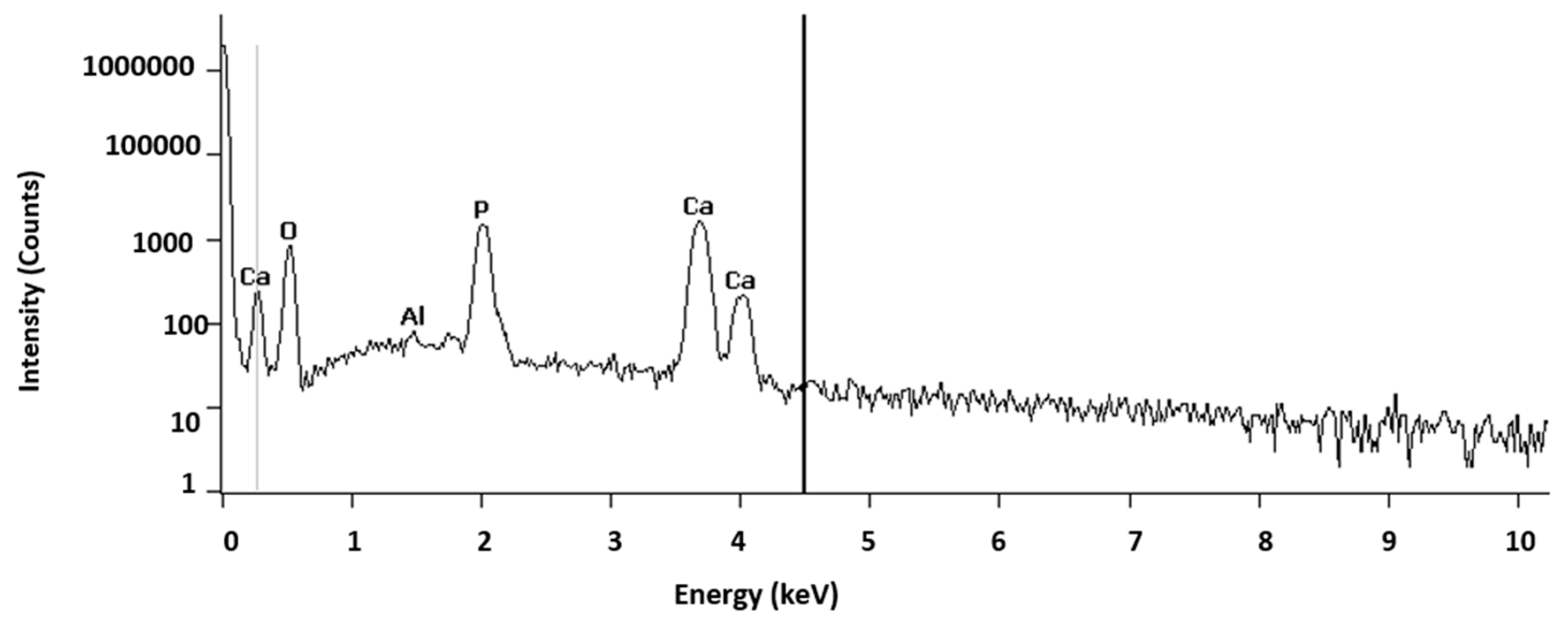
The EDS spectrum of sintered HA480 is shown in Figure 2.
EDS analysis of sintered HA480 lattice specimens confirmed the presence of Ca, O, and P, the constituents of the biocompatible calcium phosphate phase Ca10(PO4)6(OH)2 of HA. These elements are necessary for bone cell adhesion and bioactivity [19].

3.2. FTIR

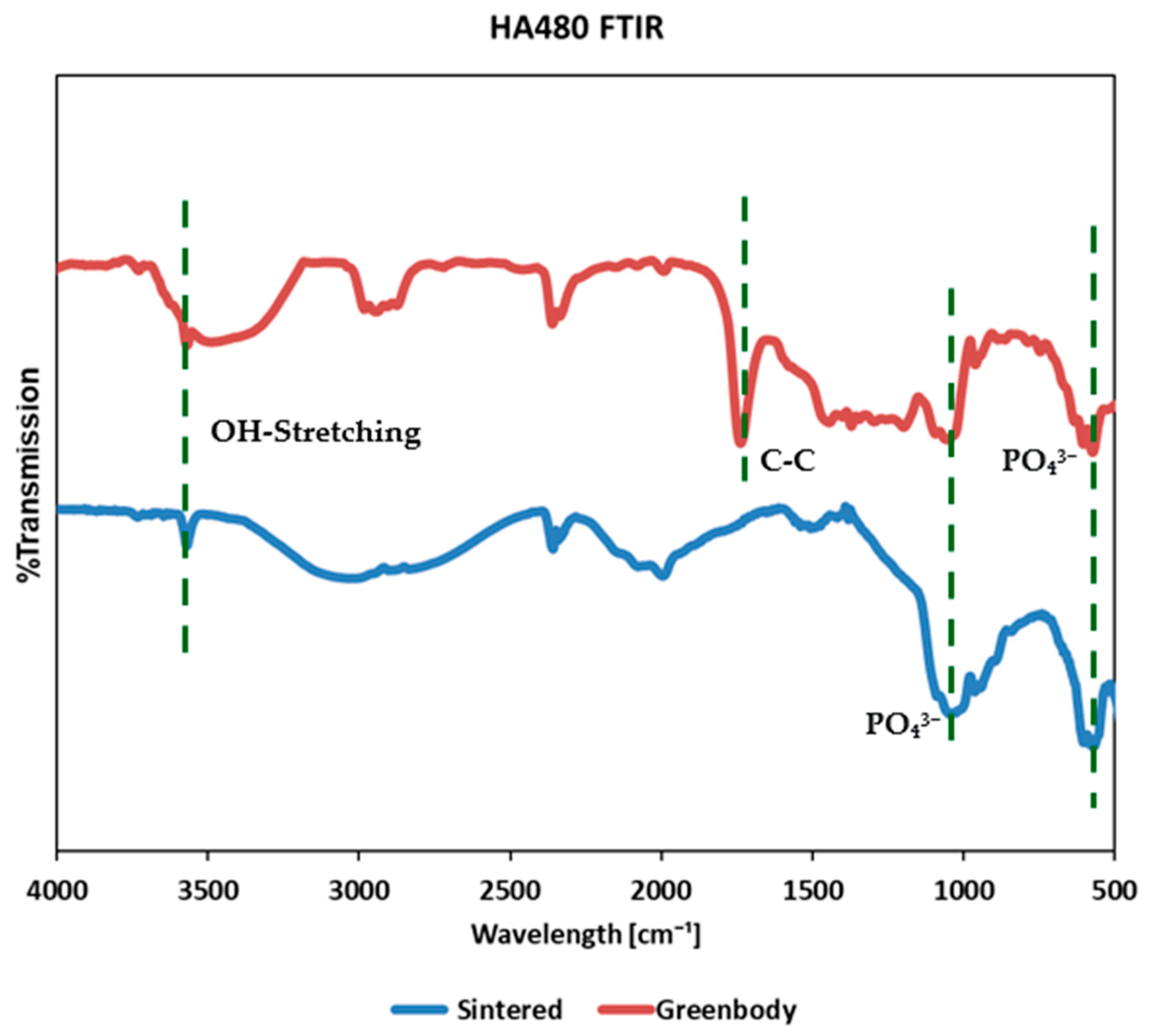
The FTIR spectra of the crushed HA480 of the green body and the sintered specimen were recorded in the range from 4000 to 500 cm−1 and are shown in Figure 3.
This test was conducted to assess whether residual binder remained in the HA480 following the sintering process and to determine the comparability of the HA480 with the HA specification. The HA480 spectra indicated 3569.65 cm−1 for the sintered and 3567.72 cm−1 for the green body, which demonstrated hydroxyapatite OH stretching behaviour. A sharp peak around 1043.317 cm−1 is caused by stretching vibrations of the phosphate (PO4). The absorption stage for both the green body and sintered HA480 is evident at 570.8352 cm−1 and 565.0497 cm−1, respectively. The absorption is associated with HA, whereby it is P-O bending vibration. The absorption peak at 1735.647 cm−1 in the green body confirms crosslinking. The difference in the shape of the red graph (green body) and blue graph (sintered) indicated that no binder was left in the HA480 after sintering. The peaks for HA480 were comparable to those in other studies on HA-printed scaffolds [20,21]. Further thermal tests, such as TGA investigation, should be done to complement the findings from the FTIR [22].

3.3. Compressive Strength

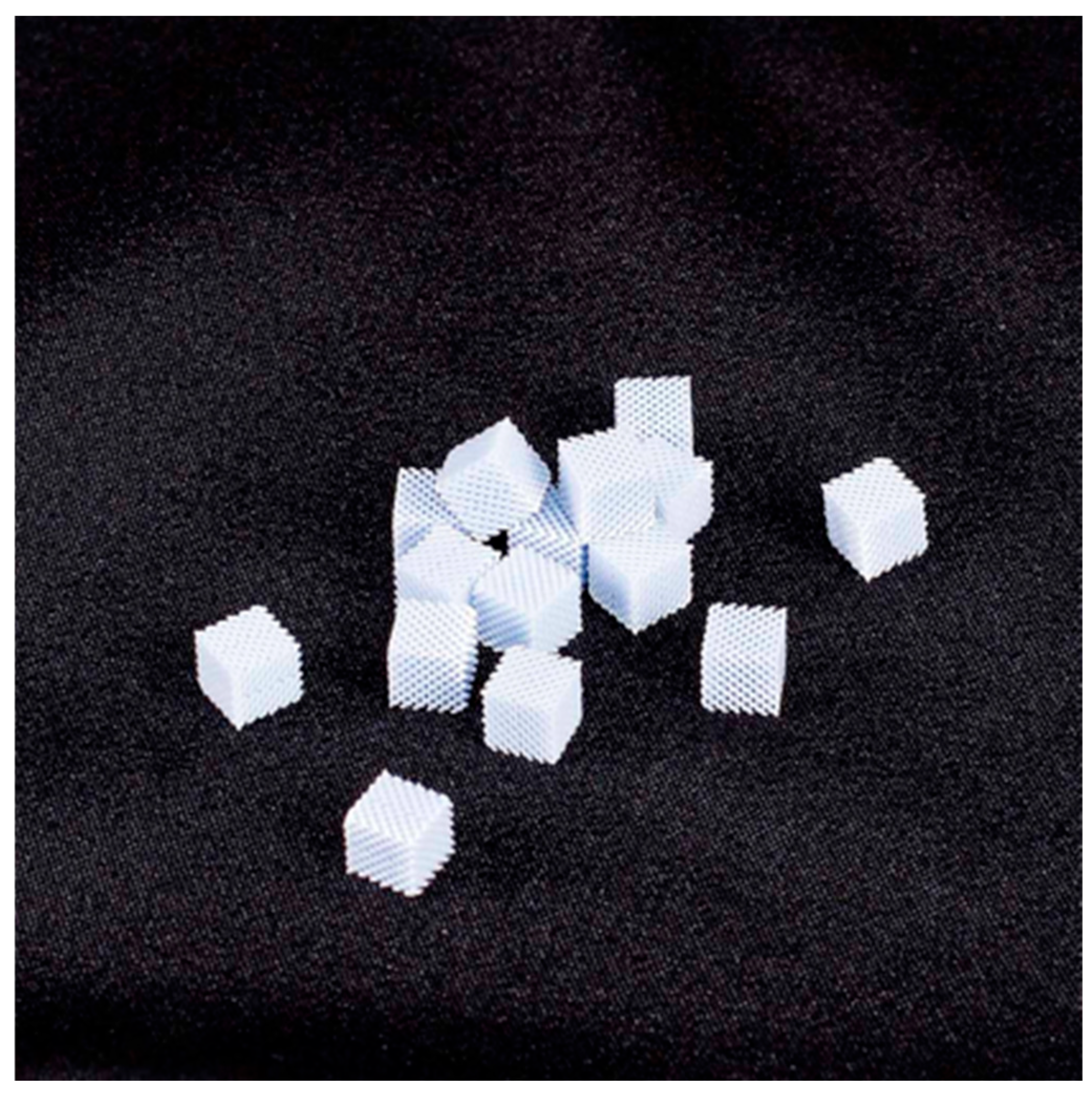
Figure 4 displays the HA480 diamond lattice specimens that were compressed until failure under dry conditions.
From the results, the compressive strength and modulus were calculated. It was found that the dry HA480 diamond lattice structure had a modulus of elasticity value of 0.5 ± 0.4 GPa and compressive strength of 10.7 ± 1.14 MPa. The measured mechanical properties were above the minimum values of trabecular bone, which has compressive strength of 2–12 MPa and a modulus of elasticity of 1 to 22.3 GPa [23,24]. However, these HA480 values are smaller than the strength of cortical bone of 100–230 MPa and modulus of 7–30 GPa [23,24]. The obtained compressive strength is comparable with that of the diamond lattice structure of HA480 used in a published study, giving a value of 8.3 ± 1.7 MPa [25]. An LCM HA400 lattice structure produced in another study had a modulus of elasticity of 5.69 ± 1.70 MPa, which is lower than that of the HA480 diamond lattice in the current study. The HA480 diamond lattice scaffold in the current study was designed for a non-load-bearing small alveolar ridge implant. Given its measured mechanical properties, it is clear that the HA480 diamond lattice scaffold can be used for the alveolar ridge implant. Further support for this was found in a study by Liu et al. [26], in which the compressive strength of their HA scaffold was 15.25 MPa, and biological properties were suitable for bone regeneration [26]. Mechanical properties of ceramics for future purpose could be improved with secondary reinforcement to improve ductility, such as natural polymers that are low-cost and easy to fabricate [27,28].

3.4. Biodegradation and Hydrodynamic Studies

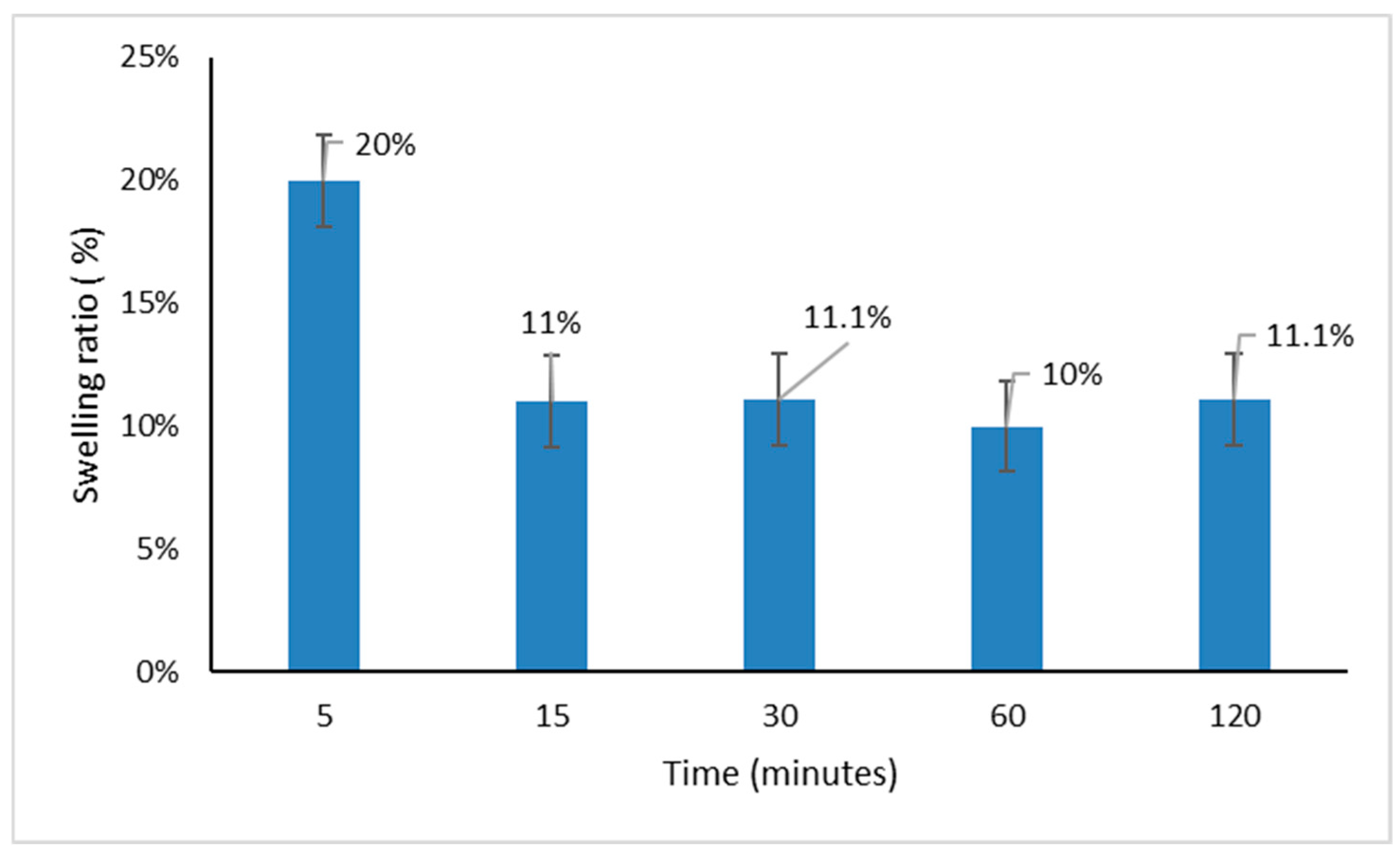
The hydration dynamics for HA480 were investigated by immersion of the diamond lattice structure in phosphate-buffered saline (PBS). The swelling profile calculation results are presented in Figure 5.
Because the HA480 diamond lattice was intended for biological conditions in the human body, the swelling ratio needed to be determined. The swelling ratio indicates how fast the material can absorb biological fluids and expand. In Figure 5, the 5 min immersion of HA480 shows 20% of absorption of the PBS. At 15 min, the swelling ratio reduced to 11% and remained constant until 30 min. The rapid swelling of the HA480 in the study of Ergul et al. [29] of composite hydrogels of 15 wt% HA added to CH/PVA is similar to these results [29]. The comparison is in terms of behaviour, not values, where the rapid absorption of PBS in the hydrogels and constant swelling over time are observed because of the high HA wt% in the hydrogels. Since HA480 is a ceramic, the swelling ratio values are not comparable with hydrogels or composite materials of HA with polymers [29,30]. HA480 as a ceramic has the qualities of hydrophilic material. Swelling tests are expected to affect the dimensions of the samples, and it is advised that a future composite material study includes the dimensions after swelling as this could also affect the fit when implanted in the body [31,32].
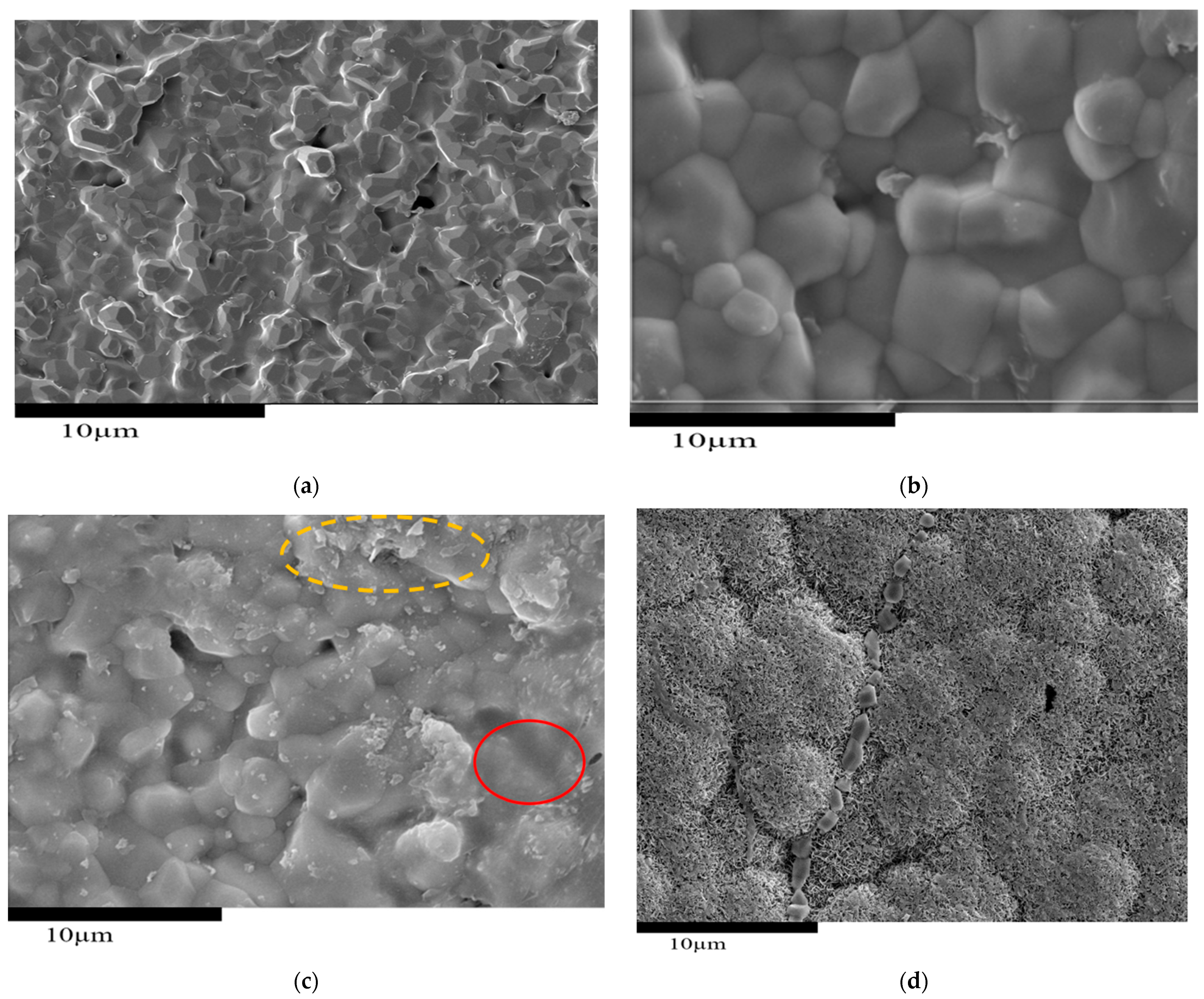
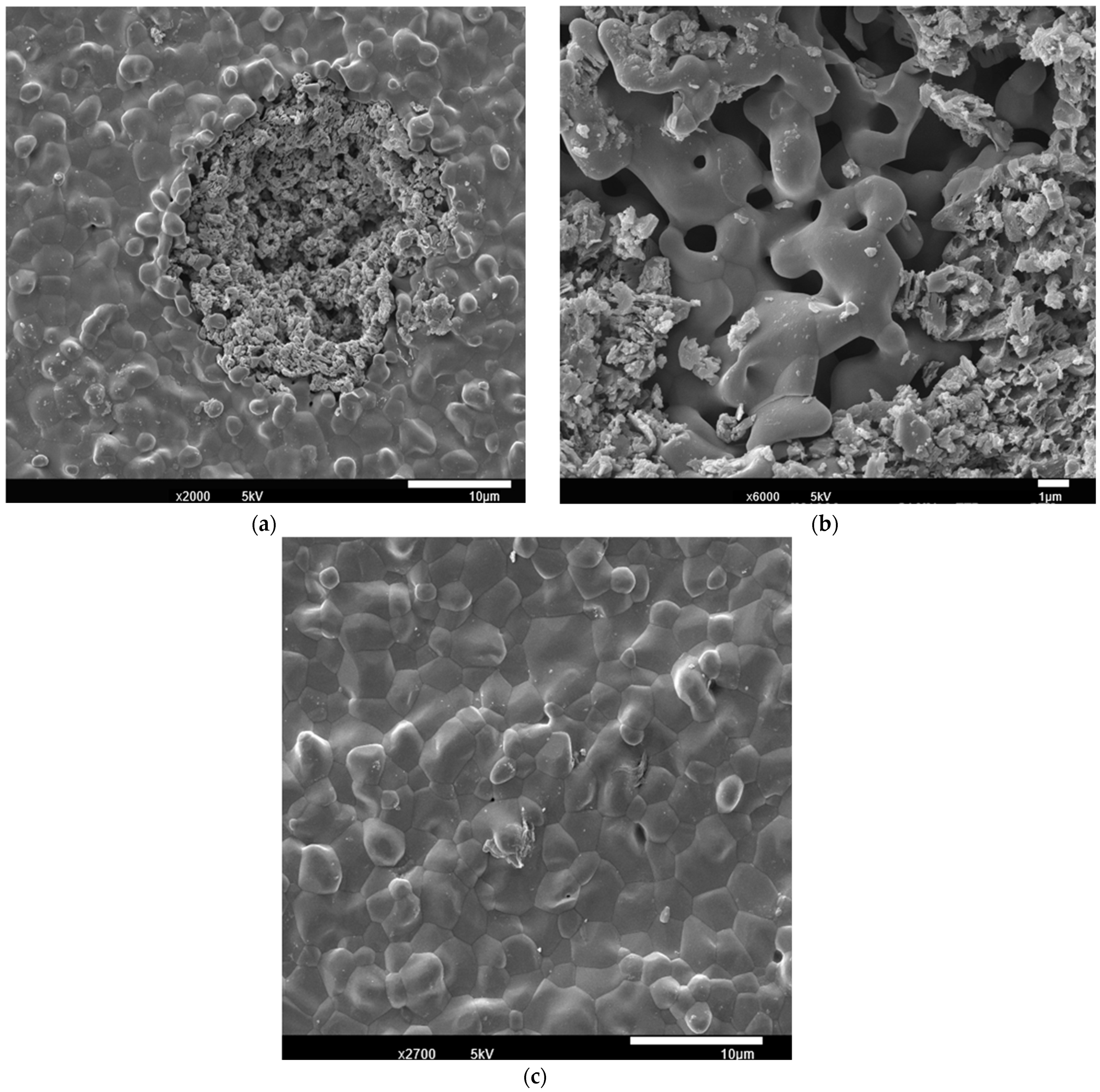
In vitro tests were done in the SBF, which has ion concentration levels close to those corresponding to the chemical composition of human blood plasma. Figure 6 shows SEM images of the biodegradation effect on the HA480 surface after immersion in SBF.
Figure 6a shows an SEM image before the diamond lattice was placed in the SBF. Figure 6b shows the surface after the diamond lattice had been immersed in the SBF for 1 day. Figure 6c shows the surface after day 7, with some morphology changes, resulting in platelike crystallites being circled in yellow. After day 7, the grain boundaries were not well-defined, as highlighted in the red-circled transient phase, but they appeared to be covered by an amorphous layer that formed through the HA480 dissolving in the SBF as a result of pH and ion exchange. Due to limited samples and access to the laboratory, the samples were only tested for 28 days. Figure 6d displays the HA480 surface after 28 days with a spongy-like surface apatite visible. The grain boundaries were better defined after 28 days, with the formation of a thin amorphous surface layer, which could be bone-like apatite. This type of layer was evident in other bone tissue engineering materials [18,33]. The similar surface reaction of HA480 samples can be expected when implanted in a human bone because SBF duplicates the human blood plasma concentration. However, further clinical trials have to be done to confirm this.
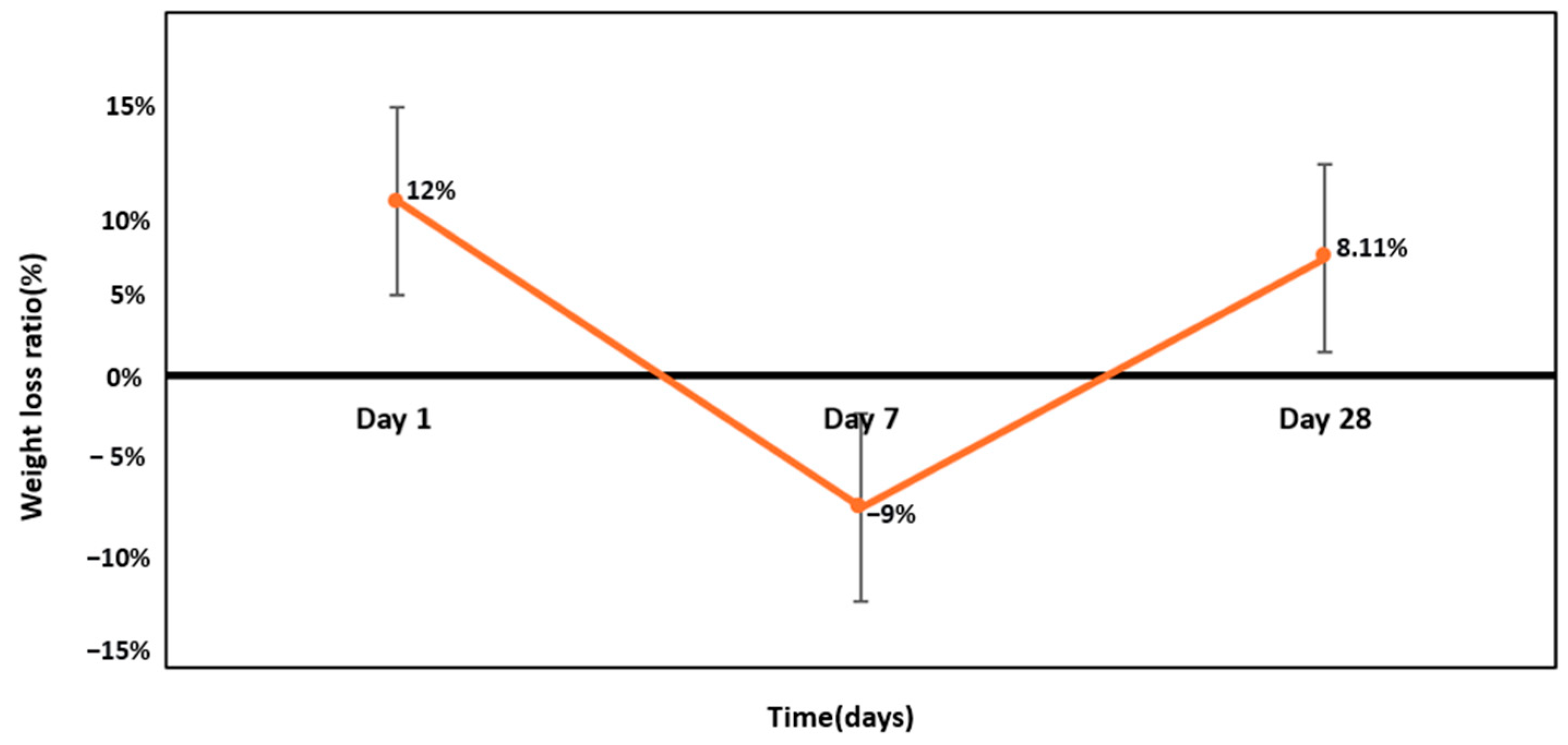
The results from the HA480 weight loss ratio for different days in SBF are presented in Figure 7.
On day 1, the weight loss of the lattice incubated in the SBF solution of 12% was high, indicating a high level of surface activation from first contact with biological fluids. After 7 days, the weight loss was at negative 9%. This indicated that the mass of the scaffold increased instead of decreased. This factor was due to ion exchange and the precipitation of calcium and phosphorus ions from the SBF solution onto the surface of the HA480, as seen in the SEM image of Figure 6c [29]. After 28 days, the lattice had a weight loss of 8.11%. The experiment was comparable to a composite scaffold of bovine cancellous HA, whereby on day 7, the weight loss decreased but did not become negative. After 14 days, it increased again due to the leaching of Ca2+ ions [34]. This can be compared with the HA bio-printed by Shao et al. [35], which displayed biodegradation of 10.38% after 5 weeks of degradation [35]. Because of its porous structure, HA480 achieved biodegradation after 28 days.

3.5. HA Biocompatibility and Bioactivity of HA480

3.5.1. Cell Proliferation on HA480

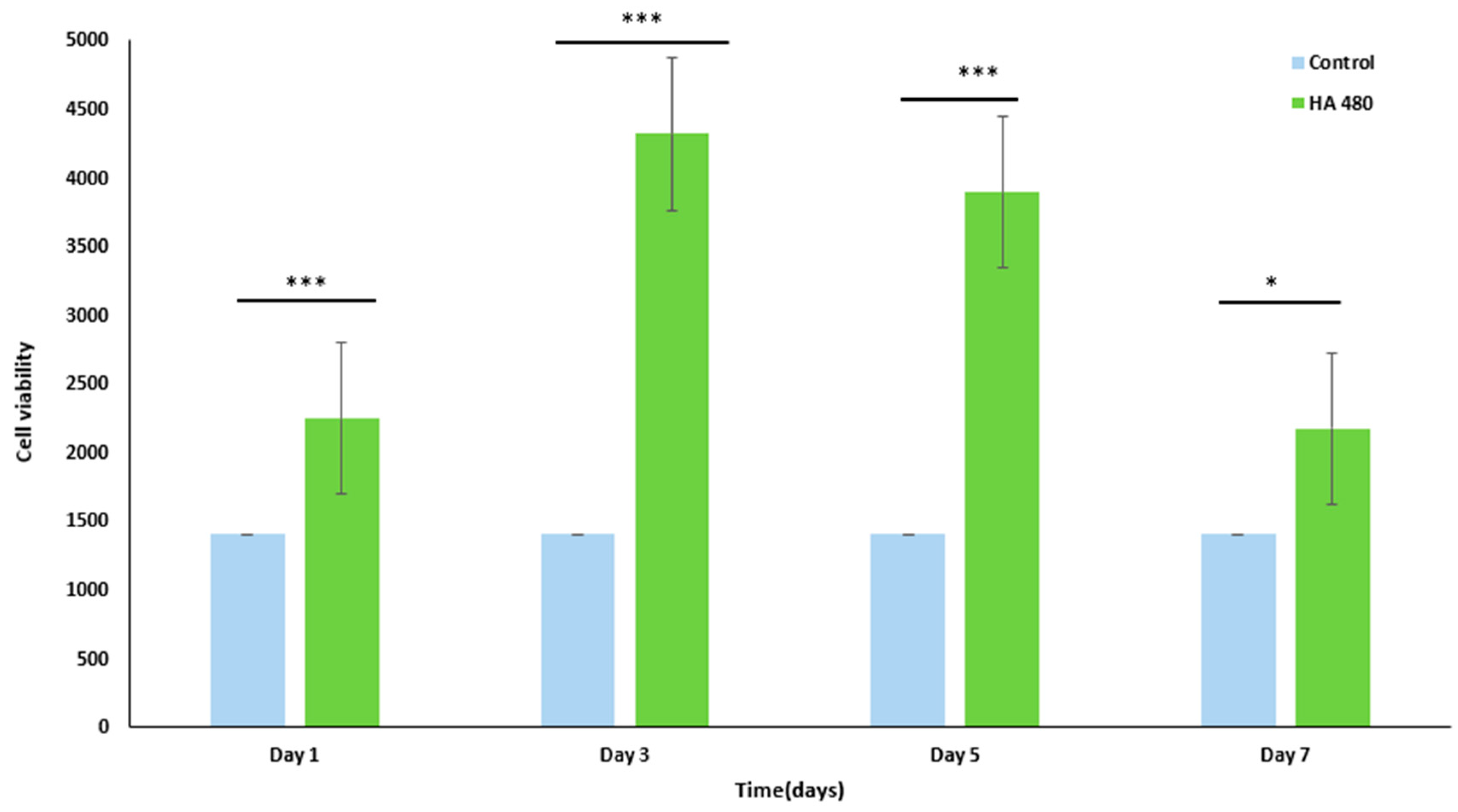
The HA480 samples were flood-seeded. Figure 8 displays the proliferation results of hFOB 1.19 cells on the HA480 sample and control cultured using the CellTiter Blue® viability assay.
In Figure 8, it is shown that the results of hFOB 1.19 cells on HA480 specimens on day 1 are significantly different from proliferation of the control. An increase in cell proliferation was observed on day 3, as indicated by the significant increase in fluorescence. After day 3, a decrease in fluorescence was observed on days 5 and 7. The decrease in fluorescence may be caused by ion release from HA480 that is observed with the degradation of Ca2+ and PO43−, which may have altered the ionic balance in the medium and influenced cell response. In other studies, the cell viability was affected by an increase in environmental pH; however, in this study, the pH was not profiled during cell culture. The control for days 1, 3, 5, and 7 displayed constant proliferation, which was significant with the proliferation of cells in the HA480 results. When comparing the proliferation of the control and HA480 results for days 1, 3, 5, and 7, the control proliferation remained the same, with a value of 1400. The HA480 results for days 1 and 3 were comparable with hFOB 1.19 osteoblast proliferation on ceramic zirconia [36]. The results differ from an HA400 lattice scaffold seeded with hBMSCs, which showed a significant increase in the scaffold for 21 days [37].

3.5.2. Cell Adhesion on the HA480 Specimens

The SEM images indicating cell attachment on the HA480 are presented in Figure 9.
To evaluate the biocompatibility of the material, the hFOB cells were seeded on HA480 specimens for different days. For the day 1 specimen, the SEM image in Figure 9a shows that the cells were stuck together on the surface of the specimen and had not yet spread across the entire surface of the HA480. The SEM image in Figure 9b of the day 3 specimen shows that the cells were scattered and there was an increase in their number compared to day 1. The cells were breaking away to fill the surface of the scaffold, and it was evident that they were starting to flatten and attach to the scaffold. From the SEM image in Figure 9c, it is clear that on day 5, the cells had flattened and were more attached to the surface of the scaffold, with evidence of scaffold resorption. In the HA sample study performed by Kang et al., cell attachment and elongation were observed on the surface [21].
The SEM image in Figure 9d of the day 7 specimen indicated that the size of the cells on the surface of the specimen appeared to decrease. A higher magnification was needed to observe the few remaining cells. At higher magnifications, cell attachment showed finger-like protrusions on the microvilli, as seen in Figure 9d. The cells were attached to the surface of the scaffold, reaching confluency. The cell’s ability to be able to reach day 7 proves that the material does not produce toxins. However, the results of the decrease in cells on the surface of HA480 differ from hFOB cells seeded for 28 days on titanium and zirconia samples [36]. The results also differ from LithaBone 400 coupons, with cells remaining attached over 35 days [38]. Biomaterial surface properties such as roughness, wettability, and surface energy levels influence the protein adsorption. Biomaterials, when submerged in biological fluids, create a conditioned surface that is covered with ions, water, sugar, and proteins that allow for cell attachment and proliferation on the biomaterial surface [39,40]. Osteoblast cells are likely to attach more to rougher surfaces, as reported by Kunzler et al. [40]. The results of cell attachment on HA480 support that the surface roughness, measured as Ra = 0.60 ± 0.05 μm from the same material published in this work, is appropriate [41]. The cell attachment that is observed until day 7 on HA480 indicates that the surface roughness influences the cell response to the material and affects the cell proliferation rate that can lead to new bone formation.
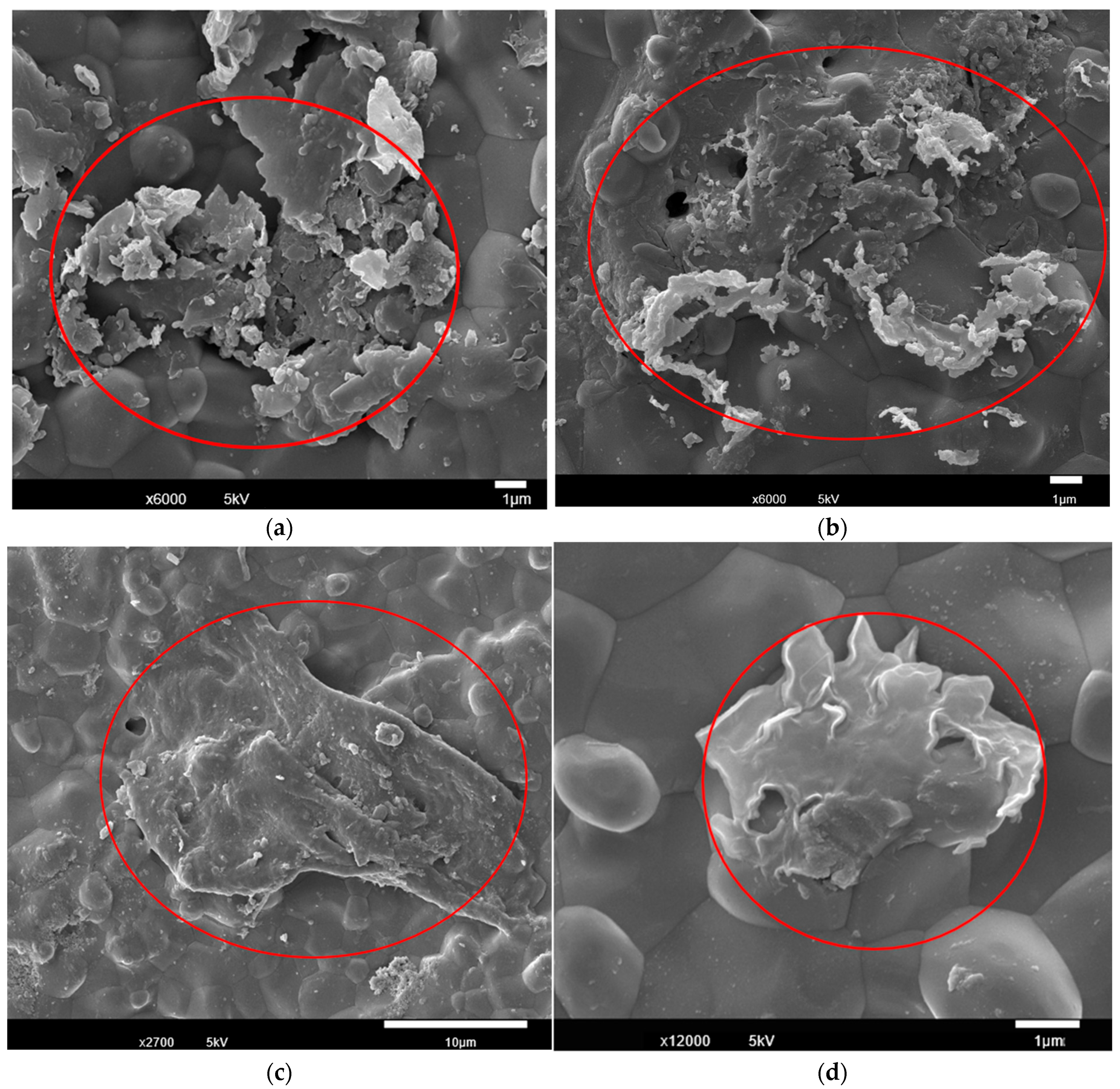
SEM images in Figure 10 show evidence of resorption pits in the surfaces of day 3 and day 5 cell culturing HA480 specimens.
In the literature, when biomaterials were placed in biological fluids, surface activity such as dissolution, resorption, and apatite formation were found [42]. This bioactivity of cells on HA480 is demonstrated by the resorption pits in Figure 10a,b. However, the resorption pits observed on days 1 and 3 were not rapid degradation, as evident in Figure 10c with the absence of resorption pits. There is a correlation between the cell culture and biodegradation on day 7 in the SBF for HA480. In Figure 6c, the surface shows precipitation, and on day 7 of the cell culture, as shown in Figure 10c, no evidence was found of resorption pits. This observation indicates that early contact of the HA480 with biological fluids was bioactive and the resorption pits occurred for the first 5 days. Beyond day 7, mass increase was evident from negative weight loss, and on day 28, apatite formation was observed. Future work should focus on the cell culture until day 28 to relate with this biodegradation study.

3.6. Pore Size Distribution

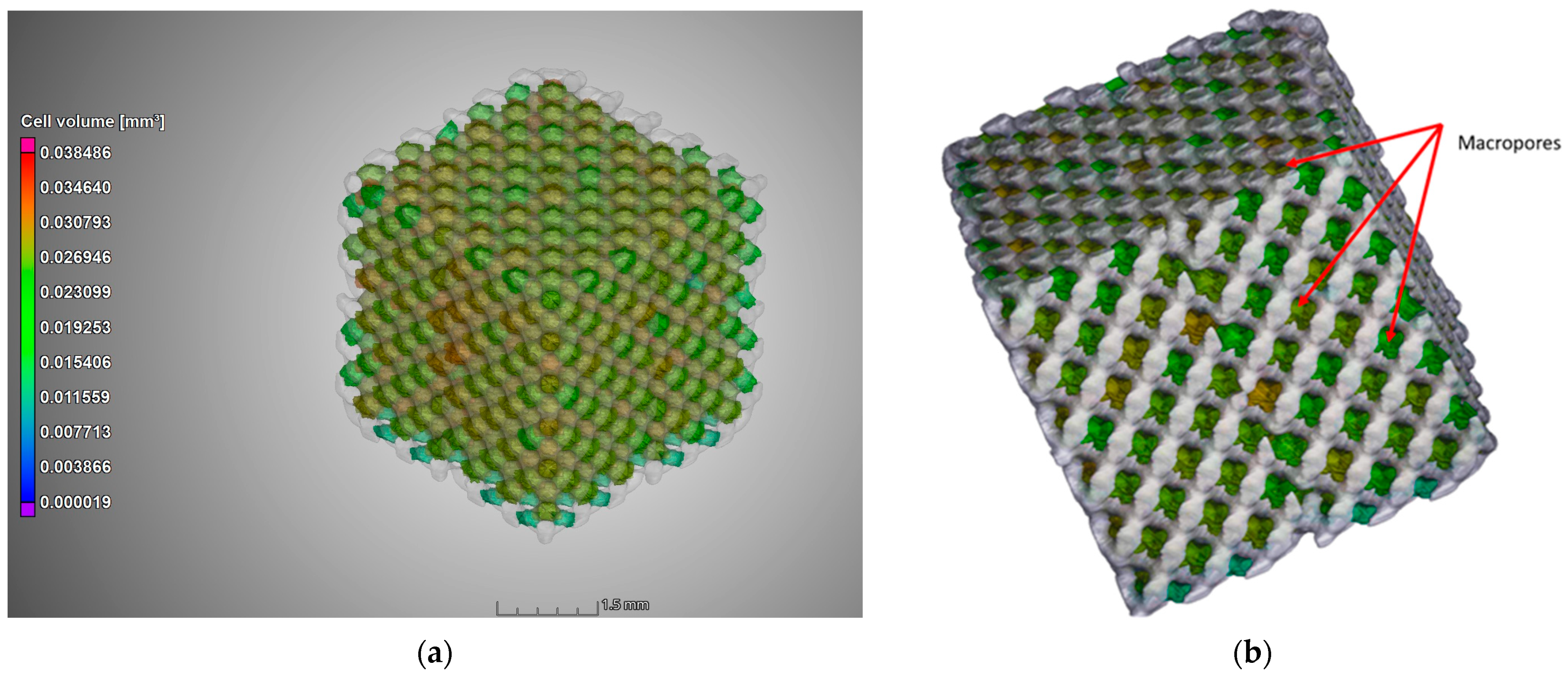
The pore size distribution of the HA480 lattice structure was obtained through micro-CT analysis, and the results are displayed in Figure 11.
In Figure 11a, the pore volume distribution graph is within range to allow for osteoblast cell migration and waste transportation. The majority of the pore volume distribution ranged from 0.026 to 0.030 mm3, with pore sizes between 0.29 and 0.39 mm. The combination of different pore sizes mimics the trabecular bone structure [15]. The combination of pore size in the diamond lattice structure ranged between 0.03 and 0.372 mm, as represented in Figure 11.
The pores are comparable to the macropores in the trabecular bone, which range from 0.3 to 0.6 mm, and cortical bone, which range from 0.01 to 0.05 mm [24]. The results in this study are comparable to the work of Diao et al., whereby β-tricalcium phosphate samples had pore sizes of 0.1, 0.25, and 0.4 mm and bone regeneration was evident when implanted in a rat bone defect [43]. Pores between 40 and 100 µm are suited for cell growth, providing a large surface area for cell nucleation and protein adsorption, while pores above 100 µm are for mass transfer [44]. The optimal pore size was previously defined as being between 0.3 and 0.5 mm for bone regeneration; however, with recent AM technology and improved material evidence of bone regeneration, pores should be between 0.8 and 1.2 mm [45]. However, large pore size can compromise the mechanical properties of bioceramic material [46,47].
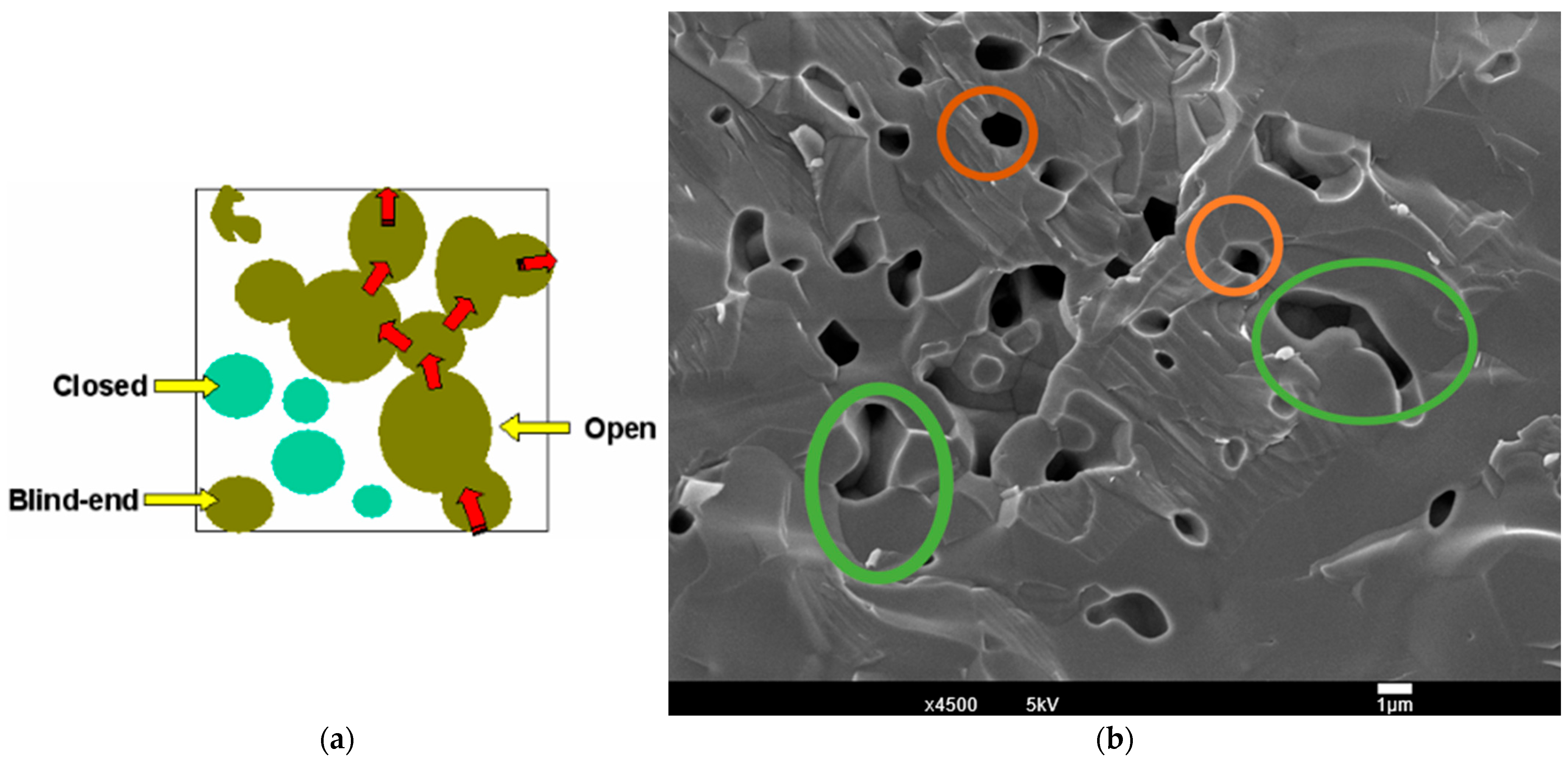
In the diamond lattice structure, micropores were found in the struts and nodes of the lattice, as indicated in the SEM image of a compression fracture surface shown in Figure 12.
These micropores are beneficial for cell growth and are comparable with the required micropores for bone regeneration structures shown in Figure 12a [46]. Mixed pores such as closed and open pores stimulate cell movement, waste removal, and material degradation. The AM HA480 in Figure 12b mimics the complexity of the bone pores, pore orientation, and interconnectivity, which leads to the ability of the scaffold to have permeability for biological fluid flow [47,48].
Limited access to the bioassay laboratory and HA480 specimens resulted in few experiments being done for this study. Further investigation into the HA480 scaffold, such as using a different medium for the swelling ratio, an extended cell culture timeline, live/dead fluorescence imaging, ion release profiling and pH influence on cells, gamma sterilisation, and scalability, will be performed in the future. Future work should also look into the reinforcement of biopolymers for mechanical improvement, such as modulus of elasticity of HA480 [22,49].

4. Conclusions

A cell culture study was performed and HA480 specimens were seeded, resulting in increased cell proliferation. The cell attachment analysis showed that hFOB 1.9 osteoblast cells adhered to the surfaces of HA480. The obtained results proved that HA480 was biocompatible and could be used for a bone regeneration scaffold. It can be concluded that the HA480 diamond lattice structure has the potential to be used for small-sized biodegradable scaffolds. Another requirement of a bone scaffold, which is degradation, was evaluated with the formation of the apatite. These findings suggest that HA480 has the potential to be used for bone regeneration scaffolds. Future work could involve observing the attachment of hFOB cells to the HA480 lattice structure in a bioreactor simulating human behaviour.

Author Contributions

M.G.M.: Conceptualization, methodology, validation, analysis, investigation, resources, data curation, writing—original draft preparation, writing—review and editing, project administration, and visualization. W.B.d.P. and D.d.B.: Conceptualization, methodology, formal analysis, investigation, resources, writing—original draft preparation, writing—review and editing, visualization, supervision, project administration, and funding acquisition. S.N.: Conceptualization, methodology, formal analysis, investigation, resources, writing—original draft preparation, writing—review and editing, visualization, supervision, and project administration. All authors have read and agreed to the published version of the manuscript.

Funding

This research was supported by the South African Research Chairs Initiative of the Department of Science, Technology and Innovation (DSTI) and the National Research Foundation of South Africa (Grant No. 97994), the Collaborative Program in Additive Manufacturing (Contract No. CSIR-NLC-CPAM-21-MOA-CUT-01) of the DSTI, the Manufacturing, Engineering and Related Services Sector (merSETA), and the Central University of Technology, Free State (CUT). The funding of the Chair in Innovation and Commercialisation of Additive Manufacturing (CICAM), 21 December 2018, and the financial contribution of the New Generation of Academics Programme are gratefully acknowledged.

Institutional Review Board Statement

Not applicable.

Informed Consent Statement

Informed consent was obtained from all subjects involved in the study.

Data Availability Statement

The original contributions presented in this study are included in the article. Further inquiries can be directed to the corresponding author.

Acknowledgments

The following institutions and people are acknowledged: The Centre for Rapid Prototyping and Manufacturing (CRPM) of the Faculty of Engineering, Built Environment and Information Technology, Central University of Technology, Free State, for their technical support, AM manufacturing, and procurement of materials. The Centre for Applied Food Sustainability and Biotechnology (CAFSaB), CUT. Lissinda du Plessis and CP Kloppers at North-West University for giving their permission to use their laboratories. Maryna van de Venter and her team at the Bioassaix laboratory at Nelson Mandela University for conducting cell culture experiments. The University of the Free State for providing their equipment: the Department of Geology, Megan Purchase for her assistance with the SEM equipment, Centre for Microscopy, Hanlie Grobler, and Department of Physics, and Mart-Mari Duvenhage for Fourier-Transform Infrared Spectroscopy (FTIR).

Conflicts of Interest

The authors declare no conflicts of interest.

References

  1. Shetty, S.S.; Shetty, S.; Venkatesh, S.B. Tissue Engineering in Oral and Maxillofacial Rehabilitation—Current Status and Future Prospects. Curr. Oral Health Rep. 2024, 11, 191–197. [Google Scholar] [CrossRef]
  2. Cinici, B.; Yaba, S.; Kurt, M.; Yalcin, H.C.; Duta, L.; Gunduz, O. Fabrication Strategies for Bioceramic Scaffolds in Bone Tissue Engineering with Generative Design Applications. Biomimetics 2024, 9, 409. [Google Scholar] [CrossRef] [PubMed]
  3. Campanelli, S.L.; Contuzzi, N.; Ludovico, A.D.; Caiazzo, F.; Cardaropoli, F.; Sergi, V. Manufacturing and characterization of Ti6Al4V lattice components manufactured by selective laser melting. Materials 2014, 7, 4803–4822. [Google Scholar] [CrossRef]
  4. Konka, J.; Buxadera-Palomero, J.; Espanol, M.; Ginebra, M.P. 3D printing of hierarchical porous biomimetic hydroxyapatite scaffolds: Adding concavities to the convex filaments. Acta Biomater. 2021, 134, 744–759. [Google Scholar] [CrossRef] [PubMed]
  5. Rho, J.-Y.; Kuhn-Spearing, L.; Zioupos, P. Mechanical properties and the hierarchical structure of bone. Med. Eng. Phys. 1998, 20, 92–102. [Google Scholar] [CrossRef] [PubMed]
  6. Ghayor, C.; Bhattacharya, I.; Guerrero, J.; Özcan, M.; Weber, F.E. 3D-Printed HA-Based Scaffolds for Bone Regeneration: Microporosity, Osteoconduction and Osteoclastic Resorption. Materials 2022, 15, 1433. [Google Scholar] [CrossRef]
  7. Almulhim, K.S.; Syed, M.R.; Alqahtani, N.; Alamoudi, M.; Khan, M.; Ahmed, S.Z.; Khan, A.S. Bioactive inorganic materials for dental applications: A narrative review. Materials 2022, 15, 6864. [Google Scholar] [CrossRef]
  8. Tripathi, G.; Basu, B. A porous hydroxyapatite scaffold for bone tissue engineering: Physico-mechanical and biological evaluations. Ceram. Int. 2012, 38, 341–349. [Google Scholar] [CrossRef]
  9. Legeros, R.Z. Biodegradation and Bioresorption of Calcium Phosphate Ceramics. Clin. Mater. 1993, 14, 65–88. [Google Scholar] [CrossRef]
  10. Shao, H.; He, J.; Lin, T.; Zhang, Z.; Zhang, Y.; Liu, S. 3D gel-printing of hydroxyapatite scaffold for bone tissue engineering. Ceram. Int. 2019, 45, 1163–1170. [Google Scholar] [CrossRef]
  11. Kornfellner, E.; Reininger, S.; Geier, S.; Schwentenwein, M.; Benca, E.; Scheiner, S.; Moscato, F. Mechanical properties of additively manufactured lattice structures composed of zirconia and hydroxyapatite ceramics. J. Mech. Behav. Biomed. Mater. 2024, 158, 106644. [Google Scholar] [CrossRef]
  12. Nistler, S.; Hofstetter, C.; Baudis, S.; Schwentenwein, M.; Stampfl, J. Sinter-joining of two different bioceramic materials. Open Ceram. 2025, 22, 100759. [Google Scholar] [CrossRef]
  13. Touaiher, I.; Saadaoui, M.; Reynaud, P.; Reveron, H.; Chevalier, J. Mechanical properties of additive-manufactured hydroxyapatite porous scaffolds and follow-up of damage process under compression loading. Open Ceram. 2023, 16, 100498. [Google Scholar] [CrossRef]
  14. Sohl, J.; Dias, J. 3D Printing of Ceramics for Modern Medical Engineering. In Additive Manufacturing in Multidisciplinary Cooperation and Production; Springer Tracts in Additive Manufacturing; Springer International Publishing: Cham, Switzerland, 2023; Volume Part F3255, Chapter 21, pp. 235–243. [Google Scholar] [CrossRef]
  15. ISO 13175-3:2012; Implants for surgery-Calcium Phosphates-Part 3: Hydroxyapatite and Beta-Tricalcium Phosphate Bone Substitutes (Implants Chirurgicaux-Phosphates de Calcium-Partie 3: Substituts Osseux à Base d’Hydroxyapatite et de Phosphate Tricalcique Bêta). ISO: Geneva, Switzerland, 2012. Available online: www.iso.org (accessed on 12 January 2024).
  16. Yao, C.; Pripatnanont, P.; Zhang, J.; Suttapreyasri, S. Fabrication and characterization of a bioactive composite scaffold based on polymeric collagen/gelatin/nano β-TCP for alveolar bone regeneration. J. Mech. Behav. Biomed. Mater. 2024, 153, 106500. [Google Scholar] [CrossRef] [PubMed]
  17. Li, T.T.; Zhang, Y.; Ren, H.T.; Peng, H.K.; Lou, C.W.; Lin, J.H. Two-step strategy for constructing hierarchical pore structured chitosan–hydroxyapatite composite scaffolds for bone tissue engineering. Carbohydr. Polym. 2021, 260, 117765. [Google Scholar] [CrossRef] [PubMed]
  18. Kokubo, T.; Takadama, H. How useful is SBF in predicting in vivo bone bioactivity? Biomaterials 2006, 27, 2907–2915. [Google Scholar] [CrossRef] [PubMed]
  19. Al-Sanabani, J.S.; Madfa, A.A.; Al-Sanabani, F.A. Application of Calcium Phosphate Materials in Dentistry. Int. J. Biomater. 2013, 2013, 876132. [Google Scholar] [CrossRef]
  20. Hayashi, K.; Kishida, R.; Tsuchiya, A.; Ishikawa, K. Honeycomb blocks composed of carbonate apatite, β-tricalcium phosphate, and hydroxyapatite for bone regeneration: Effects of composition on biological responses. Mater. Today Bio 2019, 4, 100031. [Google Scholar] [CrossRef]
  21. Kang, J.-H.; Sakthiabirami, K.; Jang, K.-J.; Jang, J.-G.; Oh, G.-J.; Park, C.; Fisher, J.G.; Park, S.-W. Mechanical and biological evaluation of lattice structured hydroxyapatite scaffolds produced via stereolithography additive manufacturing. Mater. Des. 2022, 214, 110372. [Google Scholar] [CrossRef]
  22. Priya, K.S.; Kumar, K.R.V.; Suresh, G.; Ganesamoorthy, R.; Vezhavendhan, R.; Meenakshi, C.M. Long term accelerated influence on thermo-mechanical properties of glass/carbon fiber reinforced interpenetrating polymer network hybrid composites. J. Reinf. Plast. Compos. 2022, 41, 630–642. [Google Scholar] [CrossRef]
  23. Wu, D.; Isaksson, P.; Ferguson, S.J.; Persson, C. Young’s modulus of trabecular bone at the tissue level: A review. Acta Biomater. 2018, 78, 1–12. [Google Scholar] [CrossRef]
  24. Shi, J.; Dai, W.; Gupta, A.; Zhang, B.; Wu, Z.; Zhang, Y.; Pan, L.; Wang, L. Frontiers of Hydroxyapatite Composites in Bionic Bone Tissue Engineering. Materials 2022, 15, 8475. [Google Scholar] [CrossRef]
  25. D’Andrea, L.; Gabrieli, R.; Milano, L.; Magagnin, L.; De Cet, A.; Alidoost, D.; Schwentenwein, M.; Verné, E.; Baino, F.; Vena, P. Elastic and failure characterization of hydroxyapatite TPMS scaffolds using a combined approach of ultrasound, compression tests and micro-CT based numerical models. Acta Mater. 2025, 287, 120776. [Google Scholar] [CrossRef]
  26. Liu, Z.; Zhang, W.; Wang, T.; Li, S.; Jiang, H. Additive manufacturing of hydroxyapatite bone scaffolds via digital light processing and in vitro compatibility. Ceram. Int. 2019, 45, 11079–11086. [Google Scholar] [CrossRef]
  27. Meenakshi, C.M.; Ravi, R.; Leon, J.S.; Selvaraj, M.; Manikandan, K.; Suresh, G.; Lavanya, R. Evaluation of improvement in performance of FRP composite by using Al(OH)3 as secondary reinforcement. J. Phys. Conf. Ser. 2021, 1921, 012092. [Google Scholar] [CrossRef]
  28. Kumar, A.; Vijaya Kumar, K.R.; Suresh, G.; Vezhavendhan, R.; Chandramohan, P.; Saranya, R.; Rathinasabapathi, G. Synergistic toughening of plywood using carbon fiber and waste rubber: An interpenetrating polymer networks approach. J. Korean Wood Sci. Technol. 2025, 53, 585–598. [Google Scholar] [CrossRef]
  29. Ergul, N.M.; Unal, S.; Kartal, I.; Kalkandelen, C.; Ekren, N.; Kilic, O.; Lin, C.-C.; Gunduz, O. 3D printing of chitosan/poly(vinyl alcohol) hydrogel containing synthesized hydroxyapatite scaffolds for hard-tissue engineering. Polym. Test. 2019, 79, 106006. [Google Scholar] [CrossRef]
  30. Soleymani, S.; Naghib, S.M. 3D and 4D printing hydroxyapatite-based scaffolds for bone tissue engineering and regeneration. Heliyon 2023, 9, e19363. [Google Scholar] [CrossRef]
  31. Krithikaa, D.; Rohanbruce, M.; Indhumathi, S.; Suresh, G.; Chandramohan, P.; Vezhavendhan, R.; Rathinasabapathi, G.; Lavanya, R. Environmental influence on moisture absorption of the physical properties of hemp fiber strengthened unsaturated polyester composites. In Smart Materials and Manufacturing Technologies for Sustainable Development; P., S.P., K., D.K., S, K.P., P, D., Eds.; Springer: Cham, Switzerland, 2026. [Google Scholar]
  32. Senthilnathan, K.; Ravi, R.; Leon, J.S.; Suresh, G.; Manikandan, K.; Lavanya, R. Analysing the effect of mechanical properties of various proportions of filler material on jute fibre/epoxy reinforced composites. J. Phys. Conf. Ser. 2021, 1921, 012089. [Google Scholar] [CrossRef]
  33. De Witte, T.M.; Fratila-Apachitei, L.E.; Zadpoor, A.A.; Peppas, N.A. Bone tissue engineering via growth factor delivery: From scaffolds to complex matrices. Regen. Biomater. 2018, 5, 197–211. [Google Scholar] [CrossRef]
  34. Heidari, F.; Razavi, M.; Bahrololoom, M.E.; Tahriri, M.; Tayebi, L. Investigation of the mechanical properties and degradability of a modified chitosan-based scaffold. Mater. Chem. Phys. 2018, 204, 187–194. [Google Scholar] [CrossRef]
  35. Shao, H.; He, S.; Zhao, X.; Xu, J.; Li, M. Additive manufacturing of hydroxyapatite bioceramic scaffolds with projection based 3D printing. Chin. J. Mech. Eng. Addit. Manuf. Front. 2022, 1, 100021. [Google Scholar] [CrossRef]
  36. Setzer, B.; Bächle, M.; Metzger, M.C.; Kohal, R.J. The gene-expression and phenotypic response of hFOB 1.19 osteoblasts to surface-modified titanium and zirconia. Biomaterials 2009, 30, 979–990. [Google Scholar] [CrossRef]
  37. Maevskaia, E.; Guerrero, J.; Ghayor, C.; Bhattacharya, I.; Weber, F.E. Triply Periodic Minimal Surface-Based Scaffolds for Bone Tissue Engineering: A Mechanical, In Vitro and In Vivo Study. Tissue Eng. Part A 2023, 29, 507–517. [Google Scholar] [CrossRef]
  38. Martínez, J.S.; Garrigós, B.; Orts, M.J.; Ribelles, J.L.G.; Pradas, F.J.G.; Pradas, M.M. High resolution DLP stereolithography to fabricate biocompatible hydroxyapatite structures that support osteogenesis. PLoS ONE 2022, 17, e0272283. [Google Scholar] [CrossRef] [PubMed]
  39. Gentleman, M.M.; Gentleman, E. The role of surface free energy in osteoblast-biomaterial interactions. Int. Mater. Rev. 2014, 59, 417–429. [Google Scholar] [CrossRef]
  40. Kunzler, T.P.; Drobek, T.; Schuler, M.; Spencer, N.D. Systematic study of osteoblast and fibroblast response to roughness by means of surface-morphology gradients. Biomaterials 2007, 28, 2175–2182. [Google Scholar] [CrossRef]
  41. Moletsane, M.; du Preez, W.; de Beer, D.; Nkhwa, S. Characterisation of bone-regenerating scaffolds produced through lithography-based ceramic manufacturing. S. Afr. J. Ind. Eng. 2023, 34, 47–58. [Google Scholar] [CrossRef]
  42. Chang, H.-I.; Wang, Y. Cell Responses to Surface and Architecture of Tissue Engineering Scaffolds. In Regenerative Medicine and Tissue Engineering—Cells and Biomaterials; InTech: London, UK, 2011. [Google Scholar] [CrossRef]
  43. Diao, J.; OuYang, J.; Deng, T.; Liu, X.; Feng, Y.; Zhao, N.; Mao, C.; Wang, Y. 3D-plotted beta-tricalcium phosphate scaffolds with smaller pore sizes improve in vivo bone regeneration and biomechanical properties in a critical-sized calvarial defect rat model. Adv. Healthc. Mater. 2018, 7, 1800441. [Google Scholar] [CrossRef] [PubMed]
  44. Huang, D.; Xu, J.; Li, X.; Liu, Y.; Zhang, W. Biomimetic structural design in 3D-printed scaffolds for bone tissue engineering. Mater. Today Bio 2025, 29, 101664. [Google Scholar] [CrossRef]
  45. Coburn, B.; Salary, R.R. Mechanical Characterization of Porous Bone-like Scaffolds with Complex Microstructures for Bone Regeneration. Bioengineering 2025, 12, 416. [Google Scholar] [CrossRef] [PubMed]
  46. Gabrieli, R.; Schiavi, A.; Baino, F. Determining the Permeability of Porous Bioceramic Scaffolds: Significance, Overview of Current Methods and Challenges Ahead. Materials 2024, 17, 5522. [Google Scholar] [CrossRef]
  47. Baino, F.; Ferraris, S.; Bretcanu, E.; Verné, E.; Spriano, S. Digital light processing stereolithography of hydroxyapatite scaffolds with bone-like architecture, permeability, and mechanical properties. J. Am. Ceram. Soc. 2022, 105, 1648–1657. [Google Scholar] [CrossRef]
  48. Dharmendra, B.V.; Vivek, S.; Ramu, P.; Srinivasan, T.; Suresh, G.; Meenakshi, C.M.; Lavanya, R. Static investigation of roselle waste powder reinforced biopolymer composite. J. Phys. Conf. Ser. 2021, 2054, 012058. [Google Scholar] [CrossRef]
  49. Krishnan, S.G.; Shanmugasundar, G.; Vanitha, M.; Srinivasan, S.; Suresh, G. Investigation on the mechanical and morphological properties of red banana/ramie fiber vinyl ester composites. IOP Conf. Ser. Mater. Sci. Eng. 2020, 961, 012015. [Google Scholar] [CrossRef]
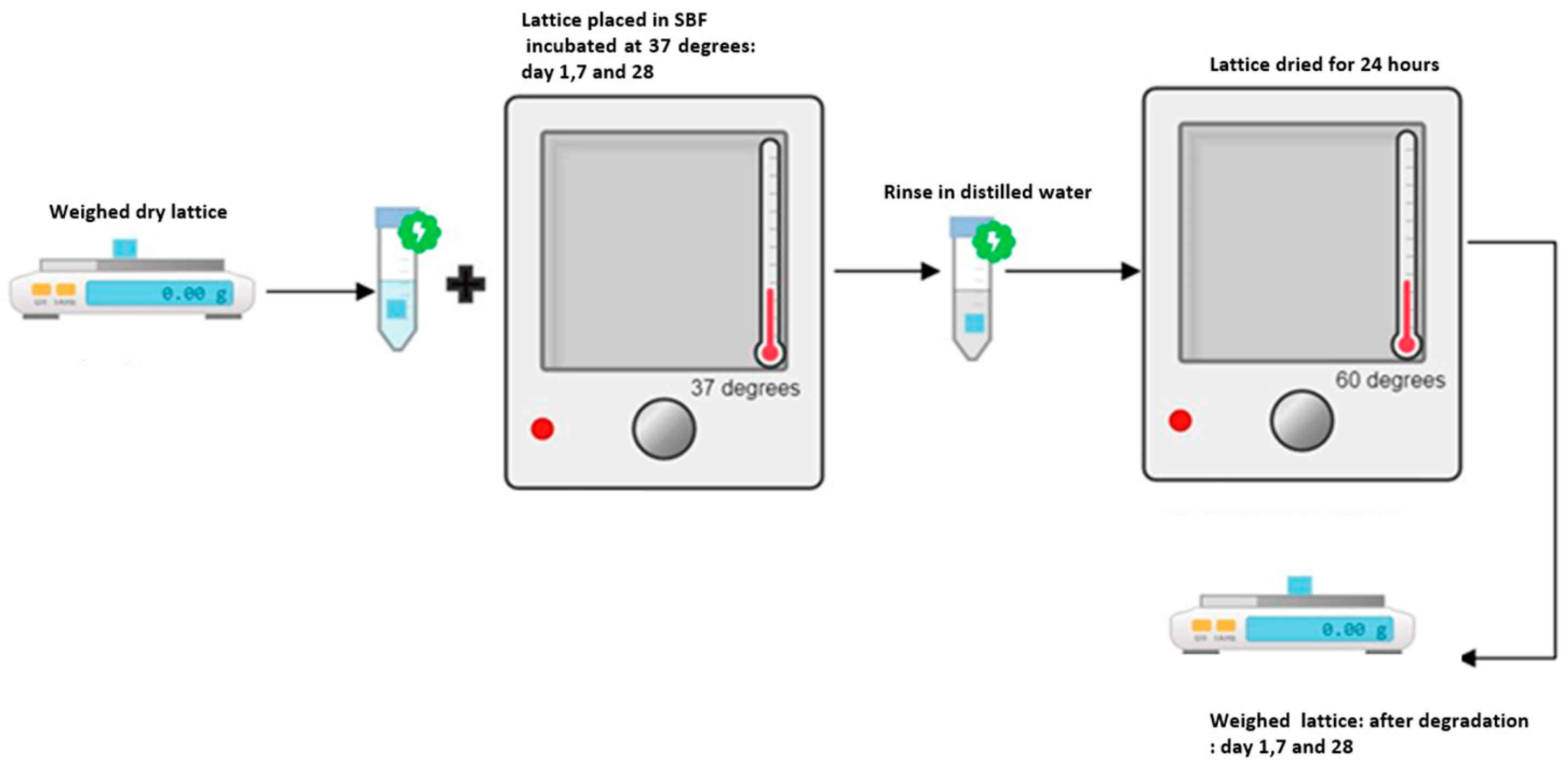
Figure 1. Schematic overview of the biodegradation experimental procedure. Arrows indicate the sequential order of steps.
Materproc 31 00004 g001
Figure 2. EDS spectrum of HA480.
Materproc 31 00004 g002
Figure 3. HA480 FTIR spectra (red graph: green body and blue graph: sintered at 1300 °C).
Materproc 31 00004 g003
Figure 4. LCM diamond lattice structure 5 × 5 × 5 mm for compression testing.
Materproc 31 00004 g004
Figure 5. Swelling ratio of diamond lattice structure in the PBS (n = 3).
Materproc 31 00004 g005
Figure 6. SEM analysis for HA480 lattice (a) before being immersed in SBF and (bd) after incubation in SBF for 1 day, 7 days, and 28 days, respectively.
Materproc 31 00004 g006
Figure 7. Weight loss ratio for HA480 diamond lattice structure in SBF (n = 3).
Materproc 31 00004 g007
Figure 8. Proliferation of hFOB 1.19 cells in the cell well. Polystyrene control (blue graph) and HA480 specimens (light green graph) over 7 days. Results indicate the average of duplicate values determined during a single experiment (n = 3). Statistically significant differences between different data are indicated as p < 0.05 for all tests (*, p < 0.05; ***, p < 0.001).
Materproc 31 00004 g008
Figure 9. SEM images of cell attachment on HA480: (a) on day 1, with the red circle indicating the cells clustered together on the surface; (b) on day 3, with the red circle locating the cells scattered on the surface; (c) on day 5, with the red circle indicating the cells flattened and attached on the surface; and (d) on day 7, with the red circle showing a cell attached on the surface.
Materproc 31 00004 g009
Figure 10. SEM HA480 cell culture surface for (a) day 3 with resorption pit, (b) day 5 with resorption pit, and (c) day 7 without evidence of resorption pits.
Materproc 31 00004 g010
Figure 11. 3D illustration of HA480 lattice structure: (a) pore size volume distribution; (b) lattice cube pore network and connectivity.
Materproc 31 00004 g011
Figure 12. (a) Micropores necessary for a bone scaffold [42]: (b) SEM compression fracture surface of HA480 showing micropores.
Materproc 31 00004 g012
Disclaimer/Publisher’s Note: The statements, opinions and data contained in all publications are solely those of the individual author(s) and contributor(s) and not of MDPI and/or the editor(s). MDPI and/or the editor(s) disclaim responsibility for any injury to people or property resulting from any ideas, methods, instructions or products referred to in the content.