
Hydrogel-like Biofilms of Candida tropicalis: Biofouling of Polymeric Prosthetic Materials and Emerging Antifungal Strategies †
Abstract
1. Introduction
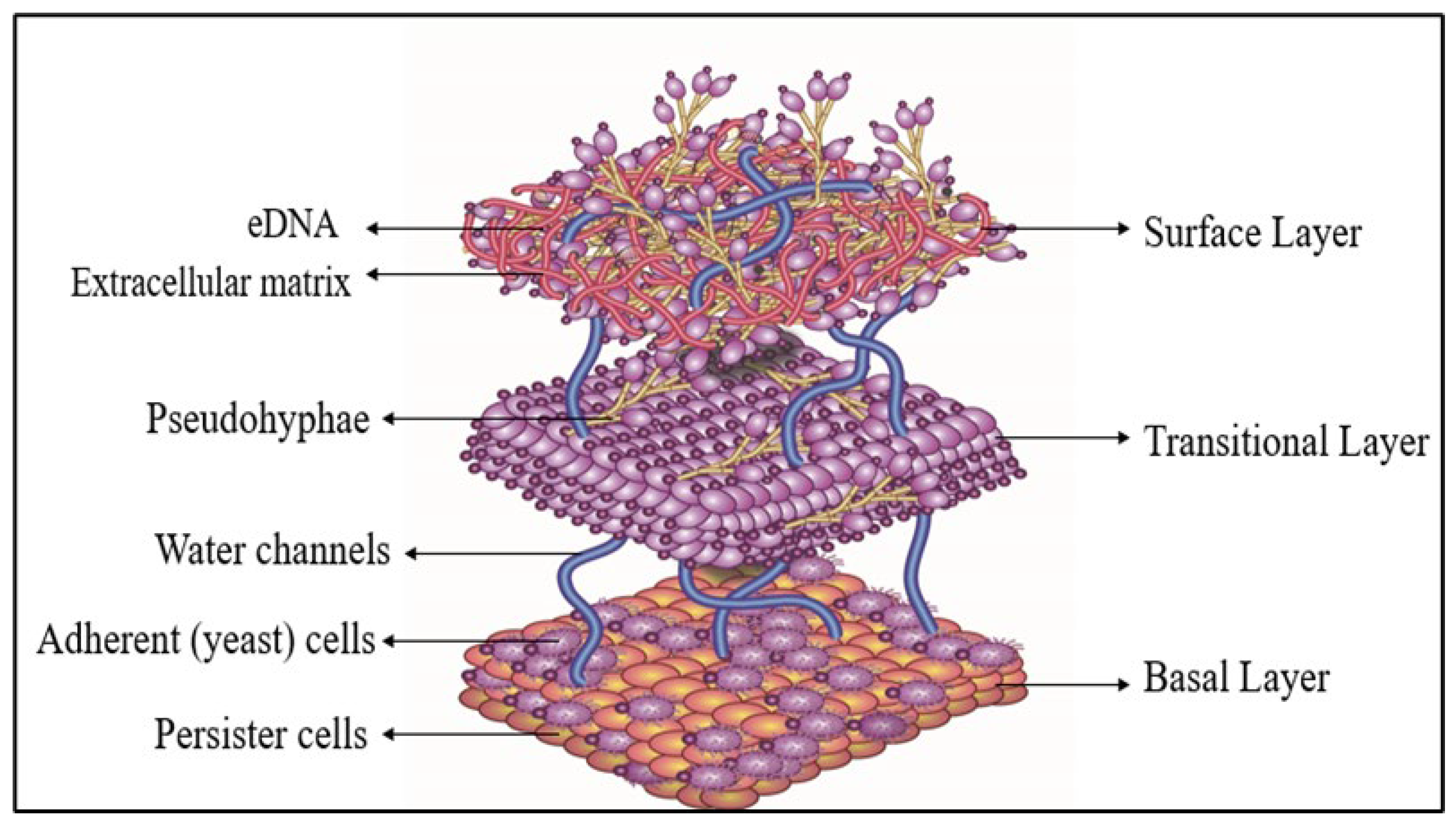
2. Hydrogel-like Biofilm Architecture of C. tropicalis
3. Biofouling of Prosthetic Polymeric Materials by C. tropicalis
3.1. Initial Surface Conditioning and Fungal Attachment
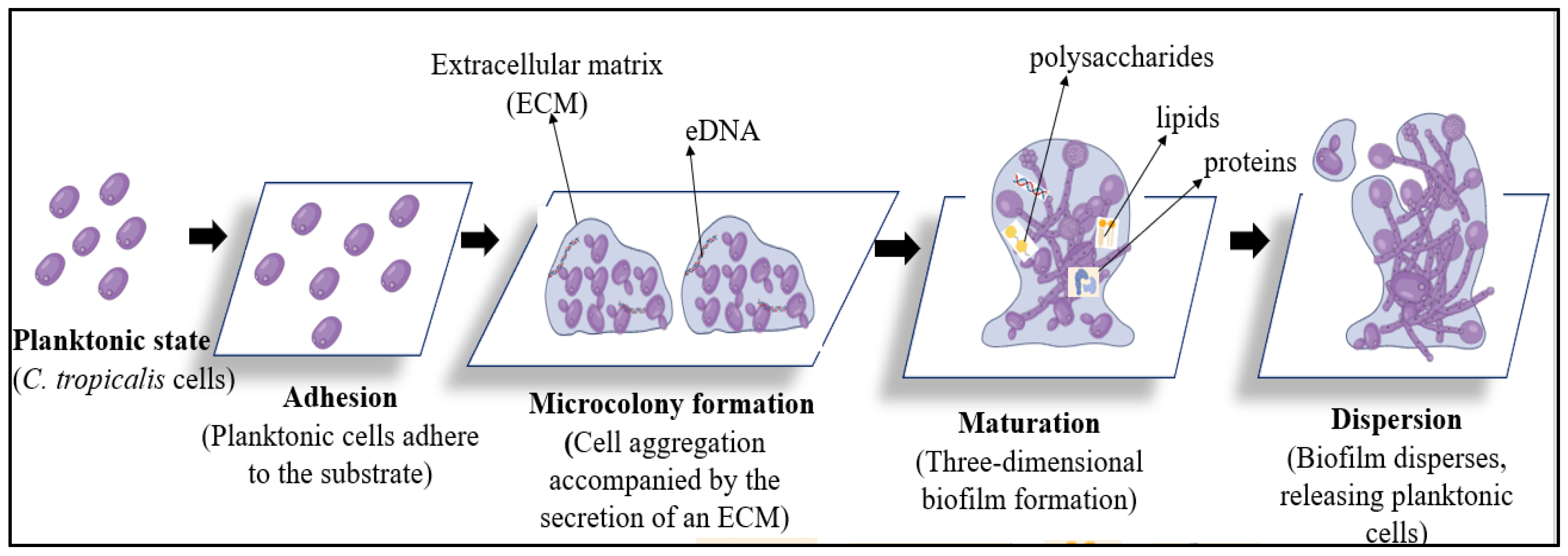
3.2. Establishment of Irreversible Biofouling and Microcolony Development
3.3. Mature-Biofilm-Driven Fouling and Device Dysfunction
3.4. Biofilm Dispersion and Secondary Biofouling
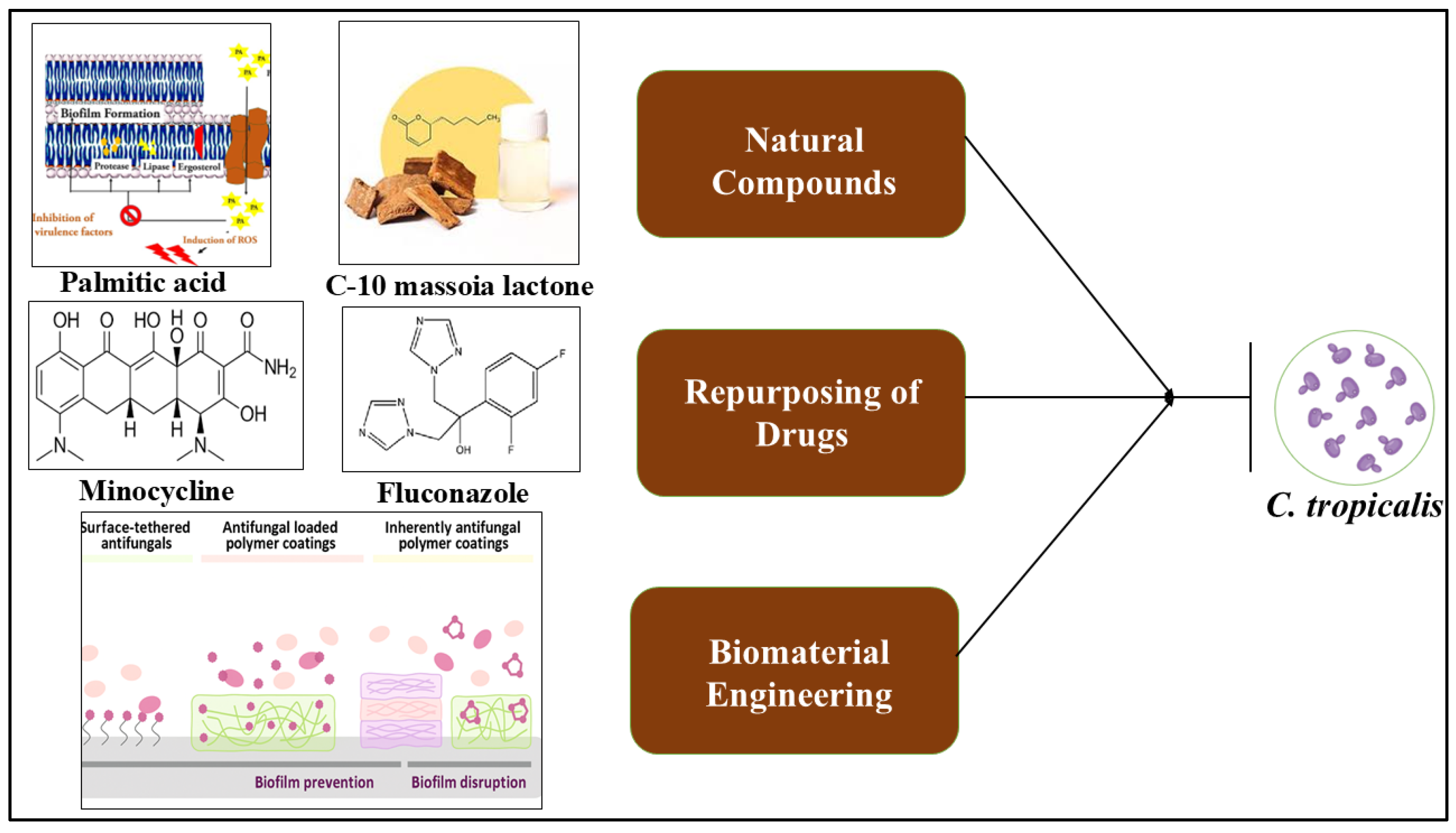
4. Emerging Antifungal and Antifouling Strategies
4.1. Natural Bioactive Compounds Targeting Biofilms
4.2. Drug Repurposing and Combination Therapies
4.3. Biomaterial-Based Antifouling Strategies
4.4. Integrated Antifungal–Antifouling Approaches

| Strategy Category | Representative Agents | Mechanisms | Biofilm Development Stage Targeted | Key Significance | References |
|---|---|---|---|---|---|
| Natural Bioactive Compounds | Phenolics (eugenol, cinnamaldehyde, thymol); terpenoids (farnesol, geraniol, α-terpineol); fatty acids (palmitic acid); lactones (C-10 massoia lactone); antimicrobial peptides (histatin-5, LL-37, defensins); spice-derived extracts (garlic, clove, cinnamon, turmeric) | Disrupt membranes and ergosterol; inhibit adhesion, morphogenesis, and quorum sensing; destabilize ECM; induce oxidative stress | Early and mature biofilm | Multi-target activity; low resistance risk; suitable for antifouling coatings and combination therapies | [41,61,62,63] |
| Drug Repurposing and Combinations | Minocycline + fluconazole; doxycycline, rifampicin; statins (simvastatin, atorvastatin); calcineurin inhibitors (cyclosporine A, tacrolimus); NSAIDs (aspirin, ibuprofen); SSRIs (sertraline); antiparasitics (chloroquine). | Suppress efflux pumps and stress responses; enhance azole penetration; interfere with ergosterol and metabolism | Predominantly mature biofilm | Rapid, cost-effective strategy; restores azole susceptibility; effective for resistant biofilms | [64,65,66] |
| Biomaterial-Based Antifouling | Chitosan and carboxymethyl chitosan coatings; antimicrobial nanocoatings (silver-, lignin-, and photoactive-based); PEG and zwitterionic polymers; plasma-polymerized antifungal grafts; hydrogel-based surface barriers | Reduce fungal adhesion via surface charge and hydration; inhibit ECM deposition and early biofilm formation | Initial adhesion and early biofilm formation | Prevents biofilm establishment; reduces need for systemic antifungals; prolongs device lifespan | [54,67,68] |
| Integrated Antifungal–Antifouling | Chitosan + fluconazole/amphotericin B coatings; nanoparticle-functionalized polymers with antifungal activity; drug-loaded hydrogels; zwitterionic–antifungal hybrid surfaces | Combined antifouling surface resistance and localized antifungal activity | All stages (from adhesion to mature biofilm formation) | Most effective strategy; limits recurrence; ideal for long-term prosthetic devices | [59,60,69] |
5. Conclusions
Author Contributions
Funding
Institutional Review Board Statement
Informed Consent Statement
Data Availability Statement
Acknowledgments
Conflicts of Interest
Abbreviations
| EPS | Extracellular polymeric substance |
| ECM | Extracellular matrix |
| PVC | Polyvinyl chloride |
| PMMA | Polymethyl methacrylate |
| eDNA | Extracellular DNA |
| CVCs | Central venous catheters |
| CAUTI | Catheter-associated urinary tract infection |
| PJI | Prosthetic joint infection |
| PD | Peritoneal dialysis |
| SSRIs | Serotonin reuptake inhibitors |
References
- Xiong, H.; Zhao, R.; Han, S.; Liu, Z.; Zhang, X.; Jia, Z.; Wang, X. Research Progress on the Drug Resistance Mechanisms of Candida tropicalis and Future Solutions. Front. Microbiol. 2025, 16, 1594226. [Google Scholar] [CrossRef] [PubMed]
- Sadanandan, B.; Vijayalakshmi, V.; Shetty, K.; Rathish, A.; Shivkumar, H.; Gundreddy, M.; Narendra, N.K.; Devaiah, N.M. In Situ Aqueous Spice Extract-Based Antifungal Lock Strategy for Salvage of Foley’s Catheter Biofouled with Candida albicans Biofilm Gel. Gels 2025, 11, 23. [Google Scholar] [CrossRef]
- Sadanandan, B.; Yogendraiah, K.M. Enterococcus faecalis Biofilm: A Clinical and Environmental Hazard. Med. Sci. Forum 2025, 35, 5. [Google Scholar]
- Yogendraiah, K.M.; Sadanandan, B.; Kyathsandra Natraj, L.; Vijayalakshmi, V.; Shetty, K. Optimization of Candida tropicalis Growth Conditions on Silicone Elastomer Material by Response Surface Methodology. Front. Bioeng. Biotechnol. 2025, 13, 1572694. [Google Scholar] [CrossRef]
- Keighley, C.; Kim, H.Y.; Kidd, S.; Chen, S.C.-A.; Alastruey, A.; Dao, A.; Bongomin, F.; Chiller, T.; Wahyuningsih, R.; Forastiero, A.; et al. Candida tropicalis—A Systematic Review to Inform the World Health Organization of a Fungal Priority Pathogens List. Med. Mycol. 2024, 62, myae040. [Google Scholar] [CrossRef]
- Amann, V.; Kissmann, A.K.; Firacative, C.; Rosenau, F. Biofilm-Associated Candidiasis: Pathogenesis, Prevalence, Challenges and Therapeutic Options. Pharmaceuticals 2025, 18, 460. [Google Scholar] [CrossRef]
- Ray, A.; Aayilliath K, A.; Banerjee, S.; Chakrabarti, A.; Denning, D.W. Burden of Serious Fungal Infections in India. Open Forum Infect. Dis. 2022, 9, ofac603. [Google Scholar] [CrossRef]
- Bhadade, A.A.; Singh, G.; Karuna, T.; Panthi, M.; Beniwal, A.; Maurya, A.K.; Upadhyay, N.; Reddy, V.R.; Devgade, A.; Khadanga, S. Epidemiology and Antifungal Susceptibility of Candida Bloodstream Isolates from a Tertiary Care Center in Central India. Cureus 2025, 17, e97120. [Google Scholar] [CrossRef]
- Lima, R.; Ribeiro, F.C.; Colombo, A.L.; de Almeida, J.N., Jr. The Emerging Threat of Antifungal-Resistant Candida tropicalis in Humans, Animals, and Environment. Front. Fungal Biol. 2022, 3, 957021. [Google Scholar] [CrossRef] [PubMed]
- Fan, X.; Tsui, C.K.; Chen, X.; Wang, P.; Liu, Z.J.; Yang, C.X. High Prevalence of Fluconazole-Resistant Candida tropicalis among Candiduria Samples in China: An Ignored Matter of Concern. Front. Microbiol. 2023, 14, 1125241. [Google Scholar] [CrossRef] [PubMed]
- Ahmed, N.; Mahmood, M.S.; Ullah, M.A.; Araf, Y.; Rahaman, T.I.; Moin, A.T.; Hosen, M.J. COVID-19-Associated Candidiasis: Possible Patho-Mechanism, Predisposing Factors, and Prevention Strategies. Curr. Microbiol. 2022, 79, 127. [Google Scholar] [CrossRef]
- Sadanandan, B.; Vijayalakshmi, V.; Ashrit, P.; Babu, U.V.; Sharath Kumar, L.M.; Sampath, V.; Awaknavar, R. Aqueous Spice Extracts as Alternative Antimycotics to Control Highly Drug-Resistant Extensive Biofilm-Forming Clinical Isolates of Candida albicans. PLoS ONE 2023, 18, e0281035. [Google Scholar] [CrossRef]
- Sadanandan, B.; Vaniyamparambath, V.; Lokesh, K.N.; Shetty, K.; Joglekar, A.P.; Ashrit, P.; Hemanth, B. Candida albicans Biofilm Formation and Growth Optimization for Functional Studies Using Response Surface Methodology. J. Appl. Microbiol. 2022, 132, 3277–3292. [Google Scholar] [CrossRef] [PubMed]
- Ashrit, P.; Sadanandan, B.; Kyathsandra Natraj, L.; Shetty, K.; Vaniyamparambath, V.; Raghu, A.V. A Microplate-Based Response Surface Methodology Model for Growth Optimization and Biofilm Formation on Polystyrene Polymeric Material in a Candida albicans and Escherichia coli Co-Culture. Polym. Adv. Technol. 2022, 33, 2872–2885. [Google Scholar] [CrossRef]
- Atiencia-Carrera, M.B.; Cabezas-Mera, F.S.; Vizuete, K.; Debut, A.; Tejera, E.; Machado, A. Evaluation of the Biofilm Life Cycle between Candida albicans and Candida tropicalis. Front. Cell. Infect. Microbiol. 2022, 12, 953168. [Google Scholar] [CrossRef] [PubMed]
- Wijaya, M.; Halleyantoro, R.; Kalumpiu, J.F. Biofilm: The Invisible Culprit in Catheter-Induced Candidemia. AIMS Microbiol. 2023, 9, 467–485. [Google Scholar] [CrossRef] [PubMed]
- Yadav, S.K.; Himanshu, D.; Gupta, P.; Nischal, A.; Atam, V.; Ali, W.; Yadav, A.; Sonkar, V.; Kumar, V. Multidrug-Resistant Candida in Bloodstream Infections: A Growing Concern in Indian Healthcare. Cureus 2025, 17, e85420. [Google Scholar] [CrossRef]
- Chesdachai, S.; Baddour, L.M.; Sohail, M.R.; Palraj, B.R.; Madhavan, M.; Tabaja, H.; Fida, M.; Challener, D.W.; DeSimone, D.C. Candidemia in Patients with Cardiovascular Implantable Electronic Devices: Uncertainty in Management Based on Current International Guidelines. Open Forum Infect. Dis. 2023, 10, ofad318. [Google Scholar] [CrossRef]
- Nett, J.E.; Andes, D.R. Contributions of the Biofilm Matrix to Candida Pathogenesis. J. Fungi 2020, 6, 21. [Google Scholar] [CrossRef]
- Roy, S.; Gow, N.A. The Role of the Candida Biofilm Matrix in Drug and Immune Protection. Cell Surf. 2023, 10, 100111. [Google Scholar] [CrossRef]
- Elibe, M.I.; Innocent, N.E. Biofilm Formation in Candida Species. In Recent Advances in Human Fungal Diseases: Progress and Prospects; Springer Nature: Singapore, 2024; pp. 239–259. [Google Scholar]
- Chakrabarti, A.; Patel, A.K.; Soman, R.; Todi, S. Overcoming Clinical Challenges in the Management of Invasive Fungal Infections in Low- and Middle-Income Countries (LMIC). Expert Rev. Anti-Infect. Ther. 2023, 21, 1057–1070. [Google Scholar] [CrossRef] [PubMed]
- Dos Santos, M.M.; Ishida, K. We Need to Talk about Candida tropicalis: Virulence Factors and Survival Mechanisms. Med. Mycol. 2023, 61, myad075. [Google Scholar] [CrossRef]
- Malinovská, Z.; Čonková, E.; Váczi, P. Biofilm Formation in Medically Important Candida Species. J. Fungi 2023, 9, 955. [Google Scholar] [CrossRef]
- de Souza, C.M.; Paulo, E.A.; de Souza, N.A.A.; Dos Santos, M.M.; Mantovani, M.S.; Furlaneto-Maia, L.; Furlaneto, M.C. Enhanced Biofilm Formation by Candida tropicalis Morphotypes under Host-Mimicking Conditions: Insights into Cell Wall Modifications and Gene Expression. Microb. Pathog. 2025, 207, 107807. [Google Scholar] [CrossRef]
- Sadanandan, B.; Yogendraiah, K.M. Advances in Pharmaceutical Processing and Particle Engineering of Garlic Extract-Based Formulations for Antifungal Therapy Against Candida tropicalis. Eng. Proc. 2026, 117, 21. [Google Scholar]
- Joshi, P.; Bhattacharjee, R.; Sahu, M.; Gajjar, D. Insights into Urinary Catheter Colonisation and Polymicrobial Biofilms of Candida-Bacteria under Flow Condition. Sci. Rep. 2025, 15, 15375. [Google Scholar] [CrossRef]
- Tseng, Y.K.; Chen, Y.C.; Hou, C.J.; Deng, F.S.; Liang, S.H.; Hoo, S.Y.; Hsu, C.C.; Ke, C.L.; Lin, C.H. Evaluation of Biofilm Formation in Candida tropicalis Using a Silicone-Based Platform with Synthetic Urine Medium. Microorganisms 2020, 8, 660. [Google Scholar] [CrossRef]
- Negri, M.; Silva, S.; Capoci, I.R.G.; Azeredo, J.; Henriques, M. Candida tropicalis Biofilms: Biomass, Metabolic Activity and Secreted Aspartyl Proteinase Production. Mycopathologia 2016, 181, 217–224. [Google Scholar] [CrossRef]
- de Souza, C.M.; Dos Santos, M.M.; Furlaneto-Maia, L.; Furlaneto, M.C. Adhesion and Biofilm Formation by the Opportunistic Pathogen Candida tropicalis: What Do We Know? Can. J. Microbiol. 2023, 69, 207–218. [Google Scholar] [CrossRef] [PubMed]
- Yogendraiah, K.M.; Sadanandan, B.; Natraj, L.K.; Vijayalakshmi, V.; Shetty, K. Biofilm Formation Directly Correlates with Cell Viability in Candida tropicalis on Polypropylene. Appl. Microbiol. Biotechnol. 2026, 110, 90. [Google Scholar] [CrossRef] [PubMed]
- Silva, S.; Henriques, M.; Martins, A.; Oliveira, R.; Williams, D.; Azeredo, J. Biofilms of Non-Candida albicans Candida Species: Quantification, Structure and Matrix Composition. Sabouraudia 2009, 47, 681–689. [Google Scholar] [CrossRef]
- Mitchell, K.F.; Zarnowski, R.; Andes, D.R. Fungal Super Glue: The Biofilm Matrix and Its Composition, Assembly, and Functions. PLoS Pathog. 2016, 12, e1005828. [Google Scholar] [CrossRef]
- Silva, S.; Rodrigues, C.F.; Araújo, D.; Rodrigues, M.E.; Henriques, M. Candida Species Biofilms’ Antifungal Resistance. J. Fungi 2018, 3, 8. [Google Scholar] [CrossRef]
- Cavalheiro, M.; Teixeira, M.C. Candida Biofilms: Threats, Challenges, and Promising Strategies. Front. Med. 2018, 5, 28. [Google Scholar] [CrossRef]
- Estivill, D.; Arias, A.; Torres-Lana, A.; Carrillo-Muñoz, A.J.; Arévalo, M.P. Biofilm Formation by Five Species of Candida on Three Clinical Materials. J. Microbiol. Methods 2011, 86, 238–242. [Google Scholar] [CrossRef]
- Gulati, M.; Nobile, C.J. Candida albicans Biofilms: Development, Regulation, and Molecular Mechanisms. Microbes Infect. 2016, 18, 310–321. [Google Scholar] [CrossRef] [PubMed]
- Gibert, C.; Marchetti, C.; Guery, B.; Steinmetz, S.; Ferry, T.; Lamoth, F. Outcome Predictors of Candida Prosthetic Joint Infections: A Systematic Review and Meta-Analysis. Open Forum Infect. Dis. 2025, 12, ofaf281. [Google Scholar] [CrossRef]
- Vicenty-Rivera, S.I.; Rodriguez, A.P. Candida Prosthetic Valve Endocarditis. Cureus 2025, 17, e90752. [Google Scholar] [CrossRef] [PubMed]
- Spałek, J.; Deptuła, P.; Cieśluk, M.; Strzelecka, A.; Łysik, D.; Mystkowska, J.; Daniluk, T.; Król, G.; Góźdź, S.; Bucki, R.; et al. Biofilm Growth Causes Damage to Silicone Voice Prostheses in Patients after Surgical Treatment of Locally Advanced Laryngeal Cancer. Pathogens 2020, 9, 793. [Google Scholar] [CrossRef]
- Shariati, A.; Didehdar, M.; Razavi, S.; Heidary, M.; Soroush, F.; Chegini, Z. Natural Compounds: A Hopeful Promise as an Antibiofilm Agent Against Candida Species. Front. Pharmacol. 2022, 13, 917787. [Google Scholar] [CrossRef] [PubMed]
- Hamzah, H.; Nuryastuti, T.; Rahmah, W.; Chabib, L.; Syamsul, E.S.; Lestari, D.; Jabbar, A.; Tunjung Pratiwi, S.U. Molecular Docking Study of the C-10 Massoia Lactone Compound as an Antimicrobial and Antibiofilm Agent Against Candida tropicalis. Sci. World J. 2023, 2023, 6697124. [Google Scholar] [CrossRef]
- Prasath, K.G.; Tharani, H.; Kumar, M.S.; Pandian, S.K. Palmitic Acid Inhibits the Virulence Factors of Candida tropicalis: Biofilms, Cell Surface Hydrophobicity, Ergosterol Biosynthesis, and Enzymatic Activity. Front. Microbiol. 2020, 11, 864. [Google Scholar] [CrossRef]
- Prasath, K.G.; Alexpandi, R.; Parasuraman, R.; Pavithra, M.; Ravi, A.V.; Pandian, S.K. Anti-Inflammatory Potential of Myristic Acid and Palmitic Acid Synergism against Systemic Candidiasis in Danio rerio (Zebrafish). Biomed. Pharmacother. 2021, 133, 111043. [Google Scholar] [CrossRef]
- Zhu, Y.-Z.; Li, X.; Zhang, Q.-Y.; Yang, N.; Tian, P.; Zhang, D.; Yang, Y.; Yu, L.; Liu, Y.-Y.; Ye, Y.; et al. Synergistic Antifungal Activity of Minocycline as an Effective Augmenting Agent of Fluconazole against Drug-Resistant Candida tropicalis. Microbiol. Spectr. 2025, 13, e0318524. [Google Scholar] [CrossRef]
- Shi, W.; Chen, Z.; Chen, X.; Cao, L.; Liu, P.; Sun, S. The Combination of Minocycline and Fluconazole Causes Synergistic Growth Inhibition against Candida albicans: An In Vitro Interaction of Antifungal and Antibacterial Agents. FEMS Yeast Res. 2010, 10, 885–893. [Google Scholar] [CrossRef]
- Munusamy, K.; Vadivelu, J.; Tay, S.T. A Study on Candida Biofilm Growth Characteristics and Its Susceptibility to Aureobasidin A. Rev. Iberoam. Micol. 2018, 35, 68–72. [Google Scholar] [CrossRef]
- E Silva, D.M.; de Souza Lacerda, L.; de Souza Andrioli, A.; Braz, W.R.; Campos, L.M.; de Paiva, M.R.B.; Pittella, F.; Fabri, R.L.; Tavares, G.D. Statins as Antifungal Agents: A Review on Drug Repurposing and Nanotechnology-Driven Delivery Strategies. Fundam. Clin. Pharmacol. 2025, 39, e70046. [Google Scholar] [CrossRef]
- Onyewu, C.; Blankenship, J.R.; Del Poeta, M.; Heitman, J. Ergosterol Biosynthesis Inhibitors Become Fungicidal When Combined with Calcineurin Inhibitors against Candida albicans, Candida glabrata, and Candida krusei. Antimicrob. Agents Chemother. 2003, 47, 956–964. [Google Scholar] [CrossRef] [PubMed]
- Del Pozo, J.L.; Francés, M.L.; Hernáez, S.; Serrera, A.; Alonso, M.; Rubio, M.F. Effect of Amphotericin B Alone or in Combination with Rifampicin or Clarithromycin against Candida Species Biofilms. Int. J. Artif. Organs 2011, 34, 766–770. [Google Scholar] [CrossRef] [PubMed]
- Quinteros, M.A.; Tolosa, J.; García-Martínez, J.C.; Páez, P.L.; Paraje, M.G. Synergic Activity of Oligostyrylbenzenes with Amphotericin B against Candida tropicalis Biofilms. Yeast 2021, 38, 634–645. [Google Scholar] [CrossRef] [PubMed]
- Tekintaş, Y.; Temel, A.; Metin, D.Y.; Polat, S.H.; Limoncu, M.H. Antifungal and Antibiofilm Activities of Selective Serotonin Reuptake Inhibitors Alone and in Combination with Fluconazole. Turk. J. Pharm. Sci. 2020, 17, 667. [Google Scholar] [CrossRef]
- Roudbary, M.; Branquinha, M.H.; Santos, A.L.S. Editorial: Drug Repurposing to Fight Resistant Fungal Species: Recent Developments as Novel Therapeutic Strategies. Front. Cell. Infect. Microbiol. 2025, 15, 1633037. [Google Scholar] [CrossRef] [PubMed]
- Tan, Y.; Leonhard, M.; Ma, S.; Moser, D.; Schneider-Stickler, B. Efficacy of Carboxymethyl Chitosan Against Candida tropicalis and Staphylococcus epidermidis Monomicrobial and Polymicrobial Biofilms. Int. J. Biol. Macromol. 2018, 110, 150–156. [Google Scholar] [CrossRef] [PubMed]
- Chandna, S.; Gogde, K.; Paul, S.; Bhaumik, J. Lignin-Based Sustainable Antifungal Gel Nanocoatings for Disinfecting Biomedical Devices. RSC Sustain. 2024, 2, 2348–2356. [Google Scholar] [CrossRef]
- Griesser, S.S.; Jasieniak, M.; Coad, B.R.; Griesser, H.J. Antifungal Coatings by Caspofungin Immobilization onto Biomaterials Surfaces via a Plasma Polymer Interlayer. Biointerphases 2015, 10, 04A307. [Google Scholar] [CrossRef]
- Chen, P.; Shu, H.; Tang, W.; Yu, C.; Yang, R. Zwitterionic Polymer Coatings with Compositional Gradient for Stable and Substrate-Independent Biofouling Deterrence via All-Dry Synthesis. arXiv 2024, arXiv:2410.23552. [Google Scholar]
- Lin, W.; Kluzek, M.; Cao, Y.; Klein, J. Bioinspired Polymer-Incorporating Self-Lubricating and Antifouling Hydrogels. arXiv 2024, arXiv:2404.05234. [Google Scholar]
- Dasilva, M.A.; Andrada, K.F.C.; Torales, M.M.; Hughes, I.M.; Pez, P.; García-Martínez, J.C.; Paraje, M.G. Synergistic Activity of Gold Nanoparticles with Amphotericin B on Persister Cells of Candida tropicalis Biofilms. J. Nanobiotechnol. 2024, 22, 254. [Google Scholar] [CrossRef]
- Khalifa, H.O.; Oreiby, A.; Abdelhamid, M.A.A.; Ki, M.R.; Pack, S.P. Biomimetic Antifungal Materials: Countering the Challenge of Multidrug-Resistant Fungi. Biomimetics 2024, 9, 425. [Google Scholar] [CrossRef]
- Miranda-Cadena, K.; Marcos-Arias, C.; Mateo, E.; Aguirre-Urizar, J.M.; Quindós, G.; Eraso, E. In Vitro Activities of Carvacrol, Cinnamaldehyde and Thymol against Candida Biofilms. Biomed. Pharmacother. 2021, 143, 112218. [Google Scholar] [CrossRef]
- Ribeiro, T.A.N.; Dos Santos, G.A.; Dos Santos, C.T.; Soares, D.C.F.; Saraiva, M.F.; Leal, D.H.S.; Sachs, D. Eugenol as a Promising Antibiofilm and Anti-Quorum Sensing Agent: A Systematic Review. Microb. Pathog. 2024, 196, 106937. [Google Scholar] [CrossRef]
- Tuan, D.A.; Masak, J. Natural-Compound Adjuvants Dismantle Candida Biofilms: Mechanisms, Design Rules, and Biofilm-Aware Pharmacology. Curr. Microbiol. 2026, 83, 131. [Google Scholar] [CrossRef] [PubMed]
- An, L.; Huang, X.; Zhong, M.; Wu, J.; Liu, M.; Geng, L.; Li, Y.; Wang, X.; Yang, L.; Tan, J. In Vitro and In Vivo Antifungal Activity of Minocycline Albumin Nanoparticles in Combination with Fluconazole against Azole-Resistant Candida spp. BMC Microbiol. 2025, 25, 477. [Google Scholar] [CrossRef] [PubMed]
- Patel, M.; Patil, C.; Kalapahad, B.; Jaiswal, I.; Das, S.; Jyoti, A.; Prajapati, B.; Singh, R.K.; Saxena, J. Repurposing Statins as Potential Antifungal Agents for Candida albicans: In Vitro and In Silico Approach. Future Microbiol. 2026, 21, 5–17. [Google Scholar] [CrossRef] [PubMed]
- Eldesouky, H.E.; Salama, E.A.; Li, X.; Hazbun, T.R.; Mayhoub, A.S.; Seleem, M.N. Repurposing Approach Identifies Pitavastatin as a Potent Azole Chemosensitizing Agent Effective against Azole-Resistant Candida Species. Sci. Rep. 2020, 10, 7525. [Google Scholar] [CrossRef]
- Vera-González, N.; Shukla, A. Advances in Biomaterials for the Prevention and Disruption of Candida Biofilms. Front. Microbiol. 2020, 11, 538602. [Google Scholar] [CrossRef]
- Tornero-Gutiérrez, F.; Ortiz-Ramírez, J.A.; López-Romero, E.; Cuéllar-Cruz, M. Materials Used to Prevent Adhesion, Growth, and Biofilm Formation of Candida Species. Med. Mycol. 2023, 61, myad065. [Google Scholar] [CrossRef]
- Zhang, J.; Wu, M.; Peng, P.; Liu, J.; Lu, J.; Qian, S.; Feng, J. “Self-Defensive” Antifouling Zwitterionic Hydrogel Coatings on Polymeric Substrates. ACS Appl. Mater. Interfaces 2022, 14, 27908–27916. [Google Scholar] [CrossRef]


| Biofilm Stage | Experimental Approach | Key Findings | References |
|---|---|---|---|
| Initial adhesion | In vitro adhesion assays on silicone biomaterial surfaces under synthetic urine conditions | Demonstrated rapid adhesion of C. tropicalis to silicone surfaces, showing that surface properties and environmental conditions strongly influence early biofilm establishment | [28] |
| In vitro adhesion assays on catheter materials using artificial urine flow model | Showed strong adhesion to and colonization of urinary catheter materials by C. tropicalis, mimicking device-associated infection conditions | [29] | |
| Adhesion and biofilm assays using clinical isolates on abiotic surfaces | Revealed strain-dependent variability in adhesion and biofilm-forming capacity among C. tropicalis isolates | [30] | |
| Biofilm formation on silicone elastomer and polypropylene material | Demonstrated a strong correlation between biofilm formation and cell viability of C. tropicalis on silicone elastomer and polypropylene, highlighting the role of polymeric materials in supporting fungal persistence | [4,31] | |
| Microcolony formation (early biofilm) | Scanning electron microscopy (SEM) of developing biofilms | After initial attachment, yeast cells proliferated and formed localized clusters known as microcolonies. Early biofilms consisted of clustered yeast cells forming microcolonies with pseudohyphal elements | [32] |
| In vitro biofilm growth models with microscopic observation | Demonstrated proliferation of adherent cells and formation of structured microcolonies during early biofilm development | [28] | |
| Microscopic and biochemical analysis of early biofilm development | Showed transition from yeast cells to pseudohyphal structures during early biofilm formation | [29] | |
| Extracellular matrix production | Biochemical characterization of extracellular matrix | During biofilm development, C. tropicalis secreted extracellular matrix components including β-glucans, proteins, lipids, and extracellular DNA, contributing to structural stability | [33] |
| Matrix composition analysis during biofilm growth | Demonstrated that matrix polysaccharides play a major role in biofilm structural integrity and antifungal tolerance | [34] | |
| Microscopy and biochemical assays of ECM production | Confirmed accumulation of extracellular polymeric substances during biofilm development | [28] | |
| Biofilm maturation | Structural analysis of mature biofilms using microscopy | Mature biofilms developed dense three-dimensional structures embedded within the extracellular matrix; nutrient and oxygen gradients developed within the biofilm, leading to metabolic heterogeneity | [35] |
| Antifungal susceptibility assays on mature biofilms | Mature biofilms showed significantly reduced susceptibility to antifungal agents | [23] | |
| Microscopy and metabolic activity analysis of mature biofilms | Mature biofilms displayed metabolically heterogeneous cells within protective matrix layers | [34] | |
| Biofilm dispersion | Biofilm dispersal assays and microscopy analysis | In the dispersion stage, cells were released from the mature biofilm and returned to the planktonic state, enabling colonization of new surfaces and contributing to the spread of device-associated infections | [36,37] |
| Polymeric Material | Medical Device | Biofouling-Associated Infection | Global Prevalence/Statistics | Mortality | Clinical Management | Role of Drug-Resistant Biofouling | References |
|---|---|---|---|---|---|---|---|
| Polyurethane, Silicone Elastomer | Central venous catheters (CVCs) | Catheter-related bloodstream infection (candidemia) | Device-associated candidemia accounts for ~70–90% of ICU candidemia; C. tropicalis contributes ~15–40% in Asia and LMICs | ~20–60% | Catheter removal + systemic antifungals (echinocandins/amphotericin B) | Biofilm-embedded cells show high fluconazole tolerance; resistance leads to persistent candidemia until device removal | [16] |
| PVC, Silicone Elastomer | Urinary catheters | Catheter-associated urinary tract infection (CAUTI) | Fungal CAUTIs account for ~20–30% of ICU UTIs; Candida spp. dominates | Low–moderate, but high morbidity | Catheter replacement/removal + antifungals if invasive | Biofilms protect azole-resistant strains, enabling chronic colonization | [28] |
| PMMA, Polyethylene, Polymer-coated Metals | Prosthetic joints (hip, knee) | Prosthetic joint infection (PJI) | Fungal PJIs: ~1–2% of all PJIs; Candida spp. predominant | ~25–45% relapse risk | Surgical debridement or prosthesis exchange + long-term antifungals | Drug-resistant biofilms necessitate surgical removal; medical therapy alone often fails | [38] |
| Silicone Elastomer, Polyurethane | Peritoneal dialysis (PD) catheters | Fungal peritonitis | ~2–7% of PD-associated infections | Up to ~30% | Immediate catheter removal + antifungal therapy | Biofilm-mediated resistance drives poor outcomes if catheter retained | [39] |
| Polymer-coated Metals | Prosthetic heart valves, cardiac devices | Fungal endocarditis | Candida causes ~2–10% of prosthetic valve endocarditis | ~25–40% | Surgical valve replacement + prolonged antifungals | Biofilm-associated resistance contributes to high mortality | [40] |
| Silicone Elastomer, Acrylic (PMMA) | Dental and voice prostheses | Local candidiasis, prosthesis failure | Very common in long-term users; high recurrence | Low mortality | Prosthesis cleaning/replacement + topical/systemic antifungals | Resistant biofilms cause recurrent fouling and device failure | [4,40] |
Disclaimer/Publisher’s Note: The statements, opinions and data contained in all publications are solely those of the individual author(s) and contributor(s) and not of MDPI and/or the editor(s). MDPI and/or the editor(s) disclaim responsibility for any injury to people or property resulting from any ideas, methods, instructions or products referred to in the content. |
© 2026 by the authors. Licensee MDPI, Basel, Switzerland. This article is an open access article distributed under the terms and conditions of the Creative Commons Attribution (CC BY) license (https://creativecommons.org/licenses/by/4.0/).
Share and Cite
Sadanandan, B.; Yogendraiah, K.M. Hydrogel-like Biofilms of Candida tropicalis: Biofouling of Polymeric Prosthetic Materials and Emerging Antifungal Strategies. Mater. Proc. 2026, 29, 5. https://doi.org/10.3390/materproc2026029005
Sadanandan B, Yogendraiah KM. Hydrogel-like Biofilms of Candida tropicalis: Biofouling of Polymeric Prosthetic Materials and Emerging Antifungal Strategies. Materials Proceedings. 2026; 29(1):5. https://doi.org/10.3390/materproc2026029005
Chicago/Turabian StyleSadanandan, Bindu, and Kavyasree Marabanahalli Yogendraiah. 2026. "Hydrogel-like Biofilms of Candida tropicalis: Biofouling of Polymeric Prosthetic Materials and Emerging Antifungal Strategies" Materials Proceedings 29, no. 1: 5. https://doi.org/10.3390/materproc2026029005
APA StyleSadanandan, B., & Yogendraiah, K. M. (2026). Hydrogel-like Biofilms of Candida tropicalis: Biofouling of Polymeric Prosthetic Materials and Emerging Antifungal Strategies. Materials Proceedings, 29(1), 5. https://doi.org/10.3390/materproc2026029005