1. Introduction
Modern researchers focus on perovskite-structured (ABO
3) oxide ceramics due to their optical behavior and various electrical properties, including dielectric, ferroelectric, piezoelectric, and pyroelectric nature. Because of this, they play a vital role as actuators, capacitors, transducers, long-term FeRAM and batteries, and so on [
1]. Bismuth sodium titanate (Bi
0.5Na
0.5TiO
3) and bismuth strontium titanate (Bi
0.5Sr
0.5TiO
3) stand as excellent lead-free oxide-based perovskite ceramics because of their elevated Curie temperature, intense remanent polarization, and good thermal stability [
1,
2]. These ceramics are prepared by various methods like traditional solid-state method, hydrothermal method, sol–gel auto-combustion technique, and microwave method [
3].
In general, BNT ceramics are a good dielectric material due to their high permittivity and low dissipation energy. Earlier study with BNT showed a high dielectric permittivity of ε = 3871, with a tan loss of δ = 0.995 at 100 Hz near the Curie temperature. While the DC conductivity was in accordance with Mott’s variable range hopping (VRH) mechanism, the AC conductivity mirrored Jonscher’s power and double power law behavior, demonstrating non-Debye type relaxation in the electrical response [
1]. Similar studies on Sr
1−xBi
xTiO
3 ceramics discovered that the dielectric constant expanded from 1025 to 2320 at ambient temperature, implying a substantial enhancement in dielectric characteristics with increasing Bi content. The frequency-dependent dielectric response was explained using the correlated barrier hopping (CBH) model, supported by a reduction in activation energy with higher Bi substitution [
4].
In this study, pristine BNT and BNT ceramics are prepared via the auto-combustion technique. The powder samples are calcinated at 950 °C for 5 h. The structural properties are studied using X-ray diffraction (XRD), while the elemental composition of the powders is determined using energy-dispersive X-ray spectra (EDX). The functional groups and the optical behaviors are studied using Fourier-transform IR Spectra (FT-IR) and UV–Visible DRS. An LCR meter is adopted to examine the electrical properties of the samples.
2. Experimental Techniques
The perovskite ceramics were prepared via the auto-combustion technique. Bi(NO
3)
3, C
12H
36O
4Ti, NaNO
3, C
2H
5NO
2, C
6H
8O
7, and HNO
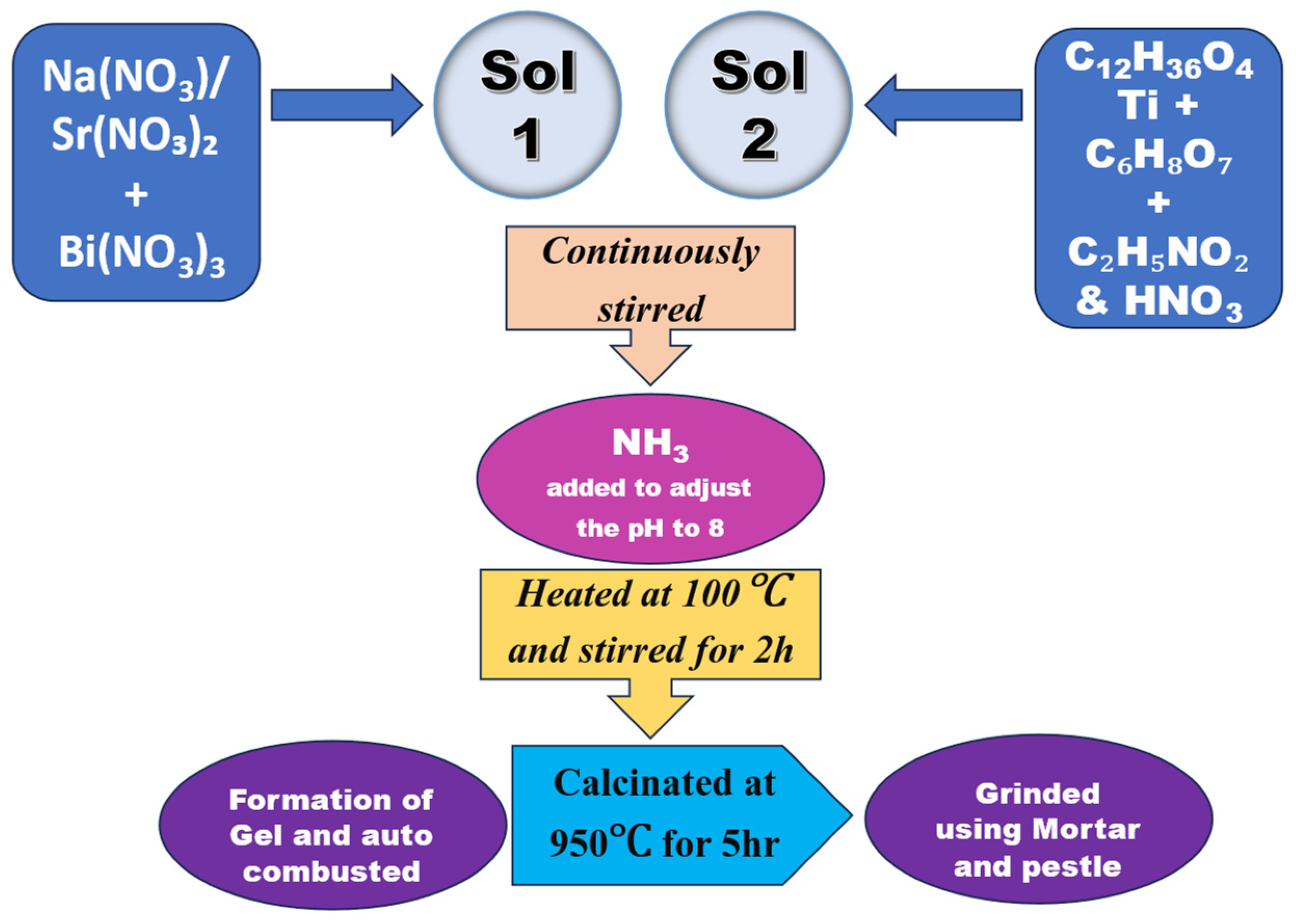
3 were the chosen precursors for the preparation of BNT. The stoichiometry amount of these starting materials was employed without additional purification. The ratio of citric acid to nitric acid and glycine was fixed to be 1.5:1:1. The incorporation of nitric acid stabilizes and inhibits the formation of precipitates in the solution. The schematic diagram illustrated in
Figure 1 shows the step-by-step preparation process of BNT. A similar method is followed for the synthesis of BST.
The structural behavior of the samples calcinated at 950 °C was characterized using an X-ray diffractometer (XRD) (PANalytical X’Pert, Malvern Panalytical, Malvern, UK). Energy-dispersive X-ray spectroscopy (EDX) (D-12489, BRUKER Nano GmbH, Berlin, Germany) was employed to find the elemental composition, while the functional groups were studied by utilizing Fourier-transform infrared spectroscopy (FT-IR) (FT/IR-4700, Jasco, Tokyo, Japan). The energy bandgap of BNT and BST was calculated from the absorbance spectra obtained via UV–Visible DRS (LAMBDA-35, Perkin Elmer, Shelton, WA, USA). The electrical properties (dielectric permittivity, tangent loss, and ac conductivity) were measured using an LCR meter.
3. Results and Discussion
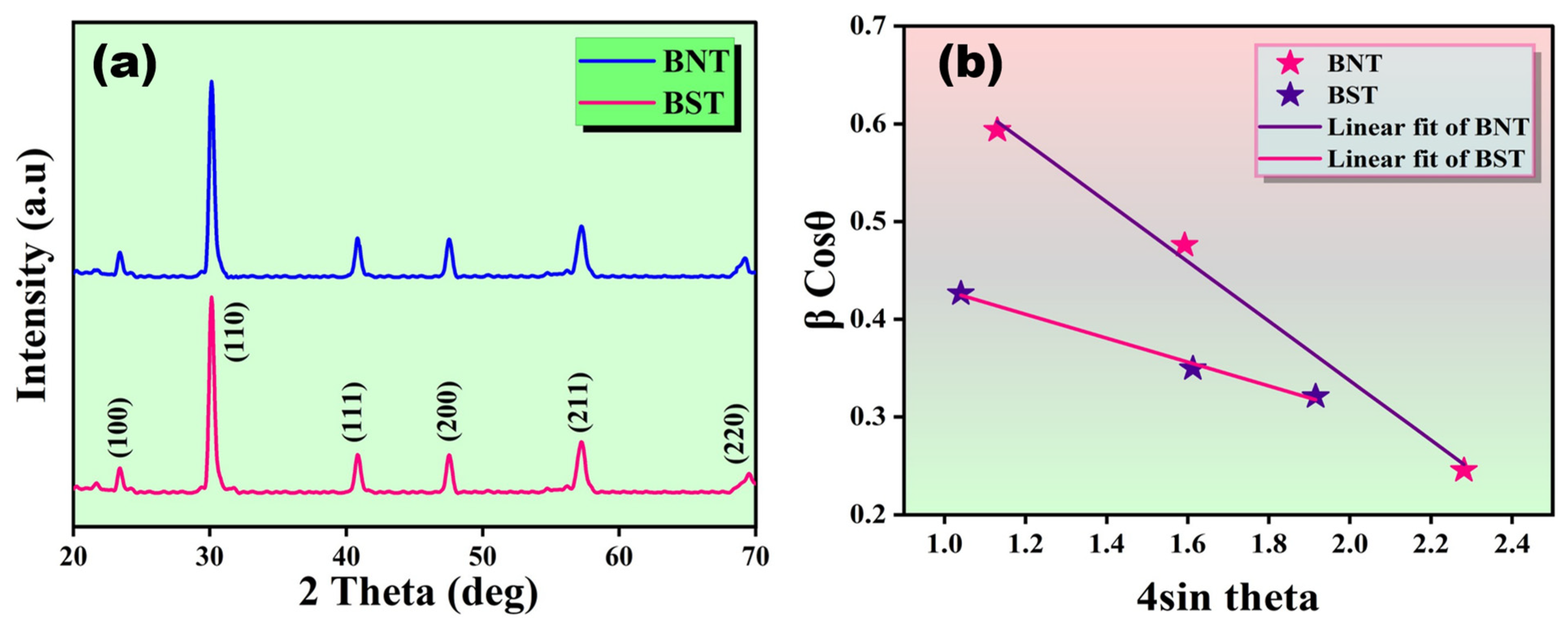
The XRD patterns of the fabricated BNT and BST samples are depicted in
Figure 2a. The perovskite structure of the samples is confirmed without any trace of impurities. This proves that Na
+ and Sr
2+ ions have completely diffused into the bismuth titanate matrix crystal lattice. The significant diffraction profiles indicate the excellent crystallinity of the prepared samples. No additional peaks were detected apart from the (111) and (200) reflections, indicating that the synthesized samples possess a pseudo cubic structure [
5]. The most intense peak (110) of BNT inclines towards the higher angles when compared to BST, where this shift can be due to the smaller ionic radii of Na (1.02 Å in six co-ordination), while Sr is 1.18 Å in six co-ordination. In addition, the microstructural features of BNT and BST are systematically estimated through the Williamson–Hall plot, incorporating both crystallite size and lattice strain contributions.
Figure 2b shows the plot displaying a positive slope, which supports the lattice extension and a shift in lattice parameters along a particular crystallographic direction. The average crystallite size (D) was calculated by adopting Debye Scherrer’s formula, and it was found that BST has a larger crystallite size than BNT. Also, other parameters, including the lattice constant (A), volume of the unit cell (V), micro strain (ε), dislocation density (δ), and packing factor (P) values, are calculated, and the results are tabulated in
Table 1.
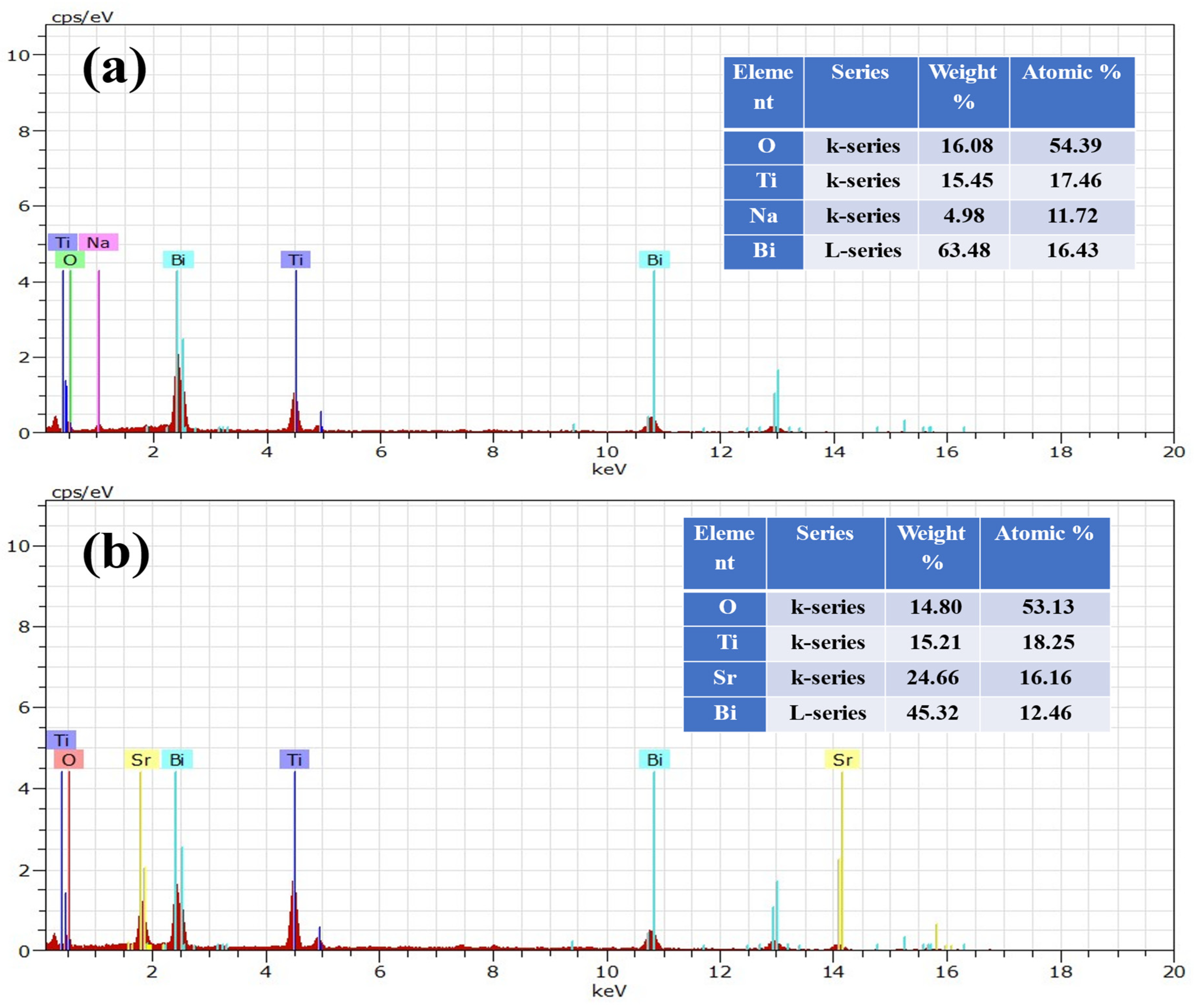
Figure 3 displays the elemental composition of BNT and BST, characterized using Electron dispersive X-ray spectroscopy (EDX). From the results, it is clear that only desired elements are present in the prepared samples, where only Bi, Na, Ti, and O were found in BNT, while Bi, Sr, Ti, and O were discovered in BST. The atomic percentage and the weight percentage of the samples are shown in
Figure 3, which emerged to be extremely close to the anticipated stoichiometric values.
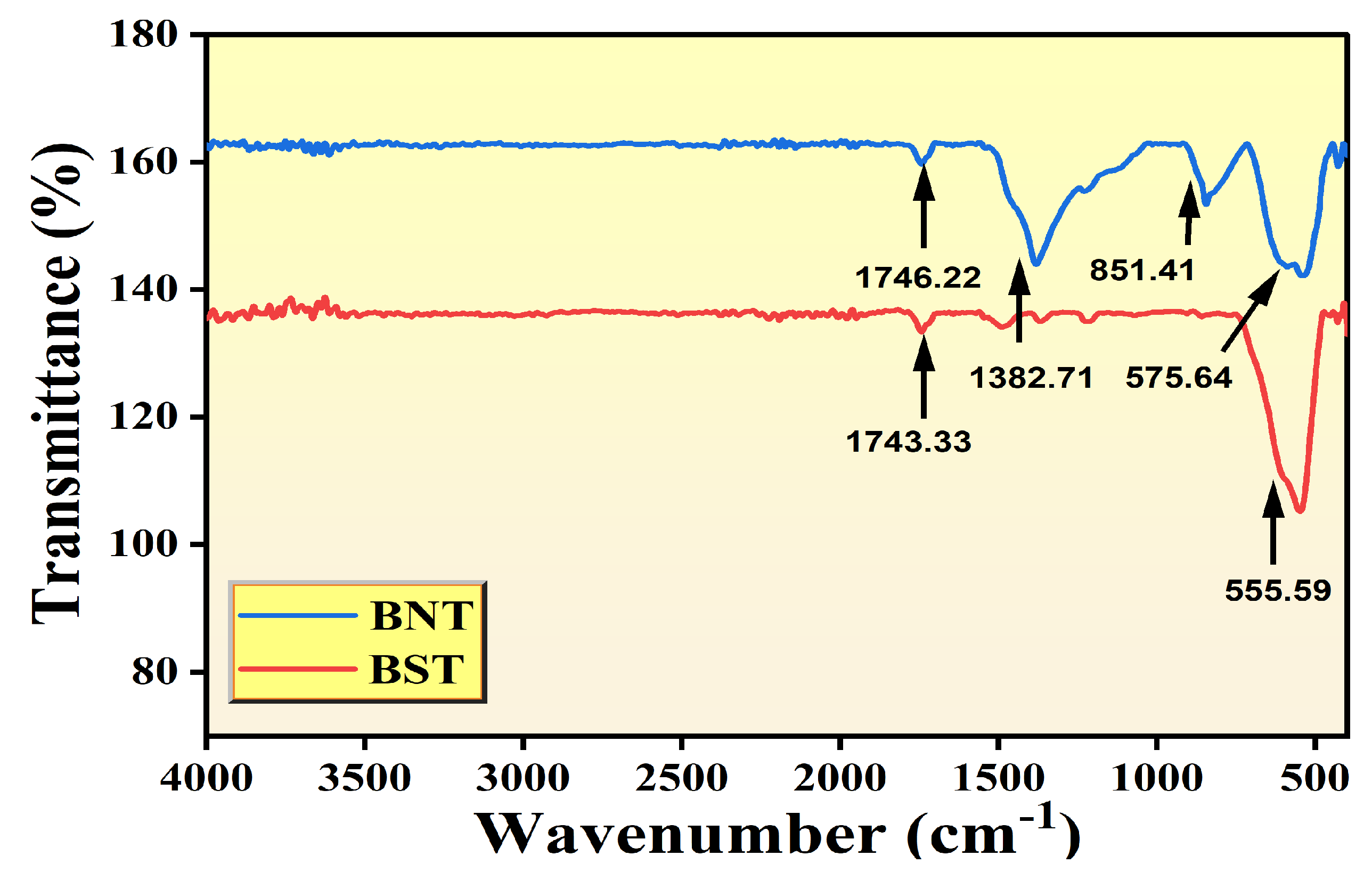
From the FT-IR spectra, the functional groups present in the prepared ceramics are determined.
Figure 4 displays a graph plotted between wavelength (ranging from 500 to 4000 cm
−1) and transmittance. The broad absorption bands observed at 555.59 and 575.65 cm
−1 can be ascribed to Ti–O stretching vibrations [
1]. In BNT, the small absorption band located in the 851.41 cm
−1 region arises from the fundamental stretching vibrations of the Sr-O linkage, while the one located at 1382.71 cm
−1 indicates the existence of the Ba-O-Ti bond [
2,
3]. The minor vibrational bonds interpreted around 1700 cm
−1 correspond to the C=O stretching vibrations [
2].
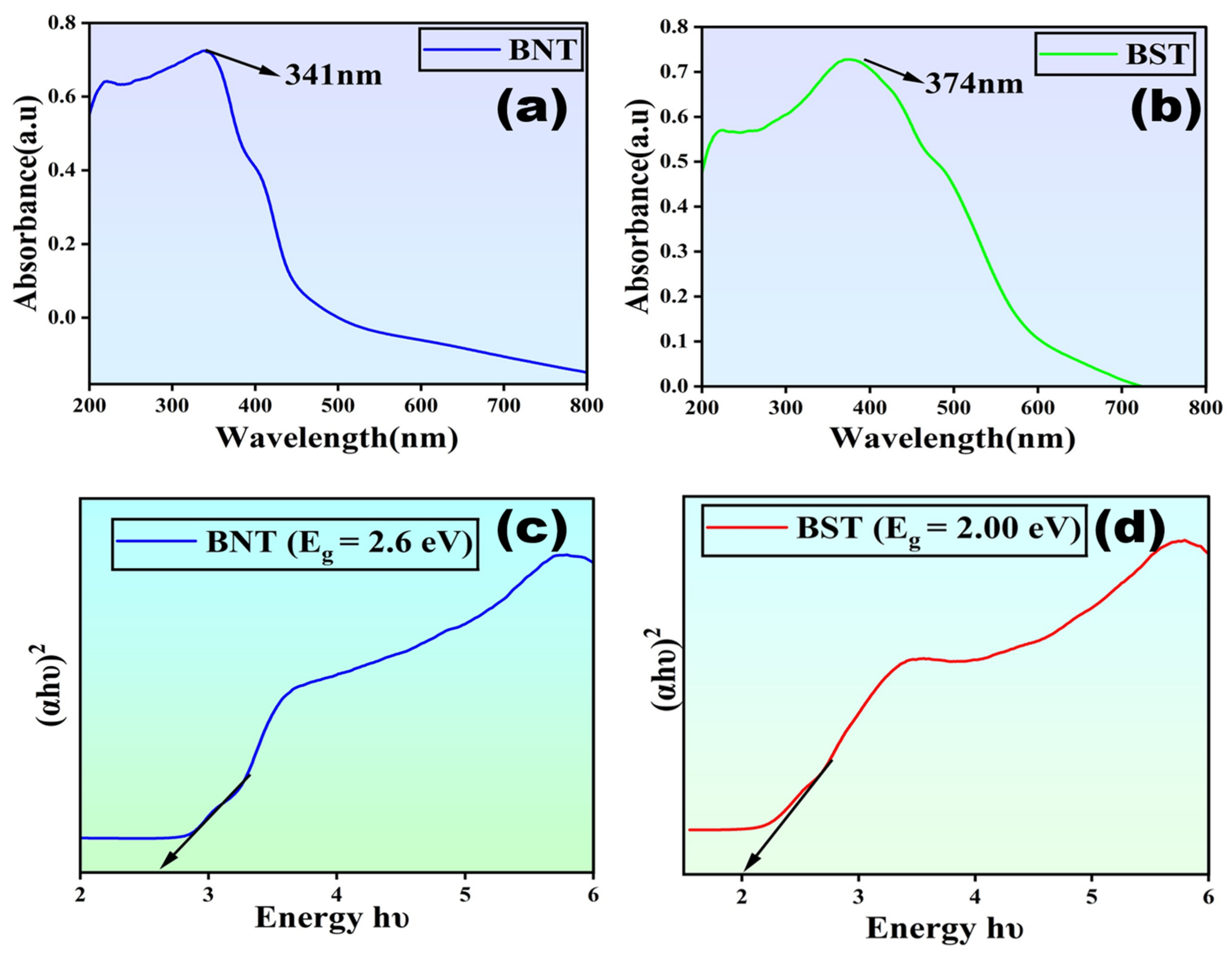
Figure 5 shows the UV–Visible absorbance spectra of BNT and BST ceramic perovskite samples in the wavelength range between 200 and 800 nm. A single absorbance peak has been obtained for both the ceramics, with BNT having its peak at 341 nm, while BST at 374 nm. Also, by adopting Tauc’s formula, the bandgap energy (E
g) of the samples is determined to be 2.0 eV and 2.6 eV for BNT and BST [
6].
These values are also in accordance with the previous reports [
7]. The measured bandgap value further confirms the semiconducting nature. Although BNT shows a tail up to ~800 nm and BST up to ~700 nm, the Tauc-derived bandgaps represent the true intrinsic electronic transitions. The difference in the absorption edge arises mainly from the different defect structures in the two materials. Pristine bismuth titanate shows a bandgap of 2.2–2.7 eV. Compared to this, BNT shows a longer absorption tail toward ~800 nm, where the substitution of Na
+ slightly widens the bandgap to 2.6 eV by altering the Bi-O-Ti electronic structure. On the other hand, in BST, Sr
2+ substitution reduces the bandgap to 2.0 eV due to increased lattice distortion and defect-induced mid-gap states [
7]. The bandgap graph plotted between photon energy and (α
hυ)
2 is illustrated in
Figure 5c,d.
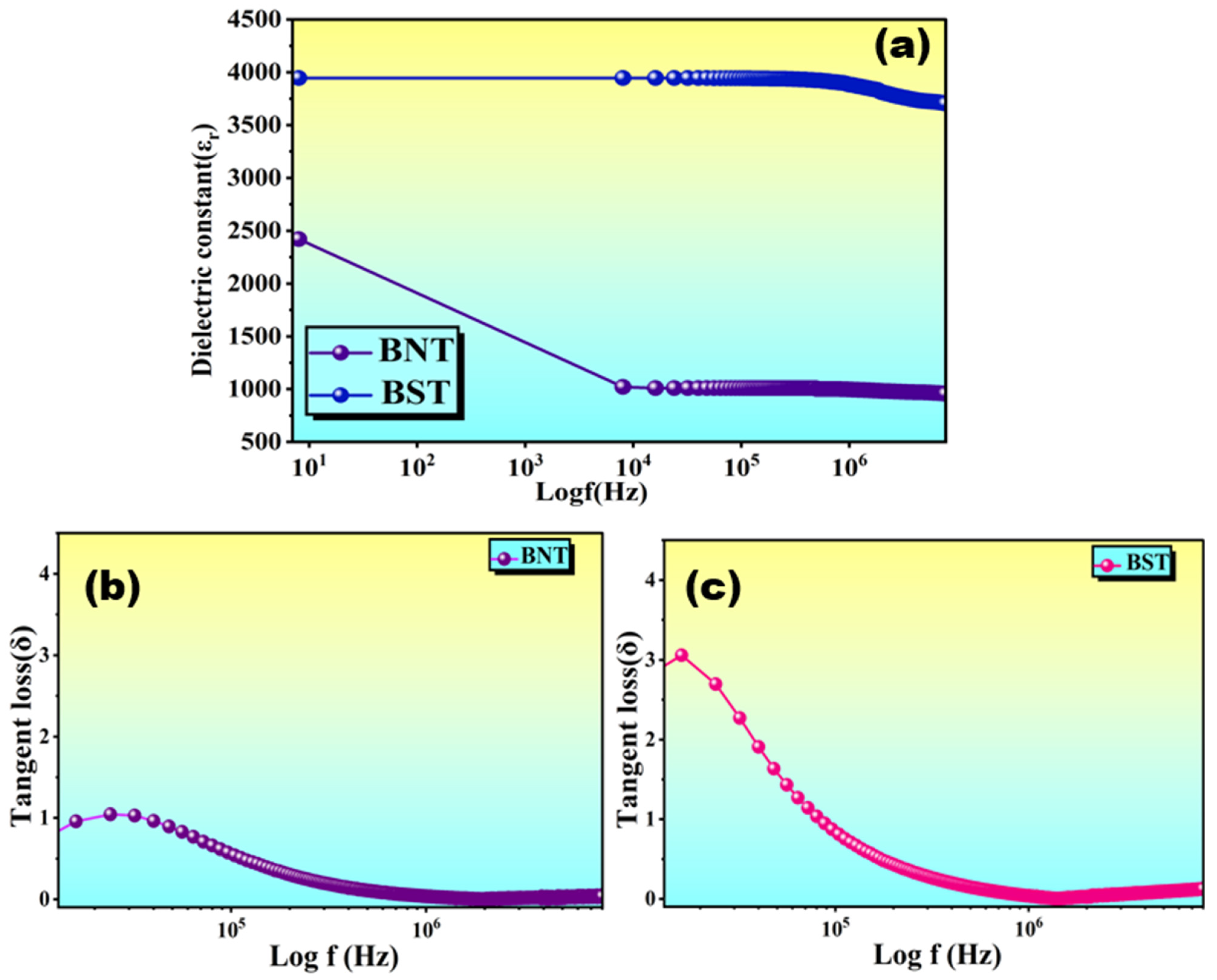
Figure 6 shows the room temperature dielectric permittivity measured in the frequency range from 4 Hz to 8 MHz. The real part of the dielectric permittivity signifies the energy storage capacity of the material [
6].
Here, ‘C
p’ represents the capacitance, and ‘A’ and ‘d’ are the cross-sectional area and thickness of the prepared pellet samples. Both samples exhibited a very high dielectric permittivity at lower frequencies initially, while a sudden decline in the value was measured around 10
4 Hz. At low frequencies, space charge has enough time to follow the electric field at the grain boundaries. However, as frequency rises, their ability to respond diminishes, where the space charge no longer contributes and only the material’s intrinsic properties remain dominant. A Debye-like relaxing characteristic is implied by the unexpected decrease in reaction at this stage [
8]. This indicates that all space charges were able to relax, and space charge-induced polarization ceased to contribute beyond 10
4 Hz. Thus, at higher frequency, BST obtained a higher ε
r = 3946 than BNT ε
r = 2420.
Also, tangent loss is determined, and it is found that both the samples, BST and BNT, showed a significant loss of δ = 2.94 and δ = 1.04. The loss factor was measured by adopting the following equation:
Figure 6b,c shows the plot drawn between tangent loss and frequency of BNT and BST. From the figure, it is clear that the loss decreases at higher frequencies and increases at lower frequencies. This change can be attributed to the sample’s structural defect [
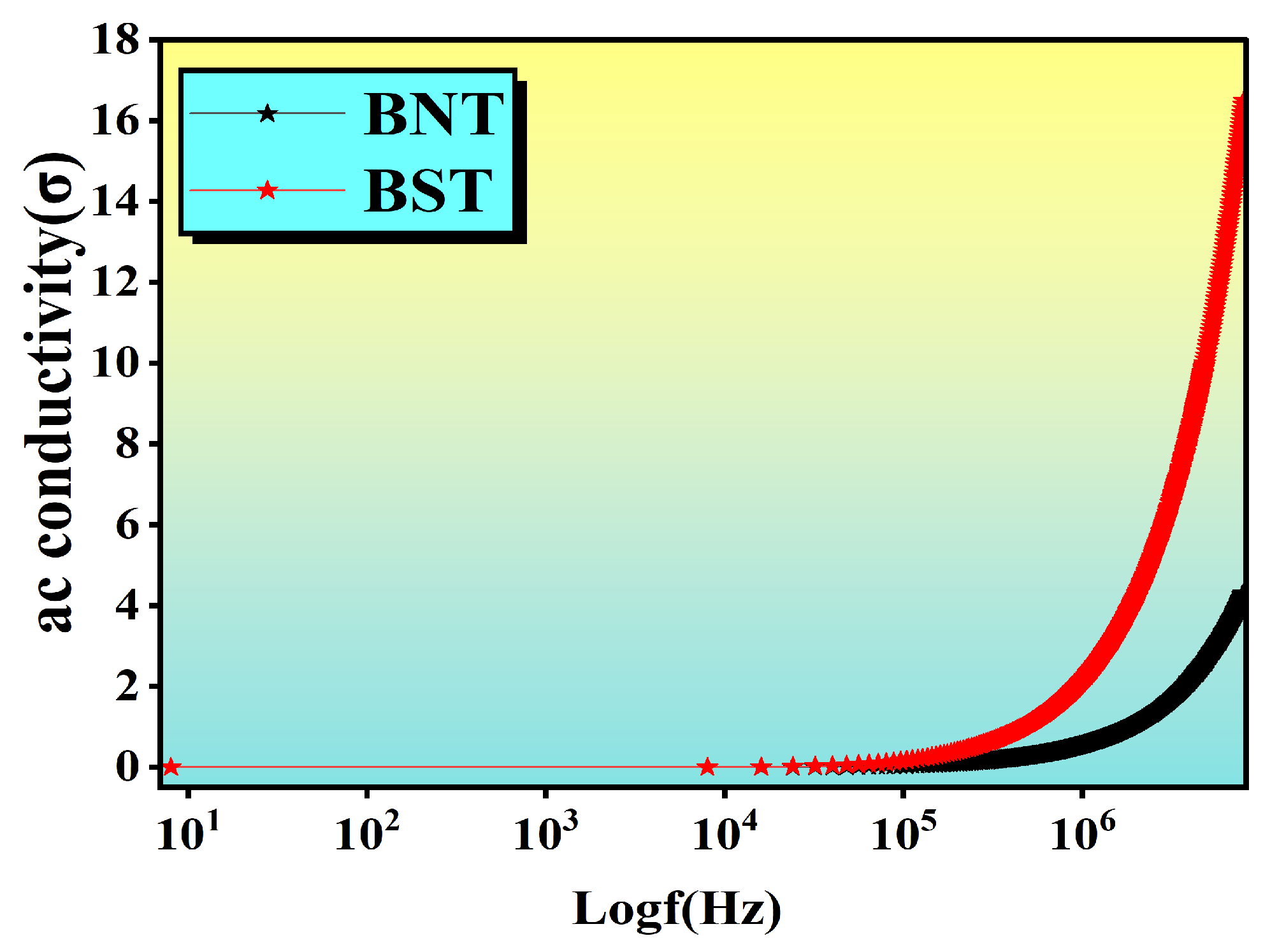
9]. Additionally, ac conductivity (σ) as a function of frequency is displayed in
Figure 7. There are two different regions on the AC conductivity curve. At low frequencies, a plateau is observed, representing DC conductivity, where the field has minimal influence on the jump conduction process, likely due to electrode or surface effects. At higher frequencies, conductivity gradually increases, indicating the onset of hopping conduction. This behavior is associated with charge carrier movement between localized states and reflects the contributions from grains and grain boundaries [
1].
4. Conclusions
BNT and BST ceramics were successfully prepared via the auto-combustion technique. The pseudo cubic phase was confirmed by the XRD patterns, while the average crystallite size of BNT and BST was found to be 18.60 nm and 22.03 nm. From the EDX analysis, it is proven that the prepared samples have no impurities present. From the optical properties studied via UV–Visible DRS, the energy bandgap was determined to be 2.6 eV for BNT and 2.00 eV for BST. The sample BST delivered a high dielectric permittivity of εr = 3946 that BNT (εr = 2420), while a minimal tangent loss factor δ = 2.94 and δ = 1.04 was obtained for both the samples. Also, room temperature ac conductivity was measured, displaying two different behaviors corresponding to their frequency. Given their high dielectric constant, low loss factor, and moderate bandgap, the synthesized BNT and BST ceramics show promising potential for applications in capacitors, dielectric resonators, and electro-optic devices, and in piezoelectric sensors and energy harvesting systems.