Proceeding Paper

Operating Water Distribution Systems for Equitable Access to Clean Water †
1
Department of Civil, Construction, and Environmental Engineering, North Carolina State University, Raleigh, NC 27606, USA
2
Faculty of Civil and Environmental Engineering, Technion—Israel Institute of Technology, Haifa 32000, Israel
*
Author to whom correspondence should be addressed.
Presented at the 3rd International Joint Conference on Water Distribution Systems Analysis & Computing and Control for the Water Industry (WDSA/CCWI 2024), Ferrara, Italy, 1–4 July 2024.
Eng. Proc. 2024, 69(1), 194; https://doi.org/10.3390/engproc2024069194

Published: 10 October 2024

Abstract

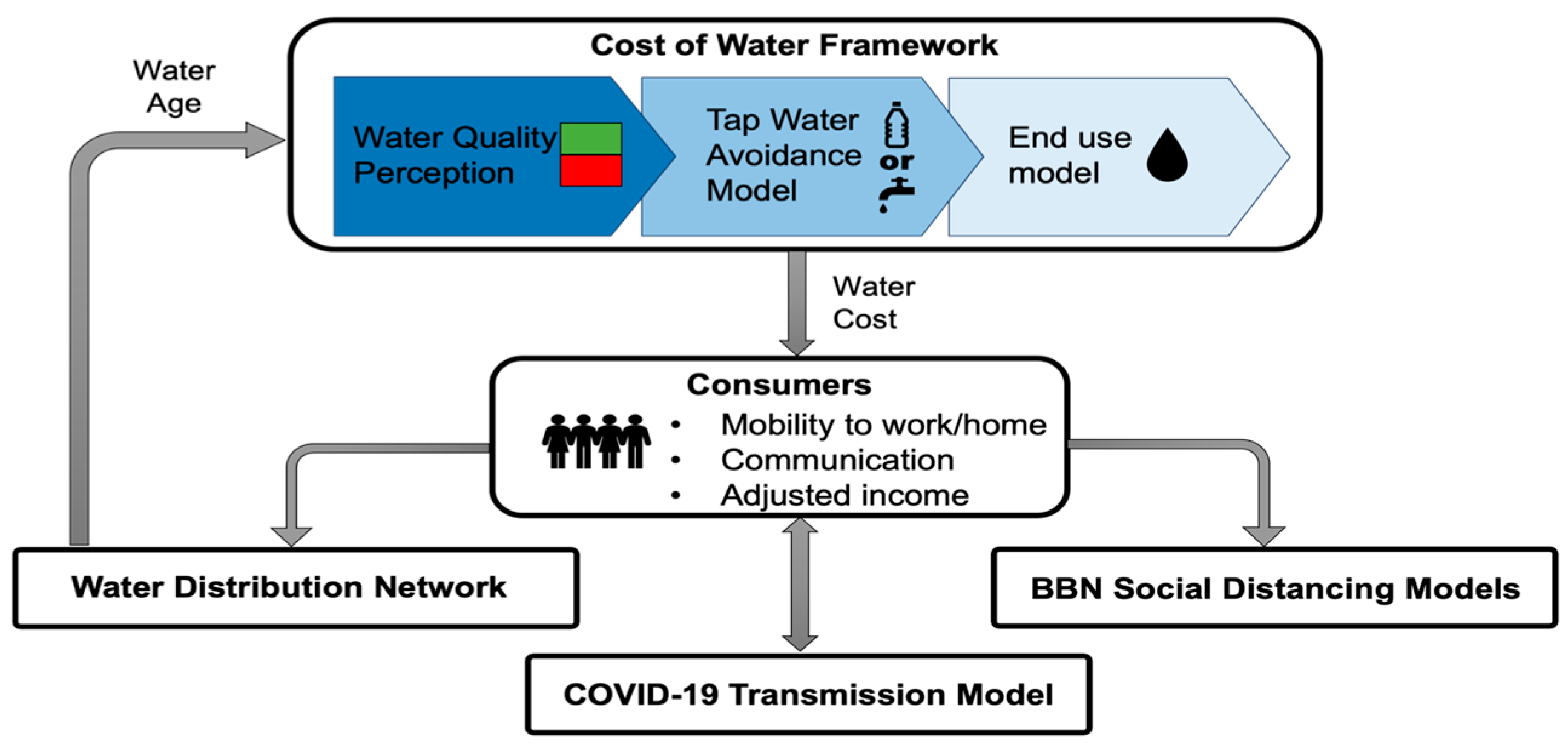
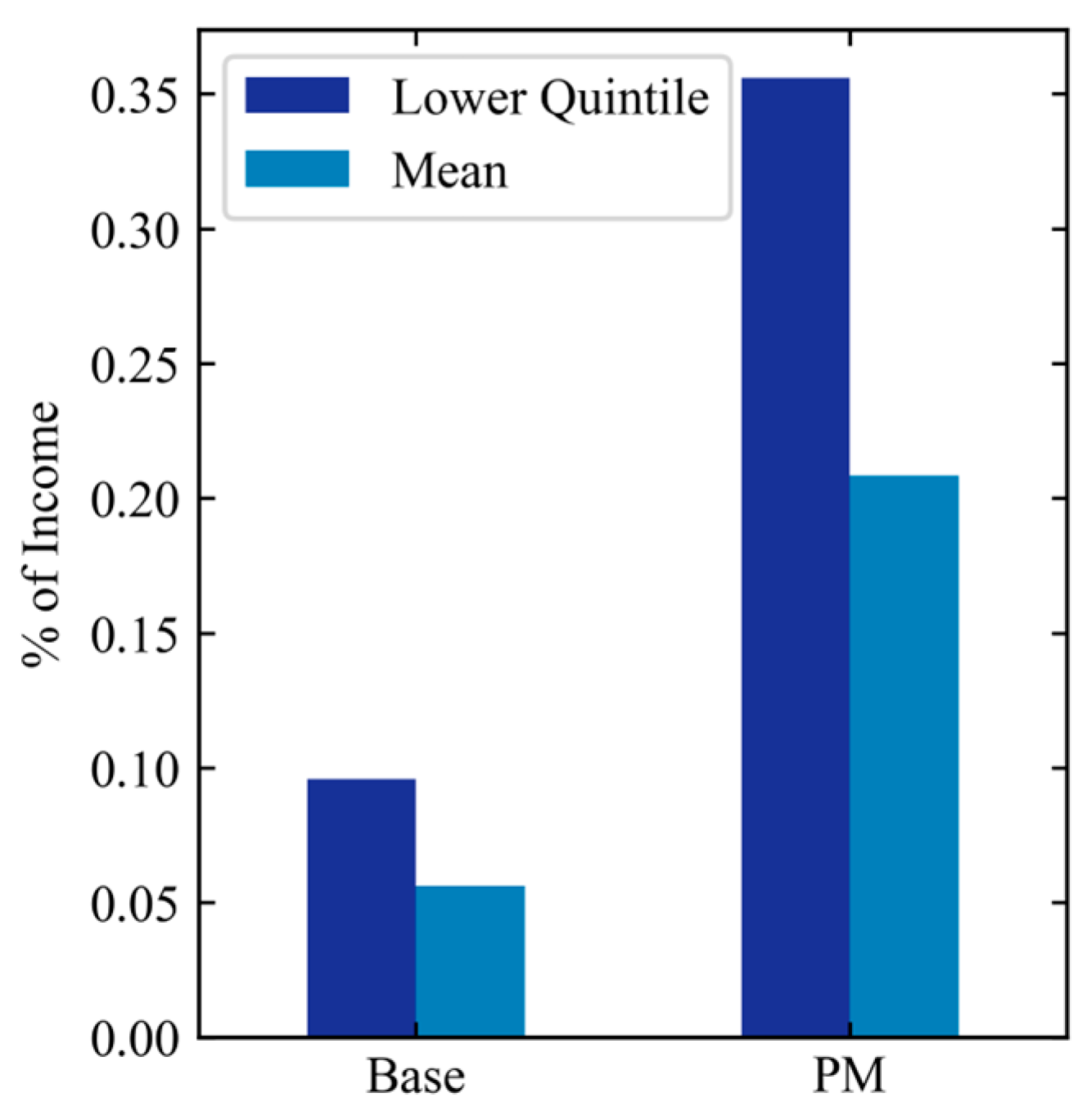
Water distribution systems (WDSs) are designed to deliver potable water across urban areas. Unpredicted changes in water demands and hydraulics can increase the residence time in pipes, leading to the growth of microbes and decreased water quality at some locations in a network. During the COVID-19 pandemic, large-scale reductions in demands, especially in industrial and commercial areas as individuals worked from home, led to hot-spots of increased water age. In response to reduced water quality, consumers may avoid using tap water for end uses including drinking, cooking, and cleaning. The lack of access to clean water can create high costs for some households due to the cost of buying bottled water. Inequitable access to safe, affordable water is explored in this research in the context of the COVID-19 pandemic through a coupled framework. This research extends an existing agent-based modeling (ABM) framework that simulated COVID-19 transmission, social distancing decision-making, reductions in water demands, and flows in a water distribution system. The ABM is extended in this work to simulate households that perceive water quality problems with tap water and choose to buy bottled water for cooking, cleaning, and hygienic purposes. Agents choose tap water avoidance behaviors based on water age, a surrogate for water quality. Equity is evaluated using the cost of water, both tap and bottled, as a percentage of income. An optimization approach is coupled with the ABM framework and applied to design operational strategies that improve equitable access to safe affordable water. A graph theory approach identifies valves that should be opened and closed to improve water quality at nodes and maximize equity. The results demonstrate an increase in water age due to social distancing behaviors, and water of high age is observed to be disproportionately located near industrial areas. Adjusted income demonstrates inequities in access to safe and affordable water. Operational strategies are developed to improve equity for a community through valve operations that improve the equitable delivery of safe water. This research develops an approach to assess equity of the quality of delivered water and can be used to facilitate WDS management that provides equitable access to safe water.
Keywords: agent-based modeling; equity; clean water; COVID-19; bottled water; water age agent-based modeling; equity; clean water; COVID-19; bottled water; water age