Proceeding Paper

On the Accuracy of a Numerical Procedure for Determining a Bound on the Throughput of a Switch Node †
1
Institute of Information and Communication Technologies, Bulgarian Academy of Sciences, Acad. Georgi Bonchev St., Bl. 2, 1113 Sofia, Bulgaria
2
Department of Physics, Technical University of Sofia, 8 Kliment Ohridski Blvd., 1000 Sofia, Bulgaria
*
Author to whom correspondence should be addressed.
Presented at the 15th International Scientific Conference TechSys 2026—Engineering, Technologies and Systems, Plovdiv, Bulgaria, 14–16 May 2026.
Eng. Proc. 2026, 150(1), 136; https://doi.org/10.3390/engproc2026150136
Published: 31 August 2026

Abstract

The Generalized Nets (GN) apparatus is applied here to describe the Longest_Port_First (LPF)-algorithm for computing a conflict-free schedule for a crossbar switch. The results for throughput (TH) on a switch node with the LPF-algorithm using computer simulations with patterns of uniform load traffic are presented. Using the numerical procedure it is shown that the upper bound of the TH of the LPF-algorithm tends to 100%, with the accuracy increasing three-fold as the buffer value increases approximately twice. The necessary computations were executed on the supercomputer AVITOHOL, which is located in IICT-BAS, Sofia, Bulgaria.

1. Introduction

Current information systems are digital—using the principle of exchanging discrete portions of information called packets [1]. The communication device for transmitting packets (packet switch) is their basis—it redirects data flows from the incoming to the outgoing lines. Its main purpose is the maximum transmission of data alongside the existing parallelism of the flows between the nodes of the communication network. Ideally, the switch forwards the packets to the nodes connected to its ports at the rate at which these packets are generated, without additional delays and without packet loss. This is provided by a conflict-free switching schedule algorithm, which is calculated in the control unit of the switch [2,3].
The increase in volumes and the increase in data transmission rates on beam lines [1] require more efficient algorithms for calculating a conflict-free schedule. These algorithms need to be verified. First, to check the effectiveness of a new algorithm, the throughput (TH) of a switch is modeled for incoming traffic of the uniform i.i.d. Bernoulli type. Second checks for unevenly and unbalanced incoming traffic distribution [4] are also done.
In this work, the Generalized Networks (GN) apparatus [5] is used to describe the LPF (Longest_Port_Firs)-algorithm [6] for computing a contention-free schedule for a packet switch with a crossbar switch. Computer simulations are performed using the supercomputer “AVITOHOL” (administered by IICT-BAS) on the TH of the switch under control of the LPF-algorithm for incoming traffic of uniform i.i.d. Bernoulli type. We aim to produce results that are adequately comparable with other algorithms.
The results of the simulations confirm the existence of a size-dependent input buffer throughput of the switch in the studied interval. Since, in the working range of the simulations at the maximum value of the buffer, TH values of 99.8–99.9% are obtained, questions about the magnitude of the error arise in terms of accuracy. The presented work is aimed at this question.

2. Materials and Methods

2.1. Switches and Control Algorithms

Now, and also in the near future, telecommunication flows will be in digital form. In the field of packet switching, communication nodes are called switches and routers (IP routing, Ethernet switching). Their packet distributing switch is a central unit. We use the classification of switch architectures according to [7]. At first, the switch used the time-division principle as a distribution approach. Current switches (third-generation) take advantage of spatial separation. Banyan circuits are mainly used in ATM switches, and crossbar circuits are used in Internet network equipment [7]. Our focus is on crossbar switch nodes.
In the “centralized” algorithm node, the conflict-free schedule is calculated by the CPU of the control unit (Scheduler). Initially, the algorithms used time multiplexing and output buffering [7].
From a mathematical point of view, the problem of calculating the conflict-free schedule for spatial partitioning is reduced to the “b-partite graph” problem. This is a known NP-hard problem [8]. Naturally, many algorithms have been proposed that satisfy to varying degrees the ideal commutation goals.
The first source of “good” distributed algorithms is the PIM-algorithm (Parallel Iterative Matching) of the DEC [9]. The development is through RR schemes (Round-Robin), and they get recognition with the iSLIP-algorithm [10]. They are based on the idea of input buffering with Virtual Output Queuing (VOQs), as shown in [11].
Ingress buffers do not require an increase in switching field speeds on input ports (unlike egress buffering). Using Virtual Output Queues avoids the FIFO input buffering bottleneck known as HOL (head-of-line blocking) [11]. Various modifications of iSLIP have been proposed and used over the years. Other research has focused on using Inbound and Outbound Buffering (CICQ)—using buffers in the switching field [12]. Of course, more and more research is moving towards all-optical switching [13].
The first author (Tashev T.D.) has proposed an algorithm for conflict-free scheduling, which he calls Minimum of Maxima. Its specification using the Generalized Networks (GNM) apparatus is given in [14]. For modeling the MiMa-algorithm TH, we use the capabilities of the “AVITOHOL” supercomputer. To answer the question—what makes MiMa different (in what way is it better) from others—adequately comparable results from their modeling are needed. Therefore, we conduct computer modeling of the PS of the LPF-algorithm. According to literature data, it is “double opnimal” and is of the social “weight” type like MiMa. The specification of the LPF-algorithm with OM is given in [15].

2.2. Incoming Traffic Modeling Problems

The efficiency of the switches is first evaluated by the realized throughput (TH). The next characteristic is the average waiting time (in the buffers—average cell delay) until the packet is submitted for switching. At the switch design stage, the PSs first evaluate the conflict-free scheduling algorithms they will use.
Input traffic in real conditions is very variable in nature. To evaluate the proposed algorithms, it is necessary to evaluate them under clearly defined characteristics of the incoming traffic. Therefore, the incoming packet traffic is necessarily divided into two types—uniform (i.i.d. Bernoulli load traffic) and bursty load traffic. They are further divided into balanced (uniform) and unbalanced (non-uniform). For non-uniform i.i.d. Bernoulli traffic, models such as asymmetric distributed, diagonally distributed, unbalanced distributed, hot-spot distributed, and Chang’s traffic have been proposed. For fast-growing (bursty) traffic, models based on Markov chains (on–off modulated Markov process), Pareto distributions, etc., have been proposed [11].
Unfortunately, some authors do not provide important details on the use of these models. For example, they do not provide confidence intervals and the level of error in simulations—depending on the probabilistic implementation of the model. The simulations are performed for a finite number of dimensions of the switching field (number of incoming/outgoing flows)—usually for the values 8 × 8, 16 × 16, 32 × 32, 64 × 64, and 128 × 128. With information on the number of packets in simulated input flows and simulators used, questions arise about the adequate comparison of different studies. The formulation of the problem is the generally accepted one [8]. The switch has n incoming and n outgoing communication channels. Transmission requests form a traffic matrix T of dimension n × n, such that Tij = p (i, j = 1, …, n, p =1, 2, …) if the number of requests from the i-th input to the j-the output is equal to p, and Tij = 0 if there are no requests. For conflict-free commutation, a sequence of conflict-free matrices Qm (dimension n × n, m belongs to 1, 2, …, l) is calculated, the sum of which gives T. Each Qm must have no more than one unit in each row or column (then it is conflict-free). The “length” of the sequence is an integer (positive) number l—the number of matrices in the calculated schedule (solution).
For a reference point for comparison with the performance results of other algorithms, traffic matrices T corresponding to the relevant incoming flow are needed, which are easily generated for any range of dimensions n × n of the switch (e.g., from 2 × 2 to 1024 × 1024). Generation does not depend on the type of hardware–software provision or the type of operating system used; the exact and optimal solution (number of options) for the conflict-free schedule is known.
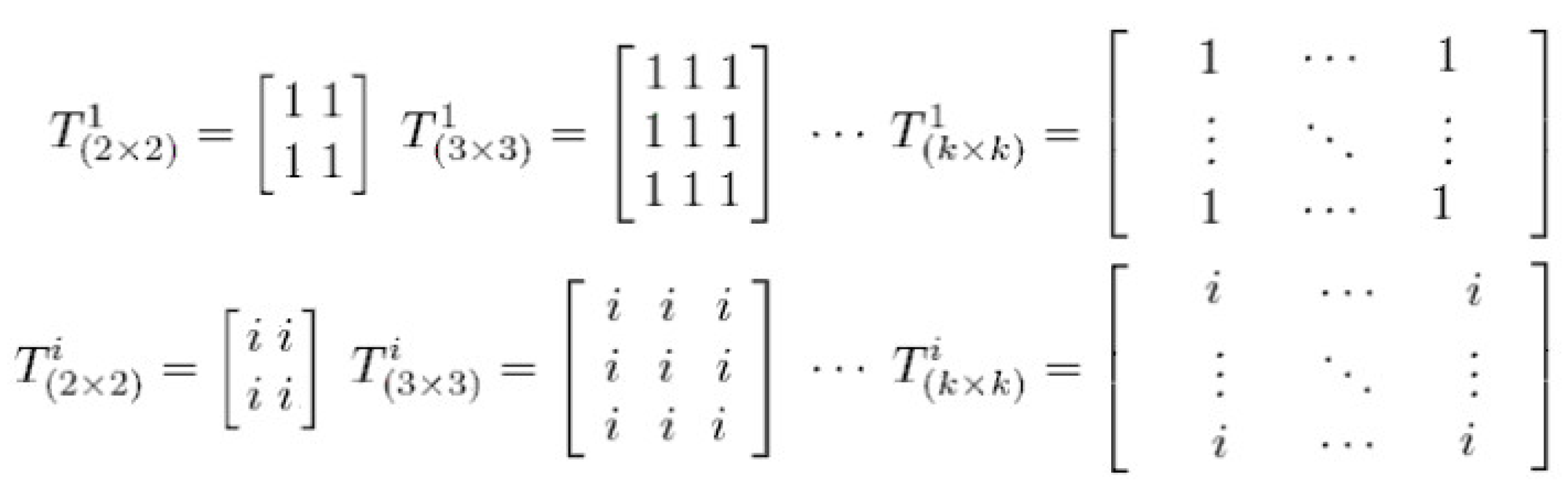
Then the described ambiguities are avoided and there will be an opportunity for a reliable comparison and adequate conclusions. In this work, since we are “fighting” for accuracy, we use this type of incoming traffic with which all comparisons begin—the i.i.d. Bernoulli uniform type. To model the size of incoming buffers, we specify a family of traffic matrix templates—one matrix for each buffer size in each virtual queue, starting at 1 (and 2, 3, …etc.), as far as the constraints of the computing power used. Their appearance is shown in Figure 1 [16].

3. Results

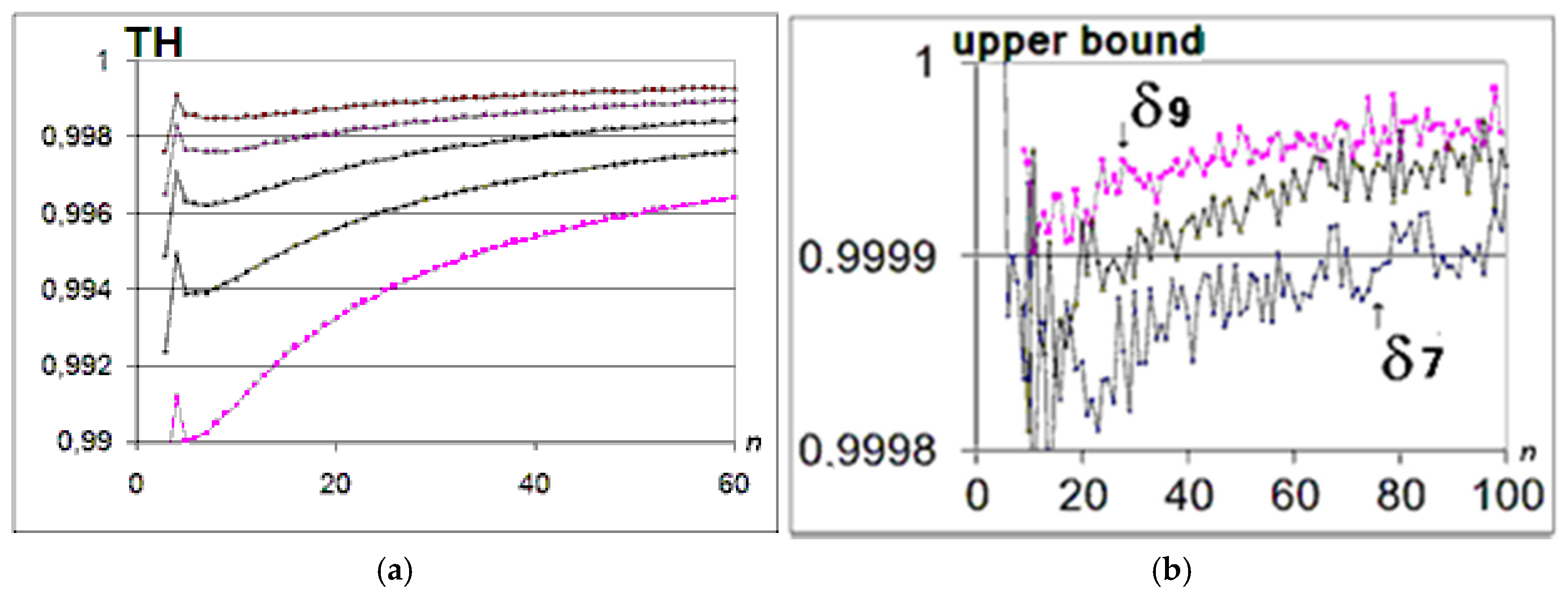
The obtained TH results for buffer templates with values 64, 128, 256, 512 and 1024 are shown in Figure 2. The simulations were performed on the AVITOHOL supercomputer (Manufacturer: Hewlett-Packard (HP), Palo Alto, CA, USA) of IICT-BAS under the conditions described in our previous publications [15], using VFort software [17] and the ran2 pseudo-random sequence generator [18]. The new data is for Template 512 and 1024.
A family of patterns simulated Bernoulli (i.i.d.) uniform traffic with ρ = 100%. Dimension n is in the range from 3 × 3 to 60 × 60, and 10 000 runs for pattern Uni-64, -128, -256, -512, and -1024 (i.e., m = 2) are executed. In Figure 2, the resulting throughput (average) is shown on the left, the upper bound of TH (for δ7, δ8, δ9) for numerical procedure [19] is shown on the right.
TH naturally increases as the input buffer value increases. Theoretically [10], its upper limit for LPF approaches 100%—with an “infinite” buffer and “infinite” dimension of the switching field. To determine the upper limit of TH (at infinite buffer) in the widened range of simulations of the switching field dimension, we have proposed a numerical procedure.
The numerical procedure used for determining an upper limit of TH is described in [19]. With its help, we will evaluate the accuracy of the simulations. We want δi to have values of (1.4142)−1 [13] (=m−1/2 = 2−1/2). The index i corresponds to the size of the input buffer. But as the index i increases, the delta parameter (δi) changes its appearance. The question is can the procedure for calculating the upper bound of TH be expected to give an adequate value for the data obtained?

4. Discussion

According to [19], the curves of TH in simulation are presented as
fq+p(n) = fq(n) + [δq−1(n) + δq−1(n). δq(n) + … + δq−1(n). δq(n)) … δq+p−2(n)].resq−1(n)
If the sum in brackets […] has a bound S, then there exists an upper bound V(n) = fq(n) + S.resq−1(n). If we assume, as in the case of the PIM-algorithm, that the delta parameter is a constant (by n), then we will obtain the next curves.
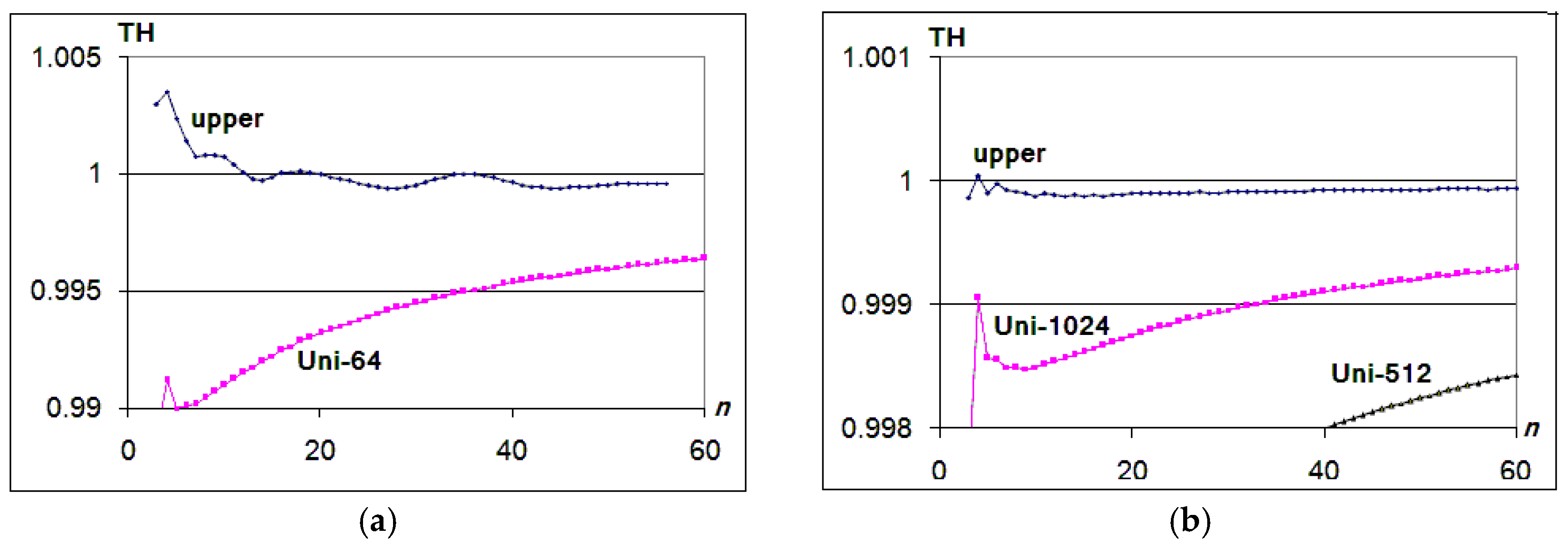
Figure 2 shows the upper bound calculated by assuming the appropriate δ7, δ8 and δ9 values for constants over n. The question that arises is as follows: does TH tend to be 100% regardless of n?
Consider the following situation: we “cut” the received data in half, that is, apply the procedure over the data for Uni-1, -4, -16, -64, -256, and Uni-1024 (no new simulation). Figure 3 shows the upper bound calculated by assuming the δ2 (Uni-4, -16, and -64) and δ4 (Uni-64, -256, and -1024) values for constants over n.
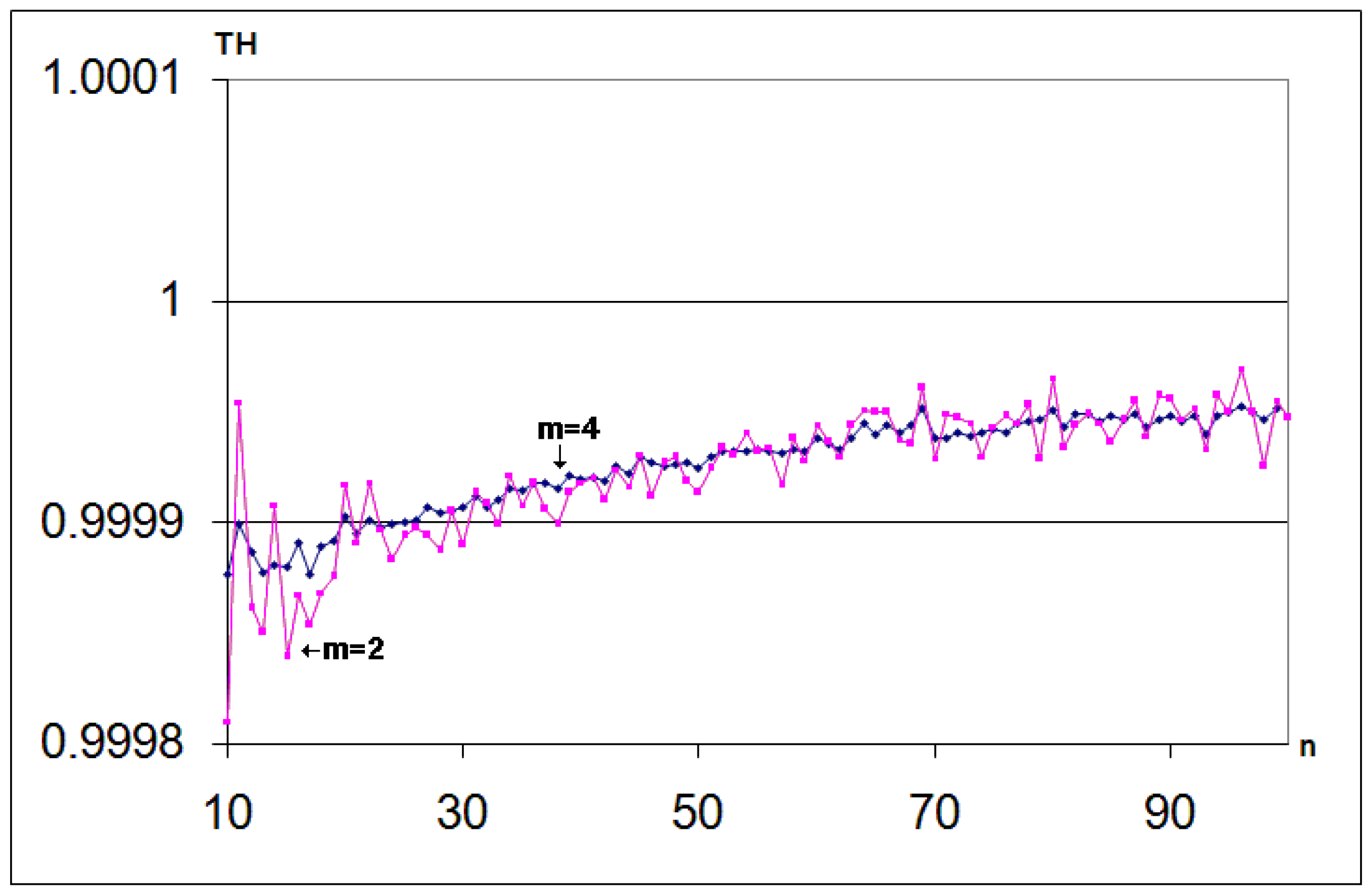
Qualitatively, the result is the same—TH tends to 100%. What can we determine about the magnitude of the error? Figure 4 shows the calculated upper bound for m = 2 δ8 (Uni-128, -256, and -512) of the simulations and for m = 4 δ4.
We can conclude that the accuracy increases by three times when the buffer pattern step is doubled.

5. Conclusions

The formal model of the LPF-algorithm for computing a conflict-free schedule for a crossbar switch is used to determine its throughput. The results for throughput for the GN-model of the LPF-algorithm using computer simulations with patterns of uniform load traffic are presented.
Using a numerical procedure, parameters are calculated that describe the tendency of the throughput to approach its bound when the LPF-algorithm is applied. The upper bound of the throughput tends to 100%, with the accuracy increasing three-fold as the buffer value increases approximately twice. That is, the numerical procedure is robust.

Author Contributions

Conceptualization, T.T.; methodology, T.T.; software, T.T.; validation, T.T. and R.T.; formal analysis, T.T. and R.T.; investigation, T.T. and R.T.; resources, T.T.; data curation, T.T.; writing—original draft preparation, T.T.; writing—review and editing, T.T. and R.T.; visualization, R.T.; supervision, R.T.; project administration, T.T.; funding acquisition, R.T. All authors have read and agreed to the published version of the manuscript.

Funding

The research that led to these results was carried out using the infrastructure purchased under the National Roadmap for RI, financially coordinated by the MES of the Republic of Bulgaria (grant No D01-325/01.12.2023).

Institutional Review Board Statement

Not applicable.

Informed Consent Statement

Not applicable.

Data Availability Statement

The original contributions presented in this study are included in the article. Further inquiries can be directed to the corresponding authors.

Acknowledgments

The authors would like to thank the Research and Development Sector at the Technical University of Sofia for the financial support.

Conflicts of Interest

The authors declare no conflict of interest.

References

  1. Atanasova, T. Methods for Processing of Heterogeneous Data in IoT Based Systems; Springer: Berlin/Heidelberg, Germany, 2019. [Google Scholar]
  2. Csaszar, A.; Enyedi, G.; Retvari, G.; Hidell, M.; Sjodin, P. Converging the Evolution of Router Architecture and IP Networks. IEEE Netw. 2007, 4, 8–14. [Google Scholar] [CrossRef] [Scilit]
  3. Ermakov, A.S. Model of Balancing Switching Processes. In Proceedings of the International Workshop “DCCN-2007”, Sofia, Bulgaria, 2007; Technosfera: Moscow, Russia, 2007; pp. 171–176. [Google Scholar]
  4. Chang, H.J.; Qu, G.; Zheng, S.Q. Performance of CTC(N) Switch Under Various Traffic Models; Lecture Notes in Electrical Engineering; Springer: Berlin/Heidelberg, Germany, 2012; Volume 126, pp. 785–793. [Google Scholar]
  5. Atanassov, K. Generalized Nets and System Theory; Prof. Marin Drinov Academic Publishing House: Sofia, Bulgaria, 1997. [Google Scholar]
  6. Mekkittikul, A.; McKeown, N. A practical algorithm to achieve 100% throughput in input-queued switches. In Proceedings of the IEEE INFOCOM, San Francisco, CA, USA, 29 March–2 April 1998; pp. 792–799. [Google Scholar]
  7. Mirtchev, S. Switching in Communication Networks; Novi Znania: Sofia, Bulgaria, 2010. [Google Scholar]
  8. Chen, T.; Mavor, J.; Denyer, P.; Renshaw, D. Traffic routing algorithm for serial superchip system customisation. IEE Proc. E (Comput. Digit. Tech.) 1990, 137, 65–73. [Google Scholar] [CrossRef] [Scilit]
  9. Anderson, T.; Owicki, S.; Saxe, J.; Thacker, C. High speed switch scheduling for local area networks. ACM Trans. Comput. Syst. 1993, 11, 319–352. [Google Scholar] [CrossRef] [Scilit]
  10. Gupta, P.; McKeown, N. Designing and Implementing a Fast Crossbar Sheduler. IEEE Micro 1999, 19, 20–28. [Google Scholar] [CrossRef] [Scilit]
  11. Chao, H.J.; Lui, B. High Prformance Sitches and Routers; John Wiley & Sons: Hoboken, NJ, USA, 2007. [Google Scholar]
  12. Rojas-Cessa, R.; Oki, E.; Chao, H.J. On the combined input-crosspoint buffered switch with round-robin arbitration. IEEE Trans. Commun. 2005, 53, 1945–1951. [Google Scholar] [CrossRef]
  13. Rojas-Cessa, R. Interconnections for Computer Communications and Packet Networks; CRC Press: Boca Raton, FL, USA, 2017. [Google Scholar]
  14. Tashev, T.; Marinov, M.; Monnov, V.; Tasheva, R. Modeling of the Mima-Algorithm for Crossbar Switch by Means of Generalized Nets. In Proceedings of the 2016 IEEE 8th International Conference on Intelligent Systems (IS), Sofia, Bulgaria, 4–6 September 2016; pp. 593–598. [Google Scholar]
  15. Tashev, T.; Marinov, M.; Tasheva, R.; Alexandrov, A. Generalized nets model of the LPF-algorithm of the crossbar switch node for determining LPF-execution time complexity. AIP Conf. Proc. 2021, 2333, 90039. [Google Scholar] [CrossRef] [Scilit]
  16. Tashev, T.; Tasheva, R.; Petrov, P. Determination of the computer modeling precision for throughput of switch node with LPF-algorithm. In Proceedings of the 20th International Conference on Computer Systems and Technologies; ACM: New York, NY, USA, 2019; pp. 141–145. [Google Scholar]
  17. Vabishchevich, P. VFort. Available online: http://www.nomoz.org/site/629615/vfort.html (accessed on 20 April 2022).
  18. Press, W.H.; Flannery, B.P.; Teukolsky, S.A.; Vetterling, W.T. Numerical Recipes in Fortran 90. In The Art of Parallel Scientific Computing, Volume 2 of Fortran Numerical Recipes, 2nd ed.; Cambridge University Press: Cambridge, UK, 1996. [Google Scholar]
  19. Tashev, T.; Monov, V. A Numerical Study of the Upper Bound of the Throughput of a Crossbar Switch Utilizing MiMa-Algorithm. In Numerical Methods and Applications; Dimov, I., Fidanova, S., Lirkov, I., Eds.; Lecture Notes in Computer Science; Springer International Publishing: Berlin, Germany, 2015; Volume 8962, pp. 295–303. [Google Scholar]
Figure 1. A family of patterns for i.i.d. Bernoulli uniform traffic.
Engproc 150 00136 g001
Figure 2. Throughput (a) and upper bound of TH (b) for uniform traffic Uni-64, 128, …, 1024.
Engproc 150 00136 g002
Figure 3. Upper bound of TH for m = 4 δ2 (a) and δ4 (b).
Engproc 150 00136 g003
Figure 4. Comparison of the upper bound of TH for m = 4 δ4 and m = 2 δ8.
Engproc 150 00136 g004
Disclaimer/Publisher’s Note: The statements, opinions and data contained in all publications are solely those of the individual author(s) and contributor(s) and not of MDPI and/or the editor(s). MDPI and/or the editor(s) disclaim responsibility for any injury to people or property resulting from any ideas, methods, instructions or products referred to in the content.