1. Introduction
Medical hardware and informatics are in a state of constant flux, serving as the backbone for modern patient assessment, diagnosis and long-term monitoring. These systems are designed to elevate healthcare facility performance by providing instant access to data, optimizing clinical pathways and ensuring that services remain safe, efficient and most importantly focused on patients’ needs [
1]. The rapid pace of technological growth has brought about stricter demands for clinical data management, system interoperability and cybersecurity. In this environment, leveraging dedicated digital platforms is no longer optional; it is vital for backing up clinical decisions and minimizing human error, particularly in high-pressure contexts like emergency departments [
2].
Medical bioengineering is at the heart of this transformation. As an interdisciplinary bridge between medicine, engineering and computer science, it fosters the creation of cutting-edge technological solutions [
3]. Experts in this field are responsible for the design and refinement of the tools used in daily practice, ranging from sophisticated biomedical hardware to patient management software. In today’s healthcare landscape, triage acts as the decisive first step in patient evaluation, ensuring cases are prioritized properly [
4]. By embedding IT solutions into this stage, facilities can standardize their assessments, sharpen the accuracy of clinical decisions and significantly improve the flow of patients through the system.
Based on these considerations, the present paper proposes the development of an integrated triage and patient management platform, designed to facilitate the collection, organization, and analysis of clinical data from the moment of presentation, as well as to support the subsequent tracking of the patient’s progress within a unified digital system [
5]. The platform aims to centralize identification data, vital signs, symptomatology, investigations, and the clinical context into a coherent structure that is easy to access and update, thereby reducing medical information fragmentation and supporting the continuity of care [
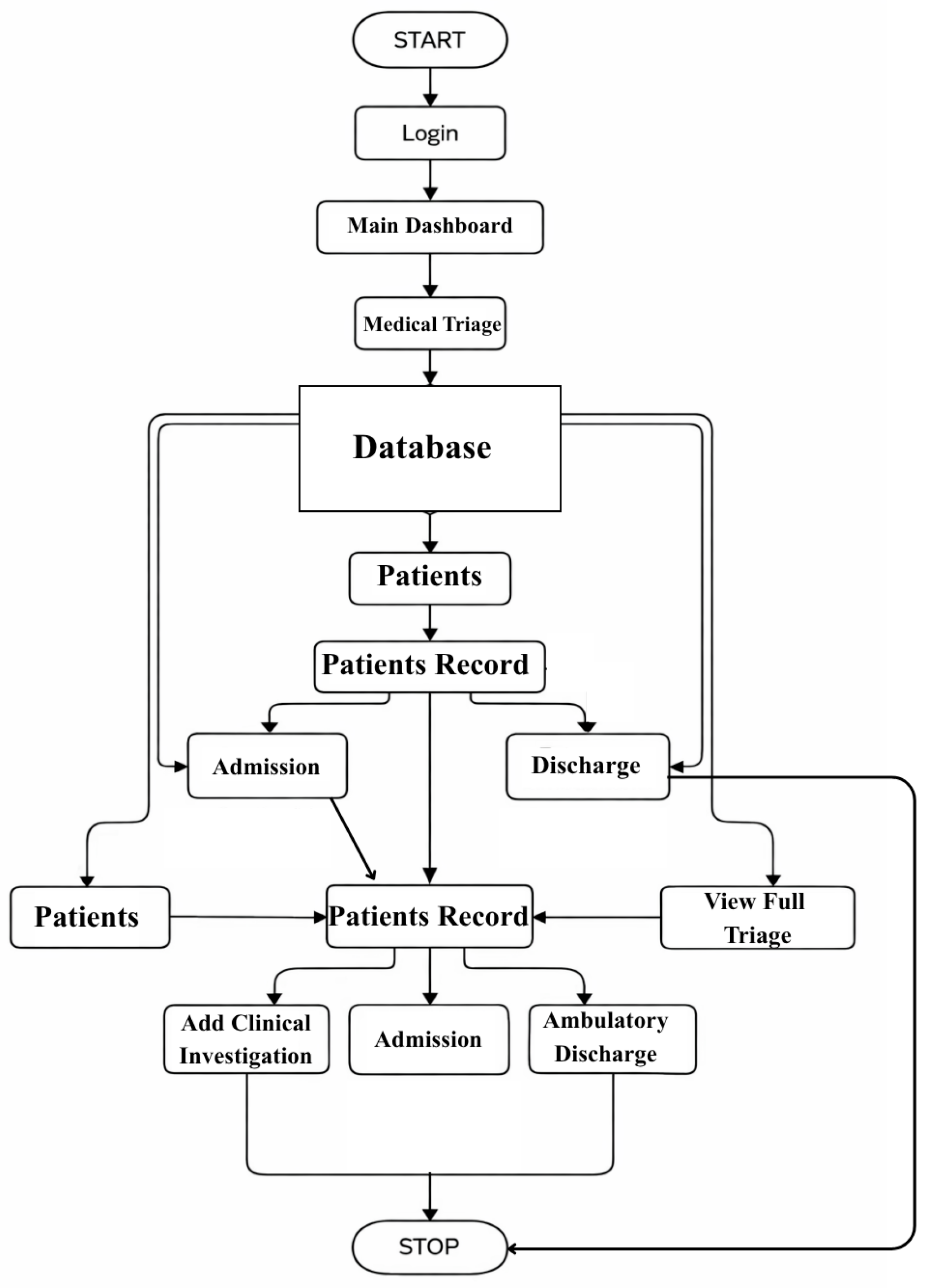
6]. By integrating a decision-support mechanism, the system contributes to standardizing the initial assessment and rapidly directing the patient toward the appropriate course of action, without substituting the physician’s role, but rather providing a modern informatics tool capable of optimizing the triage and clinical management process [
2] (
Figure 1).
2. Materials and Methods
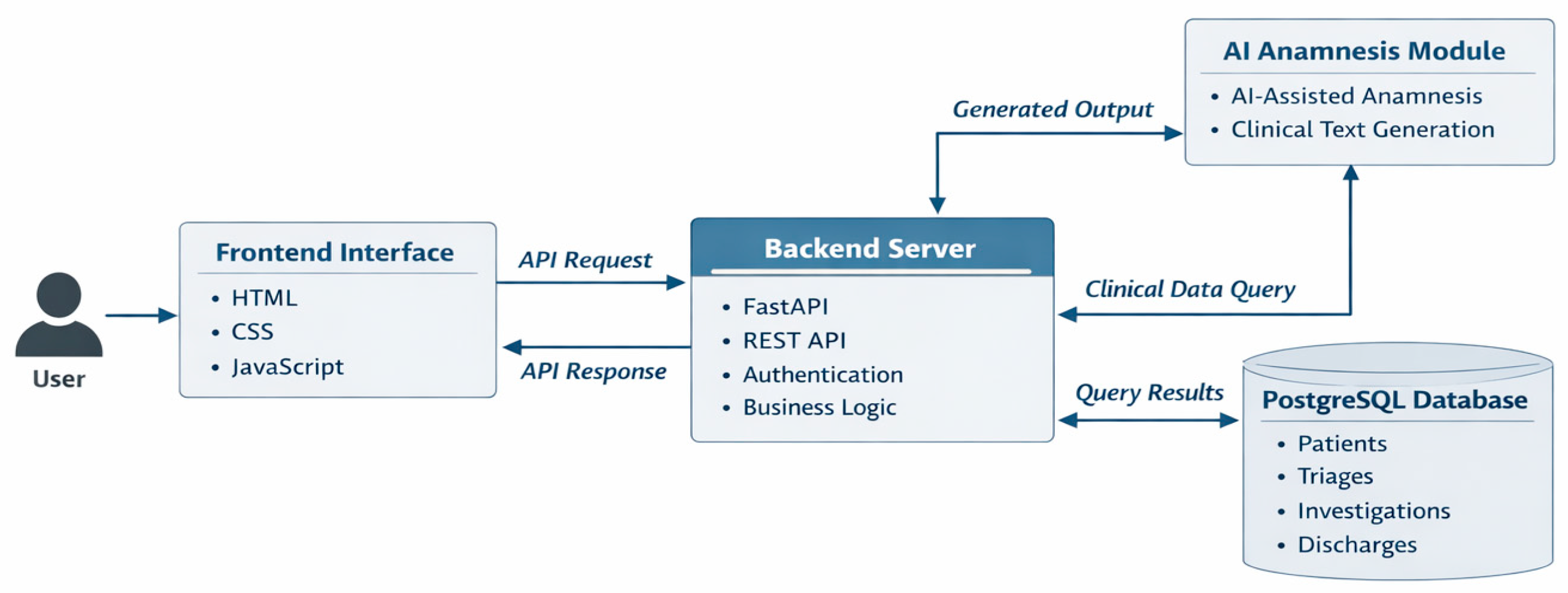
The implementation of the system emphasized modularity and software component interoperability, utilizing the FastAPI framework (version 0.111.0, Tiangolo, Berlin, Germany) for backend development (
Figure 2). The choice of this technology was driven by its high performance, flexibility in defining web services, and capacity to efficiently manage API requests [
7]. This aspect is particularly important in a medical context, where rapid access to clinical data and its transmission between application modules contribute to a more fluid evaluation process. The backend component is responsible for managing application logic, data validation, user authentication, and communication with the PostgreSQL relational database(version 16.11, PostgreSQL Global Development Group, Berkeley, CA, USA), where information regarding patients, triage, investigations, and associated documents is stored [
8].
During the design process, several software-level compliance challenges were considered, particularly those related to patient traceability, controlled access to sensitive information, avoidance of duplicate records and of stored data. For this reason, the implementation of authentication mechanisms, unique internal patient identifiers and structured database relations represented not only technical decisions, but also design requirements derived from the specific constraints of medical information systems. An additional consideration was preserving a clear distinction between AI-assisted support and the physician’s final clinical responsibility.
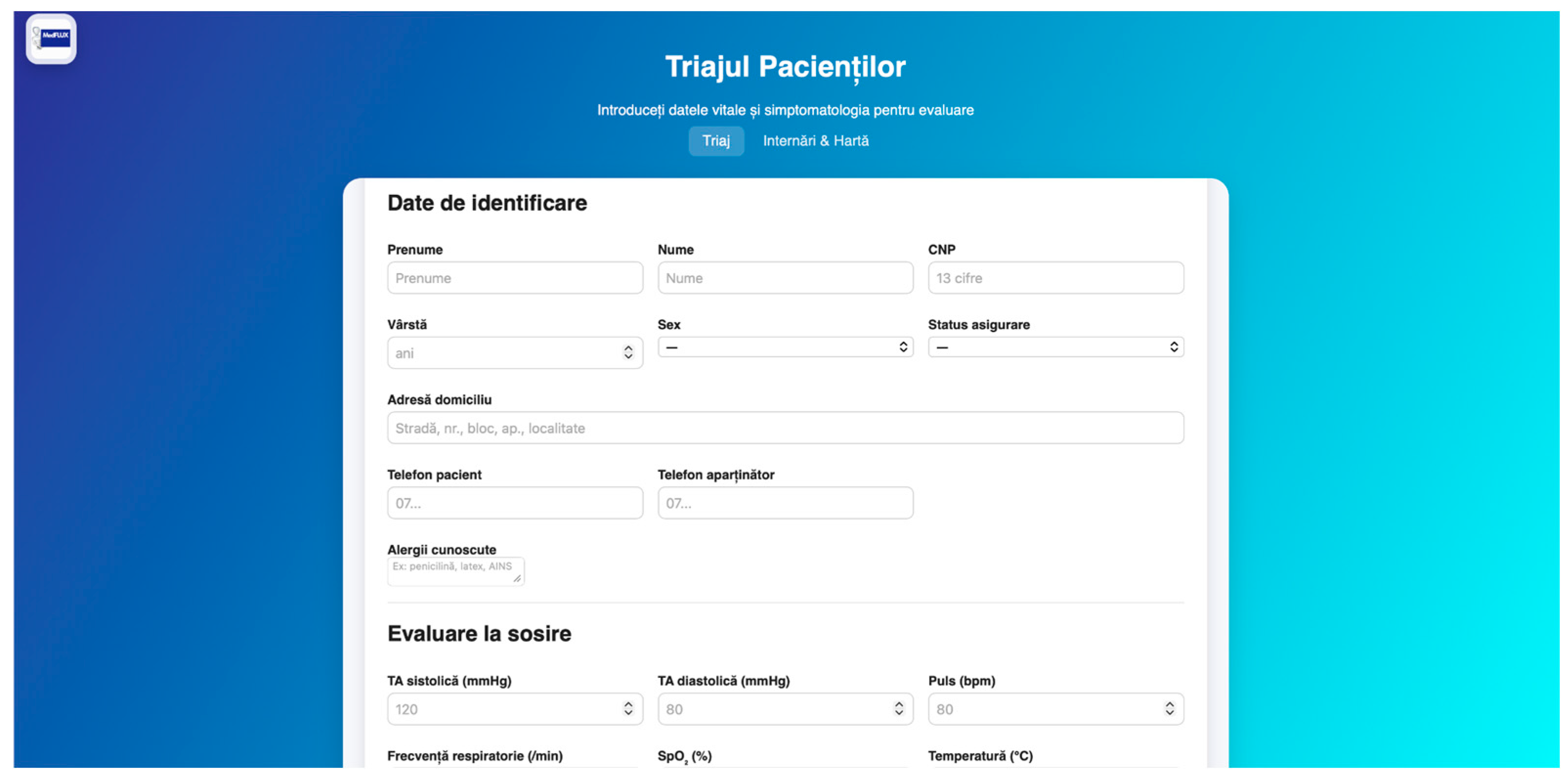
The user interface (
Figure 3) was developed using HTML, CSS, and JavaScript (ECMAScript 2023, Ecma International, Geneva, Switzerland), with the aim of creating an intuitive and user-friendly environment for medical staff. The triage page allows for the input of identification data, vital signs, symptoms, and clinical observations, as well as the generation of an AI-assisted anamnesis powered by the GPT-4o API (OpenAI, San Francisco, CA, USA). The entered data is processed and transformed into a structured clinical object, which is subsequently saved both locally and in the database.
The UX/UI design was guided by practical criteria relevant to emergency care software, including clarity of layout, logical sequencing of actions, readability of critical data and consistency between modules. The triage interface was structured to support stepwise data entry and rapid visibility of essential information, while continuity between pages was designed to reduce repeated inputs and preserve workflow coherence across triage, investigations and discharge-related tasks.
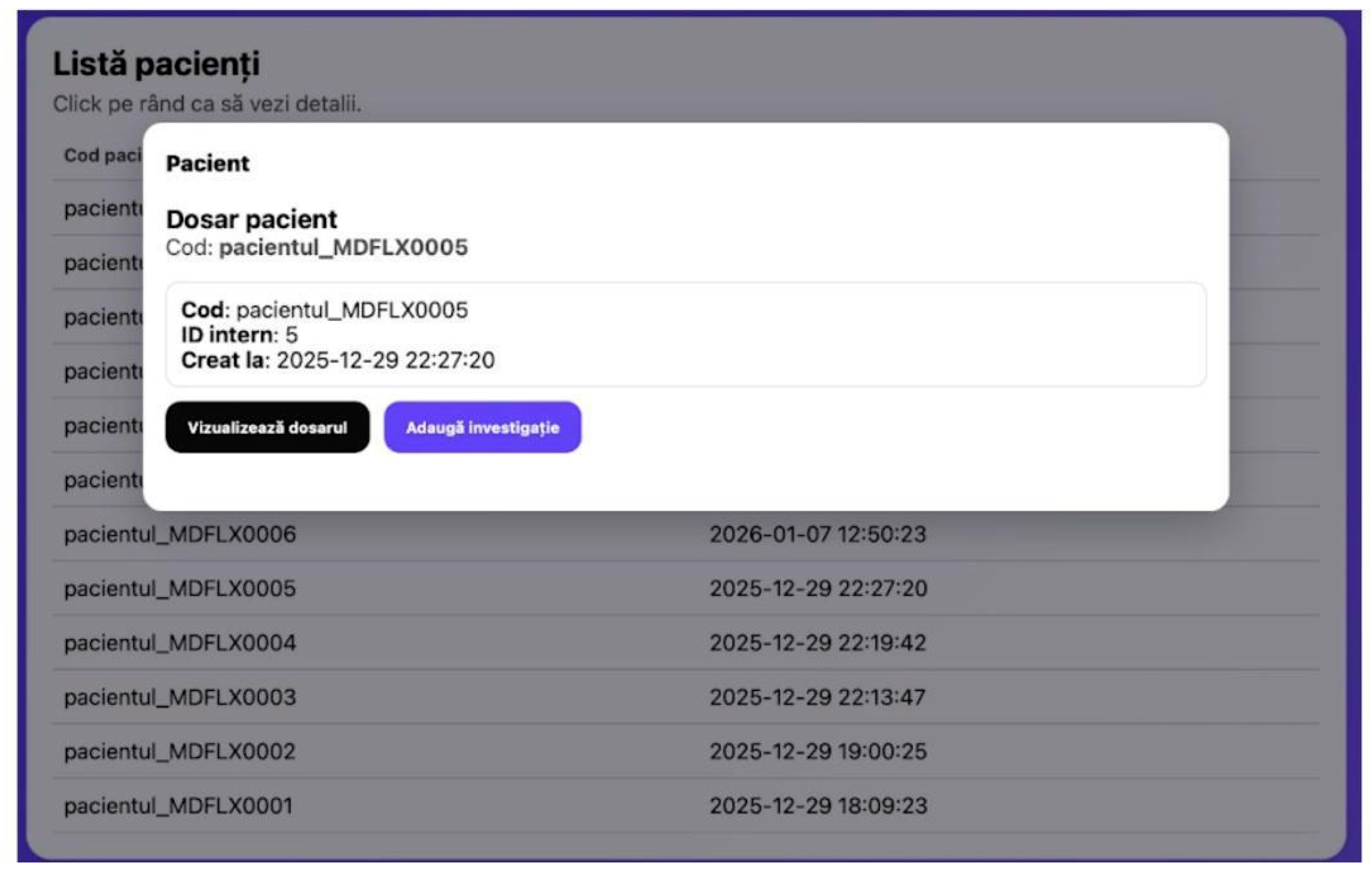
A unique patient identification system was implemented within the platform by assigning an internal code in the format “MDFLX000X” (
Figure 4), used for accessing medical records and correlating all associated entries [
9]. This method prevents patient duplication and supports the development of a longitudinal medical history. The database structure includes dedicated tables for patients, triage, investigations, and discharges, with each record linked to the patient through unique identifiers.
The processing of physiological parameters assessed during the initial evaluation such as blood pressure, heart rate, respiratory rate, peripheral oxygen saturation, and temperature is performed through an analytical mechanism that identifies values falling outside physiological limits. These alarm indicators are interpreted alongside the symptoms entered the system and relevant clinical elements to establish the patient’s priority level. Such an approach contributes to reducing subjective variability in the triage process and provides medical personnel with a standardized framework for initial assessment and clinical guidance.
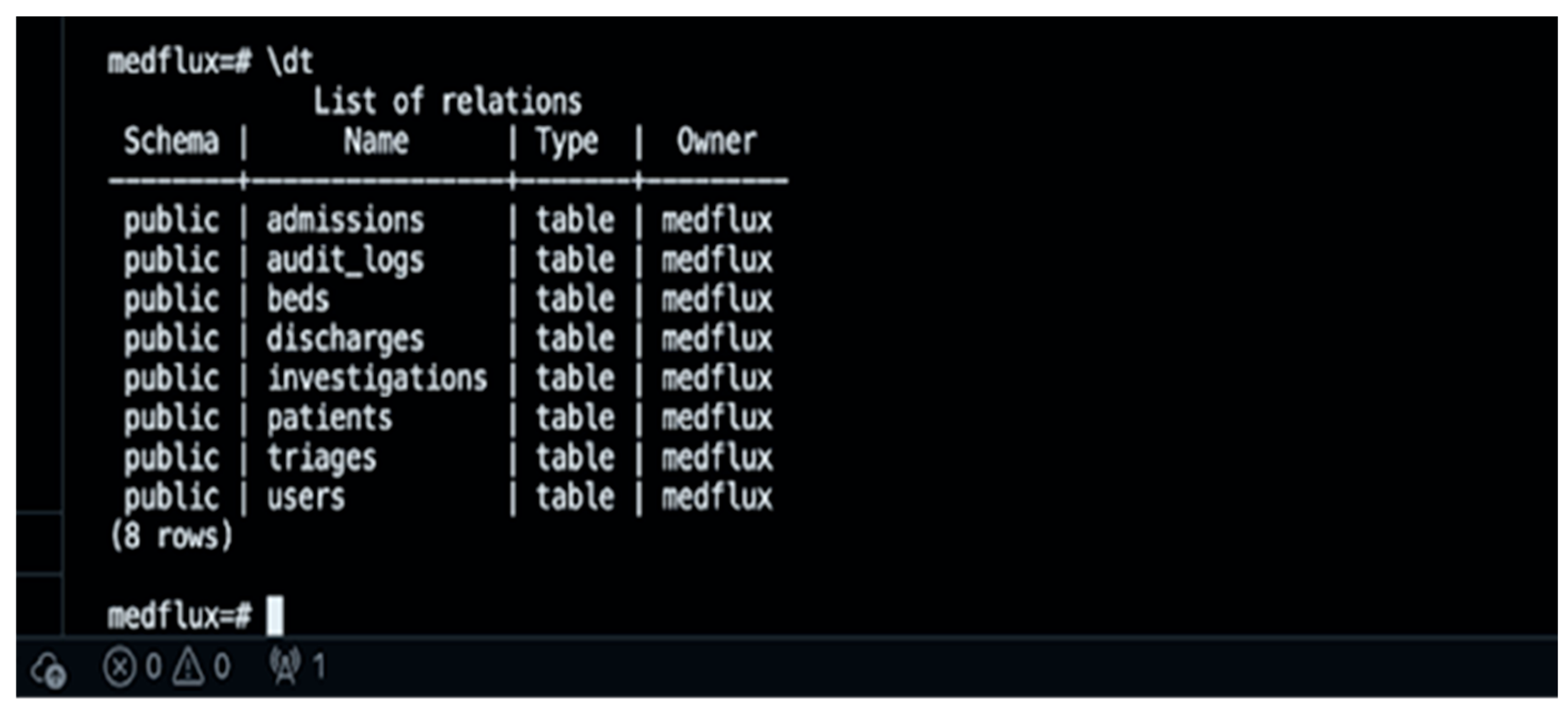
The storage of triage-generated data utilizes a hybrid structure, combining a classic relational model for patient identification with a JSON format for dynamic clinical data. Thus, essential triage elements such as severity level, chief complaint, and other relevant fields are saved in a structured manner (
Figure 5), while the complete clinical content is stored in the triage JSON field. This solution offers a high degree of flexibility, allowing for future platform expansion with new protocols or clinical variables without requiring major database schema changes. At the same time, this approach supports the development of a longitudinal medical record, through which the patient’s history can be tracked and analyzed in a unified way.
Medical information security and data management consistency were key priorities in the platform’s development. Access to application features is controlled through authentication mechanisms, and each patient is assigned a unique internal code, enabling clear record identification and reducing the risk of data duplication. Through this organization, the platform provides a solid foundation for future expansion into additional modules such as protocol-based assisted diagnosis, standardized therapeutic recommendations, and drug interaction checks,, thus evolving the system from a data collection tool into a medical decision-support platform.
3. Results and Discussions
To evaluate the platform’s performance, 10 clinical cases were analyzed, constructed based on real-world medical practice scenarios, including major emergencies as well as cases of moderate or low severity. For each case, relevant data was entered into the platform: medical history, vital signs, and paraclinical investigations (laboratory tests and imaging). The system-generated results were subsequently compared with the final clinical diagnosis. The platform correctly identified the primary diagnosis or emergency level in 9 out of 10 cases, achieving an accuracy of 90%. Regarding major emergencies, the system demonstrated a 100% detection rate, with no critical misclassifications.
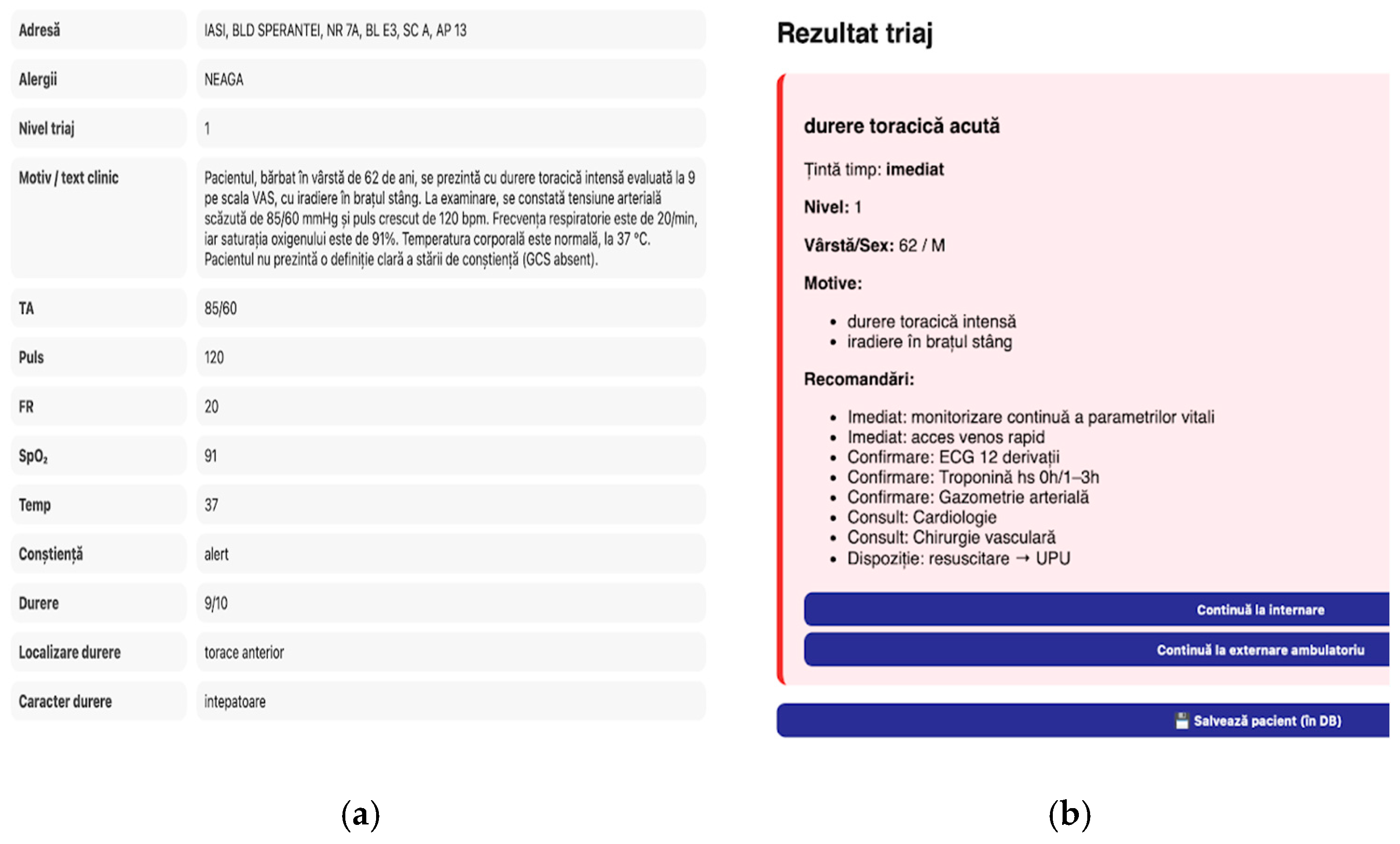
To exemplify the platform’s operation, the case of a 62-year-old male patient was analyzed; his identification data were automatically generated for demonstrative purposes and to ensure confidentiality. The patient presented with intense, constrictive chest pain radiating to the left upper limb, with an assessment upon arrival showing blood pressure: 85/60 mmHg, heart rate: 120 bpm, respiratory rate: 20 breaths/minute, and oxygen saturation (SpO
2): 91%. (
Figure 6a) The patient’s classification into the Red category (Level 1) reflects the severity of the clinical picture and the immediate life-threatening risk, requiring intervention without delay. The response time suggested by the platform (
Figure 6b) is appropriate for the clinical context, demonstrating the system’s ability to correctly prioritize critical cases and rapidly guide medical management.
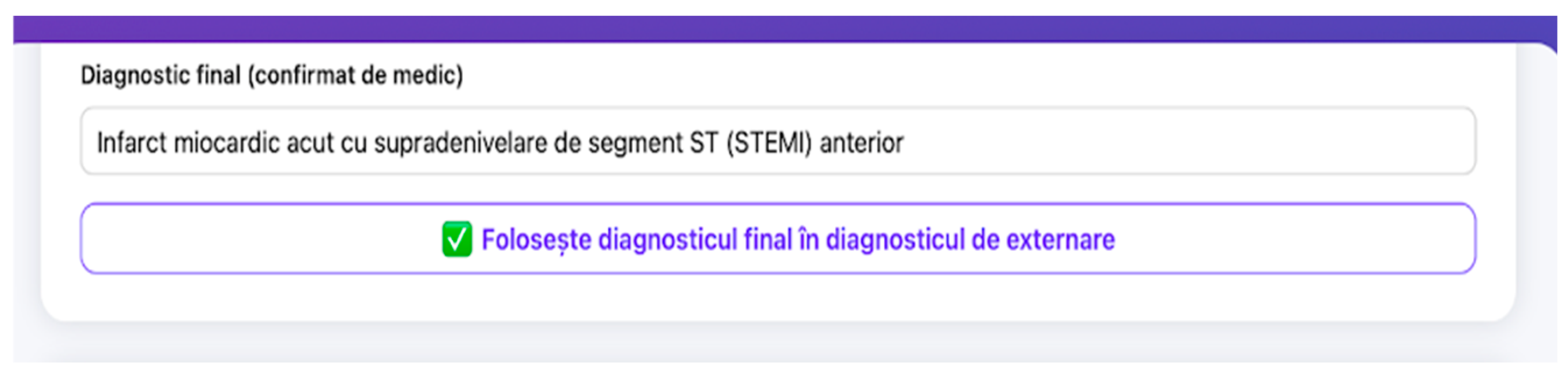
The diagnosis (
Figure 7) was obtained through a process of progressive data integration, in which the platform correlated initial clinical information with subsequently entered paraclinical results, highlighting a pattern suggestive of acute myocardial ischemia. In the first stage, the system analyzed the presenting symptoms specifically intense, constrictive chest pain and radiation to the left upper limb alongside altered vital signs, allowing the case to be classified as a major emergency. Subsequently, by integrating electrocardiographic results showing ST-segment elevation and laboratory tests revealing significant increases in cardiac biomarkers [
10], the platform consolidated the initial hypothesis and generated a diagnosis consistent with acute myocardial infarction. The concordance between the clinical picture, ECG changes, and laboratory values led to the formulation of a highly accurate result, demonstrating the system’s ability to provide a coherent, structured, and clinically relevant interpretation.
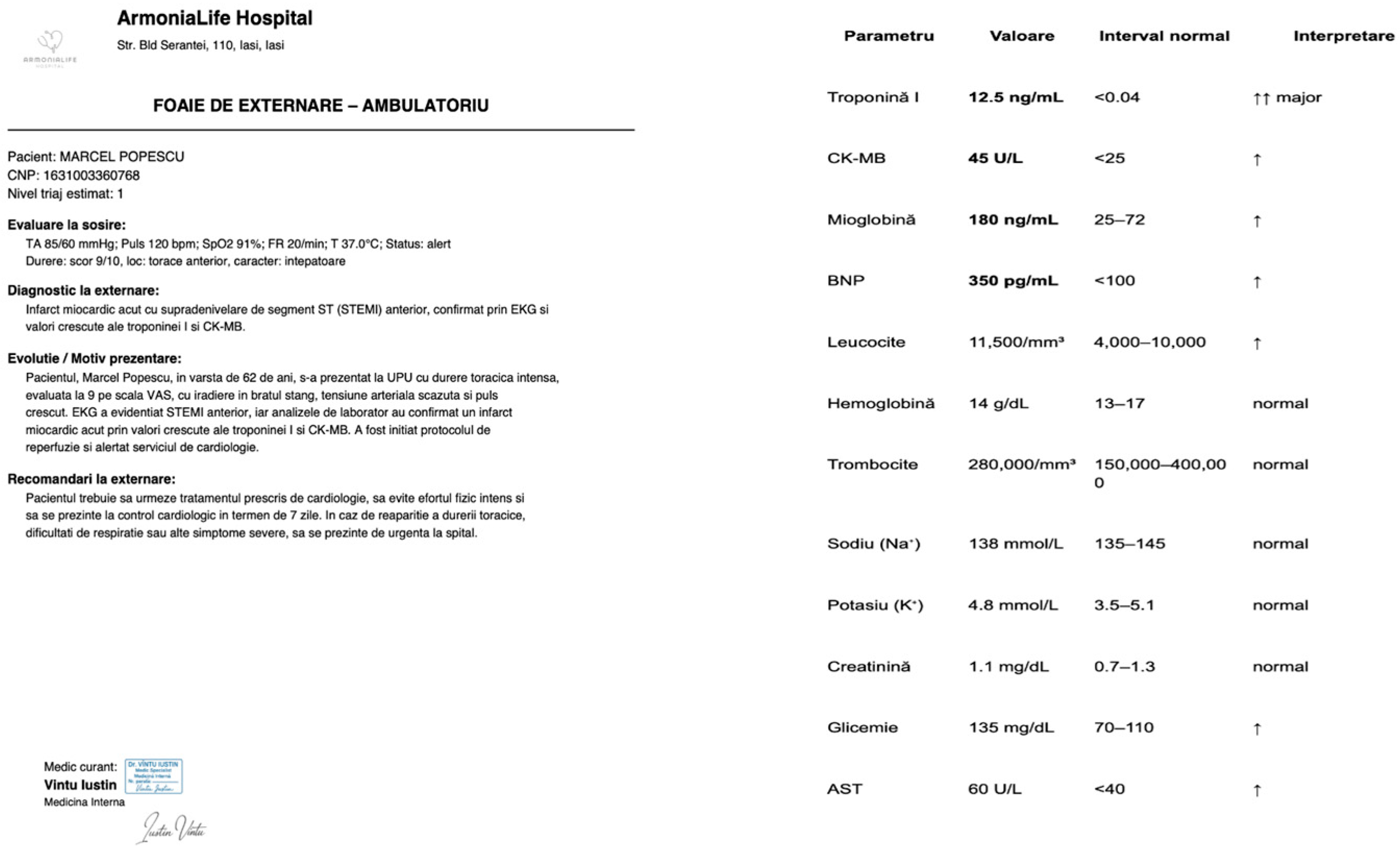
Once the medical intervention concludes, the platform facilitates the generation of a comprehensive discharge PDF, which is instantly linked to the patient’s permanent electronic record (
Figure 8). The core benefit of this functionality lies in its ability to consolidate every clinical observation and test conducted during the emergency, including the previously discussed ECG findings and cardiac biomarker data into one cohesive document. This approach safeguards the continuity of care by providing a structured, all-inclusive summary for future outpatient visits, effectively minimizing data fragmentation and the danger of losing vital information.
Beyond the clinical case analysis, the platform also showed functional coherence at application level, supporting authentication, patient identification, structured data persistence, investigation integration, discharge document generation and communication-related features within a unified workflow. A distinctive aspect of the proposed concept lies not only in the AI-assisted triage component, but in the integration of triage, longitudinal patient record continuity, investigations and discharge support into a single digital environment designed under medical data management and usability constraints.
4. Conclusions
Testing results confirm the platform’s proficiency in merging and interpreting clinical and paraclinical data to produce highly accurate, medically sound diagnostic leads. The system demonstrated high precision in identifying analyzed cases, particularly in high-stakes emergencies where its capacity for rapid prioritization was most evident. By correlating symptoms with supplemental diagnostic tests, the platform generated outcomes that aligned closely with final clinical diagnoses, reinforcing its value as a reliable decision-support instrument. Additionally, the response times and emergency classifications suggested by the system proved to be well-suited for the tested scenarios, mirroring the demands of actual clinical practice.
In summary, the platform shows immense promises for the healthcare sector, both in refining the triage process and in assisting medical teams with swift, accurate decision-making during crises. This project validates the integration of artificial intelligence within medical triage, proving that automated processing of clinical data can yield fast and consistent results. The system’s success in flagging major emergencies and prioritizing care underscores its potential to significantly enhance patient outcomes and cut down reaction times when every second counts.




 and
and