Proceeding Paper

Performance Efficiency of a Newly Developed Rice Seed Cleaning Blower for Frontier and Remote (Far) Farming Communities in Northeastern Philippines †

by
John O. Estillore
1,*,
Clyde Melgazo
2,
Eliezer Andrei Paredes
2,
Jeffry Polongasa
2,
Mark Kient Paredes
2,
Marlon Kent Agusin
2 and
Rondolph G. Mansal
2
1
Department of Teacher Education, College of Industrial Technology and Teacher Education, Caraga State University, Cabadbaran Campus, Cabadbaran City 8605, Philippines
2
Department of Industrial Technology, College of Industrial Technology and Teacher Education, Caraga State University, Cabadbaran Campus, Cabadbaran City 8605, Philippines
*
Author to whom correspondence should be addressed.
Presented at the 8th International Global Conference Series on ICT Integration in Technical Education & Smart Society, Aizuwakamatsu City, Japan, 20–26 January 2026.
Eng. Proc. 2026, 143(1), 4; https://doi.org/10.3390/engproc2026143004 (registering DOI)

Published: 9 June 2026

Abstract

Postharvest seed cleaning is critical for ensuring high-quality rice seeds suitable for storage and planting. Traditional cleaning systems, which are often limited to one or two sieves, are insufficient for removing all impurities, resulting in reduced seed purity and potential germination issues. This study was designed to enhance the rice seed cleaning system by integrating a high-efficiency blower with a triple-sieving mechanism. The system utilized three sieves with progressively smaller mesh sizes to systematically separate contaminants such as dust, broken grains, husks, and other foreign particles. A controlled airflow from the blower distributes rice seeds uniformly across the sieves, optimizing separation while minimizing mechanical damage. Compared to existing conventional systems, the proposed design demonstrated significantly improved cleaning performance, resulting in higher seed purity levels and overall enhanced seed quality. The triple-sieve configuration, coupled with precise airflow control, led to more effective impurity removal and uniform seed handling. The improved seed-cleaning system offers several agronomic benefits, including reduced postharvest losses, increased seed germination rates, and improved crop establishment. By producing cleaner, higher-quality seeds, this system has the potential to support more efficient and productive rice cultivation.

1. Introduction

The rice seed cleaning blower uses a combination of airflow, mechanical sieving, and impurity removal to clean rice seeds. It also involves the process of removing the excess seeds from the suction hole to ensure a single hole and a single seed. Improving rice seed cleaning blowers with triple-sieving technology ensures clean, high-quality rice seeds and is a significant area of research in agricultural engineering, particularly in postharvest technology. The existing seed-cleaning devices are mainly mechanical, including lever-type plates, scraper-type plates, and serrated cleaning devices. Foreign materials get into rice during harvesting, handling, and transportation. These unwanted materials must be significantly reduced to maintain the reasonable market value of grains and their products. The quality of the seeds is affected by the cleanliness of the seeds that go into the machine. This has been attributed to poor harvesting and postharvest handling practices, which lead to the presence of contaminants such as stones, sticks, chaff, and leaf stalks. According to a postharvest expert from the Philippine Rice Research Institute (PhilRice) [1], handling rice from harvesting to milling is equally essential during cultivation, as it ensures the quality of grains delivered to consumers. Clean and high-quality seeds also contribute significantly to improved crop yields. Achieving significant improvements in harvest and postharvest facilities is one of the challenges our country is trying to address. The enactment of Republic Act 10601, or the Agriculture and Fisheries Mechanization Law of 2013 [2] supports the interventions in this area. RA 10601 mandates the development, promotion, and adoption of modern, appropriate, cost-effective, and environmentally safe agricultural and fisheries machinery and equipment, to enhance farm productivity and efficiency, achieve food security and safety, and increase farmers’ income.
Traditional seed cleaning blowers are rudimentary and very manual. Although they are functional, they are not very efficient in terms of speed or cleaning quality, especially when dealing with large quantities of rice. They also tend to result in losses due to over- or under-blowing or damage to the seed. The development of improved rice grain seed cleaning blowers with sieving technology represents a significant advancement in agricultural practices; it addresses challenges related to seed quality and contributes to sustainable farming by ensuring farmers have access to high-quality rice seeds. This mechanism will create an accurate, fast sieving process that performs the different procedures simultaneously. A triple-sieving mechanism enhances cleaning by incorporating three distinct screening stages. The integration of a blower mechanism further aids in removing lighter materials such as dust and husk. Understanding these processes enables producers to improve operational efficiency while maintaining product quality.
Rice production in the Philippines faces numerous challenges and complexities that must be actively addressed to achieve sustainable improvement [3]. This study highlighted the decline in comparative advantage, attributed to stagnant or decreasing rice yields and the escalating costs of agricultural inputs, and emphasized that the unfavorable pricing of rice output further hampers the industry. As highlighted by [4], the country’s susceptibility to climate variability poses additional hurdles, affecting rice cultivation through fluctuations in soil moisture, seasonal pest infestations, diseases, and temperature stress [5]. This work emphasized that to enhance interest and productivity in rice farming, a concerted effort involving innovative practices and dedicated attention from all stakeholders is crucial. This collective focus is essential to advancing and fostering a sustainable, thriving rice-farming ecosystem that benefits both the industry and the community at large.
The existing seed-cleaning devices primarily operate mechanically. During harvesting, handling, and transportation of rice, foreign materials can infiltrate the grain. It is imperative to significantly reduce these unwanted materials to enhance the market value of grains and their products. The quality of seeds is intricately tied to the cleanliness of the seeds fed into the machine. The presence of contaminants such as stones, sticks, chaff, and leaf stalks can be detrimental to seed quality, often resulting from subpar harvesting and postharvest handling practices. To address this issue, various types of processing equipment have been developed and are used globally to efficiently clean seeds, grains, and beans. The process of cleaning rice seeds to ensure high-quality agricultural output is crucial to the efficiency and effectiveness of seed-cleaning procedures. The implementation of blower systems combined with advanced sieving technology represents a significant advancement in agricultural engineering, aiming to enhance the overall quality of seed cleaning processes. This comprehensive review examines existing research on the mechanisms, advantages, and recent developments in rice seed-cleaning technologies. Studies have consistently shown that combining air-blowing and sieving technologies results in substantial improvements in seed quality and purity.
A notable example is the study by [6], which showed that using a dual-action system can yield a significantly higher proportion of cleaned seeds than traditional approaches. The efficiency of seed cleaning operations, a prominent focus in agricultural research, has been notably improved by integrating blower systems into seed cleaners, resulting in reduced processing time and enhanced throughput capacity. This advancement is particularly advantageous during peak harvest seasons, when time constraints are critical to operations. Recent studies have shown that advanced seed-cleaning machinery with innovative blowers not only enhances energy efficiency but also significantly boosts the overall quality of output [7], thereby supporting sustainable farming methods that minimize operational expenses. Quality assessment after the cleaning process is pivotal for evaluating the efficiency of seed-cleaning technologies. Various studies have used different metrics to analyze seed quality after blower sieving. An instructive comparative analysis conducted by Suarbawa [8] showcased that advanced blower-sieving methods resulted in reduced fungal contamination levels in seeds compared to conventional techniques. Furthermore, ref. [9] examined the effect of seed cleanliness on germination rates, showing that thoroughly cleaned seeds not only enhance crop performance but also bolster food security efforts. Furthermore, recent studies focusing on sieve construction materials have indicated promising progress in enhancing both the durability and efficiency of these components. This shift toward incorporating lightweight yet highly durable materials has significantly improved the longevity and overall performance of seed cleaning systems.
The goal of this study was to help farmers develop a mechanism that enhances seed quality, directly impacting crop yield and promoting the production of high-quality seeds for rice farmers. This process includes cleaning seed impurities, which are less labor-intensive, and producing high-quality seeds for use in the next cropping season. Farmers often rely on traditional seed cleaning blowers, which can be inefficient and labor-intensive and can also lead to high gasoline expenses as their primary fuel. The study focused on improving cleaning blowers with sieving technology and enhancing the accuracy, quality, speed, and sustainability of seed cleaning processes to support better rice seed outcomes. And through its contributions to food security (SDG 2), technological innovation (SDG 9), responsible production (SDG 12), and economic growth (SDG 8), this study also demonstrates strong alignment with global development priorities under the Sustainable Development Goals framework [10].

2. Methodology

This study on the rice seed blower with triple-sieving technology followed a systematic approach to understanding and improving the efficiency and effectiveness of seed cleaning and sorting processes. A rice seed blower with triple-sieving technology represented a significant advancement in agricultural engineering, particularly in the processing and sorting of rice seeds. This technology was designed to enhance the efficiency and effectiveness of seed cleaning by systematically integrating mechanical processes.
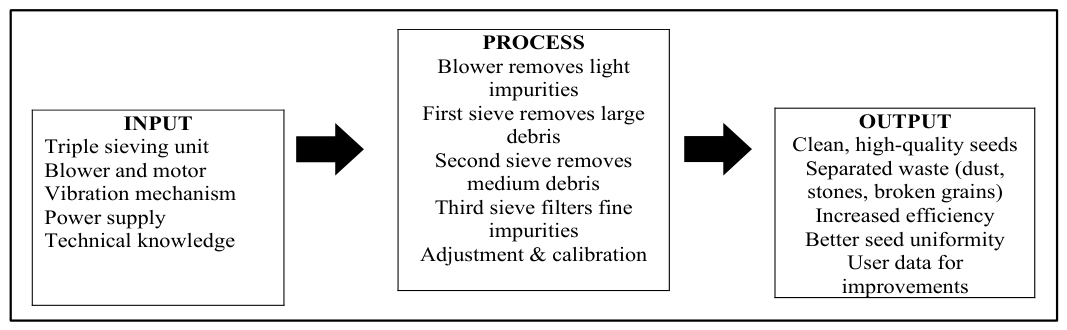
Figure 1 shows the IPO model that system’s inputs primarily consisted of raw rice seeds that required cleaning and sorting. These seeds contained impurities, such as husks, stones, and other foreign materials, which needed to be removed to ensure high-quality planting material. The quality of input seeds was crucial, as it directly affects the output yield and overall agricultural productivity. In this system, the raw rice seeds served as the primary input material and energy source, generating the electrical or mechanical energy needed to operate both the blower and the sieving mechanisms effectively. The developed system included an AC motor, belt, sieving screen, frame screen, body frame, pulley, bearings, magnetic contactor, capacitor, blower, hopper, drive pulley, push buttons, overload relay, and screw bolt. These components collectively play a vital role in the project’s overall effectiveness and success, emphasizing the importance of careful optimization to attain the desired results. The study employed a technical development research design, which centers on fostering innovation and advancing products. This approach was used in the design and development of the rice seed cleaning blower with triple-sieving technology. On the other hand, experimental research involves observing phenomena and their evolution post-intervention to determine the study’s impact. In contrast, descriptive research aims to delineate and clarify existing phenomena.
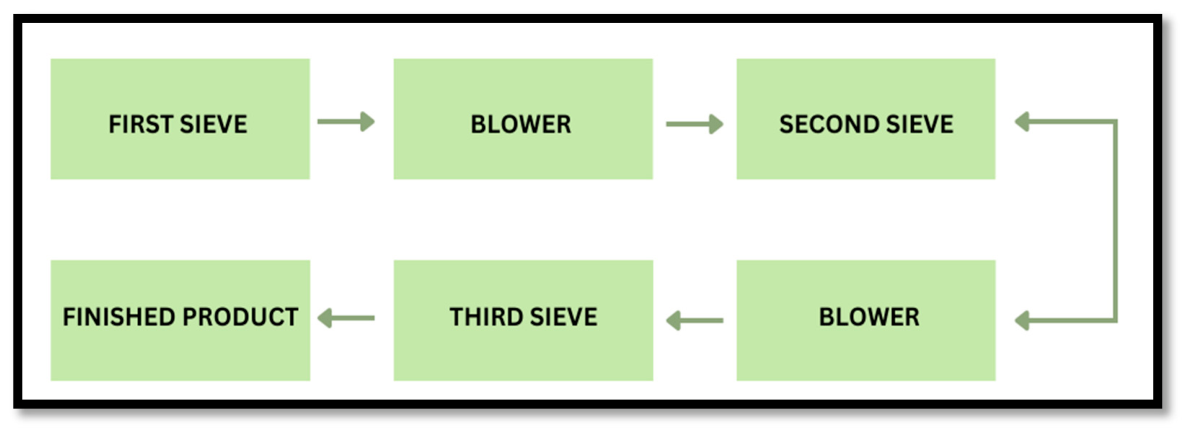
Figure 2 shows the process of rice seed cleaning using a blower with triple-sieving technology is an advanced method that enhances the quality and purity of rice seeds. This process involved several steps that utilized mechanical means to remove impurities, foreign materials, and damaged seeds from the rice grain.
Triple-sieving technology uses three sieves of different sizes in succession to separate rice seeds by size and weight. This method enabled more efficient removal of unwanted materials than single- or double-system methods. The first sieve removed larger impurities such as stones and coarse debris. The second sieve targeted medium-sized particles, allowing only properly sized seeds to pass through while retaining smaller debris. The third sieve finalized the separation process by ensuring that only clean and viable seeds were collected. The initial stage involved using a blower to create an airflow that separated lighter impurities from heavier rice seeds based on their density. The blower worked continuously throughout these processes, ensuring that all light materials were effectively removed at each stage. It created airflow that not only helped lift dust but also helped maintain a clean working environment around the machinery. The final output consisted of high-quality cleaned rice seeds ready for planting or sale. The effectiveness of this output was evaluated based on purity levels (percentage of clean seeds) and the production of high-quality, impurity-free cleaned rice seeds. Additionally, the collected waste or impurities during the sieving process could be analyzed for further use or disposal.

3. Results and Discussion

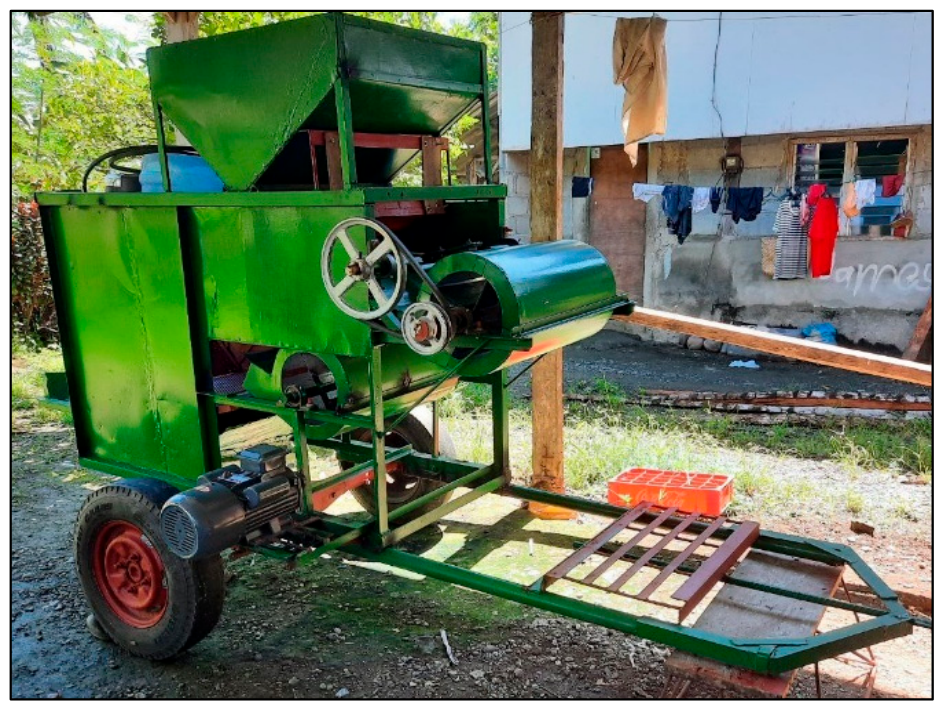
This presents the final output of the seed cleaner. Figure 3 shows the improved rice seed cleaning blower with a triple-sieving system was constructed and carefully assembled, including all necessary components. Each part was appropriately aligned and installed following a step-by-step process to ensure everything worked correctly and efficiently.
As part of the development of the innovative product, the researchers followed an iterative trial-and-error process, as presented in the tables below. Each testing cycle involved modifying and refining the design to ensure optimal functionality, stability, and performance under realistic working conditions. Attention was given to the proper installation of electrical and mechanical components, including inspections of wires, terminals, and safety devices, to ensure reliable operation and prevent electrical and mechanical faults during use.
Furthermore, actual field simulations were conducted in which local farmers operated the machine to clean their own harvested rice seeds intended for planting. This approach provided authentic user feedback, enabled the researchers to assess the machine’s efficiency under real postharvest conditions, and confirmed its consistent cleaning performance. Insights from these simulations informed adjustments to airflow calibration, sieving accuracy, and handling convenience, ensuring the final output met the practical needs of countryside farmers and supported higher seed quality in future cropping seasons.

3.1. Simulation of the Product Conducted in Fifty-Six (56), Sixty-Three (63), and Fifty-Two Point Two (52.2) Kilograms per Sack of Rice Seeds

The data presented in Table 1 captures the outcomes of five experimental trials (A–E) involving the processing of 56 kg of raw rice through a threshing or milling system. Each trial measured processing time, various forms of collected debris, the output of clean rice grains, and electricity costs in Philippine pesos (PHP). Several key insights emerge from this comparison.
Firstly, processing time appears to affect efficiency inversely. Trials C and E, which took only 6:30 and 7:30 min, respectively, produced relatively higher clean rice yields (53.5 kg and 53 kg) with lower secondary debris (2.3 kg and 2.6 kg) and notably lower electricity costs (₱1.26 and ₱1.44). In contrast, Trials A, B, and D ran for over 10 min, consuming more electricity (₱1.98 each) while producing slightly less clean grain (ranging from 50 to 55 kg) and higher debris weights. This suggests that shorter processing times may enhance operational efficiency and reduce power consumption, likely by reducing wear and mechanical friction in the system. Secondly, debris levels were generally higher in longer-duration trials, particularly in Trial A (1½ kg of first debris and 5.2 kg of second debris), indicating a potential trade-off between processing duration and cleanliness or material handling. These excesses may stem from over-threshing or repeated processing that damages grains or removes more husk material than necessary. Trial C, in particular, showed the best overall efficiency with a clean grain recovery of 53.5 kg and the lowest energy consumption (₱1.26), with relatively minimal waste.
This aligns with findings in the grain processing literature that highlight the importance of optimizing machine operation time to balance output quality, energy consumption, and byproduct levels [11]. Moreover, energy-efficient processing is especially crucial in smallholder or rural contexts where fuel and electricity costs significantly impact profitability [12]. The table suggests that Trials C and E demonstrate the most cost-effective and efficient processing conditions, with higher rice grain yields, lower debris levels, and reduced electricity use. These findings support the broader view that optimizing machine time and throughput can improve performance and reduce postharvest losses in grain processing systems.
Table 2 documents the performance of a rice processing machine across five trials (A–E), each of which handled 63 kg of raw paddy rice. The table captures processing time, amount of debris removed, clean rice yield, and electricity consumption (in PHP). These metrics provide insights into the machine’s efficiency, consistency, and operational costs under slightly varying conditions.
A key observation is that Trials C and D, which had shorter processing times (7:46 and 7:54 min, respectively), achieved relatively high clean rice yields (56 kg and 55.5 kg, respectively) and the lowest electricity costs (₱1.44). This aligns with energy-efficiency principles in grain postharvest systems, where shorter operation time can lead to cost-effective processing without sacrificing yield [9]. Meanwhile, longer trials (B and E) consumed more electricity (₱1.98) but did not significantly increase rice output (both 55.5 kg), suggesting diminishing returns with extended operating time. Additionally, the second debris weights in Trials C, D, and E (6.2 kg, 6.2 kg, and 5.9 kg) were slightly higher than in Trials A and B, possibly indicating a trade-off between cleaning intensity and grain breakage or residue separation. Interestingly, Trial A, which had a moderate processing time (9:13), showed the highest clean rice yield (57 kg) and the lowest second debris (5 kg) at an electricity cost of only ₱1.80, suggesting a potential sweet spot between speed, cleanliness, and energy use. This supports the idea that machine calibration, especially airflow and sieve timing, can optimize both yield and resource use [13].
In a broader context, machines that maintain stable yields across varying trial conditions, like those seen here, are considered more reliable for commercial use, especially in resource-constrained farming environments. This reliability is essential for postharvest systems in developing countries, where fuel and electricity are costly and output consistency is key for market viability [14].
Table 3 outlines the performance of a rice processing machine across five trials (A–E), each using 50.2 kg of raw rice. The data include processing time, debris weight (primary and secondary), clean rice output, and electricity consumption in PHP. The results highlight the machine’s operational efficiency, energy use, and grain recovery across different time durations.
Among all trials, Trial A stands out, producing the highest clean rice yield (45.5 kg) in the shortest processing time (6:15 min) and with the lowest electricity consumption (₱1.26). This trial also produced the lowest second debris (3.6 kg), suggesting a highly efficient balance between threshing and cleaning. This supports the broader understanding that short, well-calibrated operations can optimize grain recovery and minimize unnecessary grain loss [9]. Conversely, Trial B, which had the longest duration (7:56), yielded the lowest rice output (42.7 kg) and the highest second debris (5.9 kg), despite consuming more electricity (₱1.44). This indicates that longer processing times may cause over-processing, leading to higher breakage or loss of viable grains, a trend also observed in grain quality studies [15].
Trials C and E, which had similar electricity usage (₱1.26) and moderate cycle times (~6:27 and 6:43), produced consistent rice grain yields (43–45 kg), suggesting that the machine maintains reliable performance in short cycles. These findings are significant, particularly for smallholder farmers, who benefit from energy-efficient machines that maintain consistent output across batches [13]. Trial D, while using the most electricity (₱1.62), achieved a high rice output (45 kg) and the lowest second debris (3 kg), indicating effective impurity separation. However, its longer time (8:17) might offset its energy efficiency, especially in regions with high energy costs.

3.2. The Product Was Tested Through Actual Simulations Performed by Local Farmers with Rice Seeds from Their Harvest in Varied Kilograms per Sack

Table 4 compares two rice processing trials with different input weights and processing times. Trial A, processing 55 kg in 6:34 min, yielded 50 kg of clean rice with 4 kg of second debris, consuming only ₱1.26 in electricity. In contrast, Trial B, which processed 50 kg over 9:12 min, produced 46.5 kg of rice with lower second debris (3 kg) but used more electricity (₱1.80). These results suggest that shorter processing times can improve energy efficiency and rice yield, even if primary debris is slightly higher. Efficient time management in threshing operations is crucial for reducing postharvest energy costs and losses [16], supporting the optimization of settings for both performance and economic benefit.
Table 5 compares two rice processing trials and reveals significant differences in performance. Trial A, which processed 51.5 kg in 6:34 min, achieved a higher clean rice yield (48.2 kg) with moderate second debris (5.5 kg) and lower energy use (₱1.26). Trial B, with a smaller input (45.2 kg) and slightly longer time (7:18 min), produced 43 kg of rice with much less second debris (1 kg) but higher electricity consumption (₱1.44). This suggests that Trial A was more efficient in maximizing yield per energy unit, while Trial B may have been more focused on minimizing grain loss, possibly through gentler processing. These results highlight a trade-off between yield efficiency and grain cleanliness, supporting prior research on balancing throughput with quality in postharvest systems [17].
Table 6: Trial A processed more material (55.2 kg) compared to Trial B (47 kg). However, Trial B was faster, finishing in 7 min and 9 s, while Trial A took 9 min and 17 s. Both trials produced the same amount of Tahop debris (1.5 kg).
When it came to rice grain recovery, Trial A had a slightly higher yield at 47 kg, while Trial B produced 44 kg. Trial A also generated more secondary debris (3.5 kg) compared to Trial B (2.5 kg). In terms of electricity cost, Trial A consumed more (₱1.80), while Trial B was more cost-efficient at ₱1.44.
The “TRIAL 2.0” chart compares two milling setups—Trial A and Trial B—across rice grain output, second debris, and electric consumption. Trial A produced more rice grain (47 kg vs. 44 kg) and used less electricity (₱ 1.80 vs. ₱1.44), showing greater efficiency. However, it generated more secondary debris (3.5 kg vs. 2.5 kg), suggesting that although it recovers more rice, it may also process impurities less selectively. In contrast, Trial B yields cleaner output with minimal debris but with the downside of reduced rice recovery and higher energy use. These trade-offs highlight a key consideration in postharvest technology: maximizing yield while maintaining quality and minimizing waste, a challenge well-documented in rice milling optimization studies.
Table 7 compares two rice processing trials with varying input and operational efficiency. Trial A, processing 55.5 kg in 6:07 min, yielded 47 kg of clean rice with 4.5 kg of second debris and used ₱1.26 in electricity, indicating strong performance in speed and energy efficiency. Trial B, despite a smaller input (47 kg) and longer time (7:04 min), produced 44.5 kg of rice with less second debris (2.1 kg) but higher energy consumption (₱1.44). These findings suggest that Trial A was more energy- and time-efficient, while Trial B may have emphasized gentler processing to reduce grain damage. This reflects the known balance between maximizing yield and maintaining grain integrity, a common consideration in postharvest processing optimization [18]. The provided stacked bar chart, “TRIAL 4.0,” compares two trials, “Trial A 55.5 6:07 ¼” and “Trial B 47 7:04 ¼,” across three metrics: rice grain (kg), second debris (kg), and electric consumption. In terms of rice grain (kg), Trial A yielded 47 kg, while Trial B produced 44.5 kg, indicating that Trial A was more efficient in producing rice grain. For second debris (kg), Trial A resulted in 4.5 kg and Trial B in 2.1 kg, suggesting Trial B generated less debris. Lastly, regarding electric consumption, Trial A consumed 1.26 units compared to Trial B’s 1.44 units, demonstrating Trial A’s lower energy usage. The implications are that Trial A appears to be more effective in rice grain yield and energy efficiency, while Trial B is better at minimizing secondary debris. These findings suggest that for optimizing rice production with an emphasis on yield and energy, Trial A’s parameters might be preferred. In contrast, if minimizing debris is a primary concern, Trial B’s approach could be more suitable. Further analysis would be required to understand the specific methodologies of each trial (e.g., equipment used, processing time, input quality, as partially hinted at in the trial labels) to draw more definitive conclusions and inform future optimizations in rice processing (e.g., on optimizing rice mill operations and on energy use in rice processing).
Table 8: In this trial, A, the starting weight was 58.2 kg (presumably the input material, given the “Kilo (kg)” column), and the time was 5 min and 45 s. It produced 47.2 kg of rice grain and 4.8 kg of second debris, with an electric consumption of 1.08 kWh. The “Hopper” is noted as “¼,” which might indicate a hopper size or fill level. Trial B began with 47.2 kg, ran for 5 min and 57 s, yielded 44 kg of rice grain, and generated 1.9 kg of second debris. Its electric consumption was also 1.08 PHP. The “Hopper” for Trial B is noted as “¼” as well, though the “Debris/Tahop (kg)” is “¾”.
Comparing the trials, Trial A shows a higher initial input (58.2 kg vs. 47.2 kg) and, consequently, a higher rice grain output (47.2 kg vs. 44 kg). This suggests that Trial A might be more efficient in terms of raw material processing capacity and overall rice grain yield. However, Trial A also produced significantly more “Second Debris” (4.8 kg vs. 1.9 kg), indicating a less efficient separation or a higher proportion of non-grain material in its output. Electric consumption remained constant at 1.08 PHP across both trials, suggesting that energy use per unit time or output was similar despite differences in throughput and debris. The time taken in Trial A (5:45) was slightly shorter than that of Trial B (5:57), further supporting the notion of higher processing speed or efficiency in Trial A.
The implications are significant for optimizing rice processing. If the primary goal is maximizing rice grain output per batch, Trial A appears more effective, given its higher yield and faster processing time. However, the substantial increase in “Second Debris” in Trial A presents a challenge for waste management and potential byproduct utilization. Conversely, Trial B is more efficient in minimizing debris, which could be beneficial for operations focused on reducing waste or improving the purity of the main product. Similar electric consumption across both trials suggests that energy cost is not a differentiating factor for choosing between these two operational parameters. Further research would be beneficial to understand the specific processes and equipment variations that lead to these differences and to evaluate the economic and environmental impact of increased debris, potentially referencing studies on rice milling efficiency and byproduct management in the Philippines.

4. Conclusions

The performance efficiency of the newly developed rice seed cleaning blower for frontier and remote (FAR) farming communities proved successful in achieving its intended purpose. The machine effectively cleaned and separated rice seeds from various impurities, thereby improving overall seed quality. Its efficient design, which integrates controlled airflow and a multi-layered triple-sieving system, offers a practical and reliable solution for improving seed preparation in agricultural processes. Results from multiple field simulations conducted by local farmers showed consistent performance across varying batch volumes, with shorter processing times yielding higher efficiency, lower debris accumulation, and reduced energy consumption. These findings highlight the importance of proper calibration and operation in maximizing throughput while minimizing grain breakage and overall cost. Furthermore, the machine demonstrated reliable performance under real farm conditions, validating its suitability for areas with limited access to advanced equipment. Farmer feedback also confirmed its ease of operation, practical design features, and potential to improve seed quality for future planting seasons. Overall, this study shows that our innovation provides a cost-effective, time-saving, and farmer-friendly solution that supports improved crop establishment and productivity in underserved farming communities. Based on these findings, it is recommended that the machine be adopted by local farmers, particularly during seed preparation before planting seasons. Enhancements to sieving technology, including varying mesh sizes and hole patterns, are suggested to improve sorting accuracy. At the same time, customized configurations tailored to seed characteristics may further preserve seed integrity. Future researchers are encouraged to explore additional improvements, such as integrating smart sensors or automated grading systems, and to conduct comparative studies with other seed-cleaning technologies to assess economic impact, long-term performance, and scalability.

Author Contributions

Conceptualization. J.O.E., C.M., E.A.P., J.P., M.K.P., M.K.A. and R.G.M. methodology, J.O.E., C.M., E.A.P., J.P., M.K.P., M.K.A. and R.G.M. validation, and formal analysis, investigation, resources, writing, J.O.E., original draft preparation, J.O.E.; writing—review and editing, J.O.E., C.M., E.A.P., J.P., M.K.P., M.K.A. and R.G.M. visualization J.O.E., supervision J.O.E., project administration J.O.E., C.M., E.A.P., J.P., M.K.P., M.K.A. and R.G.M. All authors have read and agreed to the published version of the manuscript.

Funding

This research received no external funding.

Institutional Review Board Statement

Not applicable.

Informed Consent Statement

Not applicable.

Data Availability Statement

The data presented in this study are available on request from the corresponding author at joestillore@csucc.edu.ph.

Acknowledgments

This research would not have been possible without the dedicated efforts of the researchers and the invaluable guidance and expertise of professors in Electrical Engineering, Electrical Technology, and Electronics Technology. Their contributions were instrumental in shaping the project’s technical foundation and direction.

Conflicts of Interest

The authors declare no conflicts of interest.

References

  1. Gado, C.L.B. Post Care on Rice. Philippine Rice. Available online: https://www.philrice.gov.ph/post-care-on-rice-2/ (accessed on 15 January 2024).
  2. Republic Act No. 10601—An Act Promoting Agricultural and Fisheries Mechanization Development in the Country. Available online: https://elibrary.judiciary.gov.ph/thebookshelf/showdocs/2/57085 (accessed on 15 January 2024).
  3. Otsuka, K. Role of agricultural research in poverty reduction: Lessons from the Asian experience. Food Policy 2000, 25, 447–462. [Google Scholar] [CrossRef]
  4. Stuecker, M.F.; Tigchelaar, M.; Kantar, M.B. Climate variability impacts on rice production in the Philippines. PLoS ONE 2018, 13, e0201426. [Google Scholar] [CrossRef] [PubMed]
  5. Adri, J.; Rahim, B.; Refdina; Erizon, N. Rice Thresher Machines in Handling System Alley Blow Rice in Post-Harvest. J. Phys. Conf. Ser. 2020, 1594, 012028. [Google Scholar] [CrossRef]
  6. Ali, M.Z. Effect of pre-germination seedling depth on growth rates of rice. GPH-IJAR 2021, 4, 12–16. [Google Scholar]
  7. Li, C.; Zhang, D.; Yang, L.; Cui, T.; He, X.; Li, Z.; Dong, J.; Xing, S.; Jiang, Y.; Liang, J. Research on a centrifugal high-speed precision seed metering device for maize with airflow-assisted seed filling and cleaning. Comput. Electron. Agric. 2024, 226, 109434. [Google Scholar] [CrossRef]
  8. Suarbawa, I.K.G.J. The rice sorting machine is designed to improve the quality of rice granules. Int. Res. J. Eng. IT Sci. Res. 2022, 8, 17–26. [Google Scholar] [CrossRef]
  9. Owen, M.J.; Powles, S.B. Lessons learnt: Crop-seed cleaning reduces weed-seed contamination in Western Australian grain samples. Crop Pasture Sci. 2020, 71, 660–667. [Google Scholar] [CrossRef]
  10. United Nations. The Sustainable Development Goals—United Nations Sustainable Development. United Nations Sustainable Development. 12 August 2025. Available online: https://www.un.org/sustainabledevelopment/development-goals/ (accessed on 15 January 2024).
  11. Nath, B.; Chen, G.; O’Sullivan, C.M.; Zare, D. Research and Technologies to Reduce Grain Postharvest Losses: A Review. Foods 2024, 13, 1875. [Google Scholar] [CrossRef] [PubMed]
  12. Goyal, P.; Rahman, Z.; Kazmi, A.A. Corporate sustainability performance and firm performance research. Manag. Decis. 2013, 51, 361–379. [Google Scholar] [CrossRef]
  13. Kumar, D.; Kalita, P. Reducing Postharvest Losses during Storage of Grain Crops to Strengthen Food Security in Developing Countries. Foods 2017, 6, 8. [Google Scholar] [CrossRef] [PubMed]
  14. Zhang, N.; Fu, J.; Chen, Z.; Chen, X.; Ren, L. Optimization of the Process Parameters of an Air-Screen Cleaning System for Frozen Corn Based on the Response Surface Method. Agriculture 2021, 11, 794. [Google Scholar] [CrossRef]
  15. Zhang, T.; Li, Y.; Xu, L.; Liu, Y.; Ji, K.; Jiang, S.F. Experimental Study on Fluidization Behaviors of Wet Rice Threshed Materials with Hot Airflow. Agriculture 2022, 12, 601. [Google Scholar] [CrossRef]
  16. Jarman, A.; Thompson, J.; Mcguire, E.; Reid, M.; Rubsam, S.; Becker, K.; Mitcham, E. Postharvest technologies for small-scale farmers in low- and middle-income countries: A call to action. Postharvest Biol. Technol. 2023, 206, 112491. [Google Scholar] [CrossRef]
  17. Abdeen, M.A.; Salem, A.E.; Zhang, G. Longitudinal Axial Flow Rice Thresher Performance Optimization Using the Taguchi Technique. Agriculture 2021, 11, 88. [Google Scholar] [CrossRef]
  18. Ali, E.A.; Abd El Gawad, F.; Sabry, H.E.; Okasha, M.; Abd El-Reheem, S.; Cottb, M.; Mohamed, H.I. The effect of operating parameters on the performance of an innovative garlic clove separating machine. Prog. Agric. Eng. Sci. 2025, 21, 333–353. [Google Scholar] [CrossRef]
Figure 1. IPO Model.
Engproc 143 00004 g001
Figure 2. Process of the Product.
Engproc 143 00004 g002
Figure 3. Final Output and Actual Simulations.
Engproc 143 00004 g003
Table 1. The efficiency of the rice seed cleaner was tested on fifty-six (56) kilograms per sack of rice seeds.
Trial 1 Kilo (kg)Time
(mins.)
Debris (Tahop) (kg)HopperRice Grain (kg)Second Debris (kg)Electric Consumption
(Php)
Yield
%
Trial A5610:50¼555.21.9898.21
Trial B5610:501¼505.21.9889.29
Trial C566:30¾¼53.52.31.2695.54
Trial D5611:021¼5141.9891.07
Trial E567:30¾¼532.61.4494.64
Table 2. The efficiency of the product was conducted in sixty-three (63) kilograms per sack of rice seeds.
Trial 2Kilo (kg)Time (mins)Debris (Tahop) (kg)HopperRice Grain (kg)Second Debris (kg)Electric Consumption (Php)Yield
%
Trial A639:131¼5751.8090.48
Trial B6310:241¼55551.9887.30
Trial C637:461¼566.21.4488.89
Trial D637:541.2¼55.56.21.4488.10
Table 3. The efficiency of the product was conducted in fifty-two point two (52.2) kilograms per sack of rice seeds.
Trial 3Kilo (kg)Time (mins.)Debris (Tahop) (kg)HopperRice Grain (kg)Second Debris (kg)Electric Consumption (Php)Yield
%
Trial A50.26:15¼45.53.61.2690.64
Trial B50.27:56¾¼42.75.91.4485.06
Trial C50.26:271¼434.91.2685.66
Trial D50.28:171.5¼4531.6289.64
Trial E50.26:431¼454.71.2689.64
Table 4. The efficiency of the product produced by local farmers with rice seeds from their harvest varies by the number of kilograms per sack conducted in simulation 1.
Trial 1Kilo (kg)Time (mins.)Debris/
Tahop (kg)
HopperRice Grain (kg)Second Debris (kg)Electric Consumption
(Php)
Yield%
Trial A556:341.5¼5041.2690.90
Trial B509:12½¼46.531.8093
Table 5. The efficiency of the product produced by local farmers with rice seeds from their harvest varies by the number of kilograms per sack conducted in simulation 2.
Trial 2Kilo (kg)Time (mins.)Debris/
Tahop (kg)
HopperRice Grain (kg)Second Debris (kg)Electric Consumption
(Php)
Yield %
Trial A51.56:34½¼48.25.51.2693.59
Trial B45.27:18¾¼4311.4495.13
Table 6. The efficiency of the product produced by local farmers with rice seeds from their harvest varies by the number of kilograms per sack conducted in simulation 3.
Trial 3Kilo (kg)Time (mins.)Debris/Tahop
(kg)
HopperRice Grain (kg)Second Debris (kg)Electric Consumption
(Php)
Yield %
Trial A55.29:171.5¼473.51.8085.14
Trial B477:091.5¼442.51.4493.61
Table 7. The efficiency of the product produced by local farmers with rice seeds from their harvest varies by the number of kilograms per sack conducted in simulation 4.
Trial 4Kilo (kg)Time (mins.)Debris/Tahop (kg)HopperRice Grain (kg)Second Debris (kg)Electric
Consumption (Php)
Yield %
Trial A55.56:07½¼474.51.2684.68
Trial B477:04¾¼44.52.11.4494.68
Table 8. The efficiency of the product produced by local farmers with rice seeds from their harvest varies by the number of kilograms per sack conducted in simulation 5.
Trial 5Kilo (kg)Time (mins)Debris/
Tahop (kg)
HopperRice Grain (kg)Second Debris (kg)Electric Consumption (Php)Yield %
Trial A58.25:451.5¼47.24.81.0881.09
Trial B47.25:57¾¼441.91.0893.22
Disclaimer/Publisher’s Note: The statements, opinions and data contained in all publications are solely those of the individual author(s) and contributor(s) and not of MDPI and/or the editor(s). MDPI and/or the editor(s) disclaim responsibility for any injury to people or property resulting from any ideas, methods, instructions or products referred to in the content.