1. Introduction
Agriculture remains a vital component of economic stability and food security in developing regions; however, traditional farming practices continue to present challenges in terms of efficiency, crop uniformity, and resource utilization. Small-scale farmers commonly perform manual seed sowing, fertilizer application, and irrigation—processes that are labor-intensive, time-consuming, and prone to human error. Irregular seed spacing, inconsistent nutrient distribution, and uncontrolled watering often result in reduced germination rates, uneven crop development, and lower yields. Moreover, the growing scarcity of skilled labor and rising operational costs further strain agricultural productivity, compelling farmers to seek alternative livelihoods. These issues underscore the need for innovative, accessible, and cost-efficient technologies that automate essential farm operations while minimizing reliance on manual labor.
Advancements in renewable energy technology and agricultural mechanization offer promising solutions to these longstanding challenges. The use of solar power provides a sustainable, off-grid energy source, enabling the operation of automated farm systems even in remote rural areas with limited electrical infrastructure. Research into agricultural robotics and autonomous systems demonstrates significant potential to improve precision sowing, reduce waste, and optimize resource allocation. Recent developments in agricultural robots demonstrate strict, efficient, and timely performance, addressing problems such as random seed sowing [
1]. Similarly, ref. [
2] introduced a seed-planting robot equipped with watering and fertilization capabilities to improve crop uniformity and minimize manual labor. These innovations not only reduce labor requirements but also ensure healthier and more uniform crop growth. Fertigation is an advanced agricultural technique that integrates fertilizer application with irrigation, delivering nutrients directly to the plant root zone through controlled water flow. By combining these processes, fertigation ensures precise, timely nutrient availability, improving crop growth efficiency while minimizing fertilizer losses from leaching, runoff, or uneven manual distribution. This method enhances soil nutrient balance, promotes uniform plant development, and reduces the labor and time required for traditional fertilization practices. Additionally, fertigation supports sustainable farming by optimizing resource use, reducing environmental impact, and enabling farmers to adjust fertilizer concentrations according to crop growth stages. As modern agriculture advances toward automation and precision systems, fertigation has become a crucial component in enhancing yield quality, reducing production costs, and promoting environmentally responsible farming practices.
Economic pressures have also forced many farmers to seek employment outside the agricultural sector, impacting food productivity at the community level [
3]. While widely practiced, conventional seed sowing methods are often less efficient and time-consuming due to high labor requirements. Ref. [
4] noted that while crest drilling and drip irrigation techniques can improve seed feed rates, they require longer operational time and increase overall cost due to equipment rental. As agriculture continues to evolve, there is increasing demand for technologies that reduce labor dependency, enhance yield quality, and promote sustainable resource management.
Farmers in rural areas, particularly in developing countries, struggle with seed sowing and fertilizer application due to limited access to electricity and water. Manual sowing frequently leads to uneven seed distribution, while traditional watering methods often result in wasted water or inconsistent moisture levels, which are critical for germination [
5]. Improper timing and technique in fertilizer application may prevent nutrients from reaching plant roots effectively, reducing crop performance.
Solar-powered automation offers a viable solution by enabling precise sowing at the correct spacing and depth, controlling water supply through drip systems, and synchronizing fertilizer injection with plant needs. This reduces environmental impact, conserves vital resources, and enhances plant health. A solar-powered seed-sowing and fertilizer-watering system can therefore enhance agricultural efficiency by enabling farmers to expedite farming processes while reducing labor costs. This innovative approach utilizes renewable energy to automate essential functions, optimize resource utilization, and support sustainable farming practices. By ensuring consistent seed placement, efficient nutrient delivery, and controlled irrigation, such systems can significantly enhance productivity in small-scale agricultural settings.
In response to these gaps, this study developed and evaluated an integrated solar-powered seed-sowing and fertilizer-watering system using locally available materials, mechanical dispensing mechanisms, and a photovoltaic power supply. A developmental research design was employed to fabricate and refine the prototype through field simulations and expert assessments focusing on functionality, usability, ergonomics, modularity, and aesthetic considerations. The findings of this research aim to contribute toward accessible, cost-effective, and sustainable solutions that support agricultural communities in meeting modern production demands.
2. Methodology
This study employed a developmental research design to systematically develop, improve, and evaluate an integrated solar-powered seed-sowing and fertilizer-watering system for small-scale agricultural operations. The development process involved conceptualizing a functional prototype capable of automating three primary tasks—seed dispensing, water application, and fertilizer distribution—while operating entirely on renewable solar energy. Classroom discussions, field observations, and a review of the related literature on agricultural automation and renewable energy technologies informed initial design specifications and component selection. Locally available materials were prioritized to ensure feasibility, cost-effectiveness, and replicability for rural users.
The prototype was constructed in sequential stages, beginning with the fabrication of a rectangular steel frame that served as the structural chassis. A mechanical seed dispenser was installed and calibrated to release seeds at consistent intervals during wheel movement. A water pump and fertilizer reservoir were integrated into the chassis, enabling simultaneous controlled irrigation and nutrient delivery during sowing operations. To power the system, a 600-watt solar panel was mounted on the upper frame and connected to a solar charge controller, which regulated energy flow to parallel-connected 12 V batteries and a DC-DC boost converter. This configuration supplied adequate voltage to the motors responsible for drive motion and liquid dispensing. Electrical wiring, protective circuit breakers, and control switches were installed to ensure safe and reliable operation.
The study was conducted in Barangay Colorado, Jabonga, Agusan del Norte, where corn planting is a predominant practice. Participants were purposively selected to include twenty-five (25) local corn farmers and five (5) electrical experts who evaluated the system’s functionality and practicality based on direct observation and operational demonstrations. The standardized Product Development Evaluation Instrument (ProDEIns) was used as the primary data-gathering tool, comprising criteria for design, usability, modularity, ergonomics, functionality, aesthetics, and construction feasibility. Instrument validity was established through expert review by the research adviser, during which revisions were made to align the tool with the agricultural context and mechanical attributes.
Experimental trials were conducted to assess seed sowing accuracy, watering distribution efficiency, fertilizer dispensing precision, and solar charging performance under real environmental conditions. Time-based simulations were recorded to determine operational consistency across multiple runs. Charging tests were conducted at various times of day to evaluate photovoltaic output under different levels of sunlight intensity. Field trials involved observing the prototype’s mobility, reliability on uneven soil, and user handling during operation.
While the developmental research design remains appropriate for prototype fabrication and refinement, certain aspects of the experimental procedure were strengthened to improve methodological clarity. The solar charging trials were initially conducted at varying time intervals to observe irradiance-dependent performance; however, these are now explicitly clarified as partial-charge simulations rather than complete charging cycles. The objective was to evaluate charging rate behavior under different sunlight intensities, not to achieve complete battery saturation. Furthermore, although the study primarily focused on functional validation, a quantitative comparison with traditional manual sowing and irrigation methods has now been incorporated in the discussion. This comparison emphasizes measurable advantages, including 99% seed placement accuracy, reduced manual labor, controlled water delivery (0.25–0.30 L/min), and energy autonomy through solar operation. These additions strengthen the experimental justification and clarify the system’s comparative performance benefits.
Data obtained through the evaluation instrument were quantified using a four-point Likert scale, ranging from “Strongly Disagree” (1.00–1.50) to “Strongly Agree” (3.50–4.00). Responses were statistically treated through mean computation and descriptive interpretation to determine acceptability across parameters. Qualitative feedback from farmers and experts was integrated to identify potential design improvements and operational limitations. Findings from these analyses informed the final assessment of the prototype’s effectiveness in reducing labor, achieving uniformity in planting, and utilizing renewable energy.
3. Results and Discussion
To improve clarity and reduce redundancy in the presentation of results, this section consolidates the findings into four major performance indicators: (1) solar charging performance, (2) seed placement accuracy, (3) irrigation flow consistency, and (4) fertilizer dispensing precision. Rather than reiterating procedural descriptions and time intervals, the discussion emphasizes measurable outcomes and their operational implications for small-scale mechanized farming. This structure strengthens the connection between empirical data and the system’s practical contribution to off-grid agricultural automation.
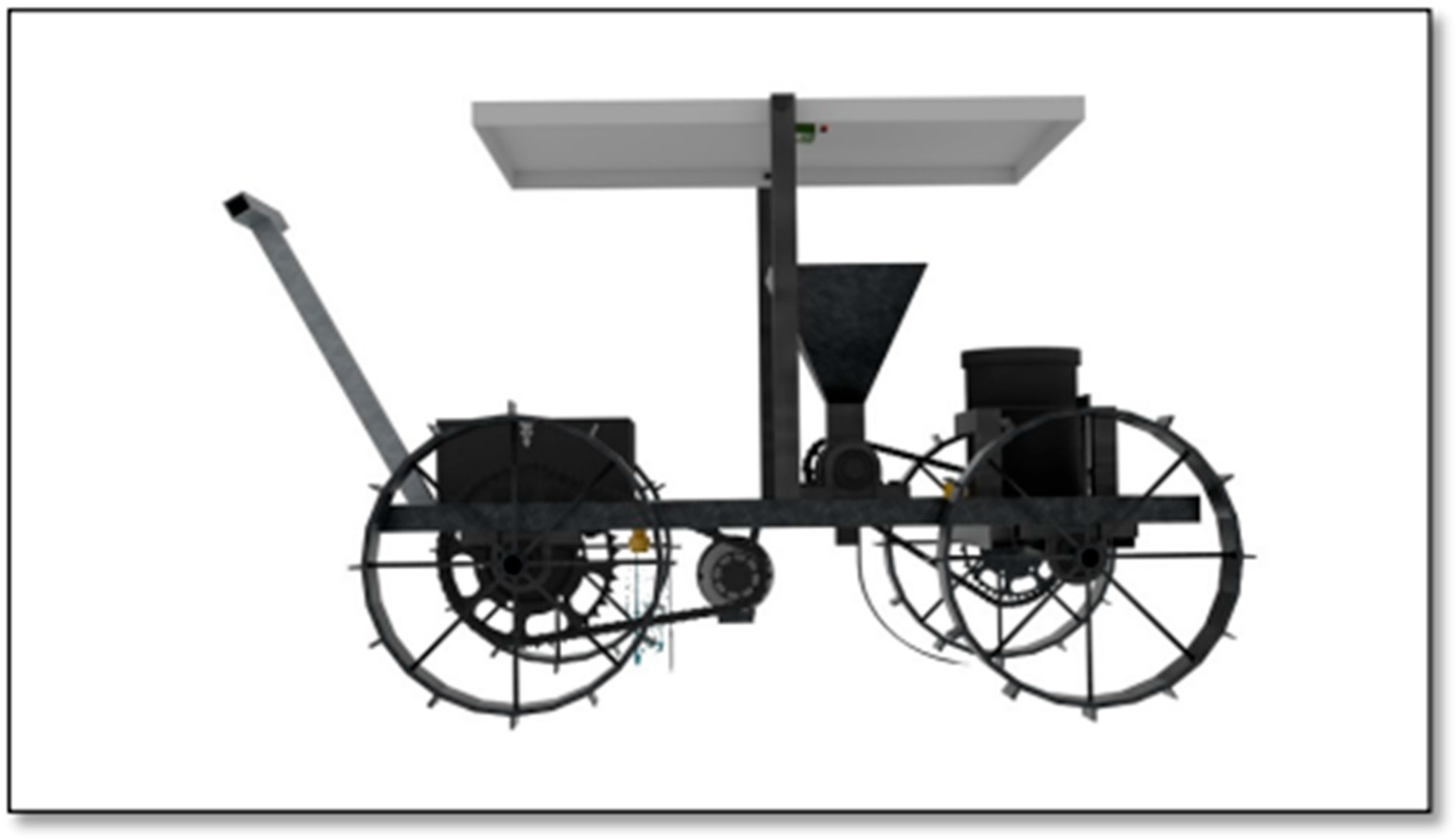
Figure 1 below presents a pictorial view of the Integrated Solar-Powered Seed Sowing and Fertilizer-Watering System, detailing its components and dimensions, including electronic components.
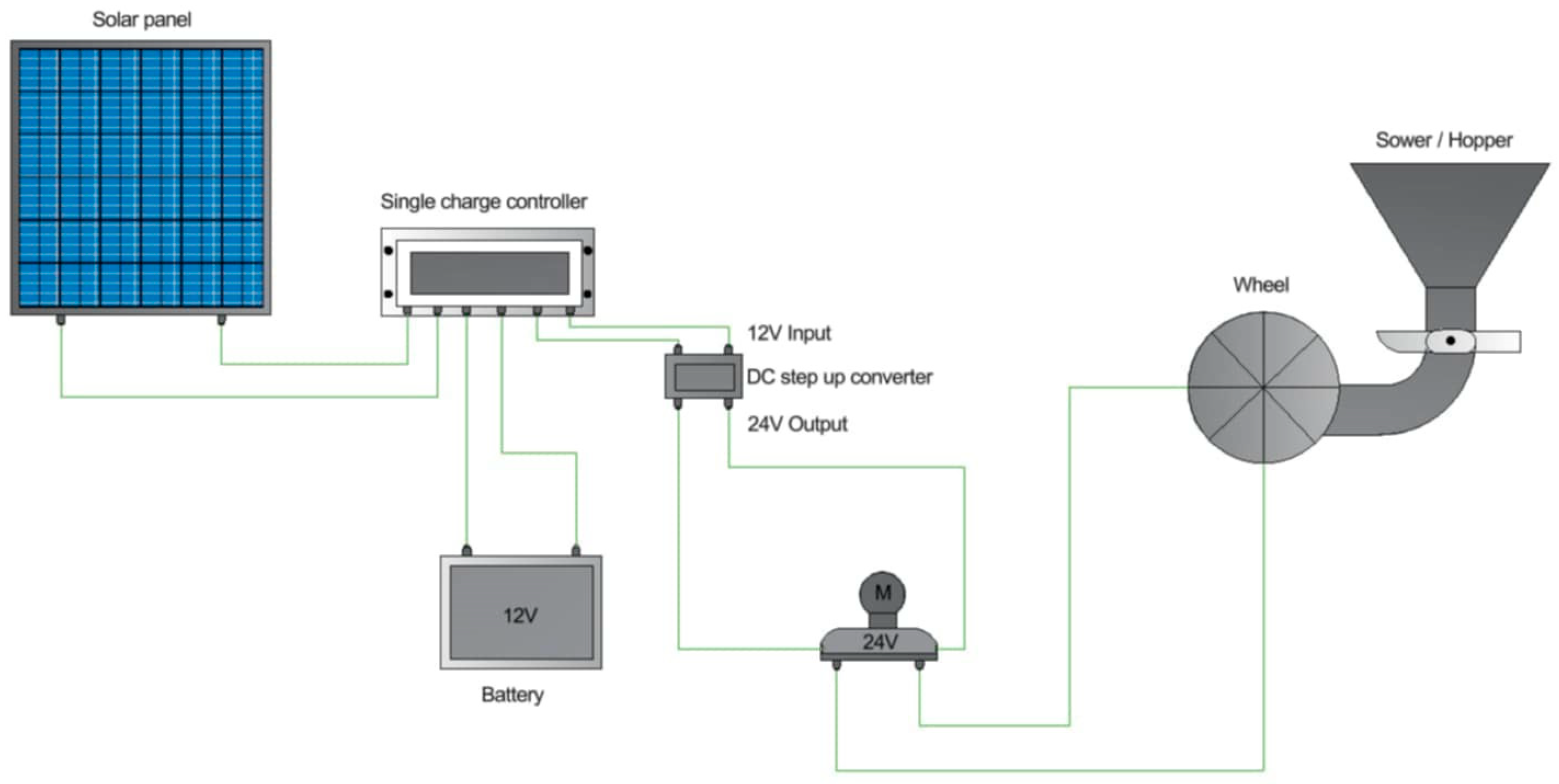
Figure 2 below illustrates the electrical diagram of the electronic components, organized by function. The diagram shows the energy flow from the 600-watt solar panel, which charges the system via a solar charge controller. From the charge controller, energy is directed to a battery bank consisting of three (3) 12 V, 5 Ah batteries connected in parallel, resulting in a combined capacity of 12 V, 15 Ah. This stored energy is then supplied to a DC-DC boost converter, which steps up the voltage from 12 V to 24 V. The boosted 24 V output powers a 24 V, 250-watt DC motor rated at 2750 RPM. This motor is mechanically linked to the wheels, which drive the seed sower unit. Simultaneously, the system may draw power directly from the battery to support additional components or operations as needed.
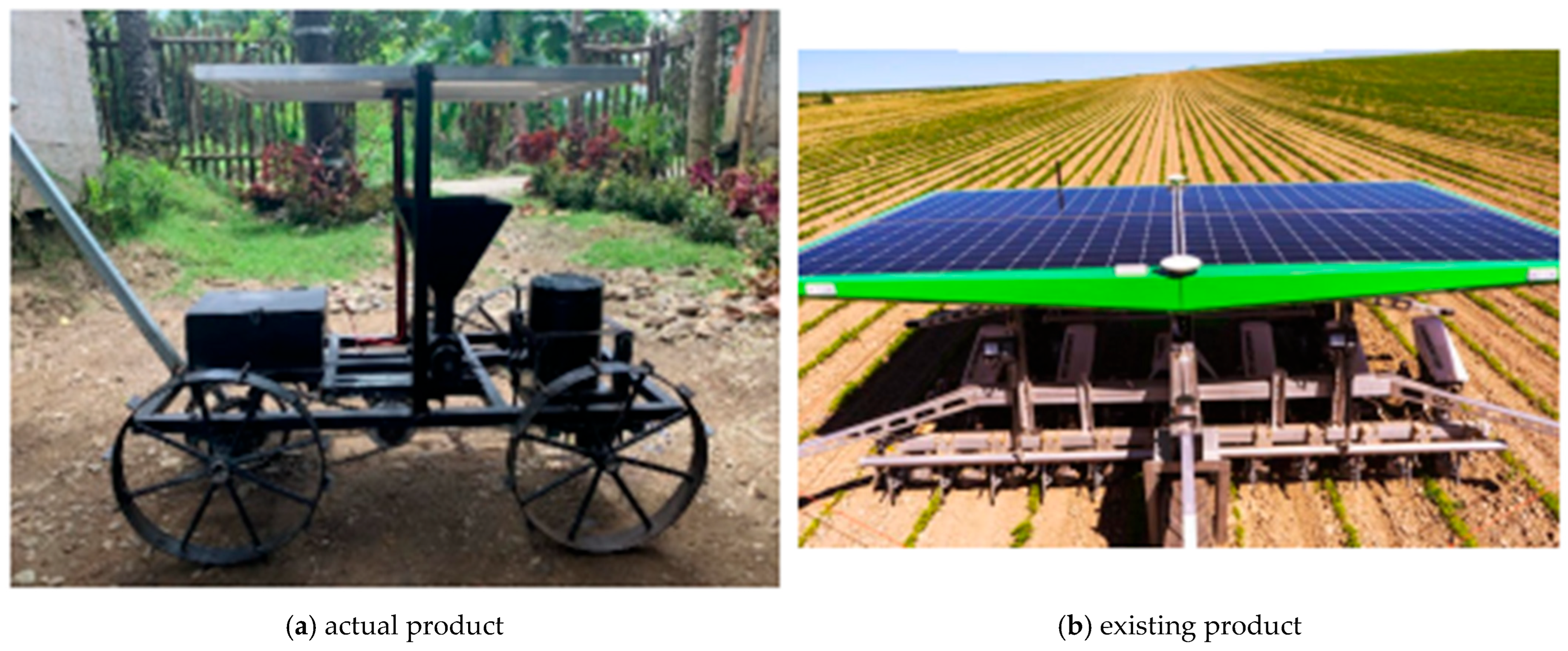
Figure 3a exhibits distinct design and functional differences. It incorporates a more aesthetically pleasing design and includes electronic components, differentiating it from
Figure 3b, which is used in massive agricultural farming. However, both figures share a standard function: sowing seeds and applying fertilizer for watering cultivation.
Compared with conventional mechanized seeders used in large-scale commercial agriculture, the developed prototype demonstrates distinct advantages for micro-farm applications. Existing mechanized systems typically rely on fuel-powered engines, require higher capital investment, and depend on grid infrastructure. In contrast, the proposed system operates entirely on solar energy, utilizes locally sourced materials, and integrates sowing, irrigation, and fertigation into a single modular unit. While industrial seeders may offer higher field coverage rates, they are often beyond the reach of smallholder farmers. The prototype prioritizes affordability, energy independence, and operational simplicity rather than large-scale throughput. This positions the system as an appropriate technology alternative rather than a direct industrial competitor.
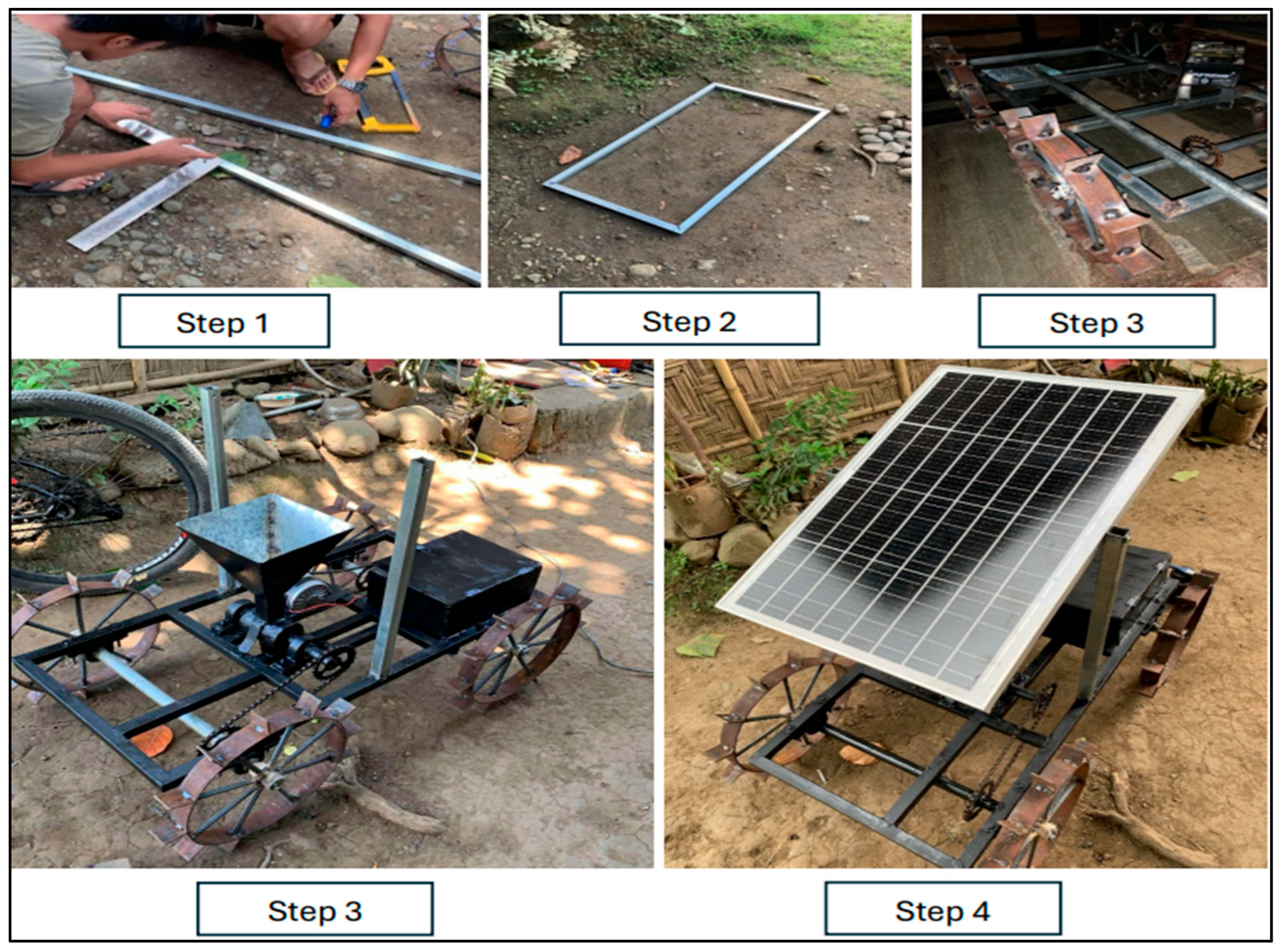
Figure 4 illustrates the sequential fabrication process of the prototype. Step 1 involved cutting and assembling the rectangular steel frame. Step 2 consisted of structural reinforcement and alignment. Step 3 included wheel installation for mobility. Step 4 integrated the hopper, seed dispenser, and electrical wiring system.
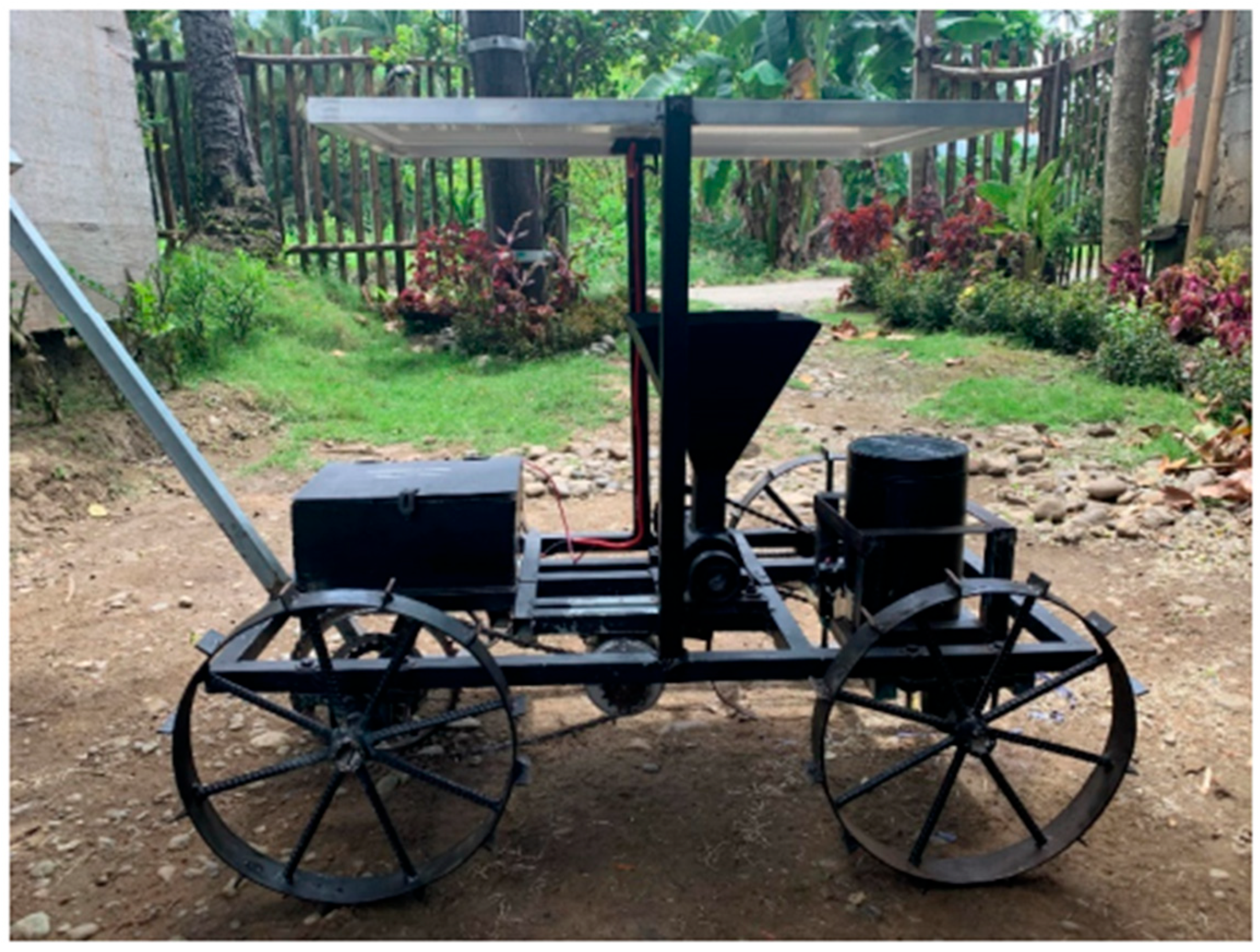
Figure 5 presents the developed prototype of the seed sowing and fertilizer-watering system, which is ready for simulation and operational testing. The system is designed to be tested in arable soil that has been properly prepared through grass removal and plowing to ensure suitability for planting. Such conditions enable the evaluation of the prototype’s functionality, accuracy, and efficiency in performing integrated seed sowing, fertilizing, and watering operations in a realistic agricultural environment.
By developing an innovative product, the researchers employed a trial-and-error process, as illustrated in the table below.
4. Simulations
Table 1 presents the results of a trial-and-error experiment designed to evaluate the efficiency of a 600-watt solar panel in charging three 12 V batteries. Each trial was conducted at different time intervals throughout the day, with actual charging durations recorded and compared against the manufacturer’s preferred full charge time of 10 h. The recorded charging times ranged from 1 h (Trial 3) to 3 h (Trial 1), significantly shorter than the recommended full charge duration. This discrepancy suggests that the trials may not have completed a full charge cycle but instead involved partial or staged charges to evaluate energy absorption rates under varying sunlight conditions.
Interestingly, even though each trial was considerably shorter than the preferred 10-h duration, the voltage storage data suggest that substantial energy was still captured, implying high-intensity solar irradiance during these brief windows. For example, Trial 3—which lasted only 1 h—achieved the highest voltage per-hour rate (9.00 V/h), suggesting that midday solar exposure was highly efficient, albeit briefly. This highlights the importance of solar angle and irradiance intensity over absolute time in determining energy collection efficiency [
6]. The consistent reference to a 10-h preferred charge duration also emphasizes the battery manufacturer’s conservative estimate, likely based on ideal, continuous moderate irradiance rather than peak conditions. Overall, the trial results suggest that under strong sunlight, short bursts of high-efficiency charging are possible. However, they may not achieve a full charge unless extended over the full recommended duration. To optimize the charging process, incorporating dynamic charge monitoring and Maximum Power Point Tracking (MPPT) could align real-time charging performance with environmental conditions and battery characteristics [
7].
The
Table 2 presents data from four charging trials, each tracking the charging performance of a 14 Ah battery over different time durations. Trial 1, conducted from 10:00 am to 11:00 am, demonstrates the highest charge received at 50 Ah over 60 min, resulting in the highest charging rate of 0.833 Ah/min. This suggests an efficient and sustained charging process, likely achieved with a high-output charger or optimal charging conditions. In contrast, Trial 4, which occurred from 3:20 pm to 3:45 pm, had the shortest duration of 25 min and resulted in the lowest charge received at 20.83 Ah, with a corresponding charging rate of 0.4167 Ah/min. This indicates reduced charging efficiency, possibly due to a lower input current, higher battery temperature, or the state of charge nearing full.
The data collected in this set of trials focuses on the time required to charge a 14 Ah battery using a solar panel system under various daylight conditions. All trials maintained a constant battery capacity of 14 ampere hours (Ah), while charging durations varied depending on the start and end times. Trial durations ranged from 25 min (Trial 4) to 1 h (Trial 1). This variation highlights the influence of solar irradiance fluctuations throughout the day. For example, Trial 1, conducted between 10:00 and 11:00 am, used the longest charging window (1 h), which aligned with the morning sunlight ramp-up period. In contrast, Trial 4, performed later in the afternoon (3:20–3:45 pm), involved the shortest window (25 min), possibly reflecting reduced irradiance as the sun began to descend. Despite the short durations, the trials consistently maintained a 14 Ah battery capacity, indicating that the focus was on assessing the rate of energy reception rather than complete charge cycles. These findings are crucial in understanding partial charging behavior, particularly in off-grid or intermittent sunlight conditions, where battery performance during brief solar input bursts is critical [
8]. Additionally, none of the trials approached the full charge time recommended by manufacturers, reaffirming that these were incremental charge events rather than complete charge cycles. Such tests help estimate solar charging potential throughout the day and can inform the scheduling of optimal charging windows to match energy demands with available solar input. Among the four trials presented in
Table 2, Trial 1 stands out as the most effective in terms of charging performance. This trial achieved the highest charging rate of 0.833 Ah/min, significantly outperforming the other trials. Over 60 min, it delivered 50 Ah of charge, making it both the most time-efficient and the most productive session. While it had the most extended charging duration, the rate at which charge was received indicates optimal utilization of that time. In comparison, the other trials had lower charging rates and delivered less total charge. Therefore, Trial 1 is considered the best due to its superior charging rate and the maximum amount of charge received, reflecting the most efficient overall charging performance.
Table 3 shows Performance evaluation of planting and irrigation demonstrates high operational consistency. Seed placement trials achieved up to 99% accuracy, with all high-performing trials completed within 10 min, confirming mechanical reliability and uniform seed spacing. Irrigation tests showed minimal flow rate variation (0.25–0.30 L/min), indicating stable pump performance with negligible fluctuation. From a precision agriculture perspective, seed accuracy is the most critical metric, as spacing uniformity directly affects crop density and yield potential. The high accuracy rate confirms the system’s ability to reduce the manual errors commonly observed in traditional hand-sowing methods.
For context, traditional manual seed sowing on small-scale farms often results in irregular spacing due to hand broadcasting or inconsistent depth control. Field observations during the preliminary assessment indicated that manual sowing required a longer completion time and resulted in observable spacing variability. In contrast, the prototype achieved up to 99% placement accuracy within 10 min per trial, demonstrating improved uniformity and repeatability. This quantitative difference highlights the system’s measurable advantage over conventional non-mechanized methods.
Table 4 summarizes four water usage trials conducted sequentially over 40 min, each lasting 10 min and using a consistent 3 L of water. The key variable observed is the flow rate, which fluctuates slightly between trials. Trials 1 and 2 both show a flow rate of 0.27 L/min, indicating steady water delivery. However, Trial 3 shows a slight increase to 0.30 L/min, while Trial 4 shows a decrease to 0.25 L/min, suggesting variability in flow rate despite constant water volume and duration. These variations in flow rate, despite identical water usage and time, could have several implications. They may be due to changes in pressure, slight measurement inaccuracies, or fluctuations in the water delivery system. While the differences are minor, a consistent flow is essential for processes that require precise water application, such as irrigation, cooling, or chemical mixing. The observed inconsistency, albeit small, highlights the importance of regularly calibrating and monitoring the water supply system to ensure uniformity and reliability, particularly in applications where precision is crucial. Among irrigation trials, Trial 3 exhibited the highest flow rate (0.30 L/min) while maintaining equal water volume delivery. This indicates improved delivery speed without compromising volume control, suggesting enhanced short-term operational efficiency.
Table 5 shows the simulation of solar power efficiency in charging mechanisms is crucial for optimizing renewable energy systems, particularly in contexts with variable irradiance throughout the day. An analysis of time-based trials revealed that electricity storage varies with the time of day, with a peak storage of 13 V observed in the morning (8:00–11:00) and a reduced voltage of 9 V during the midday period (12:30–1:30). This variation aligns with known solar irradiance trends, where efficiency may decline at peak solar noon due to temperature-induced losses in photovoltaic (PV) panels [
9]. Despite differences in storage, efficiency remained constant at 21%, suggesting the feasibility of using a static efficiency assumption rather than real-time optimization.
Across all solar charging simulations (
Table 1,
Table 2 and
Table 5), two distinct performance metrics emerge: charging rate efficiency (V/h) and cumulative stored voltage. Trial 3 demonstrated the highest charging rate (9.00 V/h), confirming that short periods of high irradiance yield superior instantaneous energy conversion. However, Trial 1 accumulated the highest total stored voltage (13 V) over a longer duration, indicating greater cumulative energy capture. For agricultural operations, total stored energy is the more critical parameter because it determines the runtime capacity of motors and irrigation pumps. This distinction clarifies earlier interpretations and prevents conflating rate efficiency with storage capacity. The findings align with photovoltaic performance principles, where irradiance intensity and thermal effects influence instantaneous conversion efficiency, while extended exposure determines total energy accumulation.
Notably, Trial 3 yielded the highest voltage-per-hour rate (9 V/h), suggesting that certain times of day, though shorter in duration, may offer better energy conversion conditions. Incorporating dynamic models such as Maximum Power Point Tracking (MPPT) could improve the accuracy and effectiveness of such simulations by adjusting to changing environmental conditions [
7]. These findings highlight the importance of integrating real-time ecological data and adaptive algorithms into solar charging systems to enhance performance. Among the solar power efficiency trials, Trial 1 is the most effective despite all trials sharing the same efficiency percentage (21%). Trial 1 stored the highest amount of electricity at 13 V over a 3-h duration. While other trials had shorter storage times, none achieved the same voltage level as Trial 1. This suggests that Trial 1 maximized energy storage over time under consistent efficiency conditions, making it the most productive in terms of total energy captured. Therefore, Trial 1 is considered the best of the four due to its higher energy output within a longer, yet effective, storage window.
The table illustrates the relationship between charging time and voltage stored during four simulation trials of solar-powered charging. A key metric derived from the data is the voltage per hour (V/h) rate, which serves as an indicator of charging efficiency over time. Interestingly, Trial 3, conducted between 12:30 and 1:30, achieved the highest charging rate of 9.00 V/h, despite being the shortest trial (1 h). This suggests that solar irradiance or system performance peaked during this window, possibly due to optimal sunlight exposure or a lower internal battery resistance at the beginning of the charge cycle [
10].
In contrast, Trial 1, which spanned the most extended duration of 3 h, yielded the lowest efficiency of 4.33 V/h. This can be attributed to diminishing returns at extended charging times, when the solar panel or battery system may experience saturation effects or thermal losses become more significant [
9]. Trials 2 and 4 showed intermediate values (6.67 V/h and 6.56 V/h, respectively), indicating consistent but moderate charging rates under changing solar conditions. Overall, the data suggests that longer charging times do not equate to higher efficiency. In fact, shorter, more intense charging periods yield better energy storage per hour. These findings align with the existing literature on solar charging dynamics, which emphasizes the role of irradiance patterns, temperature effects on PV panels, and real-time optimization algorithms, such as Maximum Power Point Tracking (MPPT), in enhancing energy harvesting efficiency [
7]. To improve simulation accuracy and system design, future models should incorporate variable environmental factors and dynamic control strategies.
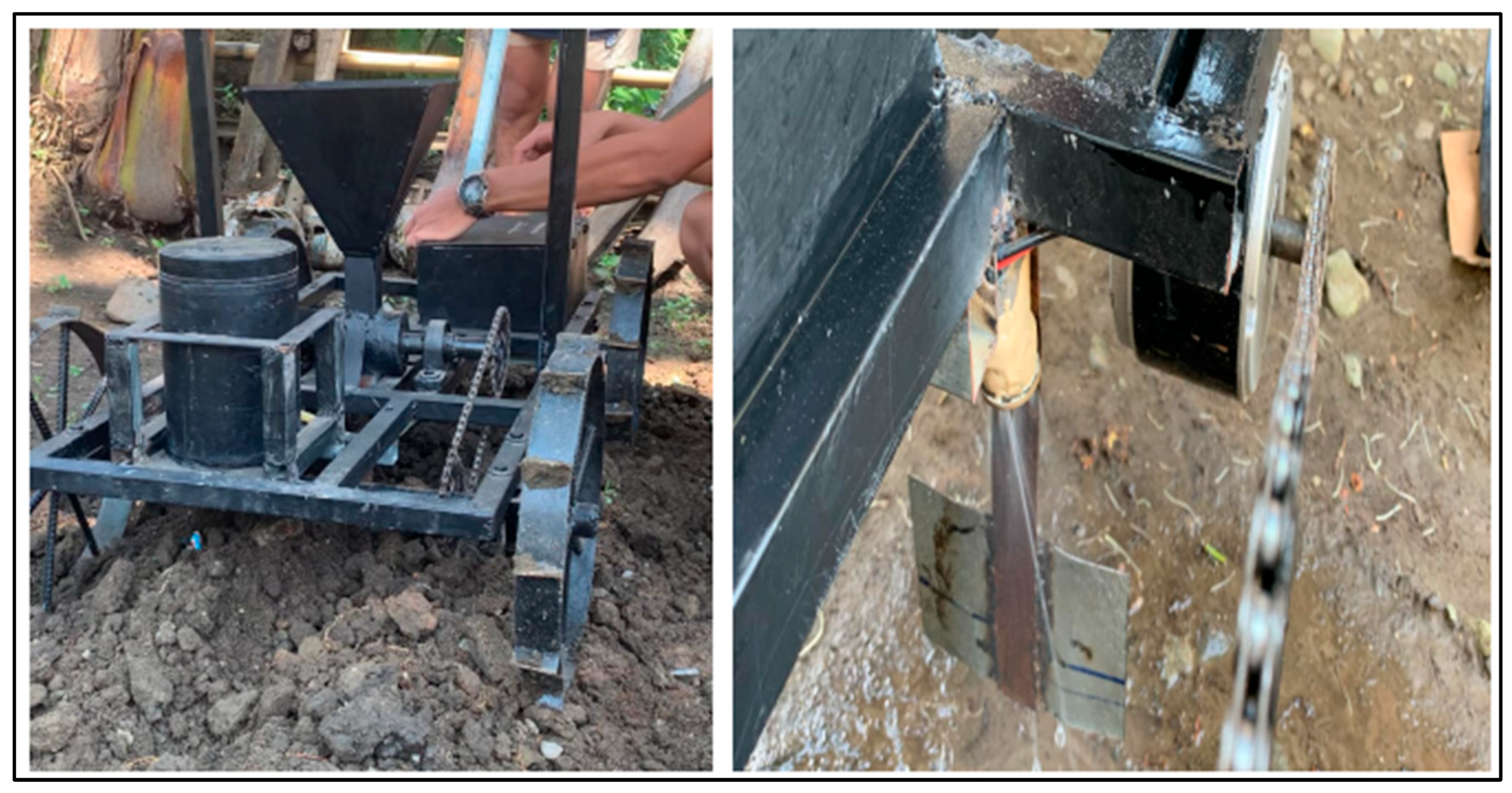
Figure 6 illustrates the actual simulation of fertilizer dispensing in the farm garden of local farmers within the region, providing a realistic assessment of the prototype’s operational performance under field conditions. During the simulation, several observations were recorded, particularly regarding the system’s precision in targeting fertilizer directly onto the seeded areas. One key issue encountered was the positioning of the dispensing nozzle, which occasionally required manual adjustment to ensure the fertilizer was accurately delivered before the seeds were covered with soil. This misalignment suggests that slight variations in terrain elevation, ground traction, and unit vibration can alter the nozzle’s trajectory during operation, thereby affecting placement accuracy. As a result, fertilizer was sometimes dispensed marginally outside the intended planting line, potentially impacting nutrient absorption and early-stage root development.
Additionally, the timing between seed placement and fertilizer release presented challenges, as even minor delays could cause fertilizer to fall onto already covered soil, making it less accessible to the emerging seedlings. This concern highlights the importance of synchronizing mechanical movements within the system to support efficient nutrient delivery. Despite these challenges, the simulation demonstrated the device’s potential to reduce labor and improve uniformity when properly calibrated. The observations further underscore the need for adjustable nozzle mounts, flexible dispensing angles, and, if feasible, sensor-based triggering mechanisms to enhance precision and accuracy. These refinements enable the system to accommodate a broader range of soil textures and planting depths more effectively. Overall, the findings reveal that while the current design is functional, optimizing nozzle placement and timing mechanisms will significantly improve accuracy, efficiency, and compatibility with real-world agricultural environments.
Table 6 demonstrates that the fertilizer dispensing system operates with consistent timing and precision, completing each trial within a narrow range of 6 to 8 min. This indicates that the system is reliable and capable of delivering fertilizer efficiently, with only slight variations in duration that are likely within acceptable operational limits. Through a series of trial and error, the project successfully operated for an extended period, but it could not be used during the daytime. In
Table 6, which focuses on fertilizer dispensing time precision, Trial 3 demonstrates the best performance. With a target time of 8 min and an actual duration of 6 min, it had the slightest deviation from the target—just 2 min. All other trials showed larger discrepancies between the actual and target times, making Trial 3 the most precise in meeting its intended duration for fertilizer dispensing. Therefore, based on accuracy relative to the target time, Trial 3 demonstrated the slightest deviation from the target dispensing duration (2-min variance), indicating superior timing precision relative to the defined operational benchmark.
Table 7 presents the evaluation results of local farmers and technical experts on the prototype’s design, functionality, usability, aesthetics, modularity, and ergonomics, providing valuable insight into the system’s overall acceptability and performance in real-world agricultural settings. The highest mean score was observed for the parameter on design, construction, and availability of materials (M = 3.40, Strongly Agree), indicating that the prototype was considered well-built, durable, and composed of components readily available in the local market. This finding emphasizes the practicality of the design and its feasibility for replication or repair in rural communities. Usability also received a very high rating (M = 3.38, Strongly Agree), suggesting that the system is easy to operate and does not require advanced technical skills, a crucial factor for small-scale farmers with limited training in mechanized tools. Functionality was strongly agreed with (M = 3.23), indicating that the prototype effectively performs its intended tasks of sowing, watering, and fertilizing in an integrated manner.
Meanwhile, ergonomics (M = 3.24, Agree) obtained favorable feedback, indicating that users found the system comfortable enough to operate, though some adjustments may enhance handling and posture alignment during prolonged use. Modularity (M = 3.16, Agree) reflects the system’s potential for disassembly, maintenance, and future upgrades; however, minor improvements in component interchangeability could further increase ease of repair and customization. Aesthetic qualities received the lowest mean score (M = 3.13, Agree), suggesting that although the system was visually acceptable, improvements in finish, arrangement, and form factor could increase user appeal and product marketability. Overall, the results demonstrate strong acceptance of the prototype across key dimensions, affirming its viability for agricultural extension. The findings also provide direction for future refinement, particularly in improving visual design and ergonomics, and in further enhancing modular features to increase adaptability and user convenience.
Overall, the integrated evaluation indicates that the prototype performs reliably across core agricultural functions while maintaining energy independence. The strongest performance indicators include seed placement precision and cumulative solar energy storage capacity. Minor variability in irrigation flow and fertilizer timing suggests areas for mechanical calibration improvement but does not compromise system viability. When interpreted collectively, the results demonstrate functional stability under real farm conditions rather than isolated laboratory performance.
5. Conclusions
The development of an automation system for off-grid agriculture, utilizing solar-powered seeding and fertigation, demonstrates a viable, eco-friendly approach to modernizing agricultural practices for micro farmers. By using solar energy to power DC motors, the system operates without fuel, significantly reducing environmental impact and operational costs. The integration of seed sowing, fertilizing, and watering into a single automated unit enhances efficiency, precision, and labor savings for small- to medium-scale farms. This project demonstrates that renewable energy and low-voltage components can be effectively harnessed to support sustainable, accessible farming solutions, especially in rural or off-grid areas. Future work can explore improvements in automation, data monitoring, and adaptability to various soil and crop conditions.
This study contributes to the field of renewable-energy-assisted agricultural mechanization by demonstrating that solar-powered integrated systems can achieve precision levels comparable to entry-level mechanized alternatives while remaining economically and operationally suitable for micro farmers. Unlike large-scale mechanized systems that prioritize speed and acreage coverage, this prototype emphasizes energy autonomy, modularity, and cost-efficiency. The sharper focus on performance metrics—particularly 99% seed accuracy and stable solar energy storage—highlights the system’s practical viability in off-grid rural settings.
When designing a solar-powered system, it is essential to incorporate safety features to protect both the user and the equipment. A gearbox motor should be installed to effectively control speed and rotation, enabling smoother, more efficient operation. The inclusion of a steering wheel is also essential for proper handling and control. To provide sufficient power and performance, a high-wattage motor is required, complemented by a high-wattage solar panel capable of generating the necessary energy. Additionally, a large storage battery is crucial for reliably powering the system, even when sunlight is limited. For future researchers, this development can be a key reference for studying the agricultural industry. Additionally, the researchers recommend upgrading the Solar Powered Seed Sower to a Sensorized Seed Sower with enhanced electronic components to make the product more user-friendly.