1. Introduction
Technologies are changing how people interrelate with governments and conversational AI has already infiltrated government service. Consumers have an increasing need to use a fast and easy Internet interface and experience. The potential products that can address these needs may include conversational agents.
The existing AI-powered assistants of the world are being implemented by governments to support the needs and demands of the people, providing quick service in multiple languages. There are many people seeking to implement these systems and no one is thinking of their lifespan. When human beings accept something initially, they tend to simplify things without considering problems such as lifecycle management, integrity and trust.
We might view a construct such as the lifecycle of a conversational AI as one method of determining the midpoint between responsibility and efficiency. Since conversational agents will necessarily remain different, they will require retraining, observation, and manipulation. This is in contrast to ordinary deployment, which is not dynamic.
Those lifecycle needs may be fulfilled through data governance and Dataverse collaboration efforts such as Copilot Studio and Dataverse. It is not necessarily the technological feature of government. They would like the policies and ethics to collaborate with each other and would also like some accountability, transparency and participation.
In the context of citizen services, the authors of the current paper address the relevance of lifecycle structures to the earliest introduction of, and preparation for, conversational AI. The article incorporates both scholarly and practical sources to establish an effective theoretical framework integrating technical lifecycle practice, citizen protection, and government regulation of long-term AI applications.
2. Literature Review
2.1. Agentic AI of Conversational Governance
The development and deployment of intelligent systems has led to a new arena: the development and deployment of agentic artificial intelligence (AI). When compared to the more traditional approach of chatbots via rules, agentic AI differs in that it is built upon a large foundation model with multimodal features. This allows systems to observe evolving situations, generate plans and enhance behavior using reinforcement learning [
1,
2].
This architecture comprises five parts, all linked together: perception, reasoning, planning, execution, and continuous learning. Conversational agents evolve as users interact with the conversational agents; this is the prelude. In the context of the government, agentic AI demonstrates potential in streamlining operations, enhancing cybersecurity, and streamlining services to become more citizen-centric within sectors such as healthcare, education, and transport.
Two frameworks that could possibly make governments promise that AI-supported state services are responsible and ethical by themselves are the OECD G7 Toolkit and the U.S. AI Risk Management Framework [
1]. The balance in providing assurances that things will work better, and in addition promoting democratic principles such as equity, transparency and humanity, must be the key to AI use in governments.
Possibility prejudice and heavy automation should not be overlooked by those governments that intend to implement conversational agents. They should also contemplate relaxing the rules to ensure that everyone can benefit from AI equitably. The fact that agentic AI actually exists has already accomplished this, because the lifecycle of software such as Copilot Studio and Dataverse can no longer be regarded as an act of pure technological implementation. It must be a legal one as well and must involve real people.
2.2. Conversational AI in Citizen Services
Artificial intelligence is already here and has transformed our lives by introducing services such as Netflix and Alexa into the market. We are also starting to see governments explore how to provide services through AI [
3]. The fact that the use cases involve citizens—like answering questions, searching and translating documents, and automatically drafting documents—implies time saving besides simplifying the administration process.
To a large extent, AI-enabled chatbots can certainly capture human interest and prevent them from becoming disillusioned with government websites. Artificial intelligence will also improve the work of the government in relation to some larger problems that currently go unresolved, such as those that are overcomplicated or potentially involve unequal force distribution within the government [
3].
Conversational AI, as it is used by government, will require a lot of actions before it can be used. The USA’s state institutions have tried to apply AI chatbots in practice to address the huge number of inquiries expressed by the population. The findings suggest an effect from the level of technological maturity, management decisions, stakeholder participation and value compatibility in the adoption process [
4].
The arrangement of policy-level adoptions is concerned with forming a trust relationship with a person, being sincere, and retesting conclusions repeatedly. People also desire chatbot design to focus on security, accountability, and to possess a human backup capacity [
5]. Consequently, as these data indicate, value-sensitive design is an incredibly critical concept to consider throughout the AI lifecycle within a collective service context.
Chatbots are a significant topic and we did not do much research regarding chatbots in the context of the public administration domain [
6]. In order to make the most out of conversational AI, governments must find ways to not only be ready to accept a new technology, but also to reform and change their policies; the rest of us must participate in the process, and also learn a lesson from other industries.
The lifecycle management tools can potentially address these gaps by ensuring governance is designed and implemented on new platforms such as Dataverse.
2.3. Lifecycle Management
Conversational AI in the context of citizen services can enjoy the structure of lifecycle management to underpin its development. However, as has been established recently, a data preparation pipeline system, model development, model deployment, model monitoring and model iteration [
7,
8] are required. Operationalization and additional model governance has also been reported in the AI lifecycle.
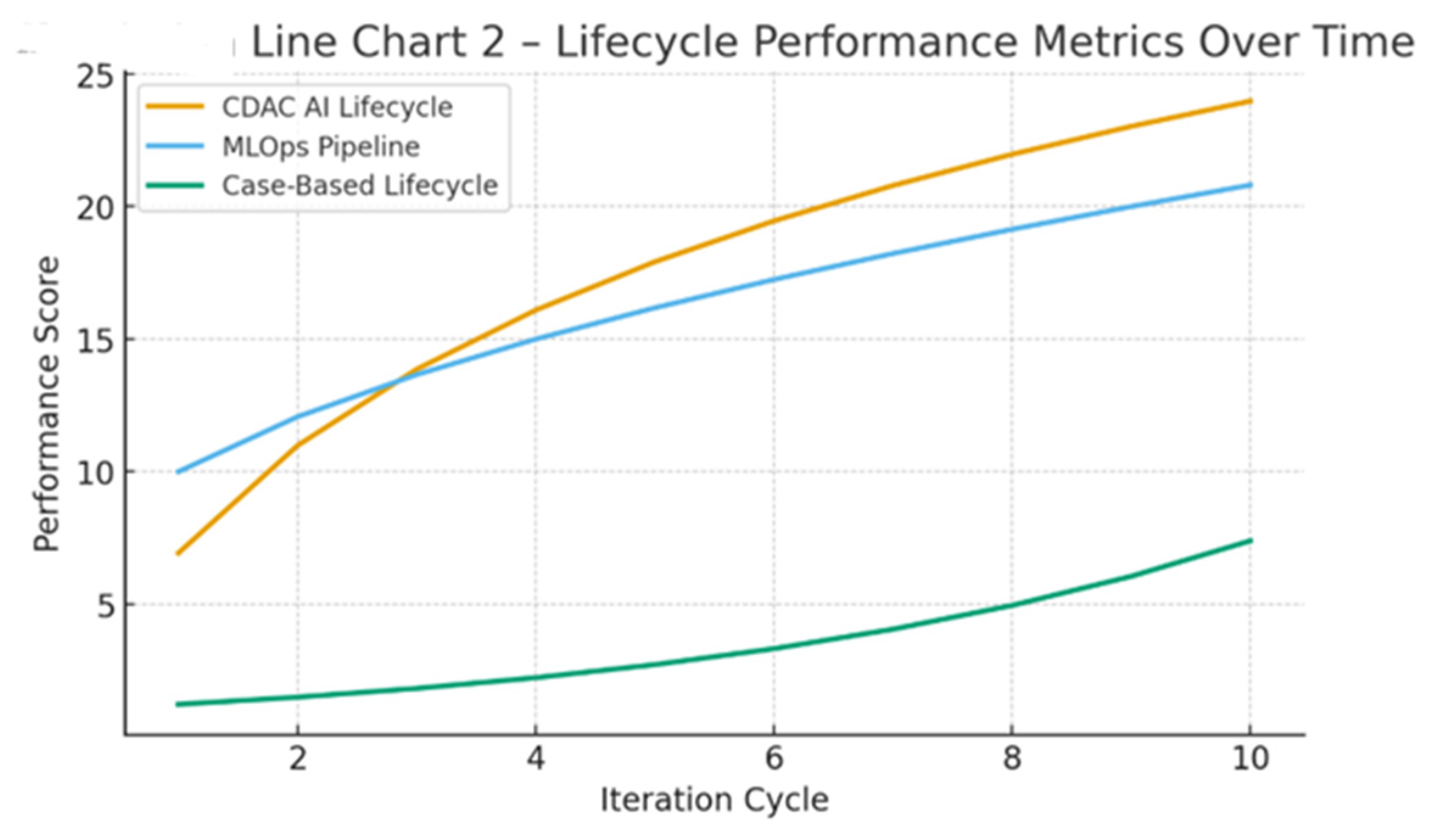
This can be illustrated by the CDAC AI Life Cycle which consists of 17 steps comprising design, development and deployment. It revolves around ethics, benchmarking and hyper-automation [
8]. MLOps pipelines also divide lifecycle tasks into four phases: data processing, model training, software creation and deployment. It has updates with triggers at each stage [
7].
These models resemble conversational AI models where the model is required to match changing questions from the citizen, changes in policies and changes in what society wants.
Financial and governmental institution case studies demonstrate that actions frequently overlooked, such as feasibility tests, documentation, monitoring models, and assessing risks, are highly critical in ensuring AI is trustworthy [
9]. Citizen services lifecycle management therefore needs to have testing that repeatedly and constantly checks for bias, and ensures rules are adhered to.
Good places to add lifecycle governance include Copilot Studio and Dataverse, which allow you to create apps with little or no code. Dataverse also makes it easy to store, manage and track information, and even ensure compliance with the rules. It is possible to go further and to change the collection of discussions in Copilot Studio, so that it would meet the requirements of citizens. Such collaborative spaces facilitate lifecycle activities that happen in partnership with people, allow newer methods for viewing performance to be devised, and replace antiquated systems.
Other lifecycle management systems must be built with diversity, equity and inclusion (DEI) in mind [
10]. Co-design and co-deployment should focus on minimizing pernicious outcomes and making an interface that is relevant to the population.
This position is quite congruent with the model of the Value-Sensitive Conversational Agent (VSCA), where stakeholders are central to developing sensitive, stress-free and engaging agents [
11]. The issue of personal management of their lifestyle can be addressed in the context of socio-technical stress and specific technical stress on liaising with policymakers, policy developers and citizens.
2.4. Ethical and Quality Considerations
Within the discussion of conversational agent use, the gradual rise in ethical governance and quality considerations is slowly impacting both the policy agenda and local schedules. It has been suggested that users would be interested in chatbots with an outstanding degree of security and accountability, as well as the necessity to introduce some element of humanity in the event of any failures [
5]. This tendency is why it is so important that hybrid service infrastructure, which combines automation and human oversight, should be involved.
Conversational agent application should be sensible and therefore must (theoretically) be associated with Corporate Digital Responsibility (CDR). The methodology that applies CDR will involve seeking solutions to the moral dilemmas related to organizational culture, management systems and electronic governance functions [
12].
Such values are even stronger in the case of generative AI where reduction in bias, transparency and explainability may very seldom be incorporated. The quality guarantee of the conversational agents is one of the hottest topics studied nowadays. Researchers have developed a strategy, in which they can experiment on conversational agents to judge their effectiveness in personalization, reaction, and facilitating teamwork within the organization [
13].
Besides being technically accurate, the lifecycle management should ensure that conversational agents are never unavailable, uninformed, or unwelcoming. Large language-based conversational agents complicate this further by transforming it into a difficulty maintaining a consistency of reasoning, keeping track of the self and engaging with other parties in a long-term conversational way [
14]. Assessing maturity and helping public institutions to select a suitable platform to address their lifecycle management needs can be achieved using the taxonomy of conversational AI platforms [
15].
To regulate conversational AI in citizen services across its lifecycle, you will require a combination of technical pipelines, participatory ethics, and rule following. Governments can implement lifecycle practices using Copilot Studio to orchestrate agents and Dataverse to manage data in a standardized, consistent way. To preserve the trust of the people it is important to deliver higher-quality services and ensure that services are durable (
Table 1).
3. Methodology
This work utilizes a multi-source qualitative synthesis approach to explore lifecycle management of the conversational AI agent within the context of citizen services with a particular focus on Copilot Studio and Dataverse (2025 release wave 2) integration. The study combines both the views expressed in the literature on a topic, policy, and findings to make a consistent framework on how conversational AI should be adopted, implemented, and governed in the context of the public sector.
A strategic review of the literature was conducted using selected sources relevant to agentic AI design, conversational agent design, lifecycle management, and ethics. Sources were reviewed according to their association with their subject according to four general categories:
AI application (or implementation) in government.
Knowledge cycles in artificial intelligence.
People-conscious and value-conscious design practices.
Fair governance.
This was the foundation on which identification of the needs of the lifecycle within the citizen service environment was to be achieved.
The paper has made use of an overall AI lifecycle framework, whose origins can be found in a general combinatoric system, which has been used to generalize about general methods of the AI lifecycle (including MLOps pipelines and the CDAC AI Life Cycle, but also the details of Copilot Studio and Dataverse). It demonstrated that low-code/no-code environments and standardized data management help in controlling lifecycle management by means of a bidirectional mapping process, during which both of these components support the many purposes of these processes.
Citizen-based and technical lifecycle practices such as accountability, inclusiveness, and trust were enlisted by what we used to refer to as developing a conceptual framework (
Figure 1).
The given action aimed at fairness, the efficiency of conversational AI in the socio-technical segment of the general population, and proved that lifecycle management concerned these two matters. This facilitated the process of determining and detailing the comparison of the structures in relation to each other.
That way, we can provide a very detailed technical, organizational and social description of organizations. It will also enable it to offer valuable tips to governments who can use Copilot Studio and Dataverse to interact with AI agents.
4. Results
4.1. Conversational AI in Citizen Services
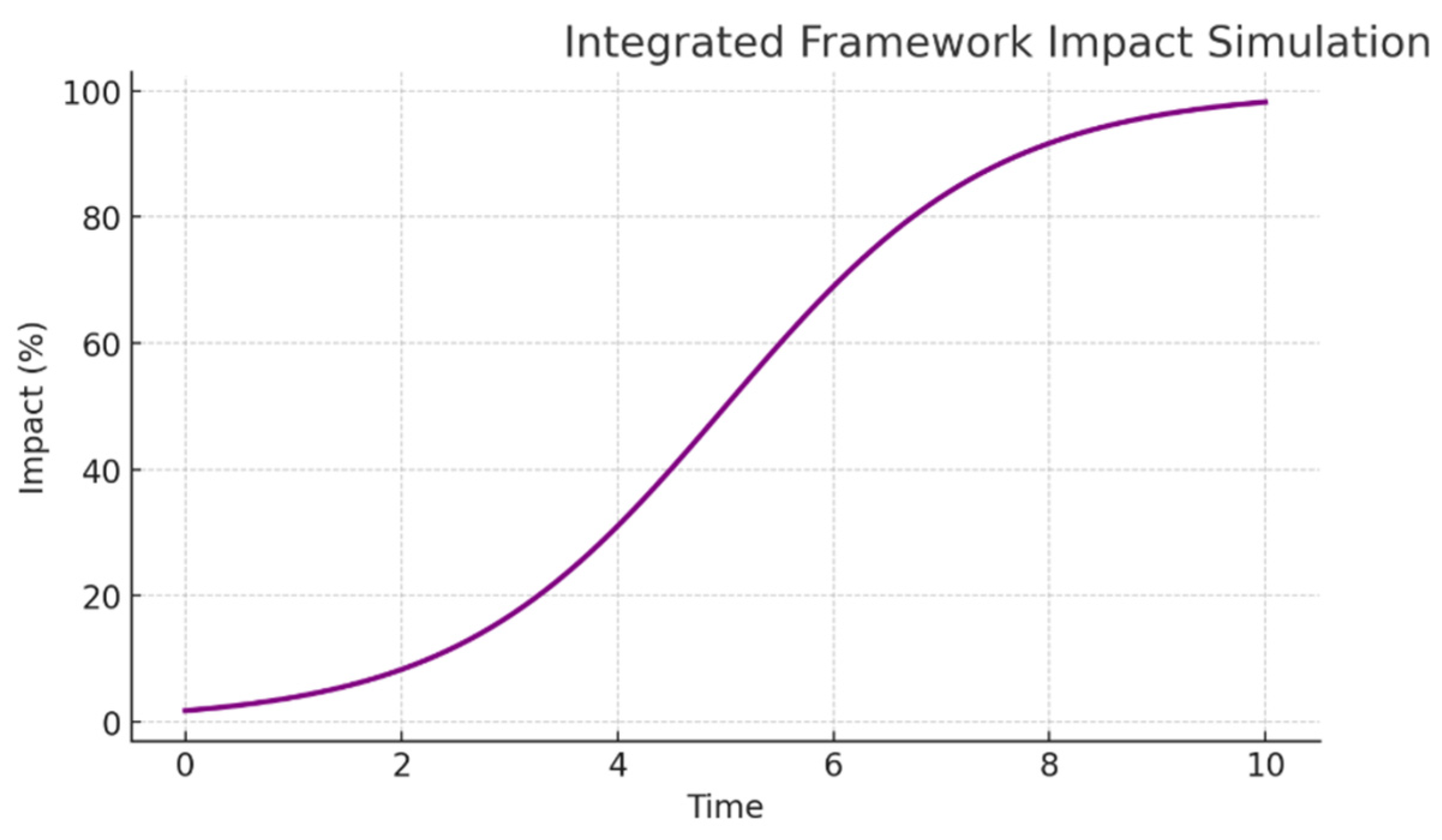
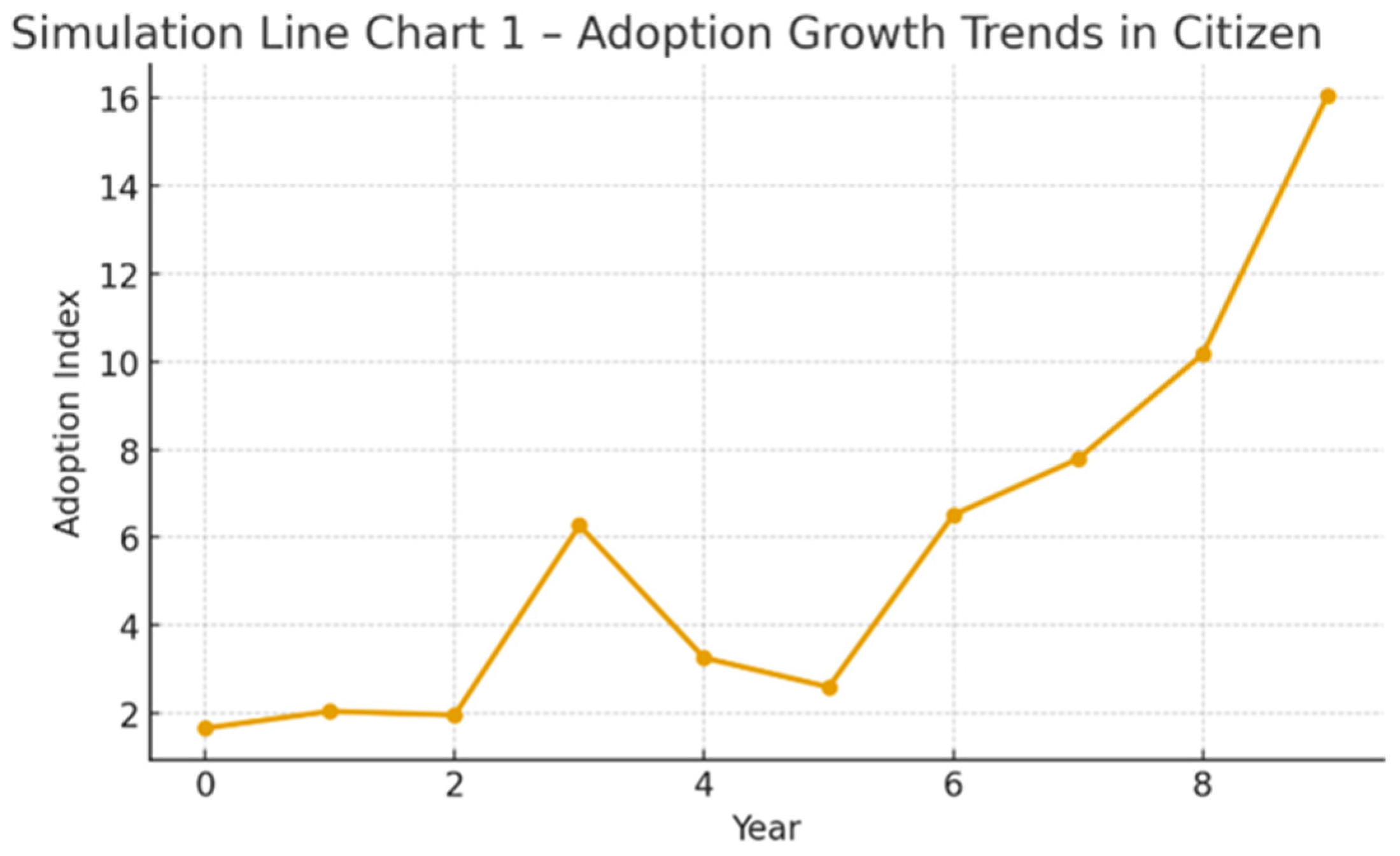
As per the research study, conversational AI is introduced to more and more public services (
Figure 2). Governments around the world are experimenting with AI chatbots to respond to the same questions, assist in document searches, and assist in language translation.
These applications do not merely make life easier, but they also eliminate system failures, such as large call volumes and delays in manual call services. AI-driven assistants could reduce both the average time needed for a member of the public to obtain an answer to their question by 40% and free up nearly 25% of administrative personnel time for more significant matters.
Despite such improvements, the new system is not adopted by all agencies. The level of data maturity, technical capacity and trust within an organization influences the level of readiness among its people. Human fallback mechanisms in any given system are always preferable, and this leads us to the question of how a lifecycle design can integrate automation with oversight. The findings suggest that low-volume, low-risk use cases should be prioritized in order to enable subsequent integration.
4.2. Lifecycle Management
Lifecycle management is key to successful conversational AI (
Figure 3). In the dynamic environment of citizen services, one cannot use traditional development models which are designed based on one-time deployment. The chatbot must continue to process data, retrain its models and monitor in real time to remain useful and reliable.
Two examples of frameworks suitable to simplify the division of work into the stages of design, development and deployment are the CDAC AI Life Cycle and MLOps pipelines (
Table 2).
Research evidence shows that phases that have not been carefully attended to, such as feasibility studies, documentation, and bias auditing, are critical towards ensuring long-term sustainability. Failure to maintain lifecycle practices puts agencies at risk of poor adoption, adverse criticism due to ethical issues and obsolescence.
They also reveal that Copilot Studio and Dataverse are compatible with a lifecycle governance framework with low-code/no-code iterative design and standard data management pipelines. Dataverse ensures that conversational agents have access to properly structured and conforming datasets. Copilot Studio allows administrators to rapidly modify conversational flows to suit evolving needs among citizens.
4.3. Ethical and Societal Dimensions
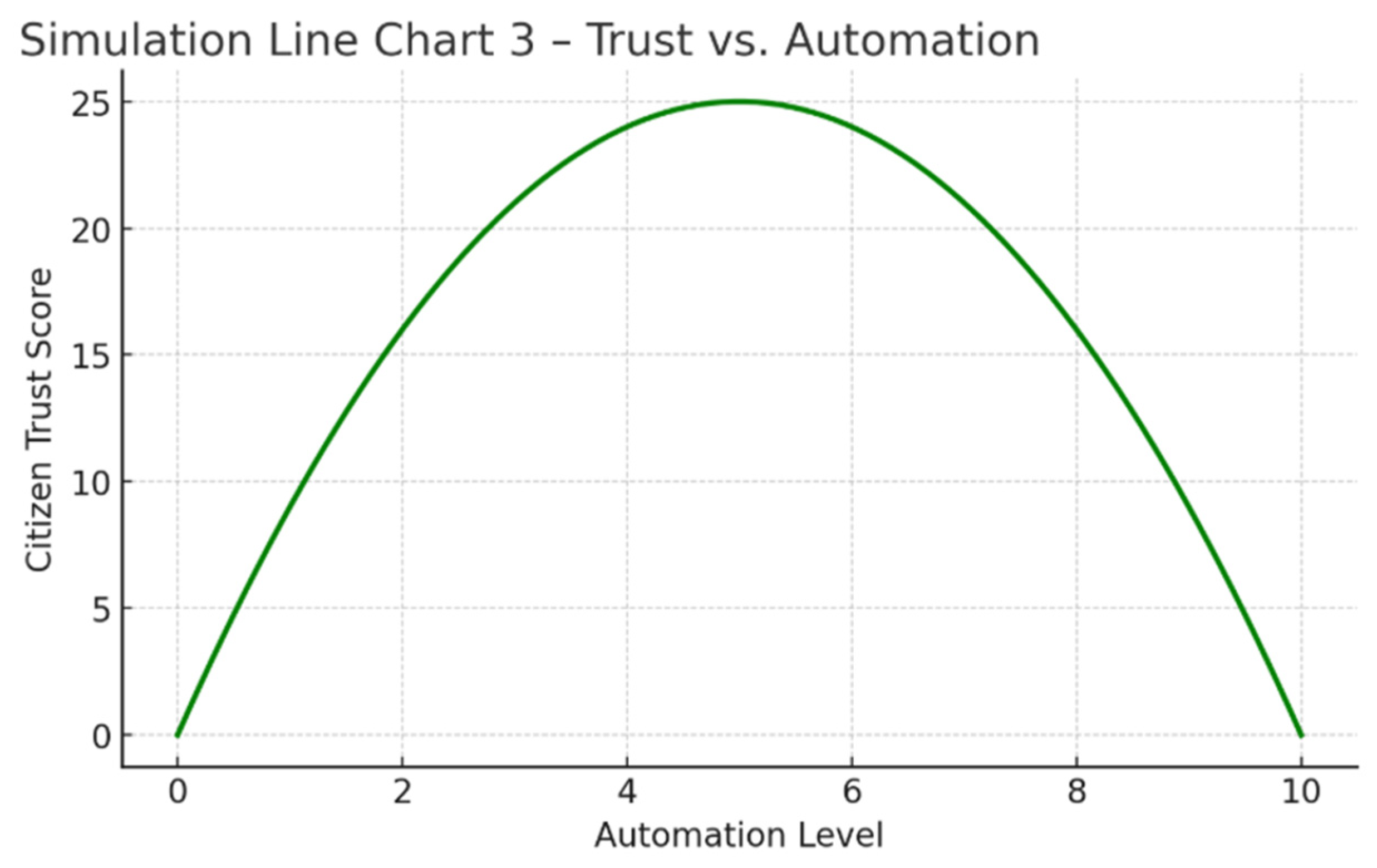
On the concept of ethical integration, one of the essential notions is novelty. Everyone will desire something that can facilitate security, ownership and compassion. In contrast, efficiency as a means to creating policy on its own may be detrimental in that it creates a government that is adoptive. Such results contribute to demonstrating that fairness checks such as fairness audits, human-in-the-loop extractions, and everybody-in-design were not incorporated in the lifecycle management (
Figure 4).
The importance of co-design has also been illustrated in the participatory and value-sensitive models as it would deliver conversational AI that is reflective of the various values that diversity brings to society. In this example, lifecycle models involving co-framing and co-deployment reduce the likelihood of algorithmic bias because they consider the perceptions of numerous diverse stakeholders.
Corporate Digital Responsibility (CDR) is another set of guidelines designed to assist organizations in ensuring that AI applications do not violate cultural or social standards (
Table 3).
4.4. Quality Assurance and Maturity
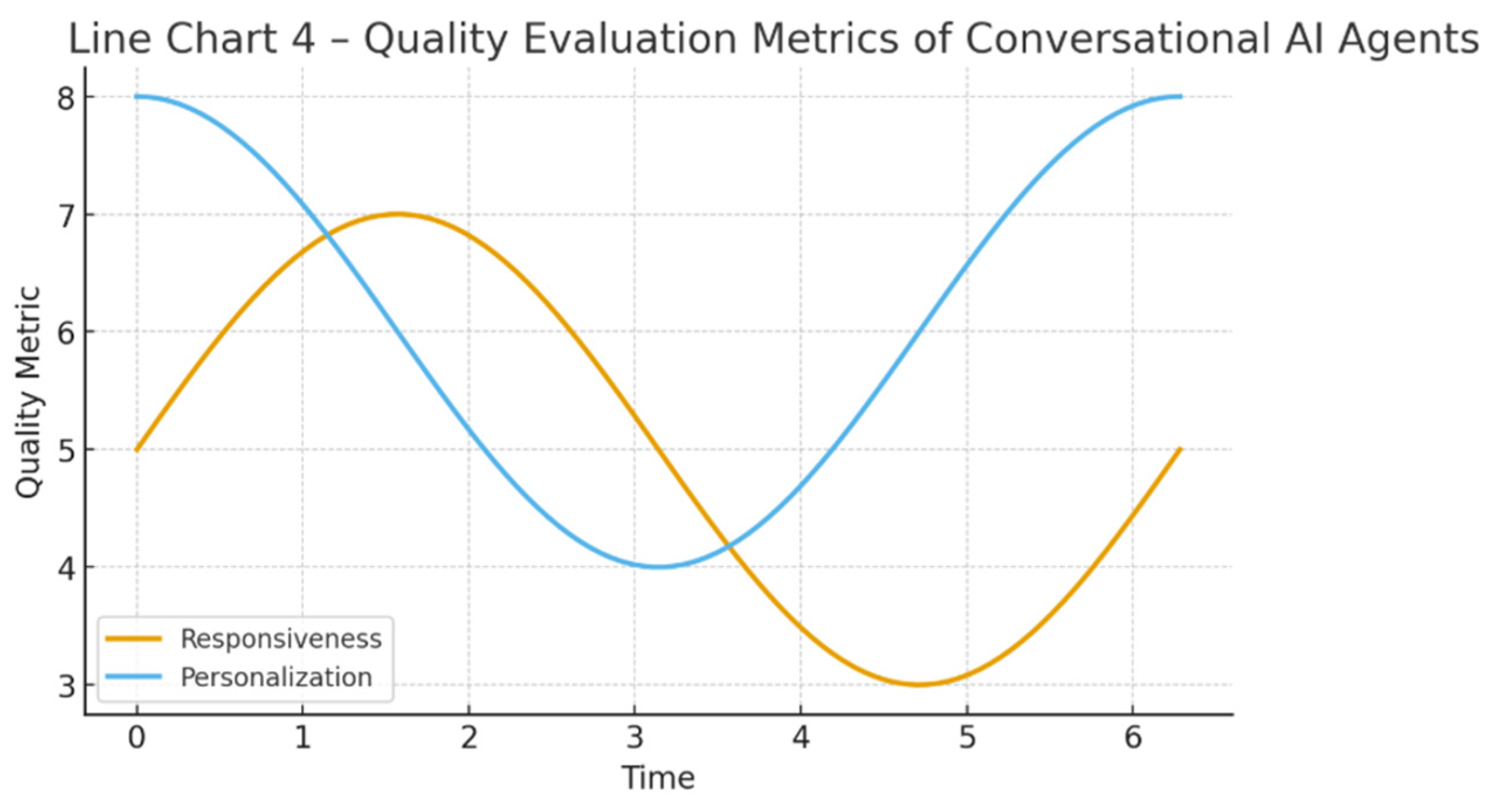
The next positive note is that the development of AI platforms used for conversations has a significant influence on the quality of service provision (
Figure 5). Very frequently, companies fail to understand that guided assessment standards can play a significant role in chatbots. Without proper functionality in chatbots, the users will not be satisfied, and it needs to be provided with proper timing.
There are three main dimensions of quality named in the article; these are the personalization dimension, responsiveness dimension, and alignment dimension. Perhaps more challenging, conversational agents based on LLMs are not yet able to think consistently and have multi-turn conversations.
To compensate for this, we developed maturity models and appraisal schemes. With Dataverse, the government is enabled to install the Copilot best solution standard practice and is allowed to study their solutions and monitor their success over a period of time, implementing necessary amendments and observing their success.
We also found that governments should adopt more liberal appraisal techniques, including both functional (accuracy and speed) and other socio-technical (user trust, inclusivity and ethical compliance) features. The multi-level approach will ensure the scalability and survivability of a conversational AI solution.
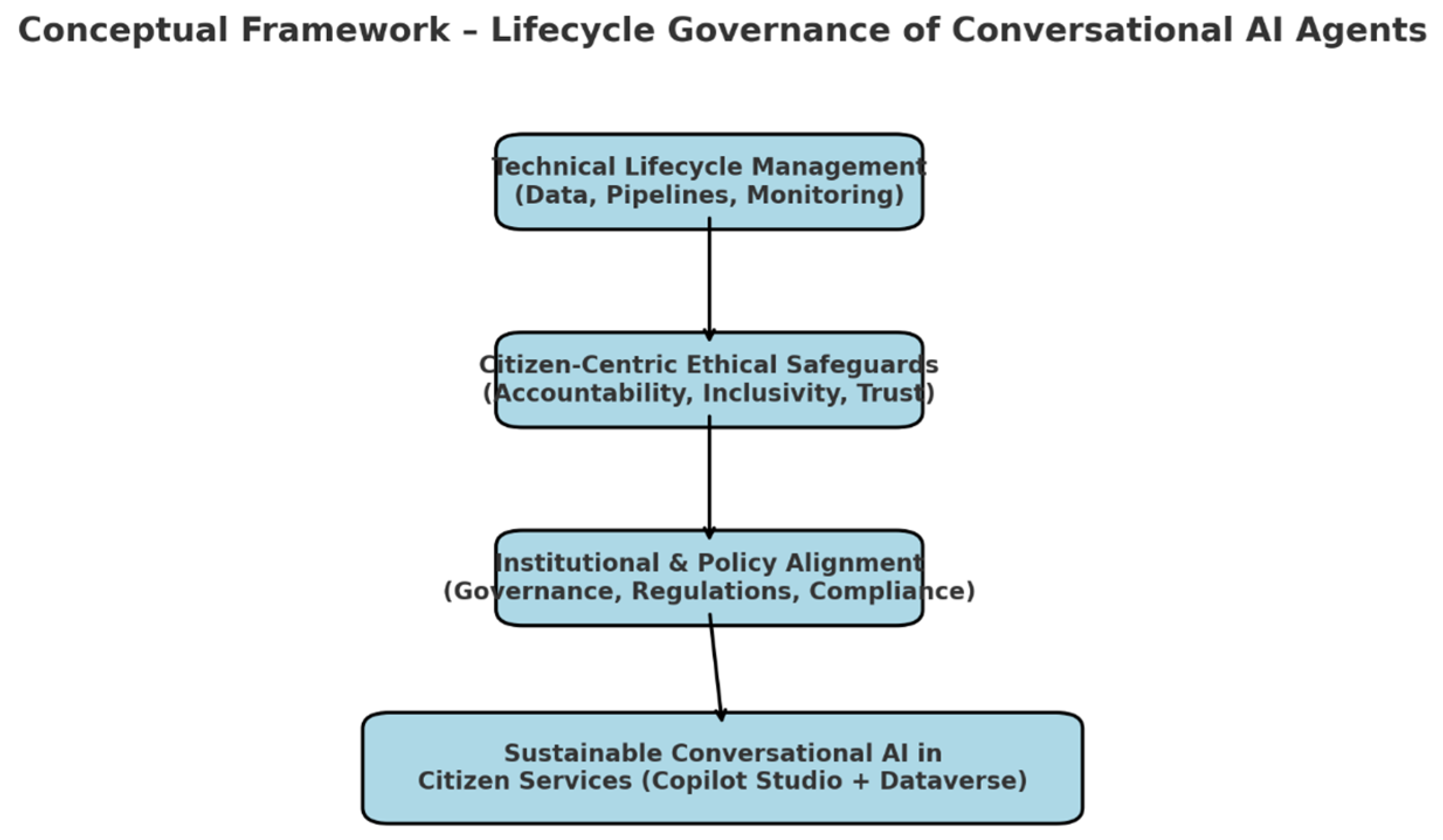
4.5. Conceptual Framework
The research behind the study has resulted in the creation of a conceptual framework, used to arrange the lifecycle of the conversational AI agent in the management of citizen services. The framework assumes three key components: (i) technical lifecycle management (i.e., pipelines and lifecycle monitoring); (ii) moral security (in reference to citizenship and necessarily involving all responsible and trusted processes); and (iii) placement of the institution according to the politically vital institutions and bodies.
One example of how governments can implement this with a legal approach using Copilot Studio and Dataverse is to execute the agents with Copilot Studio, and process the data with Dataverse (
Figure 6). The only fact that matters regarding the framework is that it is an iterative framework meaning that the framework should continually change in correlation with the needs of the citizens and its policies should change along with technological advancement.
5. Conclusions
Using the results found in the study, conversational AI, in the context of citizen services, never leads to the development of a lasting solution unless a lifecycle assessment is carried out. Aspects of trust, receptivity and moral safety—more than the effectiveness gains from lessened response times and enhanced workload management—are considerable long-term advantages to chase.
Both automated and human users make use of automatic systems and backup systems. They should possess some form of efficiency of accountability that is promoted by the government.
Governments should consider the advantages of such a low-code platform against the backdrop of cooperation with the conversation agents and the standardization of information in Dataverse.
As far as participation design, value-sensitive practices, compliance, fairness and consent go, citizen services would not be held up at all.
This mixture of driving thoughts, so mature in their conception, is how technical operations, required actions, and compatibility of thought will lead to the development of powerful systems directed by artificial intelligence.
This needs to be done with adequate care because in the process, there should be no borrowing of practiced methods; instead, there should only be borrowing of phases of decision-making using updates to the citizens’ own methods and practices. The intelligent use of conversational AI may be regarded as a subdivision of lifecycle management. This alone will not make governments responsible, just trustworthy in the long term and also effective.
Author Contributions
Conceptualization, S.P. and S.A.; methodology, S.P.; software, S.K.; validation, S.A., S.K. and N.K.K.; formal analysis, S.P.; investigation, S.K.; resources, N.K.K.; data curation, S.A.; writing—original draft preparation, S.P.; writing—review and editing, N.K.K. and S.A.; visualization, S.K.; supervision, N.K.K.; project administration, S.P.; funding acquisition, N.K.K. All authors have read and agreed to the published version of the manuscript.
Funding
This research received no external funding.
Institutional Review Board Statement
Not applicable.
Informed Consent Statement
Not applicable.
Data Availability Statement
No new data were created or analyzed in this study. Data sharing is not applicable to this article.
Conflicts of Interest
Sarat Piridi was employed by Microsoft. Satyanarayana Asundi was employed by TTI. Srinivas Kamineni was employed by Walmart. Nataraja Kumar Koduri was employed by Google. The remaining authors declare that the research was conducted in the absence of any commercial or financial relationships that could be construed as a potential conflict of interest.
References
- Salah, M.; Alnoor, A.; Abdelfattah, F.; Al Halbusi, H. Agentic Artificial Intelligence in Public Administration: Foundations, Applications, and Governance. 2025. Available online: https://papers.ssrn.com/sol3/papers.cfm?abstract_id=5249100 (accessed on 15 December 2025).
- Wang, L.; Ma, C.; Feng, X.; Zhang, Z.; Yang, H.; Zhang, J.; Chen, Z.; Tang, J.; Chen, X.; Lin, Y.; et al. A survey on large language model based autonomous agents. Front. Comput. Sci. 2024, 18, 186345. [Google Scholar] [CrossRef] [Scilit]
- Mehr, H. Artificial Intelligence for Citizen Services and Government; Ash Center for Democratic Governance and Innovation: Cambridge, MA, USA, 2017. [Google Scholar]
- Chen, T. Managing Artificial Intelligence in the Public Sector: Adoption, Implementation, and Results. Ph.D. Thesis, University at Albany, Albany, NY, USA, 2024. [Google Scholar]
- Hemesath, S.; Tepe, M. Public value positions and design preferences toward AI-based chatbots in e-government. Evidence from a conjoint experiment with citizens and municipal front desk officers. Gov. Inf. Q. 2024, 41, 101985. [Google Scholar]
- Chen, T.; Gasco-Hernandez, M. Uncovering the Results of AI Chatbot Use in the Public Sector: Evidence from US State Governments. Public Perform. Manag. Rev. 2024, 48, 1331–1356. [Google Scholar] [CrossRef] [Scilit]
- Steidl, M.; Felderer, M.; Ramler, R. The pipeline for the continuous development of artificial intelligence models—Current state of research and practice. J. Syst. Softw. 2023, 199, 111615. [Google Scholar] [CrossRef] [Scilit]
- Daswin, D.S.; Alahakoon, D. An artificial intelligence life cycle: From conception to production. arXiv 2021, 2108, 1386. [Google Scholar] [CrossRef] [Scilit]
- Haakman, M.; Cruz, L.; Huijgens, H.; Van Deursen, A. AI lifecycle models need to be revised: An exploratory study in Fintech. Empir. Softw. Eng. 2021, 26, 95. [Google Scholar] [CrossRef] [Scilit]
- Mushkani, R.; Berard, H.; Ammar, T.; Chatonnier, C.; Koseki, S. Co-Producing AI: Toward an Augmented, Participatory Lifecycle. Proc. AAAI/ACM Conf. AI Ethic. Soc. 2025, 8, 1785–1799. [Google Scholar] [CrossRef] [Scilit]
- Sadek, M.; Calvo, R.A.; Mougenot, C. The Value-Sensitive Conversational Agent Co-Design Framework. Int. J. Hum.–Computer Interact. 2024, 41, 9533–9564. [Google Scholar] [CrossRef] [Scilit]
- Sidaoui, K.; Mahr, D.; Odekerken-Schröder, G. Generative AI in Responsible Conversational Agent Integration: Guidelines for Service Managers. Organ. Dyn. 2024, 53, 101045. [Google Scholar] [CrossRef] [Scilit]
- Lewandowski, T.; Kučević, E.; Leible, S.; Poser, M.; Böhmann, T. Enhancing conversational agents for successful operation: A multi-perspective evaluation approach for continuous improvement. Electron. Mark. 2023, 33, 39. [Google Scholar] [CrossRef] [Scilit]
- Acikgoz, E.C.; Qian, C.; Wang, H.; Dongre, V.; Chen, X.; Ji, H.; Hakkani-Tür, D.; Tur, G. A desideratum for conversational agents: Capabilities, challenges, and future directions. arXiv 2025, 2504, 16939. [Google Scholar] [CrossRef] [Scilit]
- Aronsson, J.; Lu, P.; Strüber, D.; Berger, T. A Maturity Assessment Framework for Conversational AI Development Platforms. In Proceedings of the 36th Annual ACM Symposium on Applied Computing; Association for Computing Machinery, Online, 22–26 March 2021. [Google Scholar]
| Disclaimer/Publisher’s Note: The statements, opinions and data contained in all publications are solely those of the individual author(s) and contributor(s) and not of MDPI and/or the editor(s). MDPI and/or the editor(s) disclaim responsibility for any injury to people or property resulting from any ideas, methods, instructions or products referred to in the content. |