1. Introduction
The growing demand for durable, environmentally friendly reinforcing materials for fiber-optic cables has driven significant interest in natural fiber composites. Specifically, the abaca fiber (Musa textilis) is a promising candidate due to its exceptional tensile strength, biodegradability, and cost-effectiveness. With its potential to replace synthetic fiber reinforcements, abaca fiber-reinforced polymer composites offer a sustainable alternative that aligns with modern environmental and economic priorities. This study investigates the feasibility of utilizing abaca fiber-reinforced polymer composites to enhance the strength of fiber-optic cables. Additionally, it highlights the crucial role of industrial technology education in promoting research and innovation to develop sustainable material applications. By integrating experiential learning into industrial technology curricula, institutions can bridge the gap between theoretical knowledge and hands-on application, equipping future professionals with the practical skills necessary for technological advancements in materials science. Moreover, embedding green technology principles into course outcomes ensures that students develop an awareness of environmentally sustainable practices in engineering and manufacturing.
Numerous studies have investigated the mechanical performance, bond strength, and interface characteristics of abaca fiber-reinforced composites, demonstrating their viability in structural applications. The strong bond strength of abaca fiber when integrated into reinforced concrete structures suggests its potential as a natural fiber-reinforced polymer (NFRP) material for various engineering applications, including the reinforcement of fiber-optic cables [
1]. Additionally, the tensile properties of abaca fiber-reinforced polymer sheets confirm their high tensile strength and their effectiveness as an eco-friendly, cost-efficient alternative to synthetic fiber-reinforced polymer (FRP) materials. These studies collectively support the feasibility of abaca fiber as a reinforcement material for fiber-optic cables, offering a sustainable and efficient solution to enhance their structural integrity [
2].
Industrial technology education is crucial in advancing research and innovation in sustainable materials. A key component of this educational approach is experiential learning, which emphasizes hands-on activities, real-world applications, and problem-solving exercises beyond traditional classroom instruction. By engaging in laboratory experiments, prototype development, and material testing, students gain practical experience in composite fabrication and performance evaluation. Research indicates that fiber-reinforced polymer composites, including those utilizing natural fibers such as abaca, have garnered increasing attention for their sustainability and mechanical performance [
3].
Through experiential learning, students can work with abaca fiber-reinforced composites firsthand, optimizing processing techniques, evaluating material properties, and understanding the challenges involved in sustainable material applications. Internships, industry collaborations, and capstone projects further enhance this learning approach, allowing students to apply their knowledge to real-world engineering problems. Additionally, partnerships between academic institutions and industry can facilitate technology transfer, ensuring that research findings contribute to practical innovations in fiber-optic cable reinforcement and other engineering fields [
4].
Green Technology in Course Outcomes. Green technology must be integrated into course outcomes to align industrial technology education with sustainability goals. This ensures that students not only gain technical expertise but also develop an understanding of environmentally responsible manufacturing, energy efficiency, and waste reduction. Including green technology in the course objectives enables students to apply sustainable materials and develop and implement eco-friendly alternatives, such as abaca fiber-reinforced composites, in engineering and manufacturing applications. Optimize Energy-Efficient Processes—Design and improve low-energy manufacturing techniques to minimize environmental impact. Reduce Industrial Waste—Implement recycling and waste-management strategies in composite-material production [
5]. Adopt Circular Economy Principles—Promote the reuse and repurposing of natural fiber composites to extend their lifespan. Analyze Environmental Impacts—Assess the carbon footprint and life-cycle sustainability of fiber-reinforced polymer materials. Promote Green Innovation—Engage in research that advances biodegradable and renewable composite materials [
6].
By embedding these principles into industrial technology curricula, educational institutions can produce graduates who are not only skilled in product development but also committed to environmental sustainability. This approach prepares future industrial technologists and researchers to develop next-generation green technologies, contributing to the global transition toward sustainable solutions [
7].
Despite extensive studies on the mechanical performance, bond strength, and interface characteristics of abaca fiber-reinforced polymer (AFRP) composites, a notable gap remains in research on their specific application in fiber-optic cable reinforcement. Most existing studies focus on AFRP composites in reinforced concrete structures and in biodegradable polymer applications; however, there is limited empirical data on their effectiveness in strengthening fiber-optic cables. Additionally, while previous research has highlighted the tensile strength and durability of abaca fiber, there remains a need to investigate its long-term performance under varying environmental conditions, including humidity, temperature fluctuations, and mechanical stress, which are critical factors in fiber-optic cable reinforcement.
Furthermore, integrating industrial technology education, experiential learning, and green technology in sustainable material applications has been widely acknowledged. However, its direct impact on the development and adoption of AFRP composites in engineering curricula and industry practices remains underexplored. This study aims to bridge gaps by evaluating the feasibility of abaca fiber-reinforced composites for fiber-optic cable reinforcement, while highlighting the role of industrial technology education in promoting sustainable innovations through hands-on learning and the integration of green technology. This research contributes to materials science and industrial education laboratory activities by offering a new perspective on using natural fiber composites in telecommunications infrastructure and by promoting sustainability-driven solutions.
2. Methodology
This study employed a quasi-experimental product development research design, a methodological approach that integrates quasi-experimental research elements with product innovation and refinement. Unlike accurate experimental designs, quasi-experimental research does not rely on random assignment; instead, it utilizes pre-existing groups or classifications to evaluate the effectiveness of a new product or material. This design is particularly useful in applied sciences, engineering, and material development, where strict experimental controls may not always be feasible [
8]. These methodologies are particularly valuable in engineering and industrial technology, where iterative testing and refinement processes guide product improvement, eliminating the need for strictly controlled laboratory environments [
9]. The primary goal is to develop, test, and refine a product while ensuring its practicality and effectiveness in real-world applications. The research was conducted at Caraga State University, Cabadbaran City (CSUCC). Researchers from the Bachelor of Science in Industrial Technology and the Bachelor of Technology and Livelihood Education, with a Major in Industrial Arts with a Specialization in Electricity, developed and tested the product within the university’s facilities. The research utilized various instruments for data collection and evaluation. Material strength testing was conducted using a tensile strength test to measure the mechanical properties of abaca fiber and determine its suitability as an alternative strengthening material for fiber-optic cables.
The tensile strength testing involved analyzing the material’s performance under stress to determine its durability. A comparative analysis was conducted to measure the tensile strength of three classifications of abaca fiber—Class A, Class B, and Class C—using parameters such as average thickness, width, nominal area, yield point, maximum tensile load, tensile strength, initial and final length, and elongation percentage.
3. Results and Discussion
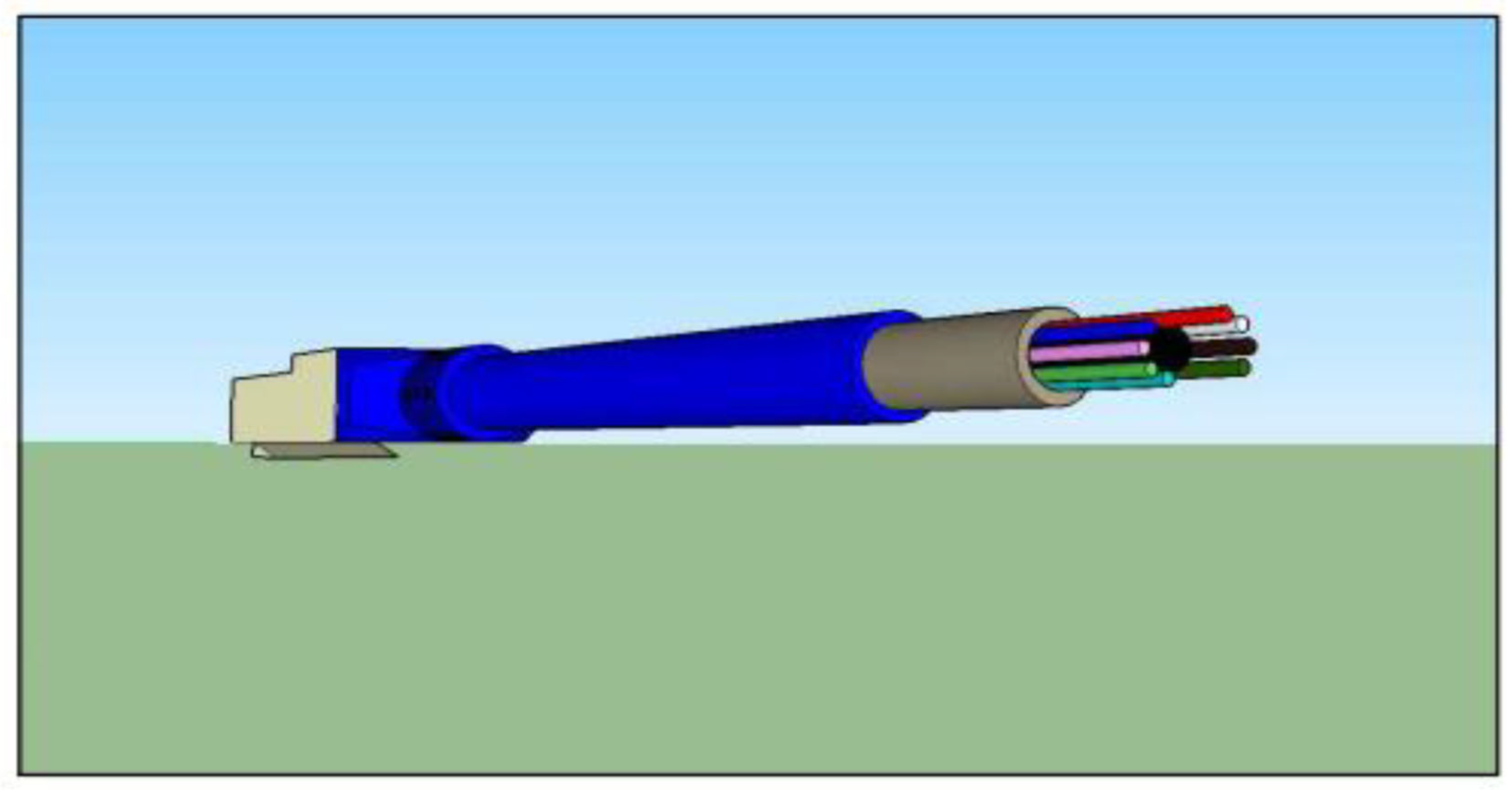
The figure presented in
Figure 1 illustrates the results from the product development process, enabling an evaluation of each sample’s effectiveness by comparing its test results.
Figure 1 illustrates the isometric view of the design, highlighting the components of the fiber-optic cable, including both the inner and outer parts.
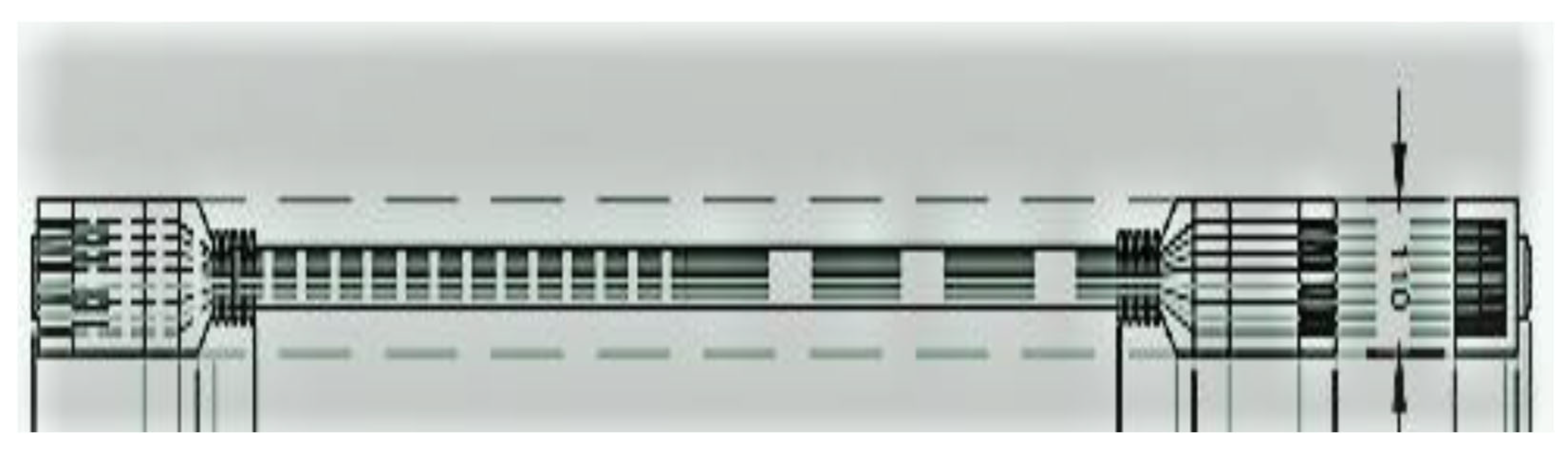
Figure 2 shows the orthographic view of the LAN connector, which displays the product’s connector measurement, including 110 mm. It shows a close-up technical illustration of a structured data transmission cable. It provides an internal view of the cable’s components, including the connectors at the ends, twisted pair wiring, shielding, and outer insulation.
The symmetrical nature of the connectors indicates a standardized termination, perhaps an RJ45 connector, which is widely used in networking applications. The wires in the cable’s twisted pairs are arranged in a regular pattern to minimize electromagnetic interference and crosstalk, enabling stable data transfer. Furthermore, shielding covering the conductors means that the cable is engineered for improved performance, especially under conditions of high electromagnetic interference. The dashed lines in the background represent the outer casing, which protects the wiring inside. This structured cable ensures reliable communication in industrial, commercial, and high-speed networking environments. The diagram illustrates the key components of the cable, enabling one to understand its design and operation.
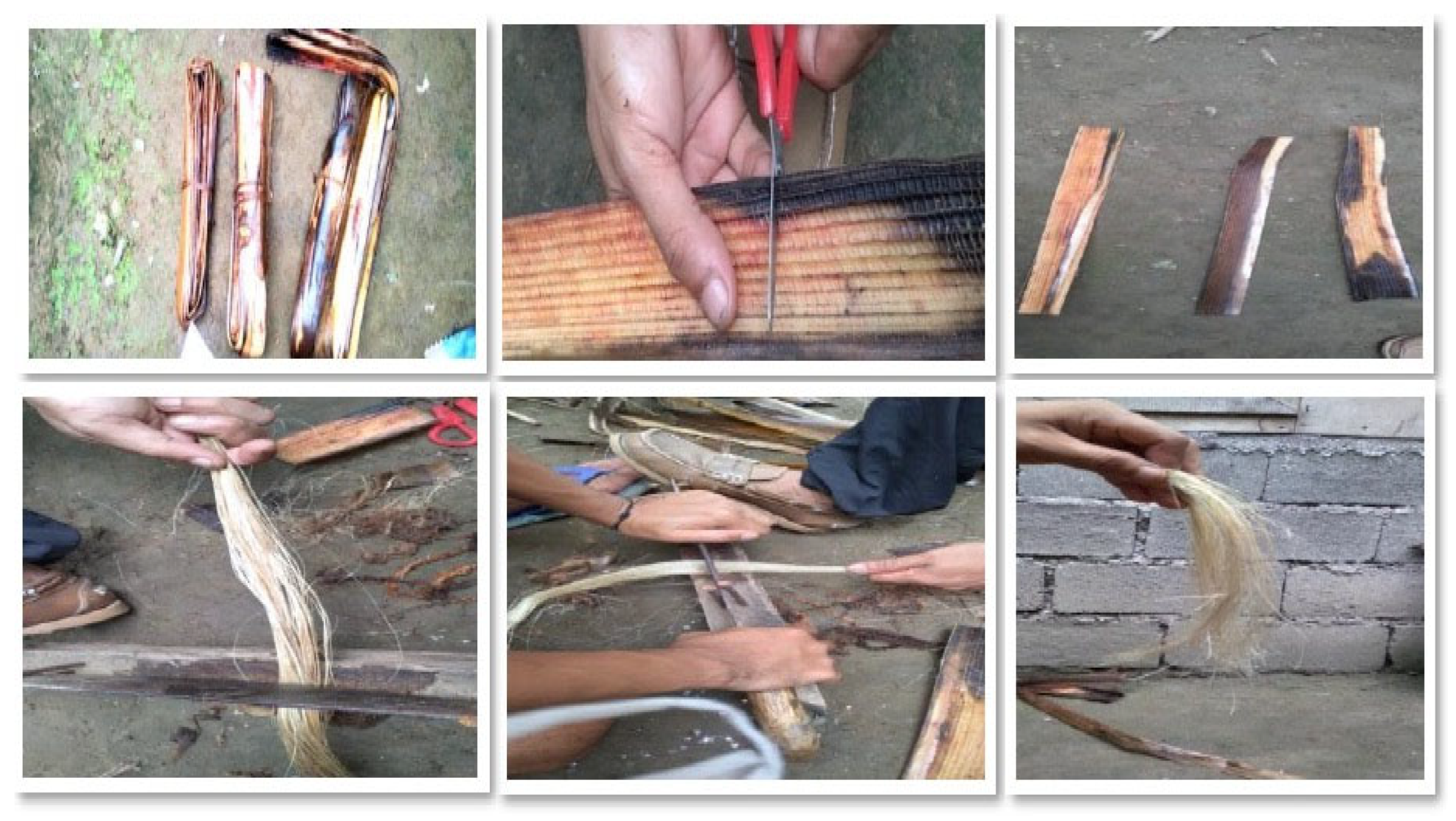
Figure 3 shows that preparing abaca fiber begins with selecting and preparing the abaca plant. First, the abaca is prepared by ensuring that the plant is ready for fiber extraction. Once ready, the abaca is cut to the desired size to facilitate easier handling and processing. After cutting, the material is adjusted to the desired height to ensure uniformity in fiber extraction. The abaca leaf is pressed and pushed using a dagger to initiate the thinning process. This step helps break down the fibers, making them more manageable. The pressing and pulling process is repeated to achieve the desired fiber thinness. Once this is done, careful observation is required to assess whether the fibers have reached the appropriate consistency and texture. Finally, the abaca fibers are soaked to further soften them and prepare them for subsequent processing. This systematic approach ensures the production of high-quality abaca fiber suitable for a wide range of applications.
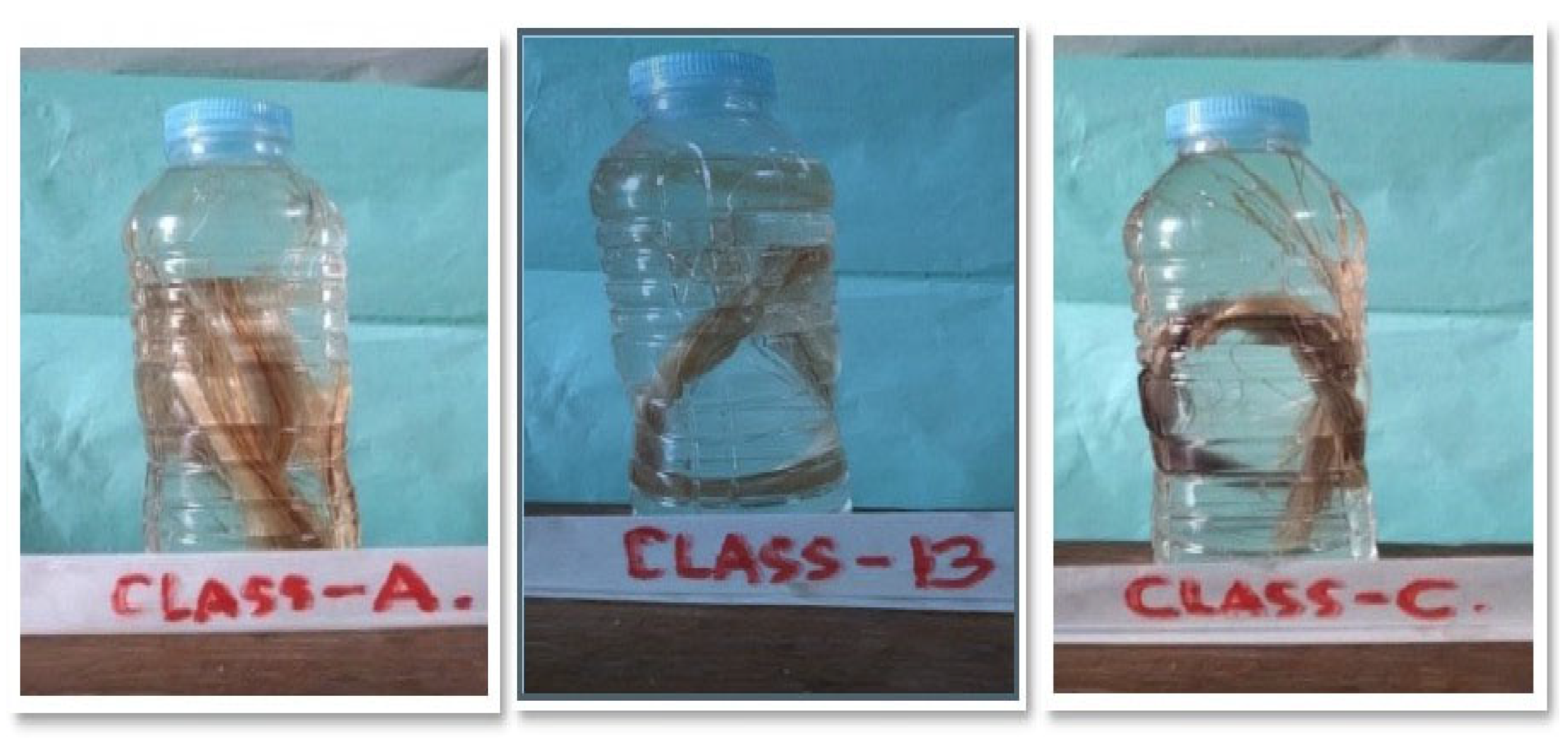
These three samples shown in
Figure 4 were not processed on the same day due to variations in soaking time. However, the process continued to strengthen the abaca through soaking. Class A, which was made from abaca leaves, had a salinity measurement of 95%, similar to that of seawater. The abaca became very strong after being soaked for 2 to 3 weeks. Class B had an average salinity of 82%, which was determined through soaking sessions. As a result of this soaking process, the material was also strengthened.
In contrast, Class C had an average saltiness of 30%. However, after soaking for 2 to 3 weeks, Sample C was observed to lose strength. These indicate that higher salinity levels strengthen abaca fibers during soaking.
Performing Tensile Test
A tensile test is a mechanical test used to measure a material’s strength, elasticity, and ductility by stretching it to the point of failure. This test helps evaluate how a material responds to applied force and is widely used in engineering, manufacturing, and materials science research.
The table in
Table 1 presents a comparative analysis of tensile strength and elongation properties for three material categories: Class A, Class B, and Class C. A clear trend was evident in the physical dimensions of the specimens: as we moved from Class A to Class C, both the average thickness and width increased significantly, nearly doubling from 1.97 mm in Class A to 3.60 mm in Class C. This increase in physical size directly correlates with the nominal area, which expanded from 3.0481 mm
2 to 10.1788 mm
2.
Interestingly, while the maximum tensile load remained relatively stable across all classes (ranging only slightly from 17.17 kN to 17.8 kN), the tensile strength exhibited a sharp inverse relationship with the specimen size. Class A, the thinnest material, boasted the highest tensile strength at 5631.5 kg/mm2, whereas Class C, the thickest, showed the lowest at 1679.8 kg/mm2. This suggests that while all three classes can withstand a similar total force before failure, the material in Class A was significantly more “dense” or efficient in its load-bearing capacity per unit of area.
Regarding the elongation data, the table measures ductility by comparing the initial and final lengths. Class A demonstrated the highest level of flexibility with a 3.3% elongation, while Class C was the most rigid, stretching only 2.4% before breaking. Overall, the data indicate that as the material’s cross-sectional area increased (from Class A to C), it became progressively weaker under pressure (kg/mm2) and less ductile, making Class A the superior choice for applications requiring high strength-to-size ratios and greater elasticity.
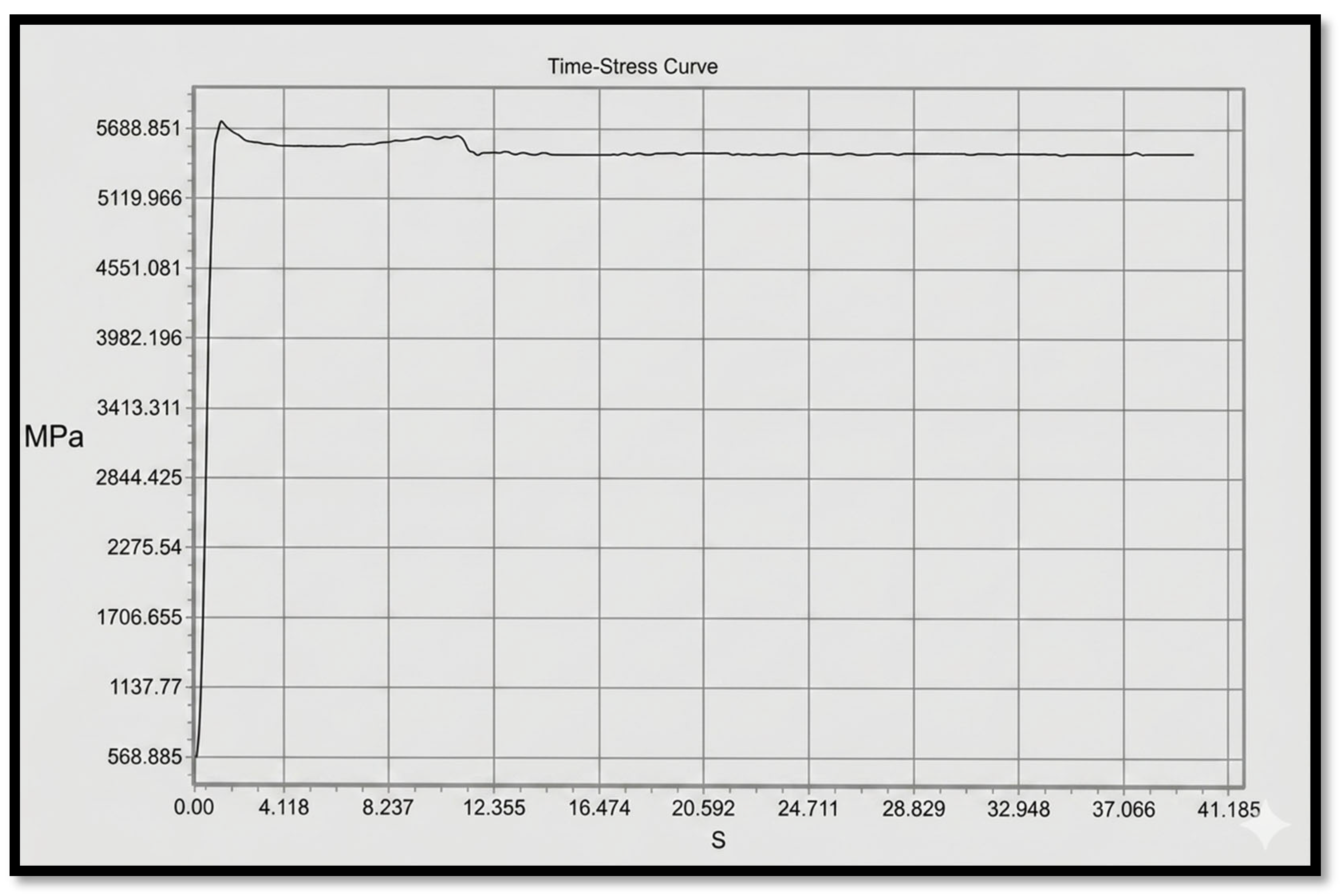
Figure 5 illustrates the strength of the abaca fiber under Class/Sample A, measured from the lowest to the highest position. As illustrated by the graph above, the range was from 41.185 to 5688.851. This marks the end of Sample A’s testing strength. Moreover, the measuring will end when an abaca sample is broken.
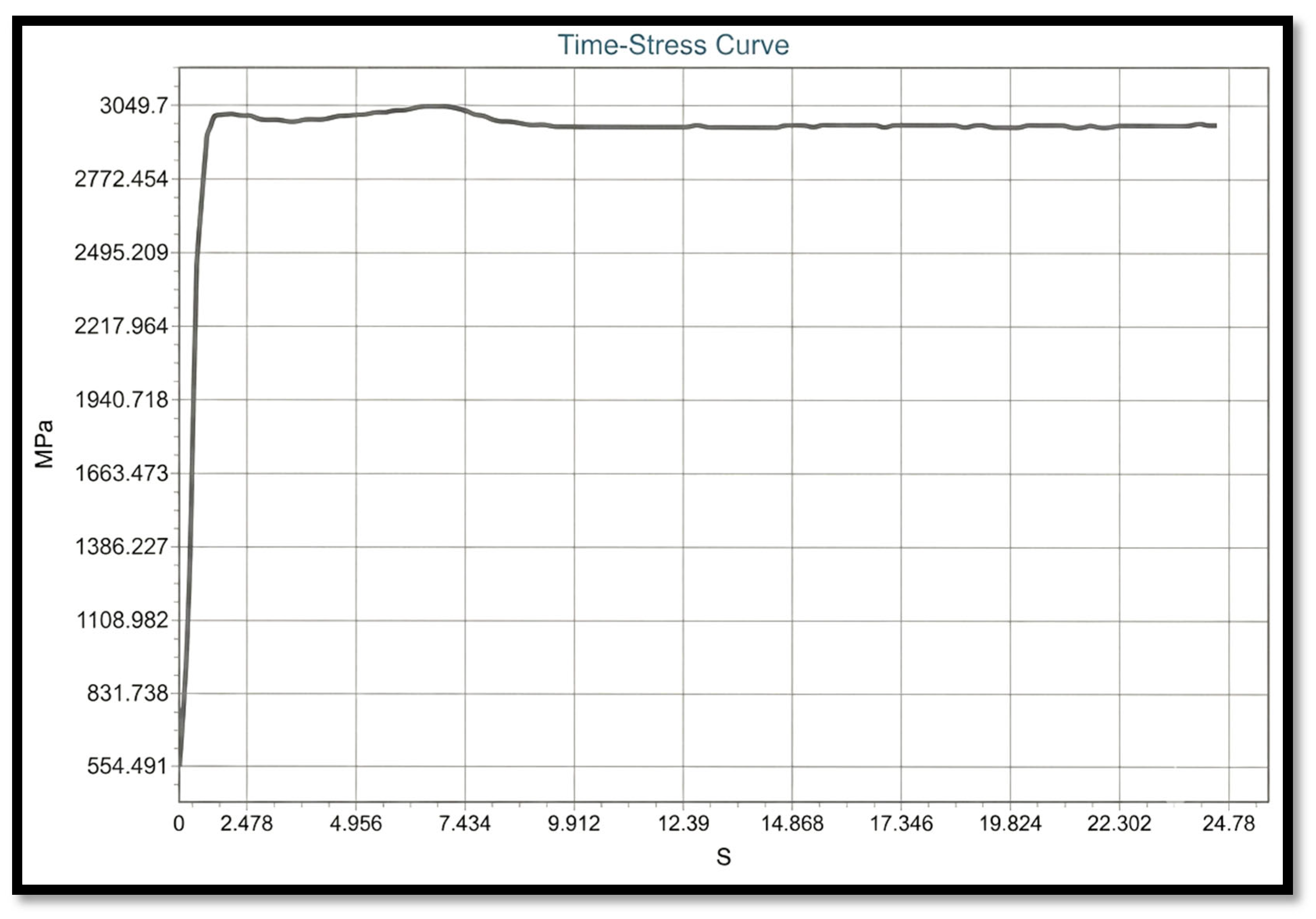
The graph above, shown in
Figure 6, illustrates one method for measuring the strength of an abaca fiber. The testing machine pulls the leaf until the material reaches the break-even point. We can observe the material’s mechanical properties from the lowest (MPa) to the highest measurement point. The abaca leaf’s lifespan has ended, at which point the graph is flat. We also noticed that the time stress from 24.78 will ultimately be 3049.7 MPa.
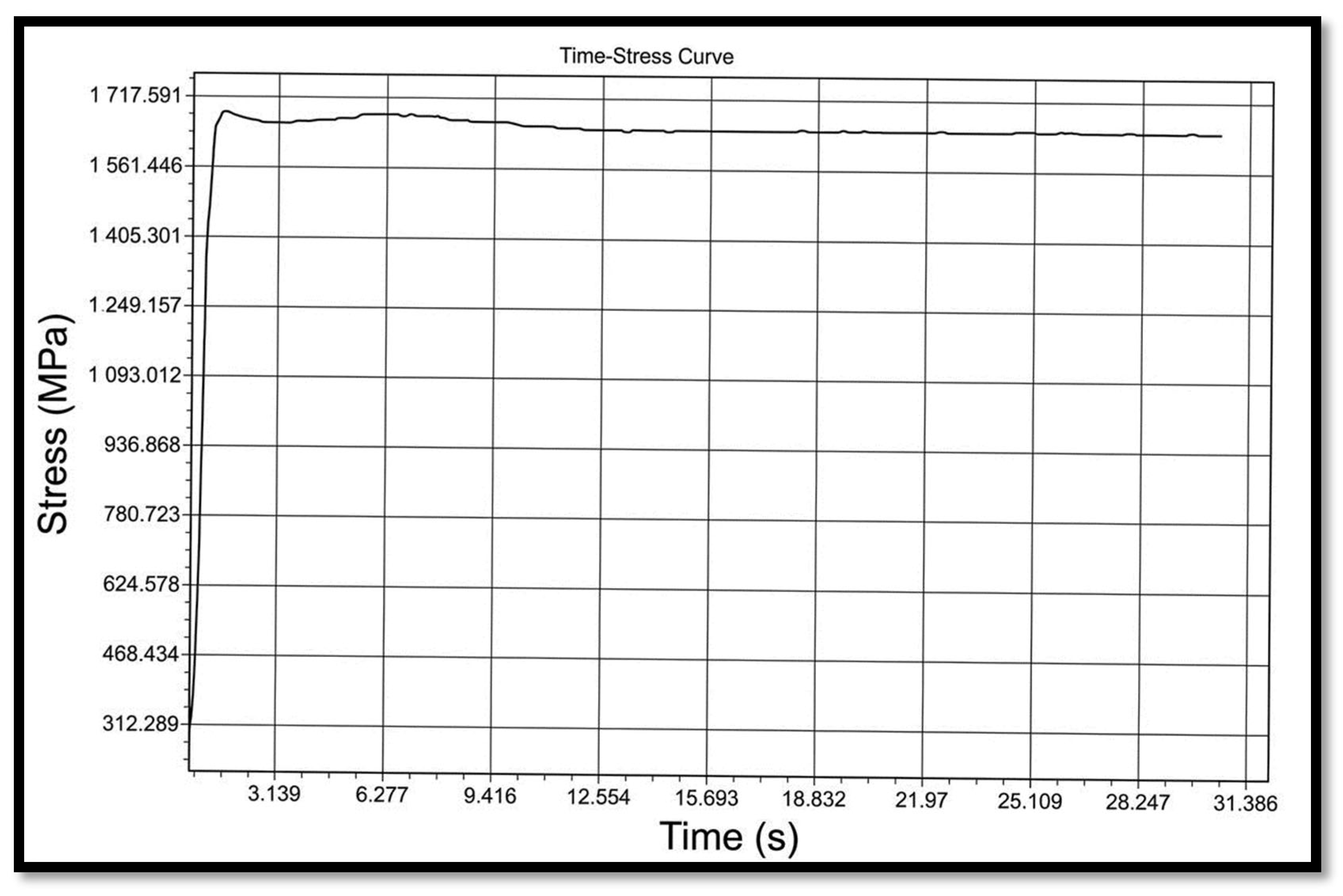
Figure 7 provides time–stress curves for abaca fiber classes A, B, and C, revealing a distinct correlation between the material’s structural grade and its mechanical performance. Class A demonstrated the highest structural integrity, reaching a peak stress of approximately 5688.85 MPa. This was nearly double the strength of Class B (3049.7 MPa) and more than triple that of Class C (1717.59 MPa). These results align with the initial data table, which confirms that while all classes can sustain a similar maximum load in kilonewtons, the thinner Class A specimens possessed a significantly higher tensile strength per unit area.
In terms of endurance and behavior under load, all three samples exhibited a rapid elastic rise followed by a sustained plateau, indicating stable plastic deformation before failure. Class A was the most durable, maintaining its integrity for over 41 s during the test. While Class B reached a higher stress level than Class C, it was the least enduring, concluding its cycle in approximately 24.7 s. Class C, despite having the lowest stress capacity, showed a remarkably smooth and stable plateau for about 31.3 s, suggesting that thicker fibers may offer more consistent, albeit lower-intensity, resistance over time.
Finally, we chose Class A, with an average tensile strength of 5631 kg/mm2 (square millimeter), because the sample was well-attached and represents the aramid strength of the product we are innovating. Compared to the common aramid used in yarn, we conducted this test to clarify the effectiveness and strength of aramid as a fiber-optic cable material. Instead of yarn, we used a natural fiber called abaca.
4. Conclusions
This study successfully evaluated the tensile strength and elongation properties of abaca fiber samples (A, B, and C) after varying soaking durations in seawater. The results indicate that soaking time significantly affects the mechanical properties of abaca fiber, with Sample A demonstrating the highest tensile strength (5631.5 MPa) and Sample C showing the lowest (1679.8 MPa). The findings suggest that prolonged exposure to seawater weakens abaca fiber, as observed in Sample C, which had the lowest salinity retention and reduced tensile strength after soaking for 2–3 weeks. Among the three samples, Sample A was the most effective in terms of tensile strength and elongation, making it the best candidate for use as an alternative reinforcement material in fiber-optic cable production.
The study supports the potential of abaca fiber as a sustainable, natural alternative to synthetic aramid yarn, offering a strong yet environmentally friendly material for industrial applications. The findings also contribute to industrial technology education by allowing students to engage in hands-on material testing and mechanical analysis. Learners gain practical experience by reinforcing theoretical concepts from industrial materials science and manufacturing technology through tensile-strength and salinity tests on abaca fiber. This approach helps enhance the students’ critical thinking and problem-solving skills, as well as their ability to analyze the effects of seawater exposure, interpret data, and draw meaningful conclusions. Furthermore, the study emphasizes the importance of precision and accuracy in scientific experimentation, enabling students to develop essential research skills for technical and industrial fields. It also promotes sustainability awareness by showcasing the potential of abaca fiber as an eco-friendly alternative to synthetic materials. This insight encourages learners to explore renewable resources and sustainable industrial solutions, promoting responsibility in developing environmentally friendly innovations. By bridging theoretical knowledge with industry applications, the study provides valuable insights into how materials are tested and evaluated for practical use, such as fiber-optic cable reinforcement. This experiential learning approach prepares students for future careers in industrial technology, manufacturing, and applied sciences by exposing them to industry-relevant challenges and technological advancements.
Additionally, this research enhances collaboration and technical skills as students work together to conduct experiments, handle equipment, and analyze results. These experiences develop teamwork and hands-on competencies essential in technical and vocational careers. By actively participating in this study, learners deepen their understanding of materials science while cultivating scientific inquiry, innovation, and sustainability. The study addresses a significant research gap by evaluating abaca fiber’s tensile strength and elongation properties after prolonged exposure to seawater. While previous studies have explored the general properties of abaca fiber, limited research has examined its mechanical performance in this context, particularly in fiber-optic cable reinforcement.
For future research, several areas can be explored to optimize the use of abaca fiber in industrial applications. First, investigating different pre-treatment methods, such as chemical processing or controlled drying techniques, could enhance the fiber’s durability and mechanical properties. Second, assessing the fiber’s long-term performance under varying environmental conditions, such as extreme temperatures, humidity, and salinity levels, could determine its suitability for broader applications. Additionally, improving fiber treatment techniques to maximize tensile strength and longevity would ensure its effectiveness in industrial applications. A comparative analysis of abaca fiber with other natural fibers, such as jute, coir, and hemp, could help determine its relative strengths, flexibility, and environmental impact. Exploring the integration of abaca fiber into composite materials for manufacturing and product development could further expand its applications beyond fiber-optic cables. Finally, large-scale pilot testing and real-world applications of abaca fiber as a reinforcement material should be conducted to validate its effectiveness and commercial viability. By addressing these areas, future research can build on this study’s findings and further advance the potential of abaca fiber as a sustainable, high-performance material for industrial use.
Author Contributions
Conceptualization, V.J.A., J.O.E., R.J.L., M.A.F. and J.V.Q.; methodology, J.O.E., R.J.L., M.A.F. and J.V.Q.; validation, and formal analysis, investigation, resources, writing V.J.A. and J.O.E.; original draft preparation, J.O.E.; writing—review and editing, J.O.E., R.J.L. and M.A.F., visualization, J.O.E., R.J.L., M.A.F. and J.V.Q.; supervision, V.J.A. and J.O.E.; project administration, V.J.A. and J.O.E. All authors have read and agreed to the published version of the manuscript.
Funding
This research received no external funding.
Institutional Review Board Statement
Not applicable.
Informed Consent Statement
Not applicable.
Data Availability Statement
The data presented in this study are available on request from the corresponding author at
vjaroy@csucc.edu.ph.
Acknowledgments
The researchers would like to thank the Research, Development, and Innovation and Extension Office for its financial support and application of its scholarly works.
Conflicts of Interest
The authors declare no conflicts of interest.
References
- Saidi, T.; Amalia, Z.; Hasan, M.; Hasanuddin, I.; Salvana, W.; Akram. An experimental study on the bond strength of abaca fiber as a natural FRP material. In IOP Conference Series: Materials Science and Engineering; IOP Publishing: Bristol, UK, 2021; Volume 1087. [Google Scholar]
- Fahri, S.; Fakhruddin, F.; Djamaluddin, R.; Irmawaty, R.; Usman, H.; Mawaddah, N.A. Mechanical Properties of Abaca Fiber-Reinforced Polymer Sheets as a Sustainable Green Strengthening Material. In Proceedings of the 7th International Conference on Sustainable Built Environment, Kandy, Sri Lanka, 15–17 December 2023. [Google Scholar]
- Barba, B.J.D.; Madrid, J.F.; Peñaloza, D. A Review of Abaca Fiber-Reinforced Polymer Composites: Different Modes of Preparation and Their Applications. J. Chil. Chem. Soc. 2020, 65, 4919–4924. [Google Scholar] [CrossRef]
- Kurien, R.A.; Santhosh, A.; Paul, D.; Kurup, G.; Reji, G.S.; Selvaraj, D. A study on recent developments in jute, cotton, coir, silk, and abaca fiber-reinforced composites. In International Conference on Advances in Materials Processing & Manufacturing Applications; Lecture Notes in Mechanical Engineering; Springer: Singapore, 2020. [Google Scholar]
- Liu, Y.; Ma, Y. Improvement of the tribological behavior of chemically treated abaca fiber-reinforced polymer composites. Materials 2023, 16, 7588. [Google Scholar] [CrossRef] [PubMed]
- Efriyo, H.A.; Cionita, T.; Parlaungan, S.J.; Suffian, M.; Zalani, M.R.; Fajar, F.D.; Doni, W.R.; Al-Ichlas, I.; Emad, E. Experimental Investigation of the Mechanical Properties of Woven Abaca (Musa textilis) Fiber-Reinforced Epoxy Composites. In E3S Web of Conferences; EDP Sciences: Les Ulis, France, 2024. [Google Scholar]
- Vista, G.C.; Silva, D.L. Performance Evaluation of Fiber-Waste-Reinforced Polymer Using a Backpropagation Neural Network Model and Finite Element Analysis. In 2023 IEEE 4th International Conference on Pattern Recognition and Machine Learning (PRML); IEEE: New York, NY, USA, 2023; pp. 585–592. [Google Scholar]
- Campbell, D.; Stanley, J. Experimental and Quasi-Experimental Design for Research. Handbook of Research on Teaching. Houghton Mifflin Company. 1963. Available online: https://www.sfu.ca/~palys/Campbell&Stanley-1959-Exptl&QuasiExptlDesignsForResearch.pdf (accessed on 12 September 2025).
- Gerring, J. Social Science Methodology: A Unified Framework, 2nd ed.; Cambridge University Press: Cambridge, UK, 2012. [Google Scholar]
| Disclaimer/Publisher’s Note: The statements, opinions and data contained in all publications are solely those of the individual author(s) and contributor(s) and not of MDPI and/or the editor(s). MDPI and/or the editor(s) disclaim responsibility for any injury to people or property resulting from any ideas, methods, instructions or products referred to in the content. |



 ,
,