1. Introduction
AI technology, particularly generative AI such as Chat Generative Pre-trained Transformer (Chat GPT-5D), has a significant impact on many aspects, including education. This technology is transforming the way students and teachers conduct modern and relevant learning. Despite ChatGPT’s many benefits, it also gives rise to several issues, including the increased potential for plagiarism and a decline in students’ critical thinking skills. Therefore, this scientific research is needed to analyze public responses to the use of ChatGPT in education, particularly in Indonesia and Thailand.
Policymakers have not yet established clear regulations for the use of AI in higher education, particularly in Southeast Asian countries such as Indonesia and Thailand. We selected these two countries for comparison because they are developing nations with high levels of digital technology adoption. However, differences in educational policies, academic culture, and institutional readiness for AI may shape how the public and users perceive ChatGPT in higher education. Therefore, we collected data from the social media platform X using a browser-based automated scraping technique.
We employed Tweet Harvest, a tool that uses Playwright to automate browsers and extract data directly from search results based on keywords and date ranges [
1]. Our goal was to identify and classify public sentiment—positive and negative—toward the use of ChatGPT in higher education institutions. We then compared sentiment patterns between Indonesia and Thailand. Through this analysis, we aim to provide an overview of public perspectives on AI in education.
The role of AI and ChatGPT in education has been investigated. Yilmaz and Yilmaz [
2] emphasized that teachers, learning design, and student thinking skills are critical for using AI as a supportive tool to enhance the learning experience. Dwivedi et al. [
3] highlighted both opportunities and challenges. On the one hand, AI can transform teaching and learning by automating administrative tasks, providing instant feedback, and adapting instruction to student needs. On the other hand, AI can support students in completing complex assignments but also raises concerns about ethics and bias, since AI systems may inherit biases from training data. Reliability and accuracy remain issues as well, because models such as ChatGPT can generate erroneous information that misguides the learning process.
Building on the previous research, we conducted a sentiment analysis of social media data and compared public perceptions in Indonesia and Thailand. The results contribute to the development of responsible approaches to AI in education.
2. Literature Review
2.1. Text Mining
Since more than 80% of today’s data is text-based, text mining’s ability to extract valuable insights from unstructured text is essential. By finding useful patterns to guide decisions, it addresses the difficulty of processing enormous amounts of data. The speed and efficiency of information retrieval can be significantly increased by using the appropriate technique. Since text makes up to 85% of digital data, sophisticated algorithms are becoming more and more necessary. As a result, text mining has become a crucial area of study devoted to extracting the most important information from large text archives [
4].
Text mining is vital for extracting information from vast digital text. Unlike numerical data, text requires vector conversion and faces challenges like polysemy. Therefore, data preprocessing is essential. Beyond statistical methods, fuzzy logic has gained prominence for capturing contextual word meanings, improving natural language processing accuracy. Lai and Chen [
5] examine various text mining methods, subfields, and applications, organized by subtask, technique, and scenario. It concludes with key points and future research suggestions for integrating fuzzy logic into text mining.
Text mining is used to extract meaningful patterns from the vast majority of today’s data, which is unstructured text. By using various techniques, it uncovers valuable insights to support decision-making. Choosing the right method is crucial for efficient information retrieval. We analyzed these techniques and their applications. As digital data grows, developing improved algorithms to process this textual information remains a vital and popular research focus [
6].
2.2. Sentiment Analysis
With important applications in social media monitoring and consumer feedback analysis, text sentiment analysis in natural language processing is essential for deciphering human emotions in text. The four main methodologies covered in this study are sentiment dictionary-based, deep learning-based, traditional machine learning-based, and hybrid approaches. It describes each method’s definition, advantages, disadvantages, and performance by looking at pertinent literature. The results show that the discipline is dominated by deep learning and hybrid approaches. The result highlights the need for continued study to overcome current constraints and improve sentiment analysis’s precision and applicability in a variety of contexts [
7].
The rise of social media and e-commerce has created a wealth of public sentiment data, but its unstructured volume challenges traditional analysis. Sentiment analysis automates the detection of opinions in text. This review examines its techniques, from foundational methods such as data gathering to classical machine learning and modern transformers such as Bidirectional Encoder Representations from Transformers and GPT. It compares these methods, highlighting their uses and limitations, while discussing current trends, future directions, and unresolved challenges. The synthesis provides a foundation for guiding future advancements in this dynamic field [
8].
Sentiment analysis is used to automatically identify, extract, and process text to find emotional information in natural language conveyed by the mind. This sentiment analysis divides the author’s opinion or attitude about a particular thing or topic into positive, negative, and neutral sentiment categories. Positive sentiment indicates a favorable assessment or emotion, while negative sentiment indicates dissatisfaction or criticism [
9].
2.3. Crawling Data Method
Web crawling is a crucial automated technique for obtaining web content. It is used to extract useful information and correlations from large amounts of data and evaluate three Python 3.9-based technologies, Requests, Scrapy, and Selenium, to overcome the shortcomings of open crawlers such as Laebin and Nutch. Scrapy is mainly used for putting each into practice and running simulation tests. Scrapy is a popular choice for common online data extraction needs because of its support for asynchronous crawling, variable concurrency, capacity to crawl numerous URLs, and ease of use for simple jobs [
10].
In order to automatically collect product data from Bukalapak for the West Java Central Bureau of Statistics (BPS), we created a web scraping mechanism. A total of 74,796 product records, including names, prices, categories, and reviews, were gathered using Python 3and Google Colab Python 3.9. Bar charts and histograms were drawn to process and display the data to examine customer behavior, price distribution, and market trends. The results showed that reasonably priced goods predominated, with electronics and personal care being the most popular categories. This effective, scalable method supports BPS in making evidence-based decisions and developing policies by offering real-time market insights [
11].
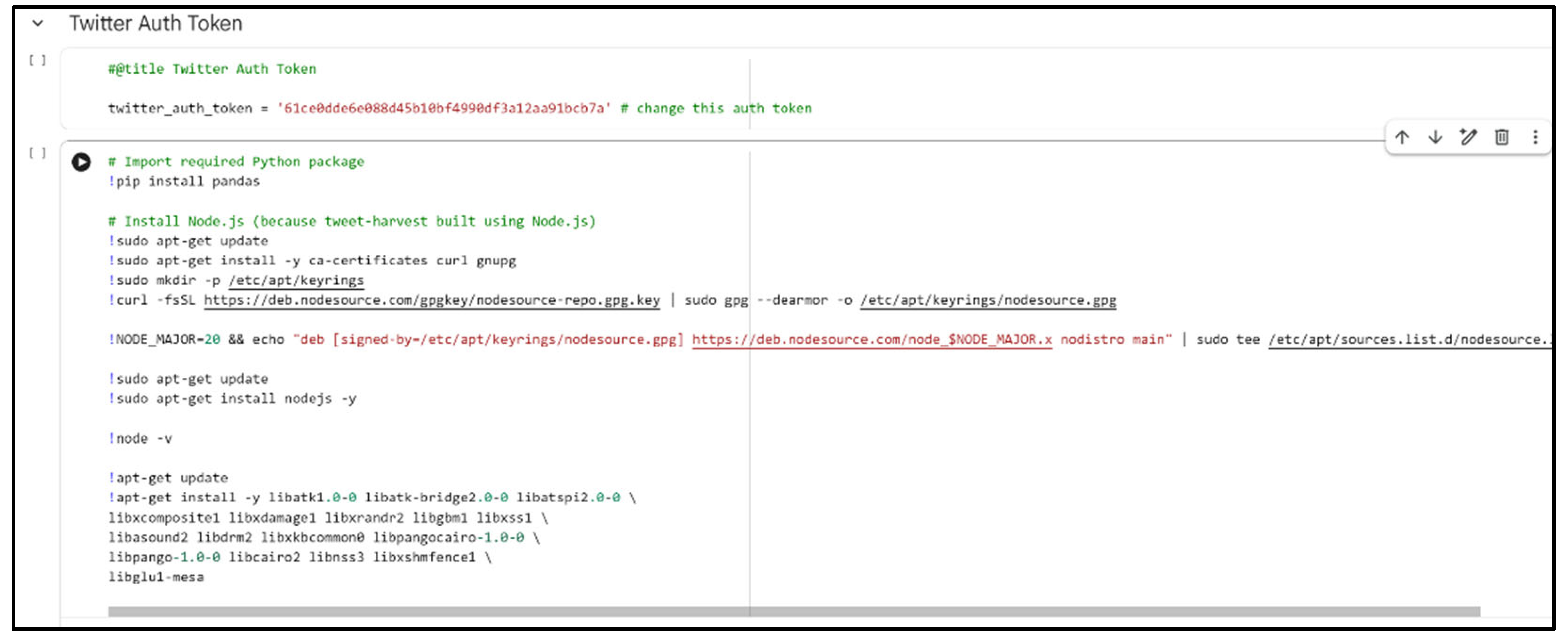
We used Python code from the video How to Get Twitter X (Crawl) as shown in [
1]. In the video, Satria demonstrates the basic steps for retrieving web content with Python, including library installation, script writing, data extraction, and simple techniques for processing results. We found the video relevant because the method shown closely resembles the crawling approach we applied in this study, particularly for processing data from platform X.
2.4. Naïve Bayes Classifier
We applied the Naive Bayes Classifier, an algorithm based on Bayes’ theorem that uses prior information to estimate the probability of an event by analyzing associated conditions [
12]. In this approach, we treated each word as an independent feature. The main advantage of the classifier is its lightweight structure, fast processing speed, and effectiveness in handling large datasets [
13]. We divided the data into training and test sets. We used the training data to build the model and calculate the probability of each class. We then applied the test data to evaluate the model and predict class membership based on the previously computed probabilities [
14]. The equation we used is as follows.
Information:
| X | : | Data or Inputs whose class is unknown. |
| C | : | Alleged or hypothesized that X belongs to a particular class of data. |
| P(C|X) | : | Shows the probability that hypothesis C is correct after seeing the information on X. |
| P(C) | : | The initial opportunity of hypothesis C before considering the data. |
| P(X|C) | : | The probability of X appearing if it is thought that X is indeed from class C. |
| P(X) | : | The overall chance of X data without linking it to a particular class. |
2.5. CRISP-DM
Researchers continue to use CRISP-DM as a structured framework for data processing, guiding projects from problem definition to model deployment. The method remains flexible and suitable for diverse data mining applications, ensuring that each stage is systematic, controllable, and reliable for supporting analysis and decision-making [
15]. Scholars still consider CRISP-DM relevant because it provides clear and adaptable workflows for different types of data-driven research. Each stage functions as a pillar of data mining methodology [
16]. CRISP-DM helps researchers conduct studies more systematically. In the initial stage, business understanding allows them to define research goals and directions. Data understanding enables them to assess data quality and conditions, which informs the processing strategy. Data preparation ensures that the dataset is clean and ready for modeling. In the modeling stage, researchers select and test algorithms according to project needs. Evaluation then verifies whether the model performs as expected. Finally, deployment ensures that the results are applied in practice and provide value to users [
12].
2.6. Generative Artificial Intelligence
Generative AI refers to technologies that create new content, such as text, images, audio, or code, based on learned data patterns [
17]. ChatGPT, a large language model trained on extensive text corpora, can generate answers, explanations, and information in human-like language [
18]. Educators and students increasingly use these tools for learning, academic writing, and preparing educational materials.
Generative AI offers benefits such as writing assistance and support for lecturers in designing teaching resources. However, it also raises concerns, including plagiarism risks, student dependence, and inaccurate information. Educators and students often express mixed views, reflecting both positive and negative perceptions. This study analyzes sentiments toward generative AI and ChatGPT in education, focusing on how students and educators perceive, evaluate, and respond to these technologies. Although generative AI supports learning, it cannot fully replace teachers due to issues of reliability, ethics, and bias [
19].
2.7. Twitter/X Platform
Twitter, now known as X, is a microblogging platform that enables users to share short texts, images, and links in real time. Its defining features include open conversations, hashtags, and rapid updates, which allow public opinion to be recorded naturally without extensive curation. Users often choose Twitter to discuss issues directly, making it a rich source of real-time data that reflects public behavior and perceptions [
20]. Twitter’s opinion-rich and unstructured short-text data make it ideal for sentiment analysis using machine learning and lexicon-based methods to classify polarity as positive, negative, or neutral [
21]. The platform’s large data volume and rapid dissemination of information position it as a leading source for sentiment analysis research. Each tweet can represent attitudes, emotions, or responses to issues directly.
Researchers collect tweets based on specific keywords and process them with natural language processing techniques via the Twitter API. Because Twitter data captures spontaneous responses to events, it remains highly relevant for analyzing public perception, communication patterns, and community sentiment. Its content combines factual information with emotional opinions, offering valuable insights into real-time public discourse [
22].
3. Methodology
We used platform X as a source of public opinion data on ChatGPT in higher education in Indonesia and Thailand. We collected descriptive qualitative data from tweets containing views, responses, and comments related to the research topic. These tweets represented live data and reflected both positive and negative sentiments toward the use of ChatGPT in higher education. We obtained the research data by crawling platform X with Python in Google Colab. Using search keywords related to ChatGPT, students, lectures, and AI, we collected 2000 tweets between January 2023 and November 2025.
For Indonesia, we used keywords in Indonesian, while for Thailand, we used English. We applied the Naïve Bayes Classifier (NBC) algorithm to classify sentiment and adopted the CRISP-DM framework to structure the research. We chose CRISP-DM because it provides a clear and systematic workflow for text mining, particularly sentiment analysis. The CRISP-DM framework was used for the following procedure.
Business understanding: We defined the research problem as analyzing public sentiment on platform X regarding ChatGPT in higher education. We then translated this into data analysis goals, including parameters for data collection, keyword selection, criteria, and model evaluation.
Data understanding: We explored the collected tweets to identify their characteristics, including data volume, column structure, and potential issues such as duplication or incomplete formats.
Data Preparation: We cleaned and transformed the text data by removing duplicates, hashtags, URLs, and symbols. We also applied tokenization, letter transformation, and stopword removal using RapidMiner ver 9.10 software.
Modeling: We trained the Naïve Bayes Classifier on the prepared data. We divided the dataset into training and test sets, enabling the model to learn sentiment patterns (positive and negative) based on word features.
Evaluation: We assessed the model’s performance using accuracy, precision, recall, and F1-score to determine how well it predicted sentiment in the test data.
Deployment: We presented the analysis results in a research report that highlights sentiment trends and implications for the use of ChatGPT in higher education. These findings aim to provide a basis for policymakers and educational institutions in shaping AI adoption strategies.
4. Results and Discussion
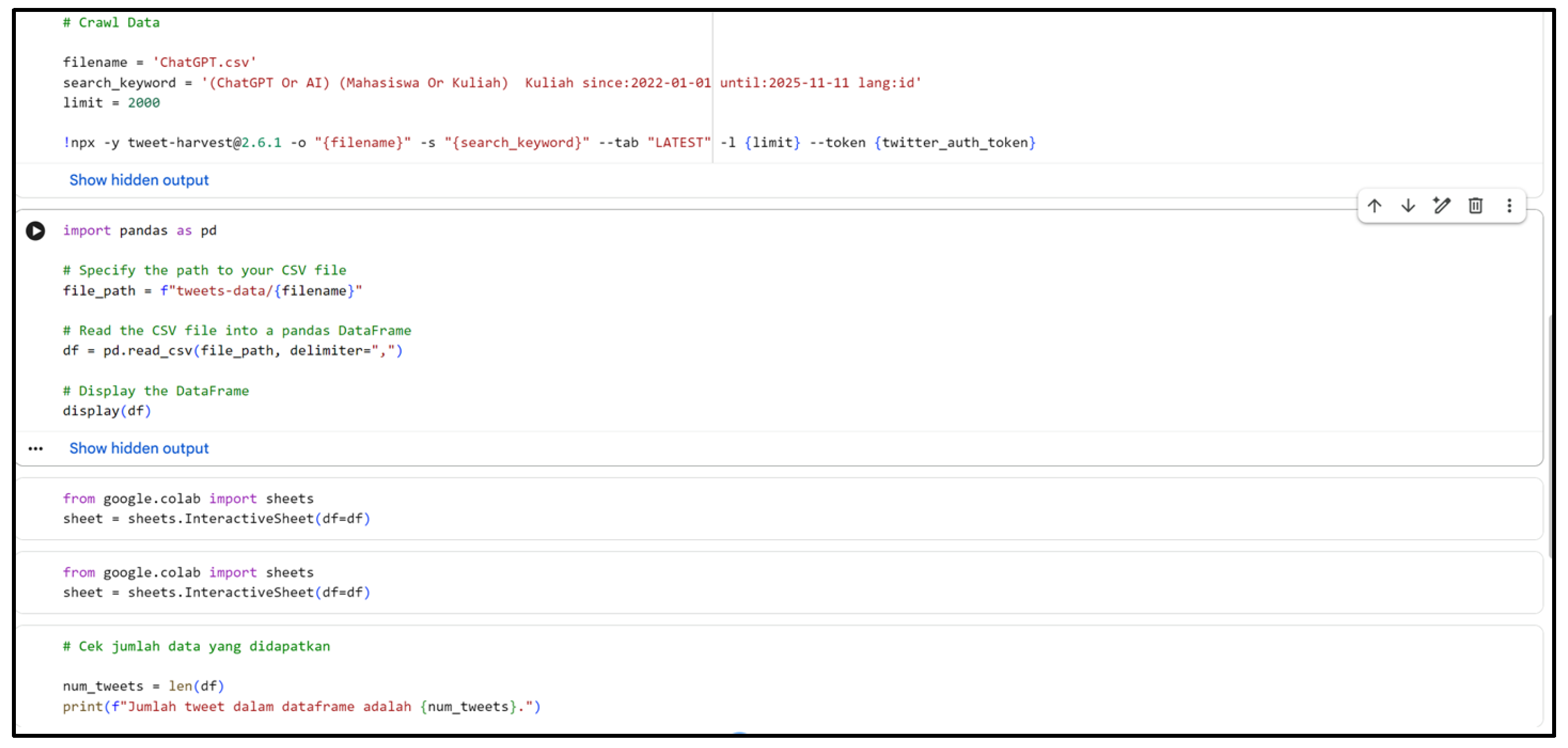
We conducted this study using the NBC algorithm, implemented in the RapidMiner application. We began by identifying the research topic, namely sentiment analysis of ChatGPT use in higher education in Indonesia and Thailand. We collected data from platform X using Python code in Google Colab, with keywords such as “ChatGPT,” “AI,” “Mahasiswa,” and “Kuliah” in Indonesian for Indonesia, and English keywords for Thailand. We adapted Python code from the YouTube tutorial Cara Mendapatkan Data (Crawl) Twitter X by [
1] (
Figure 1,
Figure 2 and
Figure 3).
We crawled data through several steps (
Table 1). First, we included twitter_auth_token, an authentication code obtained from each user’s Twitter account, which served as the access point for retrieving tweet data. Next, we set retrieval parameters. The search_keywords parameter specified the keywords to collect, such as “ChatGPT” and “AI.” The since and until parameters defined the time range of tweets, ensuring that the dataset matched the study period. The lang parameter filtered tweets by language, while the limit parameter controlled the maximum number of tweets retrieved in a single process. After collecting the data, we processed it using the Pandas library (import pandas as pd). Pandas allowed us to clean, cluster, and store the dataset in CSV or Excel format, preparing it for further analysis.
4.1. Data Preparation
Once collected, the raw data could not be analyzed directly because it was unstructured and contained noise such as symbols, links, mentions, hashtags, and irrelevant words. We therefore performed text preprocessing to clean and transform the data into a format suitable for modeling.
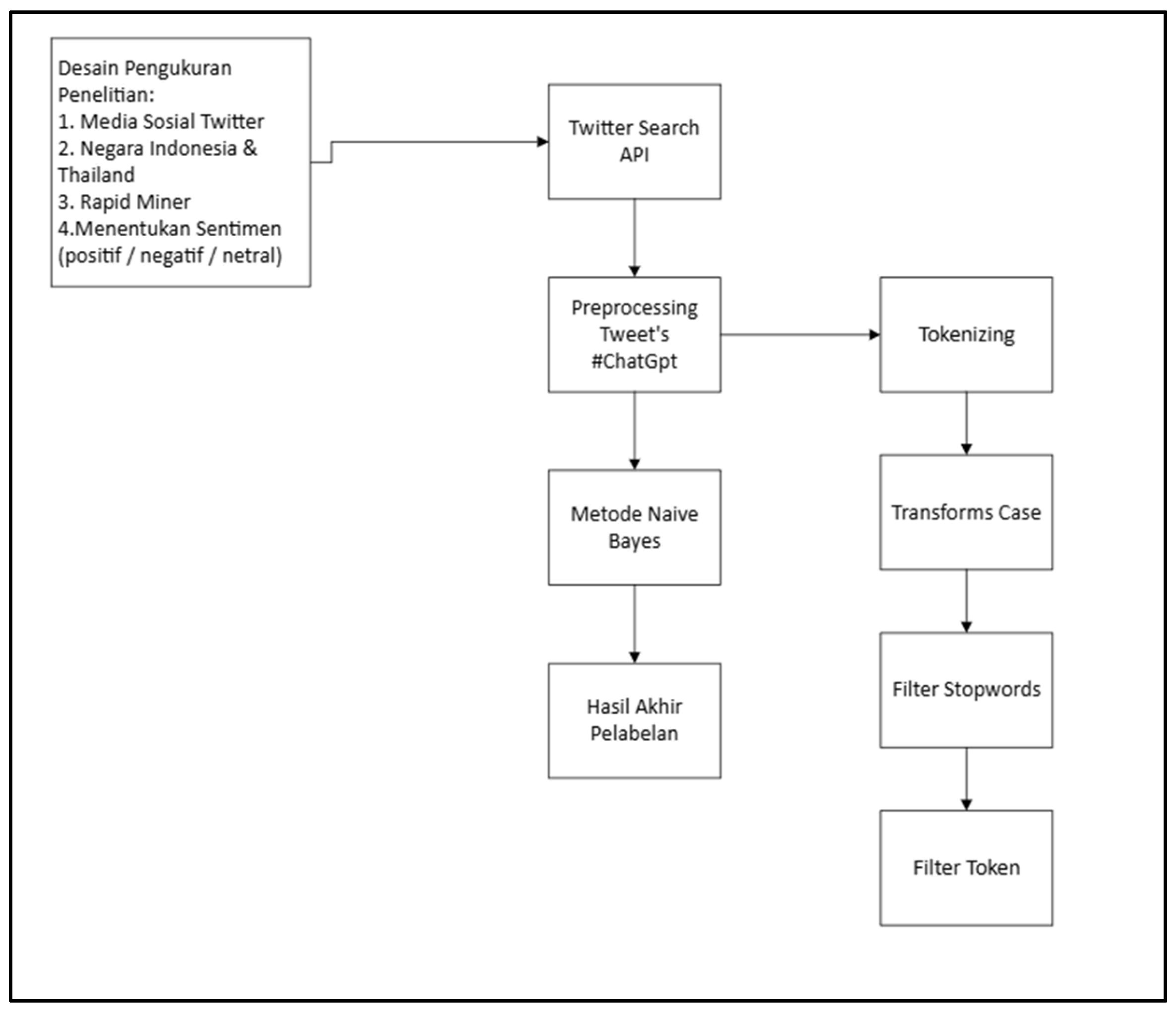
Text preprocessing is a key step in text mining, which extracts useful patterns, information, and knowledge from unstructured text. Through text preprocessing, data patterns, trends, and potential insights hidden in the tweets were identified. We carried out preprocessing through several steps, including duplicate removal, deletion of hashtags and URLs, tokenization, case transformation, stopword removal, and symbol cleaning. These steps ensured that the dataset was ready for sentiment classification (
Figure 4 and
Figure 5).
The URL from the text was removed as shown in
Table 2.
The mention in the text was removed, as shown in
Table 3.
The hashtags in the text were removed as shown in
Table 4.
Symbols such as “-, ?, %,
$, etc.” from the text were removed as shown in
Table 5.
The trim function was used to clear text by removing unnecessary blank spaces at the beginning and end of text data (
Table 6).
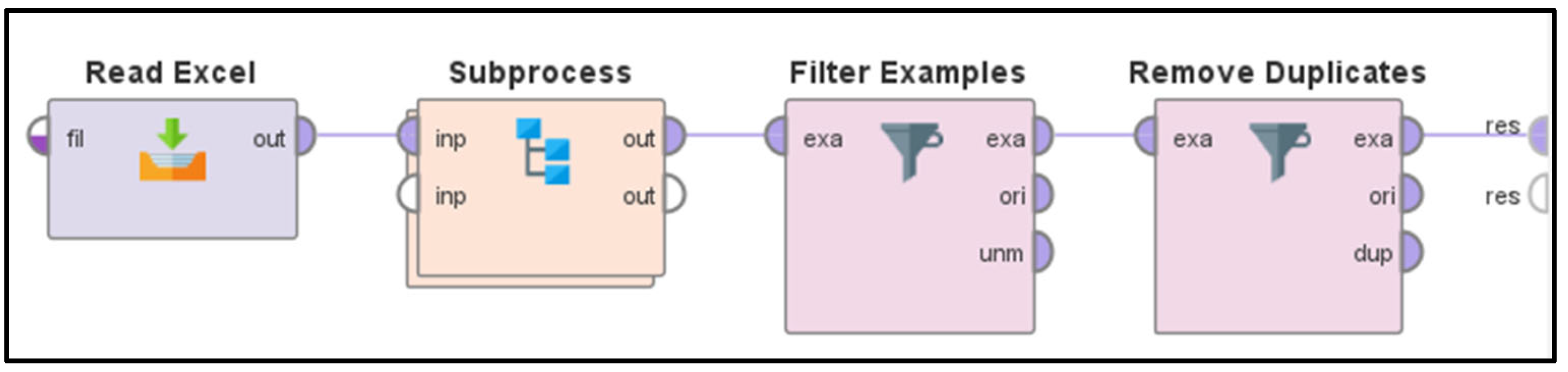
Duplicate removal was conducted to ensure that any tweets in the text are not duplicated, as if any will affect the final results of the model. Tokenization was used to divide sentences or documents into word units so that text can be processed and analyzed (
Table 7).
The case transform was conducted to transform the entire text into one form of writing, usually lowercase letters, to avoid differences in meaning due to variations in upper and lowercase letters (
Table 8).
We applied stopword filters to remove common words that frequently appear but carry little semantic meaning, such as ‘and,’ so that the analysis could focus on more meaningful terms (
Table 9).
We applied a token filter to remove irrelevant tokens such as numbers and symbols, ensuring that only meaningful tokens were retained for text analysis (
Table 10).
4.2. Modelling
After completing data cleaning, we proceeded to the modeling stage to classify tweets into positive and negative sentiments.
At this stage, before applying RapidMiner software for sentiment analysis, we conducted manual labeling on approximately 300 data samples (
Figure 6). We assigned positive labels to statements that expressed helpfulness or ease, and negative labels to statements that conveyed difficulty or criticism. The purpose of this manual sentiment processing was to train the system. By providing manually classified examples, we enabled RapidMiner to learn sentiment patterns and improve its ability to classify tweets into positive or negative categories during automated analysis (
Figure 7).
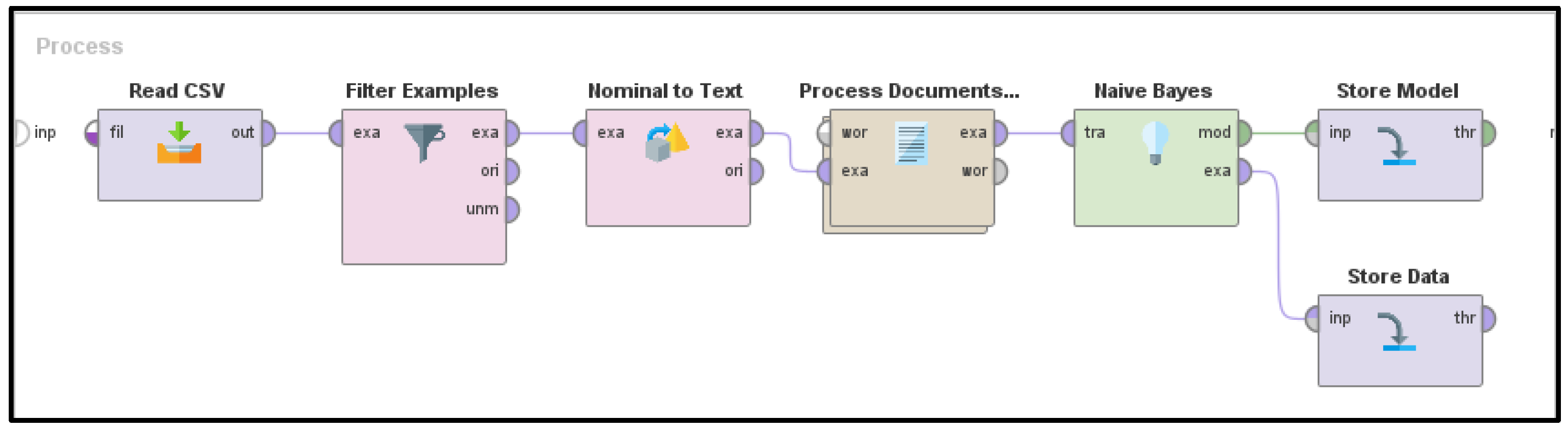
We stored the manually labeled dataset in RapidMiner before applying positive or negative sentiment classification. After labeling 300 samples manually, we used these data for initial training to provide the software with reference patterns before automated analysis. A Nominal-to-Category operator converted attributes from nominal to categorical form, ensuring proper data type handling. We then applied the Filter Examples operator with the condition “is not missing” to retain only tweets with manual sentiment labels (
Figure 8).
Next, we used the Process Documents operator to transform raw text into numerical features suitable for machine learning. Within this operator, we applied several preprocessing steps.
Tokenization to split sentences into individual words;
Transform case to convert all text to lowercase, avoiding inconsistencies between upper- and lowercase letters;
Stopword filtering to remove common words without semantic value;
Token length filtering to eliminate very short or irrelevant words.
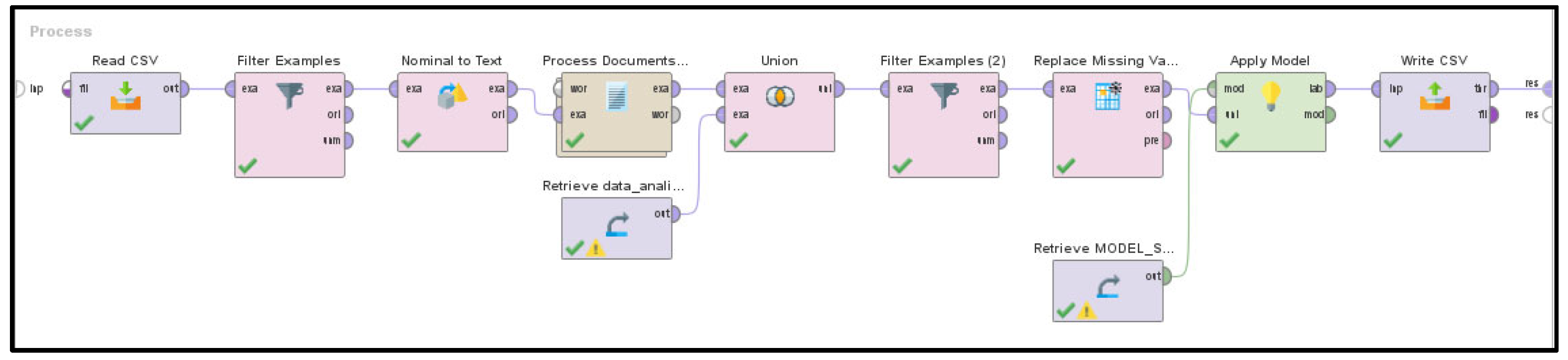
We then applied Term Frequency–Inverse Document Frequency (TF-IDF) to convert text into weighted numerical vectors. TF-IDF assigns higher weight to words that are frequent in one document but rare across the dataset, allowing the model to identify important terms more effectively. By using the Naïve Bayes algorithm, we trained a classification model based on these features. We stored both the model and the dataset for subsequent testing. A Union operator merged training and test datasets with identical attribute structures, followed by another Filter Examples operator to separate unlabeled data. Finally, we applied the Replace Missing Value operator to handle empty entries, preventing model failure during processing. After training with Naïve Bayes, we automatically classified sentiment in the remaining dataset. The model grouped text into positive and negative categories. We used the cleaned CSV file containing labeled and unlabeled tweets. The Filter Examples operator excluded already labeled data, while the Nominal-to-Text operator converted categorical attributes into text for further processing.
5. Results
5.1. Indonesia
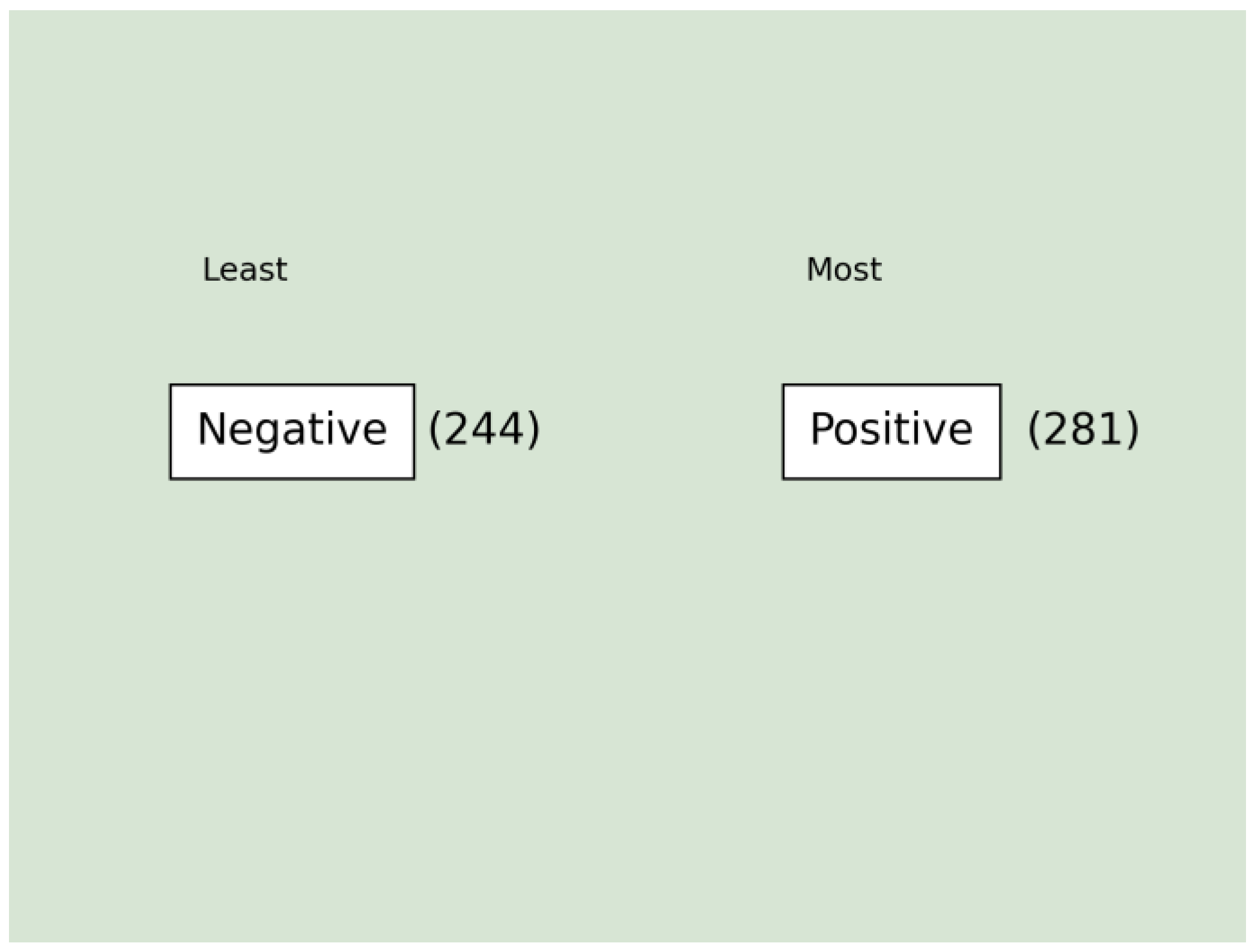
Figure 9 and
Figure 10 present the sentiment analysis results for Indonesia. Out of 525 tweets, 281 (53.12%) expressed positive sentiment, while 244 (46.88%) expressed negative sentiment. Positive responses highlighted the usefulness of AI in completing tasks, improving material comprehension, and providing quick explanations. Negative responses reflected concerns that AI might reduce student engagement in critical thinking, problem-solving, and idea development.
5.2. Thailand
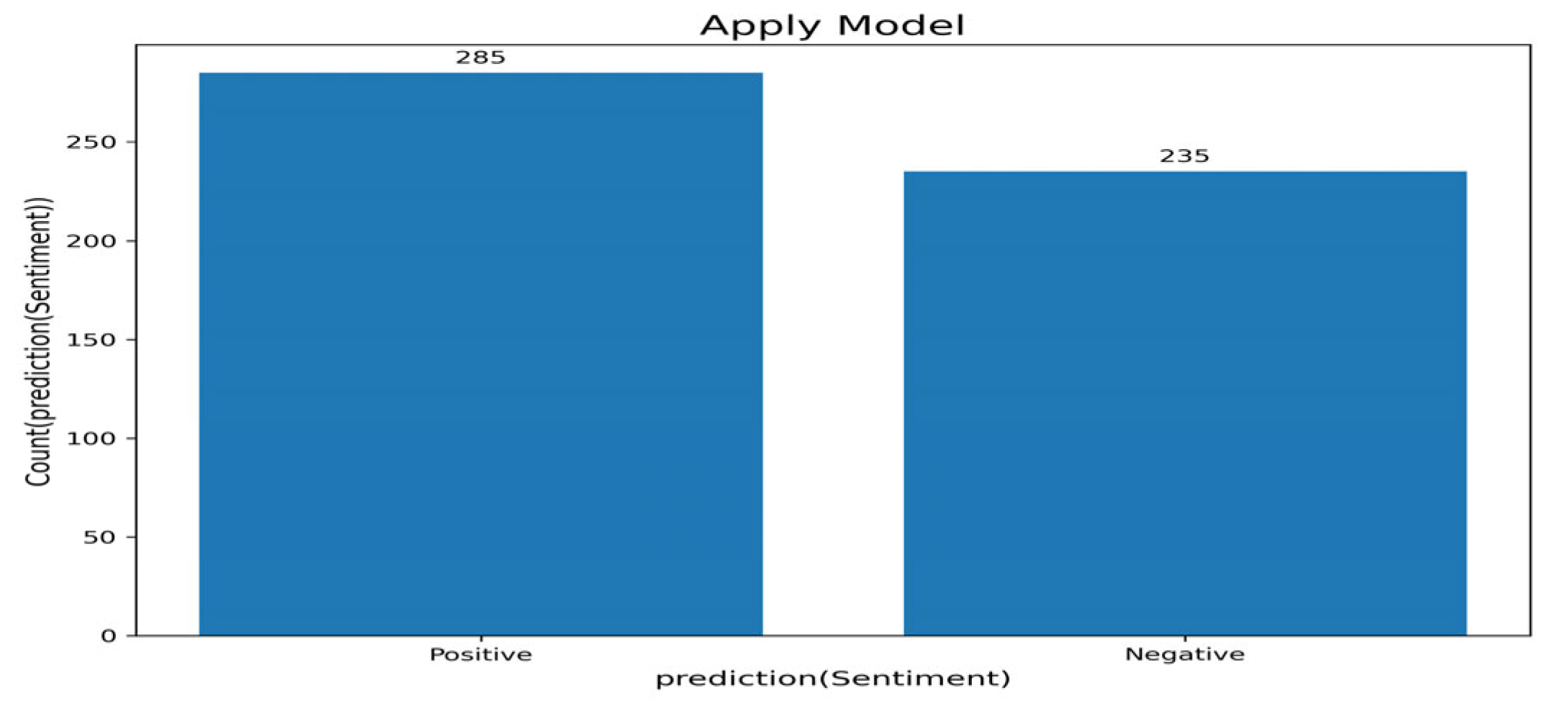
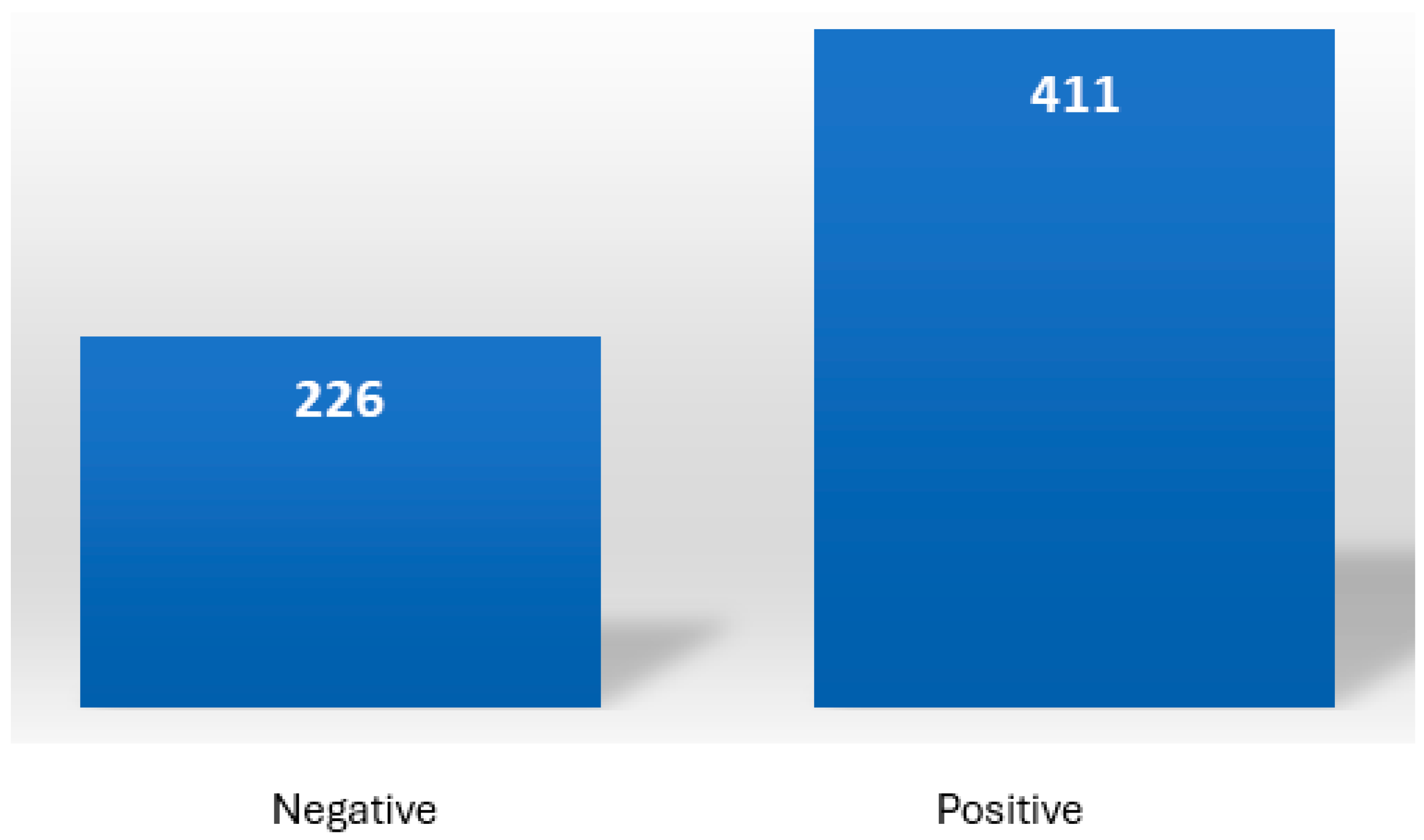
Figure 11 shows the sentiment analysis results for Thailand. Out of 637 tweets, 411 (64.5%) expressed positive sentiment, while 226 (35.5%) expressed negative sentiment. Positive responses emphasized the convenience and advantages of AI, particularly in supporting interactive learning and innovation in education. Negative responses focused on concerns about academic integrity, authenticity of learning, and technical limitations such as inaccurate outputs.
6. Conclusions
The sentiment analysis results from Indonesia and Thailand reveal a predominance of positive perceptions of AI in higher education. In Thailand, positive sentiment was stronger and more consistent, with a clear margin between positive and negative responses. In Indonesia, although positive sentiment dominated, the proportion of negative responses was higher, reflecting ongoing criticism and concerns. Overall, users in both countries tend to support AI as a tool to enhance learning, but differences in sentiment distribution suggest varying levels of acceptance and trust in AI technologies across contexts.
Author Contributions
Conceptualization, R.S., R.M.S. and K.D.A.; methodology, R.S., R.M.S. and K.D.A.; software, D.G.S., J.A.G. and S.; validation N.E.G. and E.R.M.; formal analysis, S.; investigation, R.S. and R.M.S.; resources, D.G.S. and J.A.G.; data curation, K.D.A., J.A.G. and N.E.G.; writing—original draft preparation, K.D.A. and D.G.S.; writing—review and editing, R.M.S. and R.S.; visualization, N.E.G. and E.R.M.; supervision, R.S. and R.M.S.; project administration, K.D.A. All authors have read and agreed to the published version of the manuscript.
Funding
This research received no external funding.
Institutional Review Board Statement
Not applicable.
Informed Consent Statement
Informed consent was obtained from all subjects involved in the study.
Data Availability Statement
Data are contained within the article.
Acknowledgments
This research was supported by the Faculty of Bioscience, Technology and Innovation, Department of Industrial Engineering, Atma Jaya Catholic University of Indonesia.
Conflicts of Interest
The authors declare no conflicts of interest.
References
- Satria, H. Cara Mendapatkan Data (Crawl) Twitter X. Online Article. 2024. Available online: https://www.example.com (accessed on 30 March 2024).
- Yilmaz, R.; Yilmaz, F.G.K. The effect of generative artificial intelligence (AI)-based tool use on students’ computational thinking skills, programming self-efficacy and motivation. Comput. Educ. Artif. Intell. 2023, 4, 100147. [Google Scholar] [CrossRef] [Scilit]
- Dwivedi, Y.K.; Ismagilova, E.; Hughes, D.L.; Carlson, J.; Filieri, R.; Jacobson, J.; Wang, Y. Setting the future of digital and social media marketing research: Perspectives and research propositions. Int. J. Inf. Manag. 2021, 59, 102168. [Google Scholar] [CrossRef] [Scilit]
- Aleqabie, H.J.; Sfoq, M.S.; Albeer, R.A.; Abd, E.H. A review of text mining techniques: Trends and applications in various domains. Iraqi J. Comput. Sci. Math. 2024, 5, 9. [Google Scholar] [CrossRef] [Scilit]
- Lai, Y.W.; Chen, M.Y. Review of survey research in fuzzy approach for text mining. IEEE Access 2023, 11, 39635–39649. [Google Scholar] [CrossRef] [Scilit]
- Jadhav, A.; Jagtap, P.; Gurav, S.; Jadhav, S.; Jadhav, N.; Akkalkot, A. A survey on text mining—Techniques and applications. Int. J. Sci. Res. Comput. Sci. Eng. Inf. Technol. 2023, 9, 338–343. [Google Scholar] [CrossRef] [Scilit]
- Jiao, J.; Chen, B. A GCN- and Deep Biaffine Attention-Based Classification Model for Course Review Sentiment. Int. J. Inf. Technol. Syst. Approach 2023, 16, 1–18. [Google Scholar] [CrossRef] [Scilit]
- Kumar, M.K. Evolving techniques in sentiment analysis: A comprehensive review. PeerJ Comput. Sci. 2025, 11, e2592. [Google Scholar] [CrossRef] [Scilit] [PubMed]
- Safira, A.; Hasan, F.N. Analisis sentimen masyarakat terhadap paylater menggunakan metode Naive Bayes Classifier. J. Sist. Inf. 2023, 5, 59–70. [Google Scholar]
- Zhao, L.; Sun, H. Design and implementation of web crawler system based on Python technology. In Proceedings of the 3rd International Signal Processing, Communications and Engineering Management Conference (ISPCEM); IEEE: Piscataway, NJ, USA, 2023; pp. 390–395. [Google Scholar] [CrossRef] [Scilit]
- Maulidiyah, S. Analysis of e-commerce products using web scraping techniques. CoreID J. 2025, 3, 37–46. [Google Scholar] [CrossRef] [Scilit]
- Fitrana, L.A.; Linawati, S.; Herlinawati, N.; Sa’adah, R.; Seimahuria, S. Analisis sentimen pengguna Twitter terhadap brand Indosat menggunakan metode Naïve Bayes Classifier. JATI (J. Mhs. Tek. Inform.) 2024, 8, 4291–4297. [Google Scholar] [CrossRef] [Scilit]
- Farooqui, M.F.; Muqeem, M.; Ahmad, S.; Nazeer, J.; Abdeljaber, H. A Fuzzy Logic based Solution for Network Traffic Problems in Migrating Parallel Crawlers. Int. J. Adv. Comput. Sci. Appl. 2023, 14. [Google Scholar] [CrossRef] [Scilit]
- Nurfebia, K.; Sriani, S. Sentiment analysis of skincare products using the Naive Bayes method. J. Inf. Syst. Inform. 2024, 6, 1663–1676. [Google Scholar] [CrossRef] [Scilit]
- Martinez-Plumed, F.; Contreras-Ochando, L.; Ferri, C.; Hernandez-Orallo, J.; Kull, M.; Lachiche, N.; Ramirez-Quintana, M.J.; Flach, P. CRISP-DM twenty years later: From data mining processes to data science trajectories. IEEE Trans. Knowl. Data Eng. 2021, 33, 3048–3061. [Google Scholar] [CrossRef] [Scilit]
- Schröer, C.; Kruse, F.; Gómez, J.M. A systematic literature review on applying the CRISP-DM process model. Procedia Comput. Sci. 2021, 181, 526–534. [Google Scholar] [CrossRef] [Scilit]
- Banh, L.; Strobel, G. Generative artificial intelligence. Electron. Mark. 2023, 33, 63. [Google Scholar] [CrossRef] [Scilit]
- Orrù, G. Human-like problem-solving abilities in large language models using ChatGPT. Front. Artif. Intell. 2023, 6, 1199350. [Google Scholar] [CrossRef] [Scilit] [PubMed]
- Aktay, S.; Gök, S.; Uzunoğlu, D. ChatGPT in education. ChatGPT Educ. 2023, 7, 378–406. [Google Scholar] [CrossRef] [Scilit]
- Mailo, F.F.; Lazuardi, L. Analisis sentimen data Twitter menggunakan metode text mining tentang masalah obesitas di Indonesia. J. Inf. Syst. Public Health 2019, 4, 28–37. [Google Scholar] [CrossRef] [Scilit]
- Kharde, V.A.; Sonawane, S.S. Sentiment analysis of Twitter data: A survey of techniques. Int. J. Comput. Appl. 2016, 139, 5–16. [Google Scholar] [CrossRef] [Scilit]
- Manguri, K.H.; Ramadhan, R.N. Twitter sentiment analysis on worldwide COVID-19 outbreaks. Kurd. J. Appl. Res. 2020, 5, 54–65. [Google Scholar] [CrossRef] [Scilit]
| Disclaimer/Publisher’s Note: The statements, opinions and data contained in all publications are solely those of the individual author(s) and contributor(s) and not of MDPI and/or the editor(s). MDPI and/or the editor(s) disclaim responsibility for any injury to people or property resulting from any ideas, methods, instructions or products referred to in the content. |



 ,
,