


Abstract
This paper presents a novel approach to designing and implementing an Artificial Neural Network (ANN) for maximum power point tracking (MPPT), trained solely on unshaded photovoltaic (PV) manufacturer datasheets and capable of tracking and predicting the maximum power point (MPP) under changing shading conditions. This is also known as partial shading conditions (PSC). PSC arises when shade covers sections of the PV panel due to clouds, trees, dust, or man-made objects such as tall buildings. The proposed ANN-based MPPT technique addresses a common issue faced by conventional MPPT methods under PSC: inaccurate MPPT. PSC induces oscillations on the power-to-voltage curve, resulting in multiple local maxima (LMPPs). However, existing ANN-based MPPT methods are developed and trained on shaded PV datasets. This Neural Network (NN) tracking method complicates the training, development, and implementation processes. It increases the cost of development and requires physical, real-world data collection that requires hardware and a lot of time. All this can be avoided with unshaded PV datasheets. The input parameters used to train the model are temperature (T) and irradiance (G), and the output parameters are maximum power (Pmp) and maximum voltage (Vmp). The ANN-based MPPT technique demonstrated strong performance, accurately predicting the global MPP (GMPP) under PSC with high correlation and low prediction error.
1. Introduction
According to [1], the efficiency of a PV panel is greatly affected by PSCs. PSCs tend to shift the P-V curve downward, leading to multiple LMPPs. The rise of these LMPPs makes it difficult for conventional methods to track the GMPP, often leading to incorrect results. This issue has led to the rise of NN-based tracking techniques over the past decade. ANN provides an effective data-driven solution for complex, non-linear relationships found in PV MPPT systems and applications [2].
Additionally, most ANN-based tracking techniques require large amounts of real-world data collection under PSC to train the model accurately. This method often requires more time, cost, and a lot of physical hardware to acquire the needed datasheets, which are commonly known as shaded PV datasheets. This paper introduces a novel approach in which the ANN is trained solely on unshaded PV datasheet parameters, which are universally available from manufacturers. Following this approach, the model learns the intrinsic electrical relationships of PV modules under standard test conditions (STC) and generalizes these patterns to predict power and voltage under shaded conditions. This report illustrates a scalable, low-cost, sensor-less MPPT solution adaptable to most systems, whether grid-tied or islanded.
2. Literature Review
Research done into MPPT techniques under PSC has expanded rapidly over the past decade. Traditional methods like P&O and INC remain popular for their simplicity, with shading that creates multiple local maxima. In contrast, hybrid and AI-based techniques have demonstrated improved convergence to global MPP. The literature review will examine these different techniques, shaded and unshaded datasheets, and the simulation tools used to develop them.
2.1. Shaded and Unshaded Datasheets for MPPT
Understanding the difference between shaded and unshaded datasheets is of utmost importance. The choice of a specific datasheet type will dictate the path of ANN development and its subsequent performance, including the PV panel’s behavior under different environmental conditions, particularly PSC. Datasheets usually follow a standard template to convey key parameters such as maximum voltage, current, and power under standard test conditions (STC). These parameters perfectly explain how the PV module behaves under environmental conditions and can be used to train an ANN model or to understand the panel in general. Manufacturer datasheets are usually obtained under STC, where two parameters, G and T, are set to 1000 Watts per square meter and 25 degrees Celsius, respectively. This kind of datasheet is known as an unshaded PV datasheet [3].
In contrast, shaded PV datasheets present parameters from laboratory or outdoor testing, typically avoiding STC, providing real-world PV performance measurements under PSC. However, shaded datasheets often come at a higher cost, such as requiring more hardware to measure data accurately, and usually require more time for data collection. Additionally, Ref. [4] emphasizes that shaded data sheets are sensitive to the location and methods of data collection, meaning they are location- and condition-dependent, limiting their generalization across different PV systems.
According to [5], the findings indicate that unshaded datasheets can be effective for training and an ANN-based MPPT model when only the correct input parameters are selected. Ref. [5] stresses that unshaded datasheets can be used to accurately simulate shading when introduced during the model’s training and validation phases, because they provide sufficient data for the model to learn the non-linear relationships between panel response to different shading and MPP outputs. Unshaded cost and model training and development time effectively skip issues that the current ANN-based MPPT model faced, which were trained on shaded datasheets. Table 1 provides an overview of the pros and cons of shaded and unshaded PV datasheets used in MPPT techniques.
Table 1.
Comparison of shaded and unshaded PV datasheets.
2.2. MPPT Techniques: Traditional Versus ANN
According to [6], traditional MPPT techniques such as Perturb and Observe (P&O) and Incremental Conductance (INC) remain widely used for their ease of use and low energy or data requirements. Yet these models struggle to track the GMPP during rapid shading events. These models find it extremely difficult to distinguish between local and global maximum under PSC, leading to erroneous MPP tracking. Ref. [7] states that traditional models are reactive, meaning they continuously monitor and adjust the voltage or current to maximize power. Continuous adjustment leads to rapid oscillations around the MPP, resulting in subpar results.
On the other hand, ANN-based models take an intelligent approach to learning complex patterns between a PV system and its power outputs. This is often known as a predictive MPPT model. This allows ANN-based models to be trained to directly predict the optimal operating power point, without the need for constant trial and error adjustments [8].
Research [5] has shown that ANN-based controllers generally outperform these decade-old techniques. ANN methods are known to achieve faster convergence, reduced steady-state error, almost no oscillations, and improved design efficiency. Table 2 provides a comparative overview of different MPPT techniques, highlighting their respective advantages and disadvantages.
Table 2.
Comparison of different types of MPPT.
2.3. Simulation Tools for Developing and Testing the ANN Model
To develop an ANN-based MPPT technique, it is crucial to select a suitable software application for ANN development, training, and validation. Ref. [7] asserts that software simulation tools are essential because they provide a safe, controllable environment for modeling the system’s behavior and for testing key parameters under PSC. As stated before, this results in a lower operating cost and hardware cost, and saves time on developing the algorithm. One of the most widely used simulation software tools and integrated development environments (IDEs) for implementing an ANN MPPT technique is MATLAB-Simulink version R2025a.
Built-in features like the NN toolbox and Simscape Electrical in the latest version of MATLAB have made ANN development easy for students, engineers, and researchers alike, enabling them to simulate, test, and validate their models while accurately reproducing real-world correlated results [7]. While MATLAB dominates industry use, there are still alternative tools for designing MPPT techniques, namely, PSIM and PVSyst, both popular software programs, each with its own advantages and disadvantages [6]. PSIM’s capabilities make it ideal for power electronics and power system design, as well as hardware testing before implementation in real-world systems. However, one significant disadvantage of PSIM is the lack of machine learning functions. PSIM often requires an external interface for NN development and implementation [6].
Alternative simulation tools, such as PSIM verson 2025.1, and PVSyst version 8.1, are also popular in MPPT search development, but each offers its own advantages and trade-offs [6]. PSIM is well known for its speed and real-time simulation capabilities, which make it ideal for power electronics design and hardware-in-the-loop testing.
Lastly, there is PVSyst, a software tool that excels at PV system analytics by leveraging real-world meteorological data to estimate a PV plant’s performance under real-world PSCs. It is widely used for project and energy forecasting, but a major drawback of PVSyst is its closed application architecture. This restricts the import of external algorithms, effectively limiting PVSyst usage. Table 3 below outlines the advantages and disadvantages of simulation tools used for MPPT algorithms.
Table 3.
Comparison of simulation tools.
2.4. Gap Identified in the Research
Based on prior work on MPPT techniques, a significant gap remains in how data are collected and which input and output features are fed into ANN-based MPPT models. In these studies, most researchers rely solely on physically collected datasheets, namely shaded datasheets, often neglecting that unshaded datasheets can be used the same way. Yet they continue on the path of development that requires complex hardware and sensors to capture real-time data and formulate parameter values. This always takes more time to develop NN models, is expensive, and can become impractical for large-scale PV systems that require rapid implementation.
This study aims to address the identified gap by developing an ANN model trained solely on unshaded manufacturer PV datasheets. The model should be trained, tested, and implemented entirely inside MATLAB-Simulink to ease the development of the MPPT technique. This kind of ANN development provides a cost-effective, sensor-free, and globally scalable MPPT technique that maintains high predictive accuracy comparable to that of ANN models trained on physically obtained shaded datasheets.
3. Methodology
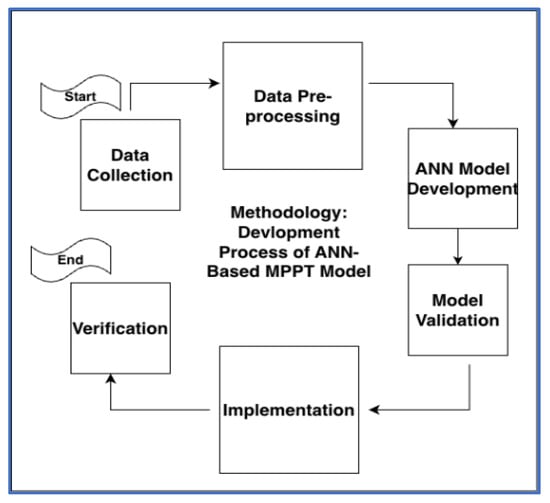
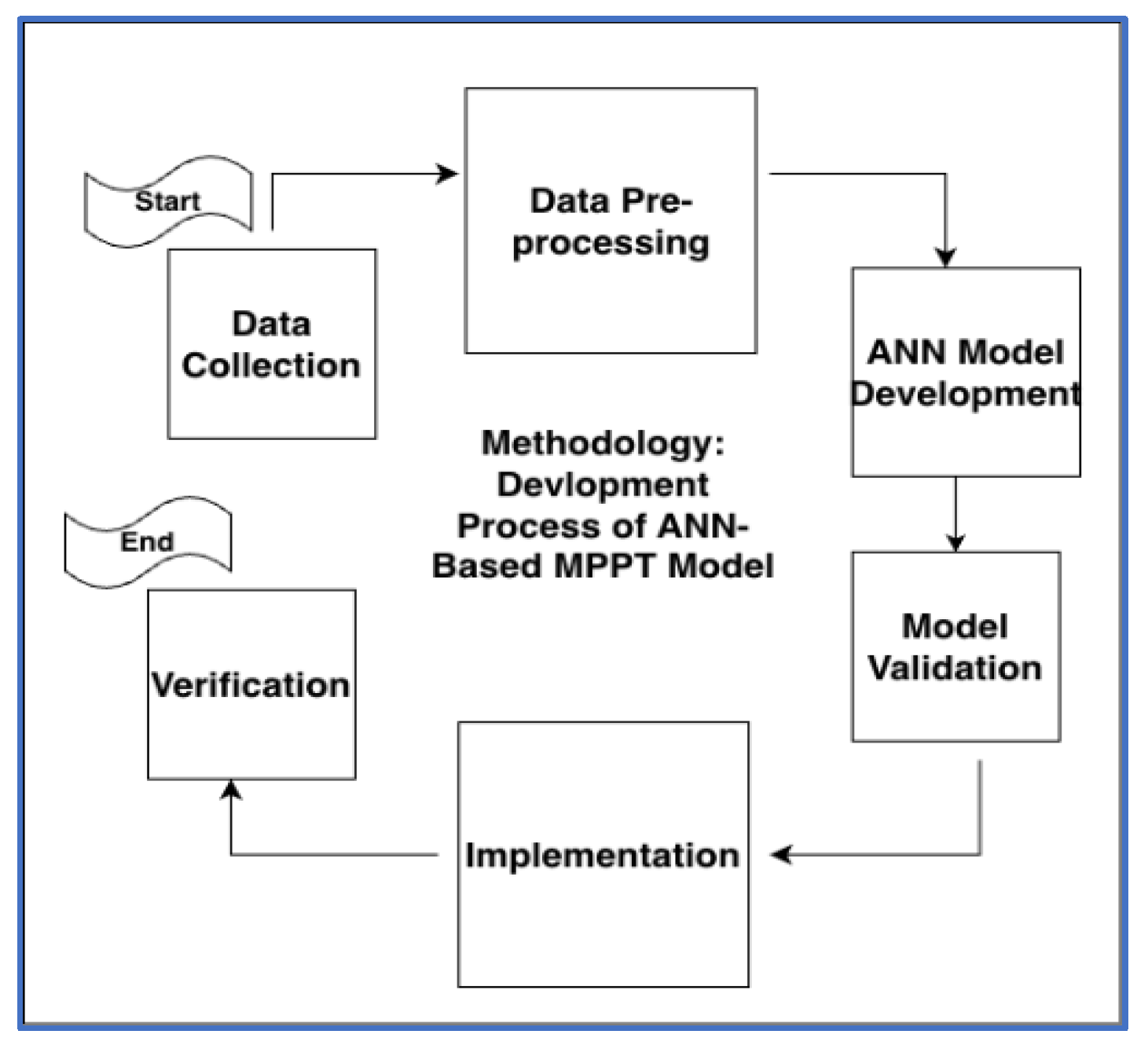
The design and implementation of the ANN-based MPPT technique were performed in MATLAB. Specifically, two main features of MATLAB are the Neural Network Toolbox and the Simulink simulation IDE. The model’s development followed three main phases. The primary phase is data preparation; the secondary phase is NN deployment; and the final phase is the performance evaluation of the ANN-based MPPT algorithm. The design flow process for developing the ANN model provides a more detailed view of the three phases. This is illustrated in Figure 1.
Figure 1.
Methodology diagram.
3.1. Dataset Development
To start off, a large dataset needs to be collected and prepared for training the model, specifically, unshaded PV datasheets. Datasheets can be sourced locally and internationally from PV panel manufacturers to ensure diversity in model specifications and data. To reduce collection time, an extensive unshaded PV datasheet database was accessed through the United Stated of America (USA) California Energy Commission (CEC). This action saves time by eliminating the need to download datasheets individually and reduces the risk of erroneous data extraction that could later affect the ANN model. Approximately seventeen thousand datasheets were initially collected from the CEC, including hourly PV capacity factors for the European Unition (EU) 28 plus Norway and Switzerland, simulated with Modern-Era Retrospective Analysis for Research and Application, version 2 and Climate Monitoring Satellite Application Facility (CM-SAF) SARAH version 3, as described in the resource [9].
3.2. Data Pre-Processing
To ensure no erroneous or duplicated data were fed into the model during the training phase, the data needed to be cleaned first. This can be done in MATLAB or any other third-party data analytics application. About five thousand datasets were identified as unfit and removed from the training dataset. However, this does not conclude the pre-processing phase. To ensure the model is trained on a robust dataset, it was expanded through synthetic augmentation that applied mathematical principles governing how the panel responds under different PSCs.
The G and T were randomly varied within realistic operating limits that mimic real-world conditions. For example, the G level ranged from perfect STC (1000 Watts per square meter) to zero, in increments of 100. At the same time, T was varied from 45 to 5 degrees Celsius in increments of 5 degrees. The variation in environmental inputs allowed for the computation of new input feature values for open circuit voltage (Voc), short circuit current (Isc), Vmp, and Pmp, to the following T- and G-dependent formulae:
where
G = irradiance;
T = temperature;
Gref = irradiance at STC;
Tref = temperature at STC.
The equations above describe the PV panel’s behavior under different shading conditions, with equation power as a function of both G and T. It uses G as a scaling factor from the selected irradiance to STC irradiance. Although the maximum current is not an input feature for training the NN, it is used later to calculate the maximum power in Equation (5). Equation (3), on the other hand, is an input feature for the module and examines short-circuit current behavior under PSCs.
Additionally, Equations (2) and (4) look at the PV panels’ voltage characteristics when varying the T and G. Initial observations reveal that the maximum voltage at maximum power shows a linear relationship with increasing G and T. Finally, we calculate the results of Equation (5), which is one of the output features to the NN model, together with the results of (2) by multiplying Equations (1) and (2).
The equations above capture the non-linear nature of a PV module’s performance under any shading event. With this approach, the dataset was expanded to 175 times its initial value of 12,000 datasheets, providing the ANN model with a truly diverse dataset that covers a considerable variation in parameters under different PSCs.
3.3. ANN Model Development
After data processing, the ANN model can be trained using the NN toolbox found in MATLAB. The selected architecture for the model is a feed-forward Levenberg–Marquardt (LM) optimization algorithm with input features G, T, Voc, Isc, BetaVoc, AlphaIsc, and Pmp, and an output feature Vmp. The NN was tuned for optimal performance using a single hidden layer with 64 neurons, yielding sufficiently accurate results. Although the model seems very simple, it yields the same results as larger or deeper NNs without complicating it or affecting its performance. This was only achieved through multiple iterative design trials.
These results indicate that the ANN generalizes well beyond its training data. The low MSE and MAE values confirm that the predicted MPP values closely match those observed in the model’s testing phase, indicating minimal deviation across multiple shading patterns.
3.4. Model Validation
The model validation phase involved testing the trained ANN against simulated PV performance across various PSCs. Predicted MPP values were compared with those obtained from MATLAB’s standard PV model performance data. Performance metrics for the ANN model, such as Mean Squared Error (MSE), Mean Absolute Error (MAE), and the coefficient of determination , were used to assess prediction accuracy and generalization, where the model achieved an MSE of 0.0017, an MAE of 0.021, and an of 0.989998.
3.5. Implementation and Verification
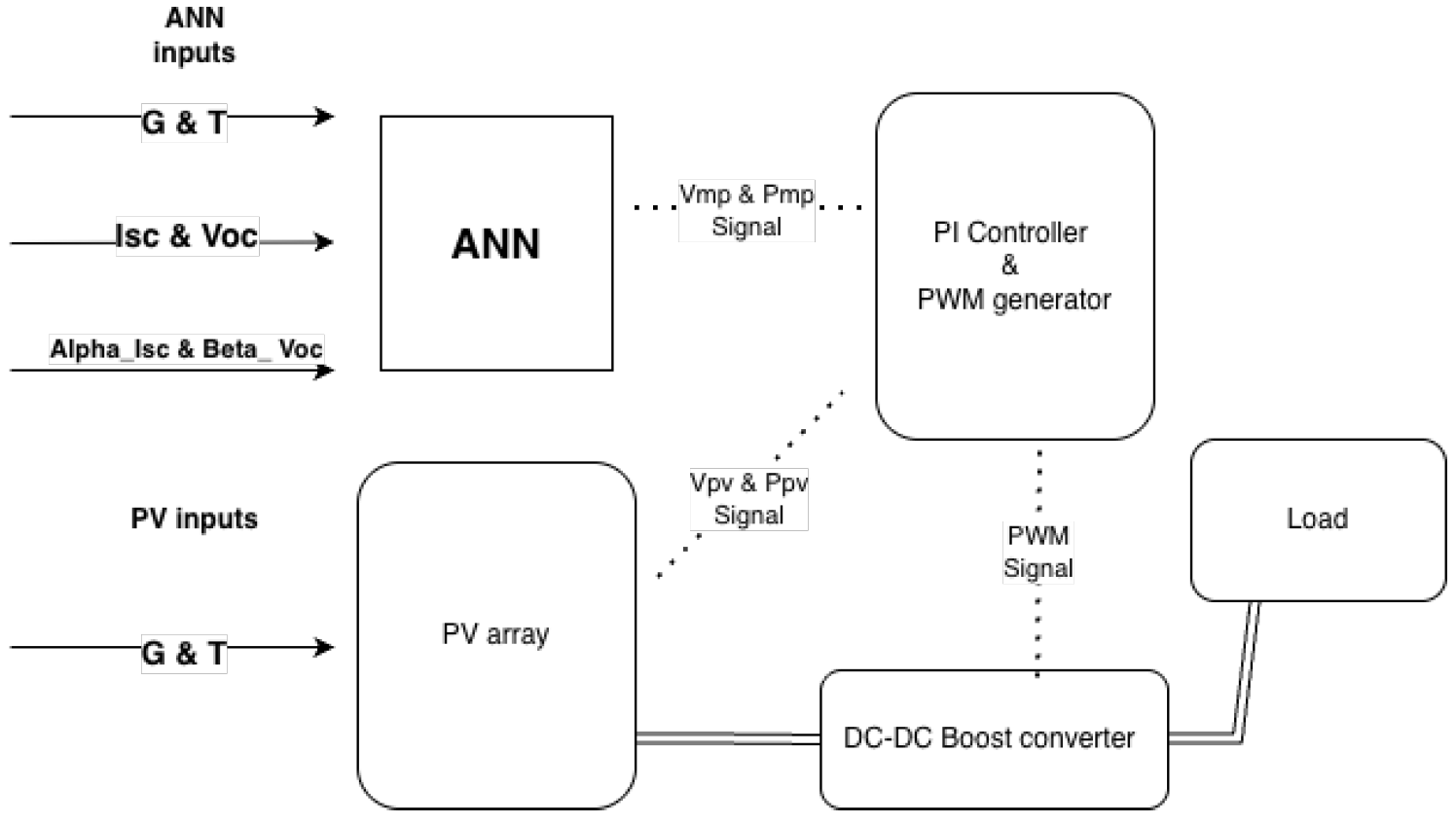
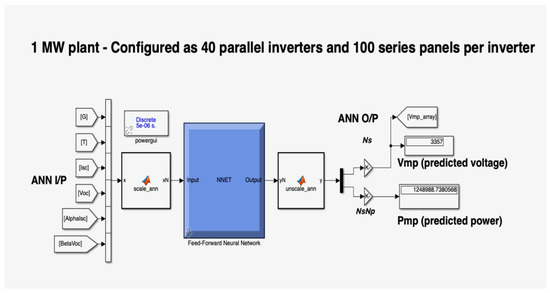
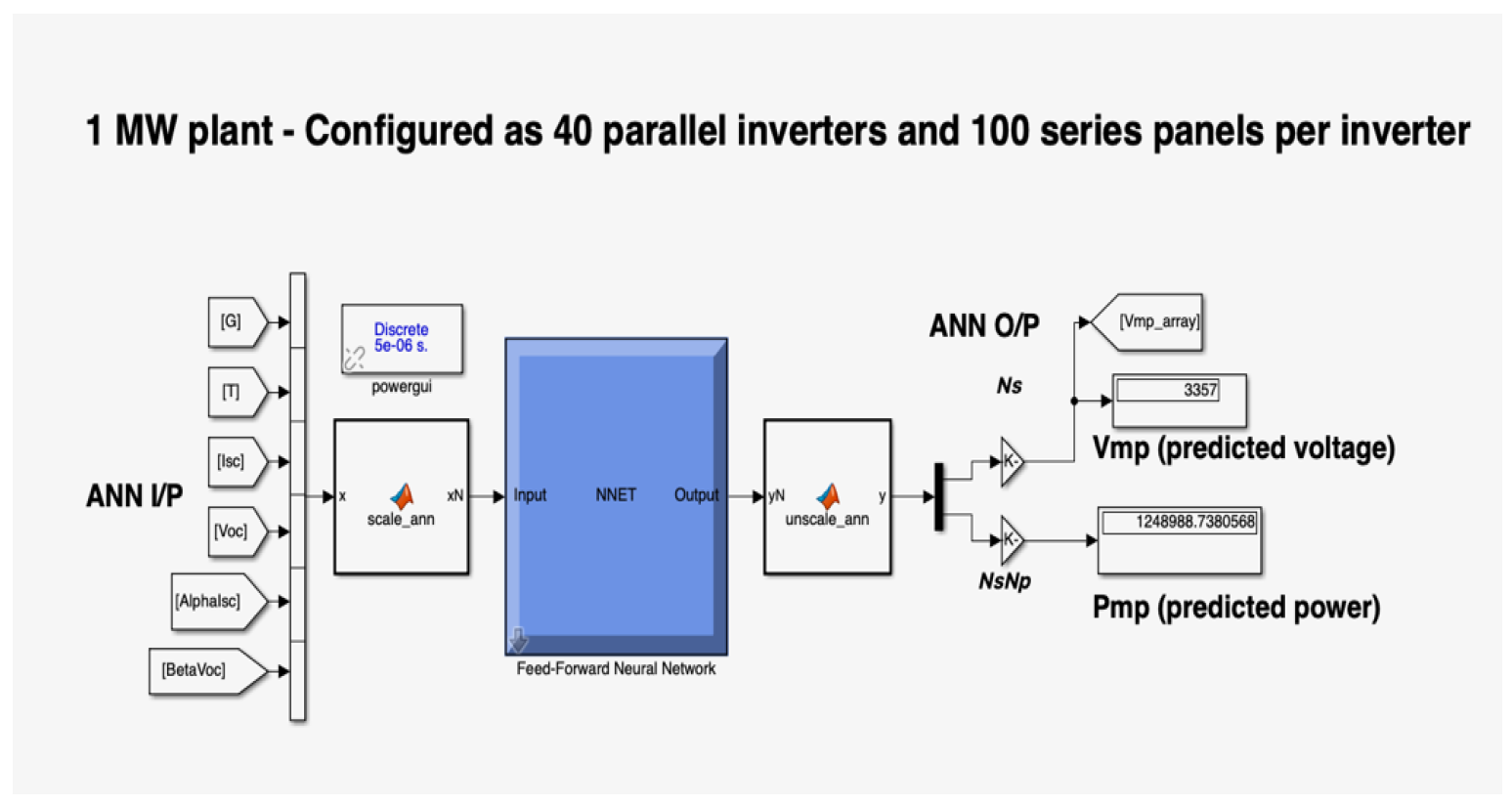
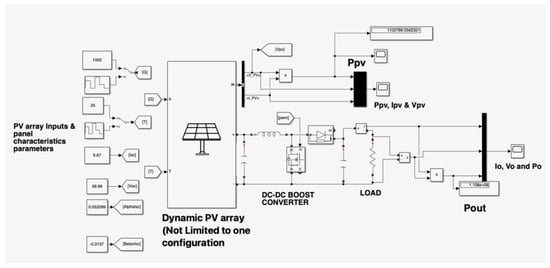
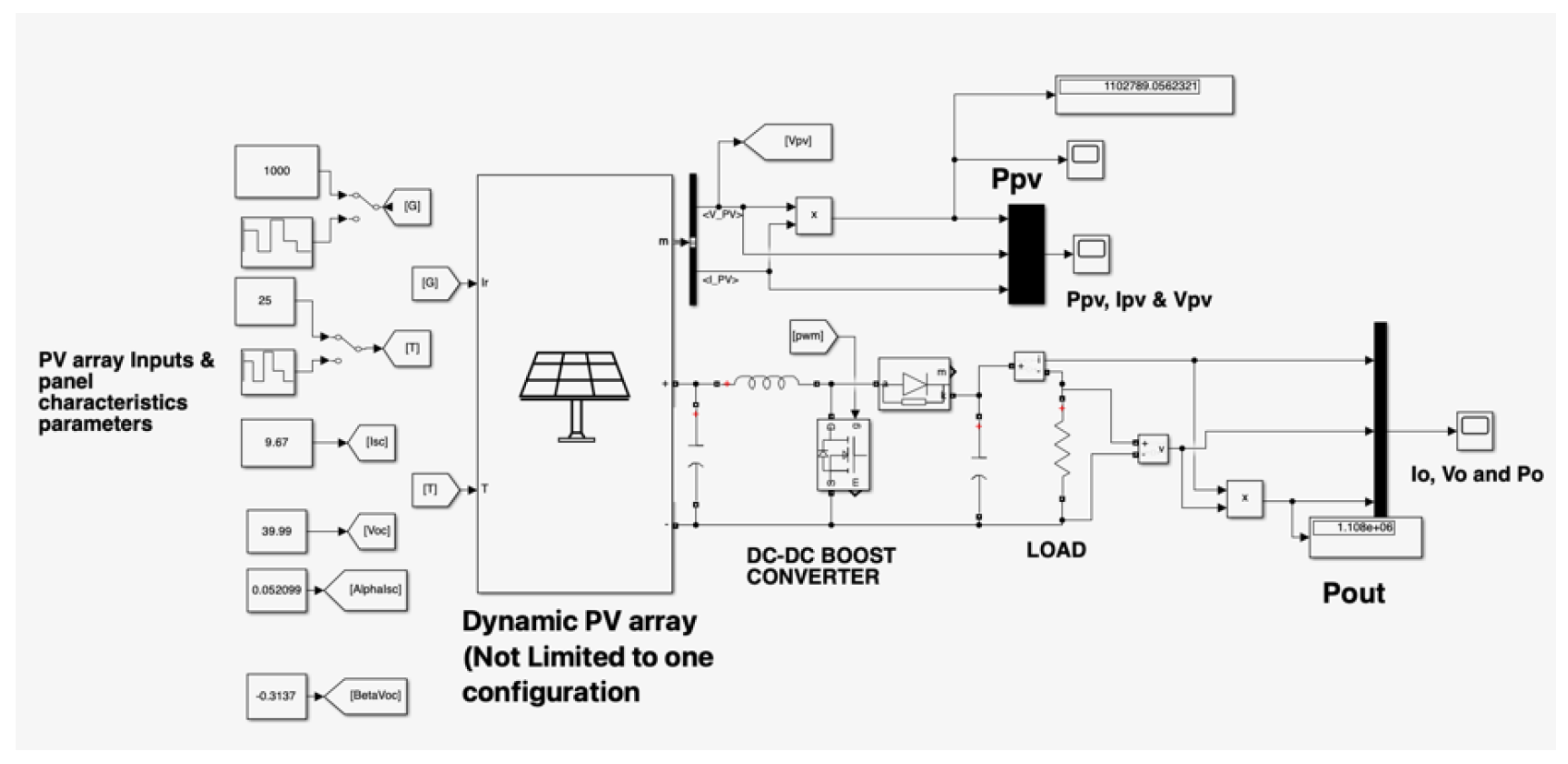
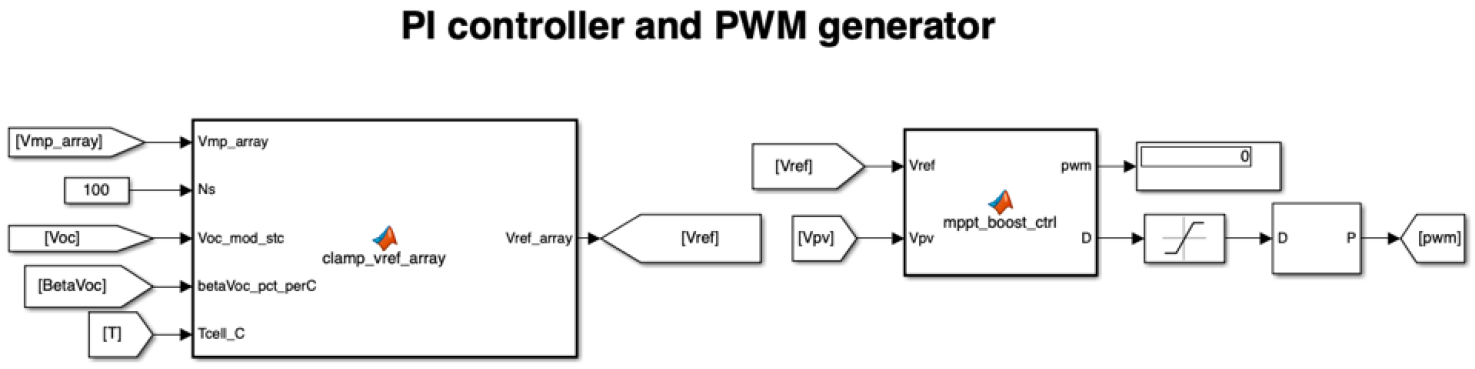
After model validation, the ANN was employed in a Simulink-based MPPT control environment that included a PV array, a central boost converter, and a PI feedback controller. The ANN provides predictive estimates of voltage and power to drive the converter towards GMPP, using the input features used to train the model. Figure 2 shows the block diagram layout of the circuit network inside MATLAB/Simulink, and Figure 3, Figure 4 and Figure 5 illustrate the actual circuit network inside MATLAB/Simulink.
Figure 2.
Block representation of the ANN model inside Simulink.
Figure 3.
Simulink network diagram-part 1.
Figure 4.
Simulink network diagram-part 2.
Figure 5.
Simulink network diagram-part 3.
4. Results and Discussion
The simulation results confirmed that the proposed ANN model accurately predicts MPP across a wide range of shading conditions. The model demonstrates a strong connection between the predicted and the actual MPP values, thereby validating the hypothesis that an ANN-based MPPT technique trained exclusively on unshaded datasheets can generalize effectively to different shaded scenarios.
In contrast to many existing ANN-based MPPT techniques that rely on experimentally measured datasheets (shaded datasheets), this study demonstrates that comparable predictive accuracy can be achieved using only raw, unshaded manufacturer datasheets. Such ANN models typically require extensive data capturing, hardware, and real-time environmental measurements of irradiance and temperature, making it a costly and time-intensive exercise.
The approach presented in this report eliminates these dependencies and allows the ANN to be developed entirely in software, trained in MATLAB/Simulink, and deployed without requiring physical data collection. As mentioned above, the model’s performance showed high precision and great stability. The MSE, MAE, and coefficient of determination indicate a high correlation between predicted and actual MPP values, confirming excellent generalization across varying G and T. When compared with traditional MPPT methods, ANN techniques exhibited superior dynamic performance. This is illustrated in Table 4.
Table 4.
Performance comparison of different MPPT techniques.
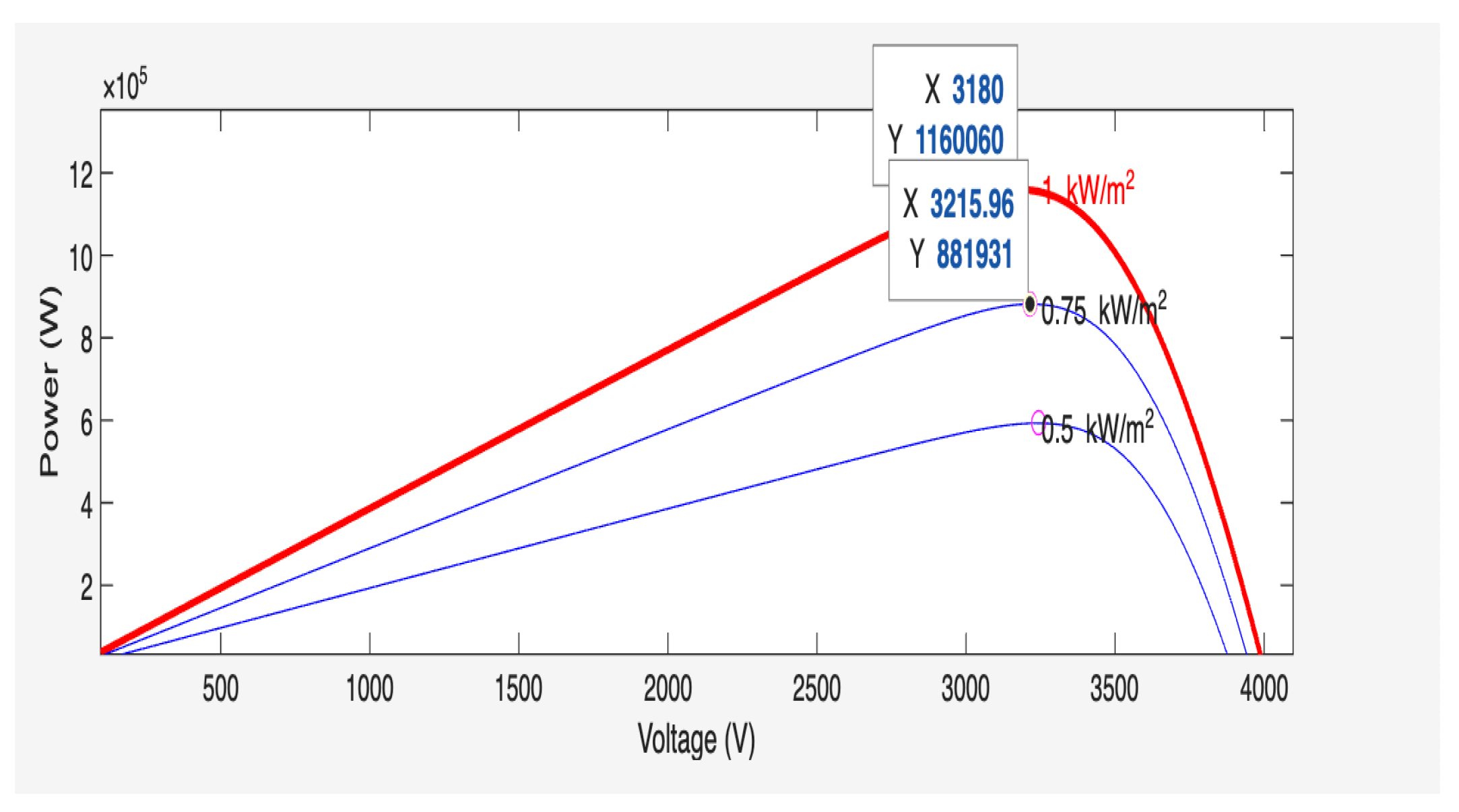
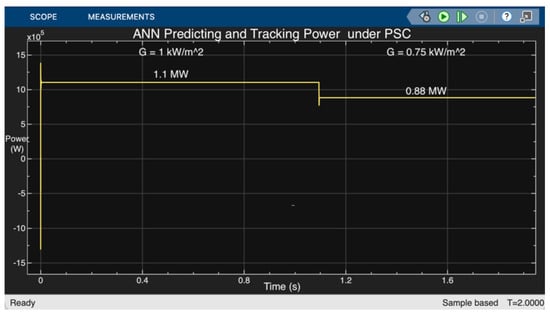
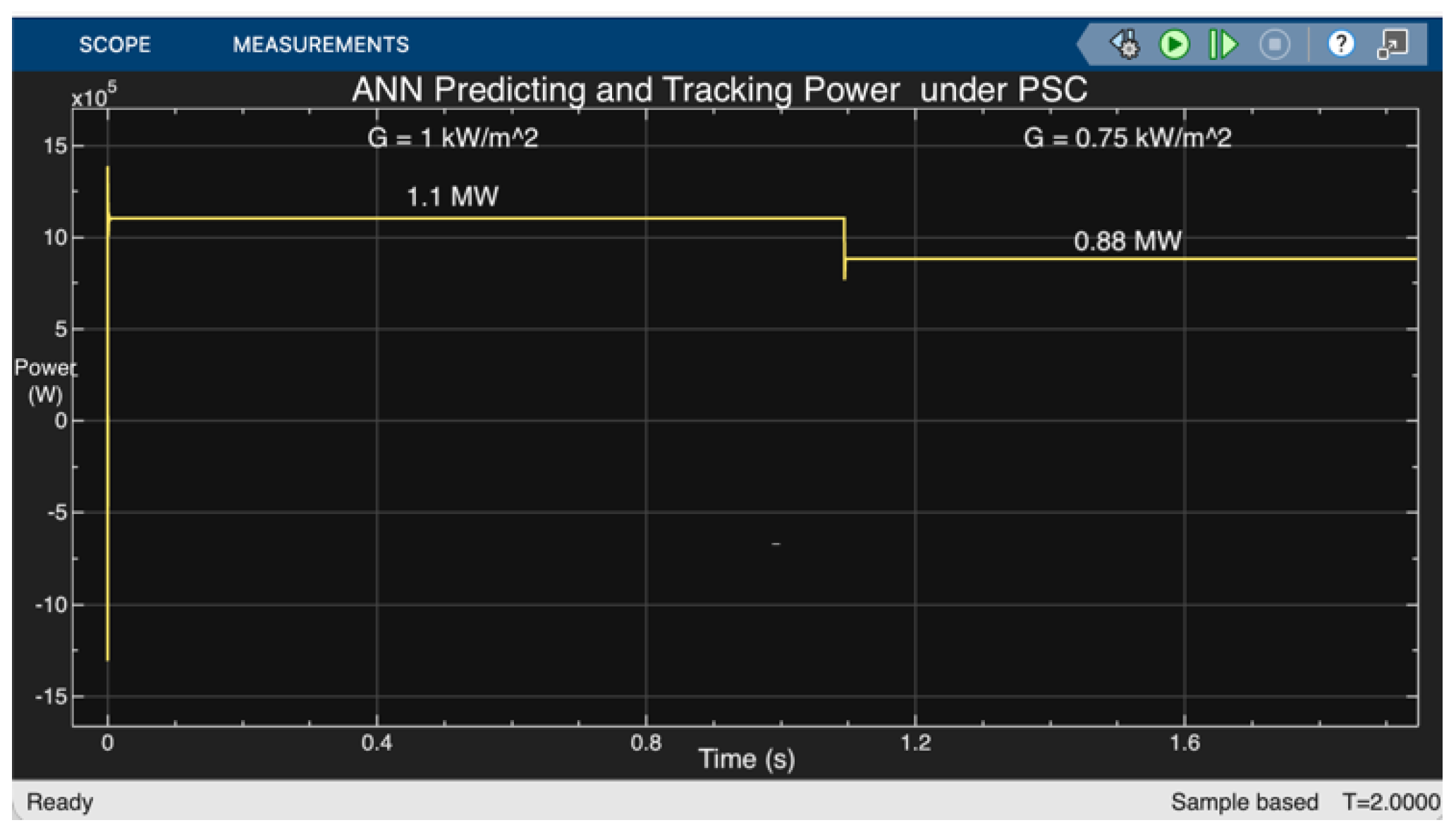
We utilized MATLAB/Simulink features to calculate maximum power at any G and T. The ANN’s predictive performance was validated in MATLAB/Simulink using a one-MW virtual PV array. Table 5 compares the ANN-predicted and MATLAB-simulated results under various G and T values, and Figure 6 and Figure 7 present visual representations of the validated results.
Table 5.
Performance comparison between ANN and MATLAB.
Figure 6.
MATLAB-calculated MPP at 2 different G levels.
Figure 7.
ANN’s predicted MPP closely matches MATLAB’s calculated MPP.
The average deviation between the ANN and MATLAB was well below five percent, confirming reliable and consistent tracking of the actual global peak across different shading levels and achieving acceptable industry standards. Figure 6 and Figure 7 provide a visual representation of the simulated results.
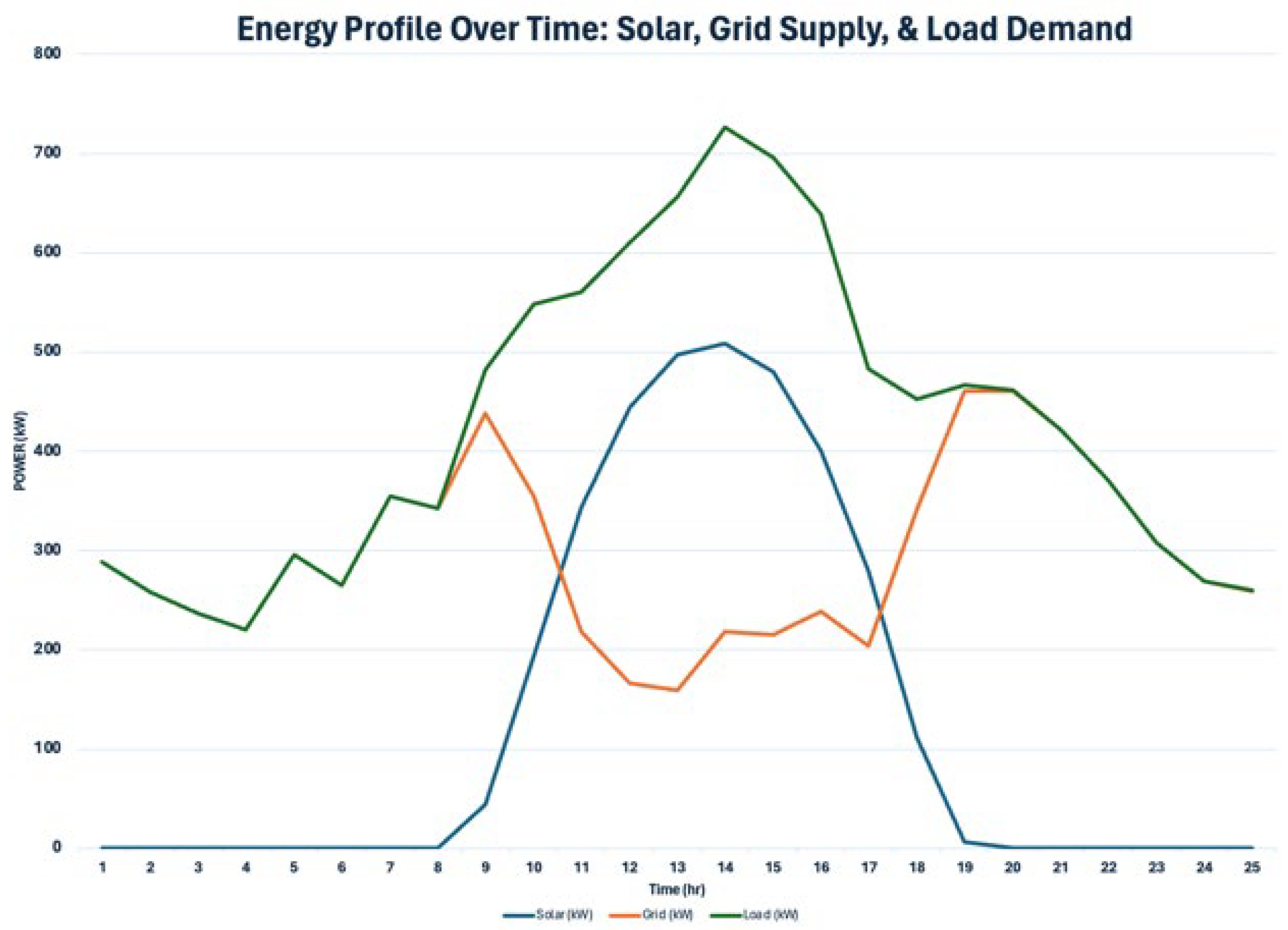
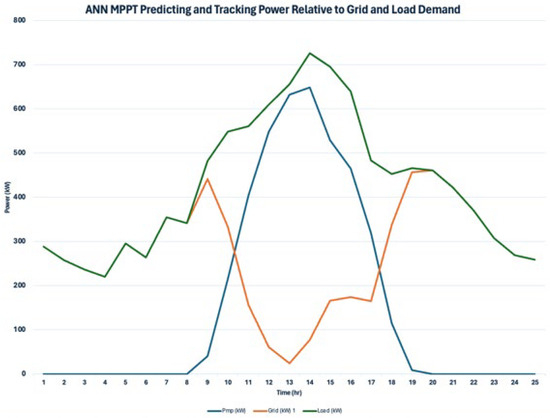
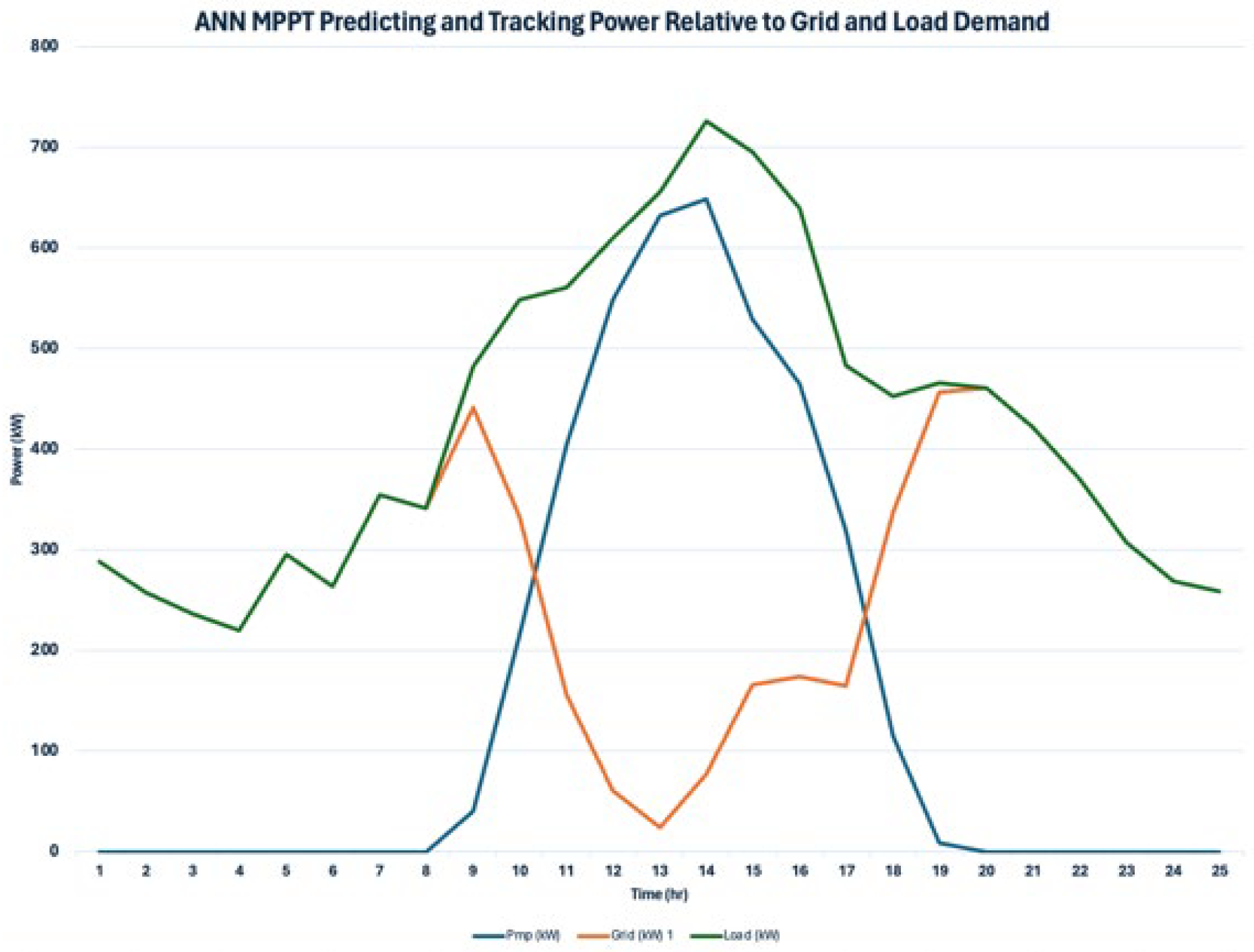
To conclude the ANN model validation, an experimental real-world verification was conducted using a nine-thousand-kilowatt PV system located in Cape Town, South Africa. The PV system in question is configured with seven inverters operating in parallel, each with 214 panels in series. The ANN-based MPPT model was tested against the actual system’s operational data, including G, T, solar generation, grid input, and load demand over a twenty-four-hour period. Table 6 presents the results.
Table 6.
Real-world comparison of ANN-predicted power with MPPT and without MPPT.
As shown in the table above, the ANN model established a strong correlation among solar irradiance, temperature, and predicted MPP over the 24 h period. During non-irradiance (00:00–07:00) and gain (19:00 to 24:00), G levels remained near zero, and both ANN output power and the measured power maintained a constant baseline of 0.06 kW. This confirms that the neural network accurately suppresses output predicted in darkness and low-light conditions, giving a close reflection on the proper recognition of the non-generation period.
As G increased after sunrise, the model’s power output prediction rose linearly, peaking around midday. With the ANN MPPT model implemented in the system, a notable increase in effective solar generation is observed. This, in turn, lowered the site’s reliance on the national grid by roughly sixfold during peak irradiance. Over twenty-four hours, a sixty-five to seventy percent reduction in grid reliance is observed thanks to the ANN’s predictive MPPT capability.
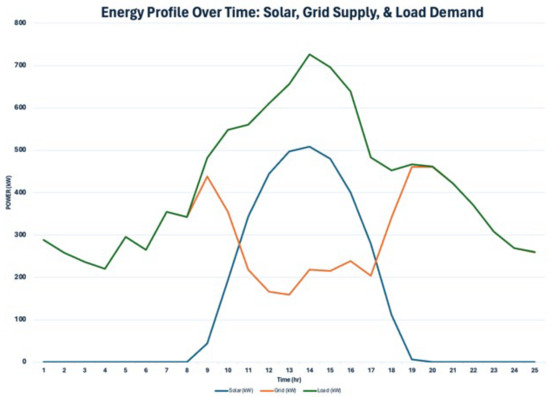
The findings reinforce the conclusion that a data-driven ANN approach significantly simplifies implementation, reduces reliance on field sensors, and supports rapid, low-cost deployment of an MPPT technique for any PV system. By using freely available, unshaded datasheets for ANN development, the model provides a practical pathway for the scalable integration of AI-based MPPT into both new and existing PV systems. Figure 8 and Figure 9 illustrate the real-world validation data. Figure 8 shows the PV system energy profile without the ANN implemented, and Figure 9 shows the PV system energy profile with the ANN implemented.
Figure 8.
Energy profile of PV system without ANN-based MPPT. Blue line: Solar (KW); orange line: Grid (KW); green line: Load (KW).
Figure 9.
Energy profile of PV system with ANN-based MPPT. Blue line: Pmp (KW); orange line: Grid (KW); green line: Load (KW).
5. Conclusions
This paper successfully demonstrated the design, training, and implementation of an ANN-based MPPT model developed solely from unshaded PV manufacturer datasheets. The approach eliminates the need for costly field data collection while maintaining exceptional predictive capabilities. This was achieved through both simulation and real-world validation, where the model showcased a 5% deviation margin and reduced grid dependence by up to 6-fold in some daylight operation studies.
These findings confirm that the AI-data-driven MPPT, trained on unshaded datasheets, can generalize effectively under PSC while still offering a scalable, low-cost, hardware-free solution that adapts to new and existing PV systems.
Author Contributions
Conceptualization, M.A.I.; and S.K.; methodology, M.A.I.; software, M.A.I.; validation, M.A.I. and S.K.; formal analysis, M.A.I.; investigation, M.A.I.; resources, M.A.I.; data curation, M.A.I.; writing—original draft preparation, M.A.I.; writing—review and editing, M.A.I. and S.K.; visualization, M.A.I.; supervision, S.K.; project administration, S.K. All authors have read and agreed to the published version of the manuscript.
Funding
This research received no external funding.
Institutional Review Board Statement
Not applicable.
Informed Consent Statement
Not applicable.
Data Availability Statement
All data used in this work are reported in the paper.
Acknowledgments
The authors would like to thank the Centre of Intelligent Systems and Emerging Technologies within the Department of Electrical, Electronic, and Computer Engineering at Cape Peninsula University of Technology, South Africa.
Conflicts of Interest
The authors declare no conflict of interest.
References
- Kareem, P.R.; Jasmin, H.; Hasan, F.H.; Algburi, S. Enhancing PV Power Extraction Under Partial Shading Conditions with Shade Dispersion Strategy. Diyala J. Eng. Sci. 2024, 17, 38–50. [Google Scholar] [CrossRef] [Scilit]
- Ruchpaul, R.S.; Shamachurm, H. Performance Comparison of Three PV Technologies under the Effect of Partial Shading and Varying Tilt Angles. J. Electr. Eng. Electron. Control Comput. Sci. (JEEECCS) 2022, 6, 9–18. [Google Scholar]
- Abdullah, G.; Nishimura, H.; Fujita, T. An Experimental Investigation on Photovoltaic Array Power Output Affected by Different Partial Shading Conditions. Energies 2021, 14, 2344. [Google Scholar] [CrossRef] [Scilit]
- Alkahtani, M. Study for Non-Uniform Aging Photovoltaic Array Performance. Ph.D. Thesis, University of Liverpool, Liverpool, UK, May 2021. Available online: https://livrepository.liverpool.ac.uk/3134510 (accessed on 15 May 2025).
- Phan, B.C.; Lai, Y.-C.; Lin, C.E. A Deep Reinforcement Learning-Based MPPT Control for PV systems under Partial Shading Condition. Sensors 2020, 20, 3039. [Google Scholar] [CrossRef] [Scilit] [PubMed]
- El iysaouy, L.; Lahbabi, M.; Oumnad, A.; Azeroual, M.; Boujoudar, Y.; Imanni, H.S.E.; Aljarbouh, A.; Fayaz, M. Performance Enhancements and Modeling of Photovoltaic Panel Configurations During Partial Shading Conditions. J. Appl. Res. Technol. 2023, 21, 866–877. [Google Scholar] [CrossRef] [Scilit]
- Endiz, M.S.; Gökkuş, G.; Coşgun, A.E.; Demir, H. A review of traditional and advanced MPPT approaches for PV systems Under Uniformly Isolation and Partially shaded Conditions. Appl. Sci. 2025, 15, 1031. [Google Scholar] [CrossRef] [Scilit]
- Sørensen, R.; Mihet-Popa, L. Comparative Evaluation of Traditional and Advanced MPPT algorithms for PV systems in Partial Shading Conditions. Solar 2024, 5, 572–594. [Google Scholar] [CrossRef] [Scilit]
- Pfenninger, S.; Staffell, I. Long-term patterns of European PV output using 30 years of validated hourly reanalysis and satellite data. Energy 2016, 114, 1251–1265. [Google Scholar] [CrossRef] [Scilit]

Disclaimer/Publisher’s Note: The statements, opinions and data contained in all publications are solely those of the individual author(s) and contributor(s) and not of MDPI and/or the editor(s). MDPI and/or the editor(s) disclaim responsibility for any injury to people or property resulting from any ideas, methods, instructions or products referred to in the content. |
© 2026 by the authors. Licensee MDPI, Basel, Switzerland. This article is an open access article distributed under the terms and conditions of the Creative Commons Attribution (CC BY) license.