Proceeding Paper

A Hybrid Mini-Grid System for Rural Electrification in Lesotho †
Discipline of Electrical, Electronic and Computer Engineering, University of KwaZulu-Natal, Durban 4041, South Africa
*
Author to whom correspondence should be addressed.
Presented at the 34th Southern African Universities Power Engineering Conference (SAUPEC 2026), Durban, South Africa, 30 June–1 July 2026.
Eng. Proc. 2026, 140(1), 48; https://doi.org/10.3390/engproc2026140048
Published: 4 June 2026

Abstract

This study outlines the design and assessment of a hybrid renewable energy system aimed at powering rural electrification for five villages in the Butha-Buthe district of Lesotho, which has an overall daily energy consumption of 1342 kWh and a peak demand of 112 kW. Utilizing HOMER Pro (version 3.18.4), various configurations were analyzed. The most cost-effective system, comprising PV, wind, hydro, batteries, and a diesel generator, resulted in an LCOE of USD 0.3194, alongside a renewable share of 73%. An entirely renewable setup was also explored, achieving a 100% renewable share but with a higher LCOE of USD 0.6615. Sensitivity analysis regarding diesel pricing and hydro flow rates revealed significant effects on Net Present Cost and fuel consumption. The results highlight feasible options for economically efficient, renewable-centric rural electrification in isolated areas.

1. Introduction

In Lesotho, approximately 60% of the population lacks access to electricity, with the majority living in rural areas [1]. One such rural region is in the Butha-Buthe district, situated at an elevation of about 2200 m above sea level. The villages in this mountainous area are dispersed and characterized by low-income households that have remained off the grid for decades. As a result, residents rely heavily on traditional fuels to meet their daily energy needs. Consultations with residents in the villages of the region revealed that even traditional fuel use is challenging due to the scarcity of vegetation; shrubs are the primary biomass source since trees are limited.
Education levels in the region are generally low, particularly among males, many of whom work as herd boys from a young age and often do not complete elementary schooling. Harsh winter temperatures, sometimes dropping to −12 °C, further exacerbate living conditions, especially given the lack of affordable space-heating fuels. Most households are low-income or unemployed, and those who are employed are predominantly men working as unskilled laborers in nearby mines. These positions are typically allocated by local chiefs who prioritize village residents.
The absence of electrification also contributes to significant social and safety challenges. With no street lighting, the villages become extremely dark at night, increasing the risk of theft, livestock loss, and criminal activities. The darkness also enables youth to engage in hidden behaviors that have been linked to rising cases of teenage pregnancy. Moreover, many of the most severe rural crime incidents in Lesotho occur at night when the lack of lighting provides cover for perpetrators.
This study aims to design a hybrid renewable micro-grid system for five rural villages in the Butha-Buthe district to address the negative impacts of long-term non-electrification. The objective is to optimize the system configuration based on Levelized Cost of Electricity, renewable fraction, and sensitivity analysis. The proposed system seeks not only to identify the least-cost resource mix but also to provide a reliable balance between energy supply and demand for sustainable rural electrification.

2. Related Work

Of the global 800 million people without access to electricity [2,3], a high proportion of the disadvantaged are rural communities [4], of which more than two-thirds reside in sub-Saharan Africa, where half the population has no access to electricity [3]. Given that the grid extension is not geographically viable for most of these regions [2], off-grid electrification is seen as a solution [5]. Authors suggest that electrification in these regions will lead to improved social impacts on the communities [4,6]. For the effective implementation of off-grid mini-grids, research is consistently being conducted for the optimization of these systems. For instance, Yimen et al. [7] investigated a hydrogen-based energy storage system integrated with photovoltaic and wind energy for electrifying Dargalla, a village in northern Cameroon, aiming to meet both community and agricultural electricity needs while optimizing system performance. Their findings concluded that incorporating hydrogen-based energy storage in hybrid off-grid renewable systems in sub-Saharan Africa can effectively support the achievement of the United Nations Sustainable Development Goals. In another study conducted in rural Ghana [8], authors examined the techno-economic feasibility of converting excess PV energy from a 54 kWp mini-grid into hydrogen via electrolysis, storing it, and reconverting it to electricity using fuel cells. They highlighted their findings that hydrogen storage can complement batteries, provide seasonal and multi-day energy storage, and reduce renewable energy curtailment. Moreover, Boruah and Chandel [9] analyzed the Indian regulatory framework for implementing grid-connected photovoltaic systems with battery energy storage under virtual power plant platforms, highlighting existing policies, guidelines, and challenges. They emphasized that appropriate technology adoption and regulatory customization are key to enabling reliable mini-grid projects in remote regions of developing countries.

3. Materials and Methods

3.1. System Architecture

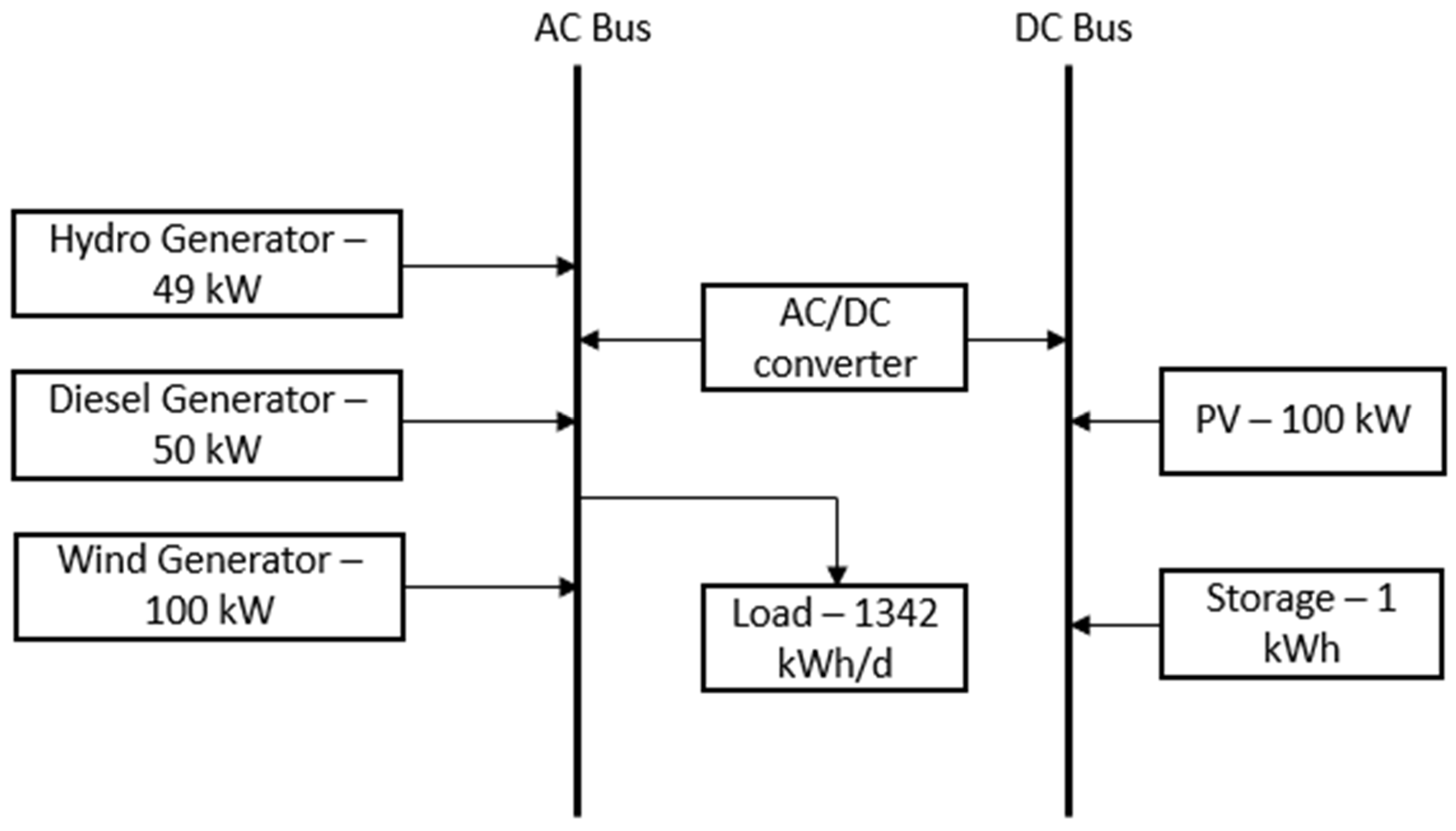
Modeled using HOMER Pro software (version 3.18.4), the system architecture of the proposed hybrid power system is illustrated in Figure 1. For the system components—diesel generator, hydro generator, wind generator, PV plant, converter, and battery storage—the cost of this equipment and all parameters are adapted from a previous study by Thamae [1].

3.2. Load Profiling

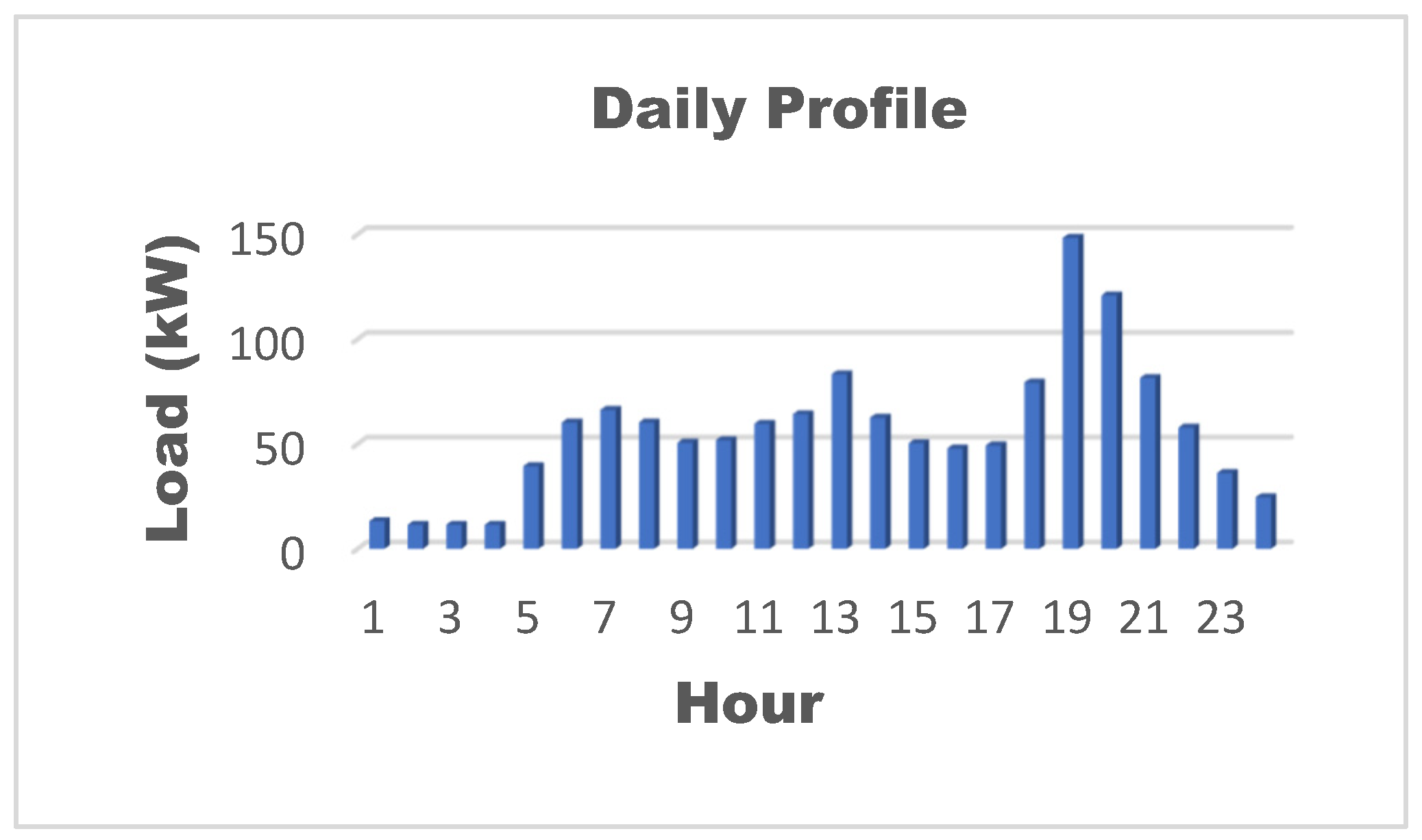
In the Butha-Buthe district of Lesotho, several nearby villages within a typical scattered settlement pattern were selected for the case study. The five villages have a combined population of 2088 across 482 households, resulting in an average household size of 4.33 people. The profile of these villages is illustrated in Figure 2.
To determine the load profile for the villages, it was assumed that electricity use is primarily for cooking, heating water for bathing, lighting, watching television, listening to the radio, and a few other basic appliances.

3.3. Wind Resource Assessment

The wind turbines are planned for installation on top of the nearby valley to ensure sufficient wind speeds. Positioning the turbines at this elevated location allows the generators to operate for extended periods. During the day, rising warm air with lower density turns the blades, while at night, cooler, denser air descends and drives the blades in the opposite direction, enabling continuous electricity generation.
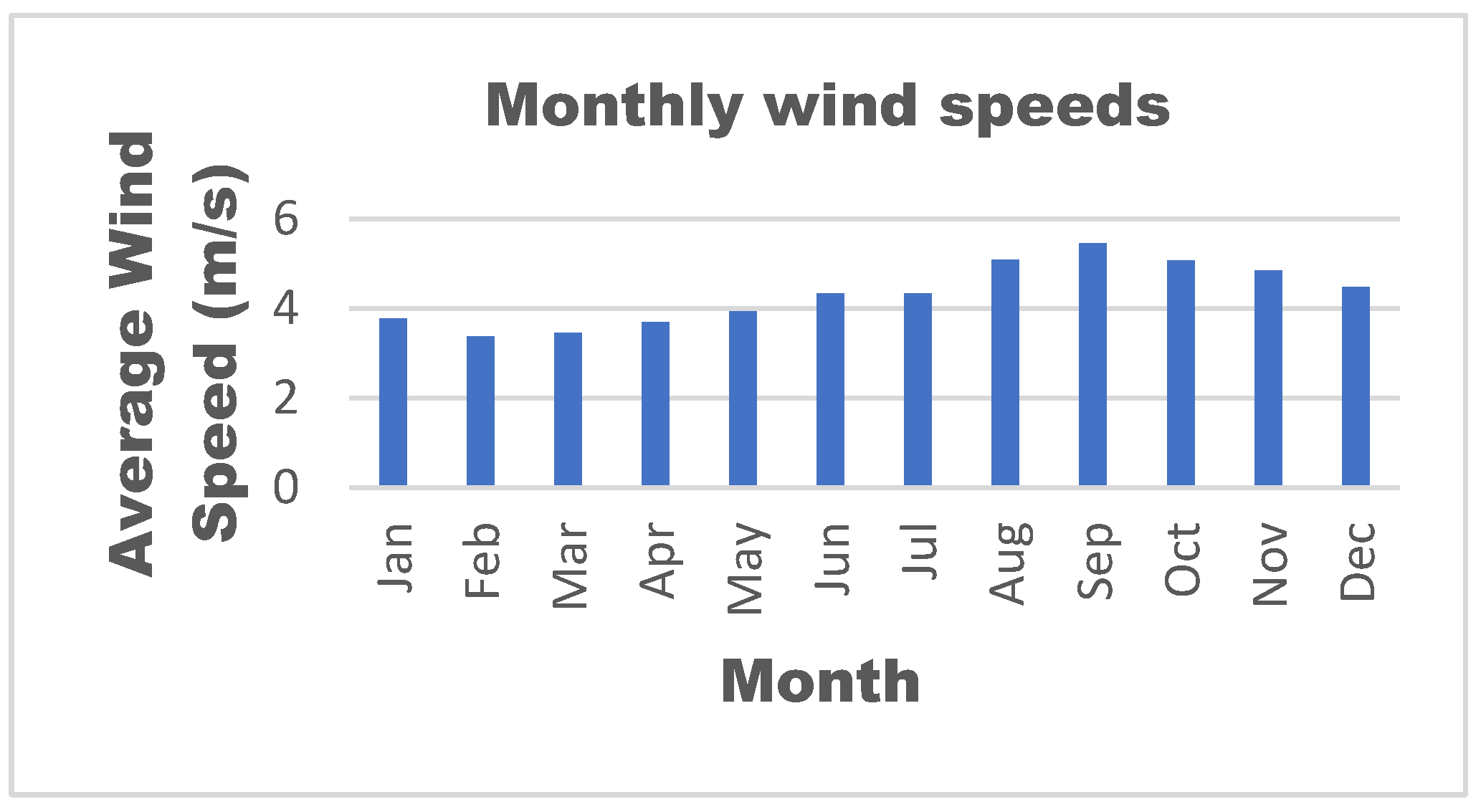
As shown in the wind speed data extracted from HOMER software for the region in Figure 3, wind speeds consistently exceed 3 m/s, which is above the cut-in speed of the proposed WES 18 (80 kW) wind turbine. The wind conditions are therefore adequate to keep the turbines rotating and producing electricity throughout the day and night.

3.4. Hydro Power Resource Assessment

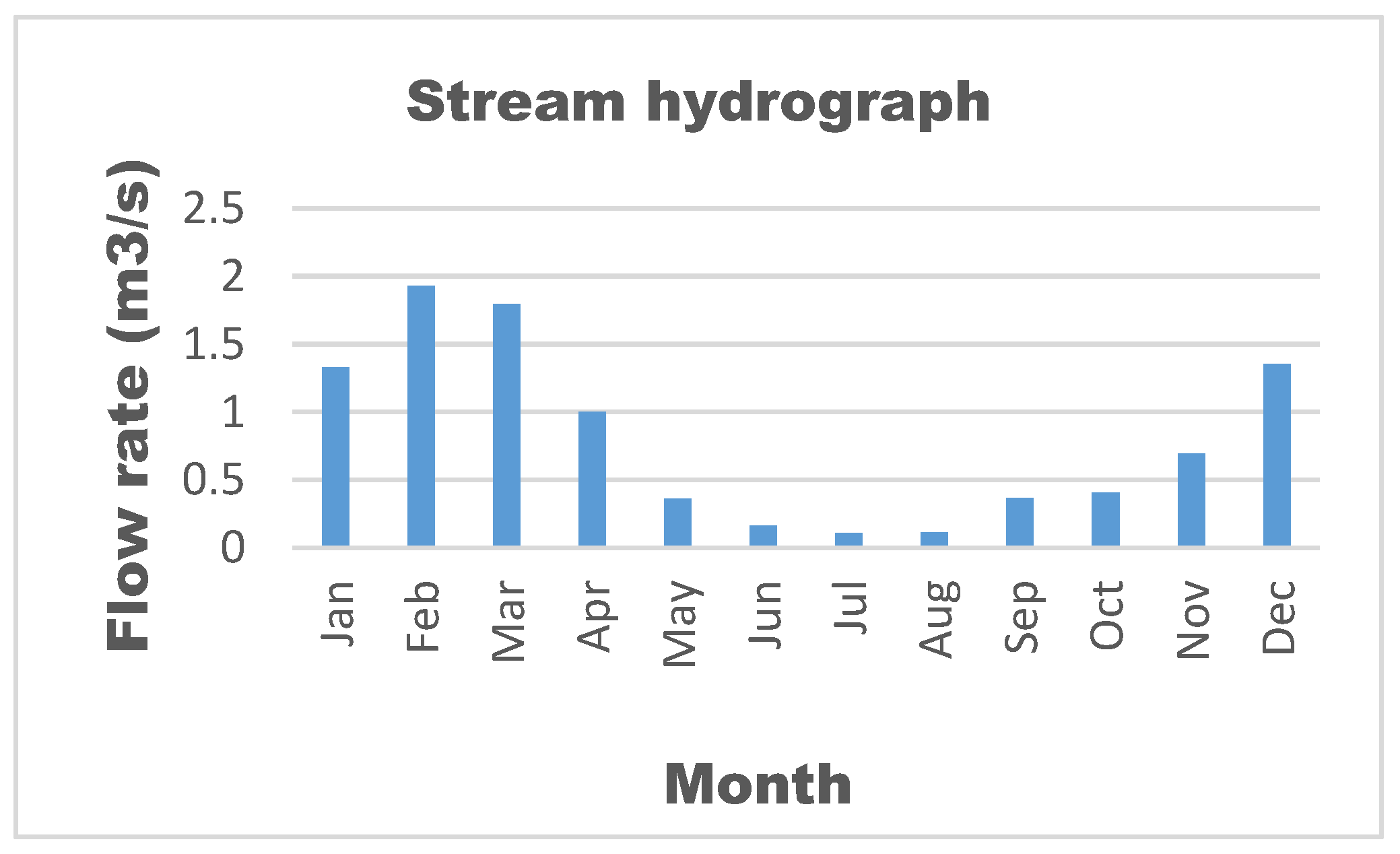
A run-of-river hydroelectric power plant is proposed based on streamflow data from the Motete River, which flows through the region. The stream hydrograph for the river is shown in Figure 4.
As expected, the highest flow rates occur during the summer months, corresponding to the rainy season, while the lowest flow rates are observed in winter.

3.5. Solar Power Resource Assessment

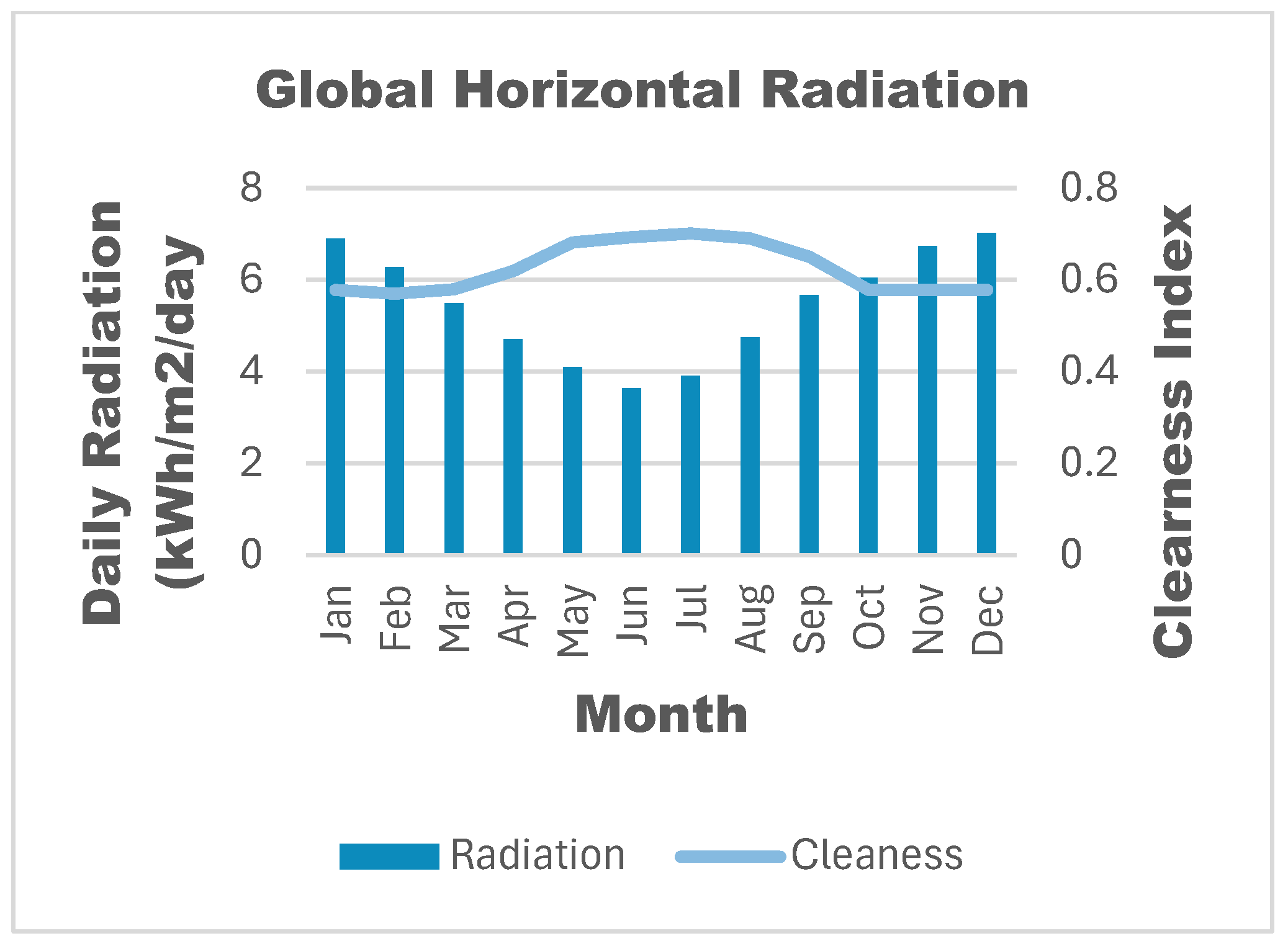
For the solar energy production, the irradiation and clearness index obtained from HOMER software is shown in Figure 5.
As shown in Figure 5, solar radiation decreases during the winter months. However, the clearness index increases during this period, partially compensating for the reduced radiation and supporting continued power generation from the PV system.

4. Simulation Results and Discussion

4.1. System with the Lowest Levelized Cost of Energy

After running the system configuration in HOMER, the optimization results generated by the software are presented in Table 1. The first system configuration in Table 1 shows the system with the lowest Levelized Cost of Energy (LCOE). In this system, the total primary load consumption is 489,700 kWh per year, with 24.9% excess electricity, 0.0266% unmet load, 0.0933% capacity shortage, and a renewable fraction of 73%.
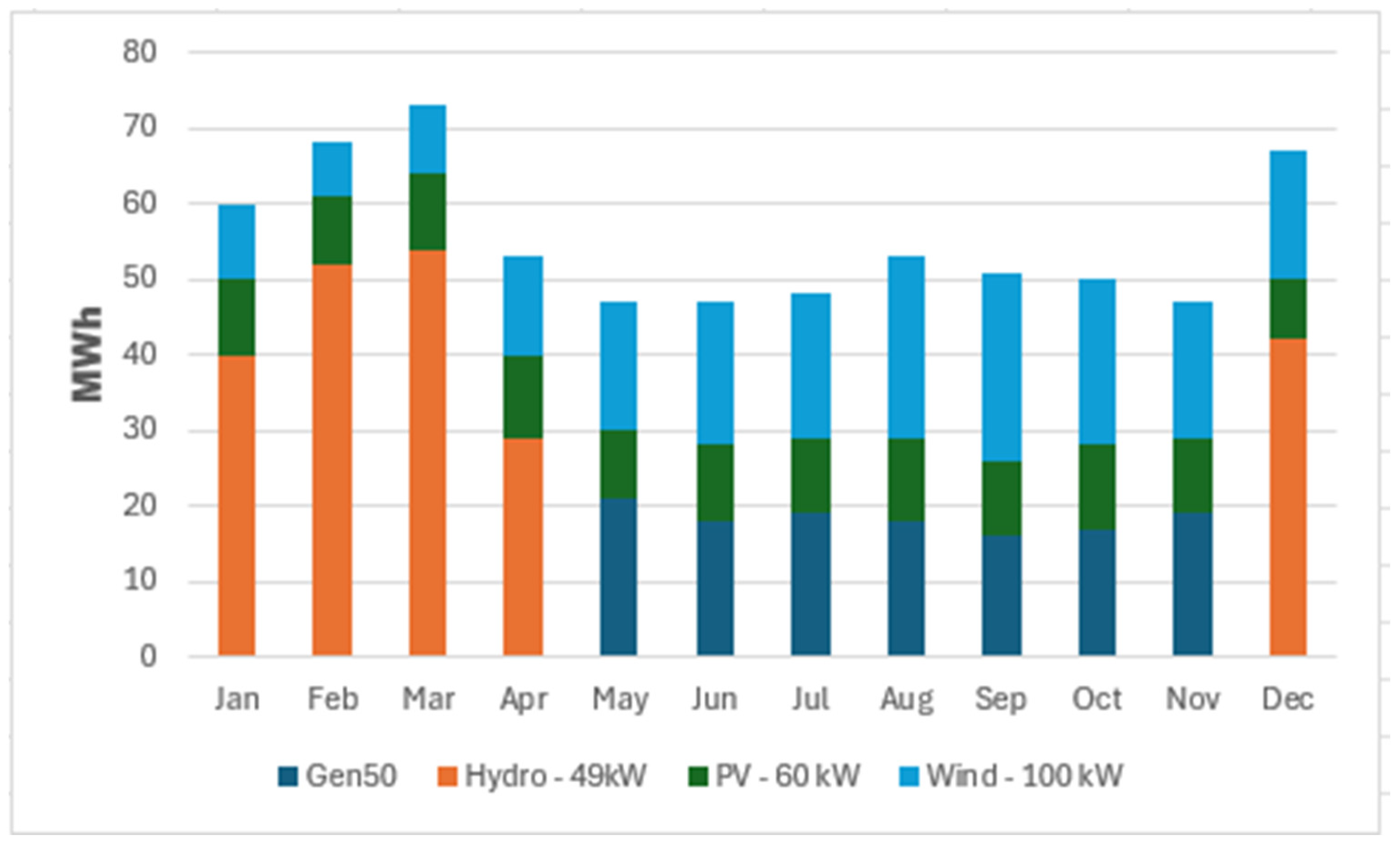
In this system, the total primary load consumption is 489,700 kWh per year, with 24.9% excess electricity, 0.0266% unmet load, 0.0933% capacity shortage, and a renewable fraction of 73%. The system achieves an LCOE of USD 0.3194/kWh, a total Net Present Cost of USD 2,021,925, and annual operating costs of USD 111,601.10. The highest expenditure occurs during the installation year due to the initial capital investment; thereafter, cash flow remains relatively stable except during scheduled component replacements, such as converter replacements in years 8 and 16 and battery replacements in years 10 and 20. In terms of electricity production, the Natel FreeJet FJ-7A 49 kW hydro generator (manufactured by Natel Energy, Alameda, CA, USA) contributes the most at 32.3%, followed by the Northern Power NPS100C-21 100 kW wind turbine (manufactured by Northern Power Systems, Bisaccia, Avellino, Italy) at 29.3%, the Generic 50 kW diesel generator (a standard generator unit in HOMER Pro) at 20.0%, and the SMA Sunny Tripower 60-US (manufactured by SMA Solar Technology AG, Niestetal, Hesse, Germany) with the 60 kW PV array at 18.4%. Figure 6 shows the monthly electric production of this system configuration.
As shown in Figure 6, electricity production during the first four months of the year is almost entirely renewable, dominated by hydro generation due to the high river flows in this period. However, as winter approaches, rising energy demand combined with significantly reduced river flows necessitates the use of the diesel generator to maintain supply reliability.
This transition is reflected in the increased diesel consumption. Diesel penetration begins in April and rises before stabilizing from mid-year until November. It then declines sharply in December, when hydro production once again becomes the dominant contributor to the energy mix. Meanwhile, solar production remains almost constant, as shown in Figure 5, which presents a consistent solar irradiation—clearness index product that stays constant because of the observed inverse proportionality between the two parameters. In the subsequent months after April, only the month of December experiences higher river flows than April, as in Figure 4; hence, it is only in December that hydro production replaces diesel generation in the energy mix. Further results show that the inverter is used most extensively during periods when hydropower is unavailable. This corresponds to the months beyond April, when renewable energy production declines. During this time, the batteries supply stored energy to the converter, which inverts the DC output to AC to meet the full AC load demand.

4.2. Sensitivity Analysis

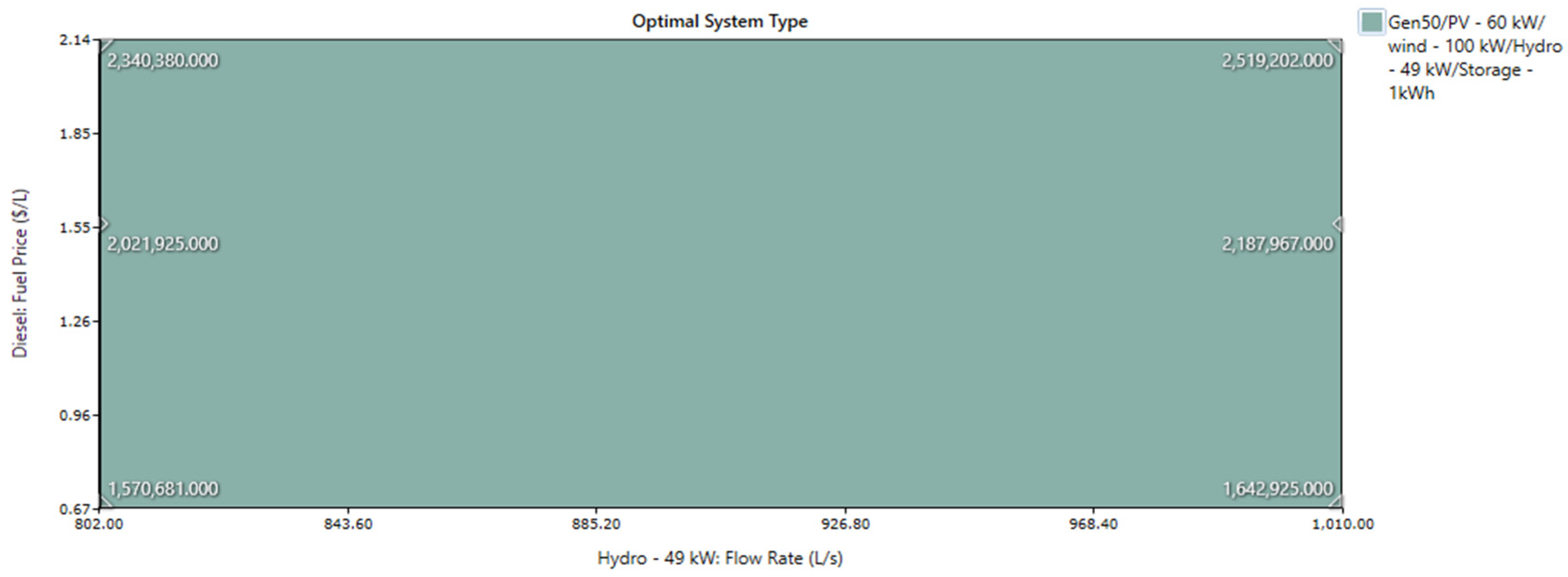
For the sensitivity analysis, diesel prices were varied at three levels—USD 0.67/L, USD 1.56/L, and USD 2.14/L—while the hydroelectric flow rate was set at either 1010 L/s or 802 L/s. The resulting optimized system performance, superimposed with the total Net Present Cost (NPC), is shown in Figure 7. The figure indicates that both diesel price and flow rate significantly influence the total NPC. If flow rate had no effect, the NPC values would remain identical across different flow rates at the same diesel price; however, this is not the case. At a flow rate of 802 L/s, the total NPC is USD 1,570,168, USD 2,021,925, and USD 2,340,380 for diesel prices of USD 0.67/L, USD 1.56/L, and USD 2.14/L, respectively. At a higher rate of 1010 L/s, the NPC increases to USD 1,642,925, USD 2,187,967, and USD 2,519,202 for the corresponding diesel prices.
When these sensitivity variables were further superimposed on total fuel consumption, the results showed a clear relationship between diesel prices and fuel use. At a flow rate of 802 L/s, total fuel consumption was 43,187.15 L, 41,694.44 L, and 41,037.55 L for diesel prices of USD 0.67/L, USD 1.56/L, and USD 2.14/L, respectively. At a higher flow rate of 1010 L/s, fuel consumption increased to 49,370.18 L, 48,659.05 L, and 35,594.61 L for the same diesel price levels. These results indicate that rising diesel prices discourage fuel use, as higher costs lead the system to rely more on renewable resources.

5. Conclusions

A hybrid renewable energy system was designed for the rural village of Motete, Lesotho, to meet local electricity demand. The system integrates a 50 kW diesel generator, a 37.5–59 kW hydroelectric generator, a 100 kW wind turbine, a 60–150 kW PV array, a 1 kWh lead-acid battery storage, and appropriate converters. HOMER simulations identified an optimized least-cost system with an LCOE of USD 0.3194/kWh, a total Net Present Cost (NPC) of USD 2,021,925, and a renewable fraction of 73%. A fully renewable configuration achieved 100% renewable fraction with an LCOE of USD 0.6615/kWh and a total NPC of USD 4,187,303. Sensitivity analysis of diesel price and hydro flow rate demonstrated significant impacts on total NPC and fuel consumption, highlighting the importance of cost and resource variability in system planning. The results indicate that hybrid systems can provide reliable, cost-effective, and renewable-dominant electricity supply for remote rural communities.

Author Contributions

Conceptualization, T.N. and A.K.S.; methodology, T.N. and A.K.S.; investigation, T.N. and A.K.S.; resources, T.N. and A.K.S.; writing—original draft preparation, T.N. and A.K.S.; writing—review and editing, T.N. and A.K.S.; supervision, A.K.S.; project administration, A.K.S. All authors have read and agreed to the published version of the manuscript.

Funding

This research received no external funding.

Institutional Review Board Statement

Not applicable.

Informed Consent Statement

Not applicable.

Data Availability Statement

Data are contained within the article.

Conflicts of Interest

The authors declare no conflict of interest.

References

  1. Thamae, L.Z. Simulation and Optimization of Renewable Energy Hybrid Power System for Semonkong, Lesotho. In Africa-EU Renewable Energy Research and Innovation Symposium 2018 (RERIS 2018); Springer: Cham, Switzerland, 2018; pp. 105–115. [Google Scholar] [CrossRef]
  2. Zürpel, C.; Groh, S. Peer-to-peer energy and rural electrification: Evidence from solar microgrids in Bangladesh. Energy Sustain. Dev. 2026, 90, 101881. [Google Scholar] [CrossRef]
  3. Zuch, M. Rural electrification in sub-Saharan Africa: A willingness to pay analysis of electricity access in Kenya. Energy Policy 2025, 206, 114720. [Google Scholar] [CrossRef]
  4. Vides-Prado, A.; Mora-Flórez, J.; Domenech, B.; Juanpera, M.; Parajeles, M.; Bastante, E.; Ferrer-Martí, L. A redesign method for rural electrification projects, case study in Yutaho, Colombia. Sustain. Energy Technol. Assess. 2025, 82, 104532. [Google Scholar] [CrossRef]
  5. Mamat, R.; Ghazali, M.F.; Erdiwansyah; Rosdi, S.M. Potential of renewable energy technologies for rural electrification in Southeast Asia: A review. Clean. Energy Syst. 2025, 12, 100207. [Google Scholar] [CrossRef]
  6. Gupta, T.; Khan, M.T.; Negi, D.S. Agriculture, electrification and gendered time use in rural Bangladesh. Energy Econ. 2025, 150, 108827. [Google Scholar] [CrossRef]
  7. Yimen, N.; Ngohe-Ekam, P.S.; Biboum, A.C.; Bouodo, T.R.M.; Nzotcha, U.; Djomi, R.; Hamandjoda, O. Techno-economic optimization of hydrogen-based hybrid renewable energy systems for rural electrification in sub-Saharan Africa: Case study of a photovoltaic/wind/hydrogen system in Dargalla, Cameroon. Energy Strategy Rev. 2025, 62, 101974. [Google Scholar] [CrossRef]
  8. Osei, L.K.; Opoku, R.; Odoi-Yorke, F.; Sekyere, C.K.K.; Obeng, G.Y.; Forson, F.K. Optimising mini-grid efficiency in Ghana: A techno-economic analysis of hydrogen production from redundant solar energy for fuel cell power generation. Energy Convers. Manag. X 2025, 28, 101309. [Google Scholar] [CrossRef]
  9. Boruah, D.; Chandel, S.S. A novel regulatory framework for implementing distributed solar mini-grids with battery energy storage under the virtual power plant architecture in India. J. Energy Storage 2025, 132, 117732. [Google Scholar] [CrossRef]
Figure 1. Proposed system architecture.
Engproc 140 00048 g001
Figure 2. Combined load profile of selected rural villages.
Engproc 140 00048 g002
Figure 3. Monthly wind speeds in the rural area under study.
Engproc 140 00048 g003
Figure 4. Stream hydrograph of the local river.
Engproc 140 00048 g004
Figure 5. Solar irradiation and clearness index of the area.
Engproc 140 00048 g005
Figure 6. Monthly electric production in the system with the lowest LCOE.
Engproc 140 00048 g006
Figure 7. Optimal system under diesel price and hydro flow rate sensitivity, superimposed with the total Net Present Cost (NPC).
Engproc 140 00048 g007
Table 1. Hybrid power system simulation results.
PV 60 kW Output (kW)PV 60 kW MPPT (kW)Wind 100 kW (Units)Gen50 Output (kW)Hydro-49 kW Output (kW)Storage (kWh)50 kW Converter (kW)LCOE (USD/kWh)
606015037.5291500.319
25037.5483500.351
10060 5037.5448500.378
150603 37.530731000.662
Disclaimer/Publisher’s Note: The statements, opinions and data contained in all publications are solely those of the individual author(s) and contributor(s) and not of MDPI and/or the editor(s). MDPI and/or the editor(s) disclaim responsibility for any injury to people or property resulting from any ideas, methods, instructions or products referred to in the content.