1. Introduction
The growing global need for clean, reliable, and constant energy has led to the development of innovative renewable energy solutions, which alleviate the reliance on traditional energy systems that are based on fossil fuels and are challenged by depletion of resources, greenhouse gas emissions, and environmental degradation [
1]. Although terrestrial renewable energy technologies such as wind, solar, and hydroelectric power have played an important role in reducing carbon emissions, they tend to be intermittent and geographically constrained by the atmospheric absorption of solar power, weather conditions, and the daily and annual cycles of the Earth limit the availability and efficiency of solar power [
2]. To address these issues, Space-Based Solar Power (SBSP), which uses large arrays of solar collectors in geostationary or low Earth orbits to generate continuous, large-scale, and sustainable energy, has been proposed as an innovative solution.
First proposed by Dr. Peter Glaser in 1968, the concept of SBSP has gained increasing interest, as technology related to wireless power transmission, lightweight materials, satellite technology, and orbital deployment has advanced. Advocates of SBSP argue that it overcomes the intermittency issue of traditional solar and wind energy by supplying baseload renewable power 24 h a day, 365 days a year, and could also enhance global energy security, reduce reliance on fossil fuels, and aid decarbonization efforts in line with international climate agreements.
Despite its promise, the implementation of SBSP poses considerable technical, economic, and regulatory challenges. These include the high cost of space launch and infrastructure deployment, efficiency and safety of wireless power transmission, orbital congestion, and potential environmental and health concerns related to microwave or laser beams. In addition, international policy frameworks would need to address issues of ownership, governance, and equitable energy distribution, ensuring that SBSP technology serves as a global public good rather than a source of geopolitical tension. Nevertheless, with the increasing urgency of the global energy transition and the rapid pace of technological progress in space engineering and renewable energy systems, SBSP remains a compelling research direction. By addressing its technical and socio-economic challenges, SBSP has the potential to become a transformative energy solution capable of supporting a sustainable, low-carbon future [
3].
2. Background and Conceptual Framework
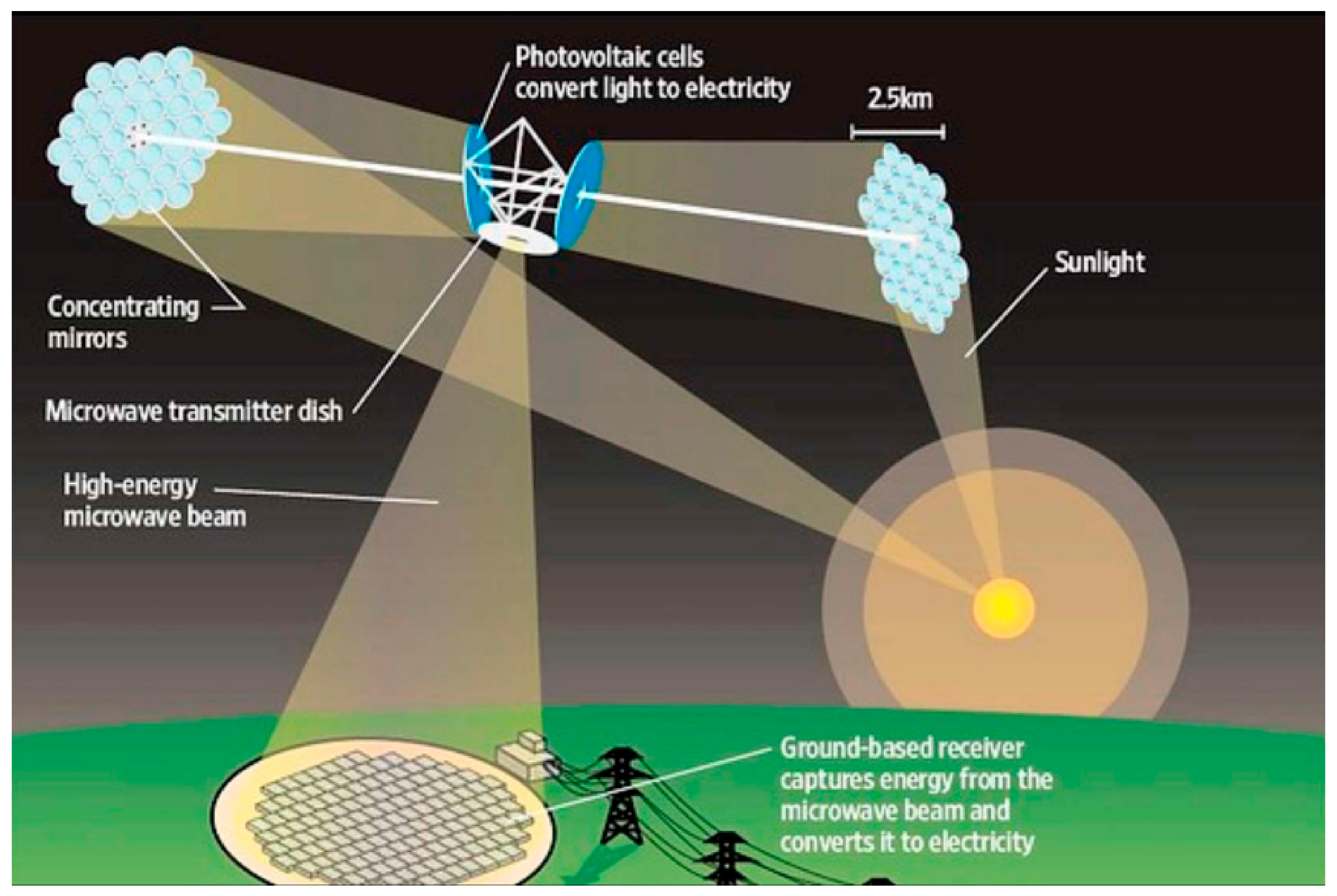
Space-Based Solar Power (SBSP) is built on a simple yet transformative idea: collecting sunlight where it is most abundant and sending it to where it is most needed [
4]. In this system, large satellites equipped with solar panels orbit Earth, continuously harvesting solar energy. The energy is then converted into microwaves or laser beams and transmitted wirelessly to ground-based receiving stations, known as rectennas, which convert the signal back into usable electricity as shown in
Figure 1 [
5].
Unlike terrestrial solar power systems, SBSP can operate 24 h a day since space receives uninterrupted sunlight [
6]. This feature makes it particularly valuable for supporting regions where renewable infrastructure is limited or where weather conditions make energy generation unreliable. In addition, SBSP systems could be strategically positioned to supply clean energy to multiple regions across the globe, promoting energy equity and resilience.
Conceptually, SBSP fits within the broader framework of integrated renewable energy systems, where different energy sources complement one another to ensure stability and reliability. For example, while ground-based renewables supply energy during peak daylight or windy conditions, SBSP could maintain power during periods of low output. This integration aligns with the United Nations Sustainable Development Goals (SDGs), especially SDG 7, which promotes affordable and clean energy, and SDG 13, which focuses on climate action.
Despite its potential, SBSP faces practical, political, and environmental obstacles. The high cost of launching satellites, the challenge of safely transmitting power through Earth’s atmosphere, and the risk of space debris require careful evaluation. Moreover, implementing SBSP on a global scale demands strong international cooperation, shared regulatory frameworks, and transparent governance. As such, this study explores not only the technological aspects but also the broader environmental, legal, and economic dimensions of this promising yet complex energy solution.
3. Literature Review
3.1. Historical Development of SBSP
The concept of harvesting solar energy from space is not entirely new. It was first proposed in the late 1960s by Dr. Peter Glaser, who introduced the idea of using orbiting satellites to collect sunlight and beam it down to Earth as microwaves. His vision laid the groundwork for decades of research and feasibility studies led by organizations such as NASA and the U.S. Department of Energy during the 1970s and 1980s . However, the high costs of rocket launches, the limited efficiency of solar cells, and the infancy of wireless power transmission technology made large-scale implementation impractical at the time [
7,
8,
9].
With the rapid advancement of technology in the 21st century, renewed interest in SBSP has emerged. Modern developments in lightweight materials, autonomous robotics, reusable launch systems, and high-efficiency solar arrays have reignited global discussions around the possibility of space-based energy production. Governments and private companies now view SBSP as part of a broader strategy to address the twin challenges of energy security and climate change.
3.2. Current Research and Global Initiative
Although the concept of SBSP has not yet been actually proven through implementations and actual utilization, the recent years have seen a remarkable revival of its research across the globe [
6]. The European Space Agency (ESA) introduced the SOLARIS Initiative, which aims to assess the technological and economic feasibility of SBSP for large-scale energy supply [
7]. This project explores how SBSP could integrate into Europe’s future energy mix and support the continent’s transition to net-zero emissions. Meanwhile, NASA continues to evaluate advanced materials, orbital platforms, and power-beaming technologies under the Space Solar Power Exploratory Research and Technology (SERT) program [
8]. Similarly, China has launched its own ambitious SBSP program, with plans to test a prototype space solar power station by the 2030s [
9], while firms such as Caltech’s Space Solar Power Project and the UK CASSIE Research Program have presented one of the largest transmission arrays for the application of SBSP. A 112-element cross-helix solar power satellite beaming array was tested at 2.4 GHz wireless transmission and was validated for retrodirective beam tracking across a 360° azimuth range with limited elevation coverage demonstration. These results endorse the feasibility of adaptive beam steering for maintaining power transmission links. Power-beaming tests done on a 144 element rectenna achieved [
10]. Another project called the OHISAMA Satellite 2025 mission builds up research going back in decades which included extensive experiments, studies and prototype development, upon the active tests on microwave power transmission systems and critical space technology validations. The project has achieved significant breakthroughs in wireless power transmission with the developments of high efficiency rectennas at 2.45 Hz, 5.8 Hz and 24 GHz operating frequencies [
11,
12,
13]. These initiatives indicate that SBSP is shifting from a purely conceptual idea to an area of applied research with real engineering potential.
4. Advances in System Design and Satellite Technology
Refs. [
12,
14,
15,
16,
17] reveal that technological progress in spacecraft design has significantly strengthened the practicality of Space-Based Solar Power (SBSP). Modern satellites are no longer the heavy, rigid structures of the past. Instead, researchers have developed lightweight, modular, and self-assembling designs that can be launched in parts and constructed autonomously in orbit. This approach dramatically reduces launch costs and minimizes the risks associated with deploying large structures into space.
Innovations in photovoltaic materials have also enhanced efficiency. High-performance solar cells made from perovskite and gallium arsenide can capture more solar energy and withstand the harsh conditions of space [
17]. Some experimental satellite prototypes now demonstrate conversion efficiencies, suggesting that future SBSP systems could deliver meaningful power output if scaled up [
16,
18].
Another critical development is the use of robotic assembly and maintenance. Space agencies such as NASA and the European Space Agency (ESA) are exploring robotic platforms capable of repairing, aligning, or expanding solar arrays without human intervention [
19]. These technologies are key to ensuring the long-term sustainability and scalability of space-based energy systems.
4.1. Wireless Power Transmission and Rectenna Innovations
One of the defining challenges in SBSP remains the safe and efficient transmission of energy from orbit to Earth [
6]. Research into microwave beaming and laser transmission has made promising progress. Microwave-based systems are currently favored because they offer reliable transmission over long distances with minimal atmospheric interference [
4]. For example, Japan’s JAXA demonstrated the controlled transmission of 1.8 kilowatts of energy over 50 m using microwaves, a small but symbolic step toward real-world feasibility [
20,
21,
22].
At the same time, improvements in rectenna (receiving antenna) design are helping increase ground-based conversion efficiency. Modern rectennas are being built with flexible, thin-film materials that can be spread across large areas with limited environmental disturbance [
21]. Their efficiency in converting microwave energy into electricity has improved from around 40% in early tests to over 80% in some prototypes. Such gains not only make SBSP more technically viable but also more sustainable in terms of land use and ecological compatibility.
4.2. System Designs
The design of a space-based photovoltaic (PV) system prioritizes maximizing power generation efficiency while minimizing structural mass and ensuring long-term reliability under the harsh environmental conditions of space [
21]. Achieving this balance requires careful consideration of PV technology selection, array architecture, deployment mechanisms, and environmental control systems. Modern SBSP systems often employ high-efficiency III-V semiconductor PV cells such as gallium arsenide (GaAs) or indium gallium phosphide (InGaP), which offer superior power-to-weight ratios and excellent resistance to radiation damage. The total active surface area and panel configuration, determined by the number of series and parallel connections, are directly proportional to the system’s power output and the conversion efficiency of the chosen material [
22].
Environmental and operational factors strongly influence SBSP PV system design. Solar radiation, extreme thermal fluctuations, and long-term radiation damage must be accounted for in both structural and electronic components [
23]. Effective thermal management and control systems are therefore essential, with pulse-width modulation (PWM) mechanisms commonly used to regulate power output and prevent resonance or voltage instability across solar cells. Continuous innovation in solar array design has resulted in several high-performance configurations, with recent advances focusing on three major types suited for spacecraft and SBSP applications: Z-folded, fan-shaped, and roll-out solar arrays.
4.2.1. Z-Folded Solar Arrays
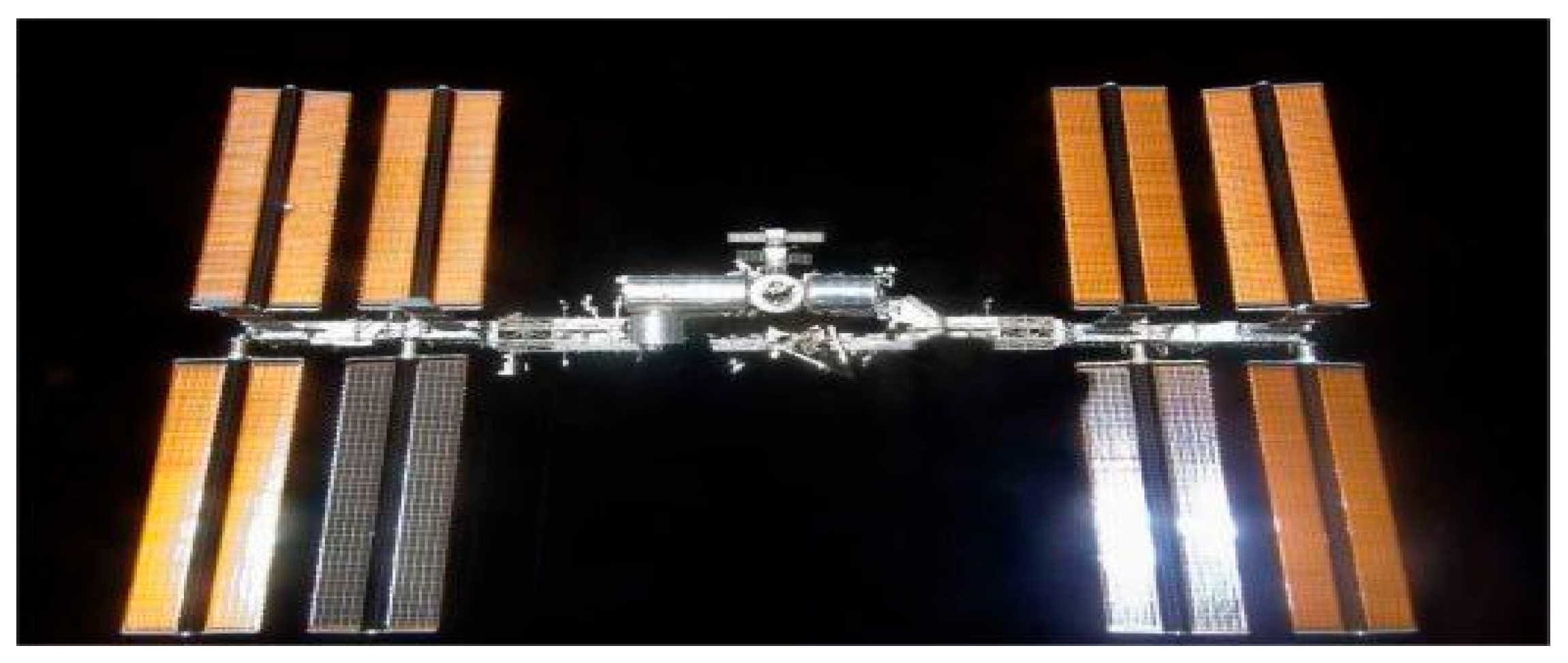
Figure 2 shows an example of z-folded solar arrays which consist of flexible panels connected by articulated trusses that fold compactly during launch and deploy sequentially in orbit to provide high stiffness and a large surface area. These designs have been successfully used in large orbital platforms such as the International Space Station (ISS) and the Chinese Space Station, where they deliver impressive power outputs exceeding 100 kW. The use of high-efficiency gallium arsenide (GaAs) panels with over 30% efficiency further enhances their performance. Despite these advantages, Z-folded arrays are relatively heavy due to their truss structures and deployment mechanisms, making them impractical for smaller or modular SBSP satellites.
4.2.2. Fan-Shaped Solar Arrays
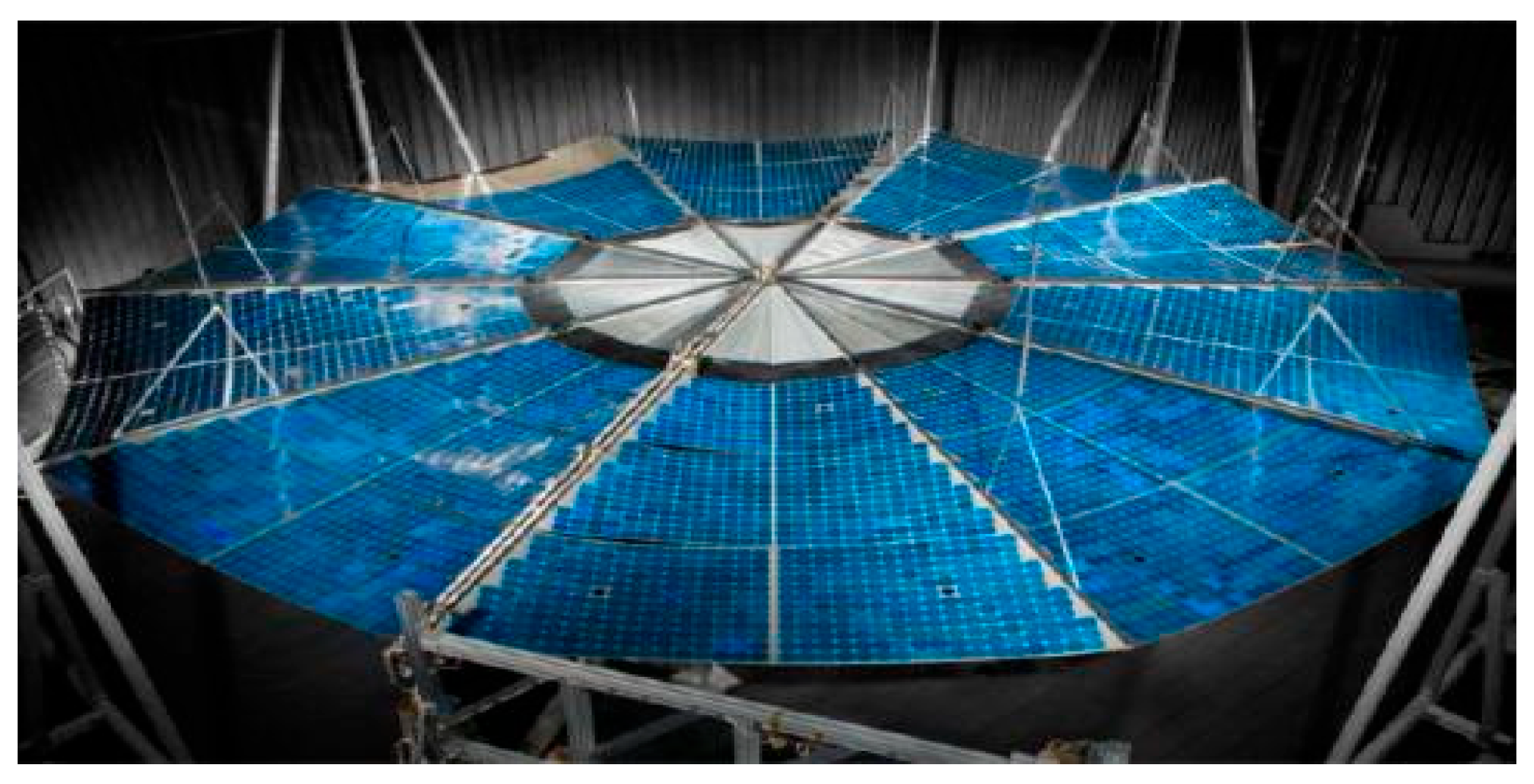
Also known as UltraFlex or MegaFlex systems, fan-shaped solar arrays employ flexible panels attached to a radial or umbrella-like framework that allows for efficient stowage and deployment. Their lightweight construction and excellent power-to-mass ratios, up to 25 kW per array, make them highly suitable for deep-space missions. Fan-shaped arrays like the one in
Figure 3 are developed by companies such as AEC-ABLE and ATK, these arrays have been utilized in spacecraft like Insight, Lucy, and Cygnus [
5]. They combine compactness, scalability, and structural stability; however, their current design focus makes them more appropriate for exploration missions rather than large-scale Space-Based Solar Power (SBSP) platforms.
4.2.3. Roll-Out Solar Arrays
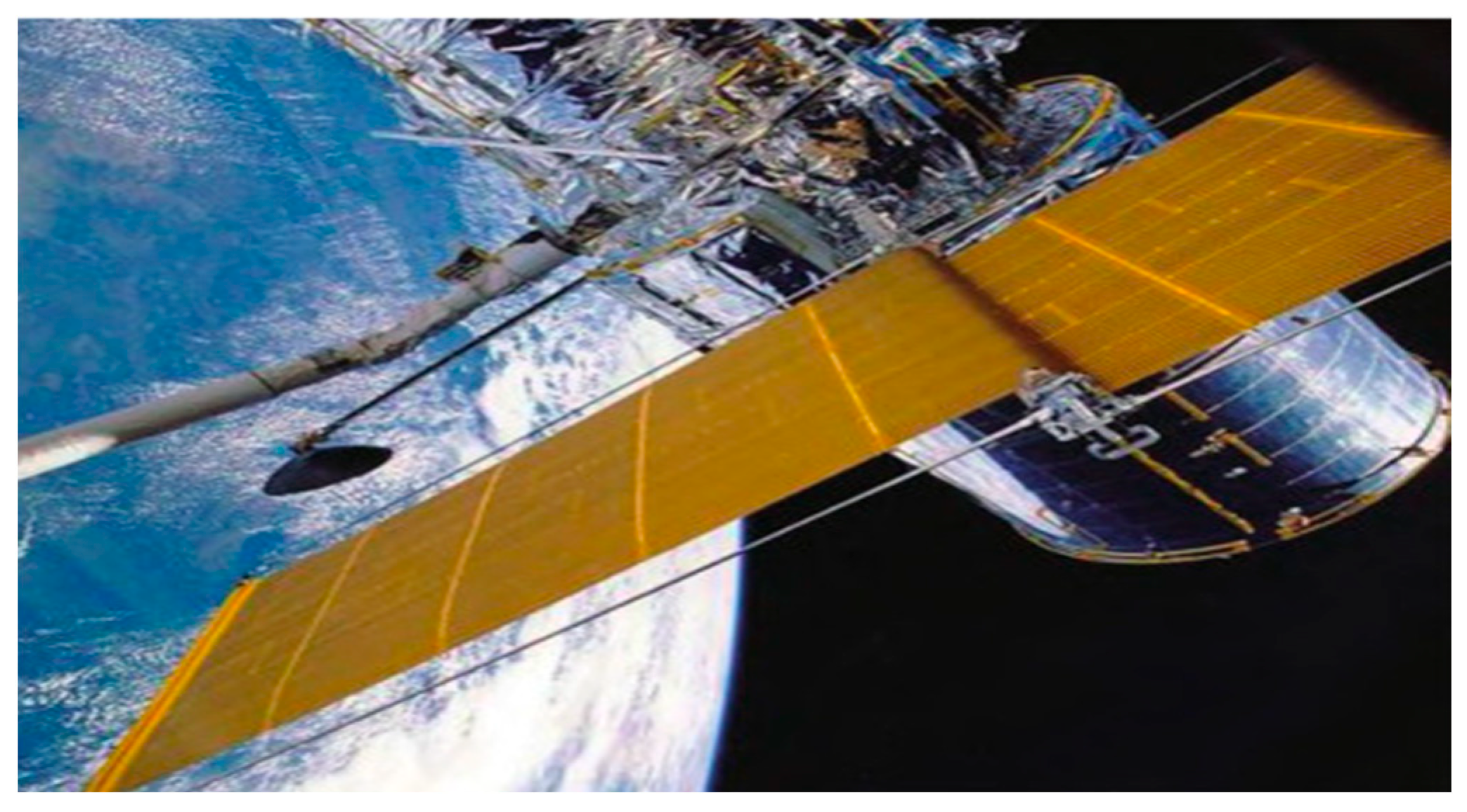
These arrays represent the next generation of SBSP technology, featuring thin-film solar cells mounted on flexible composite booms or carbon-fiber tubes that unroll autonomously in space as shown in
Figure 4 [
4]. They are extremely lightweight, self-deploying, and efficient, with minimal mechanical stress during operation. NASA’s ROSA and iROSA systems, deployed on the ISS, demonstrate their effectiveness, each generating around 25kW with power-to-mass ratios reaching 75–100 W/kg. Recent advances, including triple-junction GaAs thin-film cells and inflatable deployment systems, allow these arrays to scale up efficiently, making them the most promising option for future multi-megawatt SBSP applications.
Technological and Economic Perspectives
From a technological standpoint, the progress in modular satellite systems, robotic assembly, and high-efficiency photovoltaic materials represents a major step forward. These innovations suggest that SBSP could one day supply large-scale, continuous power without being constrained by day–night cycles or weather variability. In this sense, SBSP offers a genuine complement to terrestrial renewables, capable of filling the gaps created by intermittency.
Economically, while launch and infrastructure costs remain high, the sharp decline in rocket launch prices and advances in reusable technologies offer hope for long-term affordability. Cost projections from agencies such as NASA and the European Space Agency (ESA) indicate that as launch systems become cheaper and materials more efficient, the financial gap between SBSP and terrestrial solar power could narrow considerably by mid-century. This trend reflects a broader shift in the global energy landscape, where the true value of renewables is measured not only by cost but also by stability, sustainability, and resilience.
Economic Feasibility and Cost-Reduction Pathways
The major barrier to SBSP adoption has always been cost. Historically, the expense of launching and maintaining large structures in orbit made the idea economically unrealistic. However, the rise in reusable rockets, led by companies like SpaceX, has drastically reduced launch costs. Combined with advances in lightweight photovoltaic materials and modular satellite assembly, the economic outlook for SBSP is gradually improving. A feasibility study by SKR Ramara and N Garzaniti on the total lifestyle cost of a SBSP including the launch costs over a 15-year period indicated that the total life-cycle cost of a 80 kw SBSP is approximately 2.47 billion dollars with the levelized cost of energy amounting to 112.03
$/kwh [
24]. These numbers are quite high when comparing them to those of the terrestrial renewable power sources and they show that space-based solar still require enormous amount of research and innovation to lower the costs associated with launching, assembly and normal operation of these systems to make them competitive against the terrestrial renewable energy sources.
Environmental, Political, and Legal Considerations
While SBSP promises clean energy, it also raises important environmental and ethical questions. The construction and operation of massive orbital systems may contribute to space debris, posing risks to satellites and space missions [
25,
26].
On Earth, concerns revolve around the safety of microwave transmission, potential impacts on wildlife, and large land requirements for rectennas. From a political standpoint, SBSP calls for international cooperation. Since outer space is governed by treaties such as the Outer Space Treaty of 1967, the ownership and regulation of space-based power systems remain complex [
27,
28]. Issues of energy distribution, orbital congestion, and security risks require transparent global governance frameworks. Furthermore, equitable access to SBSP technology will be crucial to prevent widening energy disparities between developed and developing nations, which has resulted in call for the creation of a Global Space Energy Framework [
29], an agreement to ensure fair access, transparency, and peaceful use of SBSP technologies. This would help prevent conflict and encourage joint investment in shared orbital infrastructure.
Additionally, the life-cycle carbon footprint of SBSP components, from manufacturing to launch, needs further assessment. Nonetheless, most analysts agree that once operational, SBSP systems would have one of the lowest environmental footprints of any large-scale power source, producing zero direct emissions during operation.
5. Integrating SBSP into the Global Energy Mix
The most compelling aspect of SBSP lies in its potential integration rather than isolation. Rather than replacing existing renewable systems, SBSP can complement them by providing consistent power during low-generation periods for solar, wind, or hydro systems. Its ability to generate uninterrupted electricity positions it as a stabilizing force within the renewable energy network, ensuring reliability and reducing dependence on fossil fuel backup systems.
In this sense, SBSP can be seen as a “space bridge” for sustainability, a technology that links humanity’s need for continuous power with our responsibility to protect the environment. When integrated with emerging technologies such as smart grids, energy storage systems, and artificial-intelligence-based energy management, SBSP could help create a truly resilient global power infrastructure.
6. Limitations of the Study
While this paper provides a comprehensive review of the potential and progress of Space-Based Solar Power (SBSP), several limitations should be acknowledged.
Firstly, the research primarily relies on secondary data, existing feasibility studies and experiments conducted by agencies such as NASA, the European Space Agency (ESA), and the Japan Aerospace Exploration Agency (JAXA). Therefore, the costs, performances and environmental impacts projected may change as more experiments and prototype missions provide pragmatic evidence. The geopolitical as well as the international governance and policy frameworks for SBSP are still in their early conceptual stages and still require reassessment as global space law and politics evolve. Furthermore, intensive research on the safety issues and environmental impacts remains limited. Despite these constraints, the paper contributes to a meaningful discourse by integrating technological, environmental and policy perspectives, providing a holistic understanding of SBSP within the broader renewable energy transition.
7. Recommendations for Future Research
Future research should look more into studies which will improve techno-economic models for assessment of the full-cycle costs and to determine the competitiveness of SBSP with terrestrial renewables. There is a need for deeper interdisciplinary research for the evaluation of the environmental and ecological impacts on the atmosphere, and the arbitrary space effective integration with terrestrial energy systems like your smart grids storage. Systems and power management technologies remain most fundamental for the function of SBSP as part of a durable energy network.
8. Conclusions
Space-Based Solar Power (SBSP) represents one of the most forward-looking innovations in the quest for sustainable energy. While still in the developmental phase, it has already demonstrated significant progress in satellite technology, wireless power transmission, and cost-reduction strategies. Current research from NASA, ESA, JAXA, and private industry shows that SBSP is not an unrealistic dream, but a viable long-term solution that could complement terrestrial renewables by providing continuous, clean, and global energy.
However, realizing this vision requires overcoming major technological, financial, and governance challenges, high launch costs, the need for large-scale orbital coordination, and concerns about safety and equity must all be addressed through international collaboration. Policymakers, engineers, and environmental scientists must work together to develop a shared framework for implementation, one that safeguards space as a peaceful and sustainable domain while ensuring fair access to the benefits of SBSP technology.
In essence, the promise of SBSP lies not only in its ability to harness sunlight from space but in its potential to illuminate new pathways of cooperation and innovation on Earth. By investing in research, building inclusive partnerships, and striking a balance between ambition and responsibility, humanity could one day harness the limitless energy of the Sun as a shared resource that powers both progress and planetary well-being.