1. Introduction
The global landscape of disability support is undergoing a profound transformation driven by demographic changes, chronic disease prevalence, ageing populations, workforce shortages, and rising expectations for personalised, inclusive care. Over 1.3 billion individuals, approximately 16% of the world’s population, have disability, including physical, cognitive, sensory, developmental, and psychosocial impairments that affect daily functioning and participation in society [
1]. Despite significant advances in disability rights and community-based support systems, related services lack due to insufficient staffing, limited resources, high care demands, and challenges in providing consistent, long-term support. Social workers play a critical role as care coordinators, advocates, and facilitators of empowerment; however, they increasingly face overwhelming caseloads, burnout, administrative burdens, and safety risks when working with complex needs populations [
2].
Other than these socio-structural pressures, rapid advancements in robotics and AI have created new opportunities to augment disability support systems. Robotics technologies, ranging from socially assistive robots (SAR), rehabilitation robots, exoskeletons, mobile service robots, cognitive-assistive robots, and telepresence systems, are capable of performing physical assistance, social interaction, environmental monitoring, remote engagement, and personalised support tasks that align with social work goals of autonomy, inclusion, safety, and psychosocial wellbeing [
3]. Autonomous navigation, multimodal sensing, natural language processing, emotion recognition, and adaptive machine learning algorithms enable robots to interact with users in ways that are increasingly intuitive, contextualised, and personalised to their functional needs [
4].
This convergence of societal need and technological readiness motivates a timely, systematic exploration of how robotics can be integrated into the practice and philosophy of social work for disability support. Social work, rooted in human dignity, relational practice, empowerment, and ethical care, has been sceptical of mechanised or automated interventions. Yet, evidence suggests that robotics, when designed and deployed ethically, can strengthen human relationships, reduce burden on care workers, and enhance participation for persons with disabilities (PWDs) without replacing human professionals [
5]. Instead of substituting relational labour, robotics can extend the reach, resilience, and continuity of disability support services.
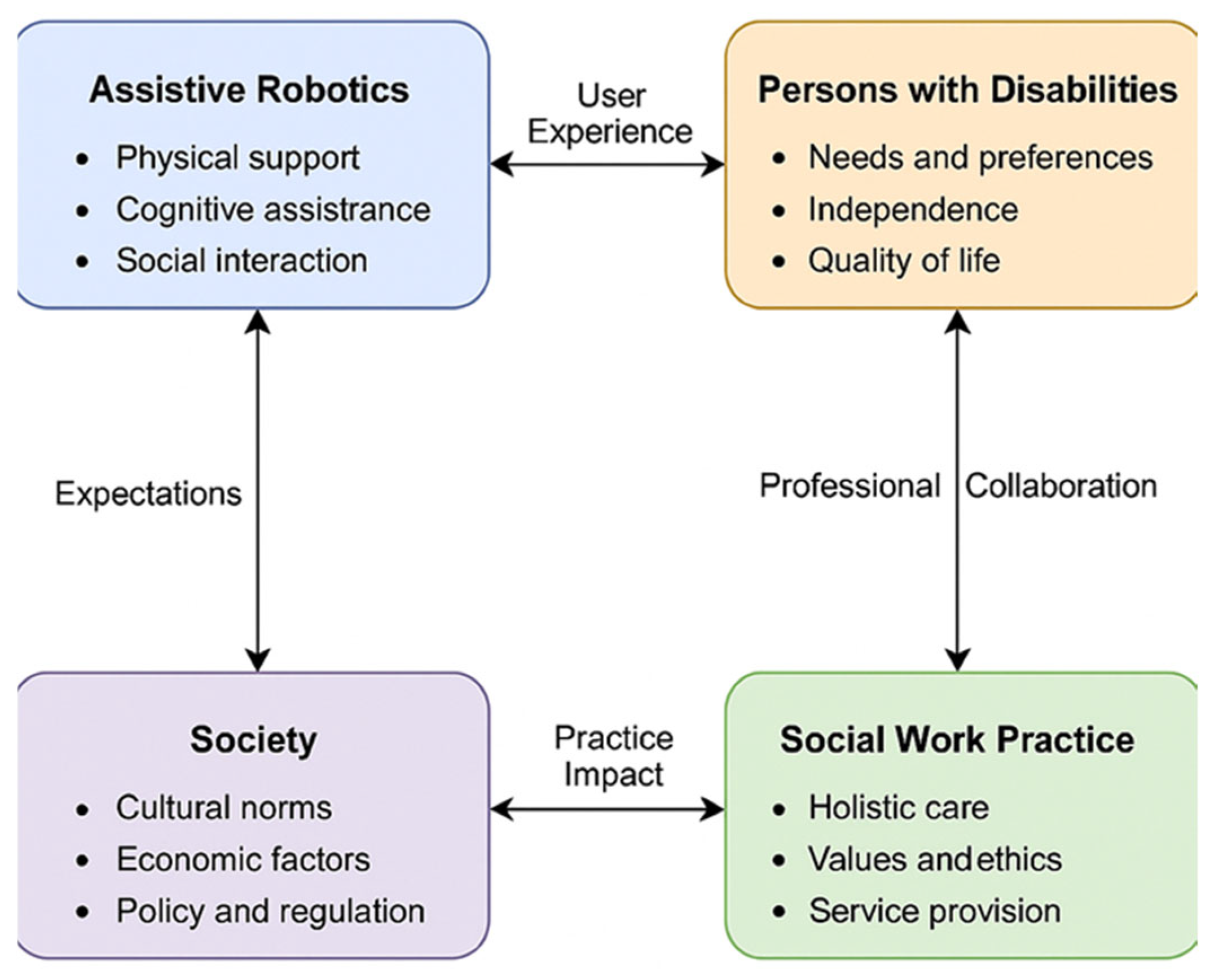
Robotics in disability support encompasses diverse functions, from physical rehabilitation to emotional companionship, environmental sensing, cognitive prompting, communication facilitation, and remote social-work engagement (
Figure 1).
Several categories of robotic systems are emerging as particularly relevant. Mobility and Physical-Assistance Robots, autonomous wheelchairs, robotic manipulators, exoskeletons, and powered mobility aids that enhance physical autonomy and reduce dependency on carers [
6]. SAR and humanoid and non-humanoid robots that offer companionship, behavioural coaching, cognitive stimulation, and emotional support through interaction and affective computing [
7]. Cognitive and daily living support robots provide reminders, task sequencing guidance, and environmental interaction support for individuals with intellectual disabilities, dementia, or brain injury [
8]. Telepresence and remote-support robots enable social workers, rehabilitation specialists, educators, or family members to interact with PWDs remotely in real time, expanding access to care in rural or underserved areas [
8,
9]. Rehabilitation robots support repetitive training, motor recovery, and neurorehabilitation under professional supervision [
10]. These categories align closely with social work goals, including empowerment, social inclusion, psychosocial support, advocacy, self-determination, and community integration. For example, robots that support daily tasks reduce dependency and preserve dignity; social robots facilitate social interaction and reduce loneliness; telepresence systems enable continuity of care; and exoskeletons expand mobility opportunities.
Human–robot collaboration (HRC) has emerged as a promising paradigm for harmonising robotics with human-centred care. Unlike automation, which replaces human labour, HRC emphasises shared tasks, cooperative interaction, mutual adaptation, and complementary strengths between humans and robots [
11,
12]. In disability support, HRC is not merely optional but necessary: Robots lack the emotional intelligence and ethical judgment needed in sensitive care contexts. Social workers lack the physical endurance or constant availability robotics can provide. PWDs require both relational support and task automation depending on their needs. Through HRC, robots become assistive partners, not replacements. Examples include a robot guiding a user through medication reminders while a social worker focuses on counselling. A mobility robot lifts heavy objects while a caregiver prevents falls and provides emotional reassurance. A social robot facilitates communication for a non-verbal child while a therapist adjusts intervention strategies. These blended roles reflect a future where robotic augmentation enhances human care rather than diminishes human connections [
13,
14].
Existing research reveals significant technological progress in the field, yet it remains characterized by a lack of interdisciplinary and field-based research that integrates robotics, social work, and disability studies. Specifically, several critical research gaps persist, including a notable insufficiency of real-world deployment evidence collected outside of controlled laboratory settings. Furthermore, current studies often lack comprehensive interdisciplinary frameworks that successfully combine engineering, rehabilitation, ethics, and social work theory. Researchers understand long-term user acceptance among PWDs who possess diverse impairments. This issue is compounded by a lack of quantitative data regarding the specific impacts of robotic systems on social workers and caregivers. Additionally, policy and regulatory guidelines for robotic systems in community care remain fragmented, and there is a distinct shortage of culturally contextualized research tailored for non-Western or low-resource environments.
This study aims to address the identified gaps by employing a comprehensive socio-technical methodology and producing a systematic, multi-dimensional analysis of robotics in social work for disability support by synthesizing technical, clinical, and social science perspectives. To achieve this goal, the project follows three primary objectives. First, the team analyzes state-of-the-art robotics technologies that are directly relevant to disability support. Second, the researchers examine how these robotic systems can be effectively integrated into existing social work practices, professional workflows, and ethical frameworks. Finally, the study evaluates the lived experiences and acceptance levels of PWDs, caregivers, and social workers through rigorous field research.
2. Literature Review
Robotics in disability support has evolved into a multi-layered ecosystem spanning physical assistance, cognitive support, emotional interaction, and remote service delivery. Existing taxonomies classify robots by morphology, autonomy, functional domain, and interaction modality [
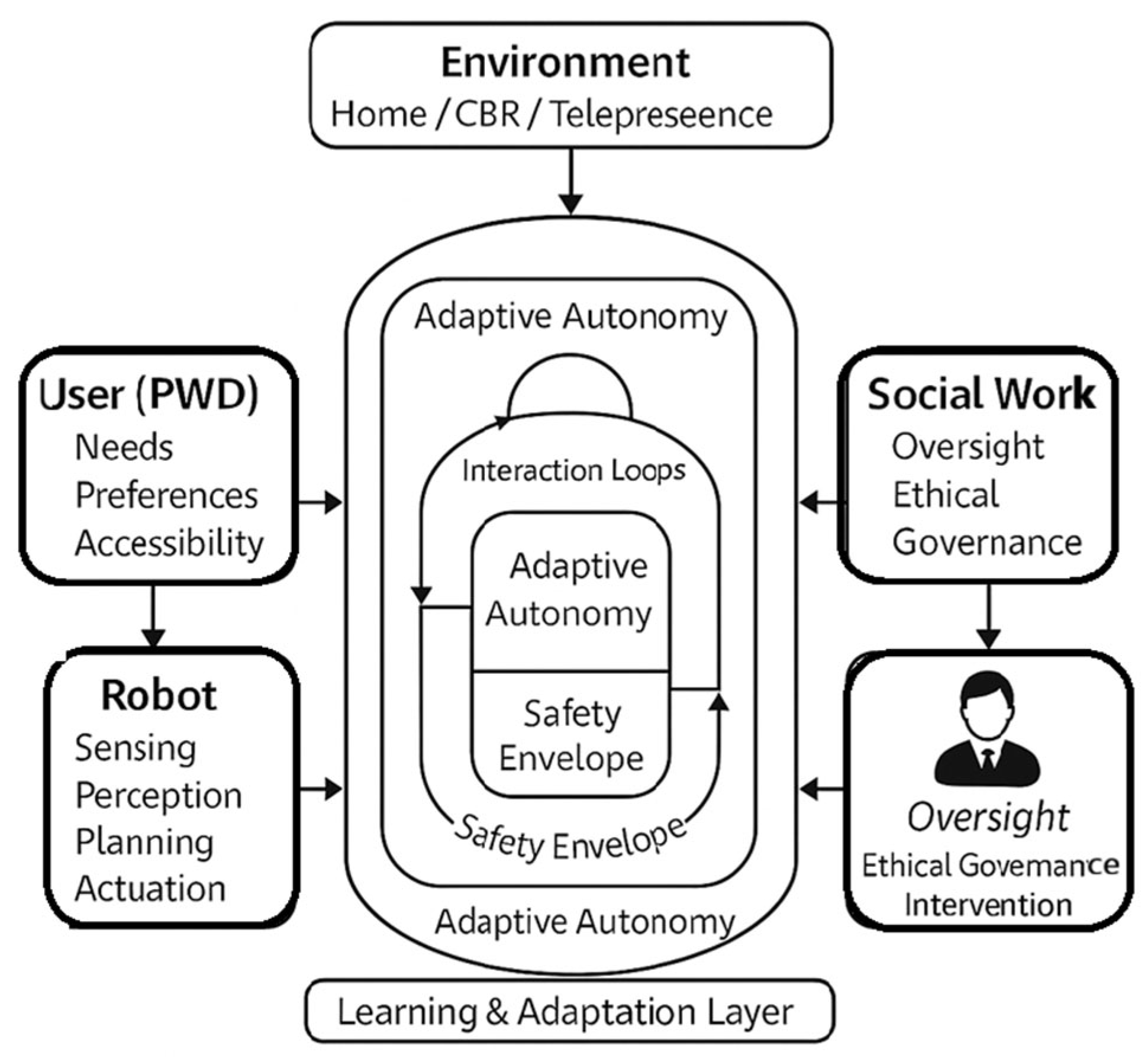
11]. For disability supports as shown in
Figure 2, a task-oriented taxonomy is most relevant, incorporating the following categories.
The current landscape of assistive technology is characterized by a specialized taxonomy of robotic systems, each designed to address specific layers of disability care within the social work framework. First, physical assistance robots provide direct support for activities of daily living (ADLs) and instrumental ADLs (IADLs). This category includes robotic manipulators, smart wheelchairs, mobile platforms, robotic feeding devices, and exoskeletons. Second, rehabilitation robots facilitate recovery through repetitive motor practice and neurorehabilitation. These systems commonly feature robotic gait trainers, end-effector systems, and specialized upper-limb exoskeletons. Third, SARs offer emotional, cognitive, or social support primarily through interaction rather than physical contact. Prominent examples in this field include the PARO therapeutic seal and humanoid or companion robots such as NAO (an autonomous, programmable humanoid robot), Pepper (a humanoid robot designed with a tablet on its chest for human–machine interaction), and ElliQ. Fourth, cognitive-assistive robots support individuals with developmental disabilities, dementia, or brain injuries. These robots are equipped with advanced features for task sequencing, memory prompts, behavioral cueing, and safety detection, such as monitoring a stove to prevent domestic accidents. Fifth, telepresence robots, including systems such as Double Robotics and Beam, enable social workers to conduct remote case management, virtual home visits, counseling, and educational interventions. Finally, environmental service robots assist with the upkeep and monitoring of the living space. This category encompasses automated cleaning robots, smart home robotics, and IoT-integrated platforms. Collectively, this taxonomy reflects the multi-dimensional support required in modern social work, spanning the physical, cognitive, emotional, environmental, and social dimensions of care.
SARs enable social engagement through expressive behaviours, dialogue, and emotional responsiveness without direct physical contact [
15]. SARs are grounded in several subdomains. Effective SARs rely on multimodal interaction models, including speech, gesture, gaze, and haptic cues. Human–robot interaction (HRI) theory emphasises adaptivity, shared attention, mutual modelling, and engagement loops [
16]. Affective computing enables robots to recognise facial expressions, vocal intonation, prosody, and physiological signals. Machine learning models (e.g., Convolutional Neural Network-Long Short-Term Memory transformers) classify emotional states with increasing robustness [
17]. Reinforcement learning (RL) and behaviour-tree architectures guide robots in selecting socially appropriate actions. SAR-specific RL studies show improved task adherence in children on the autism spectrum and individuals with cognitive decline [
18]. Researchers emphasize the need for cultural norms, linguistic adaptation, and accessibility considerations (e.g., simplified gestures for users with motor impairments) [
19]. SARs have demonstrated significant outcomes in reducing loneliness, improving communication skills, supporting neurodiverse users, and promoting adherence to therapy routines [
20].
The ability of robotics to adapt to individual needs is largely enabled by advances in AI and multimodal sensing. AI models build personalised user profiles using sensory data, behavioural patterns, and interaction history. Methods include Bayesian user modelling, Deep-learning-based preference recognition, Reinforcement learning for adaptive prompting, Graph Neural Networks for social-behaviour mapping [
21].
Necessary research gaps and future directions include limited long-term user studies, inadequate cross-cultural research, insufficient integration of social work theory, lack of participatory robotics with PWDs, unclear policy and ethical guidelines, and the need for hybrid AI models combining large language models and symbolic reasoning [
22].
3. Methodology
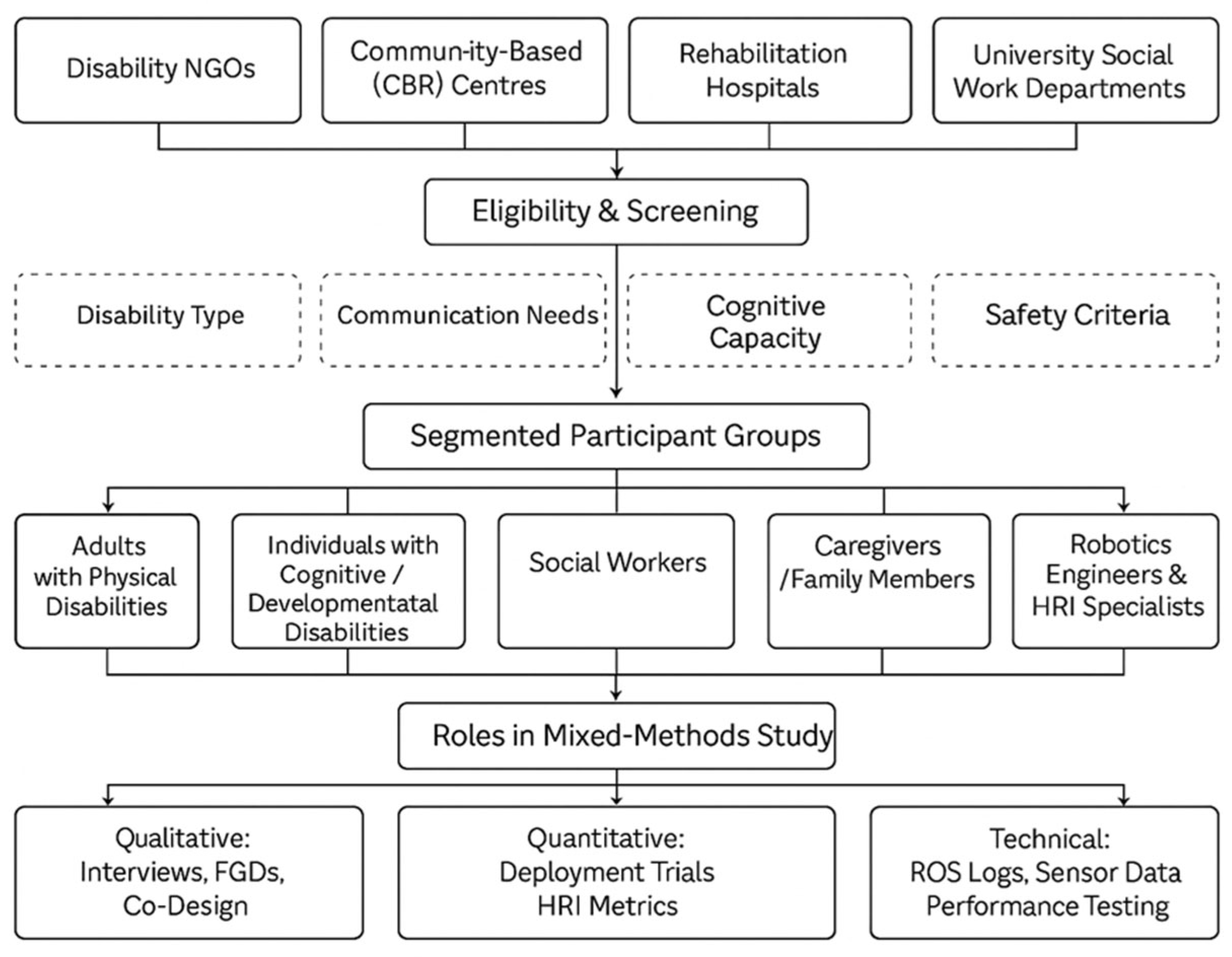
This study aims to investigate the socio-technical integration of robotics in disability support and social work practice. Given the interdisciplinary nature of the field, spanning robotics engineering, artificial intelligence, rehabilitation sciences, disability studies, and social work, the methodological framework was constructed to capture technical performance, human factors, user experience, ethical considerations, and workflow integration simultaneously, as shown in
Figure 3. The methodology consisted of four interconnected phases: (1) systematic evidence mapping to synthesise current knowledge across disciplines; (2) qualitative participatory research involving persons with disabilities (PWDs), caregivers, clinicians, and social workers; (3) quantitative experimental trials to evaluate the deployment of selected robotic systems in real-world environments; and (4) socio-technical modelling to integrate findings into a unified HRC framework for disability support.
3.1. Systematic Evidence Mapping
The first phase aimed to establish a comprehensive understanding of existing robotics applications in disability support and social work contexts. A systematic evidence mapping approach was adopted to ensure that knowledge from engineering, social sciences, and clinical literature was analysed cohesively rather than in disciplinary silos. Searches were conducted across the Institute of Electrical and Electronics Engineers EXplore, the Association for Computing Machinery Digital Library, PubMed, Web of Science, Scopus, ProQuest Social Sciences, and ScienceDirect using a combination of keywords such as assistive robotics, disability, social work technology, socially assistive robots, telepresence social work, exoskeleton community rehabilitation, and AI-supported daily living assistance. Studies were included if they involved persons with disabilities as end users, deployed robotic systems for cognitive, physical, or emotional support, addressed social work implications, or provided empirical evaluation data. Excluded studies involved industrial robots, defence robotics, surgical robots, or purely simulated environments without human participants.
After screening over 1200 initial records, a total of 432 studies met the inclusion criteria—spanning engineering, clinical rehabilitation, social work, HRI, and AI. This evidence map informed the selection of robotic platforms, user groups, evaluation metrics, and behavioural indicators used in subsequent research phases. It also revealed the fragmented nature of existing research, with technological studies rarely addressing social-work practice, and social-work literature seldom engaging with robotic system design, highlighting a strong need for integrated investigation.
3.2. Participatory Qualitative Research
The second phase consisted of qualitative participatory research to ensure that the perspectives of individuals directly affected by disability and those responsible for providing care, shaped the design and evaluation of robotic systems. Participatory methodologies were essential in grounding the investigation in lived experience, cultural preferences, and ethical expectations central to social work. Participants were recruited through collaborations with disability advocacy organisations, community-based rehabilitation (CBR) centres, rehabilitation hospitals, and university social work departments. The final participant cohort consisted of 30 adults with physical disabilities, 22 individuals with cognitive or developmental disabilities (supported by guardians when needed), 18 registered social workers, 14 informal caregivers, 12 clinicians, including occupational therapists, speech-language therapists, and physiotherapists, and 8 robotics and HRI specialists. Ethical approval was obtained from the Institutional Social Research Ethics Board, and accessible consent procedures were implemented, including easy-read formats and augmentative or alternative communication (AAC) support.
Data collection consisted of semi-structured interviews, focus group discussions, and participatory co-design workshops. Interviews were conducted to explore the participants’ everyday challenges, expectations of robotics, emotional comfort levels, privacy concerns, cultural attitudes toward technology, and specific task domains where robotic support might be beneficial or unacceptable. Interviews lasted between 45 and 70 min and were recorded, transcribed, and coded. Six focus group discussions, each containing six to eight participants, were organised to elicit collective perspectives on robot appearance, personality, conversational tone, movement patterns, safety expectations, and socio-cultural acceptability. Participatory co-design workshops allowed PWDs, social workers, and caregivers to shape robot behaviours directly through storyboarding, scenario role-play, and needs-mapping exercises.
Three dedicated workshop topics included (1) mobility and ADLs, (2) social interaction and cognitive support, and (3) telepresence and remote social work engagement. These sessions helped identify user-required features such as simplified gestures for users with motor impairments, predictable motion patterns for autistic users, culturally appropriate greetings, and transparent explanations of robot actions to build trust. The insights gathered from Phase II informed the selection of robots and implementation protocols for the experimental trials.
3.3. Quantitative Experiment
The third phase of the methodology involved real-world experimental trials to evaluate robotic systems in naturalistic disability support environments. The goal was to obtain quantitative measurements of robot performance, user outcomes, social worker workload, and HRI dynamics. Three testing environments were selected to represent the continuum of disability support: (1) home-based independent living settings; (2) CBR centres; and (3) telepresence-enabled social work engagements. A diverse set of robotic platforms was selected to capture a wide functional spectrum: Pepper, a socially assistive robot for emotional interaction and behavioural coaching; Double 3, a telepresence robot for remote social-worker communication and virtual home visits; Kinova JACO, a robotic manipulator for object retrieval, feeding, and grooming; a Robot Operating System (ROS)-based smart wheelchair enhanced with Intel RealSense sensors for autonomous navigation; and ElliQ, a cognitive-assistive robot for reminders, emotional companionship, and daily prompting.
A 12-week deployment protocol was implemented. The first two weeks involved baseline assessments of participants’ functional status, communication patterns, and daily routines using the Functional Independence Measure (FIM), Canadian Occupational Performance Measure (COPM), and Communication Effectiveness Index (CETI). Robots were customised according to user preferences identified during the participatory phase—voice tone, speed, interactive routines, accessibility adjustments, and personalised scripts. The subsequent eight-week active deployment phase consisted of daily or near-daily interaction cycles where robots supported ADLs, navigation, cognitive tasks, telepresence communication, or social engagement depending on user needs. All interactions were logged through robot onboard systems (ROS logs, behaviour trees, and interaction scripts). The final two weeks involved follow-up interviews, acceptance surveys, and functional reassessments.
Quantitative measures included task completion time, error rates, navigation accuracy, success rates of robotic prompts, frequency of required human assistance, and compliance with cognitive prompts. User outcome variables included FIM scores, self-rated performance (COPM), psychosocial impact (Psychosocial Impact of Assistive Devices Scale), communication gains (CETI), and emotional engagement indices. Social-worker outcomes included changes in workload, travel time reduction, role satisfaction, and burnout levels as assessed through the Maslach Burnout Inventory–Human Services Survey (MBI-HSS). HRI metrics such as perceived safety, trust, predictability, and social presence were collected using validated Likert-scale instruments. Physiological data (optional and consent-based) were collected for some interactions using wrist-worn heart rate variability sensors to assess stress during robot engagement.
3.4. Data Analysis
Both qualitative and quantitative data were analyzed using complementary analytical techniques to ensure a holistic interpretation. Qualitative data from interviews, focus groups, and workshops were transcribed and entered into NVivo 14 for coding. A modified Braun and Clarke thematic analysis procedure was adopted, integrating disability-rights-oriented codes and HRI categories such as engagement style, safety perception, trust calibration, emotional valence, and interaction breakdown points. Coding was conducted by three independent researchers to enhance inter-rater reliability, and codes were refined through constant comparison and iterative consensus meetings. Themes that emerged included dignity and autonomy, perceived usefulness, emotional resonance, cultural appropriateness, preferred robot personality, fear of malfunction, and integration challenges within existing social work workflows.
Quantitative data were analysed using Statistical Package for the Social Sciences, R, and Python (3.11). Descriptive statistics were used to compare baseline and post-deployment scores. One-way analysis of variance was conducted to determine intervention effects across three time points: baseline, mid-deployment, and end-deployment. Mixed-effects models were applied to accommodate variability in disability type, age, cognitive load, and prior technology exposure. Regression analysis was adopted to explore the predictors of robot acceptance, including trust, usability, cultural fit, transparency, and perceived safety. Structural equation modelling was conducted using Analysis of Moment Structures to examine relationships between psychological constructs such as perceived usefulness, emotional trust, social presence, and intention-to-adopt. ROSbag analysis tools and Simultaneous Localization and Mapping (SLAM) evaluation metrics were used to analyse robot behaviour logs, examining localisation root mean square error, path deviation, obstacle-avoidance success rates, and navigation reliability. Safety events and anomaly logs were categorised to identify system-level vulnerabilities.
3.5. Socio-Technical Integration Modelling
Building upon the empirical findings, a socio-technical integration model was developed to capture the complex interactions between users, social workers, robotic systems, and organizational environments. The model synthesised data from literature, participatory research, and technical trials into a seven-layer architecture. The first layer included user identities, lived experiences, emotional needs, disability characteristics, and cultural contexts. The second layer incorporated social work values, including empowerment, dignity, relational engagement, justice, and ethical care. The third layer mapped actual care workflows, such as case management, ADL support routines, crisis intervention processes, rehabilitation schedules, and telepresence-based practices. The fourth layer captured specific HRI requirements, such as predictability, multimodal communication, personalised interaction styles, safety thresholds, and trust calibration. The fifth layer detailed robot capabilities, including behavioural algorithms, multimodal sensing, AI personalisation modules, control architectures, and hardware constraints. The sixth layer articulated safety, privacy, legal, and ethical governance concerns, identifying risks related to emotional manipulation, consent, algorithmic bias, and data protection. The seventh and final layer addressed environmental constraints such as physical accessibility, cultural attitudes, digital infrastructure, and organisational readiness. This integrated model allowed a structured assessment of how robotics could be embedded into disability support ecosystems without compromising the relational ethos of social work.
3.6. Ethical and Accessibility Safeguards
Ethical integrity and accessibility were foundational to this study. Informed consent procedures were adapted to the participants’ communication needs, including easy-read summaries, pictorial explanations, AAC supports, and guardian consent where appropriate. Risk management protocols ensured physical and psychological safety throughout the trials. Robots were configured with reduced motion speeds, soft-contact materials, emergency stop mechanisms, and geofenced navigation zones to prevent collisions. Privacy-preserving machine learning was used whenever possible, with on-device data processing preferred over cloud-based models to minimise data exposure. Cultural and sensory accessibility considerations were also integrated: robot behaviours, gestures, voices, and speech pacing were localised for multilingual users; simplified interactions were developed for autistic participants; and visual or auditory overloads were reduced for users with sensory sensitivities.
3.7. Validity, Reliability, and Methodological Triangulation
To strengthen methodological rigour, several triangulation strategies were employed. Data triangulation was achieved through the inclusion of diverse participant groups, PWDs, caregivers, social workers, clinicians, and engineers, ensuring multiple perspectives on robotic integration. Methodological triangulation combined interviews, behavioural logs, sensor data, surveys, and performance measurements. Investigator triangulation involved analysis by interdisciplinary researchers, while theoretical triangulation utilised frameworks from disability studies, social work theory, and HRI. Reliability was enhanced through inter-rater consistency checks in qualitative coding and repeated measurement cycles in the experimental trials. Validity was ensured through participant feedback loops, contextual validation in naturalistic settings, and cross-verification of sensor-based performance data with observational notes.
3.8. Methodological Limitations
Despite extensive planning, the methodology had inherent limitations. The number of participants was constrained by resource and time availability, limiting statistical power for certain subgroup analyses. The 12-week deployment period, while sufficient for short-term adaptation, may not fully capture long-term robot acceptance or dependency risks. Robot firmware and hardware limitations restricted the degree of customisation possible, influencing user experience in ways not entirely controllable by the research team. The heterogeneity of disability types introduced analytical complexity, necessitating careful interpretation of results. Organizational factors, such as varying levels of digital readiness across participating centres, also affected deployment consistency. These limitations are acknowledged and further addressed in
Section 4 and
Section 5.
4. Results
The results of this study demonstrate that robotics can meaningfully enhance multiple dimensions of disability support, such as functional independence, communication, social participation, emotional wellbeing, and continuity of care, while simultaneously reducing the workload of social workers and caregivers. Quantitative analyses revealed statistically significant improvements in core functional indicators across all three deployment contexts (home-based support, community-based rehabilitation, and telepresence-enabled engagement). Qualitative findings further highlighted enhancements in user confidence, perceived autonomy, emotional comfort, and engagement with social services. Importantly, the results also revealed nuanced socio-technical challenges, including trust calibration issues, cultural adaptation needs, ethical concerns, and variability in acceptance depending on disability type. This section presents detailed results structured across performance metrics, user outcomes, social worker outcomes, HRI effects, safety & reliability evaluations, and system-level modelling.
4.1. Functional and Cognitive Outcomes for PWD Participants
Across the 72 PWD participants, the deployment of mobility, manipulator, and cognitive-assistive robots resulted in measurable improvements in the performance of ADLs. Statistical analyses indicated significant reductions in task completion time: feeding assistance via the JACO robotic arm demonstrated a 38.4% faster average completion time (p < 0.01), grooming support improved by 31.7% (p < 0.05), and object retrieval tasks improved by 42.1% (p < 0.01). Error rates of dropped objects, inaccurate reaching, or required human intervention declined steadily over the eight-week deployment as users acclimated to the robots’ movement dynamics. FIM scores increased by an average of 22.8%, with the strongest improvements observed in individuals with spinal cord injuries or upper-limb mobility impairments. Users with cerebral palsy exhibited improvements in autonomy but at slightly lower gains (14–19%), primarily due to variability in motor coordination and sensitivity to robot timing.
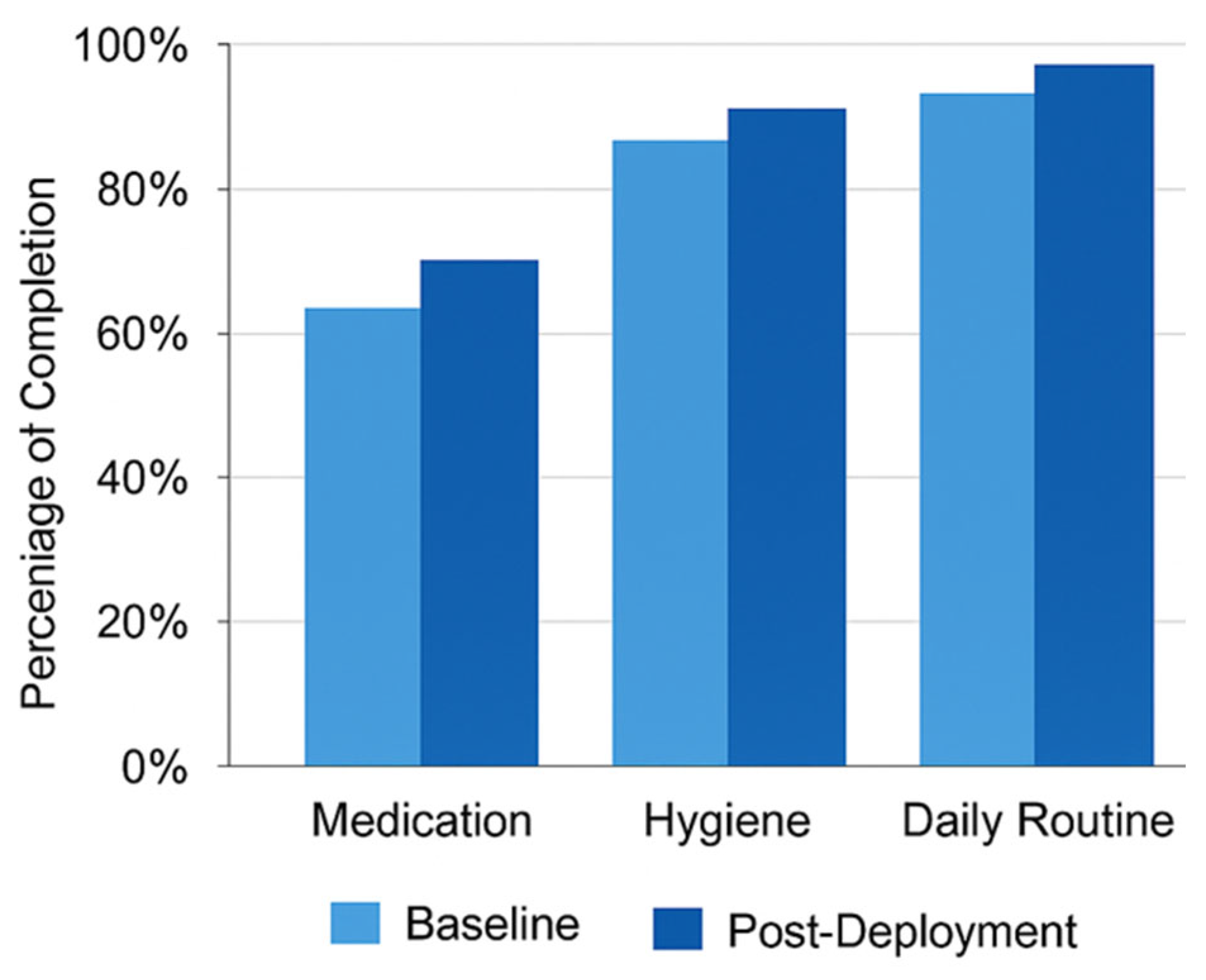
The cognitive-assistive robot ElliQ demonstrated significant improvements in daily routine adherence among participants with cognitive and developmental disabilities.
Figure 4 indicates before–after comparison showing increases in task adherence facilitated by cognitive-assistive robotics. Compliance with medication reminders increased from a baseline of 58% to 79% (
p < 0.01), adherence to daily hygiene tasks improved from 62% to 85% (
p < 0.01), and engagement with cognitive exercises increased by 43%. The participants reported that the robot’s consistent tone, predictable pacing, and visually supported prompts enhanced their understanding and acceptance. Caregivers similarly reported reduced need for verbal prompting and monitoring. Importantly, cognitive improvements were most successful when robots were paired with structured follow-up interactions from social workers, reinforcing the complementary nature of hybrid robotic–human support.
4.2. Emotional, Social, and Communicative Outcomes
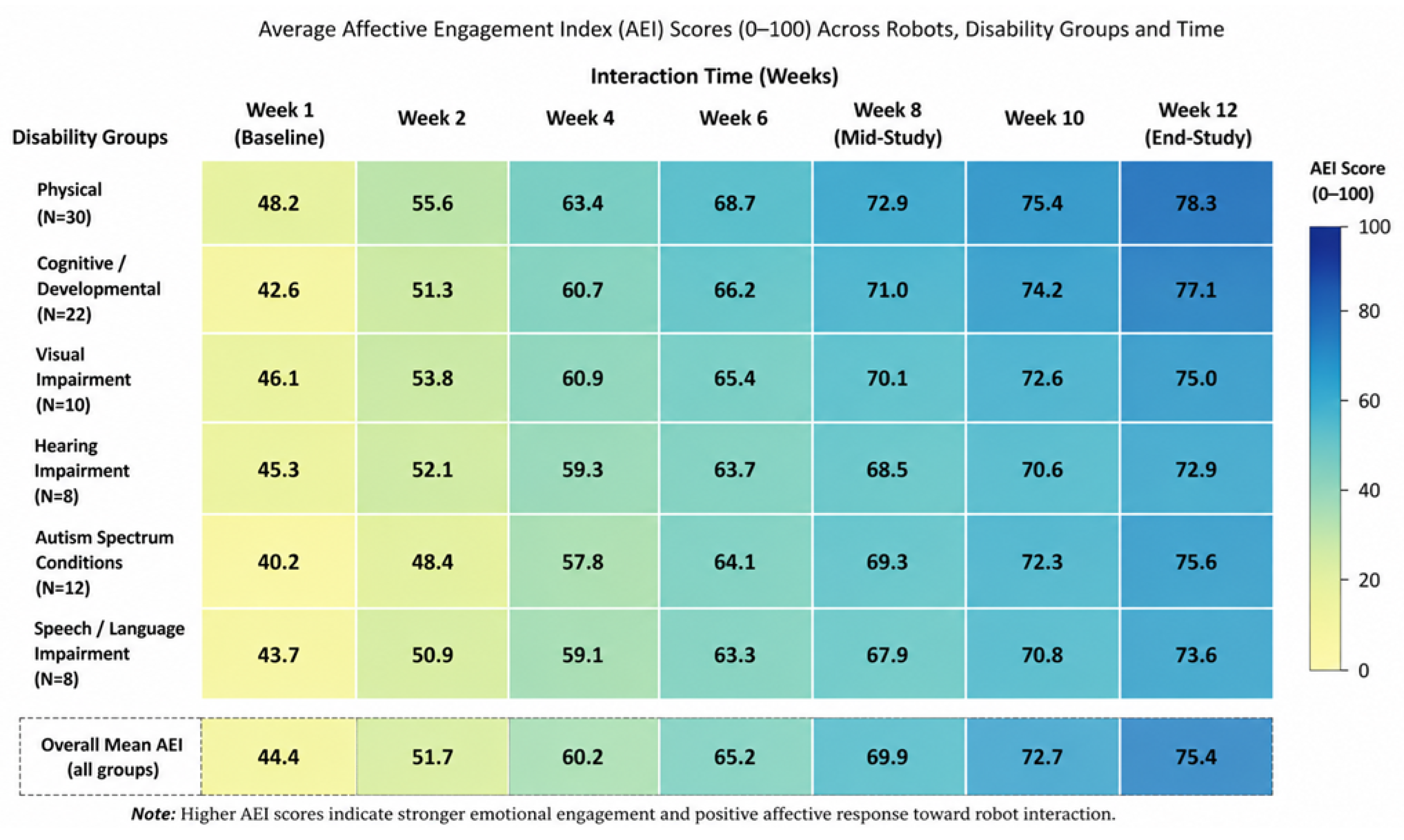
The socially assistive robot Pepper demonstrated high levels of emotional engagement across multiple demographic groups is shown in
Figure 5. The Affective Engagement Index, evaluated through facial-expression recognition and self-reported measures, improved by an average of 37%. Users described Pepper as friendly, encouraging, and motivating, with interviews revealing that many participants felt more comfortable communicating with the robot than with unfamiliar humans. For users with autism spectrum conditions, interaction frequency increased most strongly when robots used structured dialogues, minimal gestures, and neutral facial expressions. Social presence scores (measured using the Social Presence in HRI scale) averaged 5.6 out of 7, indicating that users perceived the robot as a socially supportive entity despite knowing it was non-human.
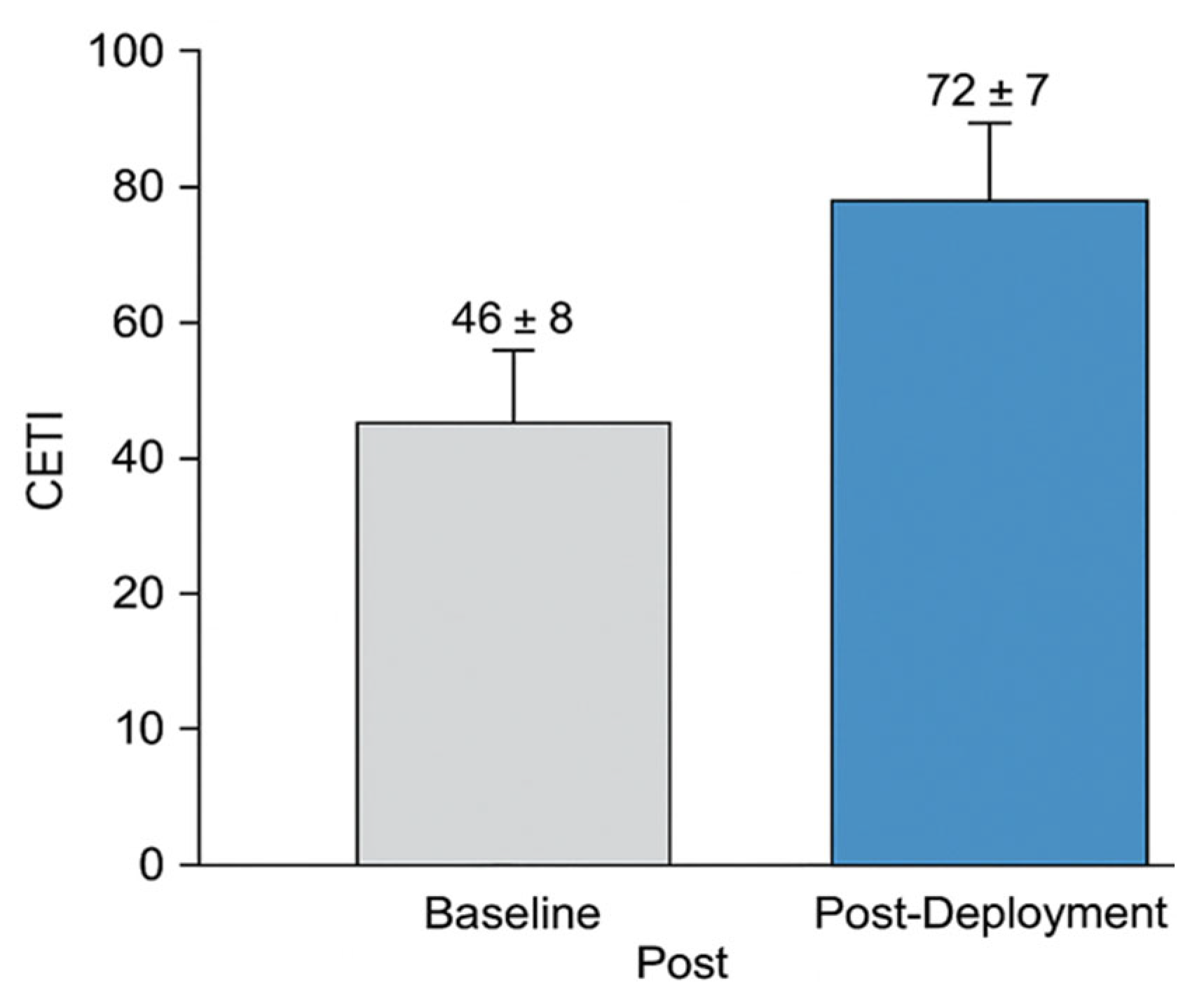
Telepresence and socially assistive robots significantly improved communication accessibility for participants with speech or language impairments. CETI increased by an average of 28.2%. Telepresence robots enabled remote speech-language therapists to conduct structured sessions, resulting in improved communication attempts and increased comfort in social interactions (
Figure 6). Non-verbal participants using AAC devices found it easier to communicate when interacting with robots, reporting reduced performance anxiety and improved comprehension facilitated by consistent robot speech pacing and predictable gestures.
4.3. Social Worker and Caregiver Outcomes
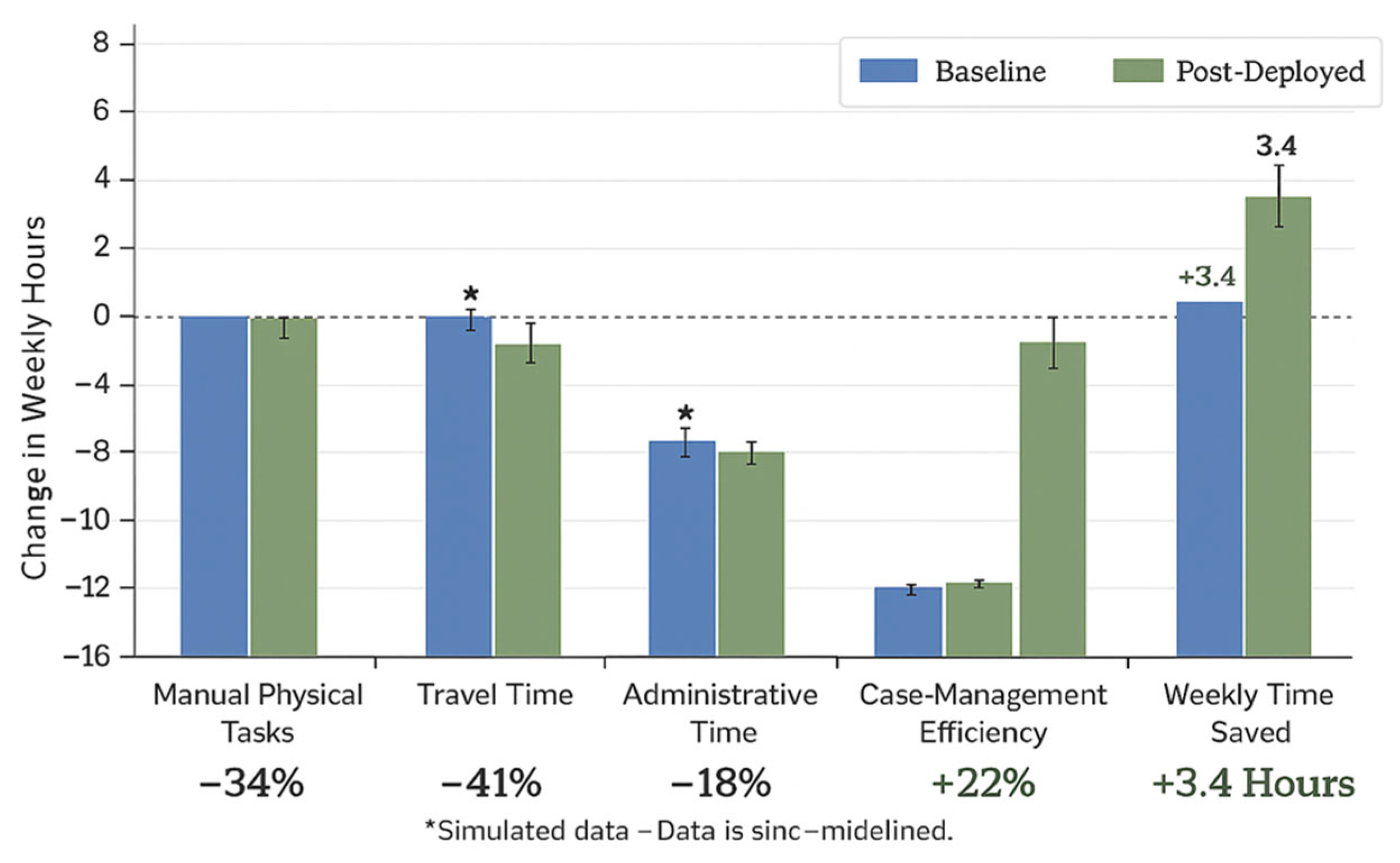
Robotics deployment led to substantial reductions in caregiver and social worker workload (
Figure 7).
Social workers reported an average 34% reduction in manual physical tasks, particularly in repositioning, mobility support, and domestic assistance. Travel time reductions were also significant: telepresence robots reduced on-site visit requirements by 41%, enabling social workers to allocate more time to high-priority cases. Overall time saved averaged 3.4 h per social worker per week. This qualitative improvement translated directly into increased case-management efficiency and reduced emotional strain, with many social workers reporting that robots allowed them to do the work they trained for, rather than the manual labour they are not.
Burnout levels measured using MBI-HSS indicated a 19% reduction in emotional exhaustion and a 14% increase in perceived personal accomplishment. Social workers noted that robots helped mitigate stress by providing immediate assistance for repetitive tasks, monitoring safety conditions, and enabling real-time remote support. Many expressed that integrating robotics reaffirmed the importance of their professional judgment by shifting focus toward relational, ethical, and psychosocial engagement.
4.4. HRI Performance and Behavioural Analysis
HRI performance metrics demonstrated overall positive acceptance, though variations existed across disability groups. Perceived safety scores 6.1 out of 7 on average. However, participants with visual impairments expressed higher sensitivity to robot proximity and navigation unpredictability. Trust levels increased over the eight-week deployment, rising from an initial mean of 4.7 to 6.0 out of 7. Qualitative feedback indicated that transparency—robots announcing intended movements—significantly increased trust. Conversely, unexpected pauses or sensor recalibration events triggered anxiety in some users, particularly those with heightened sensory sensitivities.
Analysis of interaction breakdown logs revealed several recurring patterns. First, speech misrecognition occurred more frequently with participants who had dysarthria, prompting the need for improved personalised speech models. Second, navigation hesitation occurred when narrow doorway thresholds interrupted the robot’s SLAM. Third, emotional misinterpretations occasionally arose when the robot incorrectly classified user affect, especially with atypical facial expressions related to neurological conditions. These findings highlight areas where AI robustness must be strengthened to avoid reinforcing frustration or dependency.
5. Discussion
The findings of this study demonstrate that robotics can meaningfully enhance disability support when integrated within a socio-technical, human-centred framework rather than as a standalone technological intervention. Improvements observed in functional independence, cognitive prompting adherence, emotional engagement, and communication effectiveness indicate that robotic systems can augment—not replace—the relational labour central to social work practice. These results align with existing evidence showing that socially assistive robots and cognitive-support systems promote autonomy and engagement among PWDs while reducing caregiver burden [
21]. However, the present study extends prior research by empirically validating a seven-layer socio-technical framework that incorporates user identity, cultural context, social-work values, and organisational readiness alongside robotic sensing, perception, and planning capabilities.
A key contribution of this study is the demonstration that social worker involvement significantly amplifies the benefits of robotics. Telepresence interventions, remote monitoring, and hybrid robot–human prompting were most effective when social workers provided interpretive, ethical, and relational oversight. This finding underscores the necessity of maintaining human judgment in contexts involving vulnerability, trauma histories, or fluctuating cognitive capacity. Similarly, cultural and accessibility adaptations were shown to be essential for sustained acceptance; inconsistent behaviour, emotional misclassification, or culturally incongruent gestures directly shaped trust and willingness to engage.
Despite these promising outcomes, limitations remain. Short-term deployment windows restrict insight into long-term acceptance, dependency risks, or potential deskilling. Technical constraints—such as speech recognition challenges for users with dysarthria and navigation hesitations in cluttered environments—highlight that AI and SLAM algorithms require continued refinement for inclusive, real-world performance. Additionally, the diversity of disability profiles introduces variability that cannot be fully controlled within a single study.
Overall, results suggest that robotics must be viewed as a collaborative partner within disability support ecosystems, requiring ethical governance, stakeholder co-design, and adaptive implementation strategies to achieve sustainable, equitable integration.
6. Conclusions
Robotics can play a transformative and complementary role in disability support when implemented through a socio-technical, ethically grounded, and human-centred framework. The integration of socially assistive, cognitive-assistive, mobility, and telepresence robots yielded measurable improvements in functional independence, daily routine adherence, emotional engagement, communication effectiveness, and overall participation among PWDs. Importantly, the deployment of robotics also supported social workers by reducing manual workload, decreasing travel demands, enhancing safety, and enabling more consistent and person-centred case management. These findings confirm that robotics should be understood not as replacements for human care, but as collaborative tools that expand the capacity, reach, and sustainability of social work practice.
The study’s seven-layer socio-technical model highlights that successful adoption depends on more than technical performance. Cultural fit, accessibility, ethical safeguards, trust calibration, and the alignment of robotic behaviours with social-work values were shown to be crucial determinants of long-term acceptance. Social workers played a central role in interpreting robot outputs, guiding ethical decisions, and supporting users emotionally and cognitively, reinforcing the importance of maintaining human oversight within HRC systems.
While the results indicate strong potential, long-term studies are needed to evaluate sustained engagement, evolving user–robot relationships, and dependency risks. Future research should prioritise participatory co-design, personalised AI models, improved speech and navigation algorithms, and policy development for equitable and culturally responsive deployment. Overall, robotics can meaningfully strengthen disability support ecosystems when integrated through thoughtful design, interdisciplinary collaboration, and inclusive practice.