Proceeding Paper

Evaluating Ergonomic Considerations in Redesigning Sustainable Menstrual Product †
Department of Industrial and Systems Engineering, Gokongwei College of Engineering, De La Salle University, Manila 1004, Philippines
*
Author to whom correspondence should be addressed.
Presented at 2025 IEEE International Conference on Computation, Big-Data and Engineering (ICCBE), Penang, Malaysia, 27–29 June 2025.
Eng. Proc. 2026, 128(1), 50; https://doi.org/10.3390/engproc2026128050
Published: 21 April 2026

Abstract

With an estimated 1.8 billion individuals menstruating globally, menstrual product selection plays a critical role in health, comfort, and overall well-being. This study aims to address a gap in menstrual health and hygiene by examining ergonomic considerations in the redesign of a sustainable menstrual product. A comprehensive needs assessment was conducted through focus group discussions and online surveys to identify user preferences and challenges. The design methodology incorporated quality function deployment (QFD) and design failure mode and effects analysis (DFMEA), followed by CAD-based prototyping and expert evaluation. Findings supported a tampon-shaped menstrual cup design, integrating ease of use with the environmental benefits of menstrual cups.

1. Introduction

Menstruation is a natural biological process experienced by approximately 1.8 billion people worldwide, typically beginning between the ages of 10–16 and lasting until around age 50. Despite its health significance, menstrual health remains under-researched, especially regarding product accessibility, safety, and comfort [1]. Cultural taboos, economic constraints, and a lack of awareness continue to affect product selection and usage, often leading to unsanitary practices [2]. Menstrual products are classified into internal (e.g., tampons, menstrual cups, discs, sponges) and external (e.g., sanitary pads, panty liners, menstrual underwear) options [3]. Disposable products, particularly sanitary pads, remain the most used due to comfort and familiarity [3,4], while tampons are more popular in Western cultures. Menstrual cups, while gaining recognition for their sustainability and long-term affordability, are still underused, partly due to discomfort, insertion challenges, and limited user education [5,6]. Environmental concerns surrounding disposable menstrual products are significant. An average menstruator discards around 150 kg of non-biodegradable waste annually, contributing to landfill overflow and marine pollution [7]. Health risks such as skin irritation, allergic reactions, and menstrual toxic shock syndrome are also associated with chemical additives in pads and tampons [7,8,9,10]. Meanwhile, menstrual cups, though environmentally friendly, have barriers including anatomical fit, steep learning curves, and initial discomfort [11,12]. Despite increasing awareness of reusable alternatives, gaps persist in achieving a menstrual product that balances comfort, usability, and sustainability [13].
Therefore, to address these gaps, we explored the ergonomic redesign of an insertable, sustainable menstrual product tailored to menstruators’ diverse needs. Through a user-centered design approach supported by expert input and structured evaluations, this research contributes to the growing discourse on menstrual health, hygiene, and product innovation.

2. Materials and Methods

We adopted a structured, user-centered approach, applying design and engineering tools to develop a sustainable menstrual product prioritizing safety, comfort, and usability.

2.1. Considerations on Product Features

A pre-survey was conducted to determine the most used menstrual products—sanitary napkins, tampons, and menstrual cups—which served as the basis for age-segmented focus group discussions (FGDs, n = 15) and a broader online survey distributed via convenience sampling. Through these efforts, users’ product preferences, pain points, and behavioral patterns can be understood. An empathy map was drawn to visualize user perspectives and surface key needs, challenges, and motivations during menstruation [14]. The results were translated into technical specifications through a two-level quality function deployment (QFD) analysis [15], resulting in the House of Quality matrices, which mapped user requirements against engineering parameters.

2.2. Product Design and Development

To systematically resolve identified issues such as insertion difficulty, discomfort, and leakage, the Theory of Inventive Problem Solving (TRIZ) was employed [16]. Multiple product concepts were generated using sketches and visualization techniques, each addressing different combinations of shape, grip, and usability [17]. Strict adherence to menstrual product and health standards was also observed to guarantee that the product is safe for users and meets all legal and regulatory requirements, which can be approved for production and sale. These alternatives were then assessed for their potential to meet both user needs and production feasibility. The design process emphasized the creation of meaningful alternatives to maximize user-centered outcomes [18].

2.3. Design Analysis and Prototyping

Kepner-Tregoe decision analysis (KTDA) was used to evaluate design alternatives based on criteria such as comfort, ease of use, sustainability, and manufacturability [19]. This was followed by a failure mode and effects analysis (FMEA) to identify and mitigate early-stage design risks [20]. Selected designs were modeled using CAD and fabricated through 3D printing and silicone molding to simulate medical-grade properties [21,22]. This prototyping stage allowed for the testing and refinement of structural and material aspects of the product.

2.4. Design Evaluation and Recommendations

Product evaluation was conducted through expert consultations with obstetrics and gynecology, manufacturers, and industrial engineers. Interviews and FGDs were carried out online using structured questionnaires and analyzed using thematic analysis [23]. Additionally, a design FMEA (DFMEA) was conducted to proactively identify failure risks in ergonomics, safety, and functionality. Based on expert feedback and DFMEA results, design refinements were made to improve user comfort, ensure safety with biocompatible materials, and enhance manufacturability for cost-effective production [23].

3. Product Design and Development

A structured process was formulated to develop the redesigned menstrual cup. It incorporates anatomical and market analysis, human-centered design principles, Quality Function Deployment (HOQ2), TRIZ-based innovation, design alternative evaluation, risk assessment through FMEA, and prototyping.

3.1. Anatomical, Market, and Ergonomic Basis for Design

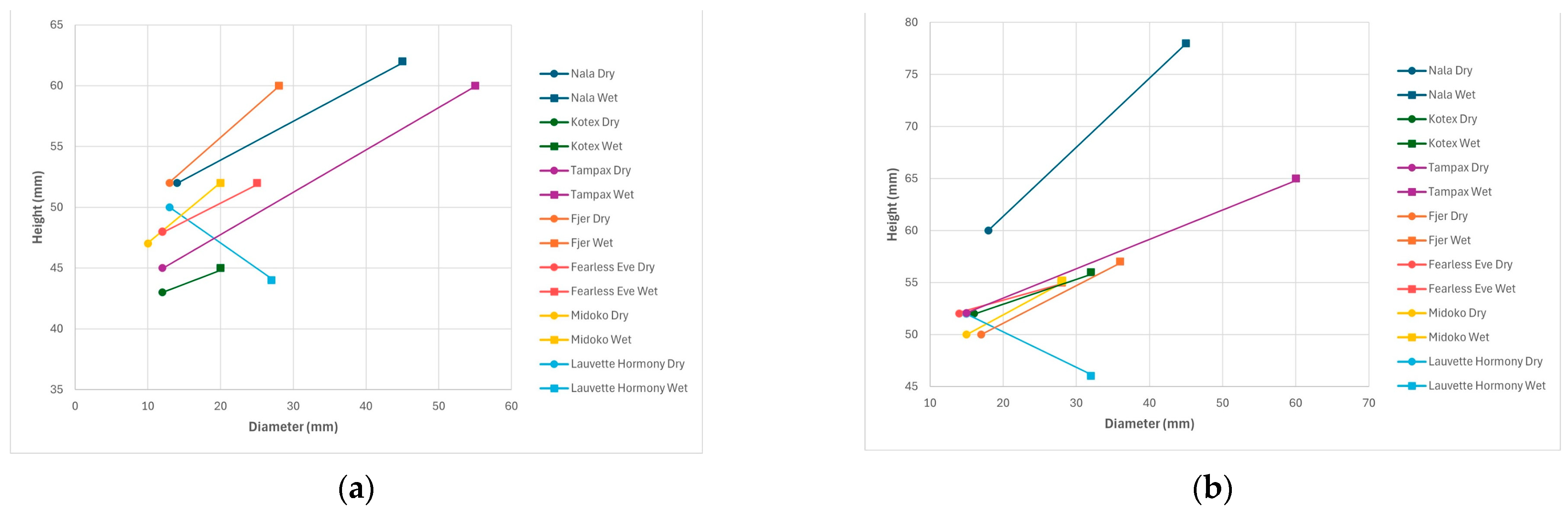
Anatomical studies revealed significant variability in vaginal dimensions, emphasizing the need for a flexible, single-size design [24,25,26]. Market analysis of tampons and menstrual cups showed inconsistencies in dimensions, firmness, and expansion mechanisms, making product selection challenging for users. Figure 1 presents detailed dimensions of tampon brands and menstrual cup sizes, highlighting the lack of a universal fit in current solutions.
The design was guided by anthropometric principles [27], cognitive ergonomics [28], and biomechanical factors to prioritize comfort, usability, and safety. Medical-grade silicone was selected for its hypoallergenic properties and durability. The design features incorporated a flexible structure for anatomical adaptability, a low-friction surface to ease insertion, and an ergonomic grip and stem for user-friendly handling. Human-centered design guidelines (the International Organization for Standardization 9241–210) further supported accessibility and intuitive use, even in the absence of large-scale user testing.

3.2. QFD and TRIZ Innovation

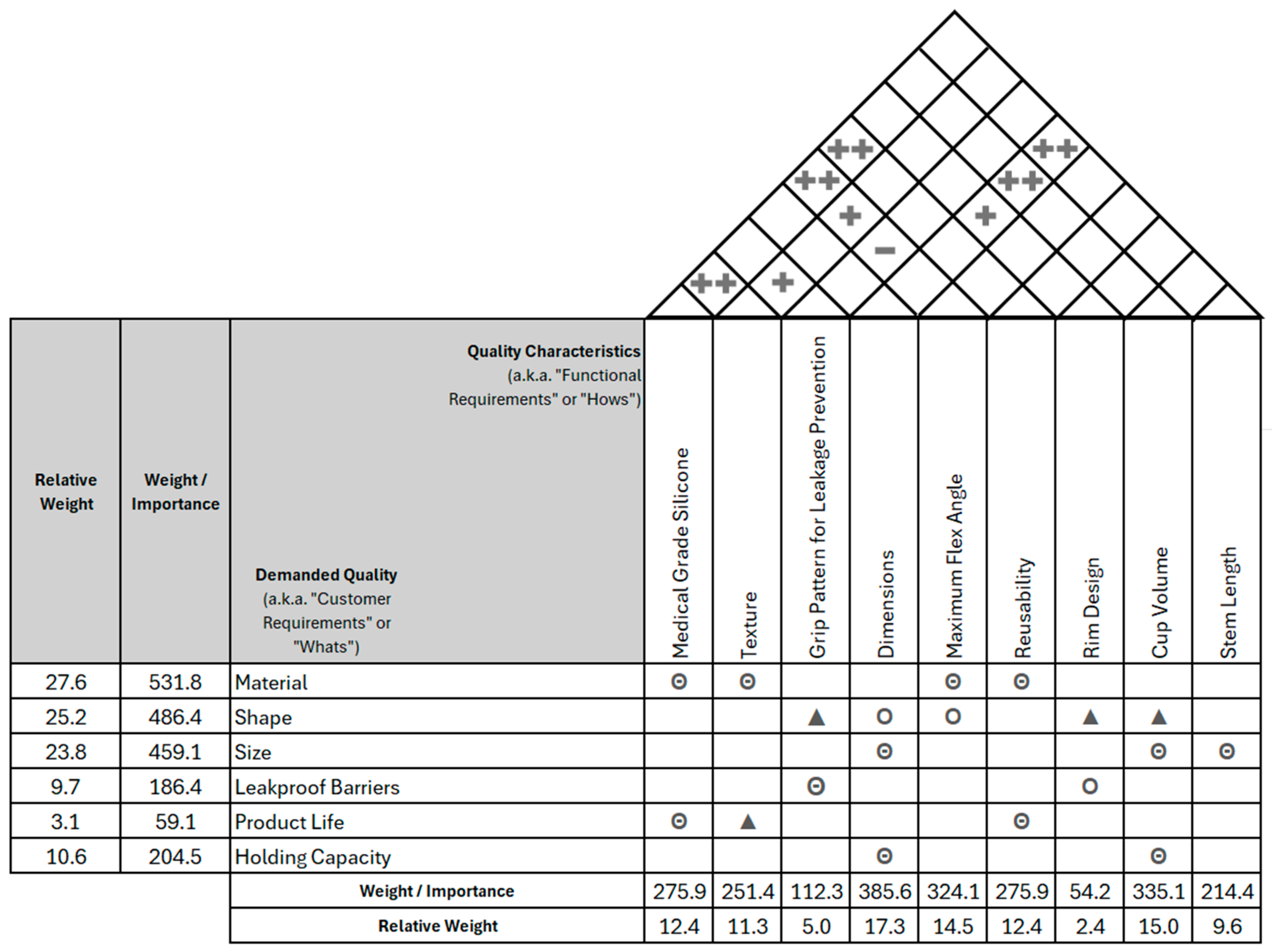
HOQ2 was used to map customer needs—comfort, leak prevention, reusability—to technical specifications like material flexibility and rim grip (Figure 2).
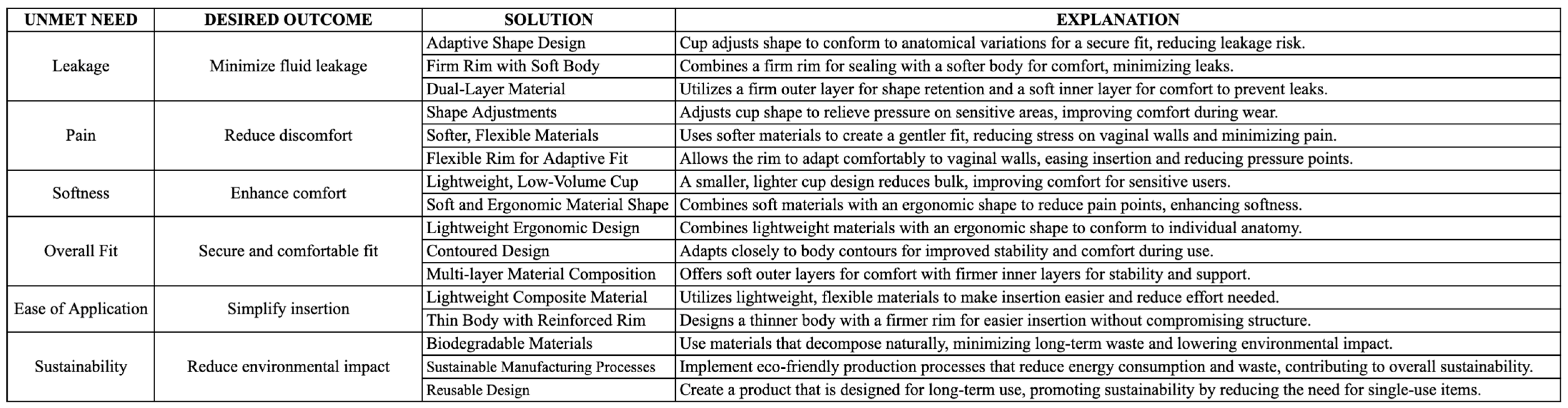
The TRIZ analysis was used to generate innovative solutions directly aligned with user needs identified in HOQ2. Figure 3 presents the TRIZ-derived solutions addressing key unmet needs in menstrual cups, such as leakage, discomfort, fit, usability, and sustainability.

3.3. Design Alternatives and Decision Analysis

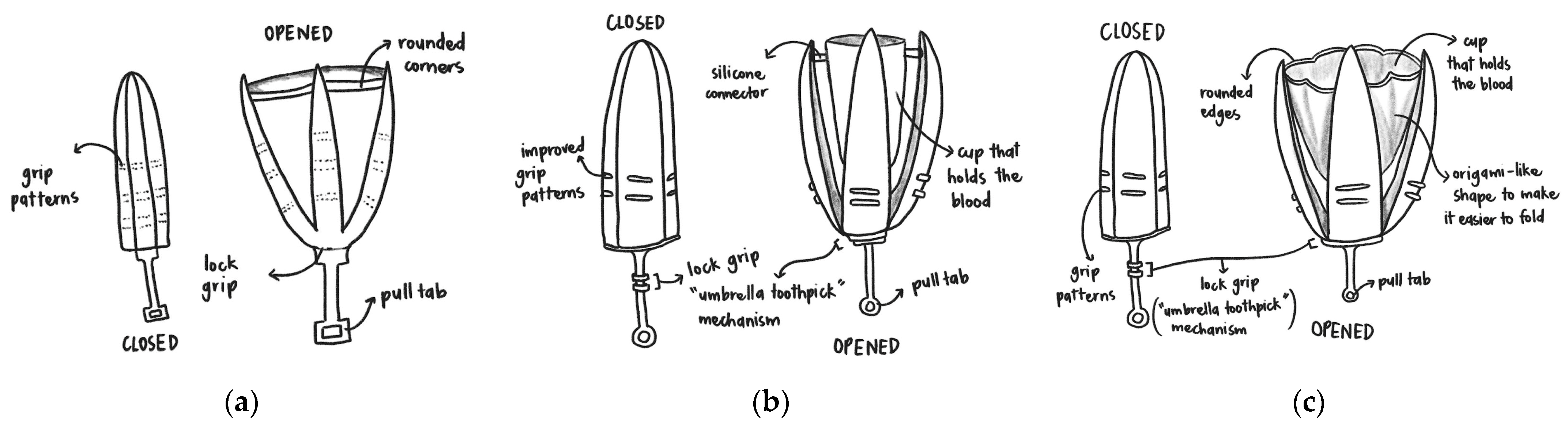
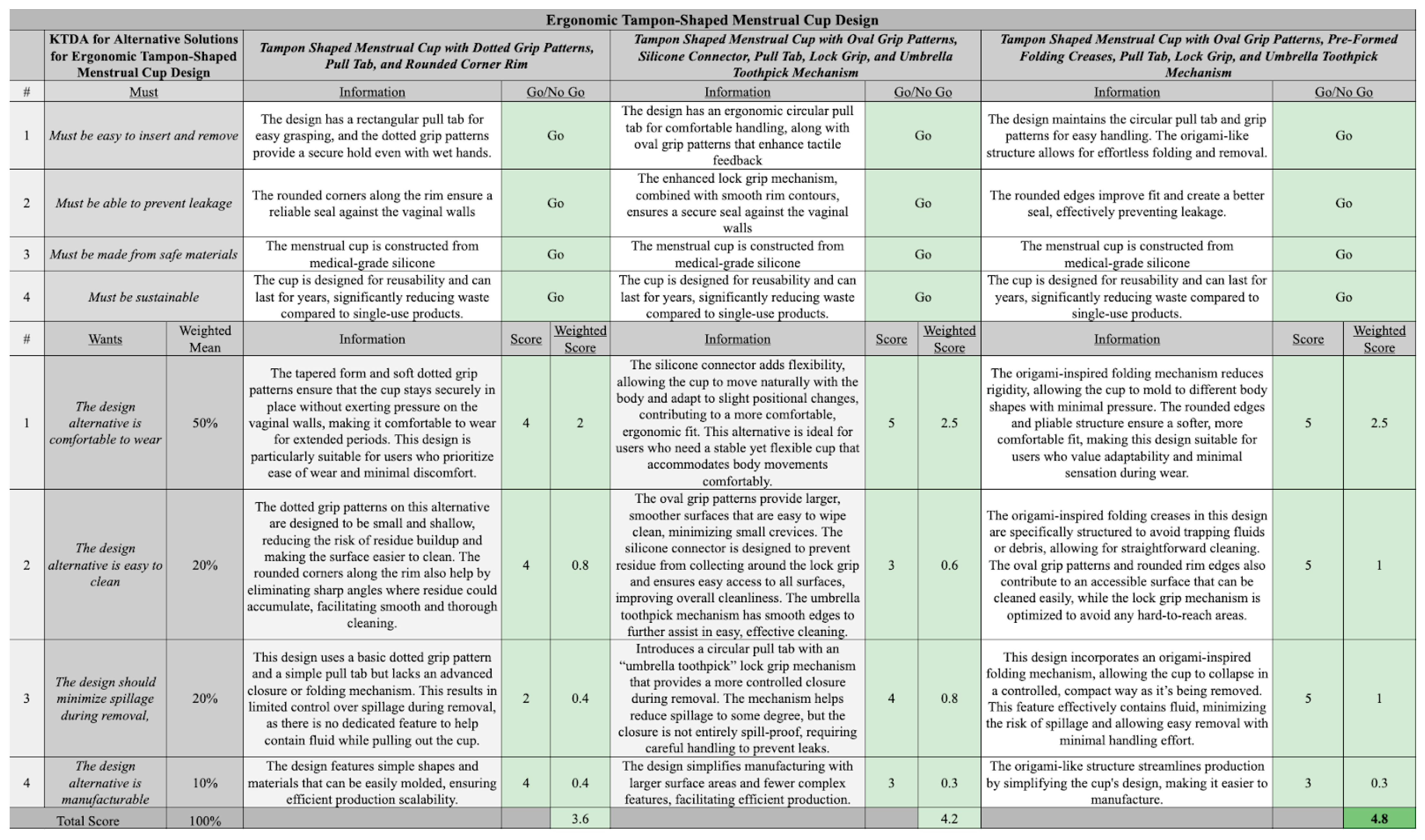
Three conceptual design alternatives were developed based on user needs and technical criteria. Alternative 1 featured a basic tampon-shaped form with dotted grips, a rectangular pull tab, and a lock grip mechanism. Alternative 2 introduced oval grips, a circular pull tab, and an umbrella-style locking system for improved handling. Alternative 3 incorporated origami-inspired folding walls, rounded edges, and enhanced flexibility to better conform to anatomical variations (Figure 4a–c).
A decision analysis using the Kepner-Tregoe method was conducted to evaluate each alternative based on comfort, leak prevention, ease of cleaning, and manufacturability. Alternative 3 received the highest score of 4.8, demonstrating the best overall balance of usability and feasibility. Figure 5 illustrates the KTDA summary of the three alternatives.

3.4. Risk Assessment

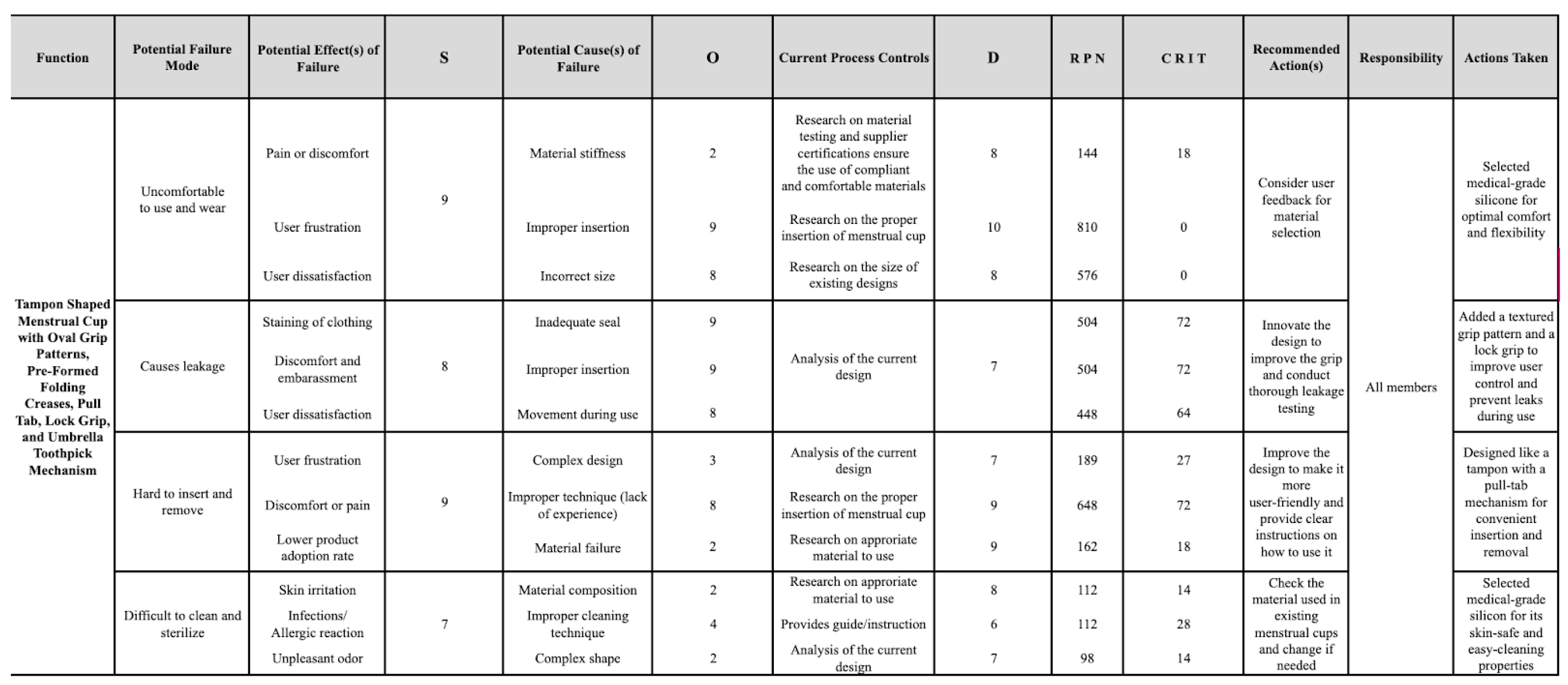
Failure mode and effects analysis was conducted to identify potential issues, including discomfort, leakage, and cleaning challenges. Mitigations included textured grips, ergonomic folding, and high-quality silicone material. Figure 6 provides the full FMEA.

3.5. Prototyping and Validation

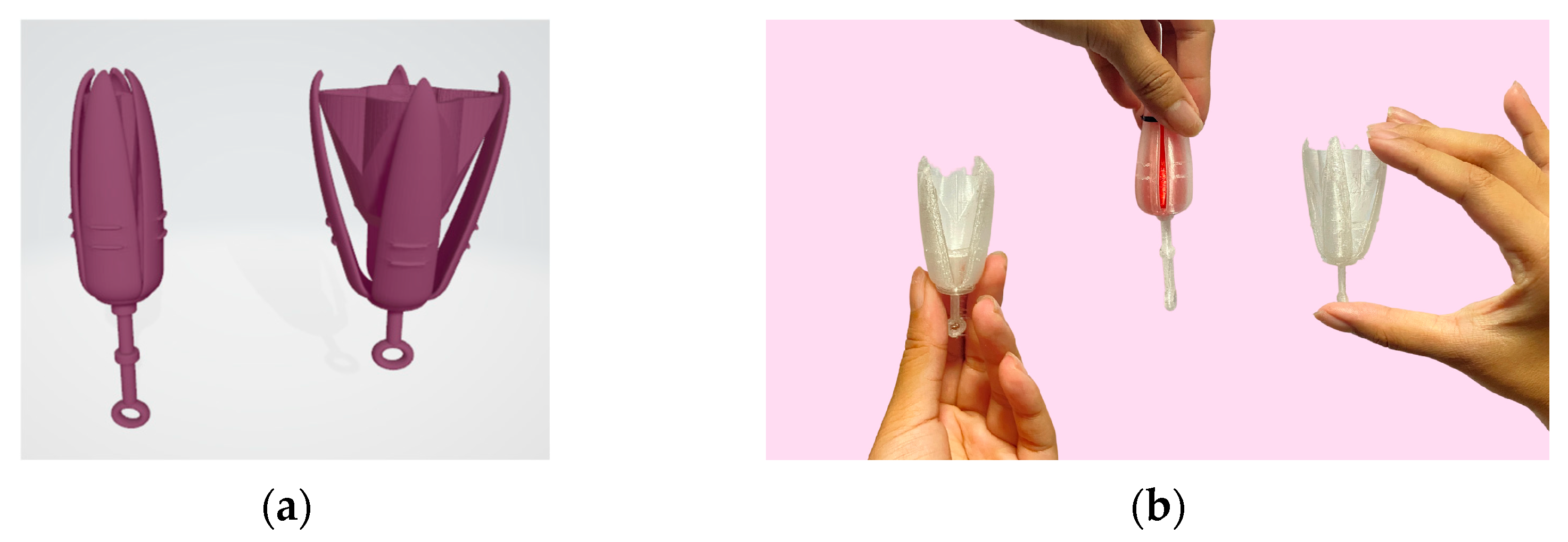
A low-fidelity prototype made from food-grade silicone was produced to validate the conceptual design [29]. Key features of the prototype included origami-like folding to allow compact removal, rounded edges to enhance comfort and improve sealing, textured grip patterns and a lock mechanism for better control, and a pull tab designed to simplify the removal process. The prototype was developed using 3D modeling and rapid prototyping (3D printing), followed by silicone molding to simulate final material properties. This prototype demonstrated the feasibility of the design and informed future refinement with medical-grade silicone. The final 3D design and folding mechanism are shown in Figure 7a,b.

4. Design Evaluation and Recommendations

The results of the design evaluation of the tampon-shaped menstrual cup, including expert, user, and manufacturer insights, a structured failure analysis, and design recommendations, were described as follows.

4.1. Key Findings from Experts, Users, and Manufacturers

Medical experts emphasized that flexibility and anatomical fit are critical for comfort, leak prevention, and long-term safety. They supported the use of medical-grade silicone but cautioned against overly rigid materials that could cause discomfort during insertion or prolonged wear. A circular rim structure was also recommended to improve seal reliability, especially for users with post-childbirth vaginal laxity. Industrial engineers highlighted the complexity of the three-part design, noting potential barriers to mass production. They recommended simplifying the folding mechanism and grip features to improve scalability, while also stressing the need for market education to support adoption. Manufacturers echoed these concerns, pointing out that the innovative features would require custom molds and increased production costs. They advised durability testing and refinement to ensure reliability. Meanwhile, users responded positively to the proposed open/close mechanism and enhanced grip, which they felt addressed common frustrations with traditional menstrual cups. However, concerns remained about leakage, ease of insertion and removal, and hygiene. These findings suggest that while the redesign meets important user needs, clear usage instructions and continued design optimization are essential for broader acceptance.

4.2. DFMEA

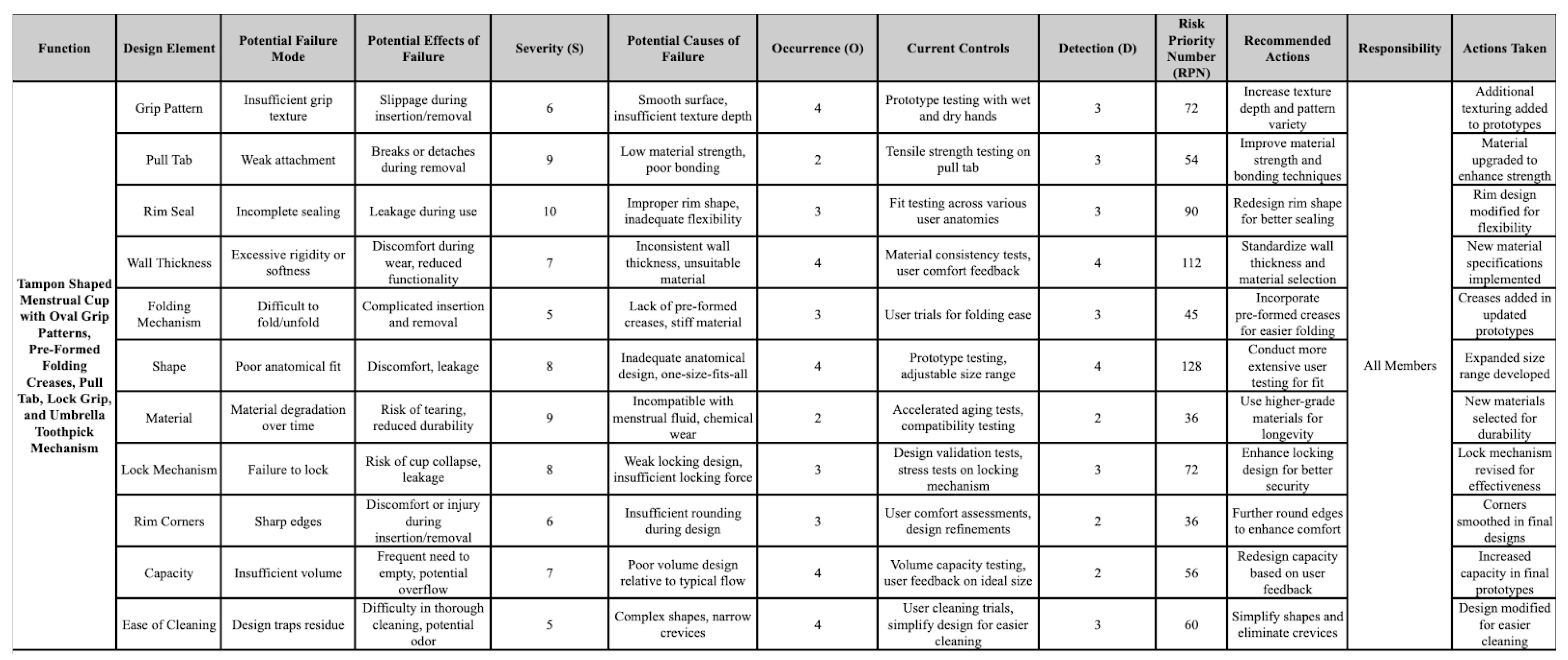
DFMEA is applied to identify potential risks in the tampon-shaped menstrual cup that may affect its safety, usability, and overall performance. Among the most critical were the possibility of slippage due to insufficient grip texture, the risk of pull tab detachment during removal, and incomplete rim sealing, which cause leakage. The folding mechanism was flagged for difficulty in operation, potentially affecting ease of insertion. Material-related concerns were also noted, including discomfort from uneven wall thickness, risk of irritation from sharp edges, and long-term degradation of the silicone material under repeated use. A detailed summary of the analysis, including identified failure modes and their associated risk ratings, is presented in Figure 8.

4.3. Design Recommendations

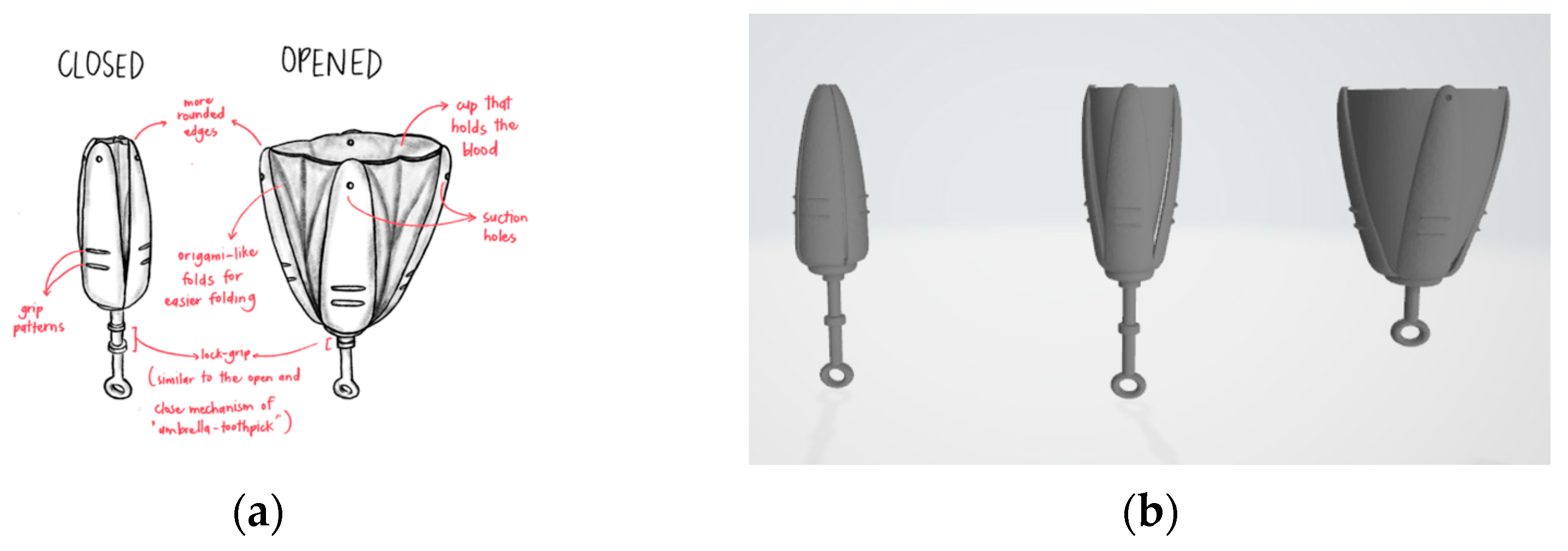
The final design incorporates expert and user feedback to improve comfort, usability, and safety. Key revisions include elongated origami-style folds to eliminate gaps, rounded edges for a better fit, and suction holes for easier vacuum release. The embossed grip and pull tab were retained, while only the lock grip remains movable to ensure stem stability. Two size options were developed to address varying flow needs—light to medium and medium to heavy—differing in closed diameter, length, and capacity, but sharing a deployed diameter of 48 mm. These dimensions were selected based on tampon measurements and standard menstrual cup sizes for effective fit and leak protection. Figure 9a,b illustrate the final design through sketch and 3D CAD model.
It is necessary to prioritize user testing across diverse demographics to refine comfort, functionality, and materials. Broader surveys, focus groups, and clinical trials enhance ergonomic design and usability. Educational efforts are needed to address misconceptions and boost adoption, while further studies should explore manufacturing, distribution, and affordability to ensure accessibility.

5. Conclusions

The results of this study highlight the need to improve menstrual health by redesigning sustainable products that address comfort, safety, and usability. Although menstrual cups are environmentally friendly and cost-effective, their adoption is limited by challenges in insertion, removal, and achieving a secure fit. By integrating user feedback, ergonomic analysis, and expert input from obstetrics and gynecology and industrial engineers, the study developed a tampon-shaped menstrual cup that improves comfort and usability without compromising sustainability. KTDA and FMEA were used for the selection of design features, prioritizing medical safety, leakage prevention, and ease of cleaning. Expert evaluations confirmed the product’s potential to address anatomical diversity and function as a reliable, reusable alternative to disposable products, contributing to reduced environmental impact and improved menstrual hygiene.

Author Contributions

Conceptualization, S.A., C.E., J.M.G. and N.J.; methodology, S.A., C.E., J.M.G. and N.J.; software, S.A., C.E., J.M.G. and N.J.; validation, S.A., C.E., J.M.G. and N.J.; formal analysis, J.M.G. and N.J.; investigation, S.A., C.E., J.M.G. and N.J.; resources, S.A., C.E., J.M.G. and N.J.; data curation, J.M.G. and N.J.; writing—original draft preparation, S.A., C.E., J.M.G. and N.J.; writing—review and editing, S.A., C.E., J.M.G. and N.J.; visualization, S.A. and C.E.; supervision, E.B., J.T., M.J.G. and C.S.; project administration, S.A. and N.J. All authors have read and agreed to the published version of the manuscript.

Funding

This research received no external funding.

Informed Consent Statement

Informed consent was obtained from all subjects involved in the study.

Data Availability Statement

The raw data supporting the conclusions of this article will be made available by the authors on request.

Acknowledgments

We would like to express our sincere gratitude to everyone who supported us throughout this research journey. We are also grateful to the stakeholders who participated in interviews and shared their expertise. Our thanks also go to manufacturers Furuize and Foshan Tian Bao Li for their cooperation. Lastly, thank you to our families, friends, and one another—for your unwavering support, resilience, and collaboration that made this study possible.

Conflicts of Interest

The authors declare no conflicts of interest.

References

  1. Critchley, H.O.; Babayev, E.; Bulun, S.E.; Clark, S.; Garcia-Grau, I.; Gregersen, P.K.; Griffith, L.G. Menstruation: Science and society. Am. J. Obstet. Gynecol. 2020, 223, 624–664. [Google Scholar] [CrossRef] [PubMed]
  2. Sumpter, C.; Torondel, B. A systematic review of the health and social effects of menstrual hygiene management. PLoS ONE 2013, 8, e62004. [Google Scholar] [CrossRef] [PubMed]
  3. Parent, C.; Tetu, C.; Barbe, C.; Bonneau, S.; Gabriel, R.; Graesslin, O.; Raimond, E. Menstrual hygiene products: A practice evaluation. J. Gynecol. Obstet. Hum. Reprod. 2021, 51, 102261. [Google Scholar] [CrossRef] [PubMed]
  4. Grand View Research. Feminine Hygiene Products Market Size, Share & Trends Analysis Report by Product. Available online: https://www.grandviewresearch.com/industry-analysis/feminine-hygiene-products-market (accessed on 12 December 2025).
  5. George, A.M.; Leena, K. Experiences of the women using menstrual cup on free will: A qualitative inquiry. Online J. Health Allied Sci. 2020, 19, 10. [Google Scholar]
  6. Kamil, I.; McMahon, M. Designing menstruation: An examination into the influence of experiences on the use of menstrual products. In Proceedings of the DRS Conference, Bilbao, Spain, 25 June–3 July 2022. [Google Scholar] [CrossRef]
  7. World Bank Group. Menstrual Health and Hygiene. Available online: https://www.worldbank.org/en/topic/water/brief/menstrual-health-and-hygiene (accessed on 12 December 2025).
  8. Woo, J.; Kim, S.; Kim, H.; Jeong, K.S.; Kim, E.; Ha, E. Systematic review on sanitary pads and female health. Ewha Med. J. 2019, 42, 25–38. [Google Scholar] [CrossRef]
  9. Williams, J.D.; Frowen, K.E.; Nixon, R.L. Allergic contact dermatitis from methyldibromo glutaronitrile in a sanitary pad and review of Australian clinic data. Contact Dermat. 2007, 56, 164–167. [Google Scholar] [CrossRef] [PubMed]
  10. Billon, A.; Gustin, M.; Tristan, A.; Bénet, T.; Berthiller, J.; Gustave, C.A.; Vanhems, P.; Lina, G. Association of characteristics of tampon use with menstrual toxic shock syndrome in France. EClinicalMedicine 2020, 21, 100308. [Google Scholar] [CrossRef] [PubMed]
  11. Kang, M. Menstrual Cups vs. Tampons—Here’s How They Compare. The Conversation, 22 July 2019. Available online: https://theconversation.com/menstrual-cups-vs-tampons-heres-how-they-compare-120499 (accessed on 12 December 2025).
  12. Ramsay, C.; Hennegan, J.; Douglass, C.H.; Eddy, S.; Head, A.; Lim, M.S.C. Reusable period products: Use and perceptions among young people in Victoria, Australia. BMC Womens Health 2023, 23, 2197. [Google Scholar] [CrossRef] [PubMed]
  13. Gayfer, C. Reusable Pads vs. Menstrual Cups: A Comprehensive Comparison. Amie Pads, 11 January 2024. Available online: https://amiepads.ca/blogs/news-1/reusable-pads-vs-menstrual-cups-a-comprehensive-comparison (accessed on 12 December 2025).
  14. Ferreira, B.; Silva, W.; Oliveira, E.; Conte, T. Designing personas with empathy map. In Proceedings of the SEKE Conference, Pittsburgh, PA, USA, 6–8 July 2015. [Google Scholar] [CrossRef]
  15. Ginting, R.; Ishak, A.; Malik, A.F.; Satrio, M.R. Product development with quality function deployment (QFD): A literature review. IOP Conf. Ser. Mater. Sci. Eng. 2020, 1003, 012022. [Google Scholar] [CrossRef]
  16. Chechurin, L.; Borgianni, Y. Understanding TRIZ through the review of top cited publications. Comput. Ind. 2016, 82, 119–134. [Google Scholar] [CrossRef]
  17. Dahl, D.W.; Chattopadhyay, A.; Gorn, G.J. The importance of visualization in concept design. Des. Stud. 2001, 22, 5–26. [Google Scholar] [CrossRef]
  18. Keeney, R.L. Stimulating creative design alternatives using customer values. IEEE Trans. Syst. Man Cybern. C 2004, 34, 450–459. [Google Scholar] [CrossRef]
  19. Branch, E. Kepner-Tregoe Decision Analysis: A Comprehensive Overview. IIENSTITU, 23 November 2023. Available online: https://www.iienstitu.com/en/blog/kepner-tregoe-decision-analysis (accessed on 12 December 2025).
  20. Bongiorno, J. Use FMEAs to improve your product development process. PM Netw. 2001, 15, 47–51. [Google Scholar]
  21. Bryden, D. CAD and Rapid Prototyping for Product Design; Hachette UK: London, UK, 2014. [Google Scholar]
  22. Chua, C.K.; Leong, K.F.; Lim, C.S. Rapid Prototyping: Principles and Applications, 3rd ed.; World Scientific Publishing: Singapore, 2010. [Google Scholar]
  23. Clarke, V.; Braun, V. Thematic analysis. J. Posit. Psychol. 2016, 12, 297–298. [Google Scholar] [CrossRef]
  24. Money, A.G.; Barnett, J.; Kuljis, J.; Craven, M.P.; Martin, J.L.; Young, T. The role of the user within the medical device design and development process: Medical device manufacturers’ perspectives. BMC Med. Inform. Decis. Mak. 2011, 11, 15. [Google Scholar] [CrossRef] [PubMed]
  25. Rosner, J.; Samardzic, T.; Sarao, M.S. Physiology, female reproduction. In StatPearls; StatPearls Publishing: Treasure Island, FL, USA, 2024. Available online: https://www.ncbi.nlm.nih.gov/books/NBK537132/ (accessed on 12 December 2025).
  26. Luo, J.; Betschart, C.; Ashton-Miller, J.A.; DeLancey, J.O.L. Quantitative analyses of variability in normal vaginal shape and dimension on MR images. Int. Urogynecol. J. 2016, 27, 1087–1095. [Google Scholar] [CrossRef] [PubMed]
  27. Barnhart, K.T.; Izquierdo, A.; Pretorius, E.S.; Shera, D.M.; Shabbout, M.; Shaunik, A. Baseline dimensions of the human vagina. Hum. Reprod. 2006, 21, 1618–1622. [Google Scholar] [CrossRef] [PubMed]
  28. Openshaw, S.; Minder, G.; Long, T.; Ford, M.; Taylor, E.; Witherow, W. (Eds.) Ergonomics and Design: A Reference Guide; Allsteel Inc.: Muscatine, IA, USA, 2006. [Google Scholar]
  29. Norman, D.A. The Psychology of Everyday Things; Basic Books: New York, NY, USA, 1988. [Google Scholar]
Figure 1. Dimensions of each tampon. (a) light to medium flow; (b) medium to heavy flow.
Engproc 128 00050 g001
Figure 2. HOQ2. Solid Circle (⊝): Strong Relationship; Open Circle (○): Moderate Relationship; Triangle (△): Weak Relationship; Empty Cell: No relationship or insignificant relationship; ++ or Solid Circle: Strong Positive Relationship; +: Positive Relationship (one feature increases, the other increases); −: Negative Relationship (one feature increases, the other decreases).
Engproc 128 00050 g002
Figure 3. Solution to unmet needs derived from the initial TRIZ combinations.
Engproc 128 00050 g003
Figure 4. (a) Design alternative 1; (b) design alternative 2; (c) design alternative 3.
Engproc 128 00050 g004
Figure 5. Kepner-Tregoe decision analysis.
Engproc 128 00050 g005
Figure 6. Failure mode and effects analysis.
Engproc 128 00050 g006
Figure 7. (a) 3D model of the design; (b) 3D printing of the prototype.
Engproc 128 00050 g007
Figure 8. Design failure mode and effects analysis.
Engproc 128 00050 g008
Figure 9. (a) Sketch design and characteristics; (b) 3D mockup design.
Engproc 128 00050 g009
Disclaimer/Publisher’s Note: The statements, opinions and data contained in all publications are solely those of the individual author(s) and contributor(s) and not of MDPI and/or the editor(s). MDPI and/or the editor(s) disclaim responsibility for any injury to people or property resulting from any ideas, methods, instructions or products referred to in the content.