

Proceeding Paper

Progressive Collapse and Robustness Analysis of Multi-Story Reinforced Concrete Structures †
1
Department of Civil Engineering, Faculty of Engineering, Cukurova University, 01330 Adana, Türkiye
2
Department of Civil Engineering, Faculty of Engineering and Architecture, Bitlis Eren University, 13000 Bitlis, Türkiye
*
Author to whom correspondence should be addressed.
Presented at the 34th International Scientific Conference on Organization and Technology of Maintenance (OTO 2025), Osijek, Croatia, 12 December 2025.
Eng. Proc. 2026, 125(1), 22; https://doi.org/10.3390/engproc2026125022
Published: 16 February 2026

Abstract

Progressive collapse is a critical structural phenomenon where local damage triggers a chain reaction and potentially leads to disproportionate failure of the entire system. In this study, the progressive collapse behavior of multi-story reinforced concrete (RC) structures is investigated using numerical analysis methods. This situation poses a serious danger, especially for high-risk types of structures. In the study, the effect on the collapse tendency is evaluated by considering different structural models. Numerical analyses are performed using a nonlinear finite element method. This study offers a general exploration of the progressive collapse behavior of multi-story RC frames, focusing on robustness evaluation under various structural scenarios. The aim of this study is to improve the understanding of structural responses and to support the development of safer, more durable design strategies.

1. Introduction

Earthquakes occurring in areas with high seismic risk can cause varying levels of damage to structures or the collapse of different structural elements. In general, the characteristics of earthquakes, the design and construction features of buildings, and local soil conditions play a critical role in the behavior of buildings under earthquake impact. Structural features such as the geometry of the structure, type of structural system, material quality, presence of structural irregularities, stiffness distribution, damping ratio, etc., also play a decisive role in seismic performance. Soft/weak story formation, torsional irregularities, insufficiently detailed joint areas, short columns, strong beam–weak columns, insufficient interlocking between structural elements, pounding effects, and heavy overhangs significantly reduce the earthquake resistance capacity of structures. In addition, inadequate engineering services and deficiencies in building inspection processes can lead to increased structural damage during earthquakes and the deterioration of structural integrity [1,2,3,4,5,6]. Buildings with damaged structural integrity may be subject to partial, progressive, and/or total collapse [7,8,9,10,11,12,13,14,15,16]. Progressive collapse describes a failure mechanism where local damage, such as the sudden loss of a column, leads to a chain reaction of structural failures, potentially resulting in the partial or total collapse of a building. Unlike conventional structural analyses, which assume that localized damage remains contained, progressive collapse analysis investigates how such damage might spread through the system. It addresses a critical question: can a structure redistribute loads and remain stable after losing a key element? Triggers of progressive collapse are varied, ranging from explosions and fires to earthquakes and hidden design flaws. What unites these events is not the cause but the outcome—unexpected, disproportionate failure due to insufficient structural robustness. Historic failures like Ronan Point (1968), as well as more recent collapses linked to seismic activity and construction deficiencies, underscore that this risk is global and ongoing [17,18,19,20,21,22,23,24]. Modern guidelines, such as GSA (2016) [25] and UFC 4-023-03 [26], provide systematic approaches to evaluate structural resilience under sudden loss scenarios. These frameworks emphasize alternative load paths and demand-capacity checks to ensure that localized failures do not escalate into catastrophic collapse.
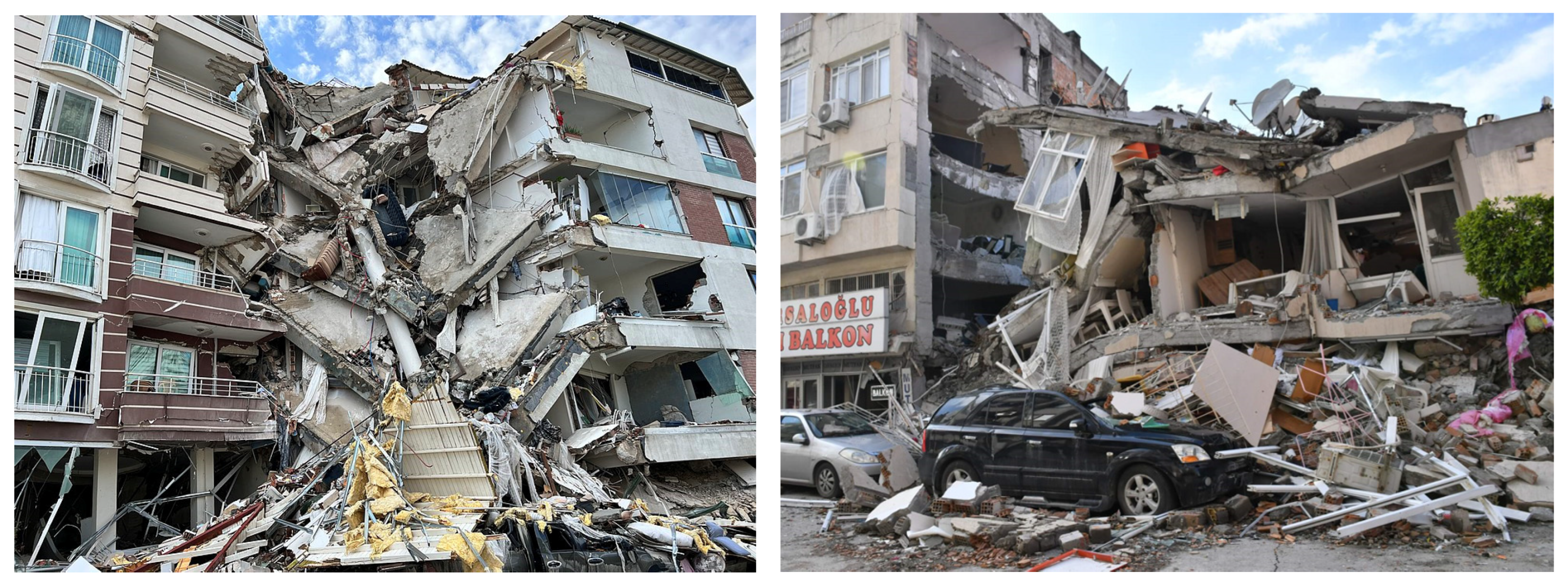
In 2023, a sequence of twin earthquakes with magnitudes of 7.8 and 7.6 struck Kahramanmaraş, Türkiye, causing extensive structural damage [27]. These earthquakes directly affected 11 provinces in the country [28] and once again highlighted numerous issues, including insufficient material strength, irregularities in plan and elevation, poor workmanship, short columns, soft soil [29], and inadequate foundations, as well as soft-story problems [30]. The recent earthquakes in Türkiye also offered a stark reminder: progressive collapse considerations must be integrated into seismic assessments, especially in regions with aging and vulnerable building stock revealed that many buildings failed not solely due to seismic demands, but due to their inability to remain stable after localized damage (Figure 1). This underscores the need to complement seismic analysis with progressive collapse assessment [31,32,33,34,35,36,37,38,39]. Where robustness is found lacking, targeted structural strengthening should be implemented to prevent disproportionate failure and ensure post-event integrity. Figure 1 shows typical collapse examples observed after the 6 February 2023 Kahramanmaraş earthquakes.
Structures with low seismic performance or existing damage require effective retrofitting strategies to prevent collapse and enhance overall resilience [40]. The use of seismic isolators has proven effective in reducing structural demands and preventing collapse during strong ground motions [41,42]. In reinforced concrete buildings, the addition of shear walls can significantly improve lateral strength and stiffness, offering an efficient strengthening solution for existing structures [43]. Alternatively, bracing systems, including conventional steel braces, viscous damping braces, and buckling-restrained braces, have been widely studied and successfully applied to enhance seismic performance and energy dissipation capacity [44,45,46,47]. Moreover, fiber-reinforced polymer (FRP) composites have emerged as a practical technique for strengthening reinforced concrete elements, providing improved ductility and load-bearing capacity [48].

2. Materials and Methods

In this study, the structural response was simulated using the Applied Element Method (AEM), a discrete-based computational technique that integrates aspects of both finite element and discrete element methods. In AEM, the structure is idealized as an assembly of small rigid elements interconnected by sets of normal and shear springs distributed along their faces. These springs represent the actual mechanical behavior of the material, including elasticity, cracking, crushing, and separation. As external loads are applied, the springs deform, allowing the simulation of both in-plane and out-of-plane responses. Moreover, the springs respond to stress redistribution, allowing the simulation to capture local failures, such as connection fractures or member buckling, and their propagation throughout the structure. Once a predefined failure criterion is met, such as tensile or shear capacity, corresponding springs are removed, thus enabling the method to capture progressive damage, element separation, and collapse mechanisms [49,50,51]. The stiffness of a normal spring Is calculated [52,53].

Main Model

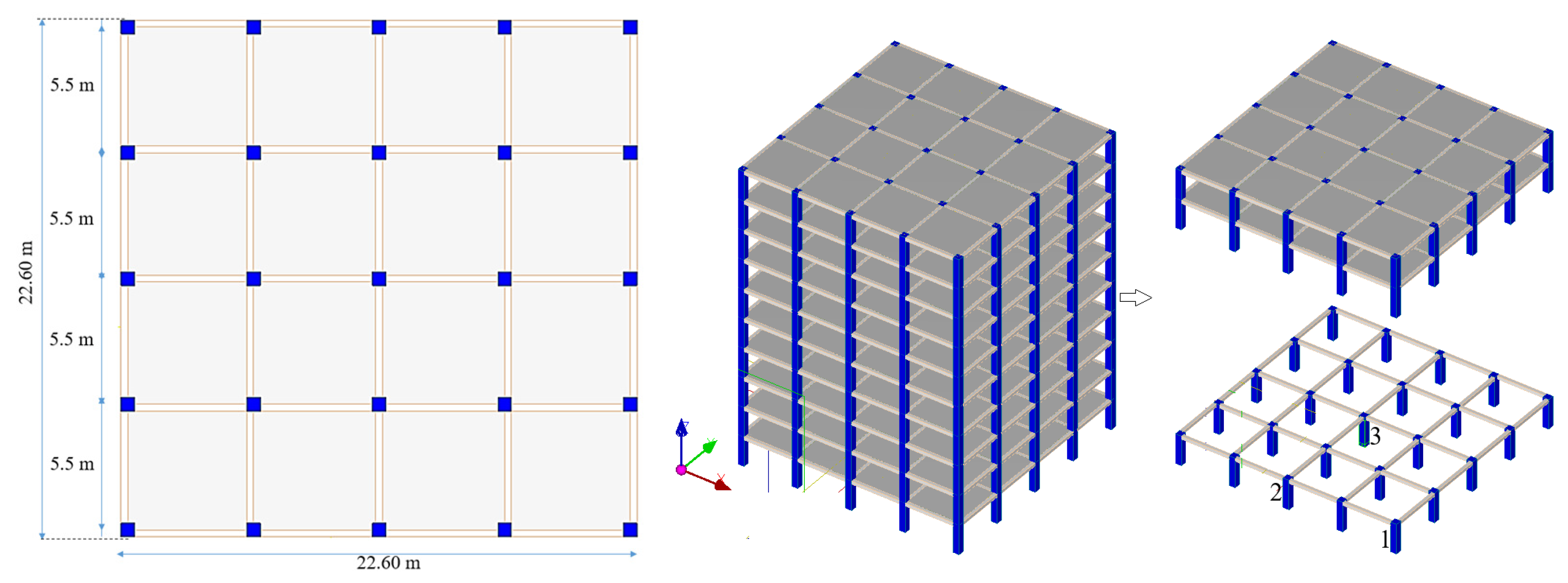
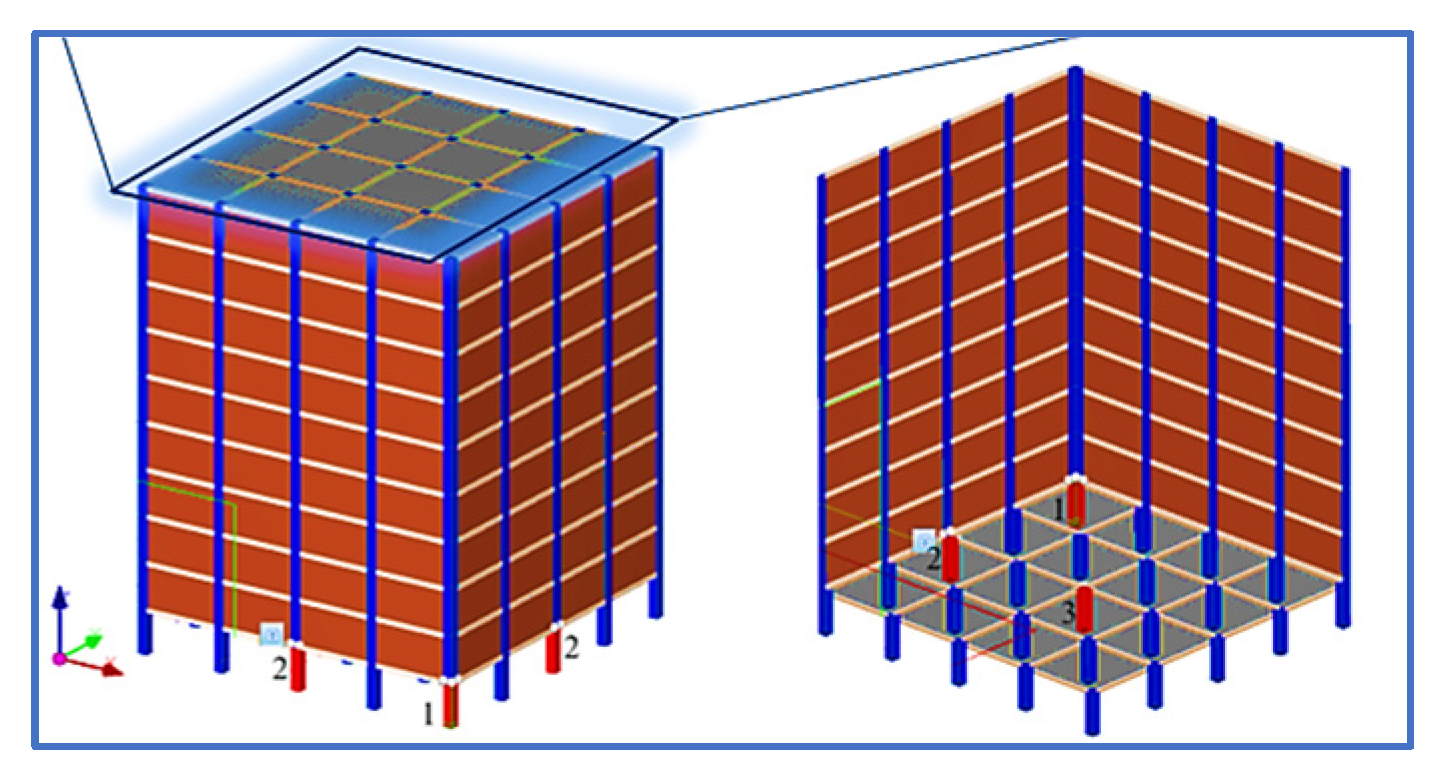
The analyzed structure consists of a 5 × 5 reinforced concrete frame grid system with a uniform bay spacing of 5.5 m in both orthogonal directions, yielding an overall plan dimension of 22.6 m × 22.6 m. Each column is located at the grid intersections, resulting in a total of 36 columns across the base. The structures used S420 steel reinforcement and C30 concrete. Columns were uniformly 40 × 40 cm, beams 30 × 50 cm, and slabs 20 cm thick, with stirrups spaced every 10 cm. Lap splices followed TBEC 2018 [54], and the reinforcement ratio was 4% for both columns and beams. The mesh accounted for plastic hinge zones, dividing beams into 7, columns into 44, and slabs into 49 segments, ensuring compatibility at interfaces. Thin structures and shear locking correction (TSCF) were applied in slabs, maintaining beam continuity. The building comprises 10 stories, with each story having a uniform height of 3 m, resulting in a total height of 30 m. The elevation views highlight two configurations: one representing the bare frame structure without infill walls (Figure 2), and another including masonry infill walls placed only along the perimeter bays (Figure 3). In both structural configurations, column removal was applied at three distinct locations at the ground floor level, and the displacement response of the roof apex was recorded over a 2 s time interval after each removal. Three column removal cases were performed for the scenario without walls: corner column, edge column, and the column at the geometric center (Figure 2).
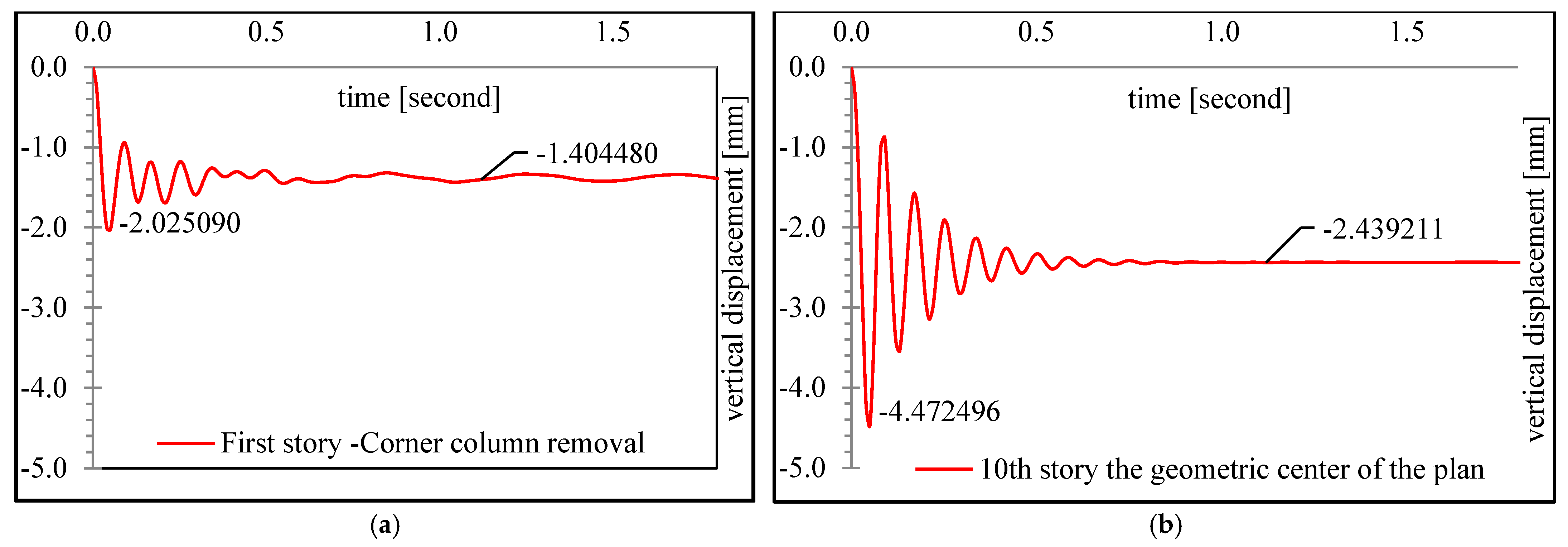
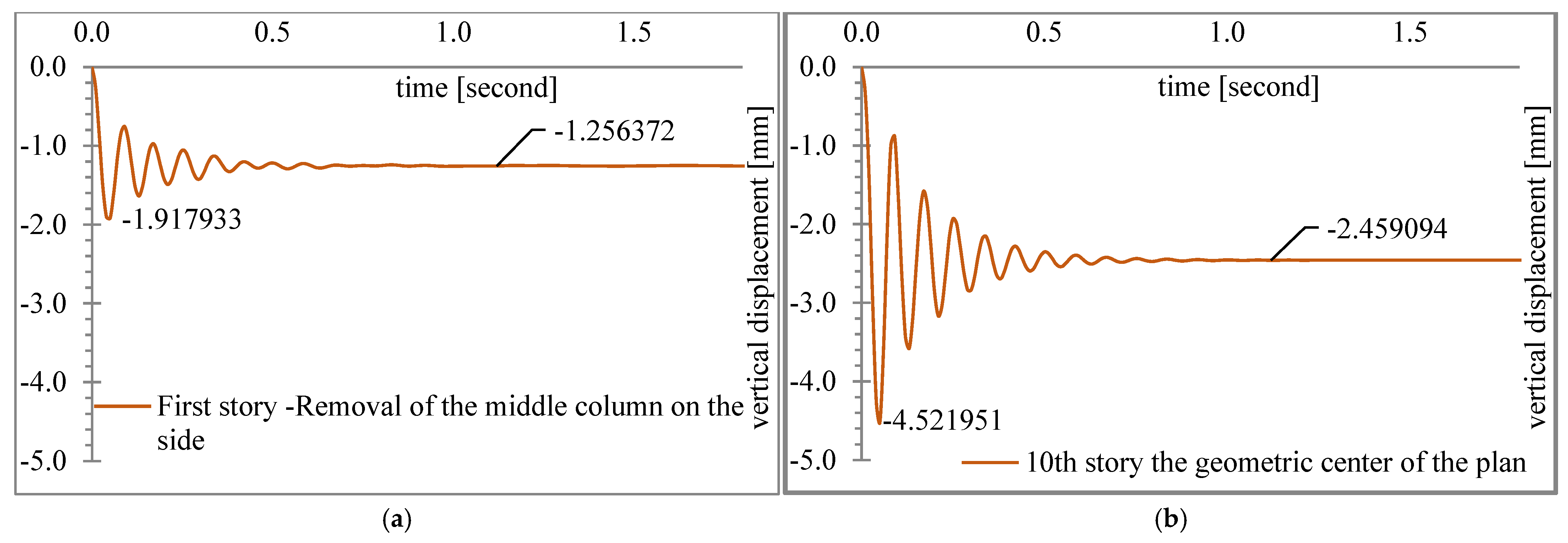
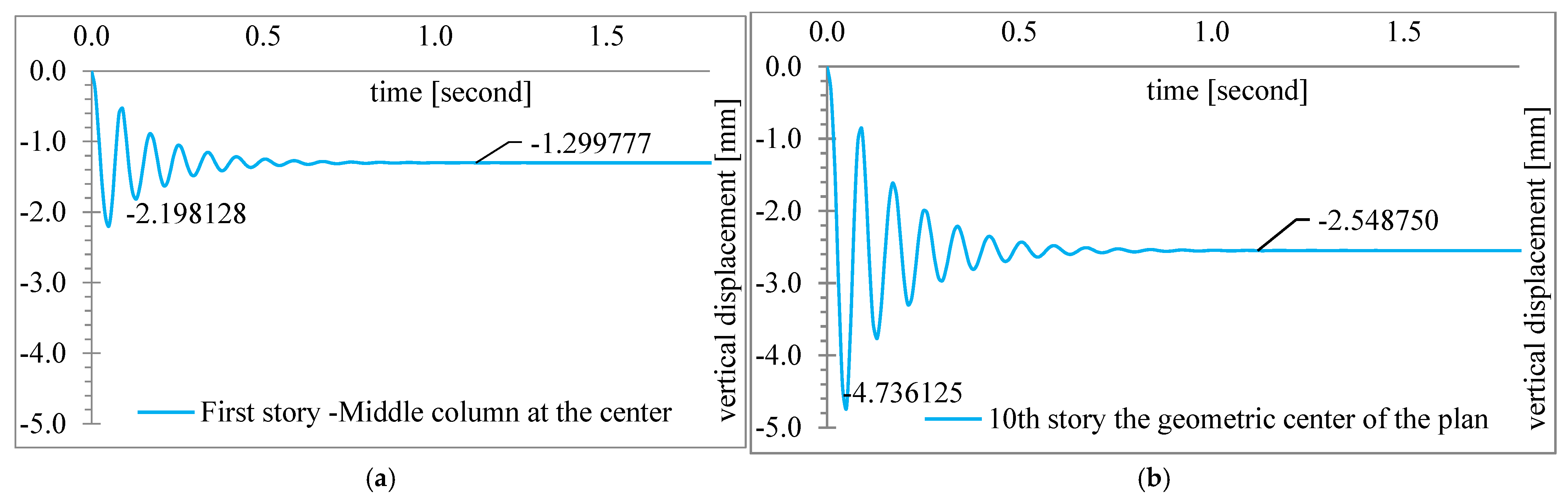
The same procedure was applied for the scenario with walls. For each column removal, two displacement values were recorded: at the removal point on the first floor and at the geometric center of the top floor (10th floor) (Figure 3). In the analyses, conventional brick masonry infill walls were included in the model as solid elements. The sudden column removal was simulated through a nonlinear time-history dynamic analysis with a time step of 0.001 s. The nonlinear behavior was inherently captured by the Applied Element Method (AEM), which accounts for material cracking, crushing, and separation through the progressive failure of discrete elements and contact interactions.

3. Results and Discussion

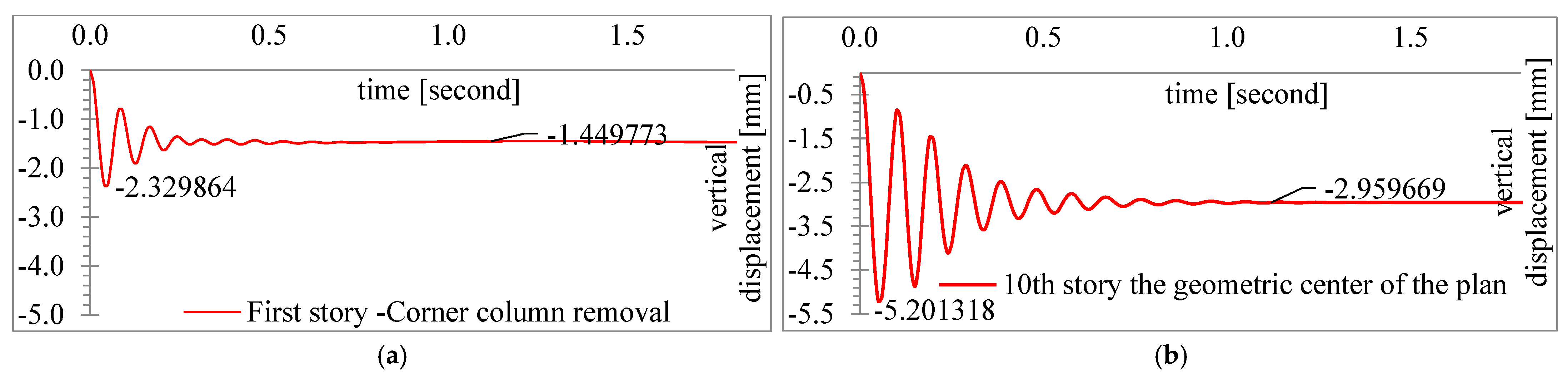
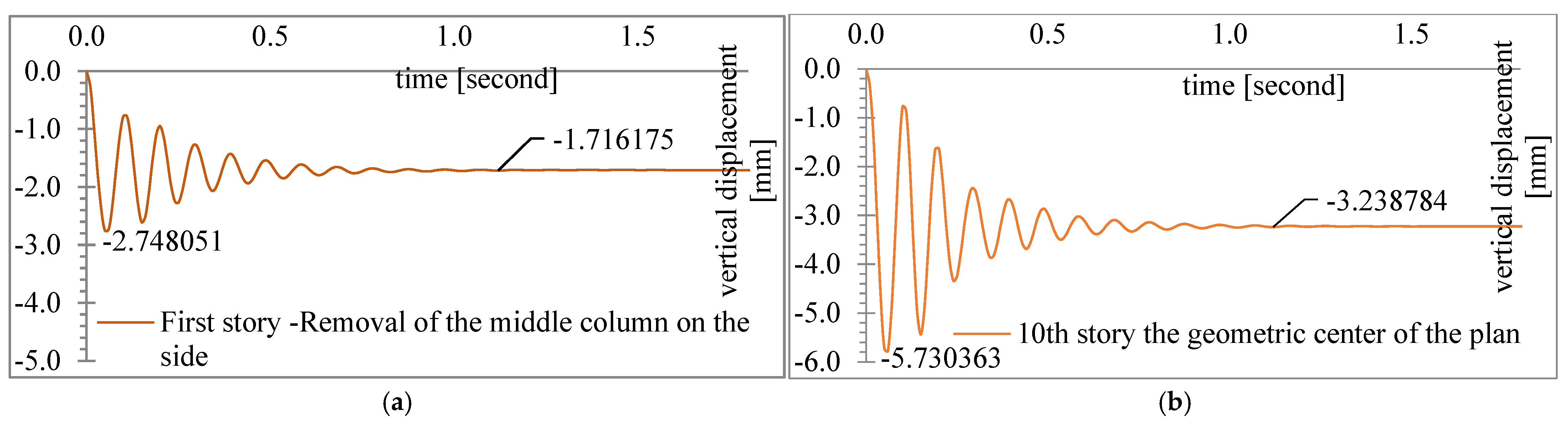
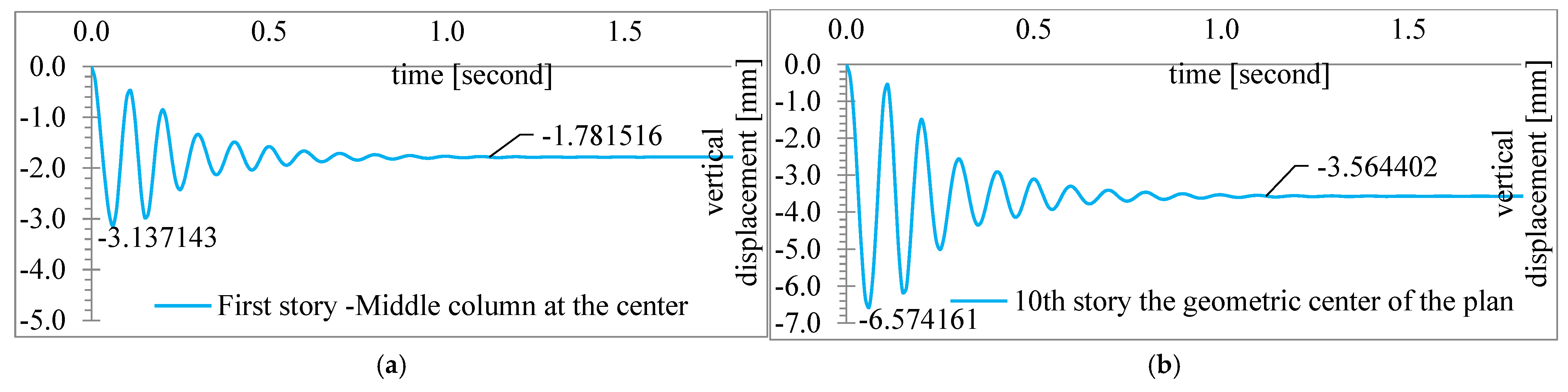
The removal of critical load-bearing columns produced varying displacement responses based on column position and wall presence. The bare frame exhibited consistently higher transient and residual displacements than the wall-included case. Among all cases, center column removal in the bare frame generated the highest vertical displacement at the 10th story (max: −6.57 mm; residual: −3.56 mm), indicating a severe progressive collapse potential without wall contribution. Table 1 summarizes the maximum transient and residual vertical displacements recorded following the removal of different columns. The simulation results reveal that the presence of structural walls significantly reduces both the maximum transient and residual displacements across all investigated column removal scenarios (Table 1). In both models, the most severe responses were observed following the removal of the center column, particularly in the bare frame configuration. For instance, the vertical displacement at the 10th-story center reached −6.57 mm (transient) and −3.56 mm (residual) in the bare frame case, compared to −4.73 mm and −2.54 mm in the wall-included model. Removal of the corner and edge–middle columns led to relatively smaller displacements, indicating a lower collapse vulnerability. Wall-included models consistently demonstrated improved energy dissipation and reduced residual deformations, confirming the beneficial role of infill walls in progressive collapse resistance. It should be noted that in the wall-included model, masonry infill walls were placed only along the perimeter frames; no internal infill walls were present. Figure 4, Figure 5, Figure 6 and Figure 7 illustrate the vertical displacement responses of the structure under sudden column removal when walls are included in the model.
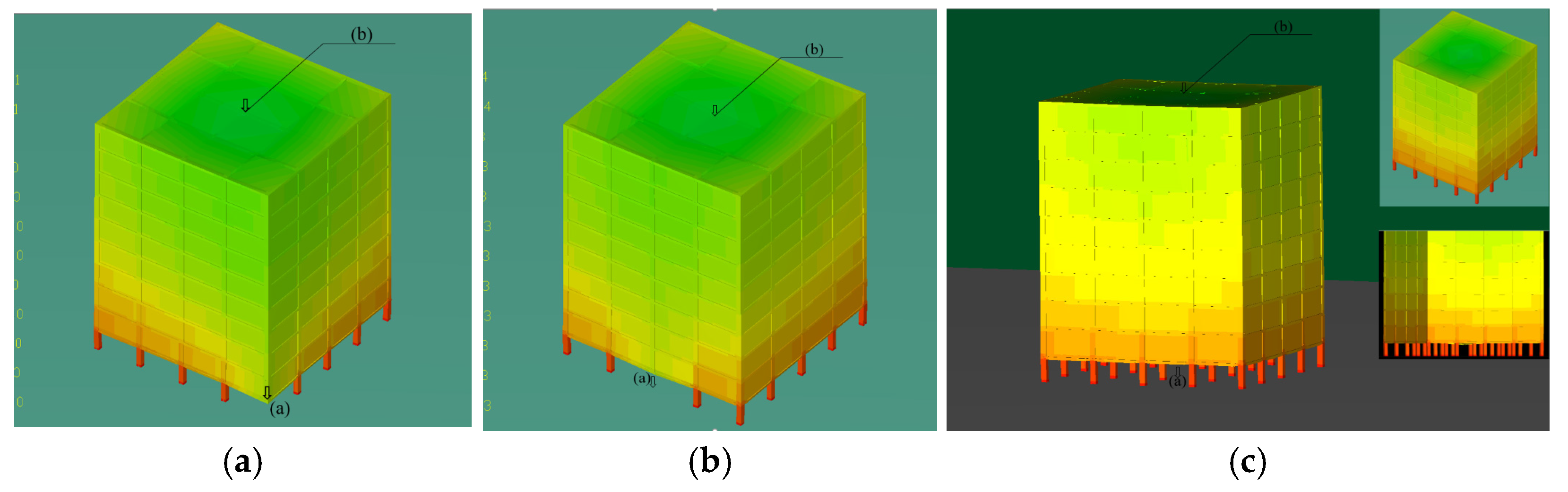
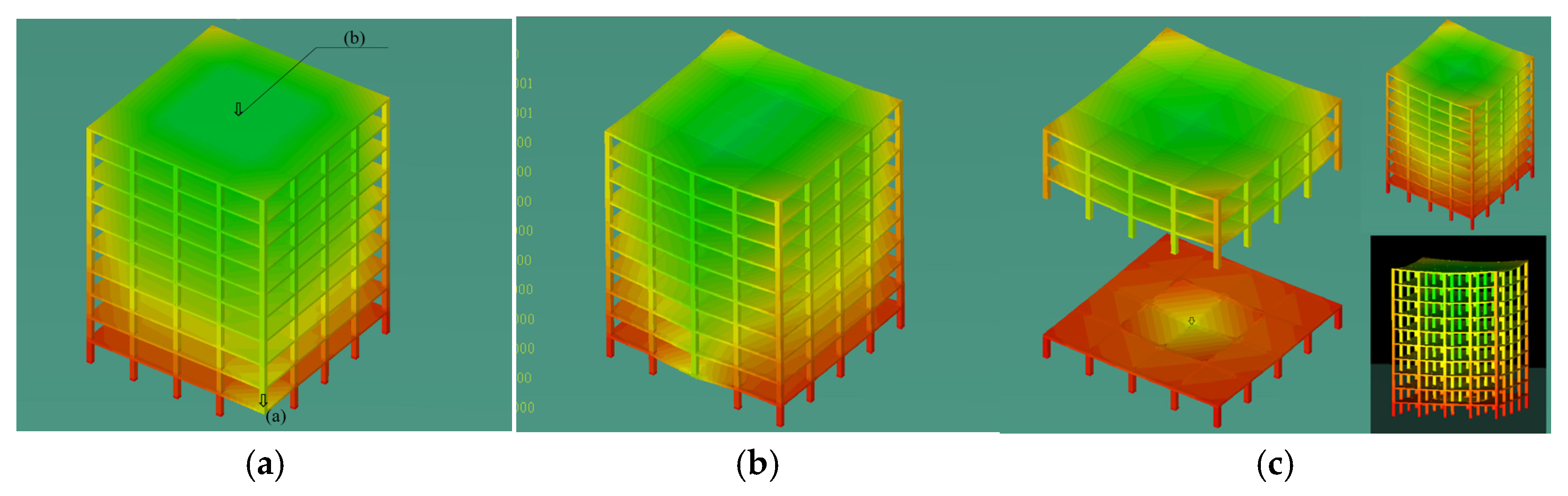
As shown in Figure 4, the labels (a) and (b) indicate the measurement points at the first and 10th stories, respectively, where the displacement responses were evaluated following column removal. The corresponding displacement data at these locations are presented in graphical form in Figure 5, Figure 6 and Figure 7 and Figure 8, Figure 9, Figure 10 and Figure 11.
Figure 8, Figure 9, Figure 10 and Figure 11 illustrate the vertical displacement responses of the structure subjected to sudden column removal under bare frame conditions.
The results corresponding to different column locations (corner, edge–middle, and center) and story levels (1st and 10th) are summarized in Table 1.

4. Conclusions

This study evaluated the progressive collapse potential of a mid-rise reinforced concrete structure subjected to sudden column removal, with and without structural walls. Three critical column locations were considered: a corner column, an edge–middle column, and a center column. For each case, the vertical displacements were tracked both at the removal point on the first story and at the geometric center of the 10th story.
The findings highlight the following:
  • Structural walls, even when limited to the perimeter, significantly enhance collapse resistance by limiting vertical displacements and contributing to post-event stability.
  • Center column removal resulted in the most critical scenario, especially in the bare frame configuration, emphasizing the need to protect key interior supports.
  • Bare frame structures showed greater vulnerability across all scenarios, with higher transient and residual displacements.
  • The inclusion of walls improved the load redistribution capacity and reduced residual deformation, supporting their role in robust and resilient design strategies.

Limitations and Future Work

A key limitation of this study is that infill walls were only modeled along the perimeter frames, while no internal partitions were considered. This representation may underestimate the overall stiffness and energy dissipation capacity of real buildings, particularly in the central bays. Future work should incorporate the distribution of infill walls, including internal partitions. Such enhancements would provide a more comprehensive understanding.

Author Contributions

Conceptualization, methodology; software; validation; formal analysis; investigation; resources; data curation; writing—original draft preparation; writing—review and editing; visualization; and supervision: J.Y. and E.I. All authors have read and agreed to the published version of the manuscript.

Funding

This research received no external funding.

Institutional Review Board Statement

Not applicable.

Informed Consent Statement

Not applicable.

Data Availability Statement

All data generated or used during the study appear in the article.

Acknowledgments

Gratitude is expressed to ASI for providing ELS.

Conflicts of Interest

The authors declare no conflicts of interest.

References

  1. Işık, E.; Radu, D.; Harirchian, E.; Avcil, F.; Arkan, E.; Büyüksaraç, A.; Hadzima-Nyarko, M. Failures in Reinforced-Concrete Columns and Proposals for Reinforcement Solutions: Insights from the 2023 Kahramanmaraş Earthquakes. Buildings 2025, 15, 1535. [Google Scholar] [CrossRef]
  2. Yuzbasi, J. Post-earthquake damage assessment: Field observations and recent developments with recommendations from the Kahramanmaraş earthquakes in Türkiye on February 6th, 2023 (Pazarcık M7.8 and Elbistan M7.6). J. Earthq. Eng. 2024, 29, 3367–3392. [Google Scholar] [CrossRef]
  3. Binici, B.; Yakut, A.; Kadas, K.; Demirel, O.; Akpinar, U.; Canbolat, A.; Yurtseven, F.; Oztaskin, O.; Aktas, S.; Canbay, E. Performance of RC buildings after Kahramanmaraş Earthquakes: Lessons toward performance based design. Earthq. Eng. Eng. Vib. 2023, 22, 883–894. [Google Scholar] [CrossRef]
  4. Alih, S.C.; Vafaei, M. Performance of reinforced concrete buildings and wooden structures during the 2015 Mw 6.0 Sabah earthquake in Malaysia. Eng. Fail. Anal. 2019, 102, 351–368. [Google Scholar] [CrossRef]
  5. Caglar, N.; Vural, I.; Kirtel, O.; Saribiyik, A.; Sumer, Y. Structural damages observed in buildings after the January 24, 2020 Elazı g-Sivrice earthquake in Türkiye. Case Stud. Constr. Mater. 2023, 18, e01886. [Google Scholar]
  6. Çelebi, E.; Aktas, M.; Çağlar, N.; Özocak, A.; Kutanis, M.; Mert, N.; Özcan, Z. October 23, 2011 Türkiye/Van–Ercis earthquake: Structural damages in the residential buildings. Nat. Hazards 2013, 65, 2287–2310. [Google Scholar] [CrossRef]
  7. Yuzbasi, J. Progressive collapse analysis of reinforced concrete building structures. Bitlis Eren Üniversitesi Fen Bilim. Derg. 2025, 14, 1204–1219. [Google Scholar] [CrossRef]
  8. Garlock, M. A Discussion and Forensic Investigation of the Champlain Towers South Building Collapse in Surfside, Florida. 2022. Available online: http://arks.princeton.edu/ark:/88435/dsp01cv43p1006 (accessed on 1 January 2025).
  9. Luo, R.; Lata, A.; Dong, X.; Wang, B.; Luo, Z.; Liang, Y.; Guo, X. Seismic response of soft-story reinforced concrete frames: Challenging traditional collapse mechanisms. Structures 2025, 76, 108894. [Google Scholar] [CrossRef]
  10. Marjanishvili, S.M. Progressive Analysis Procedure for Progressive Collapse. J. Perform. Constr. Facil. 2004, 18, 79–85. [Google Scholar] [CrossRef]
  11. Starossek, U. Progressive Collapse of Structures; Thomas Telford: London, UK, 2009; Volume 153. [Google Scholar]
  12. Lin, K.; Li, Y.; Lu, X.; Guan, H. Effects of seismic and progressive collapse designs on the vulnerability of RC frame structures. J. Perform. Constr. Facilities. 2017, 31, 04016079. [Google Scholar] [CrossRef]
  13. Kierat, M.; Freddi, F. Numerical study on the progressive collapse of cable-stayed columns due to cable loss. Thin-Walled Struct. 2025, 215, 113439. [Google Scholar] [CrossRef]
  14. Liu, W.; Zeng, B.; Zhou, Z.; Zheng, Y. Probabilistic evaluation of progressive collapse resistance of truss string structures considering structural uncertainties. Int. J. Steel Struct. 2023, 23, 1238–1250. [Google Scholar] [CrossRef]
  15. Lu, J.; Wu, H.; Fang, Q. Progressive collapse of Murrah Federal Building: Revisited. J. Build. Eng. 2022, 57, 104939. [Google Scholar] [CrossRef]
  16. Yuzbasi, J. Controlled demolition: Novel monitoring and experimental validation of blast-induced full-scale existing high-rise building implosion using numerical finite element simulations. J. Civ. Struct. Health Monit. 2025, 15, 891–914. [Google Scholar] [CrossRef]
  17. Pearson, C.; Norbert, D. Ronan point apartment tower collapse and its effect on building codes. J. Perform. Constr. Facil. 2005, 19, 172–177. [Google Scholar] [CrossRef]
  18. Russell, J.; Sagaseta, J.; Cormie, D.; Jones, A. Historical review of prescriptive design rules for robustness after the collapse of Ronan Point. Structures 2019, 20, 365–373. [Google Scholar] [CrossRef]
  19. Nair, R.S. Progressive collapse basics. Modern Steel Constr. 2004, 44, 37–44. [Google Scholar]
  20. Yuzbasi, J. Debris Simulation in Controlled Demolition of Tall Building Structures: Solid Model-Based Approach. Buildings 2025, 15, 3396. [Google Scholar] [CrossRef]
  21. Ding, L.; Chen, J. Physically-based collapse failure criteria in progressive collapse analyses of random-parameter multi-story RC structures subjected to column removal scenarios. Eng. Struct. 2025, 325, 119379. [Google Scholar] [CrossRef]
  22. Senderovich, S.; Brodsky, A. Numerical analysis of RC frames under column removal: A review of current methods and development of a reduced-order approach. J. Build. Eng. 2025, 108, 112847. [Google Scholar] [CrossRef]
  23. Saeed, N.M.; Ali, B.H.; Bigonah, M.; Jamal, A.S.; Hassan, H.Z. Impact of structure height on retrofitted RC structures for progressive collapse prevention. J. Build. Pathol. Rehabil. 2024, 10, 42. [Google Scholar] [CrossRef]
  24. Xiong, Z.; Jia, W.; Chen, X. Progressive collapse mechanism of RC framed structures under earthquake using energy method. KSCE J. Civ. Eng. 2025, 29, 100104. [Google Scholar] [CrossRef]
  25. General Services Administration. Alternate Path Analysis & Design Guidelines for Progressive Collapse Resistance; U.S. General Service Administration: Washington, DC, USA, 2016. [Google Scholar]
  26. UFC 4-023-03; Design of Buildings to Resist Progressive Collapse. Department of Defense: Washington, DC, USA, 2016.
  27. Işık, E.; Hadzima-Nyarko, M.; Tayeh, B.A.; Harrat, Z.R.; Avcil, F.; Arkan, E. Comparison of reinforcement methods with advanced materials for R/C columns. Adv. Eng. Lett. 2025, 4, 1–13. [Google Scholar] [CrossRef]
  28. Peker, F.Ü.; Yuzbasi, J.; Işık, E.; Büyüksaraç, A.; Avcil, F. Damage assessment, regional ground motion record evaluation, and seismic performance analysis of a high-rise 14-story dual system building after the 2023 Kahramanmaraş earthquakes. Structures 2025, 80, 109897. [Google Scholar] [CrossRef]
  29. Öser, C.; Sarğin, S.; Yildirim, A.K.; Korkmaz, G.; Altinok, E.; Kelesoglu, M.K. Geotechnical aspects and site investigations on Kahramanmaras earthquakes, February 06, 2023. Nat. Hazards 2025, 121, 5637–5668. [Google Scholar] [CrossRef]
  30. Yuzbasi, J. Applied Element Method: Earthquake Simulation Analysis of Soft Story and Weak Story in Building Structures Using Solid Mechanics. In Proceedings of CIBv 2024; Lecture Notes in Civil Engineering; Springer: Cham, Switzerland, 2025; Volume 665. [Google Scholar]
  31. Nguyen, V.H.; Tan, K.H. Experimental study on progressive collapse behaviour of intact and slightly earthquake-damaged exterior precast concrete joints, and finite element modelling of building performance. Eng. Struct. 2025, 333, 120146. [Google Scholar] [CrossRef]
  32. Jiang, R.; Shi, Y.; Zhuang, H. Experimental comparative study on the progressive collapse mechanism of ALP method and blast-induced concrete substructures. Mater. Struct. 2025, 58, 345. [Google Scholar] [CrossRef]
  33. Prakash, M.; Satyanarayanan, K.; Parthasarathi, N. Progressive collapse of asymmetrical reinforced concrete frames under corner column removal: Experimental investigation. Results Eng. 2025, 26, 104811. [Google Scholar] [CrossRef]
  34. Yuzbasi, J. Experimental verification of full-scale silo structure demolition: Investigating successive column removal with finite element method and progressive collapse simulation through blast load. Struct. Concr. 2024, 25, 4408–4427. [Google Scholar] [CrossRef]
  35. Nguyen, V.H.; Lim, N.S.; Tan, K.H. Effect of torsion on the mobilisation of alternate load paths in double-span reinforced concrete edge beams subjected to progressive collapse. Structures 2025, 77, 109106. [Google Scholar] [CrossRef]
  36. Esteghamati, M.Z.; Alimohammadi, S. Reliability-based assessment of progressive collapse in horizontally irregular multi-story concrete buildings. Structures 2022, 44, 1597–1606. [Google Scholar] [CrossRef]
  37. Zhang, B.; Yu, Q.-Q.; Gu, X.-L.; Deng, T.-H.; Huang, X.-K. Progressive collapse analysis of precast frame structures based on discrete element method. J. Build. Eng. 2025, 112, 113908. [Google Scholar] [CrossRef]
  38. Zhong, W.-H.; Wu, D.; Tan, Z.; Qiu, Y.-Z.; Fan, C.-L. Progressive collapse behavior of beam–column structures with corrugated web openings. J. Constr. Steel Res. 2024, 223, 108982. [Google Scholar] [CrossRef]
  39. Costanzo, S.; Cassiano, D.; D’aniello, M. Robustness of Steel Moment-Resisting Frames Under Column Loss Scenarios with and without Prior Seismic Damage. Buildings 2025, 15, 2490. [Google Scholar] [CrossRef]
  40. ASCE/SEI 41-17; Seismic Evaluation and Retrofit of Existing Buildings. American Society of Civil Engineers: Reston, VA, USA, 2017.
  41. Nuzzo, I.; Losanno, D.; Caterino, N. Seismic design and retrofit of frame structures with hysteretic dampers: A simplified displacement-based procedure. Bull. Earthq. Eng. 2019, 17, 2787–2819. [Google Scholar] [CrossRef]
  42. Sierra, I.E.M.; Losanno, D.; Strano, S.; Marulanda, J.; Thomson, P. Development and experimental behavior of HDR seismic isolators for low-rise residential buildings. Eng. Struct. 2019, 183, 894–906. [Google Scholar] [CrossRef]
  43. Yuzbasi, J.; Yerli, H.R. Betonarme yapıların deprem etkisi altında performans analizlerinin yapılması ve güçlendirilmesi. Çukurova Üniversitesi Mühendislik-Mimar. Fakültesi Derg. 2018, 33, 273–286. [Google Scholar] [CrossRef]
  44. Di Sarno, L.; Elnashai, A. Bracing systems for seismic retrofitting of steel frames. J. Constr. Steel Res. 2009, 65, 452–465. [Google Scholar] [CrossRef]
  45. Losanno, D.; Spizzuoco, M.; Serino, G. Design and Retrofit of Multistory Frames with Elastic-Deformable Viscous Damping Braces. J. Earthq. Eng. 2019, 23, 1441–1464. [Google Scholar] [CrossRef]
  46. Di Sarno, L.; Manfredi, G. Seismic retrofitting with buckling restrained braces: Application to an existing non-ductile RC framed building. Soil Dyn. Earthq. Eng. 2010, 30, 1279–1297. [Google Scholar] [CrossRef]
  47. Freddi, F.; Wu, J.; Cicia, M.; Di Sarno, L.; D’ANiello, M.; Gutiérrez-Urzúa, F.; Landolfo, R.; Kwon, O.; Bousias, S.; Park, J.; et al. Seismic Retrofitting of Existing Steel Frames with External BRBs: Pseudo-Dynamic Hybrid Testing and Numerical Parametric Analysis. Earthq. Eng. Struct. Dyn. 2025, 54, 1064–1083. [Google Scholar] [CrossRef]
  48. Işık, E. A Study on Strengthening RC Structural Elements with Fibers Based Polymers. Bitlis Eren Üniversitesi Fen Bilim. Derg. 2025, 14, 1269–1286. [Google Scholar] [CrossRef]
  49. Yuzbasi, J.; Arslan, H.M. Applied element method and Finite element method for progressive collapse assessment: A comparative study on the influence of slab types, thicknesses, and damping via three incremental column removals. Structures 2025, 73, 108358. [Google Scholar] [CrossRef]
  50. Tagel-Din, H.; Meguro, K. Applied element method for dynamic large deformation analysis of structures. Struct. Eng. Earthq. Eng. JSCE 2000, 17, 215s–224s. [Google Scholar] [CrossRef] [PubMed]
  51. Tagel-Din, H.; Meguro, K. Applied element simulation for collapse analysis of structures. Bull. Earthq. Resist. Struct. Res. Cent. 1999, 32, 113–123. [Google Scholar]
  52. Tagel-Din, H.; Meguro, K. Applied element method for simulation of nonlinear materials: Theory and application for RC structures. Struct. Eng. Earthq. Eng. Int. J. Jpn. Soc. Civ. Eng. 2000, 17, 137–148. [Google Scholar]
  53. Applied Science International; LLC. Extreme Loading ® for Structures (ELS) Theoretical Manual, Version 9; Applied Science International, LLC: Durham, NC, USA, 2022; Available online: https://www.extremeloading.com/wp-content/uploads/els-v9-theoretical-manual.pdf (accessed on 1 October 2025).
  54. Afet ve Acil Durum Yönetimi Başkanlığı. Turkish Building Earthquake Code (TBEC); Official Gazette of the Republic of Türkiye: Ankara, Türkiye, 2018. Available online: https://www.resmigazete.gov.tr/eskiler/2018/03/20180318M1-2.htm (accessed on 1 October 2025).
Figure 1. Collapse examples after 6 February 2023 Kahramanmaraş earthquakes M7.8 and 7.6.
Engproc 125 00022 g001
Figure 2. Plan view and removal sequence of the 3D bare-frame model without infill walls: (1) corner column; (2) edge column; (3) center column.
Engproc 125 00022 g002
Figure 3. Views of the 3D RC building model with infill walls, with the removed columns highlighted in red: (1) corner column; (2) edge column; (3) center column.
Engproc 125 00022 g003
Figure 4. Vertical displacement contours after (a) corner, (b) edge–middle, (c) and center column removal on the first story (wall-included model).
Engproc 125 00022 g004
Figure 5. Time-history of vertical displacement after corner column removal: (a) at 1st-story removal point; (b) at 10th-story center (wall-included).
Engproc 125 00022 g005
Figure 6. Time-history of vertical displacement after edge-middle column removal: (a) at 1st-story removal point; (b) at 10th-story center (wall-included).
Engproc 125 00022 g006
Figure 7. Time-history of vertical displacement after center column removal: (a) at 1st-story removal point; (b) at 10th-story center (wall-included).
Engproc 125 00022 g007
Figure 8. Vertical displacement contours after (a) corner, (b) edge–middle, (c) and center column removal on the first story (bare frame, without walls).
Engproc 125 00022 g008
Figure 9. Time-history of vertical displacement after corner column removal: (a) at 1st-story removal point; (b) at 10th-story center (bare frame, without walls).
Engproc 125 00022 g009
Figure 10. Time-history of vertical displacement after edge–middle column removal: (a) at 1st-story removal point; (b) at 10th-story center (bare frame, without walls).
Engproc 125 00022 g010
Figure 11. Time-history of vertical displacement after center column removal: (a) at 1st-story removal point; (b) at 10th-story center (bare frame, without walls).
Engproc 125 00022 g011
Table 1. Maximum transient and residual vertical displacements (in mm) for different column removal scenarios.
Removal ScenarioStoryWall-Included MaxWall-Included ResidualBare Frame MaxBare Frame Residual
Corner column1st Story−2.21−1.40−2.33−1.44
10th Story−4.47−2.43−5.20−2.95
Edge–middle 1st Story−1.91−1.25−2.74−1.71
10th Story−4.52−2.45−5.73−3.23
Center column 1st Story−2.19−1.29−3.13−1.78
10th Story−4.73−2.54−6.57−3.56
Disclaimer/Publisher’s Note: The statements, opinions and data contained in all publications are solely those of the individual author(s) and contributor(s) and not of MDPI and/or the editor(s). MDPI and/or the editor(s) disclaim responsibility for any injury to people or property resulting from any ideas, methods, instructions or products referred to in the content.