1. Introduction
The manufacturing industry is currently undergoing a profound transformation driven by the integration of advanced sensing and data analysis technologies. These tools not only enable more precise control of manufacturing processes but also open new possibilities for continuous product improvement and resource optimization. Within this context, sectors such as bearing production with extremely high-quality standards are an ideal field for implementing these emerging technologies.
In the roll bearing industry, the advances in real-time monitoring systems have been used in both production and operation stages of the product. In one case, Ref. [
1] describes the digitalization of a roll bearing manufacturing line and the acquisition of sensor data, like temperature, acoustic emission and vibration, for predicting the quality of the produced part (waviness, burns) and the status of the manufacturing machines (status of the grinding tool). In operation, continuous sensor acquisition permits implementation of predictive health monitoring of the bearings in their final location. Ref. [
2] summarizes different methods for monitoring the wear of the bearing or detecting the appearance of cracks by the use of statistical signal treatment and AI classifiers for specific defect types. Ref. [
3] uses frequency methods (wavelets, Fourier analysis) for treating the input data. The resulting information is the input of two AI classifiers: Gaussian Mixture Models (GMMs) and Hidden Markov Models (HMs). Normally, the input data comes from vibrations, ultrasounds, temperature or acoustic emission, but other sensors have been proposed in recent years. This is the case in [
4], which compares conductivity and acoustic emission data. The combination of sensor signals with physical models is used in [
5] for determining the appearance of cracks by using vibration and debris data. The present paper focuses on the detection of waviness defects during the production phases, but the existing methods share sensors and techniques used in operation stages.
Waviness is a circularity defect that stands out as particularly challenging due to tight tolerances that have to be fulfilled by the part. Even minor deviations from the ideal circular shape can lead to increased friction, uneven load distribution, stress concentrations and premature failure [
6]. The effect of waviness causes vibration patterns that have been extensively analyzed in the literature, like [
7], where the frequency content of an operating part is related to the compliance and waviness characteristics of the bearing. Detecting and addressing these circularity defects early in the production process is essential to ensure the performance and longevity of these components, highlighting the importance of integrating advanced monitoring and predictive technologies in their fabrication.
Waviness is normally measured with sampled parts extracted from the line, and it is detected by measuring the roughness of the surface [
8]. When the defect is present, the surface presents wave-like circularity deviations. This defect may be caused by deflections of the machine, such as spindle motion errors or the cutting tool trajectory, vibrations in the platform or harsh changes in the tool temperature [
9,
10]. The formation of waves during the grinding process highly depends on the diameter of the grinding tool and the speeds of both the tool and piece. So, the wave pattern appears when the cutting depth variations are repeated in successive turns. Some researchers have conceived specific methods for its detection using different sensors for detecting waviness in the wheel and the part. In one case, Ref. [
11] uses frequency (STFFT, wavelets) and amplitude data treatment from acoustic sensors and accelerometers for detecting chatter in the grinding wheel. The geometry of the wheel surface is further mapped using eddy current sensors. Ref. [
12] uses power and vibration sensors for identifying surface variations in the wheel. Similar approaches can be extended to the waviness in the machined part. Apart from the vibration data, other authors also propose different sensor combinations, like [
13], which combines the data from force sensors with a compliance model of the piece and the machine for estimating its geometry. This estimation is used for optimizing the process parameters using a trained neural network model.
Most of the previously mentioned studies use frequency and amplitude analysis of vibration data from sensors combined with physical detailed models and AI classifiers. The detailed models normally describe the compliance between the wheel, part and machine structure. These methods have two important limitations: on the one hand, the detailed models are subject to simplifications for modeling the complexity of a complete grinding machine; and on the other hand, the classifiers require large datasets for assuring a good estimation, and the explainability of the results is normally difficult. The proposal described in this work follows a different perspective in order to avoid the assumptions of the theoretical models and increase the explainability of the data-based detection process. To achieve this, vibration data measured with an accelerometer during the spark-out phase of the grinding is used as the input signal. During that phase, the main characteristics of the surface are defined, and the amplitude of the vibration signal can be correlated with the final geometry of the surface. This geometrical relationship is identified using quality measurements and sensor data and used for predicting the result quality status during the grinding process. Apart from that, the approach of this paper is easy to deploy and scale, and can operate even with limited data. Additionally, an algorithm to minimize the measuring error of the working rotating speed error is proposed. This method is necessary due to the slip of the piece at the magnetic support of the grinding machine.
This paper is organized as follows: In
Section 2, the general manufacturing and quality control processes are described.
Section 3 describes the calibration and the developed algorithm. The validation results are summarized in
Section 4 and the conclusions in
Section 5.
2. Manufacturing Process and Waviness Quality Control
The waviness defect detection system has been developed and implemented in a high-quality bearing production line at Fersa Bearings in Zaragoza, Spain [
1]. Given the high quality standards of these parts, precise control during manufacturing processes is crucial for minimizing harmful defects and optimizing the design and quality of bearings.
Roll bearings have four main parts: inner and outer rings, rolling elements and a cage. The grinding stages of inner and outer rings are critical stages as they determine the functional properties of the raceways and other critical surfaces of the raceway profile. This process focuses on ensuring geometric precision, optimal surface finish and uniformity, which directly impact the bearing performance, service life and noise level in operation. To ensure good geometrical conditions in terms of circularity, at least one workpiece from each batch must undergo quality control. The current quality control in manufacturing lines involves removing the part from the line and manually inspecting it on a test bench. Quality control is performed using precision measuring instruments such as spindles and rotary tables for evaluating roundness and waviness. These instruments rotate the component while a high-precision sensor on a high-accuracy spindle measures the geometry. The workpiece axis is aligned with the spindle axis using a leveling table with centering and tilt adjustments [
14].
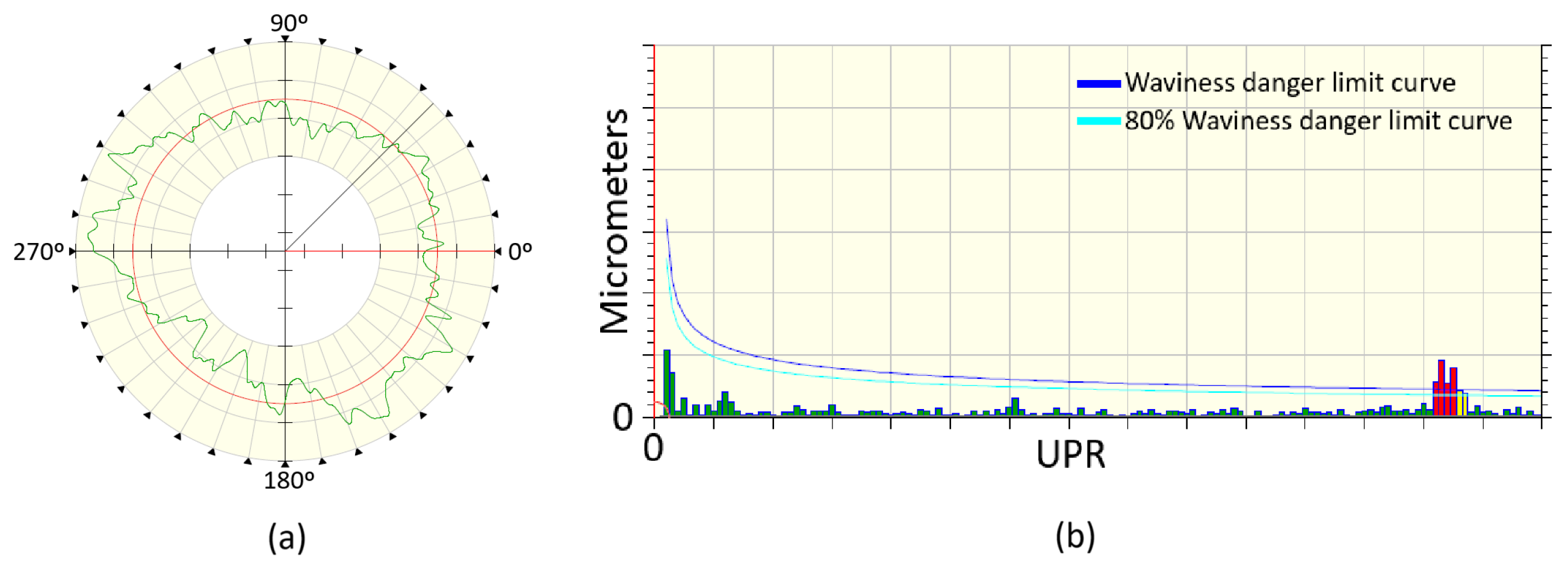
Figure 1a shows the roundness and waviness result obtained during quality control expressed by using polar coordinates. This example comes from a part that clearly exhibits waviness issues.
Figure 1b also displays the frequency content of this part. As observed, certain harmonics exceed the established limits. These thresholds have been defined on the basis of the company’s extensive expertise and experience in the bearing manufacturing sector. The quality control in the lab is time-consuming and shows the potential of improving efficiency by implementing an in-line quality control.
The present work focuses on the grinding process of the inner ring. The yellow framed device is the installed accelerometer for the waviness quality control. It is placed near the machined piece in order to register the components related to piece–tool contact and to minimize the effect of other sources of vibration. The use of accelerometers is motivated by their roughness, low cost and ease of acquisition and installation, as well as their non-intrusive nature in industrial environments. These sensors are widely available and can be integrated in the machine without significant modifications. Furthermore, accelerometers offer high sampling frequencies, which permits a higher resolution in the estimation of the surface quality. In the present application, a sampling frequency of 4 kHz has been used.
3. Waviness Early Detection Algorithm
The waviness algorithm predicts the appearance of this defect in the machined workpiece by using the information from the accelerometer. The approach is fully data-driven and it requires a calibration stage before its use. This calibration and the details of the algorithm are summarized in the next subsections.
3.1. Calibration
The objective of the calibration process is to correlate the measured signal from the accelerometer with the outcome of the geometry quality control shown in
Figure 1b. It essentially estimates a non-parametric description of the transmissivity relating the geometry of the part to the measured acceleration at the part holder. As this transmissivity is affected by the geometry of the piece, the algorithm has to be calibrated for each manufactured part number.
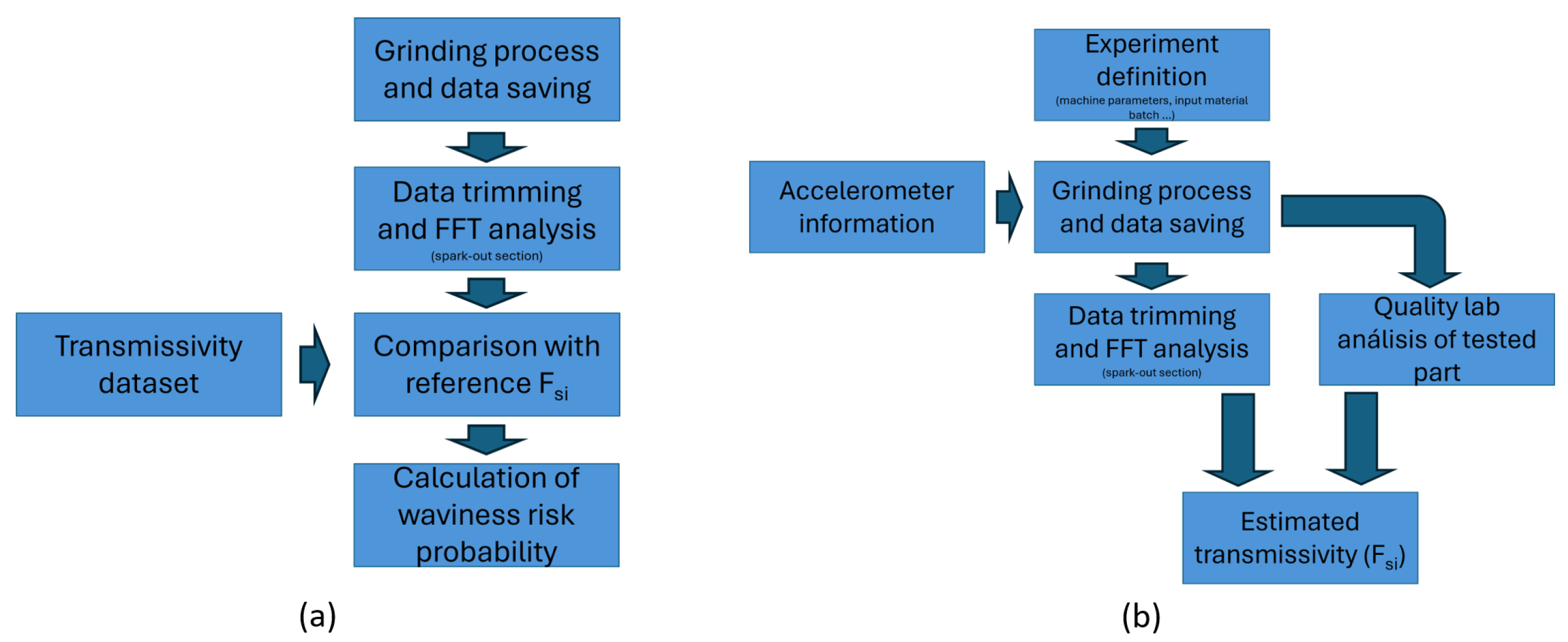
Figure 2a summarizes the process.
For each part number, the transmissivity is affected by the process parameters, the external perturbations (for example, machine vibration and compliance) and the input quality of the raw material. In consequence, it is fundamental to ensure that the collected data reflects real operational conditions and their variability. For this reason, a representative and diverse set of experiments is required to map cases with and without waviness defects. This will improve the robustness of the algorithm.
For each experiment, bearings of the same reference must be machined using different process parameters to generate distinct accelerometer signals. The sensor data is recorded during the process. Subsequently, these parts undergo quality control measurements, where roundness and harmonic graphs are obtained. This way, both the accelerometer signals and the actual quality control results are available for each manufactured part.
The next step is to establish a relationship between the information provided by the accelerometers and the resulting harmonics. To achieve this, it is necessary to relate the time frequency content of the accelerometer signal and the spatial frequency content of the quality report. The relationship between the frequency scale
w (rad/s) and the UPR (Undulation of revolution) scale for a certain part turning speed
(rad/s) can be calculated with the expression below:
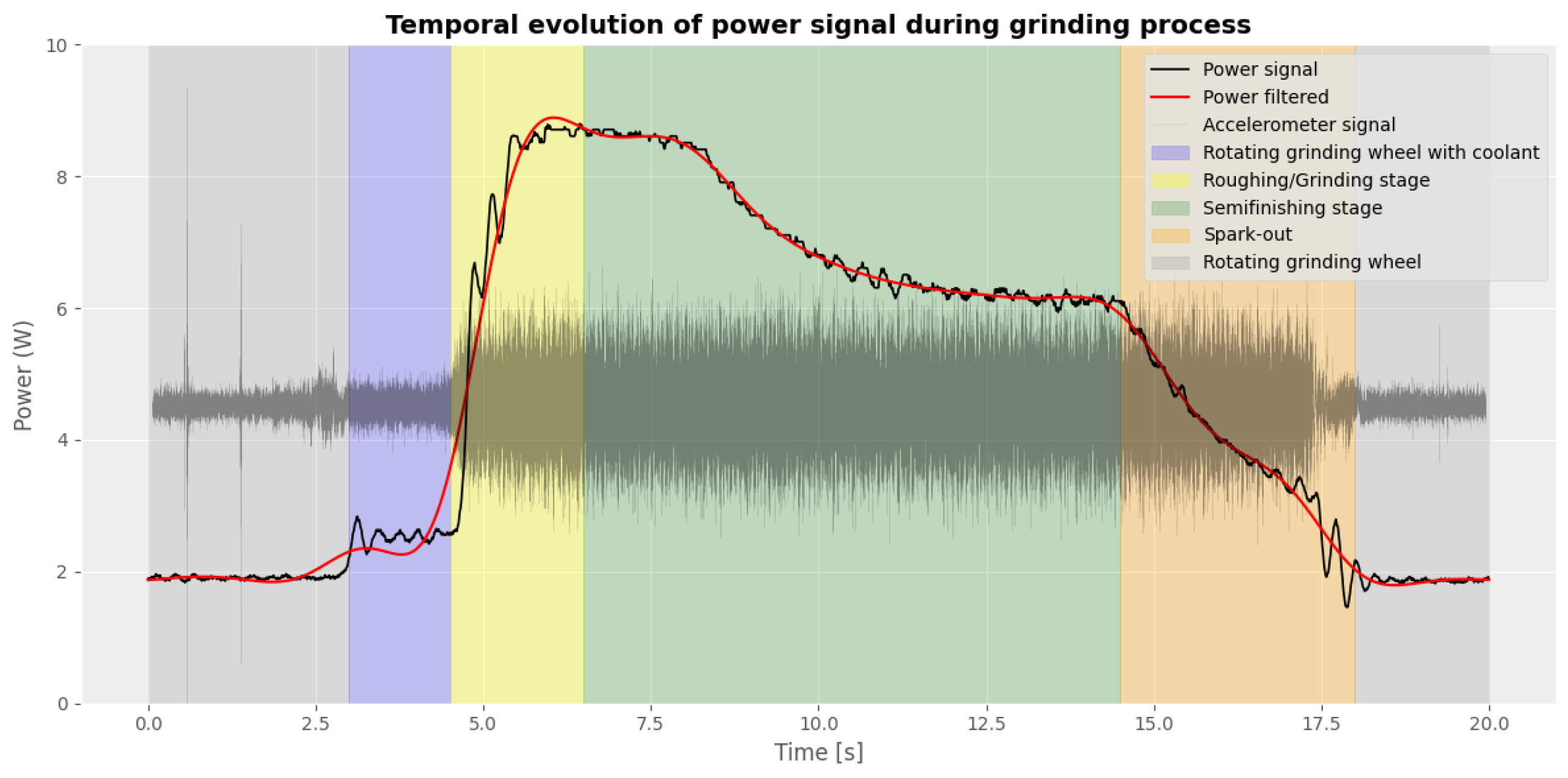
To establish the most accurate relationship possible, the algorithm selects the concluding phase of the signal where the contact between the wheel and the workpiece is still occurring. This section, known as spark-out, is shown in orange in
Figure 3, which illustrates the evolution of the machine power signal throughout the entire grinding process. Spark-out is a critical stage in the grinding process, particularly in plunge grinding cycles, as it significantly influences the surface roughness and dimensional accuracy of the workpiece. During this phase, the grinding wheel remains in contact with the workpiece, allowing for the stabilization of the grinding process and a reduction in surface irregularities [
15,
16]. The algorithm is established to select this section because the surface geometry is almost the final one and it does not greatly change during the process.
Once the spark-out part of the signal is selected, an analysis of its frequencies is carried out up to 500 UPR. This threshold is based on the experience of the company, which has shown that from this point onwards, there is no significant content in the signal related to waviness. Frequencies above this value are considered noise or non-valuable information. The resulting frequencies are compared with those obtained through the original FFT performed by the manual post-manufacturing quality control process. The non-parametric transmissivity representation is obtained by using the expression below:
The result is a gain that relates the frequency content of the accelerometer signal to the quality control harmonics. Each bearing part number subjected to this process will have several
values obtained in different experiments with changing operating conditions.
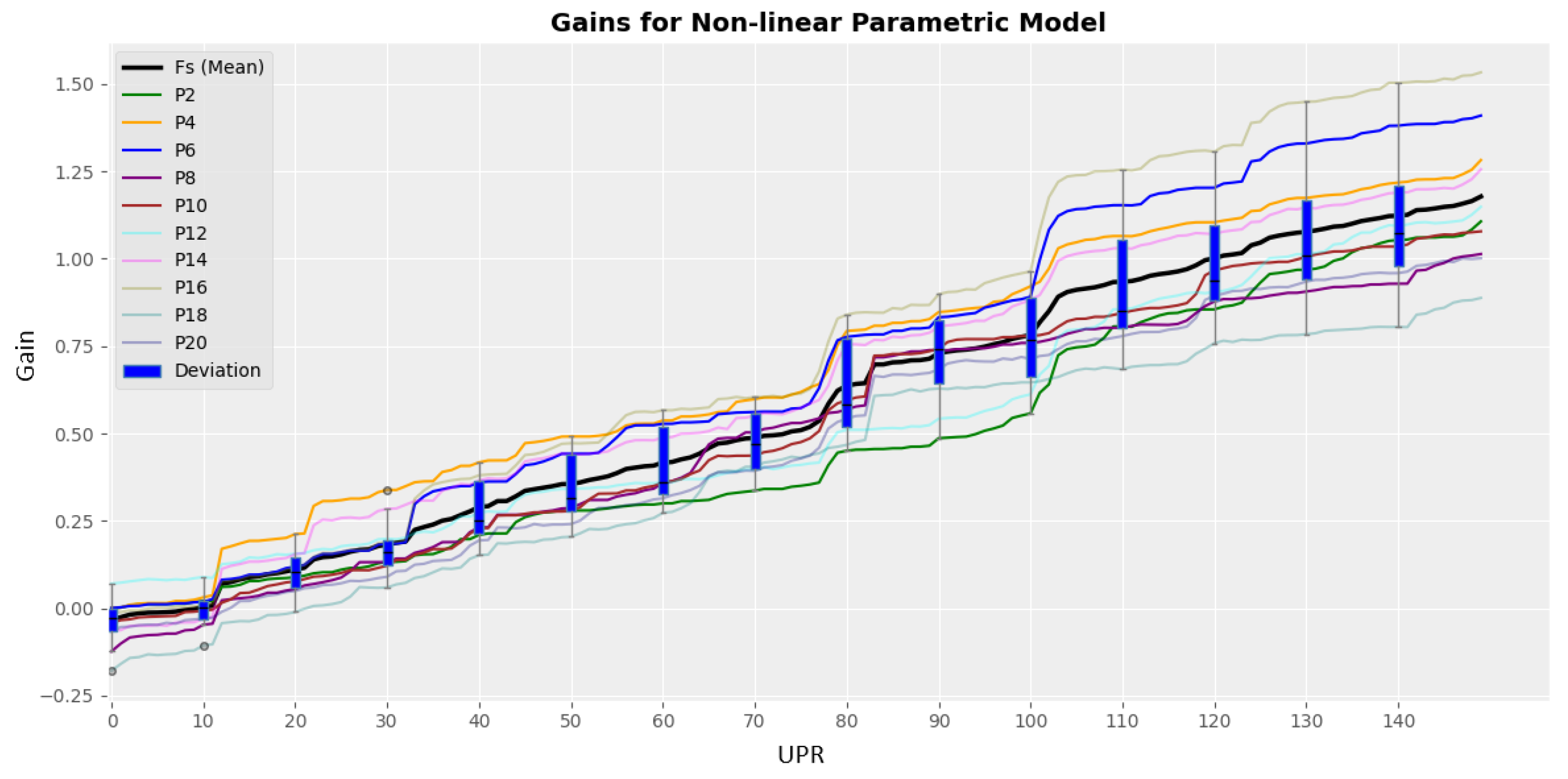
Figure 4 shows some of the
values obtained after evaluating different machined parts, all of which belong to the same bearing part number. These gains differ from one to another since every workpiece is unique, but they all have a common trend. This means that those bearing parts belonging to the same reference have an estimable and predictable relationship between the accelerometer signal and its harmonics.
The result of this identification is a set of gain models, , which are stored and further employed for estimating the result of a quality control process using the accelerometer data. The details of the algorithm are given in the next subsection.
3.2. Waviness Algorithm Description
After calibration of a specific bearing part number, a dataset of transmissivity functions is available, allowing the estimation of the part geometry that gives rise to the measured accelerometer data. This is the starting point for the waviness prediction algorithm that is summarized in
Figure 2b.
During the grinding process, the accelerometer signal is acquired. As mentioned above, it is crucial to accurately identify the portion of the signal corresponding to the spark-out phase. The signal is segmented according to the revolutions of the grinding wheel, which allows for a proper selection of this phase.
To perform this signal processing, it is necessary to know the rotational speed of the workpiece, as it is used for translating the time frequency scale in Hz into the spatial scale in UPR. This is not direct information given by the machining center, because the rotational speed can diverge from the theoretical commanded value. This is caused by the slip of the part because the clamping elements cannot apply excessive fixation force to avoid deforming the workpiece [
17]. In the analyzed machine, the workpiece is secured using a magnetic system. Although this approach eliminates issues related to clamping force, it cannot eliminate the slip of the part. In order to solve this issue, the value of the rotational speed is fine-tuned with an external algorithm which calculates the slip ratio by optimizing the cross-correlation between the signal section corresponding to the last turns of the part and the previous sections.
With the refined workpiece speed, the accelerometer signal corresponding to the spark-out phase is used for evaluating the appearance of waviness. It is filtered with a low-pass filter, keeping only the frequencies under 500 UPR. After that, the FFT of the signal is calculated.
The prediction of the waviness measurement
is conducted by scaling the values
with each discrete gain model
that has been stored previously:
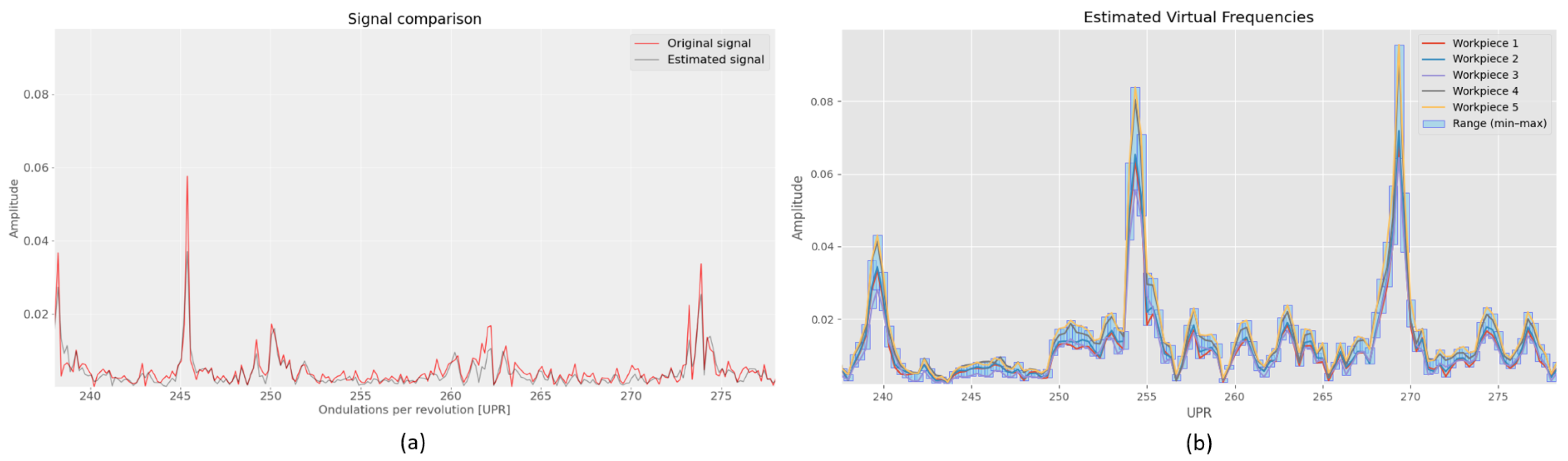
The results of each multiplication represent the harmonic estimation, and are stored and evaluated. In
Figure 5b the harmonic estimations for five different workpieces are shown. Each result is compared against the frequency limits established by the quality standards (
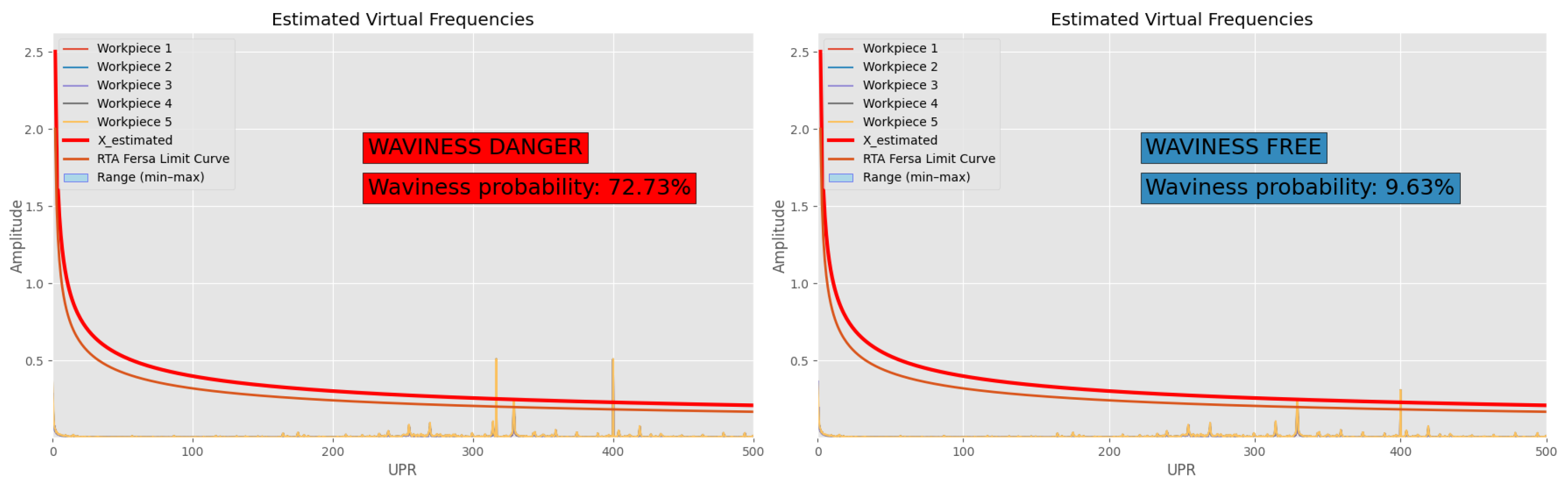
Figure 1b), and the probability of waviness is obtained by evaluating the number of models which predict values over the quality thresholds (
Figure 6):