3.1. SLDV Wavefield Visualizations
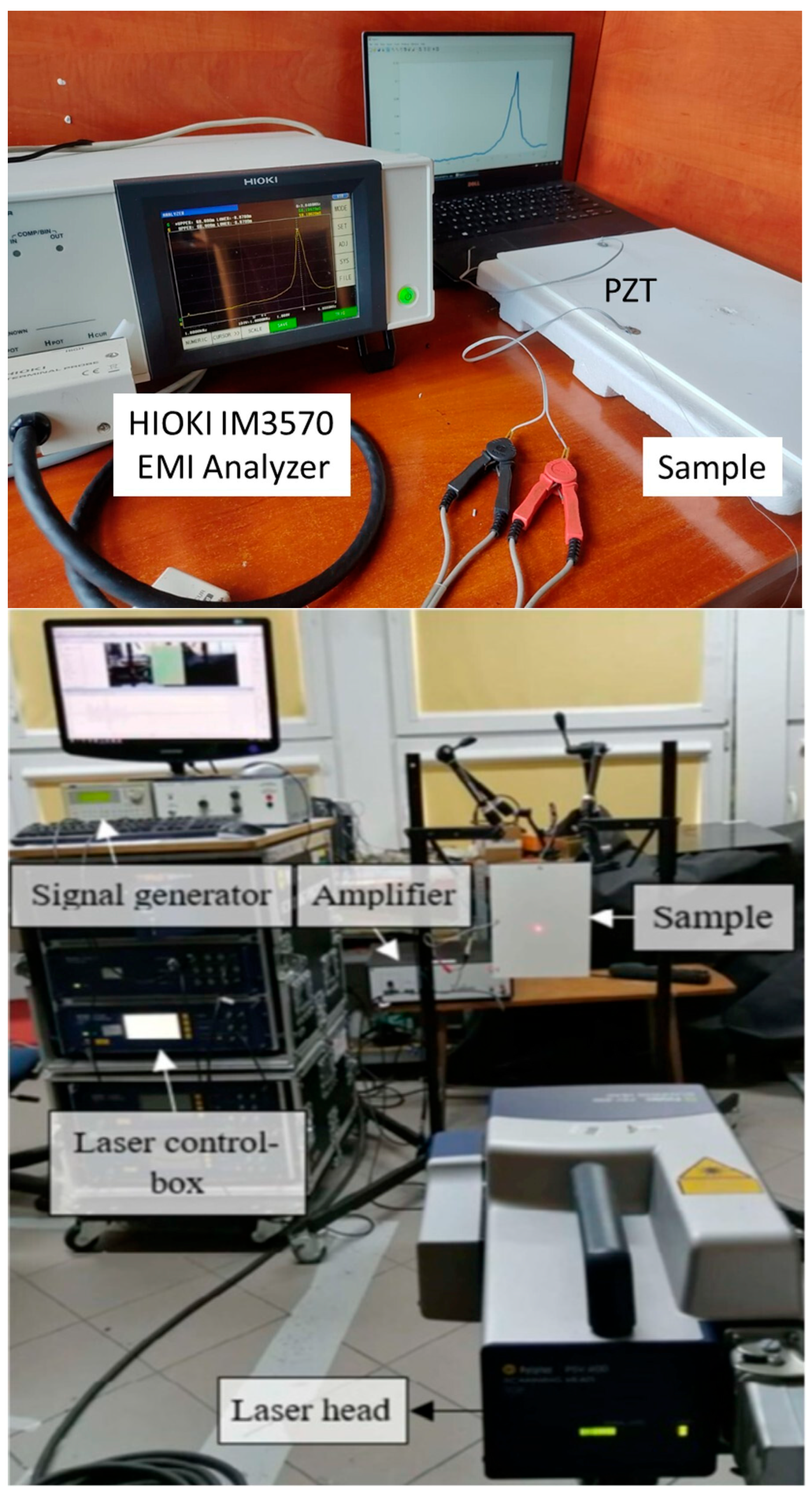
A one-dimensional scanning laser Doppler vibrometer (1D SLDV) was employed to measure the out-of-plane component of wave velocity (v) along the direction of the laser beam reflected from the surface of a structure. This technique enabled the visualization of ultrasonic wave propagation across the surface of the tested specimen.
The frames of the propagating wavefield were processed using wavenumber-based adaptive filtering and signal analysis, following the approach outlined in [
6]. In this method, the out-of-plane velocity field
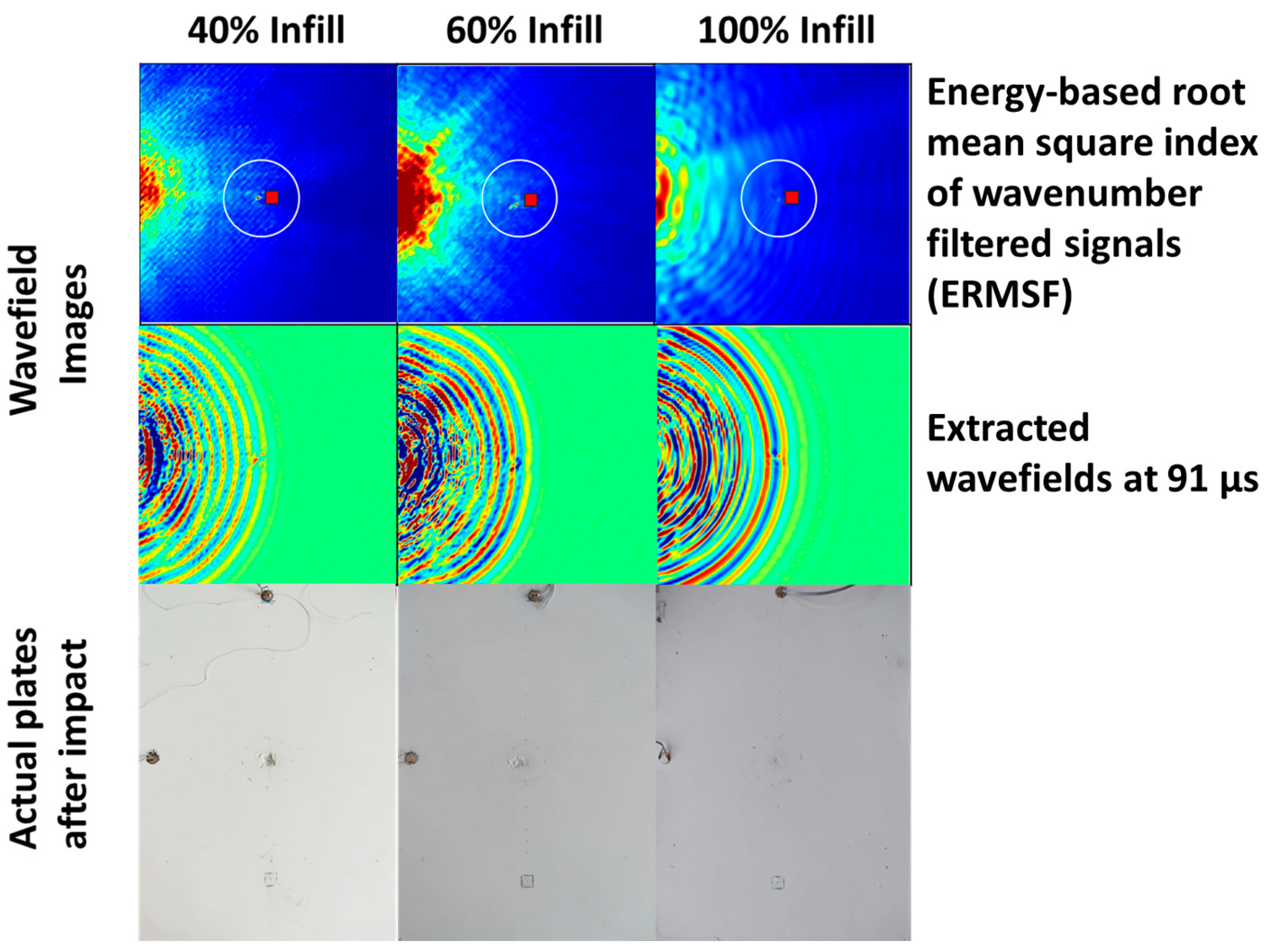
, measured at a dense grid of points using the scanning laser Doppler vibrometer, is first transformed into the frequency–wavenumber domain using a three-dimensional Fourier transform. Wavenumber adaptive filtering is then applied to isolate specific Lamb wave modes, which improves the signal-to-noise ratio by suppressing reflections and undesired wave components. The filtered signals are subsequently transformed back into the time–space domain, where energy-based root mean square indices (ERMSF) are calculated for each spatial point. These indices quantify the local scattering of wave energy due to damage, thus serving as a damage-sensitive feature. To account for amplitude reduction caused by geometric spreading and material damping, attenuation compensation is applied in the time domain, independent of propagation direction. The resulting ERMSF values are assembled into spatial maps, where localized increases in index magnitude correspond to damage regions. For consistency, all maps are displayed with a uniform color scale (
Figure 4), thereby enabling direct comparison across plates with different infill densities. The main objective of this process is to amplify damage-related features and provide clear visual contrast between intact and damaged zones.
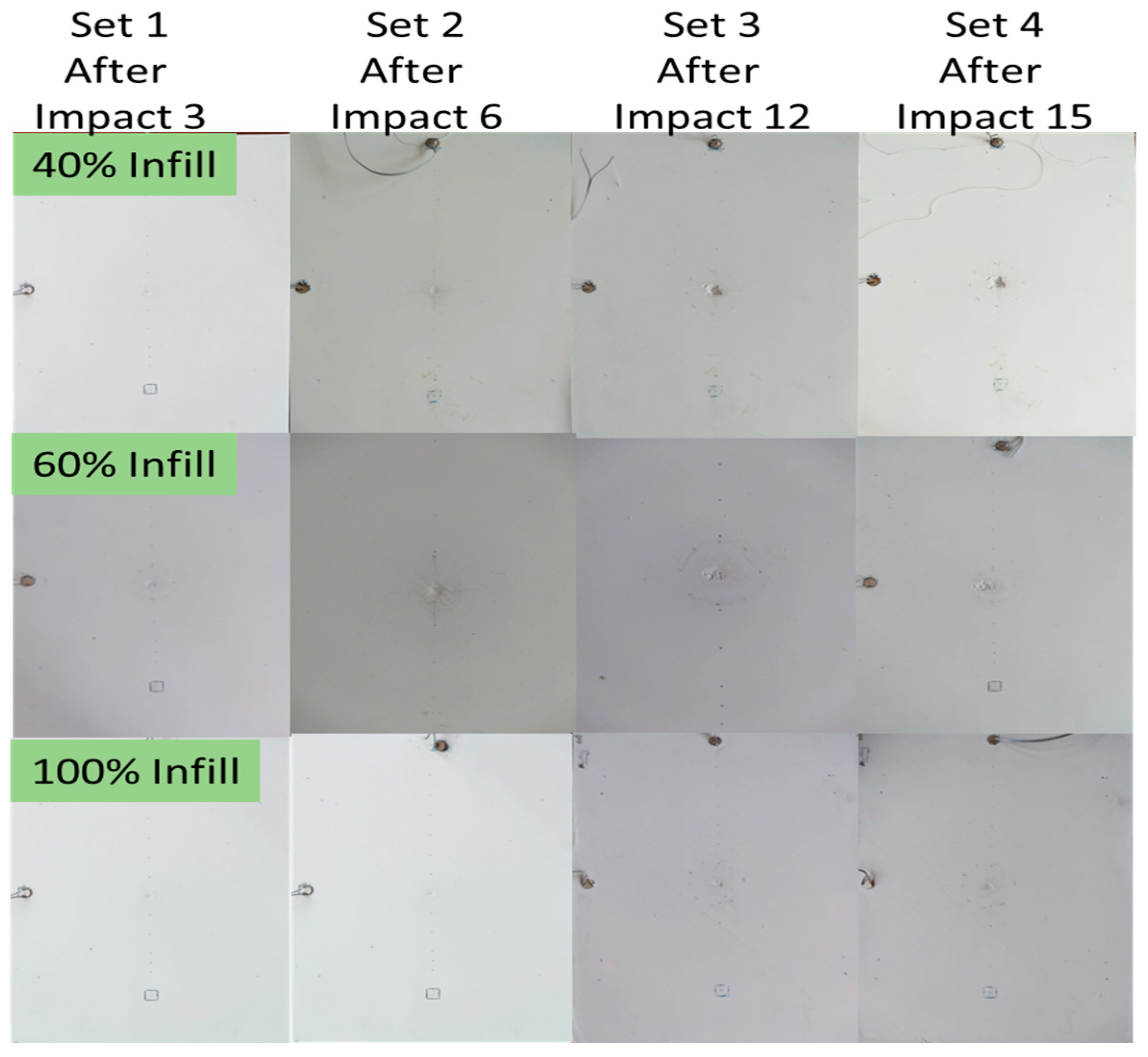
Given that Stage 4 of impact loading resulted in the most significant damage across all PLA specimens, wavefield visualizations and corresponding waveform patterns at approximately 91 µs (the time when the guided wavefront approaches the impact site) are presented in
Figure 4 for detailed comparison. As shown earlier in
Figure 3, the extent of physical damage varies considerably across specimens with different infill densities, despite being subjected to the same impact energy. This variation is also reflected in the full-field SLDV data.
In the 40% infill specimen, although the indentation is visibly the most severe (2.7 mm deep), the ability to localize damage using SLDV becomes challenging. The low infill density leads to increased scattering and attenuation of wave energy, which diminishes the clarity of wavefront reflections and interferometric patterns associated with damage zones. The disrupted wave propagation reduces contrast in the amplitude-based maps, thereby masking the damage signature. Conversely, in the 60% infill sample, the moderate internal density provides a better balance between structural stiffness and wave transmission efficiency. As a result, the impact-induced discontinuities are more distinctly visible in the SLDV data, with localized amplitude drop and waveform distortion near the damaged region indicating the presence of structural degradation. In the case of the 100% infill specimen, despite only a minor indentation of 0.4 mm observed post-impact, the SLDV measurements clearly capture the subtle wave disturbances at the impact site. The superior structural integrity and consistent material distribution in this specimen allow the guided wave to propagate with minimal distortion, thereby enhancing the detectability of even small damage features. This highlights that higher infill not only improves mechanical resistance but also enables better damage localization through wave-based diagnostic methods.
3.2. Damage Metrics
The damage evolution in PLA specimens subjected to progressive impact loading was assessed using a multimodal monitoring approach combining guided wave propagation (SLDV) and electrical impedance (EMI) analyses. The results, detailed across three key damage-sensitive metrics as normalized root mean squared (RMS) amplitude, root mean square deviation (RMSD), and mean absolute phase deviation (MAPD), highlight the role of infill density in governing the mechanical resilience and damage detectability of the structures.
3.2.1. Normalized RMS Amplitude
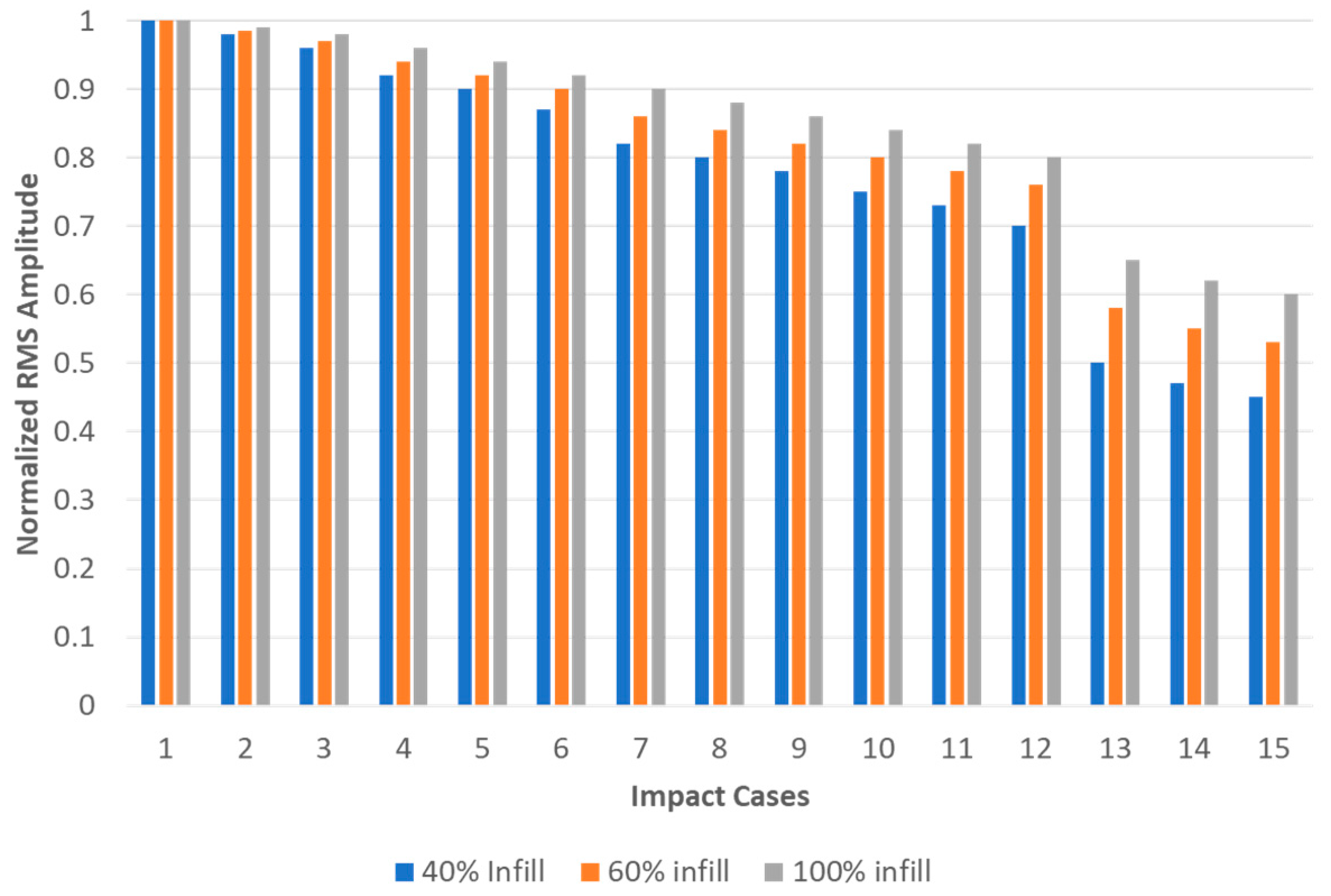
Normalized RMS amplitude, extracted from SLDV-acquired wavefields, serves as a sensitive measure of signal integrity and energy transport. A pronounced amplitude reduction is observed for all infill densities as impact severity increases, but the rate and extent of attenuation are strongly dependent on the infill level. For a conductance signal with damage
over n frequency points, normalized RMS can be calculated against healthy H (without impact) conductance signal as,
The waveforms were selected near the impact location for all specimens (shown as red dots in
Figure 4). The 40% infill specimen exhibits a steep reduction, with the normalized amplitude dropping to 45% of its initial value by Impact 15, as shown in
Figure 5. This substantial energy loss is attributed to the accumulation of internal damage mechanisms such as matrix cracking, void growth, and delamination, all of which act as scattering and absorbing sites for the propagating wave.
In contrast, the 100% infill sample retains around 60% of its initial amplitude, indicating that the denser internal architecture provides a more continuous load path and impedes the development of major scattering centers. This difference is especially evident in the nonlinear progression: while the initial impacts produce minor reductions in amplitude, later stages show disproportionately larger losses, particularly in the lower infill specimen. This suggests that damage does not accumulate linearly, and once a critical threshold is exceeded, especially in less dense structures, the mechanical integrity rapidly degrades.
3.2.2. Root Mean Square Deviation
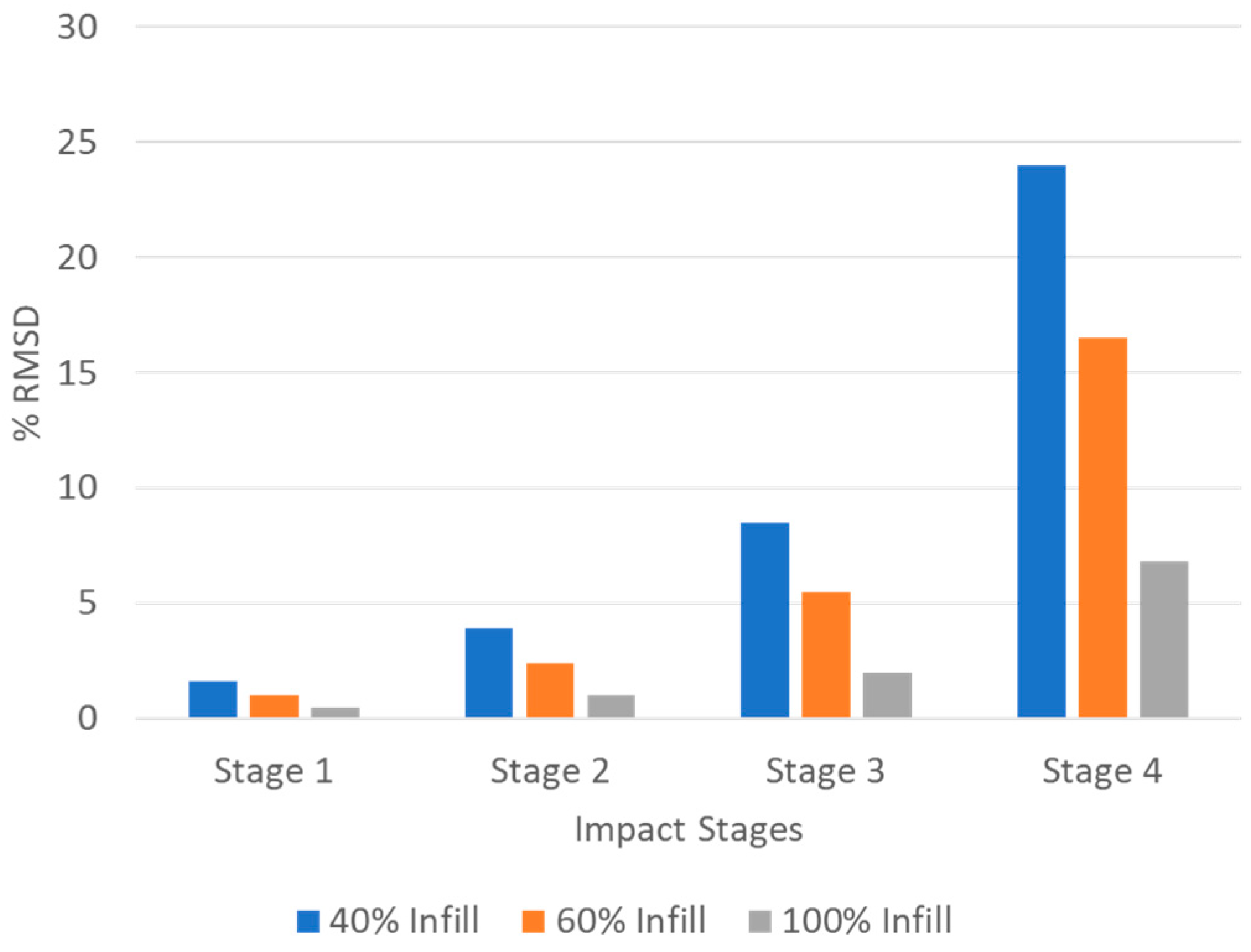
The RMSD computed from EMI conductance signatures further supports the wave-based observations. The RMSD values increase monotonically with impact severity across all infill levels, but with markedly different magnitudes. The 40% infill specimen shows an RMSD of 24% at Stage 4, indicating substantial deviation from the baseline, driven by global stiffness reduction and altered boundary conditions caused by progressive internal failure, as shown in
Figure 6. The RMSD for the conductance signals of damaged and healthy specimens is calculated as,
where n is the number of frequency spectrum samples, H is the healthy state conductance signal, and D is the damaged state conductance signal after impact.
In contrast, the 100% infill sample remains below 7%, even after high cumulative energy input (411 J). This limited deviation aligns with the smaller amplitude loss, reaffirming the mechanical robustness of the dense infill structure. The RMSD pattern emphasizes that electrical impedance methods are effective in capturing not only localized damage but also global system-level degradation, making them a valuable complement to wave-based methods. The sharp contrast between the RMSD trends of 40% and 100% infill specimens underscores the critical role of internal density in governing structural response under repeated impact.
3.2.3. MAPD
The MAPD metric tracks the deviation in phase angle and is particularly sensitive to changes in structural stiffness and the emergence of nonlinear dynamics. The MAPD for the conductance signals of damaged and healthy specimens is calculated as,
where n is the number of frequency spectrum samples, H is the healthy state conductance signal, and D is the damaged state conductance signal after impact.
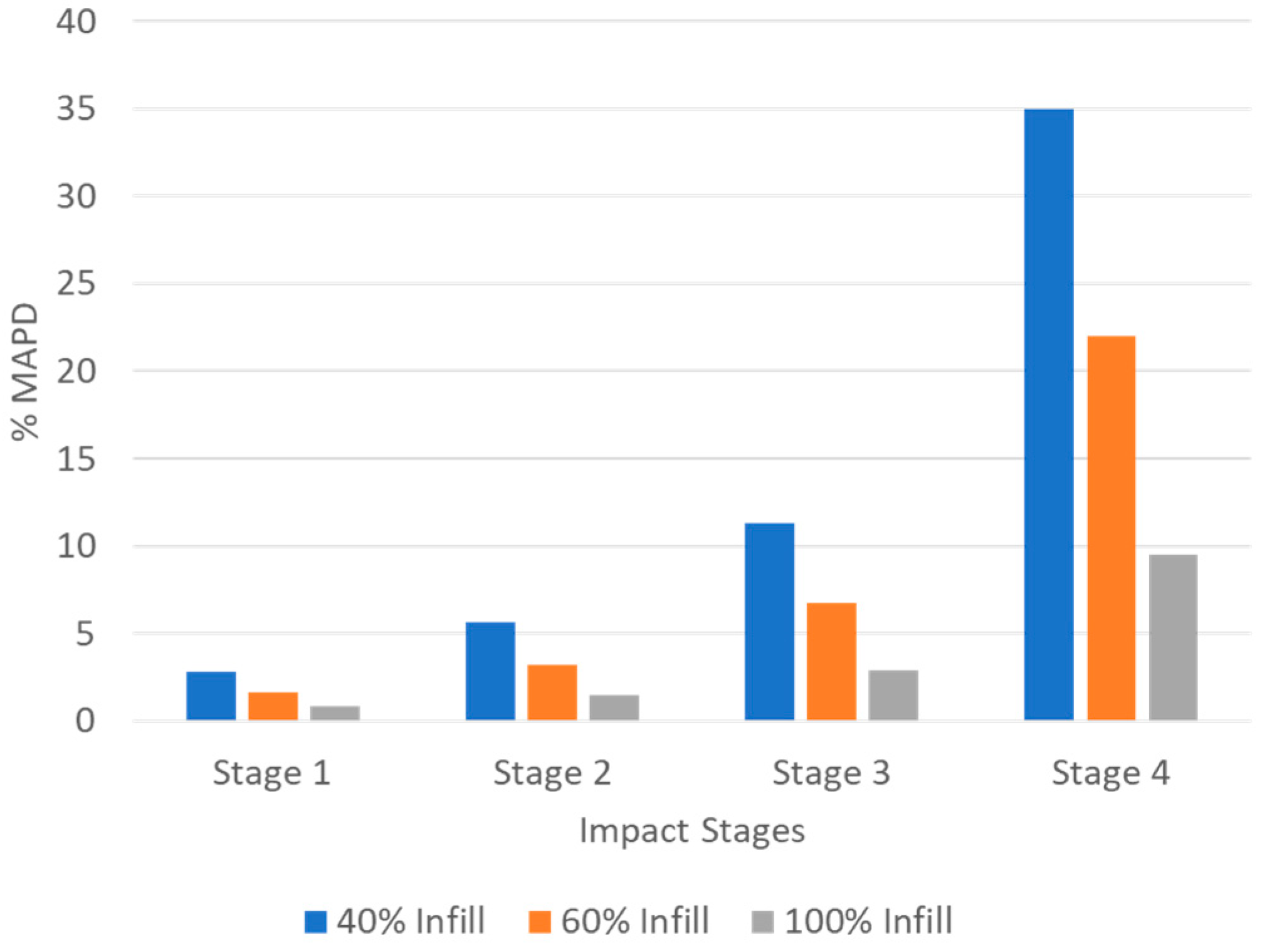
A sharp rise in MAPD to 35% is observed in the 40% infill specimen at Stage 4, reflecting significant alteration in the dynamic stiffness and possible boundary condition changes due to local softening, as shown in
Figure 7. This is consistent with the visible 2.7 mm indentation observed in the specimen and aligns with both RMSD and wave amplitude observations, together conclusive of severe structural compromise.
The 100% infill specimen shows a MAPD increase to only 10%, indicating limited phase distortion and retention of the original structural response. The relatively lower deviation further supports the idea that the dense infill matrix prevents the development of large, stiffness-altering damage modes. Importantly, the nonlinear growth of MAPD across impact stages, particularly in the 40% infill specimens, arises from the complex redistribution of internal stresses and geometry-induced anisotropy in the porous FDM lattice. As impacts progress, the thin PLA filaments within low-infill regions undergo localized buckling, filament fracture, and collapse of internal voids. These mechanisms cause irregular variations in local stiffness and wave speed, leading to abrupt phase shifts in the EMI response. This nonlinear MAPD evolution is, therefore, not just a function of surface indentation but a signature of distributed internal reconfiguration of the printed architecture under cumulative impact loading.