Multi-Emitter Infrared Sensor System for Reliable Near-Field Object Positioning †

Abstract
1. Introduction
1.1. Background on Infrared Proximity Sensing
1.1.1. Time-of-Flight IR Sensors
1.1.2. Reflection Intensity Type Active IR Sensors
1.2. Positioning with Infrared Proximity Sensors
2. Materials and Methods
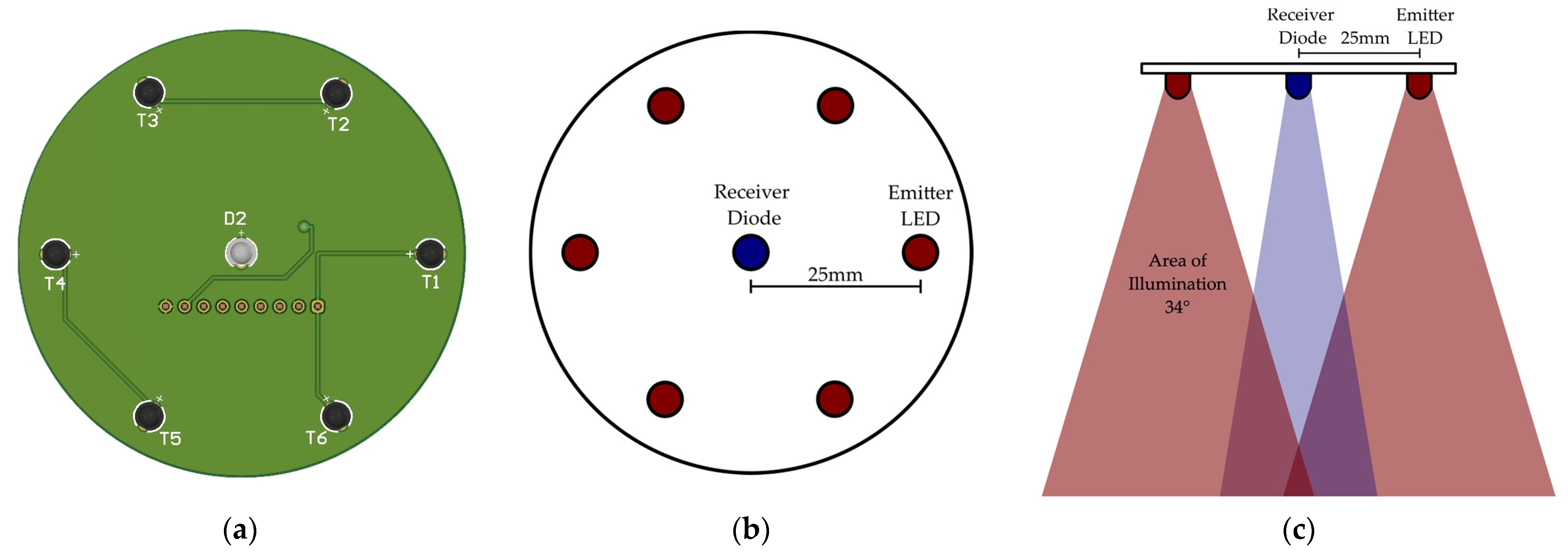
2.1. Infrared Emitter and Receiver Photodiode
2.2. IR Emitter Driver
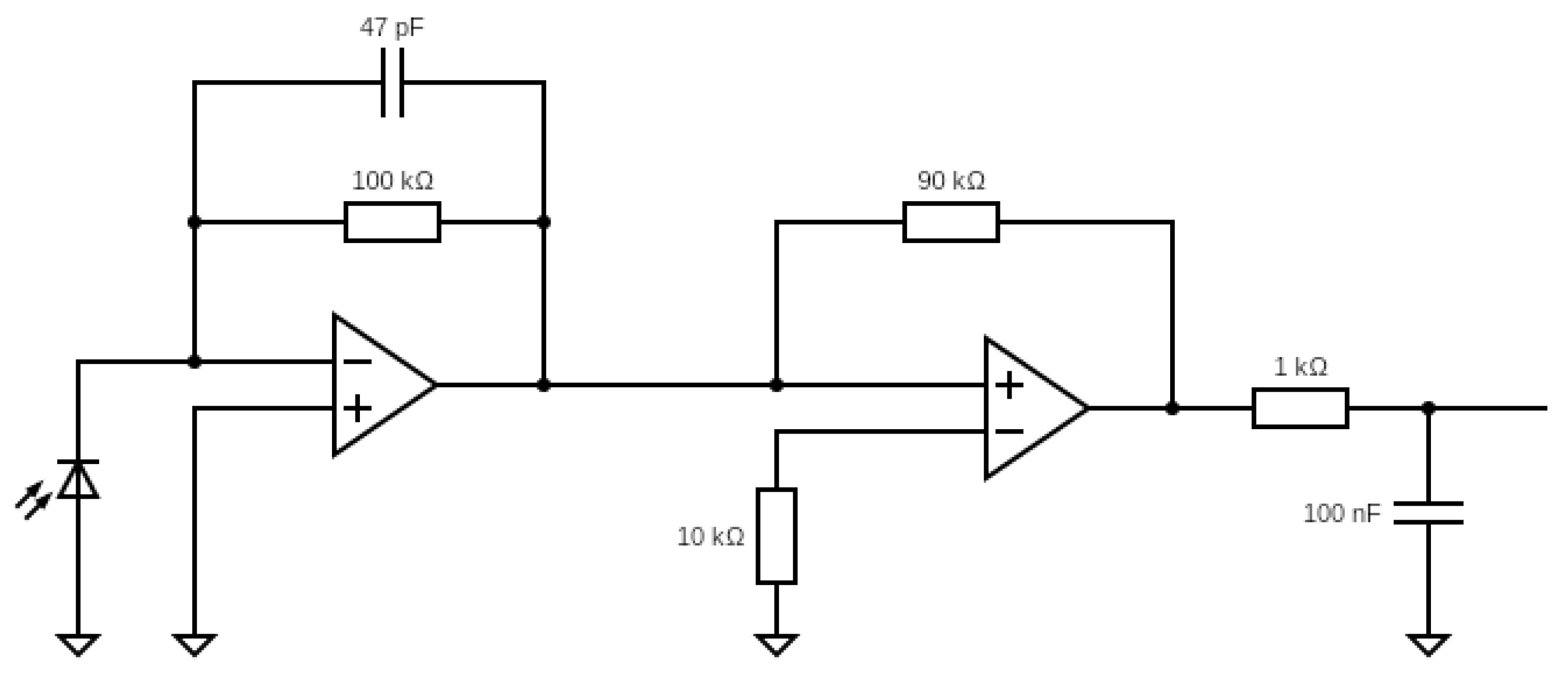
2.3. IR Receiver Circuit
2.4. IR Receiver Value Acquisition
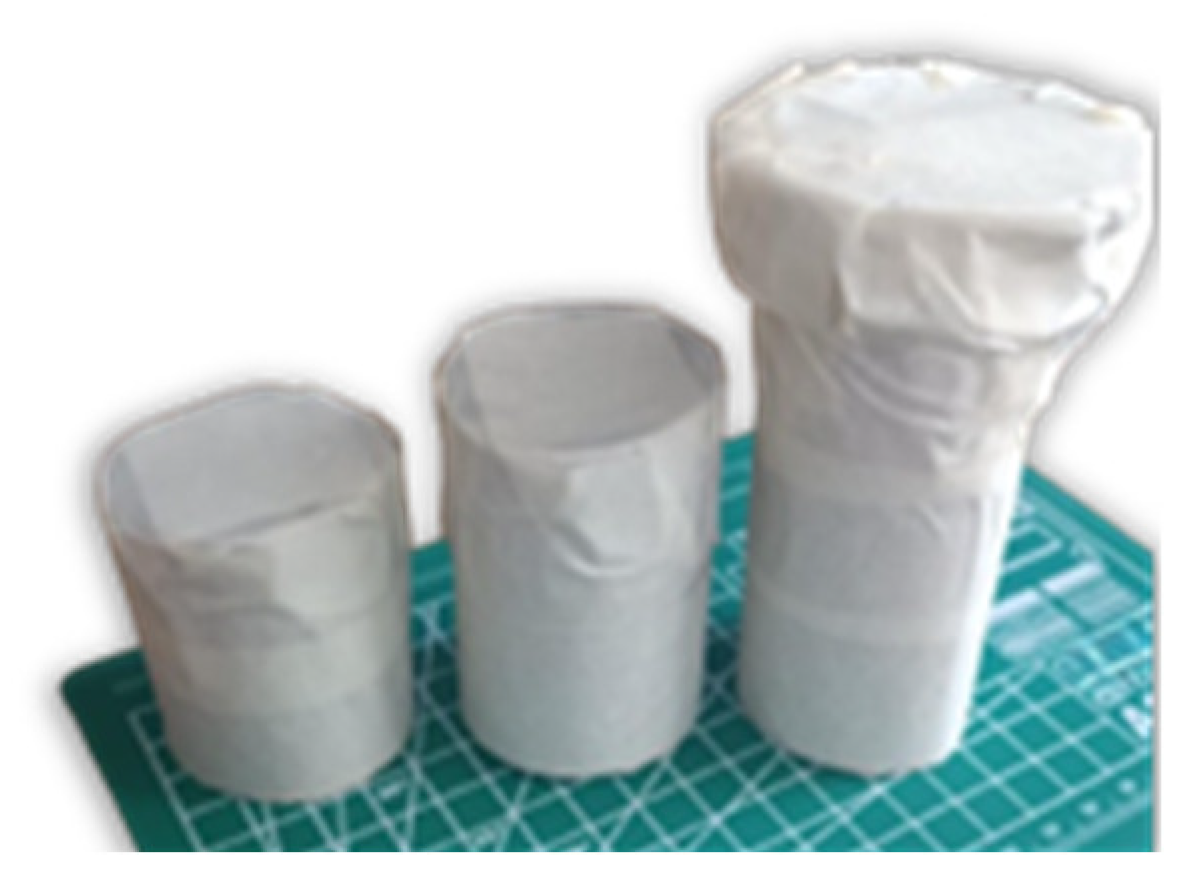
2.5. Dataset Preparation
2.6. Model Development and Training
2.6.1. Data Partitioning and Preprocessing
2.6.2. Coordinate Regression
- Ridge Regression with z-score standardization and regularization strength α = 50.
- Multi-Output Random Forest Regressor (n = 400, min. split size = 4 samples).
- Multi-Output Gradient Boosting Regressor (n = 300, rate = 0.05, max. depth = 3).
- Multi-Output XGBoost Regressor (n = 300, rate = 0.05, max. depth = 3).
2.6.3. Cross-Section Classification
- Logistic Regression (imax = 500);
- Random Forest Classifier (n = 400, min. split size = 4 samples);
- Gradient Boosting Classifier (n = 300, rate = 0.05, max. depth = 3).
2.6.4. Height Regression
2.6.5. Final Model Training and Testing
3. Results
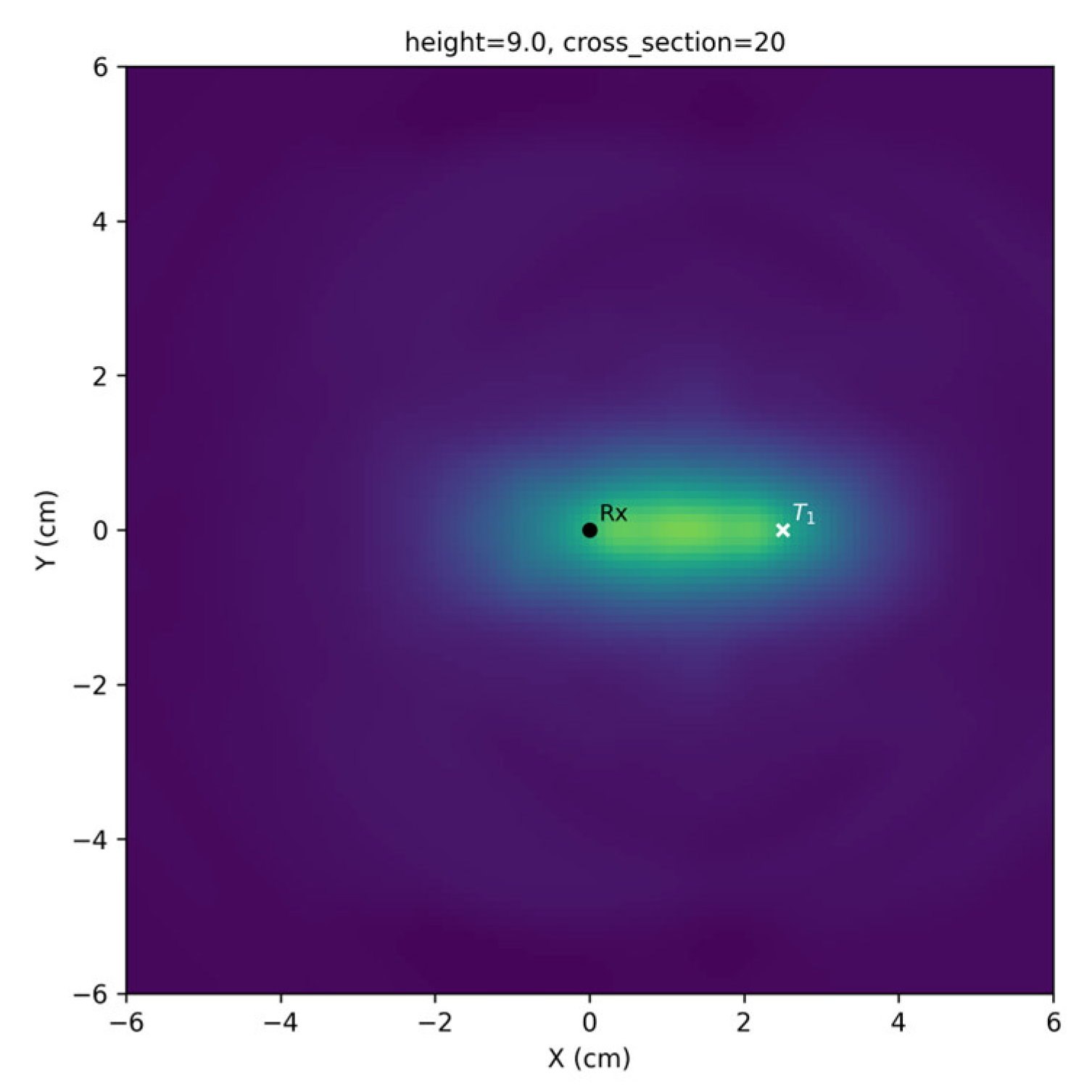
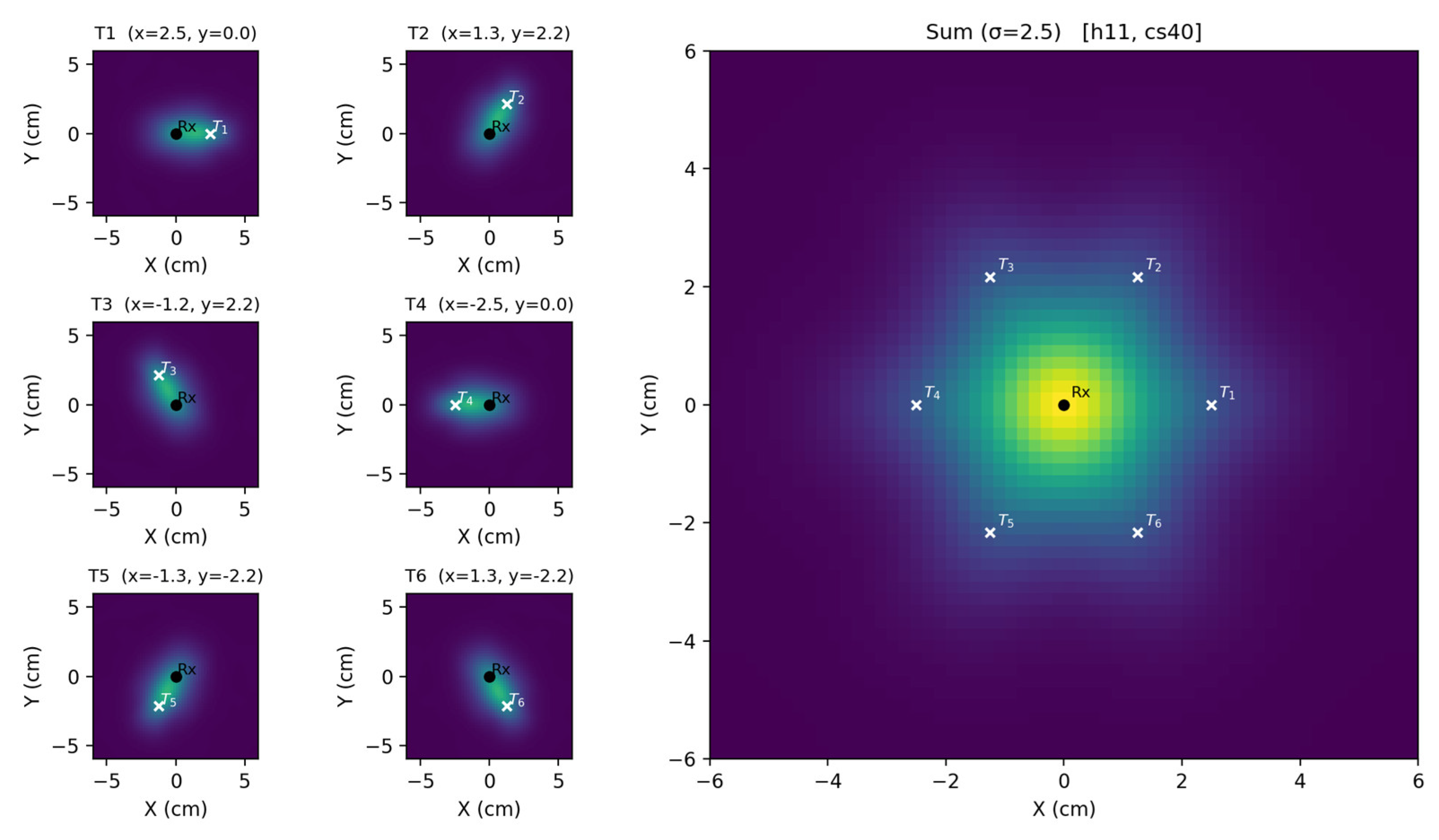
3.1. Dataset and Exploratory Checks
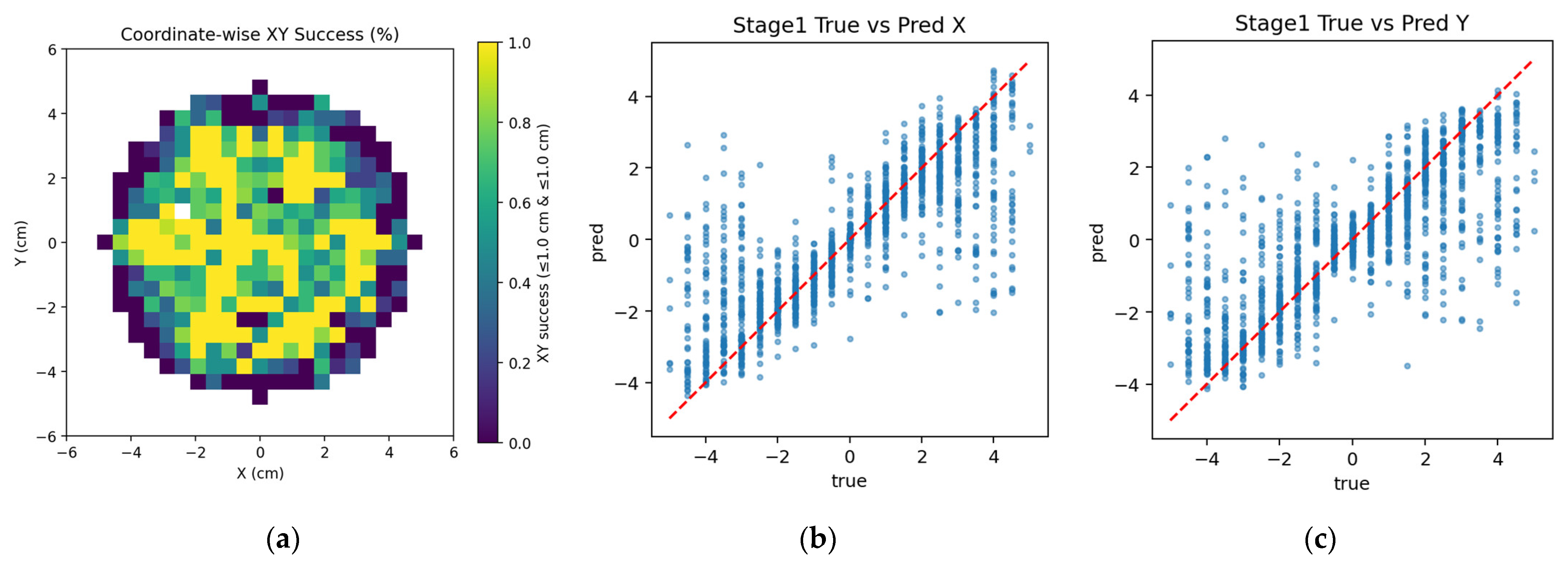
3.2. Coordinate Regression
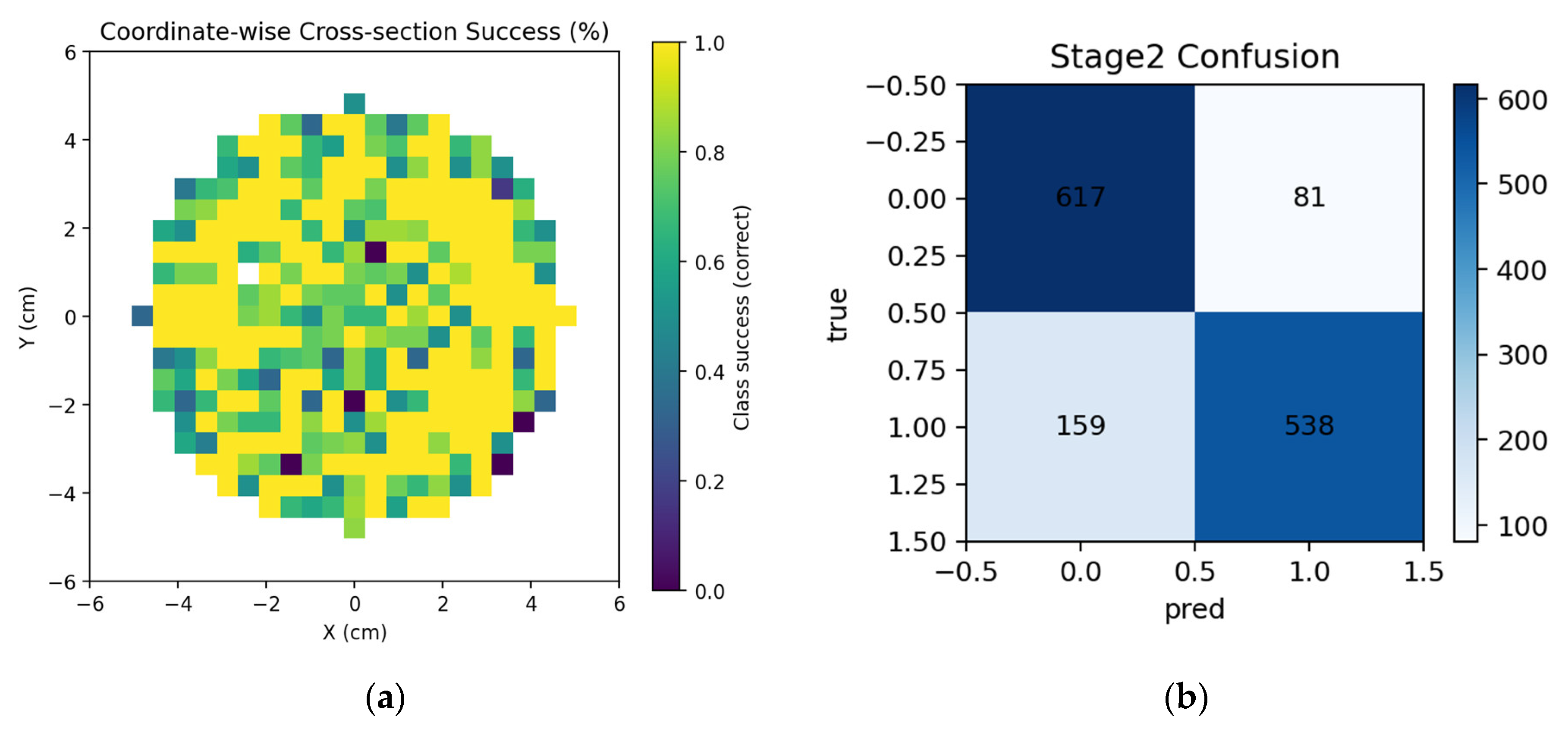
3.3. Cross-Section Classification
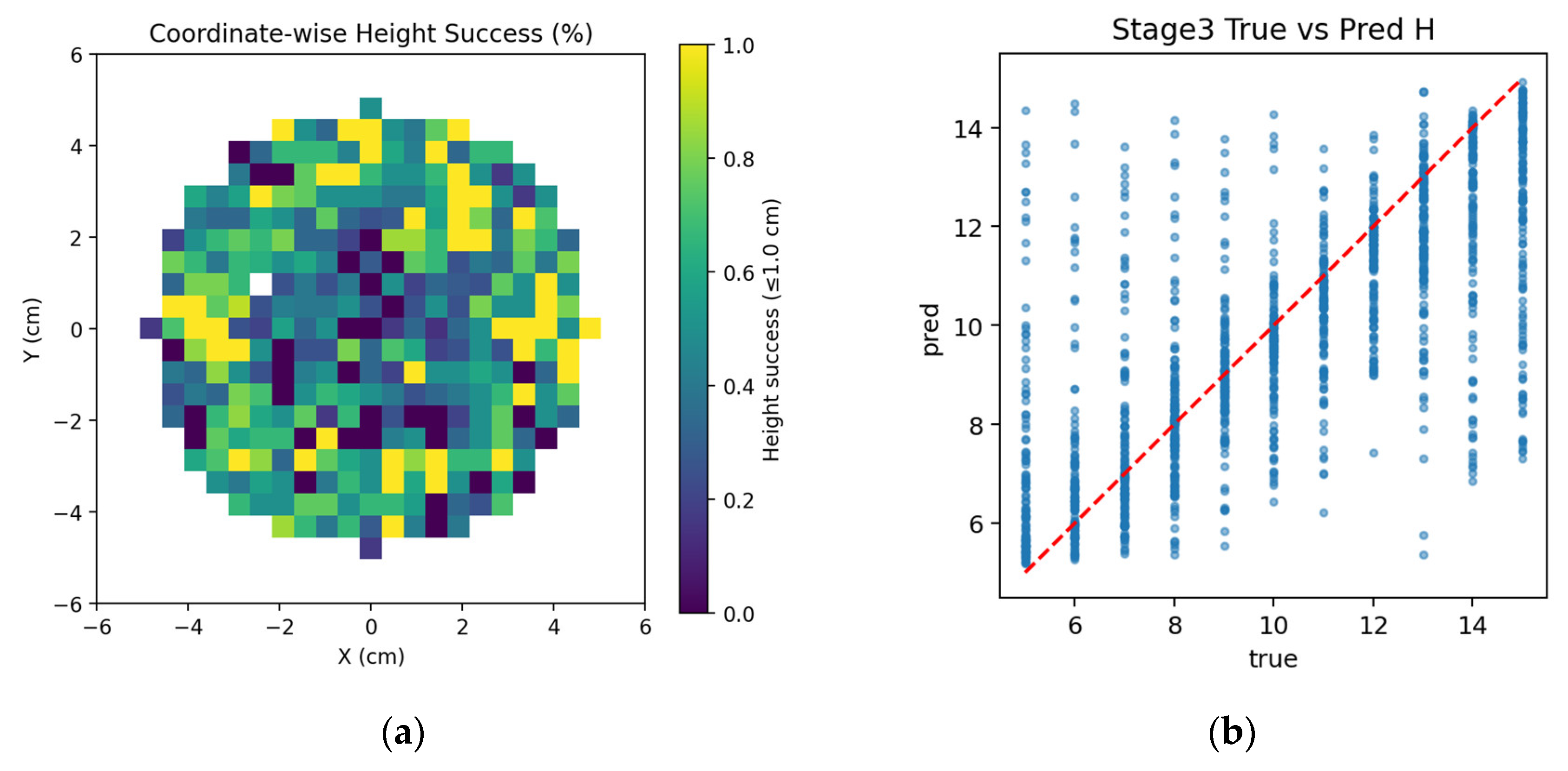
3.4. Height Regression
4. Conclusions
Limitations
5. Discussion
Funding
Institutional Review Board Statement
Informed Consent Statement
Data Availability Statement
Acknowledgments
Conflicts of Interest
References
- Kejık, P.; Kluser, C.; Bischofberger, R.; Popovic, R.S. A Low-Cost Inductive Proximity Sensor for Industrial Applications. Sens. Actuators A Phys. 2004, 110, 93–97. [Google Scholar] [CrossRef] [Scilit]
- Thakare, A.; Bhagat, G.; Indulkar, C.; Kale, P.; Powalkar, A. A Survey of Proximity and Range Sensing Technologies for Reliable Distance Estimation. In Congress on Control, Robotics, and Mechatronics; Springer: Singapore, 2024; pp. 23–38. [Google Scholar] [CrossRef] [Scilit]
- Everett, H.R.; Flynn, A. A Programmable Near-Infrared Proximity Detector for Robot Navigation. In Mobile Robots I; SPIE: Bellingham, WA, USA, 1987. [Google Scholar] [CrossRef] [Scilit]
- Um, D.; Ryu, D.; Kal, M. Multiple Intensity Differentiation for 3-D Surface Reconstruction with Mono-Vision Infrared Proximity Array Sensor. IEEE Sens. J. 2011, 11, 3352–3358. [Google Scholar] [CrossRef] [Scilit]
- Yang, M. Feedback Controlled Infrared Proximity Sensing System. Measurement 2015, 69, 81–86. [Google Scholar] [CrossRef] [Scilit]
- Frey, L.; Marty, M.; Andre, S.; Moussy, N. Enhancing Near-Infrared Photodetection Efficiency in SPAD with Silicon Surface Nanostructuration. IEEE J. Electron Devices Soc. 2018, 6, 392–395. [Google Scholar] [CrossRef]
- Chen, E.-C.; Shih, C.-Y.; Dai, M.-Z. Polymer Infrared Proximity Sensor Array. IEEE Trans. Electron Devices 2011, 58, 1215–1220. [Google Scholar] [CrossRef] [Scilit]
- Kuttner, A.; Hauser, M.; Zimmermann, H.; Hofbauer, M. Highly Sensitive Indirect Time-of-Flight Distance Sensor with Integrated Single-Photon Avalanche Diode in 0.35 Μm CMOS. IEEE Photonics J. 2022, 14, 6835806. [Google Scholar] [CrossRef] [Scilit]
- Niclass, C.; Soga, M.; Matsubara, H.; Ogawa, M.; Kagami, M. A 0.18-µm CMOS SoC for a 100-m-Range 10-Frame/s 200 × 96-Pixel Time-of-Flight Depth Sensor. IEEE J. Solid-State Circuits 2014, 49, 315–330. [Google Scholar] [CrossRef] [Scilit]
- Rahman, A. Precision and Accuracy of Ultrasonic and Infrared Laser ToF IoT Sensors. J. Inform. Telecommun. Eng. 2025, 8, 219–226. [Google Scholar]
- Ismail, O. 3D Head Tracking and Gesture Recognition Using an 8-By-8 Array of Infrared Sensors. Doctoral Dissertation, Technische Universität Wien, Vienna, Austria, 2024. [Google Scholar] [CrossRef]
- Liu, Z.; Xu, X.; Mamishev, M.; Mamishev, A.V. Sensor Fusion for Non-Intrusive Adaptive Distancing of Visually Impaired Users. In Proceedings of the 2024 IEEE 20th International Conference on Body Sensor Networks (BSN), Chicago, IL, USA, 15–17 October 2024; pp. 1–4. [Google Scholar] [CrossRef] [Scilit]
- Corsi, C. History Highlights and Future Trends of Infrared Sensors. J. Mod. Opt. 2010, 57, 1663–1686. [Google Scholar] [CrossRef] [Scilit]
- Rogalski, A. Infrared Detectors: An Overview. Infrared Phys. Technol. 2002, 43, 187–210. [Google Scholar] [CrossRef] [Scilit]
- Kipp, S.; Mistele, B.; Urs, S. The Performance of Active Spectral Reflectance Sensors as Influenced by Measuring Distance, Device Temperature and Light Intensity. Comput. Electron. Agric. 2014, 100, 24–33. [Google Scholar] [CrossRef] [Scilit]
- Benet, G.; Blanes, F.; Simó, J.E.; Pérez, P. Using Infrared Sensors for Distance Measurement in Mobile Robots. Robot. Auton. Syst. 2002, 40, 255–266. [Google Scholar] [CrossRef] [Scilit]
- Pavlov, V.; Ruser, H.; Horn, M. Model-Based Object Characterization with Active Infrared Sensor Array. In Proceedings of the 2007 IEEE Sensors, Atlanta, GA, USA, 28–31 October 2007; pp. 360–363. [Google Scholar] [CrossRef] [Scilit]
- Korba, L.; Elgazzar, S.; Welch, T. Active Infrared Sensors for Mobile Robots. IEEE Trans. Instrum. Meas. 1994, 43, 283–287. [Google Scholar] [CrossRef] [Scilit]
- Odysseus, A.A.; Anmol, S.M.; Kumar, S.; Sahin, F. A Time-of-Flight On-Robot Proximity Sensing System to Achieve Human Detection for Collaborative Robots. In Proceedings of the 2019 IEEE 15th International Conference on Automation Science and Engineering (CASE), Vancouver, BC, Canada, 22–26 August 2019. [Google Scholar] [CrossRef] [Scilit]
- Fasolino, A.; Vitolo, P.; Liguori, R.; Benedetto, L.D.; Rubino, A.; Gian, D.L.; Pau, D. Object Classification Using Ultra Low Resolution Time-of-Flight Sensor and Tiny Convolutional Neural Network. In Proceedings of the 2024 IEEE Sensors Applications Symposium (SAS), Naples, Italy, 23–25 July 2024; pp. 1–6. [Google Scholar] [CrossRef] [Scilit]
- Himmelsbach, U.B.; Wendt, T.M.; Nikolai, H.; Gawron, P. Single Pixel Time-of-Flight Sensors for Object Detection and Self-Detection in Three-Sectional Single-Arm Robot Manipulators. In Proceedings of the 2019 Third IEEE International Conference on Robotic Computing (IRC), Naples, Italy, 25–27 February 2019. [Google Scholar] [CrossRef] [Scilit]
- Novotny, P.M.; Ferrier, N.J. Using Infrared Sensors and the Phong Illumination Model to Measure Distances. In Proceedings of the Proceedings 1999 IEEE International Conference on Robotics and Automation (Cat. No. 99CH36288C), Detroit, MI, USA, 10–15 May 1999. [Google Scholar] [CrossRef] [Scilit]
- Ruser, H. Object Recognition with a Smart Low-Cost Active Infrared Sensor Array. In Proceedings of the 1st International Conference on Sensing Technology, Palmerston North, New Zealand, 21–23 November 2005. [Google Scholar]
- Tar, Á.; Cserey, G. Object Outline and Surface-Trace Detection Using Infrared Proximity Array. IEEE Sens. J. 2011, 11, 2486–2493. [Google Scholar] [CrossRef] [Scilit]
- Sabatini, A.M.; Genovese, V.; Guglielmelli, E.; Mantuano, A.; Ratti, G.; Dario, P. A Low-Cost, Composite Sensor Array Combining Ultrasonic and Infrared Proximity Sensors. Available online: https://ieeexplore.ieee.org/abstract/document/525872 (accessed on 21 December 2025).
- Zhao, Z.-Q.; Zheng, P.; Xu, S.-T.; Wu, X. Object Detection with Deep Learning: A Review. IEEE Trans. Neural Netw. Learn. Syst. 2019, 30, 3212–3232. [Google Scholar] [CrossRef] [Scilit]
- Klank, U.; Carton, D.; Beetz, M. Transparent Object Detection and Reconstruction on a Mobile Platform. In Proceedings of the 2011 IEEE International Conference on Robotics and Automation, Shanghai, China, 9–13 May 2011. [Google Scholar] [CrossRef] [Scilit]
- Haeske, N. Viability of Low-Cost Infrared Sensors for Short Range Tracking. arXiv 2024. [Google Scholar] [CrossRef] [Scilit]
- Jain, P.; Joshi, A.M.; Mohanty, S.P. IGLU: An Intelligent Device for Accurate Noninvasive Blood Glucose-Level Monitoring in Smart Healthcare. IEEE Consum. Electron. Mag. 2020, 9, 35–42. [Google Scholar] [CrossRef] [Scilit]
- Kesuma, H.; Ahmed, A.; Paul, S.; Sebald, J. Bit-Error-Rate Measurement of Infrared Physical Channel Using Reflection via Multi Layer Insulation inside in ARIANE 5 Vehicle Equipment Bay for Wireless Sensor Network Communication. In Proceedings of the 2015 IEEE International Conference on Wireless for Space and Extreme Environments (WiSEE), Orlando, FL, USA, 14–16 December 2015. [Google Scholar] [CrossRef] [Scilit]
- Huang, J.; Li, Z. Infrared-Based Short-Distance FSO Sensor Network System. Int. J. Online Biomed. Eng. 2018, 14, 43–56. [Google Scholar] [CrossRef] [Scilit]
- Syifaul, F.; Trio, A.; Putra, A.P.; Aska, Y. Noise Analysis in VLC Optical Link Based Discrette OP-AMP Trans-Impedance Amplifier (TIA). TELKOMNIKA (Telecommun. Comput. Electron. Control.) 2017, 15, 1012. [Google Scholar] [CrossRef] [Scilit]
- Little, T.D.C.; Dib, P.; Shah, K.; Barraford, N.; Gallagher, B. Using LED Lighting for Ubiquitous Indoor Wireless Networking. In Proceedings of the 2008 IEEE International Conference on Wireless and Mobile Computing, Networking and Communications, Avignon, France, 12–14 October 2008. [Google Scholar] [CrossRef] [Scilit]
- PANJIT International Inc. PJA3441—N-Channel Enhancement Mode Power MOSFET Datasheet; PANJIT International Inc.: Hsinchu, Taiwan, 2023. Available online: https://www.panjit.com.tw/upload/datasheet/PJA3441.pdf (accessed on 21 December 2025).
- Wright, P.; Ozanyan, K.B.; Carey, S.J.; McCann, H. Design of High-Performance Photodiode Receivers for Optical Tomography. IEEE Sens. J. 2005, 5, 281–288. [Google Scholar] [CrossRef] [Scilit]
- Kamrani, E.; Lesage, F.; Sawan, M. Low-Noise, High-Gain Transimpedance Amplifier Integrated with SiAPD for Low-Intensity Near-Infrared Light Detection. IEEE Sens. J. 2014, 14, 258–269. [Google Scholar] [CrossRef] [Scilit]
- Maier, A.; Sharp, A.; Vagapov, Y. Comparative Analysis and Practical Implementation of the ESP32 Microcontroller Module for the Internet of Things. Available online: https://ieeexplore.ieee.org/abstract/document/8101926/ (accessed on 21 December 2025).



| Regression Model | R2 (X) | R2 (Y) | MAE (cm) | Success % 1 |
|---|---|---|---|---|
| Ridge | 0.083 | 0.074 | 1.98 | %12.5 |
| Multi-Output Random Forest | 0.633 | 0.615 | 0.94 | %60 |
| Multi-Output Gradient Boosting | 0.578 | 0.566 | 1.13 | %46 |
| Multi-Output XGBoost Regressor | 0.624 | 0.609 | 1.01 | %55 |
| Regressor Model | Accuracy (Mean ± Std) |
|---|---|
| Logistic Regression | 0.641 ± 0.006 |
| Random Forest | 0.912 ± 0.011 |
| Gradient Boosting | 0.875 ± 0.014 |
| Regressor Model | R2 | MAE (cm) | RMSE (cm) | Success % 1 |
|---|---|---|---|---|
| Ridge | 0.098 | 2.58 | 3.00 | %40 |
| Multi-Output Random Forest | 0.880 | 0.78 | 1.09 | %94 |
| Multi-Output Gradient Boosting | 0.762 | 1.16 | 1.54 | %85 |
| RF + GBR (Avg. Ensemble) | 0.840 | 0.94 | 1.26 | %90 |
Disclaimer/Publisher’s Note: The statements, opinions and data contained in all publications are solely those of the individual author(s) and contributor(s) and not of MDPI and/or the editor(s). MDPI and/or the editor(s) disclaim responsibility for any injury to people or property resulting from any ideas, methods, instructions or products referred to in the content. |
© 2025 by the author. Licensee MDPI, Basel, Switzerland. This article is an open access article distributed under the terms and conditions of the Creative Commons Attribution (CC BY) license (https://creativecommons.org/licenses/by/4.0/).
Share and Cite
Bülbül, E. Multi-Emitter Infrared Sensor System for Reliable Near-Field Object Positioning. Eng. Proc. 2025, 118, 98. https://doi.org/10.3390/ECSA-12-26549
Bülbül E. Multi-Emitter Infrared Sensor System for Reliable Near-Field Object Positioning. Engineering Proceedings. 2025; 118(1):98. https://doi.org/10.3390/ECSA-12-26549
Chicago/Turabian StyleBülbül, Eren. 2025. "Multi-Emitter Infrared Sensor System for Reliable Near-Field Object Positioning" Engineering Proceedings 118, no. 1: 98. https://doi.org/10.3390/ECSA-12-26549
APA StyleBülbül, E. (2025). Multi-Emitter Infrared Sensor System for Reliable Near-Field Object Positioning. Engineering Proceedings, 118(1), 98. https://doi.org/10.3390/ECSA-12-26549