


Abstract
A game-changing strategy for increasing crop productivity while preserving vital resources is precision agriculture. The development of cloud computing and the Internet of Things (IoT) has made it possible and efficient to monitor soil and environmental data in real time. In order to monitor temperature, soil moisture, humidity, and light intensity, this work proposes an inexpensive, IoT-enabled smart agriculture system that uses low-cost sensors. The real-time data is wirelessly transmitted by an ESP32 edge computing device and stored and analyzed on cloud platforms like Firebase or ThingSpeak. A rule-based algorithm generates alerts when sensor values surpass predefined thresholds, enabling prompt and informed decision-making. Field experiments reveal that the proposed system is accurate, economical, and energy-efficient, making it ideal for automation and remote monitoring in precision agriculture. A user-friendly dashboard allows farmers to easily visualize data trends and receive timely notifications. The system supports scalability and can be adapted to different crop types and soil conditions with minimal effort. Moreover, by optimizing water and resource usage, the system contributes to sustainable farming practices and environmental conservation. This deployable solution offers a practical and affordable pathway for small- and medium-sized farmers to adopt smart agriculture technologies and improve crop yield outcomes efficiently.
1. Introduction
Precision agriculture is a modern agriculture method that enhances agricultural practices by utilizing advanced innovations such as sensors and IoT devices. As a part of crop management, precision agriculture resolves the economic, environmental, and market pressures on the growing crop. Precision agriculture is often referred to as technology-driven and it optimizes resources and increases the yields [1]. The rising global population is expected to reach 9 to 10 billion by 2050. This requires an increase in agricultural yield considering the scarce resources [2].
Agriculture plays a crucial role in maintaining global food security. Traditional agriculture often follows homogeneous cultivation across the entire field. This may lead to excessive or insufficient usage of water, fertilizers, and pesticides, resulting in reduction in crop production. Further, environmental parameters play a vital role in crop yield, such as the temperature, rainfall, and sunlight. The radial changes in these factors influence soil and crop management [3]. The modern agricultural practices can subdue these challenges by utilizing the resources in an appropriate manner.
Modern agriculture includes several methods, namely, precision agriculture, hydroponics, aquaponics, robotics in agriculture, drone technology, and IoT-based farming methods. Various methods are practiced depending on the features of the farm area. Considering the field characteristics, precision agriculture aims to improve the existing practices through data-driven techniques. The precision agriculture technique is preferably used in large-scale farming due to its vast availability of advanced technologies, machinery and tools [4].
Sensors play a vital role in monitoring the environmental parameters. Sensors measure the attributes such as soil moisture, pH, and the temperature. These are the essential factors that contribute to the growth of a healthy crop [5,6]. The data collected by the sensors provides the real-time condition of the plant, which is reported to the farmers. This method of agriculture has evolved by advanced technologies. By integrating the sensor to a microcontroller, it collects the present data and further stores the value in a cloud network. This method of agriculture aids farmers to monitor the growth of crops and helps make timely decisions for irrigation and pesticides or fertilizers [7].
The proposed system introduces an IoT-enabled soil and crop monitoring device. This approach involves a real-time supervision of the soil and crop attributes such as the soil moisture, temperature, light intensity and the humidity. By exploiting the ESP Devkit module, which is a microcontroller, the sensors collect the value and store it onto the cloud. Depending on the threshold given, the obtained values are classified as normal and abnormal. Further, in case of irregular values or critical conditions, an alert text can be sent to the farmer’s phone through wireless communication. This ensures continuous monitoring of the crop. The edge-cutting method provides a cost effective, deployable device for monitoring the soil and crop conditions. As a part of smart farming, this method enhances the quality and yield of produce.
2. Literature Review
In recent times, agriculture is being modernized due to Precision agriculture, this relies on sensors unlike traditional agriculture, where Raghunandan et al. [8] have conducted a comparative study analysis with precision agriculture techniques by leveraging wireless sensor networks (WSNs). They mainly focused on GPS integration for monitoring parameters and spatial mapping, also underscored on ZigBee-based communication protocols. This study brought out geolocation accuracy, communication reliability, and critical trade-offs between energy efficiency.
In addition to measurement of environmental factors through WSNs, merging multimodal sensors provides more useful data of real-time soil monitoring. Futagawa et al. [9] have designed a multimodal sensor specifically for precision agriculture which simultaneously measures electrical conductivity (EC), pH and temperature by utilizing ISFET technology. Similarly, Mat et al. [10] have constructed a wireless moisture sensor network with the combination of temperature sensor and soil moisture that enables automation of irrigation decisions and demonstrates how regular soil monitoring can support greenhouse management and enhance water efficiency.
Akter et al. [11] have introduced an IoT-based monitoring system which combines the sensors of soil moisture, water level, temperature, and pH with Arduino nodes, ensuring resource optimization and real-time data acquisition. Further reinforcing these developments, Raj et al. [12] conducted a review of advanced agriculture technologies, emphasizing the role of IoT, smart farming, and real-time sensing in achieving sustainability, machine learning, and in data-driven precision agriculture.
Extending this line of development, Anguiar and Barros [13] have proposed an IoT-based soil pH monitoring system incorporated with Long Short-Term Memory (LSTM) models; this approach utilizes Agriculture 4.0 technologies to ensure timely soil insights, and here it leverages the combination of accurate soil pH sensor with deep learning and edge computing for time-series prediction. The pH sensor used is customized to show lower error rates than laboratory standards, and the system supports smart decision making for maximizing crop productivity.
Precision agriculture has been outlined by Pierce and Nowak [14] as the management practices and use of technologies to address temporal and spatial variability in crop production, seeking to improve environmental outcomes and performance. They underscored that precision agriculture is optimal by controlling parameters with low temporal variability and high spatial dependence. Altogether, the above studies highlight the vital role of intelligent systems and sensor networks in improving smart agriculture practices.
3. Methodology
The proposed system integrates the IoT device along with the sensors to acquire and evaluate the data. To monitor the soil and crop condition, sensors are utilized. This project employs a cost-effective IoT device, namely the ESP32 WROOM 32, which is a microcontroller that is effectively used in acquiring and transferring data.
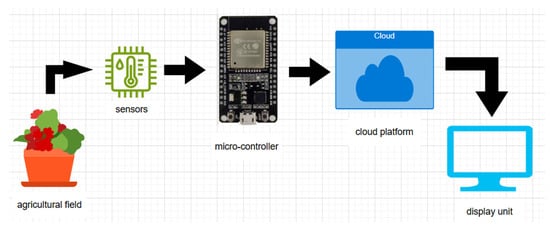
Figure 1 represents the functional block diagram of the proposed work. The acquired data is stored in a cloud platform and displayed on the local monitor or device for the visualizations of the crop parameters.
Figure 1.
Block diagram of IoT-enabled crop monitoring device.
3.1. Data Acquisition
3.1.1. Soil Moisture Sensor
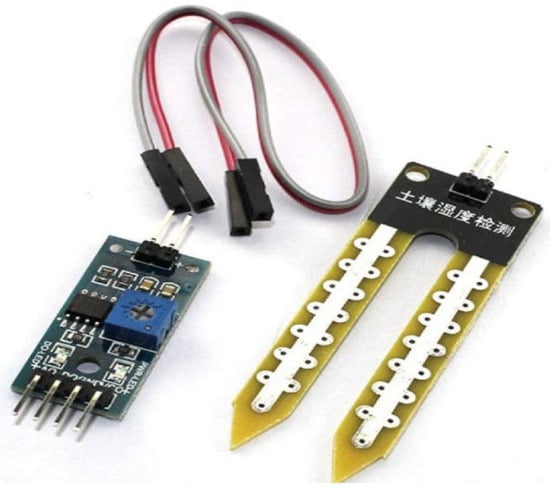
To effectively observe moisture content in soil, a soil moisture meter module, also called a soil hygrometer, demonstrated in Figure 2, is employed with Arduino in this study. This module is leveraged with two metal probes, which can withstand corrosion and conduct electricity reliably; to identify the volumetric water content in soil, they act as variable resistors. Soil moisture and conductivity are inversely proportional to resistance between the probes. In contrast dry soil demonstrates higher resistance that indicates lower moisture levels.
Figure 2.
Soil moisture sensor.
The voltage range operated by the module in Figure 2 is 3.3 V to 5 V and produces both digital and analog outputs. For better resolution and to obtain more precise data in moisture level detection, this study utilized analog output. The sensor module includes a comparator chip, LM393, for stability enhancement, and visual feedback is offered via built-in LED indicators to indicate power status.
The connections are VCC for power supply, DO connected to the ESP32 input pin, GND connected to ground and AO (optional), which is the connection for analog threshold output.
3.1.2. Temperature and Humidity Sensor
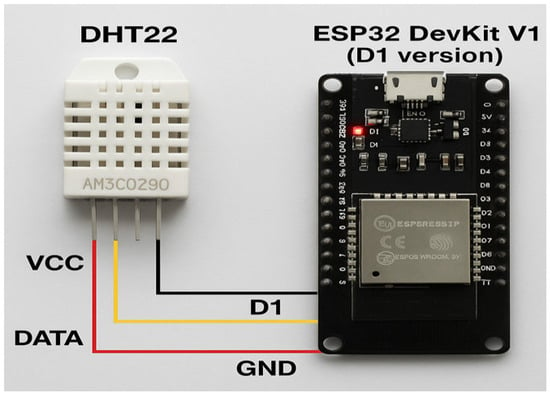
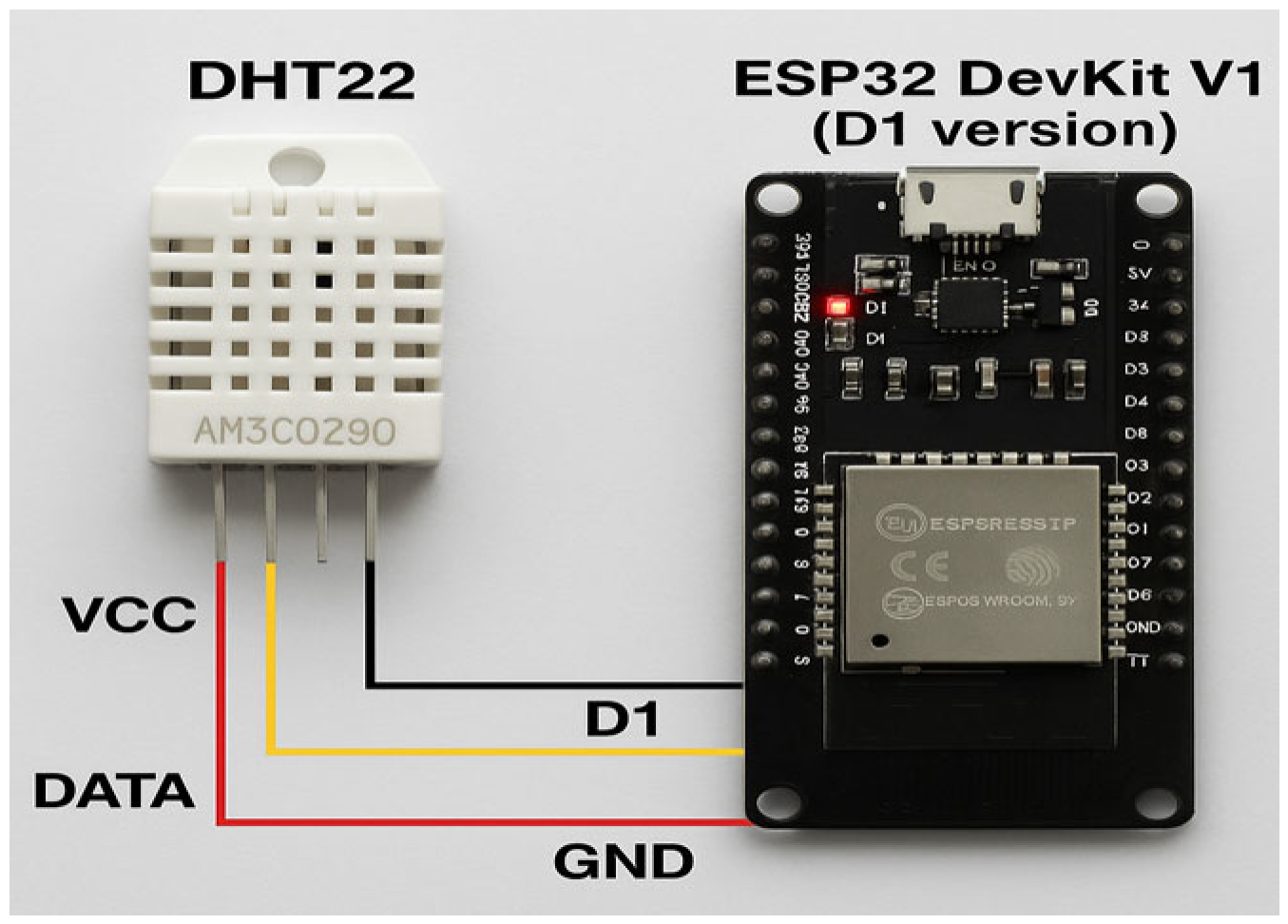
The temperature and humidity are measured by leveraging the DHT22 sensor, which is shown in Figure 3; it is employed with the ESP32 Devkit V1. DHT22 is a digital sensor which measures the relative humidity from the range 0% to 100% and the temperature range accurately from −40 °C to +80 °C.
Figure 3.
DHT22.
Here, the connection includes a 10k pull-up resistor between VCC and the data pin to ensure stable transmission of signals; the DHT22 is connected to digital GPIO pin 13, of the ESP32 Devkit V1. The power supply utilized for the sensor is 3.3 V. The ESP32 uses the Arduino IDE with the DHT library to read the data at regular intervals. It transmits the data to cloud-based IoT platforms such as ThingSpeak or Firebase for real-time analysis and monitoring using its built-in Wi-Fi capabilities.
3.1.3. Light Intensity Sensor
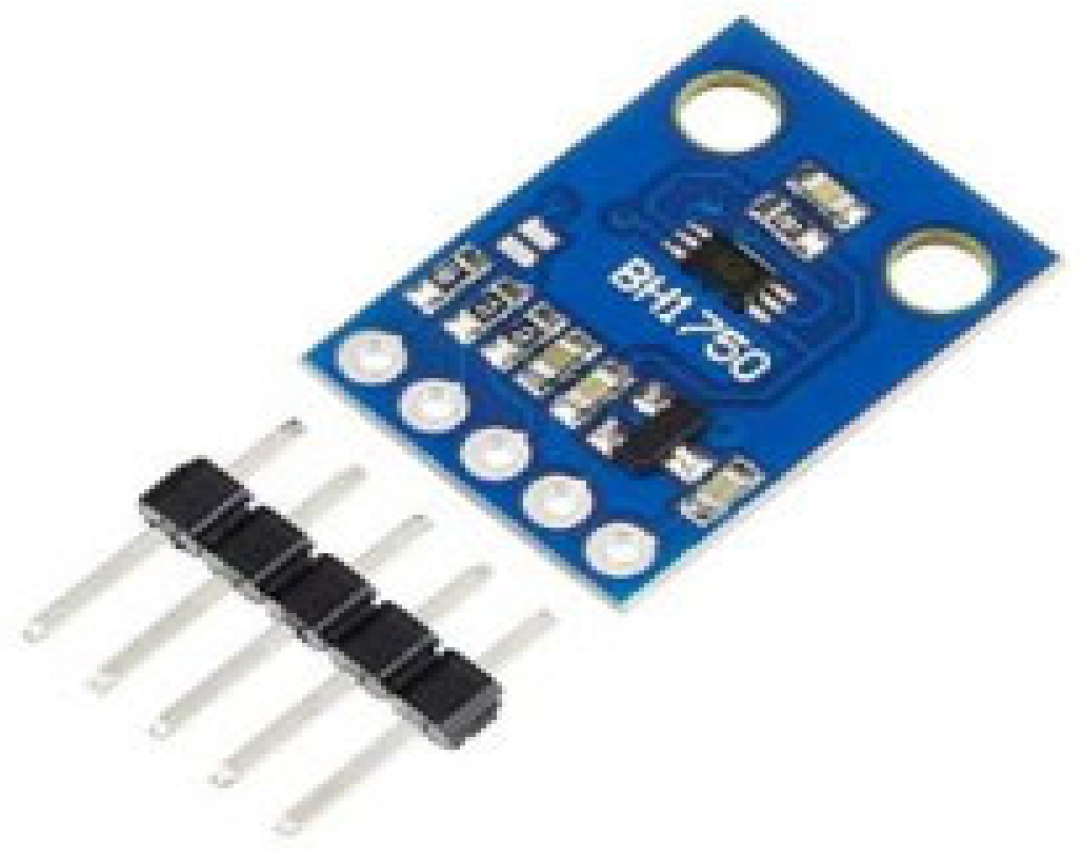
The GY-302 BH1750 Light Intensity Module uses the BH1750FVI digital ambient light sensor IC. It measures light intensity in real time. This sensor in Figure 4 works well for tracking ambient brightness in applications like environmental sensing and display optimization. It provides precise measurements through the I2C communication interface. This ensures reliable light detection across various intensity levels.
Figure 4.
GY-302 BH1750.
The module has a resolution of 1 lux and runs on 3V to 5V DC. It communicates using an I2C (two-wire) interface. Its small size (18 mm × 13 mm × 3 mm) and light weight (5 g) make it easy to mount on prototype boards or in enclosures. A 16-bit integrated Analog-to-Digital Converter (ADC) ensures stable and accurate digital output, even in changing lighting conditions. To keep readings consistent during the experiment, the sensor was placed in an area with steady ambient light. After processing to check brightness levels, the raw lux values obtained via I2C were integrated into automated response systems when suitable.
3.2. Edge Computing Device
The proposed edge computing device is an ESP32 Devkit V1 module that is employed for wireless transmission of the signals. The ESP32 Devkit V1 is a cost-efficient and user-friendly microcontroller that has in-built Wi-Fi and Bluetooth modules. The module is a low-power system-on-chip (SoC) device. The device has a total of 38 pins, which include 25 to 27 digital I/O pins that comprise 6 input-only pins, 2 DAC pins, and 18 ADC pins, along with the power and neutral pins.
Further, the ESP module has a processing speed of 520KB RAM and a clock speed of 240 MHz per core. In addition to that, it has Wi-Fi plus Bluetooth connectivity operating at the range of 2.4 GHz, which can be a dual-mode chip. Since the ESP32 device is a low-power drive, it can be operated in the voltage range of 5–12 V. It steps down the voltage according to its requirement and provides functionality and flexibility in utilizing the module.
The power supply can also be provided externally by a battery source. In this work, the ESP32 Devkit V1 is utilized to transmit the information that is collected by the sensor to the cloud platform. This provides the timely monitoring of the soil and crop condition.
3.3. Data Transmission
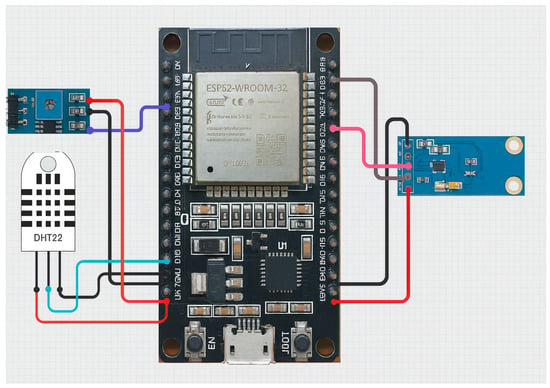
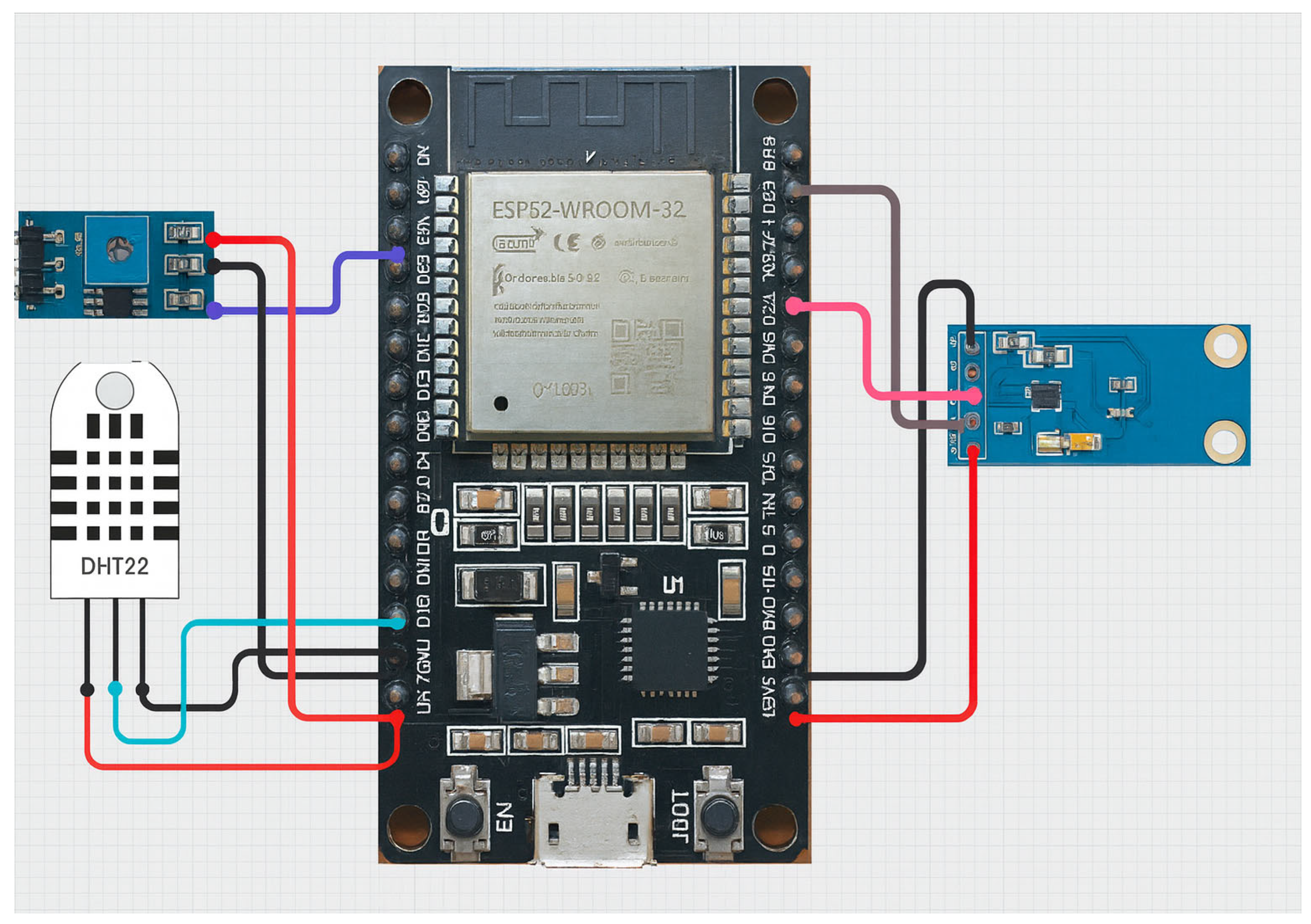
The sensors are connected to the ESP32 module. The device is connected through a USB wire to a power supply, which provides 5 V. The positive and negative pins of the sensors are connected to the 3.3 V and GND pins of the ESP32 board, respectively. Further, the sensors and the microcontroller are placed on an electronic board for the common negative and the positive terminals. The digital output (DO) pin of the soil moisture sensor is connected to the GPIO 34 of the microcontroller, as shown in Figure 5.
Figure 5.
Pin Diagram.
The SCL and SDA pins of the light intensity sensor are connected to GPIO 22 and GPIO 21, respectively, which is represented in Figure 5. Also, the output pin of the DHT22 sensor is connected to the GPIO 13, as shown in Figure 5. This pin primarily results in digital output. The other GPIO performs I2C interaction, and GPIO 34 provides an analog output. The microcontroller is programmed in Arduino IDE; hence, the necessary libraries are installed. This includes libraries such as wire.h, DHT.h + Adafruit_sensor.h, and BH1750. h.
In addition to this, the Wi-Fi and ThingSpeak library are installed to monitor the values as a graphical representation. The graphical visualization aids in understanding the changes in parameter according to time. The sensor values update every minute. This helps with tracking the crop conditions. The ideal values for temperature range from 20 to 30 degrees Celsius and 40 to 70 percent humidity. The temperature and moisture content of the field vary according to the type of crop grown [15,16].
4. Results and Discussion
The acquired values of the sensor are represented in a graphical trend. The output provides the real-time monitoring of the crop temperature, soil moisture, and the light intensity on the crop. The pictorial representations of the values are visualized in a cloud-based platform like ThingSpeak. There are three different graphs depicting the individual parameters of the crop. Further, an IoT cloud platform like ThingSpeak also provides a MATLAB 2024b analysis of the collected data. This automation benefits the remote monitoring of the crops.
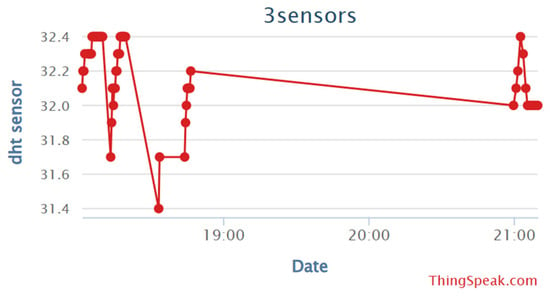
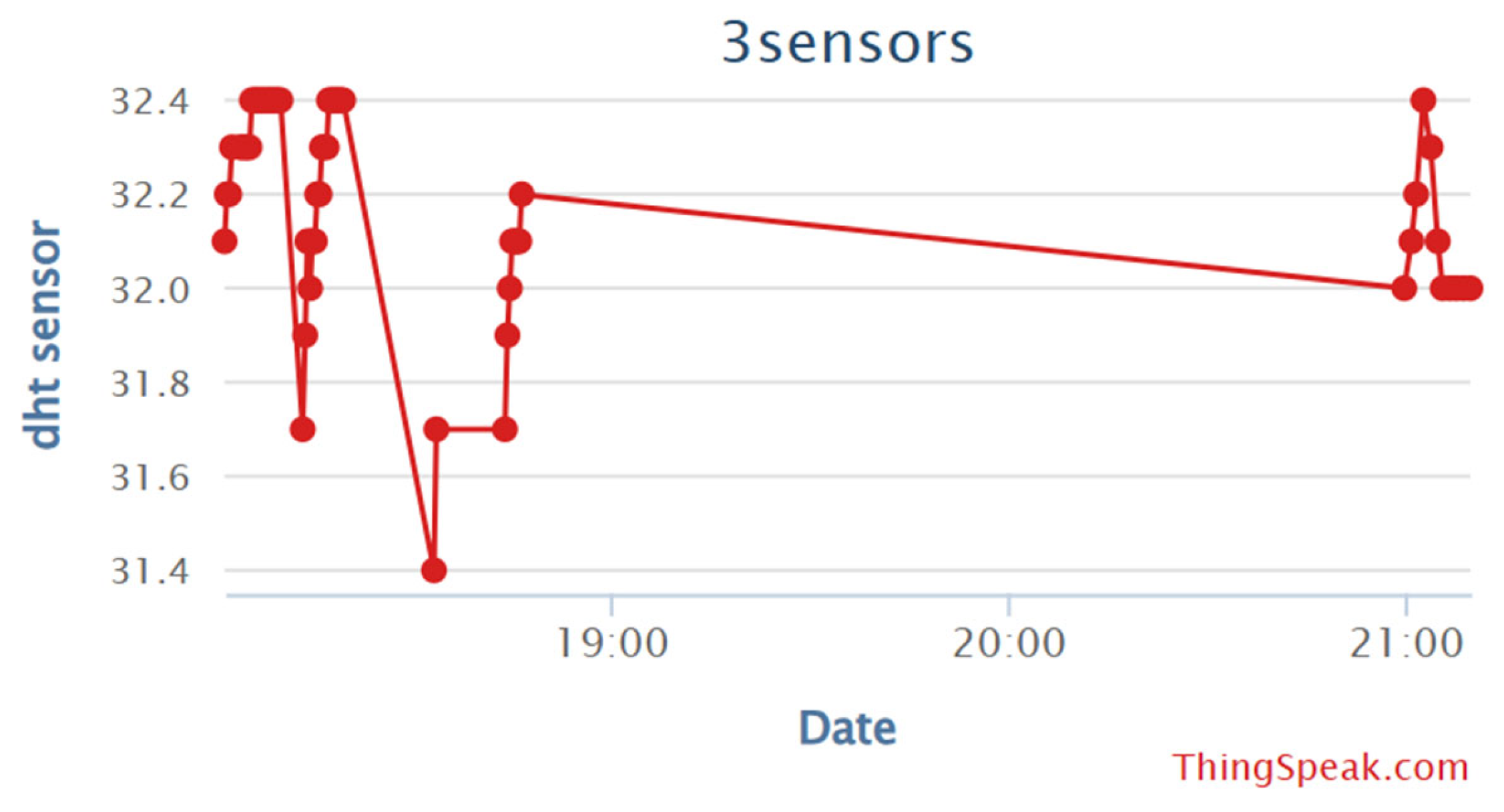
The graphs represent the values for sensor values. The obtained sensor values are likely to be in the range of ideal crop values. Graph one represents the temperature and humidity values for every minute which is shown in Figure 6.
Figure 6.
Real-time temperature and humidity monitoring using DHT22 sensor.
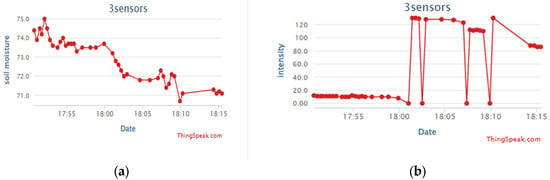
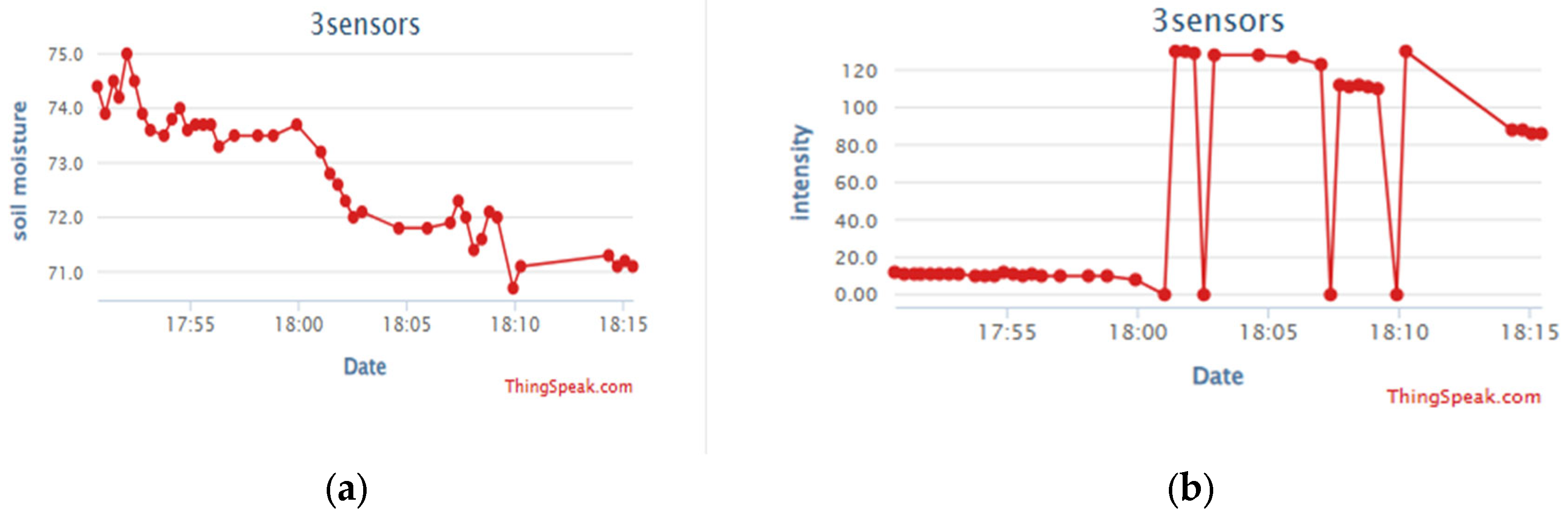
Figure 7a graph represents the graphical values of moisture content in the soil. It averages in the range of 75 to 90 percent. In addition, Figure 7b represents the light intensity on the crop. The light intensity varies depending on the weather of the day. The intensity is obtained in the average range of 3000 to 50,000 lux.
Figure 7.
(a) Soil moisture variation over time. (b) Light intensity variation (Lux).
This work is accomplished on a normal sunny day, which tends to influence the soil parameters. The soil moisture descends from 75% to 71% in a span of 20 min, which indicates the need for irrigation. As the intensity graph depicts, the light intensity eventually increases during the recording interval. Consequently, there is a deviation in the temperature and humidity values, which is represented by Figure 6.
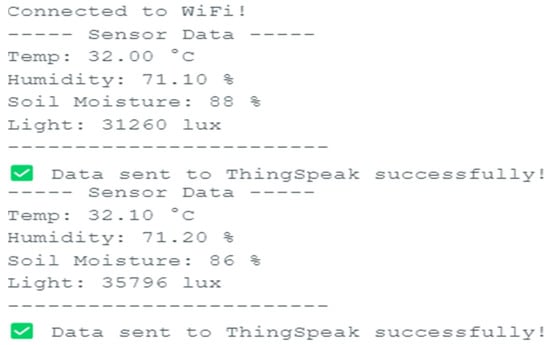
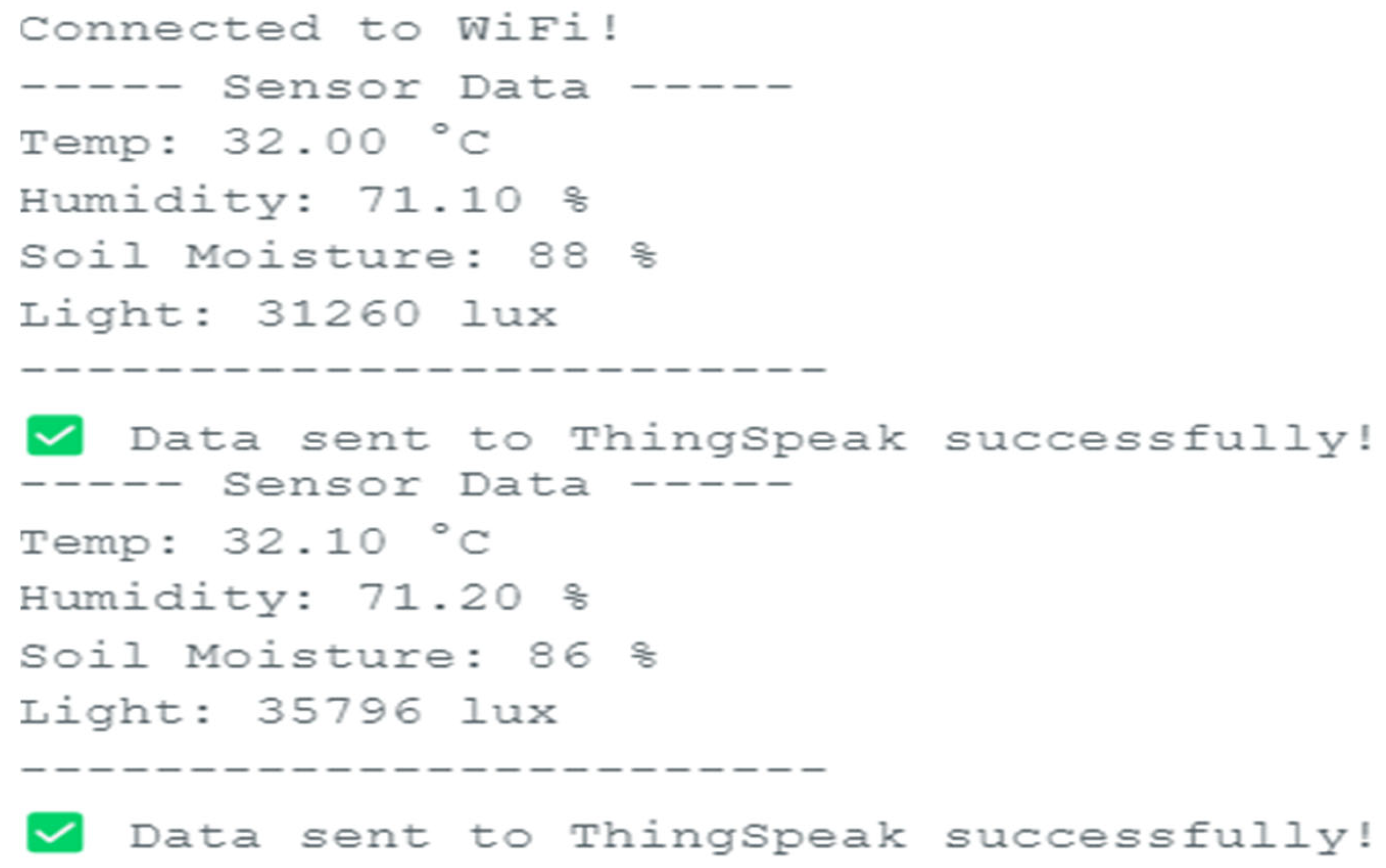
The output in readable format is obtained from the serial monitor window. This clearly specifies the individual parameter. The ESP32 device is connected through Wi-Fi for the transmission of data to the cloud platform. The device is conventional to use due to its affordability and lower required maintenance. Figure 8 represents the numerical values of the crop parameters.
Figure 8.
Serial monitor output of sensor readings.
The IoT devices are employed in real-time monitoring of crop and soil parameters. This reduced the around-the-clock monitoring of the field. The proposed method is experimented with in a small field of agricultural land. The values obtained are evaluated and analyzed based on the present weather conditions. The values attained are in the range of ideal values. Hence, the crop is maintained in a perfect environment. The obtained values help to determine the crop condition and take timely decisions. Further, by integrating an alarm system or alert messages, farmers can take the necessary actions accordingly. The alert messages are sent to the phone in case of critical or emergency situations.
5. Conclusions
In this work, an IoT-enabled crop and soil monitoring system was designed and executed by utilizing low-cost smart sensors, such as the DHT22 temperature and humidity sensor module, soil moisture sensor, and light intensity sensor. The designed system has greatly demonstrated its capability in collecting and transmitting the relevant data of real-time environment for precision agriculture in remote monitoring.
The affordable components integrated into the system provide farmers with better support in crop management decisions and irrigation scheduling. The results indicate the technology contribution in improving the agriculture productivity.
Future work includes alert messages to the farmer about the moisture and humidity ranges. Also, the integration of plant health monitoring, pH sensors, and camera installation can monitor the growth and automatic irrigation system as per the temperature. This study highlights the potential of combining low-cost sensors and IoT to create accessible and practical tools that help to modernize farming practices.
Author Contributions
Conceptualization, Methodology, S.G.; software, T.S.K.; validation, and formal analysis, T.K.; investigation, S.G.; resources, S.G.; data curation, S.G.; writing—original draft preparation, T.S.K., T.K.; writing—review and editing, S.G.; visualization, S.G.; supervision, S.G.; project administration, S.G.; funding acquisition, T.S.K., T.K. All authors have read and agreed to the published version of the manuscript.
Funding
This research received no external funding.
Institutional Review Board Statement
Not applicable.
Informed Consent Statement
Not applicable.
Data Availability Statement
The data presented in this study are available on request from the corresponding author.
Conflicts of Interest
The authors declare no conflicts of interest.
References
- Stafford, J.V. Implementing Precision Agriculture in the 21st Century. J. Agric. Eng. Res. 2000, 76, 267–275. [Google Scholar] [CrossRef] [Scilit]
- Karunathilake, E.M.B.M.; Le, A.T.; Heo, S.; Chung, Y.S.; Mansoor, S. The Path to Smart Farming: Innovations and Opportunities in Precision Agriculture. Agriculture 2023, 13, 1593. [Google Scholar] [CrossRef] [Scilit]
- Shah, F.; Wu, W. Soil and Crop Management Strategies to Ensure Higher Crop Productivity within Sustainable Environments. Sustainability 2019, 11, 1485. [Google Scholar] [CrossRef] [Scilit]
- Erickson, B.; Fausti, S.W. The role of precision agriculture in food security. Agron. J. 2021, 113, 4455–4462. [Google Scholar] [CrossRef] [Scilit]
- Yin, H.; Cao, Y.; Marelli, B.; Zeng, X.; Mason, A.J.; Cao, C. Soil Sensors and Plant Wearables for Smart and Precision Agriculture. Adv. Mater. 2021, 33, 2007764. [Google Scholar] [CrossRef] [Scilit] [PubMed]
- Pyingkodi, M.; Thenmozhi, K.; Nanthini, K.; Karthikeyan, M.; Palarimath, S.; Erajavignesh, V.; Kumar, G.A. Sensor Based Smart Agriculture with IoT Technologies: A Review. In Proceedings of the 2022 International Conference on Computer Communication and Informatics (ICCCI), Coimbatore, India, 25–27 January 2022; pp. 1–7. [Google Scholar]
- El-Naggar, A.; Hedley, C.; Horne, D.; Roudier, P.; Clothier, B. Soil sensing technology improves application of irrigation water. Agric. Water Manag. 2020, 228, 105901. [Google Scholar] [CrossRef] [Scilit]
- Raghunandan, G.H.; Namratha, S.Y.; Nanditha, S.Y.; Swathi, G. Comparative analysis of different precision agriculture techniques using wireless sensor networks. In Proceedings of the 2017 4th International Conference on Electronics and Communication Systems (ICECS), Coimbatore, India, 24–25 February 2017; pp. 129–133. [Google Scholar]
- Futagawa, M.; Iwasaki, T.; Murata, H.; Ishida, M.; Sawada, K. A Miniature Integrated Multimodal Sensor for Measuring pH, EC and Temperature for Precision Agriculture. Sensors 2012, 12, 8338–8354. [Google Scholar] [CrossRef] [Scilit] [PubMed]
- Mat, I.; Kassim, M.R.M.; Harun, A.N. Precision agriculture applications using wireless moisture sensor network. In Proceedings of the 2015 IEEE 12th Malaysia International Conference on Communications (MICC), Kuching, Malaysia, 23–25 November 2015; pp. 18–23. [Google Scholar]
- Akter, T.; Mahmud, T.; Chakma, R.; Datta, N.; Hossain, M.S.; Andersson, K. IoT-based Precision Agriculture Monitoring System: Enhancing Agricultural Efficiency. In Proceedings of the 2024 Second International Conference on Inventive Computing and Informatics (ICICI), Bangalore, India, 11–12 June 2024; pp. 749–754. [Google Scholar]
- Raj, R.; Ghosh, A.; Pal, A.; Kundu, S.K.; Karmakar, S. A Brief Review on Smart Farming Technologies for Precision Agriculture. In Proceedings of the 2025 8th International Conference on Electronics, Materials Engineering & Nano-Technology (IEMENTech), Kolkata, India, 31 January–2 February 2025; pp. 1–5. [Google Scholar]
- Aguiar, S.; Barros, E. A Soil pH Sensor and a Based on Time-Series Prediction IoT System for Agriculture. In Proceedings of the 2023 XIII Brazilian Symposium on Computing Systems Engineering (SBESC), Porto Alegre, Brazil, 21–24 November 2023; pp. 1–6. [Google Scholar]
- Pierce, F.J.; Nowak, P. Aspects of precision agriculture. Adv. Agron. 1999, 67, 1–85. [Google Scholar]
- Scheberl, L.; Scharenbroch, B.C.; Werner, L.P.; Prater, J.R.; Fite, K.L. Evaluation of soil pH and soil moisture with different field sensors: Case study urban soil. Urban For. Urban Green. 2019, 38, 267–279. [Google Scholar] [CrossRef] [Scilit]
- Shahab, H.; Naeem, M.; Iqbal, M.; Aqeel, M.; Ullah, S.S. IoT-driven smart ag-ricultural technology for real-time soil and crop optimization. Smart Agric. Technol. 2025, 10, 100847. [Google Scholar] [CrossRef] [Scilit]
Disclaimer/Publisher’s Note: The statements, opinions and data contained in all publications are solely those of the individual author(s) and contributor(s) and not of MDPI and/or the editor(s). MDPI and/or the editor(s) disclaim responsibility for any injury to people or property resulting from any ideas, methods, instructions or products referred to in the content. |
© 2025 by the authors. Licensee MDPI, Basel, Switzerland. This article is an open access article distributed under the terms and conditions of the Creative Commons Attribution (CC BY) license (https://creativecommons.org/licenses/by/4.0/).