1. Introduction
Muscular activity is correlated with every human movement and is thus very relevant in different contexts: gesture analysis, sport performance, clinical evaluation and rehabilitation, ergonomics and occupational biomechanics, and fitness and body sculpturing.
Muscles provide an electrical signal when contracting (EMG), and contract when electrically stimulated (FES): in the first case, we record a surface electrical signal whose amplitude and frequency content is related to force and fiber involvement; in the second situation, we can produce an electrical stimulation to produce muscle contraction.
In both cases, a pair of surface electrodes are placed onto the skin in correspondence with the muscle of interest. These electrodes have similarities with ECG ones but have several differences in shape, dimensions and technical specifications for diverse applications, signal features and body positioning.
In the era of smart garments, textile electrodes for EMG or FES represent a very interesting and promising area of development and exploitation.
The development of textile-based electrodes in the late 1980s represented a substantial advancement in the domain of electromyography.
The utilization of textile-based sEMG sensors offers distinct advantages, including enhanced wearability, prolonged monitoring duration, and seamless integration into routine activities. These sensors possess an inherent flexibility and robust manufacturability, which facilitates their application in various contexts. Improved contact stability represents a notable benefit of textile sensors. These devices frequently encompass a greater surface area, thereby ensuring more uniform distribution of pressure and maintaining stable contact with the skin [
1].
EMG sensors can be classified in several ways, including electrode placement, type of contact, and resolution perspective. Conductive polymers, including polypyrrole (PPy), polyaniline (PANI), and poly(3,4-ethylenedioxythiophene) (PEDOT), are used in textile sensors, as well as conductive yarns and nonwoven conductive materials, such as graphene, graphene oxide (GO), reduced graphene oxide (RGO), and metallic elements, including gold and silver.
In this frame, we conducted a patent landscape analysis of textile solutions for EMG sensing and FES actuation.
2. Materials and Methods
The database employed for the retrieval of patent information was Espacenet (provided by the European Patent office), a resource that is characterized by its ease of use and its capacity to support the execution of multiple queries through the utilization of the “Smart search” window. A notable feature of Espacenet is its coverage of published patent applications and granted patents from over 100 patent-granting authorities. Moreover, Espacenet offers access to a comprehensive collection of patent information, encompassing over 150 million documents from 1782 to the present [
2,
3] (page 2).
In order to generate a comprehensive and exhaustive dataset for subsequent analysis, a combined classification- and keyword-based approach was utilized, incorporating IPC and CPC codes, as well as precise keywords. The International Patent Classification (IPC) and Cooperative Patent Classification (CPC) symbols were employed in conjunction with a search term (textile sensor, textile sensing, textile electrode, electromyography, electromyogram, EMG, functional electric stimulation, FES) in the title, abstract, and claim (TAC) fields. Keywords were combined using the AND Boolean operator along with IPC/CPC symbols and via proximity operators between them.
The main classification symbols used are listed in
Table 1.
The final query formulated for the purpose of obtaining patent information can be found in
Appendix A.
The results were grouped into patent families, with a priority number in common.
A comparison of Espacenet and fee-based sources reveals that Espacenet lacks the extensive array of analytical and data processing functionalities offered by its fee-based counterparts. The statistical overview in Espacenet is constrained to a limited number of fields, including countries, ICP or CPC subgroups, applicants, and inventors. Therefore, the dataset obtained through Espacenet has been transferred to Orbit Patent Intelligence by Questel v2.0.0.
Orbit was employed in addition to Espacenet on account of its comprehensive analysis tools, particularly for conducting searches within the technological domains and concept clusters.
The screening process was conducted manually to ensure the exclusion of patents that, while potentially related to keywords, did not fall within the scope of the present subject matter.
3. Results and Discussion
In the present study, a total of 160 patent families were retrieved.
A preliminary evaluation on Espacenet was conducted by implementing a filter that was designated as “earliest priority date,” which was applied to the subset of families that had been filed within the timeframe spanning from 1 January 2014 to 31 December 2023. This initial screening process yielded a total of 124 patent families.
Patent families with IPC/CPC subgroups {A61B5/291—bioelectric electrodes for electroencephalography [EEG]} were excluded from the analysis, as they were outside the scope of the present study.
The selected 103 patent families were imported into Orbit Patent Intelligence and subsequently analyzed. The screening process was conducted manually to ensure the exclusion of patents that, while potentially related to keywords, do not fall within the scope of the present subject matter. Six patent families were excluded from the study because they were deemed to be irrelevant. The final landscape analysis was conducted on a sample of 97 patent families.
The legal status of the retrieved patent documents is outlined below: 41% of the patent applications have been granted, 27% are pending, and 32% are no longer active. Among these, 15% have lapsed, 15% have been revoked, and 2% have expired.
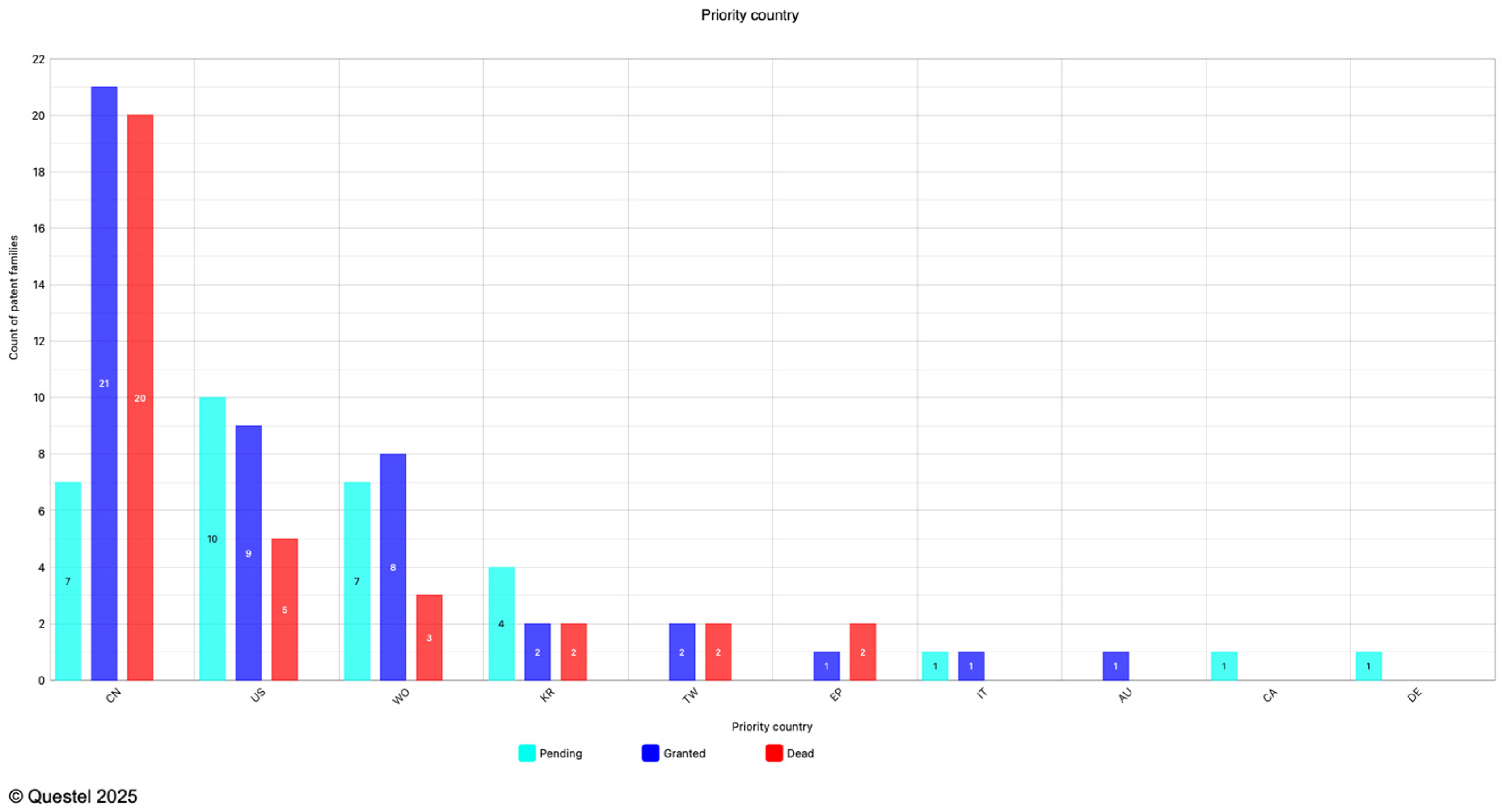
China and the United States account for the majority of patents, placing them in the first and second positions, respectively, as shown in
Figure 1.
A total of 48 filings were submitted in China, including 7 pending applications, 21 granted patents, and 20 rejected or abandoned applications. In comparison, in the United States 24 filings were submitted, comprising 10 pending applications, 9 granted patents, and only 5 rejected or abandoned applications. From the perspective of patents that are currently active, the discrepancy in distance between China and the USA is less pronounced. South Korea is in third place, with eight filings (four pending, two granted, and two rejected or abandoned).
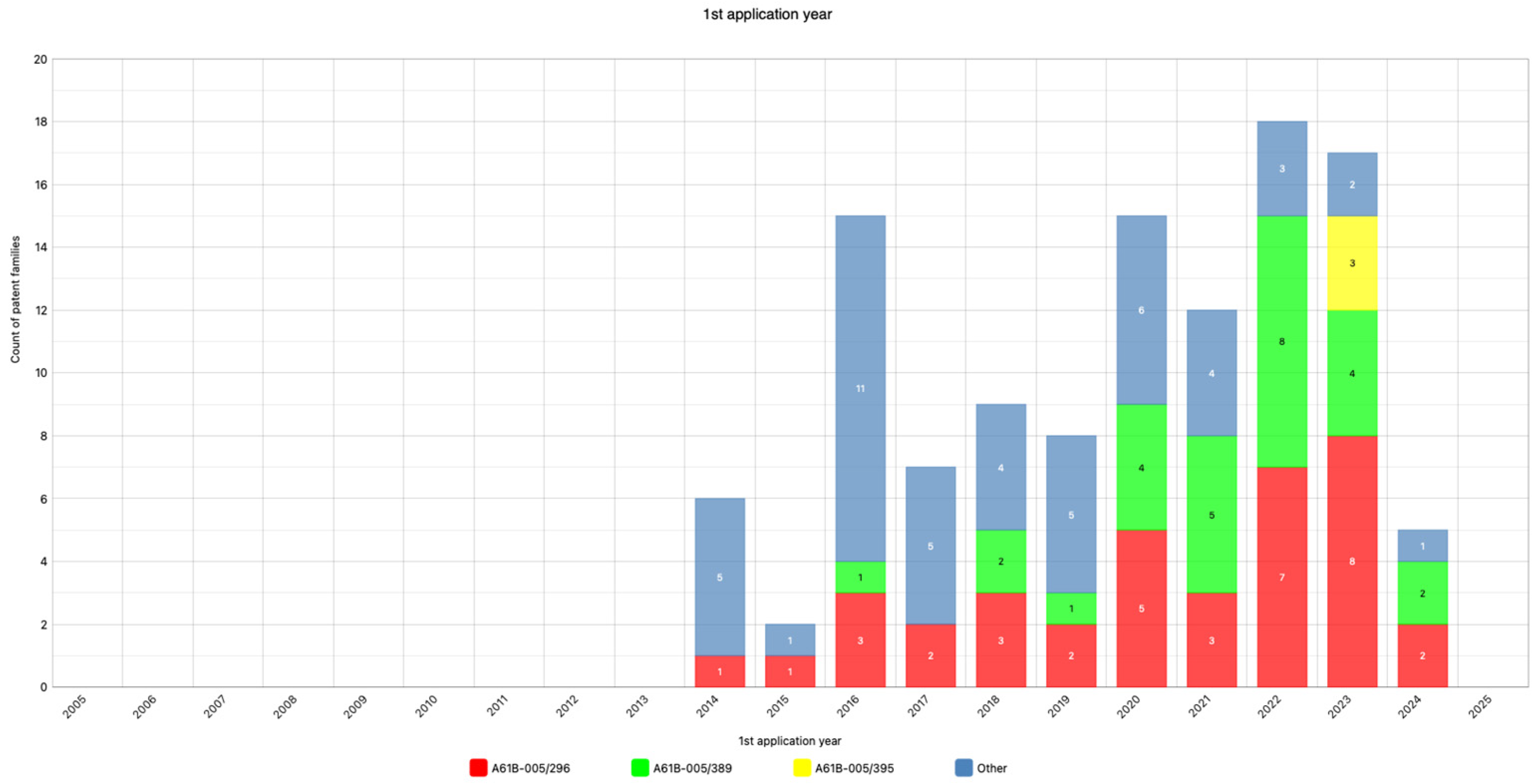
The graph obtained from the first application year (
Figure 2) displays four peaks, indicating the periods during which the majority of applications were submitted. The number of applications received in 2016 was 15; in 2020 it was 14; in 2022 it was 18; and in 2023 it was 17. Data regarding subsequent years is incomplete, as patent applications are typically kept confidential for 18 months following the filing date. The data are segmented according to the primary IPC/CPC codes employed in the patent search.
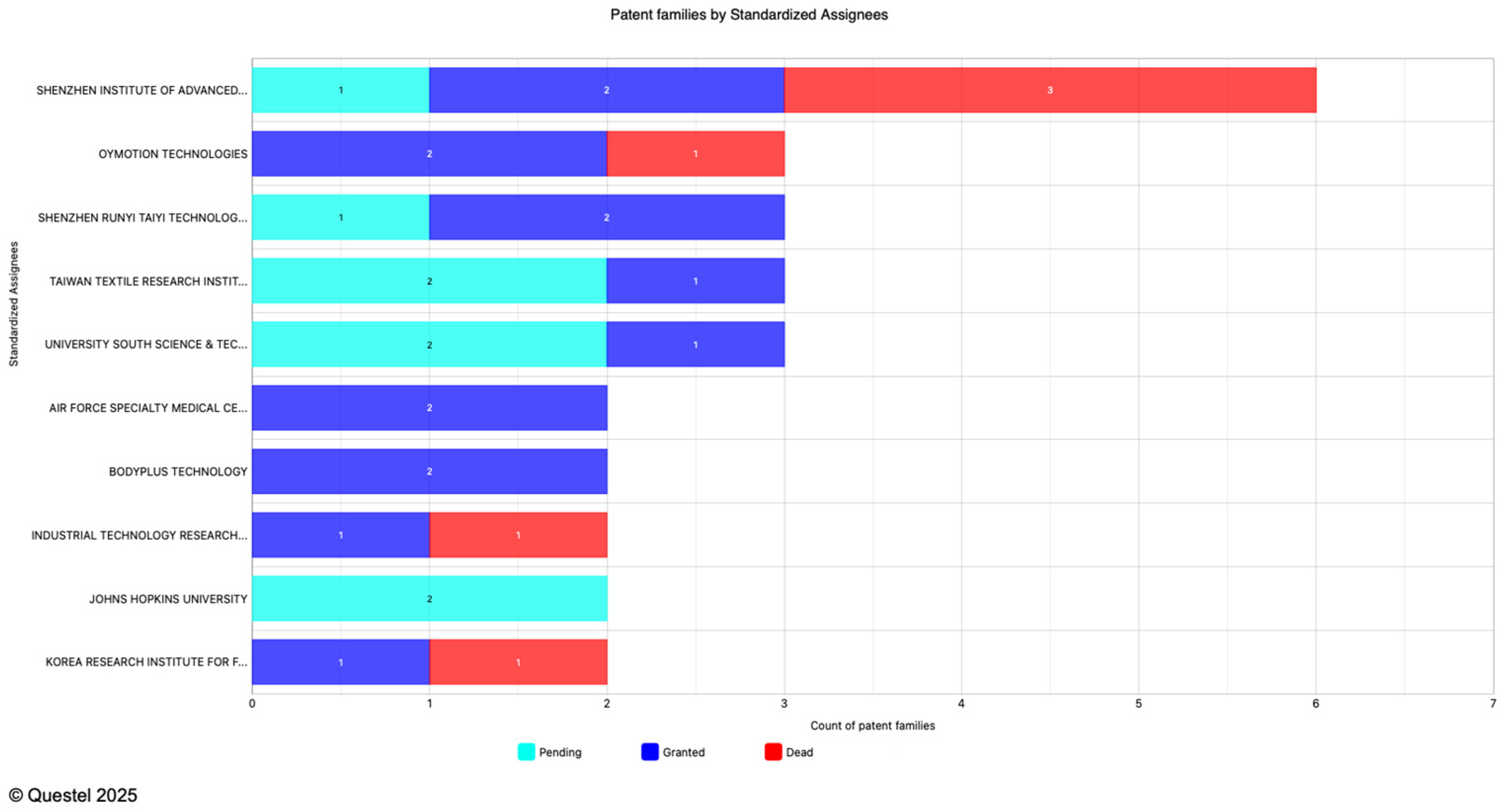
As demonstrated in
Figure 3, the majority of the top applicants per number of filed patents or patent applications are universities or research public entities. The Shenzhen Institute of Advanced Technology has been designated as the leading institution in this field, with a total of six patent families, of which one is pending, three have been granted, and three have been rejected. According to the most recent data available, OYMotion Technologies Co., Ltd. (high-tech startup in Shanghai, China) is the second-leading entity in terms of granted patents, with a total of two patents granted to the company. In addition, OYMotion Technologies has one patent that has been rejected or abandoned. A third-place ranking is shared by three entities: Shenzhen Runyi Taiyi Technology Co., Ltd. (headquartered in China Guangdong Province), Taiwan Research Institute, and South China University of Technology, each of which possesses three patent families.
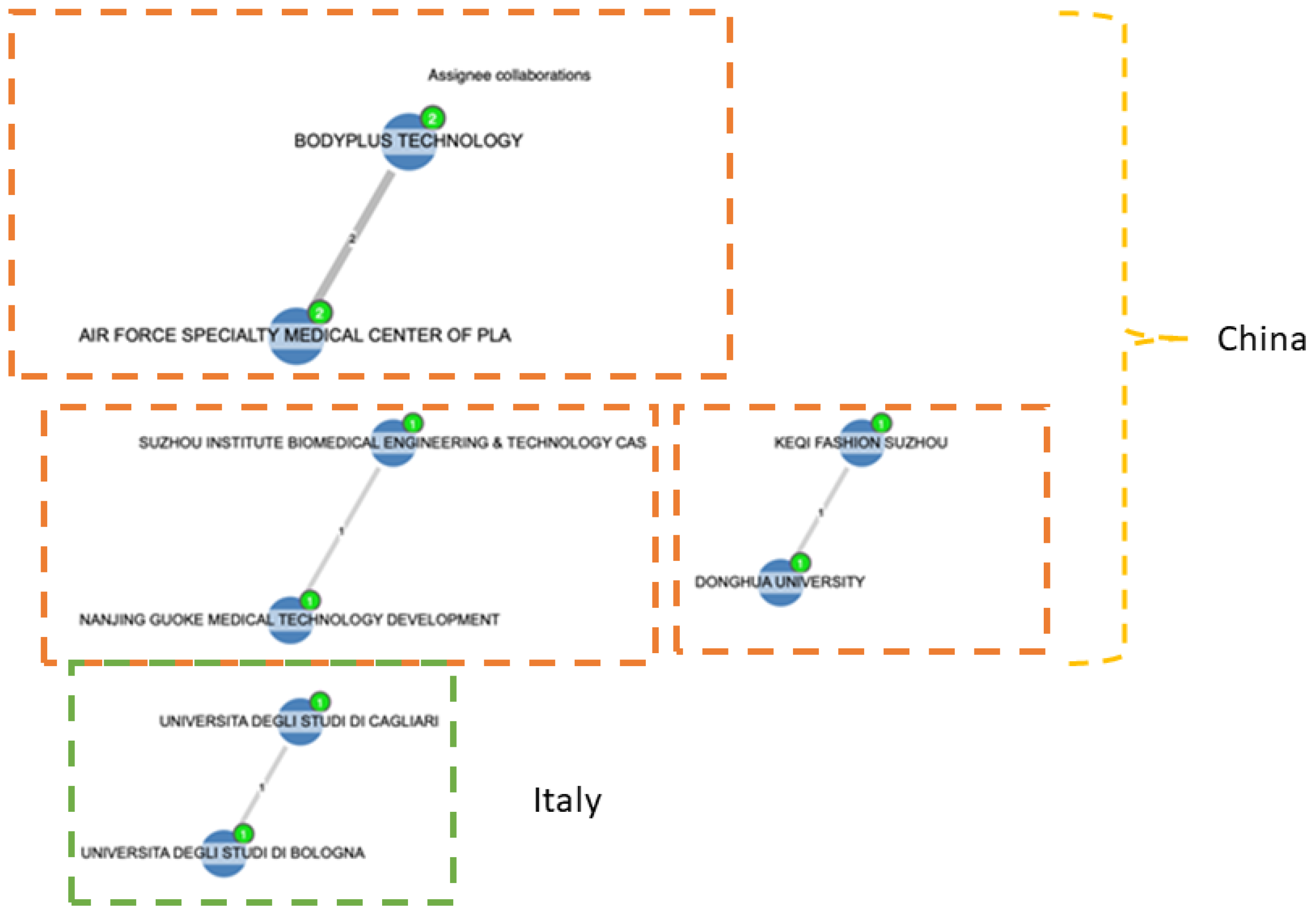
Collaboration among patent assignees is limited.
Figure 4 shows a co-ownership graph of patents, in which four pairs of actors from Italy and China are represented.
As illustrated in
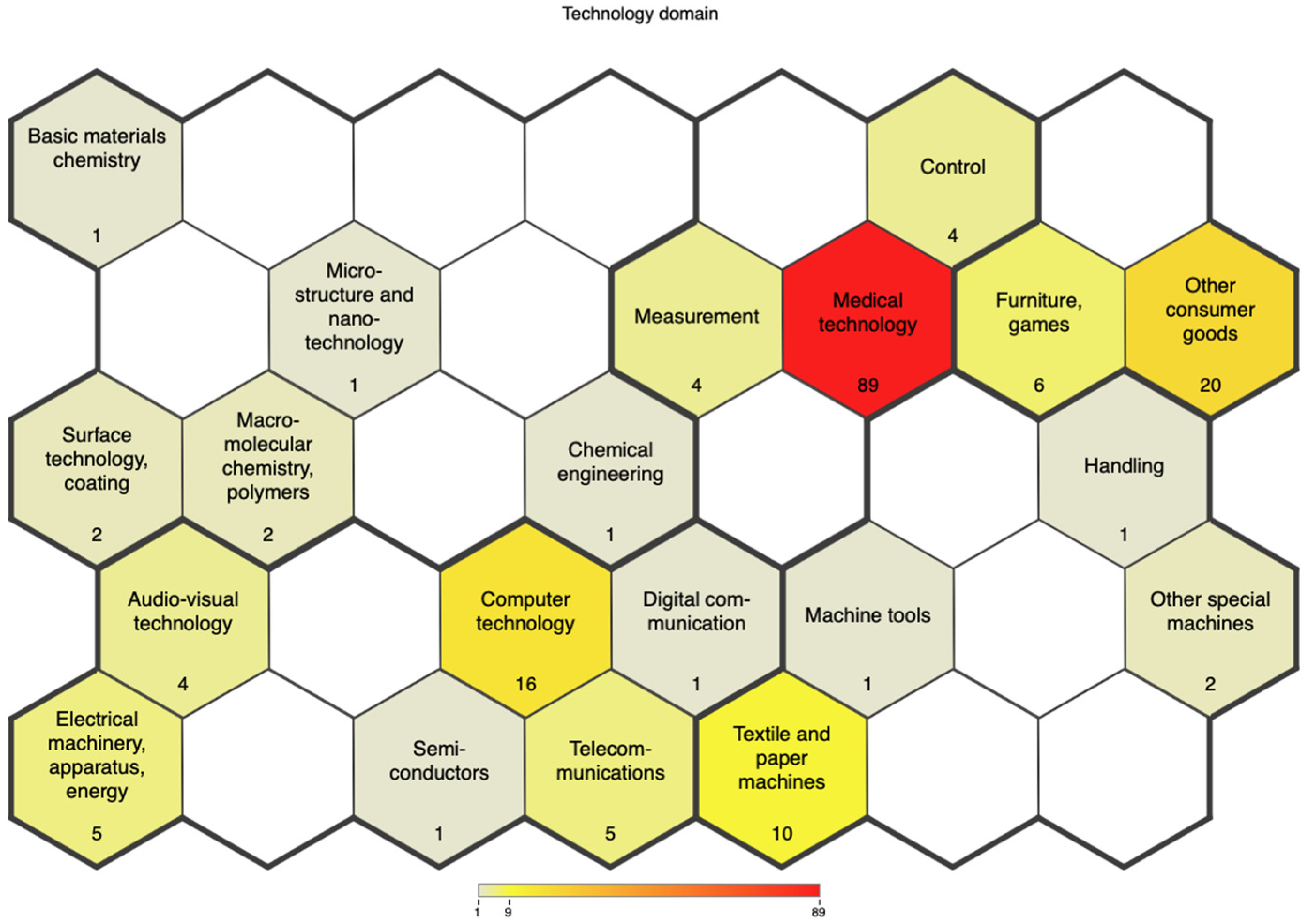
Figure 5, the retrieved patents/patent applications have been classified according to their technical nature.
A total of 89 patents are classified within the domain of medical technology, constituting the highest number of patents in the field and thus occupying the preeminent position in the search strategy’s technical areas. It is important to acknowledge that each patent may be classified across multiple technical domains.
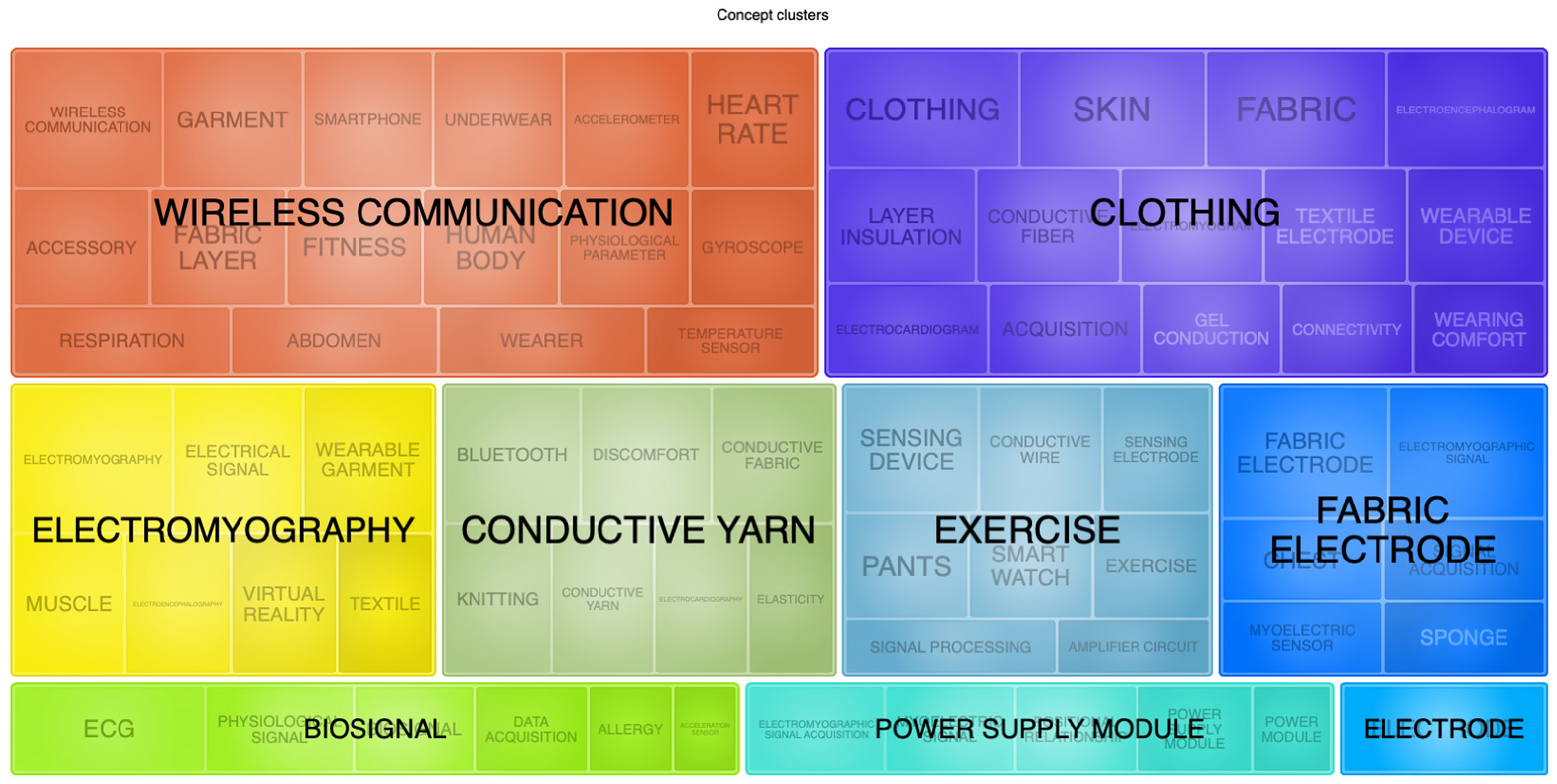
The graph of
Figure 6 illustrates the distribution of the main concepts derived from the retrieved patent documents. A total of nine clusters have been identified: wireless communication (64 documents), clothing (80), EMG (52), conductive yarn (57), exercise (41), fabric electrodes (62), biosignals (47), power supply modules (32), and electrodes (8).
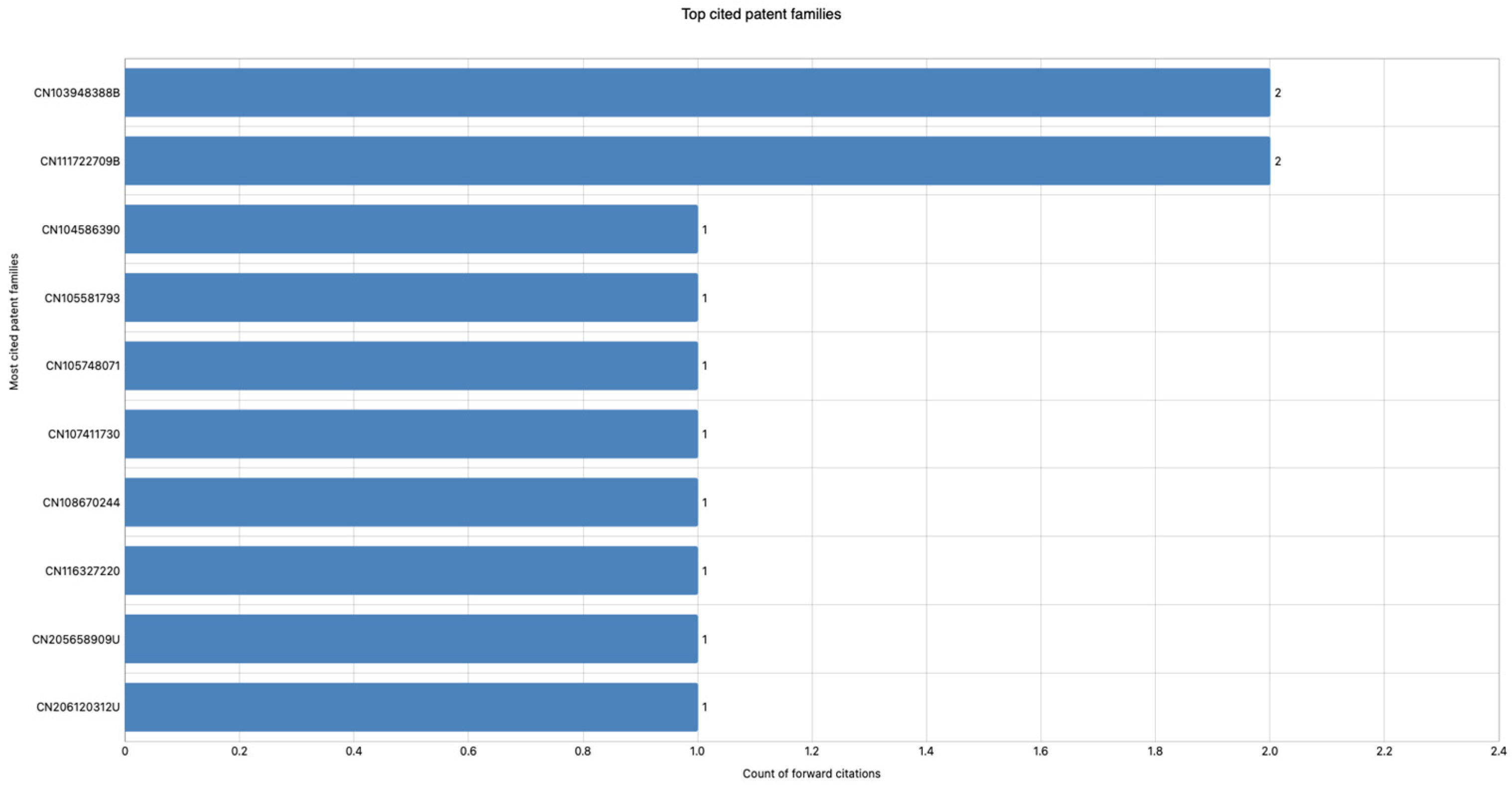
As illustrated in
Figure 7, the most frequently cited patents and patent applications were identified to originate from China.
A closer look at the top ten cited patent list reveals that only two patents (patents No. CN103948388B and CN111722709B) received two forward citations, while the remaining patents received only one. The top ten cited patents are all from China and have not been extended to foreign countries. The final two documents in the aforementioned list are utility models.
Patent No. CN103948388B [
4], which is currently assigned to Shenzhen Institute of Advanced Technology and was filed on 23 April 2024, has now been granted. The invention discloses an electromyography device that comprises an elastic substrate, an outer electrode (which is connected to the myoelectric monitoring apparatus), an inner electrode, and an electrode pin.
Patent No. CN111722709B [
5], which is assigned to South China University of Technology, was filed in 2020 and granted. The subject matter of this patent is a virtual force feedback interaction system based on electromyography (EMG) evaluation. The system is characterized by the following components: electrode sensors, an initial parameter generation unit, an EMG signal acquisition module, an electrical stimulation module, a time division multiplexing module, and an EMG signal-force regression model processing unit.
A geographic analysis of the applications revealed that a significant number of them did not demonstrate an international scope of protection, as evidenced by the absence of multiple extensions abroad. As illustrated in
Table 2, the patent families that are enumerated are those which contain a minimum of three components.
Patent application n. EP4188525A1 [
6] (Battelle Memorial Institute) discloses a device for performing functional electrical stimulation (FES) and/or neuromuscular electrical stimulation (NMES) and for receiving electromyography (EMG) signals. The device consists of a sleeve and electrodes. The sleeve is sized and shaped to fit a human arm and is made of stretchable fabric.
Patent application n. EP4482389A1 [
7] (Meta Platforms Tech LLC) describes a wearable glove device that includes conductive, deformable fabric and one or more garment-integrated sensors, including an EMG sensor.
Patent application EP3963006A1 [
8] (in co-ownership with the University of Bologna and Cagliari) describes a conductive polymeric composition that includes PEDOT and one or more ionic liquids. This composition is used to produce electrodes that record electrophysiological signals, such as electrocardiograms (ECGs), electromyograms (EMGs), and electroencephalograms (EEGs).
In patent application EP22790253A1 [
9] (ETA Bioengineering Srl) a process for making an electromyographic garment that can quantify muscle activity in terms of electrical potential difference in a precise and personalized manner is described. In particular, it allows for the evaluation of muscle activity in individual muscles with limited cross-talk phenomena with adjacent muscles. The electromyography (EMG) electrode device is a textile electrode.
The invention described in EP3273852A1 [
10] (REPONO PTY LTD, an Australian company) provides a system for monitoring the muscle activity of a biological subject with a plurality of sensors.
According to the above analysis, even though the patent landscape shows a relevant presence of records, there are still several aspects that could open new perspectives. In particular, future directions in patenting innovative solutions of EMG/FES textile electrodes could be addressed to specific shapes, dimensions and thicknesses to improve sensing or current delivery to the patient (actual solutions still shows some limits) and in new materials or their coupling to improve the previous technical limitation of patient comfort.