1. Introduction
Previously, weather measurement systems depended on sizable, stand-alone devices, each capable of recording a singular weather parameter. As time progressed, improvements in digital technology streamlined these processes, making them easier and less power-hungry. Nonetheless, some hurdles remained, particularly in acquiring real-time data, automated data analysis, automated systems for large-scale observation, and meeting the ever-increasing demand for automated analysis data.
The Internet of Things (IoT) has transformed the monitoring of the environment by making possible the automated collection, processing, and storing of data within networks of sensors and actuators. It has emerged as the cutting-edge solution for measuring meteorological and air quality parameters due to its remote monitoring capabilities, dependability, and real-time surveillance of a distributed system.
The increasing need for continuously collecting and storing new data has motivated more researchers to work on precise and reliable systems for data collection with simple and portable field instruments [
1]. Meteorological weather stations which serve an important function in collecting and processing weather data have transformed from bulky and sophisticated analog systems to small and low-power digital ones [
2].
In fields such as scientific exploration, farming, industry, and health, tracking, monitoring, and analyzing the current weather conditions has become imperative. With the Internet of Things (IoT) in play, smart devices capable of collecting, analyzing, and processing data in real time are now available. This study demonstrates a portable lump weather monitoring device that aids in tracking weather conditions through the use of various sensors and IoT features.
The system under consideration focuses on capturing critical environmental conditions such as temperature, humidity, smoke and gas levels, and light intensity. It implements a microcontroller-based system with peripheral components like an LCD screen for DHT22 temperature and humidity measuring module, MQ gas sensor, and LDR for light measurement. The data is collected and processed locally for display, and also uploaded to cloud platforms like ThingSpeak for remote analysis and access.
Moreover, it is possible to monitor and control the device in real time using the Blynk IoT platform, thus improving the system’s flexibility. The system also has features such as movement using motors, buzzer alarms for hazardous conditions, and object detection for safety. The systems compactness and flexibility make it particularly useful in dynamic and sensitive environments like schools, laboratories, greenhouses, and smart homes, where reliable and accurate monitoring is essential.
2. Related Work
A number of initiatives were started in 2022 [
3], including establishing hazardous gas emission rates and putting industrial air pollution protection in place along with health monitoring systems to evaluate their effects [
4]. The sensors and techniques were expensive at the time, which prevented their widespread use. However, low-cost methods of air quality monitoring were presented in 2018 [
5], using mobile GPRS technology to measure pollution levels [
6]. Since then, the public’s awareness of urban air quality has been increased through the use of pollution surveillance systems based on wireless sensor networks [
7]. The most cutting-edge techniques for pollution monitoring are being employed today [
8,
9].
The evolution of air quality monitoring continues to undergo change with the latest technologies. For example, scientists from the Indian Institute of Technology Madras created a mobile air pollution monitoring system that attaches sensors to public transport vehicles to monitor and analyze air quality over wide geographical areas with great precision and real-time granularity [
10]. In addition, as discussed in recent studies, wearable air quality monitors allow users to actively monitor their exposure to pollution, thereby facilitating personal decisions to reduce their health risks [
11]. All these innovations, along with conventional approaches, enhance air pollution control as well as the protection of public health.
3. System Overview
The block diagram, circuit diagram, hardware components, and overview of the Android application are all covered in this section.
3.1. Block Diagram of the System
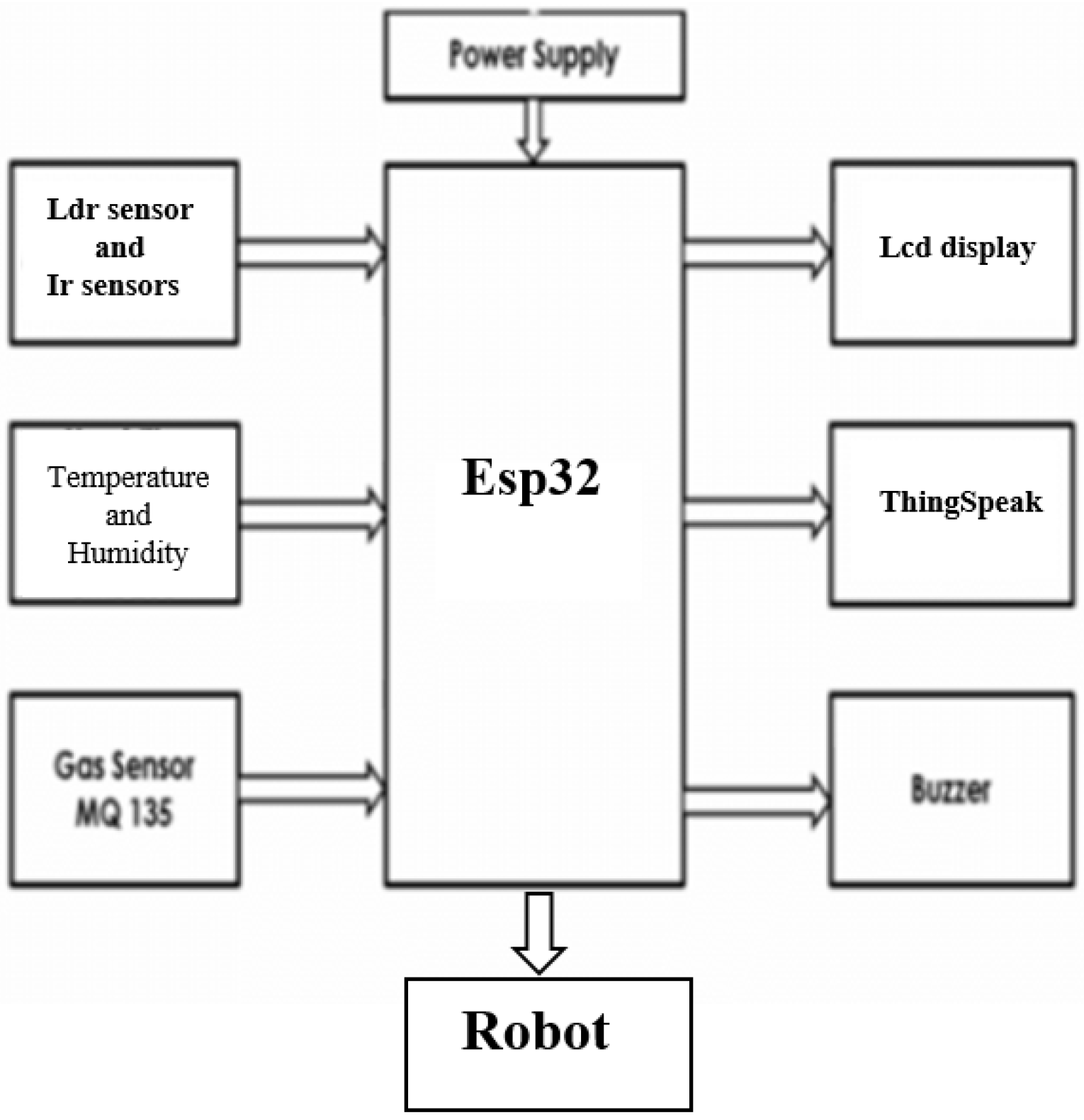
The proposed project’s block diagram is shown in
Figure 1. An Esp32 microcontroller, which is part of the hardware, gathers information from a number of sensors, such as those measuring temperature, humidity, and the concentration of carbon monoxide (CO). For real-time visualization and analysis, the gathered sensor data is sent to ThingSpeak, an open Internet of Things platform. For easy monitoring, the data is also shown locally on an LCD.
3.2. Circuit Diagram of the System
The system uses an ESP32 microcontroller to interface with sensors like the DHT22 (temperature and humidity) and MQ-135 (air quality), in addition to an LDR sensor for light intensity. The data is displayed on an LCD before being sent to ThingSpeak for remote monitoring. The Blynk app controls motor movement, and a buzzer alerts users to potentially hazardous situations.
3.3. Software Overview
This system uses Blynk to let users keep an eye on the car’s sensors and control its hardware from a distance. The Blynk app makes it easy to interact with the system through simple tools like buttons, sliders, and gauges. Everything runs over Wi-Fi, allowing users to connect to their car in real time. They can check important details like temperature, humidity, smoke, and light levels directly from their phone. The app also sends alerts if it detects something unusual, such as gas leaks or obstacles, helping to keep both the vehicle and its surroundings safe.
4. System Hardware
Using an Internet of Things-based system, the proposed portable smart weather monitoring station is intended to be a weather station that can measure both weather and air quality parameters. The primary microcontroller in the system is an ESP32 Wi-Fi module. Temperature, humidity, pressure, light intensity, and CO levels can all be measured by the device. Through a Wi-Fi connection, the data is transmitted to a portable display and a thing speak web platform. An IoT platform called “thing speak” or a Blynk cloud mobile application can be used to access and analyze this data. The system’s components are briefly described in the following subsections.
4.1. Microprocessor
ESP32 (Espressif Systems, Shanghai, China), a low-cost, multipurpose microcontroller that is frequently utilized in Internet of Things (IoT) projects because of its strong features. The ESP32 is perfect for wireless communication because it has a dual-core processor that can run at up to 240 MHz and supports Bluetooth and Wi-Fi. ADC for analog signal processing, PWM for motor control, and GPIO pins for multiple sensor interfaces are just a few of its many features. The ESP32 is also appropriate for battery-operated devices due to its multiple power modes for low power consumption. The ESP32 is also a safe option for Internet of Things applications because it has built-in security features like SSL/TLS encryption. Developers can utilize this microcontroller’s full potential by programming it with either the more sophisticated ESP-IDF or the Arduino IDE.
4.2. Sensor
The DHT22 (Aosong Electronics Co., Ltd., Guangzhou, China) is a handy little sensor that measures both temperature and humidity. It runs on 3.3 V to 6 V and gives pretty accurate readings—about ±0.5 °C for temperature and ±2–5% for humidity. One of the best things about it is how easy it is to use—it just needs a single data line to talk to microcontrollers like the Arduino or ESP32, which keeps wiring simple. Then there is the MQ135 (Winsen Electronics, Zhengzhou, China), which is great for checking air quality. It runs on 5 V and gives analog readings based on the amount of certain gases in the air. It can detect things like ammonia, nitrogen oxides, alcohol, and carbon dioxide. Just keep in mind—it works best after being calibrated properly. For sensing light, we use an LDR (Light Dependent Resistor; Generic OEM, Shenzhen, China). It is a basic but effective component whose resistance changes depending on the light around it. It works with 3.3 V to 5 V and is often used in things like automatic lighting or solar-powered devices. Buzzers are commonly used in systems that need to grab attention, like gas leak detectors or obstacle-sensing devices. They work on a voltage between 3 V and 5 V and produce a loud sound when triggered, making them ideal for alerts. The 16X2 LCD with an I2C interface is a great tool for showing information in embedded projects. It runs on 5 V and uses very little current—just around 20 mA. The screen can display two lines of text, each with up to 16 characters, which is perfect for showing sensor readings or system messages. IR sensors are widely used in basic robotics. These sensors shine out infrared light and detect how much of it reflects off nearby surfaces. If an object is close, more light bounces back, helping the sensor figure out that something is in its path. They usually work with a voltage between 3.3 V and 5 V and are commonly used in basic robots—for example, ones that follow lines on the ground or avoid bumping into things. The L298 motor driver uses an H-bridge setup to control the direction of DC motors. It runs on a voltage between 5 V and 12 V and allows the motors to move forward, backward, or turn, depending on how it is programmed. TT motors, which are small and lightweight DC motors, usually operate between 3 V and 6 V. They are commonly used in mobile robots, and when paired with a motor driver like the L298 (STMicroelectronics, Geneva, Switzerland), they offer smooth and precise control over movement.
Table 1 illustrates the details of the sensors that were used. DHT22, MQ135, LDR sensor, and BMP180 sensors are described by an uncertainty value which indicates the maximum deviation values from the actual readings.
4.3. Wireless Connectivity
The system can connect to the internet for data logging and remote monitoring thanks to the ESP32’s Wi-Fi module, which makes wireless connectivity possible. By sending commands to move the robot in different directions (forward, backward, left, and right) based on sensor readings, users can operate the robot remotely using the Blynk app. Furthermore, the data is updated in real time by ThingSpeak, a cloud-based platform for Internet of Things devices.
The combination of sensors and wireless connectivity allows for seamless interaction and real-time monitoring of environmental conditions and the robot’s status.
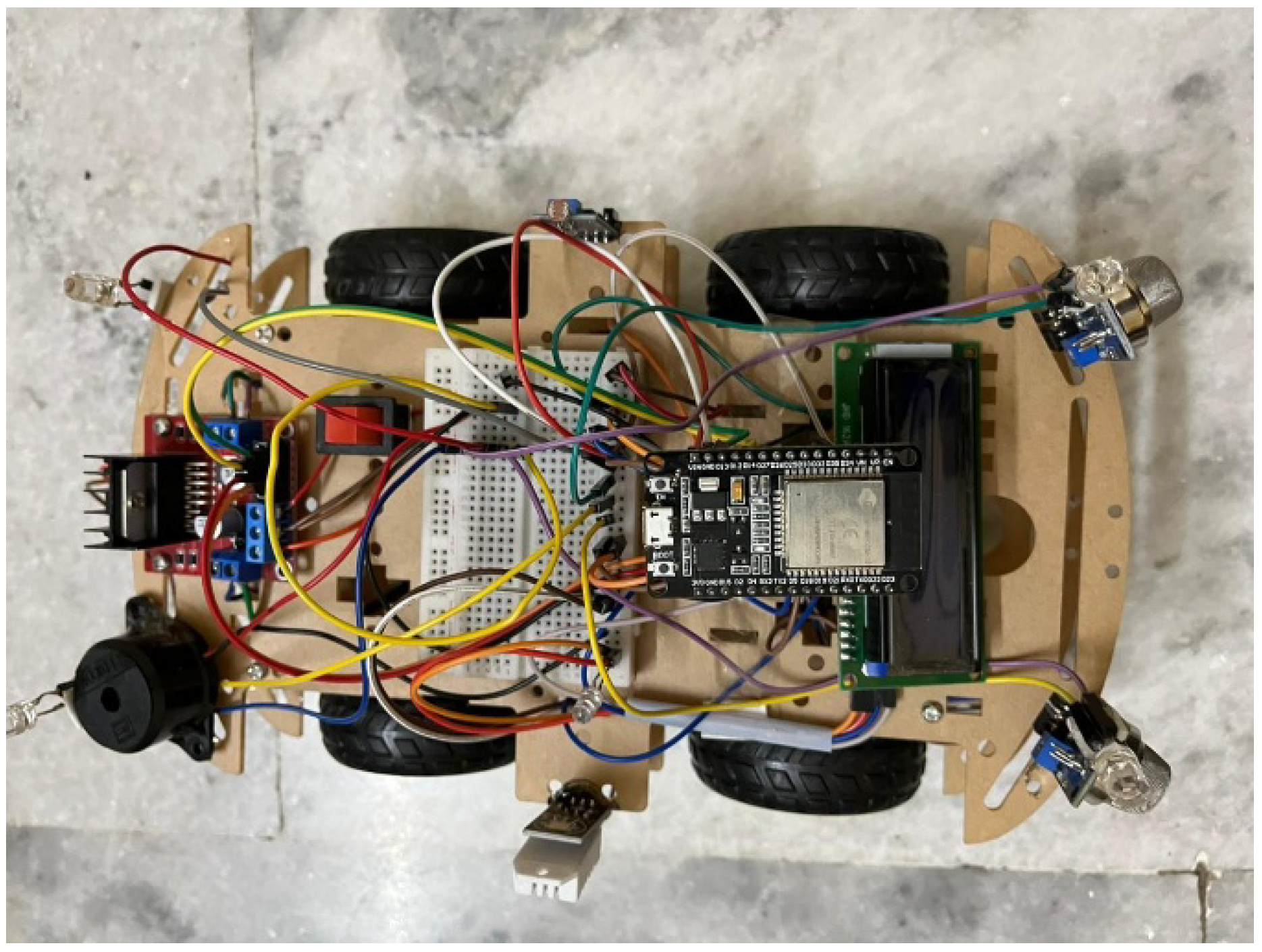
A four-wheeled autonomous robot intended to keep an eye on the weather and air quality is depicted in
Figure 2. It has a number of sensors that gather information about the surroundings while the robot moves. An ESP32 microcontroller, which manages wireless communication and data processing, is at the center of the system. To measure conditions in real time, the robot is equipped with a variety of sensors, including MQ-series gas sensors, a DHT22 for temperature and humidity, and additional air quality sensors. The sensor readings are immediately displayed on a 16X2 LCD screen, and the wheels are moved by an L298N motor driver. Because the entire system is run on a rechargeable battery, it is portable and appropriate for field use. Ultrasonic or infrared sensors are installed on the front for autonomous navigation and obstacle detection.
The collected data can be transmitted to a cloud-based platform for remote monitoring and analysis.
4.4. Design Rationale for System Components
The selection of hardware and software components in this work is guided by portability, cost-effectiveness, real-time capability, and broad applicability for urban and field deployment. The ESP32 microcontroller was chosen over alternatives (such as Arduino Uno/Raspberry Pi) due to its integrated Wi-Fi and Bluetooth connectivity, high processing speed for sensor fusion, low power consumption for battery-operated devices, and support for advanced encryption protocols crucial for secure IoT applications. The DHT22 sensor is used because it offers a favorable balance between accuracy (±0.5 °C for temperature, ±2–5% RH for humidity), cost, and a simple single-wire interface, outperforming more expensive multi-parameter modules for compact integration. The MQ135 gas sensor was selected for its wide gas detection spectrum (ammonia, CO2, alcohol, NOx) and compatibility with mobile and stationary deployments after proper calibration, addressing air quality concerns in urban environments.
For light intensity measurements, the LDR sensor provides analog data with a minimal footprint, suitable for automatic environmental adaptation. Wireless communication is handled via ThingSpeak, an open cloud platform, for live data logging and visualization, and the Blynk mobile application, chosen for its ease of integration and robust remote-control GUI that supports educational, laboratory, and smart city scenarios. The motor control system leverages the L298 driver and TT motors, balancing robustness and low energy usage, with IR sensors deployed for reliable obstacle detection. Collectively, these elements are selected after comparing commercial alternatives to optimize performance, field flexibility, and affordability, all essential for large-scale real-world monitoring.
5. System Software
Effective integration as well as the functioning of our hardware design require software. In our design, there are two components of software. The first component concerns the operation of hardware components like the sensors. It was accomplished through microcontroller programming with Arduino IDE (Version 2.3.1). The second component is the IOT software platform GUI (Graphical User Interface) (Version 1.17.0) which can perform robotic functions as well as air index value retrieval.
5.1. ThingSpeak Channel
A ThingSpeak channel was created using a commercial license which contains 8 channels to display temperature, humidity, pressure, ldr value and air quality index.
Table 2 describes the channel information of the obtained account. ThingSpeak uses traditional HTTP/HTTPS connectivity via the Internet. This cloud-based analytics platform is used to gather, view, and analyze live data streams. The detailed configuration of the ThingSpeak channel used in this system is presented in
Table 3.
5.2. Mobile Application
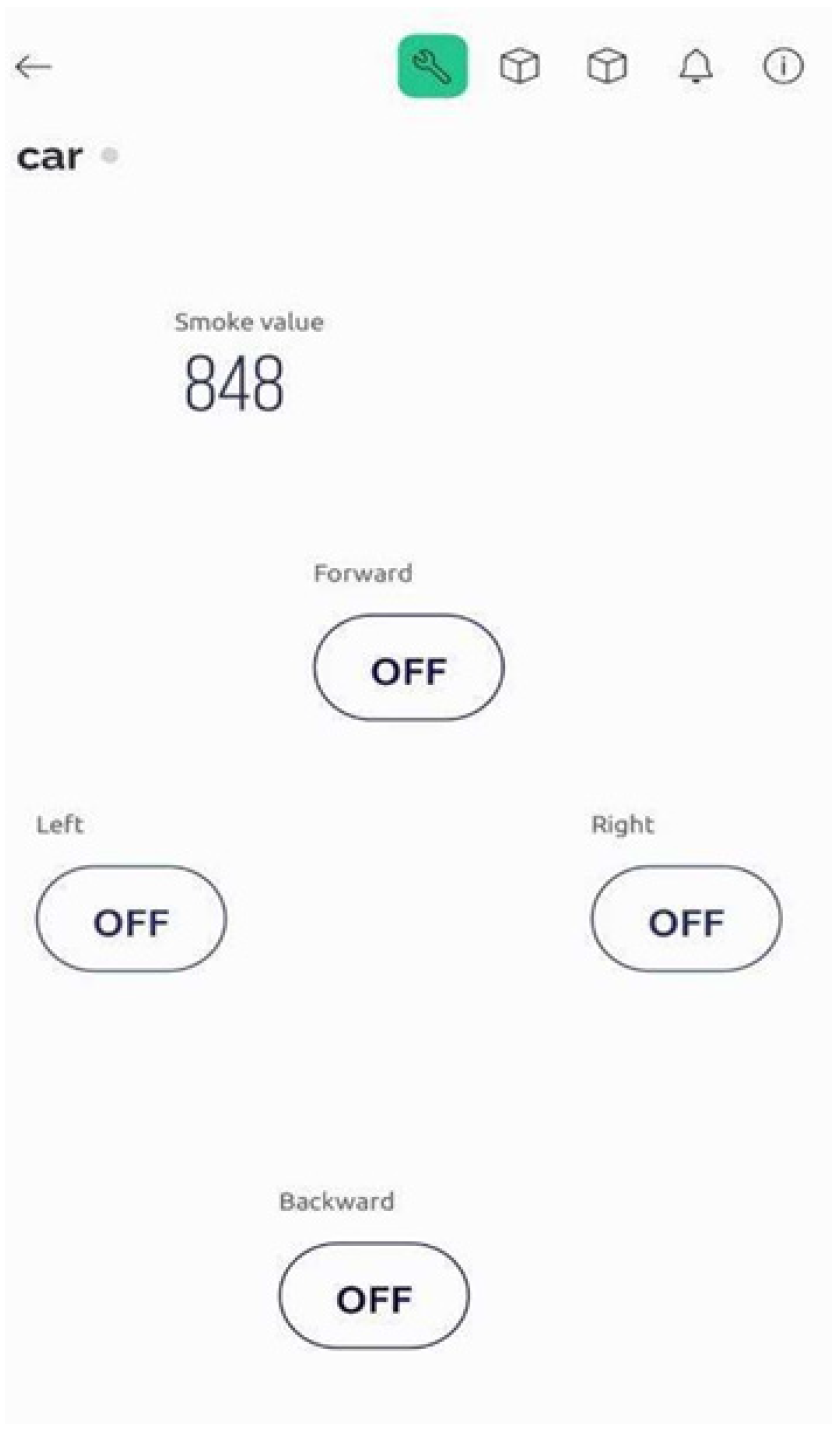
An Blynk app with Graphical User Interface (GUI) was used to design the prototype and enable users to retrieve the data from the microprocessor through WIFI. The level of convenience and efficiency rises with the GUI, and the user authentication features enable the users to log in with username and password. The Blynk app interface is shown in
Figure 3.
6. Results and Discussion
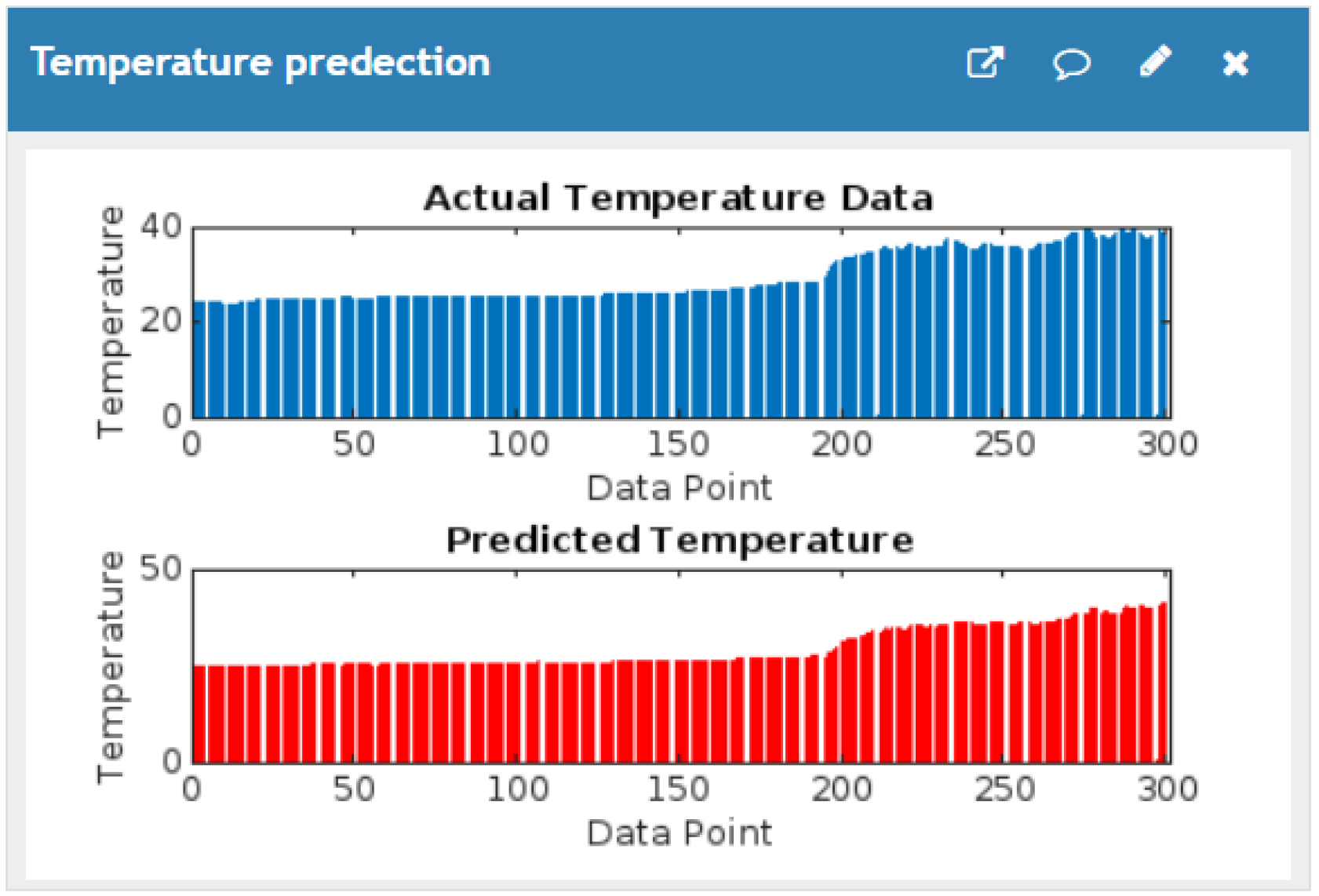
The environmental parameters such as temperature, humidity, particulate levels, and light intensity were successfully recorded by the air monitoring station within the designated timeframe. The temperature was recorded at 32.5 °C early on, and at 37 °C later; humidity levels were at 60% and lowered down to 40% at the later recorded time, both temperature and humidity levels showed some dependent relationship. The light intensity and particulate levels at the early and later time were at 400 units. The particulate matter, however, was showing a upward trend, meaning the light intensity was losing particulate matter. Correlation analysis can be performed on temperature and humidity as both have a dependent relationship; however, there is a negative correlation since the relationship is not linear, temperature can moderately depend on humidity. The temperature prediction model working accurately as with the expected and current data, showed close proximity. Histogram analysis is telling as well, with the recorded data exhibiting quite a small range of temperature measurements standard deviation, reinforcing the idea of a stable monitoring environment.
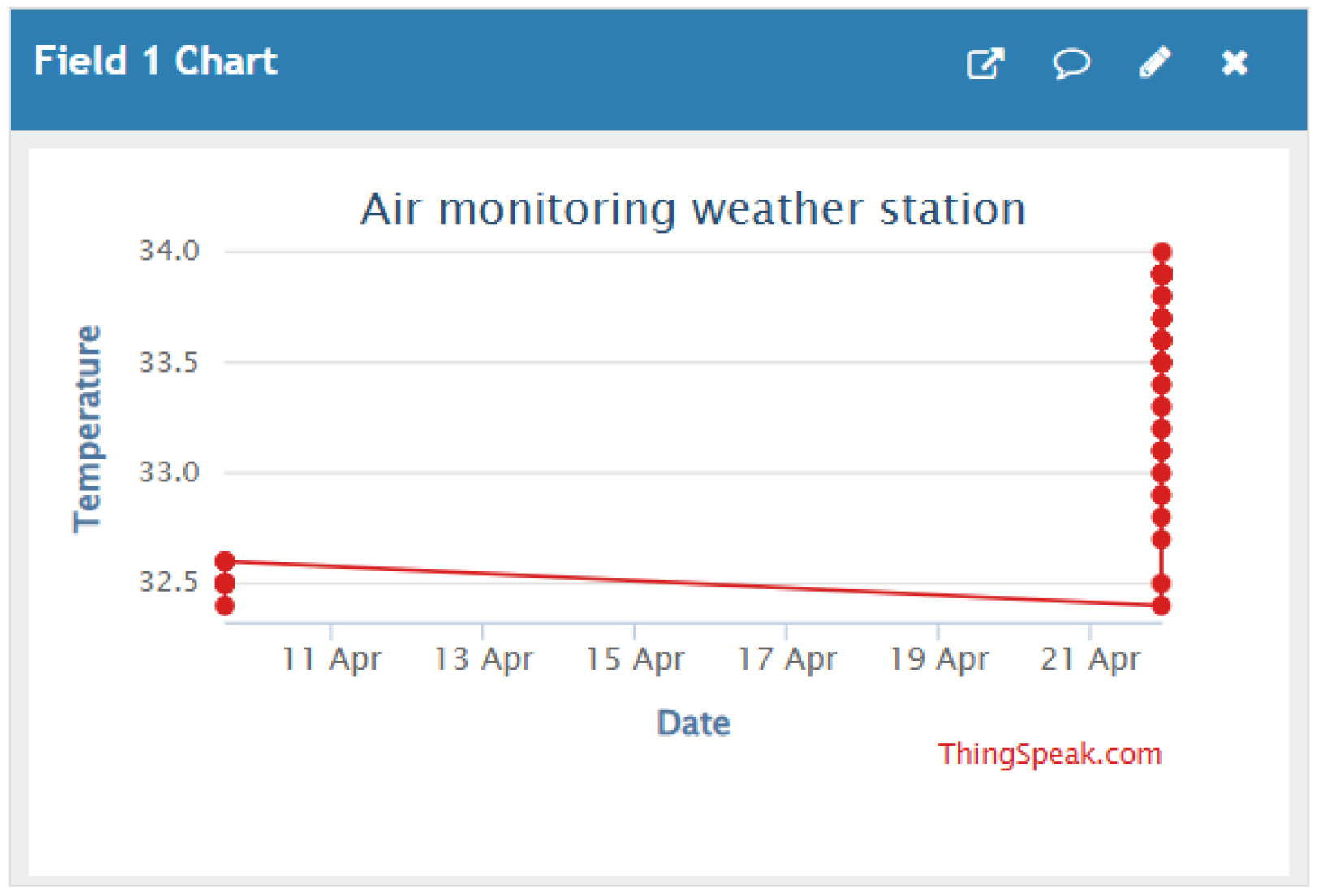
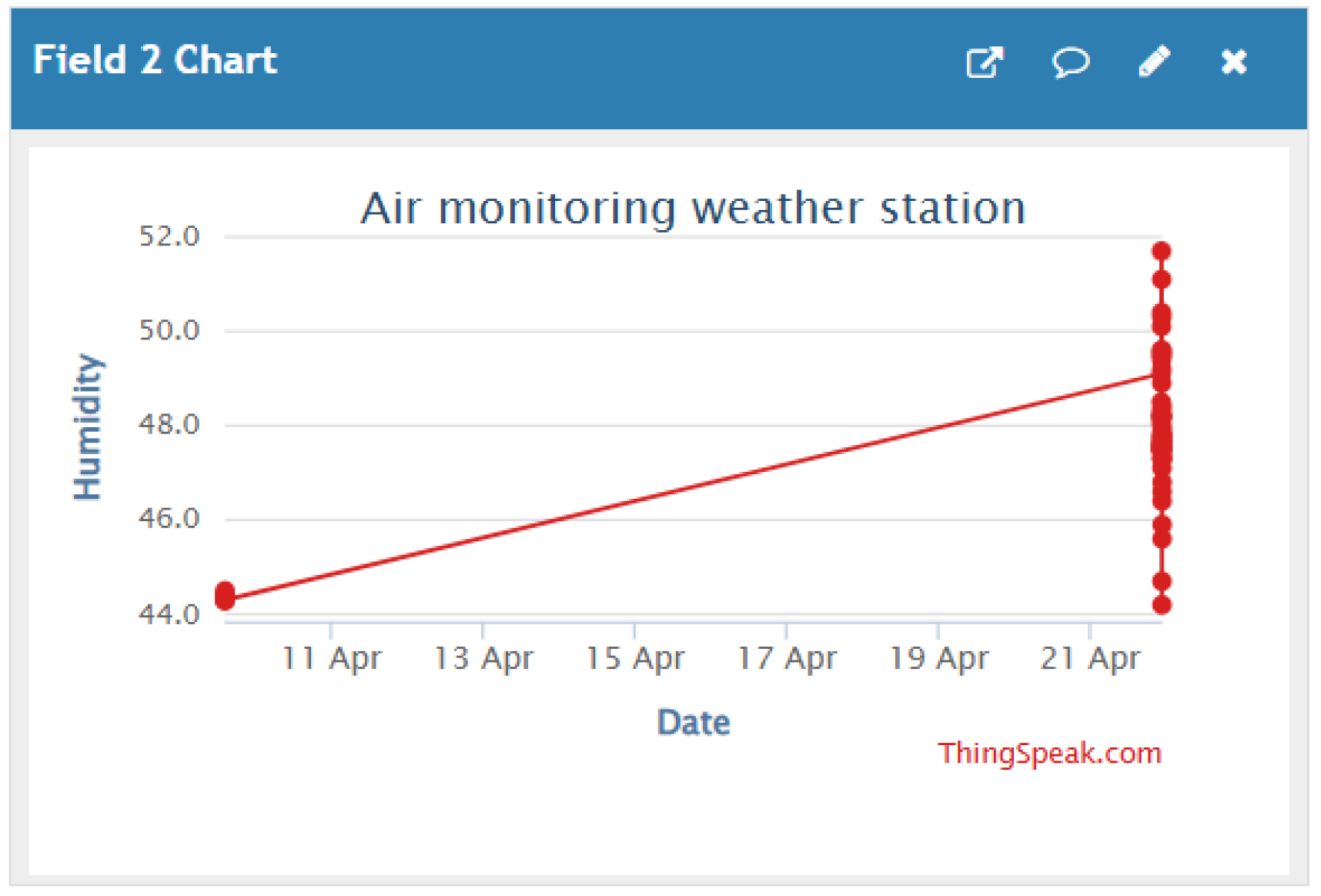
The data collected from an air monitoring weather station is accompanied by environmental data which is visually represented in
Figure 4,
Figure 5,
Figure 6,
Figure 7 and
Figure 8. In
Figure 4, the temperatures are plotted against dates, with the x-axis marking the date and the y-axis signifying temperatures in Fahrenheit. The red trend line indicates the general progression of temperatures, and the trend of the scattered points suggest deviations and fluctuations from the recorded values. In the same manner,
Figure 5 shows the passage of time alongside humidity levels and demonstrates an upward trend alongside scattered data points which showcase the variability of humidity levels.
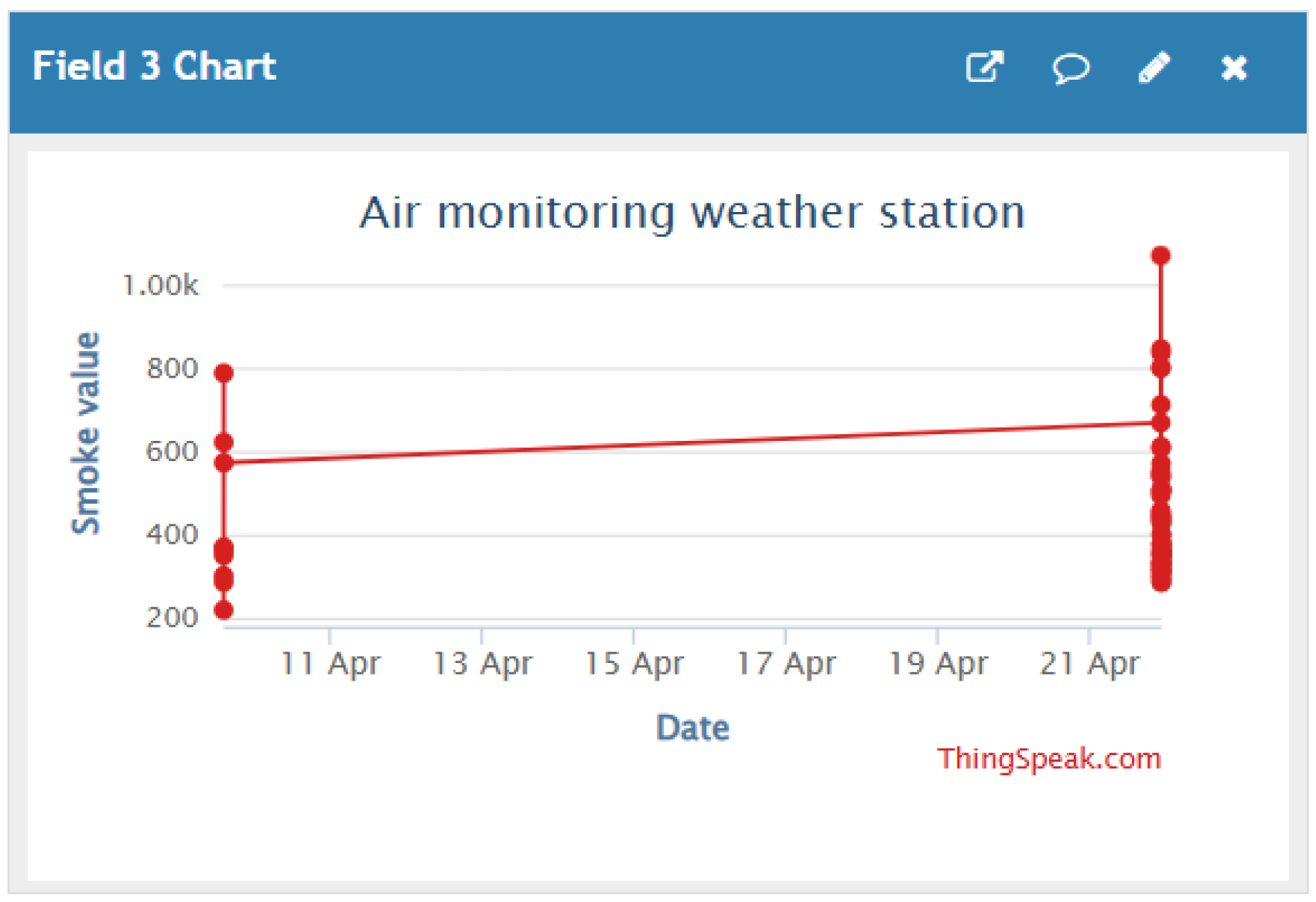
In
Figure 6, the smoke value, most likely measured in the air quality index (AQI), is displayed. Here, the trend line indicates the general progression in smoke levels while the scattered points showcase the deviations and fluctuations around the recorded values. In
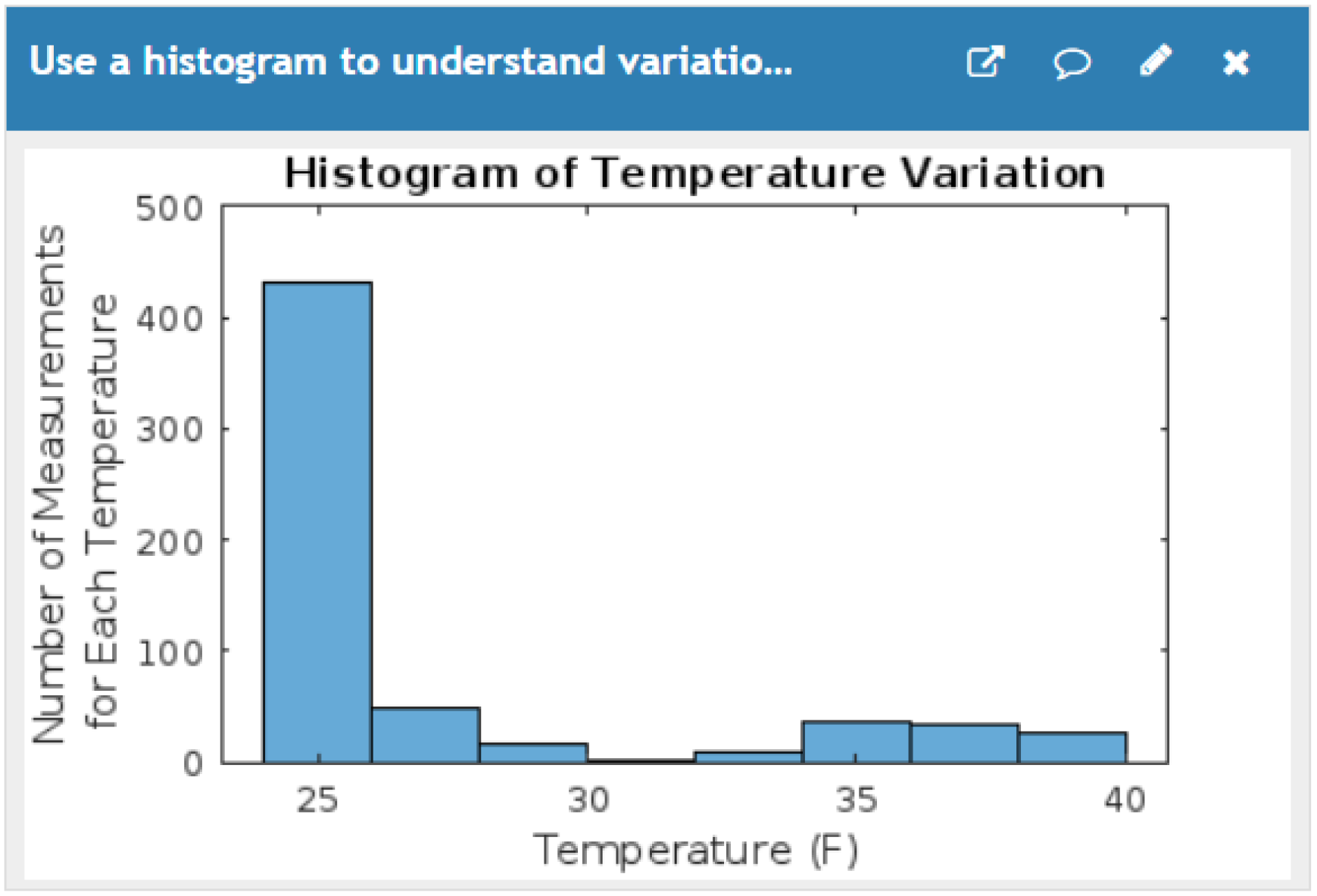
Figure 7, a histogram is displayed alongside the temperature variation data, which demonstrates the frequency distribution of previously recorded temperature ranges. The x-axis is marked with temperature values in Fahrenheit while the frequency of those temperature values is plotted on the y-axis.
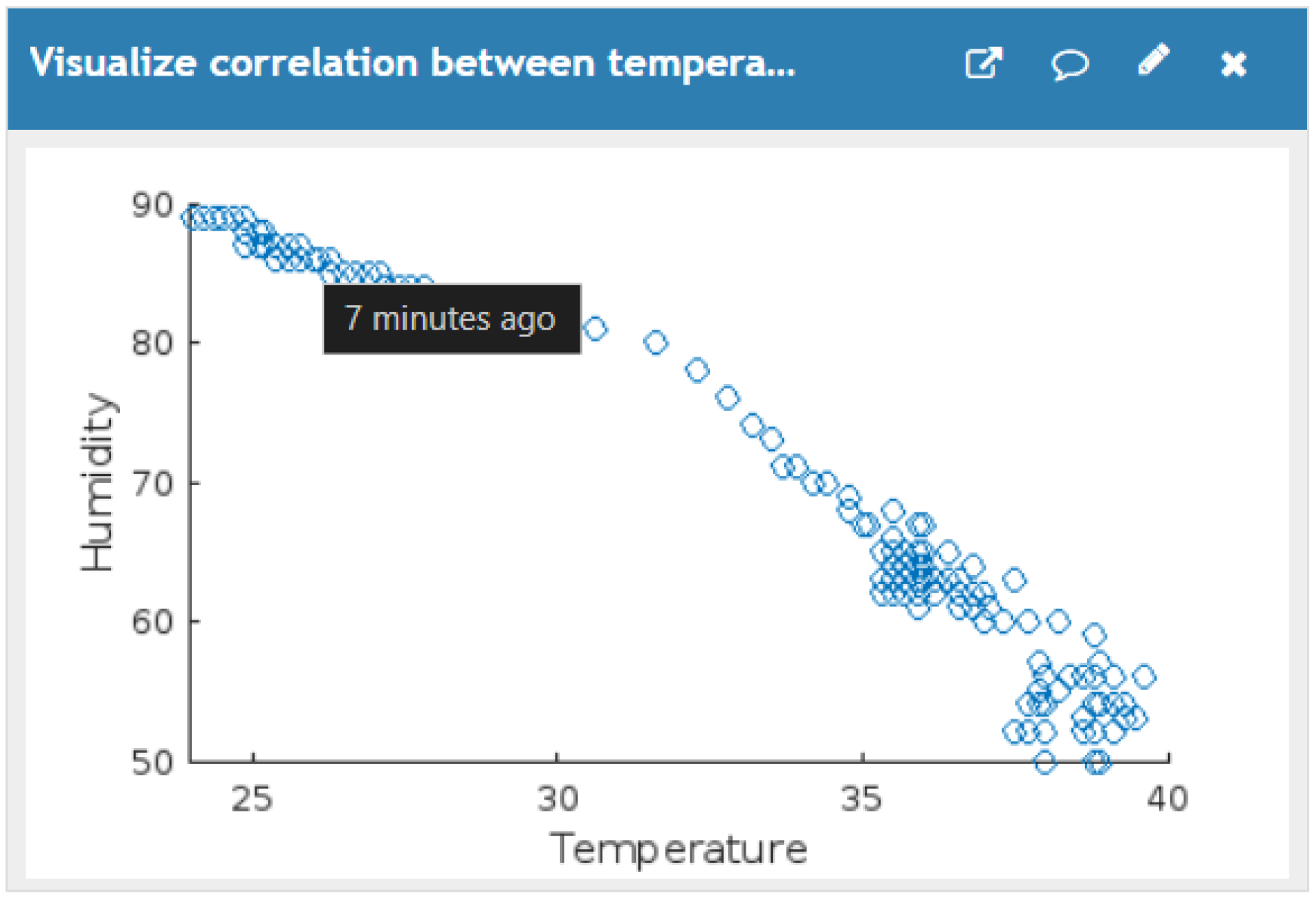
Figure 8 displays scatter plots that establish a correlation between temperature and humidity levels The temperature is represented on the x-axis while the humidity levels are plotted on the y-axis. The scatter plot shows a decrease, which reflects a form of inverse relationship, suggesting that an increase in temperature is typically accompanied by a reduction in humidity. Additionally, in
Figure 9, the Actual temperature values are compared to the Predicted temperature values. The upper plot contains the actual temperature readings, whereas the lower plot contains the values predicted by the model. The strong resemblance noted between the two plots is indicative of the model’s accuracy in predicting temperature changes, thus marking the model as dependable for forecasting temperature changes.
These illustrations serve a significant purpose in the environmental monitoring field by aiding in weather prediction.
Mobility Implementation and Results
A central feature of this platform is the robotic mobility, enabling dynamic environmental mapping by collecting data across different locations during deployment. Mobility was implemented using a four-wheeled chassis powered by TT motors, controlled through the L298 driver with navigation and obstacle detection courtesy of integrated IR sensors. Users can operate the unit remotely via mobile (Blynk app) or program it for autonomous survey missions.
In practice, mobility yielded several significant benefits: first, data from multiple points in urban or greenhouse environments was acquired without manual relocation or installation, supporting spatial trend analysis and localized hotspot detection. Second, the ability to move around obstacles and recalibrate trajectory on-the-fly contributed to the robustness and reliability of the monitoring regime. Third, mobility made high-frequency data collection possible in complex layouts such as schools, laboratories, and outdoor zones, which cannot be covered by stationary systems.
However, challenges were also identified, such as battery management for prolonged missions and occasional sensor calibration drift due to sensor orientation changes. Nevertheless, the strength of the approach lies in the unique, portable mobility that affords both broad coverage and fine-grained data, as demonstrated by spatio-temporal recordings and real-time interactive results displayed on the dashboard and LCD interface.
7. Novelty and Main Contributions
This project presents various technological and practical advances in real-time environmental monitoring. The system is designed as a fully mobile, multi-sensor platform for autonomous and remote-controlled field-based monitoring of air quality and weather. The overall architecture of the monitoring platform is designed to utilize real-time data streaming using web-based platforms such as ThingSpeak and Blynk to give complete cloud-based analytics and user-facing dashboards in real time. By utilizing open-source hardware and low-cost sensors, the device is very inexpensive and portable to deploy on a mass scale without loss of measurement integrity. The flexible capabilities to obtain data from multiple locations and sensors allows for significant correlation and predictive analytics using real datasets. Also, the high level of integration of hardware and software allows for direct application in smart city management, educational settings, and precision agriculture. Thus, by combining hardware mobility with IoT-based real-time data accessibility, multi-parameter sensing, and operational simplicity, the system is filling a gap from previous fixed-point readings or single-point approaches. This innovation supports dynamic scalable and flexible monitoring for responsible urban environmental management, and ultimately, enhances informed decision making in complex real-world environments.
8. Conclusions
The air monitoring station offers an economical, effective, and consolidated approach to atmospheric and meteorological monitoring. Because the prototype employs open-source hardware and inexpensive sensors, it is useful and trustworthy for gathering precise information. This is helpful for planning agriculture and evaluating the air quality. The results from the system underscore its promise for more extensive use. Additional features, for example, sensors for wind speed and direction, would further augment the system’s capabilities. When implemented in agriculture, it can function as a Precision Weather Station, thus meeting some of the environmental challenges and helping to promote sustainable practices and a healthier society.