


Abstract
This study investigates the machining challenges of fiber-reinforced composite materials (FRCMs), focusing on carbon fiber-reinforced polymer (CFRP) plates, which exhibit high abrasiveness, delamination tendency, and accelerated tool wear. Two solid carbide helical end mills, designed for composite machining, were evaluated through helical interpolation drilling. Acoustic emission signals were continuously acquired via a piezoelectric sensor during standardized cycles, and tool wear was assessed using confocal microscopy and a digital altimeter. Signal processing played a central role, combining energy-based metrics and damage indices to identify the onset of wear and early delamination, enhancing the understanding of tool degradation and improving machining reliability.
1. Introduction
The growing use of fiber-reinforced composite materials (FRCMs), such as carbon fiber reinforced polymer (CFRP), is driven by the demand for lightweight, strong, and energy-efficient solutions in aerospace, automotive, sports, and marine industries. CFRP stands out for its high strength, low density, and improved environmental impact, making it widely used in the production of high-performance structural components. However, machining these materials is considerably more complex than machining traditional metallic materials. Unlike metals, which produce continuous and well-defined chips, composites generate powder-like debris, as demonstrated in [1], requiring specific process precautions and the use of appropriate personal protective equipment (PPE), such as special masks [2].
Thus, the machining of CFRP presents significant challenges, including accelerated tool wear and delamination, due to the material’s heterogeneous and abrasive properties. Various studies and current research efforts have prioritized the development of real-time monitoring systems to mitigate these difficulties and improve manufacturing processes [3].
Tool wear is a critical issue in CFRP machining, mainly due to the abrasive nature of carbon fibers. This abrasiveness causes edge rounding and wear on the cutting tool, which increases cutting forces and negatively affects surface finish quality. To avoid direct inspections, which increase machine downtime, real-time Tool Condition Monitoring (TCM) systems based on indirect signal analysis have become a recommended industrial practice.
Acoustic Emission (AE) has been widely applied in TCM systems, as the sound waves generated by plastic deformation and friction offer valuable information regarding tool wear. Studies [4,5] have shown that AE signals, particularly root mean square (RMS) values, are effective for monitoring progressive tool wear and identifying signal anomalies.
In frequency-domain studies, ref. [4] observed that low and intermediate frequency bands (30–110 kHz) are the most relevant for understanding wear during aluminum milling using AE sensors, while higher frequencies (110–150 kHz) contribute less to this evaluation. Moreover, new damage metrics, such as RMS deviation and correlation coefficient deviation, have been proposed to quantify tool degradation and predict remaining tool life, an approach that differs from traditional models. Integration with Artificial Intelligence (AI) has become increasingly common, enabling real-time decisions on tool replacement or regrinding, thereby extending tool life and enhancing productivity. The use of acoustic frequency sensors aligns with Industry 4.0 principles, allowing real-time data acquisition, cloud transmission, retrieval, and computational analysis.
One of the most critical problems in CFRP machining is delamination, particularly during drilling operations. Delamination may cause cracking, reduce durability, or even lead to premature failure of components. This defect occurs when cutting forces exceed the interlaminar strength of the composite layers. There are different types of delamination, such as peel-up (at the hole entry) and push-down (at the hole exit), typically caused by drilling pressure and lack of support. As tool wear increases and the cutting edge dulls, delamination becomes more severe. To mitigate this, alternative machining strategies have been proposed. Studies demonstrated that drilling via helical interpolation using end mills significantly reduces delamination and improves surface roughness control when compared to conventional twist drills [5].
Acoustic Emission (AE) analysis has proven to be an effective method for identifying damage in composite materials, enabling real-time tracking of damage evolution. According to [6], different failure modes produce AE signals with distinct amplitude and frequency characteristics: matrix cracking tends to exhibit low amplitude and frequency, whereas fiber breakage generates high-amplitude and -frequency signals. Delamination and interfacial debonding fall within intermediate ranges. However, the authors of [7], as referenced by [6], caution that this relationship is not always linear and recommend the use of complementary in situ techniques, such as Digital Image Correlation (DIC), to more accurately determine the signal sources. Advanced signal analysis also plays a crucial role. Ref. [8] demonstrated a deep learning technique that combines the Wigner–Ville Distribution (WVD) and Convolutional Neural Networks (CNNs) to automatically distinguish between delamination and microcracks in CFRP, achieving high classification accuracy. Wavelet Transform (WT) has also shown promise in identifying damage mechanisms in composite materials.
Despite the extensive research on machining processes for composite materials, there are still knowledge gaps regarding tool behavior, particularly in understanding how wear evolves and how it relates to interlaminar separation within the material. Monitoring and controlling wear mechanisms such as edge rounding, cracking, and chipping at the cutting edges are essential for estimating tool life and reducing operational costs and product defects. In this context, the present study proposes an experimental approach based on helical interpolation using solid carbide end mills for drilling CFRP plates. In addition to wear characterization through confocal microscopy and profilometry, the work investigates the use of acoustic emission signals, captured by a piezoelectric sensor, as a non-intrusive method for monitoring tool integrity and detecting early signs of delamination. The results contribute to the advancement of tool condition monitoring and process optimization in the machining of composite materials, with significant implications for advanced manufacturing industries.
2. Material and Methods
For this study, 5 mm-thick plates made of CFRP were used, acquired with funding from the School of Engineering of São Carlos (EESC-USP). These plates consist of an epoxy resin reinforced with a 3K 2 × 2 twill weave carbon fiber fabric. Their mechanical properties, measured according to ASTM standards, are as follows: flexural strength of 700 MPa (ASTM D-790) [9], tensile strength of 40 GPa (ASTM D-638) [10], and hardness of 60 Barcol (ASTM D-2583) [11].
Two solid carbide end mills with a helical design and four cutting edges were employed, both with a diameter of 10 mm:
- Tool 1A: DEMK—titanium carbonitride coated, Ø10 × 100 L, 4-flute.
- Tool 2A: B&D—tungsten/steel, Ø10 × 100 L, 4-flute.
Both tools operated under identical machining conditions, with a fixed spindle speed of 7000 rpm, a feed rate of 500 mm/min, and an axial depth of cut (ap) of 2 mm per revolution, applying the climb milling strategy, as recommended for composite materials. The milling process was performed using helical interpolation on a ROMI D400 machining center equipped with a GE FANUC Series 08-MATE-MB CNC system. The interpolation path was defined by a 2.5 mm radius in the X and Y axes, generating holes with a 15 mm diameter. The feed motion along the Z-axis was set at 1 mm per revolution.
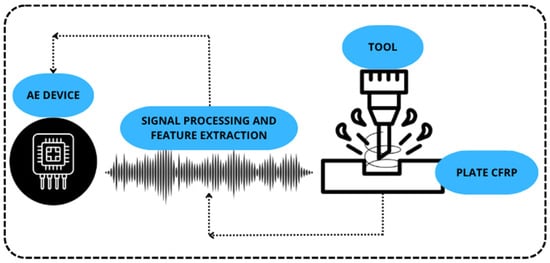
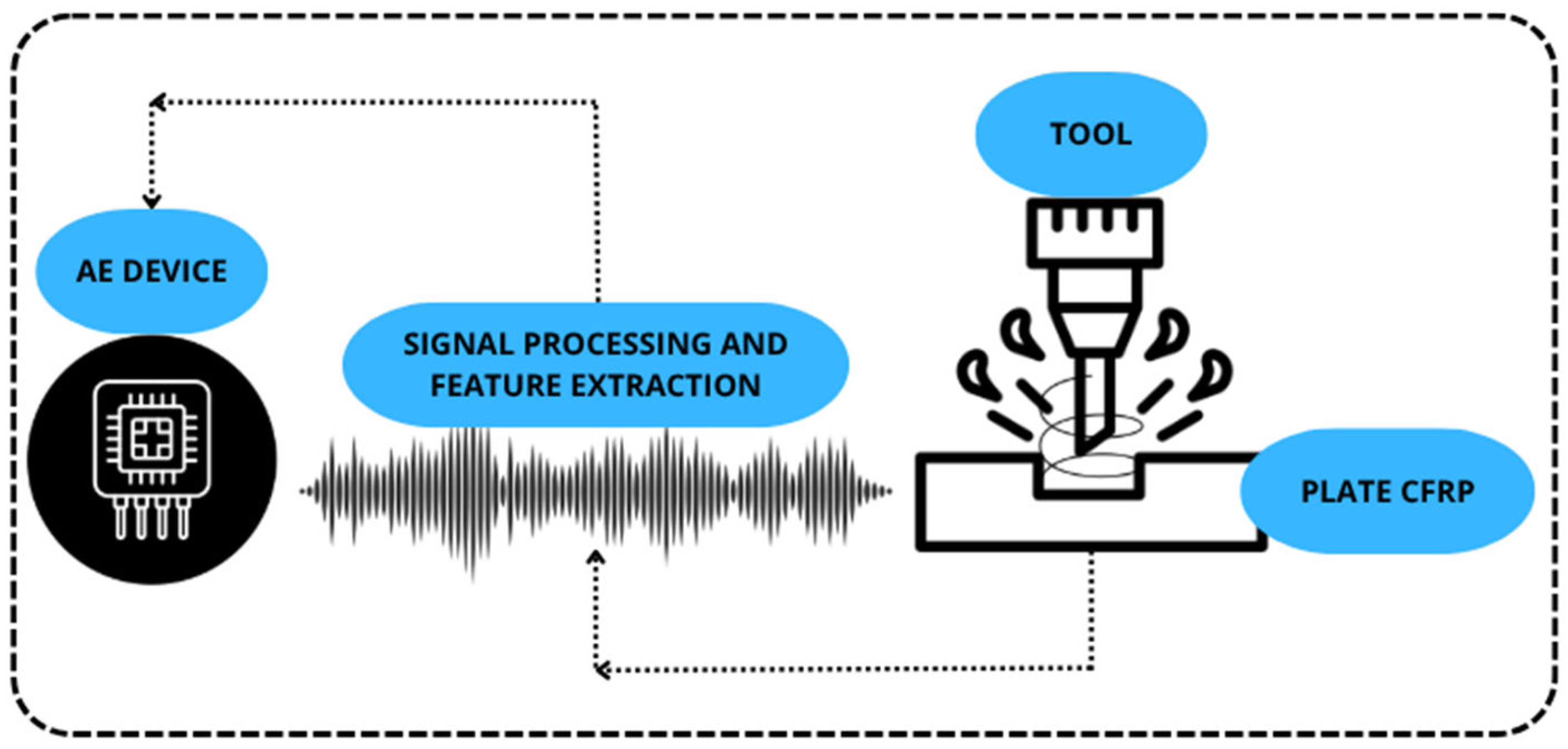
Dry machining was employed, and chip evacuation was achieved through a vacuum extraction system. Tool wear was evaluated after every 80 holes. The CFRP plates were mounted on a carbon steel base, designed to allow tool clearance without structural interference. This base was installed on a polyurethane (PU) support, which was fixed to the machine table using locknuts and positioning keys. The complete operational diagram is shown in Figure 1.
Figure 1.
The milling process diagram.
The system records the acoustic signals emitted before, during, and after the onset of machining, based on a voltage threshold trigger, ensuring accurate detection of events associated with tool wear or delamination.
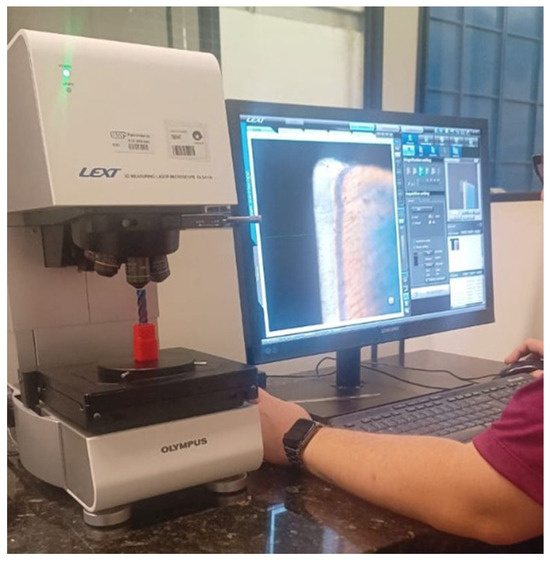
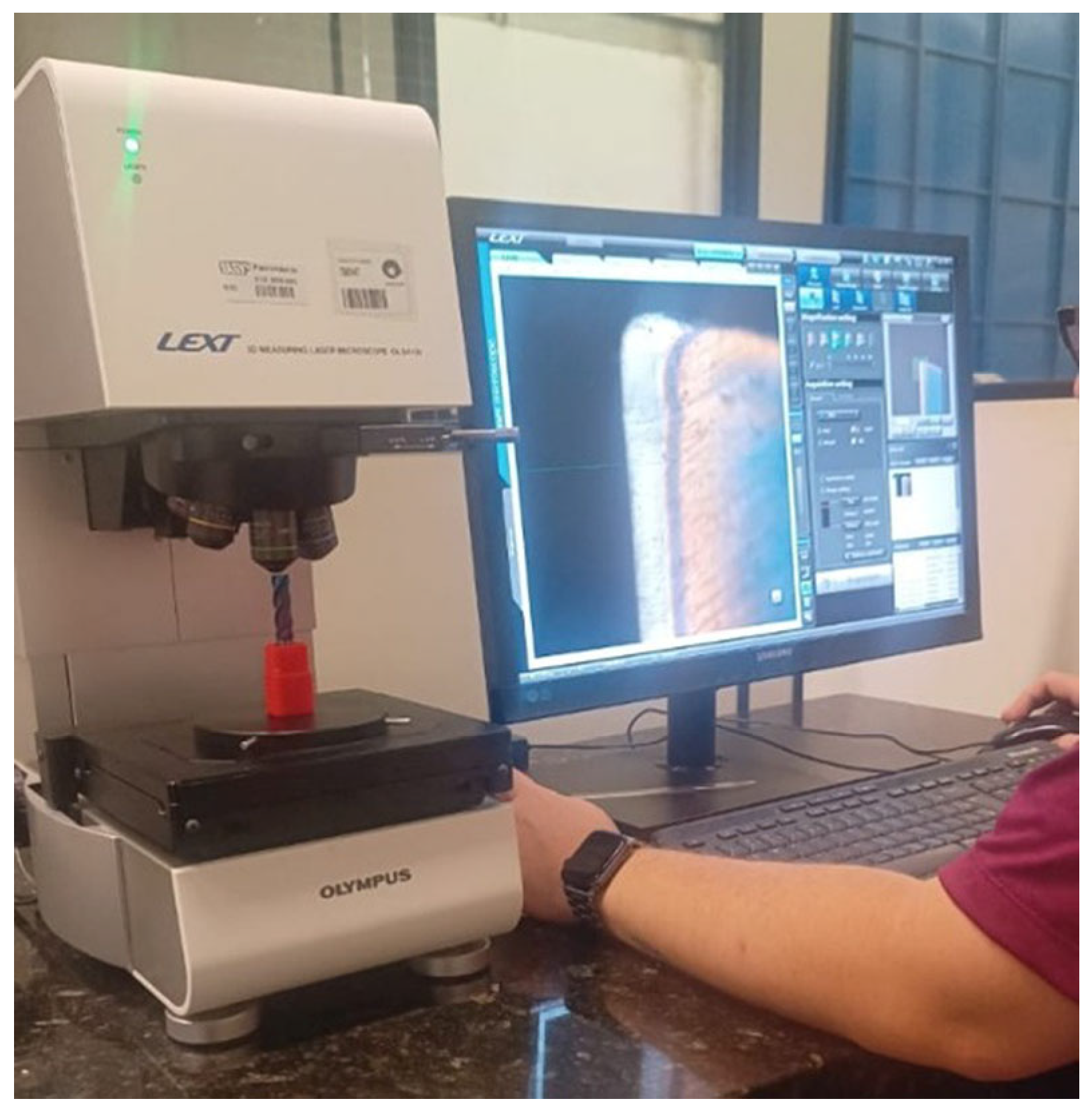
Before machining, the cutting tools were measured using a TESA micro-hite M600 digital height gauge and scanned with an Olympus OLS 4100 confocal laser microscope to obtain the initial geometry of the cutting edges (Figure 2. Tool measurements to check for wear).
Figure 2.
Tool measurements to check for wear.
During the process, acoustic emission (AE) data were collected at intervals of every 80 drilled holes. After each cycle, the tools were re-evaluated using the confocal microscope to assess flank wear and edge degradation.
Each CFRP plate allowed for the execution of three machining cycles, totaling 240 holes per plate.
According to tool supplier recommendations, the best results in machining carbon fiber composite plates are obtained when the cutting orientation is defined in the conventional (up-milling) direction. Therefore, a spindle speed of 7000 rpm was adopted, and the feed rate was divided into three stages: (i) in the initial stage, corresponding to the hole entry (first millimeter of plate thickness), the feed rate was set at f = 640 mm/min, which corresponds to fz = 0.02 mm/tooth; (ii) in the intermediate stage, covering the central three millimeters of the plate, the feed rate was increased to f = 1680 mm/min (fz = 0.06 mm/tooth); (iii) and, finally, in the last millimeter of thickness (hole exit), the same entry feed rate was applied again.
The vertical feed (Z-axis) was set to 1 mm/rev, while the interpolation in the X and Y axes followed a 2.5 mm radius path, forming a 15 mm diameter at the tool’s periphery.
The cutting path is defined by the following equation:
Thus, the cutting length per hole is 235.6 mm, and the cutting time per hole is 14.1 s. Dimensional and acoustic frequency data were collected every 80 holes machined. Therefore, data acquisition occurs every 18,848 mm of accumulated cutting length, with a total cutting time of 1128 s (or 18 min and 48 s). The machining process was carried out dry, and the debris was removed using a vacuum suction system.
Each set of 80 holes defines one machining cycle. Given that each carbon fiber plate can accommodate 160 holes, it was possible to perform two full cycles per plate. At the end of the experiment, a total of 240 holes were machined per tool, corresponding to the use of three CFRP plates per tool.
3. Results
The results obtained are presented in two sections: hole delamination and acoustic mapping—for comparative analysis between the tools.
3.1. Hole Delamination
The analysis of tool deterioration was carried out using high-precision equipment. With the TESA micro-hite M600 digital altimeter, a reduction in tool height was observed, indicating wear on the frontal face. Additionally, the Olympus OLS 4100 confocal microscope enabled detailed mapping of wear on the lateral flank and cutting edge, revealing rounding and gradual deterioration of the edges.
It was noted that wear is more pronounced along with the tool periphery, gradually decreasing toward the center. This pattern aligns with the theoretical relationship between cutting speed and wear: since tangential velocity is higher at the tool’s edge, wear tends to be more severe in this region. As the contact point approaches the tool center, cutting speed decreases, resulting in lower wear rates.
Measurements revealed cutting-edge wear ranging from 0.02 mm to 0.06 mm in the carbide end mills. Localized chipping was also observed on some tool blades, although the trend of decreasing wear from the outer to the inner region remained consistent.
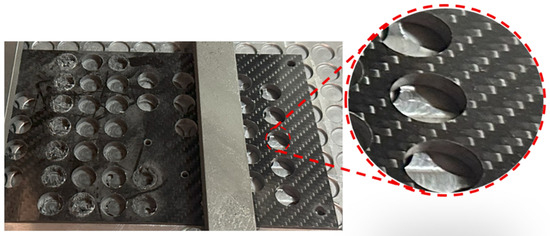
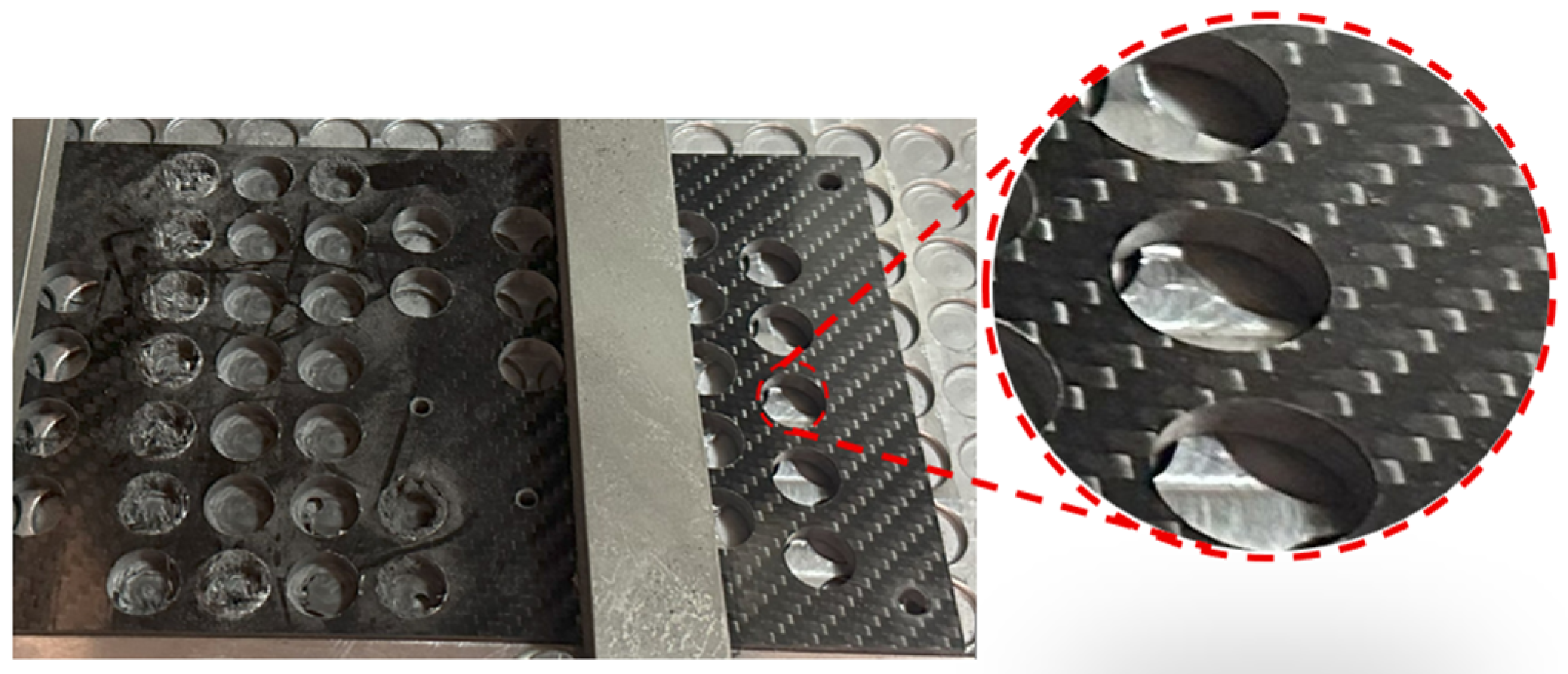
Studies conducted reported the occurrence of defects during drilling operations, such as cracks, delaminations, and fiber displacements, particularly at the tool entry and exit points [1,2,3,4,5,6,7,8,12]. In comparison, the components produced in the present study exhibited smaller delaminations and demonstrated improved control during the tool’s entry and exit, resulting in reduced surface roughness.
Figure 3 below illustrates the preliminary delaminations identified in the present study.
Figure 3.
Delaminations resulting from the tool exit during the operations.
3.2. Acoustic Mapping
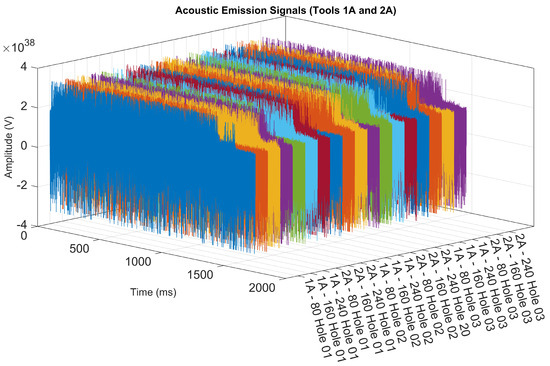
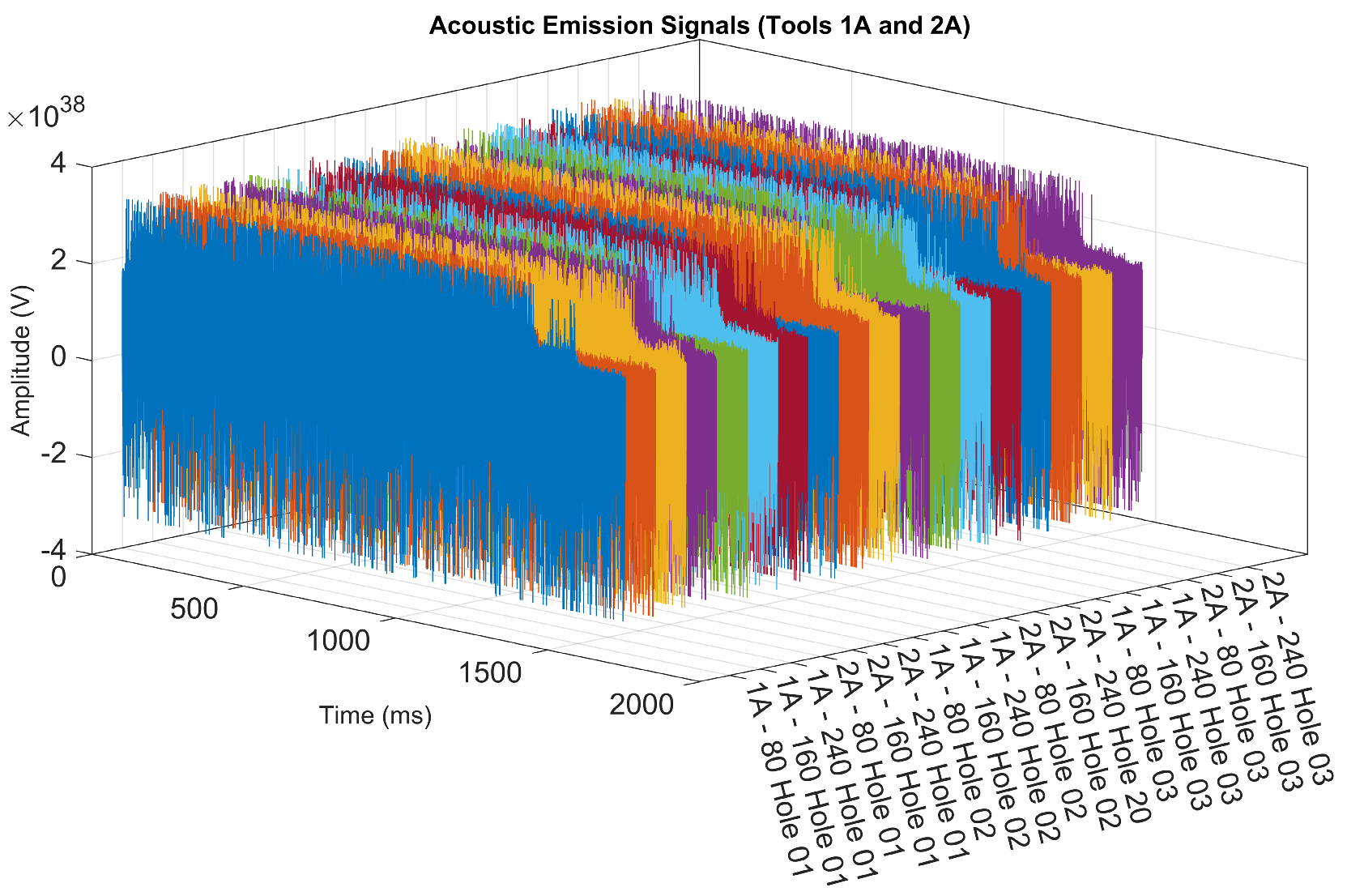
The acoustic signals were analyzed using the MATLAB 2024b environment, enabling the construction of acoustic maps that were correlated with the corresponding levels of tool wear. This methodology involved the visual categorization of spectral data to distinguish between the two tested tools (Tool 1A and Tool 2A) and to track the evolution of wear across machining cycles, segmented into intervals of 80, 160, and 240 holes. Figure 4 illustrates the signal pattern captured during the initial holes with a new tool, while subsequent figures compare signals obtained with worn tools, evidencing how signal magnitude decreases for Tool 1A due to edge rounding, while conversely increasing for Tool 2A in response to process instability and severe friction.
Figure 4.
Signal pattern captured during the initial holes.
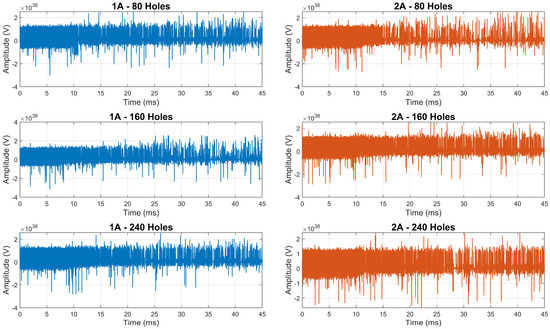
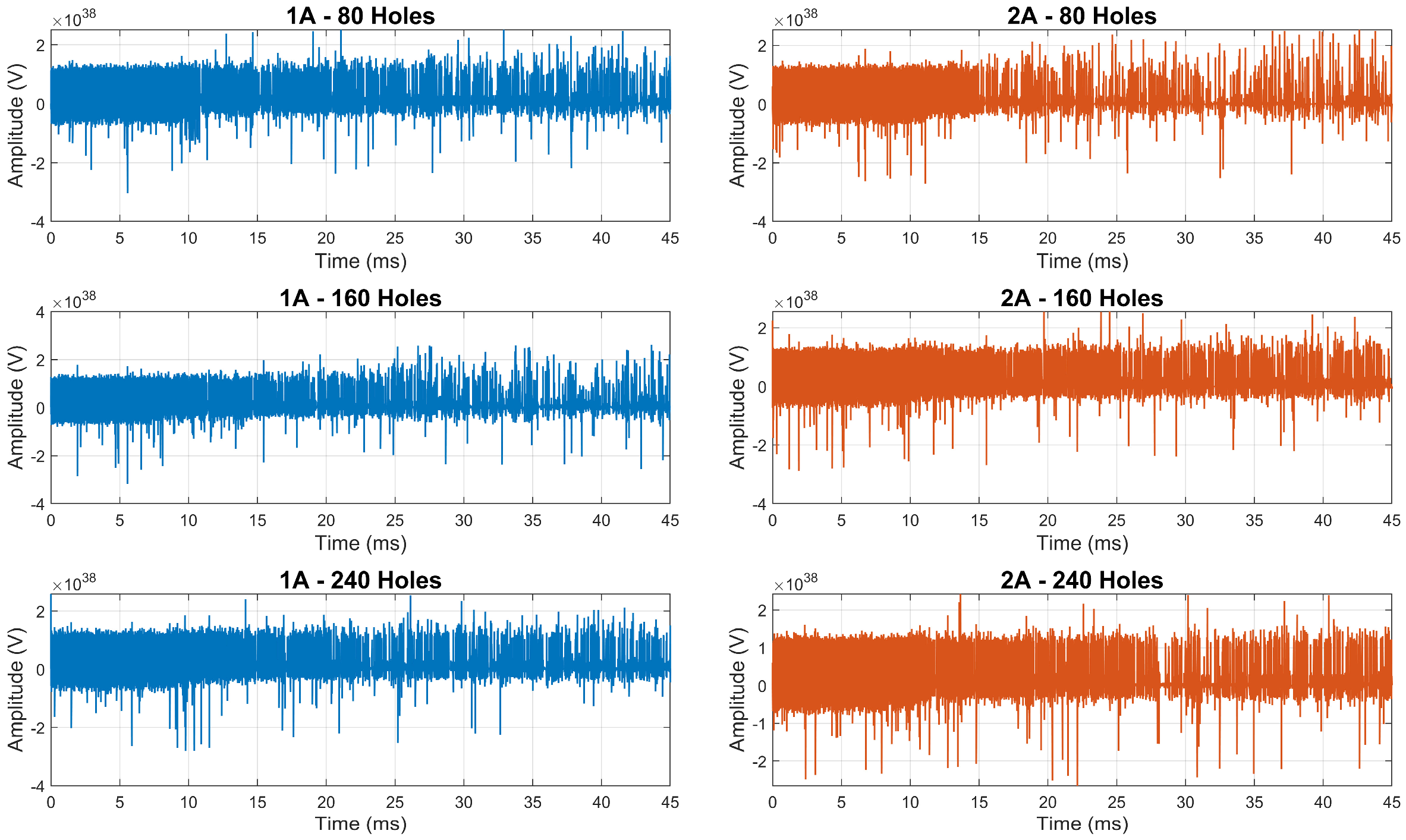
After every set of eighty holes machined with each tool, the tools were re-characterized, and a new acquisition of acoustic emission signals was performed. The data were processed and stored for subsequent analysis. Figure 5 demonstrates a comparison of the signals. Following each at of 80 holes, additional tests were conducted to capture acoustic emissions and to measure tool dimensions, to assess flank wear and cutting-edge degradation.
Figure 5.
Comparison of Acoustic Emission signals from tools 1A vs. 2A.
Figure 6 illustrates that the mills exhibit energy concentrations in specific areas of the spectrum, particularly below 100 kHz and between 200 and 300 kHz, indicating that the cutting process produces characteristic frequency responses within these bands. Tool 1A shows a trend of gradual reduction in the strength of dominant frequencies as the number of drilled holes increases. This decline in magnitude, especially noticeable after 240 holes, suggests progressive wear of the drill and a loss of cutting ability, resulting in less intense acoustic emissions. Such behavior may be associated with the rounding of the cutting edge and the dulling of the drill tip, leading to smoother cutting and, consequently, lower acoustic energy generation.
Figure 6.
Energy concentration in specific areas.
In contrast, tool 2A exhibits an opposite trend. As the number of holes increases, the intensity of the emitted sounds also rises, reaching its peak after 240 holes. This indicates that tool wear has led to increasing instability in the machining process, possibly due to microcracks in the cutting edge, heightened friction, or surface irregularities on the tool. These effects intensify the emission of high-energy sound waves, reflecting a more aggressive wear behavior.
When comparing the two mills, it is evident that tool 2A produces higher emission amplitudes within the same frequency ranges compared to tool 1A, particularly in the final stages of milling. This difference suggests that tool 2A experiences a faster wear rate or lower wear resistance in comparison to tool 1A.
In Table 1, it can be observed that Tool 1A exhibits a decline in efficiency, evidenced by a reduced generation of acoustic emission signals, which is attributed to tool wear diminishing the cutting aggressiveness. In contrast, Tool 2A demonstrates that tool wear increases friction or instability during machining, leading to higher magnitude peak responses.
Table 1.
Comparison of Acoustic Emission (AE) Results and Wear Trends for Tools 1A and 2A.
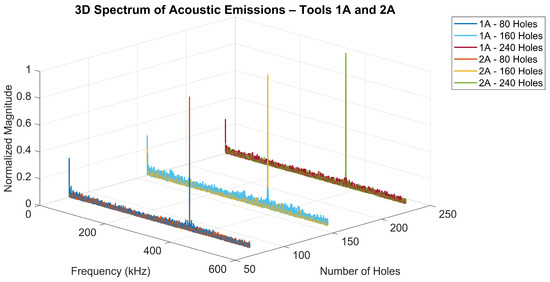
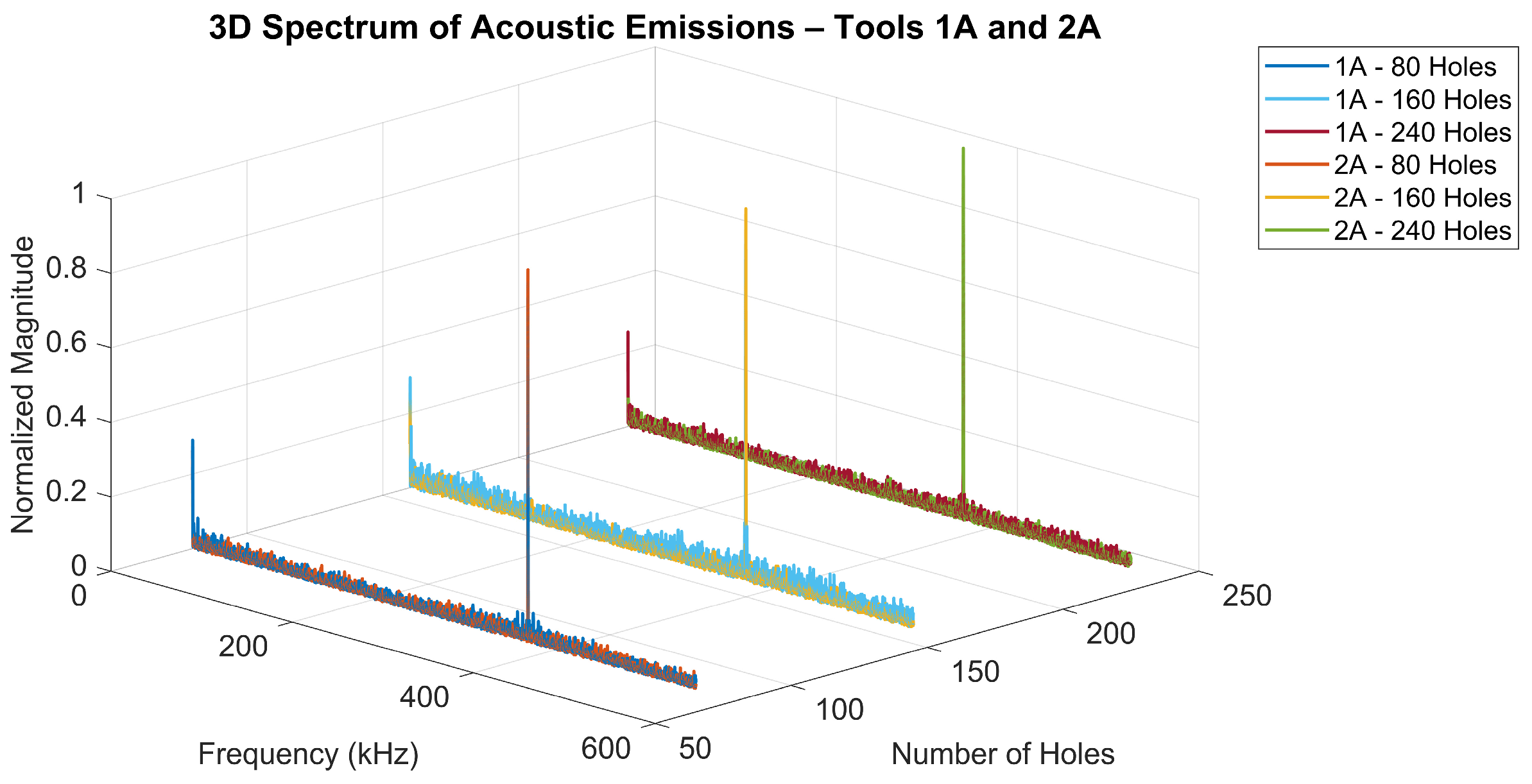
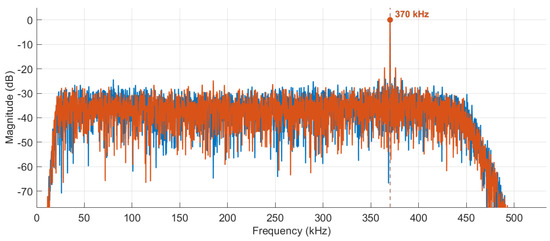
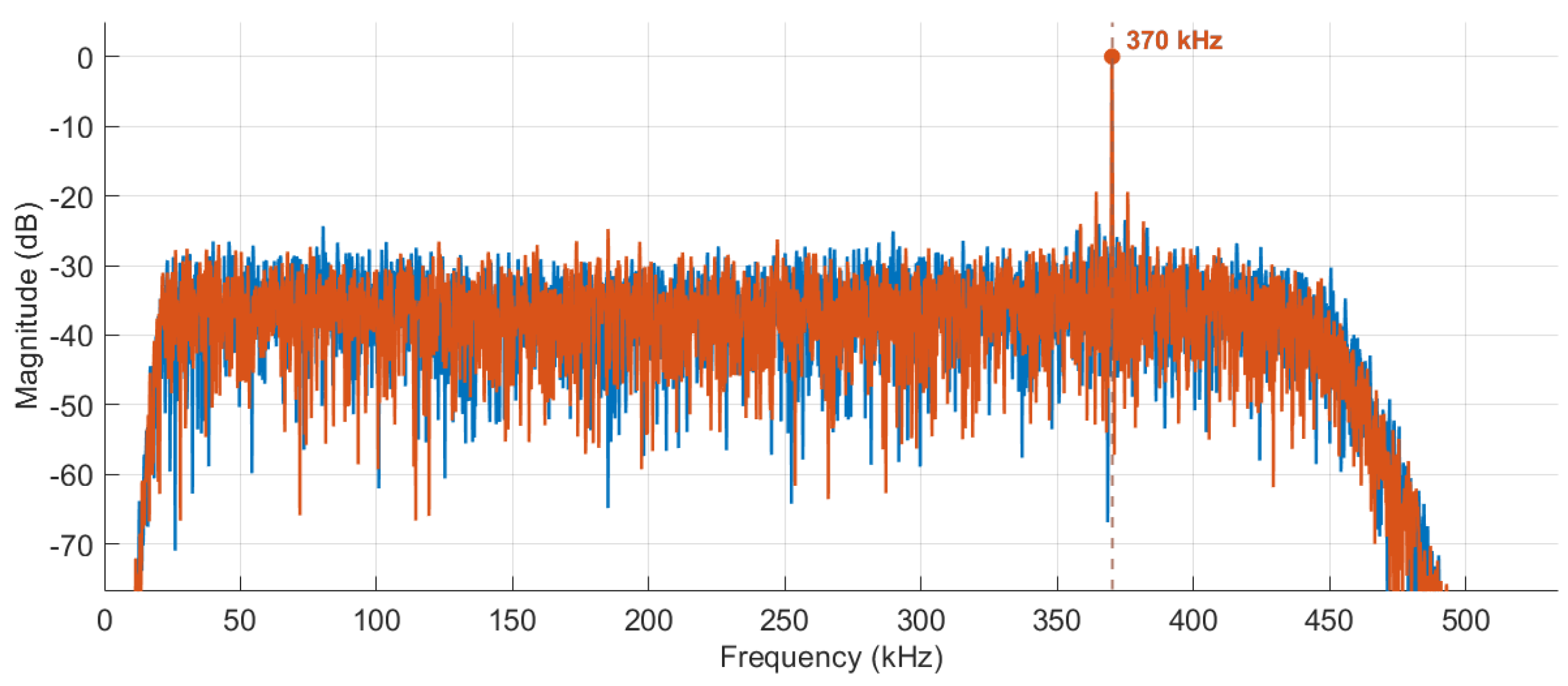
The spectral representation in Figure 7 is an overlay of the Acoustic Emission (AE) signals from the two tools, where the Blue and Orange/Red colors distinguish the frequency spectra of Tool 1A and Tool 2A, respectively. Visual analysis demonstrates that the 370 kHz peak is predominantly associated with Tool 2A (Orange/Red), indicating that this tool is the primary source of the observed dynamic instability. This behavior corroborates the wear trend of Tool 2A, which, as previously discussed, results in increased friction and higher magnitude peak responses, in contrast to Tool 1A, whose frequency spectrum (Blue) exhibits a more contained magnitude, reflecting the reduction in cutting aggressiveness due to edge rounding. The concentration of energy at this specific frequency suggests the occurrence of a resonance or vibration phenomenon induced by severe wear, which serves as a critical indicator for tool condition monitoring.
Figure 7.
Indication of instability associated with tool wear.
4. Conclusions
This project concludes with the presentation of findings regarding how tool wear affects cutting performance, alongside the analysis of acoustic emission and surface quality in drilling operations on carbon fiber composites using a helical interpolation strategy.
The evaluation of wear in solid tools proved to be both relevant and promising, addressing gaps highlighted in several recent studies, particularly considering the inherent peculiarities of machining composite materials, which differ substantially from traditional metallic alloys. The powder-like chips and the high abrasiveness of the material resulted in accelerated tool degradation, evidenced by premature polishing and rounding of the cutting edges, most notably in the peripheral region, where tangential speed reaches its peak. This wear pattern, concentrated at the edges of the tools, reinforces the established relationship between cutting speed and wear observed throughout the study.
Acoustic mapping, in turn, demonstrated a strong correlation with the progressive deterioration of the tools. Frequency patterns associated with increased sound emission were identified as the tools lost their integrity, providing concrete support for the use of acoustic emission monitoring as a reliable indicator of tool condition. This approach is especially useful for predictive maintenance strategies, whether through direct operator intervention or automated systems equipped with artificial intelligence. The time–frequency transformations employed in signal processing proved effective in detecting behavior changes related to tool wear and may be integrated into real-time monitoring systems in the future.
Additionally, the assessment of delamination in machined parts indicated that the helical interpolation technique is effective in reducing and controlling defects both at the entry and exit points of the tool. The delaminations observed were significantly less pronounced than those typically reported in conventional drilling processes, such as those performed with helical drills. This finding paves the way for further investigations, including the quantification of delamination using digital scanning and subsequent correlation with wear data and acoustic emissions.
The project highlights that machining composites using helical interpolation, combined with acoustic emission monitoring, represents a viable and promising strategy for both extending tool life and optimizing hole quality. The results provide a solid foundation for future research aiming to integrate sensors, adaptive control, and artificial intelligence into the production environment of composite material manufacturing.
Author Contributions
Conceptualization: A.R.R., F.R.L.D. and P.d.O.C.J.; Methodology: T.E.M. and P.d.O.C.J.; Software: T.E.M.; Validation: P.d.O.C.J.; Investigation: A.R.R., F.R.L.D. and P.d.O.C.J.; Resources: M.M.d.S., F.R.L.D. and P.d.O.C.J.; Data Curation: T.E.M.; Writing-original draft preparation: T.E.M.; Writing-review and editing: T.E.M. and C.B.M.; Visualization: T.E.M.; Supervision: P.d.O.C.J.; Project Administration: P.d.O.C.J.; Funding Acquisition: A.R.R., F.R.L.D. and P.d.O.C.J. All authors have read and agreed to the published version of the manuscript.
Funding
São Paulo Research Foundation, under grant #2023/02413-2, and the National Council for Scientific and Technological Development (CNPq) under grant #445054/2024-7.
Institutional Review Board Statement
Not applicable.
Informed Consent Statement
Not applicable.
Data Availability Statement
The data are not publicly available due to institutional restrictions.
Acknowledgments
The authors would like the University of São Paulo (USP), the National Industrial Training Service (SENAI), the National Council for Scientific and Technological Development (CNPq), and the São Paulo Research Foundation (FAPESP) for the opportunity to carry out and publish the research.
Conflicts of Interest
The authors declare no conflict of interest.
References
- Campos, J.; Oliveira, M.; Andrade, A.; Silva, T. High-Speed Drilling of Glass Fiber-Reinforced Polymer Composites. Cienc. Tecnol. Mater. 2007, 19, 83–87. [Google Scholar]
- Ferraresi, D. Fundamentals of Metal Machining, 1st ed.; Blucher: São Paulo, Brazil, 1970; Available online: https://plataforma.bvirtual.com.br (accessed on 2 August 2025).
- da Silva, M.; Lima, F.; Moura, R.; Souza, L. Study of Tool Wear, Delamination in Composite Material Plates and Machining Monitoring by Means of Acoustic Sensor. Available online: https://static.even3.com/anais/921305.pdf?v=638897462625506909 (accessed on 2 August 2025).
- Bernardes, L.P.; Pedro, J. Detection of Machining Tool Damage Using Acoustic Emission, Signal Processing, and Feature Extraction. Available online: https://repositorio.usp.br/item/003184338 (accessed on 7 August 2025).
- Klocke, F.; Krieg, T.; Emonts, M.; Klink, A.; Mattfeld, P. Acoustic emission signal source separation for a flank wear estimation of drilling tools. Procedia CIRP 2019, 79, 57–62. [Google Scholar] [CrossRef] [Scilit]
- Saeedifar, M.; Zarouchas, D. Damage characterization of laminated composites using acoustic emission: A review. Compos. Part B Eng. 2020, 195, 108039. [Google Scholar] [CrossRef] [Scilit]
- Oz, F.E.; Ersoy, N.; Lomov, S.V. Do high frequency acoustic emission events always represent fibre failure in CFRP laminates? Compos. Part A Appl. Sci. Manuf. 2017, 103, 230–235. [Google Scholar] [CrossRef] [Scilit]
- Paulo, A.; Costa, D.; Rodrigues, P.; Lima, R.; Silva, M. Structural damage classification in composite materials using the Wigner-Ville distribution and convolutional neural networks. Mater. Lett. 2024, 369, 136734. [Google Scholar] [CrossRef] [Scilit]
- ASTM D790-17; Standard Test Methods for Flexural Properties of Unreinforced and Reinforced Plastics and Electrical Insulating Materials. ASTM International: West Conshohocken, PA, USA, 2017.
- ASTM D638-14; Standard Test Method for Tensile Properties of Plastics. ASTM International: West Conshohocken, PA, USA, 2022.
- ASTM D2583-13a; Standard Test Method for Indentation Hardness of Rigid Plastics by Means of a Barcol Impressor. ASTM International: West Conshohocken, PA, USA, 2022.
- Batista, M.F.; Pereira, C.L.; Gomes, R.F. Method for Assessing Hole Damage in Composite Materials. Available online: https://repositorio.usp.br/item/003001156 (accessed on 5 August 2025).

Disclaimer/Publisher’s Note: The statements, opinions and data contained in all publications are solely those of the individual author(s) and contributor(s) and not of MDPI and/or the editor(s). MDPI and/or the editor(s) disclaim responsibility for any injury to people or property resulting from any ideas, methods, instructions or products referred to in the content. |
© 2025 by the authors. Licensee MDPI, Basel, Switzerland. This article is an open access article distributed under the terms and conditions of the Creative Commons Attribution (CC BY) license (https://creativecommons.org/licenses/by/4.0/).