Proceeding Paper

Design and Implementation of a Wi-Fi-Enabled BMS for Real-Time LiFePO4 Cell Monitoring †

by
Ioannis Christakis
1,
Vasilios A. Orfanos
1,
Chariton Christoforidis
2 and
Dimitrios Rimpas
1,*
1
Department of Electrical and Electronics Engineering, University of West Attica, P. Ralli & Thivon 250, 12244 Egaleo, Greece
2
Department of Electrical and Electronics Engineering Educators, School of Pedagogical and Technological Education, 14122 Athens, Greece
*
Author to whom correspondence should be addressed.
Presented at the 12th International Electronic Conference on Sensors and Applications, 12–14 November 2025; Available online: https://sciforum.net/event/ECSA-12.
Eng. Proc. 2025, 118(1), 13; https://doi.org/10.3390/ECSA-12-26613
Published: 7 November 2025

Abstract

This paper presents the design and implementation of a custom-built LiFePO4 battery monitoring system that offers real-time visibility into the status of individual battery cells. The system is based on a Battery Management System (BMS) architecture and is implemented by measuring the voltage, current, and temperature of each cell in a multi-cell pack. These key parameters are essential for ensuring safe operation, prolonging battery life, and optimizing energy usage in off-grid or mobile power systems. The system architecture is based on an ESP32 microcontroller that interfaces with INA219 and DS18B20 sensors to continuously measure individual cell voltage, current, and temperature. Data are transmitted wirelessly via Wi-Fi to a remote time-series database for centralized storage, analysis, and visualization. Experimental validation, conducted over a 15-day period, demonstrated stable system performance and reliable data transmission. Analytically, the findings indicate that utilizing an advanced smart charger for precise cell balancing and improving the physical layout for cooling led to superior thermal performance. Even when load current nearly tripled to 110 mA, the system maintained a stable cell operating temperature range of 29.8 °C to 30.3 °C. This result confirms significantly reduced cell stress compared to previous iterations, which is critical for enhancing battery health and lifespan. The application of this project aimed to demonstrate how a combination of open hardware components and lightweight network protocols can be used to create a robust, cost-effective battery monitoring solution suitable for integration into smart energy systems or remote IoT infrastructures.

1. Introduction

Even since the introduction of lithium battery technologies, there have been breakthroughs in mobile applications, smart devices, remote controls, computers, and electric vehicles [1]. Lithium batteries inherit many benefits, including high energy density, increased safety, and robustness, characteristics that are essential for producing compact electronic devices like smartphones or adding additional range and sizing to electric vehicles (EVs) [2]. Their operation is based on the flow of lithium ions from the anode to the cathode and vice versa during the charging and discharging processes, respectively, through the electrolyte with a separator to protect from internal short circuits [3].
There are various lithium battery chemistries available, including the following [4]:
  • Lithium Cobalt Oxide (LiCoO2) or LCO;
  • Lithium Manganese Oxide (LiMn2O4) or LMO;
  • Lithium Nickel Cobalt Aluminum Oxide (LiNiCoAlO2)—NCA;
  • Lithium Nickel Manganese Cobalt Oxide (LiNiMnCoO2)—NMC;
  • Lithium Iron Phosphate (LiFePO4)—LFP.
LCO-based batteries have a high energy density, and thus they are popular for laptops and digital cameras; however, they have a relatively short lifespan and thermal stability [5]. LMO-based batteries, previously used in power tools, have a faster charging time and greater thermal stability than LCO-based batteries, although their energy density is almost 35% lower. NCA-based batteries were introduced in 1999, and their specifications include high energy density, long lifespan, and specific power. However, due to escalated manufacturing costs and special safety monitoring systems, and to avoid possible breakdown, NCA is considered a chemistry for special applications like medical devices, the aerospace industry, and high-performance electric vehicles, with cells manufactured by Panasonic or Tesla [6].
The two main types of chemistries currently utilized are NMC and LFP. NMC-based batteries are extremely popular in EV manufacturing due to their very high energy density (over 200 Wh/kg), which allows for an extended range and the ability to withstand very fast charging, two main specifications that EVs require [7]. In addition, they are thermally stable and thus considered to be adequately safe. LFP-based batteries are practically the top choice for almost every application, including EVs, smart devices, and e-mobility schemes. Their benefits include the following:
  • Long service life with over 3000 to 5000 life cycles available;
  • Extreme safety, with a high thermal runaway threshold and superior durability;
  • Tolerance to full-charge conditions.
Their drawbacks include a lower nominal voltage, and hence they have a decreased energy density than NMC-based batteries plus a higher self-discharge rate [8]. Specifically, their main issue is inconsistent performance at extreme temperatures, where at conditions below 0° Celsius their capacity and efficiency drop, while at high temperatures above 50 °C their lifespan decreases, which can lead to a possible breakdown.
There are three main factors that describe battery operation [9]:
  • State of Charge (SoC), which describes the cells charge as a %;
  • State of Health (SoH), which describes the battery maximum charge compared to nominal as the battery life indicator;
  • State of Power, which describes the maximum power the battery can provide;
  • Depth of Discharge (DoD), which describes the capacity utilized at a certain use, e.g., from 100% to 40% discharging.
Lithium batteries should operate within a limited SoC range to avoid excess stress on the cells and maintain a high SoH [10]. Excessive charging leads to lithium dendrite formation in the anode, while high depth of discharge (DoD) increases temperature leading to reduced SoH and premature aging as chemical reactions are accelerated. Therefore, a modern and sophisticated Battery Management System (BMS) is required to monitor and optimize battery operation for maximum safety, performance, and lifespan [11,12].
The goal of this paper is to propose a robust, compact, and simple BMS scheme based on an Arduino-compatible device from our previous work [13]. For this experiment, four IFR32700 batteries were utilized for testing, while voltage, current, and temperature were continuously monitored through identical validated sensors, like in [13]. The difference in this work was the utilization of external and renowned OEM chargers to check the performance and temperature variation of the cells under the same operating condition. All values were collected through a 5 s time frame and then transferred to an internet application server via Wi-Fi for graphical representation.

2. Materials and Methods

For the testing requirements of the experiment, an expansion board was constructed, which included a microcontroller with an integrated wireless network interface (Wi-Fi), a current sensor, and a temperature sensor. For battery cell testing, four IFR32700 LFP battery cells by Deligreen (Changsha Deligreen Power, Changsha, China) were selected, each with a nominal voltage of 3.2 Volts and 6 Ampere-Hours capacity at a total of 19.2 Wh [14].
The microcontroller (MCU or Multipoint Control Unit) utilized was the ESP32 (Shenzhen, China), shown in Figure 1a, which offers high processing power with low power consumption. The INA219 sensor (Shenzhen, China) was selected to measure current and voltage (Figure 1b), and the DS18B20 module was exploited to monitor temperature, as depicted in Figure 1c below [15,16,17].
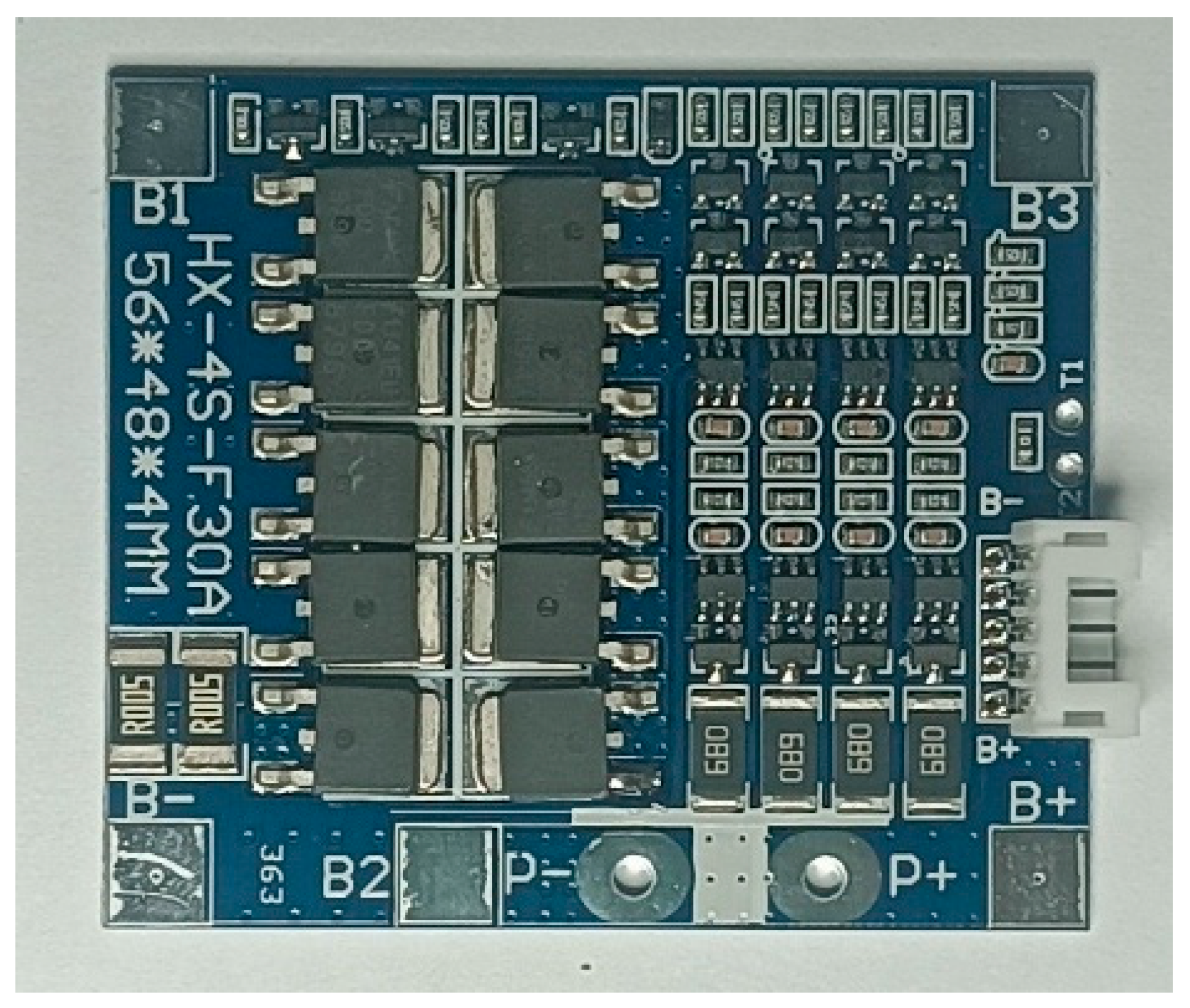
The BMS (40A-4S-E) (Shenzhen, China) used provided a pin series with the voltages of each battery cell, and these signals were sent directly to the corresponding (analog) voltage reading ports on the microcontroller [18]. The INA219 uses the I2C protocol for data transfer (voltage and current), while the temperature sensor uses the 1-wire protocol, as displayed in Figure 2.
In terms of operation, current and temperature measurements were taken every 5 s; these values were entered into a table with the measured quantity, and every minute the measurements were sent to the server. The values of each table’s measurements were compiled in JSON string format and sent to a database via a wireless network (Wi-Fi) using the POST method. The data was collected and visualized using an information system based on the Linux operating system. The database used was influxDB, which is ideal for time-series measurements [19]. Grafana Lab Platform, was employed for data visualization, with the potential to provide additional processing to enhance results. Both the operating system and software selected were open source, mainly because this option encourages the exchange of views and ideas, as well as participation in the open-source community [20].
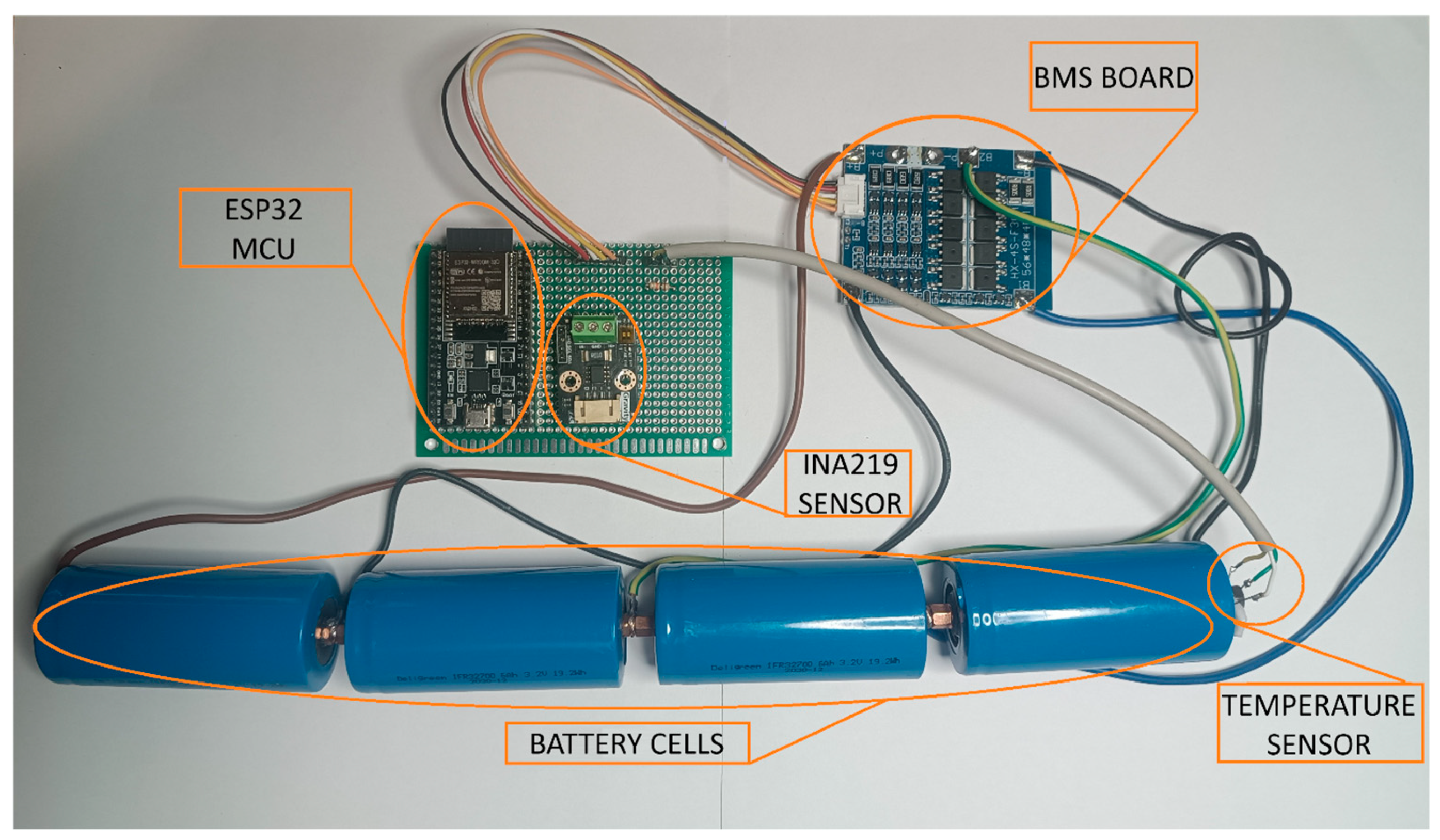
The final experiment layout is presented in Figure 3.
Testing was conducted at typical summer temperatures (30–35 °C), as in the work conducted previously [13], at a household located in the province of Peristeri in Athens, Greece. Since temperature plays a critical role in battery operation, and to ensure consistency, the conditions of the two experiments had to be identical for direct comparison. A total of 25,000 measurements were gathered throughout a 15-day period. The main objective of this experiment was to validate if charging through an advanced smart charger, like the Maxbuster Mc5000 by SkyRC (Shenzhen, China) would provide precise charging and cell balancing [21].

3. Results and Discussion

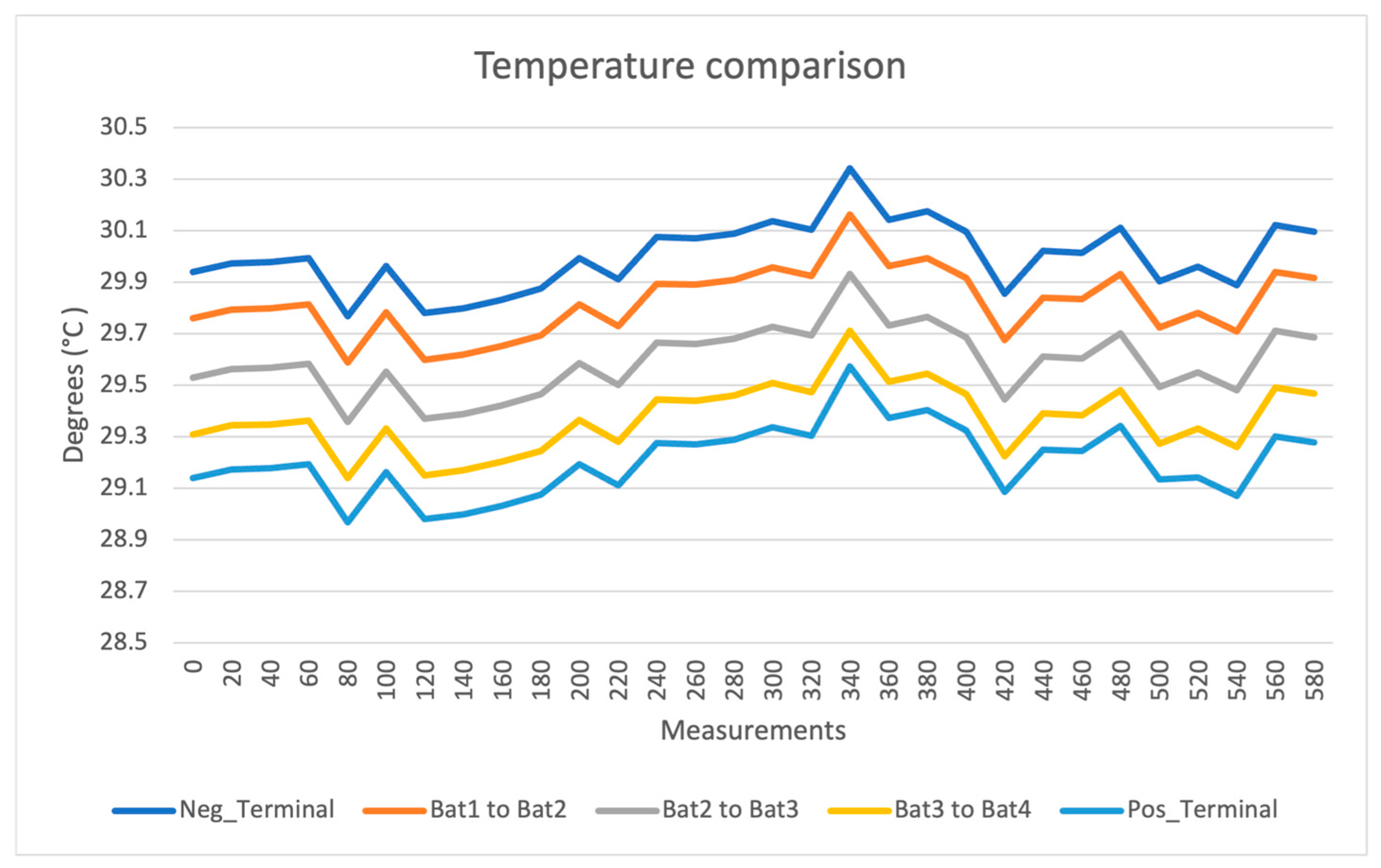
The first part of the experiment was conducted to validate whether the temperature sensor position would show any abnormalities on temperature measurements. When placed on the negative side of the battery layout, where maximum current is shown, temperature was at its highest value, but not excessively, ranging from 0.2 to 0.8 °C, compared to middle points or the positive terminal. So, this placement is considered ideal in ensuring the battery will not reach values above the manufacturer safety zone. This is proven at [13] as well, and the results of temperature differentiation are presented in Figure 4 below.
As series connection was selected, the total voltage is the sum of all four batteries, hence it can reach up to 14.5 V. However, the voltage of each cell was required for direct comparison with our previous work [13]; therefore, by utilizing INA219 plus an external charger-balancer, the distinct values of each cell were available. As a typical 0.5% error can be reported in both the INA219 and DS18B20, external monitoring tools were utilized to validate the results. Temperature and load stress were minimal to ensure that the reading error was zero.
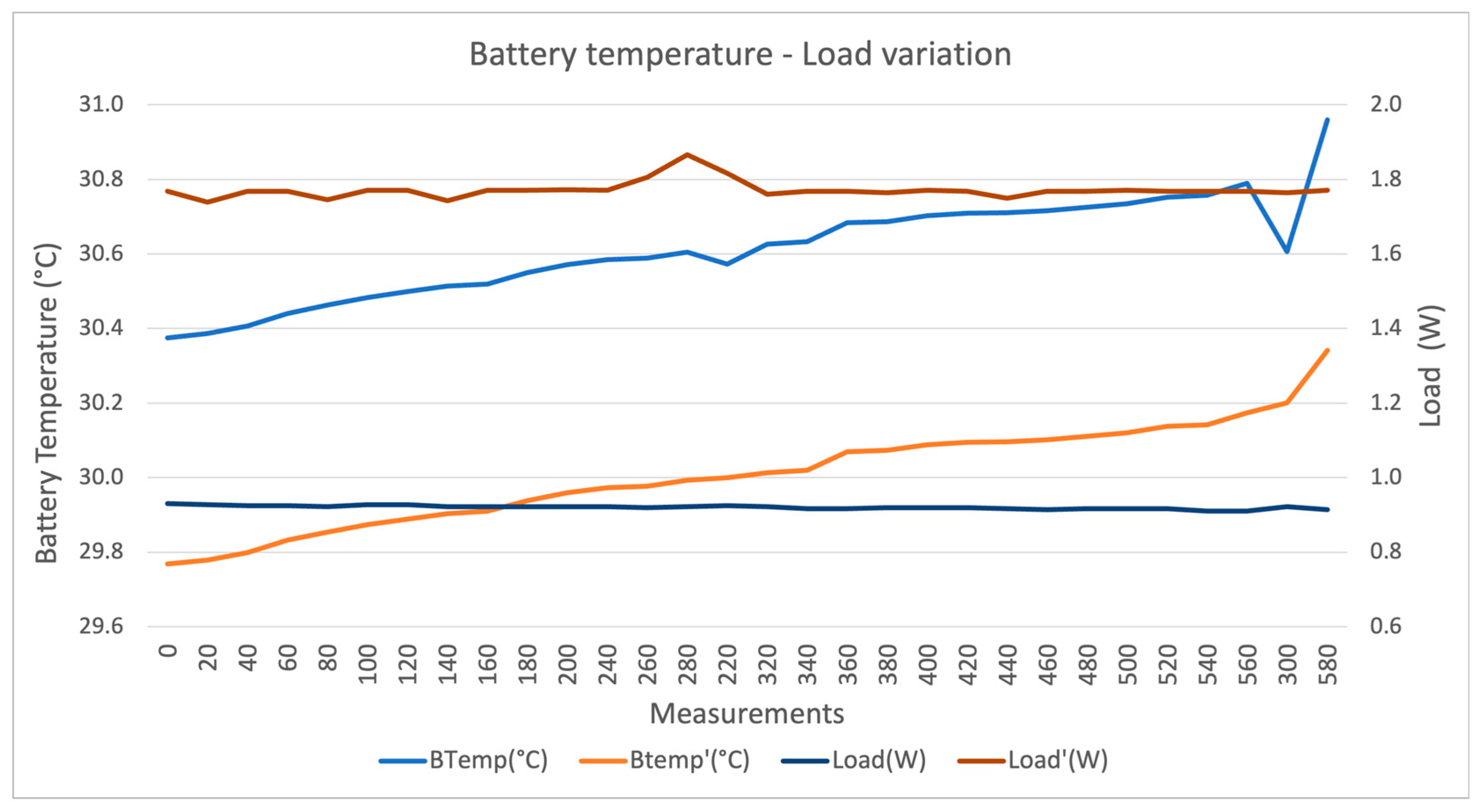
As depicted in Figure 5, the battery temperature is lower compared to [13] even though load is increased. This is mainly due to battery oversizing in addition to proper balancing through charging. Battery stress is decreased; temperature is minimized so aging is enhanced.
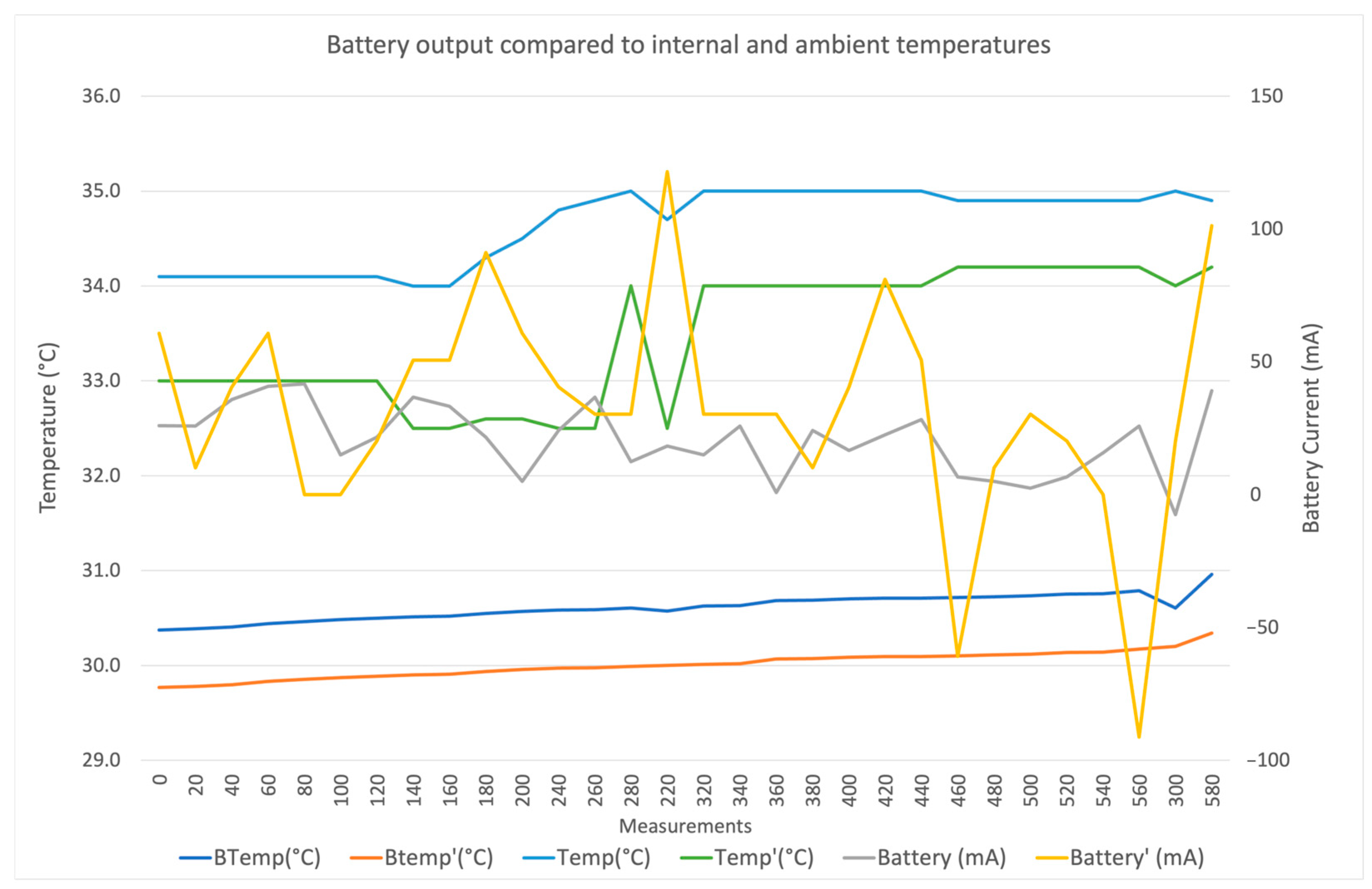
Moreover, the effect of battery output was compared to the internal cell temperature, since an increase in battery stress can lead to aging. The ambient temperature in this experiment was similar to the last one, so it slightly affected the results. As shown in Figure 6, the total power required by the load is higher, almost double; however, since the battery cells were oversized and properly balanced, while the distance between them and the board increased for cooling, internal temperature was even less, around 30 °C, which is ideal. The state of charge for this test ranged between 40 and 80%, for optimal performance. Below the 40% threshold, the BMS reached its minimum supply voltage, so it turned off. Charging to 100% was utilized five times and only for cell balancing, which is useful for LFP batteries at certain points for optimization [22]. Even on this occasion, battery temperature was kept stable for safety reasons, at low amperage with the external charger at a robust and affordable layout.
Regarding communication reliability, the typical 2% error was allowed, as the Arduino has a certain time frame of 5 s by design; however, since the load and thermal stress of the cells are limited, there was no effect on the integrity of the system. Typical mean error for the statistical analysis accounts for a total of 0.5%, as the monitoring pattern is selected thoroughly to ensure liability and limited variance. Finally, the results of this experiment compared to the previous one in [13] are provided below in Table 1.

4. Conclusions

This study successfully demonstrated the design, implementation, and validation of a low-cost, Wi-Fi-enabled Battery Management System for the real-time, per-cell monitoring of LiFePO4 battery packs. The primary objective—to create an accessible and scalable monitoring tool—was achieved using an ESP32 microcontroller paired with commodity sensors, which reliably transmitted granular data to a remote server for analysis.
The experimental results confirmed the system’s efficacy and provided critical insights into battery health management. A key finding was the significant improvement in thermal stability achieved through the integration of an external smart charger for precise cell balancing. Compared to previous work, the system maintained a lower and more stable operating temperature range (29.8 °C to 30.3 °C), even when subjected to nearly triple the load current (110 mA). This outcome empirically validates that meticulous cell balancing and an optimized physical layout for cooling are paramount in mitigating thermal stress, thereby enhancing the State of Health (SoH) and extending the operational lifespan of the battery pack. Furthermore, the placement of the temperature sensor at the negative terminal was confirmed as the optimal location for capturing peak thermal readings, all in a robust and affordable design. Even though the BMS scheme addresses possible failures and balances battery cell output, the charging power cannot be controlled as a sophisticated charger would be required, but this layout will be tested in future work.
In conclusion, this work presents a robust and cost-effective open-hardware solution that rivals the functionality of more expensive commercial BMS units. The system modularity and reliance on open-source platforms make it highly adaptable for various applications, from academic research and DIY energy storage projects to integration within larger Internet of Things (IoT) and smart energy infrastructures. Future work could expand upon this platform by incorporating more advanced SoH and State of Charge (SoC) estimation algorithms and developing a more sophisticated user interface for predictive analytics. In addition, comparison with existing low-cost BMS/monitoring platforms, e.g., openBMS, TI BQ series, or recent loT BMS schemes, could be conducted.

Author Contributions

Conceptualization, I.C. and D.R.; methodology, V.A.O.; software, I.C.; validation, V.A.O., C.C. and D.R.; formal analysis, C.C.; investigation, V.A.O.; resources, D.R.; data curation, D.R.; writing—original draft preparation, I.C. and D.R.; writing—review and editing, I.C. and V.A.O.; visualization, D.R.; supervision, C.C.; project administration, I.C. and C.C.; funding acquisition, I.C. All authors have read and agreed to the published version of the manuscript.

Funding

This research received no external funding.

Institutional Review Board Statement

Not applicable.

Informed Consent Statement

Not applicable.

Data Availability Statement

All the data created in this study are presented in the context of this article.

Conflicts of Interest

The authors declare no conflicts of interest.

References

  1. Deng, H.; Aifantis, K.E. Applications of Lithium Batteries. In Rechargeable Ion Batteries; Kumar, R., Aifantis, K., Hu, P., Eds.; Wiley: Hoboken, NJ, USA, 2023; pp. 83–103. ISBN 9783527350186. [Google Scholar]
  2. Guarnieri, M. Secondary Batteries for Mobile Applications: From Lead to Lithium [Historical]. IEEE Ind. Electron. Mag. 2022, 16, 60–68. [Google Scholar] [CrossRef]
  3. Comanescu, C. Ensuring Safety and Reliability: An Overview of Lithium-Ion Battery Service Assessment. Batteries 2025, 11, 6. [Google Scholar] [CrossRef]
  4. Gao, Z.-W.; Lan, T.; Yin, H.; Liu, Y. Development and Commercial Application of Lithium-Ion Batteries in Electric Vehicles: A Review. Processes 2025, 13, 756. [Google Scholar] [CrossRef]
  5. Nyamathulla, S.; Dhanamjayulu, C. A Review of Battery Energy Storage Systems and Advanced Battery Management System for Different Applications: Challenges and Recommendations. J. Energy Storage 2024, 86, 111179. [Google Scholar] [CrossRef]
  6. Nájera, J.; Arribas, J.R.; De Castro, R.M.; Núñez, C.S. Semi-Empirical Ageing Model for LFP and NMC Li-Ion Battery Chemistries. J. Energy Storage 2023, 72, 108016. [Google Scholar] [CrossRef]
  7. Elmahallawy, M.; Elfouly, T.; Alouani, A.; Massoud, A.M. A Comprehensive Review of Lithium-Ion Batteries Modeling, and State of Health and Remaining Useful Lifetime Prediction. IEEE Access 2022, 10, 119040–119070. [Google Scholar] [CrossRef]
  8. Ngoy, K.R.; Lukong, V.T.; Yoro, K.O.; Makambo, J.B.; Chukwuati, N.C.; Ibegbulam, C.; Eterigho-Ikelegbe, O.; Ukoba, K.; Jen, T.-C. Lithium-Ion Batteries and the Future of Sustainable Energy: A Comprehensive Review. Renew. Sustain. Energy Rev. 2025, 223, 115971. [Google Scholar] [CrossRef]
  9. Menye, J.S.; Camara, M.-B.; Dakyo, B. Lithium Battery Degradation and Failure Mechanisms: A State-of-the-Art Review. Energies 2025, 18, 342. [Google Scholar] [CrossRef]
  10. Chen, G.; Xia, X.; Zhao, X.; Zeng, X.; Ouyang, T.; Feng, H. A Balanced SOH-SOC Control Strategy for Multiple Battery Energy Storage Units Based on Battery Lifetime Change Laws. Electr. Eng. 2025, 107, 7725–7736. [Google Scholar] [CrossRef]
  11. Rimpas, D.; Kaminaris, S.D.; Aldarraji, I.; Piromalis, D.; Vokas, G.; Papageorgas, P.G.; Tsaramirsis, G. Energy Management and Storage Systems on Electric Vehicles: A Comprehensive Review. Mater. Today Proc. 2022, 61, 813–819. [Google Scholar] [CrossRef]
  12. Krishna, G.; Singh, R.; Gehlot, A.; Akram, S.V.; Priyadarshi, N.; Twala, B. Digital Technology Implementation in Battery-Management Systems for Sustainable Energy Storage: Review, Challenges, and Recommendations. Electronics 2022, 11, 2695. [Google Scholar] [CrossRef]
  13. Rimpas, D.; Orfanos, V.A.; Chalkiadakis, P.; Christakis, I. Design and Development of a Low-Cost and Compact Real-Time Monitoring Tool for Battery Life Calculation. Eng. Proc. 2023, 58, 17. [Google Scholar]
  14. Deligreen IFR-32700 LFP Battery Datasheet. Available online: https://evparts.ir/uploadfile/file_portal/site_4540_web/file_portal_end/IFR32700N60-SPEC_FB0819-R01-IFR32700N60(1).pdf (accessed on 5 August 2025).
  15. ESP32-WROOM-32 Datasheet. Available online: https://www.espressif.com/sites/default/files/documentation/esp32-wroom-32_datasheet_en.pdf (accessed on 5 August 2025).
  16. INA219 I2C—Digital Wattmeter SKU: SEN0291 Datasheet. Available online: https://wiki.dfrobot.com/Gravity:%20I2C%20Digital%20Wattmeter%20SKU:%20SEN0291 (accessed on 5 August 2025).
  17. DS18B20 Programmable Resolution 1-Wire Digital Thermometer Datasheet. Available online: https://cdn.sparkfun.com/datasheets/Sensors/Temp/DS18B20.pdf (accessed on 6 August 2025).
  18. BMS-40A-4S-E Datasheet. Available online: https://www.mantech.co.za/datasheets/products/BMS-40A-4S_SGT.pdf (accessed on 5 August 2025).
  19. Kychkin, A.; Deryabin, A.; Vikentyeva, O.; Shestakova, L. Architecture of Compressor Equipment Monitoring and Control Cyber-Physical System Based on Influxdata Platform. In Proceedings of the 2019 International Conference on Industrial Engineering, Applications and Manufacturing (ICIEAM), Sochi, Russia, 25–29 March 2019; IEEE: Sochi, Russia, 2019; pp. 1–5. [Google Scholar]
  20. Grafana Labs—The Open Platform for Analytics and Monitoring. Available online: https://grafana.com/ (accessed on 7 August 2025).
  21. SKYRC MC500 Datasheet. Available online: https://manuals.plus/skyrc/mc5000-cylindrical-battery-charger-and-analyzer-manual (accessed on 8 August 2025).
  22. Zhou, R.; Lu, J.; Wu, Y.; Zhang, H.; Yan, K. Research on Lithium Iron Phosphate Battery Balancing Strategy for High-Power Energy Storage System. Energies 2025, 18, 3671. [Google Scholar] [CrossRef]
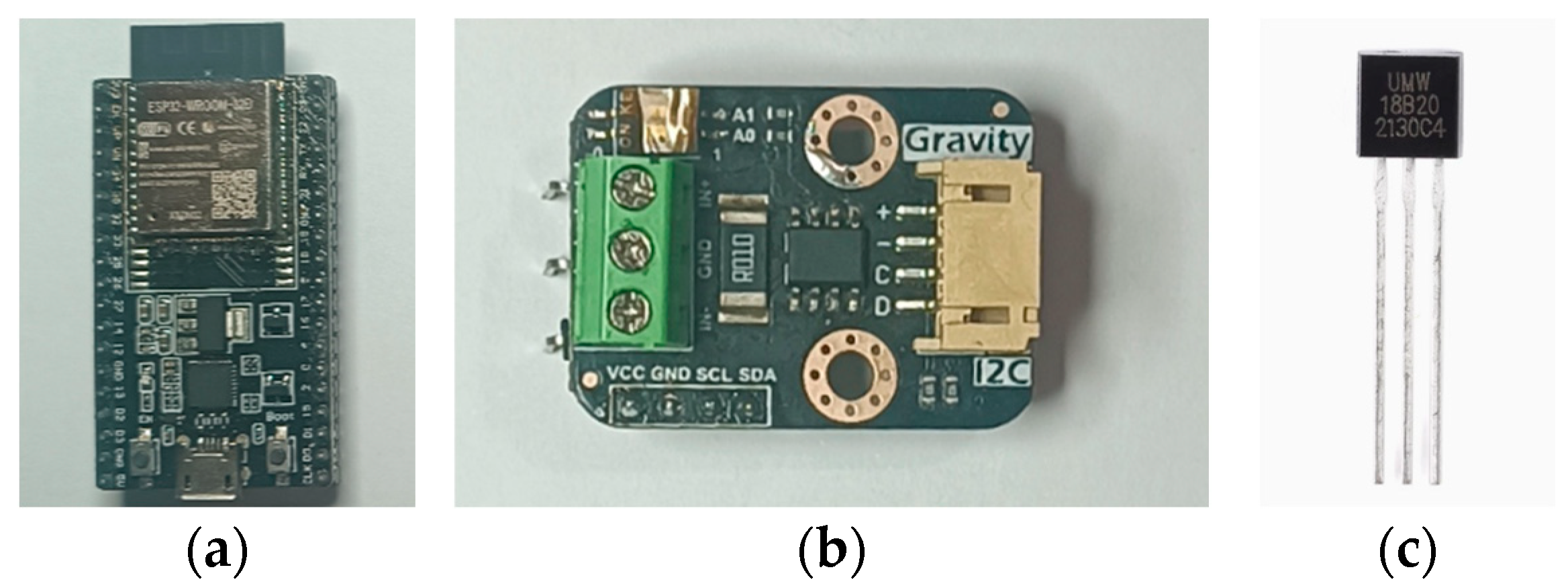
Figure 1. Parts utilized for the experiment (a) Esp32 CPU; (b) INA219 voltage–current sensor; (c) Dallas ds18b20 temperature sensor.
Engproc 118 00013 g001
Figure 2. The BMS (4S) PCB for LFP batteries.
Engproc 118 00013 g002
Figure 3. The experimental setup with an expansion board (MCU, BMS, Sensors).
Engproc 118 00013 g003
Figure 4. Temperature comparison specified to DS18B20 sensor installation.
Engproc 118 00013 g004
Figure 5. Temperature comparison correlation to load variation.
Engproc 118 00013 g005
Figure 6. Connection of battery output in mA to cell internal and ambient temperatures.
Engproc 118 00013 g006
Table 1. Comparison of previous work and this project.
ParameterPrevious Work [13]This Work
SoC Range60–100%40–100%
SoH at end100%100%
SoP14.8 A20 A 1
DoD40%40–60%
Maximum Current (mA)40 mA110 mA
Temperature Range30.3 to 31 °C29.8 to 30.3 °C
Faster CoolingX
1 Not directly compatible due to different battery layout.
Disclaimer/Publisher’s Note: The statements, opinions and data contained in all publications are solely those of the individual author(s) and contributor(s) and not of MDPI and/or the editor(s). MDPI and/or the editor(s) disclaim responsibility for any injury to people or property resulting from any ideas, methods, instructions or products referred to in the content.