Proceeding Paper

Extraction Kinetics and Composition of Chamomile Flower Extract Obtained by Supercritical CO2  †
by
Grimaldo Wilfredo Quispe Santivañez
1,*,
Perfecto Chagua-Rodríguez
2,
Walter Javier Cuadrado Campó
2,
Julio Cesar Maceda Santivañez
2,3,
Joselin Paucarchuco-Soto
2,
Jamir Ever Vilchez De la Cruz
2,
Maria Angela A. Meireles
2,4 and
Larry Oscar Chañi-Paucar
2
1
Grupo de Investigación Soberanía y Seguridad Alimentaria al 2035 (Food Security 2035), Universidad Nacional Autonoma Altoandina de Tarma (UNAAT), La Florida-Cochayoc Highway, Huancucro 12651, Peru
2
Grupo de Investigación en Ingeniería de Alimentos y Agroindustria (GIIAA), Universidad Nacional Autónoma Altoandina de Tarma (UNAAT), La Florida-Cochayoc Highway, Huancucro 12651, Peru
3
Mass Spectrometry and Chemical Ecology Laboratory (MS-CELL), Center for Natural and Human Sciences, Federal University of ABC, UFABC, Av. dos Estados 5001–Bangú, Santo André 09280-560, SP, Brazil
4
School of Food Engineering, University of Campinas, Rua Monteiro Lobato, 80, Campinas 13083-862, SP, Brazil
*
Author to whom correspondence should be addressed.
Presented at the 4th International Electronic Conference on Processes, 20–22 October 2025; Available online: https://sciforum.net/event/ECP2025.
Eng. Proc. 2025, 117(1), 55; https://doi.org/10.3390/engproc2025117055
Published: 24 February 2026
(This article belongs to the Proceedings of The 4th International Electronic Conference on Processes)

Abstract

This study aimed to obtain chamomile flower extracts (CFEs) using supercritical CO2 (200 bar and 40 °C) and analyze their composition by GC-MS. A yield of 2.8 ± 0.3% of CFE was obtained after 122.4 min of extraction. The CFE contained several compounds, the most abundant of which were 4-(4-Hydroxy-2,2,6-trimethyl-7-oxabicyclo [4.1.0]hept-1-yl)butan-2-one (12.9%), (Z)-Tonghaosu (11.8%), 6-hydroxydihydrotheaspirane (11.5%), pentacosane (8.1%), cyclohexanethiol, 2,5-dimethylacetate (5.6%), and tetracontane (5.3%). The SFE process for obtaining CFE compounds is a suitable alternative; however, further studies are needed to evaluate this process and the composition of the extract, especially its most volatile fraction.

1. Introduction

Chamomile is an aromatic herb that has been studied for its many medicinal properties [1]. The composition profile and biological properties of chamomile may vary depending on its origin of production and variety [2]. Numerous scientific studies have been conducted on chamomile, highlighting its medicinal and therapeutic properties. Some of these properties include its potential to mitigate cancer complications [3], antioxidant activity [4,5], anticancer activity [4,6], anti-inflammatory activity [7], and reduction of dental anxiety in children [8], among other properties [9]. On the other hand, according to the literature review conducted by Ostovar et al. [10], adverse effects are possible due to the use of chamomile. An important finding of this review is that a significant number of studies do not report the characteristics of chamomile products, such as purity. In this context, we believe that it is necessary to improve the production and characterization of phytochemicals to improve the use of natural products in industry.
The extraction of volatile phytochemicals from chamomile has been performed using conventional technologies, such as hydrodistillation [11]. Kotnik et al. reported other methods, such as steam distillation, maceration, and Soxhlet [12]. Conventional methods have some disadvantages, such as hydrolysis/oxidation of volatile compounds due to operating conditions (extraction time, solvents used, temperatures, etc.) [11]. Various green technologies, such as supercritical fluid extraction, ultrasound-assisted extraction, and microwave-assisted extraction, are available for the recovery of bioactive compounds to improve the yield and preservation of chamomile phytochemicals [13]. Depending on the extraction objective, some emerging techniques may use high temperatures, such as subcritical water extraction for the recovery of phenolic compounds from chamomile, where temperatures ranging from 65 °C to 210 °C were evaluated [14]. Other techniques have been developed to recover temperature-sensitive compounds, such as solvent-free microwave extraction, which has shown better performance and higher essential oil quality compared to the steam distillation method [15]. Supercritical extraction allows extracts with a better composition to be obtained compared with the steam distillation [12] and maceration methods [12]. Supercritical fluid extraction has proven to be an interesting technique for recovering volatile compounds; however, the loss of volatile compounds from the main collection flask was observed during the supercritical extraction process of chamomile flowers using laboratory-scale equipment, probably due to the continuous flow of carbon dioxide [16]. To better understand the losses of volatile compounds from chamomile flowers during supercritical CO2 extraction, this study aimed to monitor the extraction process and analyze the composition of the chamomile extract.

2. Methods

2.1. Sample Preparation

Chamomile was purchased from a local market in the city of Tarma, Tarma province, Junín region, Peru. The flowers were manually separated and prepared for extraction following the procedure used in our previous work [17].

2.2. Extraction Procedure

A laboratory-scale SCF extraction unit (Singularity Extraction Technologies, Campinas, Brazil) was used for the extraction. The characteristics of the equipment and the CO2 used in the extraction are described in our previous work [17]. The sample (10.00 ± 0.01 g) was fed into a 100 mL extraction vessel. The extraction was carried out under supercritical conditions of 20 MPa and 40 °C, which allowed for the highest yield in the study by Povh et al. [16]. The solvent flow was set at 5.43 g CO2/min with a static time of 10 min. During dynamic extraction, the weight of the extract was monitored to construct the overall extraction curve (OEC), up to an extraction time of 122 min and an S (g CO2)/F (g sample) ratio of 66.

2.3. Composition Analysis

CFE was analyzed by chromatography according to the method developed by Bendif et al. [18]. Details of the laboratory that provided the analysis service, the characteristics of the chromatographic equipment, and some details of the analysis are shown in our previous work [17].

3. Results and Discussion

3.1. Extract Yield and OEC

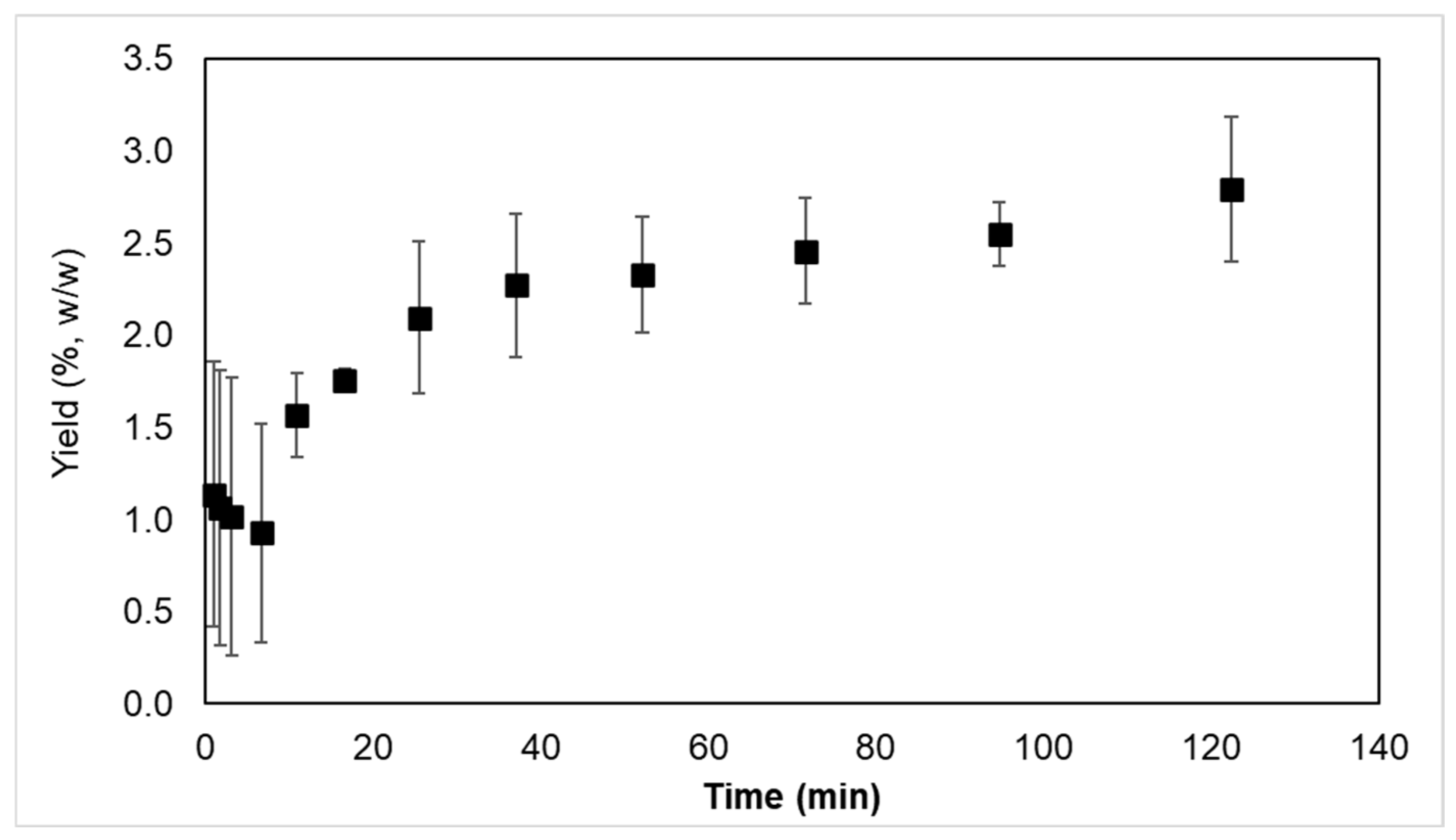
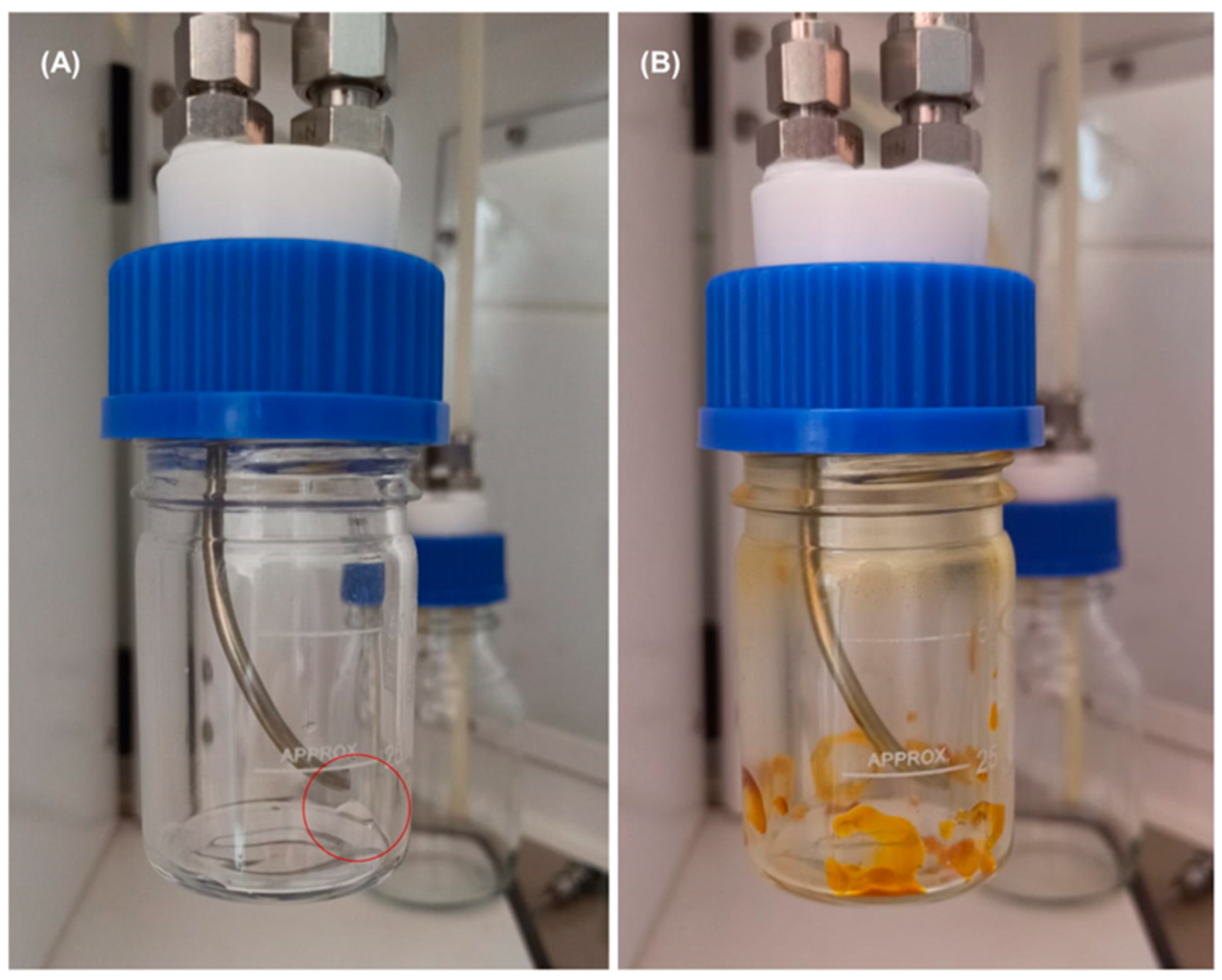
Figure 1 shows the OEC values of chamomile flowers. The maximum yield achieved during the 2 h of extraction was 2.8 ± 0.3%. In this study, the extract yield was higher than the essential oil yield observed in steam distillation (0.6%) [12] and solvent-free microwave extraction (0.08%) [15]. Kotnik et al. [12] reported a higher yield (3.81%), but with an extraction time more than four times longer than in the present study and a lower CO2 flow rate (2.5 g/min), which could explain the differences with the results shown in the present study. In another study, a higher yield (4.3%) was obtained when working under the same supercritical conditions as in the present study, but with a CO2 flow rate of 4.0 g/min and an extraction time five times longer than in the present study [16]. On the other hand, the OEC behavior observed during the first 20 min of extraction (Figure 1) may explain the volatilization of compounds due to solvent flow during continuous extraction. Povh et al. [16] observed the volatilization of chamomile flower compounds during supercritical extraction and adopted a trap to prevent the loss of volatile compounds. In a more recent study, ethanol was used in the collection bottle to prevent the loss of volatile compounds during the supercritical extraction of various plant raw materials [19]. Figure 2A shows a colorless extract during the first few minutes of extraction; part of this extract probably volatilizes as the extraction process progresses. As the extraction process progresses, an amber extract can be observed in the extraction vessel (Figure 2B). The obtained extract has an oily texture and a characteristic chamomile aroma. The results show that the supercritical carbon dioxide extraction process applied to raw materials rich in volatile compounds must be conducted with the volatility of these compounds in mind. The results show an additional challenge to that reported by Dashtian et al. [20] for the commercial production of volatile aromatic compounds using SFE. In another recent study, he successfully evaluated the use of a saline solution as a pretreatment for Hetian rose petals to obtain essential oil with supercritical CO2 [21]. Finally, the application of supercritical CO2 for the extraction of volatile aromatic compounds represents a challenge due to the loss of volatile compounds during depressurization in equipment that uses separation vessels and during dynamic extraction in laboratory-scale equipment that only uses an extract collection vessel. The temperature of the separators and the mass flow of the solvent can be studied to determine their effects on the yield and loss of volatile compounds.

3.2. Composition of the CFE

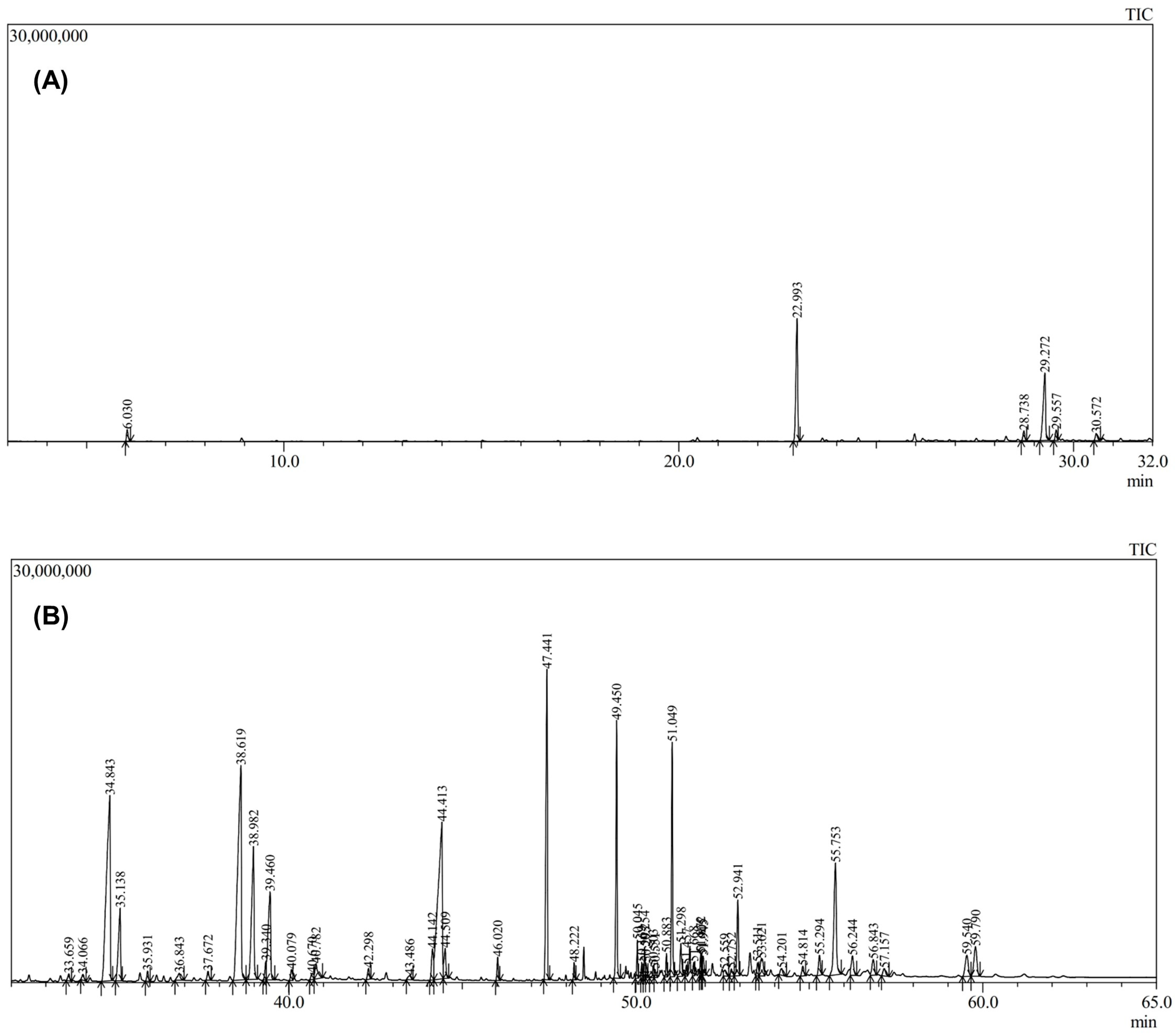
Figure 3 shows the chromatogram of the identified compounds in the CFE. The CFE contained various chemical components, including 4-(4-Hydroxy-2,2,6-trimethyl-7-oxabicyclo [4.1.0]hept-1-yl)butan-2-one (12.9%), (Z)-Tonghaosu (11.8%), 6-Hydroxydihydrotheaspirane (11.5%), pentacosane (8.1%), cyclohexanethiol, 2,5-dimethyl-, acetate (5.6%), tetracontane (5.3%), 1,6-trimethyl-3-methylene-2-(3,6,9,13-tetramethyl-6-ethenye-10,14-dimethylene-pentadec-4-enyl)cyclohexane (4.9%), hexatriacontane (4.8%), exo-2-Hydroxycineole (3.9%), (E)-beta-Farnesene (3.4%), (E)-Tonghaosu (2.7%), xanthoxylin (2.5%), and other components with an abundance of less than 2%. Among the minor compounds identified were alpha-bisabolol (0.30%), alpha-bisabolol oxide B (0.27%), and 7-methoxycoumarin (0.24%); these compounds were reported in higher concentrations by Rahimi et al. [22]. The composition profile of chamomile flower essential oil reported by Lu et al. [23] shows some similarities with the extract obtained in the present study. In another study, the abundance of (Z)-Tonghaosu was similar to that found in essential oil from shade-dried chamomile flowers and was lower than that found in fresh flowers [24]. The composition of the supercritical extracts reported in this study and the literature consulted can be explained in part by the volatilization of the components of the chamomile flower due to the effect of the CO2 flow in the collection vessel. The compositions reported by Povh et al. [16], Rahimi et al. [22], and the present study were determined from extracts obtained at mass flows of 6.67 × 10⁻⁵ kg/s, 1.16 × 10⁻⁴ kg/s, and 9.05 × 10⁻⁵ kg/s, respectively. In a study conducted to evaluate the parameters of the SFE process in the yield of carnosic acid and carnosol from sage leaves, the CO2 flow rate was one of the parameters that significantly influenced the composition of the extracts [25]. In another case, increasing the CO2 flow rate decreased the extract yield because a higher solvent flow rate results in a shorter residence time of the solvent in the extraction bed [26]. Conversely, in some cases, the solvent flow rate does not significantly affect the yield, as in the case of apple seed oil extraction [27]. The results of this study and previous studies indicate the need to adequately evaluate supercritical extraction conditions, especially for raw materials rich in volatile compounds.

4. Conclusions

Supercritical CO2 extraction enables the isolation of chamomile flower extracts rich in chemical compounds. During the extraction process, extract losses were recorded, probably from the most volatile fractions. The results of this study indicate the need for further research into supercritical fluid extraction to improve the recovery of volatile compounds from chamomile and other volatile compound-rich raw materials.

Author Contributions

Conceptualization, G.W.Q.S. and L.O.C.-P.; Methodology, P.C.-R., W.J.C.C., J.P.-S. and L.O.C.-P.; Validation, L.O.C.-P.; Formal analysis, J.P.-S., J.E.V.D.l.C. and L.O.C.-P.; Investigation, G.W.Q.S., M.A.A.M. and L.O.C.-P.; Data curation, G.W.Q.S., J.C.M.S. and L.O.C.-P.; Writing—original draft, G.W.Q.S., J.C.M.S. and L.O.C.-P.; Writing—review and editing, G.W.Q.S., P.C.-R., W.J.C.C., J.C.M.S., M.A.A.M. and L.O.C.-P.; Visualization, L.O.C.-P.; Supervision, G.W.Q.S., M.A.A.M. and L.O.C.-P.; Project administration, G.W.Q.S., W.J.C.C. and L.O.C.-P.; Funding acquisition, L.O.C.-P. All authors have read and agreed to the published version of the manuscript.

Funding

This article is the result of the Science, Technology, and Innovation Project “Valorización de especies vegetales aromáticas comercializadas en la ciudad de Tarma para la obtención de compuestos volátiles usando tecnología de fluidos supercríticos” with code “P2-23-01-01,” funded by “UNAAT INVESTIGA” led by the Vicepresidencia de Investigación of the Universidad Nacional Autónoma Altoandina de Tarma.

Data Availability Statement

The data is included in the article.

Conflicts of Interest

The authors have no conflicts of interest to declare.

References

  1. Srivastava, J.K.; Shankar, E.; Gupta, S. Chamomile: A Herbal Medicine of the Past with a Bright Future (Review). Mol. Med. Rep. 2010, 3, 895–901. [Google Scholar] [CrossRef] [PubMed]
  2. Atoum, D.; Fernandez-Pastor, I.; Young, L.; Edrada-Ebel, R.A. Use of Multivariate Analysis to Unravel the Differences between Two Chamomile Varieties and Their Anticancer and Antioxidant Activities. Plants 2023, 12, 2297. [Google Scholar] [CrossRef]
  3. Maleki, M.; Mardani, A.; Manouchehri, M.; Ashghali Farahani, M.; Vaismoradi, M.; Glarcher, M. Effect of Chamomile on the Complications of Cancer: A Systematic Review. Integr. Cancer Ther. 2023, 22, 15347354231164600. [Google Scholar] [CrossRef]
  4. Al-Dabbagh, B.; Elhaty, I.A.; Elhaw, M.; Murali, C.; Al Mansoori, A.; Awad, B.; Amin, A. Antioxidant and Anticancer Activities of Chamomile (Matricaria recutita L.). BMC Res. Notes 2019, 12, 3. [Google Scholar] [CrossRef]
  5. Agatonovic-Kustrin, S.; Babazadeh Ortakand, D.; Morton, D.W.; Yusof, A.P. Rapid Evaluation and Comparison of Natural Products and Antioxidant Activity in Calendula, Feverfew, and German Chamomile Extracts. J. Chromatogr. A 2015, 1385, 103–110. [Google Scholar] [CrossRef]
  6. Srivastava, J.K.; Gupta, S. Antiproliferative and Apoptotic Effects of Chamomile Extract in Various Human Cancer Cells. J. Agric. Food Chem. 2007, 55, 9470–9478. [Google Scholar] [CrossRef]
  7. Drif, A.I.; Yücer, R.; Damiescu, R.; Ali, N.T.; Abu Hagar, T.H.; Avula, B.; Khan, I.A.; Efferth, T. Anti-Inflammatory and Cancer-Preventive Potential of Chamomile (Matricaria chamomilla L.): A Comprehensive In Silico and In Vitro Study. Biomedicines 2024, 12, 1484. [Google Scholar] [CrossRef]
  8. Abdel Rehim, Y.M.; Gadallah, L.K.; El-Motayam, A.K. The Effects of Lavender, Chamomile and Peppermint Inhalation Aromatherapy on Dental Anxiety in Children: A Randomized Controlled Trial. J. Dent. Sci. 2025, 20, 1539–1545. [Google Scholar] [CrossRef] [PubMed]
  9. Akram, W.; Ahmed, S.; Rihan, M.; Arora, S.; Khalid, M.; Ahmad, S.; Ahmad, F.; Haque, S.; Vashishth, R. An Updated Comprehensive Review of the Therapeutic Properties of Chamomile (Matricaria chamomilla L.). Int. J. Food Prop. 2024, 27, 133–164. [Google Scholar] [CrossRef]
  10. Ostovar, M.; Rezaee, Z.; Najibi, S.M.; Hashempur, M.H. Chamomile: A Systematic Review of Adverse Events. Complement. Ther. Med. 2025, 91, 103192. [Google Scholar] [CrossRef] [PubMed]
  11. Olascuaga-Castillo, K.; Castillo-Medina, O.; Villacorta-Zavaleta, M.; Diaz-Ortega, J.; Blanco-Olano, C.; Altamirano-Sarmiento, D.; Valdiviezo-Campos, J. Extraction of Essential Oils by Hydrodistillation of Four Aromatic Species: Conditioning, Extraction Conditions, Yield and Chemical Composition. Sci. Agropecu. 2024, 15, 385–408. [Google Scholar] [CrossRef]
  12. Kotnik, P.; Škerget, M.; Knez, Ž. Supercritical Fluid Extraction of Chamomile Flower Heads: Comparison with Conventional Extraction, Kinetics and Scale-Up. J. Supercrit. Fluids 2007, 43, 192–198. [Google Scholar] [CrossRef]
  13. Putra, N.R.; Suharmiati, S.; Ismayanti, R.; Irianto, I.; Airlangga, B. Green Extraction of Chamomile Bioactives: Techniques, Health Benefits, and Wellness Applications–a Comprehensive Review. J. Essent. Oil Res. 2025, 37, 441–456. [Google Scholar] [CrossRef]
  14. Cvetanović, A.; Švarc-Gajić, J.; Zeković, Z.; Jerković, J.; Zengin, G.; Gašić, U.; Tešić, Ž.; Mašković, P.; Soares, C.; Fatima Barroso, M.; et al. The Influence of the Extraction Temperature on Polyphenolic Profiles and Bioactivity of Chamomile (Matricaria chamomilla L.) Subcritical Water Extracts. Food Chem. 2019, 271, 328–337. [Google Scholar] [CrossRef] [PubMed]
  15. Herrera, E.; Pacheco, C.; Olivera-Montenegro, L. Extraction and Characterization of Chamomile (Matricaria recutita L.) Essential Oil Using the Green Technology of Solvent-Free Microwave Extraction. Biol. Life Sci. Forum 2022, 18, 12974. [Google Scholar] [CrossRef]
  16. Povh, N.P.; Marques, M.O.M.; Meireles, M.A.A. Supercritical CO2 Extraction of Essential Oil and Oleoresin from Chamomile (Chamomilla recutita [L.] Rauschert). J. Supercrit. Fluids 2001, 21, 245–256. [Google Scholar] [CrossRef]
  17. Paucarchuco-Soto, J.; Padilla Pacahuala, G.; Cuadrado Campó, W.J.; Chagua-Rodríguez, P.; Maceda Santivañez, J.C.; Santana, Á.L.; Meireles, M.A.A.; Chañi-Paucar, L.O. Supercritical Fluid Extraction of Peruvian Schinus Molle Leaves: Yield, Kinetics, Mathematical Modeling, and Chemical Composition. Processes 2025, 13, 2191. [Google Scholar] [CrossRef]
  18. Bendif, H.; Miara, M.D.; Kalboussi, Z.; Grauzdytė, D.; Povilaitis, D.; Venskutonis, P.R.; Maggi, F. Supercritical CO2 Extraction of Rosmarinus eriocalyx Growing in Algeria: Chemical Composition and Antioxidant Activity of Extracts and Their Solid Plant Materials. Ind. Crops Prod. 2018, 111, 768–774. [Google Scholar] [CrossRef]
  19. Comprehensive Two-Step Supercritical Fluid Extraction for Green Isolation of Volatiles and Phenolic Compounds from Plant Material-Green Chemistry (RSC Publishing). Available online: https://pubs.rsc.org/en/content/articlehtml/2024/gc/d4gc00371c (accessed on 25 December 2025).
  20. Dashtian, K.; Kamalabadi, M.; Ghoorchian, A.; Ganjali, M.R.; Rahimi-Nasrabadi, M. Integrated Supercritical Fluid Extraction of Essential Oils. J. Chromatogr. A 2024, 1733, 465240. [Google Scholar] [CrossRef]
  21. Cui, W.; Xu, R.; Li, X.; Yang, J.; Xu, P.; Zhang, Z.; Yu, Z.; Adiges, S. Research on the Supercritical CO2 Extraction Process of Hetian Rose Essential Oil. Processes 2024, 12, 1396. [Google Scholar] [CrossRef]
  22. Rahimi, E.; Prado, J.M.; Zahedi, G.; Meireles, M.A.A. Chamomile Extraction with Supercritical Carbon Dioxide: Mathematical Modeling and Optimization. J. Supercrit. Fluids 2011, 56, 80–88. [Google Scholar] [CrossRef]
  23. Lu, J.; Jiang, Z.; Dang, J.; Li, D.; Yu, D.; Qu, C.; Wu, Q. GC–MS Combined with Fast GC E-Nose for the Analysis of Volatile Components of Chamomile (Matricaria chamomilla L.). Foods 2024, 13, 1865. [Google Scholar] [CrossRef] [PubMed]
  24. Abbas, A.M.; Seddik, M.A.; Gahory, A.A.; Salaheldin, S.; Soliman, W.S. Differences in the Aroma Profile of Chamomile (Matricaria chamomilla L.) after Different Drying Conditions. Sustainability 2021, 13, 5083. [Google Scholar] [CrossRef]
  25. Pavić, V.; Jakovljević, M.; Molnar, M.; Jokić, S. Extraction of Carnosic Acid and Carnosol from Sage (Salvia officinalis L.) Leaves by Supercritical Fluid Extraction and Their Antioxidant and Antibacterial Activity. Plants 2019, 8, 16. [Google Scholar] [CrossRef] [PubMed]
  26. Kavoura, D.; Kyriakopoulou, K.; Papaefstathiou, G.; Spanidi, E.; Gardikis, K.; Louli, V.; Aligiannis, N.; Krokida, M.; Magoulas, K. Supercritical CO2 Extraction of Salvia Fruticosa. J. Supercrit. Fluids 2019, 146, 159–164. [Google Scholar] [CrossRef]
  27. Ferrentino, G.; Giampiccolo, S.; Morozova, K.; Haman, N.; Spilimbergo, S.; Scampicchio, M. Supercritical Fluid Extraction of Oils from Apple Seeds: Process Optimization, Chemical Characterization and Comparison with a Conventional Solvent Extraction. Innov. Food Sci. Emerg. Technol. 2020, 64, 102428. [Google Scholar] [CrossRef]
Figure 1. Extraction kinetics at 200 bar, 40 °C, and 65.8 S/F.
Engproc 117 00055 g001
Figure 2. Fraction of colorless (A) and orange (B) chamomile flower extracts obtained by SFE.
Engproc 117 00055 g002
Figure 3. GC-MS chromatograms up to a retention time of 32 min (A) and 65 min (B) of the SFE extract of chamomile flower.
Engproc 117 00055 g003
Disclaimer/Publisher’s Note: The statements, opinions and data contained in all publications are solely those of the individual author(s) and contributor(s) and not of MDPI and/or the editor(s). MDPI and/or the editor(s) disclaim responsibility for any injury to people or property resulting from any ideas, methods, instructions or products referred to in the content.