Proceeding Paper

Interface Engineering in Hybrid Energy Systems: A Case Study of Enhance the Efficiency of PEM Fuel Cell and Gas Turbine Integration †

1
Department of Marine and Offshore Engineering, Faculty of Engineering, University of Tripoli, Tripoli P.O. Box 13589, Libya
2
Sheffield Institute of Education (SIoE), Sheffield Hallam University, Sheffield S1 2NH, UK
3
North Africa International Research Center for Serums, Vaccines and Genetic Diseases, Authority for Scientific Research (LASR), Zawia P.O. Box 80045, Libya
*
Author to whom correspondence should be addressed.
Presented at the 4th International Electronic Conference on Processes, 20–22 October 2025; Available online: https://sciforum.net/event/ECP2025.
Eng. Proc. 2025, 117(1), 15; https://doi.org/10.3390/engproc2025117015 (registering DOI)
Published: 18 December 2025

Abstract

Integrating electrochemical fuel cells and internal combustion engines can enhance the total efficiency and sustainability of power systems. This study presents a promising solution by integrating a Proton Exchange Membrane Fuel Cell (PEMFC) with a mini gas turbine, forming a hybrid system called the “Oya System.” This approach aims to mitigate the efficiency losses of gas turbines during high ambient temperatures. The hybrid model was designed using Aspen Plus for modelling and the EES simulation program for solving mathematical equations. The primary objective of this research is to enhance the efficiency of gas turbine systems, particularly under elevated ambient temperatures. The results demonstrate a notable increase in efficiency, rising from 37.97% to 43.06% at 10 °C (winter) and from 31.98% to 40.33% at 40 °C (summer). This improvement, ranging from 5.09% in winter to 8.35% in summer, represents a significant achievement aligned with the goals of the Oya System. Furthermore, integrating PEMFC contributes to environmental sustainability by utilising hydrogen, a clean energy source, and reducing greenhouse gas emissions. The system also enhances efficiency through waste heat recovery, further optimising performance and reducing energy losses. This research highlights the critical role of interface engineering in the hybrid system, particularly the interaction between the PEMFC and the gas turbine. Integrating these two systems involves complex interfaces that facilitate the transfer of electrochemistry, energy, and materials, optimising the overall performance. This aligns with the conference session’s focus on green technologies and resource efficiency. The Oya System exemplifies how innovative hybrid systems can enhance performance while promoting environmentally friendly processes.

1. Introduction

Improving the efficiency and performance of gas turbine units is crucial for achieving high operational reliability, reducing production costs, and mitigating global warming and heat waste. Current research in energy economics and pollution control continues to focus on enhancing the performance of power generation systems, particularly gas turbine and power plants [1]. These systems generally waste more than 60% of their thermal energy into the environment, making them relatively inefficient, which contributes to increased global warming and reduced sustainability impacts for these systems [2]. Electrochemical technologies have emerged as promising solutions to address these issues. Fuel cells and other electrochemical systems are highly efficient at converting energy and emit minimal air pollution. Proton Exchange Membrane Fuel Cells (PEMFCs) are the most noteworthy of these because they are compact size, respond quickly, and work well with other thermal systems. Electrochemical methods have also been useful in different areas, such as advanced hybrid coatings in aerospace alloys [3], biosensors that enable precise detection of cancer biomarkers [4], and perovskite solar cells that utilise electrochemical control of film morphology to increase efficiency [5]. These examples establish the practical applications of electrochemical engineering in both sustainable technologies and precise diagnostics, which can enhance the efficiency of integrated power units. There are two main reasons why basic-cycle gas turbine power plants often operate at less than 35% efficiency in their maximum performance. First, above two-thirds of the turbine’s energy is consumed by the compressor to pressure the inlet air [2]. The last third is turned into electrical energy. Second, the hot exhaust gases, which can reach temperatures of approximately 550 °C, are released directly into the air, resulting in significant thermal energy loss. Utilising the exhaust heat from gas turbines to produce hydrogen through steam reforming [6] is a promising solution. Hydrogen is a clean fuel that can improve both the environment and the system. The concept of utilising waste heat from thermal power plants emerged in the mid-20th century. Initially, it was only about generating steam and adding more turbines. However, early uses were limited due to their high cost, complexity, and the scarcity of experts [7].
In the early 21st century, new technologies made it possible to produce hydrogen more efficiently by utilising waste heat. Advancements in high- and low-temperature electrochemical cells have made hydrogen production more economical and feasible [8]. Even with these improvements, there are still problems to be addressed, particularly in designing heat exchangers that operate at high temperatures and pressures, as well as in finding materials that can withstand these conditions [9]. The hydrogen made from waste heat can be used as a clean fuel for cars and power generation, either by burning it directly or in fuel cells. The Proton Exchange Membrane Fuel Cell (PEMFC) is an advanced process in fuel cell technology, characterised by its compact size, high power density, and ability to respond quickly to electrical demands. PEMFCs operate at temperatures below 100 °C, making them suitable for a wide range of applications, including electric cars and hybrid power systems. Typically, fuel cells are classified by operating temperature:
  • low temperatures FC: such as Direct Methanol Fuel Cell (DMFC), Phosphoric Acid Fuel Cell (PAFC), and PEMFC.
  • high temperatures FC: include molten carbonate fuel cells (MCFC), alkaline fuel cells (AFC), and solid oxide fuel cells (SOFC).
This study focuses on modelling and simulating the novel integrated PEMFC with a compact turbine unit, which dissociates hydrogen into protons and electrons at the anode. The protons pass through a membrane to the cathode, and the electrons flow through an external circuit, generating electricity in the process. The protons and electrons combine with oxygen from the air at the cathode to form water. PEMFCs utilise a solid electrolyte, which facilitates their construction, reduces corrosion, and enhances cell durability, thereby extending the unit life cycle. Despite the potential of hybrid systems combining gas turbines and PEMFCs, there is a lack of Arabic-language publications exploring this integration. This paper aims to fill that gap by analysing the performance of a hybrid gas turbine–PEMFC system, referred to as the Oya Cycle. The gas turbine model was calibrated using published performance data from Bakalis & Stamatis (2011) [10], and the PEMFC model was designed and validated using established parameters from Wang et al. (2021) [11]. The hybrid system uses hot exhaust from the gas turbine to heat methane and water. These are then sent to a steam reformer, where they are turned into hydrogen. This hydrogen is sent to the PEMFC to generate additional electricity, thereby improving the overall system’s performance.

2. Methods and Experimental Study

This study presents the Oya Cycle, a hybrid energy system that integrates a gas turbine with a Proton Exchange Membrane Fuel Cell (PEMFC). The goal is to enhance overall system efficiency by utilising the exhaust heat from the gas turbine to produce hydrogen via steam reforming, which is then used to generate additional electricity in the PEMFC.

2.1. System Modelling and Simulation

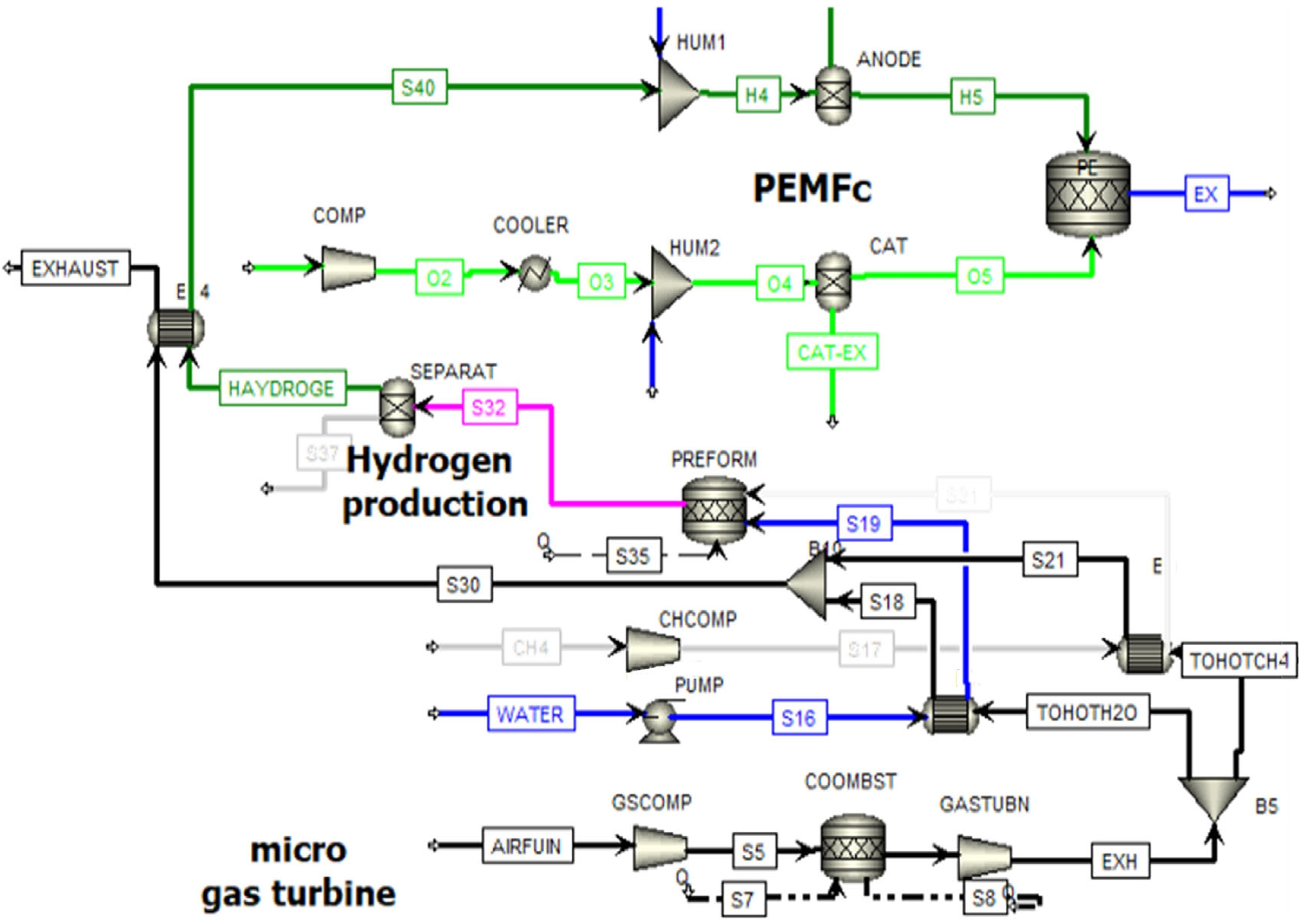
As shown in Figure 1, the hybrid system was modelled using Aspen Plus for process simulation and Engineering Equation Solver (EES) for solving thermodynamic and electrochemical equations. The gas turbine model from the reference performance [10] and the PEMFC model were validated using the parameters as mentioned in the scope of work [11]. The gas turbine exhaust, which reaches temperatures above 550 °C, was used to heat methane and water in two separate heat exchangers.

2.2. Description of the Oya Cycle

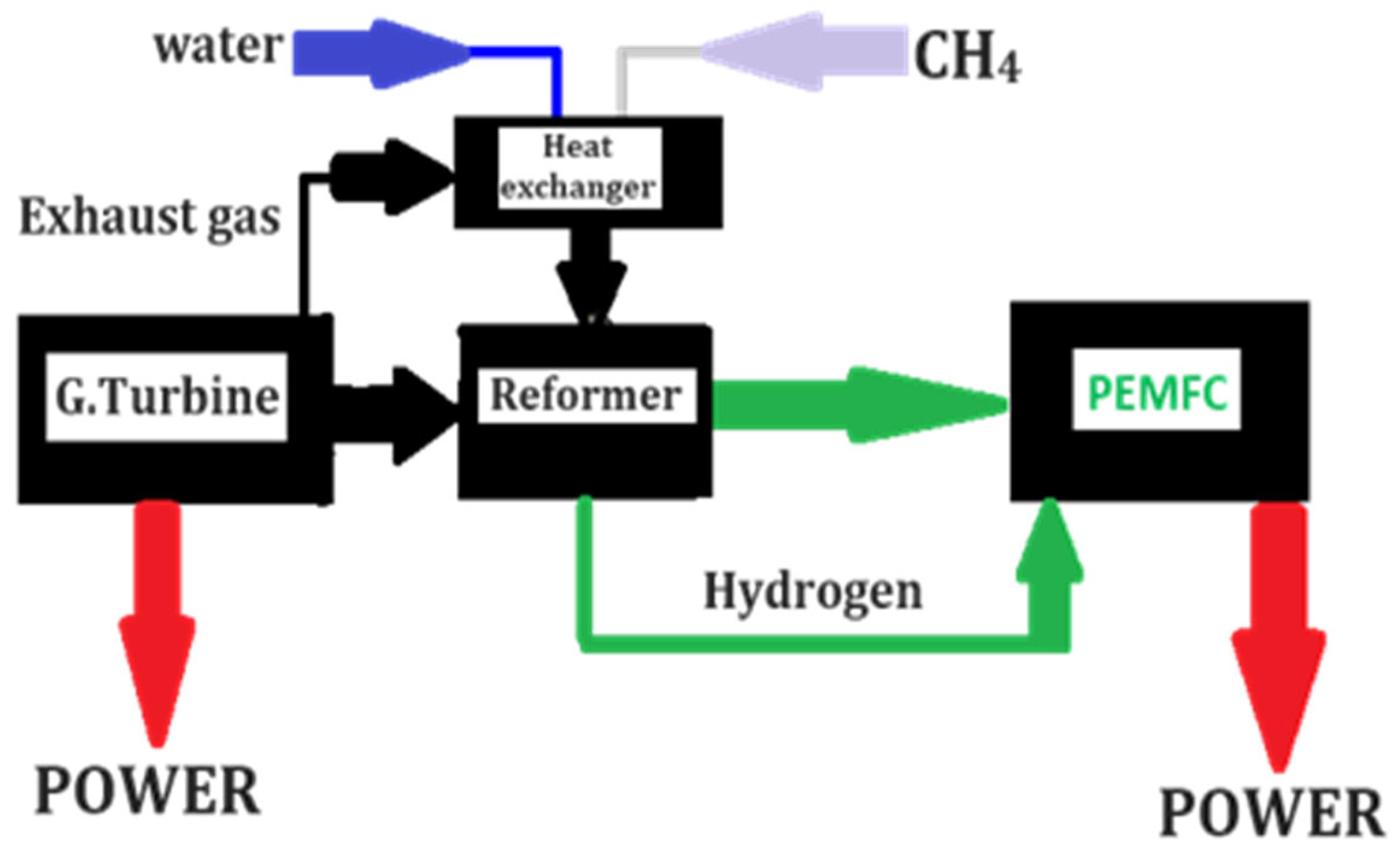
These heated fluids are then injected into a steam reformer, as illustrated in Figure 2, where the following reactions occur:
Endothermic   reaction :   CH 4 + H 2 O CO + 3 H 2
Water - gas   shift   reaction :   CO + H 2 O CO 2 + H 2
Overall   reaction :   CH 4 + 2 H 2 O CO 2 + 4 H 2
The hydrogen produced is separated and fed directly into the anode of the PEMFC, while oxygen from ambient air is supplied to the cathode. This on-demand hydrogen generation eliminates the need for storage, addressing a key challenge in hydrogen systems.

2.3. Thermodynamic Analysis of the Gas Turbine

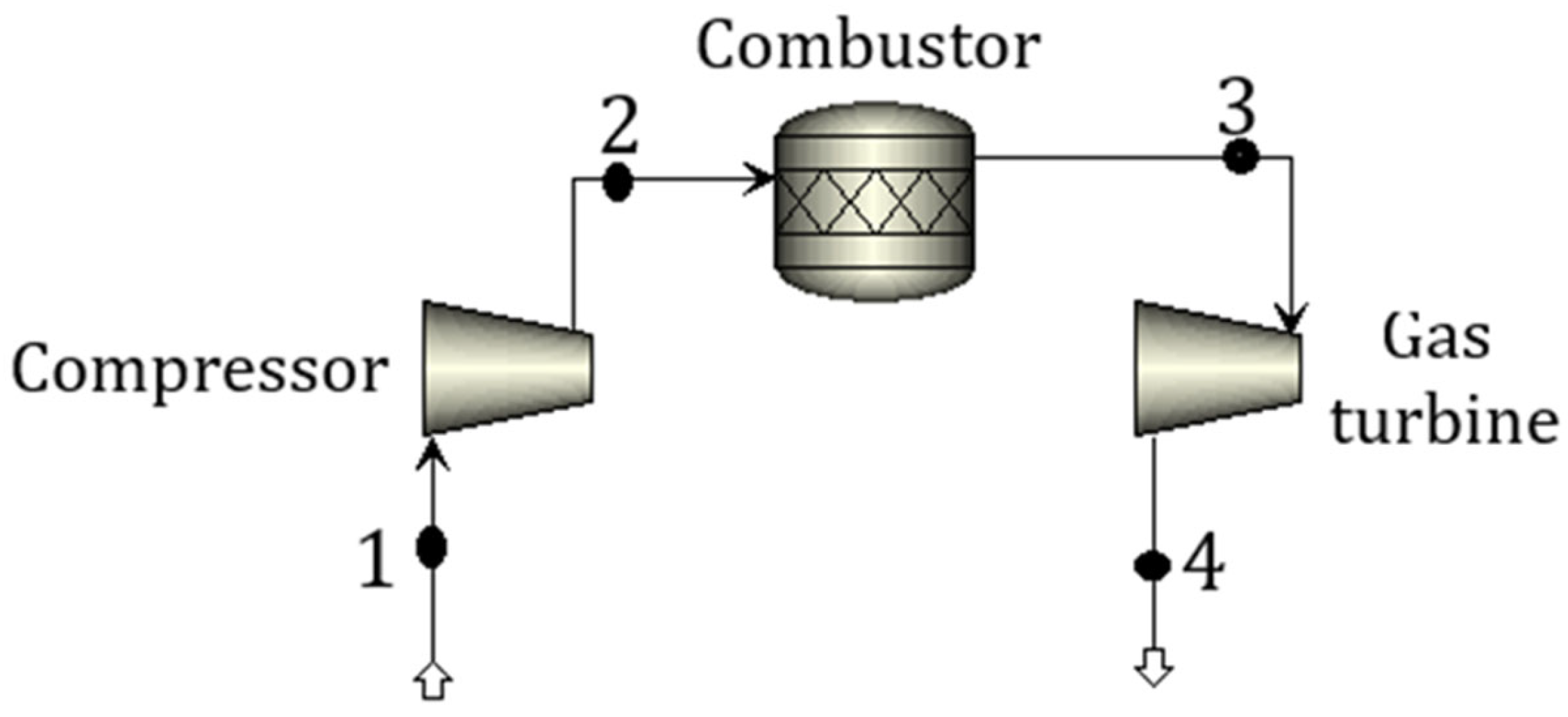
To accurately simulate the performance of the micro gas turbine within the Oya Cycle, a set of thermodynamic and operational parameters were defined based on validated literature sources, as shown in Figure 3. These parameters include compression ratio, inlet and exhaust temperatures, component efficiencies, and fuel flow rates. The values were used as inputs in Aspen Plus and EES to model the gas turbine’s behaviour under realistic operating conditions.
Returning to Figure 3, and notice point 2, we can re-calculate the thermodynamics Equations (4)–(12) in the following:
Temperature   after   compression :   T 2 = T 1 r γ air 1 γ air
Compressor   efficiency :   η compGT = T 2 T 1 T 2 T 1
Now, at point 3, the calculation is:
Temperature   after   expansion :   T 4 = T 3 ( P 4 P 3 ) γ gas 1 γ gas
Turbine   efficiency :   η GT = T 3 T 4 T 3 T 4
Heat   input :   Q ˙ in = m ˙ C p , air ( T 3 T 1 )
Compressor   work :   W ˙ compGT = m ˙ C p , air ( T 2 T 1 )
Turbine   work :   W ˙ GT = m ˙ C p , gas ( T 3 T 4 )
Net   power   output :   W ˙ netGT = W ˙ GT W ˙ compGT
Gas   turbine   efficiency :   η GT = W ˙ netGT Q ˙ in

2.4. PEM Fuel Cell Modelling

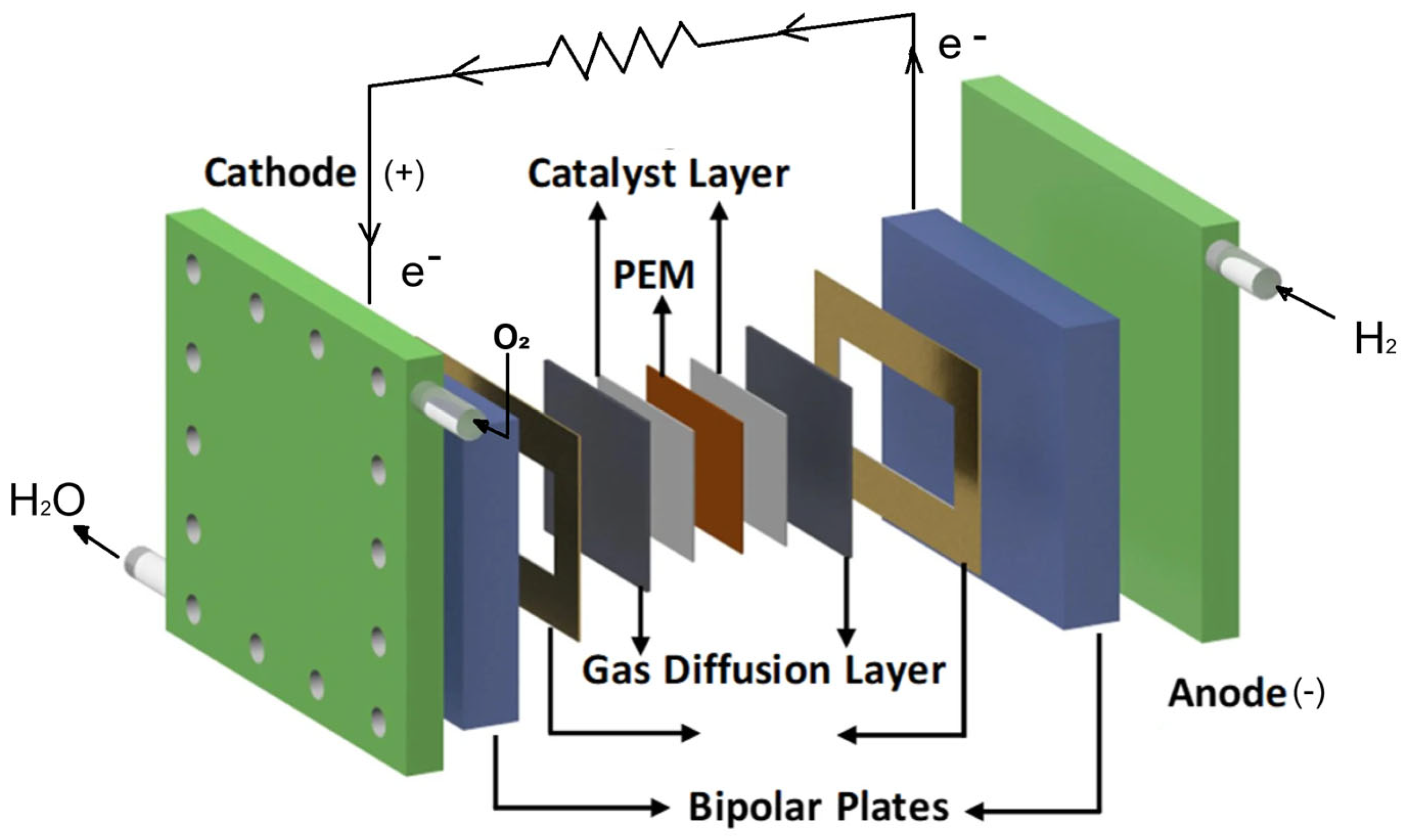
The PEMFC was modelled as a zero-dimensional system under steady-state conditions, as illustrated in Figure 4. Assumptions included: Constant temperature and pressure. Then, there are negligible pressure losses at the anode and cathode. With the calculation of isothermal hydrogen oxidation at 21% oxygen, ignoring the effects of other gases.
Here are the essential electrochemical reactions:
Anode :   2 H 2 4 H + + 4 e
Cathode :   4 H + + 4 e + O 2 2 H 2 O
Overall :   2 H 2 + O 2 2 H 2 O
Theoretical Flow Rates for hydrogen, oxygen and vapour:
n H 2 , theory = N cell I 2 F n O 2 , t h e o r y = N c e l l I 4 F   n H 2 O , t h e o r y = N c e l l I 2 F  
Actual Flow Rates for Oxygen and Hydrogen:
n H 2 , in = β H 2 n H 2 , theory n O 2 , in = β O 2 n O 2 , theory
Current Density:
J = I A
Cell Voltage:
E cell = E rev E act E ohm E conc
where are: E rev : reversible voltage, E act ; activation loss, E ohm : ohmic loss, E conc : concentration loss, [13], and we can find these dependents from:
Reversible voltage:
E rev = 1.229 8.456 × 10 4 ( T 298.15 ) + 4.3085 × 10 5 T l n   ( P H 2 P O 2 0.5 )
Activation Losses:
E act , ca = R T 4 α F l n   ( J i 0 , ca )
E act , an = R T 4 α F l n   ( J i 0 , an )
Ohmic Loss:
E ohm = I t m σ m
where membrane conductivity σ m   is calculated as:
σ m = σ 303 K ( λ ) e x p   [ 1260 303 1260 T ]
σ 303 K = 0.005193 λ 0.00326 for   λ > 1
Water Content:
λ = 0.0043 + 17.81 a w a w 2 + 36.0 a w 3   i f   0 < a w 1 λ = 14 + 1.4 a w 1   i f   a w > 1  
a w = P w P sat
l o g   P sat = 2.1797 + 0.02953 T 9.1837 × 10 5 T 2 + 1.4454 × 10 7 T 3
With the return to the concentration of losses by Pukrushpan et al., 2004 [14]:
E conc = i ( β 1 i i max ) β 2
β 1 = function   of   T , P O 2 , P sat
Cell Power Output:
W cell = N I E cell
Overall Cycle Efficiency
The total efficiency of the Oya Cycle will be calculated as:
η cycle = W ˙ netGT + W cell   W ˙ pump m ˙ f G T + m ˙ f H 2 LHV CH 4
where are: W ˙ netGT : net power from gas turbine, W cell : power from PEMFC, W ˙ pump : pump power, both m ˙ f G T , m ˙ f H 2 : fuel flow rates and LHV CH 4 : lower heating value of methane

2.5. Steam Methane Reforming (SMR)

Steam methane reforming is the core process in this study for converting methane into hydrogen using thermal energy recovered from the gas turbine exhaust. The most common way to make hydrogen in industry is SMR, which uses high-temperature reactions between methane and steam [6,15]. The process happens in two main steps:
Primary   Reforming   Reaction   ( endothermic ) :   C H 4 + H 2 O C O + 3 H 2 Water - Gas   Shift   Reaction   ( exothermic ) :   C O + H 2 O C O 2 + H 2 Overall   Reaction   :   C H 4 + 2 H 2 O C O 2 + 4 H 2

2.6. Reformer Proposed Design and Catalyst Details

The proposed design for the reformer in the Oya Cycle is intended as a tubular fixed-bed steam methane reformer (SMR) reactor, recommended to be fabricated from high-temperature alloys such Inconel 625 to endure thermal stresses and cyclic operation. Referring back to Figure 1, the proposed hydrogen reforming process is distinctly illustrated between stages S19 and S40. Heat from the gas turbine exhaust is conveyed by counter-flow heat exchangers to sustain the reforming zone at 600–900 °C and 2–3 bars, optimal for methane conversion and hydrogen production.
The suggested reactor will employ Ni-based catalysts (Ni/Al2O3) due to their high activity and cost-effectiveness compared to other noble metal catalysts, which offer superior activity but at significantly higher cost [6,15,16]. Catalyst performance depends on several parameters: activity and surface area influence conversion rates, while residence time between 0.5–1.0 s affects equilibrium attainment and pressure drop. The steam-to-carbon ratio (S/C) is also critical; increasing S/C from 2.0 to 3.0 reduces carbon deposition and improves hydrogen yield by up to 12% [15]. To optimise hydrogen recovery, the reformer incorporates a water-gas shift section downstream, succeeded by hydrogen separation and direct delivery to the PEMFC anode. This architecture optimises heat utilisation and obviates the necessity for hydrogen storage, conforming to best practices in integrated hybrid systems. The most significant novel element of Oya Cycle is its integration of SMR with the gas turbine exhaust stream. This enhances the efficiency of hydrogen production and optimises the overall system performance.

3. Results and Discussion

The simulation’s outcomes demonstrate the effectiveness of the Oya Cycle in enhancing the overall efficiency of the hybrid energy system. In addition to increasing power output, the PEM fuel cell’s integration with the gas turbine lessens the detrimental effects of ambient temperature on turbine operation.

3.1. Verification of the Model

Both the gas turbine and PEM fuel cell models were verified against published data to guarantee the accuracy of the simulation results.

3.1.1. Gas Turbine Model Validation

The key input parameters for the gas turbine simulation are summarised in Table 1 into the simulation environment; the micro gas turbine model was executed. Excellent concordance was found between the findings and the reference data from earlier research [10]. In particular, the net power output of the turbine was determined to be 30.82 kW, which was in close agreement with the benchmark values. The accuracy and reliability of the thermodynamic model employed in this investigation are confirmed by the high degree of consistency observed.

3.1.2. PEM Fuel Cell Model Validation

The PEMFC model was developed using Aspen Plus and validated by comparing its polarisation curve with experimental data reported by Wang et al. [11]. As shown in Figure 4, the simulated polarisation curve aligns well with the reference data, indicating that the model accurately captures the electrochemical behaviour of the fuel cell. The input parameters used for the PEMFC simulation are shown in Table 2.

3.2. Effect of Current Density on PEMFC Performance

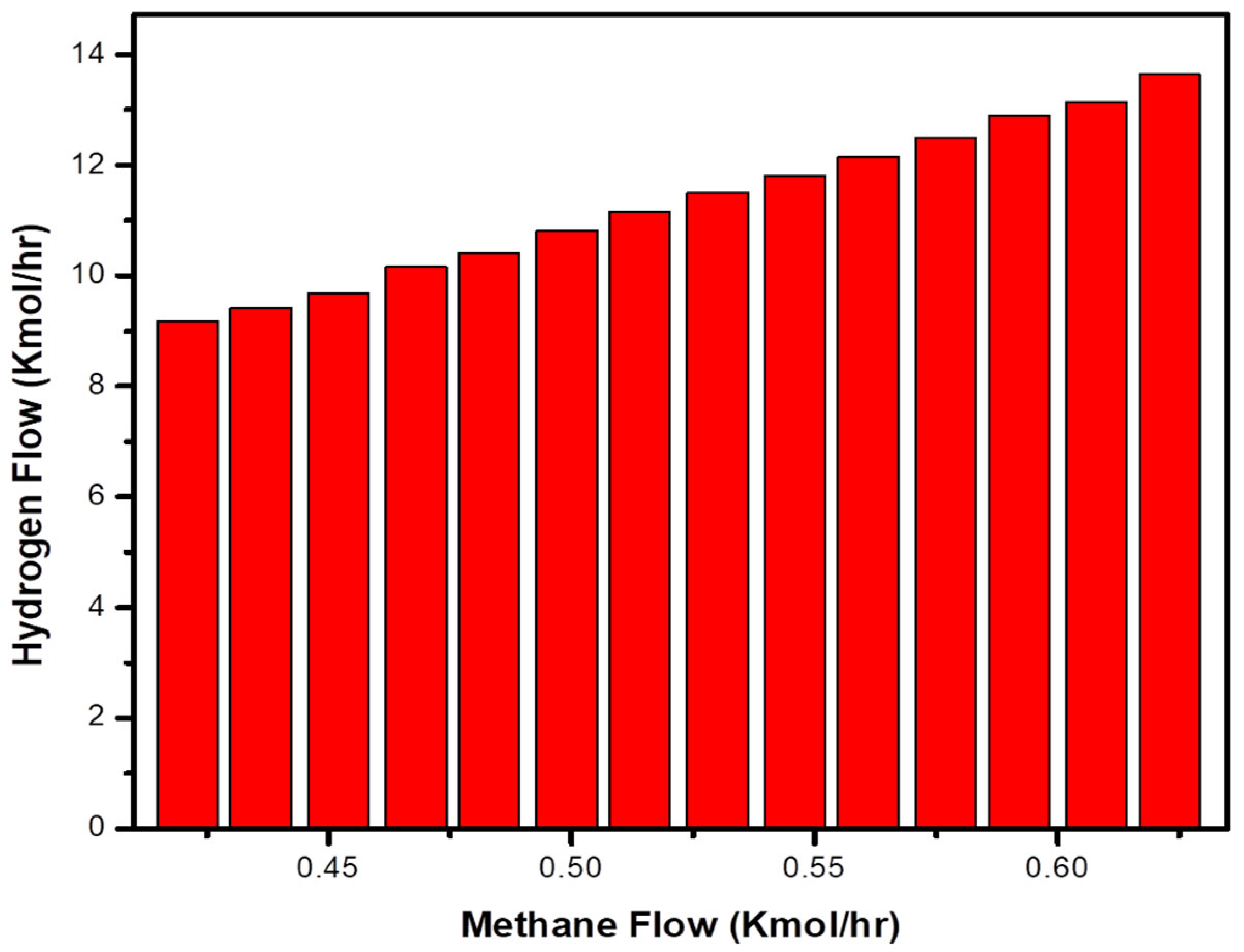
As shown in Figure 5, increasing the current density results in a higher power output from the PEM fuel cell. However, because electrochemical reactions are exothermic, this also increases internal heat generation. The figure shows that increasing methane flow shifts the reaction equilibrium, increasing hydrogen output. To prevent thermal degradation and maintain optimal performance, the operating current density must be kept below the maximum threshold. The operating parameters applied in this simulation are detailed in Table 3, which describes the steady-state temperatures, pressures, humidity, and oxygen and hydrogen flow rates, contains the operating parameters used in this simulation.

3.3. Hydrogen Flow Rate vs. Cell Voltage

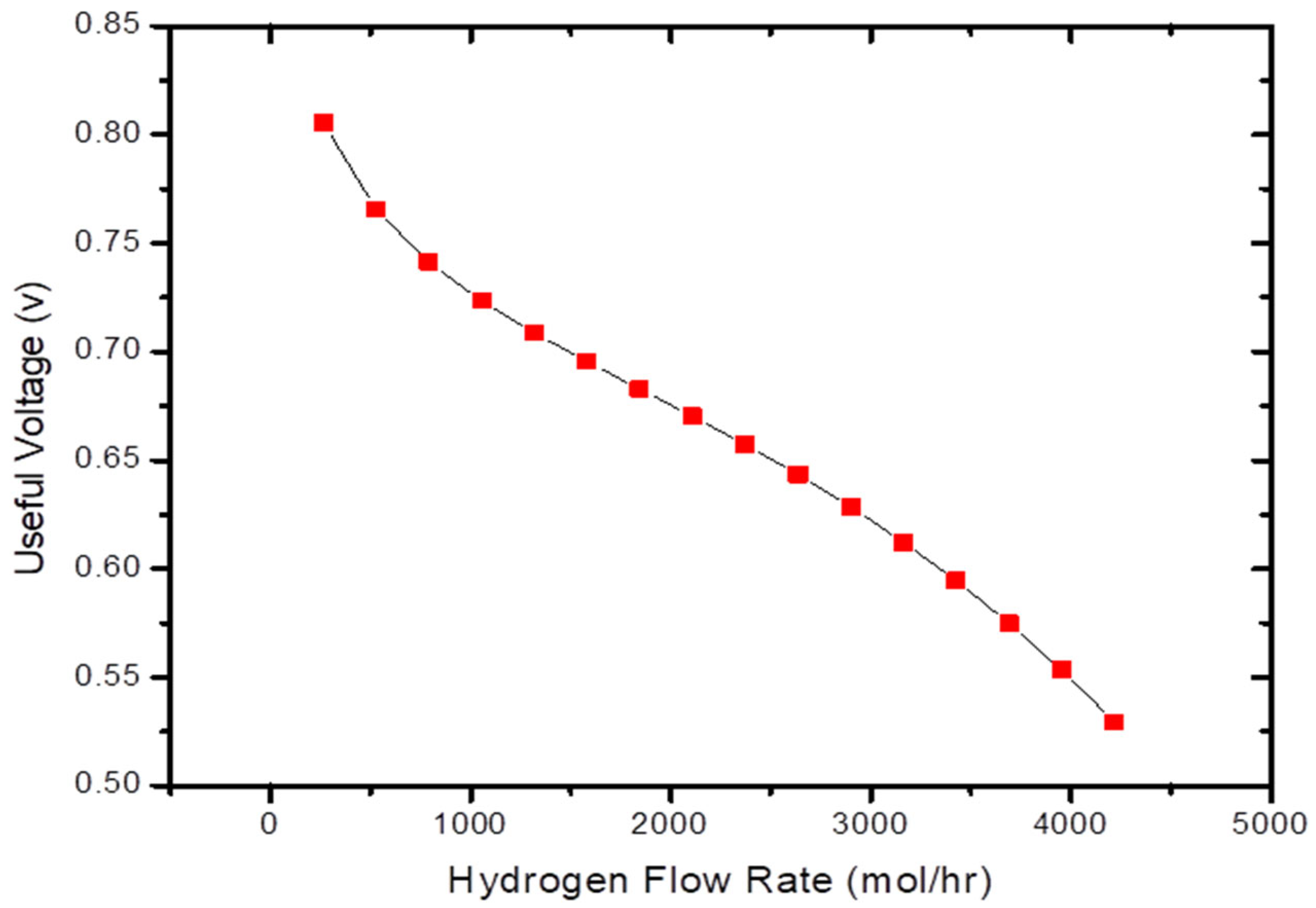
As illustrated in Figure 6 an inverse relationship between the hydrogen flow rate and the cell voltage. The reaction rate increases as the hydrogen concentration at the anode rises, resulting in a higher current output. On the other hand, exacerbates internal resistance and concentration losses, which in turn lower the effective cell voltage.

3.4. Polarisation Curve Analysis

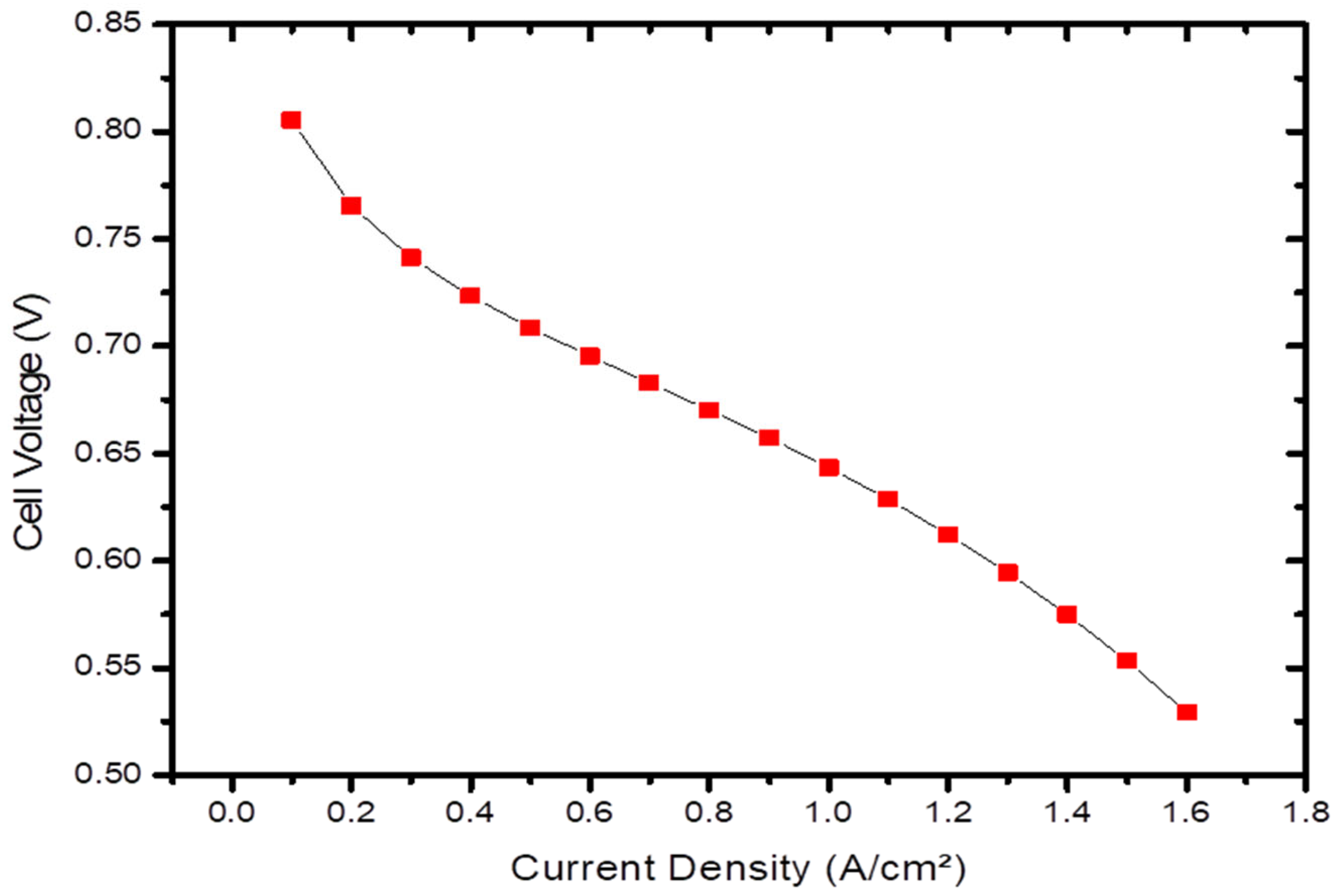
As shown in Figure 7, polarisation curve illustrates a relationship between cell voltage and current density. It draws attention to three different areas. For the PEMFC model to be validated and its operating point optimised, this curve is necessary. Identifies concentration loss, ohmic, and activation as locally crucial for model validation and performance validation.

3.5. Voltage Loss Breakdown

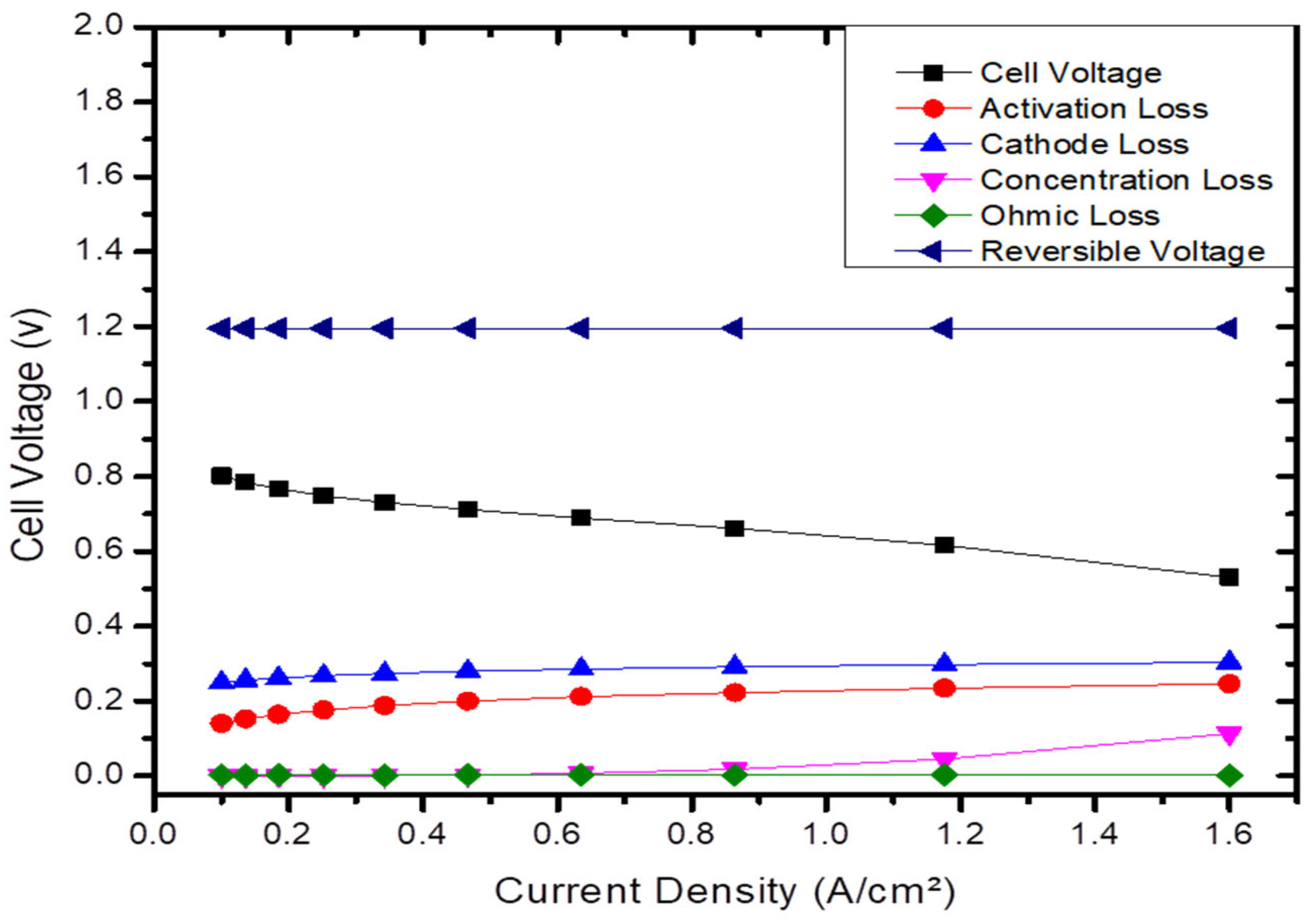
As illustrated in Figure 8, the breakdown of voltage losses in the PEMFC is presented. This analysis confirms that activation losses dominate at low currents, while ohmic and concentration losses become significant at higher loads. The figure highlights activation, ohmic, and concentration losses by contrasting the real cell voltage (solid line) with the ideal reversible voltage (black line).

3.6. Temperature Effect on Cell Voltage

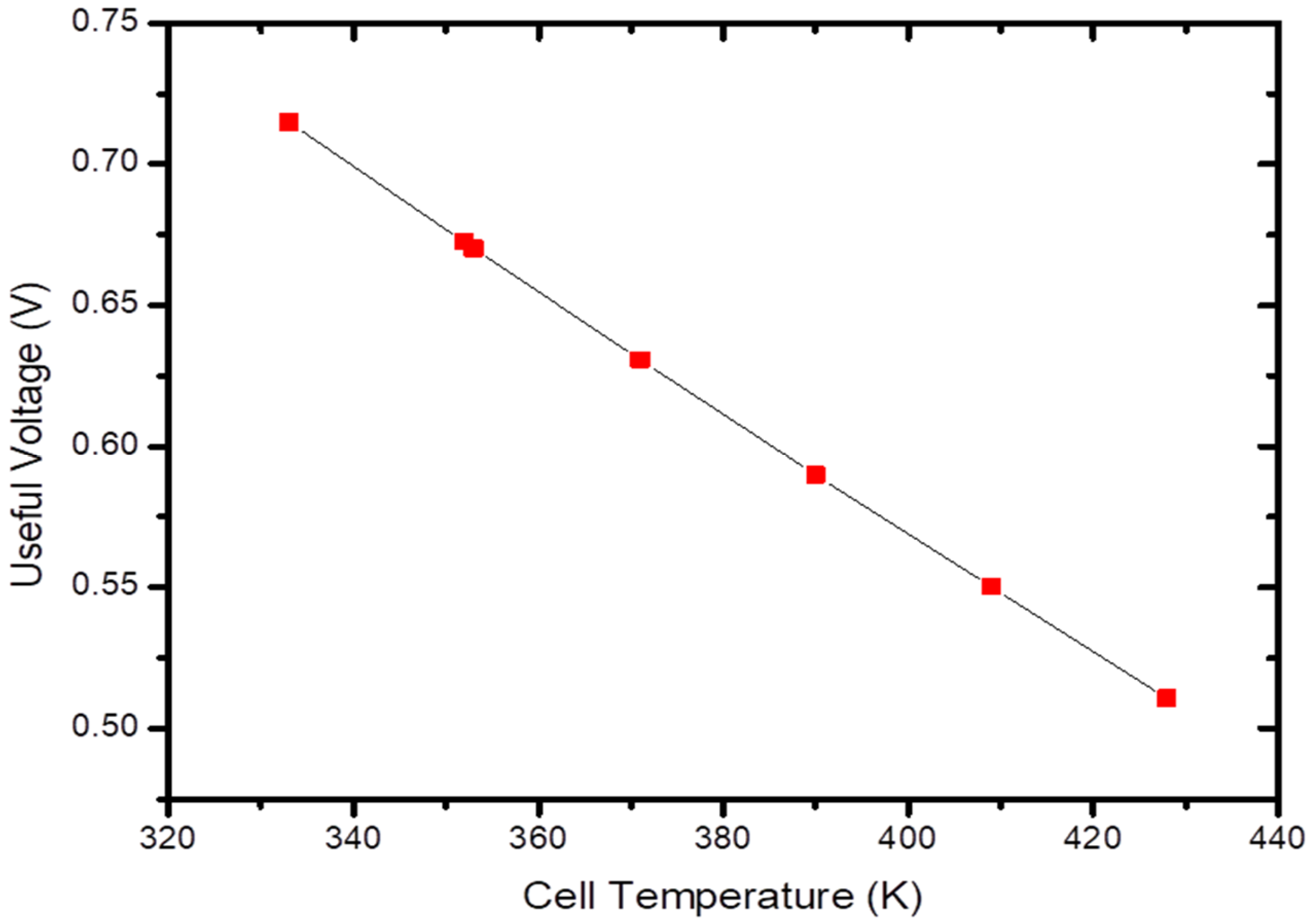
As shown in Figure 9, increasing the operating temperature of the PEMFC results in a decrease in cell voltage. This may be attributed to the membrane being less hydrated, and there are more side reactions, which make proton transport less efficient and the cell less effective.

3.7. Pressure Effect on Cell Voltage

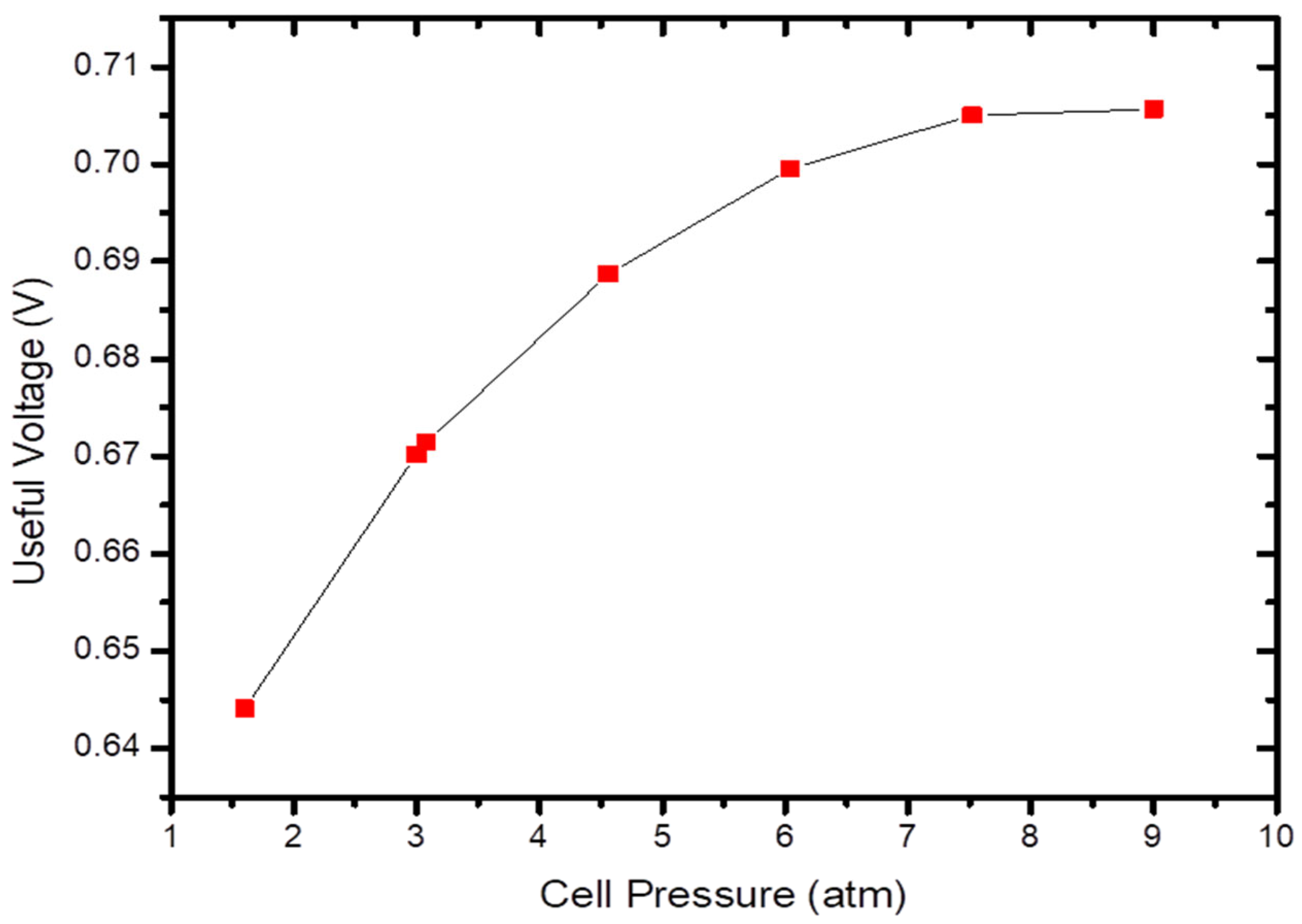
Figure 10 shows that increasing the operating pressure typically increases the cell voltage by raising the partial pressures of the reactants. However, after a certain point, saturation effects halt further gains, indicating that there is an optimal range of pressure for operation. According to the line, there is a generally positive correlation between the reactant and cell performance at low pressures, ranging from 1.5 to 7 atm.

3.8. Current Density vs. Net Power Output

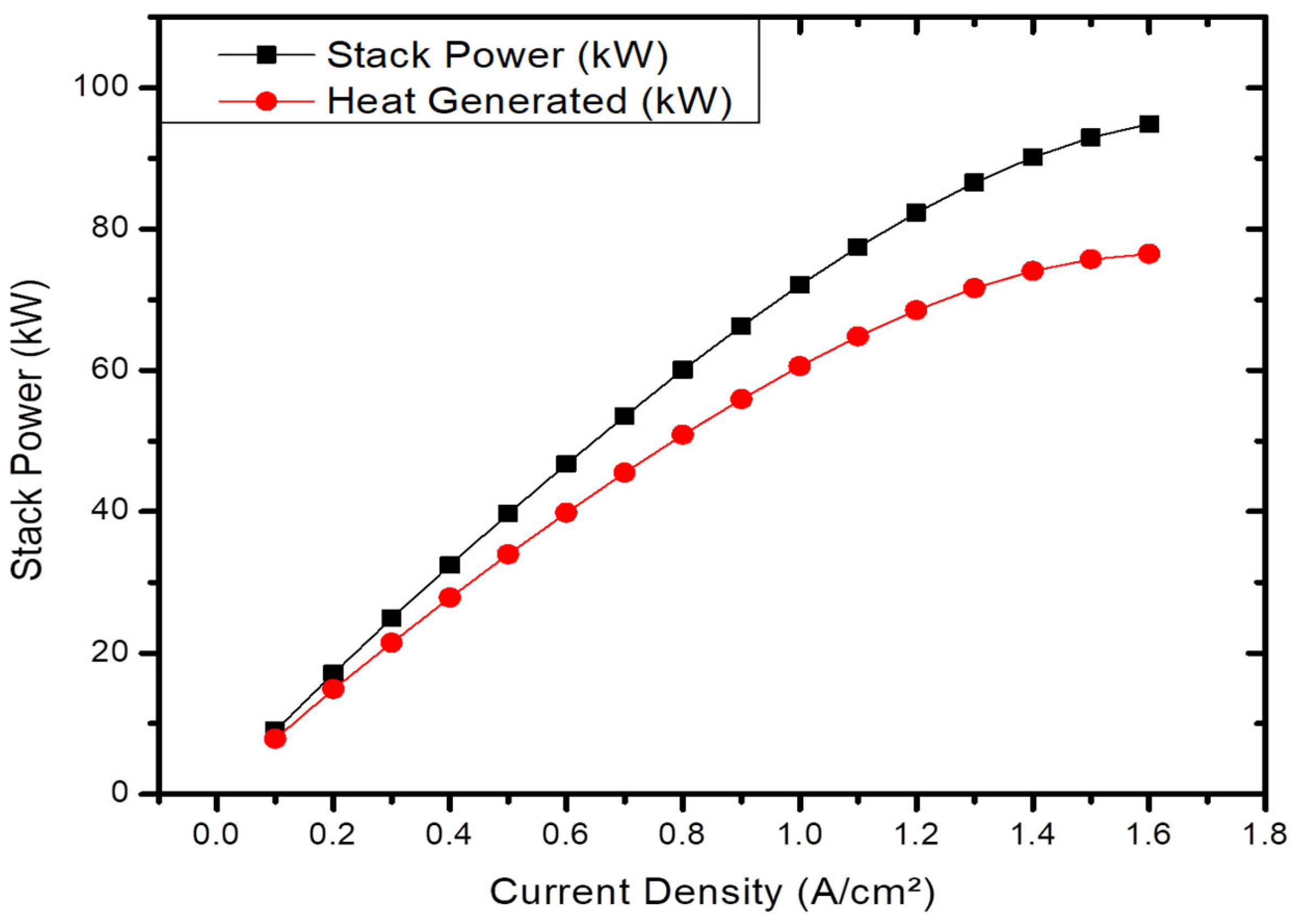
Figure 11 shows that the net power output from the PEMFC goes up with current density until a certain point. Thermal losses and voltage drop also lower the net gain. The optimal operating range is one that balances the amount of power produced with the system’s ability to cool itself effectively.

3.9. Ambient Temperature Impact on Gas Turbine and Oya Cycle

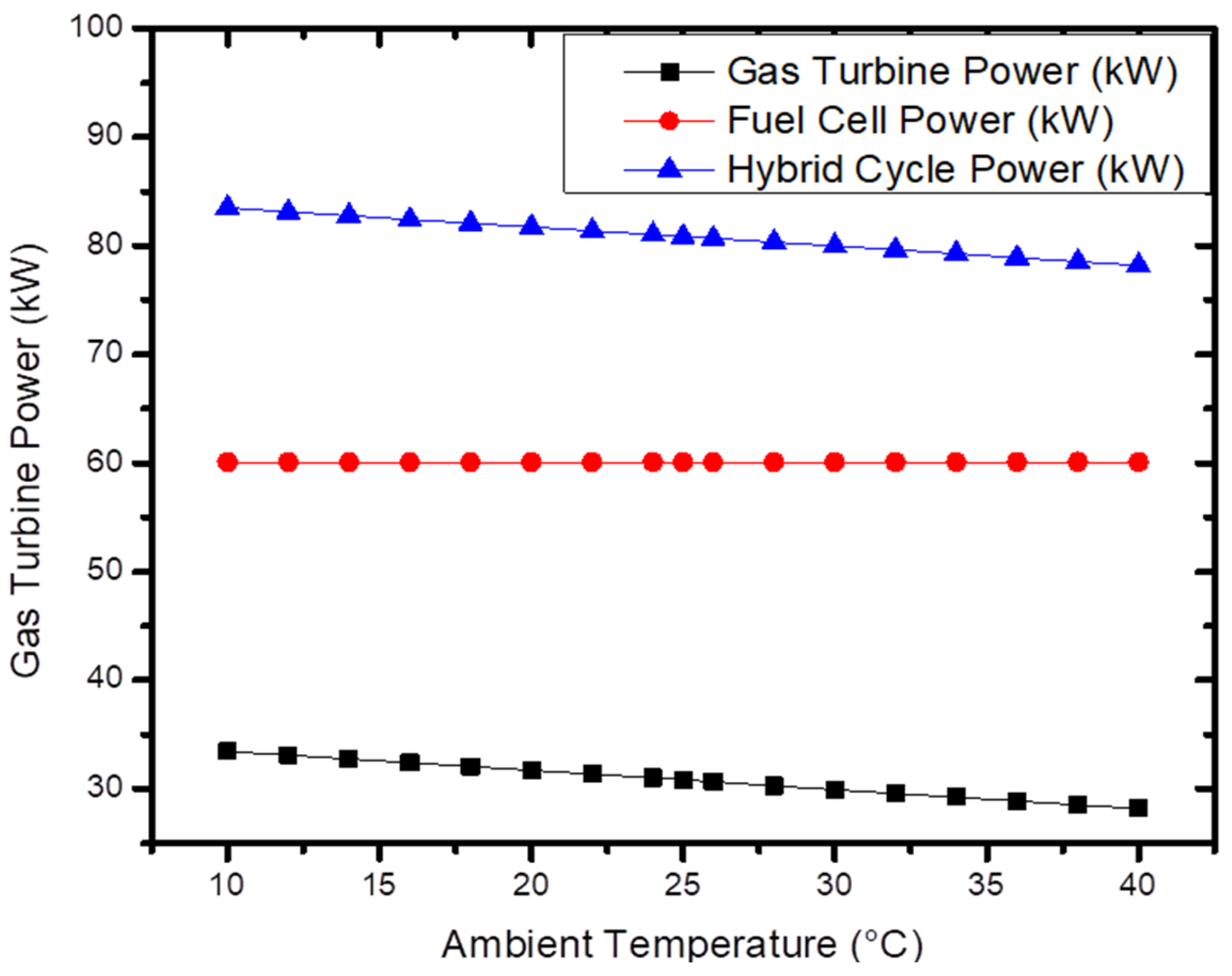
Figure 12 shows that the gas turbine’s net power output decreases as the ambient temperature rises. The turbine makes 28.16 kW at 40 °C, which is less than the 33.46 kW it makes at 10 °C. The drop is due to a decrease in both air density and compression efficiency. The PEMFC, on the other hand, maintains a steady output of 60 kW regardless of the outside temperature, as it operates in a controlled environment. Because of this stability, the fuel cell is a dependable source of power for starting up and adding to.

3.10. Overall Efficiency Improvement

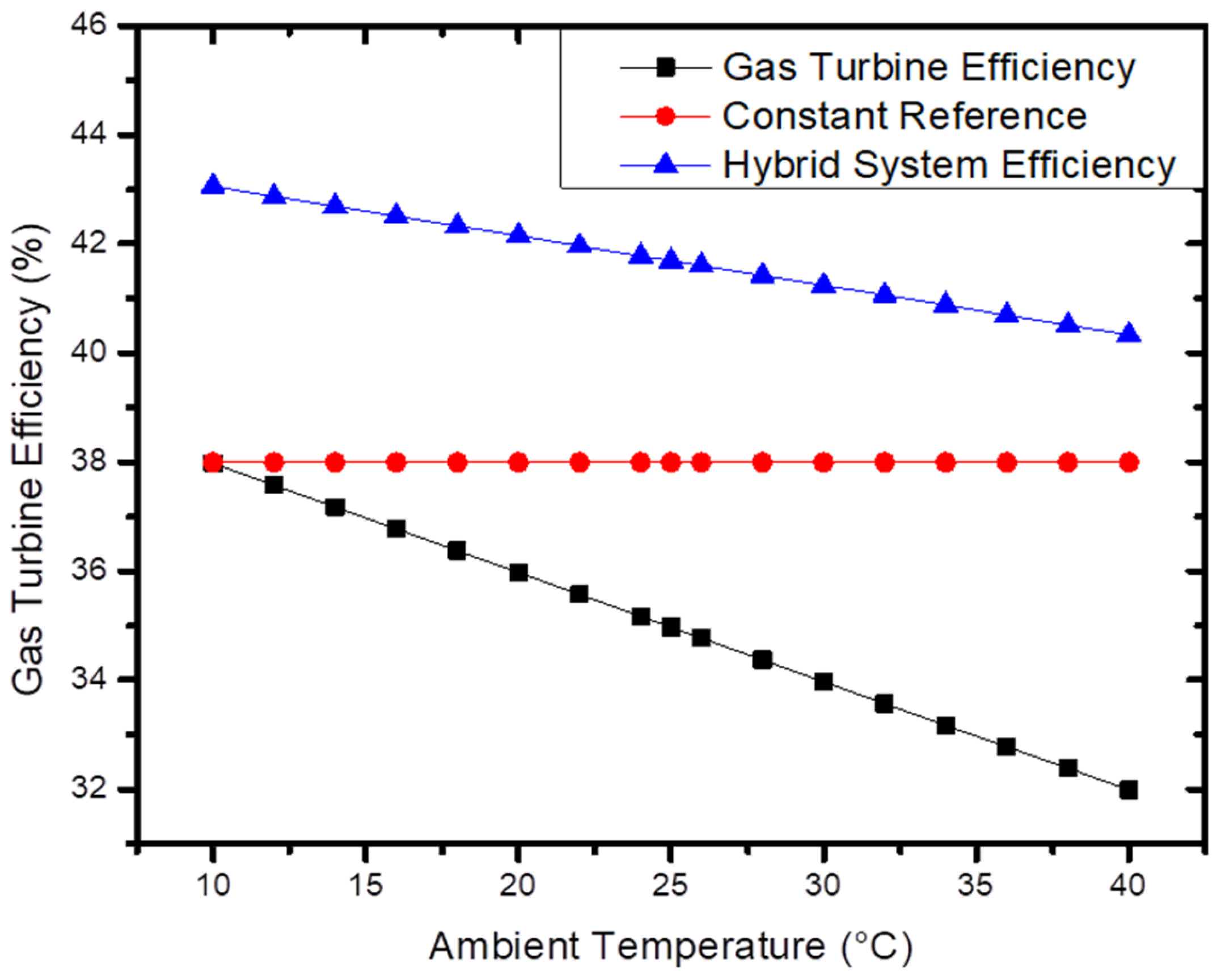
Figure 13 compares the performance of the gas turbine in isolation with that of the Oya hybrid system. At 10 °C, the turbine operates at 37.97% efficiency, but at 40 °C, it operates at only 31.98% efficiency. However, the Oya Cycle remains more efficient, decreasing from 43.06% to 40.33% over the same temperature range. This shows a 5.09% improvement in winter and an 8.35% improvement in summer. These findings substantiate that the Oya Cycle markedly improves system performance and adaptability to environmental fluctuations.

3.11. Breakdown of Efficiency Improvement

The recovery of waste heat from the gas turbine exhaust and the use of hydrogen in the PEM fuel cell are the two main mechanisms responsible for the overall efficiency improvement in the Oya Cycle, as illustrated previously in Figure 2. Thermodynamic modelling was used to examine the hybrid system and compare it with benchmarks from the literature in order to quantify these contributions [10,11].
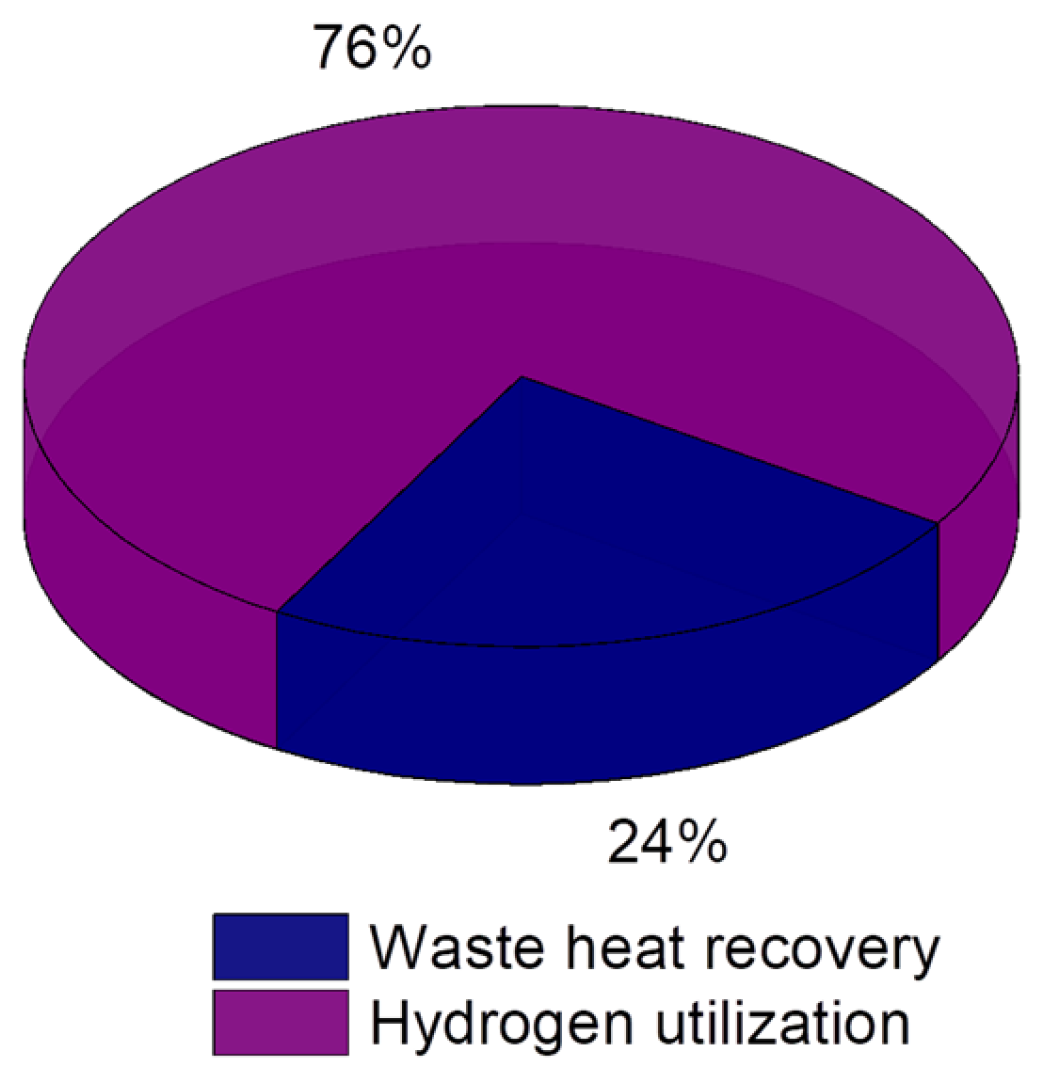
In summary, waste heat recovery improves overall cycle efficiency by approximately 2–3 percentage points by preheating methane and water for steam reforming, hence reducing external heating requirements. The utilisation of hydrogen in the PEMFC provides a notable benefit, adding 6–8 percentage points, as the electrochemical transformation of hydrogen into electricity improves the gas turbine’s output. Figure 14 illustrates the comparative effects of the two principal mechanisms that augment efficiency in the Oya Cycle. Waste heat recovery comprises roughly 24% of the overall enhancement, whereas hydrogen utilisation in the PEMFC contributes the remaining 76%. This explicitly illustrates that the electrochemical conversion of hydrogen accounts for the primary portion of efficiency improvements, while thermal integration via waste heat recovery serves a complementary yet substantial function. The synergistic impact of these two tactics guarantees that the hybrid system attains superior overall efficiency relative to an independent gas turbine. This analysis corresponds with earlier research on hybrid systems, indicating that the incorporation of PEMFC can enhance net electrical efficiency by 20–30% relative to independent gas turbines [10,11], and multi-stage waste heat recovery can improve exergy efficiency by up to 10% [6,15].

3.12. Preliminary Dynamic Response

To provide an initial insight into the hybrid system’s behaviour under variable operating conditions, a simplified dynamic simulation was performed using first-order response models for the PEMFC and reformer, as described by Pukrushpan et al. [14], which is widely applied in control-oriented fuel cell studies [14]. The general form of the equation is:
y ( t ) = y final ( y final y initial ) e t τ
where
y(t) = variable at time t
y initial = initial value
y final = final steady-state value
τ = time constant (s)
A 10% step increase in electrical load was applied at t = 0 s, while the ambient temperature was ramped from 30 °C to 40 °C over 600 s.
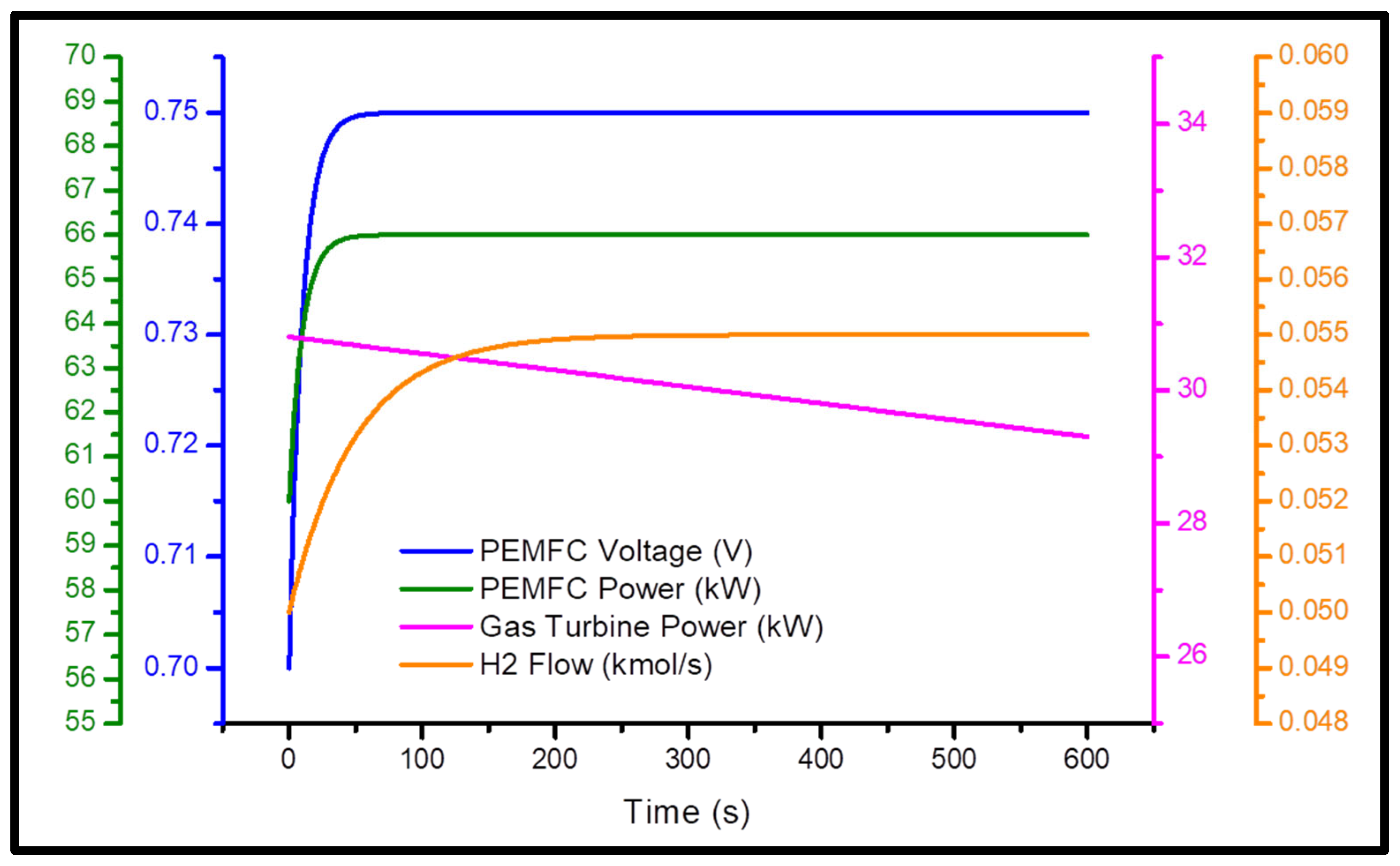
Figure 15 represents the temporal progression of essential parameters: PEMFC voltage (blue line), PEMFC stack power (green line), gas turbine net power (red line), and hydrogen molar flow rate (orange line). The PEMFC had a fast response, attaining a new steady state within 8–10 s, but the reformer demonstrated a more gradual heat response, stabilizing after roughly 50 s. The hybrid design reduced power fluctuations, keeping total output within ±3% of nominal during the transient period. This initial simulation analysis indicates that the Oya Cycle can mitigate short-term load fluctuations and variations in ambient temperature; however, subsequent research will integrate comprehensive control techniques and multi-physics transient modeling.

3.13. Preliminary Techno-Economic Feasibility Study

At this stage, a simple economic evaluation was checked to assess the feasibility of the Oya Cycle relative to a standalone micro gas turbine. Table 4 summarises the assumptions, including component costs, capacity factor, and fuel price. The Levelized Cost of Electricity (LCOE) was estimated using the standard approach described by Giampaolo in Equation (35) [8]:
LCOE = Annualised   Capital   Cost + O & M + Fuel   Cost Annual   Energy   Output
Under these assumptions, the hybrid system achieves an LCOE of $0.09–$0.11/kWh and an expected payback period of 5–7 years, which is competitive with distributed generation benchmarks [7]. Sensitivity analysis shows that increasing the capacity factor from 0.6 to 0.8 reduces LCOE by ~15%, while a 30% increase in fuel costs increases LCOE by ~10%. These preliminary results suggest that the Oya Cycle offers both technical and economic advantages, particularly in hot climate areas where efficiency gains are maximised.

4. Limitations and Future Work

This is an initial study that presents the first stages of design, simulation and optimisation for the OC hybrid energy system. Although the results show encouraging efficiency gains from combining PEM fuel cells and gas turbines, several restrictions remain. Without experimental validation or transient analysis, the current study primarily relies on steady-state simulations performed with Aspen Plus and EES at this stage. Furthermore, the Future detailed article research will focus on complete experimental dynamic modelling under variable operating conditions and technoeconomic analysis. Additionally, it will investigate advanced heat-exchange designs and control strategies for real-time energy management. These developments aim to transition the Oya Cycle from conceptual modelling to practical trial in sustainable energy systems. A detailed techno-economic analysis, including capital cost estimation, Levelized Cost of Electricity (LCOE), and real payback period, will be conducted in future work to evaluate the commercial viability of the Oya Cycle compared to the existing systems.

5. Conclusions

This preliminary study introduced and tested the Oya Cycle, a novel hybrid energy system that combines a gas turbine with a Proton Exchange Membrane Fuel Cell (PEMFC) to enhance efficiency and environmental benefits. Aspen Plus and EES were used to develop detailed thermodynamic and electrochemical models of the system, which were then tested through steady-state simulations under various ambient conditions. The results showed that the Oya Cycle makes energy use much more efficient than a gas turbine on its own. The gas turbine’s efficiency decreased from 37.97% to 31.98% as the temperature increased from 10 °C to 40 °C. The hybrid system, on the other hand, remained in a higher efficiency range, decreasing only from 43.06% to 40.33%. This represents a 5.09% improvement in winter and an 8.35% improvement in summer, indicating that the system can effectively handle environmental changes, especially in very hot places such as Africa and the Middle East. Steam methane reforming (SMR) enables the recovery of exhaust heat and the production of hydrogen on demand, thereby eliminating the need for storage and increasing the system’s reliability. The PEMFC model was tested against published polarisation data and showed stable power output and voltage behaviour that could be predicted across a range of operating conditions. The Oya Cycle is a promising approach to generating cleaner, more efficient power by combining the best features of gas turbines and fuel cells. It addresses significant challenges in energy recovery, hydrogen production, and temperature sensitivity, making it useful for future applications in distributed energy systems and sustainable infrastructure.

Supplementary Materials

The presentation material of this work is available online at https://www.mdpi.com/article/10.3390/engproc2025117015/s1.

Author Contributions

Methodology, A.M. and G.A.-G.; validation and testing A.M., M.H.M. and G.A.-G.; data analysis, A.M., G.A.-G. and M.H.M.; investigation, A.M., G.A.-G. and M.H.M.; resources, A.M. and M.H.M.; writing—original draft preparation, G.A.-G. and M.H.M.; writing—review A.M. and M.H.M.; editing, M.H.M. and G.A.-G. and A.M. All authors have read and agreed to the published version of the manuscript.

Funding

This research received no external funding.

Informed Consent Statement

Not applicable.

Data Availability Statement

All data are contained within the article.

Acknowledgments

The authors would like to recognise and acknowledge the assistance provided by the Department of Marine and Offshore Engineering, Faculty of Engineering, University of Tripoli, Tripoli, Libya, as well as Sheffield Hallam University, Sheffield, UK, for both support and facilitation of this work.

Conflicts of Interest

The authors declare no conflicts of interest.

References

  1. Avevor, J.; Agbale Aikins, S.; Anebi Enyejo, L. Optimizing Gas and Steam Turbine Performance Through Predictive Maintenance and Thermal Optimization for Sustainable and Cost-Effective Power Generation. Int. J. Innov. Sci. Res. Technol. 2025, 10, 994–1010. [Google Scholar] [CrossRef]
  2. Takeishi, K.; Krewinkel, R. Advanced Gas Turbine Cooling for the Carbon-Neutral Era. Int. J. Turbomach. Propuls. Power 2023, 8, 19. [Google Scholar] [CrossRef]
  3. Mussa, M.H.; Rahaq, Y.; Takita, S.; Zahoor, F.D.; Farmilo, N.; Lewis, O. The Influence of Adding a Functionalized Fluoroalkyl Silanes (PFDTES) into a Novel Silica-Based Hybrid Coating on Corrosion Protection Performance on an Aluminium 2024-T3 Alloy. Mater. Proc. 2021, 7, 6. [Google Scholar] [CrossRef]
  4. Takita, S.; Nabok, A.; Lishchuk, A.; Mussa, M.H.; Smith, D. Enhanced Performance Electrochemical Biosensor for Detection of Prostate Cancer Biomarker PCA3 Using Specific Aptamer. Eng 2023, 4, 367–379. [Google Scholar] [CrossRef]
  5. Rahaq, Y.; Mussa, M.; Mohammad, A.; Wang, H.; Hassan, A. Highly Reproducible Perovskite Solar Cells via Controlling the Morphologies of the Perovskite Thin Films by the Solution-Processed Two-Step Method. J. Mater. Sci. Mater. Electron. 2018, 29, 16426–16436. [Google Scholar] [CrossRef]
  6. Franchi, G.; Capocelli, M.; De Falco, M.; Piemonte, V.; Barba, D. Hydrogen Production via Steam Reforming: A Critical Analysis of MR and RMM Technologies. Membranes 2020, 10, 10. [Google Scholar] [CrossRef] [PubMed]
  7. Öberg, S.; Odenberger, M.; Johnsson, F. Exploring the Competitiveness of Hydrogen-Fueled Gas Turbines in Future Energy Systems. Int. J. Hydrogen Energy 2022, 47, 624–644. [Google Scholar] [CrossRef]
  8. Giampaolo, T. Gas Turbine Handbook: Principles and Practice, 5th ed.; River Publishers: New York, NY, USA, 2020; ISBN 9781003151821. [Google Scholar]
  9. Horlock, J.H. A Brief Review of Power Generation Thermodynamics. In Advanced Gas Turbine Cycles; Elsevier: Amsterdam, The Netherlands, 2003; pp. 1–11. [Google Scholar]
  10. Bakalis, D.P.; Stamatis, A.G. Performance Simulation of a Hybrid Micro Gas Turbine Fuel Cell System Based on Existing Components. In Proceedings of the Volume 4: Cycle Innovations; Fans and Blowers; Industrial and Cogeneration; Manufacturing Materials and Metallurgy; Marine; Oil and Gas Applications; ASME: New York, NY, USA, 2011; pp. 171–179. [Google Scholar]
  11. Wang, C.; Li, Q.; Wang, C.; Zhang, Y.; Zhuge, W. Thermodynamic Analysis of a Hydrogen Fuel Cell Waste Heat Recovery System Based on a Zeotropic Organic Rankine Cycle. Energy 2021, 232, 121038. [Google Scholar] [CrossRef]
  12. Madhav, D.; Wang, J.; Keloth, R.; Mus, J.; Buysschaert, F.; Vandeginste, V. A Review of Proton Exchange Membrane Degradation Pathways, Mechanisms, and Mitigation Strategies in a Fuel Cell. Energies 2024, 17, 998. [Google Scholar] [CrossRef]
  13. Mann, R.F.; Amphlett, J.C.; Hooper, M.A.I.; Jensen, H.M.; Peppley, B.A.; Roberge, P.R. Development and Application of a Generalised Steady-State Electrochemical Model for a PEM Fuel Cell. J. Power Sources 2000, 86, 173–180. [Google Scholar] [CrossRef]
  14. Pukrushpan, J.T.; Peng, H.; Stefanopoulou, A.G. Control-Oriented Modeling and Analysis for Automotive Fuel Cell Systems. J. Dyn. Syst. Meas. Control 2004, 126, 14–25. [Google Scholar] [CrossRef]
  15. Ganguli, A.; Bhatt, V. Hydrogen Production Using Advanced Reactors by Steam Methane Reforming: A Review. Front. Therm. Eng. 2023, 3, 1143987. [Google Scholar] [CrossRef]
  16. Cong, Y.; Wang, H.; Liu, M.; Tian, J. Latest Progresses of Ru-Based Catalysts for Alkaline Hydrogen Oxidation Reaction: From Mechanism to Application. Appl. Catal. A Gen. 2024, 676, 119684. [Google Scholar] [CrossRef]
  17. NREL 2023 Electricity ATB Technologies and Data Overview. Available online: https://atb.nrel.gov/electricity/2023/index (accessed on 2 December 2025).
  18. Kleen, G.; Gibbons, W. Heavy-Duty Fuel Cell System Cost—2023. Available online: https://www.hydrogen.energy.gov/docs/hydrogenprogramlibraries/pdfs/review24/24004-hd-fuel-cell-system-cost-2023.pdf?sfvrsn=70ff384f_3 (accessed on 2 December 2025).
  19. NREL 2024 Electricity ATB Technologies. Available online: https://atb.nrel.gov/electricity/2024/technologies (accessed on 2 December 2025).
  20. U.S. Energy information Administration Natural Gas Prices (Dollars per Thousand Cubic Feet). Available online: https://www.eia.gov/dnav/ng/ng_pri_sum_a_epg0_pin_dmcf_m.htm (accessed on 2 December 2025).
  21. Cicgolotti, V.; Genovese, M. Stationary Fuel Cell Applications. Current and Future Technologies Costs, Performances, and Potential 2021. Available online: https://ieafuelcell.com/ (accessed on 2 December 2025).
Figure 1. Aspen Plus simulation diagram of the Oya Cycle. The figure shows the integrated process flow for the gas turbine and PEM fuel cell system, including heat recovery and hydrogen generation.
Engproc 117 00015 g001
Figure 2. A Block diagram of the Oya Cycle hybrid system, which illustrates how high-temperature exhaust from the gas turbine enter two heat exchangers to heat water and methane, before steam reforming produces hydrogen.
Engproc 117 00015 g002
Figure 3. Thermodynamic flow diagram of the micro gas turbine. It includes isentropic compression, constant-pressure heat addition, and isentropic expansion, forming the core of the gas turbine cycle. In these schematic drawings, which are created by Aspen Plus, in Figure 3, there are three main processes, including: Line 1–2: Isentropic compression; Line 2–3: Heat addition at constant pressure; Line 3–4: Isentropic expansion.
Engproc 117 00015 g003
Figure 4. A schematic of the Proton Exchange Membrane Fuel Cell (PEMFC) illustrates the electrochemical reactions at the anode and cathode, modified from Ref. [12].
Engproc 117 00015 g004
Figure 5. Relationship between the methane flow rate to the steam reformer and the rate of hydrogen production.
Engproc 117 00015 g005
Figure 6. The figure illustrates the inverse relationship between hydrogen flow rate and PEMFC voltage output.
Engproc 117 00015 g006
Figure 7. Shows the polarisation curve of the PEMFC, plotted as a function of current density and cell voltage.
Engproc 117 00015 g007
Figure 8. Illustrates the breakdown of voltage loss in the PEMFC between overall production and voltage losses.
Engproc 117 00015 g008
Figure 9. Shows the relation of cell temperatures’ impact on PEMFC voltage.
Engproc 117 00015 g009
Figure 10. Shows the relations between the operating pressure and PEMFC voltage.
Engproc 117 00015 g010
Figure 11. Illustrates the effect of current density on the PEMFC’s net power output.
Engproc 117 00015 g011
Figure 12. Shows the effect of ambient temperature on the power output of the gas turbine and PEMFC.
Engproc 117 00015 g012
Figure 13. A comparison of how well the Oya hybrid system and the standalone gas turbine work.
Engproc 117 00015 g013
Figure 14. Relative contribution of waste heat recovery and hydrogen utilisation to overall efficiency improvement in the Oya Cycle.
Engproc 117 00015 g014
Figure 15. Dynamic response of the Oya hybrid system during a 10% step increase in PEMFC load and ambient temperature ramp from 30 °C to 40 °C over 600 s.
Engproc 117 00015 g015
Table 1. Summarises the key input parameters used in the gas turbine simulation model.
SymbolParameterValueUnit
RCompression ratio3.6unitless
T3Turbine inlet temperature1117K
η c o m p G T Compressor efficiency79.6%
η G T Turbine efficiency84%
η c o m b Combustion efficiency85%
m ˙ a i r G T Air mass flow rate0.3005kg/s
m ˙ f G T Fuel mass flow rate1.9582 × 10−3kg/s
m ˙ Total mass flow rate (air + fuel)0.302483kg/s
T4Exhaust gas temperature873.272K
L H V C H 4 Lower heating value of methane45,000kJ/kg
Table 2. Input Parameters for the PEM Fuel Cell Simulation Model.
SymbolParameterValueUnit
N Number of cells400Piece
A Active area per cell200cm2
t mMembrane thickness0.0127cm
ta, tcThickness of gas diffusion layers (GDL)0.0003m
i 0 c a Exchange current density (cathode) 2.5 × 10 3 A/cm2
i 0 a n Exchange current density (anode) 2.0 × 10 7 A/cm2
F Faraday constant96,400C/mol
Table 3. Operating Parameters for the PEM Fuel Cell Simulation.
SymbolParameterValueUnit
TOperating temperature353K
POperating pressure3Atm
TcCathode inlet temperature353K
TaAnode inlet temperature353K
PcCathode pressure3Atm
PaAnode pressure3Atm
---Cathode humidity0.9%
---Anode humidity0.9%
β H 2 Hydrogen excess ratio1.25unitless
β O 2 Oxygen excess ratio2unitless
JCurrent density0.8A/cm2
ECell voltage0.67V
W c e l l Net power output of PEMFC60kW
n H 2   t h e o r y Hydrogen flow rate2110Mol/h
n O 2   t h e o r y Oxygen flow rate8039Mol/h
Table 4. Key Economic Expectations for LCOE and Payback Analysis.
ParameterAssumed ValueNotes
Micro Gas Turbine Cost$1200 per kWIncludes turbine, generator, and controls [17].
PEMFC Stack Cost$1000 per kWBased on current commercial stack pricing [18].
Reformer & Heat Exchanger$400 per kWCovers SMR reactor and thermal integration [17].
Capacity Factor0.70Typical for distributed generation systems [19].
Fuel Price (Natural Gas)$6 per MMBtuAverage industrial tariff [20].
System Lifetime10 yearsAssumes periodic maintenance and overhaul [21].
Operation & maintenance Cost3% of capital per yearIncludes routine service and consumables [19].
Disclaimer/Publisher’s Note: The statements, opinions and data contained in all publications are solely those of the individual author(s) and contributor(s) and not of MDPI and/or the editor(s). MDPI and/or the editor(s) disclaim responsibility for any injury to people or property resulting from any ideas, methods, instructions or products referred to in the content.