1. Introduction
Soil contamination by potentially toxic elements (PTEs) poses a severe and long-term ecological threat, adversely impacting the environment, human health, and agricultural productivity. The accumulation of these contaminants in soil primarily results from intensive industrial activity, improper waste management, mineral extraction, fossil fuel combustion, and excessive use of agrochemicals. The most common PTEs include heavy metals such as lead, cadmium, mercury, arsenic, and zinc, which are characterized by their persistence, bioaccumulative nature, and high toxicity—even at low concentrations. Consequently, the remediation of contaminated soil is critical for restoring ecological balance and preventing further degradation, as the chemical stability of these elements enables them to disrupt soil microbiota, suppress plant growth, and bioaccumulate within food chains.
Conventional soil remediation techniques, including soil replacement, thermal decontamination, and chemical extraction, are technically demanding, costly, and often cause significant disturbance to the natural soil environment. Consequently, growing attention has been directed toward alternative, environmentally sustainable approaches, particularly phytoremediation—an innovative technique that utilizes specific plant species to absorb, accumulate, stabilize, or degrade contaminants directly within the soil matrix. Phytoremediation is less invasive and more cost-effective than conventional methods and simultaneously improves the soil’s physical properties and biological activity.
Cannabis sativa has recently attracted significant scientific interest owing to its rapid growth rate, resilience, and well-developed root system, which collectively enhance its capacity to accumulate heavy metals, particularly within root tissues. Moreover, Cannabis sativa exhibits a high tolerance to environmental stressors commonly encountered in contaminated sites. Due to its versatile biomass applications in the textile, construction, and energy industries, industrial hemp is increasingly regarded as a promising species for the phytoremediation of polluted soils and the restoration of degraded land.
2. Materials and Methods
Soil samples were collected from the site of a former large-scale metallurgical facility located in central Ostrava. Sample preparation followed the Czech technical standard based on international ISO standard (ČSN ISO) 11,464 (836160) standard, Soil Quality—Pretreatment of Samples for Physicochemical Analysis [
1].
All analyses were conducted in the laboratories of the Department of Environmental Engineering at VSB–Technical University of Ostrava (VSB-TUO). Comprehensive characterization of the soil samples was performed using a wavelength-dispersive X-ray fluorescence (WD-XRF) spectrometer (S8 TIGER, Bruker, Billerica, MA, USA). We focused on the occurrence of risk elements (Zn, Cr, Ni, Cu, As, Pb). The analyses were performed using the flame method on a VARIAN AA 280FS instrument (AAS; Varian Australia Pty Ltd., Mulgrave, Victoria, Australia). AAS is a standard method of elemental analysis—therefore also suitable for the analysis of biomass after mineralization.
Digestion conditions: decomposition in an open system, weighing of approximately 0.5 g of dry sample, addition of 10 mL of concentrated HNO3 p.a., hot plate, decomposition time—until complete dissolution of biomass, i.e., approximately 20 min. Transfer to a 50 mL volumetric flask, top up to the mark—ready for analysis on AAS. The measured results are then converted back to the dry sample.
The experiment involved the cultivation of six
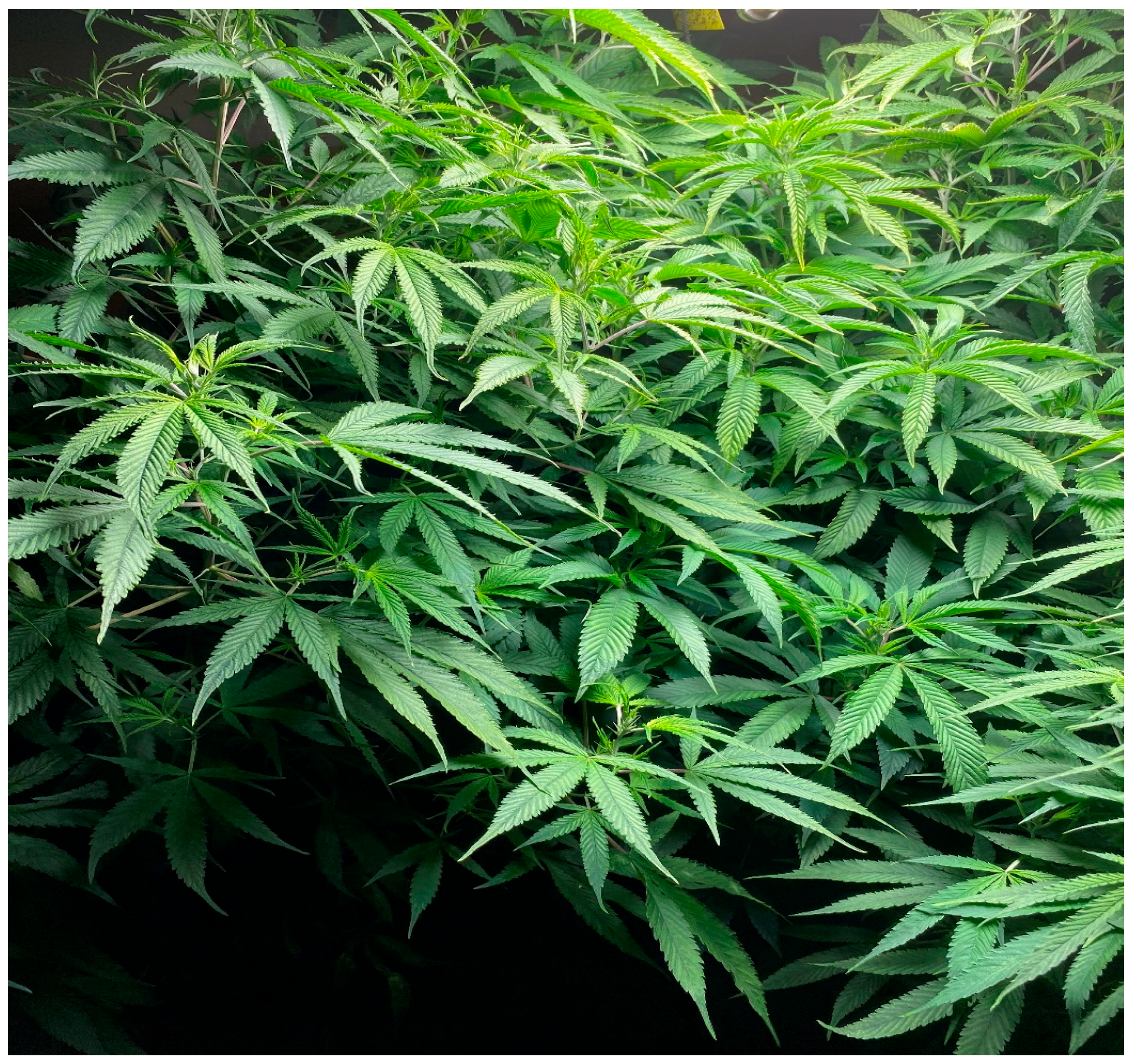
Cannabis sativa plants, each grown individually in a separate pot. Seeds were placed on the top layer of homogenized mixed soil and subsequently covered with a 3–5 mm layer of the tested soil. Irrigation began immediately after planting and was repeated at two- to three-day intervals. The potted plants were maintained for eight months in the cannabis cultivation hall located in Ostrava–Kunčice. The entire experiment was thoroughly documented and continuously monitored, as illustrated in
Figure 1.
Throughout the experiment, vegetative growth was systematically observed to identify the environmental conditions necessary for seed germination, establishment, and optimal plant development. The most substantial increase in biomass occurred between the third and fourth months, with all plants exhibiting a similar growth pattern.
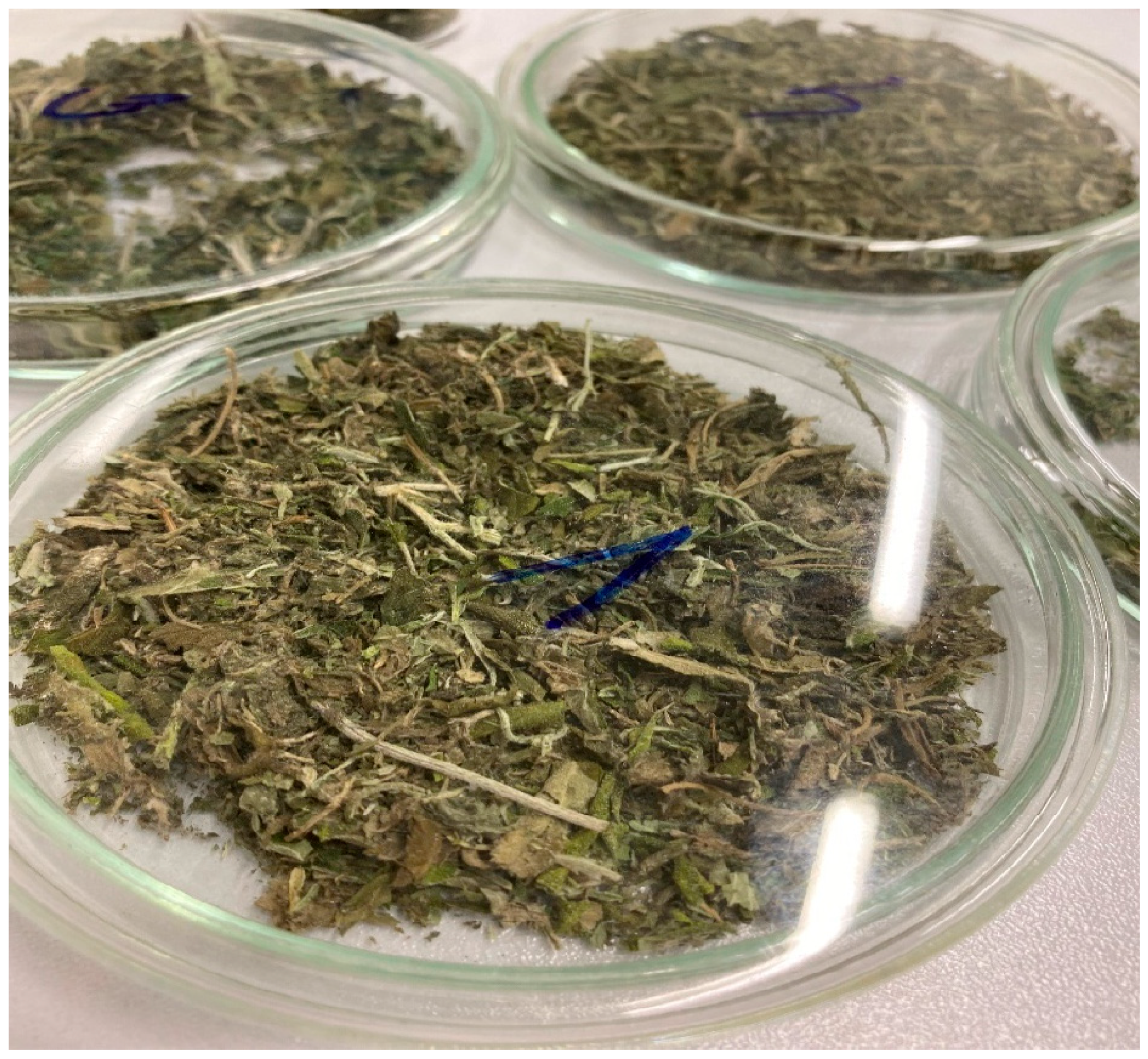
The harvested plants were air-dried at room temperature for one week, as shown in
Figure 2. The prepared test samples, each with an average weight of approximately 0.5 g, were digested in subboiled nitric acid produced by subboiling distillation. Complete digestion was achieved in all cases. The resulting digests were subsequently filtered into flasks and stored for further analysis.
3. Results
The concentrations of potentially toxic elements (PTEs) in the sub-root soil were analyzed four months after planting (samples 1–6). After eight months, leaf samples were examined using atomic absorption spectroscopy (AAS) to determine the levels of PTEs accumulated in plant tissues.
The results show that, four months after planting, the concentrations of metals in the subsoil had decreased in most samples, as presented in
Table 1.
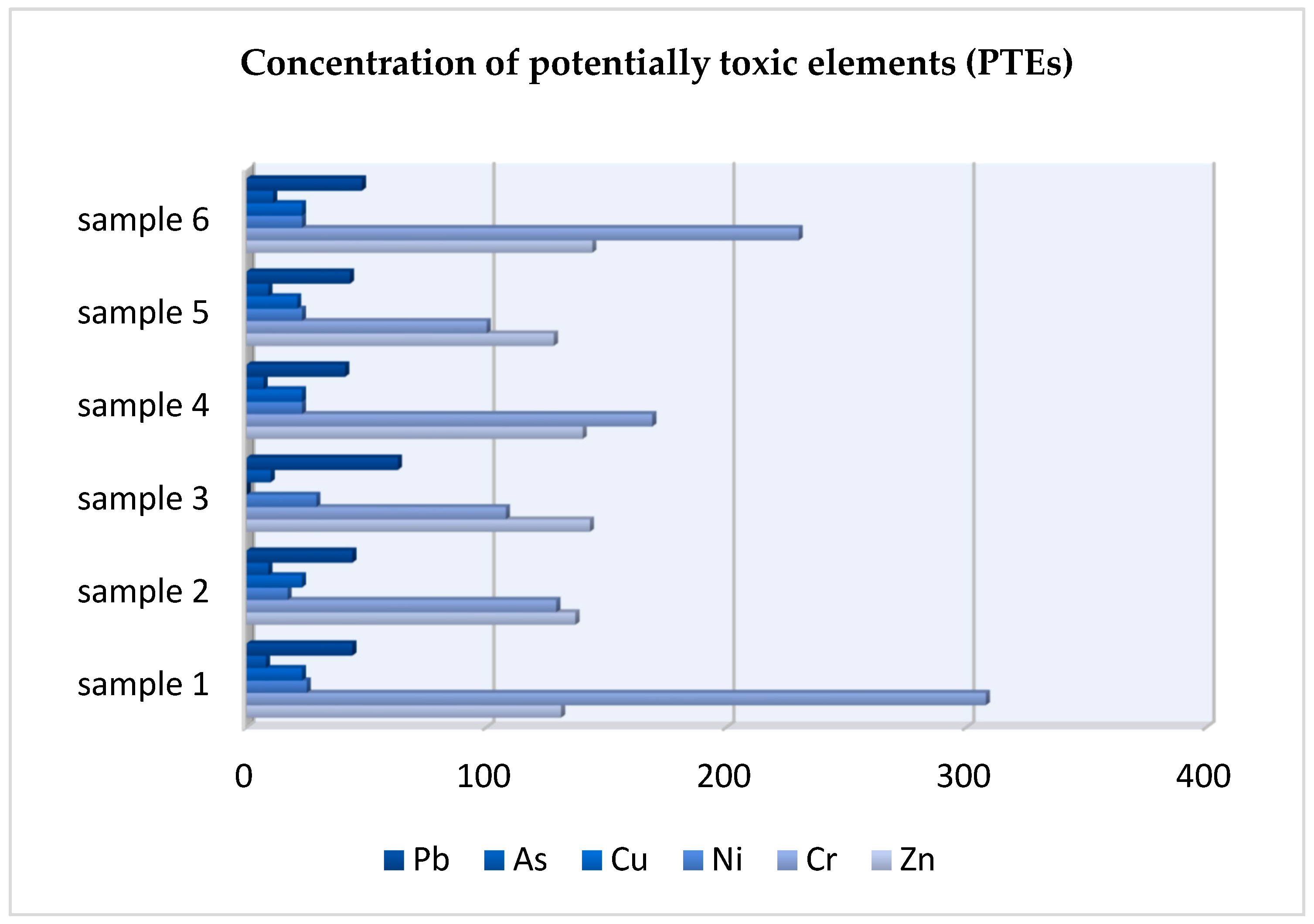
As illustrated in
Figure 3, sample 5 demonstrated the highest overall remediation efficiency, exhibiting the greatest reduction in the total concentrations of the analyzed elements in the soil. Specifically, the following percentages of metals were removed during the experiment: 11.11% zinc, 74.87% chromium, 36.11% nickel, 8.7% copper, and 35.71% arsenic.
To further examine the accumulation of risk elements in leaves [
2,
3,
4], a fourth plant was left to decompose for an additional four months. Subsequently, biomass decomposition was analyzed using flame spectrometry with a measurement uncertainty of 20%.
As illustrated in
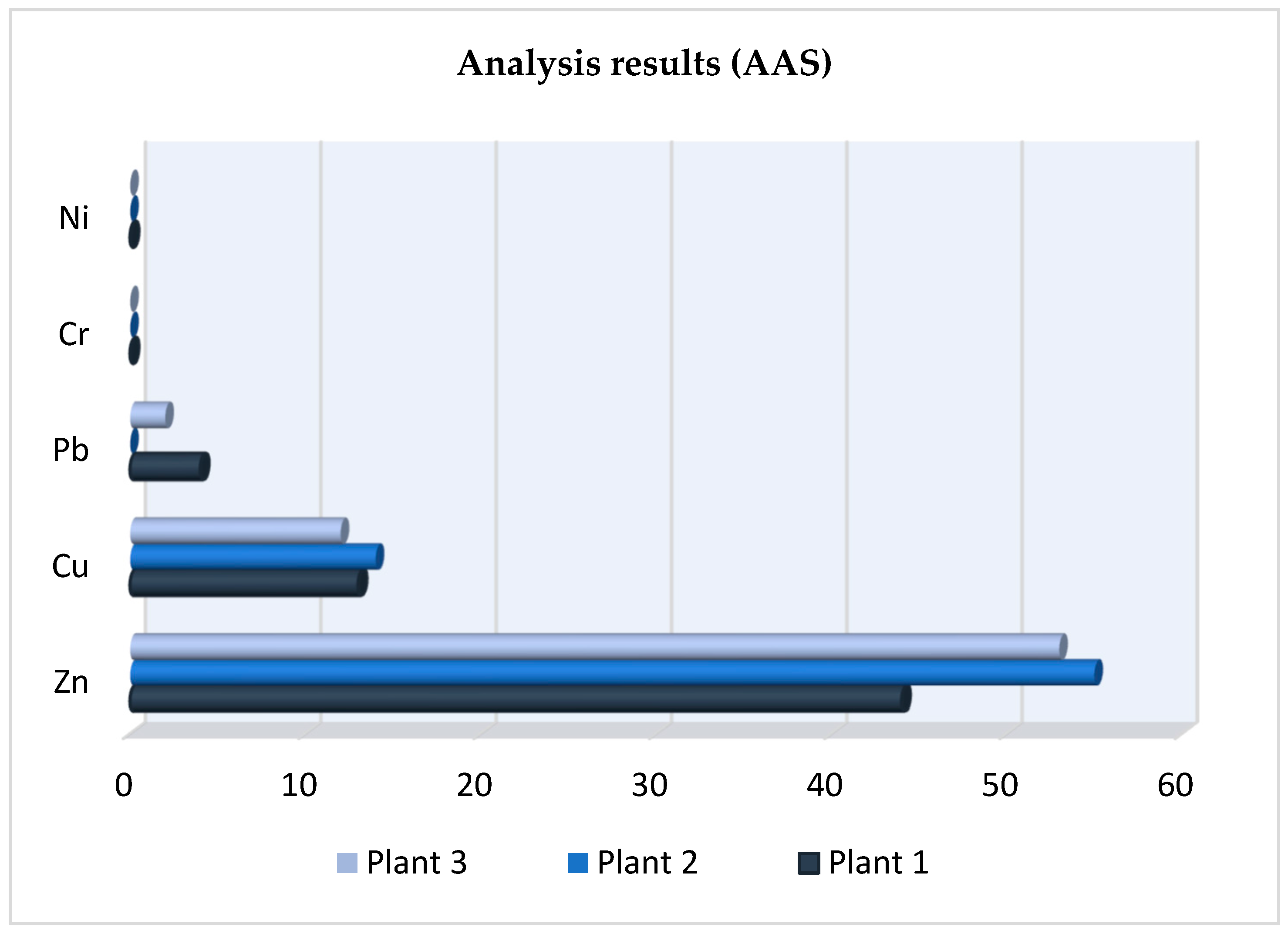
Table 2, the risk elements (g/t) present in the herbal stack are indicated. The analysis revealed the presence of zinc, copper, and lead within the leaf, as illustrated in
Figure 4. The sorption of pollutants exhibited no significant variation across the entire sample of plants. The most optimal outcomes were achieved in plant 2. In this instance, 55 g/t zinc and 14 g/t copper were transferred to the leaves.
4. Discussion
Cannabis sativa showed strong potential for use in the phytoremediation of soils contaminated with potentially toxic elements (PTEs). Its fast growth, large biomass yield, and resilience to environmental stress make it an appealing candidate for ecological restoration, especially in temperate regions. In this study, Cannabis sativa effectively absorbed and accumulated several heavy metals from contaminated soil, leading to a measurable decline in their concentrations.
Over the course of four months, Cannabis sativa reduced soil concentrations of zinc by 4.74%, chromium by 56.28%, nickel by 35.19%, copper by 1.7%, arsenic by 35.71%, and lead by 43.17%. These results indicate that the species can tolerate high metal loads without visible signs of stress, supporting its potential role as a low-cost, environmentally friendly solution for soil remediation and land restoration.
Copper, zinc, and lead were clearly detected in the leaf tissues, while nickel, chromium, and arsenic were present only at negligible concentrations. However, post-phytoremediation analyses of the soil revealed a marked decrease in these elements, indicating that the potentially toxic elements were primarily absorbed and stored in other plant organs, such as the roots or stems. This pattern suggests that Cannabis sativa effectively accumulates metals below ground, minimizing translocation to aboveground biomass.
The findings demonstrate that all parts of the Cannabis sativa plant become contaminated with toxic metals following phytoremediation. Consequently, the potential use of this biomass for commercial purposes is restricted due to contamination concerns.
No visible deformation was detected during the experiment, which could result from a higher concentration of toxic metals.
5. Conclusions
This study explored the use of phytoremediation to treat contaminated soil—a method that, while often less efficient than physical or chemical approaches, provides a more sustainable and cost-effective option for environmental recovery. The results indicate that industrial hemp (Cannabis sativa) effectively removed potentially toxic elements from the soil under the experimental conditions, demonstrating its promise as a practical tool for ecological restoration.
The use of Cannabis sativa for remediating contaminated soils continues to be an active and evolving area of research. Current findings underscore its strong potential for contributing to ecological restoration efforts. Future work should aim to optimize growth conditions and establish safe, sustainable strategies for managing and utilizing the resulting biomass.