


Abstract
This study presents a novel method for the rapid identification of key performance indicators (KPIs) from measured riding data of a Ducati Panigale V2 motorcycle, aimed at enhancing racing performance through a deeper understanding of rider-vehicle interaction. The methodology involves the design and implementation of mathematical tools within the RaceStudio3 software to analyze data from the motorcycle’s sensor system. This approach facilitates the swift detection of critical events, including gearshift delays, improper throttle control, and suspension issues. The fusion of data from the motorcycle enables a comprehensive evaluation of the rider’s influence on performance. The results demonstrate the potential of the proposed method to provide valuable insights for optimizing motorcycle setup and rider technique.
1. Introduction
Motorcycle performance is a critical factor in competitive motorsport, where small improvements can translate into substantial competitive advantages. With advancements in data acquisition technologies, it has become feasible to collect comprehensive datasets that capture the complex interaction between rider inputs and motorcycle responses [1,2]. However, the effective extraction of meaningful insights from these datasets remains a challenging task. The identification of key performance indicators (KPIs) such as throttle control, gear shifting precision, and suspension behavior is essential for optimizing both rider performance and vehicle setup [3].
The adoption of data analysis methodologies in motorsport has witnessed exponential growth, with researchers and engineers increasingly leveraging data to inform performance optimization. Bartolozzi et al. [4] introduced an automatic, unsupervised tool for segmenting and clustering signals acquired during motorcycle riding sessions, underscoring the potential of data-driven techniques to facilitate in-depth investigations of riding dynamics. This approach enables the systematic categorization of riding events, thereby providing a robust framework for the quantitative assessment of rider performance.
The proliferation of machine learning (ML) techniques in automotive engineering has further catalyzed advancements in vehicle safety and performance. ML algorithms offer powerful capabilities for discerning complex patterns within large datasets, enabling the development of predictive models and decision support systems that can optimize vehicle design and operational parameters.
In the context of motorsport, several studies have demonstrated the utility of data analysis for refining race strategy and enhancing overall performance. Choo [5] detailed the development of machine learning software at MIT designed to improve the accuracy of predicting track position changes during car racing. Heilmeier et al. [6] presented a virtual strategy engineer (VSE) predicated on artificial neural networks, capable of supporting real-time race strategy decisions in circuit motorsport. These investigations underscore the transformative potential of data-driven approaches to optimize multifaceted aspects of motorsport competition.
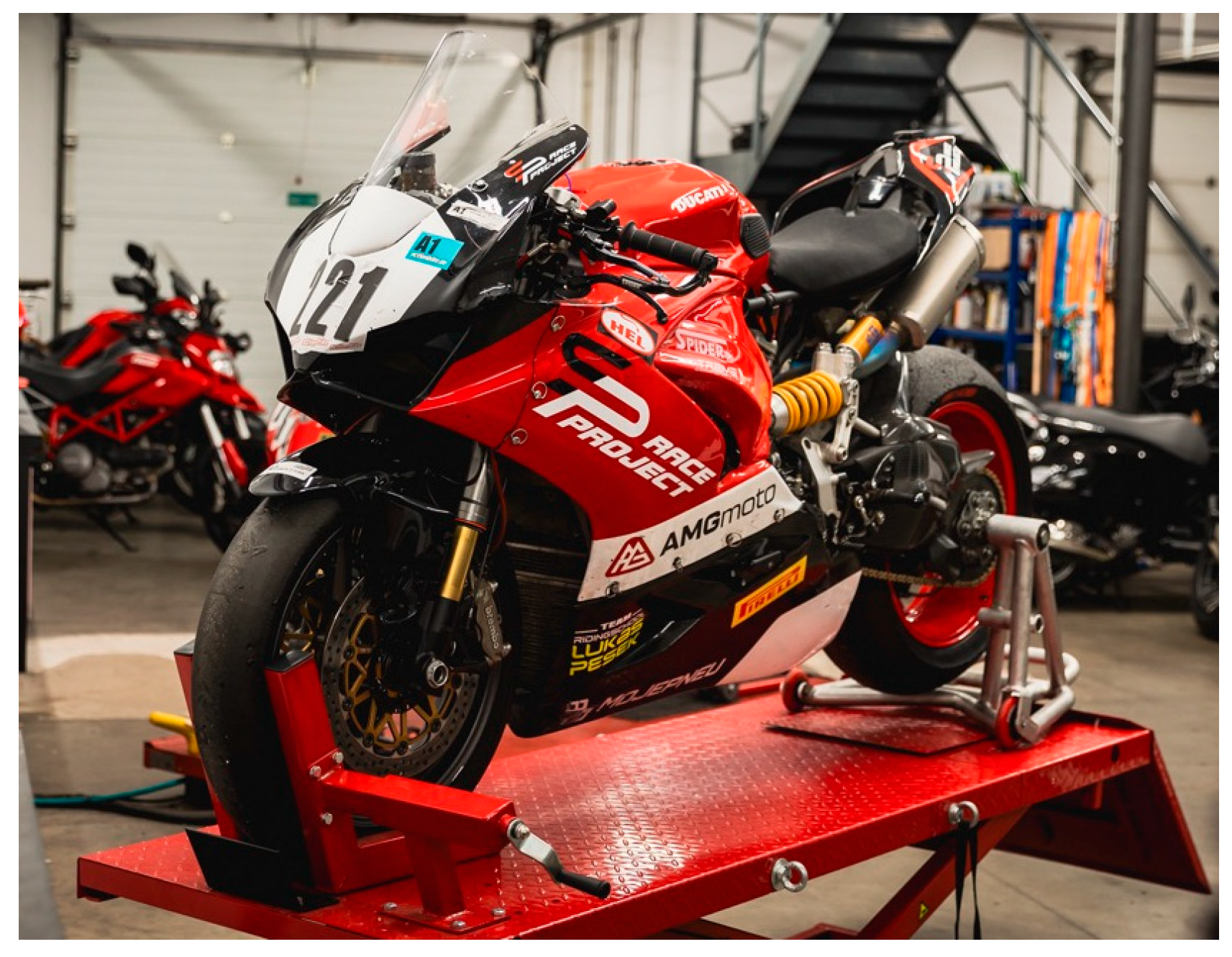
This study builds upon recent advances in data analytics, machine learning, and real-time data processing to develop rapid identification methods for KPIs in motorcycle dynamics. Utilizing data from the Ducati Panigale V2 (Figure 1), manufactured in Bologna (Italy), a high-performance supersport motorcycle, we demonstrate the application of these methods in the context of competitive motorsport. The motorcycle parameters are shown in Table 1. The developed algorithms were implemented within the RaceStudio 3 software environment, a platform widely used by professional racing teams for data analysis and vehicle tuning. The presented approach aims to streamline the identification of critical events, reduce the time required for data analysis, and improve overall track performance. This is particularly important in motorsport, where decisions must be made rapidly and based on highly accurate data to optimize both rider skill and machine setup.
Figure 1.
Analyzed racing motorcycle of the supersport category Ducati Panigale V2 [7].
Table 1.
Parameters of the measured motorcycle [8].
2. Methodology
The core methodology employed in this work involves the signal processing for event detection and the creation of mathematical channels for KPI identification. This section outlines the data acquisition process, key algorithms for event detection, and the implementation of these algorithms in a real-world racing context.
2.1. Data Acquisition
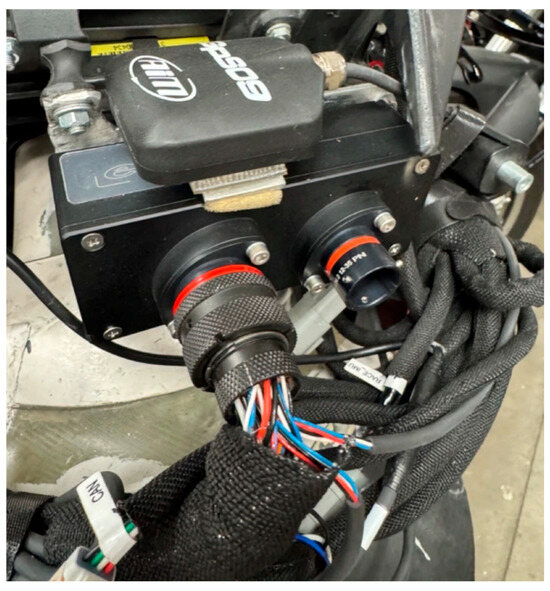
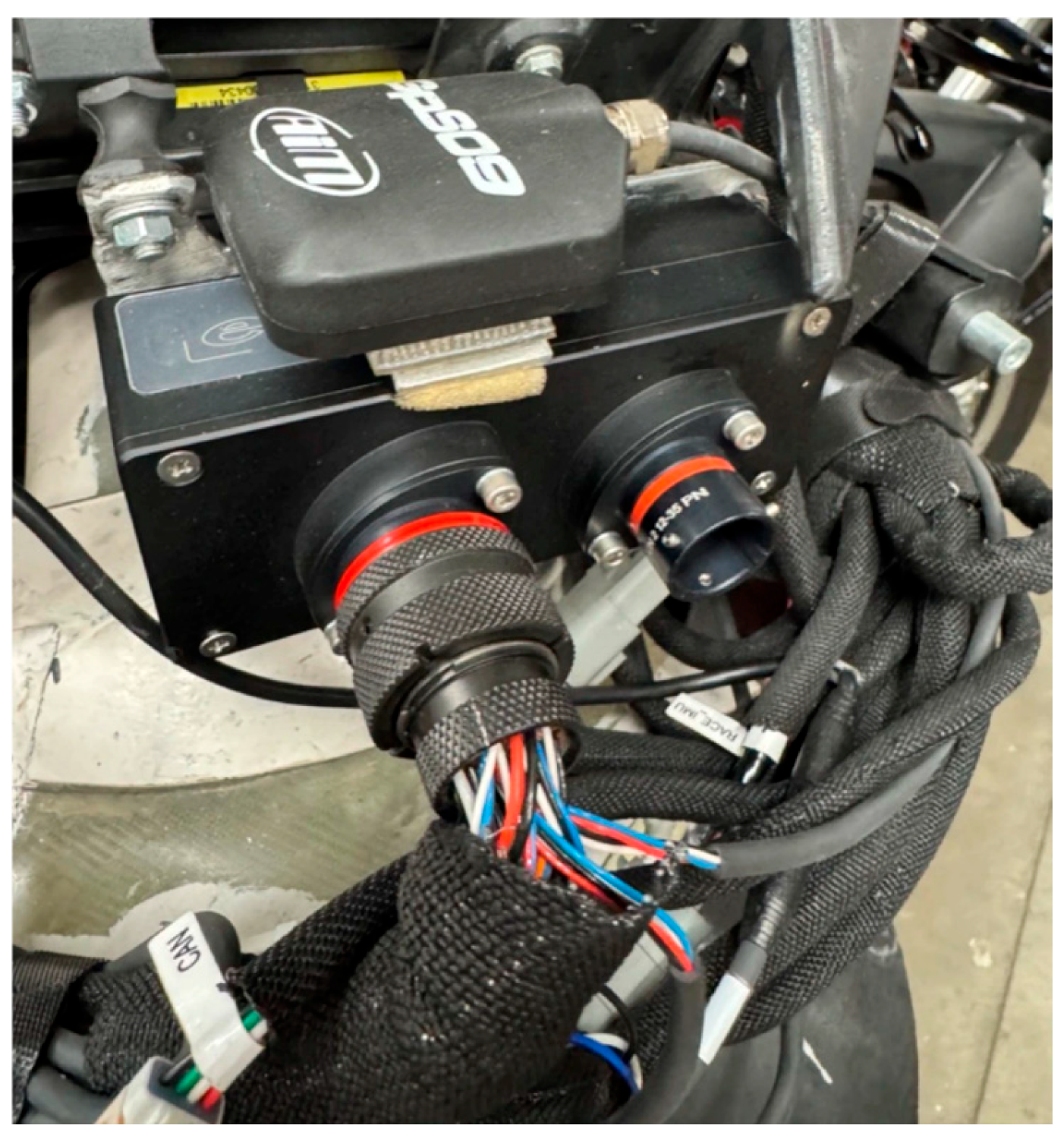
Data were collected using a Ducati Panigale V2 motorcycle equipped with AIM EVO5 data loggers (Genova, Italy) and an onboard inertial measurement unit (IMU) (Figure 2), providing high-frequency measurements of speed, acceleration, position, and various control parameters. The IMU, set to a sampling frequency of 20 Hz, integrates data from a 3-axis gyroscope, a 3-axis accelerometer, and a high-precision GNSS receiver. This configuration provides accurate spatial and dynamic data, essential for precise trajectory analysis and event detection. The 20 Hz sampling rate was selected to balance measurement accuracy and data volume, capturing both high-speed maneuvers and fine motor inputs effectively.
Figure 2.
AIM EVO5 logger with inertial platform and GPS [8].
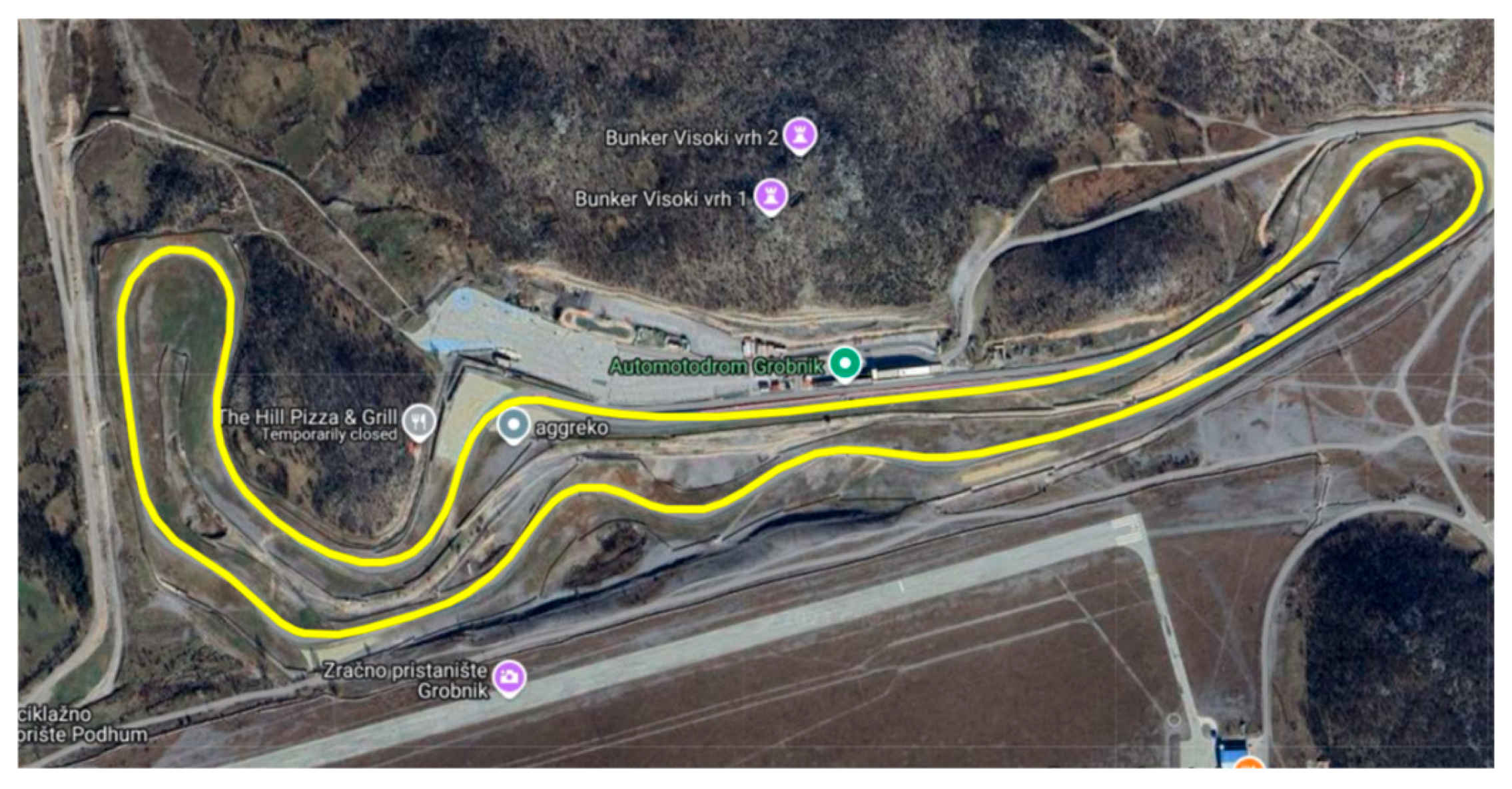
The AIM EVO5 data logger serves as the central hub for data collection, integrating signals from various on-board sensors via CAN bus, including throttle position, engine speed, brake pressure, and suspension travel. This robust measurement setup ensures synchronized data acquisition across all channels, allowing for comprehensive performance analysis. Data was collected during multiple test sessions at the Automotodrom Grobnik (Figure 3), a 4.168 km racing circuit with 16 challenging turns. This track, known for its high-speed straights and tight corner combinations, provides a demanding environment for both the rider and the motorcycle, making it an ideal test bed for performance analysis. Telemetry data encompasses a range of parameters characterizing vehicle dynamics, including:
- Vehicle speed (km/h)
- Longitudinal and lateral acceleration (m/s2)
- Suspension travel (mm)
- Throttle position (%)
- Brake pressure (bar)
- Gear selection
Figure 3.
Automotodrom Grobnik.
2.2. Application of Neural Networks for Preliminary Selection of Influential Parameters
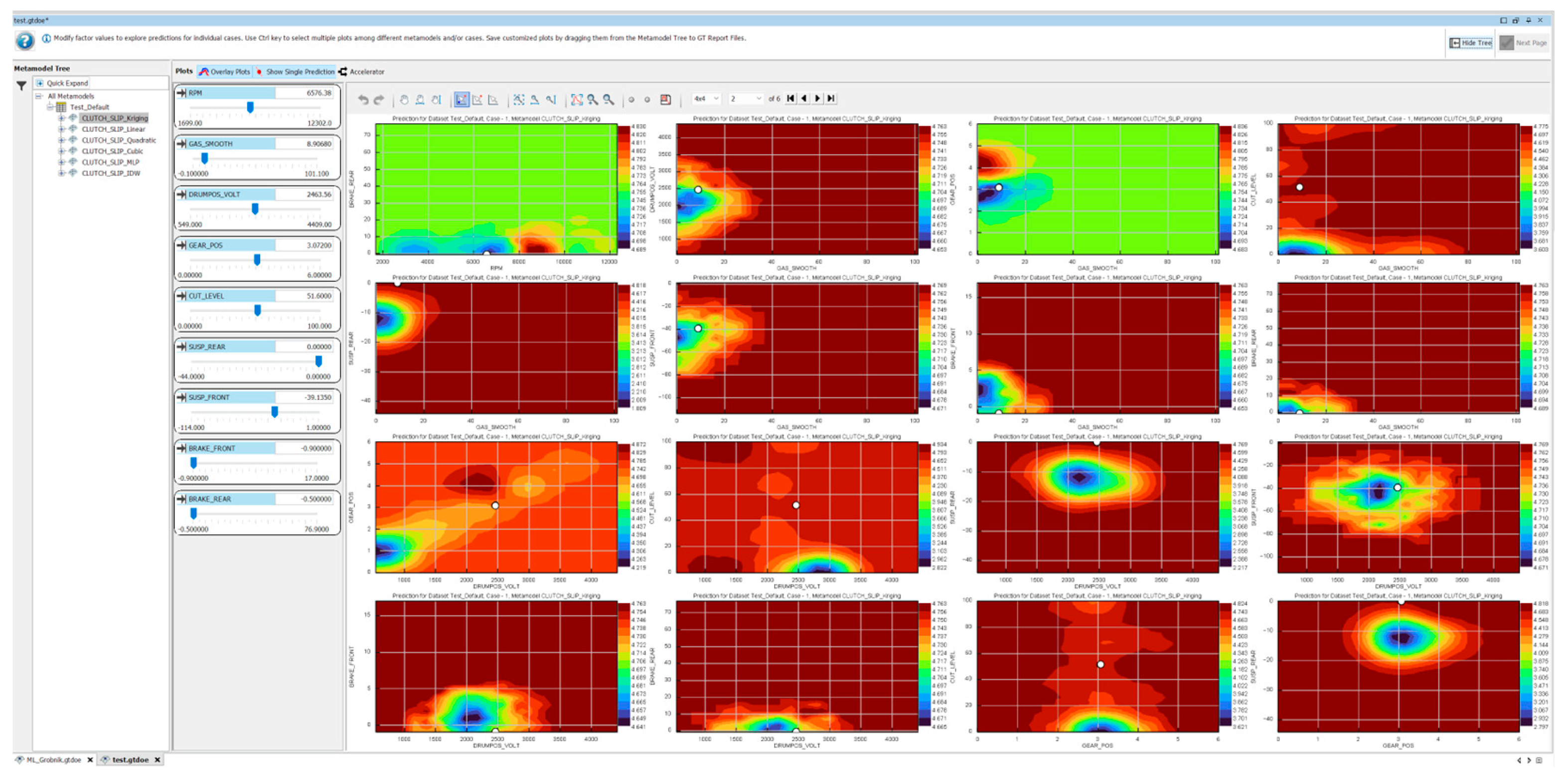
Neural networks were applied to the dataset with the aim of identifying key channels that may negatively influence the dynamic behavior of the motorcycle during the test session (Figure 4). Despite the limited scope of the dataset—comprising data from a single rider and a single-track session—the neural network proved to be an effective tool for the initial reduction in the high-dimensional input space.
Figure 4.
Example of neural networks with usage of GT-Post software for preliminary selection of influential parameters.
The relatively large number of monitored channels compared to the size of the dataset presented a challenge for drawing definitive or broadly generalizable conclusions. Nevertheless, the neural network successfully highlighted a subset of channels with potential relevance to the chosen response variable, serving as a valuable first-stage filter in the data analysis process.
Although the network’s output cannot be regarded as conclusive due to the limited data volume, it significantly reduced the complexity of the problem by eliminating channels with negligible influence. The remaining channels, flagged as potentially significant, were subjected to further manual and statistical analysis to confirm their relevance. For more precise and generalizable results, a larger and more diverse dataset would be required.
2.3. KPI Identification Algorithms
In order to create mathematical channels, it is first necessary to identify critical processes and specific locations on the track that require targeted analytical representation. The initial phase of the analysis involved visualizing sensor data as a function of the time domain—corresponding to the exact moment of data collection—and spatial position, as determined by the onboard inertial measurement unit (IMU). This dual approach ensures a clear correlation between the observed phenomena and their specific temporal and spatial context on the race track.
The Race Studio 3 software environment was chosen for this visualization and the subsequent creation of mathematical channels for identifying these KPIs. This is a computer application developed by AiM Technologies for data management, configuration, and analysis. It also offers the possibility of creating new custom channels based on mathematical operations that can use the measured channels as inputs. Therefore, there is no need to convert the measured variables to other software. Newly created mathematical channels for Key performance indicators (KPIs) are derived from pre-processed telemetry data to quantify significant aspects of driver and vehicle performance. KPIs include:
- Gear Shift Delay (ms): The temporal delay between the rider’s gear shift command and the actual gear change.
- Suspension Utilization and shock absorber hardening (mm): The maximum suspension travel observed within a given track sector, indicative of the rider’s interaction with track topography.
- Identification of inappropriate throttle control: Identification of locations where the driver does not use full throttle opening in places where this incorrect manipulation leads to time loss.
- Grip index
- Wheel slip
- And more
The first two KPIs mentioned above will be discussed in detail in this article.
- Shifting Delay Detection:
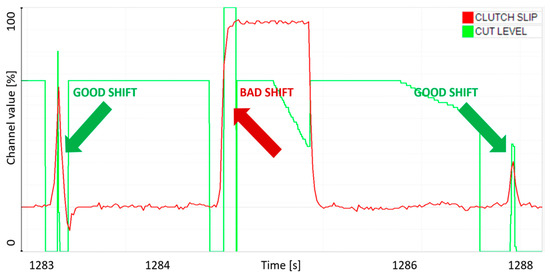
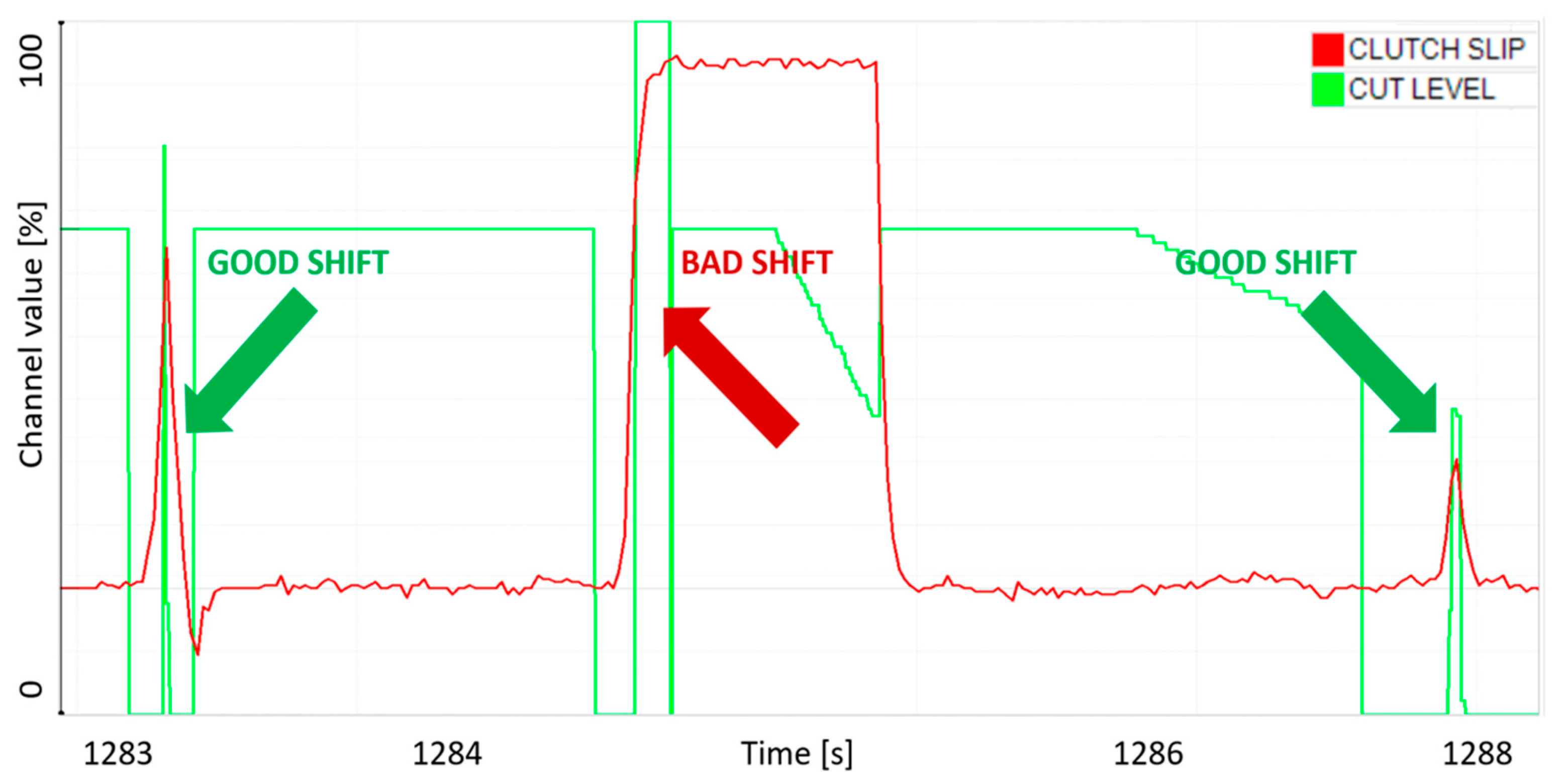
This problem is identified using clutch slip (CLUTCHSLIP) and control unit correction (CUTLEVEL) channels (Figure 5). The gear shift did not occur correctly if the CLUTCH SLIP channel does not have a rather impulsive trend, and at the same time, the CUTLEVEL channel does not have a constant value. This KPI captures instances where gear changes are not executed smoothly, resulting in performance loss.
Figure 5.
Identification of shifting delay locations using CUTLEVEL and CLUTCHSLIP channels.
Analyzing these signals helps detect instances where the clutch slip signal remains elevated, indicating mechanical delays or rider inefficiency. However, manually searching for and detecting this KPI is very demanding in terms of the amount of data measured, and it is necessary to automate this detection. For this purpose, a detection channel is created, which automatically displays the locations where these problems occur in the record.
The first step was to create a time derivative channel for the CUTLEVEL channel, which represents the change in the value of this channel. The notation for such a function in the Race Studio environment, which uses its own notation for functions and mathematical operations, where this channel was implemented, is as follows:
This channel, therefore, detects all areas of change in the value of the CUTLEVEL channel, which is one of the conditions for detecting the KPI of shift delay. However, this channel needs to be further modified. A very large step change in the channel causes a point extreme increase in this channel, which can create complications in further analyses. Therefore, these extreme values are filtered out. Based on the analysis of this data, it was decided that only values in the range [−1000, 1000] would be further validated.
The CLUTCHSLIP channel only needed to be adjusted so that only values with significant clutch slip were taken into account. Based on the analysis of clutch slip data, this limit was set at 12% slip. The channel correction in the Race Studio environment is therefore as follows:
The channel for detecting these phenomena is a combination of them, where the resulting value is 1 if the values of each channel are non-zero, i.e., a problem is detected, otherwise 0.
The resulting mathematical channel entry, therefore, takes the following form:
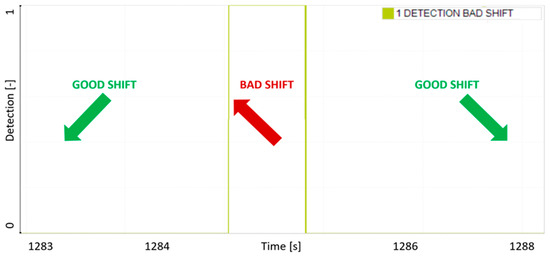
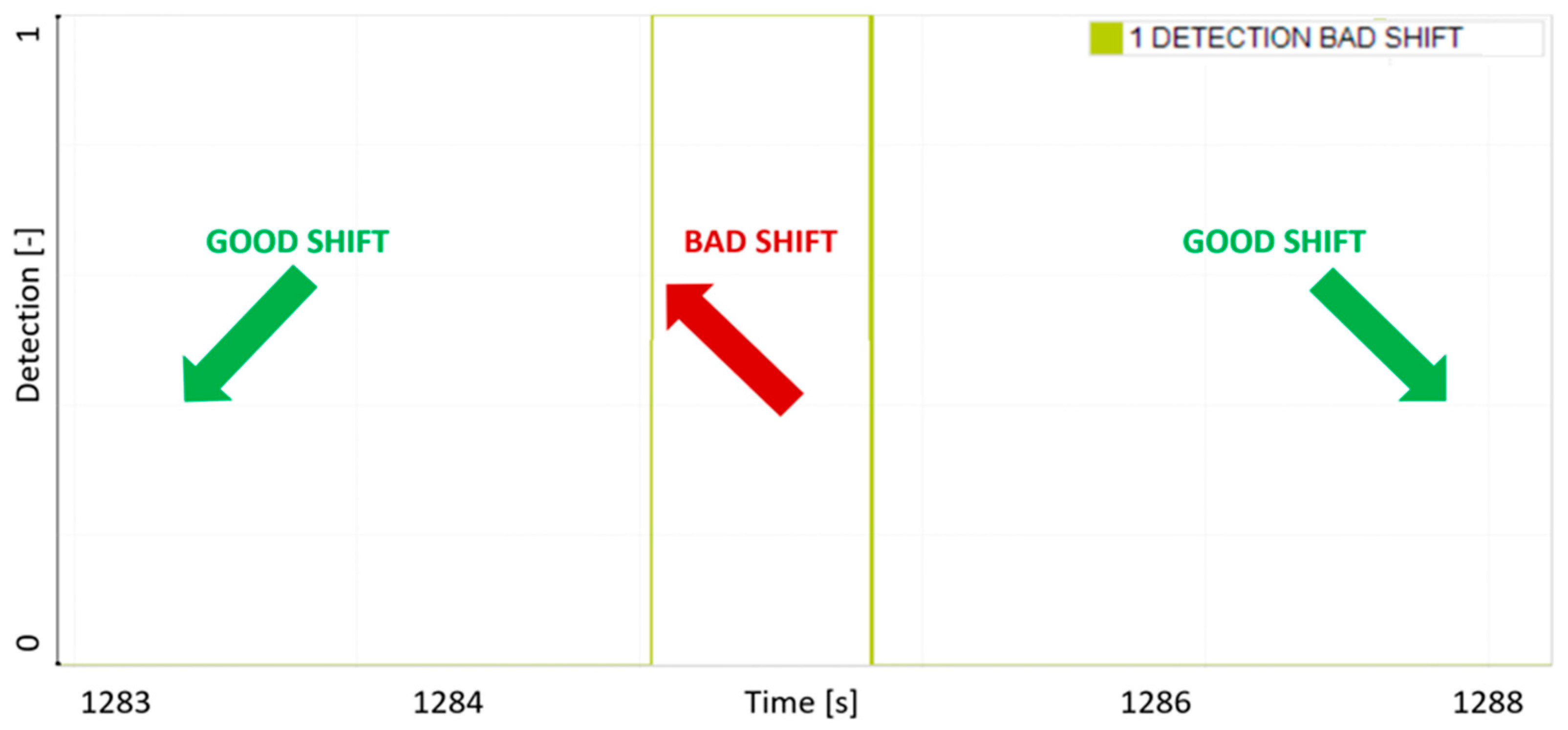
Advanced filtering methods were used to reduce noise and improve detection accuracy. The resulting detection channel is shown in the figure below (Figure 6).
Figure 6.
Shifting delay detection channel.
- Suspension Utilization and shock absorber hardening:
Another phenomenon being monitored is the so-called hardening of shock absorbers. This is a condition where shock absorbers reach their maximum/minimum position during operation and cease to function properly. This condition, undesirable during races, must be identified during training runs to allow for setup optimization.
Bottoming occurred primarily during heavy braking and high-speed cornering. Detection relied on monitoring SUSPFRONT and SUSPREAR position signals. The resulting mathematical channel entry, therefore, takes the following form:
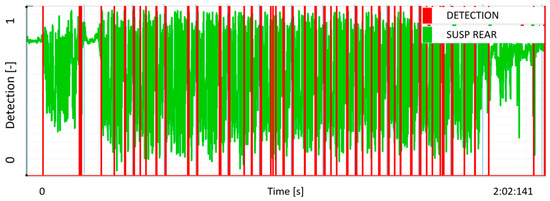
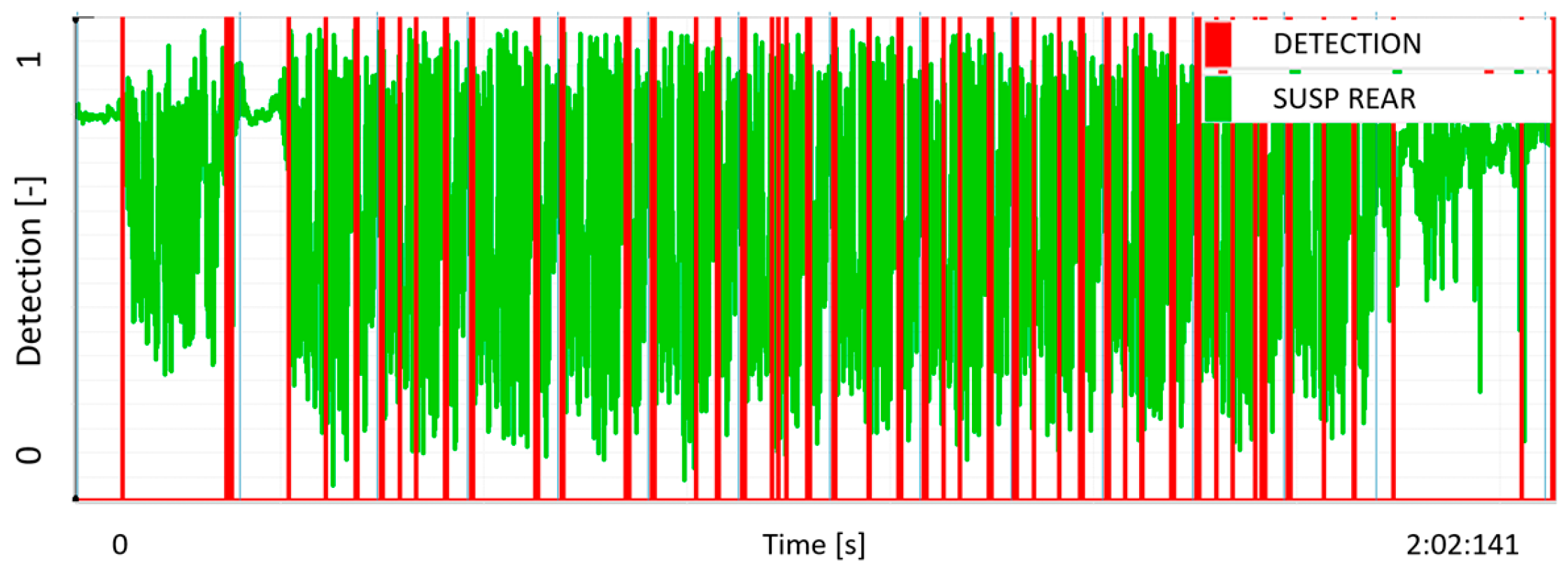
The mathematical formula presented here is used to calculate the rear shock absorber; the equation for the front shock absorber is determined in a similar manner. To improve accuracy, advanced filtering was applied to minimize false positives. The results highlight the importance of targeted suspension tuning to maintain stability under peak loads. The detection channel is shown in the picture below (Figure 7).
Figure 7.
Rear shock position channel (green) and KPI detection channel (red).
2.4. Validation
The methodology is validated using data acquired from multiple riding sessions conducted under varying track conditions. The consistency of KPI identification and the robustness of correlations between KPIs and rider behavior metrics are assessed to establish the reliability of the proposed approach.
3. Results and Discussion
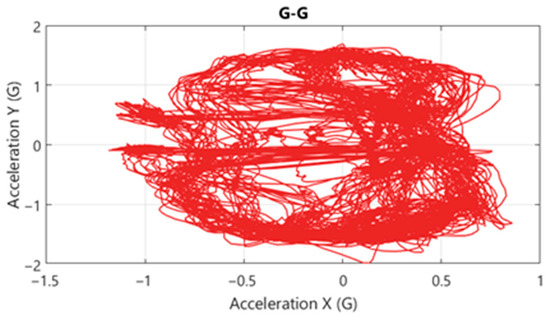
The G-G diagram (Figure 8), which shows lateral and longitudinal acceleration, is a key tool for analysing the performance of a racing motorcycle and the rider’s ability. The diagram shows how effectively the rider uses the available traction during acceleration, braking and cornering, revealing the motorcycle’s maneuverability and rider performance. The chart also helps identify critical areas where the rider or motorcycle is reaching its limits, and can lead to optimizing the bike’s setup to improve overall performance and stability.
Figure 8.
Dependence of measured longitudinal and lateral acceleration.
The developed methods demonstrated high accuracy in identifying key performance events. Detailed results for each KPI are presented below.
3.1. Shifting Delay Detection
Shifting delays were identified using the CLUTCHSLIP and CUTLEVEL channels, which provided reliable indicators of incomplete gear engagements. Instances of delayed gear shifts were observed when the clutch slip signal failed to return to baseline after a shift command, indicating mechanical or rider-induced delays. This method proved effective in identifying problematic shifts across multiple test sessions, highlighting areas for mechanical adjustment or rider training. Real-world testing confirmed the reliability of this approach, reducing the time required for data analysis by over 30% compared to manual methods.
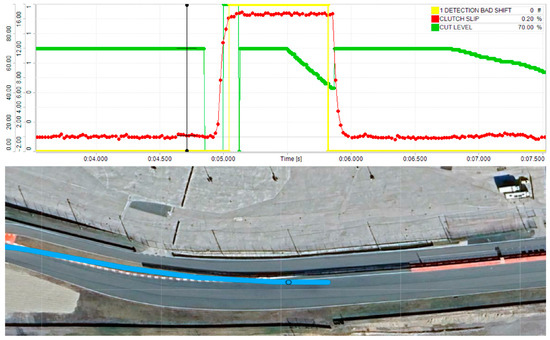
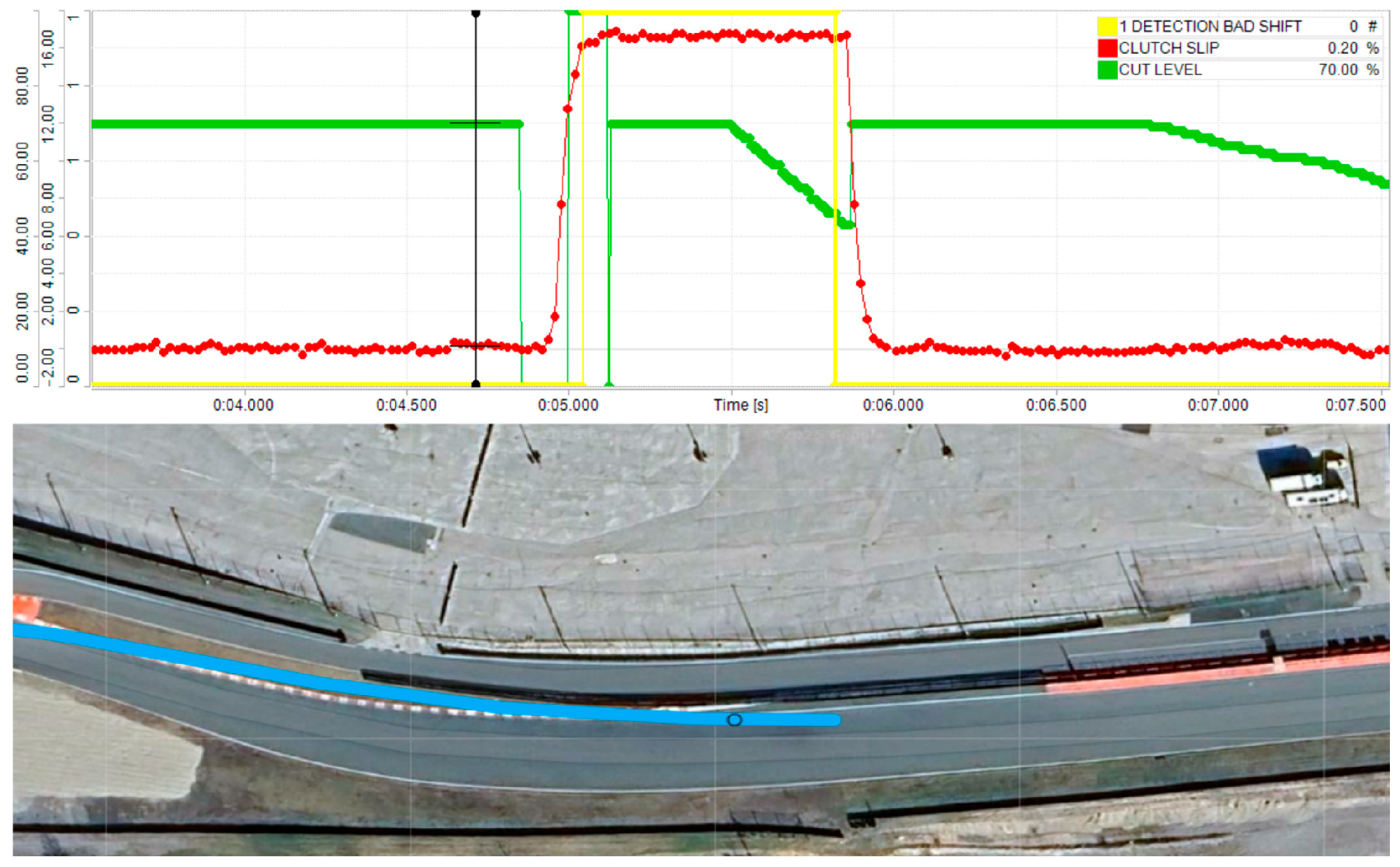
As illustrated in Figure 9, the custom-defined delay detection channel (highlighted in yellow) clearly identifies the precise moment and location of the targeted event. By correlating this signal with GPS positional data acquired from the datalogger, it is possible to localize the event with high spatial accuracy directly within the Race Studio analysis environment.
Figure 9.
Shifting delay detection (up) with marked exact point on the track, where it occurred (bottom).
3.2. Suspension Bottoming Detection
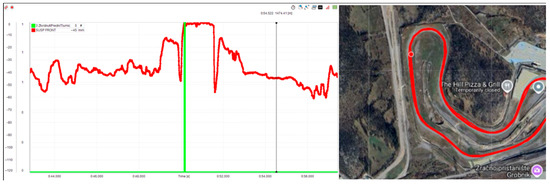
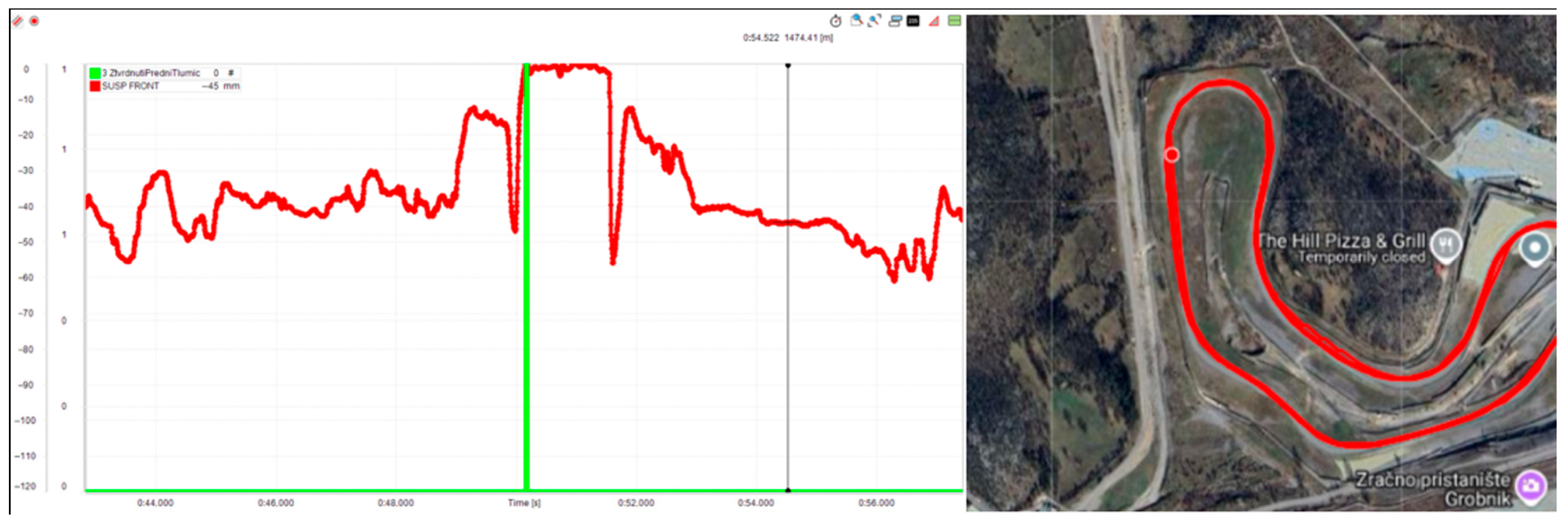
A detailed analysis of the bottoming detection of the front suspension reveals that it consistently occurs at the exit of the turn (see Figure 10). This phase corresponds to the moment when the rider completes the lean maneuver and progressively straightens the motorcycle while fully opening the throttle. As a result, a significant load transfer toward the rear wheel takes place, effectively unloading the front axle.
Figure 10.
Front suspension bottoming detection (left) with marked exact point on the track, where it occurred (right).
In extreme cases, this redistribution of load can lead to a temporary loss of contact between the front wheel and the track surface. Under such conditions, the front suspension system reaches its maximum extension, which is reflected in the corresponding suspension travel parameter (KPI). The detection of this indicator provides critical insight into the dynamics of motorcycle behavior during aggressive acceleration phases and serves as a valuable input for both performance analysis and setup optimization.
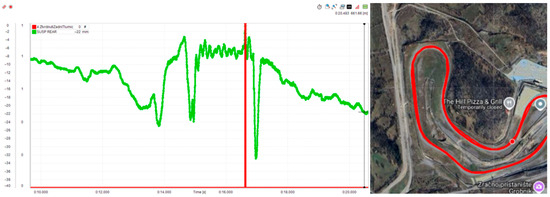
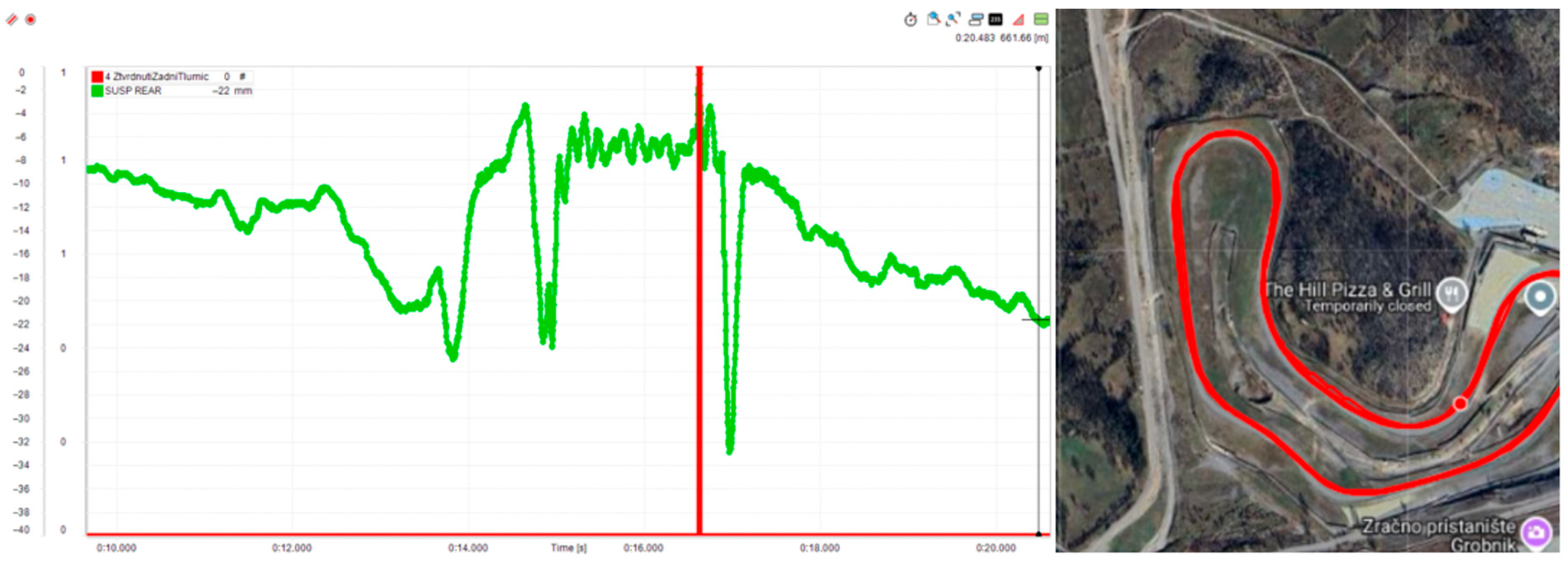
A closer examination of the instances where rear shock absorber extension is detected indicates that these events consistently occur in the braking zones preceding corners (see Figure 11). These are the moments when the rider applies maximal force to the front brake, resulting in a pronounced forward load transfer. Consequently, the rear axle becomes significantly unloaded.
Figure 11.
Rear suspension bottoming detection with a marked exact point on the track, where it occurred (right).
In extreme cases, this can lead to a temporary loss of contact between the rear wheel and the track surface. Under such conditions, the rear suspension reaches its full extension, which is captured by the relevant suspension travel KPI. The detection of this parameter provides important insight into the dynamics of deceleration and load distribution and may indicate the need for adjustments in braking technique or suspension setup.
The application of the methodology to data from a Ducati Panigale V2 has yielded several noteworthy findings. The analysis of telemetry data has enabled the precise quantification of critical performance events. For instance, gear shift delays were quantified with millisecond precision, providing insights into the rider’s gear change efficiency. Throttle control smoothness was objectively measured, revealing instances of suboptimal throttle modulation. Suspension utilization metrics highlighted the extent to which the rider was exploiting the motorcycle’s dynamic capabilities.
4. Conclusions
This paper presents a robust approach for the rapid identification of critical performance metrics in motorcycle racing. The methods developed provide valuable insights into rider behavior and vehicle performance, supporting more effective tuning and training strategies. Future work will focus on expanding the range of detectable KPIs and integrating machine learning for automated pattern recognition.
The application of the methodology to data from a Ducati Panigale V2 demonstrates its capacity to quantify critical performance events and elucidate the relationships between rider behavior and vehicle dynamics.
The results of this research contribute to the expanding field of data-driven analysis in motorsport, offering a pathway to advancements in rider training and vehicle development. Future research endeavors will focus on refining the methodology to incorporate additional physiological measures, such as heart rate variability, and extending its applicability to other forms of motorsport.
Author Contributions
Conceptualization, M.B. and J.F.; methodology, M.B. and J.F.; software, M.B. and J.F.; validation, M.B. and J.F.; formal analysis, M.B. and J.F.; investigation, M.B. and J.F.; resources, M.B. and J.F.; data curation, M.B. and J.F.; writing—original draft preparation, M.B.; writing—review and editing, M.B.; visualization, M.B.; supervision, J.F.; project administration M.B. and J.F.; funding acquisition, M.B. and J.F. All authors have read and agreed to the published version of the manuscript.
Funding
The authors gratefully acknowledge funding from the Specific research on BUT FSI-S-23-8235. This publication was supported by the project “Innovative Technologies for Smart Low Emission Mobilities”, funded as project No. CZ.02.01.01/00/23_020/0008528 by Programme Johannes Amos Comenius, call Intersectoral cooperation.
Institutional Review Board Statement
Not applicable.
Informed Consent Statement
Not applicable.
Data Availability Statement
This study was produced as part of the IAE FME BUT research group project. Data are available after individual contact between the applicant and one of the authors of the paper.
Acknowledgments
The authors would like to express their sincere thanks to AMG moto and their SP race project team for facilitating the testing and experiments.
Conflicts of Interest
The authors declare no conflict of interest. The funders had no role in the design of the study; in the collection, analyses, or interpretation of data; in the writing of the manuscript; or in the decision to publish the results.
References
- Smith, T.; Kasantikul, V.; Ouellet, J.V.; Thom, D.; Browne, S.; Hurt, H.H., Jr. Visual Scanning of Motorcycle Riders: A Preliminary Look; Motorcycle Safety Foundation: Irvine, CA, USA, 2023. [Google Scholar]
- Cheng, W.; Gill, G.S.; Sakrani, T.; Dasu, M.; Zhou, J. Predicting motorcycle crash injury severity using weather data and alternative Bayesian multivariate crash frequency models. Accid. Anal. Prev. 2017, 108, 172–180. [Google Scholar] [CrossRef] [Scilit] [PubMed]
- Bhavsar, D.; Jaychandra, R.K.; Mittal, M. Data Acquisition and Performance Analysis during Real-Time Driving of a Two-Wheeler Electric Vehicle—A Case Study. World Electr. Veh. J. 2024, 15, 121. [Google Scholar] [CrossRef] [Scilit]
- Bartolozzi, M.; Boubezoul, A.; Bouaziz, S.; Savino, G.; Espié, S. Data-Driven Methodology for the Investigation of Riding Dynamics: A Motorcycle Case Study. IEEE Trans. Intell. Transp. Syst. 2023, 24, 10224–10237. [Google Scholar] [CrossRef] [Scilit]
- Choo, C. Real-Time Decision Making in Motorsports: Analytics for Improving Professional Car Race Strategy. Master’s Thesis, Massachusetts Institute of Technology, Cambridge, MA, USA, 2015. [Google Scholar]
- Heilmeier, A.; Thomaser, A.; Graf, M.; Betz, J. Virtual Strategy Engineer: Using Artificial Neural Networks for Making Race Strategy Decisions in Circuit Motorsport. Appl. Sci. 2020, 10, 7805. [Google Scholar] [CrossRef] [Scilit]
- SP Race Project. Available online: https://spraceproject.cz/pages/nas-pribeh (accessed on 26 May 2025).
- Ducati Panigale V2 2024. Available online: https://www.ducati.com/us/en/bikes/panigale/panigale-v2-my24 (accessed on 26 May 2025).

Disclaimer/Publisher’s Note: The statements, opinions and data contained in all publications are solely those of the individual author(s) and contributor(s) and not of MDPI and/or the editor(s). MDPI and/or the editor(s) disclaim responsibility for any injury to people or property resulting from any ideas, methods, instructions or products referred to in the content. |
© 2025 by the authors. Licensee MDPI, Basel, Switzerland. This article is an open access article distributed under the terms and conditions of the Creative Commons Attribution (CC BY) license (https://creativecommons.org/licenses/by/4.0/).