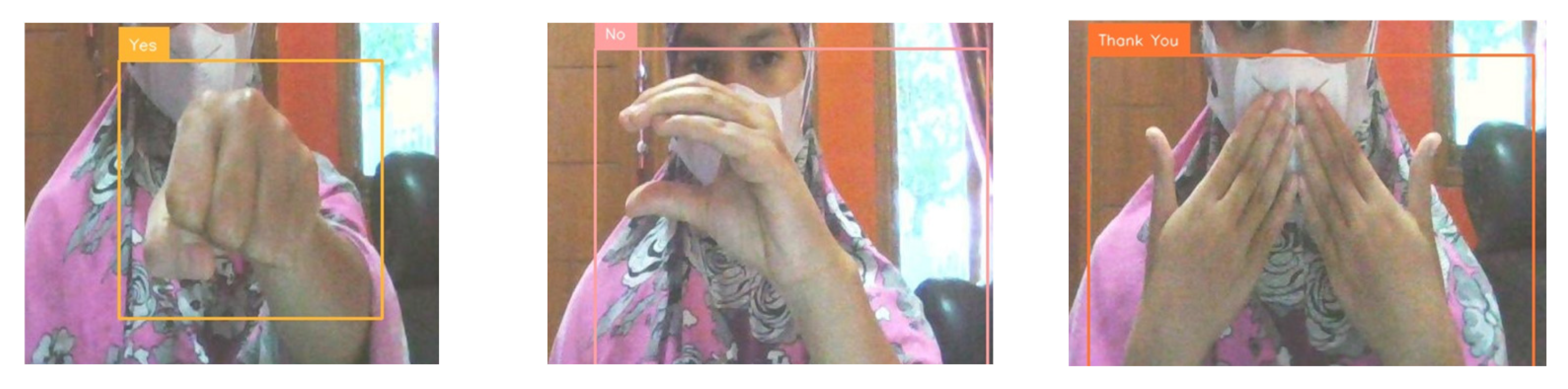
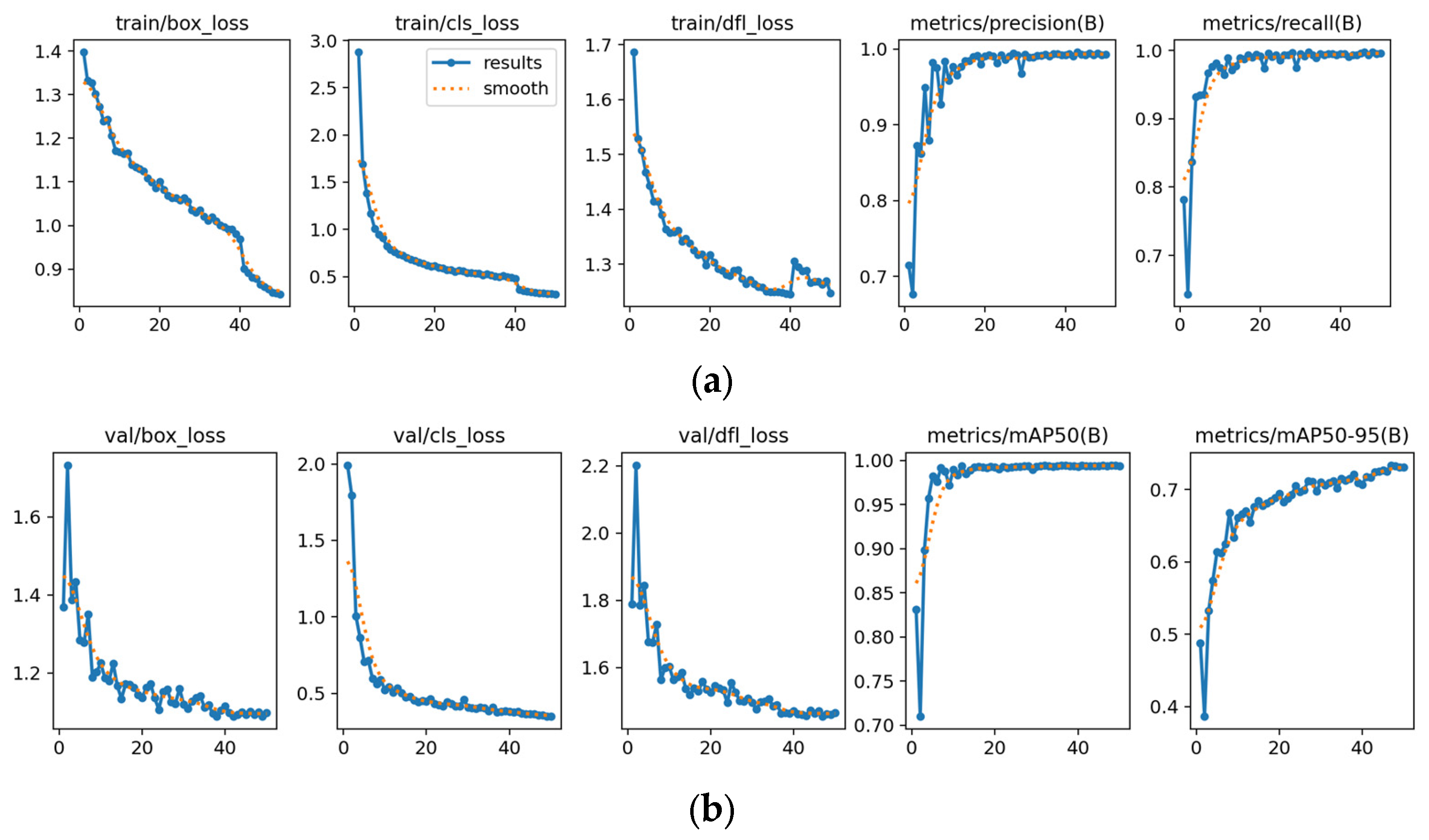
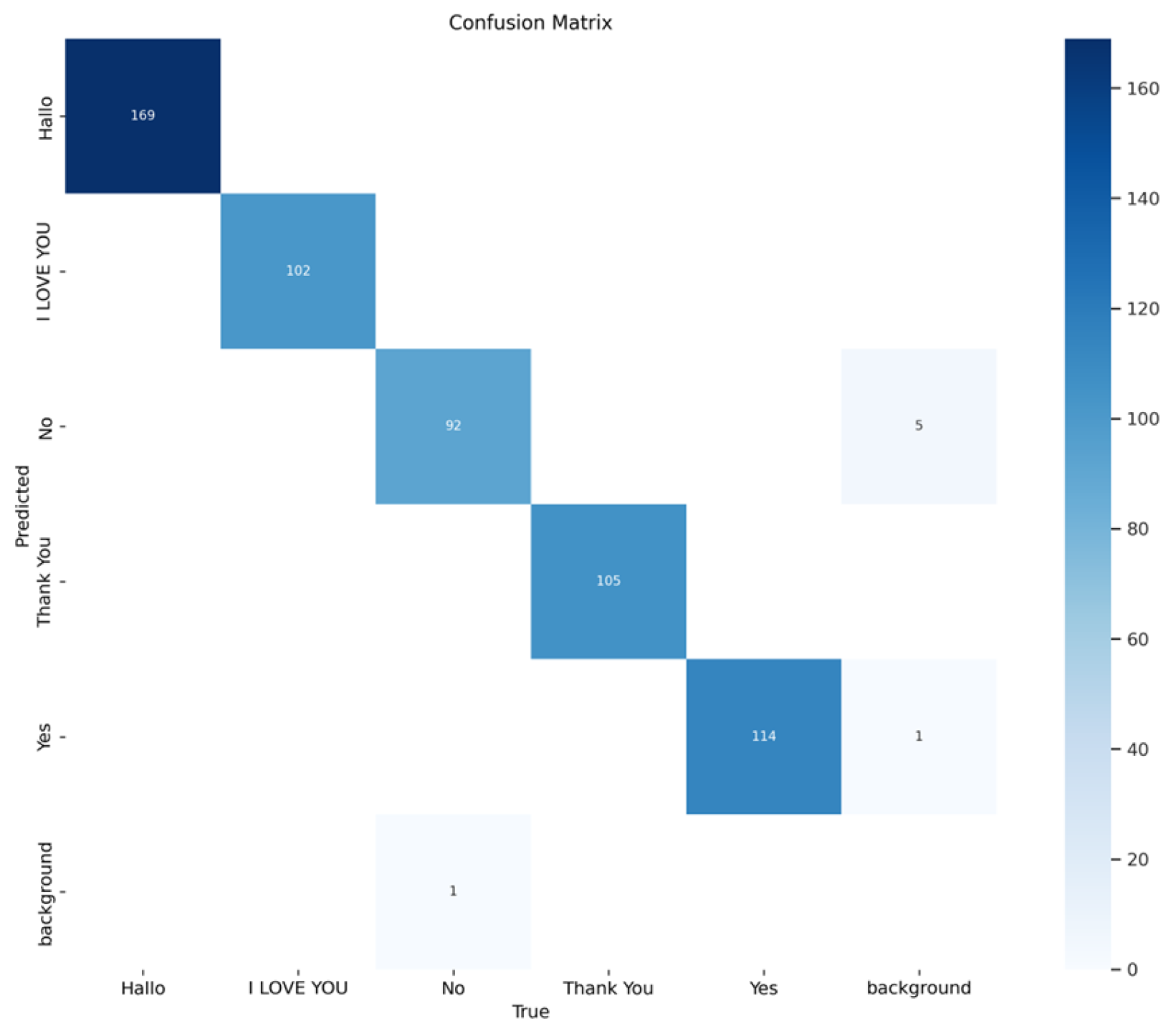
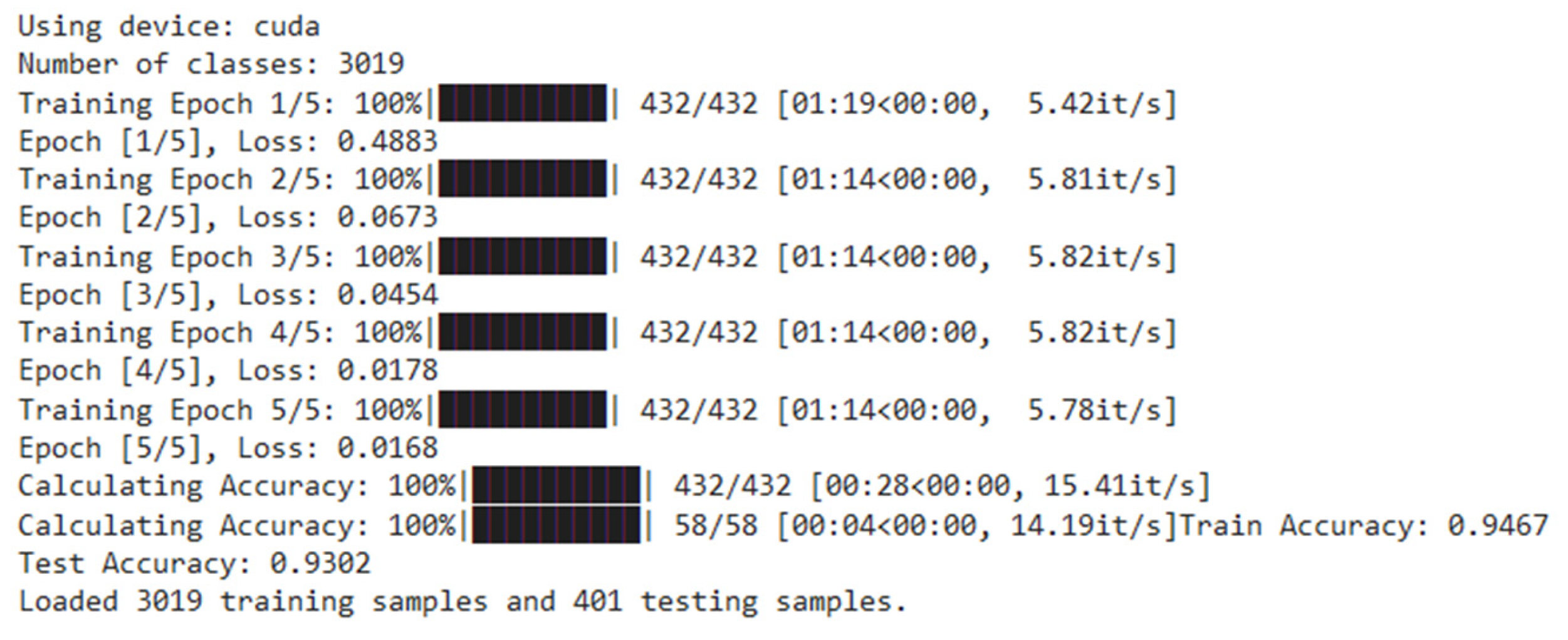
AI-Powered Sign Language Detection Using YOLO-v11 for Communication Equality †
 , and
, and Abstract
Share and Cite
Kharisma, I.L.; Nurmalasari, I.; Lestari, Y.; Septiani, S.D.; Kamdan; Yudono, M.A.S. AI-Powered Sign Language Detection Using YOLO-v11 for Communication Equality. Eng. Proc. 2025, 107, 83. https://doi.org/10.3390/engproc2025107083
Kharisma IL, Nurmalasari I, Lestari Y, Septiani SD, Kamdan, Yudono MAS. AI-Powered Sign Language Detection Using YOLO-v11 for Communication Equality. Engineering Proceedings. 2025; 107(1):83. https://doi.org/10.3390/engproc2025107083
Chicago/Turabian StyleKharisma, Ivana Lucia, Irma Nurmalasari, Yuni Lestari, Salma Dela Septiani, Kamdan, and Muchtar Ali Setyo Yudono. 2025. "AI-Powered Sign Language Detection Using YOLO-v11 for Communication Equality" Engineering Proceedings 107, no. 1: 83. https://doi.org/10.3390/engproc2025107083
APA StyleKharisma, I. L., Nurmalasari, I., Lestari, Y., Septiani, S. D., Kamdan, & Yudono, M. A. S. (2025). AI-Powered Sign Language Detection Using YOLO-v11 for Communication Equality. Engineering Proceedings, 107(1), 83. https://doi.org/10.3390/engproc2025107083