
Proceeding Paper

Bioactive Potential of Ethyl Acetate Extract from Prosopis laevigata: Antimicrobial and Anti-Inflammatory Effects †
by
Beatriz E. Utrera-Hernández
1,*,
Ever A. Blé-González
1,*,
Manasés González-Cortazar
2,*,
Ma Dolores Pérez-Garcia
2 and
Alejandro Zamilpa
2
1
División Académica de Ciencias Básicas, Universidad Juárez Autónoma de Tabasco, Carretera Cunducán-Jalpa Km. 0.5., Cunduacán 86690, Tabasco, Mexico
2
Centro de Investigación Biomédica del Sur, Instituto Mexicano del Seguro Social (IMSS), Argentina 1, Xochitepec 62790, Morelos, Mexico
*
Authors to whom correspondence should be addressed.
Presented at the 29th International Electronic Conference on Synthetic Organic Chemistry, 14–28 November 2025; Available online: https://sciforum.net/event/ecsoc-29.
Chem. Proc. 2025, 18(1), 66; https://doi.org/10.3390/ecsoc-29-26717
Published: 11 November 2025

Abstract

Antimicrobial resistance and inflammation remain two of the most persistent global health problems. Due to the growing limitations of current treatment, new and safer therapeutic substances are increasingly needed. In this work, the biological potential of the ethyl acetate extract from Prosopis laevigata was investigated. Three fractions (R4, R7 and R9) were tested for antimicrobial activity against fourteen microorganisms and their anti-inflammatory properties were evaluated using a model of edema-induced TPA in mice. The fraction R9 showed the strongest antimicrobial effect with Minimum Inhibitory Concentration (MIC) values below 25 μg/mL against several clinically significant strains. The same fraction also reduced inflammation in vivo and reached inhibitory levels similar to those produced by indomethacin. These results suggest that P. laevigata contains active metabolites with dual biological activity, which underlines its importance as a possible natural source of anti-inflammatory and antimicrobial agents.

1. Introduction

Antimicrobial resistance (AMR) has become one of the most serious public health problems in the world. It occurs when microorganisms such as bacteria, fungi or parasites develop the ability to survive exposure to drugs that once eliminated them, leading to longer and more difficult infections [1]. If this trend continues, it is estimated that in the future there will be many deaths, approximately ten million per year, all related to AMR by the year 2050 [2]. Key mechanisms include limited drug absorption, targeted modification, enzymatic degradation and the activation of waste pumps that exclude antibiotics from microbial cells [3].
Inflammation is a natural biological process that protects the body from infection or injury. It involves complex interactions between the innate and adaptive immune system. Inflammation has signs that make it noticeable: redness, heat, pain, swelling and eventually losing the affected organ or area (temporarily the function) [4,5]. Non-steroidal anti-inflammatory drugs (NSAIDs) are widely prescribed to control inflammation, although their chronic use can cause gastrointestinal, liver or kidney complications [6].
For centuries, traditional medicine in Mexico has relied on the use of medicinal plants to treat various ailments. These include inflammatory conditions, infections, gastrointestinal disorders, burns and diabetes [7,8]. Within the genus Prosopis, there are many plants that have medicinal properties which are traditionally used for the treatment of conditions such as colds, diarrhea, dysentery, inflammation, fever and even promote wound healing; in some regions, Prosopis flowers are mixed with sugar and used to prevent miscarriages [9].
Given the growing need for alternative treatments that combine efficacy with minor side effects, this study was focused on evaluating the antimicrobial and anti-inflammatory activities of the Prosopis laevigata ethyl acetate extract.

2. Materials and Methods

2.1. Plant Material

The plant material was collected in Las Calaveras, Higuerón, in the state of Morelos, Mexico, at the following coordinates (18°35′16″ N, 99°10′35″ W, 895 m). Leaves from the Prosopis laevigata plant were collected in December 2019. For taxonomic identification, it was necessary to take the specimen to the herbarium at the Autonomous University of Morelos, where Master of Science Gabriel Flores identified the specimen and left a sample in the herbarium under voucher number 39811.

2.2. Preparation of Extracts

The Prosopis laevigata leaves are dried at room temperature in the shade. Once the plant material is completely dry, it is ground using a Pulvex mill to produce 4 mm particles. They are then macerated using solvents of increasing polarity. In this case, 4 L of n-hexane, ethyl acetate and methanol (Merck, Darmstadt, Germany) are used, each left to stand for 24 h. After 24 h, each one is concentrated using a rotary evaporator to obtain each extract. In this project, only the ethyl acetate extract is used.

2.3. HPLC-Photo Diode Array (PDA) Analysis of the Ethyl Acetate Extract

For this analysis, an HPLC system with a photodiode array detector was used together with a Supercosil LC-F colum 4.6 mm × 250 mm internal diameter, 5 µm particle size; Sigma-Aldrich, Bellefonte, PA, USA). The chromatographic separation used a binary mixture of acetonitrile (B) with 0.5% trifluoroacetic acid (A). The gradient started only with A and then the amount of B was slowly increased during the run until it reached 100%. At the end, the system was brought back to the initial conditions to allow the column to stabilize before the next injection. The equipment was maintained at a flow rate of 0.9 mL/min while 10 µL were injected. * The detector recorded signals in the range of 190–600 nm, terpenes were analyzed at 220 nm and at 350 nm phenolic compounds.
* Method used at CIBIS-IMSS: “Flavonoides Isis-Flavonoidesaza”.

2.4. Chromatographic Fractionation of the Ethyl Acetate Extract of P. laevigata

A total of 49.3 g of ethyl acetate extract was adsorbed using silica gel. It was then applied to a gravitational column packed with silica gel. Solvents were needed for elution; in this case, the following solvents were used for column elution: n-hexane and ethyl acetate, which were mixed to increase polarity. The result of this chromatographic column was 45 fractions. Thin-layer chromatography was used to observe the components and group them according to the similarity of their components, resulting in 11 groups (R1–R11). The antimicrobial and anti-inflammatory activity of the R4, R7 and R9 fractions were evaluated.

2.5. Microorganisms

Antimicrobial assays were performed using the microdilution method in 96-well plates. Fourteen strains were evaluated, including two types of microorganisms: bacteria (Gram-positive and Gram-negative) and yeast. The strains used in this study are listed below:
Gram-positive strains (Staphylococcus aureus ATCC 29213, methiciclin-resistant Staphylococcus aureus ATCC 43300, Staphylococcus epidermidis ATCC 1042, Staphylococcus epidermidis ATCC 1228, Staphylococcus epidermidis ATCC 35984, methicilin-resistant Staphylococcus heamolyticus and Enterococcus faecalis ATCC 29212);
Gram-negative strains (Klebsiella pneumoniae ATCC 700603, Pseudomonas aeruginosa ATCC 27853, Escherichia coli ATCC 1047, Escherichia coli ATCC 25922, Salmonella dublin ATCC 9676 and Enterobacter cloacae);
Yeast (Candida albicans ATCC 10231).
Note: The microorganisms were provided by CIBIS-IMSS.

2.6. Minimum Inhibitory Concentration (MIC)

The Minimum Inhibitory Concentration (MIC) was determined following the methodology proposed by Sarker et al. [10]; only a few changes were made, but only in the concentrations. This method required the standardization of all bacteria, using the McFarland scale at 0.5 units (1.5 × 10⁸ colony-forming units [CFU]/mL). DMSO (200 μL) and H2O (800 μL) were used to dilute the fractions. Serial dilutions were performed to test the fractions. The four concentrations used in this test were 25, 50, 100 and 200 μg/m. Two microliters of each bacterium and yeast were inoculated. These were incubated at a temperature of 37 °C for a period of 24 h. A positive control and a negative control were used: gentamicin and DMSO, 10 μg/mL and 2%, respectively. All analyses were performed in triplicate [11].

2.7. 12-O-tetradecanoylphorbol-13-acetate (TPA)-Induced Mouse Ear Edema

This process followed the methodology described by Payá [12]. The mice were randomly divided into five groups, each consisting of five animals. Acetone was the ideal solvent used for dissolving the treatments, as this solvent does not interfere with inflammation results, according to reports. The treatments are applied directly to the ear (topically). This occurs immediately after the agent that causes inflammation, i.e., TPA, is also applied topically. According to Payá’s methodology, the study can be allowed to continue for up to 6 h. In this case, after 4 h had passed, all the animals were sacrificed using the cervical dislocation method. Circular cuts were made from each ear (treated and untreated) with a diameter of 6 mm. These were then weighed to determine the percentage of inflammation.
The calculation was performed using the following formula [11]:
I n h i b i t i o n   %   = w   c o n t r o l     w   t r e a t m e n t W × 100
w = w t w n t
w t = w e i g h t   o f   t h e   s e c t i o n   o f   t h e   t r e a t e d   e a r
w n t = w e i g h t   o f   t h e   s e c t i o n   o f   t h e   n o n t r e a t e d   e a r

2.8. Statistical Analysis

Statistical analysis was performed using ANOVA, followed by a post hoc Dunnett’s test, which was applied in the TPA-induced edema model. This served to compare the treatment with the positive control (indomethacin).
Note: A p-value ≤ 0.05 was considered stastistically significant.

3. Results

3.1. High-Performance Liquid Chromatography (HPLC) Analysis of the Ethyl Acetate Extract

The chromatographic analysis of ethyl acetate extract from P. laevigata was carried out by HPLC at a detection wave of 330 nm, in order to characterize its chemical profile and perform its comparison with the standar of luteolin (Figure 1). The chromatogram obtained showed the presence of various compounds. Each compound has a specific retention time and absorption bands. In order to identify luteolin, a standard with a wavelength similar to the extract was used, a UV–Vis spectrum. A significant retention time was observed at 13.917 min (λ max = 199.0, 253.3 and 349.4 nm) (Table 1), which suggests that this compound corresponds to luteolin. The comparison with the luteolin standard indicates the presence of components of this type, which could be related to its biological activity.

3.2. Antimicrobial Analysis

The Minimum Inhibitory Concentration (MIC) was used to determine the antimicrobial activity of three fractions of the ethyl acetate extract: R4, R7 and R9. These were evaluated against 14 strains. According to Table 2, the R9 fraction presented an antimicrobial effect against 11 strains; the R4 fraction presented an antimicrobial effect against 10 strains. Finally, the R7 fraction presented an antimicrobial effect against six strains.

3.3. Anti-Inflammatory Analysis

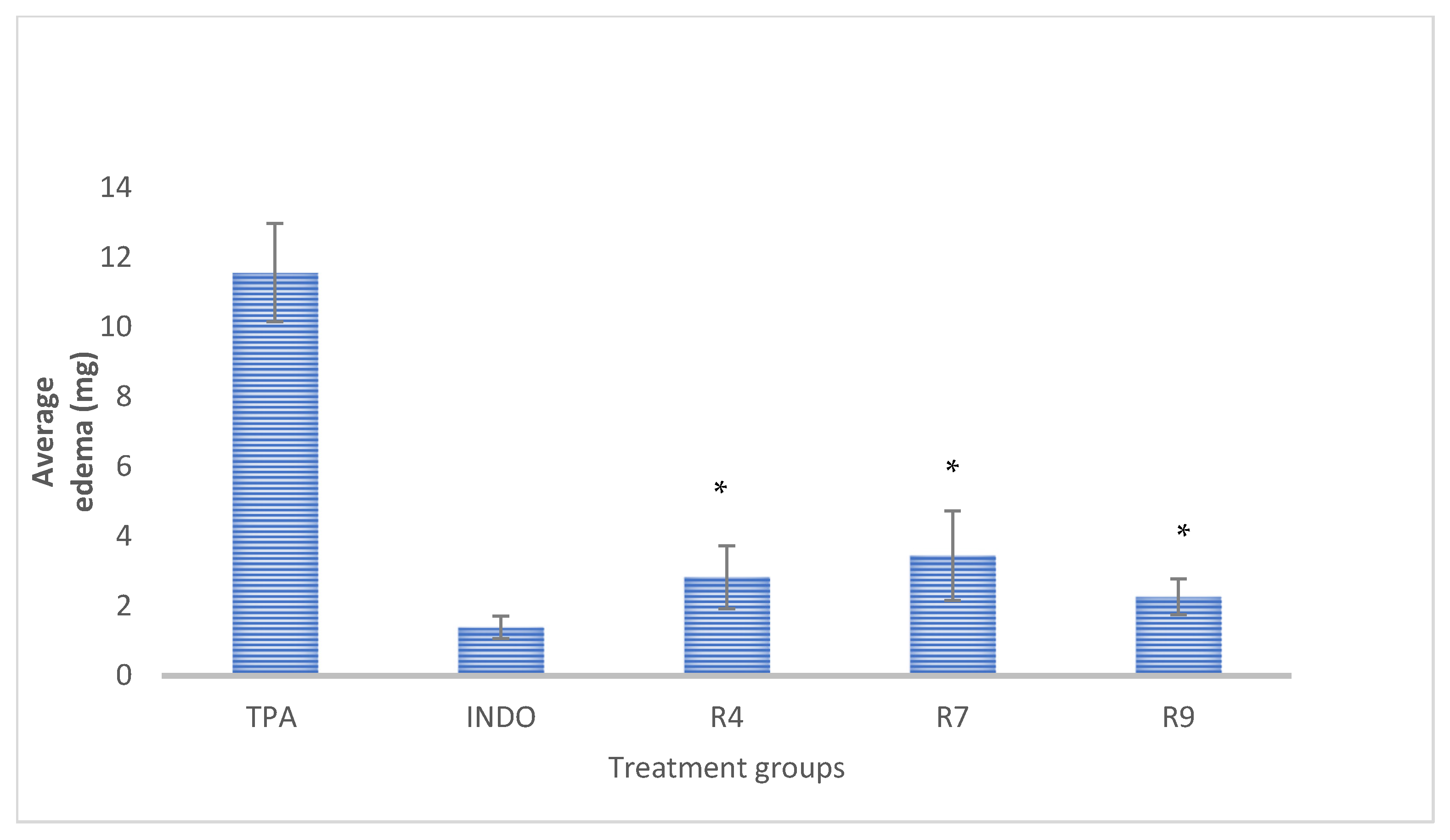
For the TPA-induced ear inflammation model, mice exposed exclusively to TPA developed a marked ear edema (11.025 mg), confirming the successful induction of inflammation. In contrast, the positive control group (treated with indomethacin) showed a significant inhibition of edema with a value of 1.380 mg. Fractions obtained from Prosopis laevigata’s ethyl acetate extract also exhibited significant anti-inflammatory effects. R9 fraction reduced edema to 2.675 mg, while R4 and R7 reduced edema to 2.850 mg and 3.450 mg, respectively. These values correspond to the rates of edema inhibition: 75.74%, 74.15% and 68.71% compared to the TPA group. The demonstrated efficacy of R9 and R4 is extremely important because it is close to the inhibitory effect of indomethacin which indicates that R7 and R9 have compounds with anti-inflammatory potential. Statistical analysis showed that fractions R4, R7 and R9, have anti-inflammatory effects comparable to positive control (indomethacin) as shown in Figure 2.

4. Discussion

Prosopis laevigata has long been used in traditional medicine in Mexico. It is used to control various diseases, including eye conditions, dermatological problems such as rash and gastrointestinal problems. It is also used for conditions such as dysentery, an intestinal infection that is characterized by inflammation and bloody diarrhea, often caused by Shigella spp. or amoebas and is usually transmitted by contaminated food or water [13,14].
Due to the relevance of the preliminary data, we focused on the air parts of P. laevigata and assessed the biological activity of the ethyl acetate extract. TPA acts as a powerful pro-inflammatory agent that triggers a cascade of cellular reactions in the skin. After exposure, keratinocytes and epidermal dendritic cells are activated and release key inflammatory mediators, including the alpha factor of tumor necrosis, leading to an acute inflammatory reaction characterized by the infiltration of neutrophils, macrophages and mast cells in dermal tissues [15,16]. What was found in this work was that P. laevigata ethyl acetate exhibits biological activity in both models (in vivo and in vitro). In the TPA-induced inflammatory model, fractions R4 and R9 showed an edema of 74.15% and 75.74%, respectively. These values were close to the effect produced by the reference drug (indomethacin), which achieved an inhibition of 87.48%, suggesting that these fractions may contain compounds with anti-inflammatory properties. The identification of luteolin in the chemical profile of the extract could partly explain these effects. In terms of antimicrobial activity, the R4, R7 and R9 fractions showed efficacy against several clinically relevant strains. In particular, R9 showed a minimum concentration (MIC) below 25 μg/mL against several strains, including Staphylococcus epidermidis, Klebsiella pneumoniae, Salmonella Dublin, Pseudomonas aeruginosa and Candida albicans. In addition, it showed moderate activity against a resistant strain: Staphylococcus aureus. Both R4 and R9 showed overlapping antimicrobial and anti-inflammatory patterns, suggesting that they can share bioactive metabolites that act on more than one target. This multifunctional activity is pharmacological, as it can reduce the need for more drugs or inspire the design of hybrid therapeutic compounds. This type of therapeutic activity is especially valuable, as it can help reduce polypharmacy or serve as a model for multifunctional drugs. These results provide a solid foundation for future studies focusing on the isolation of active compounds and a deeper understanding of their mechanisms of action. In addition, the evidence highlights the potential of P. laevigata as a promising source of natural substances with antimicrobial and anti-inflammatory properties. In addition, antimicrobial and anti-inflammatory activity were observed in another extract of the same plant [16], which strengthens the importance of the species as a potential source of bioactive compounds.
As a result, P. laevigata is positioned as a valuable source of bioactive compounds with remarkable therapeutic potential, opening up new avenues for the research and development of antimicrobial and anti-inflammatory drugs.

5. Conclusions

The R9 fraction of P. laevigata showed greater activity compared to the other two fractions (R4 and R7), as an antimicrobial and anti-inflammatory agent. All tested fractions showed statistically similar anti-inflammatory activity to the positive control (indomethacin).

Author Contributions

M.G.-C., M.D.P.-G. and A.Z. conceived and designed the experiments; E.A.B.-G. and M.G.-C. analyzed the chemical and biological data; B.E.U.-H. performed the chemical and biological experiments; B.E.U.-H. wrote the paper. All authors have read and agreed to the published version of the manuscript.

Funding

This research was funded by FUNDACION IMSS A.C. This research was supported by a grant from CIS-IMSS (R-2021-1702-01), SECIHTI No. CVU 1127876.

Institutional Review Board Statement

The research protocol was approved by the Local Health Research Committee 1702 (Institutional Registry R-2021-1702-010; COFEPRIS Registry 17 CI 17 031 050; CONBIOÉTICA Registry 17 CEI 001 20190121).

Informed Consent Statement

Not applicable.

Data Availability Statement

Data supporting the findings are included in the article.

Conflicts of Interest

The authors declare no conflict of interest.

References

  1. Organización Mundial de la Salud. Global action plan on antimicrobial resistance. In Plan de Acción Mundial sobre la Resistencia a los Antimicrobianos; OMS: Ginebra, Suiza, 2016; 30p. (In Spanish) [Google Scholar]
  2. Tang, K.W.K.; Millar, B.C.; Moore, J.E. Antimicrobial resistance (AMR). Br. J. Biomed. Sci. 2023, 80, 11387. [Google Scholar] [CrossRef]
  3. Reygaert, C.W. An overview of the antimicrobial resistance mechanisms of bacteria. AIMS Microbiol. 2018, 4, 482–501. [Google Scholar] [CrossRef] [PubMed]
  4. Aziz, N.; Kim, M.Y.; Yang, D.C. Anti-inflammatory effects of luteolin: A review of in vitro, in vivo, and in silico studies. J. Ethnopharmacol. 2018, 225, 342–358. [Google Scholar] [CrossRef] [PubMed]
  5. Herrera, V.; Wendie, E. Inflamación. 2014. Available online: https://www.academia.edu/38821014/INFLAMACION_I (accessed on 6 September 2025).
  6. Abdulkhaleq, L.A.; Assi, M.A.; Abdullah, R.; Zamri-Saad, M.; Taufiq-Yap, Y.H.; Hezmee, M.N.M. The crucial roles of inflammatory mediators in inflammation: A review. Vet. World 2018, 11, 627–635. [Google Scholar] [CrossRef] [PubMed]
  7. Alonso-Castro, A.J.; Domínguez, F.; Maldonado-Miranda, J.J.; Castillo-Pérez, L.J.; Carranza-Álvarez, C.; Solano, E.; Isiordia-Espinoza, M.A.; Juárez-Vázquez, M.d.C.; Zapata-Morales, J.R.; Argueta-Fuertes, M.A.; et al. Use of medicinal plants by health professionals in Mexico. J. Ethnopharmacol. 2017, 198, 81–86. [Google Scholar] [CrossRef] [PubMed]
  8. Rodríguez, V.; González, R.; Sulem, L.; García, B. Is There Scientific Support for the Traditional Use of Medicinal Plants? (El uso tradicional de las plantas medicinales, ¿tiene sustento científico?). Available online: https://www.revistaciencia.amc.edu.mx/images/revista/75_4/PDF/06_75_4_1464.pdf (accessed on 6 September 2025). (In Spanish).
  9. Prabha, D.S.; Dahms, H.-U.; Malliga, P. Pharmacological potentials of phenolic compounds from Prosopis spp.: A review. J. Coast. Life Med. 2014, 2, 918–924. [Google Scholar]
  10. Sarker, S.D.; Nahar, L.; Kumarasamy, Y. Microtitre plate-based antibacterial assay incorporating resazurin as an indicator of cell growth, and its application in the in vitro antibacterial screening of phytochemicals. Methods 2007, 42, 321–324. [Google Scholar] [CrossRef] [PubMed]
  11. González-Cortazar, M.; Salinas-Sánchez, D.O.; Herrera-Ruiz, M.; Román-Ramos, D.C.; Zamilpa, A.; Jiménez-Ferrer, E.; Ble-González, E.A.; Álvarez-Fitz, P.; Castrejón-Salgado, R.; Pérez-García, M.D. Eupatorin and salviandulin-A, with antimicrobial and anti-inflammatory effects from Salvia lavanduloides Kunth leaves. Plants 2022, 11, 1739. [Google Scholar] [CrossRef] [PubMed]
  12. Paya, M.; Ferrandiz, M.L.; Sanz, M.J.; Bustos, G.; Blasco, R.; Rios, J.L.; Alcaraz, M.J. Study of the antioedema activity of some seaweed and sponge extracts from the Mediterranean coast in mice. Phytother. Res. 1993, 7, 159–162. [Google Scholar] [CrossRef]
  13. Palacios, R.A. Mexican mesquites: Biodiversity and geographical distribution (Los mezquites mexicanos: Biodiversidad y distribución geográfica). Bol. Soc. Argent. Bot. 2006, 41, 99–121. (In Spanish) [Google Scholar]
  14. Galindo-Almanza, S.; García-Moya, E. Uses of mesquite (Prosopis L.) in the Potosino Highlands (Usos del mezquite (Prosopis L.) en el Altiplano Potosino). Agrociencia 1986, 63, 7–16. (In Spanish) [Google Scholar]
  15. Nakamura, A.; Uratsuji, H.; Yamada, Y.; Hashimoto, K.; Nozawa, N.; Matsumoto, T. Anti-inflammatory effect of lanoconazole on 12-O-tetradecanoylphorbol-13-acetate- and 2,4,6-trinitrophenyl chloride–induced skin inflammation in mice. Mycoses 2020, 63, 189–196. [Google Scholar] [CrossRef] [PubMed]
  16. González-Cortazar, M.; Salinas-Sánchez, D.O.; Herrera-Ruiz, M.; Hernández-Hernández, P.; Zamilpa, A.; Jiménez-Ferrer, E.; Utrera-Hernández, B.E.; Pérez-García, M.D.; Gutiérrez-Roman, A.S.; Ble-González, E.A. Chemical profile analysis of Prosopis laevigata extracts and their topical anti-inflammatory and antibacterial activities. Plants 2025, 14, 1118. [Google Scholar] [CrossRef] [PubMed]
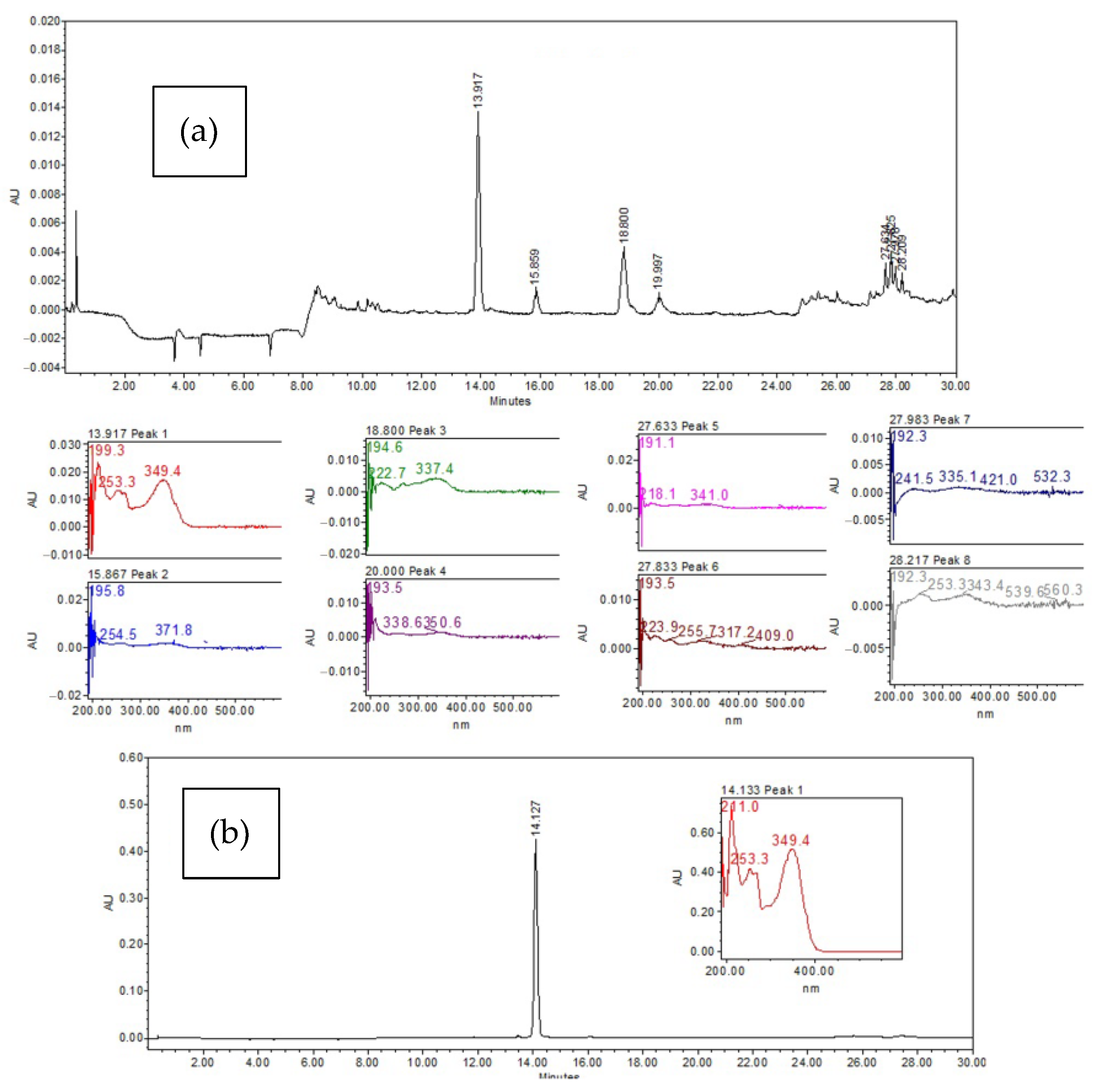
Figure 1. Chemical profiles: (a) ethyl acetate extract; (b) luteolin. The retention time from the chromatographic analysis of the ethyl acetate extract from P. laevigata and the comparison.
Chemproc 18 00066 g001
Figure 2. TPA: 12-O-tetradecanoylphorbol-13-acetate INDO: Indomethacin. R4, R7 and R9: Fractions from the ethyl acetate extract of P. laevigata. Values are mean ± SEM. * p < 0.05 (ANOVA, Dunnett’s test).
Chemproc 18 00066 g002
Table 1. The retention time from the chromatographic analysis of the ethyl acetate extract from P. laevigata.
Retention TimeAbsorption Bands λmax
13.917199.3, 253.3, 349.4
15.867195.8, 254.5, 371.8
18.800194.6, 222.7, 337.4
20.000193.5, 338.6, 350.6
27.633191.1, 218.1, 341.0
27.833193.5, 223.9, 255.7
27.983192.3, 241.5, 335.1
28.217192.3, 253.3, 343.4
Time in minutes, bands in nm.
Table 2. Antimicrobial analysis of 3 fractions against 14 strains using the plate microdilution methodology.
MicroorganismR4R7R9
Staphylococcus aureus ATCC 2921350n/a100
Methicillin-resistant S. aureus 43300100n/a100
Staphylococcus epidermidis ATCC 35984<25n/a<25
Staphylococcus epidermidis ATCC 12228200n/a100
Staphylococcus epidermidis ATCC 1042n/an/a<25
Staphylococcus haemolyticus MR isolatedn/an/a<25
Enterococcus faecalis ATCC 29212<25<25<25
Klebsiella pneumoniae ATCC 700603<25<25<25
Pseudomonas aeruginosa ATCC 27853<25<25<25
Escherichia coli ATCC 1042n/a50n/a
Escherichia coli ATCC 25922n/an/an/a
Salmonella dublin ATCC 9676<25<25<25
Enterobacter cloacae ATCC 700323<25n/an/a
Candida albicans ATCC 10231<25<25<25
Positive control: gentamicin (10 µg/mL). Negative control: DMSO 2%. No activity: n/a.
Disclaimer/Publisher’s Note: The statements, opinions and data contained in all publications are solely those of the individual author(s) and contributor(s) and not of MDPI and/or the editor(s). MDPI and/or the editor(s) disclaim responsibility for any injury to people or property resulting from any ideas, methods, instructions or products referred to in the content.