
Proceeding Paper

Amino Acid 1,2,4-Triazole Mimetics as Building Blocks of Peptides †
1
Department of Biotechnology and Industrial Pharmacy, Lomonosov Institute of Fine Chemical Technologies, MIREA–Russian Technological University; Moscow 119454, Russia
2
Department of Taxonomic Study and Microorganisms Culture Collection, Gause Institute of New Antibiotics, 11 Bolshaya Pirogovskaya St., Moscow 119021, Russia
*
Author to whom correspondence should be addressed.
Presented at the 29th International Electronic Conference on Synthetic Organic Chemistry, 14–28 November 2025; Available online: https://sciforum.net/event/ecsoc-29.
Chem. Proc. 2025, 18(1), 55; https://doi.org/10.3390/ecsoc-29-26739
Published: 12 November 2025

Abstract

Therapeutic peptides are a unique drug class due to their high-specificity binding with biological targets. However, the low bioavailability of peptides, as well as the lack of enzymatic stability, imposes a number of limitations on their biomedical application. A good strategy by which to overcome these limitations is the use of peptidomimetics, which are able to imitate the binding and activity of peptides both in vitro and in vivo. Peptidomimetics can be obtained by combining natural and synthetic amino acids in a peptide sequence. Various five-membered heterocycles are often used as structural fragments of peptide imitators to fix the chain in a certain conformation and to increase proteolytic stability. The use of 5-aminomethyl-1,2,4-triazole-3-carboxylic acid derivatives as building blocks of peptidomimetic structures may be a very attractive strategy, in which the tautomeric 1,2,4-triazole fragment is capable of flexibly forming hydrogen bonds on the protein surface of the target. In this work, a number of ethyl 5-aminomethyl-1,2,4-triazole-3-carboxylates and their derivatives were synthesized as mimetics of aliphatic amino acids. Their use as building blocks for synthesizing peptidomimetics was demonstrated. In addition, through the use of a panel of pathogenic and model strains of microorganisms and fungi, we demonstrated the lack of independent activity of the amino acid 1,2,4-triazole mimetics synthesized. This similarity of the biological properties of the obtained mimetics and their natural analogues reveals their bioisosterism. The bioisosterism and geometric similarity of 1,2,4-triazole mimetics and natural amino acid highlights the potential of their use as building blocks for therapeutic peptides.

1. Introduction

Synthetic peptides are promising candidates for both diagnostic and therapeutic purposes in clinical and scientific research [1]. Therapeutic peptides are in demand in the treatment of infectious diseases, genetic disorders, oncology, and in many other clinical domains [2,3]. A number of advantages of peptide drugs, such as their highly developed design strategies, the possibility of automated synthesis, and their proven modification protocols, make them an excellent alternative to small-molecule drugs [4]. At present, the widespread use of native peptides is limited by their relatively high pyrogenicity, as well as their extremely low stability in vivo due to their rapid degradation by endogenous proteases and poor bioavailability [5,6]. Resistance to proteases depends on a wide range of factors, such as the amino acid composition, secondary structure, flexibility, and lipophilicity of the peptide molecule [1]. The use of natural peptides imitators—peptidomimetics—as therapeutic agents can help to circumvent the above problems. However, many modifications of the peptide structure are unable to simultaneously improve both its proteolytic stability and biological activity. For example, the incorporation of D-amino acid usually increases the half-life of the peptide in plasma, but the structures modified in this way sometimes do not exhibit effective biological activity [7,8].
A common approach to obtaining peptidomimetics is the modification of peptide building blocks or peptide bonds with heterocyclic fragments, particularly the triazole moiety [9]. In this case, the 1,2,3-triazole acts as a stable isostere for metabolically labile amide bonds in the peptide backbone, making it possible to solve the problem of the enzymatic instability of peptides [10,11]. Most likely, the popularity of such a replacement is caused by the possibility of using click chemistry methods for 1,2,3-triazole peptidomimetics synthesis [12]. 1,2,4-Triazole is also in demand in the synthesis of peptidomimetics, albeit not as an amide bond imitator but as a peptide chain building blocks component [13]. The inclusion of a 1,2,4-triazole moiety in the synthetic amino acid block of a peptidomimetic may lead to further advantages: the heterocycle can form additional hydrogen bonds, and due to the inherent tautomerism of 1,2,4-triazole, it can adapt to the amino acid environment of the active site of the target.
Previously, 5-aminomethyl 1,2,4-triazole-3-carboxylic acid was proposed as a building block for peptidomimetics [14]. However, the incorporation of this unit as a C-terminal fragment has caused significant difficulties due to the instability of this acid [15]. Using the ethyl ester of 5-aminomethyl 1,2,4-triazole-3-carboxylic acid as our model, we attempted to develop a synthesis in the solution of peptidomimetics and terminal 1,2,4-triazole-containing amino acid blocks.

2. Results and Discussion

We choose ethyl 5-aminomethyl-1,2,4-triazole-3-carboxylates as non-canonical amino acid blocks based on 1,2,4-triazole for peptidomimetics synthesis. In previous studies, several representatives of this structural class have already been obtained as monomer units for the synthesis of peptide mimetics [14,16]. Despite the attractiveness of using 5-aminomethyl-1,2,4-triazole-3-carboxylic acids as monomer units for peptides synthesis, their individual biological activity has not yet been studied. We expanded the synthetic series of 5-aminomethyl-1,2,4-triazole-3-carboxylic acid derivatives obtained from various α-amino acids and showed the absence of their individual antimicrobial activity on a panel of pathogenic strains of Gram-positive and Gram-negative microorganisms and fungi, namely, Staphylococcus aureus, Pseudomonas aeruginosa, Candida albicans, as well as model strains of microorganisms, namely, Micrococcus luteus and Mycobacterium smegmatis. Antimicrobial activity was assessed by measuring the zone of inhibition of microorganism growth (agar diffusion method) in comparison with known antibiotics: isoniazid, ciprofloxacin, and amphotericin. For all compounds at a concentration of 50 mM, the absence of microorganism growth inhibition zones was observed. The lack of biological activity may be an additional advantage for these structures since these derivatives are also not expected to have antimicrobial properties similar to natural amino acids.
In this work, the possibility of synthesising peptidomimetic with terminal 1,2,4-triazole-containing synthetic units was demonstrated via an example of ethyl 5-aminomethyl-1,2,4-triazole-3-carboxylate (Figure 1).
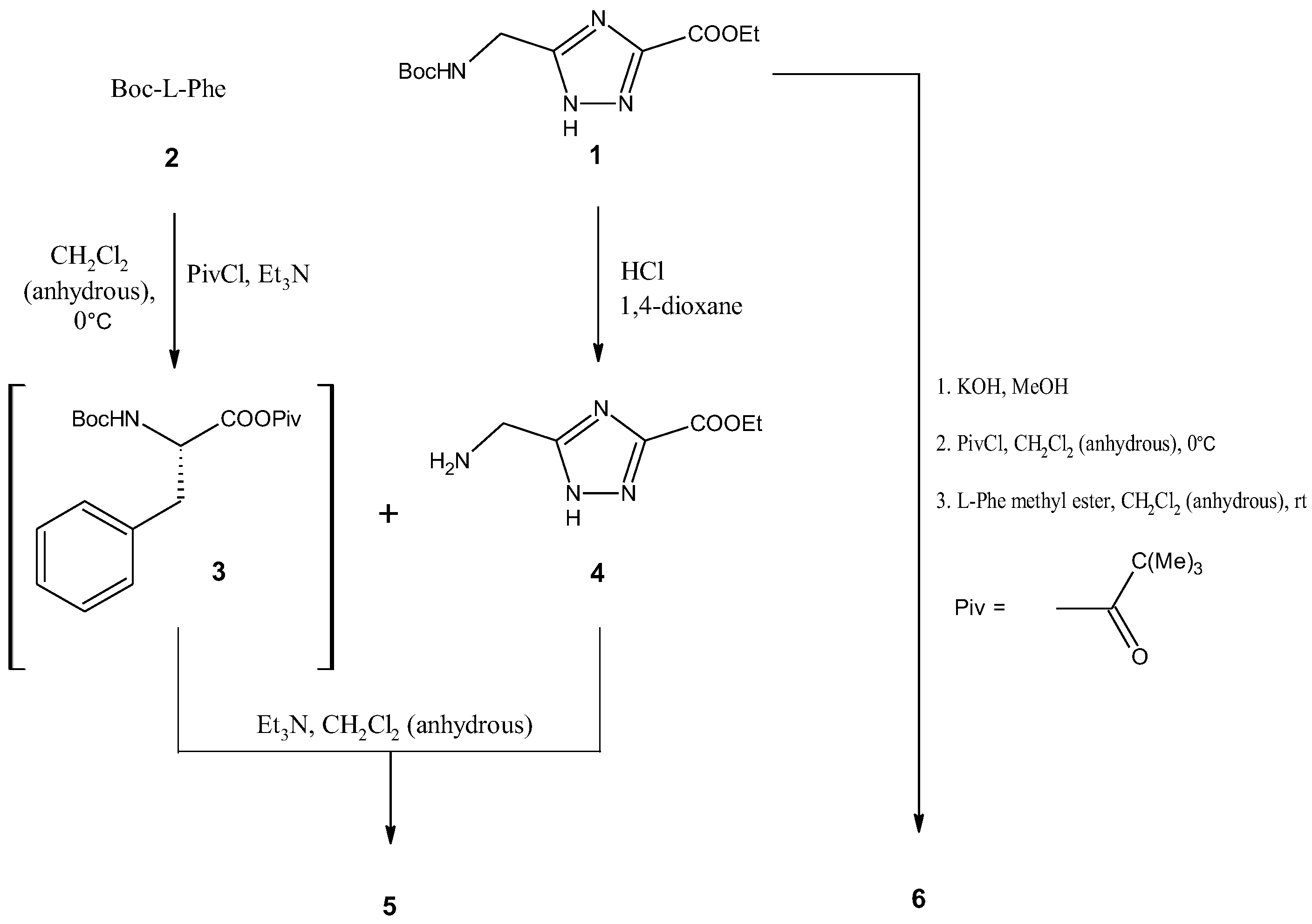
The most common method of 1,2,4-triazole ring synthesis in the literature is the thermal cyclization of β-N-acyloxalamidrazones [14,15,16]. Based on this method, we previously obtained ethyl 5-(tert-butoxycarbonyl)-aminomethyl-1,2,4-triazole-3-carboxylate 1 [17]. In order to demonstrate the possibility of ethyl 5-aminomethyl-1,2,4-triazole-3-carboxylate acting as a building block of a peptide mimetic, we synthesized two variants of the peptide mimetic structure 5 and 6 (Scheme 1).
The incorporation of a 1,2,4-triazole-containing amino acid mimetic at the N-terminus of the peptide was demonstrated using the example of compound 5 synthesis. To obtain 5, Boc-L-phenylalanine 2 was treated with pivaloyl chloride in the presence of triethylamine to obtain mixed anhydride 3. Previously deprotection of 1 by standard methods gives the dihydrochloride of ethyl 5-aminomethyl-1,2,4-triazole-3-carboxylate 4, which was acylated by intermediate 3. Thus, model N-terminus peptidomimetic 5 modified with a 1,2,4-triazole-containing amino acid was obtained with a total yield of 59%.
The difficulty of obtaining model mimetic 6 is due to the tendency of 1,2,4-triazole-3-carboxylic acid towards decarboxylation. Therefore, the ester group of compound 1 was hydrolyzed to the potassium salt of acid; then, without isolation, it was activated with PivCl. L-phenylalanine methyl ester was then added to the resulting activated derivative. This resulted in model mimetic 6, modified at the C-terminus, with a yield of 17%.
The low yield of our first attempts to use PivCl for the activation of C- components may be due to a non-optimized protocol of 1,2,4-triazole-containing peptide mimetics synthesis and isolation. In the future, we will try to adjust the reaction time, excess reagents, and other conditions, as well as to vary the isolation protocol.

3. Conclusions

5-Aminomethyl-1,2,4-triazole-3-carboxylic acid derivatives are structural amino acid mimetics which are useful as building blocks that can replace amino acid residues in modified peptides. 5-Aminomethyl-1,2,4-triazole-3-carboxylic acid derivatives have been shown to lack antimicrobial activity against a panel of model pathogenic and nonpathogenic microorganisms and fungi, enabling their use as building blocks for peptidomimetics of antimicrobial peptides. However, the use of 1,2,4-triazole-3-carboxylic acid derivatives to replace amino acids in peptides has significant limitations due to the chemical properties of 1,2,4-triazole-3-carboxylic acid. In particular, the use of free 1,2,4-triazole-3-carboxylic acid as the C-component is impossible due to its decarboxylation. We demonstrated the feasibility of introducing the 5-aminomethyl-1,2,4-triazole-3-carboxylic acid ester into the model peptide chain as both a C- and an N-component. The yields of the resulting model mimetics 5 and 6 have not yet been optimized, and their preparation requires the selection of an optimal method for 1,2,4-triazole component activation. After optimizing the introduction of 5-aminomethyl-1,2,4-triazole-3-carboxylic acid as the C-component into the peptide chain, we plan to move on to the design of 1,2,4-triazole peptidomimetics and to study their biological potential.

4. Materials and Methods

4.1. Materials

All the chemical reagents were obtained from commercial suppliers (Macklin, Shanghai, China) and used without further purification. Deuterated solvents were purchased from Cambridge Isotope Laboratories, Inc. (Tewksbury, MA, USA). PTX-AF-A-UV silica gel plates (Sorbfil, Krasnodar, Russia) were used for thin-layer chromatography. The visualizations of the substances on thin-layer chromatograms were carried out using UV irradiation at 254 nm and iodine, followed by phosphomolybdic acid or ninhydrin. Column chromatography was carried out on silica gel Kiselgel 60 (0.040–0.063 mm) (Merck KGaA, Darmstadt, Germany).
1H and 13C NMR spectra were recorded on a Bruker DPX-300 instrument (Bruker, Ettlingen, Germany) (300 and 75 MHz, respectively). High-resolution mass spectra (HRMS) were recorded on the Agilent 6224 using electron spray ionization (ESI). HPLC measurements were carried out on the Agilent 1200 Series (Santa Clara, CA, USA). High-resolution mass spectra (HRMS) were recorded on the Agilent 6224 instrument (Santa Clara, CA, USA) using the electron spray ionization (ESI) method.

4.2. Synthesis

Ethyl 5-aminomethyl-1,2,4-triazole-3-carboxylate dihydrochloride (4)
A total of 5 mL of HCl in anhydrous 1,4-dioxane (4.52 M) was added to 316 mg (1.17 mmol) of compound 1. The reaction mixture was stirred at room temperature. The reaction was monitored via the complete conversion of compound 1 (TLC in a system of 3% MeOH in CHCl3). After the conversion of compound 1, the volatile components was evaporated. Yield: 283 mg (99%), as hygroscopic solid.
1H NMR (DMSO-d6) 1.25 (t, 3H, J = 7.31, -CH3); 3.51 (s, 2H, N-CH2-); 4.29 (q, 2H, J = 7.31, -CH2-CH3); 8.83 (s, 3H, NH3+). The 1H NMR spectra are similar to the data obtained in the literature [14].
13C NMR (DMSO-d6) 14.2; 34.7; 61.6; 151.6; 154.3; 158.7.
HRMS (ESI), m/z: 171.0885 [M + H]+ (calc. for C6H11N4O2, m/z: 171.0882), m/z: 169.0728 [M − H] (calc. for C6H11N4O2, m/z: 169,0725).
Ethyl 5-(N-Boc-phenylalanyl)-aminomethyl-1,2,4-triazole-3-carboxylate (5)
To a suspension of Boc-L-phenylalanine (310 mg; 1.17 mmol) in 3 mL of anhydrous methylene chloride a triethylamine (0.57 mL) and then 0.14 mL (1.17 mmol) of pivaloyl chloride at 0 °C were added. The reaction mixture was stirred for 20 min. Then, a suspension of 283 mg of compound 2 (1.17 mmol) in 3 mL of anhydrous methylene chloride was added to the mixture. The reaction mixture was stirred at room temperature for 2 h. After complete conversion of compound 2 (TLC monitoring, 30% CH3OH in CHCl3 + 0.5% NH3 in CH3OH system), the volatile components were evaporated. Then, 10 mL of H2O was added to the residue, and the resulting suspension was extracted with methylene chloride (2 × 20 mL). The organic phases were combined, dried over anhydrous Na2SO4, filtered off, and evaporated. The product was isolated via column chromatography on silica gel, eluent 0.5%NH3, in CH3OH-CHCl3. Yield: 488 mg (59%).
1H NMR (DMSO-d6) δ: 1.05–1.31 (m, 12H, -O-CH2-CH3 and -C(-CH3)); 2.65–3.03 (m, 2H, -CH2-C6H5); 4.13–4.25 (m, 1H, -NH-CH-C(O)); 4.31 (q, 2H, J = 7.04 Hz, -O-CH2-CH3); 4.41 (d, 2H, J = 5.20 Hz, -NH-CH2-Tr); 6.91 (d, 1H, J = 8.21 Hz, -NH-CH-); 7.11–7.33 (m, 5H, -C6H5); 8.55–8.74 (m, 1H, -NH-CH2-).
13C NMR (DMSO-d6) δ: 14.1; 28.1; 34.9; 37.4; 55.6; 61.0; 78.1; 126.1; 128.0; 129.2; 138.1; 152.9; 155.3; 156.4; 159.4; 172.0.
HRMS (ESI), m/z: 418,2022 [M + H]+ (calc. for C20H27N5O5, m/z: 418,2020), m/z: 416.1868 [M − H] (calc. for C20H27N5O5, m/z: 416.1865).
N-(5-(N-Boc)-aminomethyl-1,2,4-triazole-3-carboxyl)-phenylalanine methyl ester (6)
To 100 mg (0.37 mmol) of compound 1 (0.51 mL; 0.78 mmol) an alcoholic KOH solution was added and stirred at 40 °C. After complete conversion of compound 1 (control by TLC, 3% CH3OH in CHCl3 system), the volatile components were evaporated. To a suspension of the resulting residue in 1 mL of anhydrous methylene chloride, pivaloyl chloride (0.13 mL; 1.11 mmol) was added at 0 °C and stirred for 40 min. Then, a suspension of 198 mg (1.11 mmol) of phenylalanine methyl ester in 2 mL of anhydrous methylene chloride was added to the resulting mixture, and the reaction mixture was stirred at room temperature for 12 h. Then, the volatile components of the reaction were evaporated, and 2 mL H2O was added to the residue and extracted with methylene chloride (3 × 4 mL). The organic phases were combined, dried over anhydrous Na2SO4, filtered off, and evaporated. The reaction product was isolated via column chromatography on silica gel, eluent chloroform–methanol, with a methanol gradient from 0 to 5%. Yield: 25 mg (17%).
1H NMR (DMSO-d6) δ: 1.35 (s, 9H, -C(-CH3)); 3.13–3.17 (m, 2H, -CH2-C6H5); 3.75 (s, 3H, -CH3); 4.54 (br.s, 2H, -CH2-Tr); 4.97–5.04 (m, 1H, -NH-CH-); 6.91 (d, 1H, J = 8.21 Hz, -NH-CH-); 7.21–7.35 (m, 5H, -C6H5); 8.63–8.76 (m, 1H, -NH-CH2-).
13C NMR (DMSO-d6) δ: 28.1; 37.6; 39.7; 50.4; 53.4; 80.5; 126.1; 128.9; 129.2; 139.0; 146.1; 152.9; 156.4; 159.8; 172.1.
HRMS (ESI), m/z: 404,1858 [M + H]+ (calc. for C19H25N5O5, m/z: 404,1858), m/z: 402,1703 [M − H] (calc. for C19H25N5O5, m/z: 402,1703).

4.3. Antibacterial Activity

Antimicrobial activity was determined via a standard agar wells method by measuring the diameter of the inhibition zones [18]. The cultures grown at 35 °C on the following media: Mueller–Hinton agar (Staphylococcus aureus INA 00985, Micrococcus luteus ATCC 9341, and Pseudomonas aeruginosa ATCC 27853) and Sabouraud agar (Candida albicans ATCC 14053) for 24 h before assay setting. For Mycobacterium smegmatis ATCC 607, a 48 h culture grown on peptone agar (OOO Fizlabpribor, Moscow, Russia) at 37 °C was used. Preparation of inoculum: The bacterial cells were suspended in sterile saline to a turbidity of 0.5 McFarland by shaking on a vortex mixer for 10–15 s and applied to Petri dishes with Mueller–Hinton agar (i.e., Mueller–Hinton agar with 2% glucose for Candida albicans). Dishes were incubated at 35 °C. Growth inhibition zones size were measured after 24 h of incubation.

Author Contributions

Conceptualization, A.M.; methodology and data curation, A.M. and O.S.; investigation, E.O., V.D., A.S., E.M. (Ekaterina Mitina), and O.S.; writing—original draft preparation, A.M., E.O., and V.D.; writing—review and editing, E.M. (Ekaterina Mitina), A.S., E.M. (Ekaterina Mikhina), and L.G.; visualization, V.D. and E.O. All authors have read and agreed to the published version of the manuscript.

Funding

This research received no external funding.

Institutional Review Board Statement

Not applicable.

Informed Consent Statement

Not applicable.

Data Availability Statement

Data are available in this manuscript.

Acknowledgments

This work was performed using the equipment of the Shared Science and Training Center for Collective Use RTU MIREA and supported by the Ministry of Science and Higher Education of the Russian Federation within the framework of agreement №075-15-2025-548 of 18 June 2025.

Conflicts of Interest

The authors declare no conflict of interest.

References

  1. Wang, L.; Wang, N.; Zhang, W.; Cheng, X.; Yan, Z.; Shao, G.; Wang, X.; Wang, R.; Fu, C. Therapeutic peptides: Current applications and future directions. Signal Transduct. Target. Ther. 2022, 7, 48. [Google Scholar] [CrossRef] [PubMed]
  2. Lau, J.L.; Dunn, M.K. Therapeutic peptides: Historical perspectives, current development trends, and future directions. Bioorganic. Med. Chem. 2018, 26, 2700–2707. [Google Scholar] [CrossRef] [PubMed]
  3. Muttenthaler, M.; King, G.F.; Adams, D.J.; Alewood, P.F. Trends in peptide drug discovery. Nat. Rev. Drug Discov. 2021, 20, 309–325. [Google Scholar] [CrossRef] [PubMed]
  4. Fetse, J.; Kandel, S.; Mamani, U.F.; Cheng, K. Recent advances in the development of therapeutic peptides. Trends Pharmacol. Sci. 2023, 44, 425–441. [Google Scholar] [CrossRef] [PubMed]
  5. Vincent, H.L.; Yamamoto, A. Penetration and enzymatic barriers to peptide and protein absorption. Adv. Drug Deliv. Rev. 1990, 4, 171–207. [Google Scholar]
  6. Bocci, V. Catabolism of therapeutic proteins and peptides with implications for drug delivery. Adv. Drug Deliv. Rev. 1990, 4, 149–169. [Google Scholar] [CrossRef]
  7. Werner, H.M.; Cabalteja, C.C.; Horne, W.S. Peptide Backbone Composition and Protease Susceptibility: Impact of Modification Type, Position, and Tandem Substitution. ChemBioChem 2016, 17, 712–718. [Google Scholar] [CrossRef] [PubMed]
  8. Taylor, M.; Moore, S.; Mayes, J.; Parkin, E.; Beeg, M.; Canovi, M.; Gobbi, M.; Mann, D.M.A.; Allsop, D. Development of a Proteolytically Stable Retro-Inverso Peptide Inhibitor of β-Amyloid Oligomerization as a Potential Novel Treatmen for Alzheimer’s Disease. Biochemistry 2010, 49, 3261–3272. [Google Scholar] [CrossRef] [PubMed]
  9. Diness, F.; Schoffelen, S.; Meldal, M. Advances In Merging Triazoles with Peptides and Proteins; Springer: Cham, Switzerland, 2015. [Google Scholar]
  10. Recnik, L.; Kandioller, W.; Mindt, T.L. 1,4-Disubstituted 1,2,3-Triazoles as Amide Bond Surrogates for the Stabilisation of Linear Peptides with Biological Activity. Molecules 2020, 25, 3576. [Google Scholar] [CrossRef] [PubMed]
  11. Bonandi, E.; Christodoulou, M.S.; Fumagalli, G.; Perdicchia, D.; Rastelli, G.; Passarella, D. The 1,2,3-triazole ring as a bioisostere in medicinal chemistry. Drug Discov. Today 2017, 22, 1572–1581. [Google Scholar] [CrossRef] [PubMed]
  12. Valverde, I.E.; Mindt, T.L. 1,2,3-Triazoles as Amide-bond Surrogatesin Peptidomimetics. Chimia 2013, 67, 262–266. [Google Scholar] [CrossRef] [PubMed]
  13. Kann, N.; Johansson, J.R.; Beke-Somfai, T. Conformational properties of 1,4- and 1,5-substituted 1,2,3-triazole amino acids—Building units for peptidic foldamers. Org. Biomol. Chem. 2015, 13, 2776. [Google Scholar] [CrossRef] [PubMed]
  14. Cesar, J.; Sollner, M. Use of 3,5-Disubstituted 1,2,4-Triazoles for the Synthesis of Peptidomimetics. ChemInform 2000, 30, 4147–4158. [Google Scholar] [CrossRef]
  15. Dost, J.; Stem, J.; Heschel, M. Zur herstellung von 5-substitmerten 1,2,4-trtazol-3-carbonsaurederivaten aus oxalsaureethylester-N1-acylamtdrazonen. Z. Chem. 1986, 26, 203–204. [Google Scholar] [CrossRef]
  16. Borg, S.; Estenne-Bouhtou, G.; Luthman, K.; Csoregh, I.; Hesselink, W.; Hacksell, U. Synthesis of 1, 2, 4-Oxadiazole-, 1, 3, 4-Oxadiazole-, and 1, 2, 4-Triazole-Derived Dipeptidomimetics. J. Org. Chem. 1995, 60, 3112–3120. [Google Scholar] [CrossRef]
  17. Oleynik, E.S.; Shmarina, A.A.; Mitina, E.R.; Mikhina, E.A.; Semenov, I.A.; Savina, E.D.; Grebenkina, L.E.; Zhidkova, E.M.; Lesovaya, E.A.; Vetrova, E.N.; et al. 5-Amino-1,2,4-triazole-3-carboxamide homologues and their biological potential. Mendeleev. Commun. 2025, 35, 606–608. [Google Scholar] [CrossRef]
  18. Balouiri, M.; Sadiki, M.; Ibnsouda, S.K. Methods for in vitro evaluating antimicrobial activity: A review. J. Pharm. Anal. 2016, 6, 71–79. [Google Scholar] [CrossRef] [PubMed]
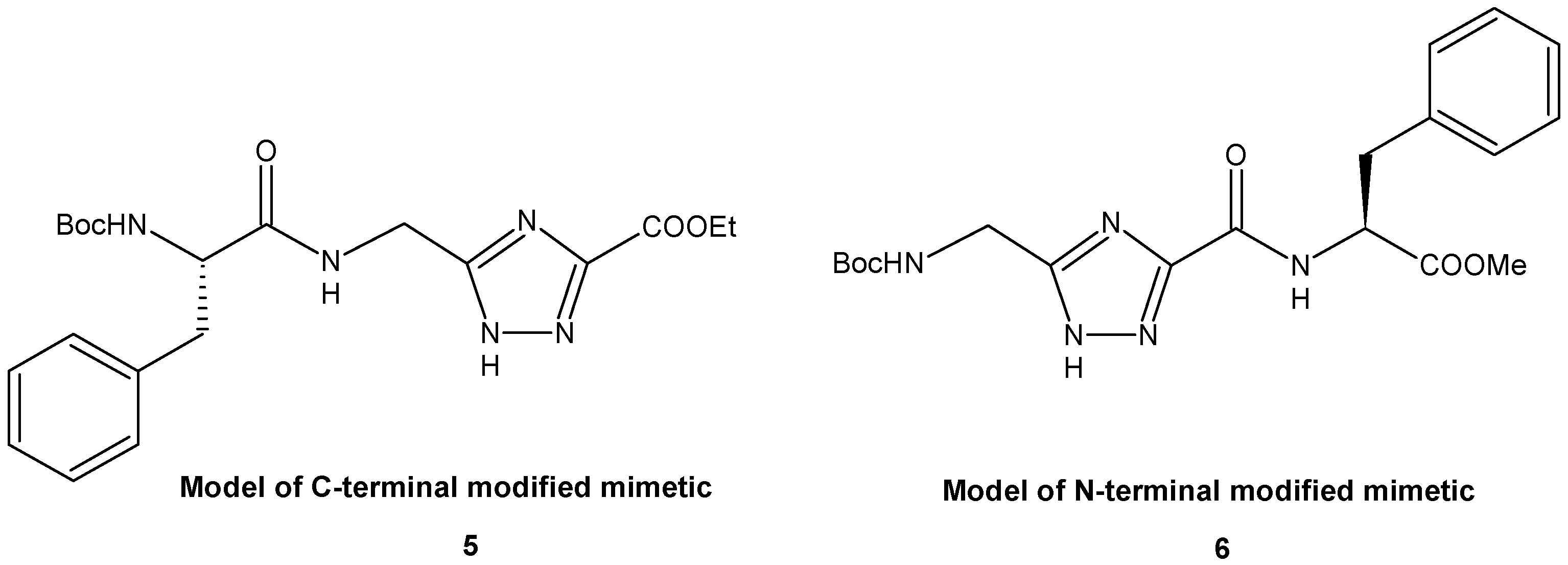
Figure 1. Model peptidomimetic structures with terminal 1,2,4-triazole-containing synthetic units.
Chemproc 18 00055 g001
Scheme 1. Scheme of 1,2,4-triazole-containing peptide mimetics synthesis.
Chemproc 18 00055 sch001
Disclaimer/Publisher’s Note: The statements, opinions and data contained in all publications are solely those of the individual author(s) and contributor(s) and not of MDPI and/or the editor(s). MDPI and/or the editor(s) disclaim responsibility for any injury to people or property resulting from any ideas, methods, instructions or products referred to in the content.