
Proceeding Paper

Influence of Carbonyl Position in C9 Ketones Against the Phytoparasitic Pinewood Nematode †

by
Jorge M. S. Faria
1,2,* and
Gonçalo Pereira
1
1
Instituto Nacional de Investigação Agrária e Veterinária (INIAV), Quinta do Marquês, 2780-159 Oeiras, Portugal
2
GREEN-IT Bioresources for Sustainability, Instituto de Tecnologia Química e Biológica, Universidade Nova de Lisboa (ITQB NOVA), Av. da República, 2780-157 Oeiras, Portugal
*
Author to whom correspondence should be addressed.
Presented at the 29th International Electronic Conference on Synthetic Organic Chemistry (ECSOC-29); Available online: https://sciforum.net/event/ecsoc-29.
Chem. Proc. 2025, 18(1), 61; https://doi.org/10.3390/ecsoc-29-26710

Published: 11 November 2025

Abstract

Medium-chain aliphatic compounds bearing oxygen-containing functional groups—such as alcohols, ketones, or carboxylic acids—have attracted increasing attention due to their potential as bioactive agents in pest management. These compounds have demonstrated diverse biocidal properties, including insecticidal, antimicrobial, fungicidal, and nematicidal activities. In this study, the nematicidal potency of three structurally related C9 aliphatic ketones—2-nonanone, 3-nonanone, and 5-nonanone—was evaluated against Bursaphelenchus xylophilus, the pinewood nematode (PWN). These isomeric ketones differ in the position of the carbonyl group, providing a useful model for examining structure–activity relationships (SAR) among positional isomers. The direct-contact bioassays, performed at 1 mg/mL, revealed that 2-nonanone exhibited the highest nematicidal activity, causing 92.3 ± 1.2% mortality on the PWN, followed by 3-nonanone at 80.1 ± 0.8%, while 5-nonanone showed significantly lower activity at 17.1 ± 0.5%. The results suggest a strong dependency of bioactivity on the position of the carbonyl group along the carbon chain. The increasing efficacy from 5- to 2-nonanone suggests that proximity of the carbonyl group to the terminal end may enhance activity, for example, by enhancing membrane interaction or disrupting nematode metabolic processes. These findings underscore the importance of molecule structure analysis in designing effective nematicidal agents and support further investigation into terminally positioned oxygenated medium-carbon chain aliphatic compounds as potential leads. This work highlights that subtle structural differences within homologous series can significantly influence bioactivity and provides a foundation for developing targeted, biodegradable nematicides derived from simple aliphatic frameworks.

1. Introduction

The pinewood nematode (PWN, Bursaphelenchus xylophilus) is the causative agent of pine wilt disease (PWD), a destructive condition to coniferous tree forests that leads to severe ecological and economic damage, particularly in Asia and parts of Europe. Its dispersion is performed by insect vectors of the genus Monochamus, which can carry the PWN long distances, making effective pest management very difficult. In susceptible trees, where pine lacks natural defenses, the PWN invades the resin canals, disrupts water transport and leads to rapid desiccation and death. The damage caused by PWD has prompted the urgent need for effective control strategies, especially in areas with limited natural resistance [1].
Chemical nematicides have been employed to control PWD spread in areas with limited numbers of trees or in city areas. These include broad-spectrum pesticides applied through trunk injections to eliminate nematode populations in affected arboretums [2]. While these compounds can be effective in the short term, their use presents several challenges specific to forest settings. Their non-selective toxicity can negatively impact non-target organisms, including beneficial soil fauna and microbial communities essential for plant health. Also, these chemicals can persist in the environment, raising concerns about contamination of soil and nearby water bodies, especially in sensitive ecological zones [3]. The repeated exposure to the same chemical agents can lead to the development of resistance in nematode populations, ultimately reducing the efficacy of treatment protocols. Furthermore, increasing regulatory restrictions on pesticide use in forestry, particularly within the European Union, have resulted in the withdrawal of many conventional nematicides. This has created a significant gap in effective control measures and highlighted the urgent need for the development of novel, environmentally sustainable nematicidal agents that can be integrated into PWD management programs [4,5].
Among the promising alternatives to traditional nematicides are medium-chain aliphatic compounds, especially those containing oxygen-based functional groups such as alcohols, ketones, and carboxylic acids. These compounds, typically derived from natural sources, have demonstrated a wide range of bioactivities, including insecticidal, antimicrobial, fungicidal, and nematicidal effects [6,7].
C9 ketones are of interest due to their relatively simple chemical structure, ease of synthesis, and biodegradable nature. Structural variations within these molecules can lead to significant differences in bioactivity, offering opportunities for fine-tuning their effectiveness through rational molecular design. For aliphatic oxygen-containing compounds, the position of the functional group along the carbon chain appears to play a critical role in determining nematicidal strength [7,8]. Variations in this position can alter the molecule’s polarity, hydrophobicity, and capacity for membrane penetration, which in turn affects its interaction with nematode physiology. Previous studies have shown that even minor structural changes—such as shifting the carbonyl group by a single carbon—can lead to drastic differences in bioactivity [7]. Such insights underline the importance of detailed structure–activity relationship (SAR) evaluations in the search for next-generation nematicides.
In this proceedings paper, we present for the first time the results of a comparative evaluation of three C9 aliphatic ketones—2-nonanone, 3-nonanone, and 5-nonanone—against the PWN. These positional isomers differ in the location of their carbonyl group, providing an ideal model for investigating SARs in nematicidal compounds.

2. Materials and Methods

2.1. Chemicals

Stock solutions for the C9 ketones [2-nonanone (99%), 3-nonanone (99%), and 5-nonanone (98%)] (Sigma-Aldrich, St. Louis, MO, USA) were diluted in methanol (HPLC-grade, Fischer Chemicals, Hampton, NH, USA) at 20 mg/mL [9]. These stock solutions were stored at −20 °C until used.

2.2. Pinewood Nematode In Vitro Culture

The PWN population used in the direct-contact bioassays was grown in vitro in aseptic conditions by feeding on axenic cultures of a non-sporulating strain of Botrytis cinerea (de Bary) Whetzel. Briefly, approximately 15 g of barley in 15 mL of ultrapure water were steam-sterilized in 250 mL Erlenmeyer flasks, cooled down and inoculated with B. cinerea, and maintained for 7 to 10 days at 25 ± 1 °C for growth. After this period, 1 mL of PWN (isolate Bx0.13.003, INIAV [10]) aqueous suspension (1000 nematodes/mL) was added to the culture and kept in darkness at 25 ± 1 °C for 7 to 10 days. To avoid microbial contamination, PWNs were surface sterilized with hydrogen peroxide (H2O2) (20%, v/v) for 20 min and washed 3× with sterilized water in the flow hood before being introduced into the axenic mycelial cultures [11]. After 7 to 10 days, PWNs growing in these in vitro cultures were isolated through the modified Baermann funnel technique [12]. The PWN suspensions were used immediately for the direct-contact bioassays or stored at 11 °C for up to 1 week. PWN numbers and mortality were assessed using an Olympus SX12 stereomicroscope (40×) (Olympus, Tokyo, Japan).

2.3. Direct-Contact Bioassays

The determination of compound mortality was performed in flat-bottom 96-well microtiter plates (Carl Roth GmbH & Co. KG, Karlsruhe, Germany). A suspension of mixed life stages of the PWN was prepared so that a 95 µL aliquot contained approximately 60 PWNs. This volume was added to each well with 5 µL of each of the C9 ketone stock solutions, aiming at a final concentration of 1 mg/mL. Blank (5 µL of ultrapure water) and control (5 µL of methanol) wells were also performed to determine natural mortality and solvent-related effects. Plates were then sealed, briefly agitated on an orbital shaker (IKA Labortechnik, Staufen, Germany), at 800 rpm for 1 min, and incubated in the dark for 24 h at 25 ± 1 °C, at 60 rpm agitation [13]. All treatments were conducted in triplicate, resulting in a total of nine independent bioassays.

2.4. Data Treatment and Statistical Analysis

PWN mortality percentages were determined using the following formula: mortality% = (dead nematodes/total no. of nematodes) × 100. It was then corrected with the mortality percentages determined for the methanol control: corrected mortality% = [(mortality% in treatment − mortality% in control)/(100 − mortality% in control)] × 100. For each C9 ketone, mortality was deemed complete at 100%, strong above 80%, moderate between 80 and 61%, weak between 60 and 40%, and low or inactive below 40% [14].

3. Results and Discussion

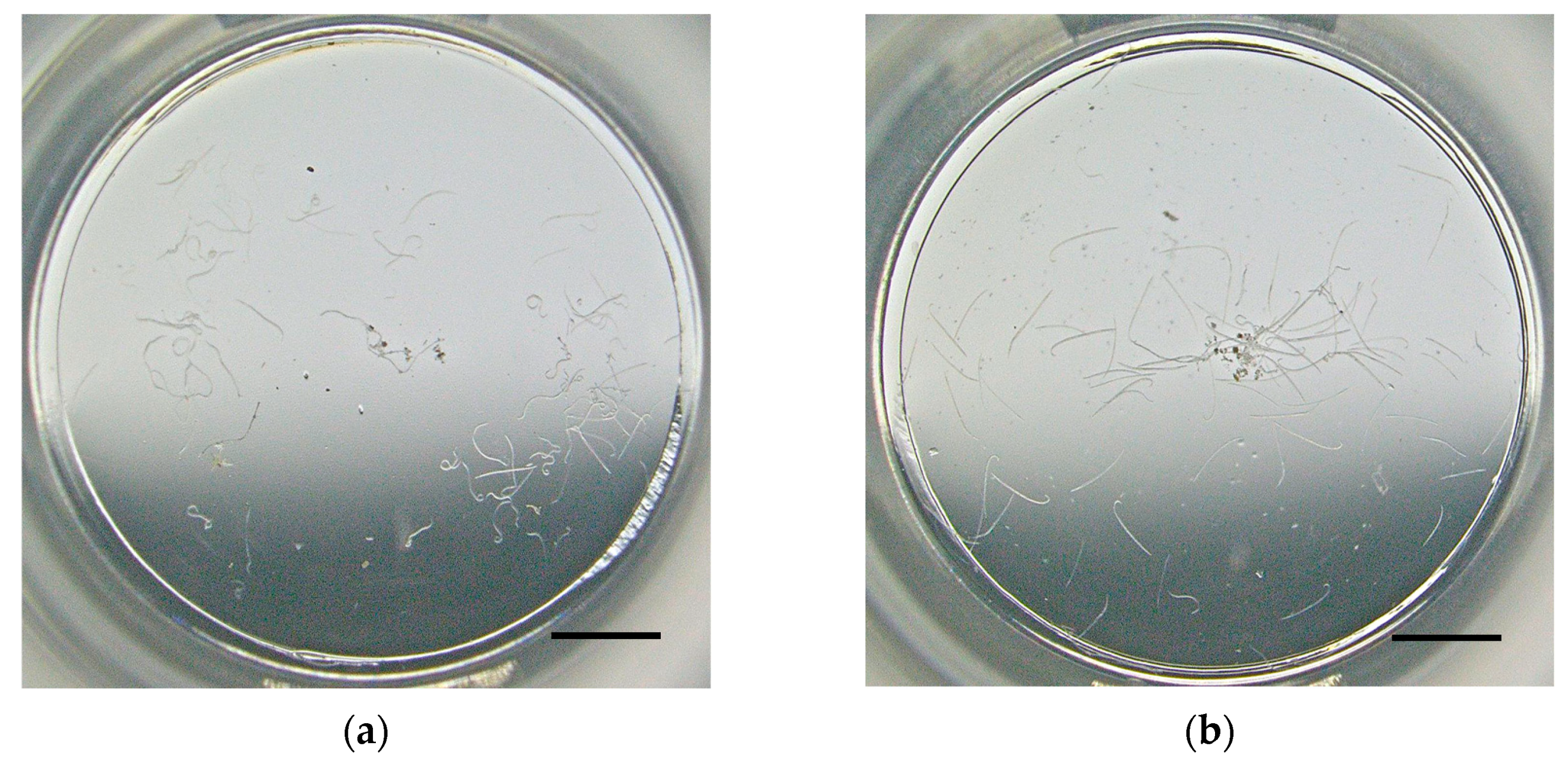
The activity of the C9 ketones was tested against freshly extracted PWNs for 24 h. Blank wells consisting of 5 µL of added ultrapure water showed a mortality percentage of 2.0 ± 0.5%, while for control wells, with 5 µL of added methanol, a mortality of 2.6 ± 0.5% was recorded (Figure 1a).
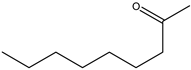
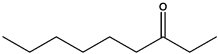
For the C9 ketones, mortality values were corrected by accounting for mortality observed in the control wells. The highest corrected mortality was recorded for 2-nonanone, reaching 92.3 ± 1.2% (Figure 1b, Table 1). Shifting the ketone functional group to the C3 position (3-nonanone) resulted in an approximately 12% decrease, yielding 80.1 ± 0.8% of corrected mortality. In contrast, positioning the ketone group at the C5 position reduced corrected mortality to low or inactive levels (17.1 ± 0.5%) (Table 1). These results classify 2- and 3-nonanone as strong nematicidal agents. In contrast, 5-nonanone exhibited negligible activity under the tested conditions.
The corrected mortality percentages reported for the tested compounds highlight a strong influence of carbonyl position on nematicidal potency (Table 1). As the carbonyl group shifts from C2 to C5, mortality decreases sharply, confirming that subtle changes in molecular structure can drastically impact biological activity. Similarly, Seo et al. reported varying levels of nematicidal activity of oxygen-containing aliphatic compounds (C6–C14) against the PWN, with several compounds (e.g., C9–C11 alkanols and alkanoic acids) achieving 100% mortality at 0.25 mg/mL [7].
The present series (2-nonanone > 3-nonanone > 5-nonanone) suggests that terminal or near-terminal carbonyl positioning enhances activity, for example through interaction with nematode membranes or disrupt metabolic pathways, while more central positioning (C5) diminishes activity. Comparable SAR effects have been observed in natural esters and related oxygenated compounds [8,15]. The strong activity observed for 2-nonanone is consistent with previous reports on medium-chain aliphatic volatiles as effective nematicidal agents [3,6]. These molecules are attractive for sustainable pest management due to their relative simplicity, biodegradability, and natural occurrence. The contrasting results between active and inactive isomers emphasize that even within homologous series, structural changes influence bioactivity (Table 1).
From an application perspective, these results support further evaluation of oxygenated medium-chain aliphatic compounds, particularly ketones with terminally positioned carbonyl groups, as potential leads against the PWN. Given the increasing regulatory restrictions on synthetic nematicides within the European Union and the associated risks of non-selective toxicity, volatile phytochemicals may provide safer alternatives for integration into PWD management programs [2,3,5]. Future work should explore concentration-dependent effects, potential synergisms with other volatiles, and field-scale trials to assess ecological compatibility and long-term efficacy [10,16].

Author Contributions

Conceptualization, J.M.S.F. and G.P.; methodology, J.M.S.F. and G.P.; software, J.M.S.F. and G.P.; formal analysis, J.M.S.F. and G.P.; investigation, J.M.S.F. and G.P.; resources, J.M.S.F.; data curation, J.M.S.F.; writing—original draft preparation, J.M.S.F.; writing—review and editing, J.M.S.F. and G.P. All authors have read and agreed to the published version of the manuscript.

Funding

Partly funded by Fundação para a Ciência e a Tecnologia (FCT/MCTES) through project NemACT (doi:10.54499/2022.00359.CEECIND/CP1737/CT0002) and structural funding GreenIT (dois: 10.54499/UIDB/04551/2020 and 10.54499/UIDP/04551/2020).

Institutional Review Board Statement

Not applicable.

Informed Consent Statement

Not applicable.

Data Availability Statement

The raw data is available from the corresponding author (Jorge M. S. Faria) upon reasonable request.

Acknowledgments

The authors wish to thank Cristina Moiteiro at CQE/FCUL, Lisbon, Portugal, and Tomás Cavaco from the Systems Biology Lab at Vrije Universiteit in Amsterdam.

Conflicts of Interest

The authors declare no conflicts of interest.

Abbreviations

The following abbreviations are used in this manuscript:
PWNPinewood Nematode
PWDPine Wilt Disease
SARStructure–Activity Relationship
HPLCHigh-Performance Liquid Chromatography

References

  1. Faria, J.M.S.; Sousa, E.; Bonifácio, L.; Carrasquinho, I.; Varela, A.R.; Inácio, M.L. Bursaphelenchus. In Compendium of Phytopathogenic Microbes in Agro-Ecology; Amaresan, N., Kumar, K., Eds.; Springer Nature: Cham, Switzerland, 2025; pp. 353–386. [Google Scholar]
  2. Back, M.A.; Bonifácio, L.; Inácio, M.L.; Mota, M.; Boa, E. Pine Wilt Disease: A Global Threat to Forestry. Plant Pathol. 2024, 73, 1026–1041. [Google Scholar] [CrossRef]
  3. Cavaco, T.; Faria, J.M.S. Phytochemical Volatiles as Potential Bionematicides with Safer Ecotoxicological Properties. Toxics 2024, 12, 406. [Google Scholar] [CrossRef] [PubMed]
  4. Sarri, K.; Mourouzidou, S.; Ntalli, N.; Monokrousos, N. Recent Advances and Developments in the Nematicidal Activity of Essential Oils and Their Components against Root-Knot Nematodes. Agronomy 2024, 14, 213. [Google Scholar] [CrossRef]
  5. European Parliament and Council. Regulation (ec) no 1107/2009; The European Parliament and of the Council of 21 october 2009 Concerning the Placing of Plant Protection Products on the Market and Repealing Council Directives 79/117/EEC and 91/414/EEC. Available online: https://eur-lex.europa.eu/legal-content/EN/ALL/?uri=celex:32009R1107 (accessed on 29 March 2025).
  6. Garrido, A.; Atencio, L.A.; Bethancourt, R.; Bethancourt, A.; Guzmán, H.; Gutiérrez, M.; Durant-Archibold, A.A. Antibacterial Activity of Volatile Organic Compounds Produced by the Octocoral-Associated Bacteria Bacillus Sp. BO53 and Pseudoalteromonas Sp. GA327. Antibiotics 2020, 9, 923. [Google Scholar] [CrossRef] [PubMed]
  7. Seo, S.-M.; Kim, J.; Kim, E.; Park, H.-M.; Kim, Y.-J.; Park, I.-K. Structure−Activity Relationship of Aliphatic Compounds for Nematicidal Activity against Pine Wood Nematode (Bursaphelenchus Xylophilus). J. Agric. Food Chem. 2010, 58, 1823–1827. [Google Scholar] [CrossRef] [PubMed]
  8. Seo, S.M.; Kim, J.; Koh, S.H.; Ahn, Y.J.; Park, I.K. Nematicidal Activity of Natural Ester Compounds and Their Analogues against Pine Wood Nematode, Bursaphelenchus Xylophilus. J. Agric. Food Chem. 2014, 62, 9103–9108. [Google Scholar] [CrossRef] [PubMed]
  9. Faria, J.M.S.; Barbosa, P. Cymbopogon Citratus Allelochemical Volatiles as Potential Biopesticides against the Pinewood Nematode. Plants 2024, 13, 2233. [Google Scholar] [CrossRef] [PubMed]
  10. Faria, J.M.S.; Cavaco, T.; Gonçalves, D.; Barbosa, P.; Teixeira, D.M.; Moiteiro, C.; Inácio, M.L. First Report on the Synergistic Interaction between Essential Oils against the Pinewood Nematode Bursaphelenchus Xylophilus. Plants 2023, 12, 2438. [Google Scholar] [CrossRef] [PubMed]
  11. Faria, J.M.S.; Figueiredo, A.C.; Teixeira, D.M.; Inácio, M.L. Infection of In Vivo and In Vitro Pines with the Pinewood Nematode Bursaphelenchus Xylophilus and Isolation of Induced Volatiles. J. Vis. Exp. 2024, 211, e67149. [Google Scholar] [CrossRef] [PubMed]
  12. Whitehead, A.G.; Hemming, J.R. A Comparison of Some Quantitative Methods of Extracting Small Vermiform Nematodes from Soil. Ann. Appl. Biol. 1965, 55, 25–38. [Google Scholar] [CrossRef]
  13. Faria, J.M.S.; Pereira, G.; Figueiredo, A.C.; Barbosa, P. In Vivo and In Vitro Grown Lemon-Scented Gum as a Source of Nematicidal Essential Oil Compounds. Plants 2025, 14, 1892. [Google Scholar] [CrossRef] [PubMed]
  14. Kong, J.O.; Lee, S.M.; Moon, Y.S.; Lee, S.G.; Ahn, Y.J. Nematicidal Activity of Plant Essential Oils against Bursaphelenchus Xylophilus (Nematoda: Aphelenchoididae). J. Asia. Pac. Entomol. 2006, 9, 173–178. [Google Scholar] [CrossRef]
  15. Kim, J.; Lee, S.J.; Park, J.O.; Yoon, K.A. Nematicidal Activity of Benzyloxyalkanols against Pine Wood Nematode (Bursaphelenchus xylophilus). Biomolecules 2021, 11, 384. [Google Scholar] [CrossRef] [PubMed]
  16. Lee, H.-R.; Lee, S.-C.; Lee, J.-E.; Seo, S.-M.; Jeong, Y.-C.; Jung, C.-S.; Moloney, M.G.; Park, I.-K. Nematicidal Activity of 3-Acyltetramic Acid Analogues against Pine Wood Nematode, Bursaphelenchus xylophilus. Molecules 2017, 22, 1568. [Google Scholar] [CrossRef] [PubMed]
Figure 1. Example of direct-contact bioassay wells with pinewood nematodes (PWN) after 24 h of exposure to control conditions (5 µL of added methanol) (a) or 2-nonanone (at 1 mg/mL) (b). Dark scale bar = 1 mm.
Chemproc 18 00061 g001
Table 1. Nematicidal activity of the C9 ketones against the pinewood nematode (PWN).
KetonesChemical StructurePWN Mortality 1Nematicidal Strength
2-NonanoneChemproc 18 00061 i00192.3 ± 1.2Strong
3-NonanoneChemproc 18 00061 i00280.1 ± 0.8Strong
5-NonanoneChemproc 18 00061 i00317.1 ± 0.5Low/inactive
1 Corrected mortality calculated using formula: Corrected mortality% = [(mortality% in treatment − mortality% in control)/(100 − mortality% in control)] × 100, where control corresponded to the wells with 5 µL of methanol.
Disclaimer/Publisher’s Note: The statements, opinions and data contained in all publications are solely those of the individual author(s) and contributor(s) and not of MDPI and/or the editor(s). MDPI and/or the editor(s) disclaim responsibility for any injury to people or property resulting from any ideas, methods, instructions or products referred to in the content.