


Proceeding Paper

Synthesis of Biologically Active Arginine Derivatives Derived from Salicylamide †
Institute of Organic Chemistry and Technology, Faculty of Chemical Technology, University of Pardubice, Studentská 95, 532 10 Pardubice, Czech Republic
*
Authors to whom correspondence should be addressed.
Presented at the 29th International Electronic Conference on Synthetic Organic Chemistry, 14–28 November 2025; Available online: https://sciforum.net/event/ecsoc-29.
Chem. Proc. 2025, 18(1), 32; https://doi.org/10.3390/ecsoc-29-26862
Published: 12 November 2025

Abstract

Peptidomimetics represent a promising group of biologically active compounds with broad therapeutic potential that mimic naturally occurring peptides while overcoming their limitations. In this study, novel peptidomimetics derived from salicylic acid and arginine were designed, synthesized and characterized. The synthesis was carried out through stepwise building of the peptidomimetic scaffold via Steglich amidation, with subsequent side-chain functionalization by guanidylation affording selected arginine derivatives. In conclusion, synthetic approach was verified by repetition and compounds were isolated in quality suitable for biological testing.

1. Introduction

Peptidomimetics are compounds that mimic the topology of natural peptides in three-dimensional space (e.g., in the human body) as well as the associated biological activity [1,2]. From a chemical perspective, these compounds represent structurally modified peptides in which some or most of the amino acids can be replaced by alternative structural motifs. Modifications are designed and should bring to preserve or enhance the biological activity of the parent peptides, while simultaneously improving properties such as selectivity, stability, pharmacokinetic availability, and their subsequent use in clinical practice [2,3].
This study focuses on the synthesis of novel derivates of substituted salicylic acid amides with amino acid moiety modified with chosen anilines. Salicylic acid-based amides have previously been described by our group. Peptidomimetics derived from O-benzyl-5-chlorosalicylic acid may exhibit anticancer or antimicrobial activity [4]. Anticancer peptidomimetics derived from 5-chlorosalicylic acid have also demonstrated antiproliferative activity against various cancer cell lines [4,5,6]. Peptidomimetics derived from 5-chlorosalicylic acid exhibit broad-spectrum antimicrobial activity against clinically relevant pathogens [6].
Peptidomimetics incorporating an arginine moiety exhibit a wide range of biological effects, including antimicrobial, antiviral, antifungal, anticancer, as well as activities against cardiovascular and neurodegenerative diseases. Arginine peptidomimetics suppress bacterial resistance in Staphylococcus aureus, Staphylococcus epidermidis, Gram-negative bacteria, and Candida albicans [7]. Arginine peptidomimetics with antiviral activity are typically associated with the inhibition of flaviviral proteases [8]. Antifungal arginine peptidomimetics exhibit strong activity against Cryptococcus neoformans [9]. Among the best-known arginine-based peptidomimetics is the anticancer agent cilengitide, an angiogenesis inhibitor used in glioblastoma multiforme therapy [10]. The clinical use of arginine-based peptidomimetics is most widespread in the treatment of cardiovascular diseases. Among them, one of the most important clinically approved thrombin inhibitors is argatroban [11]. Peptidomimetics containing arginine motifs are also applicable in the treatment of neurodegenerative (e.g., Alzheimer’s disease) and neuromodulatory diseases [12,13].
In this study, peptidomimetic compounds containing both a salicylic acid derivative and an arginine moiety were designed and synthesized. The synthetic route was based on the construction of the main peptidomimetic backbone via Steglich amidation and the side chain functionalization. In the case of our peptidomimetics, Steglich amidation represents the condensation of a substituted salicylic acid with the corresponding amino component (chosen amino acid and subsequently substituted aniline), forming the main backbone of the peptidomimetic [14]. The guanidino group at the end of the arginine side chain is generally prepared by the reaction of the primary amine of ornithine with various guanidylating reagents (guanidylation) [15].

2. Results and Discussion

The aim of this study was to design and prepare target peptidomimetic compounds derived from 5-chlorosalicylic acid and arginine. An additional objective was to design and validate a synthetic route leading to the desired target compounds. Within this synthetic route, original intermediates and compounds were prepared. A key ornithine intermediate, and the final arginine peptidomimetic compound were also prepared with modified synthetic approach. The synthetic route consisted of five steps (Figure 1), each of which was repeatedly verified. As a starting material, O-benzyl-protected 5-chlorosalicylic acid was chosen, prepared according to the literature [16]. O-benzyl-protected 5-chlorosalicylic acid serves as a key building block of the peptidomimetic scaffold previously developed by the Imramovsky research group.
Steglich amidation as first synthetic step (EDCI·HCl, condensation reagent and HOBt, activating reagent) afforded novel intermediate 2. Methyl ester 2 was purified by recrystallization and column chromatography. The reaction proceeded with an average yield of 78% (Figure 1).
The second step involved the basic hydrolysis (lithium hydroxide in distilled water:1,4-dioxane as reagent) of methyl ester 2 to give the carboxylic acid intermediate 3. The main challenge in this step was the poor solubility of methyl ester 2, which was resolved by changing the solvent ratio from 1:1 (water:1,4-dioxane) to 1:3 (water:1,4-dioxane). After optimization, the reaction proceeded smoothly with an excellent average yield of 92%, affording intermediate 3, which was used to next step without further purification
The third step was again a Steglich amidation, in which the carboxylic acid intermediate 3 reacted with 4-(trifluoromethyl)aniline to yield intermediate 4. The carboxylic acid 3 was activated with EDCI·HCl, HOBt, and TEA in dichloromethane, and the product was purified by column chromatography followed by recrystallization (Figure 1). This reaction introduced the anilide fragment into the peptidomimetic, thereby completing the backbone of the compound. Intermediate 4 was synthesized with an average yield of 46%.
In the fourth step, Boc deprotection at the ε-amino group of ornithine intermediate 4 afforded the key ornithine intermediate 5. The deprotection was performed using trifluoroacetic acid (TFA) in dichloromethane. Subsequent neutralization of the reaction mixture with sodium hydroxide was performed to remove the triflate salt (Figure 1). This reaction was carried out without further purification, providing an average yield of 82%. Despite the absence of purification steps, the high purity of intermediate 5 was confirmed by thin-layer chromatography, elemental analysis, and 1H NMR spectroscopy. The key ornithine intermediate 5 shows high potential for the future synthesis of a series of potentially bioactive compounds.
In the final step, the ornithine side chain of key intermediate 5 was modified by guanidylation, yielding the arginine-based peptidomimetic 6. Guanidylation was performed using the commercially available reagent 1,3-di-tert-butoxycarbonyl-2-(trifluoromethanesulfonyl)guanidine and triethylamine in chloroform, according to the literature [17]. Purification of the final compound 6 was accomplished by column chromatography. The final compound 6 was obtained in an average yield of 66%. This last step successfully provided the target arginine peptidomimetic compound with potential biological activity.
The deprotection of the Boc groups in the final compound 6 was not carried out due to several issues, including the need to optimize the reaction conditions, the occurrence of mono- and bis-trifluoroacetate salt formation, and the time-consuming reproducibility of the overall synthetic route.

3. Conclusions

This study presented a synthetic route to novel salicylamides with an arginine-based scaffold as potential biologically active compounds. All prepared intermediates and final molecules were characterized by available methods and obtained in quantities and purities suitable for biological testing.

4. Material and Methods

4.1. Chemistry

All reagents and solvents were purchased from commercial sources (Merck, Prague, Czech Republic; TCI Europe, Zwijndrecht, Belgium; Fluorochem, Cork, Ireland; Lach-Ner, Neratovice, Czech Republic). Commercial-grade reagents were used without further purification. Reactions were monitored by thin-layer chromatography (TLC) on plates coated with 0.2 mm silica gel 60 F254 (Merck, Prague, Czech Republic). TLC plates were visualized under UV light (254 nm). All melting points were determined on a Melting Point B-540 apparatus (Büchi, Flawil, Switzerland). Elemental analysis was performed on a Flash 2000 Organic automatic microanalyzer. High-resolution mass spectra were recorded using the “dried droplet” method on an LTQ Orbitrap XL MALDI mass spectrometer (Thermo Fisher Scientific, Abingdon, Great Britain) equipped with a nitrogen UV laser (337 nm, 60 Hz). Spectra were measured in the positive-ion mode, in the normal mass range, with a resolution of 100,000 at m/z = 400. 2,5-Dihydroxybenzoic acid (DHB) was used as the matrix. 1H, 13C, and 19F NMR spectra were recorded in DMSO-d6 (deuterated dimethyl sulfoxide) at ambient temperature using a Bruker Avance™ III 400 spectrometer at frequencies of 1H (400 MHz), 13C (100.26 MHz), and 19F (376.50 MHz), or on a Bruker Ascend™ 500 spectrometer (Bruker, Zurich, Switzerland) at frequencies of 1H (500.13 MHz), 13C (125.76 MHz), and 19F (470.66 MHz). Chemical shifts are reported in ppm relative to the residual solvent signals, which are standardized against tetramethylsilane (TMS, Me4Si). Residual solvent signals were assigned according to the literature [18]: DMSO-d6–2.50 and 39.52 ppm for 1H and 13C NMR spectra, respectively.

4.2. Experimental Procedures for Synthesis of Intermediates, Key Ornithine Intermediate and Final Compound

4.2.1. Experimental Procedure for Synthesis of Methylester 2

O-benzyl-5-chlorosalicylic acid 1 (5.0 g, 19.03 mmol), N-ethyl-N′-(3-dimethylaminopropyl)carbodiimide hydrochloride (EDCI·HCl; 5.12 g, 26.65 mmol), and hydroxybenzotriazole (HOBt, 2.57 g, 19.03 mmol) were introduced into a three-necked flask equipped with a thermometer, nitrogen inlet, and magnetic stirrer. The reagents were dissolved in dry dichloromethane (200 mL). The mixture was stirred at room temperature for 1 h and monitored by thin-layer chromatography (EtOAc/n-hexane, 2:5). After 1 h, the starting acid was fully activated. In parallel, (S)-methyl-2-amino-5-((tert-butoxycarbonyl)amino)pentanoate hydrochloride (Boc-L-Orn-OMe·HCl; 5.38 g, 19.03 mmol) and potassium carbonate (2.64 g, 19.03 mmol) were placed into a flask and dissolved in distilled water (60 mL). The reaction mixture was stirred for 15 min at room temperature and subsequently extracted with dichloromethane (2 × 50 mL). The organic phase was washed with distilled water (1 × 50 mL), dried over anhydrous sodium sulfate, and filtered. The obtained solution of the amine component was used in the next step without further purification. The amine solution in dichloromethane was added quantitatively to the activated acid solution. The reaction mixture was stirred for 1.5 h at room temperature and monitored by TLC (EtOAc/n-hexane, 2:5). The reaction was then quenched with distilled water (100 mL). The mixture was transferred to a separatory funnel and washed successively with distilled water (1 × 100 mL), saturated sodium hydrogen carbonate solution (2 × 100 mL), 5% citric acid solution (2 × 100 mL), saturated brine (1 × 100 mL), and distilled water (1 × 100 mL). The organic layer was dried over anhydrous sodium sulfate, filtered, and concentrated under reduced pressure to afford 8.24 g of crude product. The crude product was recrystallized from a mixture of ethyl acetate and n-hexane. The mixture was allowed to crystallize for 18 h at 4 °C. The white crystalline product was filtered and dried under reduced pressure on a rotary evaporator to give 6.40 g of product 2. The filtrate from recrystallization was evaporated to dryness under reduced pressure. As the filtrate still contained a significant amount of product, this portion was further purified by column chromatography (silica gel, 600 mL; EtOAc/n-hexane, 2:5; Rf = 0.34), yielding an additional 0.65 g of product 2. In total, 7.05 g (75%) of white crystalline product 2 was obtained.

4.2.2. Experimental Procedure for Synthesis of Carboxylic Acid 3

Intermediate 2 (7.05 g, 14.37 mmol) was introduced into a flask and dissolved in a mixture of distilled water (80 mL) and 1,4-dioxane (240 mL) in a 1:3 ratio in favor of 1,4-dioxane. Lithium hydroxide (6.03 g, 143.71 mmol) was then added to the solution of intermediate 2. The reaction mixture was stirred at 50 °C for 1 h. The progress of the reaction was monitored by thin-layer chromatography until the signal of the starting material 2 disappeared. The reaction mixture was then cooled to room temperature using a water bath and acidified with 36% HCl (18 mL) to pH = 2. The mixture was extracted with ethyl acetate (2 × 400 mL). The organic phase was washed with distilled water (2 × 400 mL), dried over anhydrous sodium sulfate, and filtered. The filtrate containing the crude product was evaporated under reduced pressure on a rotary evaporator. The crude product was dissolved in toluene and evaporated under reduced pressure. The crude material was then redissolved in dichloromethane and evaporated again under reduced pressure. A total of 6.65 g of a white amorphous solid 3 was obtained.

4.2.3. Experimental Procedure for Synthesis of Peptidomimetics with Anilid Part 4

The intermediate 3 (5.0 g, 10.50 mmol) was introduced into a three-necked flask and dissolved in dichloromethane (200 mL). To the solution of intermediate 3, N-ethyl-N′-(3-dimethylaminopropyl)carbodiimide hydrochloride (EDCI·HCl; 2.82 g, 14.70 mmol), hydroxybenzotriazole (HOBt; 1.61 g, 10.50 mmol), and triethylamine (TEA; 1.46 mL, 10.50 mmol) were added. The reaction mixture was stirred at room temperature for 1 h, after which the acid of intermediate 3 was fully activated. 4-Trifluoromethylaniline (1.32 mL, 10.50 mmol) was then added to the solution of activated acid 3. The mixture was stirred at room temperature for 16 h. After this time, the reaction was quenched by addition of distilled water (120 mL). The mixture was transferred into a separatory funnel and washed with distilled water (1 × 120 mL), saturated sodium hydrogen carbonate solution (2 × 160 mL), 5% citric acid solution (2 × 160 mL), saturated brine (1 × 160 mL), and distilled water (1 × 160 mL). The organic phase was dried over anhydrous sodium sulfate, filtered, and concentrated under reduced pressure. The crude product 4 (6.57 g) was purified by column chromatography (silica gel, 800 mL; EtOAc/n-hexane, 2:5; Rf = 0.45). The chromatographic fractions containing the product were evaporated to dryness, and the residue was recrystallized from an ethyl acetate/n-hexane mixture for 18 h at 4 °C. The reaction was carried out repeatedly, affording the product in an average yield of 48%. A total of 3.12 g of a white powder 4 was obtained.

4.2.4. Experimental Procedure for Synthesis of Key Ornithine Intermediate 5

The intermediate 4 (2.0 g, 3.23 mmol) was placed into a three-necked flask and dissolved in dichloromethane (70 mL). The solution of intermediate 4 was cooled in an ice bath to 0 °C. At this temperature, trifluoroacetic acid (19.91 mL, 258.4 mmol) was added dropwise. The reaction mixture was stirred at room temperature for 2.5 h. The progress of the reaction was monitored by thin-layer chromatography (EtOAc/n-hexane, 1:2) every 30 min until the spot of the starting material disappeared. After 2.5 h, the reaction mixture was neutralized with 2 M aqueous sodium hydroxide (130 mL) to pH = 7. The neutralized mixture was transferred to a separatory funnel, and the organic phase was separated. The organic phase was washed with saturated sodium hydrogen carbonate solution (2 × 80 mL) and distilled water (2 × 80 mL), dried over anhydrous sodium sulfate, filtered, and evaporated to dryness under reduced pressure. A total of 1.46 g of a brownish-white amorphous solid 5 was obtained.

4.2.5. Experimental Procedure for Synthesis of Final Arginine Peptidomimetic 6

The intermediate 5 (1.5 g, 2.88 mmol) was placed into a flask and dissolved in chloroform (50 mL). To the solution of 5, 1,3-di-tert-butoxycarbonyl-2-(trifluoromethanesulfonyl)guanidine (1.07 g, 2.74 mmol) and triethylamine (0.4 mL, 2.88 mmol) were added. The reaction mixture was stirred at room temperature for 2 h, and its progress was monitored by thin-layer chromatography (EtOAc/n-hexane, 2:5) every 30 min. After 2 h, methanol (25 mL) was added to the reaction mixture, and stirring was continued for an additional 30 min. The mixture was then concentrated to dryness under reduced pressure on a rotary evaporator. The crude product 6 (2.66 g) was subjected to column chromatography (silica gel, 500 mL; EtOAc/n-hexane, 2:5; Rf = 0.41). A total of 1.58 g of a white amorphous solid 6 was obtained. The reaction was performed according to a procedure adapted from the literature [17].

4.3. Characterization of Intermediates, Key Ornithine Intermediate and Final Compound

4.3.1. Characterization of Methylester 2

White crystalline solid; Yield 75%; mp 126.2–127.0 °C; Rf = 0.34 (EtOAc/n-hexan = 2/5, v/v). 1H NMR (500 MHz, DMSO-d6): δ = 8.49 (d, J = 7.35 Hz, 1H, NH), 7.67 (d, J = 2.80 Hz, 1H, Ar-H), 7.56 (dd, J1 = 2.75 Hz, J2 = 8.85 Hz, 1H, Ar-H), 7.52 (d, J = 7.15 Hz, 2H, 2xAr-H), 7.41 (t, J = 7.10 Hz, 2H, 2xAr-H), 7.38–7.34 (m, 1H, Ar-H), 7.32 (d, J = 8.95 Hz, 1H, Ar-H), 6.76 (t, J = 5.40 Hz, 1H, NH), 5.26 (s, 2H, OCH2), 4.42 (dt, J1 = 7.95, J2 = 12.90, 1H, CH), 3.60 (s, 3H, OCH3), 2.86–2.78 (m, 2H, CH2), 1.71–1.63 (m, 1H, CH2*), 1.53–1.45 (m, 1H, CH2*), 1.36 (s, 9H, 3xCH3), 1.30–1.23 (m, 2H, CH2). 13C NMR (125 MHz, DMSO-d6): δ = 173.26, 164.92, 156.73, 156.07, 137.06, 133.05, 130.76, 129.70, 129.44, 129.29, 125.84, 125.67, 116.77, 78.59, 71.83, 53.39, 53.10, 40.37, 29.40, 29.36, 26.76. HRMS (MALDI) m/z: [M+Na]+ calcd for C25H31ClN2O6Na: 513.17629 Da; found: [M+Na]+ 513.17767 Da. Elemental analysis calcd for C25H31ClN2O6: C, 61.16; H, 6.36; N, 5.71; found: C, 61.55 ± 0.02; H, 6.62 ± 0.02; N, 5.62 ± 0.06.

4.3.2. Characterization of Carboxylic Acid 3

White amorphous solid; Yield 93%; mp 59.0–61.0 °C. 1H NMR (500 MHz, DMSO-d6): δ = 12.78 (bs, 1H, COOH), 8.41 (d, J = 7.55 Hz, 1H, NH), 7.71 (d, J = 2.80 Hz, 1H, Ar-H), 7.55 (dd, J1 = 2.75 Hz, J2 = 8.85 Hz, 1H, Ar-H), 7.51 (d, J = 7.20 Hz, 2H, 2xAr-H), 7.40 (t, J = 7.05 Hz, 2H, 2xAr-H), 7.37–7.34 (m, 1H, Ar-H), 7.32 (d, J = 9.00 Hz, 1H, Ar-H), 6.76 (t, J = 5.55 Hz, 1H, NH), 5.27 (s, 2H, OCH2), 4.35 (dt, J1 = 7.80, J2 = 12.65, 1H, CH), 2.86–2.76 (m, 2H, CH2), 1.73–1.65 (m, 1H, CH2*), 1.50 1.43 (m, 1H, CH2*), 1.35 (s, 9H, 3xCH3), 1.30–1.23 (m, 2H, CH2). 13C NMR (125 MHz, DMSO-d6): δ = 174.28, 164.56, 156.72, 156.12, 136.97, 133.08, 130.95, 129.70, 129.45, 129.32, 125.90, 125.50, 116.86, 78.57, 71.88, 53.40, 41.25, 29.61, 29.41, 26.89. HRMS (MALDI) m/z: [M+Na]+ calcd for C24H29ClN2O6Na: 499.16118 Da; found: [M+Na]+ 499.15933 Da. Elemental analysis calcd for C24H29ClN2O6: C, 60.44; H, 6.13; N, 5.87; found: C, 60.73 ± 0.24; H, 5.99 ± 0.06; N, 5.40 ± 0.14.

4.3.3. Characterization of Peptidomimetic with Anilid Part 4

White powder; Yield 48%; mp 158.5–160.0 °C; Rf = 0.45 (EtOAc/n-hexan = 2/5, v/v). 1H NMR (500 MHz, DMSO-d6): δ = 10.50 (s, 1H, NH), 8.52 (d, J = 7.35 Hz, 1H, NH), 7.80 (d, J = 8.55 Hz, 2H, 2xAr-H), 7.73 (d, J = 2.75 Hz, 1H, Ar-H), 7.69 (d, J = 8.70 Hz, 2H, 2xAr-H), 7.57–7.51 (m, 3H, 3xAr-H), 7.40–7.36 (m, 2H, 2xAr-H), 7.36–7.32 (m, 2H, 2xAr-H), 6.77 (t, J = 5.50 Hz, 1H, NH), 5.29 (s, 2H, OCH2), 4.59 (dt, J1 = 7.55 Hz, J2 = 13.10 Hz, 1H, CH), 2.86–2.82 (m, 2H, CH2), 1.73–1.65 (m, 1H, CH2*), 1.55–1.46 (m, 1H, CH2*), 1.34 (s, 9H, 3xCH3), 1.32–1.26 (m, 2H, CH2). 13C NMR (125 MHz, DMSO-d6): δ = 171.99, 164.69, 156.71, 156.14, 143.50, 136.98, 133.10, 130.96, 129.70, 129.43, 129.30, 128.76, 127.27 (q), 125.75 (q), 124.59 (q), 122.29, 120.34, 116.87, 78.59, 71.94, 54.97, 40.21, 30.70, 29.39, 27.00. 19F NMR (376 MHz, DMSO-d6): δ = −60.59. HRMS (MALDI) m/z: [M+Na]+ calcd for C31H33ClF3N3O5Na: 642.19585 Da; found: [M+Na]+ 642.19690 Da. Elemental analysis calcd for C31H33ClF3N3O5: C, 60.05; H, 5.36; N, 6.78; found: C, 60.53 ± 0.02; H, 5.46 ± 0.02; N, 6.61 ± 0.01.

4.3.4. Characterization of Key Ornithine Intermediate 5

Brownish-white amorphous solid; Yield 87%; mp 73.0–78.5 °C. 1H NMR (500 MHz, DMSO-d6): δ = 10.56 (s, 1H, NH), 8.52 (d, J = 6.00 Hz, 1H, NH), 7.82 (d, J = 8.50 Hz, 2H, 2xAr-H), 7.75 (d, J = 2.5 Hz, 1H, Ar-H), 7.69 (d, J = 9.00 Hz, 2H, 2xAr-H), 7.59–7.55 (m, 3H, 3xAr-H), 7.40–7.34 (m, 4H, 4xAr-H), 5.29 (dd, J1 = 11.60 Hz; J2 = 14.35 Hz, 2H, OCH2), 4.63–4.56 (m, 1H, CH), 3.25 (bs, 2H, NH2), 2.45 (bs, 2H, CH2), 1.77–1.70 (m, 1H, CH2*), 1.56–1.48 (m, 1H, CH2*), 1.32–1.22 (m, 2H, CH2). 13C NMR (125 MHz, DMSO-d6): δ = 172.19, 164.58, 156.22, 143.58, 136.96, 133.17, 131.03, 129.71, 129.48, 129.39, 128.76, 127.26 (q), 125.65 (q), 124.57 (q), 122.29, 120.33, 116.86, 72.02, 55.03, 42.09, 30.72, 30.07. 19F NMR (376 MHz, DMSO-d6): δ = −60.32. HRMS (MALDI) m/z: [M+H]+ calcd for C26H26ClF3N3O3: 520.16148 Da; found: [M+H]+ 520.16125 Da. Elemental analysis calcd for C26H25ClF3N3O3: C, 60.06; H, 4.85; N, 8.08; found: C, 60.04 ± 0.03; H, 5.12 ± 0.10; N, 7.76 ± 0.01.

4.3.5. Characterization of Final Arginine Peptidomimetic 6

White amorphous solid; Yield 72%; mp 96.8–101.8 °C; Rf = 0.41 (EtOAc/n-hexan = 2/5, v/v). 1H NMR (500 MHz, DMSO-d6): δ =11.47 (s, 1H, NH); 10.53 (s, 1H, NH); 8.54 (d, J = 7.5 Hz, 1H, NH); 8.24 (t, J = 5.5 Hz, 1H, NH); 7.80 (d, J = 8.5 Hz, 2H, 2xAr-H); 7.74 (d, J = 2.5 Hz, 1H, Ar-H); 7.68 (d, J = 8.5 Hz, 2H, 2xAr-H); 7.57–7.53 (m, 3H, 3xAr-H); 7.39–7.31 (m, 4H, 4xAr-H); 5.29 (dd, J1 = 11.5 Hz, J2 = 16.7 Hz, 2H, OCH2); 4.63 (dt, J1 = 7.5 Hz, J2 = 13.0 Hz, 1H, CH); 3.21–3.19 (m, 2H, CH2); 1.75–1.70 (m, 1H, CH2*); 1.57–1.54 (m, 1H, CH2*); 1.47–1.41 (m, 11H, 3xCH3+CH2); 1.35 (s, 9H, 3xCH3). 13C NMR (125 MHz, DMSO-d6): δ = 171.16, 163.97, 163.57, 155.68, 155.46, 152.45, 142.77, 136.25, 132.41, 130.27, 128.96, 128.70, 128.65, 128.05, 126.55 (q), 124.99 (q), 123.92 (q), 121.57, 119.63, 116.14, 83.31, 78.53, 71.27, 60.93, 54.09, 29.79, 28.40, 28.04, 25.24. 19F NMR (376 MHz, DMSO-d6): δ = −60.36. HRMS (MALDI) m/z: [M+Na]+ calcd for C37H43ClF3N5O7Na: 784.27008 Da; found: [M+Na]+ 784.27106 Da. Elemental analysis calcd for C37H43ClF3N5O7: C, 58.30; H, 5.69; N, 9.19; found: C, 58.12 ± 0.11; H, 5.57 ± 0.05; N, 9.00 ± 0.07.

Author Contributions

Conceptualization, A.I.; methodology, A.I. and M.Š.; software, A.I. and M.Š.; validation, A.I. and M.Š.; formal analysis, A.I. and M.Š.; investigation, A.I. and M.Š.; resources, A.I.; data curation, A.I. and M.Š.; writing—original draft preparation, M.Š.; writing—review and editing, A.I.; visualization, M.Š.; supervision, A.I.; project administration, A.I. and M.Š.; funding acquisition, A.I. All authors have read and agreed to the published version of the manuscript.

Funding

This research received no external funding.

Institutional Review Board Statement

Not applicable.

Informed Consent Statement

Not applicable.

Data Availability Statement

Dataset available on request from the authors.

Conflicts of Interest

The authors declare no conflict of interest.

Abbreviations

The following abbreviations are used in this manuscript:
EDCI·HClN-ethyl-N′-(3-dimethylaminopropyl)carbodiimide hydrochloride
EtOAcEthyl acetate
HOBt1-hydroxybenzotriazole
HRMSHigh-resolution mass spectrometry
mpMelting point
NMRNuclear magnetic resonance
TEATriethylamine
TFATrifluoroacetic acid
TLCThin-layer chromatography

References

  1. Lee, Y.S. Peptidomimetics and Their Applications for Opioid Peptide Drug Discovery. Biomolecules 2022, 12, 1241. [Google Scholar] [CrossRef] [PubMed]
  2. Adang, A.E.P.; Hermkens, P.H.H.; Linders, J.T.M.; Ottenheijm, H.C.J.; Van Staveren, C.J. Case Histories of Peptidomimetics: Progression from Peptides to Drugs. Recueil des Travaux Chimiques des Pays-Bas 1994, 113, 63–78. [Google Scholar] [CrossRef]
  3. Ding, D.; Xu, S.; da Silva-Júnior, E.F.; Liu, X.; Zhan, P. Medicinal Chemistry Insights into Antiviral Peptidomimetics. Drug Discov. Today 2023, 28, 103468. [Google Scholar] [CrossRef] [PubMed]
  4. Jorda, R.; Dušek, J.; Řezníčková, E.; Pauk, K.; Magar, P.P.; Imramovský, A.; Kryštof, V. Synthesis and Antiproteasomal Activity of Novel O-Benzyl Salicylamide-Based Inhibitors Built from Leucine and Phenylalanine. Eur. J. Med. Chem. 2017, 135, 142–158. [Google Scholar] [CrossRef] [PubMed]
  5. Jorda, R.; Magar, P.; Hendrychová, D.; Pauk, K.; Dibuš, M.; Pilařová, E.; Imramovský, A.; Kryštof, V. Novel Modified Leucine and Phenylalanine Dipeptides Modulate Viability and Attachment of Cancer Cells. Eur. J. Med. Chem. 2020, 188, 112036. [Google Scholar] [CrossRef] [PubMed]
  6. Jorda, R.; Molitorová, V.; Pilařová, E.; Vojáčková, V.; Řezníčková, E.; Svobodová, K.; Pauk, K.; Imramovský, A.; Kryštof, V. Pseudopeptides with Aldehyde or Vinylsulfone Warheads: Synthesis and Antiproteasomal Activity. Bioorg. Chem. 2021, 115, 105228. [Google Scholar] [CrossRef] [PubMed]
  7. Baldassarre, L.; Pinnen, F.; Cornacchia, C.; Fornasari, E.; Cellini, L.; Baffoni, M.; Cacciatore, I. Synthesis of Short Cationic Antimicrobial Peptidomimetics Containing Arginine Analogues. J. Pept. Sci. 2012, 18, 567–578. [Google Scholar] [CrossRef] [PubMed]
  8. Nitsche, C.; Zhang, L.; Weigel, L.F.; Schilz, J.; Graf, D.; Bartenschlager, R.; Hilgenfeld, R.; Klein, C.D. Peptide-Boronic Acid Inhibitors of Flaviviral Proteases: Medicinal Chemistry and Structural. Biol. J. Med. Chem. 2017, 60, 511–516. [Google Scholar] [CrossRef] [PubMed]
  9. Mahindra, A.; Bagra, N.; Wangoo, N.; Khan, S.I.; Jacob, M.R.; Jain, R. Discovery of Short Peptides Exhibiting High Potency against Cryptococcus Neoformans. ACS Med. Chem. Lett. 2014, 5, 315–320. [Google Scholar] [CrossRef] [PubMed]
  10. Colombo, R.; Mingozzi, M.; Belvisi, L.; Arosio, D.; Piarulli, U.; Carenini, N.; Perego, P.; Zaffaroni, N.; De Cesare, M.; Castiglioni, V.; et al. Synthesis and Biological Evaluation (in Vitro and in Vivo) of Cyclic Arginine-Glycine-Aspartate (RGD) Peptidomimetic-Paclitaxel Conjugates Targeting Integrin Avβ3. J. Med. Chem. 2012, 55, 10460–10474. [Google Scholar] [CrossRef] [PubMed]
  11. Fareed, J.; Jeske, W.P. Small-Molecule Direct Antithrombins: Argatroban. Best Pract. Res. Clin. Haematol. 2004, 17, 127–138. [Google Scholar] [CrossRef] [PubMed]
  12. Kawasaki, T.; Kamijo, S. Inhibition of Aggregation of Amyloid Β42 by Arginine-Containing Small Compounds. Biosci. Biotechnol. Biochem. 2012, 76, 762–766. [Google Scholar] [CrossRef] [PubMed]
  13. Bihel, F.; Humbert, J.P.; Schneider, S.; Bertin, I.; Wagner, P.; Schmitt, M.; Laboureyras, E.; Petit-Demouliere, B.; Schneider, E.; Mollereau, C.; et al. Development of a Peptidomimetic Antagonist of Neuropeptide FF Receptors for the Prevention of Opioid-Induced Hyperalgesia. ACS Chem. Neurosci. 2015, 6, 438–445. [Google Scholar] [CrossRef] [PubMed]
  14. El-Faham, A.; Albericio, F. Peptide Coupling Reagents, More than a Letter Soup. Chem. Rev. 2011, 111, 6557–6602. [Google Scholar] [CrossRef] [PubMed]
  15. Peterlin-Mašić, L.; Kikelj, D. Arginine Mimetics. Tetrahedron 2001, 57, 7073–7105. [Google Scholar] [CrossRef]
  16. Gaudioso, L.A.; Weglarz, M. Novel Process for the Synthesis of Exochelins. WO 00/09547 A1, 24 February 2000. World Intellectual Property Organization. pp. 21–22. [Google Scholar]
  17. Soengas, R.G.; Larrosa, M.; Balado, M.; Rodríguez, J.; Lemos, M.L.; Jiménez, C. Synthesis and Biological Activity of Analogues of Vanchrobactin, a Siderophore from Vibrio Anguillarum Serotype O2. Org. Biomol. Chem. 2008, 6, 1278–1287. [Google Scholar] [CrossRef] [PubMed]
  18. Fulmer, G.R.; Miller, A.J.M.; Sherden, N.H.; Gottlieb, H.E.; Nudelman, A.; Stoltz, B.M.; Bercaw, J.E.; Goldberg, K.I. NMR Chemical Shifts of Trace Impurities: Common Laboratory Solvents, Organics, and Gases in Deuterated Solvents Relevant to the Organometallic Chemist. Organometallics 2010, 29, 2176–2179. [Google Scholar] [CrossRef]
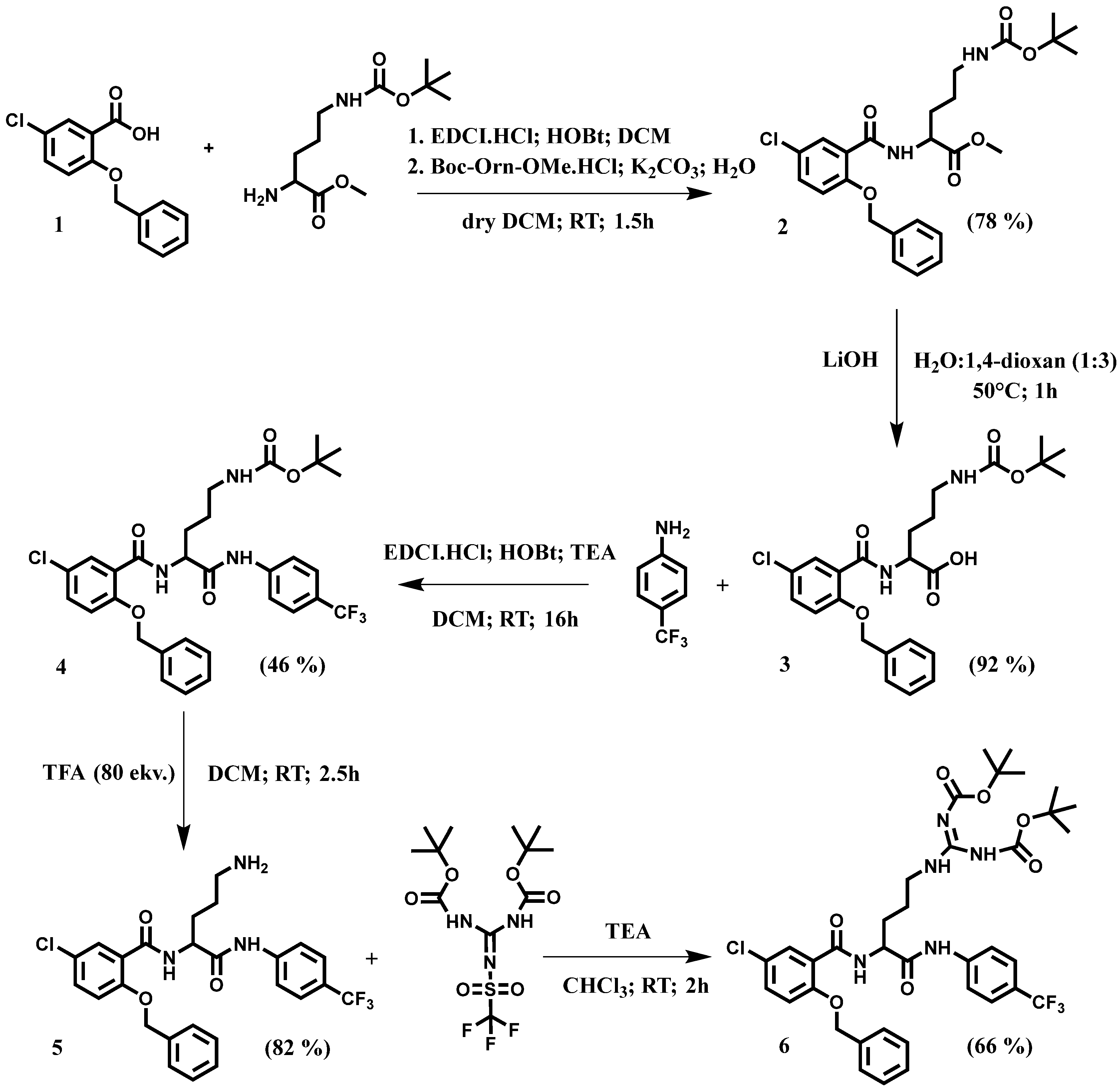
Figure 1. The synthesis route leading to the arginine peptidomimetic.
Chemproc 18 00032 g001
Disclaimer/Publisher’s Note: The statements, opinions and data contained in all publications are solely those of the individual author(s) and contributor(s) and not of MDPI and/or the editor(s). MDPI and/or the editor(s) disclaim responsibility for any injury to people or property resulting from any ideas, methods, instructions or products referred to in the content.


