
Proceeding Paper

Triterpenoid bis-Amide Analogs via the Ugi Reaction †
by
Fidel Rodriguez-López
1,
Cristian Saldana-Arredondo
2,
Hugo A. García-Gutiérrez
1,* and
Rocío Gámez-Montaño
2,*
1
Instituto de Investigaciones Químico Biológicas, Universidad Michoacana de San Nicolás de Hidalgo, Morelia 58030, Mexico
2
Departamento de Química, Universidad de Guanajuato, Noria Alta S/N, Col. Noria Alta, Guanajuato 36050, Mexico
*
Authors to whom correspondence should be addressed.
Presented at the 29th International Electronic Conference on Synthetic Organic Chemistry, 14–28 November 2025; Available online: https://sciforum.net/event/ecsoc-29.
Chem. Proc. 2025, 18(1), 30; https://doi.org/10.3390/ecsoc-29-26852
Published: 12 November 2025

Abstract

Isocyanide-based multicomponent reactions, such as the Ugi four-component reaction, are among the most relevant synthetic tools in modern organic chemistry. They have been successfully applied in natural product science for the synthesis of natural product analogs, for example, carbohydrates and steroids. However, the synthesis of analogs of other important groups, like triterpenoids, remains rarely studied. In the present work, we report the synthesis of four bis-amides via the Ugi reaction starting from masticadienonic acid, a triterpenoid isolated from Pistacia mexicana.

1. Introduction

Since the discovery of the Ugi four-component reaction (Ugi-4CR) by Ivar Ugi in 1959, isocyanide-based multicomponent reactions (IMCRs) have gained recognition as one of the best synthetic tools in modern organic chemistry [1].
IMCRs are domino processes, in which three or more starting materials react through a sequence of reactions, leading to a complex product that contains all or most of the atoms of the starting materials [2]. They are well acknowledged as the closest tools to the ideal synthesis, due to their numerous advantages in comparison to conventional multi-step syntheses, including a high atom economy, modularity, convergence, minimizing chemical waste, operational simplicity, high overall yields, bond formation efficiency, improved reaction times, decreased costs, and fewer purification steps [3].
Nowadays, Ugi-4CR is the most studied IMCR due to its versatility, efficiency, and broad scope. In this reaction, an isocyanide, a primary amine, a carboxylic acid, and a carbonyl compound react together, providing easy and efficient access to a complex peptide-like structure known as bis-amide, a peptidomimetic scaffold which is relevant for medicinal chemistry and organic synthesis [4]. Notably, this reaction has been mainly applied in combinatorial chemistry due to the possibility of varying the four components, leading to extensive libraries of compounds [5].
In recent years, due to Ugi-4CR’s versatility, it has been applied for the synthesis of complex natural product analogs with potential biological applications, mainly steroids [6]. Notably, the synthesis of triterpenoid analogs is almost unreported.
Triterpenoids are an important class of natural products, mainly isolated from higher plants [7]. These compounds are relevant because several studies have highlighted their potential applications, such as antiviral, antibacterial, anti-inflammatory, and, even more importantly, as an antineoplastic [8]. The last property is the most studied, since the results are promising toward the development of cancer treatment alternatives.
Two reports on the synthesis of triterpenoid analogs have been published, taking advantage of the natural carboxylic acid function naturally present in these compounds (Scheme 1). The obtained results showed good cytotoxic properties when triterpenoid analogs were evaluated in vitro against various cancer cell lines [9,10].
Due to limited reports, in the present work, a small series of triterpenoid bis-amide analogs were synthesized from masticadienonic acid, a triterpenoid isolated from Pistacia mexicana, a plant species endemic to the Americas.

2. Results and Discussion

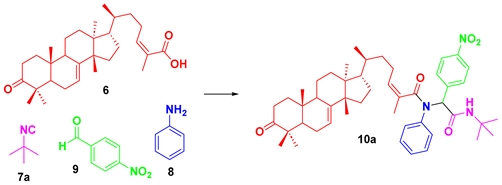
Herein, masticadienonic acid (6) was employed as the carboxylic acid component in the Ugi-4CR for synthesizing bis-amide analogs (10ac) at millimole scale. This natural product was isolated from peduncles of Pistacia mexicana by solid–liquid extraction and purified by recrystallization. For target molecule 10a, equimolar amounts of 6, isocyanides (7ac), aniline (8), and 4-nitrobenzaldehyde (9) were placed in a capped vial along with a magnetic stirring bar. In the first experiment, methanol was employed as the solvent, taking into consideration previous reports of our group (Table 1, Entry 1). However, in this experiment, several side products were identified via TLC, and 10a was isolated in 38% overall yield.
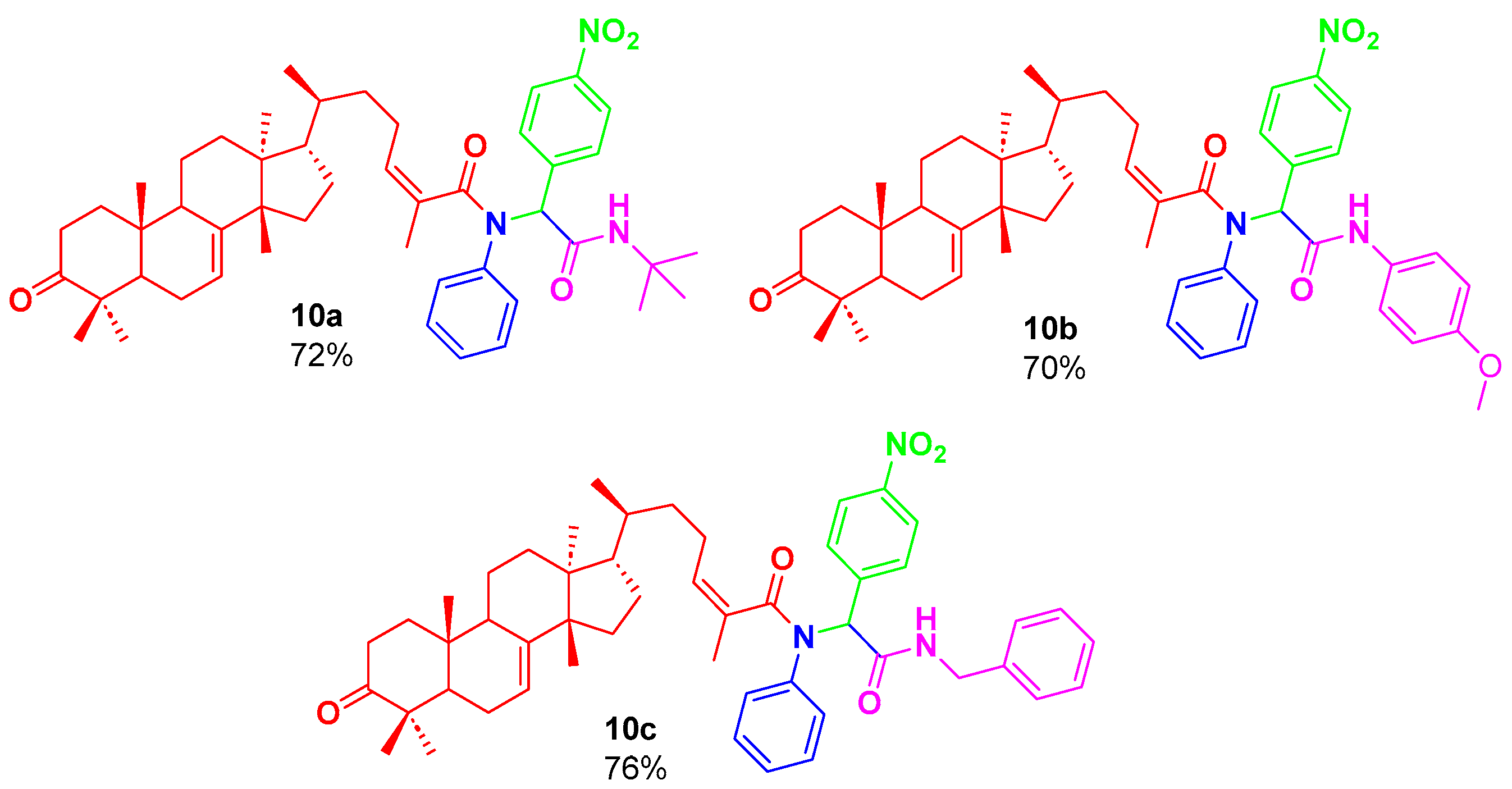
The solvent was changed to ethanol in the subsequent experiment, and a better yield of 72% was afforded (Table 1, Entry 2). Also, the reaction profile was cleaner, and no side products were observed by TLC. Finally, an experiment employing water as the solvent for attempting to develop a greener procedure was performed (Table 1, Entry 3); however, the reaction did not proceed. Employing the conditions from Entry 2, a small series of bis-amides was synthesized in good overall yields (Figure 1).

3. Experimental Section

3.1. General Information, Instrumentation, and Chemicals

Bruker Avance III spectrometers (500 and 125 MHz, respectively) were used for 1H and 13C NMR spectra acquisition. Deuterated chloroform (CDCl3) was used as the solvent for the NMR experiments. Chemical shifts (δ) are given in ppm relative to tetramethylsilane (TMS). Coupling constants are reported in Hertz (Hz). Multiplicities of the signals are described using standard abbreviations: singlet (s), doublet (d), triplet (t), quartet (q), and multiplet (m). NMR spectra were analyzed using MestReNova software version 12.0.0-20080. The reaction’s progress was monitored by thin-layer chromatography (TLC) on pre-coated silica gel F254 aluminum sheets. The spots were visualized under UV light at 254 nm. Column chromatography was performed using silica gel (230–400 mesh) as the stationary phase. Mixtures of hexanes and ethyl acetate were used as mobile phase for column chromatography and in TLC for reaction progress monitoring and measuring retention factors (Rf). All reagents were purchased from Sigma Aldrich (St. Louis, MO, USA) and were used without further purification. Chemical names and drawings were obtained using the ChemDraw 22.2.0.3300 software package.

3.2. General Procedure

Masticadienonic acid (1.0 equiv.), 4-nitrobenzaldehyde (1.0 equiv.), aniline (1.0 equiv.), and the isocyanides (1.0 equiv.) were dissolved in ethanol (0.5 M) and placed in a capped vial with a magnetic stir bar. The mixture was stirred at room temperature for 24 h. Then, the solvent was removed under reduced pressure, and the crude reaction mixture was purified by column chromatography, using silica gel as the stationary phase and mixtures of ethyl acetate in hexanes, to afford the corresponding bis-amides 10ac.

3.3. Spectral Data

Chemproc 18 00030 i002
(6S,Z)-N-(2-(tert-butylamino)-1-(4-nitrophenyl)-2-oxoethyl)-2-methyl-6-((10R,13S,14S,17S)-4,4,10,13,14-pentamethyl-3-oxo-2,3,4,5,6,9,10,11,12,13,14,15,16,17-tetradecahydro-1H-cyclopenta[a]phenanthren-17-yl)-N-phenylhept-2-enamide (10a): yellow viscous liquid, Rf = 0.35 (20% ethyl acetate in hexanes): 1H NMR (500 MHz, CDCl3, 25 °C, TMS): δ 6.09 (dt, J = 7.6, 1.6 Hz, H24), 5.31 (dd, J = 6.1, 3.4 Hz, H7), 2.75 (td, J = 14.5, 5.4 Hz, H2), 2.57 (m, H23), 2.45 (m, H23′), 2.29 (dt, J = 14.1, 3.8, H9), 2.25 (m, H2′), 2.10 (m, H6), 1.99 (m, H1), 1.99 (m, H16′), 1.92 (d, J = 1.4 Hz, H27), 1.82 (m, H12), 1.73 (t, J = 8.7 Hz, H5), 1.66 (m, H12′), 1.55 (m, H11), 1.55 (m, H22), 1.50 (m, H17), 1.50 (m, H15), 1.47 (m, H1′), 1.42 (m, H20), 1.28 (m, H16′), 1.16 (m, H22′), 1.12 (s, H29), 1.05 (s, H28), 1.01 (s, H19), 1.00 (s, H30), 0.89 (d, J = 6.2 Hz, H21), 0.81 (s, H18). 13C NMR (125 MHz, CDCl3, 25 °C, TMS): δ 216.9 (C3), 172.6 (C26), 168.0 (C32), 145.9 (C8), 142.5 (C35), 132.4 (C24), 130.8 (C25), 129.1 (C37), 127.7 (C38), 126.5 (C36), 117.8 (C7), 55.2 (C31), 53.1 (C17), 52.3 (C5), 51.2 (C33), 51.2 (C14), 48.5 (C9), 47.9 (C4), 43.5 (C13), 38.5 (C1), 36.0 (C20), 35.1 (C22), 35.0 (C10), 34.9 (C2), 34.0 (C15), 33.6 (C12), 28.7 (C34-C34‴), 28.2 (C16), 27.4 (C30), 27.2 (C23), 24.6 (C28), 24.4 (C6), 22.0 (C18), 21.6 (C29), 20.8 (C27), 18.3 (C11), 18.2 (C21), 12.8 (C19).
Chemproc 18 00030 i003
(6S,Z)-N-(2-((4-methoxyphenyl)amino)-1-(4-nitrophenyl)-2-oxoethyl)-2-methyl-6-((10R,13S,14S,17S)-4,4,10,13,14-pentamethyl-3-oxo-2,3,4,5,6,9,10,11,12,13,14,15,16,17-tetradecahydro-1H-cyclopenta[a]phenanthren-17-yl)-N-phenylhept-2-enamide (10b): yellow viscous liquid, Rf = 0.24 (30% ethyl acetate in hexanes): 1H NMR (500 MHz, CDCl3, 25 °C, TMS): δ 6.09 (dt, J = 7.6, 1.6 Hz, H24), 5.31 (dd, J = 6.1, 3.4 Hz, H7), 2.75 (td, J = 14.5, 5.4 Hz, H2), 2.57 (m, H23), 2.45 (m, H23′), 2.29 (dt, J = 14.1, 3.8, H9), 2.25 (m, H2′), 2.10 (m, H6), 1.99 (m, H1), 1.99 (m, H16′), 1.92 (d, J = 1.4 Hz, H27), 1.82 (m, H12), 1.73 (t, J = 8.7 Hz, H5), 1.66 (m, H12′), 1.55 (m, H11), 1.55 (m, H22), 1.50 (m, H17), 1.50 (m, H15), 1.47 (m, H1′), 1.42 (m, H20), 1.28 (m, H16′), 1.16 (m, H22′), 1.12 (s, H29), 1.05 (s, H28), 1.01 (s, H19), 1.00 (s, H30), 0.89 (d, J = 6.2 Hz, H21), 0.81 (s, H18). 13C NMR (125 MHz, CDCl3, 25 °C, TMS): δ 217.0 (C3), 173.3 (C26), 166.8 (C32), 156.4 (C36), 145.9 (C8), 142.4 (C38), 132.8 (C24), 131.0 (C33), 130.6 (C25), 129.2 (C40), 127.9 (C41), 126.6 (C39), 121.5 (C34), 117.8 (C7), 114.1 (C35), 55.4 (C37), 55.2 (C31), 53.0 (C17), 52.3 (C5), 51.1 (C14), 48.5 (C9), 47.9 (C4), 43.5 (C13), 38.5 (C1), 36.0 (C20), 35.2 (C22), 35.0 (C10), 34.9 (C2), 34.0 (C15), 33.6 (C12), 28.2 (C16), 27.4 (C30), 27.1 (C23), 24.6 (C28), 24.4 (C6), 22.0 (C18), 21.6 (C29), 20.8 (C27), 18.3 (C11), 18.2 (C21), 12.8 (C19).
Chemproc 18 00030 i004
(6S,Z)-N-(2-(benzylamino)-2-oxoethyl)-2-methyl-6-((10R,13S,14S,17S)-4,4,10,13,14-pentamethyl-3-oxo-2,3,4,5,6,9,10,11,12,13,14,15,16,17-tetradecahydro-1H-cyclopenta[a]phenanthren-17-yl)-N-phenylhept-2-enamide (10c): colorless viscous liquid, Rf = 0.35 (20% ethyl acetate in hexanes): 1H NMR (500 MHz, CDCl3, 25 °C, TMS): δ 7.37–7.25 (m, H35–37), 6.41 (t, J = 6.05 Hz, NH) 6.03 (td, J = 7.6, 1.6 Hz, H24), 5.31 (dd, J = 6.1, 3.4 Hz, H7), 4.69 (s, H31), 4.51 (d, J = 7.6 Hz, H33) 2.75 (td, J = 14.5, 5.4 Hz, H2), 2.57 (m, H23), 2.45 (m, H23′), 2.29 (dt, J = 14.1, 3.8, H9), 2.25 (m, H2′), 2.10 (m, H6), 1.99 (m, H1), 1.99 (m, H16′), 1.92 (d, J = 1.4 Hz, H27), 1.82 (m, H12), 1.73 (t, J = 8.7 Hz, H5), 1.66 (m, H12′), 1.55 (m, H11), 1.55 (m, H22), 1.50 (m, H17), 1.50 (m, H15), 1.47 (m, H1′), 1.42 (m, H20), 1.28 (m, H16′), 1.16 (m, H22′), 1.12 (s, H29), 1.05 (s, H28), 1.01 (s, H19), 1.00 (s, H30), 0.89 (d, J = 6.2 Hz, H21), 0.81 (s, H18). 13C NMR (125 MHz, CDCl3, 25 °C, TMS): δ 216.9 (C3), 167.3 (C32), 166.1 (C26), 146.9 (C24), 145.9 (C8), 137.6 (C34), 128.8 (C36), 127.7 (C37), 127.6 (C35), 125.1 (C25), 117.9 (C7), 62.8 (C31), 52.9 (C17), 52.3 (C5), 51.2 (C14), 48.5 (C9), 47.9 (C4), 43.5 (C13), 43.1 (C33) 38.5 (C1), 36.0 (C20), 35.6 (C22), 35.0 (C10), 34.9 (C2), 34.0 (C15), 33.6 (C12), 28.2 (C16), 27.4 (C30), 26.9 (C23), 24.6 (C28), 24.4 (C6), 22.0 (C18), 21.6 (C29), 20.7 (C27), 18.3 (C11), 18.2 (C21), 12.8 (C19).

4. Conclusions

This work is an example of the efficiency and versatility of Ugi-4CR, which allows it to be successfully applied to the synthesis of triterpenoid analogs. This procedure stands out for using mild reaction conditions, affording good overall yields, employing a green solvent, and overcoming the disadvantages of the conventional multi-step techniques for functionalizing triterpenoids, such as the use of toxic reagents, excess of solvents, and harsh reaction conditions and lower yields.

Author Contributions

Conceptualization, R.G.-M. and H.A.G.-G.; methodology, R.G.-M.; validation, R.G.-M. and H.A.G.-G.; formal analysis, F.R.-L. and C.S.-A.; investigation, F.R.-L. and C.S.-A.; resources, R.G.-M. and H.A.G.-G.; data curation, R.G.-M.; writing—original draft preparation, F.R.-L. and C.S.-A.; writing—review and editing, R.G.-M. and H.A.G.-G.; visualization, R.G.-M. and H.A.G.-G.; supervision, R.G.-M. and H.A.G.-G.; project administration, R.G.-M.; funding acquisition, R.G.-M. All authors have read and agreed to the published version of the manuscript.

Funding

F.R.-L. is grateful to CONACYT-Mexico for a scholarship (764724). R.G.-M. is grateful for financial support from UG CIIC 066/2024 and CONACYT (CB-2016-285622). H.A.G.-G. is grateful for financial support from CIC-UMSNH (9841765) and CONACYT-Mexico (Grant No. A1-S-47352).

Institutional Review Board Statement

Not applicable.

Informed Consent Statement

Not applicable.

Data Availability Statement

The present work is part of ongoing research and data is available upon request to the corresponding authors due to privacy concerns.

Conflicts of Interest

The authors declare no conflicts of interest.

References

  1. Dömling, A.E.; AlQahtani, A.D. General Introduction to MCRs: Past, Present, and Future. In Multicomponent Reactions in Organic Synthesis; Zhu, J., Wang, Q., Wang, M., Eds.; Wiley-VCH: Weinheim, Germany, 2015. [Google Scholar]
  2. Tietze, L.F.F.; Brasche, G.; Gericke, K.M. Multicomponent reactions. In Domino Reactions in Organic Synthesis; Wiley-VCH: Weinheim, Germany, 2006. [Google Scholar]
  3. Cioc, R.C.; Ruijter, E.; Orru, R.V.A. Multicomponent reactions: Advanced tools for sustainable organic synthesis. Green Chem. 2014, 16, 2958–2975. [Google Scholar] [CrossRef]
  4. Fouad, M.A.; Abdel-Hamid, H.; Ayoup, M.S. Two Decades of Recent Advances of Ugi Reactions: Synthetic and Pharmaceutical Applications. RSC Adv. 2020, 10, 42644–42681. [Google Scholar] [CrossRef] [PubMed]
  5. Rudick, J.G.G.; Shaabani, S.; Dömling, A. Isocyanide-based multicomponent reactions. Front. Chem. 2020, 7, 918. [Google Scholar] [CrossRef] [PubMed]
  6. Reguera, L.; Attorresi, C.I.; Ramírez, J.A.; Rivera, D.G. Steroid Diversification by Multicomponent Reactions. Beilstein J. Org. Chem. 2019, 15, 1236–1256. [Google Scholar] [CrossRef] [PubMed]
  7. Brahmkshatriya, P.P.; Brahmkshatriya, P.S. Terpenes: Chemistry, Biological Role, and Therapeutic Applications. In Natural Products; Ramawat, K., Mérillon, J.M., Eds.; Springer: Berlin/Heidelberg, Germany, 2013; pp. 2665–2691. [Google Scholar]
  8. Chudzik, M.; Korzonek-Szlacheta, I.; Król, W. Triterpenes as Potentially Cytotoxic Compounds. Molecules 2015, 20, 1610–1625. [Google Scholar] [CrossRef] [PubMed]
  9. Wiemann, J.; Heller, L.; Csuk, R. An Access to a Library of Novel Triterpene Derivatives with a Promising Pharmacological Potential by Ugi and Passerini Multicomponent Reactions. Eur. J. Med. Chem. 2018, 150, 176–194. [Google Scholar] [CrossRef] [PubMed]
  10. Sultani, H.N.; Morgan, I.; Hussain, H.; Roos, A.H.; Haeri, H.H.; Kaluđerović, G.N.; Hinderberger, D.; Westermann, B. Access to new cytotoxic triterpene and steroidal acid-TEMPO conjugates by Ugi multicomponent-reactions. Int. J. Mol. Sci. 2021, 22, 7125. [Google Scholar] [CrossRef] [PubMed]
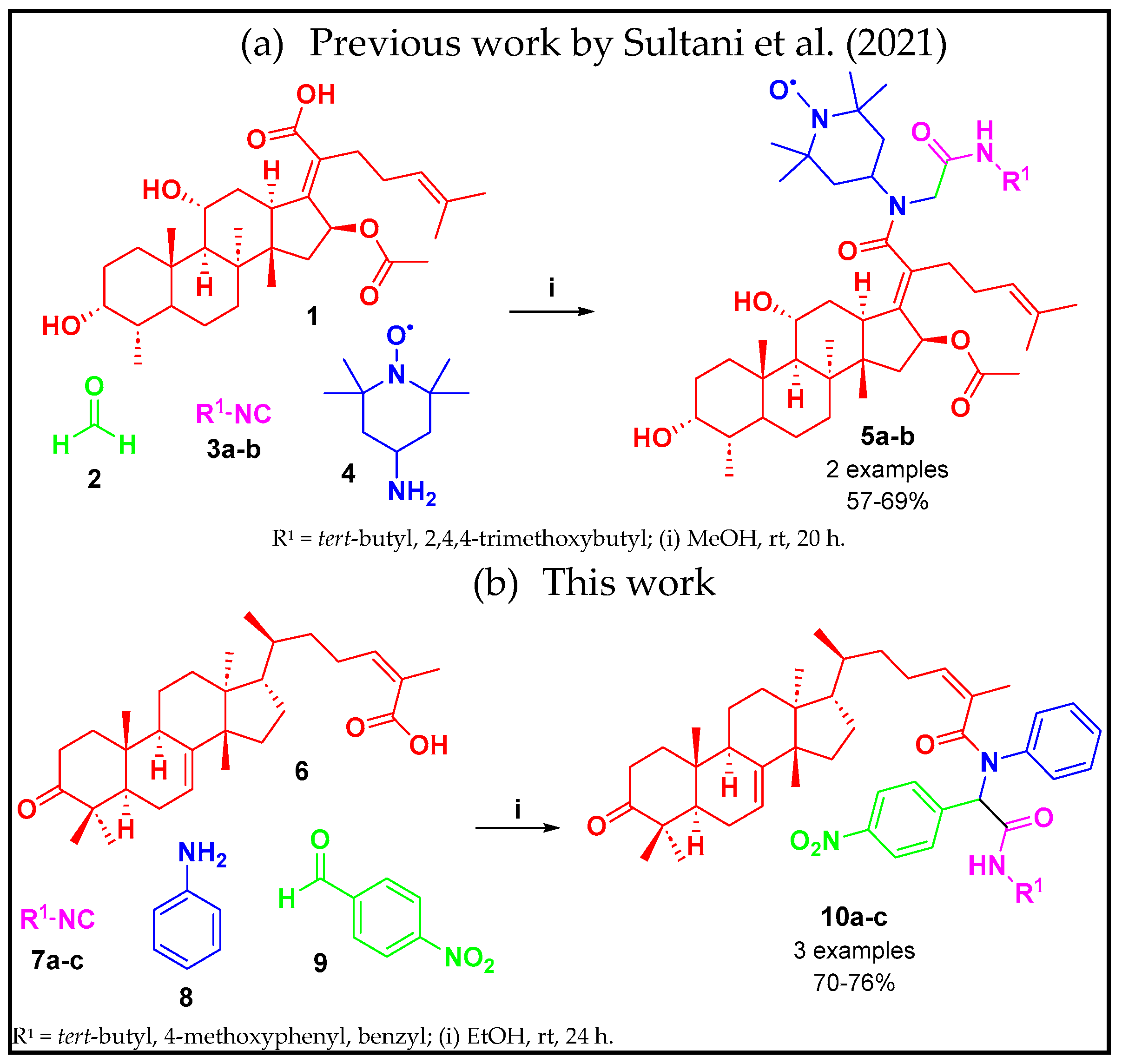
Scheme 1. Previous reports of triterpenoid analog synthesis via Ugi-4CR [10] and the present work.
Chemproc 18 00030 sch001
Figure 1. Synthesized bis-amides.
Chemproc 18 00030 g001
Table 1. Screening conditions for the synthesis of target molecule 16a.
Chemproc 18 00030 i001
EntrySolventTimeYield
1MeOH24 h38%
2EtOH24 h72%
3H2O48 hNR
4H2O (80 °C)12 htraces
5Solvent free24 hNR
Disclaimer/Publisher’s Note: The statements, opinions and data contained in all publications are solely those of the individual author(s) and contributor(s) and not of MDPI and/or the editor(s). MDPI and/or the editor(s) disclaim responsibility for any injury to people or property resulting from any ideas, methods, instructions or products referred to in the content.