
Proceeding Paper

Photoelectroactive Corrole Monomer Functionalized with a Triphenylamine–Chalcone Derivative: Synthesis, Electropolymerization, and Electrochromic Applications †
by
Elizabeth Bermúdez Prieto
1,
Edwin Javier Gónzalez López
2,
Claudia Solis
1,*,
Andres Calosso
2,
Luis Otero
1,
Edgardo Néstor Durantini
2,
Lorena Macor
1,*,
Miguel Gervaldo
1 and
Daniel Alejandro Heredia
2,*
1
Instituto de Investigaciones en Tecnologías Energéticas y Materiales Avanzados (IITEMA), Consejo Nacional de Investigaciones Científicas y Técnicas (CONICET), Departamento de Química, Facultad de Ciencias Exactas, Físico-Químicas y Naturales, Universidad Nacional de Río Cuarto, Ruta Nacional 36 Km 601, Río Cuarto X5804BYA, Córdoba, Argentina
2
Instituto para el Desarrollo Agroindustrial y de la Salud (IDAS), Consejo Nacional de Investigaciones Científicas y Técnicas (CONICET), Departamento de Química, Facultad de Ciencias Exactas, Físico-Químicas y Naturales, Universidad Nacional de Río Cuarto, Ruta Nacional 36 Km 601, Río Cuarto X5804BYA, Córdoba, Argentina
*
Authors to whom correspondence should be addressed.
Presented at the 29th International Electronic Conference on Synthetic Organic Chemistry, 14–28 November 2025; Available online: https://sciforum.net/event/ecsoc-29.
Chem. Proc. 2025, 18(1), 29; https://doi.org/10.3390/ecsoc-29-26913
Published: 13 November 2025

Abstract

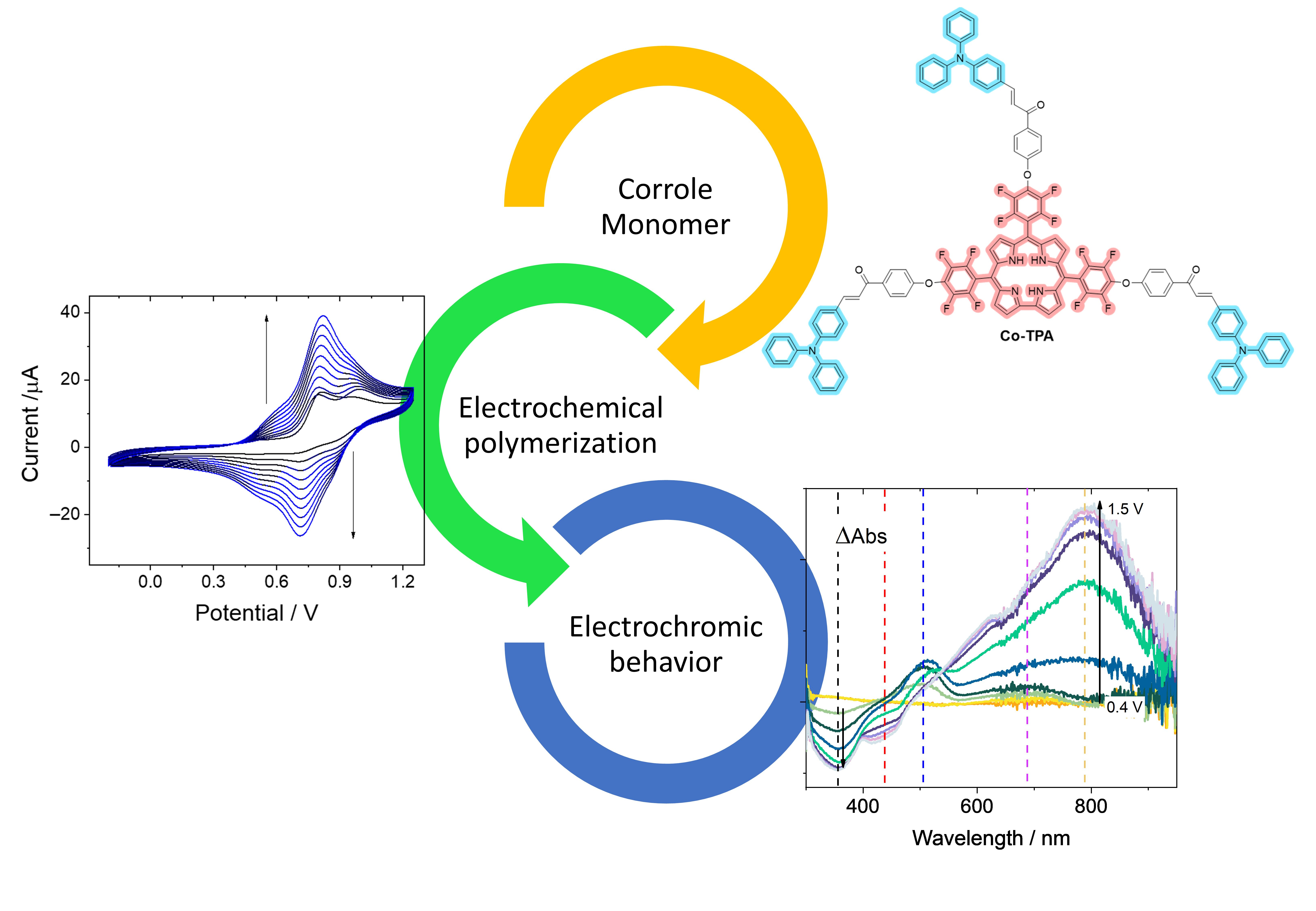
In this work, we report the divergent synthesis of a novel corrole macrocycle with a T-shaped geometry, functionalized with triphenylamine (TPA) units. The synthetic route involved a green preparation of 5-(pentafluorophenyl)dipyrromethane, condensation with pentafluorobenzaldehyde, and DDQ oxidation to afford the target corrole. In parallel, a TPA-based chalcone derivative was obtained and introduced via regioselective nucleophilic aromatic substitution. The resulting photoactive corrole–TPA conjugate exhibited efficient electropolymerization, retaining the corrole chromophore while forming conductive TPB-linked films (TPB, tetraphenylbenzidine). Spectroelectrochemical studies confirmed reversible redox activity, color switching, and electrochromic behavior, highlighting its potential as a building block for photo- and electroactive devices.

Graphical Abstract

1. Introduction

Corroles are tetrapyrrolic macrocycles closely related to porphyrins, but they differ by having a contracted ring due to the absence of one carbon atom. This structural variation gives them distinctive physicochemical behavior compared with porphyrins. Their extended π-conjugation and the presence of three inner nitrogen atoms provide intense light absorption, remarkable redox versatility, and the capacity to stabilize unusual oxidation states of metal ions. Because of these properties, corroles have attracted considerable attention for catalysis, sensing, and energy conversion [1]. Importantly, they also display enhanced chemical robustness and tunable electronic features, making them promising platforms for designing functional organic materials.
A particularly powerful approach for expanding the utility of corroles is to introduce electropolymerizable groups at their periphery. Substituents such as triphenylamine, carbazole, or thiophene derivatives can undergo anodic oxidation to generate radical cations that subsequently couple to form extended polymer networks. When these groups are anchored to a corrole framework, the resulting electropolymerization gives rise to stable films that combine the optical and electrochemical signatures of the corrole with the processability and conductivity of the polymer matrix. This method offers a straightforward route to obtaining strongly adherent functional coatings on conductive or semiconductive electrodes, while retaining the intrinsic photophysical properties of the macrocycle.
In this study, a novel corrole derivative bearing TPA-chalcone units was synthesized via a divergent route in a total of four steps, achieving a high overall yield. The monomer was purified by column chromatography and subsequently characterized by NMR as well as spectroscopic and electrochemical methods. Additionally, polymers were synthesized by electrochemical techniques and characterized through electrochemical and spectroelectrochemical analyses, revealing properties of great interest for potential applications in optoelectronic devices. It is important to highlight that the literature contains only a few reports on the electrosynthesis of this class of macrocycles, and even fewer on the application of the resulting electropolymers in optoelectronic systems.

2. Materials and Methods

2.1. Materials

Chemicals were obtained from Sigma-Aldrich (Milwaukee, WI, USA). They were used without further purification. Organic solvents (GR grade) from Merck (Darmstadt, Germany) were distilled and maintained on molecular sieves. Chemicals for electrochemical experiments: Anhydrous 1,2-dichloroethane (DCE) and Tetrabutylammonium hexafuorophosphate (TBAPF6) were obtained from Sigma-Aldrich and used as received.

2.2. Synthesis

5,10,15-Tris(pentafluorophenyl)corrole (Co) was synthesized in two steps following previously reported procedures from our group [2]. (E)-3-(4-(diphenylamino)phenyl)-1-(4-hydroxyphenyl)prop-2-en-1-one (TPA-Ch-OH) was prepared following previously published methods [3,4].
A solution containing Co (1 eq) and TPA-Ch-OH (3.5 eq) was prepared in dry N,N-dimethylformamide (DMF), and K2CO3 (30 eq) was then added. The suspension was stirred at 90 °C for 3 h. The mixture was subsequently cooled and diluted with DCM. The organic phase was washed with water and dried over Na2SO4. The solvent was evaporated, and the residue was purified by column chromatography, affording Co-TPA.

2.3. Spectroscopic Studies

The UV-visible absorption spectra of Co-TPA were obtained in a diluted dichloroethane (DCE) solution and in a thin-film electrodeposited on indium tin oxide (ITO), respectively. The spectrum of Co-TPA was recorded and compared with that of Co (without TPA groups) at room temperature using a quartz cuvette with a 10 mm path. The absorption spectrum corresponding to P-Co-TPA on ITO was acquired by placing the electrode in the spectrometer cell holder. For background correction, a bare ITO electrode was utilized.

2.4. Electrochemistry and Electrodeposition

Electrochemical studies were performed in a deaerated (with high-purity argon) monomer solution containing 0.1 M of the supporting electrolyte or only with the electrolyte. The last solution was used for the electrochemical responses of the electropolymerized films. A three-electrode system composed of a Platinum (Pt) or ITO-coated glass working electrode, a platinum mesh counter electrode, and a silver wire quasi-reference electrode were utilized for electrochemistry experiments. The ITO electrode substrates were cleaned sequentially in an ultrasonic bath with acetone, ethanol, and deionized water and dried before use.

2.5. Spectroelectrochemistry

In situ UV-visible spectroelectrochemical measurements under potentiostatic control were obtained using a Hewlett-Packard UV-vis diode-array spectrophotometer in kinetic mode, with a three-electrode configuration and an ITO electrode modified with a polymeric film. A naked ITO electrode was used as a blank for absorption background correction.

3. Results and Discussion

3.1. Design, Synthesis, and Characterization of Co-TPAmonomer

The divergent synthesis of the novel corrole macrocycle, featuring a T-shaped geometry and peripheral functionalization with TPA units, is shown in Scheme 1. The synthesis began with 5-(pentafluorophenyl)dipyrromethane 2, prepared via a green protocol by Dehaen [5]. This aryldipyrromethane 2 was condensed with pentafluorobenzaldehyde 1 in a MeOH/HCl aqueous mixture to yield a bilane intermediate, which was subsequently oxidized with DDQ to afford the target corrole Co bearing three pentafluorophenyl groups at the meso positions [5]. In parallel, a TPA-based chalcone derivative (TPA-Ch-OH) was synthesized through a Claisen–Schmidt condensation from 4-(diphenylamino)benzaldehyde (3) and 4′-hydroxyacetophenone (4) in a mixture of EtOH and 50% aqueous KOH solution [3,4]. The mixture was stirred at 50 °C for 3 h, cooled to room temperature, and left overnight. The resulting chalcone salts were poured into water and neutralized to pH 7 with 1 M HCl. The precipitate, crystallized from EtOH, was subsequently filtered, washed with EtOH, and dried to give TPA-Ch-OH. Finally, a regioselective nucleophilic aromatic substitution between TPA-Ch-OH and Co in dry DMF using K2CO3 as the base displaced the para-fluorine atoms, affording the functionalized monomer Co-TPA in high yield [2].
Co-TPA features a photoactive, electron-accepting corrole core covalently linked to the electron-donating and electropolymerizable TPA moiety, making it a promising material for photoactive and electroactive materials. The TPA groups were selected to promote electrochemical radical coupling upon anodic oxidation.

3.2. Electrochemical Characterization of Co-TPA and Electrochemical Synthesis and Deposition of P-Co-TPA Polymeric Film

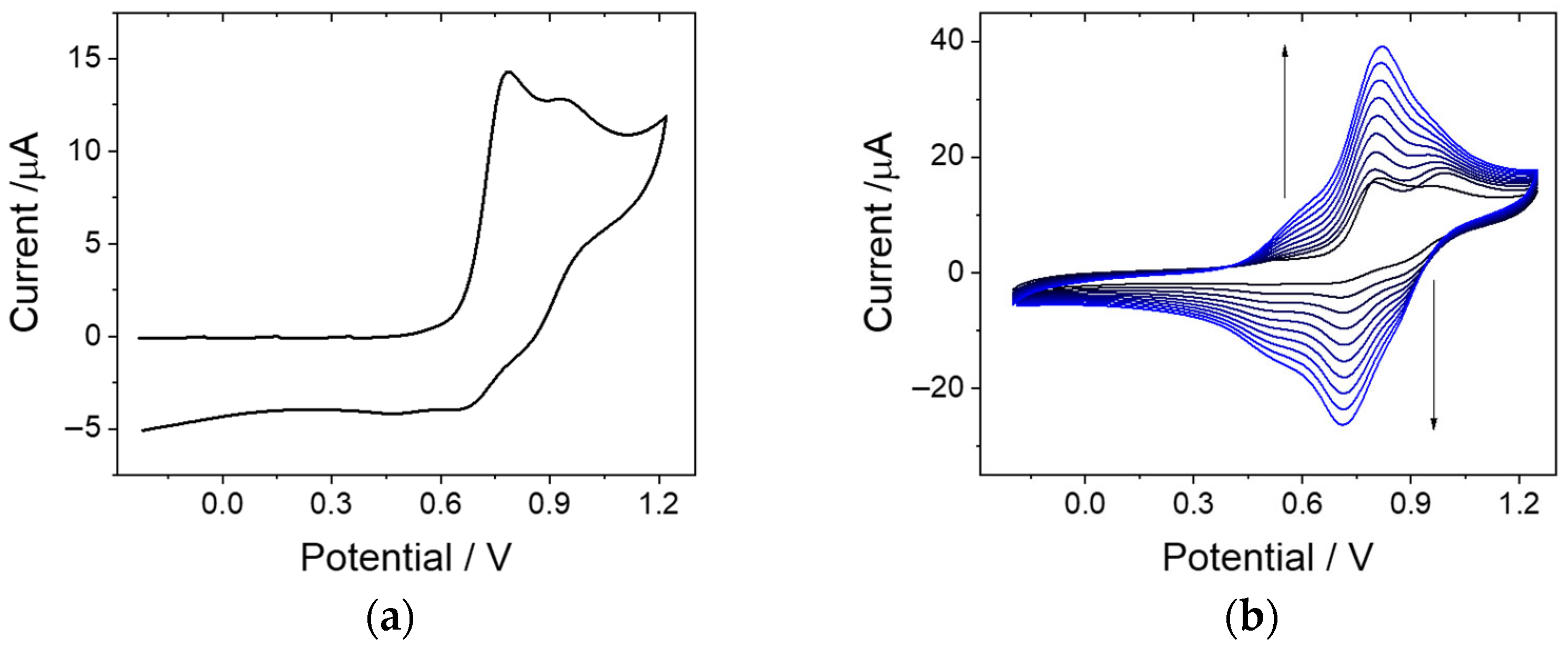
Electrochemical studies were performed to evaluate the redox properties of the Co-TPA monomer and its ability to form polymeric films. Cyclic voltammetry experiments were conducted in DCE with 0.1 M TBAPF6 at a scan rate of 100 mV·s−1, using a Pt working electrode. Figure 1a shows the first anodic scan of the Co-TPA monomer, which displays an oxidation peak around 0.80 V. This process can be attributed to the formation of the TPA radical cation (TPA•+) [6]. In subsequent scans (Figure 1b), a new redox couple appears at slightly lower potentials. This behavior is consistent with the generation of TPB species via an ECE mechanism, in which unstable TPA•+ radicals couple to form a more conjugated TPB dimer. Because of its extended π-system, TPB undergoes reversible one-electron redox processes more readily than TPA [7]. The peak observed at 1.1 V can be assigned to the formation of TPB2+. This observation can be explained by considering that the coupling reaction leading to TPB formation is sufficiently fast for TPA•+ to couple during the first cycle, generating TPB, which is subsequently oxidized [7]. As cycling proceeds, the progressive increase in both anodic and cathodic currents indicates the formation of a polymeric film strongly adsorbed on the electrode surface.
On the other hand, the voltammogram does not show a distinct peak corresponding to corrole oxidation. This can be rationalized by assuming that the corrole oxidation occurs at a potential close to that of TPA, making it difficult to resolve separately [8]. This hypothesis will be further corroborated by complementary spectroscopic and spectroelectrochemical studies.

3.3. Electrochemical Characterization of P-Co-TPA

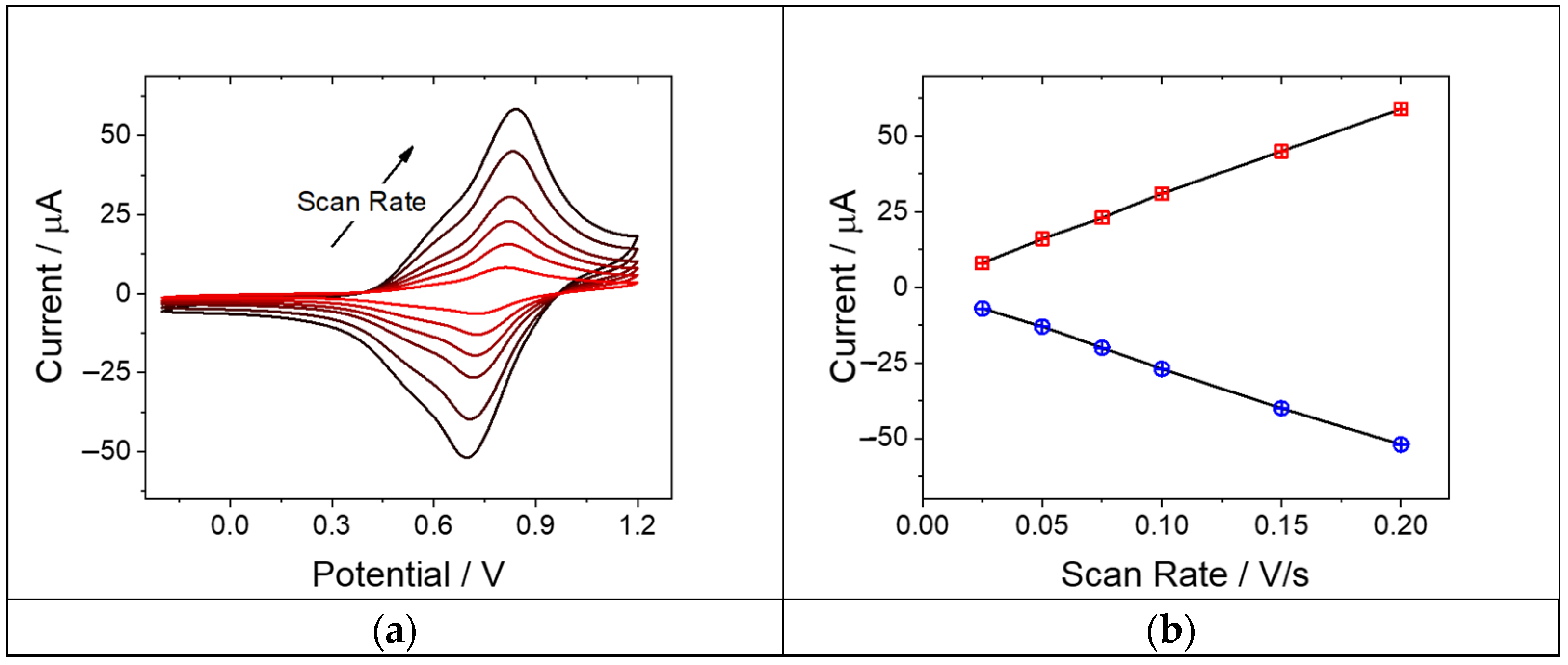
To confirm the formation of a film over the electrode, CVs were performed in a solution containing only the supporting electrolyte at different scan rates. The electrochemical response of the film is formed by two oxidation/reduction couples that present a bell-shaped profile in the CV (Figure 2a) and are very close to each other. As shown in Figure 2b, the polymeric film of Co-TPA (now P-Co-TPA) presents a linear relation between anodic and cathodic peak currents with the scan rate, indicating that a product is irreversibly adsorbed over the electrode surface.

3.4. Spectroscopic Characterization of Co, Co-TPA, and P-Co-TPA

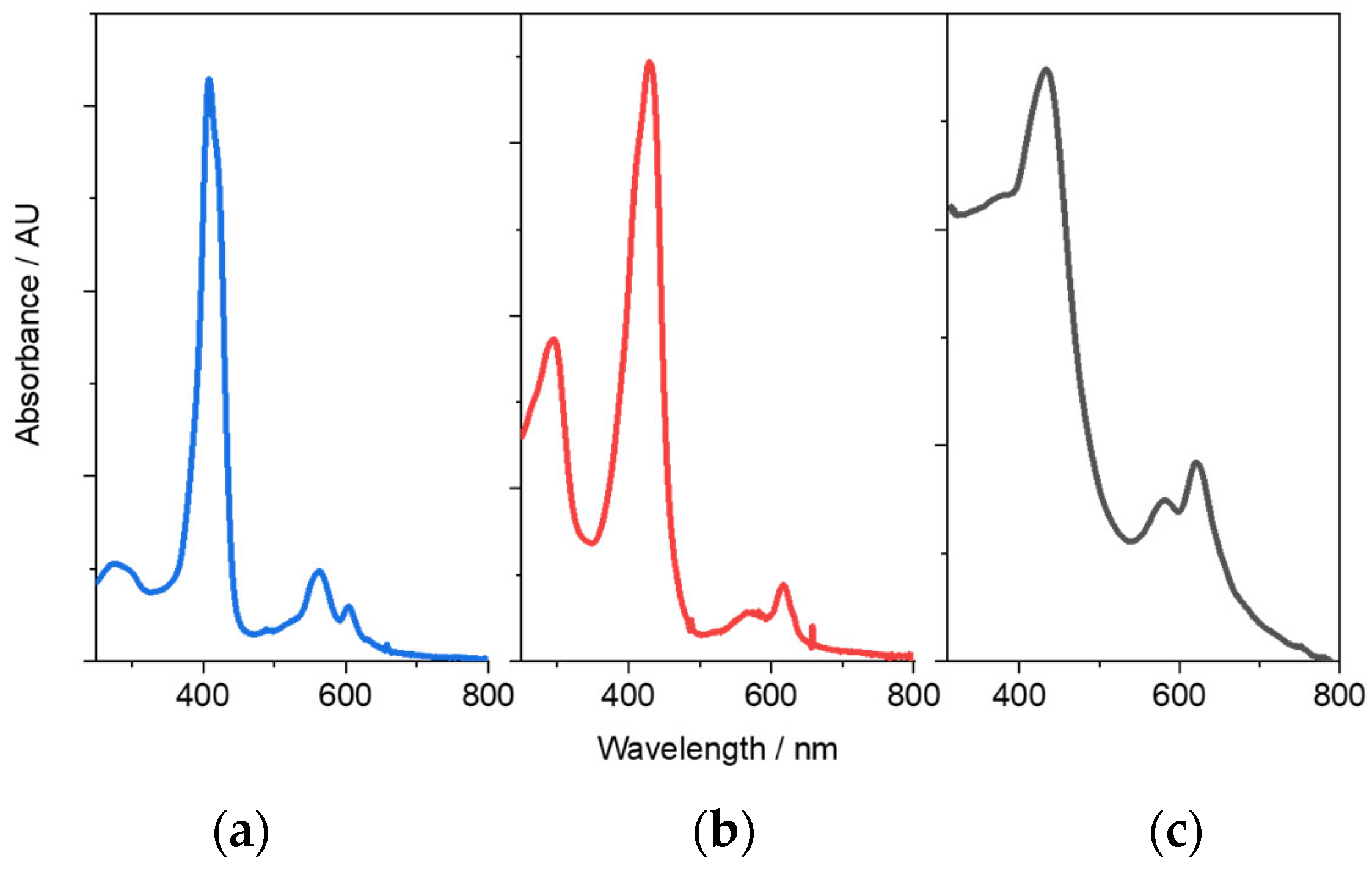
Spectroscopic properties of the reference (Co), monomer (Co-TPA), and polymer (P-Co-TPA) were studied at room temperature using UV–visible spectroscopy. Figure 3a,b shows the absorption spectra of Co and Co-TPA in DCE diluted solutions. As can be observed, both spectra exhibit similar absorption profiles. In the blue region of the electromagnetic spectrum, the Soret band appears sharp and well-defined around λmax = 410 nm for Co and λmax = 425 nm for Co-TPA, with a molar absorptivity coefficient (ɛ) of ~1 × 10⁵ M−1cm−1. In the visible region, Q bands are observed between 500 and 700 nm, exhibiting molar absorptivity values approximately one order of magnitude lower. These spectroscopic features are consistent with those previously reported for corrole derivatives [2]. Moreover, in the Co-TPA spectra, we can observe the presence of an intense band (~300 nm) characteristic of compounds containing TPA. The absorption spectra of P-Co-TPA (λmax = 430 nm) electropolymerized over the ITO electrode (Figure 3c) is comparable to the absorption spectra of the monomer in solution, indicating that the whole tetrapyrrolic macrocycle conjugated system has not been altered during the polymerization process.

3.5. Spectroelectrochemical Characterization of P-Co-TPA

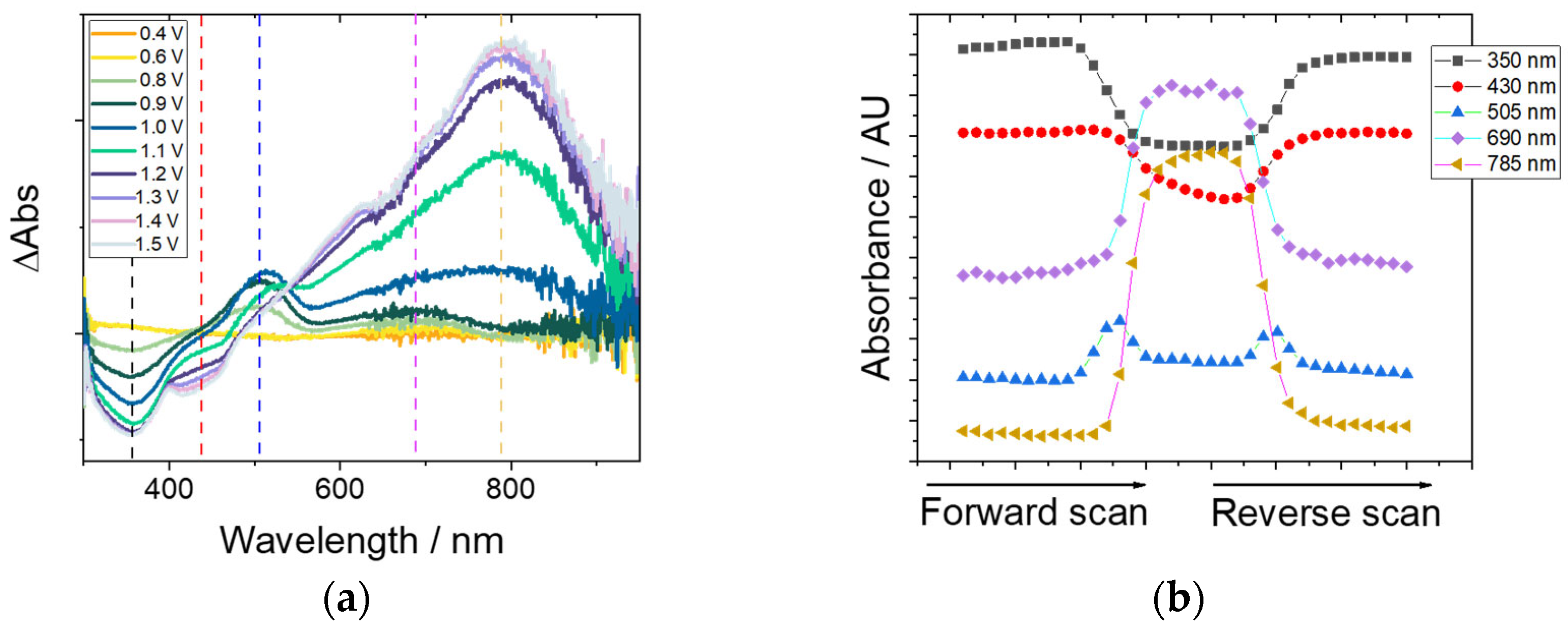
Like we saw, the monomer Co-TPA presents Soret and Q bands in the visible region and other band in the UV region at ~300, which indicates the presence of the TPA unit. We can do a similar interpretation for the P-Co-TPA. To corroborate this explanation, we performed spectroelectrochemical experiments. The absorption spectra obtained during the spectroelectrochemical studies were plotted as ΔAbs (Figure 4a). To do this, the absorption spectrum obtained at 0.00 V was subtracted from the absorption spectra taken at the different applied potentials. Positive and negative absorptions are related to species that appear and species that are bleached, respectively. When the applied potential is lower than 0.60 V, P-Co-TPA is in the neutral state, and no changes are detected. When the film is oxidized to the first oxidation peak, the absorption at 350 nm disappears, and two new bands appear: one in the visible region (505 nm) and a second that starts around 690 nm (green light line in Figure 4a). At more anodic applied potentials, the band at 505 nm decreases, and a new band centered at 785 nm begins to grow until the film is fully oxidized. At 1.1 V, the corrole band centered at 430 nm starts to decrease, demonstrating that at this potential the corrole nucleus is oxidized. The principal absorption traces of the polymeric films were also followed during the anodic scan and are depicted in Figure 4b. When the films are in the neutral state, all traces maintain their initial values. When the films start to oxidize, the trace related to the TPB band decreases (350 nm) and the trace related to TPB●+ (505 nm) grows in intensity. At potential values close to the first oxidation peak, the 505 nm trace is maximized, and at the same time, the 690 nm trace begins to increase. In the second oxidation process, the trace at 785 nm (trace related to TPB+2) reaches its maximum value. During the reverse scan, all traces present an opposite behavior until they recover their initial values at the end of the scan. The electrochemical and spectroelectrochemical data are in agreement with the presence of TPB units in the chemical structure of P-Co-TPA. When P-Co-TPA was oxidized, the absorption spectra of the semi and fully oxidized states showed bands characteristic of TPB radical cation and dication, respectively [7,8].

4. Conclusions

In this work, we successfully designed and synthesized a corrole monomer functionalized with a TPA-chalcone derivative and demonstrated its ability to undergo efficient electropolymerization on conductive substrates. Electrochemical studies revealed the formation of stable polymeric films through radical cation coupling of TPA units, leading to covalently linked networks that preserve the corrole macrocyclic core. Spectroscopic and spectroelectrochemical analyses confirmed the retention of the characteristic Soret and Q bands, together with the emergence of additional absorptions associated with TPA/TPB species. The polymer films exhibited reversible electrochemical responses, enhanced redox activity, and an electrochromic behavior with reversible color changes. These results highlight the potential of the Co-TPA system as a versatile photo- and electroactive building block for the development of advanced optoelectronic devices, particularly in electrochromic applications.

Author Contributions

Conceptualization, L.O. and D.A.H.; methodology, M.G.; validation, D.A.H. and C.S.; formal analysis, C.S. and L.M.; investigation, E.B.P., E.J.G.L. and A.C.; data curation, E.B.P., E.J.G.L. and A.C.; writing—original draft preparation, L.M.; writing—review and editing, D.A.H.; visualization, L.M. and C.S.; supervision, M.G. and L.O.; project administration, D.A.H. and E.N.D.; funding acquisition, L.O. and E.N.D. All authors have read and agreed to the published version of the manuscript.

Funding

This research was funded by CONICET (PIBAA 28720210101120CO) and SECyT-UNRC grant number (PPI-C612/134-25).

Institutional Review Board Statement

Not applicable.

Informed Consent Statement

Not applicable.

Data Availability Statement

Data will be made available on request.

Acknowledgments

The authors are grateful to Consejo Nacional de Investigaciones Científicas y Técnicas (CONICET) of Argentina and SECYT Universidad Nacional de Río Cuarto for financial support. E.B.P. and A.C. thank CONCIET for doctoral fellowships.

Conflicts of Interest

The authors declare no conflicts of interest.

References

  1. Di Natale, C.; Gros, C.P.; Paolesse, R. Corroles at Work: A Small Macrocycle for Great Applications. Chem. Soc. Rev. 2022, 51, 1277–1335. [Google Scholar] [CrossRef] [PubMed]
  2. Gonzalez Lopez, E.J.; Martínez, S.R.; Aiassa, V.; Santamarina, S.C.; Domínguez, R.E.; Durantini, E.N.; Heredia, D.A. Tuning the Molecular Structure of Corroles to Enhance the Antibacterial Photosensitizing Activity. Pharmaceutics 2023, 15, 392. [Google Scholar] [CrossRef] [PubMed]
  3. Lin, C.-C.; Chen, C.-L.; Chung, M.-W.; Chen, Y.-J.; Chou, P.-T. Effects of Multibranching on 3-Hydroxyflavone-Based Chromophores and the Excited-State Intramolecular Proton Transfer Dynamics. J. Phys. Chem. A 2010, 114, 10412–10420. [Google Scholar] [CrossRef] [PubMed]
  4. Guo, L.; Tian, M.; Zhang, Z.; Lu, Q.; Liu, Z.; Niu, G.; Yu, X. Simultaneous Two-Color Visualization of Lipid Droplets and Endoplasmic Reticulum and Their Interplay by Single Fluorescent Probes in Lambda Mode. J. Am. Chem. Soc. 2021, 143, 3169–3179. [Google Scholar] [CrossRef] [PubMed]
  5. Rohand, T.; Dolusic, E.; Ngo, T.H.; Maes, W.; Dehaen, W. Efficient Synthesis of Aryldipyrromethanes in Water and their Application in the Synthesis of Corroles and Dipyrromethenes. Arkivoc 2007, 10, 307–324. [Google Scholar] [CrossRef]
  6. Yurchenko, O.; Freytag, D.; zur Borg, L.; Zentel, R.; Heinze, J.; Ludwigs, S. Electrochemically Induced Reversible and Irreversible Coupling of Triarylamines. J. Phys. Chem. B 2012, 116, 30–39. [Google Scholar] [CrossRef] [PubMed]
  7. Renfige, M.; Gonzalez Lopez, E.J.; Macor, L.; Solis, C.; Durantini, J.E.; Morales, G.; Otero, L.; Durantini, E.N.; Heredia, D.A.; Gervaldo, M. Electrochemical Synthesis of Donor–Acceptor Triazine-Based Polymers with Halochromic and Electrochromic Properties. Electrochim. Acta 2024, 486, 141428. [Google Scholar] [CrossRef]
  8. Sravani, R.; Nenavath, S.; Palacharla, S.P.; Giribabu, L. Triphenylamine–Corrole Donor–Acceptor Systems: Synthesis, Spectroscopy, and Photophysical Studies. Chem. Asian J. 2025, e70310. [Google Scholar] [CrossRef] [PubMed]
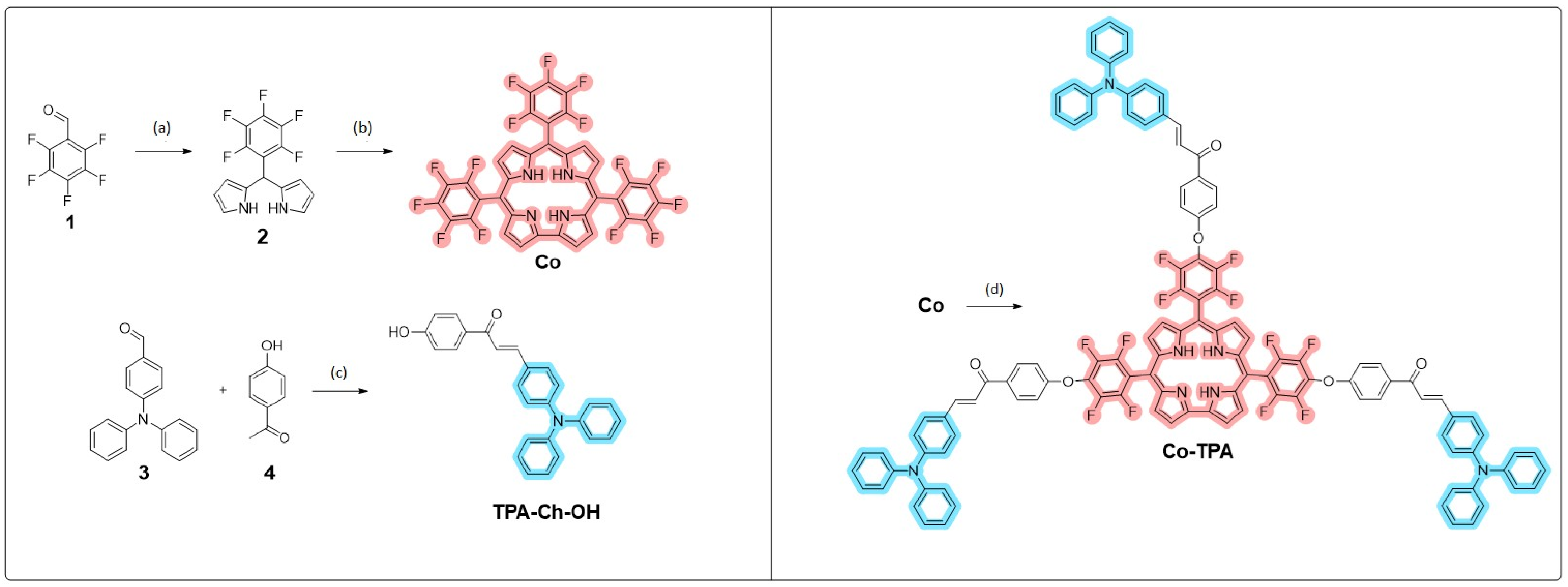
Scheme 1. Synthesis of Co-TPA. Reaction conditions: (a) H2O, HCl, 25 °C; (b) 1-MeOH/HCl, 25 °C, 2-DDQ, 25 °C; (c) 1-KOH, MeOH, 50 °C, 2-HCl (1 M), H2O; (d) TPA-Ch-OH, K2CO3, DMF, 90 °C.
Chemproc 18 00029 sch001
Figure 1. (a) First anodic scan of Co-TPA monomer. (b) Ten consecutive anodic scans. All measurements were conducted in DCE, TBAPF6 (0.1 M) at 100 mV/s, using a Pt electrode.
Chemproc 18 00029 g001
Figure 2. (a) Electrochemical responses after ten consecutive anodic scans, at different scan rates (0.025, 0.050, 0.075, 0.100, 0.150, 0.200, V/s) and (b) anodic and cathodic peak currents vs. scan rate for the polymeric film in a solution containing only supporting electrolyte, using a Pt electrode.
Chemproc 18 00029 g002
Figure 3. Normalized absorption spectra of: (a) Co in DCE solution, (b) Co-TPA in DCE solution and (c) P-Co-TPA electrodeposited on ITO.
Chemproc 18 00029 g003
Figure 4. (a) Difference absorption spectra (ΔAbs) and (b) changes in the principal absorption traces of P-Cor-TPA deposited over ITO electrodes obtained during an anodic scan. All measurements were conducted in DCE (0.10 M TBAPF6) at 20 mV/s.
Chemproc 18 00029 g004
Disclaimer/Publisher’s Note: The statements, opinions and data contained in all publications are solely those of the individual author(s) and contributor(s) and not of MDPI and/or the editor(s). MDPI and/or the editor(s) disclaim responsibility for any injury to people or property resulting from any ideas, methods, instructions or products referred to in the content.