
Proceeding Paper

Sustainable Conjugated Polymer Synthesis in OPV: A Case Study from Conventional to Flow and Microwave-Assisted Synthesis †

by
Francesca Villafiorita-Monteleone
1,*,
Benedetta Maria Squeo
1,
Federico Turco
2,
Antonella Caterina Boccia
1,
Alberto Giacometti Schieroni
1,
Daniele Piovani
1,
Mariacecilia Pasini
1 and
Stefania Zappia
1,*
1
Institute of Chemical Sciences and Technologies “G. Natta” (SCITEC), National Research Council (CNR), via A. Corti 12, 20133 Milan, Italy
2
Department of Chemistry, University of Milan, Via Golgi 19, 20133 Milan, Italy
*
Authors to whom correspondence should be addressed.
Presented at the 29th International Electronic Conference on Synthetic Organic Chemistry, 14–28 November 2025; Available online: https://sciforum.net/event/ecsoc-29.
Chem. Proc. 2025, 18(1), 24; https://doi.org/10.3390/ecsoc-29-26719
Published: 11 November 2025

Abstract

Continuous flow synthesis and microwave-assisted synthesis represent two sustainable and efficient methods for polymer production aligned with green chemistry principles, compared to conventional polymer synthesis. Here we present a case study of poly(4,4-dioctyldithieno(3,2-b:2′,3′-d)silole)-2,6-diyl-alt-(2,1,3-benzothiadiazole)-4,7-diyl (PSBTBT), a low band-gap electron-donating polymer for organic photovoltaics (OPVs). The PSBTBT Stille cross-coupling polymerization conditions were optimized by comparing different synthetic methods: conventional, flow, and microwave. To assess the impact of the different synthetic methods, detailed molecular and spectroscopic characterization, highlighting both the differences and similarities within the methodologies, was performed with several techniques, such as GPC, UV-Vis, PL, and NMR.

1. Introduction

The growing global energy demand, coupled with the urgent need to transition from fossil fuels to renewable energy sources, requires the development of innovative solutions for both energy generation and storage. Conjugated semiconducting materials have emerged as promising candidates due to their intrinsic advantages, including low production costs, lightweight nature, mechanical flexibility, and reduced environmental impact. Importantly, these features align well with the principles of circular chemistry and sustainable material design, opening the way for the development of safe-by-design, eco-friendly optoelectronic devices [1].
A key challenge in the development of organic photovoltaics (OPVs) lies not only in improving the performance and stability of OPV devices but also in establishing environmentally friendly and scalable synthetic methods for conjugated polymers, which are essential components of the active layers [2]. Unfortunately, photoactive materials are usually produced only on a very small scale, both in research laboratories and industrial suppliers. This lack of standardized and widely available material supplies leads to significant batch-to-batch variability, which in turn affects the active layer fabrication, and subsequently the photovoltaic performance parameters [3,4,5,6]. Such inconsistencies substantially complicate both the comparison of results across different studies and the establishment of meaningful performance benchmarks [7].
The modern chemical industry is still developing new technologies to facilitate synthesis and scale-up processes, with the aim to scale up chemical production more sustainably and to reduce producing costs. Continuous flow and microwave-assisted methodologies represent two efficient and sustainable approaches aligned with the principles of green chemistry, enabling precise control over reaction conditions while reducing energy consumption and waste [8,9]. Together, these advanced synthetic methodologies represent key enablers for the greener and more cost-effective development of next-generation OPV materials.
Among emerging strategies, the continuous flow chemistry approach involves the continuous pumping of reactants through a reactor, allowing for precise control over reaction parameters such as temperature, pressure, and residence time. This improves reproducibility, reduces reaction times, enhances safety, and significantly lowers solvent and energy consumption. Moreover, the scalability of flow chemistry simplifies the transition from laboratory to industrial-scale production. These advantages make continuous flow synthesis particularly attractive to produce conjugated polymers with well-defined properties, aligning with the principles of green chemistry and the growing demand for low-impact manufacturing technologies in the OPV field [8,10,11,12,13].
Likewise, microwave-assisted (MWA) synthesis has also emerged as a promising approach to sustainable polymer production [8]. The MWA heating mode offers a good substitute for conventional heating, enabling rapid and uniform heating, and significantly decreases the reaction times and solvent usage, further contributing to energy efficiency and environmental compatibility. This improvement typically results from extreme temperatures in reactions carried out in closed containers under an autoclave condition and is frequently solely because of temperature effect [14]. In particular, the use of microwave irradiation in polymer synthesis demonstrated comparable experimental results to those obtained using conventional thermal heating methods, with no detrimental effects on the resulting material performances [15,16,17,18,19].
Here we present a case study of poly(4,4-dioctyldithieno(3,2-b:2′,3′-d)silole)-2,6-diyl-alt-(2,1,3-benzothiadiazole)-4,7-diyl (PSBTBT), a low band-gap electron-donating polymer [20].
We have developed PSBTBT Stille cross-coupling polymerization using different approaches: conventional, continuous flow, and microwave-assisted methods. To assess the impact of the different synthetic methods, we performed molecular and spectroscopic characterization to highlight correlations between the synthesis technique and the resulting material properties.

2. Materials and Methods

2.1. General Information for Synthesis

The two monomers, 4,4′-Bis(2-ethylhexyl)-5,5′-bis(trimethyltin)-dithieno[3,2-b:2,3-d]silole (DTS-EH-Sn) and 4,7-Dibromobenzo[c][1,2,5]thiadiazole (BT-Br2), were commercially available. DTS-EH-Sn was purchased from Ossila BV (Leiden, the Netherlands) and BT-Br2 from Sigma-Aldrich (Saint Louis, MO, USA), respectively. Both were used as received without further purification. All other reagents were purchased from Sigma-Aldrich. All the reactions were performed under a dry nitrogen atmosphere. All the solvents were deoxygenated and dried by standard methods before use; toluene was distilled on Na(s) and N,N-dimethylformamide (DMF) on Ca2H, both under an inert N2 atmosphere.
Synthesis of PSBTBT in batch reactor. The two monomers (2.5 × 10⁻² mM) were dissolved in dry toluene in a dry, oxygen-free Schlenk tube. Pd2(dba)3 (7.5 × 10⁻⁴ mM) and P(o-tol)3 (4.5 × 10⁻³ mM) were then added to the mixture, which was stirred for 30 min at room temperature (r.t.). The reaction mixture was subsequently placed in a pre-heated oil bath at 110 °C and stirred in the dark for 24 h prior to purification.
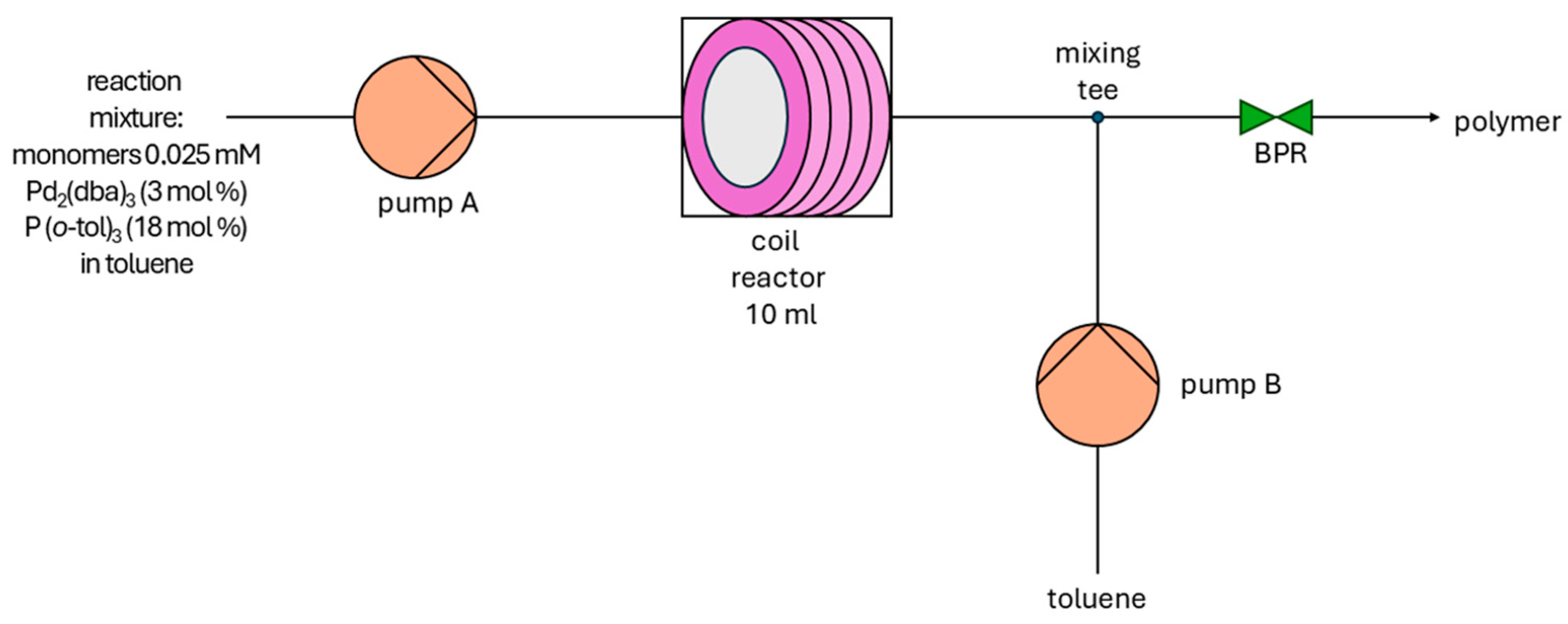
Synthesis of PSBTBT in flow reactor. The continuous flow experiments were conducted using a Vapourtec (Bury Saint Edmunds, Suffolk, UK) easy-Polymer E-Series system equipped with a perfluoroalkoxy (PFA) coiled tubular reactor (10 mL internal volume), and three peristaltic pumps. One pump delivered the reaction mixture, while the other two were used for the dilution of the crude solution leaving the reactor with toluene, and serving as an active back-pressure regulator respectively. Idex fittings (IDEX Health & Science, Oak Harbor, WA, USA) were used with Tefzel® (EFTE) tubing (ID: 1 mm). The reactants were introduced into the tubular reactor by pumping the reaction mixture from a nitrogen-filled Schlenk tube. The reactor coils were pre-heated to the desired temperature, and the flow rate was adjusted to achieve the required residence time (60 min). Prior to use, the system was purged with nitrogen and washed with dry toluene. Once ready, the valve was switched to allow the contents of the injection loops to enter the reactor coils.
The reaction mixture was prepared as follows: the two monomers were dissolved in dry toluene in a dry, oxygen-free Schlenk tube to achieve a final concentration of 2.5 × 10⁻² mM for each. Pd2(dba)3 (7.5 × 10⁻⁴ mM) and P(o-tol)3 (4.5 × 10⁻³ mM) were then added to the mixture and stirred for 30 min before injection.
Synthesis of PSBTBT in MW reactor. The microwave reactions were conducted using CEM Discover 2.0 (Charlotte, NC, USA). Reactions were carried out in a nitrogen-filled 10 mL pressure vial from CEM designed for use with the Discover 2.0 system. The two monomers (2.5 × 10⁻² mM), Pd2(dba)3 (7.5 × 10⁻⁴ mM) and P(o-tol)3 (4.5 × 10⁻³ mM) were added to a pressure vial and purged with nitrogen. Dry solvent (4 mL total) was then added to the mixture, which was stirred for 30 min. The vials were subsequently sealed and placed in the microwave reactor for 60 min. The reactions were conducted in “standard” mode, in which the system heats as rapidly as possible to the selected target temperature and then maintains that temperature for the specified reaction time. For the reactions carried out in toluene, the low dielectric loss tangent of the solvent prevented the temperature from reaching 160 °C under microwave irradiation.
General purification procedure. All crude products were subjected to the same purification procedure. Specifically, the crude products were diluted with toluene and cooled at r.t., and then scavenger resin (3-mercaptopropyl-functionalized silica gel) was added, and the mixture was stirred overnight. Then, the reaction mixtures were filtered through Celite® to completely remove any trace of the metal catalyst washing with abundant solvent [21]. The obtained mixture was concentrated under reduced pressure and precipitated in methanol. The blue solids were recovered and extracted using a Soxhlet apparatus, using sequentially acetone, hexane and chloroform. Further characterization was carried out on the chloroform extracts.

2.2. Structural and Molecular Characterizations

Nuclear Magnetic Resonance (NMR).1H NMR spectra were recorded with a Bruker (Billerica, MA, USA) DRX 600 MHz spectrometer at 298 K. All chemical shifts were reported in parts per million (ppm) and calibrated on the residual signal of chloroform at 7.25 ppm. Commercial deuterated solvents were used as received.
Size Exclusion Chromatography (SEC). Molecular weight and molecular weight distribution (MWD) of the polymers were measured by high-temperature size-exclusion chromatography (HT-SEC) using a GPCV2000 system (Waters Corp., Milford, MA, USA) equipped on-line with a differential refractometer (DRI) as the concentration detector and a set of three Shodex HT (806M-805-804) columns (Showa Denko, Tokyo, Japan). o-dichlorobenzene was used as the mobile phase. In order to avoid the thermal degradation and the formation of aggregates, the samples were prepared with an optimized procedure, as follows: (i) protection with butylated hydroxytoluene (BHT) antioxidant (0.05%); (ii) sample solubilization in a 140 °C oven for about one hour; (iii) filtration with sintered metal filters with 0.5 µm pore size; (iv) insertion of the samples in the injection compartment of the system at 135 °C. The prepared samples with concentrations of about 2 mg/mL were analyzed at 135 °C under a flow rate of 0.8 mL/min. Sixteen narrow MWD polystyrene standards with peak molecular weight ranging from 3.28 · 106 g/mol to 162 g/mol were used for calibration.

2.3. Photophysical Characterizations

UV-Vis Absorption Spectroscopy. UV–vis absorption spectra were recorded with a Lambda 900 spectrometer (Perkin-Elmer, Waltham, MA, USA). Optical characterizations were performed on the polymers dissolved in chloroform.
Photoluminescence (PL) Spectroscopy. PL spectra were obtained with NanoLog composed by an iH320 spectrograph equipped with a Synapse QExtra charge-coupled device, by exciting with a monochromate 450W Xe lamp (Horiba, Kyoto, Japan). The spectra were corrected for the instrument response.

3. Results and Discussion

Poly(4,4-dioctyldithieno[3,2-b:2′,3′-d]silole)-2,6-diyl-alt-(2,1,3-benzothiadiazole)-4,7-diyl (PSBTBT) is a silole-containing, low band-gap (LBG), electron-donating copolymer. It was extensively investigated due to its ability to absorb a broader portion of the solar spectrum, thereby contributing to higher power conversion efficiencies [22]. PSBTBT was selected as a model donor–acceptor alternating copolymer for testing different synthetic methodologies. Specifically, Stille cross-coupling polymerization was carried out using both a continuous flow system and a microwave-assisted setup in order to compare the properties of the resulting materials with those obtained using conventional batch methodology. The synthetic route investigated is reported in Scheme 1.
The conventional batch polymerization, SZ173, was carried out under standard operating conditions, refluxing toluene for 24 h utilizing conventional heating in a dry environment.
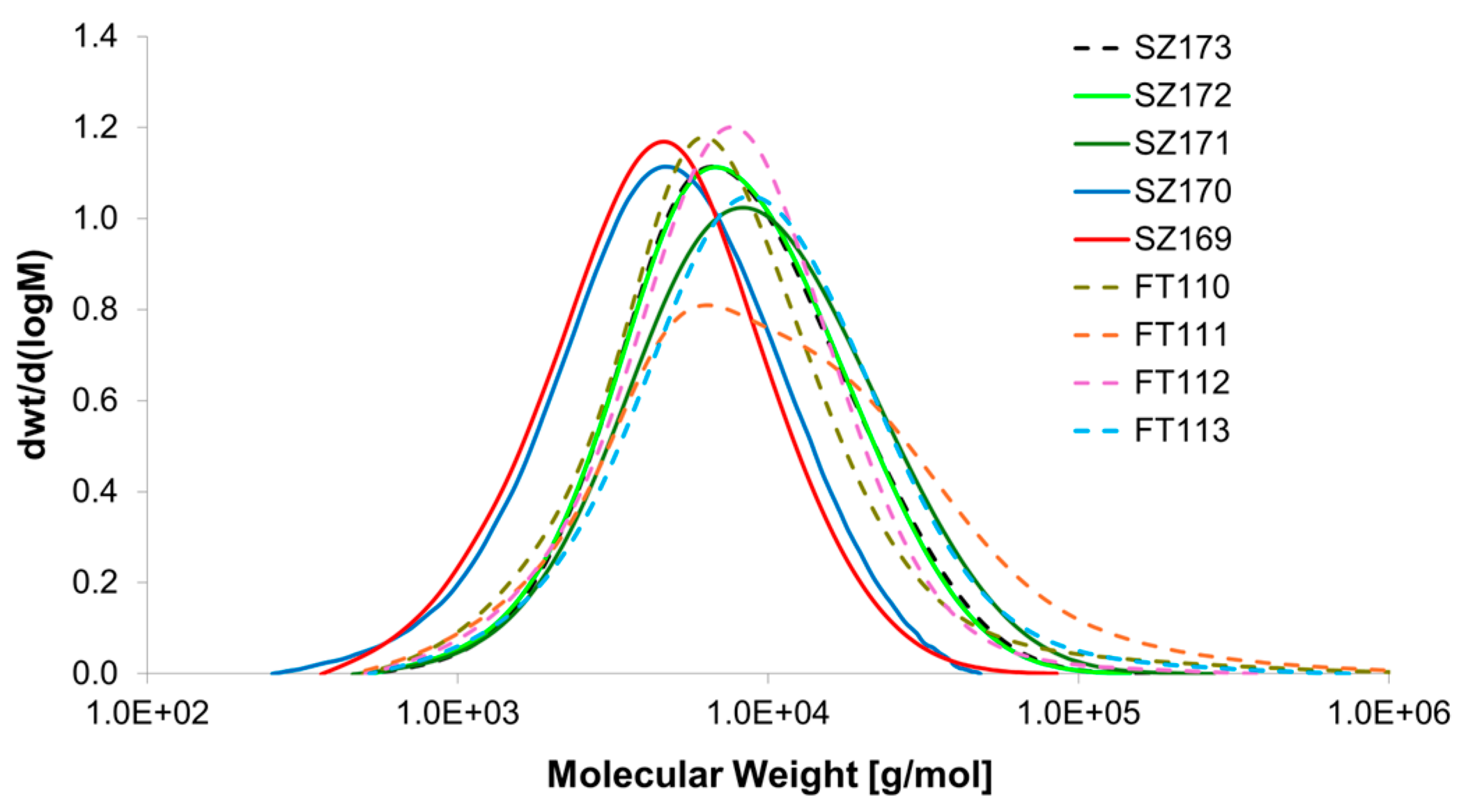
Meanwhile, the optimization of the continuous flow polymerization was performed by varying the temperature and pressure parameters applied to a standardized reaction mixture. The reaction mixtures were prepared containing both monomers and the catalytic system maintaining fixed concentrations, and a defined residence time within the pre-heated coil reactor was tested, regulating the mixture volume and flow rate. To avoid an increase in the viscosity of the sorting crude solutions after flowing through the coil reactor, a convergent line supplying pure toluene for 1:1 dilution was used prior to collecting the solution in a flask containing toluene and metal scavengers, followed by the polymer purification process (Figure 1). As shown in Table 1, the increase in coil reactor temperature from 120 °C to 140 °C leads to a remarkable increase in weight average molecular weight (Mw) values, from ≈6000 g/mol for sample SZ169 to ≈13,400 g/mol for sample SZ171, comparable with the sample obtained in the batch reaction (SZ173). The Mw/Mn values (where Mn is number-average molecular weight) of all samples prepared with flow conditions, ranging from 1.9 to 2.2, are comparable with the conventional batch product too (Table 1, Figure 2).
The MWA polymerization was carried out by charging the reactor vials under a nitrogen atmosphere with the reaction mixture dissolved in the selected solvent. During the optimization of the reaction conditions, various solvent mixtures were tested, including dry toluene, dry DMF, and two DMF/toluene mixtures at different volume ratios.
Pure toluene was included to allow a direct comparison with the other systems. However, due to its low dielectric constant and poor microwave absorption capacity, toluene proved ineffective in promoting efficient heating under microwave irradiation. To enhance heating efficiency, DMF was tested, which led to the growth of the polymeric chains. Unfortunately, the low solubility of PSBTBT in DMF caused precipitation of the polymer during the reaction, resulting in the increased molecular weight and polydispersity of the product. Even if the Mw value increased in both the FT110 and FT111 samples, an increase in polydispersity to ≈4 is considered detrimental for the quality of the material.
Subsequently, two different DMF/toluene mixtures, 1:2 (FT112) and 1:10 (FT113), were evaluated in order to optimize the molecular properties of the resulting polymer. The products obtained were comparable with the batch SZ173 sample (Table 1, Figure 2).
For all samples, the reaction mixtures were quenched by dilution with toluene, and the same purification process was applied to isolate the chloroform-soluble fractions used in all subsequent characterizations.
All samples were characterized with high temperature–size exclusion chromatography (HT-SEC) to evaluate the molecular properties of the products obtained (Table 1, Figure 2).
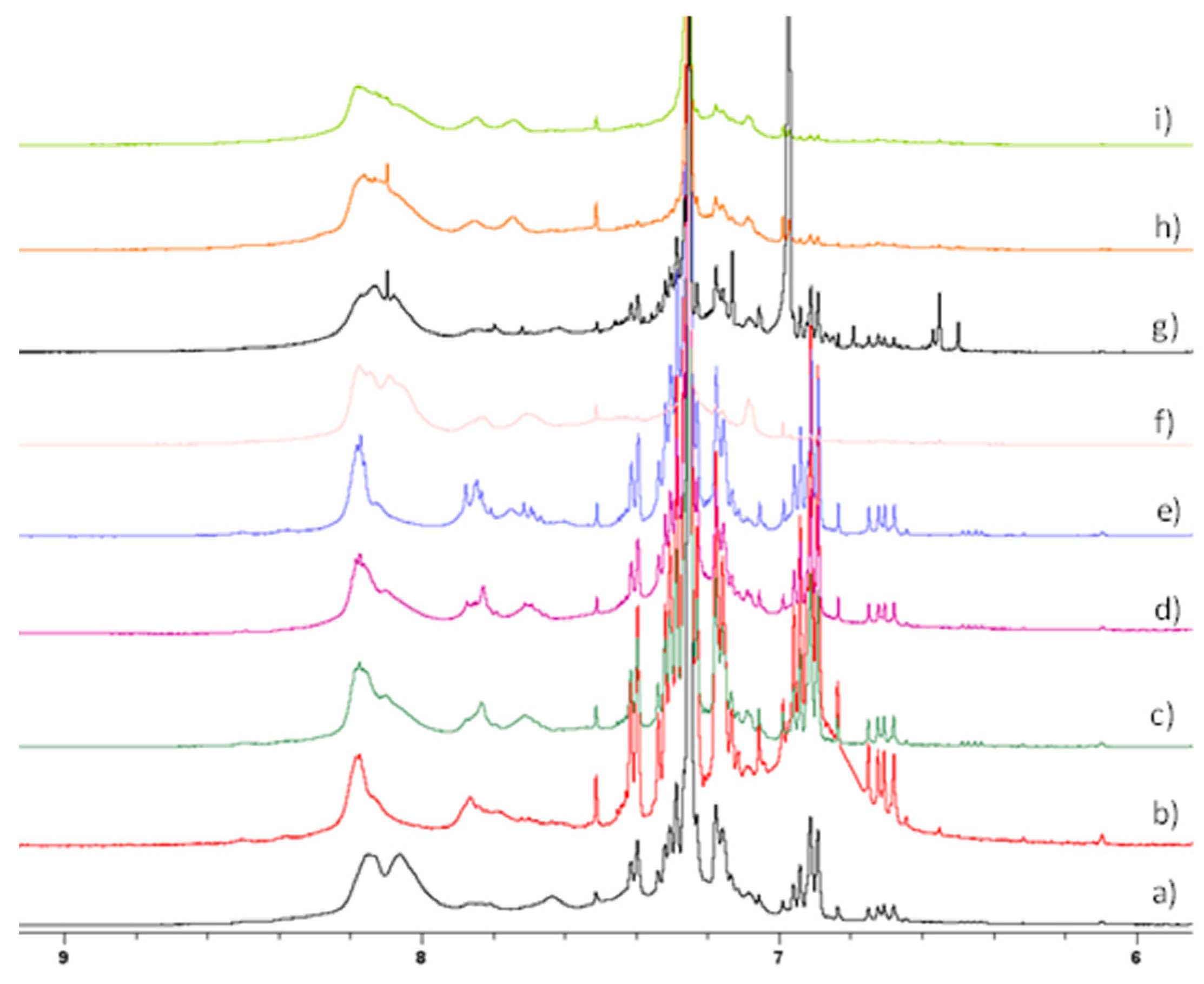
The structural characterization of all products obtained with 1H-NMR was performed. Figure 3 shows the aromatic region of the 1H NMR spectra of the synthesized products. The resonances at 8.2 and 7.8 ppm were assigned to benzothiadiazole (electron-acceptor moiety) and thiophene moieties (electron-donating moiety), respectively.
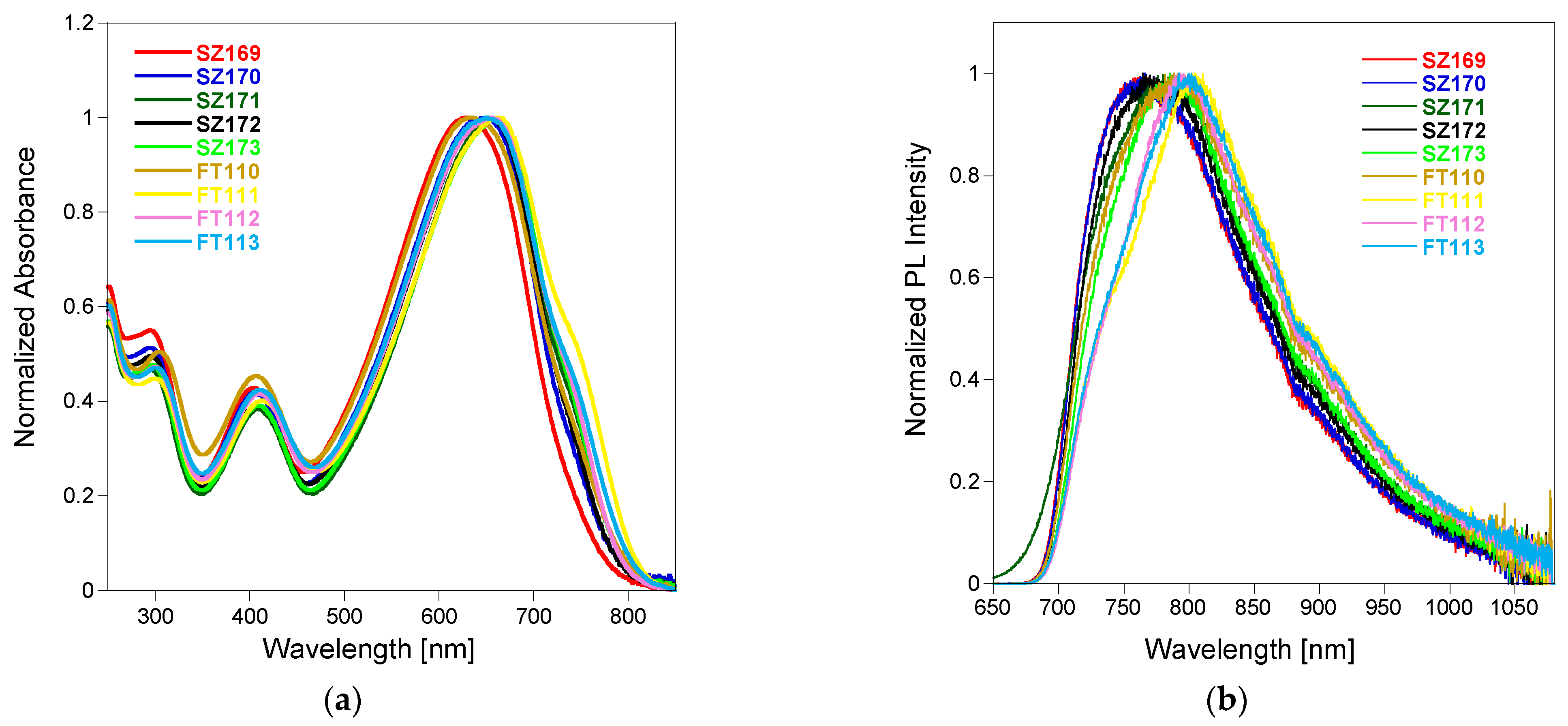
Figure 4 and Table 2 show the optical properties of all synthesized polymers in solution. All exhibit a large absorption band in the 500–750 nm range (Figure 4a), attributed to the free polymer chains. Nevertheless, the maximum absorbance drastically blue-shifts from 660 nm (SZ173) to a wavelength of ≈625 nm (SZ169). Furthermore, a low-energy shoulder appears at 750 nm in all polymers synthesized via microwave-assisted methods (FT110-113) (Table 2). This hypsochromic shift is probably due to different interchain interactions, related to increasing contact between the macromolecules, which in turn could cause a strong π-π stacking [23].
Similarly, the PL spectra (λexc = 630 nm) show a typical emission band in the 700–950 nm range, with blue- or red-shifted maxima in relation to the different synthesis techniques (Figure 4b, Table 2).

4. Conclusions and Outlooks

Different advanced synthetic methodologies were tested to produce PSBTBT, a model low band-gap electron-donor polymer used in the active layer of organic photovoltaic (OPV) devices. The optimization of the polycondensation conditions led to the purification and characterization of samples with well-defined structural and optical properties, which will be the subject of in-depth investigation. The results obtained demonstrate that the proposed synthetic approaches (namely, flow synthesis and microwave-assisted synthesis) enable the preparation of polymers with comparable molecular weight distributions and optical properties. In most cases, the yields are similar or even superior to those obtained via conventional methods, while significantly reducing reaction time. Indeed, the traditional thermal approach requires 24 h of heating, whereas both flow and microwave-assisted methods achieve comparable results in just 1 h, leading to substantial savings in both time and energy.
The next step will involve evaluating and comparing the residual palladium catalyst levels in the polymers to determine whether their quantity varies depending on the synthesis technique employed, particularly with regard to covalently bonded palladium within the polymeric chains, which is known to be the main impurity affecting OPV efficiency. This analysis will be carried out using MALDI-TOF mass spectrometry. Furthermore, this characterization will provide insights into the concatenation of the polymer backbone. Specifically, structural defects along the backbone can interrupt π-conjugation, which leads to detrimental effects on device performance. To further assess the integrity of the polymer chains, 2D NMR spectroscopy will be conducted to identify potential concatenation defects in the polymer backbone structure.

Author Contributions

S.Z. and F.T. performed the synthesis of the materials; F.V.-M. was responsible for the optical characterization; A.C.B. was responsible for the NMR characterization; S.Z., A.G.S., and D.P. were responsible for the SEC characterization; S.Z., F.V.-M., B.M.S., and M.P. designed the experiments, discussed the data, and prepared the manuscript. All authors have read and agreed to the published version of the manuscript.

Funding

This research was funded by Italian “Ministero dell’Università e della Ricerca” (MUR), Project PRIN2022, Environmental sustainability and recyclability of printable organic solar cells based on water-processable polymer nanoparticles (ENSURE SOLAR), Prot. 20227PLSF9, CUP B53D23015180006.

Institutional Review Board Statement

Not applicable.

Informed Consent Statement

Not applicable.

Data Availability Statement

The original contributions presented in this study are included in the article. The data are available from the corresponding authors upon reasonable request.

Conflicts of Interest

The authors declare no conflicts of interest.

References

  1. Lee, J.; Park, S.A.; Ryu, S.U.; Chung, D.; Park, T.; Son, S.Y. Green-Solvent-Processable Organic Semiconductors and Future Directions for Advanced Organic Electronics. J. Mater. Chem. A Mater. 2020, 8, 21455–21473. [Google Scholar] [CrossRef]
  2. Ravikumar, K.; Dangate, M.S. Transparent Photovoltaics and Environmental Impact. In Smart Grids as Cyber Physical Systems: Artificial Intelligence, Cybersecurity, and Clean Energy for Next Generation Smart Grids; Wiley: Hoboken, NJ, USA, 2024; pp. 247–274. ISBN 9781394261727. [Google Scholar]
  3. Zappia, S.; Veronese, L.; Forni, A.; Dattilo, S.; Samperi, F.; Dagar, J.; Brown, T.M.; Panigati, M.; Destri, S. Carbazole-Pyridazine Copolymers and Their Rhenium Complexes: Effect of the Molecular Structure on the Electronic Properties. Eur. Polym. J. 2022, 168, 111095. [Google Scholar] [CrossRef]
  4. Ma, B.; Shi, Q.; Ma, X.; Li, Y.; Chen, H.; Wen, K.; Zhao, R.; Zhang, F.; Lin, Y.; Wang, Z.; et al. Defect-Free Alternating Conjugated Polymers Enabled by Room- Temperature Stille Polymerization. Angew. Chem. Int. Ed. 2022, 61, e202115969. [Google Scholar] [CrossRef]
  5. Lombeck, F.; Komber, H.; Fazzi, D.; Nava, D.; Kuhlmann, J.; Stegerer, D.; Strassel, K.; Brandt, J.; de Zerio Mendaza, A.D.; Müller, C.; et al. On the Effect of Prevalent Carbazole Homocoupling Defects on the Photovoltaic Performance of PCDTBT:PC71BM Solar Cells. Adv. Energy Mater. 2016, 6, 1601232. [Google Scholar] [CrossRef]
  6. Vangerven, T.; Verstappen, P.; Drijkoningen, J.; Dierckx, W.; Himmelberger, S.; Salleo, A.; Vanderzande, D.; Maes, W.; Manca, J.V. Molar Mass versus Polymer Solar Cell Performance: Highlighting the Role of Homocouplings. Chem. Mater. 2015, 27, 3726–3732. [Google Scholar] [CrossRef]
  7. Vangerven, T.; Verstappen, P.; Patil, N.; D’Haen, J.; Cardinaletti, I.; Benduhn, J.; Van Den Brande, N.; Defour, M.; Lemaur, V.; Beljonne, D.; et al. Elucidating Batch-to-Batch Variation Caused by Homocoupled Side Products in Solution-Processable Organic Solar Cells. Chem. Mater. 2016, 28, 9088–9098. [Google Scholar] [CrossRef]
  8. Kabir, E. Application of Microwave Heating in Polymer Synthesis: A Review. Results Chem. 2023, 6, 101178. [Google Scholar] [CrossRef]
  9. Newman, S.G.; Jensen, K.F. The Role of Flow in Green Chemistry and Engineering. Green Chem. 2013, 15, 1456–1472. [Google Scholar] [CrossRef]
  10. Pirotte, G.; Kesters, J.; Verstappen, P.; Govaerts, S.; Manca, J.; Lutsen, L.; Vanderzande, D.; Maes, W. Continuous Flow Polymer Synthesis toward Reproducible Large-Scale Production for Efficient Bulk Heterojunction Organic Solar Cells. ChemSusChem 2015, 8, 3228–3233. [Google Scholar] [CrossRef] [PubMed]
  11. Shin, W.; Ko, W.; Jin, S.H.; Earmme, T.; Hwang, Y.J. Reproducible and Rapid Synthesis of a Conjugated Polymer by Stille Polycondensation in Flow: Effects of Reaction Parameters on Molecular Weight. Chem. Eng. J. 2021, 412, 128572. [Google Scholar] [CrossRef]
  12. Gobalasingham, N.S.; Carlé, J.E.; Krebs, F.C.; Thompson, B.C.; Bundgaard, E.; Helgesen, M. Conjugated Polymers Via Direct Arylation Polymerization in Continuous Flow: Minimizing the Cost and Batch-to-Batch Variations for High-Throughput Energy Conversion. Macromol. Rapid Commun. 2017, 38, 1700526. [Google Scholar] [CrossRef]
  13. Grenier, F.; Aïch, B.R.; Lai, Y.Y.; Guérette, M.; Holmes, A.B.; Tao, Y.; Wong, W.W.H.; Leclerc, M. Electroactive and Photoactive Poly[Isoindigo-Alt-EDOT] Synthesized Using Direct (Hetero)Arylation Polymerization in Batch and in Continuous Flow. Chem. Mater. 2015, 27, 2137–2143. [Google Scholar] [CrossRef]
  14. Ebner, C.; Bodner, T.; Stelzer, F.; Wiesbrock, F. One Decade of Microwave-Assisted Polymerizations: Quo Vadis? Macromol. Rapid Commun. 2011, 32, 254–288. [Google Scholar] [CrossRef]
  15. Zhang, W.; Lu, P.; Wang, Z.; Ma, Y. Exploration of Structure and Mechanism of Insoluble Gels Formed in Microwave-Assisted Suzuki Coupling for Poly(9,9-Dihexylfluorene)s. Sci. China Chem. 2012, 55, 844–849. [Google Scholar] [CrossRef]
  16. Nicho, M.E.; García-Escobar, C.H.; Hernández-Martínez, D.; Linzaga-Elizalde, I.; Cadenas-Pliego, G. Microwave-Assisted Synthesis of Poly(3-Hexylthiophene) via Direct Oxidation with FeCl3. Mater. Sci. Eng. B 2012, 177, 1441–1445. [Google Scholar] [CrossRef]
  17. Heeney, M.; Bailey, C.; Genevicius, K.; Shkunov, M.; Sparrowe, D.; Tierney, S.; McCulloch, I. Stable Polythiophene Semiconductors Incorporating Thieno[2,3-6]Thiophene. J. Am. Chem. Soc. 2005, 127, 1078–1079. [Google Scholar] [CrossRef]
  18. Tierney, S.; Heeney, M.; McCulloch, L. Microwave-Assisted Synthesis of Polythiophenes via the Stille Coupling. Synth. Met. 2005, 148, 195–198. [Google Scholar] [CrossRef]
  19. Nehls, B.S.; Asawapirom, U.; Füldner, S.; Preis, E.; Farrell, T.; Scherf, U. Semiconducting Polymers via Microwave-Assisted Suzuki and Stille Cross-Coupling Reactions. Adv. Funct. Mater. 2004, 14, 352–356. [Google Scholar] [CrossRef]
  20. Gasparini, N.; Jiao, X.; Heumueller, T.; Baran, D.; Matt, G.J.; Fladischer, S.; Spiecker, E.; Ade, H.; Brabec, C.J.; Ameri, T. Designing Ternary Blend Bulk Heterojunction Solar Cells with Reduced Carrier Recombination and a Fill Factor of 77%. Nat. Energy 2016, 1, 16118. [Google Scholar] [CrossRef]
  21. Giovanella, U.; Betti, P.; Bolognesi, A.; Destri, S.; Melucci, M.; Pasini, M.; Porzio, W.; Botta, C. Core-Type Polyfluorene-Based Copolymers for Low-Cost Light-Emitting Technologies. Org. Electron. 2010, 11, 2012–2018. [Google Scholar] [CrossRef]
  22. Collins, B.A.; Li, Z.; McNeill, C.R.; Ade, H. Fullerene-Dependent Miscibility in the Silole-Containing Copolymer PSBTBT-08. Macromolecules 2011, 44, 9747–9751. [Google Scholar] [CrossRef]
  23. Awada, H.; Bousquet, A.; Dagron-Lartigau, C.; Billon, L. Surface-Initiated Polymerization of A-A/B-B Type Conjugated Monomers by Palladium-Catalyzed Stille Polycondensation: Towards Low Band Gap Polymer Brushes. RSC Adv. 2015, 5, 78436–78440. [Google Scholar] [CrossRef]
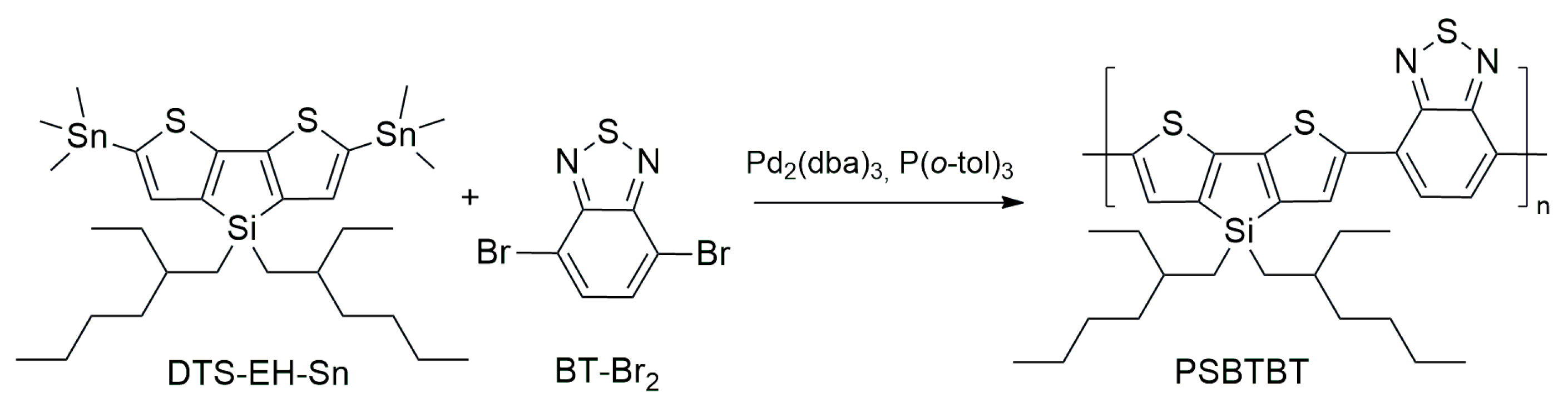
Scheme 1. Stille cross-coupling polymerization of PSBTBT investigated in this work.
Chemproc 18 00024 sch001
Figure 1. Sketched diagram of the flow polymerization system.
Chemproc 18 00024 g001
Figure 2. Comparison of differential molecular weight distributions of PSBTBT samples characterized through HT-SEC.
Chemproc 18 00024 g002
Figure 3. 1H-NMR between 6 and 9 ppm. Proton spectra at 600 MHz and 298 K in CDCl3 of (a) SZ173; (b) SZ172; (c) SZ171; (d) SZ170; (e) SZ169; (f) FT110; (g) FT111; (h) FT112; and (i) FT113 samples.
Chemproc 18 00024 g003
Figure 4. Normalized (a) UV-Vis absorption and (b) PL spectra of all synthesized polymers in chloroform.
Chemproc 18 00024 g004
Table 1. Polymerization reaction conditions and molecular weight distributions (MWDs) obtained for different methodologies. The analyses were carried out on the chloroform-soluble fractions.
ItemMethodSolventT [°C]P
[Bar]
Y
[%]
Mn
[g/mol]
Mw
[g/mol]
Mw/Mn
SZ173Batch aToluene110131565611,1191.97
SZ169Flow bToluene120432315660401.91
SZ170Flow bToluene120637325364851.99
SZ171flow bToluene140427615313,4152.18
SZ172flow bToluene140642554410,8491.96
FT110MWA bToluene1401.732495215,6683.16
FT111MWA bDMF1601.254589426,7434.54
FT112MWA bDMF/toluene = 1:21601.749536711,0722.06
FT113MWA bDMF/toluene = 1:101602.355624116,0442.57
a reaction time 24 h; b reaction time 1 h.
Table 2. Optical properties of all polymers in chloroform solution.
Polymerλabsmaxλemmax *
SZ169625760
SZ170643760
SZ171658775
SZ172653760
SZ173660755
FT110634775
FT111660800
FT112652795
FT113652795
* λexc = 630 nm.
Disclaimer/Publisher’s Note: The statements, opinions and data contained in all publications are solely those of the individual author(s) and contributor(s) and not of MDPI and/or the editor(s). MDPI and/or the editor(s) disclaim responsibility for any injury to people or property resulting from any ideas, methods, instructions or products referred to in the content.