Review

Preoperative Optimization in Patients with Diabetes Undergoing Foot and Ankle Surgery: BMI, Glycemic Control, and GLP-1 Agonists


by
Kaitlyn Leslie Hurka
1,*,
Arun Kiran Movva
1,
Anoop Sunkara
1,
Siddhartha Kalala
1,
Michael O’Connor Sohn
1,
Kishen Mitra
2 and
Albert Thomas Anastasio
3
1
Feinberg School of Medicine, Northwestern University, Chicago, IL 60611, USA
2
Department of Orthopaedic Surgery, Duke University, Durham, NC 27710, USA
3
School of Medicine, Wake Forest University, Winston-Salem, NC 27101, USA
*
Author to whom correspondence should be addressed.
Diabetology 2026, 7(3), 54; https://doi.org/10.3390/diabetology7030054

Submission received: 25 November 2025 / Revised: 7 February 2026 / Accepted: 25 February 2026 / Published: 5 March 2026

Abstract

Diabetes mellitus (DM) is highly prevalent among patients undergoing foot and ankle surgery and is associated with substantially increased perioperative and postoperative risk. This narrative review synthesizes the current literature on optimization of DM patients undergoing foot and ankle surgery. Complications of chronic hyperglycemia, including neuropathy and peripheral vascular disease, make the foot and ankle particularly vulnerable to ulceration, infection, and deformity, contributing to high rates of both operations and postoperative complications such as surgical site infection and readmission. Glycemic control and obesity are modifiable predictors of surgical outcomes and represent key targets for preoperative optimization. Lifestyle modification and pharmacologic therapy play central roles in DM optimization. Traditional agents such as metformin, sulfonylureas, thiazolidinediones, and dipeptidyl peptidase-4 inhibitors remain foundational therapies, while newer therapies such as sodium–glucose cotransporter-2 inhibitors (SGLT2is) and glucagon-like peptide-1 (GLP-1) agonists offer meaningful improvements to glycemic control and weight loss. Pharmacologic regimens must be individualized, and many agents require careful perioperative management. Despite advances in medical therapy, high-quality evidence specific to foot and ankle surgery remains limited. Future research should focus on developing procedure- and agent-specific guidelines to reduce the substantial clinical and economic burden of DM in foot and ankle surgical patients.

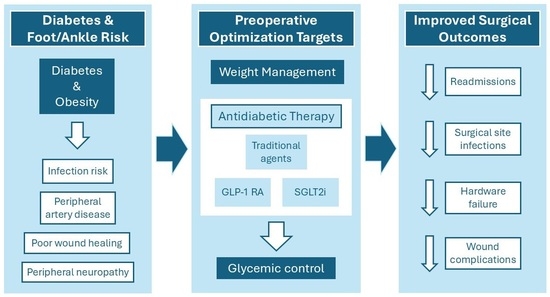
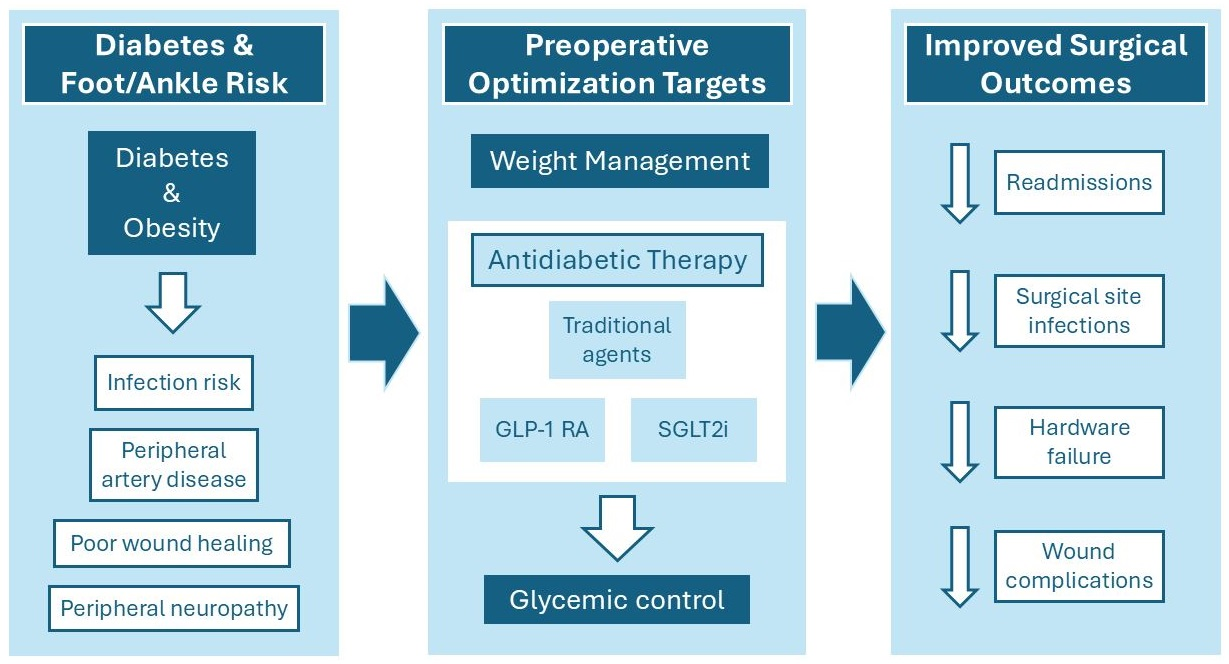
Graphical Abstract

1. Introduction

Diabetes mellitus (DM) is among the most common medical conditions in the world, and its disproportionate representation in surgical populations poses unique challenges for perioperative management. The prevalence of DM in the general population is 10.5% and increases to 17% in surgical patients. This trend may be due to an increased risk for DM-related complications ultimately requiring surgical intervention, or simply due to an increased risk of overall complications, some of which may require surgery [1,2]. Rates vary by specialty, with orthopedic patients having DM as a comorbid condition at percentages second only to cardiovascular surgery [2,3]. Within orthopedics, foot and ankle surgery is especially affected as a result of distal manifestations of DM, particularly neuropathy, peripheral arterial disease (PAD), and impaired immune function [4,5]. As such, these complications drive a high volume of procedures addressing nonhealing ulcers, osteomyelitis, and soft tissue infections in this population [4,5]. Given the substantial burden DM imposes on patients undergoing foot and ankle surgery, it is imperative to understand the role of DM in influencing perioperative and postoperative risk.
Patients with DM are more susceptible to not only the underlying medical conditions requiring foot and ankle surgical intervention but also the surgical complications following these procedures. The rates of surgical site infection (SSI), in addition to adverse events such as readmission and reoperation, are consistently elevated in patients with DM compared to patients without DM [3,4,6,7,8]. While impaired perfusion and diminished wound healing may contribute to this risk, preoperative hyperglycemia is a key driver. A meta-analysis of 94 studies found that even after adjusting for a history of DM, elevated blood glucose was associated with increased SSI frequency with an odds ratio of 2.22 (95% CI 1.36–3.60) [3]. Moreover, complication rates increase with DM severity; patients with insulin-dependent DM have worse outcomes following ankle fracture repair when compared to their non-insulin-dependent counterparts [9]. These findings highlight the multifactorial ways in which DM can affect a patient’s surgical risk profile.
The existing literature highlights a clear need for preoperative optimization strategies aimed at mitigating foot and ankle surgical complication risk in patients with DM through interventions ranging from nonpharmacologic strategies to medications. As the global burden of DM continues to rise, the development of evidence-based preoperative protocols for maximizing surgical outcomes in this vulnerable population is paramount. This narrative review will explore existing interventions, evaluate emerging therapeutic approaches, and summarize the current state of evidence guiding preoperative management of foot and ankle surgery for patients with DM.

2. Methods

This study is a narrative review of the literature examining preoperative optimization of DM in patients undergoing foot and ankle surgery. A narrative approach was selected to allow for a broad synthesis of heterogeneous evidence spanning medical management, perioperative considerations, and surgical outcomes.
A literature search was conducted using PubMed and Embase to identify relevant studies published in English. While the majority of included studies were published from 2010 onward, earlier foundational studies were included when relevant to the mechanisms, indications, or perioperative considerations of older pharmacologic therapies. Search terms included combinations of diabetes mellitus, foot and ankle surgery, glycemic control, obesity, HbA1c, preoperative optimization, perioperative management, and pharmacologic therapy, including specific classes and agents (e.g., metformin, sulfonylureas, thiazolidinediones, dipeptidyl peptidase-4 inhibitors, sodium–glucose cotransporter-2 inhibitors, and glucagon-like peptide-1 receptor agonists). Searches also included terms related to clinical practice guidelines and future directions in perioperative diabetes management. Studies were selected based on relevance to preoperative optimization, perioperative management, and postoperative outcomes in foot and ankle surgery populations. Additional references were identified through manual review of bibliographies of key articles.

3. Impact of Diabetes on Foot and Ankle Surgery

Several mechanisms predispose DM patients to pathology requiring surgical intervention. Chronic hyperglycemia causes microvascular dysfunction and impaired leukocyte activity, thus diminishing wound healing [10,11]. These effects are most pronounced in distal extremities such as the foot and ankle tissue, where chronic nerve and vascular injury lead to neuropathy, PAD, and ischemia. Loss of sensation permits trauma to go unrecognized, and diminished vascular perfusion prevents adequate tissue repair. This combination leads to diabetic foot disease (DFD) that manifests as ulcers, infections, and osteomyelitis that can progress to amputation or death. Thus, many foot and ankle debridements and reconstructions address ulceration or deformity caused by diabetic neuropathy and ischemia [2,4,5]. Diabetes also worsens outcomes in operations unrelated to diabetic foot pathology, such as fracture fixation and arthroplasty, reinforcing the systemic influence of metabolic dysfunction [8].
Lower-extremity disease affects about 27% of patients with DM [12]. Among patients with a 20-year or longer history of type 1 DM, 20% percent develop distal symmetric polyneuropathy (DSPN) [13]. Among patients with newly diagnosed type 2 DM, 10–15% of patients have DSPN, with 50% developing DSPN after 10 years [13,14,15]. These chronic complications erode functional stability and diminish proprioception, thus predisposing patients to ulceration and deformity that eventually require operative management. Charcot neuroarthropathy represents an advanced complication of DFD and is a common indication for surgical intervention following failed conservative management, with reported associations with high mortality rates [16,17,18]. Emerging evidence suggests that dysregulated inflammatory signaling involving the RANKL–RANK–OPG pathway contributes to pathologic bone resorption in Charcot neuroarthropathy and has prompted investigation into targeted anti-resorptive therapies, although detailed discussion of these mechanisms is beyond the scope of the present review [18].
The same mechanisms that predispose patients with DM to foot and ankle injury also increase perioperative risk. Patients with DM experience consistently higher rates of postoperative SSI, wound dehiscence, delayed union, and implant failure compared with controls without DM [3,4,7,8,19,20]. For example, in ankle fracture fixation, postoperative complications occur in 26–47% of patients with DM versus 15% of matched controls without DM [10]. Factors such as anemia and systemic inflammation are closely associated with both amputation risk and poor long-term survival among patients undergoing amputation for diabetic foot infections (DFI) [21].
The clinical burden of these complications is significant; DFIs constitute about 20% of all DM-related hospital admissions in the United States, with readmission rates of around 40% [4,16]. Severe DFIs lead to a decline in mobility and independence, with many patients experiencing chronic pain, social withdrawal, and reduced overall quality of life [16]. DFIs are responsible for almost two-thirds of all annual amputations, and a DM-related amputation occurs globally every 30 s. The economic impact of DM mirrors the clinical one. Diabetic foot care is one of the most expensive chronic disease treatments, exceeding those of many cancers, with costs driven by long hospital stays, recurrent surgeries, and long-term rehabilitation [22,23]. The health-related and financial burden of foot and ankle complications among DM patients underscores the importance of proper management and optimization prior to surgery.
While a substantial body of literature has examined postoperative outcomes in patients with DM, much of this work focuses on non-foot and ankle surgical populations [3,7,8]. Extrapolation of these findings to foot and ankle procedures may be inappropriate due to differences in soft tissue quality, vascularity, and weight-bearing biomechanics compared to the knee, hip, and spine. Among studies specific to foot and ankle surgery, the majority evaluate procedures performed for DM-related complications [5,11,16,22,23,24]. Although these studies provide valuable insight into outcomes following diabetic foot and ankle surgery, they do not isolate the independent effect of DM and therefore have limited applicability to elective, non-DM-related procedures. Among investigations that have evaluated outcomes of non-DM-related foot and ankle procedures in patients with DM, the data remain relatively limited, particularly when stratified by specific procedure type [10,19,20,25]. As a result, clinicians are often required to apply generalized risk from other surgical populations to patients with distinct pathophysiology. Thus, the clinical and economic impact of DM on non-DM-related foot and ankle surgery remains incompletely characterized, highlighting the need for procedure-specific investigations.

4. Guidelines and Cutoffs

Optimization of glycemic control and body mass index (BMI) before surgery is a vital component of care that promotes better postoperative outcomes. Multiple studies have demonstrated that lower perioperative glucose levels correlate with reduced postoperative complications such as SSI and nonunion following orthopedic procedures [3]. Insulin dependence, which is indicative of advanced or poorly managed DM, serves as an independent predictor of adverse outcomes in many surgical cohorts, including foot and ankle surgery [8].
Prior studies have examined specific hemoglobin A1c (HbA1c) thresholds to identify optimal cutoffs for elective surgery, with one finding that patients with one- to three-month postoperative HbA1c levels under 6.5% encounter fewer infections and complications related to wound healing than those with poorer HbA1c control [25]. Another study reported a higher threshold and found that HbA1c levels below 7.5% in the three-month perioperative period improved short-term outcomes and lowered readmission rates in orthopedic populations [26]. However, caution must be used when managing perioperative glucose control due to risks of hypoglycemia [27]. Although these studies assessed HbA1c within a limited perioperative timeframe, optimizing glycemic control preoperatively remains essential for maintaining stable glucose levels throughout the peri- and postoperative period.
Body mass index is also a significant factor influencing surgical outcomes. Higher BMI has been linked to longer operation times, higher risk of SSI, slower wound healing, and a higher likelihood of hardware failure in foot and ankle surgery [28,29,30,31]. Patients with obesity (BMI > 30) undergoing ankle fracture fixation or total ankle replacement have an elevated incidence of wound complications, readmissions, and deep infections compared to their non-obese counterparts [28,29]. These associations persist after adjusting for DM, highlighting that both obesity and DM have cumulative impacts on postoperative morbidity. Patients with comorbid obesity and DM experience especially poor outcomes, with higher rates of wound complications, venous thromboembolism, and revision procedures than those with either condition alone [30,31]. As a result, weight loss intervention should be considered an integral aspect of the preoperative optimization process before proceeding with elective foot and ankle procedures.
Major professional organizations have established guidelines to support clinicians in managing perioperative glycemia and determining safe thresholds for elective surgery. The American Diabetes Association (ADA) and Endocrine Society guidelines both recommend achieving a preoperative HbA1c below 8% whenever possible and maintaining glucose levels between 100 and 180 mg/dL within four hours of surgery [32,33]. Both organizations caution against overly strict perioperative targets in favor of a balanced, individualized approach that avoids both hyper- and hypoglycemia, complications that may occur with intensive glycemic control [27,32,33,34]. The American College of Surgeons similarly advises delaying elective procedures when glucose remains consistently above 180 mg/dL or when HbA1c indicates uncontrolled DM, whereas the American College of Foot and Ankle Surgeons emphasizes assessment of recent HbA1c values and DM-related complications such as neuropathy and peripheral vascular disease to ensure adequate perioperative management [35,36]. The Society for Ambulatory Anesthesia offers aligned recommendations and endorses moderate glucose targets of 100–180 mg/dL while discouraging intensive insulin protocols for short or outpatient procedures, consistent with ADA guidance [37].
Across orthopedic surgery, HbA1c cutoffs between 7.5% and 8% are commonly used as decision points for delaying elective procedures [26]. Glucose cutoffs are more variable and often depend on institutional protocols, surgeon preference, and patient comorbidities. BMI thresholds also vary widely across surgeons and healthcare systems. Because adiposity has been repeatedly shown to increase surgical complication risk, most clinicians and surgeons advise weight management prior to surgery [28,29,30,31].
The use of strict BMI or HbA1c cutoffs for surgical eligibility is controversial. Specifically, the debate continues around whether rigid exclusion criteria improve outcomes or unjustly restrict patient access to care [38]. Applying universal BMI cutoffs may disproportionately affect socioeconomically disadvantaged populations, women, and racial or ethnic minorities, thereby reinforcing healthcare inequities [39]. Some studies suggest that when patients with obesity are carefully optimized and managed, outcomes approach those of non-obese individuals, supporting a more individualized approach rather than categorical exclusion [28,29].
In summary, most professional organizations recommend achieving preoperative glucose levels of 100–180 mg/dL and an HbA1c below 8%, while emphasizing individualized risk assessment rather than absolute cutoffs [32,33,35,36,37]. These targets reflect a balance between reducing hyperglycemia-related complications and avoiding hypoglycemia due to intense glycemic control. However, HbA1c is an imperfect surrogate for perioperative glycemic risk, as it does not capture glycemic variability or acute perioperative hyperglycemia [40]. Similarly, although elevated BMI is consistently associated with worse outcomes, BMI alone is a metric that may inadequately reflect physiologic risk or functional status [28,29,30,31]. Thus, as emphasized by the American College of Foot and Ankle Surgeons, DM-related comorbidities such as PAD and peripheral neuropathy should be carefully evaluated and optimized prior to foot and ankle surgery, supporting a patient- and procedure-specific approach rather than reliance on rigid exclusion criteria [36].

5. Non-Pharmacologic Optimization

For all patients with DM, non-pharmacologic preoperative optimization through lifestyle modifications should be encouraged. With higher BMI consistently associated with poorer functional recovery and increased postoperative complications following total joint arthroplasty, weight management is a logical target for optimization [28,29,30,31]. Moderate, supervised preoperative weight reduction by 5–10% improves wound healing and reduces infection rates and hospital length of stay [14]. However, weight loss must be carefully monitored and controlled; rapid or excessive weight loss (>10% within six months) increases postoperative infection and readmission risk [15]. Preoperative functional and strength training, or “prehabilitation,” is associated with decreased BMI and improved functioning following total knee arthroplasty and lumbar surgery, suggesting that similar programs may be effective for foot and ankle patients [41].
Lifestyle-based nutritional interventions have also demonstrated efficacy in improving glycemic control among patients with type 2 diabetes mellitus (T2DM). Low-glycemic index and Mediterranean-style diets are particularly effective in reducing HbA1c levels [39,41,42]. Additionally, a short-term preoperative plant-based diet program was shown to improve fasting glucose and HbA1c, suggesting that targeted dietary interventions can serve as valuable tools for preoperative glycemic optimization [41]. Structured perioperative nutrition programs also enhance glucose stability and recovery, constituting a key element of enhanced recovery after surgery protocols for DM patients [14,15]. For example, in-hospital carbohydrate-restricted diets after arthroplasty can significantly lower mean glucose without pharmacologic escalation [43].
Most research evaluating lifestyle interventions in orthopedic surgery has focused on arthroplasty or spine populations, so extrapolation of these findings to foot and ankle surgery should be approached with caution [14,15,28,29,43]. Patients with DM undergoing foot and ankle procedures often have compromised soft tissue, altered biomechanics, and peripheral neuropathy, which may limit the feasibility and effectiveness of physical activity-based interventions. In addition, the balance between weight loss and surgical readiness requires careful consideration, as overly rapid weight reduction may delay optimization or adversely affect postoperative outcomes. Finally, lifestyle interventions demand substantial patient engagement and access to resources, potentially limiting their real-world implementation. Thus, although non-pharmacologic optimization remains a cornerstone of preoperative care, its role in foot and ankle surgery warrants further procedure-specific investigation.

6. Traditional Medications

For patients with DM not managed by lifestyle modifications, medical management is the next step in treatment. Biguanides, such as metformin, are the optimal initial therapy for patients with DM. While the precise mechanism of metformin is not fully understood, it achieves a dose-dependent reduction in HbA1c [44,45]. Metformin may be continued until the night before surgery in patients with normal renal function, as evidence demonstrates no perioperative rise in lactate levels or acidosis [46,47].
Sulfonylureas and meglitinides such as glipizide (Glucotrol®) improve glycemic control by stimulating insulin secretion. These agents are safe to continue up to the time of surgery and help maintain perioperative glucose control without increasing hypoglycemia risk in stable patients [48,49].
Thiazolidinediones (TZDs), such as pioglitazone (Actos®), are peroxisome proliferator-activated receptor gamma (PPAR-γ) agonists that improve insulin sensitivity of muscle and adipose tissue [50,51,52]. In the perioperative context, data are sparse regarding TZDs, so caution is advised and use should be individualized.
Dipeptidyl peptidase-4 (DPP-4) inhibitors such as sitagliptin (Januvia®) prevent degradation of incretin hormones, thus prolonging glucose-mediated insulin secretion and suppressing glucagon release [53,54,55]. DPP-4 inhibitors have been used safely perioperatively due to the low risk of hypoglycemia, though guidelines vary [56,57].
Although each antidiabetic agent demonstrates efficacy in lowering HbA1c and glucose levels, many patients require combination therapy to achieve glycemic control [58,59]. This polypharmacy increases cumulative side effect burden and introduces additional complexity in the perioperative setting. Notably, few studies have evaluated perioperative outcomes in patients receiving multiple concurrent diabetes medications, and evidence-based guidance for perioperative management of patients receiving multiple agents remains limited [46,47,48,49,56,57]. This uncertainty may be particularly consequential in foot and ankle surgery, where impaired wound healing, infection risk, and vascular disease increase sensitivity to glycemic dysregulation. Finally, the lack of clear perioperative guidance for certain agents further underscores the need for standardized, procedure-specific recommendations.

7. Modern Antidiabetic Agents

Contemporary antidiabetic agents offer effective glycemic control and minimal side effects. Sodium–glucose co-transporter 2 inhibitors (SGLT2is) such as canagliflozin (Invokana®), dapagliflozin (Farxiga®), and empaglifozin (Jardiance®) represent an established but evolving treatment for DM that functions by blocking glucose reabsorption in the nephron and promoting glucose excretion in the urine [60,61]. SGLT2is have been demonstrated to decrease serum glucose by 15 to 35 mg/dL, HbA1c by 0.5–1%, blood pressure by 3 to 5 mmHg, and weight by 1.5–3.5 kg, changes associated with significant mortality benefits in patients with DM or heart disease [60,61,62].
Although SGLT2is are considered relatively safe, an important contraindication of SGLT2is to consider is renal insufficiency [60]. Potential side effects of SGLT2i use are due to the increased glucose levels in the urine and include urinary tract infections, volume depletion (increased urinary frequency, thirst, and orthostatic hypotension), and genital mycotic infections [60,63]. The primary peri-operative complication of SGLT2is that must be considered is euglycemic ketoacidosis, which can occur secondary to insulin deficiency [63]. This complication can be avoided by discontinuing SGLT2is three to four days prior to surgery [33,64].
Glucagon-like peptide-1 receptor agonists (GLP-1 RAs) are the most novel class of antidiabetic agents. GLP-1 RAs mimic endogenous GLP-1, ultimately resulting in enhanced insulin secretion, glucagon suppression, delayed gastric emptying, appetite suppression, and improved cardiometabolic and renal function [65]. Thus, these drugs are effective in treating a variety of conditions, including DM, obesity, and cardiovascular disease [65,66]. Studies of GLP-1 RAs also indicate possible benefits for liver disease, chronic kidney disease, and substance use disorders [67].
Exenatide (Byetta®) was the first market-approved GLP-1 receptor agonist with clinical trials demonstrating significant reductions in HbA1c and body weight, but its twice-daily dosing schedule and side effects of nausea and vomiting limit its use [68]. Liraglutide (Victoza ®) and a long-acting version of exenatide (Bydureon®) were later developed as once-daily and once-weekly options, respectively [68]. Lixisenatide (Adlyxin®/Lyxumia®) and dulaglutide are other options in this drug class. Semaglutide (Wegovy®) and Tirzepatide (Mounjaro®/Zepbound®) offer other once-weekly dosing options [69]. All agents mentioned are administered as subcutaneous injections, which carry risk of injection-site pruritus and may be a less desirable method of drug delivery in some patients [70]. An oral formulation of semaglutide (Rybelsus®) offers an alternative to injection [65].
Diseases for which GLP-1 RAs are approved differ by agent. Tirzepatide is approved for treatment of T2DM, obesity, and sleep apnea. Semaglutide is approved for treatment of obesity, T2DM, cardiovascular disease in patients with DM, and kidney disease in patients with DM [71,72]. With the rapidly evolving landscape of drug development and FDA approvals, it is vital to individualize treatment choice to each patient to maximize efficacy [69].
GLP-1 RAs are particularly promising for patients undergoing orthopedic surgery since the associated decrease in weight and glycemic management presents an opportunity for effective preoperative optimization. Studies of patients on GLP-1 RA therapy undergoing total joint arthroplasty reported a reduced risk of periprosthetic joint infections, readmission rates, and wound complications without increases in negative outcomes such as venous thromboembolism and urinary retention [73,74,75,76]. A study by Ranson et al. found that while GLP-1 RAs decreased arrhythmia, death, and deep vein thromboembolism risk in total knee arthroplasty patients, there was an associated higher risk of acute renal failure, but no significant differences in two-year surgical outcomes [77]. Some foot and ankle procedures, including ankle fracture open reduction and internal fixation, tibiotalar fusions, subtalar fusions, and triple arthrodesis, have been assessed for outcomes in patients on GLP-1 RAs; correlations have been identified between GLP-1 RAs and positive outcomes (decreased hardware removal rates, decreased all-cause mortality, improved fusion rates) as well as negative outcomes (increased fall-related injuries, increased infection risk), but multiple studies cited a need for further research in controlled clinical settings [78,79,80,81].
Perioperative concerns associated with GLP-1 RAs include increased risk of pulmonary aspiration during anesthesia due to potential nausea, vomiting, and delayed gastric emptying, as well as postoperative nausea and vomiting [75]. Therefore, as recommended by the ADA and ASA, GLP-1 RAs should not be administered on the day of surgery for daily-dose formulations or for the week preceding surgery for weekly-dose formulations [33,68,82]. In patients with potential for severe uncontrolled hyperglycemia upon discontinuation of their GLP-1 RAs, therapy may be continued perioperatively, though endocrinologist consultation is strongly recommended and individual patient risk must be considered [83,84,85,86].
With the popularity and success of existing GLP-1 RA agents, many new pharmaceutical agents, particularly those with combination activity like tirzepatide, are being developed and tested and show great promise for glycemic control and weight loss [87]. Furthermore, novel oral formulations such as orforglipron may expand options for effective agents with an easier delivery method than injections [88]. Continued advancements in this class of agents will further promote improved postoperative outcomes for patients undergoing surgery [89,90].
Despite the growing enthusiasm surrounding SGLT2is and GLP-1 RAs, the perioperative use of these agents remains complex and incompletely defined. Much of the evidence supporting improved surgical outcomes is derived from arthroplasty populations, with relatively limited and heterogeneous data from foot and ankle surgery patients [73,75,76,77,81]. Given the unique biomechanics, frequent need for postoperative immobilization, and high prevalence of neuropathy in this population, extrapolation of these findings warrants caution. Additionally, perioperative discontinuation of GLP-1 RAs to mitigate aspiration risk may paradoxically undermine preoperative metabolic optimization, though the clinical consequences of this approach remain poorly defined [75,83,84,85]. As the pharmacologic landscape continues to evolve, the absence of standardized, procedure-specific perioperative guidelines in foot and ankle surgery highlights the importance of individualized decision-making and further prospective investigation.

8. Recommendations for Optimization

Given the heterogeneity of DM severity, comorbid conditions, and surgical complexity, optimization strategies for foot and ankle surgery must be individualized and implemented within the context of each patient’s clinical risk profile and surgical urgency. Optimization should prioritize weight loss and glycemic control, as lower BMI and improved glycemic control, including lower fasting glucose and HbA1c levels, are consistently associated with fewer postoperative complications following orthopedic procedures [3,25,26,28,29,30,31]. For patients with pre-diabetes or mild DM, lifestyle changes such as diet, exercise, and weight loss may be sufficient to achieve glycemic targets. Plant-based, Mediterranean, and low-glycemic index dietary patterns have been shown to lower fasting glucose and HbA1c, while also promoting weight loss, an independent predictor of improved postoperative outcomes [28,29,30,31]. Structured “prehabilitation” programs designed to enhance physical conditioning before surgery may further improve recovery trajectories [41].
Patients with mild-to-severe DM who do not achieve adequate glycemic control through lifestyle changes should undergo timely medical optimization. Metformin remains a first-line treatment for patients with DM, with additional agents added as needed to reach individualized glycemic goals. GLP-1 RAs, which provide both glucose-lowering and weight-loss benefits, may be particularly valuable adjuncts for surgical optimization [91]. Current ADA and American Society of Anesthesia guidelines advise stopping GLP-1 RAs on the day of surgery for daily formulations and one week prior for weekly formulations [33,82].
Meaningful improvements in glycemic control often require substantial time. In patients with poorly controlled baseline HbA1c started on GLP-1 RA therapy, optimization may take up to 12 months [92]. For those initiating metformin, earlier intensification is associated with more rapid attainment of target glycemic levels [93,94]. These findings highlight the need for early assessment, close monitoring, and careful coordination of surgical timing.
Postoperative glycemic control remains equally critical. In a cohort of 222 patients with DM undergoing foot and ankle surgery, each 1% increase in HbA1c was associated with a 1.59-fold increase in the odds of postoperative infection [95]. Sustained glycemic optimization also slows progression of diabetic complications such as peripheral neuropathy and PAD, key contributors to diabetic foot pathology and future surgical need [4,5,13].
Collectively, these recommendations emphasize a proactive and individualized approach to metabolic optimization of foot and ankle surgery patients with DM, recognizing that patient-specific factors, time constraints, and evolving evidence necessitate flexible application of optimization strategies.

9. Future Directions

The rapid expansion of antidiabetic and anti-obesity medications offers unprecedented opportunities for preoperative optimization, yet raises important questions about perioperative management [87,96]. Triple-hormone receptor agonists such as retatrutide have demonstrated weight reductions exceeding 24% in clinical trials, while monthly formulations like maridebart cafraglutide may improve adherence through reduced injection frequency [87,89]. Oral GLP-1 RAs provide additional options, though with modest efficacy compared to injectable formulations [88]. However, fundamental questions remain unanswered. The phenomenon of weight regain following GLP-1 RA discontinuation has significant implications for surgical timing and perioperative management, yet optimal protocols for medication cessation and resumption remain undefined [87,96].
Equally concerning are the perioperative safety considerations unique to these novel agents. GLP-1 RA effects on gastric emptying necessitate modified fasting protocols, though evidence-based guidelines are lacking [97]. SGLT-2is pose risks of euglycemic ketoacidosis that may be exacerbated by surgical stress, with current cessation recommendations based primarily on pharmacokinetic rather than clinical outcome data [97]. Prospective studies examining these agents specifically in foot and ankle surgical populations are essential to establish safe and effective perioperative protocols.
Continuous glucose monitoring (CGM) represents a transformative technology for perioperative optimization, providing comprehensive glycemic profiles that reveal patterns obscured by traditional monitoring [98]. One study of a preoperative diabetes optimization program demonstrated that CGM-guided optimization achieves superior glycemic metrics, with time-in-range measurements offering potentially better risk stratification than HbA1c alone [98]. Integration with closed-loop insulin systems may enable maintenance of glycemic targets throughout the perioperative period while minimizing hypoglycemic risk [98]. However, validation of CGM-based surgical readiness criteria specific to foot and ankle procedures remains a critical need.
Precision medicine approaches utilizing biomarkers beyond traditional glycemic metrics could enable personalized optimization strategies [90]. Machine learning algorithms incorporating CGM data, inflammatory markers, and clinical variables may identify patients most likely to benefit from intensive preoperative optimization versus those for whom surgical delay offers minimal risk reduction [97]. Development and validation of such risk stratification tools in foot and ankle surgical cohorts represents an important research priority.
Several key areas require immediate investigation through well-designed prospective trials. Comparative effectiveness studies of novel antidiabetic agents in surgical populations are essential, as current evidence derives primarily from non-surgical cohorts [87,88,89,90,96]. Long-term follow-up studies must determine whether aggressive preoperative optimization translates to sustained functional improvements and reduced revision rates. The heterogeneity in treatment response observed across populations necessitates identification of predictive biomarkers to guide therapeutic selection [87,89].
Cost-effectiveness analyses are particularly crucial given that novel therapies may exceed $1000 monthly [96]. Demonstrating that preoperative optimization reduces overall healthcare costs through decreased complications and revisions will be essential for widespread implementation of novel optimization protocols. Additionally, development of accelerated protocols utilizing combination therapies could reduce time to surgery while maintaining safety, particularly relevant for urgent cases [87,89].
Finally, establishment of multidisciplinary optimization programs with standardized protocols and systematic outcome tracking could provide the infrastructure necessary for continuous quality improvement. As the prevalence of DM continues to rise and novel therapeutic options proliferate, evidence-based guidelines specific to foot and ankle surgery become increasingly critical for optimizing outcomes in this high-risk population.

Author Contributions

Conceptualization, K.L.H. and A.T.A.; writing—original draft preparation, K.L.H., A.K.M., A.S., S.K., M.O.S. and K.M.; writing—review and editing, K.L.H. and A.T.A.; supervision, K.L.H. All authors have read and agreed to the published version of the manuscript.

Funding

This research received no external funding.

Institutional Review Board Statement

Not applicable.

Informed Consent Statement

Not applicable.

Data Availability Statement

No new data were created or analyzed in this study.

Conflicts of Interest

The authors declare no conflicts of interest.

Abbreviations

The following abbreviations are used in this manuscript:
DMDiabetes mellitus
PADPeripheral artery disease
SSISurgical site infection
DSPNDistal symmetric polyneuropathy
DFIDiabetic foot infections
BMIBody mass index
HbA1cHemoglobin A1c
ADAAmerican Diabetes Association
T2DMType 2 diabetes mellitus
ATPAdenosine triphosphate
TZDThiazolidinediones
PPAR-γPeroxisome proliferator-activated receptor gamma
NYHANew York Heart Association
DPP-4Dipeptidyl peptidase-4
GLP-1 RAGlucagon-like peptide-1 receptor agonists
SGLT2Sodium–glucose co-transporter 2
FDAFood and Drug Administration
CGMContinuous glucose monitoring

References

  1. Magliano, D.J.; Boyko, E.J.; IDF Diabetes Atlas 10th Edition Scientific Committee. IDF Diabetes Atlas, 10th ed.; International Diabetes Federation: Brussels, Belgium, 2021. Available online: http://www.ncbi.nlm.nih.gov/books/NBK581934/ (accessed on 4 October 2025).
  2. Polderman, J.A.W.; Hermanides, J.; Hulst, A.H. Update on the perioperative management of diabetes mellitus. BJA Educ. 2024, 24, 261–269. [Google Scholar] [CrossRef] [PubMed]
  3. Martin, E.T.; Kaye, K.S.; Knott, C.; Nguyen, H.; Santarossa, M.; Evans, R.; Bertran, E.; Jaber, L. Diabetes and Risk of Surgical Site Infection: A Systematic Review and Meta-analysis. Infect. Control Hosp. Epidemiol. 2016, 37, 88–99. [Google Scholar] [CrossRef]
  4. Edmonds, M.; Manu, C.; Vas, P. The current burden of diabetic foot disease. J. Clin. Orthop. Trauma 2021, 17, 88–93. [Google Scholar] [CrossRef]
  5. McDermott, K.; Fang, M.; Boulton, A.J.M.; Selvin, E.; Hicks, C.W. Etiology, Epidemiology, and Disparities in the Burden of Diabetic Foot Ulcers. Diabetes Care 2022, 46, 209–221. [Google Scholar] [CrossRef]
  6. Wukich, D.K.; Joseph, A.; Ryan, M.; Ramirez, C.; Irrgang, J.J. Outcomes of ankle fractures in patients with uncomplicated versus complicated diabetes. Foot Ankle Int. 2011, 32, 120–130. [Google Scholar] [CrossRef]
  7. Zhang, X.; Hou, A.; Cao, J.; Liu, Y.; Lou, J.; Li, H.; Ma, Y.; Song, Y.; Mi, W.; Liu, J. Association of Diabetes Mellitus with Postoperative Complications and Mortality After Non-Cardiac Surgery: A Meta-Analysis and Systematic Review. Front. Endocrinol. 2022, 13, 841256. [Google Scholar]
  8. Liu, J.W.; Ahn, J.; Nakonezny, P.A.; Lalli, T.; VanPelt, M.D.; Raspovic, K.M.; Wukich, D.K.; Liu, G.T. Insulin Dependence Increases the Risk of 30-Day Postoperative Complications Following Ankle Fracture Surgery in Patients with Diabetes Mellitus. J. Foot Ankle Surg. 2021, 60, 917–922. [Google Scholar] [CrossRef]
  9. Lovecchio, F.; Beal, M.; Kwasny, M.; Manning, D. Do Patients with Insulin-dependent and Noninsulin-dependent Diabetes Have Different Risks for Complications After Arthroplasty? Clin. Orthop. Relat. Res. 2014, 472, 3570–3575. [Google Scholar] [CrossRef] [PubMed]
  10. Gougoulias, N.; Oshba, H.; Dimitroulias, A.; Sakellariou, A.; Wee, A. Ankle fractures in diabetic patients. EFORT Open Rev. 2020, 5, 457–463. [Google Scholar] [CrossRef]
  11. Boulton, A.J.M.; Armstrong, D.G.; Kirsner, R.S.; Attinger, C.E.; Lavery, L.A.; Lipsky, B.A.; Mills, J.L., Sr.; Steinberg, J.S. Diagnosis and Management of Diabetic Foot Complications. ADA Clin. Compend. 2018, 2018. [Google Scholar] [CrossRef]
  12. Gregg, E.W.; Gu, Q.; Williams, D.; de Rekeneire, N.; Cheng, Y.J.; Geiss, L.; Engelgau, M. Prevalence of lower extremity diseases associated with normal glucose levels, impaired fasting glucose, and diabetes among U.S. adults aged 40 or older. Diabetes Res. Clin. Pract. 2007, 77, 485–488. [Google Scholar] [CrossRef]
  13. Pop-Busui, R.; Boulton, A.J.M.; Feldman, E.L.; Bril, V.; Freeman, R.; Malik, R.A.; Sosenko, J.M.; Ziegler, D. Diabetic Neuropathy: A Position Statement by the American Diabetes Association. Diabetes Care 2016, 40, 136–154. [Google Scholar] [CrossRef] [PubMed]
  14. Lau, L.C.M.; Chan, P.K.; Lui, T.W.D.; Choi, S.W.; Au, E.; Leung, T.; Luk, M.H.; Cheung, A.; Fu, H.; Cheung, M.H.; et al. Preoperative weight loss interventions before total hip and knee arthroplasty: A systematic review of randomized controlled trials. Arthroplasty 2024, 6, 30. [Google Scholar] [CrossRef] [PubMed]
  15. Schmerler, J.; Hussain, N.; Kurian, S.J.; Khanuja, H.S.; Oni, J.K.; Hegde, V. Preoperative weight loss before total hip arthroplasty negatively impacts postoperative outcomes. Arthroplasty 2024, 6, 13. [Google Scholar] [CrossRef]
  16. Waibel, F.W.A.; Uçkay, I.; Soldevila-Boixader, L.; Sydler, C.; Gariani, K. Current knowledge of morbidities and direct costs related to diabetic foot disorders: A literature review. Front. Endocrinol. 2024, 14, 1323315. [Google Scholar] [CrossRef]
  17. Boulton, A.J.M.; Vileikyte, L.; Ragnarson-Tennvall, G.; Apelqvist, J. The global burden of diabetic foot disease. Lancet 2005, 366, 1719–1724. [Google Scholar] [CrossRef] [PubMed]
  18. Greco, T.; Mascio, A.; Comisi, C.; Polichetti, C.; Caravelli, S.; Mosca, M.; Mondanelli, N.; Troiano, E.; Maccauro, G.; Perisano, C. RANKL-RANK-OPG Pathway in Charcot Diabetic Foot: Pathophysiology and Clinical-Therapeutic Implications. Int. J. Mol. Sci. 2023, 24, 3014. [Google Scholar] [CrossRef]
  19. Wukich, D.K.; McMillen, R.L.; Lowery, N.J.; Frykberg, R.G. Surgical site infections after foot and ankle surgery: A comparison of patients with and without diabetes. Diabetes Care 2011, 34, 2211–2213. [Google Scholar] [CrossRef]
  20. Patel, S.J.; Nguyen, A.; Gay, S.S.; Abdullah, M.S.; Panchbhavi, V.K. Postoperative complications in patients with diabetes undergoing total ankle replacement: A 30-, 90-, and 365-day analysis. J. Foot Ankle Surg. 2025, 64, 800–804. [Google Scholar] [CrossRef]
  21. Farine, F.; Rapisarda, A.M.; Roani, C.; Giuli, C.; Comisi, C.; Mascio, A.; Greco, T.; Maccauro, G.; Perisano, C. Predictive Factors of Amputation in Diabetic Foot. Biomedicines 2024, 12, 2775. [Google Scholar] [CrossRef]
  22. Raghav, A.; Khan, Z.A.; Labala, R.K.; Ahmad, J.; Noor, S.; Mishra, B.K. Financial burden of diabetic foot ulcers to world: A progressive topic to discuss always. Ther. Adv. Endocrinol. Metab. 2018, 9, 29–31. [Google Scholar] [CrossRef]
  23. Ragnarson Tennvall, G.; Apelqvist, J. Health-economic consequences of diabetic foot lesions. Clin. Infect. Dis. 2004, 39, S132–S139. [Google Scholar] [CrossRef]
  24. Bajuri, M.Y.; Ong, S.L.; Das, S.; Mohamed, I.N. Charcot Neuroarthropathy: Current Surgical Management and Update. A Systematic Review. Front. Surg. 2022, 9, 820826. [Google Scholar] [CrossRef]
  25. Liu, J.; Ludwig, T.; Ebraheim, N.A. Effect of the blood HbA1c level on surgical treatment outcomes of diabetics with ankle fractures. Orthop. Surg. 2013, 5, 203–208. [Google Scholar] [CrossRef]
  26. Cancienne, J.M.; Cooper, M.T.; Laroche, K.A.; Verheul, D.W.; Werner, B.C. Hemoglobin A1c as a Predictor of Postoperative Infection Following Elective Forefoot Surgery. Foot Ankle Int. 2017, 38, 832–837. [Google Scholar] [CrossRef]
  27. Jiang, J.; Li, S.; Zhao, Y.; Zhou, Z.; Zhang, J.; Sun, R.; Luo, A. Intensive glucose control during the perioperative period for diabetic patients undergoing surgery: An updated systematic review and meta-analysis. J. Clin. Anesth. 2021, 75, 110504. [Google Scholar] [CrossRef]
  28. Kim, B.I.; Anastasio, A.T.; Wixted, C.M.; DeOrio, J.K.; Nunley, J.A., II; Easley, M.E.; Adams, S.B. Total Ankle Arthroplasty: Does Obesity Matter? Foot Ankle Int. 2023, 44, 587–595. [Google Scholar] [CrossRef]
  29. Cardoso, D.V.; Paccaud, J.; Dubois-Ferrière, V.; Barea, C.; Hannouche, D.; Veljkovic, A.; Lübbeke, A. The effect of BMI on long-term outcomes after operatively treated ankle fractures: A study with up to 16 years of follow-up. BMC Musculoskelet. Disord. 2022, 23, 317. [Google Scholar] [CrossRef]
  30. Ubillus, H.A.; Samsonov, A.P.; Azam, M.T.; Forney, M.P.; Jimenez Mosquea, T.R.; Walls, R.J. Implications of obesity in patients with foot and ankle pathology. World J. Orthop. 2023, 14, 294–301. [Google Scholar] [CrossRef]
  31. Benedick, A.; Audet, M.A.; Vallier, H.A. The effect of obesity on post-operative complications and functional outcomes after surgical treatment of torsional ankle fracture: A matched cohort study. Injury 2020, 51, 1893–1898. [Google Scholar] [CrossRef]
  32. Korytkowski, M.T.; Muniyappa, R.; Antinori-Lent, K.; Donihi, A.C.; Drincic, A.T.; Hirsch, I.B.; Luger, A.; McDonnell, M.E.; Murad, M.H.; Nielsen, C.; et al. Management of Hyperglycemia in Hospitalized Adult Patients in Non-Critical Care Settings: An Endocrine Society Clinical Practice Guideline. J. Clin. Endocrinol. Metab. 2022, 107, 2101–2128. [Google Scholar] [CrossRef]
  33. American Diabetes Association Professional Practice Committee. 16. Diabetes Care in the Hospital: Standards of Care in Diabetes—2025. Diabetes Care 2025, 48, S321–S334. [Google Scholar] [CrossRef]
  34. Bellon, F.; Solà, I.; Gimenez-Perez, G.; Hernández, M.; Metzendorf, M.I.; Rubinat, E.; Mauricioa, D. Perioperative glycaemic control for people with diabetes undergoing surgery. Cochrane Database Syst. Rev. 2023, 8, CD007315. [Google Scholar]
  35. Strong for Surgery: Blood Sugar Control Checklist. American College of Surgeons. 2024. Available online: https://www.facs.org/for-patients/preparing-for-surgery/strong-for-surgery/blood-sugar/ (accessed on 4 October 2025).
  36. Meyr, A.J.; Mirmiran, R.; Naldo, J.; Sachs, B.D.; Shibuya, N. American College of Foot and Ankle Surgeons® Clinical Consensus Statement: Perioperative Management. J. Foot Ankle Surg. 2017, 56, 336–356. [Google Scholar] [CrossRef]
  37. Rajan, N.; Duggan, E.W.; Abdelmalak, B.B.; Butz, S.; Rodriguez, L.V.; Vann, M.A.; Joshi, G.P. Society for Ambulatory Anesthesia Updated Consensus Statement on Perioperative Blood Glucose Management in Adult Patients with Diabetes Mellitus Undergoing Ambulatory Surgery. Anesth. Analg. 2024, 139, 459–477. [Google Scholar] [CrossRef]
  38. Ricciardi, B.F.; Giori, N.J.; Fehring, T.K. Clinical Faceoff: Should Orthopaedic Surgeons Have Strict BMI Cutoffs for Performing Primary TKA and THA? Clin. Orthop. Relat. Res. 2019, 477, 2629–2634. [Google Scholar] [CrossRef]
  39. Chao, M.; Manz, W.J.; Fink, J.; Coleman, M.M.; Kadakia, R.J.; Bariteau, J.T. Body Mass Index (BMI) Cutoffs and Racial, Ethnic, Sex, or Age Disparities in Patients Treated with Total Ankle Arthroplasty. Foot Ankle Orthop. 2023, 8, 24730114231184189. [Google Scholar] [CrossRef]
  40. Okpete, U.E.; Byeon, H. Limitations of glycated hemoglobin and emerging biomarkers for diabetes care after bariatric surgery. World J. Diabetes 2025, 16, 107928. [Google Scholar] [CrossRef]
  41. Punnoose, A.; Claydon-Mueller, L.S.; Weiss, O.; Zhang, J.; Rushton, A.; Khanduja, V. Prehabilitation for Patients Undergoing Orthopedic Surgery: A Systematic Review and Meta-analysis. JAMA Netw. Open 2023, 6, e238050. [Google Scholar] [CrossRef]
  42. Diaz, R.; DeJesus, J. Managing Patients Undergoing Orthopedic Surgery to Improve Glycemic Outcomes. Curr. Diabetes Rep. 2021, 21, 68. [Google Scholar] [CrossRef]
  43. Ferrera, H.K.; Jones, T.E.; Schudrowitz, N.J.; Collins, J.E.; Lichstein, P.M.; Shaner, J.L.; Fitz, W. Perioperative Dietary Restriction of Carbohydrates in the Management of Blood Glucose Levels in Patients Undergoing Total Knee Replacement. J. Arthroplast. 2019, 34, 1105–1109. [Google Scholar] [CrossRef]
  44. Vieira, I.H.; Barros, L.M.; Baptista, C.F.; Rodrigues, D.M.; Paiva, I.M. Recommendations for Practical Use of Metformin, a Central Pharmacological Therapy in Type 2 Diabetes. Clin. Diabetes 2022, 40, 97–107. [Google Scholar] [CrossRef]
  45. Sanchez-Rangel, E.; Inzucchi, S.E. Metformin: Clinical use in type 2 diabetes. Diabetologia 2017, 60, 1586–1593. [Google Scholar] [CrossRef]
  46. Bano, T.; Mishra, S.K.; Kuchay, M.S.; Mehta, Y.; Trehan, N.; Sharma, P.; Singh, M.K.; Mithal, A. Continuation of Metformin Till Night Before Surgery and Lactate Levels in Patients Undergoing Coronary Artery Bypass Graft Surgery. Indian J. Endocrinol. Metab. 2019, 23, 416. [Google Scholar] [CrossRef]
  47. Sola, D.; Rossi, L.; Schianca, G.P.C.; Maffioli, P.; Bigliocca, M.; Mella, R.; Corlianò, F.; Fra, G.P.; Bartoli, E.; Derosa, G. Sulfonylureas and their use in clinical practice. Arch. Med. Sci. 2015, 11, 840–848. [Google Scholar] [CrossRef]
  48. Gasanova, I.; Meng, J.; Minhajuddin, A.; Melikman, E.; Alexander, J.C.; Joshi, G.P. Preoperative Continuation Versus Interruption of Oral Hypoglycemics in Type 2 Diabetic Patients Undergoing Ambulatory Surgery: A Randomized Controlled Trial. Anesth. Analg. 2018, 127, e54–6. [Google Scholar] [CrossRef]
  49. Hulst, A.H.; Polderman, J.A.W.; Siegelaar, S.E.; Raalte DHvan DeVries, J.H.; Preckel, B.; Hermanides, J. Preoperative considerations of new long-acting glucagon-like peptide-1 receptor agonists in diabetes mellitus. Br. J. Anaesth. 2021, 126, 567–571. [Google Scholar] [CrossRef]
  50. Saltiel, A.R.; Olefsky, J.M. Thiazolidinediones in the Treatment of Insulin Resistance and Type II Diabetes. Diabetes 1996, 45, 1661–1669. [Google Scholar] [CrossRef]
  51. Vasudevan, A.R.; Balasubramanyam, A. Thiazolidinediones: A Review of Their Mechanisms of Insulin Sensitization, Therapeutic Potential, Clinical Efficacy, and Tolerability. Diabetes Technol. Ther. 2004, 6, 850–863. [Google Scholar] [CrossRef]
  52. Alemán-González-Duhart, D.; Tamay-Cach, F.; Álvarez-Almazán, S.; Mendieta-Wejebe, J.E. Current Advances in the Biochemical and Physiological Aspects of the Treatment of Type 2 Diabetes Mellitus with Thiazolidinediones. PPAR Res. 2016, 2016, 7614270. [Google Scholar] [CrossRef]
  53. Deacon, C.F. Dipeptidyl peptidase-4 inhibitors in the treatment of type 2 diabetes: A comparative review. Diabetes Obes. Metab. 2011, 13, 7–18. [Google Scholar] [CrossRef]
  54. Barnett, A. DPP-4 inhibitors and their potential role in the management of type 2 diabetes. Int. J. Clin. Pract. 2006, 60, 1454–1470. [Google Scholar] [CrossRef]
  55. Cahn, A.; Cernea, S.; Raz, I. An update on DPP-4 inhibitors in the management of type 2 diabetes. Expert Opin. Emerg. Drugs 2016, 21, 409–419. [Google Scholar] [CrossRef]
  56. Lorenzo-González, C.; Atienza-Sánchez, E.; Reyes-Umpierrez, D.; Vellanki, P.; Davis, G.M.; Pasquel, F.J.; Cardona, S.; Fayfman, M.; Peng, L.; Umpierrez, G.E. Safety and Efficacy of Dpp-4 Inhibitors for the Management of Hospitalized General Medicine and Surgery Patients with Type 2 Diabetes. Endocr. Pract. 2020, 26, 722–728. [Google Scholar] [CrossRef]
  57. Jamiu, F.F.M.; Gostevcic, N.; Hammad, Y.M.; Ahmed, S.M.G. Preoperative management of diabetes mellitus: A comparative narrative review of the recommendations of three professional organizations with Hamad Medical Corporation guidelines. Qatar Med. J. 2025, 2025, 23. [Google Scholar] [CrossRef]
  58. Luthra, R.; Bender, S.; Terada, D. Use of Concurrent Anti-diabetes Medications in Patients with Type 2 Diabetes in Clinical Practice in the United States. Clin. Ther. 2022, 44, 1248–1256. [Google Scholar] [CrossRef] [PubMed]
  59. American Diabetes Association Professional Practice Committee for Diabetes. 9. Pharmacologic Approaches to Glycemic Treatment: Standards of Care in Diabetes—2026. Diabetes Care 2025, 49, S183–S215. [Google Scholar] [CrossRef]
  60. Hsia, D.S.; Grove, O.; Cefalu, W.T. An update on sodium-glucose co-transporter-2 inhibitors for the treatment of diabetes mellitus. Curr. Opin. Endocrinol. Diabetes Obes. 2017, 24, 73. [Google Scholar] [CrossRef]
  61. Whalen, K.; Miller, S.; Onge, E.S. The Role of Sodium-Glucose Co-Transporter 2 Inhibitors in the Treatment of Type 2 Diabetes. Clin. Ther. 2015, 37, 1150–1166. [Google Scholar] [CrossRef]
  62. Bardia, A.; Wai, M.; Fontes, M.L. Sodium-glucose cotransporter-2 inhibitors: An overview and perioperative implications. Curr. Opin. Anesthesiol. 2019, 32, 80. [Google Scholar] [CrossRef]
  63. Milder, D.A.; Milder, T.Y.; Kam, P.C.A. Sodium-glucose co-transporter type-2 inhibitors: Pharmacology and peri-operative considerations. Anaesthesia 2018, 73, 1008–1018. [Google Scholar] [CrossRef]
  64. Raiten, J.M.; Morlok, A.; D’Ambrosia, S.; Ruggero, M.A.; Flood, J. Perioperative Management of Patients Receiving Sodium-Glucose Cotransporter 2 Inhibitors: Development of a Clinical Guideline at a Large Academic Medical Center. J. Cardiothorac. Vasc. Anesth. 2024, 38, 57–66. [Google Scholar] [CrossRef]
  65. Nauck, M.A.; Quast, D.R.; Wefers, J.; Meier, J.J. GLP-1 receptor agonists in the treatment of type 2 diabetes—state-of-the-art. Mol. Metab. 2021, 46, 101102. [Google Scholar] [CrossRef]
  66. Sharma, D.; Verma, S.; Vaidya, S.; Kalia, K.; Tiwari, V. Recent updates on GLP-1 agonists: Current advancements & challenges. Biomed. Pharmacother. 2018, 108, 952–962. [Google Scholar] [CrossRef]
  67. Moiz, A.; Filion, K.B.; Tsoukas, M.A.; Yu, O.H.Y.; Peters, T.M.; Eisenberg, M.J. The expanding role of GLP-1 receptor agonists: A narrative review of current evidence and future directions. eClinicalMedicine 2025, 86, 103363. [Google Scholar] [CrossRef]
  68. Garber, A.J. Novel GLP-1 receptor agonists for diabetes. Expert Opin. Investig. Drugs 2012, 21, 45–57. [Google Scholar] [CrossRef]
  69. Alhiary, R.; Kesselheim, A.S.; Gabriele, S.; Beall, R.F.; Tu, S.S.; Feldman, W.B. Patents and Regulatory Exclusivities on GLP-1 Receptor Agonists. JAMA 2023, 330, 650–657. [Google Scholar] [CrossRef]
  70. Burke, O.M.; Sa, B.; Cespedes, D.A.; Tosti, A. Dermatologic Implications of Glucagon-Like Peptide-1 Receptor Agonist Medications. Ski. Appendage Disord. 2025, 11, 416–423. [Google Scholar] [CrossRef]
  71. Anderer, S. FDA Approves Tirzepatide as First Drug for Obstructive Sleep Apnea. JAMA 2025, 333, 656. [Google Scholar] [CrossRef]
  72. Office of the Comissioner. FDA Approves First Treatment to Reduce Risk of Serious Heart Problems Specifically in Adults with Obesity or Overweight. FDA. 2024. Available online: https://www.fda.gov/news-events/press-announcements/fda-approves-first-treatment-reduce-risk-serious-heart-problems-specifically-adults-obesity-or (accessed on 18 November 2025).
  73. Chan, Y.C.; Chuang, S.H.; Kuo, Y.J.; Lian, Y.Z.; Chen, Y.P. The Association Between Glucagon-Like Peptide-1 Receptor Agonists and Postoperative Complications After Arthroplasty: A Systematic Review and Meta-Analysis. J. Arthroplast. 2025, 40, 3080–3088.e7. [Google Scholar] [CrossRef]
  74. Lee, V.; Durkee, S.M.; Ponce, B.A.; Coutelle, N.; Gerges, P.; Lima, D. Impact of Glucagon-Like Peptide-1 Receptor Agonists on Postoperative Outcomes in Arthroplasty: A Systematic Review. J. Arthroplast. 2025, 40, 3073–3079. [Google Scholar] [CrossRef]
  75. Magaldi, R.J.; Strecker, S.E.; Witmer, D. Glucagon-Like Peptide-1 Agonists in Total Hip Arthroplasty: Complications, Readmissions, and Patient-Reported Outcomes. JAAOS Glob. Res. Rev. 2024, 8, e24.00148. [Google Scholar] [CrossRef]
  76. Magruder, M.L.; Miskiewicz, M.J.; Rodriguez, A.N.; Mont, M.A. Semaglutide Use Prior to Total Hip Arthroplasty Results in Fewer Postoperative Prosthetic Joint Infections and Readmissions. J. Arthroplast. 2024, 39, 716–720. [Google Scholar] [CrossRef]
  77. Ranson, R.; Parel, P.M.; Kirkland, J.; Durbin, J.W.; Villa, J.C.; Sterling, R. GLP-1 agonists are protective against postoperative complications following total knee arthroplasty. Knee 2025, 57, 77–83. [Google Scholar] [CrossRef]
  78. Morningstar, J.; Lauck, B.J.; Bank, N.; Lalli, T. Impact of glucagon-like peptide-1 receptor agonists on postoperative outcomes following ankle fracture open reduction and internal fixation. J. Foot Ankle Surg. 2025, 64, 644–648. [Google Scholar] [CrossRef]
  79. White, C.J.K.; Choudhury, A.; Bollepalli, H.; Kodra, J.D.; Burton, A.T.; Kraus, J.C. Preoperative GLP-1 Receptor Agonist Use and Postoperative Outcomes Following Operative Ankle Fracture Repair in Patients with Type 2 Diabetes: A National Database Study. Foot Ankle Int. 2025, 46, 1265–1274. [Google Scholar] [CrossRef]
  80. Levidy, M.F.; Vatsia, S.; Tucker, S.; Rowe, N.; Macdonald, A.; Aynardi, M. GLP-1 Agonists’ Effect on Infection and Union after Tibiotalar Fusion, Subtalar Fusion, Triple Arthrodesis. Foot Ankle Int. 2025, 46, 617–621. [Google Scholar] [CrossRef]
  81. Levidy, M.; Vatsia, S.; Tucker, S.; Rowe, N.; Aynardi, M.; MacDonald, A. The Impact of GLP-1 Agonist Therapy in Tibiotalar and Subtalar Fusion: A Propensity-Matched Analysis. Foot Ankle Orthop. 2024, 9, 2473011424S00536. [Google Scholar] [CrossRef]
  82. American Society of Anesthesiologists Consensus-Based Guidance on Preoperative Management of Patients (Adults and Children) on Glucagon-like Peptide-1 (GLP-1) Receptor Agonists. 2023. Available online: https://www.asahq.org/about-asa/newsroom/news-releases/2023/06/american-society-of-anesthesiologists-consensus-based-guidance-on-preoperative (accessed on 4 October 2025).
  83. Kindel, T.L.; Wang, A.Y.; Wadhwa, A.; Schulman, A.R.; Sharaiha, R.Z.; Kroh, M.; Ghanem, O.M.; Levy, S.; Joshi, G.P.; LaMasters, T.L. Multisociety clinical practice guidance for the safe use of glucagon-like peptide-1 receptor agonists in the perioperative period. Surg. Obes. Relat. Dis. 2024, 20, 1183–1186. [Google Scholar] [CrossRef]
  84. Li, X.Y.; Jin, Y.; Feng, X.Y.; Wang, R.C.; Chen, J.P.; Lu, B. Perioperative management of patients on GLP-1 receptor agonists: Risks, recommendations, and future directions—A narrative review. J. Clin. Anesth. 2025, 104, 111871. [Google Scholar] [CrossRef]
  85. Sherwin, M.; Hamburger, J.; Katz, D.; DeMaria, S. Influence of semaglutide use on the presence of residual gastric solids on gastric ultrasound: A prospective observational study in volunteers without obesity recently started on semaglutide. Can. J. Anesth./J. Can. Anesth. 2023, 70, 1300–1306. [Google Scholar]
  86. Joshi, R.; Khalife, A. Perioperative nutrition support: A narrative review. Ann. Clin. Nutr. Metab. 2023, 15, 40–45. [Google Scholar] [CrossRef]
  87. Melson, E.; Ashraf, U.; Papamargaritis, D.; Davies, M.J. What is the pipeline for future medications for obesity? Int. J. Obes. 2025, 49, 433–451. [Google Scholar]
  88. Wharton, S.; Aronne, L.J.; Stefanski, A.; Alfaris, N.F.; Ciudin, A.; Yokote, K.; Halpern, B.; Shukla, A.P.; Zhou, C.; Macpherson, L.; et al. Orforglipron, an Oral Small-Molecule GLP-1 Receptor Agonist for Obesity Treatment. N. Engl. J. Med. 2025, 393, 1796–1806. [Google Scholar] [CrossRef]
  89. Brett, A.S. New Variations on GLP-1–Receptor Agonists are Coming. NEJM J. Watch. 2025. Available online: https://www.jwatch.org/na58926/2025/07/15/new-variations-glp-1-receptor-agonists-are-coming (accessed on 18 November 2025). [CrossRef]
  90. Robertson, J. Beyond GLP-1: The next wave of weight-loss medication innovation. Pharm. J. 2025. Available online: https://pharmaceutical-journal.com/article/feature/beyond-glp-1-the-next-wave-of-weight-loss-medication-innovation (accessed on 18 November 2025). [CrossRef]
  91. Ramanathan, R.; Lee, J.Y.; Dalton, J.F.; Lin, R.T.; Lee, I.; Gonzalez, C., Jr.; Shaw, J.D.; Schroeder, G.D.; Kepler, C.K.; Spitnale, M.; et al. GLP-1 Receptor Agonists in Orthopaedic Surgery: Implications for Perioperative Care and Outcomes: An Orthopaedic Surgeon’s Perspective. J. Bone Jt. Surg. 2025, 107, 1879–1886. [Google Scholar]
  92. Peng, X.V.; McCrimmon, R.J.; Shepherd, L.; Boss, A.; Lubwama, R.; Dex, T.; Skolnik, N.; Ji, L.; Avogaro, A.; Blonde, L. Glycemic Control Following GLP-1 RA or Basal Insulin Initiation in Real-World Practice: A Retrospective, Observational, Longitudinal Cohort Study. Diabetes Ther. 2020, 11, 2629–2645. [Google Scholar] [CrossRef]
  93. Desai, U.; Kirson, N.Y.; Kim, J.; Khunti, K.; King, S.; Trieschman, E.; Hellstern, M.; Hunt, P.R.; Mukherjee, J. Time to Treatment Intensification After Monotherapy Failure and Its Association with Subsequent Glycemic Control Among 93,515 Patients with Type 2 Diabetes. Diabetes Care 2018, 41, 2096–2104. [Google Scholar] [CrossRef]
  94. Rajpathak, S.N.; Rajgopalan, S.; Engel, S.S. Impact of time to treatment intensification on glycemic goal attainment among patients with type 2 diabetes failing metformin monotherapy. J. Diabetes Complicat. 2014, 28, 831–835. [Google Scholar] [CrossRef]
  95. Humphers, J.M.; Shibuya, N.; Fluhman, B.L.; Jupiter, D. The impact of glycosylated hemoglobin and diabetes mellitus on wound-healing complications and infection after foot and ankle surgery. J. Am. Podiatr. Med. Assoc. 2014, 104, 320–329. [Google Scholar] [CrossRef] [PubMed]
  96. Top Weight Loss Medications. Obesity Medicine Association. Available online: https://obesitymedicine.org/blog/weight-loss-medications/ (accessed on 18 November 2025).
  97. Kang, J.; Chai, X.; Jia, T.; Hu, H.; Fu, R.; Nie, H. Global research trends in perioperative care for diabetic patients: A bibliometric and visualized study. Perioper. Med. 2025, 14, 50. [Google Scholar] [CrossRef] [PubMed]
  98. Behrens, A.; Nelson, V.; Lee, H.; Thorgerson, A.; Dawson, A.Z.; Mendez, C.E. 33-PUB: Utilization of Continuous Glucose Monitor Data to Assess Glycemic Control and Readiness for Surgery. Diabetes 2025, 74, 33-PUB. [Google Scholar] [CrossRef]
Disclaimer/Publisher’s Note: The statements, opinions and data contained in all publications are solely those of the individual author(s) and contributor(s) and not of MDPI and/or the editor(s). MDPI and/or the editor(s) disclaim responsibility for any injury to people or property resulting from any ideas, methods, instructions or products referred to in the content.