
Thiamine Deficiency in Diabetes: Implications for Diabetic Ketoacidosis



Abstract
1. Introduction
1.1. Methods in Brief
1.1.1. Literature Search Strategy
1.1.2. Search Terms
1.1.3. Study Selection and Prioritization
1.1.4. Inclusion and Exclusion Criteria
2. Physiology of Thiamine
2.1. Thiamine-Dependent Enzymes
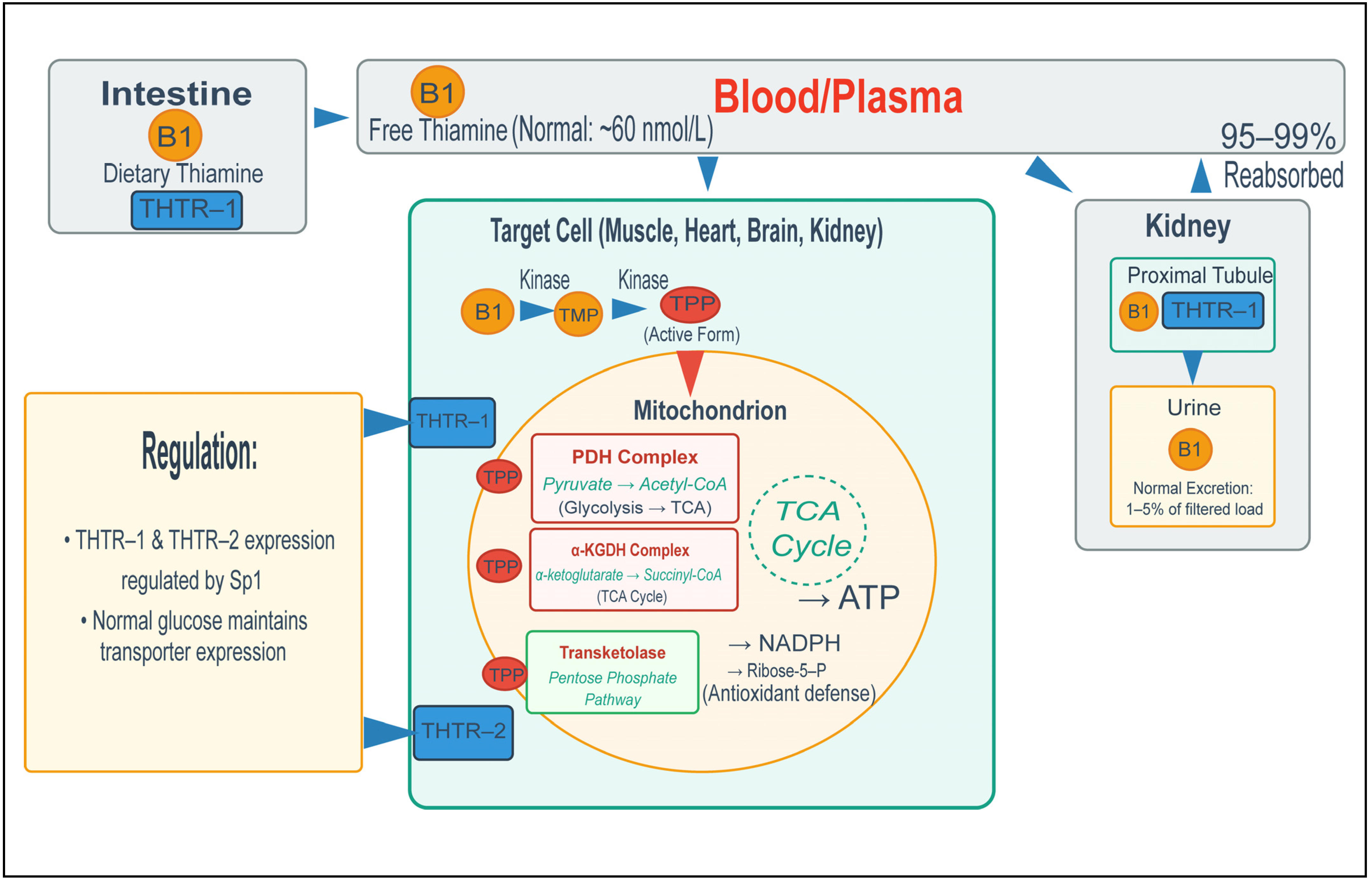
2.2. Cellular Thiamine Transport
3. Pathophysiology of Thiamine Deficiency
3.1. Assessment of Thiamine Status
3.2. Metabolic Consequences
3.3. Systemic Effects
4. Prevalence of Thiamine Deficiency in Diabetes and DKA
4.1. General Diabetic Population
4.2. Prevalence in DKA
4.3. Special Populations
5. Molecular Mechanisms of Thiamine Deficiency in Diabetes
5.1. Glucose-Induced Downregulation of Thiamine Transporters
5.2. Increased Renal Clearance
5.3. Vascular Cell Dysfunction
5.4. Genetic Factors
5.5. Thiamine-Responsive Megaloblastic Anemia Syndrome
5.6. Other Causes
6. Implications for DKA Management
6.1. Persistent Lactic Acidosis
6.2. Mitochondrial Dysfunction
6.3. Cardiovascular Complications
6.4. Current Supplementation Practices
7. The Case for Thiamine Supplementation in DKA
7.1. Biochemical Rationale
7.2. Evidence from Other Conditions
7.3. Evidence from Diabetes Studies
7.4. Preliminary Trial Data
7.5. Safety Profile
7.6. Optimal Dosing Strategy
8. Future Research Priorities
8.1. Mechanistic Studies
8.2. Prevention Strategies
9. Limitations
9.1. Limitations of Review Methodology
9.2. Other Limitations
10. Conclusions
Author Contributions
Funding
Institutional Review Board Statement
Informed Consent Statement
Data Availability Statement
Acknowledgments
Conflicts of Interest
Abbreviations
| DKA | Diabetic ketoacidosis |
| THTR-1 | Thiamine transporter 1 |
| THTR-2 | Thiamine transporter 2 |
| TMP | Thiamine monophosphate |
| TPP | Thiamine pyrophosphate |
| SMD | Standard mean deviation |
| GABA | Gamma-amino-butyric acid |
| ATP | Adenosine triphosphate |
Appendix A

| Study | Year | Design | Population | N | Key Findings | DOI |
|---|---|---|---|---|---|---|
| Prevalence Studies | ||||||
| Thornalley et al. [7] | 2007 | Cross-sectional | Type 1 and Type 2 diabetes | 74 | Plasma thiamine ↓ 76% in T1DM and ↓ 75% in T2DM vs. controls (15.3 vs. 64.1 nmol/L, p < 0.001). Renal clearance ↑ 24-fold (T1DM), ↑ 16-fold (T2DM). | 10.1007/s00125-007-0771-4 |
| Moskowitz et al. [8] | 2013 | Prospective observational | Adult patients with DKA | 32 | 25% had thiamine deficiency (<9 nmol/L). Negative correlation: lactate vs. thiamine (r = −0.56, p = 0.002). Thiamine correlated with bicarbonate (r = 0.44, p = 0.019). | 10.1016/j.jcrc.2013.06.008 |
| Rosner et al. [9] | 2015 | Prospective observational | Pediatric T1DM with DKA | 22 | 23.8% thiamine deficient before insulin; 35% after 8 h insulin therapy. 68% experienced ↓ thiamine during treatment (mean fall 20 ± 31.4 nmol/L). | 10.1097/PCC.0000000000000302 |
| Abdelaziz et al. [10] | 2022 | Prospective observational | Pediatric T1DM with DKA | 90 | Thiamine ↓ after 24 h treatment (90.11 ± 15.76 vs. 108.8 ± 17.6 nmol/L, p < 0.001). Correlated with GCS (r = 0.68, p = 0.001) and negatively with recovery time (r = −0.724, p = 0.001). | 10.1515/jpem-2022-0387 |
| Miller et al. [11] | 2024 | Cross-sectional | ED patients (sepsis, DKA, oncology) | 269 | 20.5% thiamine deficient. Independent predictors: age > 60 y (OR 2.0), female (OR 2.1), leukopenia (OR 5.1). | 10.5811/westjem.18472 |
| Mechanistic Studies | ||||||
| Larkin et al. [12] | 2012 | In vitro cell culture | Human proximal tubule cells | — | High glucose (26 mmol/L) ↓ THTR-1/2 expression (mRNA: −76%/−53%; protein: −77%/−83%, p < 0.05). ↓ 37% thiamine transport. Associated with ↓ Sp1. | 10.1371/journal.pone.0053175 |
| Beltramo et al. [13] | 2019 | In vitro cell culture | Retinal cells (endothelial, pericytes, Müller) | — | THTR-2 and Sp1 modulated by hyperglycemia. Transketolase activity and intracellular thiamine ↓ under deficiency. Thiamine over-supplementation restored uptake/activity. | 10.1177/1479164119878427 |
| Vine et al. [6] | 2024 | Prospective with ex vivo | Adult patients with DKA | 62 | Basal OCR ↓ in DKA (4.7 vs. 7.9 pmol/min/μg, p = 0.036); maximal OCR (16.4 vs. 31.5, p < 0.001). In vitro thiamine significantly ↑ OCR in DKA cells. | 10.1186/s40635-024-00673-0 |
| Mohamed et al. [14] | 2019 | Cross-sectional | Pediatric patients with DKA | 25 | Thiamine-deficient patients: ↑ troponin, impaired diastolic function. Thiamine correlated positively with diastolic indices and negatively with troponin. | 10.1515/jpem-2018-0320 |
| Genetic Studies | ||||||
| Porta et al. [15] | 2016 | GWAS | Type 1 diabetes (multiple cohorts) | — | Two SNPs in SLC19A3 associated with ↓ severe retinopathy and nephropathy. Combined phenotype reached genome-wide significance (p < 5 × 10⁻⁸) in a meta-analysis. | 10.2337/db15-1247 |
| Bartáková et al. [16] | 2016 | Clinical trial with genetics | Gestational diabetes | — | SNPs in SLC19A2 (rs6656822) and SLC19A3 (rs7567984) associated with postpartum transketolase activity (p = 0.03, p = 0.007). Plasma thiamine ↓ in GDM (p = 0.002). | 10.1007/s10719-016-9688-9 |
| Randomized Controlled Trials—Diabetes Populations | ||||||
| Alaei Shahmiri et al. [17] | 2013 | RCT, double-blind crossover | Hyperglycemic individuals (IGT, new T2DM) | 12 | High-dose thiamine (300 mg/day × 6 wks) ↓ 2 h plasma glucose (8.78 ± 2.20 vs. 9.89 ± 2.50 mmol/L, p = 0.004). Prevented deterioration in fasting glucose/insulin vs. placebo. | 10.1007/s00394-013-0534-6 |
| Alaei-Shahmiri et al. [18] | 2015 | RCT, double-blind crossover | Hyperglycemic individuals | 12 | High-dose thiamine (300 mg/day × 6 wks) ↓ DBP (67.9 ± 5.8 vs. 71.4 ± 7.4 mmHg, p = 0.005), MAP (p = 0.005). Trend toward ↓ SBP (p = 0.06). | 10.1016/j.dsx.2015.04.014 |
| Amirani et al. [19] | 2020 | RCT, double-blind, placebo-controlled | Gestational diabetes | 60 | Thiamine (100 mg/day × 6 wks) ↓ hs-CRP, MDA levels, downregulated TNF-α gene expression vs. placebo. Anti-inflammatory and antioxidant effects. | 10.1080/14767058.2020.1779212 |
| RCT Protocols—DKA Specific | ||||||
| Vine et al. [20] (DKAT) | 2024 | RCT protocol | Adult patients with DKA (planned) | 100 | Double-blind RCT: IV thiamine (200 mg BID × 2 days) vs. placebo. Primary: Δ bicarbonate/24 h. Secondary: anion gap, lactate, OCR, length of stay. | 10.1136/bmjopen-2023-077586 |
| Systematic Reviews and Meta-Analyses | ||||||
| Ziegler et al. [21] | 2023 | Systematic review and meta-analysis | Diabetes patients | 20 studies | Diabetes: ↓ thiamine (SMD −0.97), TMP (SMD −1.16), total thiamine (SMD −1.01) vs. controls. With albuminuria: even lower (SMD −2.68). | 10.1016/j.metabol.2023.155565 |
| Muley et al. [22] | 2022 | Systematic review and meta-analysis | Type 2 diabetes | 6 RCTs, 364 pts | Thiamine (100–900 mg/day, ≤3 months), no significant Δ HbA1c, FBG, or PPG. ↑ HDL (MD 0.10, p < 0.05); benfotiamine ↓ triglycerides at 120 mg/day. | 10.1136/bmjopen-2021-059834 |
| Sieben & Ramanan [1] | 2025 | Evidence gap map | DKA patients | 1131 screened, 118 included | Substantial evidence gaps for adjunctive therapies, including thiamine. Most studies focused on fluids/insulin; limited patient-centered outcome data. | 10.3390/medsci13020053 |
| Health Services Research | ||||||
| Pawar et al. [23] | 2021 | Retrospective observational | Critically ill with AUD | 14,998 | Only 51% received thiamine overall. Rate: 59% (alcohol withdrawal), 26% (septic shock), 24% (DKA). Significant quality-of-care gap. | 10.7326/M21-2103 |
| Clinical Case Series/Reports | ||||||
| Chehayeb et al. [24] | 2023 | Case report with review | T1DM with DKA, persistent lactic acidosis | 1 | Persistent lactic acidosis despite adequate resuscitation. Improved only after empiric thiamine administration. Highlights cognitive biases in interpreting lactate. | 10.1007/s11606-023-08091-w |
| Feldhaus & Lange-Brock [25] | 2019 | Case report | T1DM with DKA | 1 | Rising lactate during insulin therapy for DKA. Suspected refeeding syndrome; thiamine and phosphate replacement → lactate normalization. | 10.1007/s00063-019-0562-y |
| Moseley et al. [26] | 2021 | Case report | T1DM post-bariatric surgery | 1 | Recurrent DKA post-bariatric surgery with persistent hyperketonemia despite standard therapy. Resolution only after thiamine replacement. | 10.1055/s-0041-1731139 |
| Methodological/Standardization Studies | ||||||
| Collie et al. [27] | 2017 | Systematic review of methods | N/A | 122 studies | No standard measurement procedure for thiamine compounds. Multiple method variations prohibit comparison. Need for certified reference materials and standardization. | 10.1515/cclm-2017-0054 |
References
- Sieben, N.; Ramanan, M. Research Priorities for Diabetic Ketoacidosis: An Evidence and Gap Mapping Review. Med. Sci. 2025, 13, 53. [Google Scholar] [CrossRef]
- Gosmanov, A.R.; Gosmanova, E.O.; Kitabchi, A.E. Hyperglycemic Crises: Diabetic Ketoacidosis and Hyperglycemic Hyperosmolar State. In Endotext; Feingold, K.R., Anawalt, B., Blackman, M.R., Boyce, A., Chrousos, G., Corpas, E., de Herder, W.W., Dhatariya, K., Dungan, K., Hofland, J., et al., Eds.; MDText.com, Inc.: South Dartmouth, MA, USA, 2021. Available online: http://www.ncbi.nlm.nih.gov/books/NBK279052/ (accessed on 12 September 2023).
- Umpierrez, G.E.; Davis, G.M.; ElSayed, N.A.; Fadini, G.P.; Galindo, R.J.; Hirsch, I.B.; Klonoff, D.C.; McCoy, R.G.; Misra, S.; Gabbay, R.A.; et al. Hyperglycemic Crises in Adults with Diabetes: A Consensus Report. Diabetes Care 2024, 47, 1257–1275. [Google Scholar] [CrossRef]
- Dhatariya, K. The evolution of DKA management. Br. J. Diabetes Vasc. Dis. 2015, 15, 31–33. [Google Scholar] [CrossRef]
- Panda, A.; Heidari, A.; Borumand, M.; Ahmed, M.; Hassan, A.; Ahmed, M.H. Thiamine deficiency in diabetes, obesity and bariatric surgery: Recipes for diabetic ketoacidosis. J. Fam. Med. Prim. Care 2024, 13, 1620. [Google Scholar] [CrossRef] [PubMed]
- Vine, J.; Lee, J.H.; Balaji, L.; Grossestreuer, A.V.; Morton, A.; Peradze, N.; Antony, N.; Berlin, N.; Kravitz, M.S.; Leland, S.B.; et al. Cellular oxygen consumption in patients with diabetic ketoacidosis. Intensive Care Med. Exp. 2024, 12, 97. [Google Scholar] [CrossRef]
- Thornalley, P.J.; Babaei-Jadidi, R.; Al Ali, H.; Rabbani, N.; Antonysunil, A.; Larkin, J.; Ahmed, A.; Rayman, G.; Bodmer, C.W. High prevalence of low plasma thiamine concentration in diabetes linked to a marker of vascular disease. Diabetologia 2007, 50, 2164–2170. [Google Scholar] [CrossRef]
- Moskowitz, A.; Graver, A.; Giberson, T.; Berg, K.; Liu, X.; Uber, A.; Gautam, S.; Donnino, M.W. The relationship between lactate and thiamine levels in patients with diabetic ketoacidosis. J. Crit. Care 2014, 29, 182.e5–182.e8. [Google Scholar] [CrossRef]
- Rosner, E.A.; Strezlecki, K.D.; Clark, J.A.; Lieh-Lai, M. Low Thiamine Levels in Children With Type 1 Diabetes and Diabetic Ketoacidosis: A Pilot Study. Pediatr. Crit. Care Med. 2015, 16, 114. [Google Scholar] [CrossRef] [PubMed]
- Abdelaziz, T.A.; Atfy, M.; Elalawi, S.M.; Baz, E.G. Thiamine status during treatment of diabetic ketoacidosis in children–tertiary care centre experience. J. Pediatr. Endocrinol. Metab. 2023, 36, 179–184. [Google Scholar] [CrossRef]
- Miller, J.; Grahf, D.; Nassereddine, H.; Nehme, J.; Rammal, J.-A.; Ross, J.; Rose, K.; Hrabec, D.; Tirgari, S.; Lewandowski, C. Cross-Sectional Study of Thiamine Deficiency and Its Associated Risks in Emergency Care. West. J. Emerg. Med. Integr. Emerg. Care Popul. Health 2024, 25, 675. [Google Scholar] [CrossRef]
- Larkin, J.R.; Zhang, F.; Godfrey, L.; Molostvov, G.; Zehnder, D.; Rabbani, N.; Thornalley, P.J. Glucose-Induced Down Regulation of Thiamine Transporters in the Kidney Proximal Tubular Epithelium Produces Thiamine Insufficiency in Diabetes. PLoS ONE 2012, 7, e53175. [Google Scholar] [CrossRef]
- Beltramo, E.; Mazzeo, A.; Lopatina, T.; Trento, M.; Porta, M. Thiamine transporter 2 is involved in high glucose-induced damage and altered thiamine availability in cell models of diabetic retinopathy. Diabetes Vasc. Dis. Res. 2020, 17, 1479164119878427. [Google Scholar] [CrossRef]
- Mohamed, R.A.-E.; Farag, I.M.A.; Elhady, M.; Ibrahim, R.S. Myocardial dysfunction in relation to serum thiamine levels in children with diabetic ketoacidosis. J. Pediatr. Endocrinol. Metab. 2019, 32, 335–340. [Google Scholar] [CrossRef]
- Porta, M.; Toppila, I.; Sandholm, N.; Hosseini, S.M.; Forsblom, C.; Hietala, K.; Borio, L.; Harjutsalo, V.; Klein, B.E.; Klein, R.; et al. Variation in SLC19A3 and Protection From Microvascular Damage in Type 1 Diabetes. Diabetes 2015, 65, 1022–1030. [Google Scholar] [CrossRef] [PubMed]
- Bartáková, V.; Pleskačová, A.; Kuricová, K.; Pácal, L.; Dvořáková, V.; Bělobrádková, J.; Tomandlová, M.; Tomandl, J.; Kaňková, K. Dysfunctional protection against advanced glycation due to thiamine metabolism abnormalities in gestational diabetes. Glycoconj. J. 2016, 33, 591–598. [Google Scholar] [CrossRef] [PubMed]
- Alaei Shahmiri, F.; Soares, M.J.; Zhao, Y.; Sherriff, J. High-dose thiamine supplementation improves glucose tolerance in hyperglycemic individuals: A randomized, double-blind cross-over trial. Eur. J. Nutr. 2013, 52, 1821–1824. [Google Scholar] [CrossRef]
- Alaei-Shahmiri, F.; Soares, M.J.; Zhao, Y.; Sherriff, J. The impact of thiamine supplementation on blood pressure, serum lipids and C-reactive protein in individuals with hyperglycemia: A randomised, double-blind cross-over trial. Diabetes Metab. Syndr. Clin. Res. Rev. 2015, 9, 213–217. [Google Scholar] [CrossRef]
- Amirani, E.; Aghadavod, E.; Shafabakhsh, R.; Asemi, Z.; Tabassi, Z.; Panahandeh, I.; Naderi, F.; Abed, A. Anti-inflammatory and antioxidative effects of thiamin supplements in patients with gestational diabetes mellitus. J. Matern.-Fetal Neonatal Med. 2022, 35, 2085–2090. [Google Scholar] [CrossRef]
- Vine, J.; Mehta, S.; Balaji, L.; Berg, K.M.; Berlin, N.; Liu, X.; Ngo, L.; Shea, M.; Moskowitz, A.; Donnino, M.W.; et al. Thiamine as adjunctive therapy for diabetic ketoacidosis (DKAT) trial protocol and statistical analysis plan: A prospective, single-centre, double-blind, randomised, placebo-controlled clinical trial in the USA. BMJ Open 2024, 14, e077586. [Google Scholar] [CrossRef]
- Ziegler, D.; Reiners, K.; Strom, A.; Obeid, R. Association between diabetes and thiamine status—A systematic review and meta-analysis. Metab.-Clin. Exp. 2023, 144, 155565. [Google Scholar] [CrossRef]
- Muley, A.; Fernandez, R.; Green, H.; Muley, P. Effect of thiamine supplementation on glycaemic outcomes in adults with type 2 diabetes: A systematic review and meta-analysis. BMJ Open 2022, 12, e059834. [Google Scholar] [CrossRef]
- Pawar, R.D.; Balaji, L.; Grossestreuer, A.V.; Thompson, G.; Holmberg, M.J.; Issa, M.S.; Patel, P.V.; Kronen, R.; Berg, K.M.; Moskowitz, A.; et al. Thiamine Supplementation in Patients with Alcohol Use Disorder Presenting with Acute Critical Illness. Ann. Intern. Med. 2022, 175, 191–197. [Google Scholar] [CrossRef] [PubMed]
- Chehayeb, R.J.; Ilagan-Ying, Y.C.; Sankey, C. Addressing Cognitive Biases in Interpreting an Elevated Lactate in a Patient with Type 1 Diabetes and Thiamine Deficiency. J. Gen. Intern. Med. 2023, 38, 1547–1551. [Google Scholar] [CrossRef]
- Feldhaus, F.; Lange-Brock, N. Ansteigende Laktatwerte im Verlauf der Therapie einer diabetischen Ketoacidose. Med. Klin. Intensivmed. Notfmed. 2020, 115, 417–419. [Google Scholar] [CrossRef]
- Moseley, P.; Ahmed, M.H.; Owles, H. Recurrent Diabetic Ketoacidosis following Bariatric Surgery: The Role of Micronutrients. J. Lab. Physicians 2023, 13, 280–282. [Google Scholar] [CrossRef] [PubMed]
- Collie, J.T.B.; Greaves, R.F.; Jones, O.A.H.; Lam, Q.; Eastwood, G.M.; Bellomo, R. Vitamin B1 in critically ill patients: Needs and challenges. Clin. Chem. Lab. Med. (CCLM) 2017, 55, 1652–1668. [Google Scholar] [CrossRef]
- Kaźmierczak-Barańska, J.; Halczuk, K.; Karwowski, B.T. Thiamine (Vitamin B1)—An Essential Health Regulator. Nutrients 2025, 17, 2206. [Google Scholar] [CrossRef]
- Andersen, L.W.; Mackenhauer, J.; Roberts, J.C.; Berg, K.M.; Cocchi, M.N.; Donnino, M.W. Etiology and Therapeutic Approach to Elevated Lactate Levels. Mayo Clin. Proc. 2013, 88, 1127–1140. [Google Scholar] [CrossRef] [PubMed]
- Gangolf, M.; Czerniecki, J.; Radermecker, M.; Detry, O.; Nisolle, M.; Jouan, C.; Martin, D.; Chantraine, F.; Lakaye, B.; Wins, P.; et al. Thiamine status in humans and content of phosphorylated thiamine derivatives in biopsies and cultured cells. PLoS ONE 2010, 5, e13616. [Google Scholar] [CrossRef]
- Tallaksen, C.M.; Bøhmer, T.; Bell, H.; Karlsen, J. Concomitant determination of thiamin and its phosphate esters in human blood and serum by high-performance liquid chromatography. J. Chromatogr. 1991, 564, 127–136. [Google Scholar] [CrossRef]
- Lu, J.; Frank, E.L. Rapid HPLC measurement of thiamine and its phosphate esters in whole blood. Clin. Chem. 2008, 54, 901–906. [Google Scholar] [CrossRef]
- Ihara, H.; Hirano, A.; Wang, L.; Okada, M.; Hashizume, N. Reference values for whole blood thiamine and thiamine phosphate esters in Japanese adults. J. Anal. Biosci. 2005, 28, 241–246. [Google Scholar]
- Brunnekreeft, J.W.; Eidhof, H.; Gerrits, J. Optimized determination of thiochrome derivatives of thiamine and thiamine phosphates in whole blood by reversed-phase liquid chromatography with precolumn derivatization. J. Chromatogr. 1989, 491, 89–96. [Google Scholar] [CrossRef]
- Ahmed, M.; Azizi-Namini, P.; Yan, A.T.; Keith, M. Thiamin deficiency and heart failure: The current knowledge and gaps in literature. Heart Fail. Rev. 2015, 20, 1–11. [Google Scholar] [CrossRef]
- Talwar, D.; Davidson, H.; Cooney, J.; St. JO’Reilly, D. Vitamin B1 Status Assessed by Direct Measurement of Thiamin Pyrophosphate in Erythrocytes or Whole Blood by HPLC: Comparison with Erythrocyte Transketolase Activation Assay. Clin. Chem. 2000, 46, 704–710. [Google Scholar] [CrossRef]
- Sheldon, M.; Nugent, K. Lactic acidosis and thiamine deficiency in a patient with diabetic ketoacidosis. Am. J. Med. Sci. 2023, 366, 395–396. [Google Scholar] [CrossRef]
- Pereira, A.G.; Cunha, L.N.d.P.; Paiva, S.A.R.; Azevedo, P.S.; Zornoff, L.A.M.; Polegato, B.F.; Costa, N.A.; Minicucci, M.F. An Overview of Beriberi. Med. Princ. Pract. 2025. [Google Scholar] [CrossRef]
- Smith, T.J.; Johnson, C.R.; Koshy, R.; Hess, S.Y.; Qureshi, U.A.; Mynak, M.L.; Fischer, P.R. Thiamine deficiency disorders: A clinical perspective. Ann. N. Y. Acad. Sci. 2021, 1498, 9–28. [Google Scholar] [CrossRef] [PubMed]
- Trostler, N.; Guggenheim, K.; Havivi, E.; Sklan, D. Effect of thiamine deficiency in pregnant and lactating rats on the brain of their offspring. Nutr. Metab. 1977, 21, 294–304. [Google Scholar] [CrossRef] [PubMed]
- Marfatia, H.; Sahai, A.; Narkhede, K.; Sharma, M. Thiamine responsive megaloblastic Anemia and deafness: A rare case of Roger’s syndrome with successful hearing rehabilitation by cochlear implantation. J. Otol. 2024, 19, 163–165. [Google Scholar] [CrossRef]
- Argun, M.; Baykan, A.; Hatipoğlu, N.; Akın, L.; Şahin, Y.; Narin, N.; Kurtoğlu, S. Arrhythmia in thiamine responsive megaloblastic anemia syndrome. Turk. J. Pediatr. 2018, 60, 348–351. [Google Scholar] [CrossRef] [PubMed]
- Pomahačová, R.; Zamboryová, J.; Sýkora, J.; Paterová, P.; Fiklík, K.; Votava, T.; Černá, Z.; Jehlička, P.; Lád, V.; Šubrt, I.; et al. First 2 cases with thiamine-responsive megaloblastic anemia in the Czech Republic, a rare form of monogenic diabetes mellitus: A novel mutation in the thiamine transporter SLC19A2 gene—Intron 1 mutation c.204+2T>G. Pediatr. Diabetes 2017, 18, 844–847. [Google Scholar] [CrossRef]
- Kumar, A.; Anstey, C.; Doola, R.; Mcllroy, P.; Whebell, S.; Shekar, K.; Attokaran, A.; Marella, P.; White, K.; Luke, S.; et al. Associations between Late Lactate Clearance and Clinical Outcomes in Adults with Hyperlactataemia in the Setting of Diabetic Ketoacidosis. J. Clin. Med. 2024, 13, 4933. [Google Scholar] [CrossRef]
- Kumar, A.; Doola, R.; Zahumensky, A.; Shaikh, A.; Tabah, A.; Laupland, K.B.; Ramanan, M. Association between elevated lactate and clinical outcomes in adults with diabetic ketoacidosis. J. Crit. Care 2023, 78, 154377. [Google Scholar] [CrossRef]
- Woolum, J.A.; Abner, E.L.; Kelly, A.; Thompson Bastin, M.L.; Morris, P.E.; Flannery, A.H. Effect of Thiamine Administration on Lactate Clearance and Mortality in Patients With Septic Shock. Crit. Care Med. 2018, 46, 1747–1752. [Google Scholar] [CrossRef]
- Qian, X.; Zhang, Z.; Li, F.; Wu, L. Intravenous thiamine for septic shock: A meta-analysis of randomized controlled trials. Am. J. Emerg. Med. 2020, 38, 2718–2722. [Google Scholar] [CrossRef] [PubMed]
- Donnino, M.W.; Andersen, L.W.; Chase, M.; Berg, K.M.; Tidswell, M.; Giberson, T.; Wolfe, R.; Moskowitz, A.; Smithline, H.; Ngo, L.; et al. Randomized, Double-Blind, Placebo-Controlled Trial of Thiamine as a Metabolic Resuscitator in Septic Shock: A Pilot Study. Crit. Care Med. 2016, 44, 360–367. [Google Scholar] [CrossRef]
- Smithline, H.A.; Donnino, M.; Blank, F.S.J.; Barus, R.; Coute, R.A.; Knee, A.B.; Visintainer, P. Supplemental thiamine for the treatment of acute heart failure syndrome: A randomized controlled trial. BMC Complement. Altern. Med. 2019, 19, 96. [Google Scholar] [CrossRef] [PubMed]

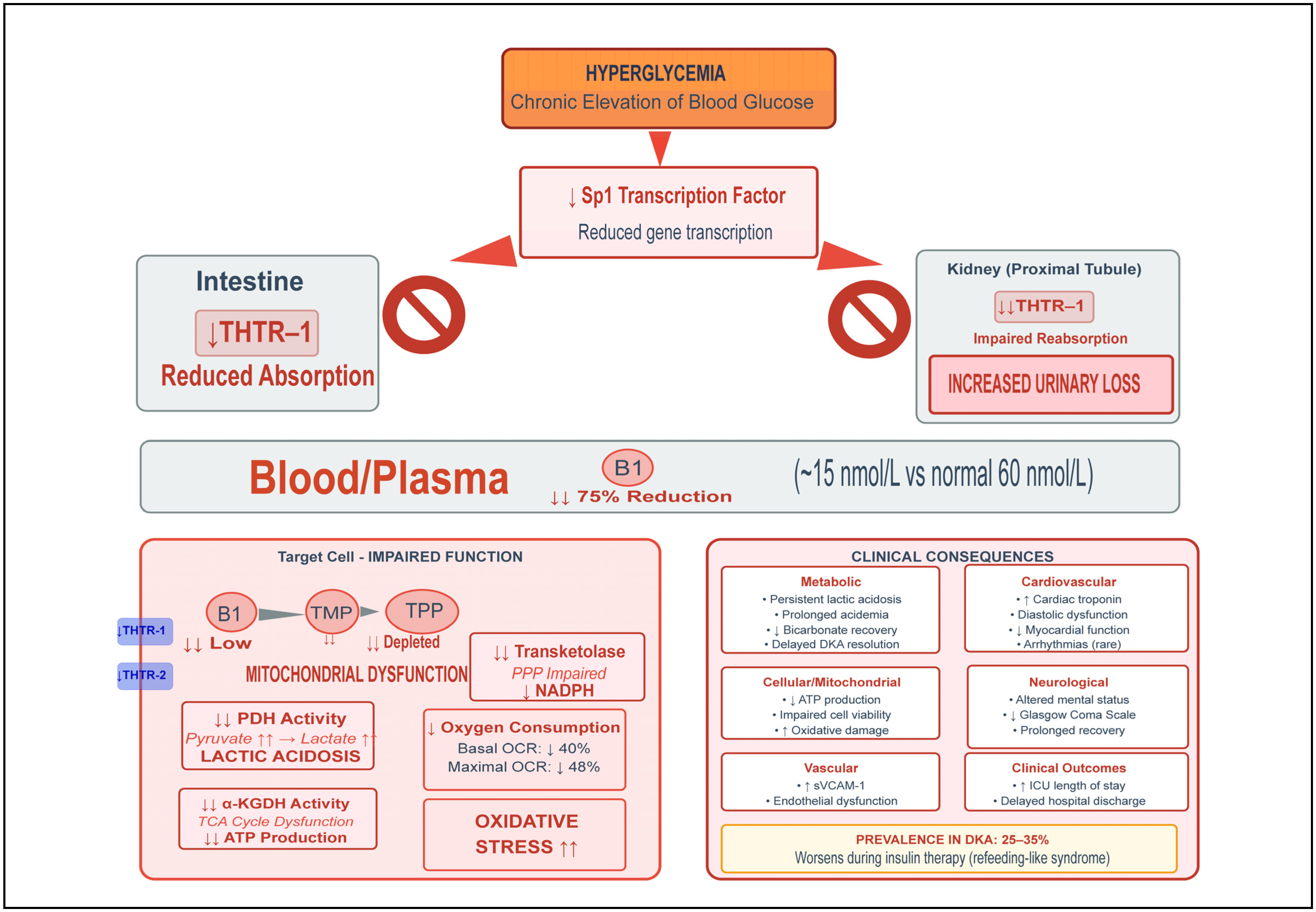
 symbol indicates impaired function at the two sites (intestines and proximal tubules) resulting in reduced intestinal thiamine absorption and increased urinary losses.
symbol indicates impaired function at the two sites (intestines and proximal tubules) resulting in reduced intestinal thiamine absorption and increased urinary losses.
symbol indicates impaired function at the two sites (intestines and proximal tubules) resulting in reduced intestinal thiamine absorption and increased urinary losses.
| Study | Population | Key Findings |
|---|---|---|
| Thiamine Deficiency | ||
| Thornalley et al. [7], 2007 | Type 1 and Type 2 diabetes (n = 74) | Plasma thiamine ↓ 76% in T1DM and ↓ 75% in T2DM vs. controls (15.3 vs. 64.1 nmol/L, p < 0.001). Renal clearance ↑ 24-fold (T1DM), ↑ 16-fold (T2DM). |
| Moskowitz et al. [8], 2013 | Adult patients with DKA (n = 32) | 25% had thiamine deficiency (<9 nmol/L). Negative correlation between lactate and thiamine (r = −0.56, p = 0.002). Thiamine correlated with bicarbonate (r = 0.44, p = 0.019). |
| Rosner et al. [9], 2015 | Pediatric T1DM with DKA (n = 22) | 23.8% thiamine deficient before insulin; 35% after 8 h insulin therapy. 68% experienced ↓ thiamine during treatment (mean fall 20 ± 31.4 nmol/L). |
| Abdelaziz et al. [10], 2022 | Pediatric T1DM with DKA (n = 90) | Thiamine reduction after 24 h treatment (90.11 ± 15.76 vs. 108.8 ± 17.6 nmol/L, p < 0.001). Correlated negatively with recovery time (r = −0.724, p = 0.001). |
| Miller et al. [11], 2024 | ED patients with sepsis, DKA, oncologic emergencies (n = 269) | 20.5% thiamine deficient. Independent predictors: age > 60 y (OR 2.0), female (OR 2.1), leukopenia (OR 5.1). |
| Mechanistic Studies | ||
| Larkin et al. [12], 2012 | Human proximal tubule epithelial cells (in vitro) | High glucose (26 mmol/L) ↓ THTR-1/2 expression (mRNA: −76%/−53%; protein: −77%/−83%, p < 0.05). ↓ 37% thiamine transport. Associated with ↓ Sp1. |
| Beltramo et al. [13], 2019 | Retinal cells: endothelial, pericytes, Müller cells (in vitro) | THTR-2 and Sp1 modulated by hyperglycemia. Transketolase activity and intracellular thiamine ↓ under deficiency. Thiamine over-supplementation restored uptake and activity. |
| Vine et al. [6], 2024 | Adult patients with DKA (n = 62) | Basal OCR ↓ in DKA vs. controls (4.7 vs. 7.9 pmol/min/μg, p = 0.036); maximal OCR (16.4 vs. 31.5, p < 0.001). In vitro thiamine significantly ↑ OCR in DKA cells. |
| Mohamed et al. [14], 2019 | Pediatric patients with DKA (n = 25) | Thiamine-deficient patients: ↑ troponin levels, impaired diastolic function. Thiamine levels correlated positively with diastolic function indices and negatively with troponin. |
| Genetic Studies | ||
| Porta et al. [15], 2016 | Type 1 diabetes (Finn–Diane, DCCT/EDIC, WESDR cohorts) | Two SNPs in SLC19A3 associated with ↓ severe retinopathy and nephropathy. Combined phenotype reached genome-wide significance (p < 5 × 10⁻⁸) in a meta-analysis. |
| Bartáková et al. [16], 2016 | Gestational diabetes mellitus | SNPs in SLC19A2 (rs6656822) and SLC19A3 (rs7567984) associated with postpartum transketolase activity (p = 0.03, p = 0.007). Plasma thiamine ↓ in GDM (p = 0.002). |
| Randomized Controlled Trials—Diabetes Populations | ||
| Alaei Shahmiri et al. [17], 2013 | Hyperglycemic individuals (IGT, new T2DM) (n = 12) | High-dose thiamine (300 mg/day × 6 weeks) ↓ 2 h plasma glucose (8.78 ± 2.20 vs. 9.89 ± 2.50 mmol/L, p = 0.004). Prevented deterioration in fasting glucose and insulin vs. placebo. |
| Alaei-Shahmiri et al. [18], 2015 | Hyperglycemic individuals (n = 12) | High-dose thiamine (300 mg/day × 6 weeks) ↓ DBP (67.9 ± 5.8 vs. 71.4 ± 7.4 mmHg, p = 0.005), MAP (p = 0.005). Trend toward ↓ SBP (p = 0.06). |
| Amirani et al. [19], 2020 | Gestational diabetes mellitus (n = 60) | Thiamine (100 mg/day × 6 weeks) ↓ hs-CRP, MDA levels, downregulated TNF-α gene expression vs. placebo. Demonstrated anti-inflammatory and antioxidant effects. |
| Randomized Controlled Trial Protocol | ||
| Vine et al. [20], 2024 (DKAT trial) | Adult patients with DKA (n = 100 planned) | Double-blind RCT: IV thiamine (200 mg BID × 2 days) vs. placebo. Primary outcome: Δ bicarbonate/24 h. Secondary: anion gap, lactate, OCR, hospital length of stay. |
| Systematic Reviews and Meta-analyses | ||
| Ziegler et al. [21], 2023 | Diabetes patients (20 studies) | Diabetes associated with ↓ thiamine (SMD −0.97), TMP (SMD −1.16), total thiamine (SMD −1.01) vs. controls. Patients with diabetes and albuminuria: even lower (SMD −2.68). |
| Muley et al. [22], 2022 | Type 2 diabetes (6 RCTs, n = 364) | Thiamine supplementation (100–900 mg/day, ≤3 months) induced no significant change in HbA1c, FBG, or PPG. ↑ HDL (MD 0.10, p < 0.05). |
| Sieben & Ramanan [1], 2025 | DKA patients (1131 studies screened, 118 included) | Substantial evidence gaps identified for adjunctive therapies, including thiamine. Most studies focused on fluids and insulin; limited patient-centered outcome data. |
| Health Services Research | ||
| Pawar et al. [23], 2021 | Critically ill patients with alcohol use disorder (n = 14,998) | Only 51% received thiamine supplementation overall. Rate: 59% (alcohol withdrawal), 26% (septic shock), 24% (DKA). Represents significant quality-of-care gap. |
| Clinical Case Series/Reports | ||
| Chehayeb et al. [24], 2023 | T1DM with DKA and persistent lactic acidosis (n = 1) | Persistent lactic acidosis despite adequate resuscitation. Improved only after empiric thiamine administration. Highlights cognitive biases in interpreting elevated lactate. |
| Feldhaus & Lange-Brock [25], 2019 | T1DM with DKA (n = 1) | Rising lactate levels during insulin therapy for DKA. Suspected refeeding syndrome; thiamine and phosphate replacement led to lactate normalization. |
| Moseley et al. [26], 2021 | T1DM post-bariatric surgery (n = 1) | Recurrent DKA post-bariatric surgery with persistent hyperketonemia despite standard therapy. Resolution only after thiamine replacement. |
| Methodological/Standardization Studies | ||
| Collie et al. [27], 2017 | Review of thiamine measurement methodologies (122 studies) | No standard measurement procedure for thiamine compound quantification exists. Multiple method variations prohibit comparison of study results. Need for certified reference materials. |
High-risk patients to consider for empiric thiamine supplementation
|
Dosing regimen considerations
|
General considerations
|
Disclaimer/Publisher’s Note: The statements, opinions and data contained in all publications are solely those of the individual author(s) and contributor(s) and not of MDPI and/or the editor(s). MDPI and/or the editor(s) disclaim responsibility for any injury to people or property resulting from any ideas, methods, instructions or products referred to in the content. |
© 2026 by the authors. Licensee MDPI, Basel, Switzerland. This article is an open access article distributed under the terms and conditions of the Creative Commons Attribution (CC BY) license.
Share and Cite
Ramanan, M.; Kumar, A. Thiamine Deficiency in Diabetes: Implications for Diabetic Ketoacidosis. Diabetology 2026, 7, 28. https://doi.org/10.3390/diabetology7020028
Ramanan M, Kumar A. Thiamine Deficiency in Diabetes: Implications for Diabetic Ketoacidosis. Diabetology. 2026; 7(2):28. https://doi.org/10.3390/diabetology7020028
Chicago/Turabian StyleRamanan, Mahesh, and Aashish Kumar. 2026. "Thiamine Deficiency in Diabetes: Implications for Diabetic Ketoacidosis" Diabetology 7, no. 2: 28. https://doi.org/10.3390/diabetology7020028
APA StyleRamanan, M., & Kumar, A. (2026). Thiamine Deficiency in Diabetes: Implications for Diabetic Ketoacidosis. Diabetology, 7(2), 28. https://doi.org/10.3390/diabetology7020028