Review

Thiamine Deficiency in Diabetes: Implications for Diabetic Ketoacidosis

1
Royal Brisbane and Women’s Hospital, Metro North Hospital and Health Services, Brisbane, QLD 4029, Australia
2
Caboolture Hospital, Metro North Hospital and Health Services, Brisbane, QLD 4510, Australia
3
Faculty of Health, Queensland University of Technology, Brisbane, QLD 4000, Australia
4
The George Institute for Global Health, University of New South Wales, Sydney, NSW 2052, Australia
5
Logan Hospital, Brisbane, QLD 4114, Australia
*
Author to whom correspondence should be addressed.
Diabetology 2026, 7(2), 28; https://doi.org/10.3390/diabetology7020028
Submission received: 21 November 2025 / Revised: 9 January 2026 / Accepted: 16 January 2026 / Published: 1 February 2026

Abstract

Diabetic ketoacidosis (DKA) remains a life-threatening complication of diabetes mellitus with suboptimal outcomes despite standard management. Emerging evidence suggests that thiamine (vitamin B1) deficiency may play an under-recognized role in DKA pathophysiology and clinical course. This narrative review synthesizes current evidence regarding thiamine deficiency in diabetes and DKA, examining molecular mechanisms, clinical implications, and the rationale for thiamine supplementation as adjunctive therapy. Thiamine deficiency is highly prevalent in diabetes, with plasma concentrations reduced by approximately 75% compared to healthy controls. In DKA specifically, 25–35% of patients present with thiamine deficiency, which often worsens during insulin therapy. The primary mechanism involves hyperglycemia-induced downregulation of renal thiamine transporters (THTR-1 and THTR-2), resulting in 16–24-fold increased renal clearance and massive urinary losses. Thiamine pyrophosphate serves as an essential cofactor for three critical enzymes in glucose metabolism: pyruvate dehydrogenase, α-ketoglutarate dehydrogenase, and transketolase. Deficiency impairs these pathways, causing pyruvate accumulation with conversion to lactate (resulting in lactic acidosis), compromised TCA cycle function (reducing ATP production by 40–48%), and decreased NADPH generation (increasing oxidative stress). Clinical manifestations include persistent metabolic acidosis despite standard therapy, myocardial dysfunction with elevated cardiac biomarkers, neurological impairment, and prolonged recovery times. Cellular studies demonstrate that thiamine supplementation significantly improves mitochondrial oxygen consumption in DKA patients. The high prevalence of thiamine deficiency in DKA, compelling biochemical rationale, excellent safety profile, and preliminary mechanistic evidence support the urgent need for large-scale randomized controlled trials examining thiamine supplementation to definitively establish efficacy, optimal dosing, and patient selection criteria.

1. Introduction

Diabetic ketoacidosis (DKA) is a life-threatening acute complication of diabetes mellitus that is associated with substantial morbidity, mortality, and healthcare burden [1,2,3]. Despite numerous advances in diabetes management, DKA continues to pose significant clinical challenges, with various aspects of treatment based on low-quality evidence or physiological rationale rather than robust clinical trials [1,4]. Standard DKA management focuses on insulin administration, fluid resuscitation, and electrolyte replacement, yet outcomes remain suboptimal in many cases, with persistent metabolic acidosis and prolonged recovery times representing common clinical challenges.
Emerging evidence indicates that micronutrient deficiencies, particularly thiamine (vitamin B1) deficiency, may play an under-recognized role in the pathophysiology and clinical course of DKA [5]. While thiamine deficiency does not cause DKA, it may complicate its clinical course and impede metabolic recovery. Thiamine functions as an essential cofactor in aerobic glucose metabolism, and its deficiency causes a shift toward anaerobic metabolism, with resultant hyperlactatemia and metabolic acidosis [6]. This review summarizes the physiological functions of thiamine, synthesizes current evidence regarding thiamine deficiency in diabetes and DKA, examines the molecular mechanisms contributing to this deficiency, explores the prevalence and clinical implications of thiamine deficiency, and evaluates the case for thiamine supplementation as an adjunctive therapy in DKA management.

1.1. Methods in Brief

1.1.1. Literature Search Strategy

A comprehensive literature search was conducted using PubMed as the primary database to identify relevant articles on thiamine deficiency in diabetes mellitus and diabetic ketoacidosis. The search was performed in January 2025 and encompassed literature published predominantly from 2005 to 2025, with selective inclusion of seminal earlier publications when relevant to foundational concepts.

1.1.2. Search Terms

Multiple search strategies were employed using combinations of the following keywords and Medical Subject Headings (MeSH) terms: “thiamine,” “thiamine deficiency,” “vitamin B1,” “diabetes mellitus,” “diabetic ketoacidosis,” “DKA,” “thiamine transporter,” “THTR-1,” “THTR-2,” “SLC19A2,” “SLC19A3,” “renal clearance,” “transketolase,” “pyruvate dehydrogenase,” “mitochondrial function,” “lactic acidosis,” and related terms. Searches were refined using field tags including [Title/Abstract], [MeSH Terms], and [Publication Type] where appropriate. Additional relevant articles were identified through manual review of reference lists from key publications and systematic reviews.

1.1.3. Study Selection and Prioritization

As a narrative review, this work did not employ systematic review methodology with pre-specified protocols or formal risk of bias assessment tools. Studies were prioritized based on the following hierarchy of evidence quality: (1) randomized controlled trials; (2) systematic reviews and meta-analyses; (3) prospective observational studies; (4) retrospective observational studies; (5) case series and case reports. Within each evidence level, more recent publications were generally prioritized over older studies, though landmark historical studies were included when they provided foundational evidence or unique mechanistic insights.

1.1.4. Inclusion and Exclusion Criteria

Studies were included if they (1) examined thiamine status, metabolism, or supplementation in patients with diabetes mellitus or diabetic ketoacidosis; (2) investigated molecular mechanisms underlying thiamine deficiency in diabetes; (3) evaluated clinical outcomes associated with thiamine deficiency in DKA; (4) assessed genetic factors affecting thiamine transport; or (5) examined methodological aspects of thiamine measurement relevant to clinical practice. Both adult and pediatric populations were included.
Key studies are summarized in Table 1, with further details available in Table A1.

2. Physiology of Thiamine

Thiamine, or vitamin B1, is a water-soluble vitamin that plays a key role in cellular energy metabolism through its active form, thiamine pyrophosphate (TPP) [28]. TPP serves as an essential cofactor for reactions catalysed by several critical enzymes in carbohydrate metabolism, linking glycolysis to the tricarboxylic acid (TCA) cycle and facilitating the pentose phosphate pathway [29].

2.1. Thiamine-Dependent Enzymes

TPP is required for the function of three major enzyme complexes involved in aerobic glucose metabolism. First, pyruvate dehydrogenase (PDH) catalyses the oxidative decarboxylation of pyruvate to acetyl-coenzyme A (CoA), representing the critical link between glycolysis and the TCA cycle [29]. In the absence of adequate thiamine, pyruvate cannot be efficiently converted to acetyl-CoA, leading to pyruvate accumulation and its subsequent reduction to lactate via lactate dehydrogenase, resulting in lactic acidosis [8].
Second, α-ketoglutarate dehydrogenase (α-KGDH), another TPP-dependent enzyme within the TCA cycle, catalyses the conversion of α-ketoglutarate to succinyl-CoA [8]. Impairment of this enzyme through TPP deficiency reduces TCA cycle flux and ATP production, further exacerbating cellular energy deficits.
Third, transketolase (TKT) is the rate-limiting enzyme of the pentose phosphate pathway, which generates NADPH and ribose-5-phosphate, both being essential for cellular biosynthesis and antioxidant defence [13]. The pentose phosphate pathway provides approximately 30% of cellular NADPH, which is critical for maintaining glutathione in its reduced state and protecting against oxidative stress [7]. Thiamine deficiency, therefore, in addition to interfering with cellular energy utilization, also compromises antioxidant capacity and exposes cellular structures to oxidative stress.

2.2. Cellular Thiamine Transport

Thiamine absorption and cellular uptake are mediated by two specific thiamine transporters: thiamine transporter 1 (THTR-1, encoded by the solute carrier family 19 member 2 gene (SLC19A2)) and thiamine transporter 2 (THTR-2, encoded by the solute carrier family 19 member 3 gene (SLC19A3)) [12]. THTR-1 is predominantly expressed in intestinal epithelium and renal proximal tubules, respectively, facilitating thiamine absorption and reabsorption [12]. THTR-2 shows broader tissue distribution, with high expression in the heart, brain, skeletal muscle, and vascular endothelium [13]. The expression and function of these transporters are regulated by transcription factor specificity protein 1 (Sp1), which binds to the promoter regions of both SLC19A2 and SLC19A3 genes [13].
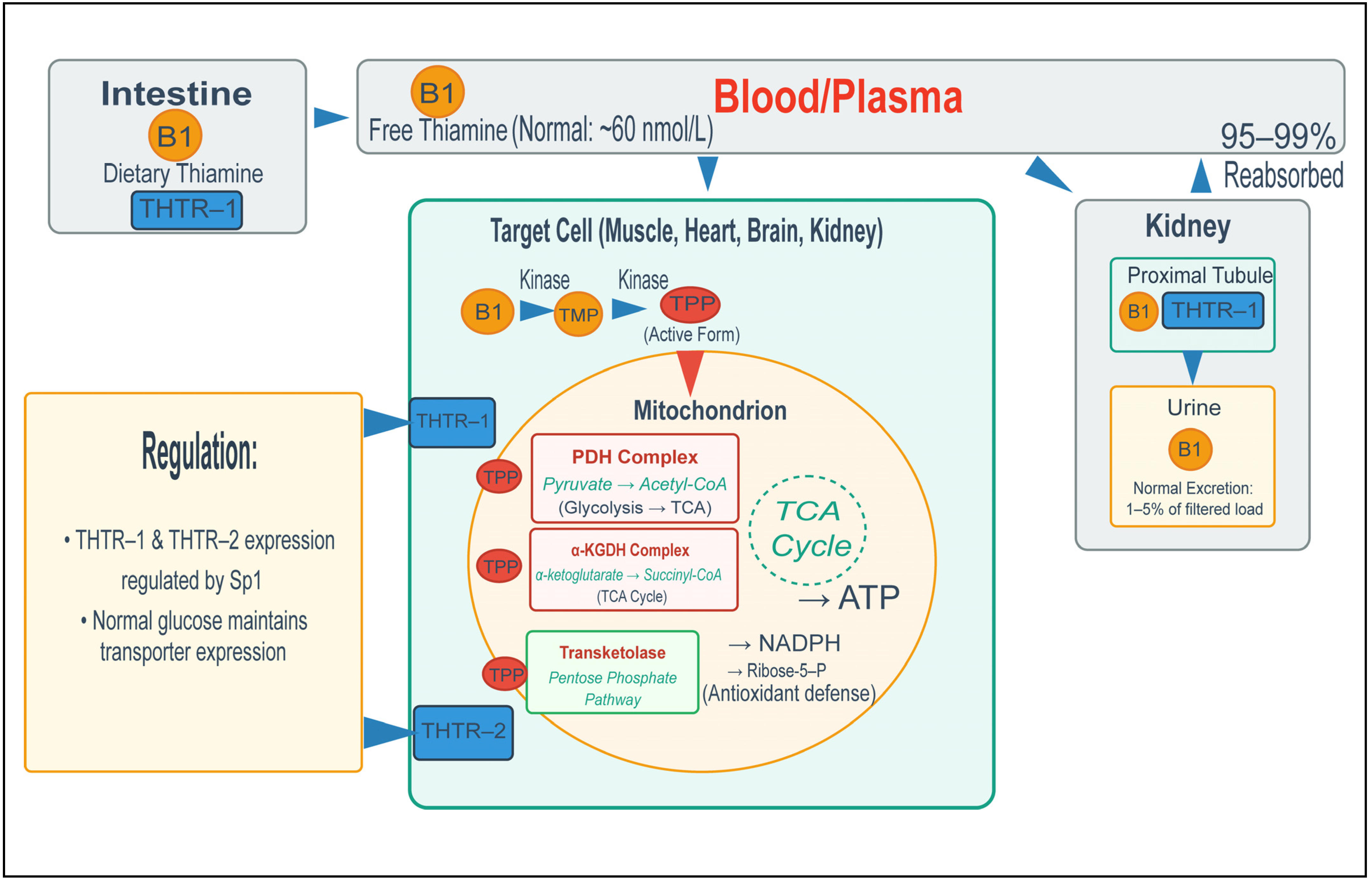
Once inside cells, thiamine undergoes phosphorylation to form thiamine monophosphate (TMP) and subsequently thiamine diphosphate (TDP, also known as TPP), the active cofactor form [7]. The cellular physiology of thiamine is depicted in Figure 1.

3. Pathophysiology of Thiamine Deficiency

3.1. Assessment of Thiamine Status

The diagnosis of thiamine deficiency can be made using both direct and indirect tests, though the lack of standardization across laboratories and insufficient data comparing the different methods complicate interpretation [27]. Direct methods measure the concentration of thiamine or its derivatives, while indirect measures focus on transketolase activity. The absence of standardized measurement procedures and certified reference materials across laboratories necessitates interpretation of thiamine levels in the context of institutional reference ranges [27]. The reference ranges reported in the literature range from 63–105 nmol/L (lower limit) to 171–229 nmol/L (upper limit) for plasma thiamine concentration [30,31,32,33,34]. Plasma thiamine concentration below 9 nmol/L has been used as the threshold for diagnosing thiamine deficiency in critically ill patients with DKA [8]. Another study used plasma thiamine levels and found that normal volunteers had a mean plasma thiamine concentration of 64 nmol/L (standard deviation (SD) 12) and diabetic patients had a mean of 15–16 nmol/L (SD 10–11), representing a 75% reduction compared to healthy volunteers [7]. It is possible to test for specific thiamine species such as TMP and TTP; however, the specific thresholds for deficiency have not been clearly defined. It is also possible to measure thiamine concentration in whole blood rather than plasma; however, results were similar to plasma measurement in one study [33]. Erythrocyte transketolase activity assays can be used as a functional measure of thiamine status. If the addition of TPP to the blood sample results in a certain percentage increase in transketolase activity, this can be considered thiamine deficiency. The percentage increase used to diagnose thiamine deficiency is not certain, with values ranging from 15% to 40% reported in the literature [27,35,36]. Practically, this means that clinicians need to interpret thiamine concentrations within the context of the reference ranges used by their laboratories (rather than rely on arbitrary cut-offs) and supplement this with clinical findings to diagnose thiamine deficiency.

3.2. Metabolic Consequences

Thiamine deficiency produces profound metabolic derangements through multiple interconnected pathways. The impairment of PDH activity leads to the accumulation of pyruvate, which is preferentially reduced to lactate, causing type B lactic acidosis [8]. This lactic acidosis can persist despite adequate tissue perfusion and may contribute to prolonged metabolic acidosis in DKA [37].
The reduction in α-KGDH activity compromises TCA cycle function, decreasing cellular ATP production and oxidative capacity in a clinical study that used whole blood samples from patients with DKA and healthy volunteers [6]. Recent cellular studies in patients with DKA demonstrated significantly lower basal and maximal oxygen consumption rates (OCR) in peripheral blood mononuclear cells compared to healthy controls (median basal OCR: 4.7 vs. 7.9 pmol/min/μg protein, p = 0.036; maximal OCR: 16.4 vs. 31.5 pmol/min/μg protein, p < 0.001) [6]. Importantly, in vitro treatment with thiamine significantly increased both basal and maximal OCR in cells from DKA patients, suggesting that mitochondrial dysfunction in DKA is at least partially reversible with thiamine supplementation [6].
Impaired transketolase activity in the pentose phosphate pathway reduces NADPH production, compromising antioxidant defences and potentially exacerbating oxidative stress [7]. This may be particularly relevant in diabetes, where hyperglycemia-induced oxidative stress already strains cellular antioxidant systems.

3.3. Systemic Effects

Beyond metabolic derangements, thiamine deficiency affects multiple organ systems, particularly the cardiovascular and central and peripheral nervous systems, often termed wet and dry beriberi, respectively.
Cardiovascular manifestations include altered vascular reactivity, systemic vasodilatation, pulmonary hypertension and high output cardiac failure, which can progress to low output cardiac failure and cardiogenic shock [14,38]. A pediatric study examining myocardial function in children with DKA found that those with thiamine deficiency had significantly higher serum high-sensitivity cardiac troponin T levels and impaired diastolic function compared to those without thiamine deficiency [14]. Furthermore, serum thiamine levels correlated positively with echocardiographic indices of diastolic function and negatively with troponin levels [14].
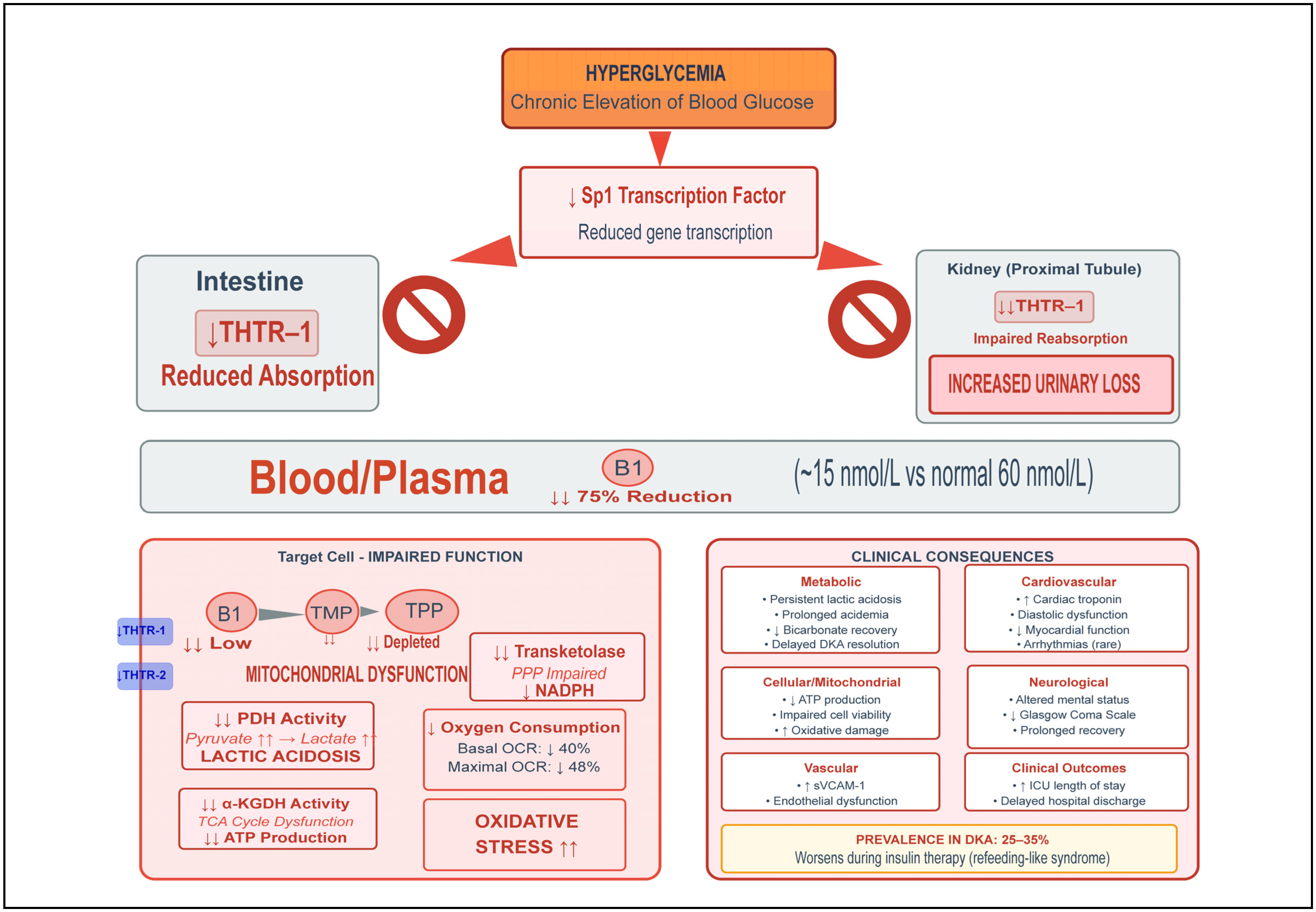
Neurological complications of thiamine deficiency are well recognized, ranging from peripheral neuropathy to the severe manifestations of Wernicke–Korsakoff syndrome [24,39]. Mechanistically, disruption of glutaminergic and gamma-amino-butyric acid (GABA)-ergic neurotransmission causes the central nervous system features, while cumulative oxidative stress on myelin sheaths from pentose phosphate pathway derangements is implicated in peripheral nervous system dysfunction [38,40]. While traditionally associated with alcohol use disorder, thiamine deficiency can cause neurological dysfunction in any patient with inadequate thiamine status, including those with diabetes and DKA [11]. Pathophysiology of thiamine deficiency is summarised in Figure 2.

4. Prevalence of Thiamine Deficiency in Diabetes and DKA

4.1. General Diabetic Population

Multiple studies have documented a high prevalence of thiamine deficiency in patients with diabetes mellitus. Thornalley et al. found that plasma thiamine concentrations were decreased by 76% in type 1 diabetes and 75% in type 2 diabetes compared to healthy controls (type 1 diabetes: 15.3 nmol/L vs. controls: 64.1 nmol/L, p < 0.001; type 2 diabetes: 16.3 nmol/L vs. controls: 64.1 nmol/L, p < 0.001) [7].
A systematic review and meta-analysis examining thiamine status in diabetes included 20 studies and found that individuals with diabetes had significantly lower concentrations of thiamine (pooled standardized mean difference [SMD]: −0.97, 95% CI: −1.89 to −0.06), thiamine monophosphate (SMD: −1.16, 95% CI: −1.82 to −0.50), and total thiamine compounds (SMD: −1.01, 95% CI: −1.48 to −0.54) compared to controls [21]. TPP and erythrocyte transketolase activity also tended to be lower in persons with diabetes, though these differences did not reach statistical significance [21].
Subgroup analysis revealed that individuals with diabetes and albuminuria had even lower thiamine levels than controls (SMD: −2.68, 95% CI: −5.34 to −0.02), suggesting that renal complications may further exacerbate thiamine deficiency [21].

4.2. Prevalence in DKA

The prevalence of thiamine deficiency appears to be particularly high in patients presenting with DKA, though it must be noted that this is highly sensitive to the analytic method used and the threshold used to diagnose deficiency (as described in Section 3.1).
In a prospective observational study of 32 adult patients with DKA, Moskowitz et al. found that 25% (8/32 patients) had thiamine deficiency, defined as whole blood thiamine levels below 9 nmol/L [8]. Importantly, this study found a significant negative correlation between lactic acid and plasma thiamine levels (r = −0.56, p = 0.002), which persisted after adjustment for APACHE II scores (p = 0.009) [8].
A pediatric pilot study of 22 children with type 1 diabetes and DKA found that 23.8% (5/21 patients) had thiamine deficiency prior to insulin administration [9]. More concerning, after 8 h of standard insulin therapy, 35% (7/20 patients) had developed thiamine deficiency, with 68% of patients experiencing a decrease in thiamine levels during treatment (mean fall of 20 ± 31.4 nmol/L) [9]. This raises the possibility that insulin therapy itself may exacerbate thiamine deficiency, potentially through a refeeding-like syndrome [9].
A tertiary care study of 90 children with type 1 diabetes presenting with DKA confirmed these findings, showing that mean blood TPP levels significantly decreased after 24 h of DKA treatment compared to baseline (90.11 ± 15.76 nmol/L vs. 108.8 ± 17.6 nmol/L, p < 0.001) [10]. TPP levels at 24 h were positively correlated with the initial Glasgow Coma Scale (r = 0.68, p = 0.001) and negatively correlated with patient age (r = −0.61, p = 0.001) and recovery time (r = −0.724, p = 0.001) [10].
A recent cross-sectional analysis of pooled data from 269 emergency department patients with various acute illnesses (including DKA, sepsis, and oncologic emergencies) found that 20.5% had thiamine deficiency [11]. Advanced age (>60 years; OR 2.0, 95% CI 1.0–3.8), female gender (OR 2.1, 95% CI 1.1–4.1), and leukopenia (OR 5.1, 95% CI 2.3–11.3) were independently associated with thiamine deficiency [11].

4.3. Special Populations

Certain diabetic populations appear at particularly high risk of thiamine deficiency. Patients who have undergone bariatric surgery show markedly elevated rates of thiamine deficiency due to both reduced absorption and increased metabolic demands [5]. A case report described recurrent DKA following bariatric surgery in a patient with type 1 diabetes, wherein persistent hyperketonemia despite standard DKA therapy was only resolved after thiamine replacement, highlighting the critical importance of thiamine in this population [26].
Obesity itself, independent of bariatric surgery, has been linked to thiamine deficiency, creating a metabolic relationship between thiamine status, obesity, and diabetes that may predispose to DKA [5].

5. Molecular Mechanisms of Thiamine Deficiency in Diabetes

5.1. Glucose-Induced Downregulation of Thiamine Transporters

The primary mechanism underlying thiamine deficiency in diabetes appears to be hyperglycemia-induced downregulation of thiamine transporter (THTR-1 and THTR-2) expression in the renal proximal tubular epithelium. Larkin et al. demonstrated that human primary proximal tubule epithelial cells exposed to high glucose concentration (26 mmol/L) showed marked decreases in THTR-1 and THTR-2 expression at both mRNA (−76% and −53%, respectively, p < 0.001) and protein levels (−77% and −83%, respectively, p < 0.05) compared to cells in normal glucose (5 mmol/L) [12].
These molecular changes translated into functional consequences, with hyperglycaemia inducing a 37% decrease in apical to basolateral transport of thiamine across the renal proximal tubular epithelium [12]. The decreased expression of THTR-1 and THTR-2 was associated with reduced expression of the transcription factor Sp1, suggesting transcriptional regulation as the underlying mechanism [12].

5.2. Increased Renal Clearance

The functional consequence of reduced THTR-1 and THTR-2 expression in the kidney is dramatically increased urinary thiamine losses. Thornalley et al. documented that renal clearance of thiamine was increased 24-fold in type 1 diabetic patients and 16-fold in type 2 diabetic patients compared to healthy controls [7]. Plasma thiamine concentration correlated negatively with both renal clearance of thiamine (r = −0.531, p < 0.001) and fractional excretion of thiamine (r = −0.616, p < 0.001) [7].
Improvement of glycemic control in murine models of diabetes corrected the increased fractional excretion of thiamine, providing direct evidence that hyperglycemia drives renal thiamine losses [12].

5.3. Vascular Cell Dysfunction

Beyond renal mechanisms, hyperglycemia appears to affect thiamine handling in vascular cells. Studies in cell models of diabetic retinopathy demonstrated that hyperglycemic conditions modulate THTR-2 and Sp1 expression in human endothelial cells, pericytes, and Müller cells [13]. Transketolase activity, intracellular thiamine, and permeability to thiamine were all decreased in cells cultured under thiamine deficiency and in pericytes exposed to hyperglycemic conditions [13].
Importantly, thiamine over-supplementation compensated for THTR-2 reduction by restoring thiamine uptake and transketolase activity, demonstrating that the transporter downregulation can be overcome with higher extracellular thiamine concentrations [13].

5.4. Genetic Factors

Genetic variation in thiamine transporter genes may modulate individual susceptibility to diabetic complications. A genome-wide association study found that two single-nucleotide polymorphisms (SNPs) in strong linkage disequilibrium within the SLC19A3 locus were associated with reduced rates of severe retinopathy and the combined phenotype of severe retinopathy and end-stage renal disease in patients with type 1 diabetes [15]. The association with the combined phenotype reached genome-wide significance in a meta-analysis (p < 5 × 10⁻⁸), suggesting that genetic variations affecting THTR-2 function play an important protective role against microvascular complications [15].
Similarly, studies in gestational diabetes found significant associations between SNPs in SLC19A2 (rs6656822) and SLC19A3 (rs7567984) and postpartum transketolase activity (p = 0.03 and p = 0.007, respectively) [16]. These findings suggest that genetic variability in thiamine transport capacity may explain inter-individual differences in susceptibility to metabolic complications.

5.5. Thiamine-Responsive Megaloblastic Anemia Syndrome

Loss-of-function mutations in SLC19A2 cause thiamine-responsive megaloblastic anemia (TRMA) syndrome, also known as Rogers syndrome, characterized by the triad of megaloblastic anemia, sensorineural deafness, and diabetes mellitus [41]. Over 30 homozygous mutations in SLC19A2 have been identified to date [42]. Patients with TRMA are at particular risk of DKA, with case series reporting supraventricular tachycardia during DKA episodes and cardiac arrhythmias associated with thiamine deficiency [42,43].

5.6. Other Causes

Beyond the mechanisms described above, thiamine deficiency in diabetes and DKA may also be multifactorial. Other contributory causes may include dietary insufficiency, malabsorption syndromes, chronic excessive alcohol consumption, chronic liver disease, bariatric surgery, chronic (loop) diuretic use, pregnancy and hyperthyroidism. Clinical assessment should be thorough, and it should not be assumed that thiamine deficiency in a patient with diabetes is only due to hyperglycemia.

6. Implications for DKA Management

6.1. Persistent Lactic Acidosis

One of the most clinically relevant implications of thiamine deficiency in DKA is the development or persistence of lactic acidosis despite appropriate standard therapy. The inverse relationship between thiamine levels and lactate concentrations has been consistently demonstrated [8]. Moreover, thiamine levels were directly related to admission serum bicarbonate (r = 0.44, p = 0.019), and patients with thiamine deficiency maintained lower bicarbonate levels over the first 24 h of DKA treatment (difference of 4.083 mmol/L, p = 0.002) [8].
Several case reports illustrate this relationship. A patient with type 1 diabetes presenting with DKA and persistent lactic acidosis despite adequate resuscitation had marked improvement only after empiric thiamine administration [24]. Another case documented a patient with DKA who developed progressive lactic acidosis during insulin therapy, with lactate levels rising rather than falling despite standard treatment [25]. Recognition of thiamine deficiency and subsequent thiamine and phosphate replacement resulted in normalization of lactate levels [25].
Both the presence of lactic acidosis and slow clearance of lactate in DKA have been associated with worse outcome in DKA [44,45].

6.2. Mitochondrial Dysfunction

The demonstration of impaired cellular oxygen consumption in DKA patients provides mechanistic insight into prolonged metabolic recovery [6]. The significant increases in both basal and maximal OCR following in vitro thiamine treatment suggest that thiamine supplementation could potentially accelerate metabolic recovery in vivo [6]. Notably, coenzyme Q10, another mitochondrial cofactor, also improved OCR in DKA cells, suggesting that targeting multiple aspects of mitochondrial function may be beneficial [6].

6.3. Cardiovascular Complications

The association between thiamine deficiency and myocardial dysfunction in DKA has important clinical implications. Evidence of elevated cardiac biomarkers and impaired diastolic function in thiamine-deficient DKA patients raises concerns about potential subclinical cardiac injury during acute metabolic decompensation [14]. Given that cardiovascular disease is a leading cause of morbidity and mortality in diabetes, preventing thiamine deficiency-associated cardiac dysfunction may have long-term prognostic implications.
While thiamine deficiency appears to be associated with increased complications and morbidity from DKA, it is important to note that there is no evidence to suggest that thiamine deficiency is a causal factor in the development of DKA.

6.4. Current Supplementation Practices

Despite the high prevalence of thiamine deficiency in DKA and its clear metabolic implications, thiamine supplementation is not routinely administered. A retrospective analysis of 14,998 critically ill patients with alcohol use disorder found that only 51% overall received thiamine supplementation, with rates varying by clinical presentation: 59% for alcohol withdrawal, 26% for septic shock, 41% for traumatic brain injury, and notably only 24% for DKA [23]. This low rate of thiamine administration in DKA represents a significant quality-of-care gap [23].
The evidence gap regarding thiamine supplementation in DKA was recently highlighted in a systematic evidence and gap map, which identified scant evidence to guide adjunctive therapies, including thiamine, with this representing a significant knowledge gap in DKA management [1].

7. The Case for Thiamine Supplementation in DKA

7.1. Biochemical Rationale

The biochemical rationale for thiamine supplementation in DKA is compelling. Thiamine deficiency impairs PDH activity, leading to accumulation of pyruvate and lactate; compromises α-KGDH function; impairs TCA cycle flux; and decreases transketolase activity, impairing antioxidant defences [29]. Each of these derangements directly contributes to worsening the metabolic milieu of DKA.
Furthermore, the demonstration that insulin therapy may worsen thiamine deficiency through a refeeding-like phenomenon implies that thiamine supplementation could potentially be initiated early, ideally before or concurrent with insulin administration [9]. The rapid consumption of thiamine during resumed glucose metabolism could precipitate acute thiamine depletion in already deficient or subclinically deficient patients [25].

7.2. Evidence from Other Conditions

While direct evidence from randomized trials in DKA is lacking, evidence from thiamine supplementation in other acute conditions provides supportive data. Although trials of thiamine in septic shock have shown mixed results, meta-analyses and observational studies have demonstrated improvements in lactate clearance in some populations [46,47,48]. The principle that thiamine supplementation can improve cellular metabolism during acute critical illness has been established across multiple disease states [29].

7.3. Evidence from Diabetes Studies

Several randomized controlled trials have examined thiamine supplementation in stable diabetic populations. A trial of high-dose thiamine (300 mg daily) in hyperglycemic individuals improved glucose tolerance, with significant reduction in 2 h plasma glucose relative to baseline (8.78 ± 2.20 vs. 9.89 ± 2.50 mmol/L, p = 0.004) [17]. Fasting plasma glucose and insulin did not deteriorate with thiamine supplementation, whereas both worsened significantly in the placebo arm [17].
Another crossover trial demonstrated that high-dose thiamine supplementation significantly improved blood pressure management, with decreased diastolic blood pressure after six weeks (67.9 ± 5.8 mmHg vs. baseline 71.4 ± 7.4 mmHg, p = 0.005), with a trend toward lower systolic blood pressure [18].
In gestational diabetes mellitus, thiamine supplementation (100 mg/day for 6 weeks) significantly decreased high-sensitivity C-reactive protein and malondialdehyde levels while downregulating TNF-α gene expression, suggesting anti-inflammatory and antioxidant effects [19].

7.4. Preliminary Trial Data

A randomized, double-blind, placebo-controlled trial, the Diabetic Ketoacidosis and Thiamine (DKAT) trial, is currently recruiting patients and may provide important evidence to address the issue of thiamine supplementation in DKA [20]. This single-center study will randomize 100 adult patients with DKA to receive either intravenous thiamine (200 mg in 50 mL 0.9% saline) or placebo twice daily for 2 days [20]. The primary outcome is change in bicarbonate level over 24 h, with secondary outcomes including changes in anion gap, lactate levels, oxygen consumption by circulating mononuclear cells, and hospital length of stay. This trial represents a critical step forward in generating high-quality evidence for thiamine supplementation in DKA, though on its own, it is unlikely to produce definitive evidence.

7.5. Safety Profile

An important consideration for any adjunctive therapy is safety. Thiamine has an excellent safety profile, with minimal adverse effects even at high doses [22]. Systematic reviews of thiamine supplementation in various populations have consistently reported that thiamine is well-tolerated, with no serious drug-related adverse events [22,49]. The most commonly reported side effects are mild and include nausea and allergic reactions, which occur rarely [22].
Given the high prevalence of thiamine deficiency in DKA, the clear mechanistic rationale, the low risk of adverse effects, and the low cost of thiamine, further research investigating empiric supplementation should be considered a high clinical priority.

7.6. Optimal Dosing Strategy

The optimal dose and route of thiamine administration in DKA remain to be determined. Doses used in various studies have ranged from 100 mg to 900 mg daily, administered either intravenously or orally [8,9]. The DKAT trial protocol specifies 200 mg intravenously twice daily. Given the impaired gastrointestinal absorption that may occur in DKA due to gastroparesis and the urgent need for metabolic correction, intravenous administration during acute illnesses appears reasonable.
Importantly, high-dose thiamine can overcome the downregulation of thiamine transporters induced by hyperglycemia [13], providing further rationale for using higher doses than typically employed for prophylaxis. Following acute stabilization, transition to oral thiamine supplementation may be appropriate to maintain adequate status during recovery. Clinical practice considerations, pending specific clinical evidence, are provided in Table 2.

8. Future Research Priorities

Despite growing evidence for the importance of thiamine in DKA, substantial knowledge gaps remain that require urgent investigation.
The most pressing need is for adequately powered, multicenter randomized controlled trials examining thiamine supplementation in DKA. While the DKAT trial represents an important first step, it is unlikely to be definitive in its scope, and several key questions require additional investigation as summarised below.
Dose–Response Studies: The optimal dose of thiamine in DKA remains unknown. Trials comparing different dosing regimens (e.g., 100 mg vs. 200 mg vs. 500 mg) are needed to determine the dose that provides maximal clinical benefit. Additionally, the optimal duration of therapy requires clarification—should thiamine be administered only during the acute DKA episode or continued for days to weeks afterwards?
Pediatric vs. Adult Populations: Given the differences in DKA pathophysiology and management between children and adults, separate trials in pediatric populations, or inclusion of children in adult trials, are essential. The suggestion that thiamine deficiency worsens during DKA treatment may be particularly relevant in children [9,10].
Timing of Administration: Whether thiamine should be administered before, concurrent with, or after insulin initiation deserves systematic evaluation. The potential for insulin therapy to precipitate or worsen thiamine deficiency through a refeeding-like syndrome highlights the importance of timing considerations and leads to the hypothesis that pre-emptive (i.e., before insulin administration) thiamine administration might be optimal.
Patient-Cantered Outcomes: While biochemical endpoints (bicarbonate normalization and lactate clearance) are important, trials should also examine patient-centred outcomes, including time to DKA resolution, ICU and hospital length of stay, neurological outcomes, and long-term complications. Cost-effectiveness analyses would help inform implementation decisions.
Special Populations: High-risk subgroups, including patients with recurrent DKA, those with obesity or bariatric surgery, pregnant women, and patients with chronic kidney disease, may derive particular benefit from thiamine supplementation and warrant targeted investigation within larger RCTs.

8.1. Mechanistic Studies

Several mechanistic questions require further investigation:
Genetic Determinants: Building on the discovery that SLC19A3 variants protect against microvascular complications, prospective studies should examine whether thiamine transporter genotypes predict DKA severity, response to treatment, or outcomes. Pharmacogenetic approaches could potentially identify patients most likely to benefit from supplementation.
Mitochondrial Function: The demonstration of improved oxygen consumption with thiamine treatment in vitro requires validation in clinical trials with direct measurement of mitochondrial function before and after thiamine administration. Advanced metabolomics approaches could provide deeper insights into the metabolic consequences of thiamine deficiency and repletion.
Combination Therapy: Given that coenzyme Q10 also improved mitochondrial function in DKA cells, trials examining combination therapies targeting multiple aspects of mitochondrial metabolism may be warranted.

8.2. Prevention Strategies

An area receiving insufficient attention is the primary prevention of thiamine deficiency in diabetes:
Screening Programs: The feasibility and cost-effectiveness of screening high-risk diabetic patients for thiamine deficiency should be evaluated. Patients with poor glycemic control, albuminuria, recurrent infections, or those on certain medications may warrant routine screening.
Prophylactic Supplementation: Given the high prevalence of thiamine deficiency in diabetes and the safety of supplementation, trials of routine prophylactic thiamine administration in high-risk diabetic populations could be considered.
Dietary Interventions: While therapeutic doses require supplementation, optimizing dietary thiamine intake through nutrition education and fortification strategies may help reduce deficiency rates at the population level.

9. Limitations

This narrative review has several important limitations that warrant consideration when interpreting the findings and their clinical implications.

9.1. Limitations of Review Methodology

As a narrative review, this work is subject to inherent methodological limitations compared to systematic reviews and meta-analyses. The search strategy, while comprehensive, was not exhaustive and may have missed relevant studies, particularly those published in non-English languages or in journals not indexed in major databases. Unlike systematic reviews, narrative reviews lack pre-specified protocols for study selection and data extraction, which may introduce selection bias. Additionally, the quality assessment of included studies was qualitative rather than systematic, and we did not employ formal risk of bias assessment tools for individual studies. The synthesis of evidence relies on narrative description rather than quantitative meta-analysis, which limits the ability to provide precise estimates of effect sizes and confidence intervals for key outcomes; this was necessitated by the heterogeneous nature of the data and lack of standardized reporting.

9.2. Other Limitations

A critical limitation affecting the interpretation of thiamine deficiency prevalence and clinical correlations is the substantial heterogeneity in measurement methodologies across studies. Different studies have measured different thiamine biomarkers—including whole blood thiamine, plasma thiamine, erythrocyte thiamine diphosphate, and erythrocyte transketolase activity—each with distinct advantages and limitations. The diagnostic thresholds defining thiamine deficiency vary across studies and institutions.
Among studies examining thiamine supplementation in diabetes, dosing regimens vary widely from 100 mg to 900 mg daily, with variable routes of administration (oral vs. intravenous) and treatment durations ranging from days to months. This heterogeneity prevents definitive conclusions regarding optimal therapeutic approaches. Furthermore, studies have examined diverse outcome measures—biochemical endpoints (glucose control, lactate, and bicarbonate), clinical outcomes (hospital length of stay and mortality), and surrogate markers (mitochondrial function and inflammatory biomarkers)—making cross-study comparisons challenging.
Further, many of the studies were small, and almost all were observational in nature. Generalizing the specific results of any single, small study to a broader population must be approached with caution until the various findings can be confirmed in large, prospective studies.

10. Conclusions

Thiamine deficiency is prevalent in patients with diabetes mellitus and particularly in those presenting with diabetic ketoacidosis, affecting up to one-third of patients. The underlying mechanisms include glucose-induced downregulation of renal thiamine transporters leading to excessive urinary thiamine losses, with genetic factors modulating individual susceptibility. The metabolic consequences of thiamine deficiency—impaired pyruvate dehydrogenase activity leading to lactic acidosis, compromised TCA cycle function reducing ATP production, and decreased transketolase activity impairing antioxidant defence mechanisms—directly contribute to the pathophysiology of DKA and may explain persistent lactic acidosis despite prompt standard therapy.
Emerging cellular and clinical evidence demonstrates that thiamine deficiency causes mitochondrial dysfunction in DKA that is at least partially reversible with thiamine supplementation. The association with impaired myocardial function and neurological complications further underscores the clinical relevance of this deficiency. Despite this compelling evidence, thiamine supplementation remains underutilized in DKA management, with only approximately one-quarter of DKA patients receiving thiamine.
The biochemical rationale for thiamine supplementation in DKA is robust, the safety profile is excellent, and the cost is minimal. Preliminary data from related conditions and stable diabetic populations suggest potential benefits. Given the strength of existing mechanistic and observational data, the prevalence of deficiency, and the favourable benefit–risk profile, there is a strong case for conducting large-scale trials assessing thiamine supplementation in DKA with clinical, patient-centred outcomes.

Author Contributions

Both authors, M.R. and A.K., contributed equally to conceptualization and methodology. M.R. wrote the original draft. All authors have read and agreed to the published version of the manuscript.

Funding

This research received no external funding.

Institutional Review Board Statement

Not applicable.

Informed Consent Statement

Not applicable.

Data Availability Statement

No new data were created or analyzed in this study.

Acknowledgments

During the preparation of this manuscript/study, the authors used Claude.ai (version 1.0.734) for the purpose of stylistic editing of Figure 1 and Figure 2. The authors have reviewed and edited the output and take full responsibility for the content of this publication.

Conflicts of Interest

M.R. is the chief investigator of a currently recruiting trial that is investigating different fluid types for the treatment of patients with moderate or severe diabetic ketoacidosis.

Abbreviations

The following abbreviations are used in this manuscript:
DKADiabetic ketoacidosis
THTR-1Thiamine transporter 1
THTR-2Thiamine transporter 2
TMPThiamine monophosphate
TPPThiamine pyrophosphate
SMDStandard mean deviation
GABAGamma-amino-butyric acid
ATPAdenosine triphosphate

Appendix A

Table A1. Expanded Summary of KeyStudies on Thiamine Deficiency in Diabetes and Diabetic Ketoacidosis.
StudyYearDesignPopulationNKey FindingsDOI
Prevalence Studies
Thornalley et al. [7]2007Cross-sectionalType 1 and Type 2 diabetes74Plasma thiamine ↓ 76% in T1DM and ↓ 75% in T2DM vs. controls (15.3 vs. 64.1 nmol/L, p < 0.001). Renal clearance ↑ 24-fold (T1DM), ↑ 16-fold (T2DM).10.1007/s00125-007-0771-4
Moskowitz et al. [8]2013Prospective observationalAdult patients with DKA3225% had thiamine deficiency (<9 nmol/L). Negative correlation: lactate vs. thiamine (r = −0.56, p = 0.002). Thiamine correlated with bicarbonate (r = 0.44, p = 0.019).10.1016/j.jcrc.2013.06.008
Rosner et al. [9]2015Prospective observationalPediatric T1DM with DKA2223.8% thiamine deficient before insulin; 35% after 8 h insulin therapy. 68% experienced ↓ thiamine during treatment (mean fall 20 ± 31.4 nmol/L).10.1097/PCC.0000000000000302
Abdelaziz et al. [10]2022Prospective observationalPediatric T1DM with DKA90Thiamine ↓ after 24 h treatment (90.11 ± 15.76 vs. 108.8 ± 17.6 nmol/L, p < 0.001). Correlated with GCS (r = 0.68, p = 0.001) and negatively with recovery time (r = −0.724, p = 0.001).10.1515/jpem-2022-0387
Miller et al. [11]2024Cross-sectionalED patients (sepsis, DKA, oncology)26920.5% thiamine deficient. Independent predictors: age > 60 y (OR 2.0), female (OR 2.1), leukopenia (OR 5.1).10.5811/westjem.18472
Mechanistic Studies
Larkin et al. [12]2012In vitro cell cultureHuman proximal tubule cellsHigh glucose (26 mmol/L) ↓ THTR-1/2 expression (mRNA: −76%/−53%; protein: −77%/−83%, p < 0.05). ↓ 37% thiamine transport. Associated with ↓ Sp1.10.1371/journal.pone.0053175
Beltramo et al. [13]2019In vitro cell cultureRetinal cells (endothelial, pericytes, Müller)THTR-2 and Sp1 modulated by hyperglycemia. Transketolase activity and intracellular thiamine ↓ under deficiency. Thiamine over-supplementation restored uptake/activity.10.1177/1479164119878427
Vine et al. [6]2024Prospective with ex vivoAdult patients with DKA62Basal OCR ↓ in DKA (4.7 vs. 7.9 pmol/min/μg, p = 0.036); maximal OCR (16.4 vs. 31.5, p < 0.001). In vitro thiamine significantly ↑ OCR in DKA cells.10.1186/s40635-024-00673-0
Mohamed et al. [14]2019Cross-sectionalPediatric patients with DKA25Thiamine-deficient patients: ↑ troponin, impaired diastolic function. Thiamine correlated positively with diastolic indices and negatively with troponin.10.1515/jpem-2018-0320
Genetic Studies
Porta et al. [15]2016GWASType 1 diabetes (multiple cohorts)Two SNPs in SLC19A3 associated with ↓ severe retinopathy and nephropathy. Combined phenotype reached genome-wide significance (p < 5 × 10⁻⁸) in a meta-analysis.10.2337/db15-1247
Bartáková et al. [16]2016Clinical trial with geneticsGestational diabetesSNPs in SLC19A2 (rs6656822) and SLC19A3 (rs7567984) associated with postpartum transketolase activity (p = 0.03, p = 0.007). Plasma thiamine ↓ in GDM (p = 0.002).10.1007/s10719-016-9688-9
Randomized Controlled Trials—Diabetes Populations
Alaei Shahmiri et al. [17]2013RCT, double-blind crossoverHyperglycemic individuals (IGT, new T2DM)12High-dose thiamine (300 mg/day × 6 wks) ↓ 2 h plasma glucose (8.78 ± 2.20 vs. 9.89 ± 2.50 mmol/L, p = 0.004). Prevented deterioration in fasting glucose/insulin vs. placebo.10.1007/s00394-013-0534-6
Alaei-Shahmiri et al. [18]2015RCT, double-blind crossoverHyperglycemic individuals12High-dose thiamine (300 mg/day × 6 wks) ↓ DBP (67.9 ± 5.8 vs. 71.4 ± 7.4 mmHg, p = 0.005), MAP (p = 0.005). Trend toward ↓ SBP (p = 0.06).10.1016/j.dsx.2015.04.014
Amirani et al. [19]2020RCT, double-blind, placebo-controlledGestational diabetes60Thiamine (100 mg/day × 6 wks) ↓ hs-CRP, MDA levels, downregulated TNF-α gene expression vs. placebo. Anti-inflammatory and antioxidant effects.10.1080/14767058.2020.1779212
RCT Protocols—DKA Specific
Vine et al. [20] (DKAT)2024RCT protocolAdult patients with DKA (planned)100Double-blind RCT: IV thiamine (200 mg BID × 2 days) vs. placebo. Primary: Δ bicarbonate/24 h. Secondary: anion gap, lactate, OCR, length of stay.10.1136/bmjopen-2023-077586
Systematic Reviews and Meta-Analyses
Ziegler et al. [21]2023Systematic review and meta-analysisDiabetes patients20 studiesDiabetes: ↓ thiamine (SMD −0.97), TMP (SMD −1.16), total thiamine (SMD −1.01) vs. controls. With albuminuria: even lower (SMD −2.68).10.1016/j.metabol.2023.155565
Muley et al. [22]2022Systematic review and meta-analysisType 2 diabetes6 RCTs, 364 ptsThiamine (100–900 mg/day, ≤3 months), no significant Δ HbA1c, FBG, or PPG. ↑ HDL (MD 0.10, p < 0.05); benfotiamine ↓ triglycerides at 120 mg/day.10.1136/bmjopen-2021-059834
Sieben & Ramanan [1]2025Evidence gap mapDKA patients1131 screened, 118 includedSubstantial evidence gaps for adjunctive therapies, including thiamine. Most studies focused on fluids/insulin; limited patient-centered outcome data.10.3390/medsci13020053
Health Services Research
Pawar et al. [23]2021Retrospective observationalCritically ill with AUD14,998Only 51% received thiamine overall. Rate: 59% (alcohol withdrawal), 26% (septic shock), 24% (DKA). Significant quality-of-care gap.10.7326/M21-2103
Clinical Case Series/Reports
Chehayeb et al. [24]2023Case report with reviewT1DM with DKA, persistent lactic acidosis1Persistent lactic acidosis despite adequate resuscitation. Improved only after empiric thiamine administration. Highlights cognitive biases in interpreting lactate.10.1007/s11606-023-08091-w
Feldhaus & Lange-Brock [25]2019Case reportT1DM with DKA1Rising lactate during insulin therapy for DKA. Suspected refeeding syndrome; thiamine and phosphate replacement → lactate normalization.10.1007/s00063-019-0562-y
Moseley et al. [26]2021Case reportT1DM post-bariatric surgery1Recurrent DKA post-bariatric surgery with persistent hyperketonemia despite standard therapy. Resolution only after thiamine replacement.10.1055/s-0041-1731139
Methodological/Standardization Studies
Collie et al. [27]2017Systematic review of methodsN/A122 studiesNo standard measurement procedure for thiamine compounds. Multiple method variations prohibit comparison. Need for certified reference materials and standardization.10.1515/cclm-2017-0054
Abbreviations: AUD, alcohol use disorder; BID, twice daily; DBP, diastolic blood pressure; DKA, diabetic ketoacidosis; ED, emergency department; FBG, fasting blood glucose; GCS, Glasgow Coma Scale; GDM, gestational diabetes mellitus; GWAS, genome-wide association study; HDL, high-density lipoprotein; hs-CRP, high-sensitivity C-reactive protein; IGT, impaired glucose tolerance; IV, intravenous; MAP, mean arterial pressure; MDA, malondialdehyde; OCR, oxygen consumption rate; OR, odds ratio; PPG, postprandial glucose; RCT, randomized controlled trial; SBP, systolic blood pressure; SMD, standardized mean difference; SNP, single-nucleotide polymorphism; T1DM, type 1 diabetes mellitus; T2DM, type 2 diabetes mellitus; THTR, thiamine transporter; TMP, thiamine monophosphate; TNF-α, tumor necrosis factor-alpha.

References

  1. Sieben, N.; Ramanan, M. Research Priorities for Diabetic Ketoacidosis: An Evidence and Gap Mapping Review. Med. Sci. 2025, 13, 53. [Google Scholar] [CrossRef]
  2. Gosmanov, A.R.; Gosmanova, E.O.; Kitabchi, A.E. Hyperglycemic Crises: Diabetic Ketoacidosis and Hyperglycemic Hyperosmolar State. In Endotext; Feingold, K.R., Anawalt, B., Blackman, M.R., Boyce, A., Chrousos, G., Corpas, E., de Herder, W.W., Dhatariya, K., Dungan, K., Hofland, J., et al., Eds.; MDText.com, Inc.: South Dartmouth, MA, USA, 2021. Available online: http://www.ncbi.nlm.nih.gov/books/NBK279052/ (accessed on 12 September 2023).
  3. Umpierrez, G.E.; Davis, G.M.; ElSayed, N.A.; Fadini, G.P.; Galindo, R.J.; Hirsch, I.B.; Klonoff, D.C.; McCoy, R.G.; Misra, S.; Gabbay, R.A.; et al. Hyperglycemic Crises in Adults with Diabetes: A Consensus Report. Diabetes Care 2024, 47, 1257–1275. [Google Scholar] [CrossRef]
  4. Dhatariya, K. The evolution of DKA management. Br. J. Diabetes Vasc. Dis. 2015, 15, 31–33. [Google Scholar] [CrossRef]
  5. Panda, A.; Heidari, A.; Borumand, M.; Ahmed, M.; Hassan, A.; Ahmed, M.H. Thiamine deficiency in diabetes, obesity and bariatric surgery: Recipes for diabetic ketoacidosis. J. Fam. Med. Prim. Care 2024, 13, 1620. [Google Scholar] [CrossRef] [PubMed]
  6. Vine, J.; Lee, J.H.; Balaji, L.; Grossestreuer, A.V.; Morton, A.; Peradze, N.; Antony, N.; Berlin, N.; Kravitz, M.S.; Leland, S.B.; et al. Cellular oxygen consumption in patients with diabetic ketoacidosis. Intensive Care Med. Exp. 2024, 12, 97. [Google Scholar] [CrossRef]
  7. Thornalley, P.J.; Babaei-Jadidi, R.; Al Ali, H.; Rabbani, N.; Antonysunil, A.; Larkin, J.; Ahmed, A.; Rayman, G.; Bodmer, C.W. High prevalence of low plasma thiamine concentration in diabetes linked to a marker of vascular disease. Diabetologia 2007, 50, 2164–2170. [Google Scholar] [CrossRef]
  8. Moskowitz, A.; Graver, A.; Giberson, T.; Berg, K.; Liu, X.; Uber, A.; Gautam, S.; Donnino, M.W. The relationship between lactate and thiamine levels in patients with diabetic ketoacidosis. J. Crit. Care 2014, 29, 182.e5–182.e8. [Google Scholar] [CrossRef]
  9. Rosner, E.A.; Strezlecki, K.D.; Clark, J.A.; Lieh-Lai, M. Low Thiamine Levels in Children With Type 1 Diabetes and Diabetic Ketoacidosis: A Pilot Study. Pediatr. Crit. Care Med. 2015, 16, 114. [Google Scholar] [CrossRef] [PubMed]
  10. Abdelaziz, T.A.; Atfy, M.; Elalawi, S.M.; Baz, E.G. Thiamine status during treatment of diabetic ketoacidosis in children–tertiary care centre experience. J. Pediatr. Endocrinol. Metab. 2023, 36, 179–184. [Google Scholar] [CrossRef]
  11. Miller, J.; Grahf, D.; Nassereddine, H.; Nehme, J.; Rammal, J.-A.; Ross, J.; Rose, K.; Hrabec, D.; Tirgari, S.; Lewandowski, C. Cross-Sectional Study of Thiamine Deficiency and Its Associated Risks in Emergency Care. West. J. Emerg. Med. Integr. Emerg. Care Popul. Health 2024, 25, 675. [Google Scholar] [CrossRef]
  12. Larkin, J.R.; Zhang, F.; Godfrey, L.; Molostvov, G.; Zehnder, D.; Rabbani, N.; Thornalley, P.J. Glucose-Induced Down Regulation of Thiamine Transporters in the Kidney Proximal Tubular Epithelium Produces Thiamine Insufficiency in Diabetes. PLoS ONE 2012, 7, e53175. [Google Scholar] [CrossRef]
  13. Beltramo, E.; Mazzeo, A.; Lopatina, T.; Trento, M.; Porta, M. Thiamine transporter 2 is involved in high glucose-induced damage and altered thiamine availability in cell models of diabetic retinopathy. Diabetes Vasc. Dis. Res. 2020, 17, 1479164119878427. [Google Scholar] [CrossRef]
  14. Mohamed, R.A.-E.; Farag, I.M.A.; Elhady, M.; Ibrahim, R.S. Myocardial dysfunction in relation to serum thiamine levels in children with diabetic ketoacidosis. J. Pediatr. Endocrinol. Metab. 2019, 32, 335–340. [Google Scholar] [CrossRef]
  15. Porta, M.; Toppila, I.; Sandholm, N.; Hosseini, S.M.; Forsblom, C.; Hietala, K.; Borio, L.; Harjutsalo, V.; Klein, B.E.; Klein, R.; et al. Variation in SLC19A3 and Protection From Microvascular Damage in Type 1 Diabetes. Diabetes 2015, 65, 1022–1030. [Google Scholar] [CrossRef] [PubMed]
  16. Bartáková, V.; Pleskačová, A.; Kuricová, K.; Pácal, L.; Dvořáková, V.; Bělobrádková, J.; Tomandlová, M.; Tomandl, J.; Kaňková, K. Dysfunctional protection against advanced glycation due to thiamine metabolism abnormalities in gestational diabetes. Glycoconj. J. 2016, 33, 591–598. [Google Scholar] [CrossRef] [PubMed]
  17. Alaei Shahmiri, F.; Soares, M.J.; Zhao, Y.; Sherriff, J. High-dose thiamine supplementation improves glucose tolerance in hyperglycemic individuals: A randomized, double-blind cross-over trial. Eur. J. Nutr. 2013, 52, 1821–1824. [Google Scholar] [CrossRef]
  18. Alaei-Shahmiri, F.; Soares, M.J.; Zhao, Y.; Sherriff, J. The impact of thiamine supplementation on blood pressure, serum lipids and C-reactive protein in individuals with hyperglycemia: A randomised, double-blind cross-over trial. Diabetes Metab. Syndr. Clin. Res. Rev. 2015, 9, 213–217. [Google Scholar] [CrossRef]
  19. Amirani, E.; Aghadavod, E.; Shafabakhsh, R.; Asemi, Z.; Tabassi, Z.; Panahandeh, I.; Naderi, F.; Abed, A. Anti-inflammatory and antioxidative effects of thiamin supplements in patients with gestational diabetes mellitus. J. Matern.-Fetal Neonatal Med. 2022, 35, 2085–2090. [Google Scholar] [CrossRef]
  20. Vine, J.; Mehta, S.; Balaji, L.; Berg, K.M.; Berlin, N.; Liu, X.; Ngo, L.; Shea, M.; Moskowitz, A.; Donnino, M.W.; et al. Thiamine as adjunctive therapy for diabetic ketoacidosis (DKAT) trial protocol and statistical analysis plan: A prospective, single-centre, double-blind, randomised, placebo-controlled clinical trial in the USA. BMJ Open 2024, 14, e077586. [Google Scholar] [CrossRef]
  21. Ziegler, D.; Reiners, K.; Strom, A.; Obeid, R. Association between diabetes and thiamine status—A systematic review and meta-analysis. Metab.-Clin. Exp. 2023, 144, 155565. [Google Scholar] [CrossRef]
  22. Muley, A.; Fernandez, R.; Green, H.; Muley, P. Effect of thiamine supplementation on glycaemic outcomes in adults with type 2 diabetes: A systematic review and meta-analysis. BMJ Open 2022, 12, e059834. [Google Scholar] [CrossRef]
  23. Pawar, R.D.; Balaji, L.; Grossestreuer, A.V.; Thompson, G.; Holmberg, M.J.; Issa, M.S.; Patel, P.V.; Kronen, R.; Berg, K.M.; Moskowitz, A.; et al. Thiamine Supplementation in Patients with Alcohol Use Disorder Presenting with Acute Critical Illness. Ann. Intern. Med. 2022, 175, 191–197. [Google Scholar] [CrossRef] [PubMed]
  24. Chehayeb, R.J.; Ilagan-Ying, Y.C.; Sankey, C. Addressing Cognitive Biases in Interpreting an Elevated Lactate in a Patient with Type 1 Diabetes and Thiamine Deficiency. J. Gen. Intern. Med. 2023, 38, 1547–1551. [Google Scholar] [CrossRef]
  25. Feldhaus, F.; Lange-Brock, N. Ansteigende Laktatwerte im Verlauf der Therapie einer diabetischen Ketoacidose. Med. Klin. Intensivmed. Notfmed. 2020, 115, 417–419. [Google Scholar] [CrossRef]
  26. Moseley, P.; Ahmed, M.H.; Owles, H. Recurrent Diabetic Ketoacidosis following Bariatric Surgery: The Role of Micronutrients. J. Lab. Physicians 2023, 13, 280–282. [Google Scholar] [CrossRef] [PubMed]
  27. Collie, J.T.B.; Greaves, R.F.; Jones, O.A.H.; Lam, Q.; Eastwood, G.M.; Bellomo, R. Vitamin B1 in critically ill patients: Needs and challenges. Clin. Chem. Lab. Med. (CCLM) 2017, 55, 1652–1668. [Google Scholar] [CrossRef]
  28. Kaźmierczak-Barańska, J.; Halczuk, K.; Karwowski, B.T. Thiamine (Vitamin B1)—An Essential Health Regulator. Nutrients 2025, 17, 2206. [Google Scholar] [CrossRef]
  29. Andersen, L.W.; Mackenhauer, J.; Roberts, J.C.; Berg, K.M.; Cocchi, M.N.; Donnino, M.W. Etiology and Therapeutic Approach to Elevated Lactate Levels. Mayo Clin. Proc. 2013, 88, 1127–1140. [Google Scholar] [CrossRef] [PubMed]
  30. Gangolf, M.; Czerniecki, J.; Radermecker, M.; Detry, O.; Nisolle, M.; Jouan, C.; Martin, D.; Chantraine, F.; Lakaye, B.; Wins, P.; et al. Thiamine status in humans and content of phosphorylated thiamine derivatives in biopsies and cultured cells. PLoS ONE 2010, 5, e13616. [Google Scholar] [CrossRef]
  31. Tallaksen, C.M.; Bøhmer, T.; Bell, H.; Karlsen, J. Concomitant determination of thiamin and its phosphate esters in human blood and serum by high-performance liquid chromatography. J. Chromatogr. 1991, 564, 127–136. [Google Scholar] [CrossRef]
  32. Lu, J.; Frank, E.L. Rapid HPLC measurement of thiamine and its phosphate esters in whole blood. Clin. Chem. 2008, 54, 901–906. [Google Scholar] [CrossRef]
  33. Ihara, H.; Hirano, A.; Wang, L.; Okada, M.; Hashizume, N. Reference values for whole blood thiamine and thiamine phosphate esters in Japanese adults. J. Anal. Biosci. 2005, 28, 241–246. [Google Scholar]
  34. Brunnekreeft, J.W.; Eidhof, H.; Gerrits, J. Optimized determination of thiochrome derivatives of thiamine and thiamine phosphates in whole blood by reversed-phase liquid chromatography with precolumn derivatization. J. Chromatogr. 1989, 491, 89–96. [Google Scholar] [CrossRef]
  35. Ahmed, M.; Azizi-Namini, P.; Yan, A.T.; Keith, M. Thiamin deficiency and heart failure: The current knowledge and gaps in literature. Heart Fail. Rev. 2015, 20, 1–11. [Google Scholar] [CrossRef]
  36. Talwar, D.; Davidson, H.; Cooney, J.; St. JO’Reilly, D. Vitamin B1 Status Assessed by Direct Measurement of Thiamin Pyrophosphate in Erythrocytes or Whole Blood by HPLC: Comparison with Erythrocyte Transketolase Activation Assay. Clin. Chem. 2000, 46, 704–710. [Google Scholar] [CrossRef]
  37. Sheldon, M.; Nugent, K. Lactic acidosis and thiamine deficiency in a patient with diabetic ketoacidosis. Am. J. Med. Sci. 2023, 366, 395–396. [Google Scholar] [CrossRef]
  38. Pereira, A.G.; Cunha, L.N.d.P.; Paiva, S.A.R.; Azevedo, P.S.; Zornoff, L.A.M.; Polegato, B.F.; Costa, N.A.; Minicucci, M.F. An Overview of Beriberi. Med. Princ. Pract. 2025. [Google Scholar] [CrossRef]
  39. Smith, T.J.; Johnson, C.R.; Koshy, R.; Hess, S.Y.; Qureshi, U.A.; Mynak, M.L.; Fischer, P.R. Thiamine deficiency disorders: A clinical perspective. Ann. N. Y. Acad. Sci. 2021, 1498, 9–28. [Google Scholar] [CrossRef] [PubMed]
  40. Trostler, N.; Guggenheim, K.; Havivi, E.; Sklan, D. Effect of thiamine deficiency in pregnant and lactating rats on the brain of their offspring. Nutr. Metab. 1977, 21, 294–304. [Google Scholar] [CrossRef] [PubMed]
  41. Marfatia, H.; Sahai, A.; Narkhede, K.; Sharma, M. Thiamine responsive megaloblastic Anemia and deafness: A rare case of Roger’s syndrome with successful hearing rehabilitation by cochlear implantation. J. Otol. 2024, 19, 163–165. [Google Scholar] [CrossRef]
  42. Argun, M.; Baykan, A.; Hatipoğlu, N.; Akın, L.; Şahin, Y.; Narin, N.; Kurtoğlu, S. Arrhythmia in thiamine responsive megaloblastic anemia syndrome. Turk. J. Pediatr. 2018, 60, 348–351. [Google Scholar] [CrossRef] [PubMed]
  43. Pomahačová, R.; Zamboryová, J.; Sýkora, J.; Paterová, P.; Fiklík, K.; Votava, T.; Černá, Z.; Jehlička, P.; Lád, V.; Šubrt, I.; et al. First 2 cases with thiamine-responsive megaloblastic anemia in the Czech Republic, a rare form of monogenic diabetes mellitus: A novel mutation in the thiamine transporter SLC19A2 gene—Intron 1 mutation c.204+2T>G. Pediatr. Diabetes 2017, 18, 844–847. [Google Scholar] [CrossRef]
  44. Kumar, A.; Anstey, C.; Doola, R.; Mcllroy, P.; Whebell, S.; Shekar, K.; Attokaran, A.; Marella, P.; White, K.; Luke, S.; et al. Associations between Late Lactate Clearance and Clinical Outcomes in Adults with Hyperlactataemia in the Setting of Diabetic Ketoacidosis. J. Clin. Med. 2024, 13, 4933. [Google Scholar] [CrossRef]
  45. Kumar, A.; Doola, R.; Zahumensky, A.; Shaikh, A.; Tabah, A.; Laupland, K.B.; Ramanan, M. Association between elevated lactate and clinical outcomes in adults with diabetic ketoacidosis. J. Crit. Care 2023, 78, 154377. [Google Scholar] [CrossRef]
  46. Woolum, J.A.; Abner, E.L.; Kelly, A.; Thompson Bastin, M.L.; Morris, P.E.; Flannery, A.H. Effect of Thiamine Administration on Lactate Clearance and Mortality in Patients With Septic Shock. Crit. Care Med. 2018, 46, 1747–1752. [Google Scholar] [CrossRef]
  47. Qian, X.; Zhang, Z.; Li, F.; Wu, L. Intravenous thiamine for septic shock: A meta-analysis of randomized controlled trials. Am. J. Emerg. Med. 2020, 38, 2718–2722. [Google Scholar] [CrossRef] [PubMed]
  48. Donnino, M.W.; Andersen, L.W.; Chase, M.; Berg, K.M.; Tidswell, M.; Giberson, T.; Wolfe, R.; Moskowitz, A.; Smithline, H.; Ngo, L.; et al. Randomized, Double-Blind, Placebo-Controlled Trial of Thiamine as a Metabolic Resuscitator in Septic Shock: A Pilot Study. Crit. Care Med. 2016, 44, 360–367. [Google Scholar] [CrossRef]
  49. Smithline, H.A.; Donnino, M.; Blank, F.S.J.; Barus, R.; Coute, R.A.; Knee, A.B.; Visintainer, P. Supplemental thiamine for the treatment of acute heart failure syndrome: A randomized controlled trial. BMC Complement. Altern. Med. 2019, 19, 96. [Google Scholar] [CrossRef] [PubMed]
Figure 1. Normal Thiamine Flux and Physiology. Schematic representation of thiamine absorption, transport, and metabolic function under physiological conditions. Dietary thiamine is absorbed in the intestine via thiamine transporter 1 (THTR-1). In blood, free thiamine circulates at normal concentrations (~60 nmol/L). Cellular uptake occurs via THTR-1 and THTR-2, with expression regulated by transcription factor Sp1. Intracellular thiamine undergoes sequential phosphorylation to thiamine monophosphate (TMP) and thiamine pyrophosphate (TPP), the active cofactor form. TPP serves as an essential cofactor for three major enzymes: (1) pyruvate dehydrogenase (PDH) complex, which converts pyruvate to acetyl-CoA, linking glycolysis to the TCA cycle; (2) α-ketoglutarate dehydrogenase (α-KGDH) complex within the TCA cycle; and (3) transketolase in the pentose phosphate pathway (PPP), generating NADPH for antioxidant defence. In the kidney, 95–99% of filtered thiamine is reabsorbed via THTR-1 in the proximal tubule, with minimal urinary excretion (1–5% of filtered load).
Diabetology 07 00028 g001
Figure 2. Pathophysiology of Thiamine Deficiency in Diabetes. Chronic hyperglycemia initiates a cascade leading to thiamine deficiency. Elevated glucose downregulates transcription factor Sp1, reducing expression of THTR-1 and THTR-2 throughout the body. In the kidney, impaired THTR-1 expression dramatically reduces proximal tubular thiamine reabsorption, resulting in 16–24-fold increased renal clearance and massive urinary thiamine losses. Combined with reduced intestinal absorption and impaired cellular uptake, plasma thiamine concentrations fall by approximately 75% (to ~15 nmol/L). Cellular thiamine depletion reduces TPP availability, impairing three critical enzymes: (1) PDH dysfunction causes pyruvate accumulation and conversion to lactate, resulting in lactic acidosis; (2) α-KGDH impairment disrupts TCA cycle function, reducing ATP production by 40–48% as measured via oxygen consumption rate (OCR); and (3) transketolase deficiency decreases NADPH generation, increasing oxidative stress. Clinical consequences include persistent metabolic acidosis, cardiovascular dysfunction with elevated cardiac biomarkers and impaired diastolic function, neurological impairment with altered mental status, vascular endothelial dysfunction, and prolonged ICU/hospital stay. The prevalence of thiamine deficiency in DKA is 25–35%, often worsening during insulin therapy through a refeeding-like syndrome. The Diabetology 07 00028 i001 symbol indicates impaired function at the two sites (intestines and proximal tubules) resulting in reduced intestinal thiamine absorption and increased urinary losses.
Diabetology 07 00028 g002
Table 1. Summary of Key Studies on Thiamine Deficiency in Diabetes and Diabetic Ketoacidosis.
StudyPopulationKey Findings
Thiamine Deficiency
Thornalley et al. [7], 2007Type 1 and Type 2 diabetes (n = 74)Plasma thiamine ↓ 76% in T1DM and ↓ 75% in T2DM vs. controls (15.3 vs. 64.1 nmol/L, p < 0.001). Renal clearance ↑ 24-fold (T1DM), ↑ 16-fold (T2DM).
Moskowitz et al. [8], 2013Adult patients with DKA (n = 32)25% had thiamine deficiency (<9 nmol/L). Negative correlation between lactate and thiamine (r = −0.56, p = 0.002). Thiamine correlated with bicarbonate (r = 0.44, p = 0.019).
Rosner et al. [9], 2015Pediatric T1DM with DKA (n = 22)23.8% thiamine deficient before insulin; 35% after 8 h insulin therapy. 68% experienced ↓ thiamine during treatment (mean fall 20 ± 31.4 nmol/L).
Abdelaziz et al. [10], 2022Pediatric T1DM with DKA (n = 90)Thiamine reduction after 24 h treatment (90.11 ± 15.76 vs. 108.8 ± 17.6 nmol/L, p < 0.001). Correlated negatively with recovery time (r = −0.724, p = 0.001).
Miller et al. [11], 2024ED patients with sepsis, DKA, oncologic emergencies (n = 269)20.5% thiamine deficient. Independent predictors: age > 60 y (OR 2.0), female (OR 2.1), leukopenia (OR 5.1).
Mechanistic Studies
Larkin et al. [12], 2012Human proximal tubule epithelial cells (in vitro)High glucose (26 mmol/L) ↓ THTR-1/2 expression (mRNA: −76%/−53%; protein: −77%/−83%, p < 0.05). ↓ 37% thiamine transport. Associated with ↓ Sp1.
Beltramo et al. [13], 2019Retinal cells: endothelial, pericytes, Müller cells (in vitro)THTR-2 and Sp1 modulated by hyperglycemia. Transketolase activity and intracellular thiamine ↓ under deficiency. Thiamine over-supplementation restored uptake and activity.
Vine et al. [6], 2024Adult patients with DKA (n = 62)Basal OCR ↓ in DKA vs. controls (4.7 vs. 7.9 pmol/min/μg, p = 0.036); maximal OCR (16.4 vs. 31.5, p < 0.001). In vitro thiamine significantly ↑ OCR in DKA cells.
Mohamed et al. [14], 2019Pediatric patients with DKA (n = 25)Thiamine-deficient patients: ↑ troponin levels, impaired diastolic function. Thiamine levels correlated positively with diastolic function indices and negatively with troponin.
Genetic Studies
Porta et al. [15], 2016Type 1 diabetes (Finn–Diane, DCCT/EDIC, WESDR cohorts)Two SNPs in SLC19A3 associated with ↓ severe retinopathy and nephropathy. Combined phenotype reached genome-wide significance (p < 5 × 10⁻⁸) in a meta-analysis.
Bartáková et al. [16], 2016Gestational diabetes mellitusSNPs in SLC19A2 (rs6656822) and SLC19A3 (rs7567984) associated with postpartum transketolase activity (p = 0.03, p = 0.007). Plasma thiamine ↓ in GDM (p = 0.002).
Randomized Controlled Trials—Diabetes Populations
Alaei Shahmiri et al. [17], 2013Hyperglycemic individuals (IGT, new T2DM) (n = 12)High-dose thiamine (300 mg/day × 6 weeks) ↓ 2 h plasma glucose (8.78 ± 2.20 vs. 9.89 ± 2.50 mmol/L, p = 0.004). Prevented deterioration in fasting glucose and insulin vs. placebo.
Alaei-Shahmiri et al. [18], 2015Hyperglycemic individuals (n = 12)High-dose thiamine (300 mg/day × 6 weeks) ↓ DBP (67.9 ± 5.8 vs. 71.4 ± 7.4 mmHg, p = 0.005), MAP (p = 0.005). Trend toward ↓ SBP (p = 0.06).
Amirani et al. [19], 2020Gestational diabetes mellitus (n = 60)Thiamine (100 mg/day × 6 weeks) ↓ hs-CRP, MDA levels, downregulated TNF-α gene expression vs. placebo. Demonstrated anti-inflammatory and antioxidant effects.
Randomized Controlled Trial Protocol
Vine et al. [20], 2024 (DKAT trial)Adult patients with DKA (n = 100 planned)Double-blind RCT: IV thiamine (200 mg BID × 2 days) vs. placebo. Primary outcome: Δ bicarbonate/24 h. Secondary: anion gap, lactate, OCR, hospital length of stay.
Systematic Reviews and Meta-analyses
Ziegler et al. [21], 2023Diabetes patients (20 studies)Diabetes associated with ↓ thiamine (SMD −0.97), TMP (SMD −1.16), total thiamine (SMD −1.01) vs. controls. Patients with diabetes and albuminuria: even lower (SMD −2.68).
Muley et al. [22], 2022Type 2 diabetes (6 RCTs, n = 364)Thiamine supplementation (100–900 mg/day, ≤3 months) induced no significant change in HbA1c, FBG, or PPG. ↑ HDL (MD 0.10, p < 0.05).
Sieben & Ramanan [1], 2025DKA patients (1131 studies screened, 118 included)Substantial evidence gaps identified for adjunctive therapies, including thiamine. Most studies focused on fluids and insulin; limited patient-centered outcome data.
Health Services Research
Pawar et al. [23], 2021Critically ill patients with alcohol use disorder (n = 14,998)Only 51% received thiamine supplementation overall. Rate: 59% (alcohol withdrawal), 26% (septic shock), 24% (DKA). Represents significant quality-of-care gap.
Clinical Case Series/Reports
Chehayeb et al. [24], 2023T1DM with DKA and persistent lactic acidosis (n = 1)Persistent lactic acidosis despite adequate resuscitation. Improved only after empiric thiamine administration. Highlights cognitive biases in interpreting elevated lactate.
Feldhaus & Lange-Brock [25], 2019T1DM with DKA (n = 1)Rising lactate levels during insulin therapy for DKA. Suspected refeeding syndrome; thiamine and phosphate replacement led to lactate normalization.
Moseley et al. [26], 2021T1DM post-bariatric surgery (n = 1)Recurrent DKA post-bariatric surgery with persistent hyperketonemia despite standard therapy. Resolution only after thiamine replacement.
Methodological/Standardization Studies
Collie et al. [27], 2017Review of thiamine measurement methodologies (122 studies)No standard measurement procedure for thiamine compound quantification exists. Multiple method variations prohibit comparison of study results. Need for certified reference materials.
Abbreviations: BID, twice daily; DBP, diastolic blood pressure; DKA, diabetic ketoacidosis; ED, emergency department; FBG, fasting blood glucose; GCS, Glasgow Coma Scale; GDM, gestational diabetes mellitus; HDL, high-density lipoprotein; hs-CRP, high-sensitivity C-reactive protein; IGT, impaired glucose tolerance; IV, intravenous; MAP, mean arterial pressure; MDA, malondialdehyde; OCR, oxygen consumption rate; OR, odds ratio; PPG, postprandial glucose; RCT, randomized controlled trial; SBP, systolic blood pressure; SMD, standardized mean difference; SNP, single-nucleotide polymorphism; T1DM, type 1 diabetes mellitus; T2DM, type 2 diabetes mellitus; THTR, thiamine transporter; TMP, thiamine monophosphate; TNF-α, tumor necrosis factor-alpha.
Table 2. Clinical Practice Considerations (pending evidence).
High-risk patients to consider for empiric thiamine supplementation
  • Chronic malnutrition or poor dietary intake
  • History of bariatric surgery
  • Alcohol use disorder
  • Hyperemesis gravidarum or prolonged hyperemesis
  • Prolonged fasting or restricted caloric intake
  • Recurrent DKA episodes
  • Chronic kidney disease with significant proteinuria
  • Obesity
  • Persistent lactic acidosis or slow-to-resolve metabolic acidosis despite standard DKA therapy
Dosing regimen considerations
  • Intravenous thiamine 100–200 mg within the first 24–48 h of DKA presentation
  • Ideally initiated prior to or concurrent with insulin therapy to mitigate potential refeeding-like syndrome
  • Higher doses (200 mg) employed in ongoing DKAT trial
  • Transition to oral supplementation (100–300 mg daily) after the acute phase if ongoing supplementation desired
General considerations
  • Given the high prevalence of thiamine deficiency in DKA (20–35%), excellent safety profile, and low cost: low threshold for supplementation reasonable
  • Routine supplementation in all DKA patients (regardless of risk factors) is an alternative approach, but evidence lacking
  • Thiamine measurement should not delay treatment in high-risk patients
  • Baseline thiamine levels may inform the duration of supplementation, where feasible
  • Formal recommendations await completion of adequately powered RCTs, particularly DKAT trial results
Disclaimer/Publisher’s Note: The statements, opinions and data contained in all publications are solely those of the individual author(s) and contributor(s) and not of MDPI and/or the editor(s). MDPI and/or the editor(s) disclaim responsibility for any injury to people or property resulting from any ideas, methods, instructions or products referred to in the content.