1. Introduction
Type 2 diabetes mellitus (T2DM) is a major global health burden and continues to increase at an alarming rate. It remains one of the leading causes of disability and premature mortality worldwide, and its prevalence is projected to rise significantly in the coming decades [
1]. The inefficiency in managing long-term glycemic status contributes to numerous chronic complications including cardiovascular diseases, stroke, kidney failure, neuropathy, blindness, and limb amputations, which greatly reduce quality of life and escalate the cost of healthcare services around the world [
2,
3].
Although various evidence-based treatment options and updated clinical practice guidelines are widely available, optimal glycemic control among individuals with T2DM is still far from being achieved in many populations. Poor glycemic control is highly prevalent, particularly in low- and middle-income countries where health system limitations hinder adequate management and follow-up care [
2]. In Bangladesh, more than 80% of people with T2DM reported HbA1c levels above recommended targets, reflecting a serious gap in diabetes management [
4]. In Thailand, a systematic review revealed that, despite the use of insulin therapy, many patients still fail to achieve favorable glycemic outcomes [
5]. This indicates that medical treatment alone is insufficient to ensure sustainable diabetes control in real-world settings.
Globally, a substantial proportion of individuals with type 2 diabetes mellitus (T2DM) fail to achieve recommended glycemic targets. Evidence from low- and middle-income countries indicates that more than 60–80% of patients with T2DM have HbA1c levels above guideline-recommended thresholds, reflecting a widespread problem of inadequate glycemic control [
4,
5]. In Thailand, despite access to pharmacological treatment, a significant number of patients remain under controlled, with persistent HbA1c levels exceeding 7–8%, thereby increasing the risk of long-term complications [
5,
6].
Poor glycemic control imposes a considerable burden on both patients and health care systems. Sustained elevation of HbA1c is strongly associated with microvascular complications, including diabetic retinopathy, nephropathy, and neuropathy, as well as macrovascular outcomes such as cardiovascular disease and stroke [
2,
3]. Even a 1% increase in HbA1c has been shown to substantially elevate the risk of diabetes-related complications and mortality, underscoring the clinical importance of effective glycemic management.
From a patient care perspective, uncontrolled diabetes leads to increased health service utilization, frequent outpatient visits, hospital admissions, and long-term treatment costs, particularly in primary care settings with limited resources. Patients in rural areas face additional challenges, including reduced access to continuous education, limited self-management support, and reliance on routine clinical care that may not adequately address behavioral and psychosocial determinants of glycemic control [
7,
8,
9].
Taken together, the high prevalence of uncontrolled HbA1c, the substantial burden of diabetes-related complications, and the escalating demands on health care services highlight the urgent need for effective, community-based interventions that can enhance self-care behaviors and improve glycemic outcomes among patients with uncontrolled T2DM.
A number of contextual and behavioral factors contribute to this ongoing challenge. Studies in Thailand demonstrate that insufficient diabetes knowledge, low health literacy, inadequate self-management behaviors, and poor adherence to treatment regimens are predominant causes of uncontrolled glycemic levels [
6]. Moreover, rural populations often face reduced access to structured diabetic care and educational support, which further increases the risk of poor disease control [
7,
8,
9]. In these areas, socioeconomic disadvantages and service inequalities remain persistent barriers to effective diabetes care.
In addition to behavioral and healthcare system shortcomings, psychosocial and socioeconomic conditions influence an individual’s ability to maintain proper glycemic control. Low levels of family or social support, limited motivation towards behavior modification, psychological distress, and emotional burdens associated with long-term disease also negatively impact HbA1c management [
10,
11,
12]. Patients with limited coping skills and high stress levels are less likely to engage in sustained lifestyle changes such as dietary modification and regular physical activity. These multi-layered barriers highlight the complexity of T2DM management as a condition requiring continuous self-care and patient empowerment.
Recent trends in chronic illness management emphasize the importance of integrated and community-oriented approaches. Community-based health care programs represent a promising strategy for addressing gaps in diabetes care, particularly in resource-limited settings. Such programs focus on strengthening patient capability for self-management, improving treatment adherence, and ensuring regular follow-ups through strong collaboration between healthcare providers, family members, and community networks [
12,
13]. Evidence has shown that these interventions can enhance metabolic outcomes, reduce HbA1c levels, and prevent long-term complications by empowering patients to take active roles in their care.
In Thailand, the health system prioritizes strengthening primary health care structures for chronic disease management. Community health volunteers and primary care units (PCUs) play critical roles in diabetes surveillance, continuous care, and patient education in local areas. However, gaps remain in terms of practical implementation, consistency in follow-up, and effectiveness, specifically for patients with uncontrolled T2DM. Kalasin Province is one of the regions where the prevalence of uncontrolled diabetes remains high, and local healthcare systems continue to face challenges in providing comprehensive diabetes support. Tailored and structured interventions that integrate community participation and personalized monitoring may be key to improving patient outcomes in such settings.
Given these concerns, there is an urgent need to evaluate practical and scalable community-based interventions that address both clinical and behavioral determinants of glycemic control. Strengthening evidence on the effectiveness of such programs will be beneficial for guiding diabetes care policies and resource allocation at the regional and national levels in Thailand.
Therefore, this study aimed to evaluate the effectiveness of a community-based health care program on glycemic control among patients with uncontrolled T2DM. The findings from this study are expected to contribute valuable knowledge for advancing diabetes management strategies, enhancing self-care competencies among patients, and reducing the burden of chronic complications through improved glycemic outcomes within Thai communities.
2. Methods
2.1. Study Design
This study employed a cluster-based quasi-experimental design with a comparison group to evaluate the effectiveness of a community-based health care program for patients with uncontrolled type 2 diabetes mellitus. Due to the community-based nature of the intervention and the risk of contamination between participants, random allocation of clusters or individuals was not feasible. Therefore, a quasi-experimental cluster design was adopted.
The clusters were defined as primary care units (PCUs) under the Kalasin Provincial Public Health Office. Two PCUs were purposively selected based on similarity in service capacity, catchment population size, diabetes care structure, and accessibility to community health volunteers.
One PCU was assigned as the intervention cluster, and the other served as the comparison cluster. All eligible patients within each selected PCU were recruited into the corresponding study group. No individual-level randomization was performed.
2.2. Cluster Selection and Allocation
Cluster allocation was conducted at the PCU level to minimize contamination between participants, as the intervention involved community activities, group education sessions, and village health volunteer (VHV) engagement that could not be isolated at the individual level.
Due to logistical and administrative constraints within the provincial health system, random allocation of clusters was not feasible. The selected PCUs had pre-existing differences in program readiness and staffing availability, which necessitated a non-randomized allocation approach.
2.3. Study Settings and Recruitment
Participants were recruited from two PCUs under the Kalasin Provincial Public Health Office between May and October 2024.
2.4. Population and Sample
The population consisted of patients who had been clinically diagnosed with T2DM and registered for treatment at public hospitals in Kalasin Province.
2.5. Sample Size
The sample size of 80 participants (40 per group) was calculated assuming a moderate effect size (Cohen’s d = 0.5), with a two-sided significance level of 0.05 and a statistical power of 80%. The calculation was informed by effect sizes reported in previous community-based diabetes self-management interventions [
14]. Participants were allocated according to cluster membership, with 40 patients recruited from the intervention PCU and 40 patients from the comparison PCU.
Despite the lack of randomization, baseline characteristics between groups were comparable, supporting the internal validity of the study.
2.6. Inclusion Criteria
Participants were eligible for inclusion if they met the following criteria:
Diagnosed with T2DM by a qualified healthcare provider and registered for continued care at the selected PCUs in Kalasin Province
Aged 35 years or older, to ensure diabetes maturity and minimize misclassification of diabetes type
Uncontrolled glycemic status, defined as HbA1c levels > 7% for patients without comorbid conditions or >8% for those with comorbidities, based on current clinical guidelines
Receiving oral hypoglycemic agents only, with no prior use of insulin therapy during the study period
Able to communicate in Thai and cognitively capable of providing accurate self-care information
Resident within the study area and expected to remain for the full duration of the 12-week intervention period
Willing and able to participate in all study activities and provide written informed consent
2.7. Exclusion Criteria
Participants were excluded from the study if they met any of the following conditions:
Severe diabetes-related complications such as active diabetic foot ulcers, advanced nephropathy (eGFR < 30 mL/min/1.73 m2), or proliferative retinopathy that may interfere with program participation
Recent hospitalization due to acute metabolic conditions (e.g., diabetic ketoacidosis, hyperosmolar hyperglycemic state) within the past three months
Currently receiving insulin therapy or having clinical indications requiring insulin initiation during the study period
Severe comorbidities (e.g., advanced cardiovascular diseases, stroke, cancer, or end-stage organ failure) that may limit the ability to engage in program activities
Cognitive impairment, psychiatric disorders, or communication difficulties that prevent reliable self-reporting or informed participation
Pregnancy or lactation, due to altered glucose metabolism and changes in treatment guidelines
Planning to relocate or anticipated absence from the study area during the 12-week intervention period
Participation in another behavioral or clinical trial within the last three months to avoid confounding intervention effects
Refusal or inability to provide written informed consent
2.8. Intervention
The intervention group received a structured community-based diabetes care program designed according to international standards and adapted to the Thai primary care context. The program aimed to improve glycemic control through enhancing patients’ self-management behaviors, treatment adherence, and ongoing community support. The program consisted of three core components:
- (1)
Diabetes Self-Management Education (DSME)
Participants attended four bi-weekly group education sessions (60–90 min each), delivered by trained diabetes nurses using evidence-based guidelines. The educational modules included the following topics:
fundamental knowledge of type 2 diabetes and treatment goals
healthy diet and portion control based on Thai dietary patterns
physical activity guidelines for diabetes management
medication adherence, foot care, and complication prevention
Each session incorporated demonstrations, interactive learning, and goal-setting strategies.
- (2)
Individualized Self-Care Support
Participants received the following:
a culturally adapted self-care handbook
personalized lifestyle recommendations
weekly telephone or Line® follow-ups for motivation and monitoring
self-monitoring diaries for diet, exercise, and medication behavior
Village Health Volunteers (VHVs) observed and recorded participants’ adherence during home visits to ensure continuity of care.
- (3)
Community and Family Engagement
Family members were encouraged to participate in lifestyle modifications and support patients’ self-management practices. VHVs, supervised by a multidisciplinary care team, continuously reinforced health messages and coordinated referral to healthcare providers when needed.
The program lasted for 12 weeks, with follow-up contacts scheduled weekly during Weeks 1–6 and 8–11, and supportive refresher sessions were provided in Week 7 to strengthen long-term behavioral change. To ensure intervention fidelity, standardized training and checklists were used for healthcare providers and VHVs throughout the study.
The intervention was delivered using a standardized program manual. Health care providers and village health volunteers received training prior to implementation to ensure consistency. Intervention fidelity was monitored using session checklists and periodic supervision by the research team.
Participants in the comparison group continued to receive routine standard care at the primary care units, including physician consultation, medication dispensing, and general lifestyle advice, without additional intervention activities.
3. Data Collection
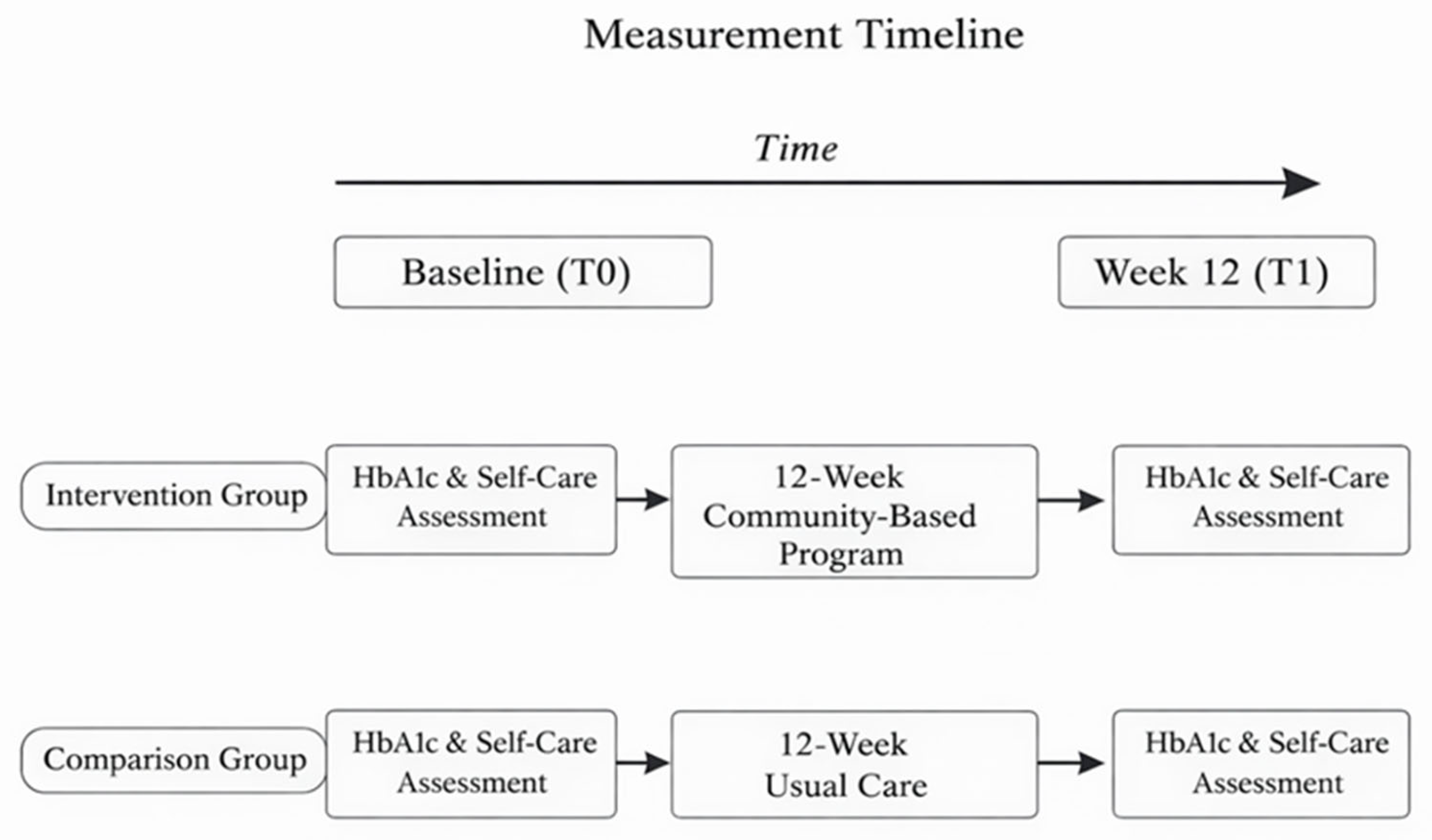
Data collection was conducted after ethical approval had been obtained and took place at two time points: baseline (Week 0) and post-intervention (Week 12). Standardized case record forms (CRFs) were used to collect all study data, including sociodemographic characteristics, diabetes-related clinical profiles, and behavioral outcomes.
Glycemic control was assessed using routine glycated hemoglobin (HbA1c) extracted from laboratory records at the participating hospitals. All HbA1c tests were performed in certified laboratories using standardized and calibrated analyzers to ensure measurement reliability. Laboratory personnel were blinded to participants’ group assignments to minimize detection bias.
Self-care behaviors were measured using a validated 13-item self-administered questionnaire based on diabetes self-management constructs. The instrument demonstrated acceptable internal consistency (Cronbach’s α > 0.80) in prior research and was pilot-tested in the local population before use in the study. To minimize response bias, participants were instructed clearly and provided privacy during self-administered questionnaire completion. Participants completed the self-administered questionnaires independently in a private area during clinic visits to minimize recall and social desirability bias.
Data collectors, including diabetes nurses and VHVs, received structured training to ensure consistent data collection procedures across study sites. Periodic supervision and monitoring were conducted by the principal investigator to ensure protocol adherence and to verify the accuracy of recorded information. The data was double-checked and entered independently by two research assistants to reduce data entry errors.
To limit attrition bias, follow-up reminders and phone calls were performed regularly. Reasons for withdrawal or loss to follow-up were documented for all cases. All analyses applied the intention-to-treat (ITT) principle to maintain comparability between groups throughout the study.
The questionnaires were completed onsite at the primary care units during routine clinic visits, in a designated private area. Participants completed the questionnaires independently after receiving standardized instructions from trained research staff, without assistance from family members or healthcare providers.
Participant adherence was assessed by attendance records for group sessions and follow-up activities. Missed sessions were documented, and participants were contacted by village health volunteers to encourage continued participation.
4. Outcome Measures
Two categories of outcomes were assessed to determine the effectiveness of the community-based health care program:
4.1. Primary Outcome
Diabetes self-care behavior was assessed using a 13-item self-reported questionnaire developed based on established diabetes self-management behavioral constructs. The instrument covers four domains: healthy diet, physical activity, medication adherence, and self-monitoring practices. Content validity was evaluated by a panel of diabetes and public health experts, and the questionnaire demonstrated acceptable internal consistency (Cronbach’s α > 0.80) in previous studies and in pilot testing among the target population.
The instrument assesses four behavioral domains: healthy diet, physical activity, medication adherence, and self-monitoring practices.
Each item was rated on a 5-point Likert scale, with higher scores indicating better self-care performance.
The questionnaire demonstrated good psychometric properties, with Cronbach’s α > 0.80 in previous studies and acceptable reliability in the present study after pilot testing among a subset of the target population.
4.2. Secondary Outcome
Glycemic control, assessed by HbA1c levels, was evaluated using routine laboratory test reports from Karasin Hospital. All HbA1c measurements were conducted in nationally accredited hospital laboratories operating under official laboratory quality assurance systems. Standardized and calibrated analyzers were used in accordance with national regulations, and routine internal and external quality control procedures were applied.
HbA1c values were extracted from hospital laboratory records at baseline (Week 0) and after intervention completion (Week 12).
Laboratory procedures were performed in certified settings using standardized analyzers calibrated according to national quality control regulations to ensure measurement validity and reliability.
Laboratory technicians were blinded to group allocation to reduce detection bias.
4.3. Measurement Timeline
Both outcomes were assessed at two time points:
To minimize information and reporting bias:
4.4. Blinding
Due to the nature of community interventions, participants and program implementers were not blinded. However, HbA1c measurements were obtained from routine laboratory data, reducing detection bias.
5. Data Analysis
All statistical analyses were performed using SPSS version 25 (licensed by Mahasarakham University). Analyses were conducted according to the intention-to-treat principle. Missing outcome data were handled using the last observation carried forward (LOCF) method to preserve sample size and maintain comparability between groups, given the small proportion of missing data and the short follow-up period. However, it is acknowledged that LOCF may underestimate variability and introduce bias if outcome values change over time; therefore, the results should be interpreted with caution.
Descriptive statistics, including frequency, percentage, mean, and standard deviation were used to summarize participants’ baseline characteristics. Baseline equivalence between the intervention and comparison groups was assessed using an independent t-test for continuous variables and a chi-square test for categorical variables.
Primary and secondary outcomes were analyzed using both within-group and between-group comparisons. Within-group changes in HbA1c levels and self-care behavior scores from baseline to 12 weeks were examined using paired t-tests. Between-group differences in outcome changes were evaluated using independent t-tests.
To account for baseline variations and potential confounding factors, an analysis of covariance (ANCOVA) was applied to assess the adjusted treatment effects on HbA1c changes, using baseline HbA1c as a mandatory covariate. Additional covariates such as age, sex, diabetes duration, and body mass index (BMI) were included where appropriate.
For categorical outcome analysis, the chi-square test was used to compare the proportion of participants who achieved recommended glycemic control targets between groups.
All statistical tests were two-tailed with a significance level set at p < 0.05. Data analyses were performed using a standard statistical software package.
Effect sizes were calculated to quantify the magnitude of the intervention effects. Cohen’s d was computed as the difference between the post-intervention means of the intervention and comparison groups divided by the pooled standard deviation (SD pooled). To correct for small sample bias, Hedges’ g was calculated by multiplying Cohen’s d by a correction factor (J). The standard error (SE) of the effect size was used to estimate 95% confidence intervals, providing an indication of precision. Effect sizes were interpreted using conventional thresholds, with larger values indicating stronger intervention effects.
6. Ethical Considerations
Ethical approval was obtained from the Human Research Ethics Committee of Kalasin Provincial Public Health Office (KLS.REC 49/2564) and Mahasarakham University (059/2562). The approvals were granted at different time points to cover the preparatory and implementation phases of the study. Both approvals were valid prior to participant recruitment and data collection, and all study procedures were conducted in accordance with the Declaration of Helsinki.
Overview Flow Diagram of the Community-Based Health Care Program for Uncontrolled Type 2 Diabetes Mellitus
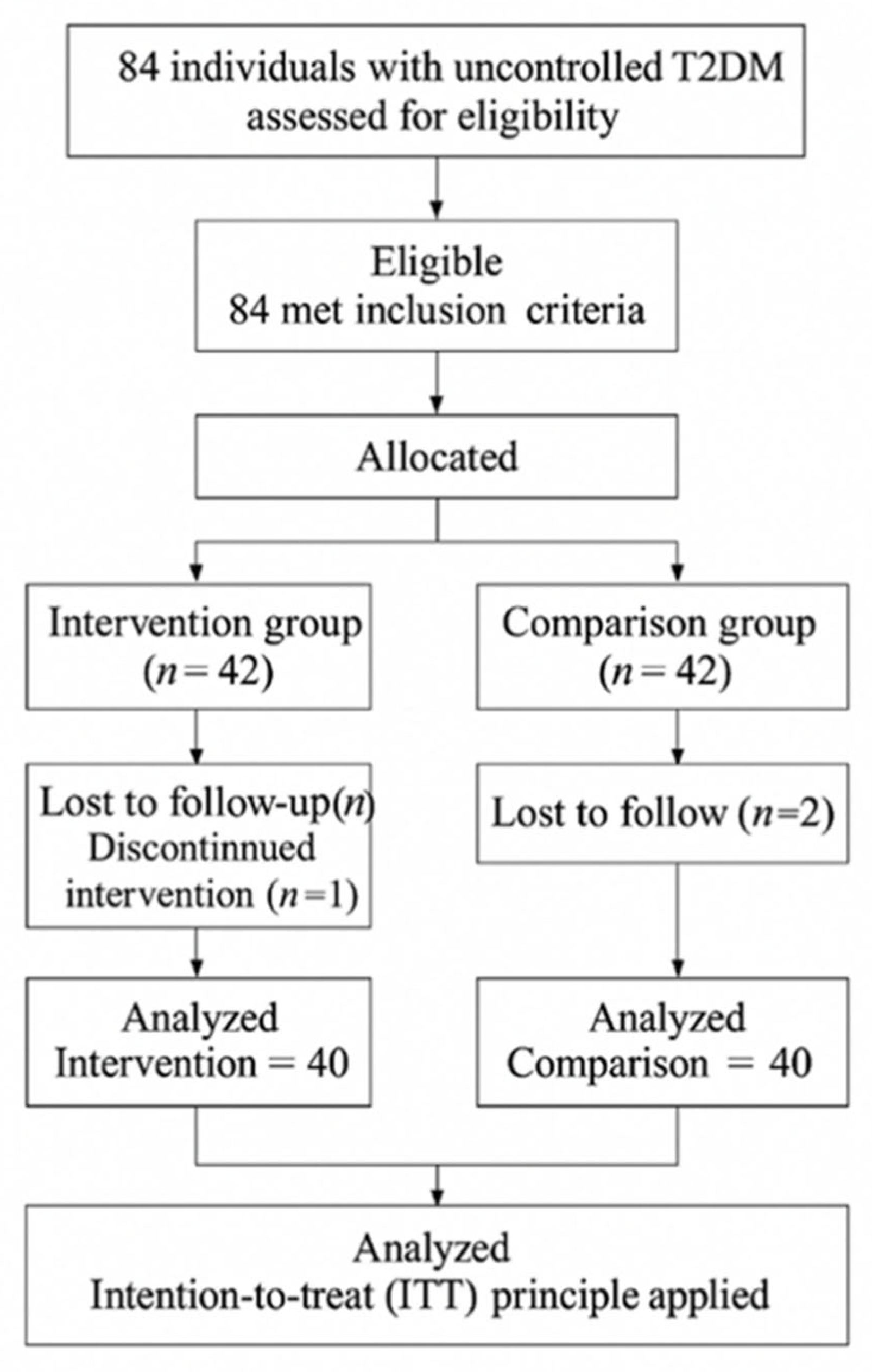
Figure 1 illustrates the flow of clusters and participants throughout the study. A total of 84 individuals with uncontrolled T2DM were initially assessed for eligibility from two primary care clusters in Kalasin Province. After screening, 84 eligible participants were recruited and allocated by cluster into two study groups: 42 participants in the intervention group and 42 participants in the comparison group.
During follow-up, the intervention group had one participant lost to follow-up and one who discontinued participation, primarily due to scheduling conflicts and inability to continue the program. In the comparison group, two participants were lost to follow-up during the 12-week study period.
Finally, 40 participants in each group were included in the analysis. The participant flow adhered to a cluster quasi-experimental design and applied an ITT principle to ensure validity of outcome comparisons between groups.
7. Results
7.1. Baseline Characteristics of Participants
The baseline characteristics of the participants in both the intervention group and the comparison group were analyzed. A total of 80 participants were included, with 40 in each group. The mean age of participants was 57.75 ± 6.63 years in the intervention group and 56.73 ± 7.91 years in the comparison group, showing no statistically significant difference between the two groups (p = 0.532). Most participants were aged 50 years and above in both groups.
The majority of participants were female, accounting for 85.00% in the intervention group and 87.5% in the comparison group (p = 0.500). Regarding educational attainment, most participants in both groups had completed primary school (87.50% vs. 82.50%), with no significant difference between groups (p = 0.450).
Half of the participants in each group reported a monthly income below 10,000 Baht, and the distribution of income levels between groups was not significantly different (p = 0.064). Additionally, half of the participants in each group had been diagnosed with diabetes for less than 10 years, and the difference in duration of illness between groups was not statistically significant (p = 0.654).
Body mass index also did not show a significant difference between the two groups. The mean BMI in the intervention group was 25.65 ± 3.82 kg/m2 compared with 24.17 ± 4.51 kg/m2 in the comparison group (p = 0.118). Approximately two-thirds of the participants were classified as overweight or obese in both groups.
Overall, the baseline characteristics of participants in the intervention and comparison groups were comparable, demonstrating that the two groups were sufficiently similar prior to the intervention, as shown in
Table 1.
7.2. Changes in Self-Care Behavior Scores
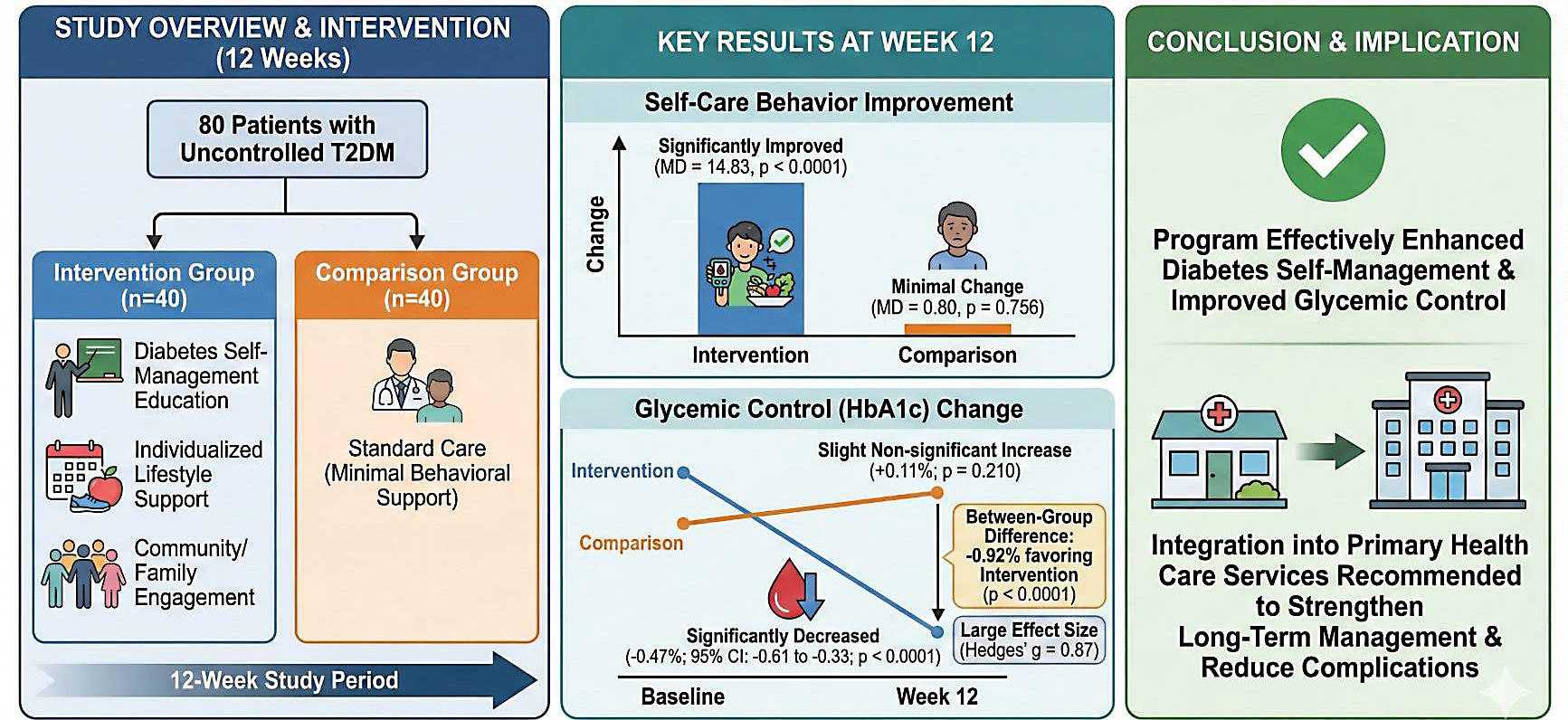
The changes in self-care behavior scores between the intervention and comparison groups from baseline to 12 weeks were noted. At baseline, the mean self-care behavior scores were similar between the two groups. After the 12-week intervention, the intervention group showed a substantial improvement in self-care behavior (mean difference (MD) = 14.83, 95% CI = 13.93 to 15.71; p < 0.0001), indicating a strong positive effect of the community-based health care program on enhancing diabetes self-management.
In contrast, the comparison group exhibited only a minimal increase in self-care scores (MD = 0.80, 95% CI = −1.00 to1.60; p = 0.756), showing no statistically significant change over the same period. The between-group comparison also revealed a statistically significant difference favoring the intervention group (MD = 14.03, 95% CI = 13.01 to 15.59; t (78) = 22.14; p < 0.0001).
Overall, these findings indicate that the intervention program effectively improved diabetes self-care behavior among patients with uncontrolled T2DM compared with standard care, as shown in
Table 2.
Effect Size of the Intervention on Self-Care Behavior
The effect size of the intervention on diabetes self-care behavior was calculated using the post-intervention MD between the two groups at Week 12. A large between-group effect was observed (MD = 14.30), supported by a statistically significant t-value (t (78) = 22.14). Based on this statistic, the Cohen’s d was 4.95, indicating an extremely large treatment effect. To account for small sample bias, Hedges’ g was also calculated and remained comparably large (g = 4.90; 95% CI: 4.02–5.79). Furthermore, the partial eta squared showed that 86.30% of the variance in post-intervention self-care behavior was attributable to the intervention, confirming a substantial practical impact on behavioral modification as shown in the following formulas.
Intervention = 36.00 ± 1.93, Comparison = 21.70 ± 3.59, n1 = n2 = 40, MD = 14.30, .
Cohen’s d (Comparison between the intervention and comparison groups at Week 12)
Hedges’ g (to adjust for small sample size bias)
Partial eta squared: .
7.3. Changes in HbA1c Levels
The changes in HbA1c levels of participants in the intervention and comparison groups between baseline and 12 weeks are examined here. At baseline, both groups had inadequately controlled blood glucose levels, with mean HbA1c values above recommended targets. After the 12-week intervention, the intervention group showed a statistically significant reduction in HbA1c (MD = −0.47%; 95% CI: −0.61 to −0.33; t (39) = 6.70; p < 0.0001), indicating improved glycemic control as a result of the community-based health care program.
In contrast, the comparison group demonstrated a slight increase in HbA1c levels from baseline to week 12 (MD = 0.11%; 95% CI: −0.07 to 0.29; t (39) = 1.26; p = 0.210), although the change was not statistically significant (p = 0.210). Between-group comparisons revealed a statistically significant improvement favoring the intervention group (MD = −0.92%; 95% CI: −1.40 to −0.45; t (78) = 3.91; p < 0.0001), confirming the greater effectiveness of the intervention program over standard care in reducing HbA1c levels.
Overall, these results provide strong evidence that the structured community-based health care program was effective in improving glycemic control among adults with uncontrolled type 2 diabetes mellitus, as shown in
Table 3.
Effect Size Interpretation for HbA1c Outcome
The intervention demonstrated a clinically meaningful improvement in glycemic control. At Week 12, the mean HbA1c level in the intervention group was significantly lower than that of the comparison group. Based on the between-group MD and pooled standard deviation, the effect size was classified as large (Cohen’s d = 0.88). To adjust for potential small sample bias, Hedges’ g was calculated, yielding a similar large effect (g = 0.87; 95% CI: 0.41–1.32). These findings indicate that the community-based health care program not only improved self-care behavior but also produced a substantial reduction in HbA1c among individuals with uncontrolled T2DM. The intervention accounted for approximately 16.50% of the variance in post-intervention HbA1c, further highlighting its effectiveness in enhancing metabolic outcomes.
Effect Size Calculation and Interpretation for HbA1c
The bias-corrected effect size (Hedges’ g) for the intervention’s impact on HbA1c was calculated using the between-group MD at Week 12 divided by the pooled standard deviation. Cohen’s d and Hedges’ g were computed using the following formulas:
The standard error and 95% confidence interval (CI) for the effect size were estimated as:
Based on the data in
Table 3 (8.10 ± 1.16 vs. 9.03 ± 0.95;
n1 =
n2 = 40), the calculated effect size indicated a large treatment impact (Cohen’s d = 0.88). After adjusting for small sample bias, Hedges’ g was 0.87, with a 95% CI ranging from 0.41 to 1.32. These findings demonstrate that the intervention produced a substantial improvement in HbA1c levels among patients with uncontrolled T2DM.
Effect Sizes of the Community-Based Health Care Intervention on Self-Care Behavior and HbA1c
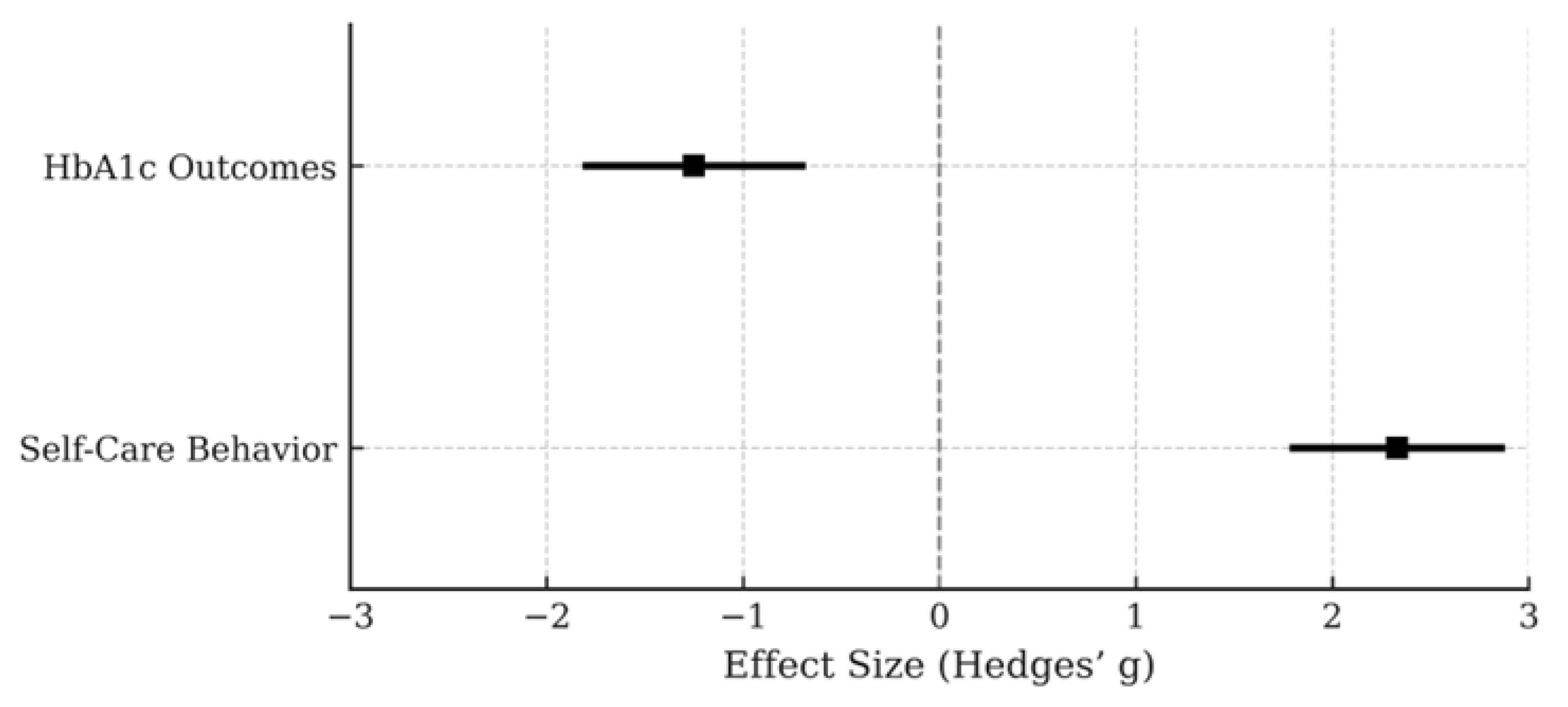
Figure 2 presents a forest plot summarizing the effect sizes and 95% confidence intervals for changes in HbA1c and diabetes self-care behavior scores between the intervention and comparison groups. The intervention demonstrated an extremely large effect on improving self-care behavior (Cohen’s d = 4.95; 95% CI: 4.06–5.84), whereas the effect on reducing HbA1c was large but more modest in magnitude (Cohen’s d = 0.88; 95% CI: 0.41–1.32). The vertical dashed line represents the null value (0), indicating no effect. The plot highlights that behavioral modifications responded more strongly to the intervention than glycemic outcomes as shown in
Figure 3.
8. Discussion
This quasi-experimental study demonstrated that a structured community-based health care program significantly improved diabetes self-care behaviors and glycemic control among patients with uncontrolled type 2 diabetes mellitus (T2DM) in a rural Thai setting. The findings provide further evidence that empowerment-based and community-oriented diabetes management strategies can enhance both behavioral and clinical outcomes in primary health care contexts [
1,
6,
10].
A key finding of this study was the substantial improvement in diabetes self-care behaviors among participants in the intervention group after the 12-week program. The magnitude of behavioral change observed reflects the effectiveness of structured diabetes self-management education combined with individualized support and community engagement. These results are consistent with previous studies conducted in Thailand and other low- and middle-income countries, which have shown that educational and behavioral interventions improve adherence to medication, dietary modification, physical activity, and self-monitoring practices [
3,
6,
15]. The involvement of village health volunteers (VHVs) and family members likely reinforced behavior change through social support and continuous follow-up, aligning with evidence that strong community and family support play critical roles in sustaining diabetes self-management behaviors [
10,
16]. In contrast, participants receiving routine care alone showed minimal behavioral improvement, highlighting the limitations of standard clinical care without structured behavioral support [
9,
12].
In addition to behavioral improvements, the intervention group experienced a statistically significant reduction in HbA1c levels over the 12-week period. From a clinical perspective, the magnitude of this reduction is meaningful. International guidelines, including those from the American Diabetes Association, suggest that a reduction in HbA1c of approximately 0.5% or greater is associated with clinically relevant reductions in the risk of microvascular complications, such as retinopathy, nephropathy, and neuropathy [
2]. In the present study, the within-group HbA1c reduction of 0.47% approaches this clinically important threshold, while the between-group difference of 0.92% clearly exceeds the level generally considered clinically significant [
17,
18].
When compared with findings from similar community-based and lifestyle-focused diabetes interventions, the observed HbA1c reduction in this study is comparable to, and in some cases greater than, those reported in previous research. Earlier studies have documented HbA1c reductions ranging from approximately 0.3% to 1.0% following diabetes self-management education and community-supported programs, particularly among patients managed without insulin therapy [
4,
7,
11]. The consistency of the present findings with this body of evidence reinforces the effectiveness of community-based interventions in improving glycemic outcomes under real-world primary care conditions.
Despite these positive results, it is important to note that a considerable proportion of participants remained above recommended glycemic targets after completion of the intervention. This observation underscores the chronic and progressive nature of T2DM and suggests that short-term interventions, while effective in improving glycemic trends, may be insufficient to achieve optimal glycemic control in all patients. Similar patterns have been reported in previous studies, where meaningful reductions in mean HbA1c did not necessarily translate into target attainment within limited intervention periods [
19]. Sustained behavioral reinforcement, longer intervention durations, and closer integration with pharmacological optimization may be required to support patients in reaching guideline-recommended HbA1c targets [
20,
21].
The findings of this study have several important implications for diabetes care in Thailand. The intervention was designed to align with existing primary health care structures and relied on local health personnel and VHVs, enhancing its feasibility and potential for scalability. This community-integrated approach is consistent with national health policy priorities aimed at strengthening chronic disease management at the primary care level. Expanding similar programs, particularly in rural and resource-limited settings, may help address persistent gaps in diabetes care and reduce long-term complications [
11,
14].
This study also has several limitations that should be acknowledged. The quasi-experimental design without randomized cluster allocation may introduce selection bias, although baseline characteristics between groups were comparable. The study was conducted in a single province, which may limit generalizability to other regions with different socio-economic or healthcare contexts. Additionally, the 12-week follow-up period may not fully capture long-term glycemic control or sustainability of behavior change. Self-care behaviors were assessed using self-reported measures, which may be subject to recall or social desirability bias [
10].
In summary, this study demonstrates that a structured community-based health care program can produce clinically meaningful improvements in self-care behaviors and glycemic control among patients with uncontrolled T2DM. While the intervention should not be viewed as a standalone solution, it represents an important step toward improving diabetes management in community settings. Future research should explore longer-term interventions, integration with digital health tools, and cost-effectiveness analyses to further strengthen evidence for sustainable diabetes care models.
8.1. Strengths
This study possesses several strengths. First, the intervention was culturally tailored to local needs and integrated into the existing primary health care system, ensuring feasibility for national scale-up. Second, using both clinical (HbA1c) and behavioral (self-care) outcomes enabled comprehensive evaluation of the program’s effectiveness, addressing recommendations from international diabetes organizations for multi-domain assessments [
2]. Third, the inclusion of VHVs as community-based facilitators reflected real-world implementation, consistent with a sustainable chronic care model [
11].
8.2. Limitations
There were also limitations in this study. The relatively small proportion of male participants may limit the generalizability of the findings to male patients with T2DM, and future studies should aim for more sex-balanced recruitment. The sample was limited to a single province in northeastern Thailand, which may restrict generalizability to other regions with different socio-economic or cultural characteristics [
22]. Additionally, the quasi-experimental design without randomized cluster allocation may introduce selection bias despite similarities in baseline characteristics [
10]. The relatively short 12-week intervention period limits conclusions regarding the long-term sustainability of glycemic control. Future studies should include longer intervention durations and extended follow-up to assess whether improvements in HbA1c and self-care behaviors can be maintained over time [
7,
23]. Finally, Self-care behaviors were assessed using self-reported questionnaires, which may be subject to recall and social desirability bias. Future studies should incorporate objective adherence measures to strengthen outcome assessment [
10].
8.3. Implications and Recommendations
Despite these limitations, this study provides important implications for diabetes management within Thai communities. The intervention model demonstrated practical applicability, leveraging local health workforce structures such as VHVs and primary care providers. Policymakers may consider adopting and scaling similar programs nationwide, especially in rural areas where diabetes care gaps are more severe [
14]. Enhanced integration of digital tools (e.g., tele-health follow-up and mobile monitoring) may further strengthen intervention outcomes in future studies [
24].
9. Conclusions
In conclusion, this study provides preliminary evidence that a structured community-based health care program is associated with short-term improvements in diabetes self-care behaviors and glycemic control among patients with uncontrolled type 2 diabetes mellitus. The observed reductions in HbA1c and enhancements in self-care behaviors suggest that community-integrated interventions may support better diabetes management in primary health care settings. However, given the quasi-experimental design and the relatively short 12-week intervention period, these findings should be interpreted with caution and should not be extrapolated to long-term effectiveness. Further research employing longer intervention durations, extended follow-up periods, and longitudinal or randomized study designs is warranted to determine the sustainability of behavioral changes and glycemic improvements, as well as their impact on long-term clinical outcomes.
Author Contributions
P.P., S.N.-I., C.S., J.R., R.K. and S.K. contributed to the conception and design of the study. P.P. and S.N.-I. coordinated the data collection and supervised the intervention implementation. C.S. and J.R. contributed to data curation and provided methodological support. R.K. assisted in statistical analysis and interpretation of the findings. S.K. led the data analysis, drafted the original manuscript, and coordinated revisions. All authors have read and agreed to the published version of the manuscript.
Funding
Special thanks are extended to Mahasarakham University for academic guidance and funding support (grant number: 69001282).
Institutional Review Board Statement
Ethical approval was obtained from the Human Research Ethics Committee of Kalasin Provincial Public Health Office (KLS.REC 49/2564, approved on 12 July 2021) and Maha Sarakham University (059/2562, approved on 25 March 2019). Trial procedures followed the Declaration of Helsinki. Ethical approvals were granted by two institutional review boards (details retained).
Informed Consent Statement
Informed consent was obtained from all subjects involved in the study.
Data Availability Statement
Acknowledgments
The authors would like to express their sincere gratitude to the community health care teams, village health volunteers, and all staff at the participating Health Promoting Hospitals in Kalasin Province for their valuable collaboration and support throughout the study. We are deeply thankful to all participants for their cooperation and commitment to the program. Special thanks are extended to Mahasarakham University for academic guidance and funding support. The authors also appreciate the assistance of field researchers and data collectors who contributed their time and effort to ensure the successful completion of this study.
Conflicts of Interest
The authors declare that they have no conflicts of interest related to this study. All authors were involved solely in the academic, scientific, and ethical conduct of the research. No financial, institutional, or personal relationships that could be perceived as influencing the outcomes or interpretation of the study were present. The study was conducted independently with funding support from Mahasarakham University without any involvement from external commercial entities in the study design, data collection, analysis, interpretation, or publication process.
References
- World Health Organization. The Top 10 Causes of Death. 2018. Available online: https://www.who.int/news-room/fact-sheets/detail/the-top-10-causes-of-death (accessed on 6 October 2025).
- American Diabetes Association. Classification and diagnosis of diabetes: Standards of medical care in diabetes—2021. Diabetes Care 2021, 44, S15–S33. [Google Scholar] [CrossRef] [PubMed]
- Liu, J.J.; Choo, R.W.M.; Liu, S.; Gurung, R.L.; Wee, S.L.; Lim, S.C. Cause-specific mortality in multiethnic South East Asians with type 2 diabetes mellitus. Asia Pac. J. Public Health 2019, 31, 306–314. [Google Scholar] [CrossRef] [PubMed]
- Afroz, A.; Ali, L.; Karim, M.N.; Alramadan, M.J.; Alam, K.; Magliano, D.J.; Billah, B. Glycaemic control for people with type 2 diabetes mellitus in Bangladesh—An urgent need for optimization of management plan. Sci. Rep. 2019, 9, 10248. [Google Scholar] [CrossRef] [PubMed]
- Pitak, P.; Tasai, S.; Kumpat, N.; Na Songkla, P.; Fuangchan, A.; Krass, I.; Dhippayom, T. The prevalence of glycemic control in patients with type 2 diabetes treated with insulin: A systematic review and meta-analysis. Public Health 2023, 225, 218–228. [Google Scholar] [CrossRef]
- Phoosuwan, N.; Ongarj, P.; Hjelm, K. Knowledge on diabetes and its related factors among the people with type 2 diabetes in Thailand: A cross-sectional study. BMC Public Health 2022, 22, 2365. [Google Scholar] [CrossRef]
- Hayeepachi, N.; Pouyfung, P. Effective factors associated with controlling blood sugar among diabetes mellitus type 2 patients on follow-up at medical division, Chiang Rai municipality. J. Nurs. Public Health Educ. 2019, 10, 83–93. [Google Scholar]
- Tarekegn, E.T.; Gobezie, M.Y.; Haile, M.B.; Zerga, A.A. Glycemic control and associated factors among type 2 diabetes patients attending at Dessie comprehensive specialized hospital outpatient department. Sci. Rep. 2025, 15, 9286. [Google Scholar] [CrossRef]
- Garedo, A.W.; Tesfaye, G.T.; Tamrat, R.; Wynendaele, E. Glycemic control and associated factors in patients with type 2 diabetes in Southwest Ethiopia: A prospective observational study. BMC Endocr. Disord. 2024, 24, 262. [Google Scholar] [CrossRef]
- Chew, B.H.; Khoo, E.M.; Chia, Y.C. Social support and glycemic control in adult patients with type 2 diabetes mellitus. Asia Pac. J. Public Health 2015, 27, 166–173. [Google Scholar] [CrossRef]
- Bukhsh, A.; Khan, T.M.; Nawaz, M.S.; Ahmed, H.S.; Chan, K.G.; Goh, B.H. Association of diabetes knowledge with glycemic control and self-care practices among Pakistani people with type 2 diabetes mellitus. Diabetes Metab. Syndr. Obes. 2019, 12, 1409–1417. [Google Scholar] [CrossRef]
- Souliotis, K.; Koutsovasilis, A.; Vatheia, G.; Golna, C.; Nikolaidi, S.; Hatziagelaki, E.; Papazafiropoulou, A. Profile and factors associated with glycemic control of patients with type 2 diabetes in Greece: Results from the diabetes registry. BMC Endocr. Disord. 2020, 20, 16. [Google Scholar] [CrossRef] [PubMed]
- Alshayban, D.; Joseph, R. Health-related quality of life among patients with type 2 diabetes mellitus in Eastern Province, Saudi Arabia: A cross-sectional study. PLoS ONE 2020, 15, e0227573. [Google Scholar] [CrossRef] [PubMed]
- Daniel, W.W.; Cross, C.L. Biostatistics: Basic Concepts and Methodology for the Health Sciences, 11th ed.; Wiley: Hoboken, NJ, USA, 2017. [Google Scholar]
- De, P.; Banu, S.; Muthukumar, D. Predictors of poor glycemic control in type 2 diabetic patients in South Indian population. Int. J. Res. Med. Sci. 2018, 6, 545–550. [Google Scholar]
- Newson, R.S.; Divino, V.; Boye, K.S.; Chen, J.; DeKoven, M.; Vallarino, C.; Ranta, K.; Mount, J.E. Glycemic Control and Obesity Among People with Type 2 Diabetes in Europe and Australia: A Retrospective Cohort Analysis. Diabetes Ther. Res. Treat. Educ. Diabetes Relat. Disord. 2024, 15, 1435–1449. [Google Scholar] [CrossRef]
- Alzaheb, R.A.; Altemani, A.H. The prevalence and determinants of poor glycaemic control among adults with type 2 diabetes mellitus in Saudi Arabia. Diabetes Metab. Syndr. Obes. 2018, 11, 15–21. [Google Scholar]
- Dinavari, M.F.; Sanaie, S.; Rasouli, K.; Faramarzi, E.; Molani-Gol, R.; Azhdari, M.; Alizadeh, M.; Khezerlou, A.; Yari, B.; Poustchi, H.; et al. Glycemic control and associated factors among type 2 diabetes mellitus patients: A cross-sectional study of Azar cohort population. BMC Endocr. Disord. 2023, 23, 273. [Google Scholar] [CrossRef]
- Almetwazi, M.; Alwhaibi, M.; Balkhi, B.; Almohaini, H.; Alturki, H.; Alhawassi, T.; Ata, S.; AlQahtani, N.; Mahmoud, M.; Alshammari, T. Factors associated with glycemic control in type 2 diabetic patients in Saudi Arabia. Saudi Pharm. J. 2019, 27, 384–388. [Google Scholar]
- Dludla, P.V.; Mabhida, S.E.; Ziqubu, K.; Nkambule, B.B.; Mazibuko-Mbeje, S.E.; Hanser, S.; Basson, A.K.; Pheiffer, C.; Kengne, A.P. Pancreatic beta-cell dysfunction. World J. Diabetes 2023, 14, 130–146. [Google Scholar]
- Omar, S.M.; Musa, I.R.; ElSouli, A.; Adam, I. Prevalence, risk factors, and glycemic control. Ther. Adv. Endocrinol. Metab. 2019, 10, 2042018819860071. [Google Scholar] [CrossRef]
- Chetoui, A.; Kaoutar, K.; Elmoussaoui, S.; Boutahar, K.; El Kardoudi, A.; Chigr, F.; Najimi, M. Prevalence and determinants of poor glycaemic control: A cross-sectional study among Moroccan type 2 diabetes patients. Int. Health 2022, 14, 390–397. [Google Scholar]
- Badedi, M.; Solan, Y.; Darraj, H.; Sabai, A.; Mahfouz, M.; Alamodi, S.; Alsabaani, A. Factors associated with long-term control of type 2 diabetes mellitus. J. Diabetes Res. 2016, 2016, 2109542. [Google Scholar] [CrossRef]
- Noto, S. Perspectives on Aging and Quality of Life. Healthcare 2023, 11, 2131. [Google Scholar] [CrossRef]
| Disclaimer/Publisher’s Note: The statements, opinions and data contained in all publications are solely those of the individual author(s) and contributor(s) and not of MDPI and/or the editor(s). MDPI and/or the editor(s) disclaim responsibility for any injury to people or property resulting from any ideas, methods, instructions or products referred to in the content. |




 ,
,