Review

How the Salutogenic Pattern of Health Reflects in Type 2 Diabetes Mellitus: A Narrative Review

1
Faculty of Medicine, University of Zagreb, Šalata 3, 10000 Zagreb, Croatia
2
Faculty of Medicine, University of Rijeka, Ulica Braće Branchetta 20, 51000 Rijeka, Croatia
3
Faculty of Pharmacy and Biochemistry, University of Zagreb, Ulica Ante Kovačića 1, 10000 Zagreb, Croatia
4
Srebrnjak Children’s Hospital, Srebrnjak 100, 10000 Zagreb, Croatia
5
Rijeka University Hospital Centre, Krešimirova 42, 51000 Rijeka, Croatia
6
Institute for Anthropological Research, Gajeva ulica 32, 10000 Zagreb, Croatia
*
Author to whom correspondence should be addressed.
Diabetology 2025, 6(11), 124; https://doi.org/10.3390/diabetology6110124
Submission received: 18 August 2025 / Revised: 14 October 2025 / Accepted: 21 October 2025 / Published: 1 November 2025

Abstract

By 2045, approximately 783.2 million people are projected to be diagnosed with type 2 diabetes mellitus (T2DM). In addition, obesity is expected to affect up to 22% of the world’s population or one in four people. The diabesity epidemic, a worrying trend in which T2DM and obesity co-occur, is becoming increasingly evident and could be the most significant epidemic of non-communicable chronic diseases in human history. The salutogenic pattern of health, which emphasises well-being and resistance resources, could be a promising solution to address this alarming worldwide problem. The salutogenic pattern of health has numerous positive effects on the health of persons with T2DM. These include reducing the risk of it, lowering some biomarkers and laboratory parameters related to its control, and promoting a better lifestyle, ultimately improving the overall quality of life. The salutogenic pattern of health offers an effective and evidence-based approach to address the growing global problem of chronic non-communicable diseases such as T2DM. Integrating this theory into standard modern medical practice has the potential to significantly improve health outcomes and overall patient well-being, making it an important direction for modern medicine. Accordingly, the aim is to explore and analyse the salutogenic pattern of health associated with T2DM in order to prevent it, but also the better management of it.

1. Introduction

Type 2 diabetes mellitus (T2DM) is a disease characterised by high blood glucose levels, the development of resistance to the hormone insulin (insulin resistance) and a relative insulin deficiency [1,2]. According to recent estimates, around 462 million people worldwide are affected by T2DM, which represents around 6.28% of the world’s population [3]. As its development is closely linked to lifestyle factors, such as unhealthy eating habits, lack of exercise, and obesity, it is best treated through lifestyle changes, making it a highly preventable disease [4]. Unhealthy eating habits contribute to more deaths worldwide than any other risk factor, even compared to smoking [5,6,7]. Numerous studies indicate that non-compliance with recommended dietary guidelines is one of the main reasons why the prevalence of T2DM has reached epidemic proportions around the globe today, along with lack of exercise, which is an additional contributor to all that [8,9]. In 2022, it is estimated that 1.05 billion people worldwide have obesity, including 890 million adults and 160 million children and adolescents aged 5 to 19 years, which corresponds to about 13.14% of the world’s population or about one in eight people in the world [10,11,12]. According to current epidemiological projections, by 2045, about 783.2 million people will have T2DM [13], while up to approximately 22% of the world’s population, or one in four people, will be affected by obesity [14]. Based on these findings and the fact that T2DM often occurs as a result of obesity, which is primarily related to an unhealthy diet, it is now more common to speak of an epidemic of diabesity or, more precisely, of the development of T2DM in the presence of obesity [15]. The epidemic of diabesity, in particular, places a significant economic burden on healthcare systems worldwide, as it is closely linked to the development of various chronic non-communicable diseases that contribute greatly to the impairment of the quality of life of those affected [16,17].
A healthy diet and exercise can help persons with T2DM, especially those who are overweight, to control their blood glucose levels and make further long-term improvements. However, studies have noted that maintaining an appropriate diet plan is often one of the biggest challenges to self-management for persons with diabetes mellitus (DM) [6]. The reason for this could be that the health concept of proper eating habits needs to become more familiar in everyday life [18], but also a personal understanding of adequate diet that varies from person to person because it reflects personal, social, and local experiences. There may be several reasons why someone has difficulty understanding the importance of proper eating habits in their daily lives. One possible factor is the need for more familiarity with healthy eating, which plays an important role in this and other similar non-communicable chronic diseases [19]. In addition, personal experiences, as well as social and cultural influences, can shape someone’s understanding of what constitutes an adequate diet. Studies found that attitudes towards proper diet can still change during life and depend mainly on time and stage of life [20]. Marriage and childbirth have been shown to be associated with higher daily consumption of fruits and vegetables [21]. In contrast, divorce, separation, and widowhood are usually associated with the development of unhealthy eating habits, especially in men [22,23].
Although the development of positive attitudes towards healthy eating is a complex and lengthy process, it can be achieved, particularly through the implementation of the salutogenic pattern of health, which emphasises a social-environmental approach [24]. The salutogenic pattern of health is based on the concept that a person’s health is determined by daily interaction with various factors such as social, economic, environmental, physical, mental, and biochemical stressors [25]. Within the framework of positive psychology, it emphasises a positive outlook to describe health and focuses mainly on factors that promote well-being rather than those that cause disease [26,27]. In 1979, the Israeli-American sociologist Aaron Antonovsky introduced the salutogenic pattern of health or the salutogenic model of health, which is often simply referred to as salutogenesis [28]. This model examines the origins of health and focuses on factors that promote human health and well-being, offering an alternative perspective to the traditional pathogenesis approach in medicine. While pathogenesis focuses on the development and treatment of disease, salutogenesis emphasises the factors that promote and maintain good health, or, more simply, a salutogenic pattern of health [29]. Health status and the ability to cope effectively with stress in many ways depend on the availability and use of health-promoting resources. The ability to recognise and activate these resources is known as a sense of coherence (SOC), which plays a vital role in determining whether health status improves, declines, or remains the same [30]. Studies have consistently pointed out that persons with a strong SOC tend to have better metabolic control, which is particularly important for managing T2DM but also with obesity [31,32]. Therefore, the salutogenic pattern of health applied to T2DM focuses on strengthening SOC by promoting self-efficacy, providing social support, improving health literacy, and creating a supportive environment [33]. With this approach, persons with T2DM can actively participate in the management of their disease, improve their overall well-being, and reduce the risk of T2DM-related complications [34,35].
The aim of this study is to explore and analyse the salutogenic pattern of health in the context of T2DM. Therefore, this narrative review outlines the theoretical foundations of the salutogenic pattern of health and its development from biomedical and biopsychosocial perspectives, highlighting the SOC as its central construct. It examines how the salutogenic pattern of health contributes to the prevention and management of T2DM, assessing its effects on biomarkers and laboratory parameters, lifestyle changes, and quality of life, as well as the mechanisms underlying these outcomes. Moreover, this study seeks to bridge the gap between current predominantly theoretical models of health promotion and their practical application in daily T2DM management, highlighting the importance of empowerment, fostering resistance, and promoting self-management. Finally, it considers the integration of salutogenic pattern of health strategies into contemporary T2DM management, addressing psychological, social, and biomedical dimensions, while acknowledging current limitations and outlining directions for future research. At the same time, it aims to promote greater awareness and understanding of the salutogenic pattern of health, facilitating its broader integration into contemporary T2DM management, given its numerous benefits for persons living with T2DM.

2. Materials and Methods

An extensive literature search was conducted from May to August 2025 using a combination of keywords such as “diabetes mellitus 2”, “salutogenesis”, “salutogenic”, “salutogenic model”, “sense of coherence”, “SOC”, “T2DM”, “type 2 diabetes”, and “type 2 diabetes mellitus” with the Boolean operator “and”. Several leading online bibliographic databases, including Scopus, EMBASE, MEDLINE, Web of Science and ScienceDirect, were included. The inclusion criteria were English peer-reviewed reviews or research articles from 1996 to 2025 on salutogenesis and T2DM that contained this combination of keywords in the abstract. Only articles with an English-language abstract or summary were considered eligible. The year 1996 was chosen as the starting point, as this was the first year in which there was a major increase in scientific articles on salutogenesis, according to the PubMed search engine.
The search returned 1246 records, of which 312 duplicates were removed, and the remaining 934 records were screened by title and abstract, leading to the exclusion of 693 records. Subsequently, 241 full texts were assessed, with 93 excluded for reasons such as inappropriate populations or diseases, lack of peer review, insufficient focus on salutogenesis or the SOC in relation to T2DM, or inadequately presented data. Two reviewers independently screened all records and full texts, resolving disagreements with a third reviewer, while a fourth independent researcher validated the data extraction. Inter-rater agreement was substantial, with Cohen’s kappa coefficients of 0.78 for title and abstract screening and 0.82 for full-text evaluation. Although publication bias was not formally assessed given the type of narrative review, several measures were taken to mitigate selection bias. These included predefined eligibility criteria, dual independent screenings, searches across multiple databases, and backward and forward citation tracking for key records. Using the snowballing method, an additional 59 records meeting the eligibility criteria were identified, bringing the total to 207 records included in the final synthesis relevant to the topic of this narrative review. The collected articles were comprehensively reviewed and a narrative literature review was compiled [36,37].

3. Health and the Salutogenic Pattern of Health

Defining health can be quite a challenge due to its broad nature. In line with that, health can be interpreted in different ways, as there are no completely clear boundaries to its meaning, and it is therefore not easy to define it precisely [6,38]. Some persons suffering from serious diseases may feel healthy from their subjective point of view, while others, for whom there is no evidence of disease, experience discomfort or unwellness [39]. Today, there are many definitions of health, but the one established by the Croatian physician Andrija Štampar in 1948 and adopted by the World Health Organisation is recognised worldwide. According to this definition, health encompasses complete physical, mental and social well-being and not just the absence of disease or infirmity [40]. Maintaining good health is a crucial aspect of a person’s daily life. It not only has a profound impact on personal growth and development but also plays a vital role in the progress and prosperity of a nation. In essence, the population’s health can be seen as a barometer of a country’s overall well-being and success [41]. Despite the acknowledged primary importance of health, for many years, traditional medicine focused exclusively on individual diseases and research into their treatment and prevention [42].
However, this biomedical, medical or biomechanical model of health is the traditional disease-oriented (pathogenic) model of health, which focuses primarily on identifying the causes of disease and studying their treatment and prevention, began to change with Antonovsky [43]. During his qualitative study of menopausal problems among women in Israel, he observed that a certain group of women who had survived the concentration camps during World War II surprisingly had no adverse health outcomes due to these traumatic experiences. Namely, they were able to maintain good mental and physical health and lead good lives despite all they had been through [44]. In his 1979 book Health, Stress and Coping, he presented a salutogenic pattern or theory of health, which aims to discover those factors that contribute to the re-establishment of a disturbed balance, whereby this disturbed balance does not necessarily always lead to disease [45]. According to this, the salutogenic (Latin salus − health + Greek γένεσις − origin) pattern of health sees health not only as a dichotomous variable (has a disease − has no disease) but as a continuum between health and disease, more specifically, a continuum between complete health and complete absence of health (Figure 1) [46], and on which part of this continuum the person is located depends on his or her ability to deal with stressors that cause tension and their consequences for their health [45].
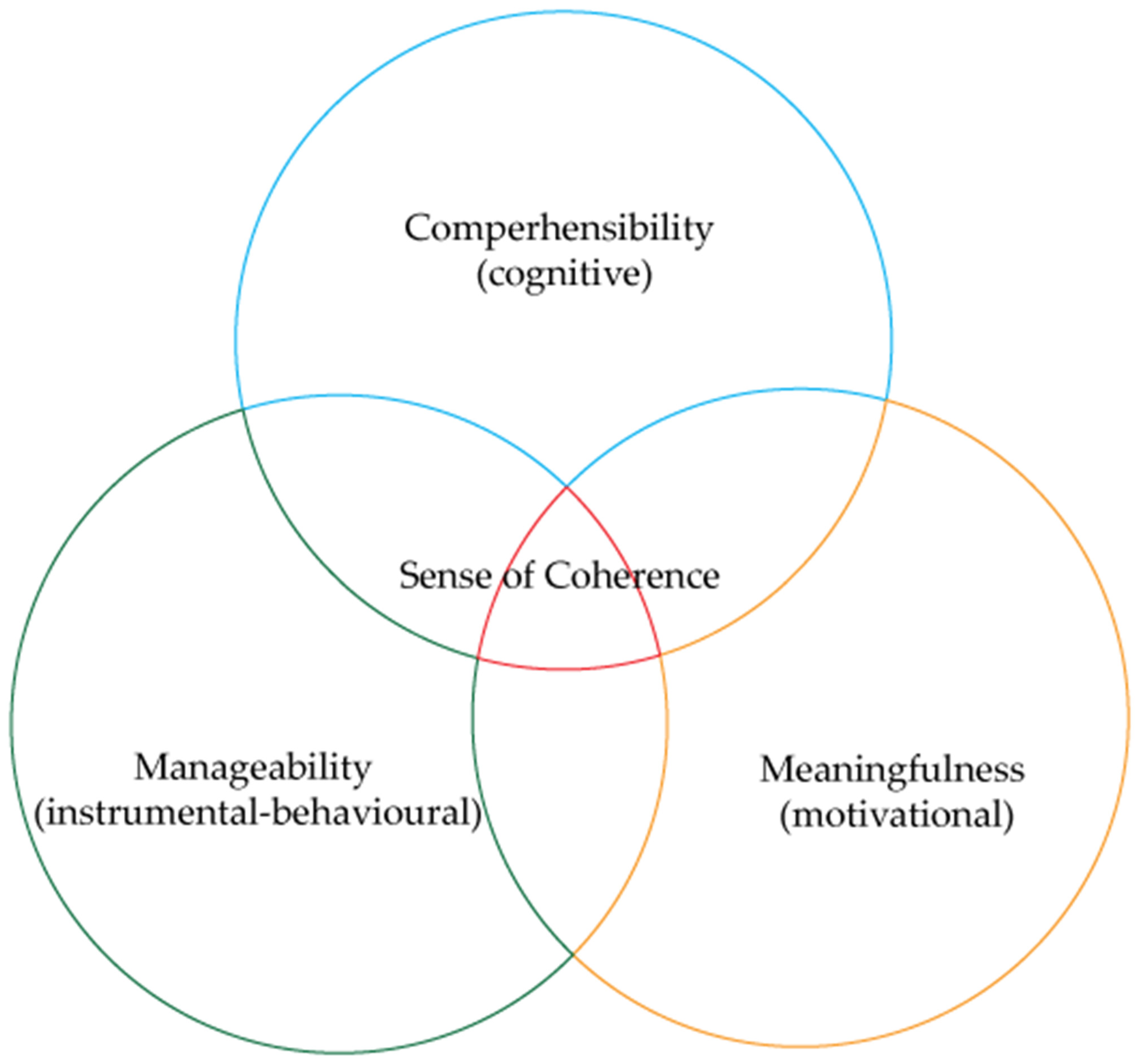
The salutogenic pattern of health is primarily concerned with the factors that serve a person to move or remain on the part of the continuum between health and disease [47]. These are particular resources that a person uses to overcome stress and the tension caused by that stress. Antonovsky refers to it as SOC, which is actually the psychological construct that represents the central structure of the salutogenic pattern of health [48]. SOC is defined as a comprehensive orientation that reflects the extent to which a person has a pervasive and enduring, yet variable, sense of security that reflects their ability to respond to tensions in their life [49]. It is composed of three basic psychological constructs—comprehensibility (the cognitive element that includes clarity, predictability and explainability, which are necessary to understand what happens when the person is exposed to stimuli that are either pleasurable or stressful), meaningfulness (the motivational element, which is the central element that leads to finding the necessary resources to deal with the tensions that are the consequences of the stimuli) and manageability (the instrumental-behavioural element that ensures that the available resources are sufficient to cope with and resolve the demands resulting from the stimuli), which together form a comprehensive orientation that reflects a person’s overall SOC [32]. Antonovsky developed the Orientation to Life Questionnaire (OLQ) in both a 29-item version and a shorter 13-item version, which have become the gold standard for assessing SOC. He consistently maintained that SOC should be viewed as a continuum rather than a categorical trait, and therefore did not define universal cut-off scores. Although SOC is psychometrically robust, it reflects a life orientation that can vary significantly across persons, cultures, and contexts, making it dependent on the characteristics of the study population [29]. Operationally, although Antonovsky did not define universal cut-off values, SOC is often categorised in studies for descriptive and comparative purposes as weak, moderate, or strong. Methodological approaches include distribution-based techniques (such as percentiles, tertiles, quartiles, and deciles), central tendency methods (such as median or mean splits and mean ± standard deviation), standardised scores (including Z-scores and T-scores), and advanced statistical techniques (such as cluster analysis, latent class analysis, and receiver operating characteristic (ROC) curve analysis), with categories always defined in relation to the characteristics of the study sample [29,50]. Recent studies brought out that the SOC is a multidimensional construct in which all these three constructs continuously interact with each other and form a collective, overarching factor that contributes to a person’s SOC (Figure 2) [29].
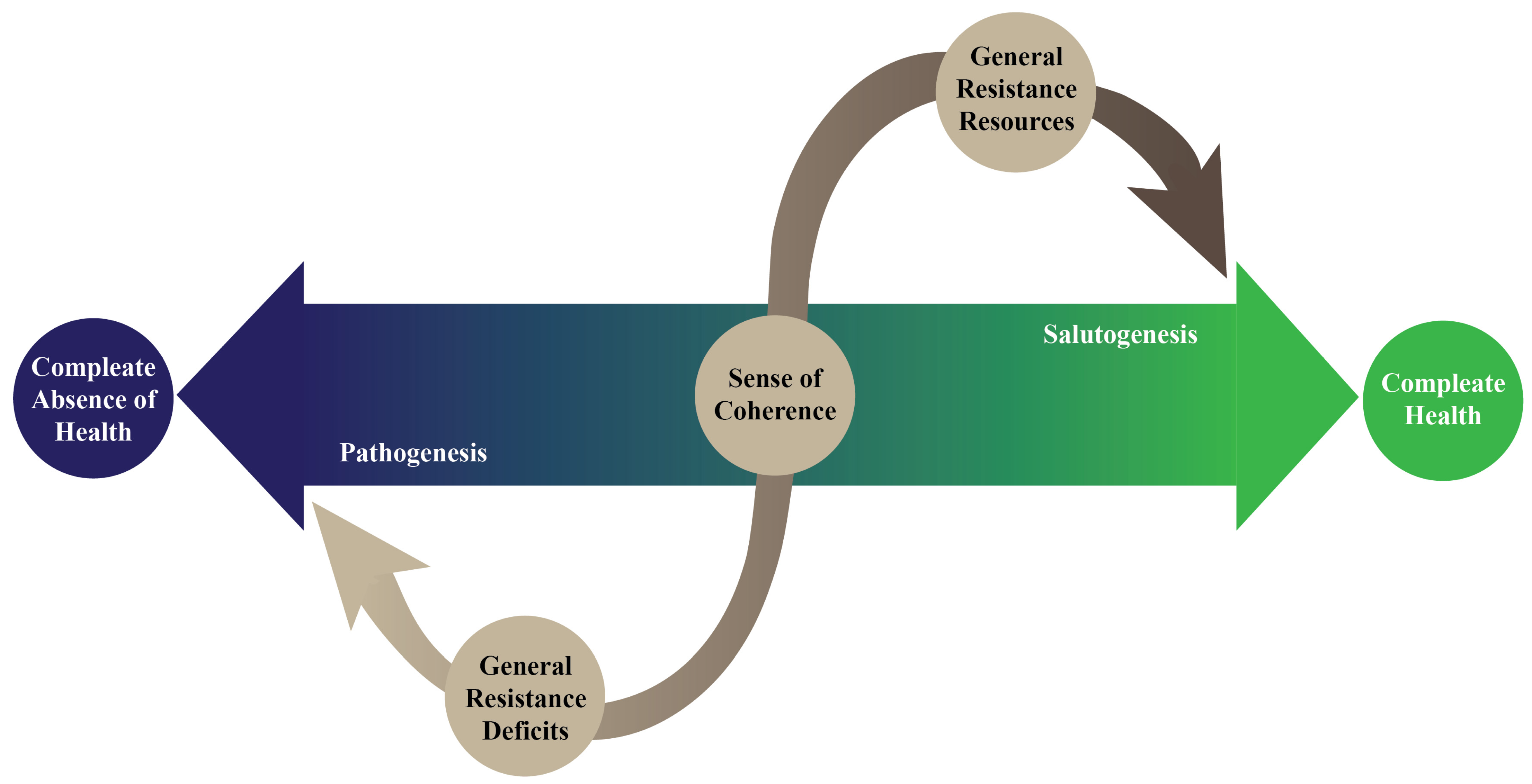
It is now known that a strong SOC can serve as a protective psychological construct associated with better overall health and a higher quality of life, especially in the context of various acute and chronic diseases [51,52,53]. Studies revealed that having a strong SOC is usually associated with better mental and physical health, enabling people to better cope with life’s challenges and stressors [54,55,56,57]. On the other hand, persons with a weak SOC are likely to have a lower health-related quality of life, including weaker mental and physical health, a higher risk of stress-related diseases and ultimately more increased risk of mortality [53,58,59,60,61]. This suggests that a strong SOC can improve a person’s ability to function effectively in a stressful environment, leading to better mental and physical well-being and the use of adaptive coping strategies. According to the salutogenic pattern of health, people are constantly struggling with tensions that cause general resistance deficits. All external and internal resources that help a person cope with and effectively avoid or combat a range of stressors constitute general resistance resources, which can be coping strategies, knowledge, financial income, social support or cultural stability. Their opposite stands for general resistance deficits, which actually represent the lack of general resistance resources, and this can be an absence of coping strategies, a lack of social support or financial instability (Figure 3) [6,62].
Today, cutting-edge studies on the salutogenic pattern of health are advancing in three directions: (1) moving from description to interventions, confirming that the SOC can be actively strengthened through SOC-based interventions, leading to improved overall health. Liu et al. found that SOC-based interventions can lead to a significantly stronger SOC in older adults and persons with various chronic conditions, including non-communicable diseases such as T2DM, compared to standard management without a salutogenic pattern of health. Benefits include improved coping, better mental and physical health, and higher quality of life, which persist for up to three months [63]. This also aligns with recent similar studies showing that interventions within the salutogenic pattern of health can result in a stronger SOC in older adults and persons with chronic conditions, fostering greater self-efficacy and a stronger sense of life meaning, supporting more effective self-management, reducing stress and depression, improving adherence to therapy, enhancing quality of life, and ultimately bringing about better health [64,65,66].
(2) moving from a static trait to a dynamic system, network-analytic studies now reframe SOC’s three basic psychological constructs comprehensibility, manageability, and meaningfulness as an interacting, symptom-like network that helps explain diseases, especially chronic ones, and highlights leverage points for clinical and public health applications. Li et al. provide a clear example of this shift. In persons with chronic cardiovascular disease, specifically coronary heart disease, who underwent percutaneous coronary intervention, they showed that SOC is not merely a static trait but a dynamic network of interrelated components. They found that weak SOC was negatively correlated with higher stress and maladaptive coping. Network analysis revealed central and bridging nodes across SOC’s three core components, suggesting that interventions targeting these leverage points may enhance resistance and recovery in non-communicable diseases such as cardiovascular disease, thereby contributing to better health outcomes [67]. This is also in line with recent studies indicating that, although SOC can be structurally divided, it remains functionally indivisible. In particular, it functions as a symptom-like dynamic network in which central nodes are critical for maintaining health, and strengthening these nodes contributes to a stronger SOC, which in turn is associated with improved health outcomes [68,69].
(3) from individual psychology to multi-level ecology, recent frameworks extend the salutogenic pattern of health beyond the individual to include environmental and built-environment determinants. Concepts such as the Salutogenic Environmental Health Model, Salutogenic Healthcare Architecture, Salutogenic Urban Design, Biophilic Design for Health, and Therapeutic Landscapes operationalise general resistance resources within community, architecture, and urban planning, demonstrating that the salutogenic pattern of health is not only psychological but also deeply ecological and societal. By fostering environments characterised by comprehensibility, meaningfulness, and manageability, these approaches strengthen the SOC, thereby mitigating stress, enhancing adaptive coping capacities, and supporting sustained improvements in both mental and physical health [29,70,71]. Akankwatsa et al. noted that hospital design directly affects the SOC of patients and staff. Clear orientation, accessible resources, and biophilic, culturally relevant features enhance comprehensibility, manageability, and meaningfulness, thereby reducing stress and supporting recovery, while poorly organised and resource-deficient settings weaken SOC and worsen health outcomes [72].
These advancements collectively demonstrate that the salutogenic pattern of health is a continuously evolving and highly relevant framework. It progresses from interventions to dynamic systems and ecological applications, with a strengthened SOC emerging as a central pathway to improved health. Far from being merely a theoretical construct, the salutogenic pattern of health serves as a practical and effective approach that bolsters SOC and promotes positive health outcomes in both clinical and public health settings [29].

4. The Modern Concept of Health and Disease

It has been over 40 years since Antonovsky introduced the salutogenic approach to health [45]. During this time, evidence-based medicine emerged [73], and several studies were carried out to investigate some existing medical knowledge and the use of certain medications, including those that lower blood glucose levels, known as antidiabetic medications [74]. Nathan conducted the Diabetes Control and Complications Trial, which supported the use of insulin in DM treatment [75]. Meanwhile, Miller warned of the possible disadvantages of antidiabetic medications, as demonstrated by the University Group Diabetes Programme, which indicated that some oral hypoglycaemic drugs, such as tolbutamide, phenformin and buformin, could increase cardiovascular and overall mortality and therefore might do more harm than good, despite lowering blood glucose levels [76,77,78]. The biopsychosocial model of health, introduced by the American psychiatrist George Libman Engel, was established a link between Aaron Antonovsky’s psychological aspects of health and the biomedical characteristics of health and disease [79]. According to the biopsychosocial model of health, the multiple effects on health take place within a unique system specific to each person, consisting of three main subsystems (biological, psychological and social) that communicate with each other through the exchange of data, energy and various substances [80]. Namely, Engel pointed out that to understand health and disease fully, it is necessary to look at them from their biological, psychological and social aspects and not only from the dual character of the biomedical model of health that separates body and mind [81].
Today, the biopsychosocial model of health is a useful framework for studying and treating diseases, especially chronic ones, such as T2DM, for whose development biological, psychological and social factors are equally important. It also forms the basis for modern comprehensive views of health and disease, which are necessary for person-centred medicine [82]. Overall, the biopsychosocial model of health enabled the recognition of the interrelated influence of biological, psychological and social factors on a person’s health [83], while the salutogenic pattern of health enabled a focus on the factors that contribute to the development of health and well-being [32]. By addressing both diseases and factors that influence health outcomes and contribute to the establishment of health, a comprehensive approach to health promotion is achieved. Consequently, this replaced previous thinking that needed to be more in step with progress and enabled a better understanding of health needs, more appropriate health care design and more effective public health policies [84,85].

5. The Type 2 Diabetes Mellitus and Salutogenic Pattern of Health

DM is a non-communicable chronic metabolic disease caused by insufficient production of insulin or its insufficient utilisation in the body [86,87,88,89]. Over the past few decades, DM has become a major public health problem. In 2024, it is estimated that 588.7 million adults aged 20 to 79 are living with DM, making it the eighth leading cause of disease worldwide [90]. According to the latest available data, DM has led to healthcare expenditure of about 1.015 trillion United States dollars, which accounts for 12% of global healthcare expenditure and a significant increase of around 338% over the last 17 years. In addition, DM is associated with 3.4 million deaths in 2024, which equates to one death every nine seconds [90,91]. The three main types of DM are type 1 diabetes mellitus (T1DM), T2DM, and gestational diabetes mellitus (GDM). T1DM occurs when the pancreas itself produces little or no insulin due to destruction of the insulin-producing beta cells of the islets of Langerhans, while GDM refers to any degree of glucose intolerance that occurs or is first recognised during pregnancy [92]. Recent updates to the classification of DM have recognised malnutrition-related DM, commonly known as type 5 diabetes mellitus (T5DM), as a distinct clinical entity [93]. This increasing trend in T2DM, which accounts for about 90% of all cases of DM, is due to the ageing population, rapid urbanisation and the adipogenic environment [94]. T2DM is an excellent example of the importance of applying a salutogenic pattern of health in the management of chronic diseases. Namely, T2DM is a very complex disease characterised by a whole range of physical deficiencies, T2DM-related complications and psychosocial consequences, and the leading cause of its occurrence is inappropriate insulin secretion [95]. The insulin level in the blood is often very high, especially in the early stages of the disease. However, due to the gradual development of insulin resistance, which is favoured by obesity and weight gain, and the increased glucose production in the liver, even these levels are insufficient to cause euglycaemia. Over time, the production of insulin decreases, which leads to an even higher glucose level in the blood and thus worsens the course of the disease. T2DM usually develops in adults, especially in overweight and older adults [96]. Studies have shown that adherence to comprehensive long-term management goals can improve glycaemic control and long-term outcomes in this disease. The role of patient-reported quality of life outcomes is also very welcome in the treatment of T2DM, as is the elimination of the burden of certain forms of tension [74].
From a holistic point of view, the main goal of treating a non-communicable chronic disease such as T2DM should be to enable the affected person to establish self-management, continue to live independently and promote acceptance of the disease while maintaining or improving overall well-being [97]. Despite the progress that has been made in the treatment of T2DM, many persons with this disease state that they are dissatisfied with the treatment options available. This is considered one of the leading reasons for the increasing use of alternative medicine in recent years, despite the lack of evidence to support its effectiveness and explanations in the treatment of T2DM [98]. This increasing use of alternative medicine in persons with T2DM in the United Arab Emirates, but also the rest of the world [99,100] can be seen as a need for salutogenic resources for living with T2DM, which is in contrast to today’s modern medical treatments that still often take a disease-oriented approach. Furthermore, dissatisfaction with the treatments of T2DM by modern medicine is further exacerbated additionally by inequalities in the availability of healthcare system services worldwide [98]. However, the salutogenic approach to health offers potential solutions to these growing challenges. Namely, Antonovsky’s psychological construct of a SOC, which encompasses comprehensibility, meaningfulness and manageability [29], can also be applied to T2DM. In line with this, and within this framework, comprehensibility implies knowledge of T2DM that can be achieved through education by health professionals. At the same time, manageability is the feeling of self-confidence that occurs when all the appropriate skills for self-management of this disease have been adopted [101]. Minimising the discomfort caused by the changes that come with living with T2DM is an important aspect of establishing manageability [98]. Although it is sometimes challenging to determine meaningfulness, the third psychological construct of the SOC, this is not the case in T2DM, as the emotional state of meaningfulness is related to self-determination in living with T2DM [97]. Meaningfulness is achieved through ongoing communication between a person with T2DM and health professionals through education and support [102]. In the same way, developing and strengthening coping skills to manage tensions significantly contributes to developing T2DM and overlaps with the skills of manageability and meaningfulness, improving these people’s overall SOC [103,104]. Lifestyle changes, especially in diet and physical activity, are necessary for successfully managing T2DM but can be difficult to achieve [105,106], because, in many cases, implementing and maintaining these changes can be challenging [107].
In this context, SOC-based interventions have been developed to bridge the gap between theoretical knowledge of the salutogenic pattern of health and its practical application in everyday clinical settings for persons with T2DM. Their aim was to improve health outcomes among persons with T2DM, and they have produced measurable benefits consistent with a salutogenic pattern of health.
Odajima et al. developed a two-week intervention called the Educational Program to Enhance Sense of Coherence in Patients with Diabetes Mellitus Type 2 (EPSOC-2DM) to improve SOC in persons with T2DM. The intervention comprised four group sessions led by specially trained nurses, aiming to help participants better understand their condition (comprehensibility), identify internal and external coping resources (manageability), and find personal meaning in their treatment of T2DM (meaningfulness). Compared with the control group, participants in the intervention group showed a significantly stronger SOC. Within the intervention group, comprehensibility and manageability increased significantly, while DM-related distress decreased significantly and fasting plasma glucose (FPG) levels declined significantly over the admission period [108]. Similarly, Polhuis et al. conducted a 12-week intervention called the Salutogenic Intervention for Type 2 Diabetes Mellitus (SALUD), specifically designed for persons with T2DM. This intervention programme, led by specially trained staff, includes an initial intake session, followed by twelve weekly sessions and a booster session at week 24, all conducted online in small groups. The sessions aim to enhance SOC by making the challenges related to T2DM and nutrition more understandable (comprehensibility), broadening practical and social coping resources (manageability), and linking changes to personal values and identity (meaningfulness). The programme includes reflective exercises, flexible eating skills, stress management strategies, peer support, involvement of a significant other, and a question and answer (Q&A) session with a clinical nutritionist. In a two-arm randomised controlled trial (RCT) comparing SALUD with standard T2DM management, the SALUD intervention demonstrated a significantly stronger SOC in the intervention group. Other measures, such as food literacy, diet quality, self-efficacy, quality of life, and anthropometry, improved over time in both groups, with a consistent trend in favour of participants exposed to the SALUD intervention [109,110].
Beyond EPSOC-2DM and SALUD, an increasing body of evidence shows that SOC-based interventions in T2DM improve both psychosocial and physical health outcomes. These interventions strengthen the SOC, reduce distress, and enhance self-efficacy, which in turn improve dietary quality, eating behaviours, and lifestyle habits. As a result, they promote better glycaemic control, reflected in lower HbA1c and FPG levels, reduce T2DM-related complications, and ultimately lead to improved quality of life. Although the salutogenic pattern of health approach is not yet integrated into routine T2DM management, SOC-based strategies effectively complement conventional treatment by reinforcing the SOC in persons with T2DM and represent a scientifically grounded, patient-centred advancement in contemporary T2DM management [111,112,113].

6. The Effects of Salutogenic Pattern of Health in Type 2 Diabetes Mellitus

Studies indicate that a stronger SOC is associated with a reduced risk of developing T2DM [27,114], lower levels of certain biomarkers and laboratory parameters related to T2DM control [115,116,117], and a better lifestyle [118,119,120], collectively improving overall quality of life [32,51,52,121]. Table 1 summarises the most commonly reported associations between SOC and outcome measures of indicators relevant to DM, with particular focus on those related to T2DM.
Olesen et al. found that a strong SOC is associated with lower levels of low-density lipoprotein cholesterol (LDL-C), as supported by studies showing that elevated LDL-C is linearly associated with an increased risk of developing DM, which is particularly important in the development of T2DM [117,132,133]. Guevara et al. observed a notable association between SOC and the level of metabolic control in persons with T2DM. Their study showed that persons with T2DM who had a stronger SOC had lower glycohaemoglobin (HbA1c) levels, indicating better metabolic control [31]. Also, in support of that, Sandén-Eriksson reported a significant correlation between SOC, self-rated health, and HbA1c levels, demonstrating that persons with T2DM who had higher self-rated health also had a strong SOC and lower HbA1c levels [134]. Similarly, a study by Odajim et al. brought out that persons with T2DM who have a stronger SOC are less burdened by their disease and have lower levels of biomarkers such as HbA1c, which is in line with previous studies on this topic [125,135,136]. A study conducted by Ramos-Valle et al. revealed that elevated FPG levels are generally associated with a weaker SOC [122]. These findings once again emphasise the importance of psychosocial factors in the early stages of T2DM, and suggest that the onset of this disease may be associated with, or possibly triggered by, a lack of general resistance resources, such as coping strategies, which are an important part of the salutogenic pattern of health [29].
A study by Agardh et al. also noted that persons with low determination and a weak SOC tend to have poorer control of their blood glucose levels. The findings also highlighted an association between a weak SOC and insulin resistance, consistent with similar studies, indicating that deficient regulation of blood glucose levels is usually associated with a weak SOC [32,122,123]. Madhu et al. observed that a weak SOC is associated with a higher risk of developing T2DM, which aligns with previous studies [32,122,124]. This is further supported by the study done by Merakou et al., which observed that persons without T2DM are 2.4 times more likely to have a strong SOC than those with T2DM [137]. Furthermore, the finding that a strong SOC can help prevent T2DM is supported by studies that have found a negative and statistically significant correlation between SOC and the risk of developing T2DM, revealing that persons with a strong SOC have a lower risk of developing T2DM [32,138]. Ramos-Valle et al. found that persons with newly diagnosed T2DM were approximately five times more likely to exhibit a weak SOC than those without T2DM [32,122]. A strong SOC may also help reduce the likelihood of frequent complications associated with DM, particularly nephropathy and amputation, which appear to be related to lifestyle factors linked to DM [32]. Ahola et al. noticed that weak SOC was associated with poorer glycaemic control and, independently, with a higher burden of DM-related complications, particularly nephropathy in men [116]. These findings also support Abdelgadir et al., revealing that persons with DM who have undergone lower-limb amputation and possess a stronger SOC demonstrate better psychosocial adjustment and a higher quality of life. This suggests that a strong SOC may serve as a protective factor in coping with serious complications related to DM [139]. Taken together with previous studies, these findings follow those of other authors who encountered that persons with a strong SOC eat healthier, exercise more, consume less alcohol and tobacco, and also have a lower body mass index (BMI), which ultimately leads to better glycaemic control and therefore have fewer certain biomarkers and fewer T2DM-related complications [32,57,110,140,141,142].
Moreover, a study conducted by Nuccitelli et al. found a negative association between SOC and BMI, as well as improved metabolic control in DM. In T2DM, SOC appears to have an indirect effect on weight management, primarily through enhanced self-care and adherence to T2DM management [125,127,143]. This aligns with earlier studies indicating that SOC can be a psychosocial predictor of improved weight management and reduced glycaemic risk in persons with T2DM [32,126,137]. These findings pointed out that a strong SOC helps persons deal more effectively with the psychological and physical challenges of T2DM and encourages healthier daily habits. Thus, it appears that a strong SOC is a necessary link between mental well-being and lifestyle improvements, enhancing metabolic control and making the management of T2DM more effective, ultimately resulting in better overall health [31,32,127]. This was further demonstrated by Nilsen et al., who reported that persons with a strong SOC are more likely to make positive lifestyle changes, such as healthier eating habits in women and increased physical activity in men, as confirmed also by similar studies [110,126].
Furthermore, recent studies have highlighted a significant relationship between SOC and adherence levels, leading to various improvements in persons with T2DM. In accordance with these, Vega-Martínez et al. proved that a strong SOC is associated with higher adherence to DM self-care, particularly regarding diet, physical activity, and medication, and clearly plays a relevant role in improving adherence to the self-care plan in persons with T2DM [127]. Cohen at al. established an indirect relationship between a person’s SOC and the ability to manage blood glucose levels via adherence to self-care behaviours and psychological stress [115]. Similarly, Kordbagheri et al. revealed that a stronger SOC is associated with better psychological well-being, and that psychological well-being partially mediates the relationship between SOC and adherence outcomes. Together, these factors contribute both directly and indirectly to more consistent adherence to diet and lifestyle changes, as well as to higher levels of adherence to therapy in persons with T2DM, which is also consistent with the findings of recent studies [127,128,136]. He et al. confirmed that persons with T2DM who have a strong SOC experience lower levels of diabetes-specific stress [129]. This finding aligns with previous studies suggesting that those with a weaker SOC are more likely to experience greater psychological strain when coping with the daily demands of T2DM management. Moreover, earlier studies indicate that elevated stress levels can contribute to both the onset and progression of T2DM, highlighting the protective role of a strong SOC in managing the T2DM [115,124,134,144,145]. Building upon this, Shiu et al. reported that persons with T2DM who have a strong SOC experience less fear of hypoglycaemia [130], which is unsurprising, as one of the hallmarks of a strong SOC is the ability to appraise stressful life situations accurately and to select the most suitable coping strategies from available resources [29,116,146].
In the end, all these effects contribute to improving the overall quality of life, which is confirmed by similar studies [147,148,149,150,151]. Vogel et al. found that a strong SOC is associated with better health-related quality of life in primary health care patients with multimorbidity [152], which is in line with Menezes Coutinho et al., who found that SOC is positively associated with all aspects of quality of life in persons with certain non-communicable chronic diseases, such as heart disease [153]. A study by Alyami et al. proved a positive correlation between disease acceptance, SOC and adherence to treatment in persons diagnosed with T2DM, which can also contribute significantly to quality of life [154,155,156,157]. According to Hinz et al., the SOC in persons with non-communicable chronic diseases, such as cancer, correlates strongly with their quality of life [158]. In the context of T2DM management, an inverse association was found between SOC of family caregivers and the quality of life in persons with T2DM, as measured by the Diabetes Specific Quality of Life Scale (DSQLS), where lower scores indicate better quality of life. This again suggests that a strong SOC is generally associated with better quality of life, as observed in studies of other non-communicable chronic diseases, and indicates that SOC has a positive predictive effect on quality of life in persons with T2DM [34,151]. These findings align with the broader understanding of the importance of psychological factors in managing non-communicable chronic diseases and promoting well-being [159]. Finally, Knight et al. demonstrated that, on average, persons with DM, whether T1DM or T2DM, exhibit a strong SOC and report a satisfactory quality of life. The study revealed a significant positive correlation between SOC and overall quality of life, particularly notable in the psychological domain. This reinforces the concept that SOC and quality of life are mutually reinforcing constructs, shaped by both personal abilities and contextual resources [131,160].

7. The Background of the Positive Effects of the Salutogenic Pattern of Health in Type 2 Diabetes Mellitus

That a strong SOC can reduce the risk of developing T2DM can be explained by the fact that a strong SOC can enable persons with T2DM to resolve the tensions in their lives by identifying and mobilising the resources that influence their well-being and behaviour, which ultimately can lead to better health [30]. It has been generally recognised for some time that stress has a considerable influence on the metabolism. Consequently, stress can trigger the onset of T2DM and is thus one of the important factors in the development, progression and decline of health in persons with T2DM [161].
In addition to the known adverse effects on mental health, stress can also significantly affect physical health, as it is a significant risk factor for the development of various diseases. Prolonged stress can also lead to unhealthy behaviours such as overeating, poor diet and lack of exercise, which increase the risk of developing DM, especially T2DM [162,163,164]. However, persons with a strong SOC are more likely to have effective coping strategies that help them manage stress effectively and ultimately mitigate its adverse effects on their overall health and well-being [165]. This, in turn, significantly reduces the risk of developing T2DM, as well as other diseases, especially chronic ones [149]. The fact that a strong SOC can also reduce some biomarkers and laboratory parameters, such as HbA1c and blood glucose, that are associated with the control of T2DM is most likely due to the significant impact that a SOC can have on a person’s behaviour, well-being and coping strategies, all of which are critical factors in the successful management of non-communicable chronic diseases such as T2DM [32]. In addition, persons with a strong SOC generally appear to be more proactive when it comes to attending regular check-ups, and adhere more consistently to their T2DM treatment, which overall helps to maintain optimal biomarker levels and prevent deterioration in metabolic control [136].
When persons experience a decreased SOC, it is often associated with increased stress [165,166]. This prolonged stress can lead to increased levels of the hormone cortisol, which plays an important role in regulating the body’s response to stress and can affect blood glucose regulation. Cortisol causes the release of stored glucose, which increases the glucose level in the blood, while insulin lowers it. Constantly elevated cortisol levels can lead to persistently high blood glucose levels and ultimately contribute to the development of T2DM [167,168]. Additionally, persons with T2DM may find it difficult to control their blood glucose levels when cortisol levels are elevated [169]. This may contribute to difficulties in self-management and, at the same time, poor self-care and adherence to treatment may contribute even more to worsening health outcomes in persons with T2DM [104,170,171], leading to increases in biomarkers such as HbA1c, which are used to assess long-term glycaemic control [115,135,172].
Since SOC is positively related to lifestyle, general and mental health [53,173,174,175], the findings on the positive effects of the salutogenic pattern of health in T2DM could also be due to this. Furthermore, the lower occurrence of T2DM-related complications in persons who have a strong SOC is likely because persons with DM who have a strong SOC tend to lead better lifestyles, resulting in better measurement of biomarkers and laboratory parameters related to the control of T2DM and its overall more suitable management [32,120]. As a result, they may experience fewer T2DM-related complications, which are often due to poor treatment adherence and disease control [75,176,177,178,179]. This is not surprising; however, numerous studies have revealed that someone’s strong SOC is related to their healthy lifestyle behaviours [143,180,181,182]. It turned out that persons with a strong SOC tend to have a healthier lifestyle [61,118,147,183]. This notion was further confirmed by the study of da-Silva-Domingues et al., which established an association between the SOC and eight health-related behaviours—alcohol consumption, physical activity, smoking, dietary habits, rest, use of prohibited substances, oral hygiene routines and computer gaming [57]. Ultimately, the positive correlation between SOC and quality of life of persons with T2DM [32,160], as a macro-level of the effects of a SOC, could be attributed to the adoption of a healthy lifestyle and the presence of effective stress management, which can work together to improve both physical health and mental well-being [184,185], actually leading to an improvement in quality of life [186,187]. Taken together, these findings suggest that strengthening SOC could serve as an important focus for both preventive and therapeutic strategies in T2DM [32,38].

8. The Salutogenic Pattern of Health and Type 2 Diabetes Mellitus: The Way to Better Health

With all that has been brought out so far, it is obvious that for someone with T2DM, it is important to focus on strengthening general resistance resources while minimising general resistance deficits to reinforce their SOC. This approach can help slow the decline of their well-being, prevent T2DM-related complications, and ultimately improve their overall health [6]. Medications, including antidiabetics, anti-aggregants, antilipemics, antihypertensives and cardiovascular therapies, can help alleviate metabolic deficits and reduce T2DM-related complications within the biomedical model of health [188]. Nevertheless, reliance on the biomedical model of health alone cannot provide a comprehensive solution for conditions such as T2DM, which requires a much more comprehensive approach. T2DM is not only limited to quantitative measures such as blood glucose levels, body weight, blood lipid levels or blood pressure readings. Qualitative factors such as the emotional state, level of life satisfaction, acceptance of the disease and ultimately, the quality of life are also decisive for improving their health. Overlooking these qualitative variables can lead to diabetic distress, a significant lack of resistance resources due to this disease’s physical and mental burden, and substantially affecting the satisfaction of persons with DM with their lives [74,189]. This suggests that offering support to improve general resistance resources and, at the same time, minimising general resistance deficits is vital to address these challenges [29].
This can be achieved through the biopsychosocial model of health by placing general resistance resources and general resistance deficits in a biomedical and psychosocial framework. The studies propose a mirror-image approach in the form of listing various challenges in living with T2DM and their solutions through general resistance deficits and general resistance resources [74]. Biomedical general resistance deficits faced by someone with T2DM may include obesity, hypertension and elevated blood lipid levels. In contrast, general resistance resources that can be used to overcome the above general resistance deficits can consist of lifestyle changes and the use of certain medications [190,191,192]. The psychological framework of general resistance deficits can represent diabetic distress that can be resolved by practising coping skills, which is actually a form of improving general resistance resources [193,194]. Finally, social deficits in general resistance deficits may represent a lack of family or community support or the spread of incorrect information (rumours), leading to inappropriate interventions and treatments. General resistance resources that help to cope with the above general resistance deficits can also be family and social support. In addition, they can be strongly supported by sustained social promotion, education, or the actions of government agencies through various public health interventions [29,74,195].
The need to incorporate the salutogenic pattern of health into the approach to the treatment of T2DM, and particularly to improve the effectiveness of the psychological, social and biomedical aspects of its management, is evident [74,102,196]. Studies imply that for each of these aspects of the treatment of T2DM, there are specific long-term salutogenic goals and tools that can contribute significantly to improving the effectiveness of the treatment or, more precisely, the outcome. For the psychological aspect of the approach to the treatment of T2DM, the long-term goal may be self-empowerment and self-esteem enhancement. This can be achieved by reducing diabetic distress as much as possible through mastering self-management skills and using medication for associated biological problems [74,197,198]. Achieving a long-term goal for the social aspect of managing T2DM may involve, for example, creating social acceptance and support, but also obtaining the support of the healthcare system, which can be achieved through social advocacy and social promotion [199,200]. The long-term goal for the biomedical aspect of the approach to T2DM may be to prevent damage to the cardiovascular system, which usually leads to various T2DM-related complications. This can be achieved by lowering blood glucose levels through lifestyle modification and additionally by acting on metabolism with medications that help prevent the development of cardiovascular disease [106,201]. This framework supports a health-oriented approach to living with T2DM and promotes medication as part of a healthy life with T2DM, thereby avoiding considering T2DM as an undesirable burden. Similarly, the self-management skills mentioned in such a framework enable the development of sovereignty in managing one’s condition and actions in everyday life because self-care includes not only the sovereign management of health and other tasks related to the treatment of T2DM but also the ability to care for broader psychological and social needs of the persons with this disease [74,202].
According to Al-Ozairi et al., persons with T2DM have less than fifty percent self-care activity, while those with higher activity levels tend to have better glycaemic control. In addition, depression can have a negative impact on their self-care behaviour [203]. This is also supported by the study conducted by Yang et al., which found that blood glucose fluctuations and sleep quality were associated with an increased prevalence of depression and anxiety in persons with T2DM [204]. These findings again align with Sayeed et al.’s study, which reveals a direct correlation between self-management of DM and glycaemic control in persons with T2DM. Those with lower DM-related self-management scores exhibited poorer glycaemic control than those with higher scores [205]. Accordingly, it is clear that health professionals, in the context of treatment and health promotion, should encourage persons with T2DM to take increasing control of their health condition, as well as other non-health aspects of their lives, as empowering their self-care or rather self-management, which plays a major role in recovery and the maintenance of health and well-being [206,207]. The long-term duration of some diseases also implies the need for sufferers to learn to live with the disease in the long term, and precisely the approach to T2DM with a salutogenic pattern of health enables positive ways of managing the disease itself and improvement in numerous other aspects related to their health in the end [29]. Determining the salutogenic factors in the life of persons with T2DM ensures the possibility of assessing the level of their vulnerability and ability to cope with the difficulties of life with that disease. It is precisely by taking all of this into account that it is possible to achieve greater effectiveness of treatment and encourage acceptance, habituation and persistence with the prescribed effective method of treatment [6,32], and thus the design of effective public health interventions that will enable the way to better health.
This study has both strengths and limitations that are worth mentioning. The strengths include the comprehensive synthesis of existing scientific evidence on the salutogenic pattern of health and its association with T2DM, presented in an evidence-based manner. However, the main limitation arises from the lack of sufficient research in this field, resulting in a limited number of studies with new scientific evidence on this topic and emphasising the need for further exploration in this field. Nonetheless, this study provides a valuable synthesis of current scientific knowledge and is thus a respectable theoretical basis for future research on the association between salutogenic pattern of health and T2DM.

9. Conclusions

The salutogenic pattern of health, which emphasises well-being and resistance, represents a valuable approach in modern medicine, especially in the context of the increasing prevalence worldwide of chronic non-communicable diseases such as T2DM, the spread of which today reached epidemic proportions in the world. Although it was introduced almost half a century ago, its integration into mainstream medical practice remains a critical task. The wealth of research conducted over the years underscores the undeniable effectiveness of this approach. Studies consistently show a significant correlation between a strong SOC, a central psychological construct of the salutogenic pattern of health, and various stages of T2DM. A strong SOC not only reduces the likelihood of developing T2DM but also contributes to better glycaemic control and a lower risk of T2DM-related complications. Such an association emphasises the need to consider SOC assessment as part of comprehensive DM management, particularly in T2DM, when public health interventions aimed at strengthening personal resources may have the greatest impact on long-term self-management and quality of life. In light of these findings, it is essential to equip health professionals with the knowledge and skills they need to apply the salutogenic pattern of health in their daily practice.

Author Contributions

Conceptualisation, S.M.; data curation, S.M., K.V., K.L. and G.S.; formal analysis, S.M. and G.S.; investigation, S.M. and G.S.; methodology, S.M., K.V., K.L. and G.S.; resources, S.M. and K.V.; supervision, K.V., K.L. and G.S.; validation, S.M., K.V., K.L. and G.S.; visualisation, S.M. and G.S.; writing—original draft, S.M.; writing—review and editing, S.M., K.V., K.L. and G.S. All authors have read and agreed to the published version of the manuscript.

Funding

This research received no external funding.

Institutional Review Board Statement

Not applicable.

Informed Consent Statement

Not applicable.

Data Availability Statement

No new data were created or analysed in this study. Data sharing is not applicable to this article.

Conflicts of Interest

The authors declare no conflicts of interest.

Abbreviations

The following abbreviations are used in this manuscript:
±plus-minus sign
%percentage
BEKingdom of Belgium
BMIbody mass index
CHSwiss Confederation
DEFederal Republic of Germany
DMdiabetes mellitus
DSQLSDiabetes Specific Quality of Life Scale
EMBASEExcerpta Medica database
EPSOC-2DMEducational Program to Enhance Sense of Coherence in Patients with Diabetes Mellitus Type 2
et al.and others (lat. et alia)
FPGfasting plasma glucose
GBUnited Kingdom of Great Britain and Northern Ireland
GDMgestational diabetes mellitus
HbA1cglycohaemoglobin
HOMA-IRHomeostasis Model Assessment of Insulin Resistance
IDFInternational Diabetes Federation
lat.Latin
LDL-Clow-density lipoprotein cholesterol
MEDLINEMedical Literature Analysis and Retrieval System Online
nsample size
NLKingdom of the Netherlands
OLQOrientation to Life Questionnaire
PROspatient-reported outcomes
Q&AQuestions and Answers
RCTrandomised controlled trial
ROCreceiver operating characteristic
SDstandard deviation
SALUDSalutogenic intervention for Type 2 Diabetes Mellitus
SOCsense of coherence
T1DMtype 1 diabetes mellitus
T2DMtype 2 diabetes mellitus
T5DMtype 5 diabetes mellitus
T-scoretransformed standard score
USDUnited States dollar
Z-scorestandard score

References

  1. Gudoor, R.; Suits, A.; Shubrook, J.H. Perfecting the Puzzle of Pathophysiology: Exploring Combination Therapy in the Treatment of Type 2 Diabetes. Diabetology 2023, 4, 379–392. [Google Scholar] [CrossRef]
  2. Kristo, A.S.; İzler, K.; Grosskopf, L.; Kerns, J.J.; Sikalidis, A.K. Emotional Eating Is Associated with T2DM in an Urban Turkish Population: A Pilot Study Utilizing Social Media. Diabetology 2024, 5, 286–299. [Google Scholar] [CrossRef]
  3. Faraco, G.; Gaspar, J.M. The Role of Adenosine Signaling in Obesity-Driven Type 2 Diabetes: Revisiting Mechanisms and Implications for Metabolic Regulation. Diabetology 2025, 6, 43. [Google Scholar] [CrossRef]
  4. Test, B.; Shubrook, J.H. Prevention of Type 2 Diabetes: The Role of Intermittent Fasting. Diabetology 2023, 4, 507–518. [Google Scholar] [CrossRef]
  5. Afshin, A.; Sur, P.J.; Fay, K.A.; Cornaby, L.; Ferrara, G.; Salama, J.S.; Mullany, E.C.; Abate, K.H.; Abbafati, C.; Abebe, Z.; et al. Health Effects of Dietary Risks in 195 Countries, 1990–2017: A Systematic Analysis for the Global Burden of Disease Study 2017. Lancet 2019, 393, 1958–1972. [Google Scholar] [CrossRef]
  6. Polhuis, C.M.M.; Vaandrager, L.; Soedamah-Muthu, S.S.; Koelen, M.A. Salutogenic Model of Health to Identify Turning Points and Coping Styles for Eating Practices in Type 2 Diabetes Mellitus. Int. J. Equity Health 2020, 19, 80. [Google Scholar] [CrossRef] [PubMed]
  7. Tomás, A.; Fernandes, T.; Loureiro, H. Eating Disorders in Young Adults and Adults with Type 1 Diabetes Mellitus. Diabetology 2025, 6, 37. [Google Scholar] [CrossRef]
  8. Mattei, J.; Malik, V.; Wedick, N.M.; Hu, F.B.; Spiegelman, D.; Willett, W.C.; Campos, H.; Global Nutrition Epidemiologic Transition Initiative. Reducing the Global Burden of Type 2 Diabetes by Improving the Quality of Staple Foods: The Global Nutrition and Epidemiologic Transition Initiative. Glob. Health 2015, 11, 23. [Google Scholar] [CrossRef] [PubMed]
  9. Cangelosi, G.; Mancin, S.; Pantanetti, P.; Nguyen, C.T.T.; Morales Palomares, S.; Biondini, F.; Sguanci, M.; Petrelli, F. Lifestyle Medicine Case Manager Nurses for Type Two Diabetes Patients: An Overview of a Job Description Framework—A Narrative Review. Diabetology 2024, 5, 375–388. [Google Scholar] [CrossRef]
  10. Li, W.; Feng, L.; Song, P.; Wang, L.; Zhang, S.; Li, W.; Zhu, D.; Du, Y.; Leng, J. Joint Association of Overweight/Obesity, High Electronic Screen Time, and Low Physical Activity Time with Early Pubertal Development in Girls: A Case–Control Study. Sci. Rep. 2024, 14, 10541. [Google Scholar] [CrossRef]
  11. Pop, G.N.; Manole, F.; Buleu, F.; Motofelea, A.C.; Bircea, S.; Popa, D.; Motofelea, N.; Pirvu, C.A. Bridging the Gap: A Literature Review of Advancements in Obesity and Diabetes Mellitus Management. Appl. Sci. 2024, 14, 6565. [Google Scholar] [CrossRef]
  12. Ahmed, S.K.; Mohammed, R.A. Obesity: Prevalence, Causes, Consequences, Management, Preventive Strategies and Future Research Directions. Metab. Open 2025, 27, 100375. [Google Scholar] [CrossRef] [PubMed]
  13. Sun, H.; Saeedi, P.; Karuranga, S.; Pinkepank, M.; Ogurtsova, K.; Duncan, B.B.; Stein, C.; Basit, A.; Chan, J.C.N.; Mbanya, J.C.; et al. IDF Diabetes Atlas: Global, Regional and Country-Level Diabetes Prevalence Estimates for 2021 and Projections for 2045. Diabetes Res. Clin. Pract. 2022, 183, 109119. [Google Scholar] [CrossRef] [PubMed]
  14. Charytonowicz, J.; Falcão, C. (Eds.) Advances in Human Factors in Architecture, Sustainable Urban Planning and Infrastructure; Springer International Publishing: Cham, Switzerland, 2020. [Google Scholar]
  15. Zimmet, P.Z. Diabetes and Its Drivers: The Largest Epidemic in Human History? Clin. Diabetes Endocrinol. 2017, 3, 1. [Google Scholar] [CrossRef] [PubMed]
  16. Cuschieri, S.; Vassallo, J.; Calleja, N.; Pace, N.; Abela, J.; Ali, B.A.; Abdullah, F.; Zahra, E.; Mamo, J. The Diabesity Health Economic Crisis—The Size of the Crisis in a European Island State Following a Cross-Sectional Study. Arch. Public Health 2016, 74, 52. [Google Scholar] [CrossRef]
  17. Asong, J.A.; Ndhlovu, P.T.; Olatunde, A.; Aremu, A.O. Uses of African Plants and Associated Indigenous Knowledge for the Management of Diabetes Mellitus. Diabetology 2024, 5, 476–490. [Google Scholar] [CrossRef]
  18. Lundkvist, P.; Fjellström, C.; Sidenvall, B.; Lumbers, M.; Raats, M.; Food in Later life Team. Management of Healthy Eating in Everyday Life Among Senior Europeans. Appetite 2010, 55, 616–622. [Google Scholar] [CrossRef]
  19. Abubakar, B.; Usman, D.; Sanusi, K.O.; Azmi, N.H.; Imam, M.U. Preventive Epigenetic Mechanisms of Functional Foods for Type 2 Diabetes. Diabetology 2023, 4, 259–277. [Google Scholar] [CrossRef]
  20. Bisogni, C.A.; Jastran, M.; Seligson, M.; Thompson, A. How People Interpret Healthy Eating: Contributions of Qualitative Research. J. Nutr. Educ. Behav. 2012, 44, 282–301. [Google Scholar] [CrossRef]
  21. Devine, C.M.; Wolfe, W.S.; Frongillo, E.A.; Bisogni, C.A. Life-Course Events and Experiences: Association with Fruit and Vegetable Consumption in 3 Ethnic Groups. J. Am. Diet. Assoc. 1999, 99, 309–314. [Google Scholar] [CrossRef]
  22. Vinther, J.L.; Conklin, A.I.; Wareham, N.J.; Monsivais, P. Marital Transitions and Associated Changes in Fruit and Vegetable Intake: Findings from the Population-Based Prospective EPIC-Norfolk Cohort, UK. Soc. Sci. Med. 2016, 157, 120–126. [Google Scholar] [CrossRef]
  23. Vitale, K.; Lončarek, K.; Slivšek, G. How Do Changes in the Family Structure and Dynamics Reflect on Health: The Socio-Ecological Model of Health in the Family. Med. Flum. 2024, 60, 62–77. [Google Scholar] [CrossRef]
  24. García-Moya, I.; Morgan, A. The Utility of Salutogenesis for Guiding Health Promotion: The Case for Young People’s Well-Being. Health Promot. Int. 2017, 32, 723–733. [Google Scholar] [CrossRef]
  25. Antonovsky, A. The Salutogenic Model as a Theory to Guide Health Promotion. Health Promot. Int. 1996, 11, 11–18. [Google Scholar] [CrossRef]
  26. Pallant, J.F.; Lae, L. Sense of Coherence, Well-Being, Coping and Personality Factors Further Evaluation of the Sense of Coherence Scale. Pers. Individ. Dif. 2002, 33, 39–48. [Google Scholar] [CrossRef]
  27. Kouvonen, A.M.; Väänänen, A.; Woods, S.A.; Heponiemi, T.; Koskinen, A.; Toppinen-Tanner, S. Sense of Coherence and Diabetes: A Prospective Occupational Cohort Study. BMC Public Health 2008, 8, 46. [Google Scholar] [CrossRef]
  28. Shorey, S.; Ng, E.D. Use of Salutogenic Approach Among Children and Adolescents with Chronic Illnesses: A Scoping Review. J. Pediatr. Nurs. 2021, 56, e7–e18. [Google Scholar] [CrossRef]
  29. Mittelmark, M.B.; Bauer, G.F.; Vaandrager, L.; Pelikan, J.M.; Sagy, S.; Eriksson, M.; Lindström, B.; Meier Magistretti, C. (Eds.) The Handbook of Salutogenesis, 2nd ed.; Springer International Publishing: Cham, Switzerland, 2022. [Google Scholar]
  30. Eriksson, M.; Lindström, B. Antonovsky’s Sense of Coherence Scale and the Relation with Health: A Systematic Review. J. Epidemiol. Community Health 2006, 60, 376–381. [Google Scholar] [CrossRef]
  31. Guevara C., M.S.; Nicolalde, M.; Amoroso, A.; Chico, P.; Mora, N.; Heredia, S.; Robalino, F.; Gonzalez, G. Association Between Sense of Coherence and Metabolic Control in People with Diabetes Mellitus Type 2. Eur. Sci. J. 2018, 14, 1857–7881. [Google Scholar] [CrossRef][Green Version]
  32. Márquez-Palacios, J.H.; Yanez-Peñúñuri, L.Y.; Salazar-Estrada, J.G. Relationship Between Sense of Coherence and Diabetes Mellitus: A Systematic Review. Cien. Saude Colet. 2020, 25, 3955–3967. [Google Scholar] [CrossRef]
  33. White, A.; Buschur, E.; Harris, C.; Pennell, M.L.; Soliman, A.; Wyne, K.; Dungan, K.M. Influence of Literacy, Self-Efficacy, and Social Support on Diabetes-Related Outcomes Following Hospital Discharge. Diabetes Metab. Syndr. Obes. Targets Ther. 2022, 15, 2323–2334. [Google Scholar] [CrossRef]
  34. Super, S.; Wagemakers, M.A.E.; Picavet, H.S.J.; Verkooijen, K.T.; Koelen, M.A. Strengthening Sense of Coherence: Opportunities for Theory Building in Health Promotion. Health Promot. Int. 2016, 31, 869–878. [Google Scholar] [CrossRef]
  35. Konaszewski, K.; Kolemba, M.; Niesiobędzka, M. Resilience, Sense of Coherence and Self-Efficacy as Predictors of Stress Coping Style Among University Students. Curr. Psychol. 2021, 40, 4052–4062. [Google Scholar] [CrossRef]
  36. Gasparyan, A.Y.; Ayvazyan, L.; Blackmore, H.; Kitas, G.D. Writing a Narrative Biomedical Review: Considerations for Authors, Peer Reviewers, and Editors. Rheumatol. Int. 2011, 31, 1409–1417. [Google Scholar] [CrossRef]
  37. Sukhera, J. Narrative Reviews: Flexible, Rigorous, and Practical. J. Grad. Med. Educ. 2022, 14, 414–417. [Google Scholar] [CrossRef]
  38. Adams, L.; Amos, M.; Munro, J. (Eds.) Promoting Health: Politics and Practice; SAGE Publications: London, UK, 2002. [Google Scholar]
  39. Hofmann, B. How to Draw the Line Between Health and Disease? Start with Suffering. Health Care Anal. 2021, 29, 127–143. [Google Scholar] [CrossRef]
  40. Schramme, T. Health as Complete Well-Being: The WHO Definition and Beyond. Public Health Ethics 2023, 20, 210–218. [Google Scholar] [CrossRef]
  41. Sartorius, N. The Meanings of Health and Its Promotion. Croat. Med. J. 2006, 47, 662–664. [Google Scholar]
  42. Green, A.R.; Carrillo, J.E.; Betancourt, J.R. Why the Disease-Based Model of Medicine Fails Our Patients. West. J. Med. 2002, 176, 141–143. [Google Scholar]
  43. Rahman, R.; Reid, C.; Kloer, P.; Henchie, A.; Thomas, A.; Zwiggelaar, R. A Systematic Review of Literature Examining the Application of a Social Model of Health and Wellbeing. Eur. J. Public Health 2024, 34, 467–472. [Google Scholar] [CrossRef]
  44. Lindström, B.; Eriksson, M. Contextualizing Salutogenesis and Antonovsky in Public Health Development. Health Promot. Int. 2006, 21, 238–244. [Google Scholar] [CrossRef]
  45. Bhattacharya, S.; Pradhan, K.; Bashar, M.; Tripathi, S.; Thiyagarajan, A.; Srivastava, A.; Singh, A. Salutogenesis: A Bona Fide Guide towards Health Preservation. J. Fam. Med. Prim. Care 2020, 9, 16–19. [Google Scholar] [CrossRef]
  46. Eriksson, M.; Vaandrager, L.; Lindström, B. (Eds.) The Hitchhiker’s Guide to Salutogenesis, 2nd ed.; Springer: Cham, Switzerland, 2025. [Google Scholar]
  47. Shmarina, E.; Ericson, D.; Åkerman, S.; Axtelius, B. Salutogenic Factors for Oral Health Among Older People: An Integrative Review Connecting the Theoretical Frameworks of Antonovsky and Lalonde. Acta Odontol. Scand. 2021, 79, 218–231. [Google Scholar] [CrossRef]
  48. Hochwälder, J. Sense of Coherence: Notes on Some Challenges for Future Research. SAGE Open 2019, 9, 2158244019846687. [Google Scholar] [CrossRef]
  49. Hu, K.; Eriksson, M.; Wengström, Y.; Czene, K.; Hall, P.; Fang, F. Sense of Coherence and Risk of Breast Cancer. Elife 2020, 9, e61469. [Google Scholar] [CrossRef]
  50. Streiner, D.L.; Norman, G.R.; Cairney, J. Health Measurement Scales: A Practical Guide to Their Development and Use, 6th ed.; Oxford University Press: Oxford, UK, 2024. [Google Scholar]
  51. Ekman, I.; Fagerberg, B.; Lundman, B. Health-Related Quality of Life and Sense of Coherence Among Elderly Patients with Severe Chronic Heart Failure in Comparison with Healthy Controls. Heart Lung J. Cardiopulm. Acute Care 2002, 31, 94–101. [Google Scholar] [CrossRef]
  52. Rohani, C.; Abedi, H.-A.; Sundberg, K.; Langius-Eklöf, A. Sense of Coherence as a Mediator of Health-Related Quality of Life Dimensions in Patients with Breast Cancer: A Longitudinal Study with Prospective Design. Health Qual. Life Outcomes 2015, 13, 195. [Google Scholar] [CrossRef]
  53. Dziuba, A.; Krell-Roesch, J.; Schmidt, S.C.E.; Bös, K.; Woll, A. Association Between Sense of Coherence and Health Outcomes at 10 and 20 Years Follow-up: A Population-Based Longitudinal Study in Germany. Front. Public Health 2021, 9, 739394. [Google Scholar] [CrossRef]
  54. Malagon-Aguilera, M.C.; Suñer-Soler, R.; Bonmatí-Tomas, A.; Bosch-Farré, C.; Gelabert-Vilella, S.; Juvinyà-Canal, D. Relationship Between Sense of Coherence, Health and Work Engagement Among Nurses. J. Nurs. Manag. 2019, 27, 1620–1630. [Google Scholar] [CrossRef]
  55. Behnke, A.; Conrad, D.; Kolassa, I.-T.; Rojas, R. Higher Sense of Coherence Is Associated with Better Mental and Physical Health in Emergency Medical Services: Results from Investigations on The Revised Sense of Coherence Scale (SOC-R) in Rescue Workers. Eur. J. Psychotraumatol. 2019, 10, 1606628. [Google Scholar] [CrossRef]
  56. Li, M.; Xu, Z.; He, X.; Zhang, J.; Song, R.; Duan, W.; Liu, T.; Yang, H. Sense of Coherence and Mental Health in College Students after Returning to School During COVID-19: The Moderating Role of Media Exposure. Front. Psychol. 2021, 12, 687928. [Google Scholar] [CrossRef]
  57. da-Silva-Domingues, H.; Del-Pino-Casado, R.; Palomino-Moral, P.Á.; López Martínez, C.; Moreno-Cámara, S.; Frías-Osuna, A. Relationship Between Sense of Coherence and Health-Related Behaviours in Adolescents and Young Adults: A Systematic Review. BMC Public Health 2022, 22, 477. [Google Scholar] [CrossRef]
  58. Galletta, M.; Cherchi, M.; Cocco, A.; Lai, G.; Manca, V.; Pau, M.; Tatti, F.; Zambon, G.; Deidda, S.; Origa, P.; et al. Sense of Coherence and Physical Health-Related Quality of Life in Italian Chronic Patients: The Mediating Role of the Mental Component. BMJ Open 2019, 9, e030001. [Google Scholar] [CrossRef]
  59. González-Siles, P.; Martí-Vilar, M.; González-Sala, F.; Merino-Soto, C.; Toledano-Toledano, F. Sense of Coherence and Work Stress or Well-Being in Care Professionals: A Systematic Review. Healthcare 2022, 10, 1347. [Google Scholar] [CrossRef]
  60. Piiroinen, I.; Tuomainen, T.-P.; Tolmunen, T.; Kauhanen, J.; Kurl, S.; Nilsen, C.; Suominen, S.; Välimäki, T.; Voutilainen, A. Long-Term Changes in Sense of Coherence and Mortality Among Middle-Aged Men: A Population-Based Follow-up Study. Adv. Life Course Res. 2022, 53, 100494. [Google Scholar] [CrossRef]
  61. Zakershahrak, M.; Chrisopoulos, S.; Luzzi, L.; Jamieson, L.; Brennan, D. Income and Oral and General Health-Related Quality of Life: The Modifying Effect of Sense of Coherence, Findings of a Cross-Sectional Study. Appl. Res. Qual. Life 2023, 18, 2561–2578. [Google Scholar] [CrossRef]
  62. Hovland, J.F.; Langeland, E.; Ness, O.; Skogvang, B.O. Experiences of the Quality of the Interplay Between Home-Living Young Adults with Serious Mental Illness and Their Social Environments. Issues Ment. Health Nurs. 2023, 44, 735–745. [Google Scholar] [CrossRef]
  63. Liu, Y.; Zhang, B.; Montayre, J.; Koduah, A.O.; Leung, A.Y.M. Non-pharmacological Interventions Targeting Sense of Coherence Among Older Adults and Adults with Chronic Conditions: A Meta-analysis with Trial Sequential Analysis. J. Adv. Nurs. 2025, 81, 2165–2198. [Google Scholar] [CrossRef]
  64. Yu, D.S.F.; Cheng, S.-T.; Chow, E.O.-W.; Kwok, T.; McCormack, B.; Wu, W. The Effects of a Salutogenic Strength-Based Intervention on Sense of Coherence and Health Outcomes of Dementia Family Carers: A Randomized Controlled Trial. Age Ageing 2023, 52, afad160. [Google Scholar] [CrossRef]
  65. Guo, C.; Deng, M.; Yu, M. Interventions Based on Salutogenesis for Older Adults: An Integrative Review. J. Clin. Nurs. 2024, 33, 2456–2475. [Google Scholar] [CrossRef]
  66. Long, J.; Jiang, Q.; Ye, F.; Liu, S.; Li, Y.; Zhai, M. The Effects of a Salutogenic Strength-Based Intervention on Sense of Coherence and Health Outcomes in Newly Diagnosed HIV-Positive MSM: A Randomized Controlled Trial. Int. J. Nurs. Stud. 2025, 165, 105036. [Google Scholar] [CrossRef]
  67. Li, Y.; Wang, L.-H.; Zeng, H.; Zhao, Y.; Lu, Y.-Q.; Zhang, T.-Y.; Luo, H.-B.; Tang, F. Psychological Consistency Network Characteristics and Influencing Factors in Patients after Percutaneous Coronary Intervention Treatment. World J. Psychiatry 2025, 15, 102571. [Google Scholar] [CrossRef]
  68. Portoghese, I.; Sardu, C.; Bauer, G.; Galletta, M.; Castaldi, S.; Nichetti, E.; Petrocelli, L.; Tassini, M.; Tidone, E.; Mereu, A.; et al. A Network Perspective to the Measurement of Sense of Coherence (SOC): An Exploratory Graph Analysis Approach. Curr. Psychol. 2024, 43, 16624–16636. [Google Scholar] [CrossRef]
  69. Kieraité, M.; Novoselac, A.; Bättig, J.J.; Rühlmann, C.; Bentz, D.; Noboa, V.; Seifritz, E.; Egger, S.T.; Weidt, S. Relationship Between Sense of Coherence and Depression, a Network Analysis. Curr. Psychol. 2024, 43, 23295–23303. [Google Scholar] [CrossRef]
  70. Yeang, K.; Dilani, A. (Eds.) Ecological and Salutogenic Design for a Sustainable Healthy Global Society; Cambridge Scholars Publishing: Newcastle upon Tyne, UK, 2022. [Google Scholar]
  71. Tekin, B.H.; Izmir Tunahan, G.; Disci, Z.N.; Ozer, H.S. Biophilic Design in the Built Environment: Trends, Gaps and Future Directions. Buildings 2025, 15, 2516. [Google Scholar] [CrossRef]
  72. Akankwatsa, K.P.; Kasozi, P.; Shema, A.I. Assessment of Sense of Coherence (Salutogenesis in Built Environment) in Mental Health Hospitals Space. A Comparative Assessment. Des. Health 2025, 9, 60–93. [Google Scholar] [CrossRef]
  73. Thoma, A.; Eaves, F.F. A Brief History of Evidence-Based Medicine (EBM) and the Contributions of Dr David Sackett. Aesthetic Surg. J. 2015, 35, 261–263. [Google Scholar] [CrossRef]
  74. Kalra, S.; Baruah, M.P.; Sahay, R. Salutogenesis in Type 2 Diabetes Care: A Biopsychosocial Perspective. Indian J. Endocrinol. Metab. 2018, 22, 169–172. [Google Scholar] [CrossRef]
  75. Nathan, D.M. The Diabetes Control and Complications Trial/Epidemiology of Diabetes Interventions and Complications Study at 30 Years: Overview. Diabetes Care 2014, 37, 9–16. [Google Scholar] [CrossRef]
  76. Blackburn, H.; Jacobs, D.R. The University Group Diabetes Program 1961–1978: Pioneering Randomized Controlled Trial. Int. J. Epidemiol. 2017, 46, 1354–1364. [Google Scholar] [CrossRef]
  77. Meinert, C. The Trials and Tribulations of the University Group Diabetes Program 1: The Trial and the Controversies. J. R. Soc. Med. 2019, 112, 476–482. [Google Scholar] [CrossRef] [PubMed]
  78. Meinert, C. The Trials and Tribulations of the University Group Diabetes Program 2: Lessons and Reflections. J. R. Soc. Med. 2019, 112, 503–511. [Google Scholar] [CrossRef]
  79. Engel, G.L. The Clinical Application of the Biopsychosocial Model. Am. J. Psychiatry 1980, 137, 535–544. [Google Scholar] [CrossRef] [PubMed]
  80. Bolton, D.; Gillett, G. The Biopsychosocial Model of Health and Disease; Springer International Publishing: Cham, Switzerland, 2019. [Google Scholar]
  81. Borrell-Carrió, F.; Suchman, A.L.; Epstein, R.M. The Biopsychosocial Model 25 Years Later: Principles, Practice, and Scientific Inquiry. Ann. Fam. Med. 2004, 2, 576–582. [Google Scholar] [CrossRef]
  82. Luis Turabian, J. Patient-Centered Care and Biopsychosocial Model. Trends Gen. Pract. 2018, 1, 1–2. [Google Scholar] [CrossRef]
  83. Lehman, B.J.; David, D.M.; Gruber, J.A. Rethinking the Biopsychosocial Model of Health: Understanding Health as a Dynamic System. Soc. Personal. Psychol. Compass 2017, 11, e12328. [Google Scholar] [CrossRef]
  84. Mittelmark, M.B.; Bull, T. The Salutogenic Model of Health in Health Promotion Research. Glob. Health Promot. 2013, 20, 30–38. [Google Scholar] [CrossRef] [PubMed]
  85. Syed, S.; Syed, S.; Bhardwaj, K. The Role of the Bio-Psychosocial Model in Public Health. J. Med. Res. 2020, 6, 252–254. [Google Scholar] [CrossRef]
  86. Zoete, V.; Meuwly, M.; Karplus, M. A Comparison of the Dynamic Behavior of Monomeric and Dimeric Insulin Shows Structural Rearrangements in the Active Monomer. J. Mol. Biol. 2004, 342, 913–929. [Google Scholar] [CrossRef]
  87. American Diabetes Association. Diagnosis and Classification of Diabetes Mellitus. Diabetes Care 2009, 32, 62–67. [Google Scholar] [CrossRef]
  88. Steiner, D.F. Adventures with Insulin in the Islets of Langerhans. J. Biol. Chem. 2011, 286, 17399–17421. [Google Scholar] [CrossRef]
  89. Matuszewski, W.; Baranowska-Jurkun, A.; Stefanowicz-Rutkowska, M.M.; Modzelewski, R.; Pieczyński, J.; Bandurska-Stankiewicz, E. Prevalence of Diabetic Retinopathy in Type 1 and Type 2 Diabetes Mellitus Patients in North-East Poland. Medicina 2020, 56, 164. [Google Scholar] [CrossRef] [PubMed]
  90. Magliano, D.J.; Boyko, E.J.; Genitsaridi, I.; Piemonte, L.; Riley, P.; Salpea, P. (Eds.) IDF Diabetes Atlas, 11th ed.; International Diabetes Federation: Brussels, Belgium, 2025. [Google Scholar]
  91. Sknepnek, A.; Miletić, D.; Stupar, A.; Salević-Jelić, A.; Nedović, V.; Cvetanović Kljakić, A. Natural Solutions for Diabetes: The Therapeutic Potential of Plants and Mushrooms. Front. Nutr. 2025, 12, 1511049. [Google Scholar] [CrossRef] [PubMed]
  92. Dube, R.; Bambani, T.; Saif, S.; Hashmi, N.; Patni, M.A.M.F.; Kedia, N.R. The Prevalence of Gestational Diabetes Mellitus in Polycystic Ovary Disease—A Systematic Review, Meta-Analysis, and Exploration of Associated Risk Factors. Diabetology 2024, 5, 430–446. [Google Scholar] [CrossRef]
  93. Selim, S. Type 5 Diabetes Mellitus: Global Recognition of a Previously Overlooked Subtype. Bangladesh J. Endocrinol. Metab. 2025, 4, 59–60. [Google Scholar] [CrossRef]
  94. Saeedi, P.; Petersohn, I.; Salpea, P.; Malanda, B.; Karuranga, S.; Unwin, N.; Colagiuri, S.; Guariguata, L.; Motala, A.A.; Ogurtsova, K.; et al. Global and Regional Diabetes Prevalence Estimates for 2019 and Projections for 2030 and 2045: Results from the International Diabetes Federation Diabetes Atlas, 9th Edition. Diabetes Res. Clin. Pract. 2019, 157, 107843. [Google Scholar] [CrossRef]
  95. Trikkalinou, A.; Papazafiropoulou, A.K.; Melidonis, A. Type 2 Diabetes and Quality of Life. World J. Diabetes 2017, 8, 120–129. [Google Scholar] [CrossRef]
  96. Galicia-Garcia, U.; Benito-Vicente, A.; Jebari, S.; Larrea-Sebal, A.; Siddiqi, H.; Uribe, K.B.; Ostolaza, H.; Martín, C. Pathophysiology of Type 2 Diabetes Mellitus. Int. J. Mol. Sci. 2020, 21, 6275. [Google Scholar] [CrossRef]
  97. Voseckova, A.; Truhlarova, Z.; Levicka, J.; Klimova, B.; Kuca, K. Application of Salutogenic Concept in Social Work with Diabetic Patients. Soc. Work Health Care 2017, 56, 244–259. [Google Scholar] [CrossRef]
  98. Kesavadev, J.; Saboo, B.; Sadikot, S.; Das, A.K.; Joshi, S.; Chawla, R.; Thacker, H.; Shankar, A.; Ramachandran, L.; Kalra, S. Unproven Therapies for Diabetes and Their Implications. Adv. Ther. 2017, 34, 60–77. [Google Scholar] [CrossRef]
  99. Radwan, H.; Hasan, H.; Hamadeh, R.; Hashim, M.; AbdulWahid, Z.; Hassanzadeh Gerashi, M.; Al Hilali, M.; Naja, F. Complementary and Alternative Medicine Use Among Patients with Type 2 Diabetes Living in the United Arab Emirates. BMC Complement. Med. Ther. 2020, 20, 216. [Google Scholar] [CrossRef]
  100. Setiyorini, E.; Qomaruddin, M.B.; Wibisono, S.; Juwariah, T.; Setyowati, A.; Wulandari, N.A.; Sari, Y.K.; Sari, L.T. Complementary and Alternative Medicine for Glycemic Control of Diabetes Mellitus: A Systematic Review. J. Public Health Res. 2022, 11, 22799036221106582. [Google Scholar] [CrossRef]
  101. Mazzuca, S.A. Does Patient Education in Chronic Disease Have Therapeutic Value? J. Chronic Dis. 1982, 35, 521–529. [Google Scholar] [CrossRef] [PubMed]
  102. Kalra, S.; Unnikrishnan, A.; Skovlund, S. Patient Empowerment in Endocrinology. Indian J. Endocrinol. Metab. 2012, 16, 1–4. [Google Scholar] [CrossRef] [PubMed]
  103. Hapunda, G. Coping Strategies and Their Association with Diabetes Specific Distress, Depression and Diabetes Self-Care Among People Living with Diabetes in Zambia. BMC Endocr. Disord. 2022, 22, 215. [Google Scholar] [CrossRef]
  104. Eshete, A.; Mohammed, S.; Deresse, T.; Kifleyohans, T.; Assefa, Y. Association of Stress Management Behavior and Diabetic Self-Care Practice Among Diabetes Type II Patients in North Shoa Zone: A Cross-Sectional Study. BMC Health Serv. Res. 2023, 23, 767. [Google Scholar] [CrossRef]
  105. Asif, M. The Prevention and Control the Type-2 Diabetes by Changing Lifestyle and Dietary Pattern. J. Educ. Health Promot. 2014, 3, 1. [Google Scholar] [CrossRef] [PubMed]
  106. Galaviz, K.I.; Narayan, K.M.V.; Lobelo, F.; Weber, M.B. Lifestyle and the Prevention of Type 2 Diabetes: A Status Report. Am. J. Lifestyle Med. 2018, 12, 4–20. [Google Scholar] [CrossRef]
  107. Contreras, R.E.; Schriever, S.C.; Pfluger, P.T. Physiological and Epigenetic Features of Yoyo Dieting and Weight Control. Front. Genet. 2019, 10, 1015. [Google Scholar] [CrossRef]
  108. Odajima, Y.; Kawaharada, M.; Wada, N. Development and Validation of an Educational Program to Enhance Sense of Coherence in Patients with Diabetes Mellitus Type 2. Nagoya J. Med. Sci. 2017, 79, 363–374. [Google Scholar] [CrossRef]
  109. Polhuis, K. Flourish and Nourish: Development and Evaluation of a Salutogenic Healthy Eating Programme for People with Type 2 Diabetes Mellitus; Wageningen University & Research: Wageningen, The Netherlands, 2023. [Google Scholar]
  110. Polhuis, K.C.M.M.; Koelen, M.A.; Bouwman, L.I.; Vaandrager, L. Qualitative Evaluation of a Salutogenic Healthy Eating Programme for Dutch People with Type 2 Diabetes. Health Promot. Int. 2023, 38, daad170. [Google Scholar] [CrossRef]
  111. Friis, A.M.; Johnson, M.H.; Cutfield, R.G.; Consedine, N.S. Kindness Matters: A Randomized Controlled Trial of a Mindful Self-Compassion Intervention Improves Depression, Distress, and HbA1c Among Patients with Diabetes. Diabetes Care 2016, 39, 1963–1971. [Google Scholar] [CrossRef] [PubMed]
  112. Polhuis, C.M.M.; Bouwman, L.I.; Vaandrager, L.; Soedamah-Muthu, S.S.; Koelen, M.A. Systematic Review of Salutogenic-Oriented Lifestyle Randomised Controlled Trials for Adults with Type 2 Diabetes Mellitus. Patient Educ. Couns. 2020, 103, 764–776. [Google Scholar] [CrossRef]
  113. Ee, C.C.; Al-Kanini, I.; Armour, M.; Piya, M.K.; McMorrow, R.; Rao, V.S.; Naidoo, D.; Metzendorf, M.-I.; Kroeger, C.M.; Sabag, A. Mindfulness-Based Interventions for Adults with Type 2 Diabetes Mellitus: A Systematic Review and Meta-Analysis. Integr. Med. Res. 2025, 14, 101138. [Google Scholar] [CrossRef] [PubMed]
  114. Eriksson, A.-K.; van den Donk, M.; Hilding, A.; Östenson, C.-G. Work Stress, Sense of Coherence, and Risk of Type 2 Diabetes in a Prospective Study of Middle-Aged Swedish Men and Women. Diabetes Care 2013, 36, 2683–2689. [Google Scholar] [CrossRef]
  115. Cohen, M.; Kanter, Y. Relation Between Sense of Coherence and Glycemic Control in Type 1 and Type 2 Diabetes. Behav. Med. 2004, 29, 175–185. [Google Scholar] [CrossRef]
  116. Ahola, A.J.; Saraheimo, M.; Forsblom, C.; Hietala, K.; Groop, P.-H. The Cross-Sectional Associations Between Sense of Coherence and Diabetic Microvascular Complications, Glycaemic Control, and Patients’ Conceptions of Type 1 Diabetes. Health Qual. Life Outcomes 2010, 8, 142. [Google Scholar] [CrossRef] [PubMed]
  117. Olesen, K.; Jensen, T.M.; Diaz, L.J.; Møller, A.C.L.; Willaing, I.; Lyssenko, V. Sense of Coherence Is Associated with LDL-Cholesterol in Patients with Type 1 Diabetes—The PROLONG-Steno Study. J. Clin. Transl. Endocrinol. 2017, 8, 1–5. [Google Scholar] [CrossRef]
  118. Wainwright, N.W.J.; Surtees, P.G.; Welch, A.A.; Luben, R.N.; Khaw, K.-T.; Bingham, S.A. Healthy Lifestyle Choices: Could Sense of Coherence Aid Health Promotion? J. Epidemiol. Community Health 2007, 61, 871–876. [Google Scholar] [CrossRef]
  119. Wainwright, N.W.J.; Surtees, P.G.; Welch, A.A.; Luben, R.N.; Khaw, K.-T.; Bingham, S.A. Sense of Coherence, Lifestyle Choices and Mortality. J. Epidemiol. Community Health 2008, 62, 829–831. [Google Scholar] [CrossRef]
  120. Ahola, A.J.; Mikkilä, V.; Saraheimo, M.; Wadén, J.; MäkimaTtila, S.; Forsblom, C.; Freese, R.; Groop, P.-H. Sense of Coherence, Food Selection and Leisure Time Physical Activity in Type 1 Diabetes. Scand. J. Public Health 2012, 40, 621–628. [Google Scholar] [CrossRef] [PubMed]
  121. Rakizadeh, E.; Hafezi, F. Sense of Coherence as a Predictor of Quality of Life Among Iranian Students Living in Ahvaz. Oman Med. J. 2015, 30, 447–454. [Google Scholar] [CrossRef]
  122. Ramos-Valle, D.; García-Cortés, L.R.; de Los Ángeles Dichi-Romero, M. Sense of Coherence in Type 2 Diabetes Mellitus Debutants: Case-Control Study. Rev. Med. Inst. Mex. Seguro Soc. 2023, 61, 258–264. [Google Scholar]
  123. Agardh, E.E.; Ahlbom, A.; Andersson, T.; Efendic, S.; Grill, V.; Hallqvist, J.; Norman, A.; Östenson, C.-G. Work Stress and Low Sense of Coherence Is Associated with Type 2 Diabetes in Middle-Aged Swedish Women. Diabetes Care 2003, 26, 719–724. [Google Scholar] [CrossRef][Green Version]
  124. Madhu, S.V.; Siddiqui, A.; Desai, N.G.; Sharma, S.B.; Bansal, A.K. Chronic Stress, Sense of Coherence and Risk of Type 2 Diabetes Mellitus. Diabetes Metab. Syndr. Clin. Res. Rev. 2019, 13, 18–23. [Google Scholar] [CrossRef]
  125. Nuccitelli, C.; Valentini, A.; Caletti, M.T.; Caselli, C.; Mazzella, N.; Forlani, G.; Marchesini, G. Sense of Coherence, Self-Esteem, and Health Locus of Control in Subjects with Type 1 Diabetes Mellitus with/without Satisfactory Metabolic Control. J. Endocrinol. Investig. 2018, 41, 307–314. [Google Scholar] [CrossRef]
  126. Nilsen, V.; Bakke, P.S.; Rohde, G.; Gallefoss, F. Is Sense of Coherence a Predictor of Lifestyle Changes in Subjects at Risk for Type 2 Diabetes? Public Health 2015, 129, 155–161. [Google Scholar] [CrossRef]
  127. Vega-Martínez, M.D.C.; López-Martínez, C.; Del-Pino-Casado, R. Sense of Coherence and Adherence to Self-Care in People with Diabetes: Systematic Review and Meta-Analysis. Nurs. Rep. 2025, 15, 230. [Google Scholar] [CrossRef] [PubMed]
  128. Kordbagheri, M.; Bagheri, S.M.; Heris, N.J.; Matbouraftar, P.; Azarian, M.; Mousavi, S.M. The Mediating Role of Psychological Well-Being in the Relationship Between the Light Triad of Personality and Sense of Concordance with Treatment Adherence in Patients with Type 2 Diabetes: A Network Analysis and Structural Equation Modeling Study. Acta Psychol. 2024, 248, 104361. [Google Scholar] [CrossRef]
  129. He, C.-Y.; Shiu, A.T.-Y. Sense of Coherence and Diabetes-specific Stress Perceptions of Diabetic Patients in Central Mainland China. J. Clin. Nurs. 2006, 15, 1460–1462. [Google Scholar] [CrossRef] [PubMed]
  130. Shiu, A.T.-Y. Sense of Coherence Amongst Hong Kong Chinese Adults with Insulin-Treated Type 2 Diabetes. Int. J. Nurs. Stud. 2004, 41, 387–396. [Google Scholar] [CrossRef]
  131. Knight, M.; Elkonin, D.; Brown, O. Sense of Coherence and Quality of Life in Elderly Persons Living with Diabetes Mellitus: An Exploratory Study. J. Psychol. Africa 2012, 22, 393–396. [Google Scholar] [CrossRef]
  132. Ichikawa, T.; Okada, H.; Hamaguchi, M.; Kurogi, K.; Murata, H.; Ito, M.; Fukui, M. Estimated Small Dense Low-Density Lipoprotein-Cholesterol and Incident Type 2 Diabetes in Japanese People: Population-Based Panasonic Cohort Study 13. Diabetes Res. Clin. Pract. 2023, 199, 110665. [Google Scholar] [CrossRef] [PubMed]
  133. Huang, J.; Lin, H.; Wang, S.; Li, M.; Wang, T.; Zhao, Z.; Xu, Y.; Xu, M.; Lu, J.; Chen, Y.; et al. Association Between Serum LDL-C Concentrations and Risk of Diabetes: A Prospective Cohort Study. J. Diabetes 2023, 15, 881–889. [Google Scholar] [CrossRef]
  134. Sandén-Eriksson, B. Coping with Type-2 Diabetes: The Role of Sense of Coherence Compared with Active Management. J. Adv. Nurs. 2000, 31, 1393–1397. [Google Scholar] [CrossRef]
  135. Odajima, Y.; Sumi, N. Factors Related to Sense of Coherence in Adult Patients with Type 2 Diabetes. Nagoya J. Med. Sci. 2018, 80, 61–71. [Google Scholar] [CrossRef]
  136. Diontama, M.A.; Larasati, T.; Jausal, A.N.; Lisiswanti, R. Effect of Disease Acceptance on Glycemic Control in Type 2 Diabetes Mellitus Patients: A Systematic Review. J. Med. Inform. Technol. 2025, 3, 22–35. [Google Scholar] [CrossRef]
  137. Merakou, K.; Koutsouri, A.; Antoniadou, E.; Barbouni, A.; Bertsias, A.; Karageorgos, G.; Lionis, C. Sense of Coherence in People with and without Type 2 Diabetes Mellitus: An Observational Study from Greece. Ment. Health Fam. Med. 2013, 10, 3–13. [Google Scholar]
  138. Hilding, A.; Eriksson, A.-K.; Agardh, E.E.; Grill, V.; Ahlbom, A.; Efendic, S.; Östenson, C.-G. The Impact of Family History of Diabetes and Lifestyle Factors on Abnormal Glucose Regulation in Middle-Aged Swedish Men and Women. Diabetologia 2006, 49, 2589–2598. [Google Scholar] [CrossRef] [PubMed]
  139. Abdelgadir, M.; Shebeika, W.; Eltom, M.; Berne, C.; Wikblad, K. Health Related Quality of Life and Sense of Coherence in Sudanese Diabetic Subjects with Lower Limb Amputation. Tohoku J. Exp. Med. 2009, 217, 45–50. [Google Scholar] [CrossRef]
  140. Lindmark, U.; Stegmayr, B.; Nilsson, B.; Lindahl, B.; Johansson, I. Food Selection Associated with Sense of Coherence in Adults. Nutr. J. 2005, 4, 9. [Google Scholar] [CrossRef] [PubMed]
  141. Silarova, B.; Nagyova, I.; Rosenberger, J.; Studencan, M.; Ondusova, D.; Reijneveld, S.A.; van Dijk, J.P. Sense of Coherence as a Predictor of Health-Related Behaviours Among Patients with Coronary Heart Disease. Eur. J. Cardiovasc. Nurs. 2014, 13, 345–356. [Google Scholar] [CrossRef]
  142. Curyło, M.; Rynkiewicz-Andryśkiewicz, M.; Andryśkiewicz, P.; Mikos, M.; Lusina, D.; Raczkowski, J.W.; Juszczyk, G.; Kotwas, A.; Sygit, K.; Kmieć, K.; et al. The Sense of Coherence and Health Behavior of Men with Alcohol Addiction. Int. J. Environ. Res. Public Health 2022, 19, 8650. [Google Scholar] [CrossRef]
  143. Morita, Y.; Ohta, M.; Inoue, T.; Honda, T.; Konno, Y.; Eguchi, Y.; Yamato, H. Sense of Coherence Is Significantly Associated with Both Metabolic Syndrome and Lifestyle in Japanese Computer Software Office Workers. Int. J. Occup. Med. Environ. Health 2014, 27, 967–979. [Google Scholar] [CrossRef]
  144. Fisher, L.; Mullan, J.T.; Arean, P.; Glasgow, R.E.; Hessler, D.; Masharani, U. Diabetes Distress but Not Clinical Depression or Depressive Symptoms Is Associated with Glycemic Control in Both Cross-Sectional and Longitudinal Analyses. Diabetes Care 2010, 33, 23–28. [Google Scholar] [CrossRef]
  145. Nyberg, S.T.; Fransson, E.I.; Heikkilä, K.; Ahola, K.; Alfredsson, L.; Bjorner, J.B.; Borritz, M.; Burr, H.; Dragano, N.; Goldberg, M.; et al. Job Strain as a Risk Factor for Type 2 Diabetes: A Pooled Analysis of 124,808 Men and Women. Diabetes Care 2014, 37, 2268–2275. [Google Scholar] [CrossRef]
  146. Bellingrath, S. The Trials and Tribulations of Teaching: A Psychobiological Perspective on Chronic Work Stress in School Teachers; Cuvillier Verlag: Göttingen, Germany, 2008. [Google Scholar]
  147. Chittem, M.; Lindström, B.; Byrapaneni, R.; Espnes, G. Sense of Coherence and Chronic Illnesses: Scope for Research in India. J. Soc. Health Diabetes 2015, 3, 79–83. [Google Scholar] [CrossRef]
  148. Qiu, X.; Zhang, N.; Pan, S.-J.; Zhao, P.; Wu, B.-W. Sense of Coherence and Health-Related Quality of Life in Patients with Brain Metastases. Front. Psychol. 2020, 11, 1516. [Google Scholar] [CrossRef] [PubMed]
  149. Dymecka, J.; Gerymski, R.; Tataruch, R.; Bidzan, M. Sense of Coherence and Health-Related Quality of Life in Patients with Multiple Sclerosis: The Role of Physical and Neurological Disability. J. Clin. Med. 2022, 11, 1716. [Google Scholar] [CrossRef]
  150. Sawma, T.; Sanjab, Y. The Association Between Sense of Coherence and Quality of Life: A Cross-Sectional Study in a Sample of Patients on Hemodialysis. BMC Psychol. 2022, 10, 100. [Google Scholar] [CrossRef]
  151. Zan, H.; Meng, Z.; Li, J.; Zhang, X.; Liu, T. Factors Associated with Quality of Life Among Elderly Patients with Type 2 Diabetes Mellitus: The Role of Family Caregivers. BMC Public Health 2024, 24, 539. [Google Scholar] [CrossRef]
  152. Vogel, I.; Miksch, A.; Goetz, K.; Ose, D.; Szecsenyi, J.; Freund, T. The Impact of Perceived Social Support and Sense of Coherence on Health-Related Quality of Life in Multimorbid Primary Care Patients. Chronic Illn. 2012, 8, 296–307. [Google Scholar] [CrossRef]
  153. Coutinho, V.M.; de Araújo, G.L.; Lyra, M.C.A.; Rosenblatt, A.; Heimer, M.V. Sense of Coherence and Quality of Life in Adolescents with Heart Disease. Rev. Paul. Pediatr. 2022, 40, e2021104. [Google Scholar] [CrossRef]
  154. Gison, A.; Rizza, F.; Bonassi, S.; Dall’Armi, V.; Lisi, S.; Giaquinto, S. The Sense-of-Coherence Predicts Health-Related Quality of Life and Emotional Distress but Not Disability in Parkinson’s Disease. BMC Neurol. 2014, 14, 193. [Google Scholar] [CrossRef] [PubMed]
  155. Alyami, M.; Serlachius, A.; Mokhtar, I.; Broadbent, E. Illness Perceptions, HbA1c, and Adherence in Type 2 Diabetes in Saudi Arabia. Patient Prefer. Adherence 2019, 13, 1839–1850. [Google Scholar] [CrossRef] [PubMed]
  156. Gil-González, I.; Martín-Rodríguez, A.; Conrad, R.; Pérez-San-Gregorio, M.Á. Quality of Life in Adults with Multiple Sclerosis: A Systematic Review. BMJ Open 2020, 10, e041249. [Google Scholar] [CrossRef] [PubMed]
  157. Chantzaras, A.; Yfantopoulos, J. Association Between Medication Adherence and Health-Related Quality of Life of Patients with Diabetes. Hormones 2022, 21, 691–705. [Google Scholar] [CrossRef]
  158. Hinz, A.; Schulte, T.; Ernst, J.; Mehnert-Theuerkauf, A.; Finck, C.; Wondie, Y.; Ernst, M. Sense of Coherence, Resilience, and Habitual Optimism in Cancer Patients. Int. J. Clin. Health Psychol. 2023, 23, 100358. [Google Scholar] [CrossRef]
  159. Conversano, C.; Di Giuseppe, M. Psychological Factors as Determinants of Chronic Conditions: Clinical and Psychodynamic Advances. Front. Psychol. 2021, 12, 635708. [Google Scholar] [CrossRef]
  160. Benítez, R.G.; Rega, I.C.; López, M.A.R.; Díaz, M. del M.J. Salut Research Project 2.1 Sense of Coherence, Quality of Life and Metabolic Control in Diabetic Patients. Garnata 91 2020, 23, 1–6. [Google Scholar]
  161. Sharma, K.; Akre, S.; Chakole, S.; Wanjari, M.B. Stress-Induced Diabetes: A Review. Cureus 2022, 14, e29142. [Google Scholar] [CrossRef]
  162. Sami, W.; Ansari, T.; Butt, N.S.; Hamid, M.R.A. Effect of Diet on Type 2 Diabetes Mellitus: A Review. Int. J. Health Sci. 2017, 11, 65–71. [Google Scholar]
  163. Vela, A.M.; Palmer, B.; Gil-Rivas, V.; Cachelin, F. The Role of Disordered Eating in Type 2 Diabetes: A Pilot Study. Am. J. Lifestyle Med. 2023, 17, 131–139. [Google Scholar] [CrossRef] [PubMed]
  164. Qiu, D.; He, J.; Li, Y.; Ouyang, F.; Xiao, S. Stressful Life Events, Unhealthy Eating Behaviors and Obesity Among Chinese Government Employees: A Follow-up Study. Nutrients 2023, 15, 2637. [Google Scholar] [CrossRef]
  165. Betke, K.; Basińska, M.A.; Andruszkiewicz, A. Sense of Coherence and Strategies for Coping with Stress Among Nurses. BMC Nurs. 2021, 20, 107. [Google Scholar] [CrossRef]
  166. Siddiqui, A.; Madhu, S.V.; Sharma, S.B.; Desai, N.G. Endocrine Stress Responses and Risk of Type 2 Diabetes Mellitus. Stress 2015, 18, 498–506. [Google Scholar] [CrossRef] [PubMed]
  167. Lee, D.Y.; Kim, E.; Choi, M.H. Technical and Clinical Aspects of Cortisol as a Biochemical Marker of Chronic Stress. BMB Rep. 2015, 48, 209–216. [Google Scholar] [CrossRef]
  168. Janssen, J.A.M.J.L. New Insights into the Role of Insulin and Hypothalamic-Pituitary-Adrenal (HPA) Axis in the Metabolic Syndrome. Int. J. Mol. Sci. 2022, 23, 8178. [Google Scholar] [CrossRef]
  169. Salehi, M.; Mesgarani, A.; Karimipour, S.; Pasha, S.Z.; Kashi, Z.; Abedian, S.; Mousazadeh, M.; Molania, T. Comparison of Salivary Cortisol Level in Type 2 Diabetic Patients and Pre-Diabetics with Healthy People. Open Access Maced. J. Med. Sci. 2019, 7, 2321–2327. [Google Scholar] [CrossRef]
  170. Schechter, C.B.; Walker, E.A. Improving Adherence to Diabetes Self-Management Recommendations. Diabetes Spectr. 2002, 15, 170–175. [Google Scholar] [CrossRef]
  171. Gonzalez, J.S.; Shreck, E.; Psaros, C.; Safren, S.A. Distress and Type 2 Diabetes-Treatment Adherence: A Mediating Role for Perceived Control. Health Psychol. 2015, 34, 505–513. [Google Scholar] [CrossRef]
  172. Sherwani, S.I.; Khan, H.A.; Ekhzaimy, A.; Masood, A.; Sakharkar, M.K. Significance of HbA1c Test in Diagnosis and Prognosis of Diabetic Patients. Biomark. Insights 2016, 11, 95–104. [Google Scholar] [CrossRef] [PubMed]
  173. Chu, J.J.; Khan, M.H.; Jahn, H.J.; Kraemer, A. Sense of Coherence and Associated Factors Among University Students in China: Cross-Sectional Evidence. BMC Public Health 2016, 16, 336. [Google Scholar] [CrossRef] [PubMed]
  174. Patricia, C.-H.; Blanca, E.C.; Dolors, J.C. Sense of Coherence and Lifestyle in Young University Adults: Review. Nurs. Care Open Access J. 2018, 5, 187–189. [Google Scholar] [CrossRef]
  175. Krok, D. Sense of Coherence and Psychological Well-Being Among Coronary Heart Disease Patients: A Moderated Mediation Model of Affect and Meaning in Life. Curr. Psychol. 2022, 41, 4828–4836. [Google Scholar] [CrossRef]
  176. Richardson, A.; Adner, N.; Nordstrom, G. Persons with Insulin-Dependent Diabetes Mellitus: Acceptance and Coping Ability. J. Adv. Nurs. 2001, 33, 758–763. [Google Scholar] [CrossRef]
  177. Polonsky, W.; Henry, R. Poor Medication Adherence in Type 2 Diabetes: Recognizing the Scope of the Problem and Its Key Contributors. Patient Prefer. Adherence 2016, 10, 1299–1307. [Google Scholar] [CrossRef]
  178. Fukuda, H.; Mizobe, M. Impact of Nonadherence on Complication Risks and Healthcare Costs in Patients Newly-Diagnosed with Diabetes. Diabetes Res. Clin. Pract. 2017, 123, 55–62. [Google Scholar] [CrossRef]
  179. Guerci, B.; Chanan, N.; Kaur, S.; Jasso-Mosqueda, J.G.; Lew, E. Lack of Treatment Persistence and Treatment Nonadherence as Barriers to Glycaemic Control in Patients with Type 2 Diabetes. Diabetes Ther. 2019, 10, 437–449. [Google Scholar] [CrossRef]
  180. Ericson, H.; Quennerstedt, M.; Geidne, S. Physical Activity as a Health Resource: A Cross-Sectional Survey Applying a Aalutogenic Approach to What Older Adults Consider Meaningful in Organised Physical Activity Initiatives. Health Psychol. Behav. Med. 2021, 9, 858–874. [Google Scholar] [CrossRef]
  181. Adorni, R.; Greco, A.; D’Addario, M.; Zanatta, F.; Fattirolli, F.; Franzelli, C.; Maloberti, A.; Giannattasio, C.; Steca, P. Sense of Coherence Predicts Physical Activity Maintenance and Health-Related Quality of Life: A 3-Year Longitudinal Study on Cardiovascular Patients. Int. J. Environ. Res. Public Health 2022, 19, 4700. [Google Scholar] [CrossRef]
  182. Chang, H.; Wang, X.; Wang, Z. Association Between Social Capital and Health-Promoting Lifestyle Among Empty Nesters: The Mediating Role of Sense of Coherence. Geriatr. Nurs. 2023, 53, 96–101. [Google Scholar] [CrossRef] [PubMed]
  183. Braga, J.P.C.; Wolfgram, E.; Batista de Souza, J.P.; Fausto Silva, L.G.; Estavien, Y.; de Almeida, R.; Pestana, C.R. Lifestyle and Sense of Coherence: A Comparative Analysis Among University Students in Different Areas of Knowledge. PLoS ONE 2023, 18, e0288624. [Google Scholar] [CrossRef]
  184. Farhud, D.D. Impact of Lifestyle on Health. Iran. J. Public Health 2015, 44, 1442–1444. [Google Scholar]
  185. O’Connor, D.B.; Thayer, J.F.; Vedhara, K. Stress and Health: A Review of Psychobiological Processes. Annu. Rev. Psychol. 2021, 72, 663–688. [Google Scholar] [CrossRef]
  186. Núñez-Rocha, G.M.; López-Botello, C.K.; Salinas-Martínez, A.M.; Arroyo-Acevedo, H.V.; Martínez-Villarreal, R.T.; Ávila-Ortiz, M.N. Lifestyle, Quality of Life, and Health Promotion Needs in Mexican University Students: Important Differences by Sex and Academic Discipline. Int. J. Environ. Res. Public Health 2020, 17, 8024. [Google Scholar] [CrossRef] [PubMed]
  187. Vilchez-Chavez, A.; Bernal Altamirano, E.; Morales-García, W.C.; Sairitupa-Sanchez, L.; Morales-García, S.B.; Saintila, J. Healthy Habits Factors and Stress Associated with Health-Related Quality of Life in a Peruvian Adult Population: A Cross-Sectional Study. J. Multidiscip. Healthc. 2023, 16, 2691–2700. [Google Scholar] [CrossRef]
  188. Landgraf, R.; Aberle, J.; Birkenfeld, A.L.; Gallwitz, B.; Kellerer, M.; Klein, H.; Müller-Wieland, D.; Nauck, M.A.; Reuter, H.-M.; Siegel, E. Therapy of Type 2 Diabetes. Exp. Clin. Endocrinol. Diabetes 2019, 127, 73–92. [Google Scholar] [CrossRef]
  189. Fisher, L.; Skaff, M.M.; Mullan, J.T.; Arean, P.; Glasgow, R.; Masharani, U. A Longitudinal Study of Affective and Anxiety Disorders, Depressive Affect and Diabetes Distress in Adults with Type 2 Diabetes. Diabet. Med. J. Br. Diabet. Assoc. 2008, 25, 1096–1101. [Google Scholar] [CrossRef]
  190. Brooks, N.A. Type 2 Diabetes: Lifestyle Changes and Drug Treatment. AMA J. Ethics 2009, 11, 237–241. [Google Scholar] [CrossRef]
  191. Kalra, S.; Kumar, S.; Kalra, B.; Unnikrishnan, A.; Agrawal, N.; Sahay, R. Patient-Provider Interaction in Diabetes: Minimizing the Discomfort of Change. Internet J. Fam. Pract. 2009, 8, 2. [Google Scholar] [CrossRef][Green Version]
  192. Rubeis, G.; Steger, F. Salutogenesis as Empowerment. Health Promotion and the Role of the Medical Humanities. Droit Santé Soc. 2019, 2, 75–83. [Google Scholar][Green Version]
  193. Kalra, S.; Sridhar, G.; Balhara, Y.P.; Sahay, R.; Bantwal, G.; Baruah, M.; John, M.; Unnikrishnan, A.; Madhu, K.; Verma, K.; et al. National Recommendations: Psychosocial Management of Diabetes in India. Indian J. Endocrinol. Metab. 2013, 17, 376–395. [Google Scholar] [CrossRef] [PubMed]
  194. Bhaskara, G.; Budhiarta, A.A.G.; Gotera, W.; Saraswati, M.R.; Dwipayana, I.M.P.; Semadi, I.M.S.; Nugraha, I.B.A.; Wardani, I.A.K.; Suastika, K. Factors Associated with Diabetes-Related Distress in Type 2 Diabetes Mellitus Patients. Diabetes Metab. Syndr. Obes. Targets Ther. 2022, 15, 2077–2085. [Google Scholar] [CrossRef]
  195. McCoy, M.A.; Theeke, L.A. A Systematic Review of the Relationships Among Psychosocial Factors and Coping in Adults with Type 2 Diabetes Mellitus. Int. J. Nurs. Sci. 2019, 6, 468–477. [Google Scholar] [CrossRef]
  196. Speight, J.; Browne, J.L.; Holmes-Truscott, E.; Hendrieckx, C.; Pouwer, F. Diabetes MILES-Australia (Management and Impact for Long-Term Empowerment and Success): Methods and Sample Characteristics of a National Survey of the Psychological Aspects of Living with Type 1 or Type 2 Diabetes in Australian Adults. BMC Public Health 2012, 12, 120. [Google Scholar] [CrossRef]
  197. Yu, C.H.; Parsons, J.A.; Mamdani, M.; Lebovic, G.; Hall, S.; Newton, D.; Shah, B.R.; Bhattacharyya, O.; Laupacis, A.; Straus, S.E. A Web-Based Intervention to Support Self-Management of Patients with Type 2 Diabetes Mellitus Effect on Self-Efficacy, Self-Care and Diabetes Distress. BMC Med. Inform. Decis. Mak. 2014, 14, 117. [Google Scholar] [CrossRef]
  198. Whitebird, R.R.; Kreitzer, M.J.; Vazquez-Benitez, G.; Enstad, C.J. Reducing Diabetes Distress and Improving Self-Management with Mindfulness. Soc. Work Health Care 2018, 57, 48–65. [Google Scholar] [CrossRef]
  199. Hilliard, M.E.; Oser, S.M.; Close, K.L.; Liu, N.F.; Hood, K.K.; Anderson, B.J. From Individuals to International Policy: Achievements and Ongoing Needs in Diabetes Advocacy. Curr. Diab. Rep. 2015, 15, 59. [Google Scholar] [CrossRef]
  200. Ramkisson, S.; Pillay, B.J.; Sibanda, W. Social Support and Coping in Adults with Type 2 Diabetes. African J. Prim. Health Care Fam. Med. 2017, 9, e1–e8. [Google Scholar] [CrossRef]
  201. Uusitupa, M.; Khan, T.A.; Viguiliouk, E.; Kahleova, H.; Rivellese, A.A.; Hermansen, K.; Pfeiffer, A.; Thanopoulou, A.; Salas-Salvadó, J.; Schwab, U.; et al. Prevention of Type 2 Diabetes by Lifestyle Changes: A Systematic Review and Meta-Analysis. Nutrients 2019, 11, 2611. [Google Scholar] [CrossRef] [PubMed]
  202. Kalra, S.; Jena, B.N.; Yeravdekar, R. Emotional and Psychological Needs of People with Diabetes. Indian J. Endocrinol. Metab. 2018, 22, 696–704. [Google Scholar] [CrossRef]
  203. Al-Ozairi, A.; Taghadom, E.; Irshad, M.; Al-Ozairi, E. Association Between Depression, Diabetes Self-Care Activity and Glycemic Control in an Arab Population with Type 2 Diabetes. Diabetes Metab. Syndr. Obes. Targets Ther. 2023, 16, 321–329. [Google Scholar] [CrossRef]
  204. Yang, W.; Liu, M.; Tian, Y.; Zhang, Q.; Zhang, J.; Chen, Q.; Suo, L.; Chen, Y. The Increased Prevalence of Depression and Anxiety in T2DM Patients Associated with Blood Glucose Fluctuation and Sleep Quality. BMC Endocr. Disord. 2022, 22, 232. [Google Scholar] [CrossRef]
  205. Sayeed, K.A.; Qayyum, A.; Jamshed, F.; Gill, U.; Usama, S.M.; Asghar, K.; Tahir, A. Impact of Diabetes-Related Self-Management on Glycemic Control in Type II Diabetes Mellitus. Cureus 2020, 12, e7845. [Google Scholar] [CrossRef]
  206. Lucock, M.; Gillard, S.; Adams, K.; Simons, L.; White, R.; Edwards, C. Self-Care in Mental Health Services: A Narrative Review. Health Soc. Care Community 2011, 19, 602–616. [Google Scholar] [CrossRef] [PubMed]
  207. Raynor, P.; Pope, C. The Role of Self-Care for Parents in Recovery from Substance Use Disorders. J. Addict. Nurs. 2016, 27, 180–189. [Google Scholar] [CrossRef] [PubMed]
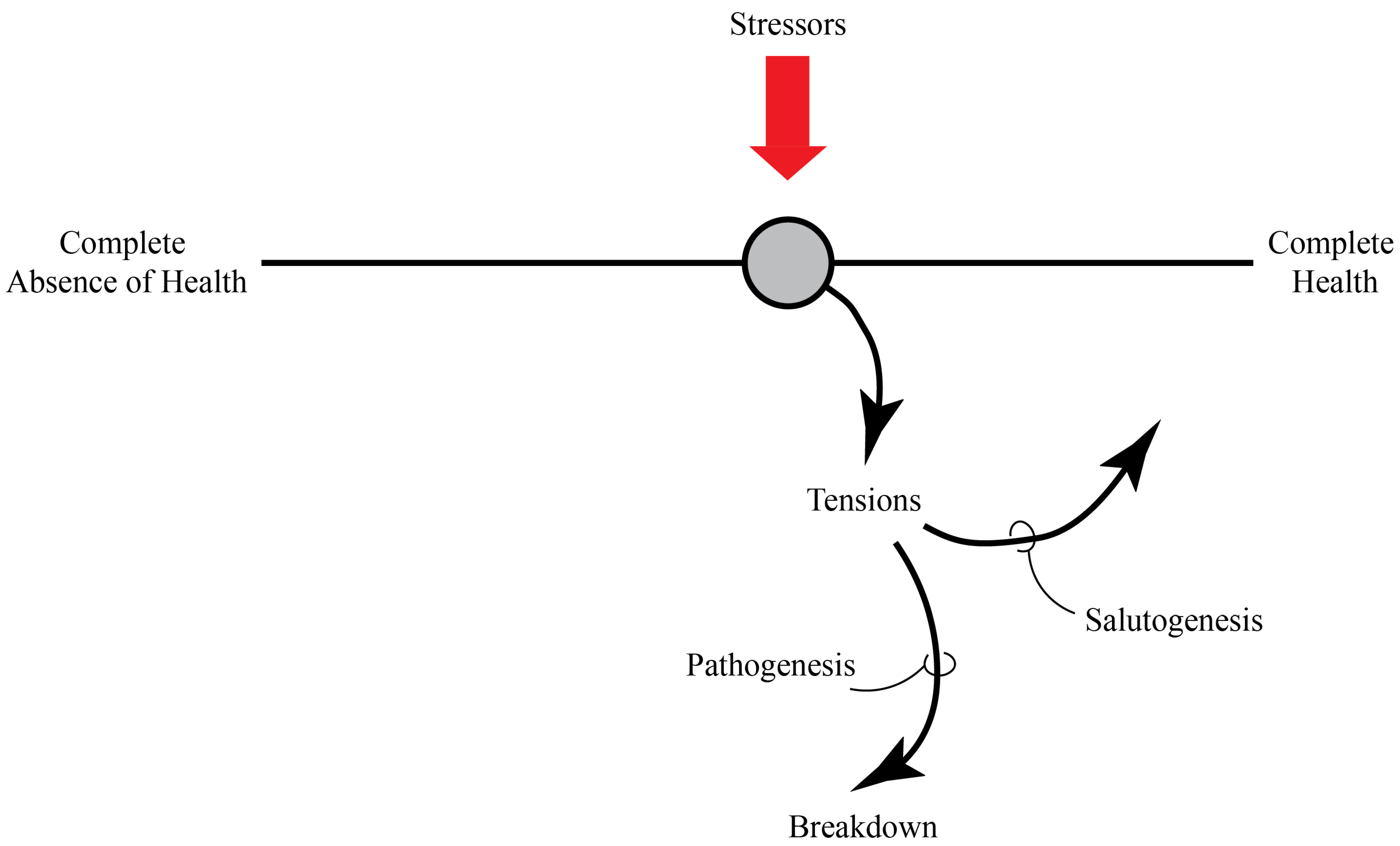
Figure 1. The Health Continuum between Health and Disease According to the Salutogenic Pattern of Health.
Diabetology 06 00124 g001
Figure 2. Core Psychological Constructs of the Sense of Coherence.
Diabetology 06 00124 g002
Figure 3. Conceptualisation of the Health Continuum between Health and Disease According to the Salutogenic Pattern of Health.
Diabetology 06 00124 g003
Table 1. Summary of the Most Commonly Reported Outcome Measures of Indicators Associated with Sense of Coherence in Diabetes mellitus.
CategoryIndicatorOutcome MeasureOutcome TrendSOC TrendLeading Reference
First Author
Year
Biomarkers and
Laboratory
Parameters
atherogenic lipoprotein burdenLDL-ClowerstrongerOlesen
2017 [117]
long-term glycaemic controlHbA1clowerstrongerGuevara
2018 [31]
short-term glycaemic controlFPGhigherweakerRamos-Valle
2023 [122]
Disease and
Progression Risk
risk of insulin resistanceHOMA-IRhigherweakerAgardh
2003 [123]
risk of T2DMnewly diagnosed T2DMhigherweakerMadhu
2019 [124]
risk of T2DM-related complicationsincidence of T2DM-related complicationshigherweakerAhola
2010 [116]
Lifestyle Behavioursnutritional statusBMIlowerhigherNuccitelli
2018 [125]
lifestyle patterndiet and exercisehigherstrongerNilsen
2015 [126]
Patient-reported Outcomes (PROs)adherence to self-carelevel of adherence to self-carehigherstrongerVega-Martínez
2025 [127]
adherence to therapylevel of adherence to therapyhigherstrongerKordbagheri
2024 [128]
distresslevel of stresslowerstrongerHe
2006 [129]
fear of hypoglycaemialevel of fear of hypoglycaemialowerstrongerShiu
2004 [130]
quality of lifelevel of quality of lifehigherstrongerKnight
2012 [131]
Note: BMI—body mass index; FPG—fasting plasma glucose; HbA1c—glycohaemoglobin; HOMA-IR—Homeostasis Model Assessment of Insulin Resistance; LDL-C—low-density lipoprotein cholesterol; PROs—patient-reported outcomes; SOC—sense of coherence; T2DM—type 2 diabetes mellitus.
Disclaimer/Publisher’s Note: The statements, opinions and data contained in all publications are solely those of the individual author(s) and contributor(s) and not of MDPI and/or the editor(s). MDPI and/or the editor(s) disclaim responsibility for any injury to people or property resulting from any ideas, methods, instructions or products referred to in the content.