Article

Lactoperoxidase and Xanthine Oxidase Inhibition Potential of Endemic Taraxacum mirabile Wagenitz Plant Extract: A Comparative Analysis In Vitro


by
Nurcan Dedeoğlu
1,* and
Seçil Karahüseyin
2
1
Food Engineering Department, Faculty of Engineering, Adana Alparslan Türkeş Science and Technology University, Sarıçam, Adana 01250, Türkiye
2
Department of Pharmacognosy, Faculty of Pharmacy, Çukurova University, Balcalı, Sarıçam, Adana 01330, Türkiye
*
Author to whom correspondence should be addressed.
Analytica 2026, 7(1), 17; https://doi.org/10.3390/analytica7010017
Submission received: 7 January 2026 / Revised: 2 February 2026 / Accepted: 9 February 2026 / Published: 17 February 2026

Abstract

Taraxacum mirabile Wagenitz, one of the endemic riches of Anatolia, is a species that has remained largely unexplored regarding its enzyme inhibition profile despite its pharmacological potential. The effects of T. mirabile aerial and root extracts, obtained at different polarities, were scrutinized in this study against two important enzymes: lactoperoxidase (LPO), which plays a vital role in the innate immune system, and xanthine oxidase (XO), which is prominently associated with hyperuricemia and oxidative stress. The aerial and root portions of the plant were extracted into fractions of varying polarities using petroleum ether, dichloromethane, ethyl acetate, and butanol. LPO was isolated from buffalo milk (881.6-fold purification, 22.5% yield, and 1249.9 EU/mg specific activity) via affinity chromatography and used in in vitro inhibition assays alongside commercial bovine XO enzyme. The results showed that the ethyl acetate fraction of the aerial part of the plant exhibited the strongest LPO inhibition (IC50: 15.60 ± 0.77 µg/mL) among the fractions. The petroleum ether fraction of both the aerial part (IC50: 11.17 ± 0.94 µg/mL) and the root part (IC50: 11.61 ± 0.59 µg/mL) had the highest inhibitory effect for the XO enzyme. These distinct inhibition profiles allow for significant insights into how plant extracts with varying polarities modulate XO and LPO enzymes. In conclusion, the significant inhibitory activity of T. mirabile extracts toward LPO and XO enzymes highlights their potential as a natural source for developing effective enzyme inhibitors, which could be useful for therapeutic applications.

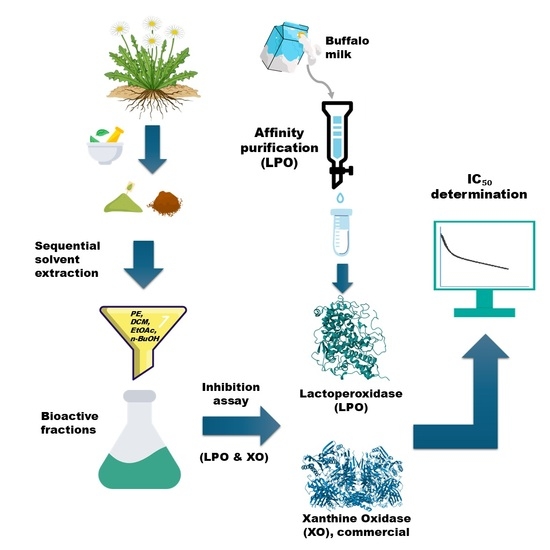
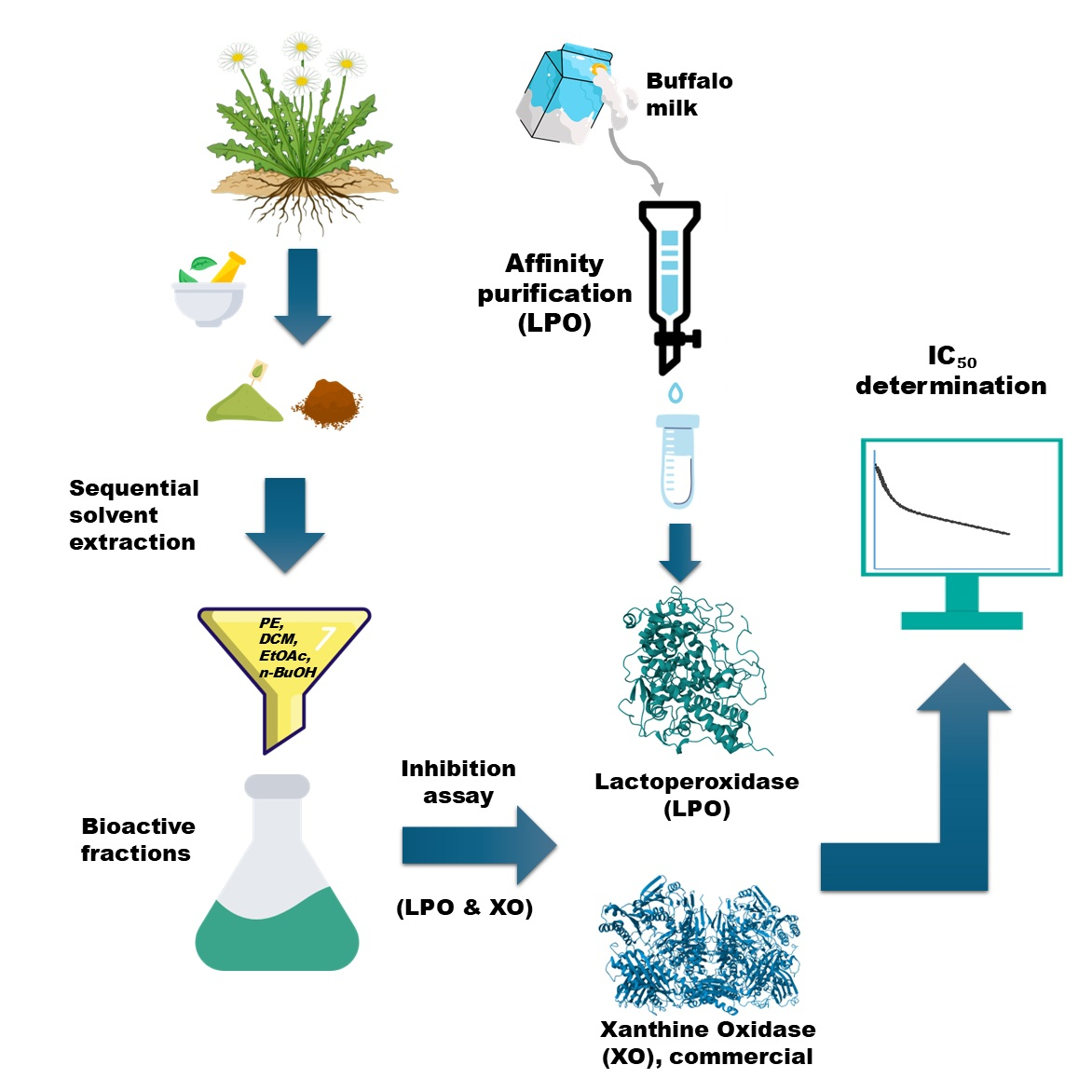
Graphical Abstract

1. Introduction

Medicinal plants are valuable natural resources due to their beneficial compounds, which can influence biochemical processes associated with oxidative stress and inflammation. Within this framework, the genus Taraxacum is noteworthy for its substantial phenolic and terpenoid content [1]. Taraxacum mirabile Wagenitz, a species endemic to Central Anatolia, has a rich phytochemical profile in terms of flavonoids, phenolic acids, triterpenoids, and sterols [2]. Consistent with these components, it has been reported that the plant, particularly its ethyl acetate and dichloromethane fractions, exhibits significant in vitro antioxidant activity, which is associated with the high total phenolic content [2]. T. mirabile fractions have been found to reduce inflammation by blocking COX-1 and COX-2 enzymes and have antioxidant properties, but they are not as effective as the drug indomethacin. It has been reported that the extracts show weak but detectable antibacterial activity against selected Gram-positive and Gram-negative bacteria [2]. Furthermore, regarding metabolic enzymes, these extracts have been shown to regulate glucose homeostasis by moderately inhibiting α-glucosidase and α-amylase enzymes while supporting insulin secretion in pancreatic β-cells [3]. Plant-derived extracts have long been at the forefront of scientific research due to their bioactive-rich profiles that modulate critical physiological functions in human metabolism [4]. Within this framework, T. mirabile, characterized by its diverse phytochemical composition, is a compelling candidate for modulating metabolic enzymes.
Xanthine oxidase (XO) is an essential catabolic enzyme, a form of the xanthine oxidoreductase (XOR) enzyme system, serving a key function in the breakdown of purine nucleic acids [5]. This enzyme is responsible for the last steps of purine metabolism in the body, converting hypoxanthine and xanthine into uric acid. At each stage of the reaction, it transfers electrons to oxygen molecules, producing reactive oxygen species (ROS) such as superoxide anion (O2) and hydrogen peroxide (H2O2) [6]. Under hypoxic or inflammatory conditions, increased xanthine oxidase activity leads to hyperuricemia, which accumulates monosodium urate crystals in the joints and kidneys, resulting in gouty arthritis and kidney stone formation [5,6].
Lactoperoxidase (LPO) is an essential member of the mammalian heme peroxidase superfamily and is known as the second-most naturally abundant enzyme in milk [7,8]. LPO enzyme facilitates the oxidation of halogens or pseudohalogens, such as thiocyanate, iodide, and bromide, by utilizing the hydrogen peroxide present in the environment [8]. Because of this catalysis, the released products, such as hypothiocyanite and hypoiodite, disrupt the integrity of microbial membranes and inactivate essential metabolic enzymes involved in bacterial vital functions by targeting their -SH groups [8,9]. This allows the enzyme to exhibit a broad range of antimicrobial, antiviral, and antifungal properties [7]. The antibacterial properties of LPO render the enzyme highly appealing for the industrial, medical, agricultural, and cosmetic sectors [10,11,12,13,14,15]. The lactoperoxidase system (LPS), which consists of thiocyanate (SCN) and hydrogen peroxide, is a secure, natural, and ideal tool, as approved by the FAO/WHO (2005) [16], for prolonging the shelf life of raw milk [17,18].
Despite the well-documented biological activities of several Taraxacum species, the interaction between the endemic T. mirabile and the enzymes XO and LPO remains unexplored. Specifically, to date, no study has examined the interaction between T. mirabile and LPO and XO enzymes, which are critical defense components in milk technology and in human and animal metabolism, despite the antioxidant and anti-inflammatory properties of Taraxacum species being widely reported in the literature. In this context, the present study examines the inhibitory or modulatory effects of phenolic-rich fractions from the endemic species T. mirabile on the key antimicrobial enzyme LPO and anti-gout enzyme XO, providing a comparative evaluation of enzyme–extract interactions The findings of this investigation are expected to expand the understanding of the biological activity spectrum of T. mirabile and to facilitate the identification of novel natural enzyme inhibitors with potential applications in food preservation and metabolic health.

2. Materials and Methods

2.1. Materials

2.1.1. Plant Material

The T. mirabile plant was collected on 31 July 2016, from the former landfill site in Eskil, Aksaray. The plant specimen was recorded in the Herbarium of the Faculty of Pharmacy, Istanbul University, under the code ISTE 115021 by Assoc. Prof. Dr. Münevver Bahar Gürdal Abamor, a member of the Department of Pharmaceutical Botany, Faculty of Pharmacy, Istanbul University.

2.1.2. Chemicals

Buffalo milk was freshly obtained from a local retail shop in Balikesir, Türkiye. Ethanol, petroleum ether, dichloromethane, ethyl acetate, and n-butanol were purchased from Merck (KGaA Frankfurter, Str. 250 64293, Darmstadt, Germany). Xanthine oxidase from bovine milk, 2,2′-azinobis-3-ethylbenzothiazoline-6-sulfonic acid (ABTS), Sepharose 4B, Cyanogen bromide (CNBr), and other chemicals were obtained from Sigma-Aldrich Co (St. Louis, MO, USA).

2.2. Methods

2.2.1. Plant Extract Preparation

After harvesting T. mirabile species, it was dried in the shade, and the aerial parts and roots were separated and ground; subsequently, starting with the aerial parts and proceeding to the root parts, each was separately percolated with ethanol (EtOH, Merck 1.00983.2500) at room temperature. The collected ethanol fractions were concentrated at a temperature not exceeding 50 °C and low pressure using a Büchi Rotavapor R-200/Büchi Pump V-700 (Buchi Labortechnik AG, Industriestrasse 9, CH-9230, Flawil, Switzerland), and the same fractions were combined. In this way, ethanol extracts of the aerial parts were obtained first, followed by those of the root parts. The plant’s aerial ethanol and root ethanol extracts were separately dissolved in methanol (Merck 1.06009.2511) and distilled water (1:2) and placed in a separating funnel, followed by petroleum ether (PE) (Merck 1.01775.5000), dichloromethane (DCM) (Merck 1.06050.2500), ethyl acetate (EA) (Merck 1.09623.2500), and n-butanol (BuOH) (Merck 1.01990.2500) according to increasing polarity. The extract and fractions were stored at +4 °C.

2.2.2. LPO Isolation from Buffalo Milk

Following the purchase, the buffalo milk was preserved at 4 °C overnight, and the purification process was performed on the subsequent day. Raw buffalo milk was centrifuged at 14,000 rpm for a duration of 30 min at a temperature of 4 °C to obtain skimmed milk. The resulting supernatant was subjected to ammonium sulfate precipitation at 60% saturation following centrifugation at 14,000 rpm for 45 min at 4 °C. The precipitate was subsequently dissolved in 10 mM Na2HPO4 buffer (pH 6.8) and used in the final purification step. The homogenate was loaded onto a Sepharose 4B–ethylenediamine–4-thioureidobenzenesulfonamide affinity column for LPO purification, and the enzyme was eluted using an elution buffer containing 1 M NaCl and 25 mM Na2HPO4 (pH 6.8), yielding the purified LPO enzyme [19,20].

2.2.3. Enzyme Activity Assay

Lactoperoxidase (LPO) enzyme activity was assessed using the methodology outlined by Shindler and Bardsley (1975) [21], employing 2,2′-azino-bis(3-ethylbenzothiazoline-6-sulfonic acid) (ABTS) as the substrate. The assay quantifies the increase in absorbance at 412 nm because of ABTS oxidation by H2O2. One unit of LPO enzyme activity (EU) is the amount of enzyme required to oxidize 1 μmol of ABTS per minute at 20 °C [20].
Xanthine oxidase (XO) enzyme activity was determined according to the Massey method [22]. Measurements were performed by spectrophotometrically monitoring the increase in absorbance at 295 nm during the transformation of Xanthine to uric acid at 37 °C (ε292 = 9.5 mM−1 cm−1). Reaction mixture prepared to contain 50 mM Tris-HCl buffer (pH 7.6), 0.1 mM Xanthine, and the enzyme in an appropriate amount. Defined enzyme activity is the amount of enzyme converting one µmol xanthine to uric acid, which is 1 unit (U).

2.2.4. Quantitative Protein Assay

The Bradford method (1976) was used to determine protein concentration, which was used to calculate total enzyme activity, specific activity, and purification fold. As a standard protein, Bovine serum albumin was used [23].

2.2.5. SDS-PAGE Analysis for Determination of LPO Enzyme Purity

The purity and estimated molecular weight of the LPO enzyme isolated via affinity chromatography were evaluated by SDS-PAGE under reducing conditions, as described by Laemmli [24]. The samples were denatured by mixing them with a buffer containing SDS and β-mercaptoethanol at 95 °C. Subsequently, the samples were loaded onto a discontinuous gel system with 3% (w/v) and 10% (w/v) acrylamide concentrations and subjected to voltage-controlled electrophoresis. Following electrophoresis, the gel was stained with Coomassie Brilliant Blue R-250 and then destained. The protein marker (Thermo Scientific (Waltham, MA, USA) Protein Ladder, 10–180 kDa) was used to determine the molecular weight of the enzyme.

2.2.6. Investigating the Effect of Plant Extract on Enzyme Activity

To determine the IC50 values of plant extracts, enzyme activity assays were performed under optimum conditions using 2,2′-azino-bis(3-ethylbenzthiazoline-6-sulfonic acid) (ABTS) substrate for LPO and xanthine for XO. First, the activity of the enzymes was assayed in a reaction medium without plant extract, and this value was accepted as 100% activity. Subsequently, plant extracts at a stock concentration of 1 mg/mL were added to the reaction medium at various concentrations, and the resulting absorbance values were measured at 412 nm for LPO and at 295 nm for XO, relative to a blank. Enzyme inhibition experiments were performed in triplicate (n = 3) at each concentration. The collected experimental data were examined with GraphPad Prism software (Version 10.6.1 (892), GraphPad Software, San Diego, CA, USA) to find the IC50 (half-maximum inhibitory concentration) values. IC50 values were determined by plotting concentration–response curves using non-linear regression analysis with three parameters. Experimental results are presented as mean ± standard deviation (Mean ± SD). IC50 values are reported with a 95% confidence interval. Allopurinol, a clinically recognized inhibitor of XO, was used as a positive control.

2.3. Statistical Analysis

All experiments were performed in triplicate (n = 3), and the results were expressed as Mean ± Standard Deviation (SD). The IC50 values were calculated using non-linear regression analysis in GraphPad Prism 10.6.1. To determine the statistical significance of differences between the inhibitory activities of various plant extracts, a one-way analysis of variance (ANOVA) followed by Tukey’s multiple comparison test was conducted. A p-value of less than 0.05 (p < 0.05) was considered statistically significant.

3. Results

3.1. Isolation of LPO from Buffalo Milk

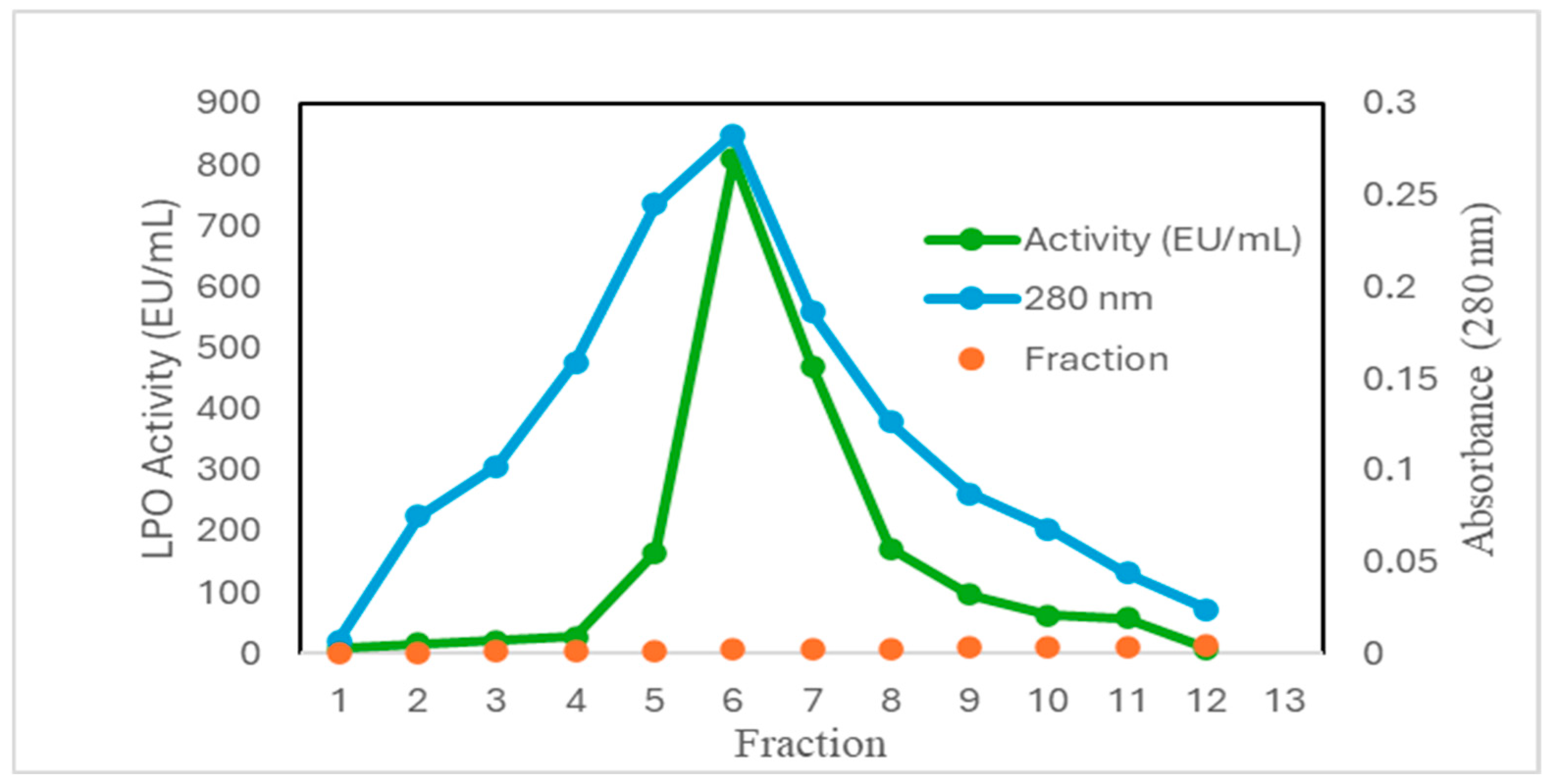
Defatted buffalo milk was subjected to ammonium sulfate precipitation at 60% saturation. The resulting precipitate was dissolved in 10 mM Na2HPO4 buffer (pH 6.8) and applied onto a Sepharose 4B–ethylenediamine–4–thioureidobenzenesulfonamide affinity column previously equilibrated with the same buffer. Following the washing step, the enzyme was eluted using 25 mM Na2HPO4 buffer (pH 6.3) containing 1 M NaCl. The collected fractions were monitored for qualitative protein content at 280 nm and for LPO enzyme activity at 412 nm; fractions exhibiting high protein levels and enzyme activity were pooled and used for inhibition studies (Figure 1). As presented in Table 1, the LPO enzyme was purified from buffalo milk using the affinity column, achieving an 881.6-fold purification with a specific activity of 1249.9 EU/mg and an overall yield of 22.5%.

3.2. SDS-PAGE Analysis for Determination of Enzyme Purity

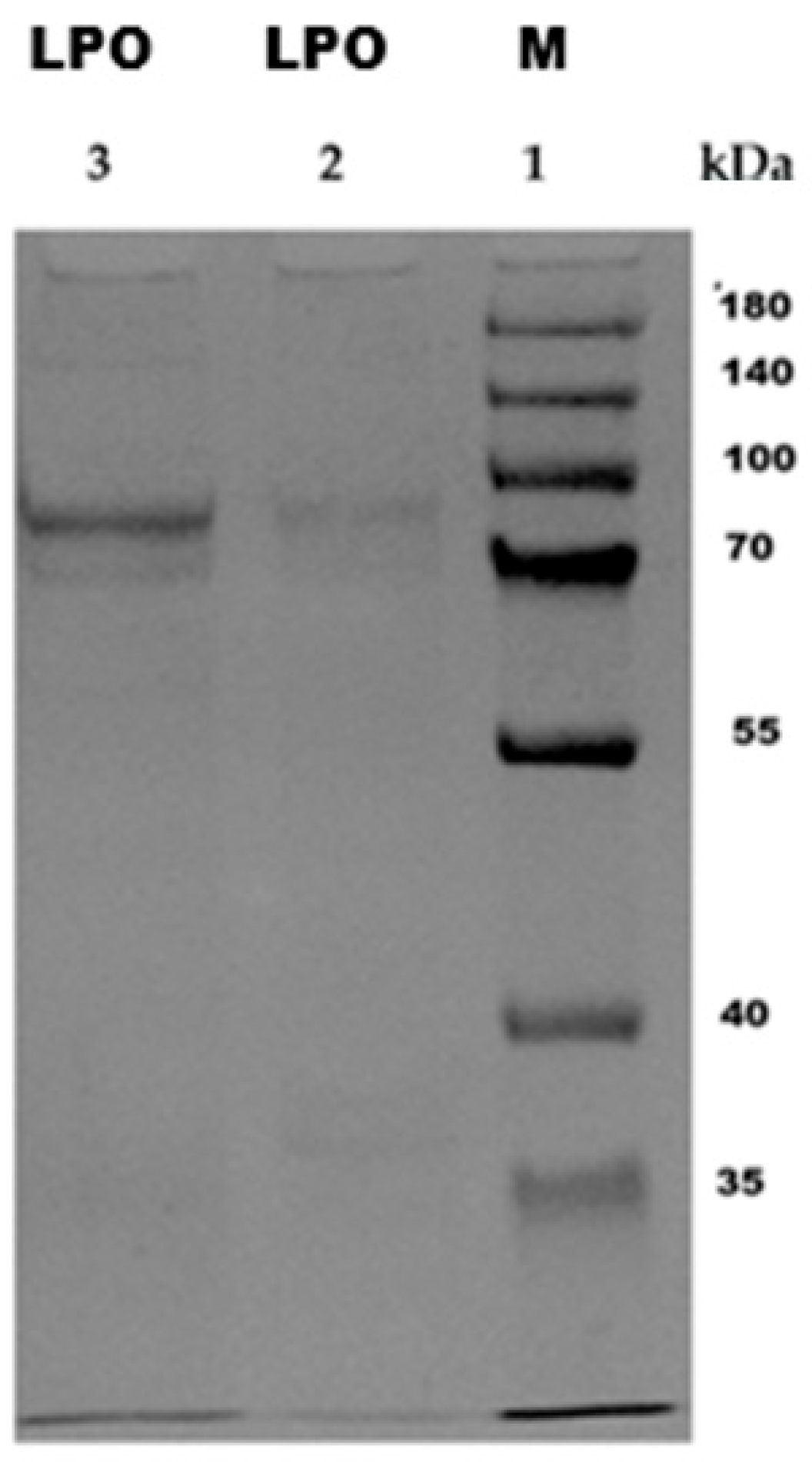
To ensure the purity of the lactoperoxidase enzyme isolated from buffalo milk, the SDS-PAGE was employed. Sodium dodecyl sulfate polyacrylamide gel electrophoresis (SDS-PAGE) is the most widely used electrophoretic technique for protein analysis, as it allows separation of proteins by their relative molecular size and weight. Figure 2 illustrates the SDS-PAGE image for the buffalo milk LPO enzyme purified by AC. According to the SDS-PAGE image, the molecular weight of the buffalo milk LPO enzyme was calculated to be approximately 80 kDa (Figure 2).

3.3. Investigating the Effect of Plant Extract on Enzyme Activity

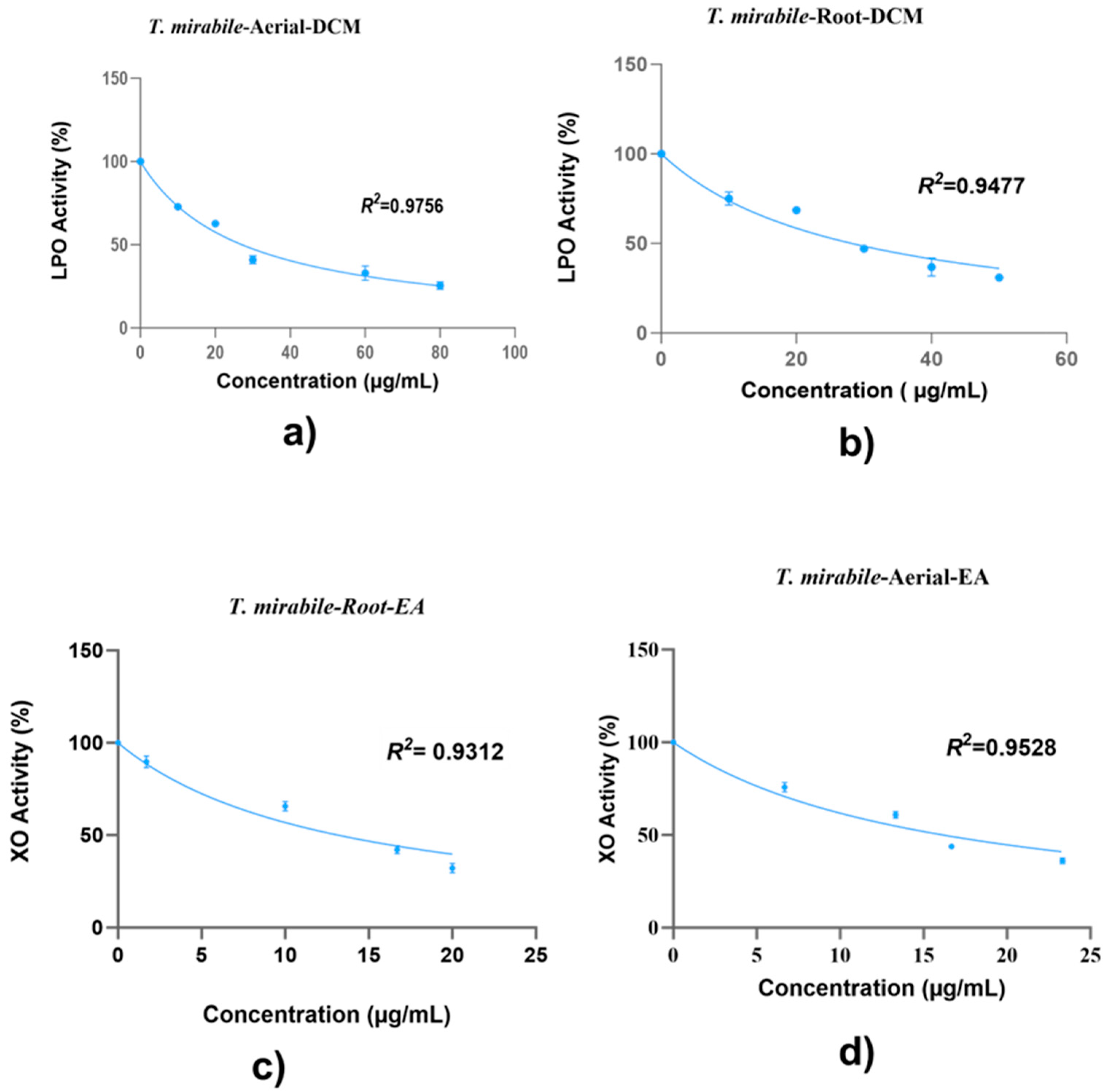
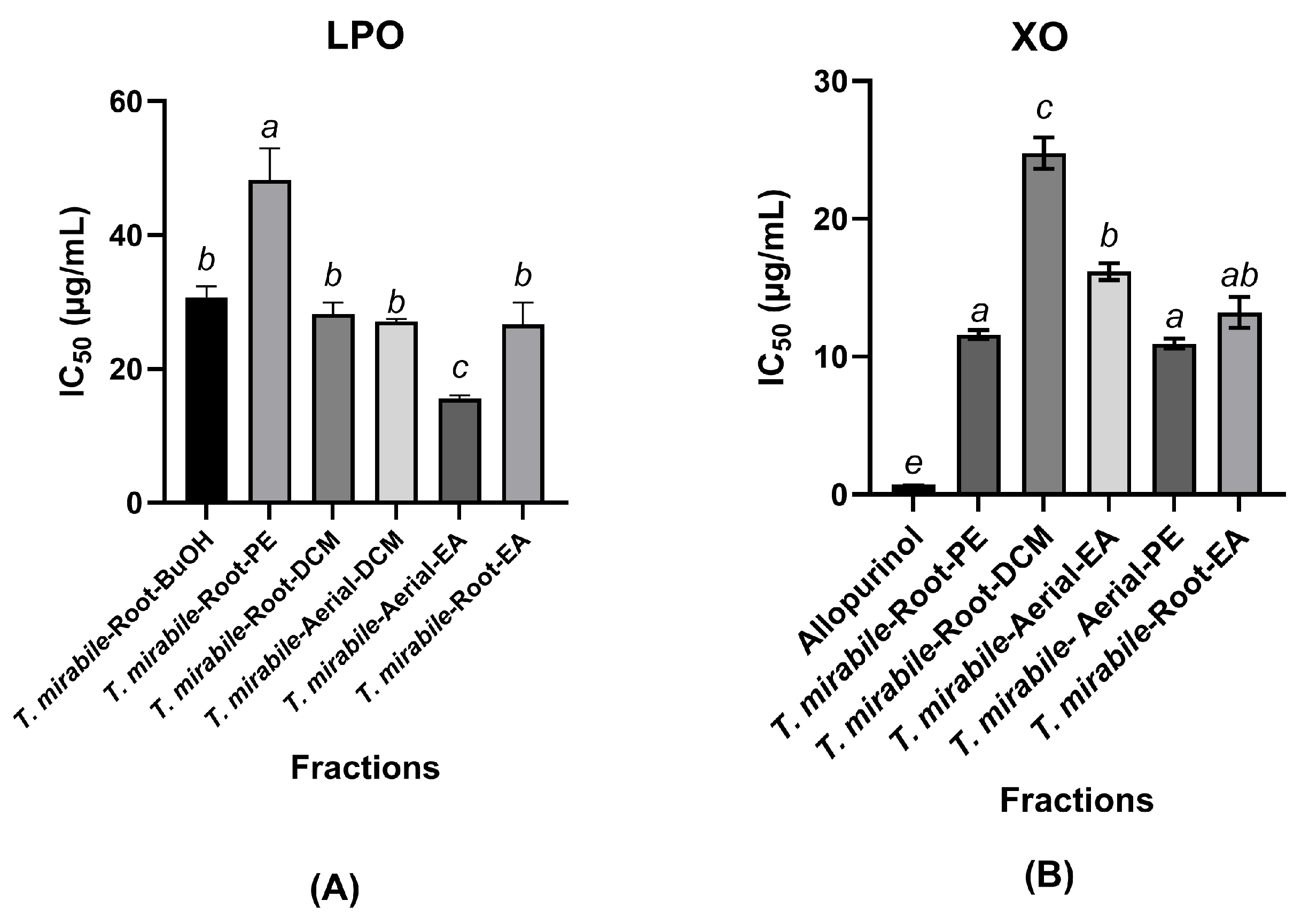
The inhibitory properties of the plant extracts on the lactoperoxidase (LPO) enzyme isolated from buffalo milk were assessed using ABTS substrate. Enzyme activity was monitored spectrophotometrically at 412 nm in the presence of increasing concentrations of the plant extracts, with enzyme activity in the absence of inhibitors set to 100%. IC50 values were subsequently calculated from the corresponding inhibition curves. The root and aerial parts of plant extracts (1 µg/mL) were tested as sources of enzyme inhibitors. The inhibitory effects of T. mirabile extracts on lactoperoxidase (LPO) activity were evaluated, and the results revealed significant differences among the various solvent fractions (p < 0.05). The IC50 values of the plant extracts T. mirabile-Root-BuOH, T. mirabile-Root-PE, T. mirabile-Root-DCM, T. mirabile-Aerial-DCM, T. mirabile-Aerial-EA, and T. mirabile-Root-EA were determined for LPO enzyme as 30.67 ± 2.16, 48.07 ± 2.27, 28.22 ± 1.77, 27.12 ± 1.31, 15.60 ± 0.77, and 26.5 ± 1.14 µg/mL, respectively (Figure 3 and Table 2). Detailed concentration–response curves corresponding to the calculated IC50 values are shown in the Supplementary Materials (Figures S1–S7). In contrast, the petroleum extract of the aerial parts did not exhibit any inhibitory or activating effect within the tested concentration range. As shown in the comparative analysis, the Aerial-EA extract demonstrated the most potent inhibition, with the lowest IC50 value (15.60 ± 0.77 µg/mL). This activity was statistically superior to all other tested fractions (p < 0.05). A set of extracts, including Aerial-DCM, Root-EA, Root-BuOH, and Root-DCM, showed moderate inhibitory activities with IC50 values ranging from 26.50 to 30.67 µg/mL. Interestingly, no significant statistical difference was observed among these four fractions (p > 0.05, Tukey’s test). On the other hand, the Root-PE fraction exhibited the weakest inhibitory potential, with the highest IC50 value (48.25 ± 2.27 µg/mL) compared with all other samples (p < 0.0001).
Calculated IC50 values of plant extracts, T. mirabile-Root-PE, T. mirabile-Root-DCM, T. mirabile-Aerial-EA, T. mirabile-Aerial-PE, T. mirabile-Root-EA, and allopurinol (positive control) for the XO enzyme are 11.61 ± 0.59, 24.65 ± 1.58, 16.17 ± 1.01, 11.17 ± 0.94, 13.19 ± 1.26, and 0.70 ± 0.03 µg/mL, respectively. No IC50 data were observed for T. mirabile-Root-PE and T. mirabile-Aerial-DCM within the concentration range studied (Table 2, Figure 3). The full concentration–response profiles for XO inhibition are presented in the Supplementary Materials (Figures S8–S15). The Aerial-PE (11.07 ± 0.94 µg/mL) and Root-PE (11.61 ± 0.59 µg/mL) fractions of T. mirabile extracts exhibited the lowest IC50 values among those tested, suggesting the greatest inhibitory effect on the enzyme. These two fractions did not significantly differ from one another (p = 0.8607, Tukey’s test), whereas both were significantly more effective than the Root-DCM extract, which exhibited the highest IC50 value (24.65 ± 1.58 µg/mL) and, consequently, the weakest inhibitory capacity (p < 0.0001). As expected, the standard inhibitor, allopurinol was used as a positive control and the most potent agent overall, with an IC50 of 0.70 ± 0.03 µg/mL (p < 0.0001).

4. Discussion

The present study investigated the inhibitory potential of various T. mirabile plant extracts against two key pro-inflammatory enzymes, Lactoperoxidase (LPO) and Xanthine Oxidase (XO), and summarized the results in Table 2. The findings reveal significant and differential enzyme inhibitory activity among the extracts, suggesting a complex phytochemical profile with distinct biological properties.

4.1. LPO Purification from Buffalo Milk by Affinity Chromatography

Among the various separation methods developed to date, affinity chromatography is one of the few techniques that employs the fundamental principle of spontaneous, specific interactions between biospecific molecules. This approach offers a highly effective means of separation, enabling selective binding and the high-purity extraction of molecules from diverse sources [25]. Therefore, in this study, Sepharose 4B–ethylenediamine–4-thioureidobenzenesulfonamide affinity chromatography column [19] was employed to efficiently purify the LPO enzyme from buffalo milk via ammonium sulfate precipitation. The LPO enzyme was isolated from AC with a 22.5% yield, resulting in an 881.6-fold increase in purity (Figure 1, Table 1). As of today, several purification techniques are employed to purify the LPO enzyme from buffalo milk. By way of example, LPO enzyme from water buffalo was purified from skim milk using Amberlite CG 50 H+ resin, CM Sephadex C-50 ion-exchange chromatography, and Sephadex G-100 gel filtration chromatography, with 13.2-fold purification and 7.54 mg of LPO from 1 L of buffalo milk in three steps [26]. To determine the three-dimensional structure, the LPO enzyme was purified from buffalo milk using CM-Sephadex C-50 and Sephadex G-100 columns, yielding 10 mg/L [27]. In another study, 36.69-fold purification and a 1.88% yield were achieved using affinity chromatography with a sulfanilamide ligand following Amberlite CG 50 H+ treatment. The results of purifying the LPO enzyme from buffalo milk by affinity chromatography showed significant differences across ligand types. Affinity chromatography results for the LPO enzyme purification from buffalo milk revealed notable variations depending on the ligand types. When using a column with a sulfanilamide ligand, a 36.69-fold purification was achieved; however, the yield was limited to 1.88%. Conversely, the use of the 5-amino-1-naphthalenesulfonamide ligand significantly increased the degree of purification to 388.80-fold, but this increase led to a decrease in yield to 3.48%. On the other hand, purification with the 2-chloro-4-sulfamoylaniline ligand resulted in a moderate level of purification of 151.86-fold, while the yield was significantly higher at 20.34% compared to other ligands [28,29]. These findings reveal that ligand selection establishes a precise balance between the degree of purification and the yield.
With these outcomes in mind, the 881.6-fold purification coefficient obtained with AC significantly surpasses all methods previously reported for purifying LPO from buffalo milk. Furthermore, the 22.5% yield, when considered together with the high purification coefficient, is far more advantageous than affinity studies with both sulfanilamide and 5-amino-1-naphthalenesulfonamide ligands and is also competitive with the high yield reported for the study with the 2-chloro-4-sulfamoylaniline ligand. In conclusion, this AC-based approach demonstrates superior performance in both purification coefficient and yield compared with methods reported in the literature for LPO purification from buffalo milk, offering a more effective and technically robust alternative.

4.2. SDS-PAGE Analysis for Enzyme Purity

To ensure the purity of the LPO enzyme isolated from buffalo milk by AC, SDS-PAGE was performed. As demonstrated in Figure 2, the SDS-PAGE results indicate that the molecular mass of LPO is approximately 80 kDa, based on the observed single protein bands.
The molecular weight of purified lactoperoxidase (LPO) has been reported to vary slightly according to milk source and analytical conditions in several studies; nevertheless, most SDS-PAGE-based studies consistently report values within the 78–80 kDa range [20,26,28,29,30]. For bovine milk, LPO is generally described as a single polypeptide chain composed of approximately 612 amino acid residues, with an apparent molecular mass of either 78 or 80 kDa [28,30]. Likewise, LPO purified from goat and sheep milk has been shown to exhibit comparable electrophoretic mobility, yielding bands close to 80 kDa, which reflects a high degree of structural conservation among ruminant-derived LPOs [29,31]. On the other hand, studies on buffalo milk LPO have reported more variable molecular weights. While several investigations observed values consistent with bovine LPO (78–80 kDa), others reported lower apparent molecular masses, such as 73 kDa [27]. These discrepancies may be ascribed to species-specific variations, partial proteolysis, or, more significantly, differences in post-translational modifications, particularly glycosylation patterns. LPO is known to be a glycoprotein, and differences in the extent or composition of N-linked oligosaccharides can significantly influence its electrophoretic behavior, resulting in shifts in apparent molecular weight during SDS-PAGE analysis [32,33].
In the present study, the molecular mass of LPO was determined to be approximately 80 kDa based on the observed protein bands. This result is in close agreement with the predominant literature reports on LPO in buffalo, bovine, goat, and sheep milk. Additionally, the observed molecular mass may confirm that structurally intact LPO was successfully purified.

4.3. Determination of the Inhibitory Effects of Plant Extract on Enzyme Activity

Taraxacum mirabile Wagenitz, a Central Anatolian endemic species, is a member of the genus Taraxacum that has received little attention to date regarding its comprehensive phytochemical and bioactive profile. Thorough HPLC-MS and GC-MS analyses showed that the plant’s roots and aerial parts are especially rich in triterpenoid/sterol components and phenolic compounds. Flavonoids like luteolin, luteolin-7-glucoside, luteolin-7-rutinoside, apigenin, apigenin-7-glucoside, hispidulin, and crisin, as well as phenolic acids like caffeic acid, chicoric acid, chlorogenic acid, rosmarinic acid, and verbascoside, are the primary phenolic compounds found. In the nonpolar fractions, bioactive triterpenes and sterols, which are characteristic metabolites associated with the pharmacological importance of Taraxacum species, are predominant, particularly taraxasterol, lupeol, α-amyrin, and their acetates, β-sitosterol, campesterol, and lanosterol [2].
The present study investigated the inhibitory potential of various T. mirabile plant extracts against two key milk enzymes, Lactoperoxidase (LPO) and Xanthine Oxidase (XO), and summarized the results in Table 2. The findings reveal significant and differential enzyme-inhibitory activity across the extracts, suggesting a complex phytochemical profile with distinct biological properties.

4.3.1. Lactoperoxidase (LPO) Inhibition

Lactoperoxidase (LPO) is a key enzyme in the innate immune system, particularly in the humoral defense system, where it catalyzes the oxidation of thiocyanate ions to hypothiocyanite, a potent non-toxic antimicrobial agent. Although LPO’s primary role is protective, to inhibit its activity is also relevant for controlling certain oxidative processes. Therefore, inhibiting LPO activity is a target for both understanding host defense mechanisms and developing new antimicrobial or antioxidant strategies. Our experimental results indicate that the most potent LPO inhibitory activity was observed in the ethyl acetate (EA) extract of the aerial parts of T. mirabile (T. mirabile-Aerial-EA), with an IC50 value of 15.60 ± 0.77 c µg/mL. Furthermore, as seen in Table 2 and Figure 4, the statistically similar activities exhibited by Root-EA (26.5 ± 1.14 b), Aerial-DCM (27.12 ± 1.32 b), and Root-DCM (28.22 ± 1.78 b) fractions can be explained by their overlapping chemical profiles (p > 0.05). The high activity of the aerial parts, particularly in the medium-polarity DCM and EA fractions, suggests the presence of potent, moderately polar compounds such as flavonoids, phenolic acids, or specific terpenoids, which are known to inhibit peroxidases [34]. HPLC-MS analysis of these fractions has previously identified a shared set of phenolic compounds, including chlorogenic acid, caffeic acid, and luteolin, in both aerial and root DCM parts. These fractions are typically rich in chlorogenic acid, chicoric acid, and flavonoids like luteolin [2]. It has been reported that phenolic compounds inhibit LPO activity by serving as alternative substrates or by binding near the heme active site, thereby preventing the oxidation of the primary substrate (ABTS in this study) [35]. The presence of multiple hydroxyl groups in these molecules may have facilitated hydrogen bonding with the enzyme’s amino acid residues [34,35]. In the present study, plant extracts characterized by high levels of luteolin, luteolin-7-glucoside, and luteolin-7-rutinoside exhibited significant inhibitory effects on lactoperoxidase activity in the ABTS-based activity assay. This finding differs from previous reports in which luteolin was shown to promote the pseudo-halogenating activity of lactoperoxidase in thiocyanate-dependent systems. Such differences can be attributed to the distinct reaction pathways assessed by these essays. While the SCN/H2O2 system reflects halide oxidation associated with the resolution of Compound II, the ABTS assay probes general peroxidase activity via one-electron transfer reactions [36]. Under these conditions, luteolin derivatives—particularly glycosylated forms—may influence enzyme–substrate interactions, resulting in substrate-dependent inhibitory effect. In the case of the T. mirabile-Root-BuOH fraction, a moderate LPO inhibitory effect was observed with an IC50 value of 30.67 ± 2.16 b µg/mL. This fraction was much more effective than the least effective petroleum ether (IC50 = 48.07 ± 2.27 a µg/mL) fraction (p < 0.0001), but not as strong as the most effective T. mirabile-Aerial-EA fraction (p = 0.0001). Although the BuOH fraction extracts more polar compounds such as highly glycosylated flavonoids and polar phenolic acids, it possesses a similar inhibitory capacity to other medium-polarity fractions DCM and Root-EA (p > 0.05). No LPO inhibition (ND) was observed in the T. mirabile Aerial-PE fraction, whereas the Root-PE fraction had the lowest activity (IC50: 48.07 ± 2.27 a µg/mL). Root-PE fraction was statistically significantly lower than all other fractions (p < 0.0001) (Table 2, Figure 4). The nonpolar fractions may be inactive or have low affinity for LPO because LPO is an enzyme that oxidizes polar and aromatic substrates, such as phenolic compounds [28]. Our most active T. mirabile-Aerial-EA fraction (IC50: 15.60 ± 0.77 µg/mL) showed a lower but still significant inhibitory potential, compared to pure phenolic inhibitors such as 1,2-dihydroxyanthraquinone (IC50: 0.0867 µg/mL) [37]. This difference makes sense because the pure compounds in the reference study may interact with the LPO enzyme more strongly and specifically than the mixed plant extracts we used. The data obtained in this study align with corresponding research in the literature and substantiate that the plant fractions analyzed exhibit a potent inhibitory effect on the LPO enzyme at micromolar concentrations [28,30,31,37]. Detailed inhibition curves are available in the Supplementary Materials (Figures S1–S7).
In the literature, sulfonamide derivatives—which served as the basis for our purification method—typically exhibit IC50 values in the micromolar range [38,39,40]. To compare the inhibition potentials of the plant extracts used in this study with the pure compounds in the literature, the molar IC50 values of the reference sulfonamide compounds were standardized to µg/mL based on their molecular weights. In the literature, the IC50 value for sulfanilamide, one of the most specific and potent inhibitors of LPO and a ligand used in affinity chromatography, is reported as 1.46 µg/mL (8.48 µM) [40]. For other important sulfonamide derivatives, this value is 23 µg/mL for sulfadiazine, 56 µg/mL for sulfapyridine, and 58 µg/mL for sulfathiazole [38]. According to our findings, the IC50 value (15.6 µg/mL) exhibited by the T. mirabile Aerial-EA fraction not only shows an efficacy level close to that of the strongest reference sulfanilamide but also indicates a higher inhibition potential than clinical sulfonamides such as sulfathiazine, sulfapyridine, and sulfathiazole. These results indicate that our crude plant extracts contain natural inhibitors that are similarly efficacious as pure pharmaceutical compounds, underscoring their substantial biopharmaceutical potential.

4.3.2. Xanthine Oxidase (XO) Inhibition

Xanthine oxidase (XO) inhibition is a critical pharmacological target in the treatment of hyperuricemia and gout. Inhibition of this enzyme occurs by reducing uric acid production and hindering the formation of reactive oxygen species (ROS) [41,42]. Our analysis indicates that the effect of T. mirabile extracts on XO is due to a different phytochemical profile than that responsible for LPO inhibition. The XO inhibition profile of T. mirabile extracts revealed multiple highly potent fractions (Table 2, Figure 3). Complete XO inhibition profiles are provided in the Supplementary Materials (Figures S8–S15). The most effective inhibition was observed in the Petroleum Ether (PE) extract of the aerial parts (T. mirabile-Aerial-PE), with an IC50 value of 11.17 ± 0.94 a µg/mL. Although this fraction is statistically similar in activity to the root-PE fraction with an IC50 of 11.61 ± 0.59 a µg/mL (p > 0.05), it differs significantly from all other extracts with a higher activity. Critically, the medium-polarity Ethyl Acetate (EA) extract of the root (T. mirabile-Root-EA) demonstrated nearly equivalent potency to the Aerial-PE fraction (p = 0.0222), with a corrected IC50 value of 13.19 ± 1.26 ab µg/mL. This figure was closely followed by the Ethyl acetate fraction of the aerial part (T. mirabile-Aerial-EA) at 16.17 ± 1.01 b µg/mL. The dichloromethane fraction from the roots (Root-DCM) exhibited the lowest inhibitory activity, with an IC50 value of 24.65 ± 1.58 c µg/mL). As a positive control, allopurinol, a potent synthetic XO inhibitor, showed an IC50 of 0.70 ± 0.03 e µg/mL (p < 0.0001). Although allopurinol (0.70 ± 0.03 µg/mL) remains the potential inhibitor, the low IC50 values of the T. mirabile extracts indicate their significant potential as sources for novel, naturally derived XO inhibitors. The high activity in the non-polar Aerial-PE fraction suggests the involvement of triterpenoids (e.g., taraxasterol) [2], which may act via allosteric inhibition [43]. On the other hand, the strong activity in the medium-polar Root-EA fraction is probably due to flavonoids and phenolic glycosides, which are known competitive inhibitors that bind to the enzyme’s molybdenum center [44]. Obtained IC50 values for T. mirabile extracts are significantly lower than those reported for many other plant extracts, such as Pistacia chinensis leaf essential oil (43.5 µg/mL) [45] and Polygonum cuspidatum rhizome extract (38 µg/mL) [46]. The potency of the T. mirabile extracts is close to that of the highly active methanolic extract of Filipendula ulmaria (6 µg/mL) and Filipendula vulgaris (8.9 µg/mL) [47], a plant traditionally used for gout treatment (particularly F. ulmaria).
These findings highlight the unique character of the endemic plant T. mirabile, which exhibits dual potency across both apolar (Aerial-PE) and medium-polar (Root-EA) fractions. This suggests that both the aerial and root parts provide chemically distinct yet highly effective XO inhibitors, potentially offering a broader therapeutic window for the management of hyperuricemia.

5. Conclusions

Comparative analysis of the LPO and XO inhibition profiles reveals a complex, yet distinct, distribution of active compounds. The most efficacious inhibitors of lactoperoxidase were predominantly found within the medium-polarity dichloromethane and ethyl acetate fractions of the aerial components. However, for XO, high potency was observed in both the non-polar Aerial-PE fraction and the medium-polar Root-EA fraction. This highlights the significant inhibitory potential of T. mirabile extracts against LPO and XO enzymes, suggesting they could be effective natural inhibitors for further biochemical applications—either to reduce peroxidase-driven oxidative stress or to preserve antibacterial activity. It is expected that the findings will also provide a scientific basis for new and sustainable approaches to designing natural preservative systems across a wide range of fields, from food preservation to pharmaceutical product development, and further clarify the therapeutic potential of T. mirabile at the molecular level, since XO and LPO are critical enzymes for industrial and pharmaceutical areas. Future work should focus on the bioassay-guided fractionation of the most active extracts (T. mirabile-Aerial-DCM for LPO; T. mirabile-Aerial-PE and T. mirabile-Root-EA for XO) to isolate and structurally characterize the specific compounds responsible for the observed enzyme inhibition. This will clarify the exact mechanism (e.g., allosteric vs. competitive) employed by the different chemical classes.

Supplementary Materials

The following supporting information can be downloaded at: https://www.mdpi.com/article/10.3390/analytica7010017/s1, including File S1: Figures S1–S15. These figures present dose–response curves, which were used to determine the IC50 values for lactoperoxidase (LPO) and xanthine oxidase (XO) enzymes, as assessed with different extracts of Taraxacum mirabile Wagenitz.

Author Contributions

Conceptualization, N.D.; methodology, N.D. and S.K.; investigation, N.D. and S.K.; formal analysis, N.D.; resources, N.D. and S.K.; data curation, N.D.; writing—original draft preparation, N.D.; writing—review and editing, N.D.; visualization, N.D.; supervision, N.D.; project administration, N.D. All authors have read and agreed to the published version of the manuscript.

Funding

This research received no external funding.

Data Availability Statement

The original contributions presented in this study are included in the article/supplementary material. Further inquiries can be directed to the corresponding author.

Acknowledgments

The authors would like to thank Semra Işık for providing laboratory facilities and assistance during the LPO purification stage. Additionally, the graphical abstract was designed using icons and visual elements sourced from Flaticon (www.flaticon.com), SVGRepo, and Canva (free version).

Conflicts of Interest

The authors declare no conflicts of interest.

Abbreviations

The following abbreviations are used in this manuscript:
ACAffinity chromatography
BuOHn-Butanol
EAEthyl acetate
EtOHEthanol
LPOLactoperoxidase
LPSLactoperoxidase system
XOXanthine oxidase
XORXanthine oxidoreductase

References

  1. Martinez, M.; Poirrier, P.; Chamy, R.; Prüfer, D.; Schulze-Gronover, C.; Jorquera, L.; Ruiz, G. Taraxacum officinale and related species—An ethnopharmacological review and its potential as a commercial medicinal plant. J. Ethnopharmacol. 2015, 169, 244–262. [Google Scholar] [CrossRef]
  2. Karahüseyin, S.; Özsoy, N.; Çelik, B.Ö.; Sarı, A. Investigations on the Endemic Species Taraxacum mirabile Wagenitz: HPLC–MS and GC–MS Studies, Evaluation of Antioxidant, Anti-Inflammatory, and Antimicrobial Properties, and Isolation of Several Phenolic Compounds. Plants 2024, 13, 3304. [Google Scholar] [CrossRef] [PubMed]
  3. Paşayeva, L.; Arslan, A.K.K.; Fatullayev, H.; Şafak, E.K.; Tugay, O.; Yerer, M.B. Exploring the Antidiabetic Mechanisms of Taraxacum farinosum and Taraxacum mirabile Extracts: Enzyme Inhibition, Insulin Secretion, and LC–HRMS-Based Phytochemical Analysis. Chem. Biodivers. 2025, 22, e01160. [Google Scholar] [CrossRef] [PubMed]
  4. Dedeoğlu, N. The Xanthine Oxidase Inhibitory Activities of Natural-Based Compounds Targeting Gout. In Current Research in Pharmacy and Pharmaceutical Sciences II; Yamali, C., Ed.; Akademisyen Kitabevi: Ankara, Turkey, 2024; Chapter 3; pp. 35–52. [Google Scholar] [CrossRef]
  5. Rana, R.; Sharma, A.; Kumar, N.; Khanna, A.; Jyoti; Dhir, M.; Gulati, H.K.; Singh, J.V.; Bedi, P.M.S. A comprehensive review of synthetic and semisynthetic xanthine oxidase inhibitors: Identification of potential leads based on in-silico computed ADME characteristics. Mol. Divers. 2025, 29, 4727–4764. [Google Scholar] [CrossRef]
  6. Singh, A.; Singh, K.; Sharma, A.; Kaur, K.; Chadha, R.; Singh Bedi, P.M. Past, present and future of xanthine oxidase inhibitors: Design strategies, structural and pharmacological insights, patents and clinical trials. RSC Med. Chem. 2023, 14, 2155–2191. [Google Scholar] [CrossRef]
  7. Yousefi, M.; Nematollahi, A.; Shadnoush, M.; Mortazavian, A.M.; Khorshidian, N. Antimicrobial Activity of Films and Coatings Containing Lactoperoxidase System: A Review. Front. Nutr. 2022, 9, 828065. [Google Scholar] [CrossRef]
  8. Özhan, H.K.; Duman, H.; Bechelany, M.; Karav, S. Lactoperoxidase: Properties, Functions, and Potential Applications. Int. J. Mol. Sci. 2025, 26, 5055. [Google Scholar] [CrossRef]
  9. Albayrak, Ö.; Gökçe, B.; Muhammed, M.T. Purification and biochemical characterization of lactoperoxidase from Jersey bovine milk and kefir: Inhibition and molecular modeling. Prep. Biochem. Biotechnol. 2025, 55, 1–13. [Google Scholar] [CrossRef]
  10. Gadegaard, I.S.E.; Eskildsen, M.H.; Østergaard, S.K.; Nielsen, J.L.; Rasmussen, J.T. Xanthine oxidase-lactoperoxidase system: Dose-dependent antibacterial effects and global gene expression changes in infant oral microbiota. Food Res. Int. 2025, 201, 115596. [Google Scholar] [CrossRef]
  11. Maurya, A.; Ahmad, N.; Sharma, P.; Sharma, S.; Singh, T.P. Structure of the Complex of Lactoperoxidase with Nitric Oxide at 1.95 Å Resolution. Proteins Struct. Funct. Bioinform. 2025, 93, 1079–1089. [Google Scholar] [CrossRef]
  12. Silva, E.P.E.; Moraes, E.P.; Anaya, K.; Silva, Y.M.O.; Lopes, H.A.P.; Neto, J.C.A.; Oliveira, J.P.F.; Oliveira, J.B.; Rangel, A.H.N. Lactoperoxidase potential in diagnosing subclinical mastitis in cows via image processing. PLoS ONE 2022, 17, e0263714. [Google Scholar] [CrossRef]
  13. Devi, R.; Yadav, S.; Nehra, R.; Yadav, S.; Pundir, C.S. Electrochemical Biosensor Based on Gold Coated Iron Nanoparticles/Chitosan Composite Bound Xanthine Oxidase for Detection of Xanthine in Fish Meat. J. Food Eng. 2013, 115, 207–214. [Google Scholar] [CrossRef]
  14. Rao, M.; Scelza, R.; Scotti, R.; Gianfreda, L. Role of Enzymes in the Remediation of Polluted Environments. J. Soil Sci. Plant Nutr. 2010, 10, 333–353. [Google Scholar] [CrossRef]
  15. Bucur, B.; Munteanu, F.-D.; Marty, J.-L.; Vasilescu, A. Advances in Enzyme-Based Biosensors for Pesticide Detection. Biosensors 2018, 8, 27. [Google Scholar] [CrossRef]
  16. FAO/WHO. Benefits and Potential Risks of the Lactoperoxidase System of Raw Milk Preservation Report of an FAO/WHO Technical Meeting; FAO Headquarters: Rome, Italy, 2005. [Google Scholar]
  17. Awol, K.; Taye, M.; Kassa, B. Activation of lactoperoxidase system and its potential for microbial inhibition and preservation of milk in the Great African Rift Valley climate. Cogent Food Agric. 2023, 9, 2247691. [Google Scholar] [CrossRef]
  18. Dillon, V.M. Natural Anti-Microbial Systems: Preservative Effects During Storage. In Encyclopedia of Food Microbiology, 2nd ed.; Academic Press: Cambridge, MA, USA, 2014; pp. 941–947. [Google Scholar] [CrossRef]
  19. Bozdag, M.; Isik, S.; Beyaztas, S.; Arslan, O.; Supuran, C.T. Synthesis of a novel affinity gel for the purification of carbonic anhydrases. J. Enzym. Inhib. Med. Chem. 2015, 30, 240–244. [Google Scholar] [CrossRef]
  20. Sipal, B. Purification of Lactoperoxidase Enzyme and Investigation Effects of Some Compounds on This Enzyme. Ph.D. Thesis, Balikesir University, Balikesir, Turkey, 2016. [Google Scholar]
  21. Shindler, J.S.; Bardsley, W.G. Steady-State Kinetics of Lactoperoxidase with ABTS as Chromogen. Biochem. Biophys. Res. Commun. 1975, 67, 1307–1312. [Google Scholar] [CrossRef]
  22. Hille, R.; Massey, V. The kinetic behavior of xanthine oxidase containing chemically modified flavins. J. Biol. Chem. 1991, 266, 17401–17408. [Google Scholar] [CrossRef]
  23. Bradford, M.M. A rapid and sensitive method for the quantitation of microgram quantities of protein utilizing the principle of protein-dye binding. Anal. Biochem. 1976, 72, 248–254. [Google Scholar] [CrossRef]
  24. Laemmli, U.K. Cleavage of Structural Proteins during the Assembly of the Head of Bacteriophage T4. Nature 1970, 227, 680–685. [Google Scholar] [CrossRef]
  25. Bilkova, Z.; Shabani, E.; Moravek, O.; Korecka, L.; Slovakova, M.; Jankovicova, B. Fundamentals of protein affinity chromatography: How to prepare and properly use an affinity matrix. J. Chromatogr. A 2025, 1756, 466061. [Google Scholar] [CrossRef]
  26. Ozdemir, H.; Hacibeyoglu, H.I.; Uslu, H. Purification of lactoperoxidase from creek-water buffalo milk and investigation of kinetic and antibacterial properties. Prep. Biochem. Biotechnol. 2002, 32, 143–155. [Google Scholar] [CrossRef] [PubMed]
  27. Kumar, R.; Bhatia, K.L.; Dauter, Z.; Betzel, C.H.; Singh, T.P. Purification, crystallization and preliminary X-ray crystallographic analysis of lactoperoxidase from buffalo milk. Acta Crystallogr. D Biol. Crystallogr. 1995, 51, 1094–1096. [Google Scholar] [CrossRef] [PubMed]
  28. Sarikaya, S.B.O.; Sisecioglu, M.; Cankaya, M.; Gulcin, I.; Ozdemir, H. Inhibition profile of a series of phenolic acids on bovine lactoperoxidase enzyme. J. Enzym. Inhib. Med. Chem. 2015, 30, 479–483. [Google Scholar] [CrossRef]
  29. Bayrak, S. Purification of Lactoperoxidase Enzyme from Goat and Buffalo Milk by Using Affinity Technique. Master’s Thesis, Ataturk University, Erzurum, Turkey, 2015. [Google Scholar]
  30. Köksal, Z.; Güller, P.; Keskin, A. Lactoperoxidase inhibition by some carnosol and carnosic acid derivatives: In vitro, In silico and statistical approaches. Food Biosci. 2024, 62, 105485. [Google Scholar] [CrossRef]
  31. Köksal, Z. Laktoperoksidaz Enziminin Farklı Kaynaklardan Saflaştırılması: Kapsaisin ve Pirogallol’ün İnhibisyon Profili. J. Inst. Sci. Technol. 2018, 8, 159–165. [Google Scholar] [CrossRef]
  32. Xiao, J.; Wang, J.; Gan, R.; Wu, D.; Xu, Y.; Peng, L.; Geng, F. Quantitative N-glycoproteome analysis of bovine milk and yogurt. Curr. Res. Food Sci. 2022, 5, 182–190. [Google Scholar] [CrossRef]
  33. Sudarshan, M.; Shree, V.D.; Jyothibai, P.; Kumar, B.G. N-Glycoprofiling of immunoglobulin G and lactoperoxidase from sheep milk using LC-MS/MS. Int. Dairy J. 2023, 140, 105582. [Google Scholar] [CrossRef]
  34. Koksal, Z.; Alim, Z.; Beydemir, S.; Ozdemir, H. Potent Inhibitory Effects of Some Phenolic Acids on Lactoperoxidase. J. Biochem. Mol. Toxicol. 2016, 30, 533–538. [Google Scholar] [CrossRef]
  35. Koksal, Z.; Kalin, R.; Kalin, P.; Karaman, M.; Gulcin, İ.; Ozdemir, H. Lactoperoxidase Inhibition of Some Natural Phenolic Compounds: Kinetics and Molecular Docking Studies. J. Food Biochem. 2020, 44, e13132. [Google Scholar] [CrossRef]
  36. Gau, J.; Furtmüller, P.G.; Obinger, C.; Prévost, M.; Van Antwerpen, P.; Arnhold, J.; Flemmig, J. Flavonoids as Promoters of the (Pseudo-)Halogenating Activity of Lactoperoxidase and Myeloperoxidase. Free Radic. Biol. Med. 2016, 97, 307–319. [Google Scholar] [CrossRef]
  37. Korkmaz, I.N.; Şenol, H.; Kalın, R. Inhibition Effects of Some Phenolic Anthraquinone Derivatives on Lac-toperoxidase Activity: A Detailed in Vitro and in Silico Investigation. Food Biophys. 2025, 20, 68. [Google Scholar] [CrossRef]
  38. Köksal, Z.; Kalin, R.; Camadan, Y.; Usanmaz, H.; Almaz, Z.; Gülçin, I.; Gokcen, T.; Gören, A.C.; Ozdemir, H. Secondary Sulfonamides as Effective Lactoperoxidase Inhibitors. Molecules 2017, 22, 793. [Google Scholar] [CrossRef]
  39. Dedeoğlu, N.; Demir, A.; Yamali, C.; Işik, S. Evaluation of Pyrazoline-Bearing Primary Sulfonamides As Potent Inhibitors of Lactoperoxidase. AKU J. Sci. Eng. 2026, 26, 36–43. [Google Scholar] [CrossRef]
  40. Atasever, A.; Ozdemir, H.; Gulcin, I.; Irfan Kufrevioglu, O. One-Step Purification of Lactoperoxidase from Bovine Milk by Affinity Chromatography. Food Chem. 2013, 136, 864–870. [Google Scholar] [CrossRef]
  41. Kostić, D.A.; Dimitrijević, D.S.; Stojanović, G.S.; Palić, I.R.; Dordević, A.S.; Ickovski, J.D. Xanthine Oxidase: Isolation, Assays of Activity, and Inhibition. J. Chem. 2015, 2015, 294858. [Google Scholar] [CrossRef]
  42. Antoniolli, G.; de Moraes, G.R.; da Costa, R.P.N.; de Campos, G.A.R.; Coelho, F. Advances in Xanthine Ox-idase Inhibition: A Review of Potential Bioactive Synthetic Compounds. Arch. Pharm. 2025, 358, e70079. [Google Scholar] [CrossRef] [PubMed]
  43. Lin, K.-W.; Huang, A.-M.; Tu, H.-Y.; Lee, L.-Y.; Wu, C.-C.; Hour, T.-C.; Yang, S.-C.; Pu, Y.-S.; Lin, C.-N. Xanthine Oxidase Inhibitory Triterpenoid and Phloroglucinol from Guttiferaceous Plants Inhibit Growth and Induced Apoptosis in Human NTUB1 Cells through a ROS-Dependent Mechanism. J. Agric. Food Chem. 2011, 59, 407–414. [Google Scholar] [CrossRef]
  44. Li, K.; Wang, Y.; Liu, W.; Zhang, C.; Xi, Y.; Zhou, Y.; Li, H.; Liu, X. Structure–Activity Relationships and Changes in the Inhibition of Xanthine Oxidase by Polyphenols: A Review. Foods 2024, 13, 2365. [Google Scholar] [CrossRef]
  45. Huang, C.-Y.; Chang, Y.-Y.; Chang, S.-T.; Chang, H.-T. Xanthine Oxidase Inhibitory Activity and Chemical Composition of Pistacia Chinensis Leaf Essential Oil. Pharmaceutics 2022, 14, 1982. [Google Scholar] [CrossRef]
  46. Kong, L.D.; Cai, Y.; Huang, W.W.; Cheng, C.H.K.; Tan, R.X. Inhibition of Xanthine Oxidase by Some Chinese Medicinal Plants Used to Treat Gout. J. Ethnopharmacol. 2000, 73, 199–207. [Google Scholar] [CrossRef] [PubMed]
  47. Kazazi, F.; Halkes, S.; Quarles van Ufford, H.; Beukelman, C.; Van den Berg, A. Inhibition of Xanthine Oxi-dase Activity by Filipendula Species. Planta Med. 2009, 75, PA3. [Google Scholar] [CrossRef]
Figure 1. Purification of buffalo milk LPO by elution from the Sepharose 4B–ethylenediamine–4–thioureidobenzenesulfonamide affinity column. The green curve (left y-axis) represents LPO activity (EU), and the blue curve (right y-axis) depicts the change in absorbance at 280 nm. The orange dots on the x-axis denote fractions of the purified enzyme.
Analytica 07 00017 g001
Figure 2. SDS-PAGE image of buffalo milk lactoperoxidase enzyme. Column 1: Prestained protein ladder, (10–180 kDa, Thermo Fisher Scientific); Columns 2 and 3: Buffalo milk LPO samples purified by affinity chromatography. (Abbreviation: LPO, Lactoperoxidase).
Analytica 07 00017 g002
Figure 3. Concentration–response relationships for the inhibition of lactoperoxidase (LPO) and xanthine oxidase (XO) by various T. mirabile Wagenitz extracts. The individual panels demonstrate the concentration-dependent inhibitory effects of: (a) aerial part dichloromethane extract (T. mirabile-Aerial-DCM) against LPO; (b) root dichloromethane extract (T. mirabile-Root-DCM) against LPO; (c) root ethyl acetate fraction (T. mirabile-Root-EA) against XO; and (d) aerial part ethyl acetate fraction (T. mirabile-Aerial-EA) against XO. The inhibition profiles were analyzed using non-linear regression to calculate the respective IC50 values. Each data point represents the mean of triplicate measurements (n = 3), with error bars indicating the standard deviation (SD). The complete dose–response curves for all tested extracts against LPO and XO are provided in the Supplementary Materials (File S1; Figures S1–S15).
Analytica 07 00017 g003
Figure 4. Comparative IC50 values of the inhibitory effects of Taraxacum mirabile extracts on lactoperoxidase and xanthine oxidase enzymes. (A) Statistical grouping of fractions according to their LPO inhibition potential. (B) Comparative analysis of fractions with XO inhibition potential and positive control (allopurinol). Note: Different letters on the columns indicate that the difference between groups is statistically significant according to the Tukey multiple comparison test (p < 0.05). Differences between groups with the same letter are not statistically significant. Data are presented as mean ± standard deviation (SD) (n = 3).
Analytica 07 00017 g004
Table 1. Purification steps for LPO enzyme purified from buffalo milk by Sepharose 4B–ethylene–diamine–4–thioureidobenzenesulfonamide affinity column.
Purification StepTotal
Volume
(mL)
Activity
(EU/mL)
Total
Activity
(EU)
Protein
(mg/mL)
Total
Protein
(mg)
Specific
Activity
(EU/mg)
Yield
%
Purification Fold
Buffalo milk348.410034,836.9245.724,5731.4100-
Ammonium sulfate precipitate550.12513,751.4102.82570.85.339.53.8
Affinity Column782.41078240.6266.31249.922.5881.6
Table 2. Plant extracts achieved 50% inhibition of LPO enzyme activity with the ABTS substrate and XO enzyme activity utilizing the xanthine substrate, with their calculated IC50 values specified.
Plant ExtractsLPOXO
IC50
(µg/mL)
R2IC50
(µg/mL)
R2
T. mirabile-Root-BuOH30.67 ± 2.16 bc0.9511NDND
T. mirabile-Root-PE48.07 ± 2.27 c0.961211.61 ± 0.59 a0.9695
T. mirabile-Root-DCM28.22 ± 1.77 b0.947724.65 ± 1.58 c0.9403
T. mirabile-Aerial-DCM27.12 ± 1.31 b0.9759NDND
T. mirabile-Aerial-EA15.60 ± 0.77 a0.978016.17 ± 1.01 b0.9528
T. mirabile-Aerial-PENDND11.17 ± 0.94 a0.9265
T. mirabile-Root-EA26.5 ± 1.77 b0.980213.19 ± 1.26 ab0.9312
Allopurinol--0.70 ± 0.03 d0.9832
Data are presented as mean ± standard deviation (SD) of triplicate measurements (n = 3). IC50 values were calculated using non-linear regression analysis. Means within a column followed by different superscript letters are significantly different (p < 0.05) according to Tukey’s multiple comparison test. Statistically significant differences (p < 0.05) within the same column are indicated by different superscript letters (a–d), as determined by Tukey’s multiple comparisons test. Allopurinol served as a positive control for the XO enzyme. Abbreviation ND expresses No data/Not determined.
Disclaimer/Publisher’s Note: The statements, opinions and data contained in all publications are solely those of the individual author(s) and contributor(s) and not of MDPI and/or the editor(s). MDPI and/or the editor(s) disclaim responsibility for any injury to people or property resulting from any ideas, methods, instructions or products referred to in the content.